






The family confrontation scene in this episode lands with the kind of raw, uncomfortable energy that slice-of-life romance usually avoids. Maki has spent nine episodes building walls around his parents’ divorce, and watching him tear those walls down in front of both of them at once, on what he knows is the anniversary of the split, is the kind of emotional payoff this show has been quietly working toward from the beginning.
The Tantrum We Knew Was Coming
Maki told himself this would be his “one last tantrum,” and the show doesn’t soften what that looks like. He lies to both parents separately to get them in the same place, then ambushes them with pure, unfiltered childish desperation. The dialogue in this scene is messy in exactly the right way. He bounces between pleading, bargaining, and demanding in the span of seconds. He promises to study harder, play more sports, make more friends. He lists things to be better at like he’s negotiating a contract with the universe.
The line that hits hardest is simple: “If it’s not the two of you together, I want no part of it.” There’s no cleverness to it. No dramatic framing. It’s just a kid saying what he should have been allowed to say a year ago, to parents who clearly never had this conversation with him in a real way.
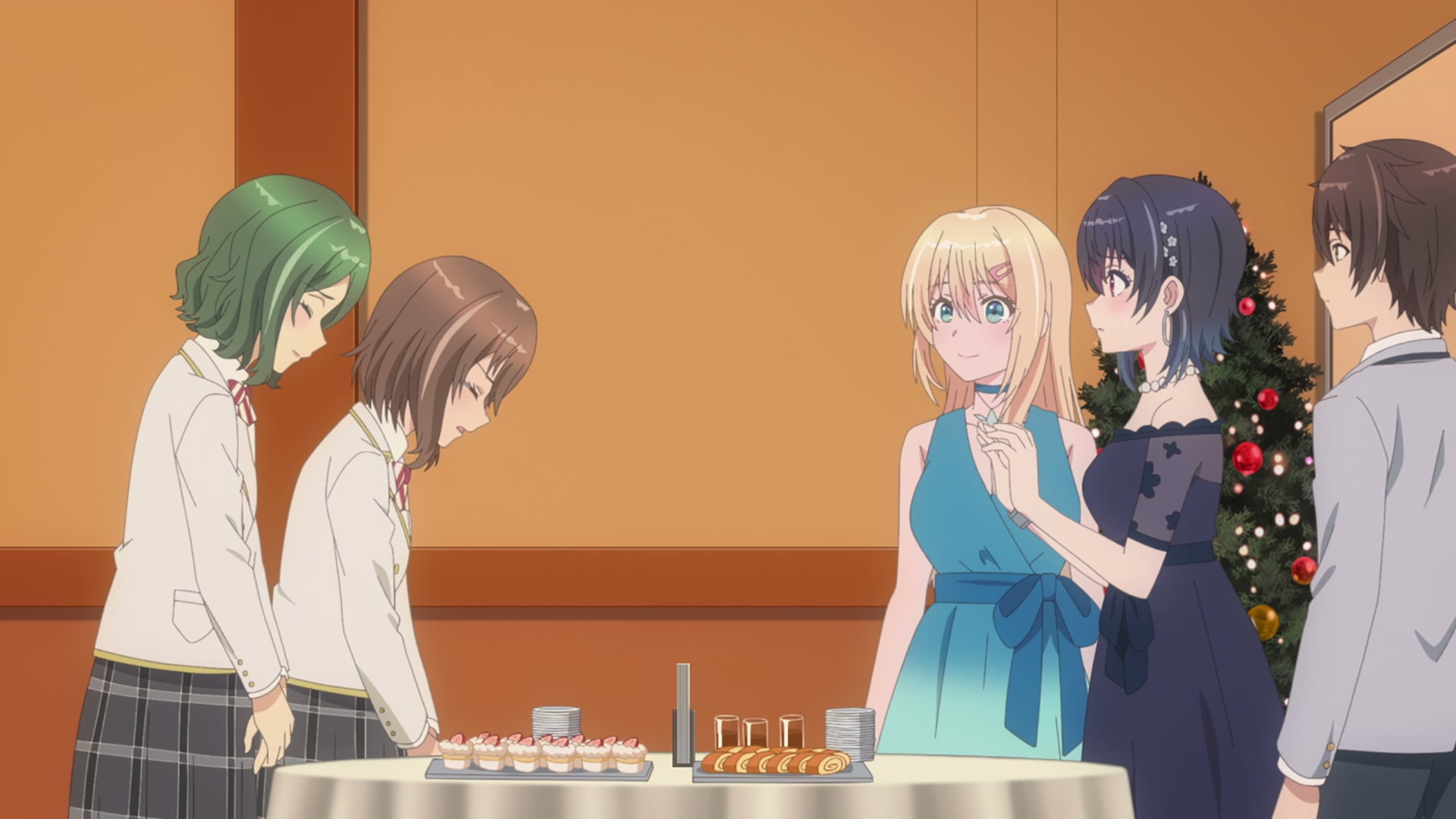
Masaki’s reaction is guarded but not cold. Itsuki’s is predictably evasive. The writing doesn’t let either of them off the hook, but it also doesn’t villainize them. They’re two adults who failed their son in different ways, now standing awkwardly in front of a Christmas tree while he cries. The tension breaks when Itsuki says their son “normally never throws tantrums,” and Masaki agrees to the photo. It’s not a reconciliation between them. It’s the bare minimum of parenting, and the episode knows that’s all Maki is going to get.
Kyouka’s Request Changes the Equation
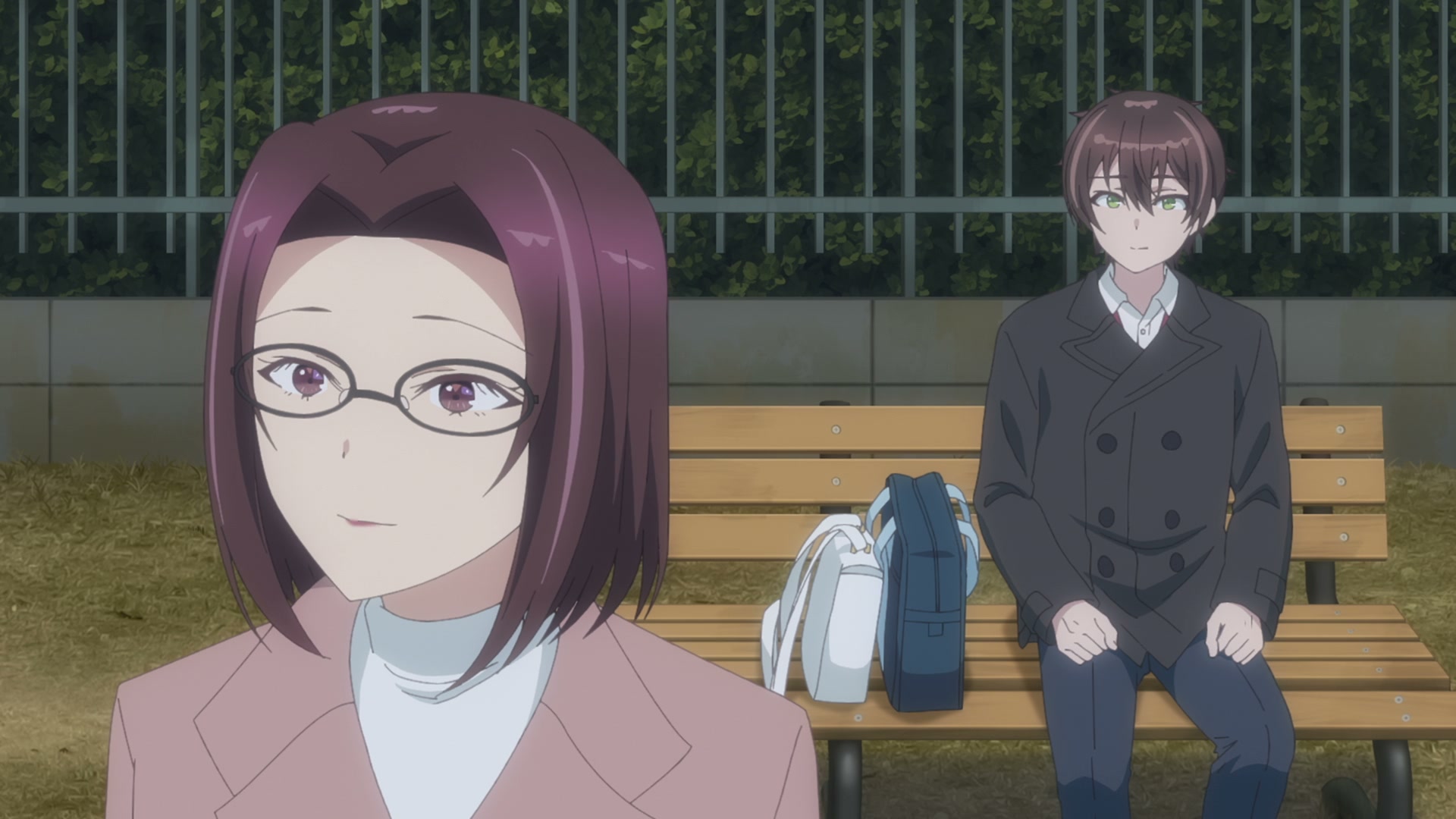
Before the family blowup, Maki meets privately with Minato Kyouka. Her characterization has been tricky. The show positioned her as a potential affair partner, then cleared that suspicion, then left her floating as a symbol of Itsuki’s new life. Here, she finally gets to be a person.
She asks Maki to return to living with Itsuki. Not for her sake. She offers to quit her job and disappear from both their lives if that’s what it takes. “He’s so full of life whenever he talks about you,” she says. “He flashes a bright smile that I never get to see otherwise.”
The scene recontextualizes everything about her relationship with Itsuki. She’s not secure. She knows she’s not the person he lights up for. And she’s willing to sacrifice her own position to give him back his son. Maki calls her thoughtless, and she agrees, fully aware of how much damage she’s causing everyone involved. It’s a strange, painful kind of allyship, and it adds complexity to a character who could have stayed a flat obstacle.
Maki refuses her request, but you can see the conversation stays with him. It’s one more piece of evidence that the adults in his life are just as lost as he is.
The Photo That Says More Than Words
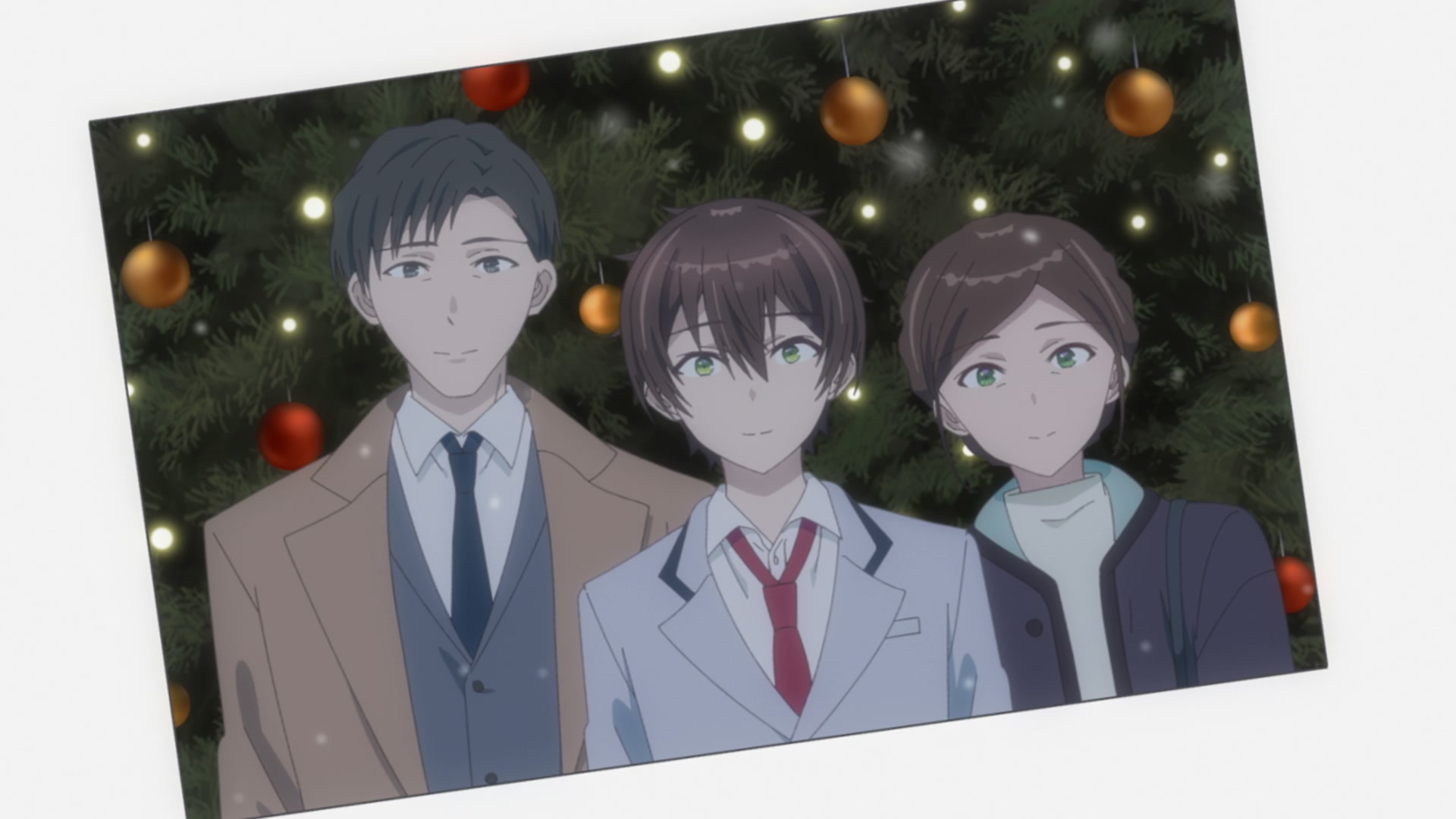
After the confrontation, Maki asks for a family photo by a tree. It’s the one thing he wants before they part ways again. Umi offers to take it but then calls in reinforcements, and suddenly the whole group is there. Yuu, Nozomu, Nina. All freezing outside the venue because Umi apparently planned for this.
The shift in atmosphere is immediate. Nina directs the three of them with genuine warmth. Maki’s parents stand stiffly on either side of their son while their flashlit faces get preserved in someone’s phone. It’s the closest thing to a family portrait they’ll ever have now, and it exists because Umi understood that Maki needed witnesses for this moment. Not to perform for. Just to be seen.
This is where the slow-burn construction of the supporting cast pays off. Nozomu jokes about needing Maki to apologize to his sister for ditching the event. Yuu complains about the cold. Nina questions whether she should even be there. It’s casual, warm, and completely undercuts the heaviness without mocking it. These people showed up because Umi asked, and their presence turns a painful memory into something survivable.
The Other Reconciliation
While Maki gets his long-overdue family release, Umi finally faces her own unresolved history. Sanae and Manaka, the middle school friends who used her as a stepping stone to get closer to Yuu, appear at the party venue. Umi stops them before they can apologize, admits she was partly in the wrong too, and delivers the most Umi line possible: “If you ever lie to me again, I’ll kick your asses, okay?”
It’s a clean, unsentimental resolution to a thread that was seeded episodes ago without much fanfare. The show doesn’t pretend this is a huge emotional breakthrough. Umi just doesn’t want to carry the grudge anymore. She’s grown enough through her relationship with Maki and her redefined friendship with Yuu that the old wound doesn’t ache the way it used to.
Maki’s reaction to this is quietly revealing. When Umi asks if she’s being self-centered, Maki says it’s fine. Kids are allowed to want what they want. Then he adds that his parents “can’t anymore,” but it’s not too late for her. He’s fully aware of the asymmetry. His family is broken in ways that can’t be fixed with a handshake and a hug. Hers still has room to heal. He points her toward that healing without any detectable bitterness.
The Confession That Lands Properly
The final scene on the train is the confession Maki couldn’t give in episode 6, delivered without interruption or ambiguity. “I love you. I want to be able to say I love you as my girlfriend.”
Umi cries. Maki, who has spent the whole series calling himself a crybaby, admits he’s tearing up too. She calls him a meanie for holding it in when she confessed first. He says he had a feeling she held back. They call themselves the “crybaby duo.”
It’s a small, warm landing after a heavy episode, and the writing resists the urge to make it grandiose. No swelling music cues in the dialogue. No dramatic declarations about forever. Just two kids on a train, finally on the same page, acknowledging that they’re both emotional disasters in compatible ways.
The post-credits card reads “New Year’s as Lovers.” The show isn’t ending on a cliffhanger or a big dramatic turn. It’s ending on a quiet promise that the next chapter is about them figuring out what being together actually looks like day to day.
Where This Leaves the Season
This episode functions as a season finale even if the season technically continues. The two major emotional arcs that have been running since the early episodes both resolve here. Maki confronts his parents, finally voices his pain, and accepts that the family won’t be whole again while still getting something from the wreckage. Umi reconciles with her old friends and closes a wound she’s been nursing since middle school.
What makes it work is that neither resolution is clean or triumphant. Maki’s parents don’t get back together. The photo is awkward. The words exchanged are halting and incomplete. But Maki got to say what he needed to say, and Umi made sure it happened with people around who care about him.
The romance, which has been building in fits and starts, finally reaches a clear mutual confession. Maki spent half the season paralyzed by his fear that love is temporary. Watching him push through that fear, cry in front of both his parents, and then confess to Umi on the same night feels earned. He’s still a mess. She’s still blunt and easily embarrassed. But they’re a mess together now, and that’s the point.
If the show ended here, it would feel complete. The fact that there’s still a “New Year’s as Lovers” chapter waiting suggests the story knows where to go next without needing to manufacture new trauma or artificial drama. That confidence in its own quiet rhythms is what made this series work from the start.
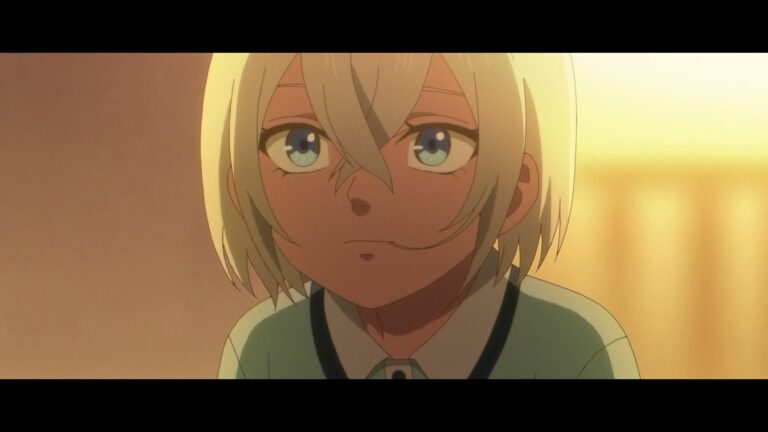
Screenshots
← Episode 9 | All Class de 2-banme ni Kawaii Onnanoko to Tomodachi ni Natta Season 1 posts →
[…] ← Episode 10 | All Class de 2-banme ni Kawaii Onnanoko to Tomodachi ni Natta Season 1 posts → […]