



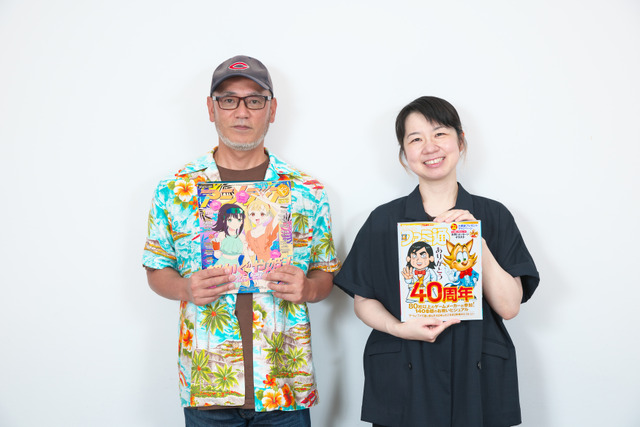
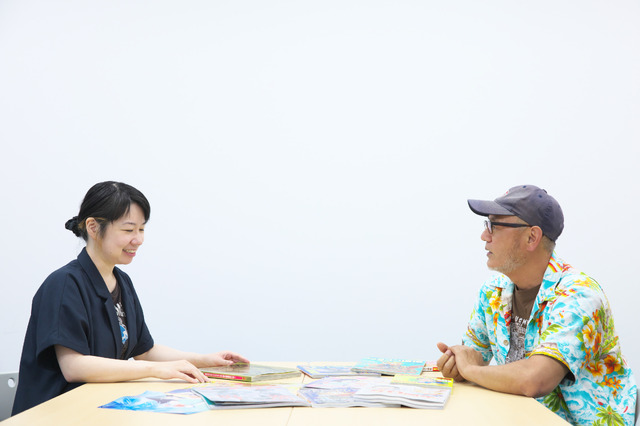
Weekly Famitsu, celebrating its 40th anniversary, and Animedia, marking 45 years, are two pillars of Japanese entertainment magazines born in the 1980s. For the first time, their editors-in-chief sat down for a special dialogue: Sagawa Hiroko of Weekly Famitsu and Kato Katsuaki (also known as Bakatarl Kato) of Animedia. They talked about the behind-the-scenes of magazine creation, the changing nature of editorial work across print and web, and the difficulty and joy of continuing to create driven by passion.
In an age where information spreads instantly, why keep publishing magazines? The two editors explored the evolving shape of work, the relationship with readers, and the meaning of making something out of love.
[Photo: Nakamura Yutaka]
◆ Origins as Editors – A Story That Begins with a Respected Senior
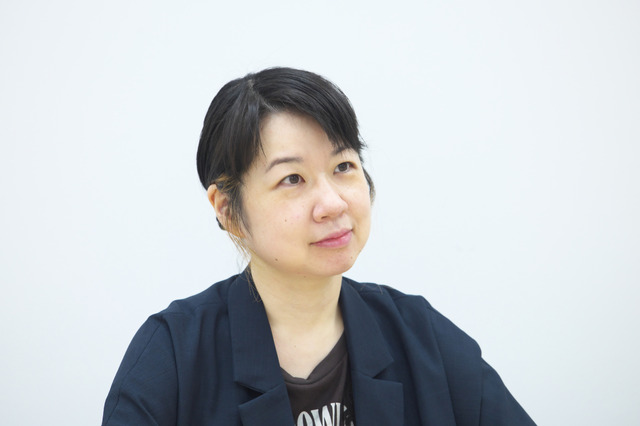
Kato: I was really looking forward to this opportunity to talk, commemorating both our anniversaries. First, could you tell us about your roots as an editor, Sagawa-san?
Sagawa: My start as an editor came when I was assigned to Famitsu DX under Nagata Hideki (the 5th editor-in-chief of Weekly Famitsu) in my second year as a new graduate at Enterbrain, which published Famitsu at the time. Back then, first-year employees often did sales and advertising, and in the second year they moved to network-related work.
Kato: So your first boss was Nagata-san.
Sagawa: Yes. Nagata was like an older brother, someone who brought the team together. He would host hotpot parties at his home, invite us to play futsal. When he became editor-in-chief of Weekly Famitsu in 2009, I moved with him.
Kato: That was just when I was stepping down. But even then I thought, ‘Sagawa-san will become editor-in-chief one day.’ And you’ve been in the role for over six years now.
Sagawa: That’s right. Since 2020, so six years already.
◆ The Golden Age of Print and the Heat of Anniversary Issues – What Issue 700 Taught Us About Magazines
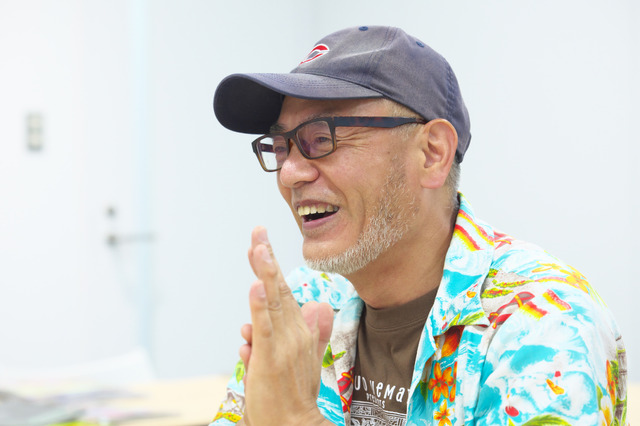
Kato: I became the fourth editor-in-chief of Famitsu 64+ (founded 1999) in 2000, but a year later Hamamura (Koichi, third editor-in-chief of Weekly Famitsu) asked me to also serve as acting editor-in-chief of Weekly Famitsu. It was sudden, and I was shocked. I thought, ‘If there’s no one else, I guess I have to do it,’ but it was only a one-year trial period to see if I could really handle the job.
Around that time, I realized the Golden Week combined issue the following year would be the milestone 700th issue. That flipped a switch in me – I decided to go all out. I planned a special issue almost identical to this year’s 40th anniversary issue: over 400 pages, flat binding, and three freebies. Looking back, it was youthful recklessness, but we ran on momentum and pure heat.
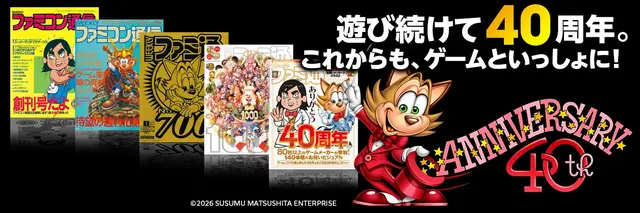
Sagawa: That 700th issue really made an impact.
Kato: The production costs were insane. The regular Weekly Famitsu cost 330 yen with a cost ratio of 20-30%. Issue 700 had three freebies, pushing the ratio over 40%. If it didn’t sell, we’d be in the red. I had to raise the price, but it was a tightrope walk. In the end, it nearly sold out, and I got to keep my job (laughs). But after that, management kept asking, ‘Kato, when’s the next anniversary issue?’
Sagawa: Anniversary issues are special. I’m in the middle of that right now (laughs). Before I can think about issue 2000 next year, I have to survive the 40th.
Kato: Four consecutive issues for the 40th is impressive.
Sagawa: Total youthful recklessness (laughs). Why didn’t I just do one issue?
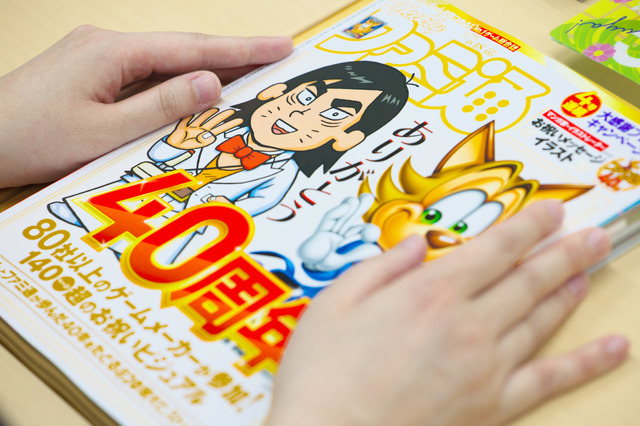
Kato: I was amazed that the ‘congratulatory visuals’ from game companies took up over 140 pages. When I was deputy editor, a regular issue once had over 100 pages of ads, and the stapler couldn’t handle it – we had to modify it. But 140 pages was unheard of.
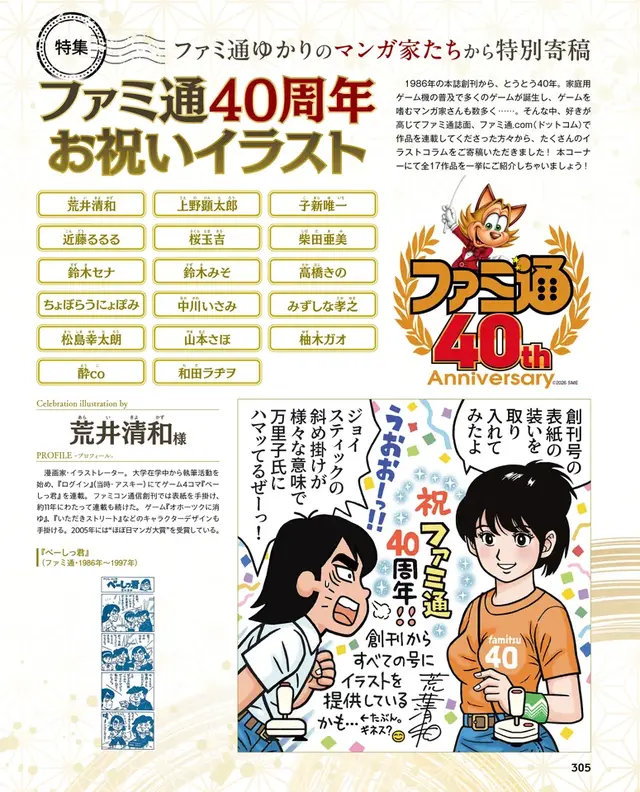
Sagawa: It really felt like a ‘once-in-40-years special move.’ My editor and I visited each company one by one, saying, ‘It’s our 40th anniversary,’ ‘We’re having a real event,’ and asking for their support. For a weekly magazine, a project that takes this much time and effort is rare.
◆ Changing Headlines, Unchanging Editorial Spirit – The Boundary Between Print and Web
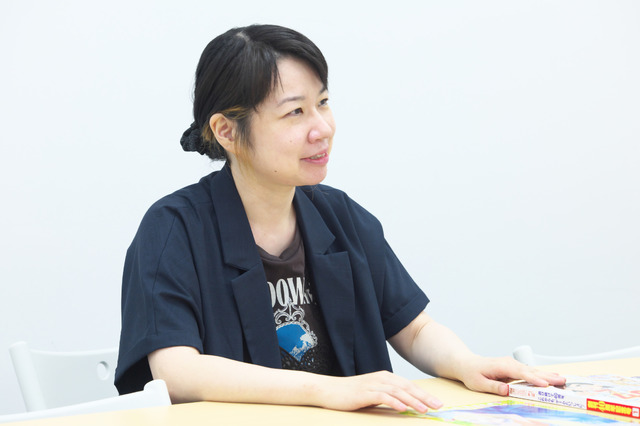
Kato: How many years into the company did you become editor-in-chief?
Sagawa: I joined in April 2007 and was appointed editor-in-chief in April 2020, so 13 years in. I was 35.
Kato: Same age as me! That’s when you have the most energy and drive. What’s the biggest change you’ve noticed in your six years as editor-in-chief?
Sagawa: In a word, the way we present information. In print, you could draw readers in with atmosphere and world-building – a headline like ‘Where will the fallen hero go?’ worked on coolness and rhythm. But on the web, that doesn’t get clicks. The title has to clearly state what the article is about.
Kato: Headlines are key.
Sagawa: Also, I became editor-in-chief during the pandemic, so remote work was tough. Many staff are still working from home, and I still struggle with the difference between how something looks on paper versus on screen.
Kato: IID (the publisher of Animedia) recommends remote work, but recently there’s a trend back to the office. At Animedia, everyone comes in for a few days before deadline to check every page at full size. Color is everything in an anime magazine.
Sagawa: At Weekly Famitsu, we’ve reduced the number of color proofs. Now we mainly do them only for the cover.
Kato: At Animedia, we still do color proofs for all pin-up and poster pages. We often get detailed requests from studios or manufacturers about skin tones – it’s probably more demanding than in your Famitsu days.
Kato: What major changes have you seen in Weekly Famitsu during your six years?
Sagawa: Since around 2018, before I took over, we shifted to letting Famitsu.com handle breaking news, while the magazine focuses on features. Now we sometimes do features as large as 52 pages.
Kato: In my day, 16-32 pages was normal. Things have changed.
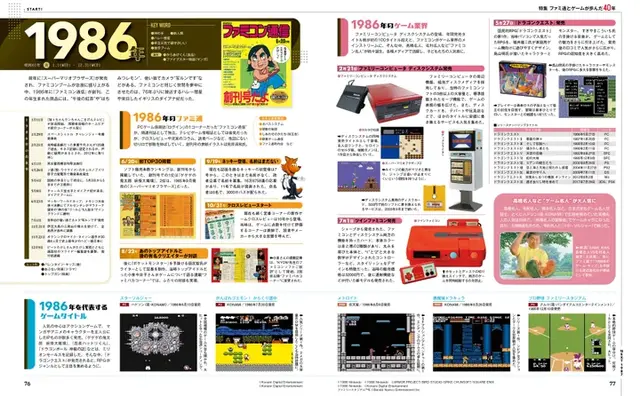
Sagawa: We’ve really leaned into being a ‘feature-driven magazine.’ But Animedia’s 45 years is amazing – five years longer than us.
Kato: That five-year gap probably reflects the difference in the entertainment market. Anime expanded first with series like Mobile Suit Gundam, then games like Super Mario and Dragon Quest came along. Over the long history, game magazines have mostly boiled down to just Famitsu, but anime magazines still have the ‘big three’ – Animage, Newtype, and us. Animedia is holding its own. Monthly Newtype from Kadokawa is strong – it’s like the ‘Famitsu position’ of anime magazines.
Sagawa: But Monthly Newtype doesn’t have a digital edition. That seems problematic – what if someone wants to read it later?
Kato: Maybe they value the ‘only in print’ appeal. Famitsu has a digital edition, right?
Sagawa: Yes. The ratio isn’t huge, but it sells steadily every week. We’d be in trouble without it.
◆ Passion Drives the Newsroom – The Heat in a Small Editorial Team
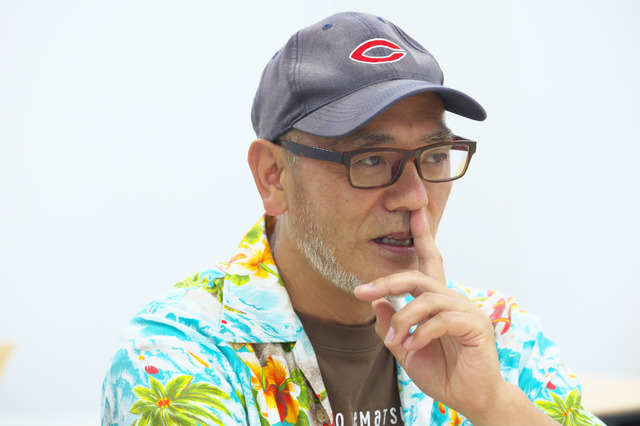
Kato: I learned at Famitsu 64+ that a magazine is made by the team’s heat. Just gathering people isn’t enough – you need an environment where everyone can express their own ‘suki’ (passion). Animedia is that kind of editorial department.
Sagawa: Same here. There are so many games that one person can’t cover everything. We bring together everyone’s specialties and ‘oshi’ (favorites).
Kato: ‘A bunch of passionate people’ is the strongest force. That hasn’t changed.
Sagawa: Did this issue (Animedia July 2026) come about because a staff member who loves Super Kaguya-hime! said, ‘Let’s do a big feature!’?

Kato: Basically, yes. But with anime magazines, there’s a strong element of gambling. We commission original illustrations quite early – original visuals of characters in specific situations are our biggest weapon. But we order them well before broadcast or streaming, so we don’t know if the work or character will really break out. It’s not ‘we like it so we feature it’ – it’s someone on staff betting that this work will be big. Super Kaguya-hime! was a Netflix title, so it was hard to judge. But it later had a theatrical release and became a huge hit, so we’re glad we did it.
Sagawa: At Weekly Famitsu, we also predict a game will be interesting and put it on the cover, but the gamble isn’t as big as in anime. You really need foresight.
Kato: Exactly. But it’s important to have an atmosphere where everyone can casually say, ‘This is good, isn’t it?’
Sagawa: An environment where it’s easy to speak up and where proposals actually get approved.
Kato: Animedia’s editorial team has only five people, so it’s more horizontal than hierarchical. They think, ‘Kato doesn’t know much about anime, so we have to teach him.’ The editor-in-chief being the least knowledgeable might actually work in our favor. How about Weekly Famitsu now?
Sagawa: We have manufacturer assignments – this person handles Square Enix, that person handles Bandai Namco. Then each editor adds their own specialty, like VTuber fans or knowledge of female-oriented characters.
Kato: Manufacturer assignments are essential. That’s one reason Famitsu has survived. In the old days, there was a rule: ‘Check with manufacturers every week and fill in the schedule.’ Each person called about 10 companies for information. If you slacked off, you’d get yelled at. There were about 300 companies to check – it was tough, but it was our lifeline.
◆ Digitalization and Evolving Production Workflows
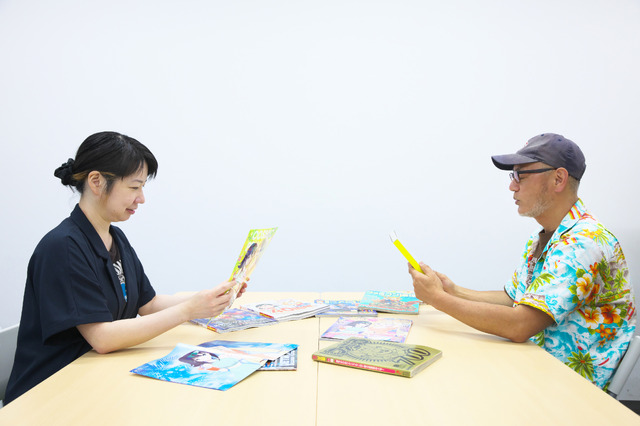
Kato: When I joined Weekly Famitsu, only about one in three people had a PC. We’d wait for the senior staff to go home at night, then sneak in to use their computer to write manuscripts. Handwritten manuscripts were still common.
Sagawa: Now everything is digital – all done in data and software. It’s convenient, but the ‘feeling’ behind handwritten corrections in red ink is hard to convey with comments in word processing software. Maybe that’s a bit old-fashioned of me.
Kato: I understand. Those red marks weren’t just corrections – they carried a certain warmth. How many deputy editors does Weekly Famitsu have now?
Sagawa: Two. But we no longer have the two-team rotation system. Now everyone works together every week to meet the deadline. We have regular meetings every other week.
Kato: I see. That probably stems from the project-based system I introduced. The two-team system had drawbacks – the quality of issues alternated. I proposed breaking down barriers between media and forming one project team for everything, including strategy guides, and linking with the web. We also introduced a system to promote people who showed leadership to full-time positions.
Sagawa: So that’s the origin of our current system.
Kato: How do you handle proofreading?
Sagawa: Basically, we create text manuscripts in word processing software and do corrections in the software. Sometimes we use Google Docs.
Kato: At Animedia, we now do proofreading almost entirely in PDF. We check rough layouts first, then add corrections to the assembled pages.
Sagawa: You add corrections after the pages are assembled? Isn’t that a lot of work?
Kato: We check layout, design, and concept at the rough stage, so it’s not that bad. We also do proofreading before that. But we still print out PDFs and write corrections by hand – things like ‘This screen cut is too small.’ So the ‘old-school editorial work’ still exists at our department.
◆ Anime and Games – Structural Differences and Shared Trust
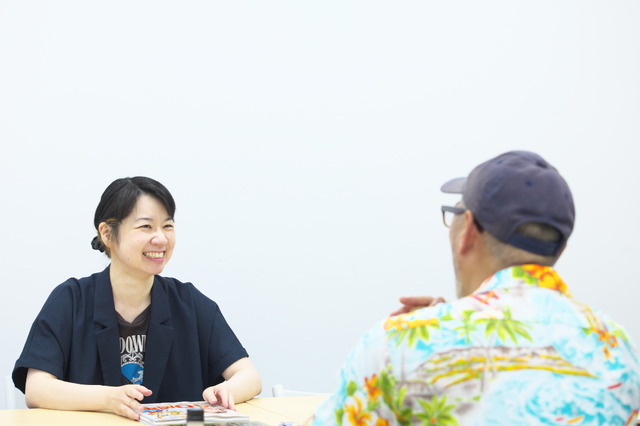
Sagawa: Weekly Famitsu has long held ‘manufacturer regular meetings.’ Do you have similar regular meetings with anime studios?
Kato: That’s the tricky part of anime – studios, production committees, and PR are often separate. So each time, we have to figure out who the contact is. If we could have regular meetings like you do with game companies, it would be easier to build rapport. But it’s difficult in anime.
Sagawa: In the game industry, the contact person is relatively fixed.
Kato: Yes. But we build long-term relationships with PR and promotion staff, and we’ve interviewed directors, animation directors, and scriptwriters for decades. So there is trust. That’s how we get stories that only come from deep bonds.
Sagawa: So there are similarities in dealing with content creators.
Kato: Yes. They’re different yet similar, similar yet completely different. The game industry is basically digital-centric, but the anime industry still has a surprising amount of analog. There are many old customs – it feels a bit old-fashioned. That surprised me. On the other hand, new winds are blowing, like 3D and independent creators.
Sagawa: Recently, companies like TMS Entertainment are trying to improve anime production conditions – raising salaries, improving treatment for creators. I hear that momentum is growing.
Kato: Exactly. Creators’ status has risen in the anime industry. With the global market expanding, just securing animation staff costs money. The cost of original illustrations is also rising. In the old days, Animedia was a ‘frugal editorial department’ – we’d order cheaply and give up if the price didn’t match. But in the last two or three years, the market rate has gone up considerably. If this continues, we’ll have fewer works to feature. So we started the Animedia official online store to sell original goods, making use of illustrations beyond the magazine. It’s all trial and error – it feels like we’re back to the early days of the monthly magazine.
Sagawa: That’s real on-the-ground reality. It’s impressive that the editor-in-chief is involved in goods production.
Kato: With a small team, it can’t be helped (laughs). It feels like we’re returning to the basics of ‘making and delivering things ourselves.’
◆ From Watching to Participating – The Expanding Forms of Entertainment
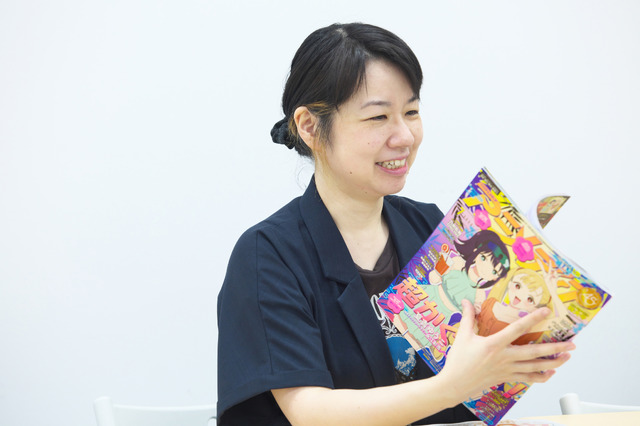
Kato: Sagawa-san, you said you joined Famitsu because you love games. Do you also watch anime?
Sagawa: Yes! Not as much as the Animedia staff, but the first anime I really got into was Mobile Suit Gundam Wing. In elementary school, I was obsessed with the five handsome Gundam pilots. I didn’t understand Treize Khushrenada’s ideology at all back then (laughs), but I still buy Blu-rays and purchased the ‘Mobile Suit Gundam Wing & Endless Waltz 30th Anniversary Official Book.’ I also watch Gundam GQuuuuuuX, Mobile Suit Gundam: The Witch from Mercury, and Mobile Suit Gundam SEED, but Gundam Wing is still my favorite due to childhood nostalgia.
Kato: From an anime magazine perspective, the Gundam series is hugely popular and has strong drawing power. Among Animedia readers, SEED seems especially popular.
Sagawa: Gundam GQuuuuuuX was interesting, but in terms of character popularity, it didn’t seem as strong as Gundam SEED. Everyone watched it weekly like a festival and enjoyed it, though.
Kato: You really know your stuff (laughs). Recently, there’s a tendency for anime to be experienced passively – it becomes ‘everyone knows it’ without leaving a deep impression. There’s a sense of shared experience, but it’s hard to leave a mark. How to add depth is a real challenge.
Sagawa: Also, Milky Subway – some of our younger staff are really into it, and I think some fans bought Animedia for it.
Kato: That’s great to hear. I got hooked on Milky Subway too. We actually sold goods for it on the Animedia official online store.
Sagawa: Milky Subway also has a manga adaptation in Shonen Ace Plus.
Kato: As expected from Kadokawa – they cover everything (laughs). I can’t beat the Kadokawa group.
Sagawa: It’s amazing that all episodes are available on YouTube, yet the theatrical film was a hit. I went to see it. There was a festival-like atmosphere that made you feel you had to watch it. The same ‘I have to go’ feeling happened with Super Kaguya-hime!.
Kato: Going to the theater has become an ‘event’ in itself. People who go have a clear motivation – they want to pay to support the work. Theaters also sell goods and give out入场特典. This ‘participatory entertainment’ aspect really matches current audience needs.
◆ The Depth of Experience from ‘Playing’ – The Essence of Games
Kato: In terms of entertainment, there are so many ways to enjoy things now – anime, movies, music, stage, streaming. Where do games fit in?
Sagawa: As a player, the ability to intervene in the story yourself makes the emotional depth incomparable to other media when you get hooked. But that active ‘playing’ aspect is also a barrier – there are still many people who watch anime but don’t play games. The Nintendo Switch has widened the gateway, and let’s play culture has made indie games more accessible. But the number of people who actually ‘play’ is still a minority. Conveying the fun remains difficult.
Kato: Recently, more people say ‘I like games’ rather than ‘I play games.’ Many are satisfied just watching streams or let’s plays. In a way, games are becoming a ‘watchable’ entertainment like anime.
Sagawa: Yes. Let’s plays help spread awareness, and people buy goods, expanding the fan base – that’s positive for the industry. But I still want people to play with their own hands. The emotional movement that comes from active involvement is something I want them to experience.
Kato: The thrill of actually moving your hands as a player is different.
Sagawa: For example, in Detroit: Become Human, watching a let’s play and making the choices yourself – deciding who to save or sacrifice – the emotional impact is completely different. Because your own decisions affect the story, the regret of not saving someone or the weight of a choice stays with you. That’s the essential strength of games as a medium.
Kato: Games are an experience where your choices directly move the world. That’s fundamentally different from anime or movies.
Sagawa: But it’s hard to get people to understand that depth. There are so many other entertainment options. We’re always thinking how to convey the value of games. Recently, the term ‘time performance’ (tai-pa) has become common – people want maximum satisfaction in a short time. In the game industry, there’s a trend toward shorter, more accessible experiences. Indie games became popular partly because of their ‘handiness’ – low price, short playtime, but still a solid experience that fits modern lifestyles.
Kato: I understand. Anime is similar – one episode is easy to watch, but watching a whole series takes a lot of time. Long series have a high barrier, and it’s hard to jump in mid-way. That’s why one-cour series are increasing – it’s adapting to the times.
Sagawa: In that sense, how we relate to time affects all entertainment. Both games and anime face the challenge of first getting people interested at the entry point, then keeping them engaged until the end.
Kato: Also, games have a price barrier. Anime can be watched cheaply via subscription or free streaming, but a game costs several thousand yen, and new titles can be nearly 10,000 yen.
Sagawa: Yes. Compared to anime where you can watch as much as you want for a monthly fee, games require a purchase. That makes players think, ‘What if it’s not fun?’ But on the flip side, because you invest time and money, the immersion and satisfaction are overwhelming. That active involvement is the value of games.
Kato: The ease of anime has helped it spread overseas. With subscriptions, Japanese anime is watched worldwide. That expanded the market and improved creators’ status. A good cycle is forming.
Sagawa: Games are entering a similar cycle. They’re released simultaneously across borders, and players connect online. The day when ‘play’ becomes a universal language may not be far off.
◆ An Editor’s Blood Boils!? Famitsu’s ‘Blunder’ Stories
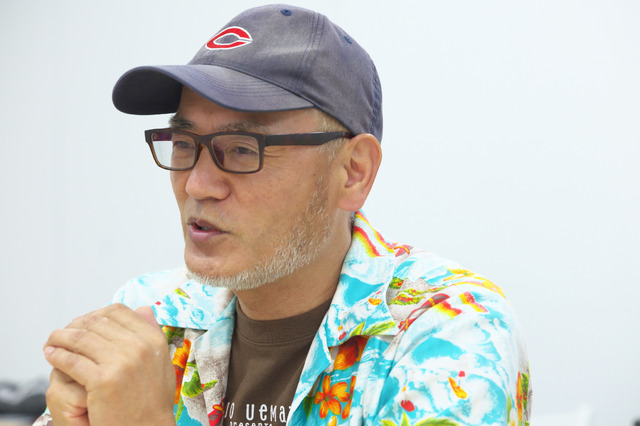
Kato: Do you have any ‘we really messed up’ stories from Weekly Famitsu?
Sagawa: Hmm (thinks for a while). What about you, Kato-san?
Kato: I have quite a few (laughs). Before I became editor-in-chief, when I was still a staff member, I created a feature introducing silly ‘secret techniques.’ For example, ‘You can change a Dragon Quest character’s appearance’ – by taping a photo of yourself in the center of the TV screen. Since the character always appears in the center, you could ‘play with your own look!’ (laughs).
Sagawa: Those kinds of silly articles have decreased. In my case, in my second or third year, I did a zombie game feature and got zombie makeup done at Odaiba for a photoshoot. After the shoot, I only removed the makeup from my face, kept the hair and costume, and took the train home. I looked completely suspicious (laughs). Of course, we had permission for the shoot.
Kato: (Laughs heartily) That’s the kind of recklessness that makes an editorial department. For issue 832, I cycled from Hiroshima to Makuhari Messe. I even had a location vehicle with several staff, spent money on photography and accommodation – and then never released the footage anywhere (laughs).
Sagawa: What a waste! But I understand. Weekly Famitsu has that ‘reckless but serious’ culture. We still have projects where we think, ‘Are we really going that far?’ – and that reassures me (laughs). For example, when Ghost of Yotei came out last year, we sent two staff to climb Mount Yotei in Hokkaido. With a guide, rented climbing gear, and three nights at an expensive Niseko hotel – just because ‘no other media would climb a mountain!’ (laughs).
Kato: That’s a project only Weekly Famitsu could do.
Sagawa: We did make a proper article (laughs) and released video. Please check it out on Weekly Famitsu’s YouTube channel.
◆ The Power of Continuing – What 40 Years of History Says About the Future of Magazines
Kato: Finally, Sagawa-san, what do you think about the future of Weekly Famitsu?
Sagawa: The fact that a weekly magazine has lasted this long is almost a miracle. So first and foremost, I want to continue this format as a print magazine. In recent years, we’ve strongly felt the value of having kept going, and I think the game industry feels the same.
Kato: I feel there’s a movement re-evaluating print magazines.
Sagawa: We’re getting more requests than before for features in Weekly Famitsu. Game companies seem to be re-recognizing the value of being prominently featured, including the cover. That’s an ‘experience content’ that the web can’t provide, and I want to cherish that and continue.
Kato: So the need has become visible.
Sagawa: I think so. Stopping is easy, but restarting is really hard. I want to keep this culture alive. Of course, the web is the primary source of breaking news, so we’ll put full effort into that too. I’m editor-in-chief of Weekly Famitsu, but the Famitsu.com editorial team and the video production team are all colleagues. It’s important that each editor thinks about which medium best conveys their assigned title. That way, we can amplify the joy of game fans and share happiness with readers and viewers.
Kato: Print magazines should be preserved – they’re an important culture. But the Famitsu group as a whole should deliver good content through the right medium. That policy hasn’t changed. Still, the core is the print magazine.
Sagawa: Yes. Weekly Famitsu is one of the pillars of the company.
Kato: So, what’s your ultimate vision for how it should be?
Sagawa: Personally, Famitsu started as an outlaw. But now, with fewer competitors, it’s becoming a ‘mainstream’ media. So I want it to remain the first magazine game lovers pick up. When you want to know about a favorite title, I want us to be the first place you turn. The ‘Famitsu-ness’ hasn’t been clearly defined, but it’s like DNA passed down through generations. To me, it means ‘not cutting corners, doing what a mainstream media should do.’
Kato: I understand that feeling. When I was editor-in-chief, I was very conscious of not making the magazine too hard for first-time readers. If it’s full of jargon and insider knowledge, new readers will feel it’s too difficult. I’m relieved to hear that current Weekly Famitsu is accessible to beginners.
Sagawa: We keep that in mind. We want to reach beginners and satisfy core fans. That breadth is the charm of Weekly Famitsu.
Kato: So it’s about maintaining overwhelming presence as a game media – standing between readers and creators.
Sagawa: Exactly. In a changing era, ‘staying put’ is the biggest challenge.
Sagawa: I’ve talked a lot. Kato-san, what about the future of Animedia?
Kato: Of course (laughs). Ultimately, I want to surpass Monthly Newtype and become number one. But seriously, I want to aim for the top in the anime industry. Bookstores are disappearing, and the environment is tough. That’s why I believe in the value of continuing – to stick with it with a small team, staying close to works and fans. That’s exactly the same feeling as Sagawa-san.
Sagawa: Continuing a magazine is really hard. But because we continue, it has meaning. We’re both holding the line in the same place.
◆ Profiles
・Sagawa Hiroko: Editor-in-chief, Weekly Famitsu, Kadokawa Game Linkage. Joined Weekly Famitsu editorial department in 2009. Former deputy editor-in-chief of Famitsu.com. Strives to create articles with heat that resonate with game lovers.
・Kato Katsuaki: Editor-in-chief, Animedia, IID. Joined the Famicom Tsushin (now Weekly Famitsu) editorial department in 1990. Served as deputy editor, editor-in-chief of Famitsu 64+, editor-in-chief of Weekly Famitsu, and later as editor-in-chief of Walker47 and Nico Nico Channel at Kadokawa. Founded Hanapen LLC in 2018. Assumed current position in 2023. Aims to deliver ‘fun surprises’ across media boundaries, leveraging experience in both games and anime.
![Azatoi-chan to Yankee-kun Episode 2 Trial Reading ♪ [Jump TOON]](https://animeworld.info/wp-content/uploads/2025/06/773955.png)