


Introduction
There are anime that entertain you, and then there are anime that sit with you long after the final credits roll. Toumei na Yoru ni Kakeru Kimi to, Me ni Mienai Koi wo Shita belongs firmly in the second category. This twelve-episode series takes a premise that could easily devolve into melodrama or manipulation and instead crafts something restrained, thoughtful, and genuinely moving. It is a story about two people who find each other at the exact moment they both need to learn something the other can teach.
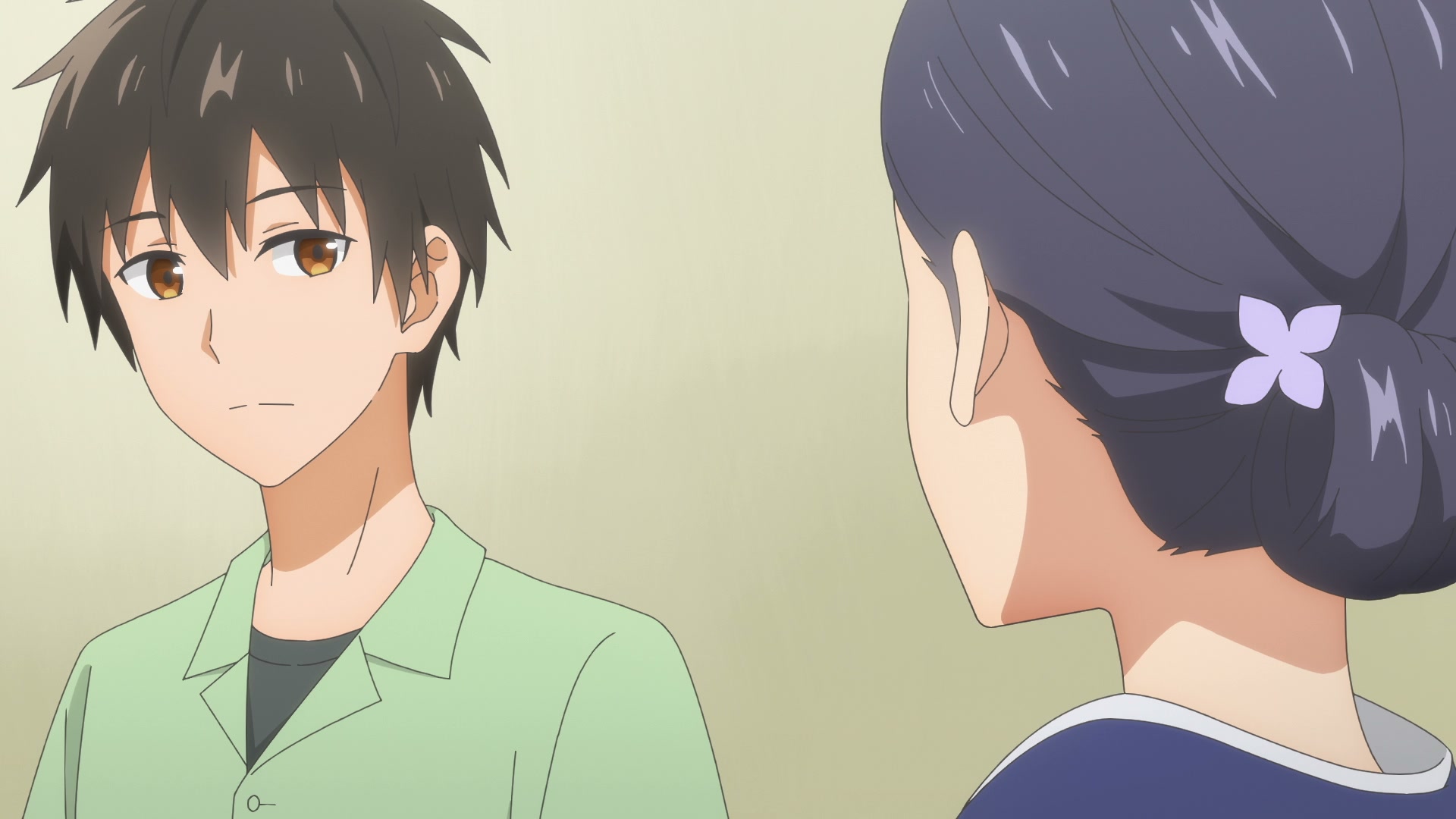
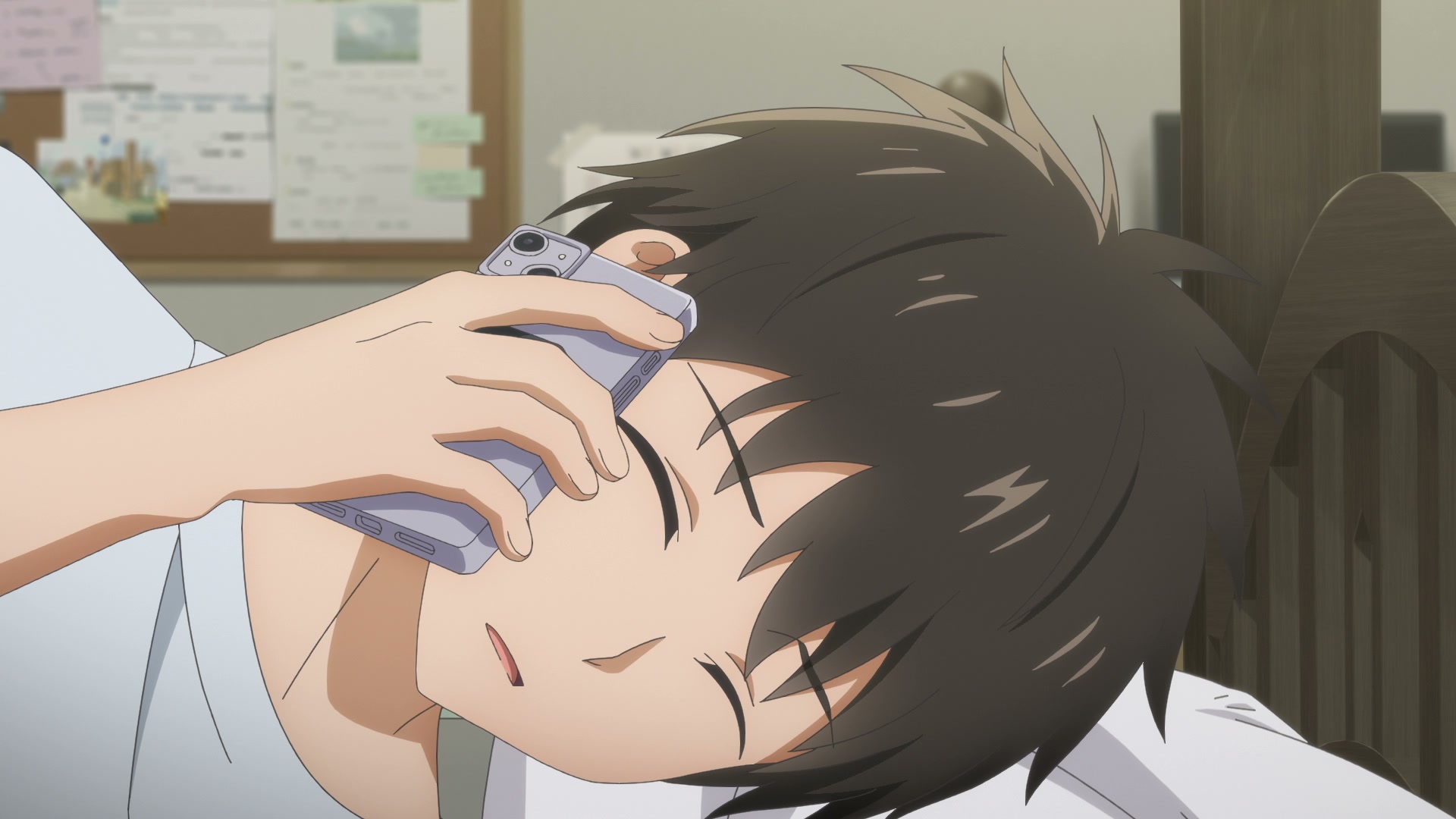
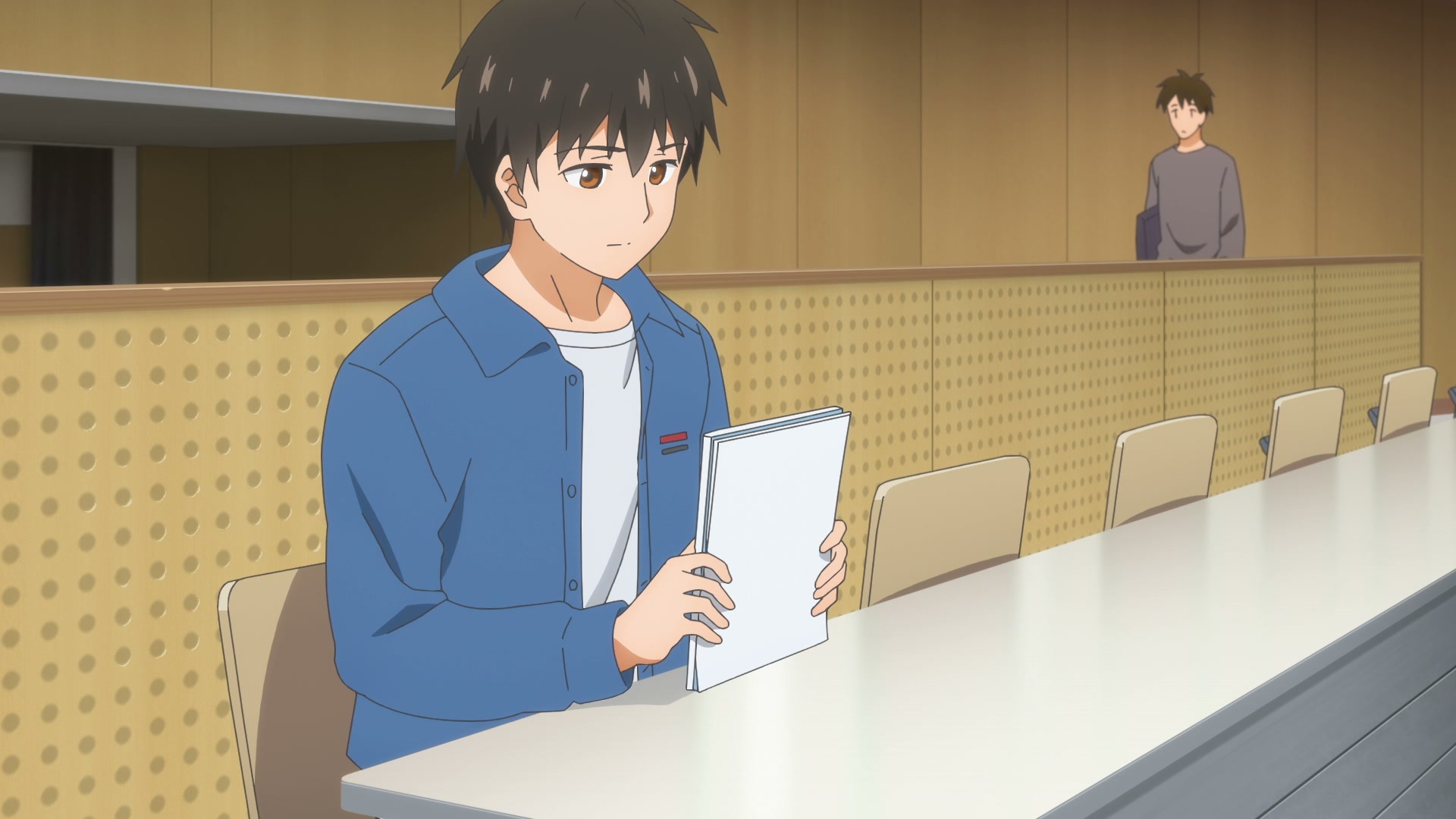
The series introduces us to Sorano Kakeru, a college freshman who has built his entire personality around avoiding notice. He attends classes, keeps his head down, and actively resists forming connections. His roommate drags him to a welcome party where he meets Fuyutsuki Koharu, a blind student whose vibrant approach to life seems almost incomprehensible to someone like Sorano. What begins as reluctant assistance with a dropped bookmark becomes something far deeper, a relationship that forces both of them to confront what they truly want from the time they have.
What makes Toumei na Yoru ni Kakeru Kimi to, Me ni Mienai Koi wo Shita special is its willingness to sit with difficult emotions without rushing toward resolution. The series trusts its audience to understand what the characters are feeling without spelling everything out. It respects silence. It allows moments to breathe. And when the story takes its darker turns, the emotional groundwork laid in earlier episodes ensures that every development lands with genuine weight.
This is not a series for viewers seeking light entertainment or straightforward romance. It is for people who appreciate character-driven drama that earns its emotional moments through patient, careful storytelling. If you have ever loved a story that made you cry not through manipulation but through honest emotional truth, this series deserves your attention.
Story and Themes
Narrative Structure and Pacing
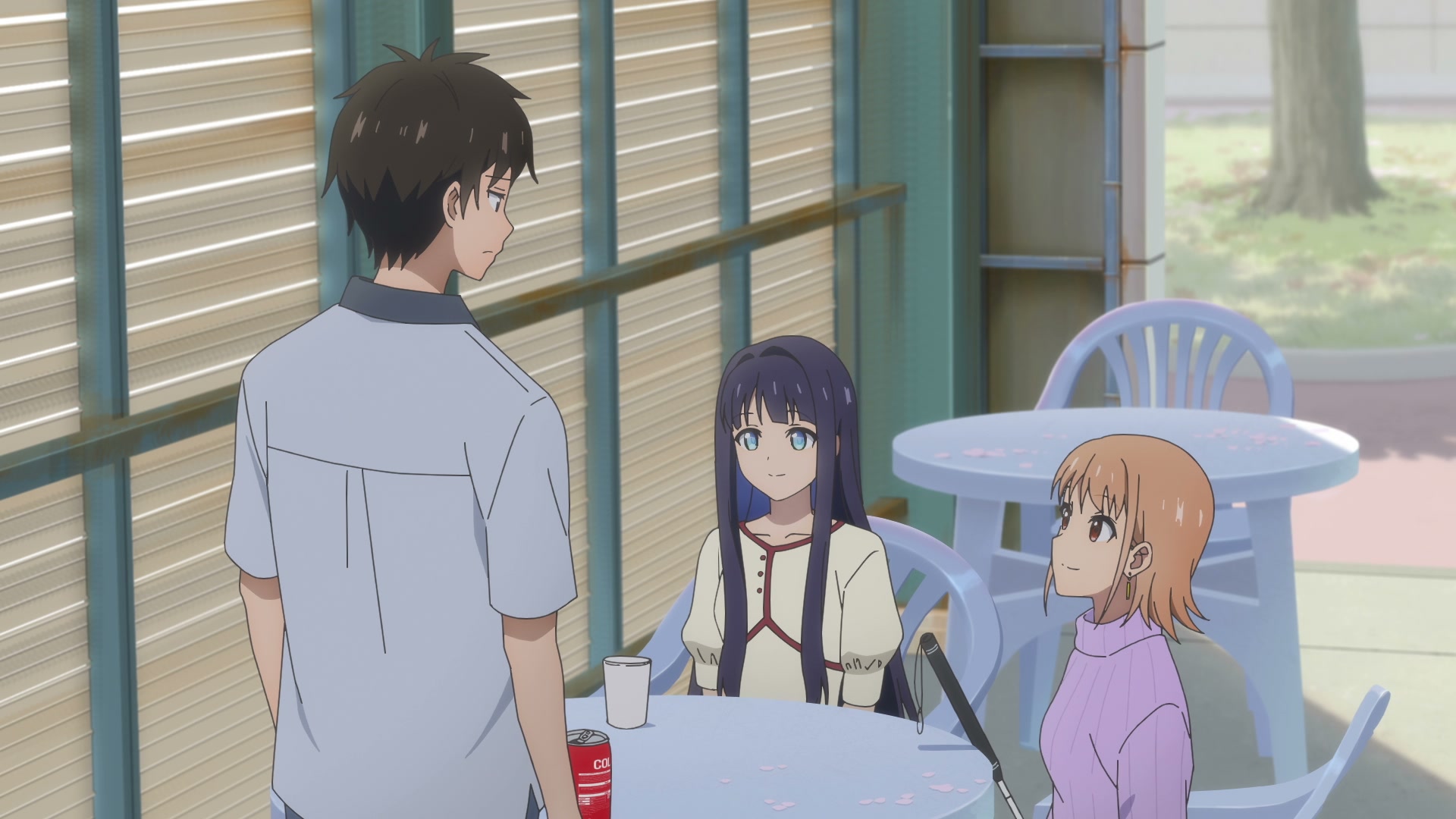
Toumei na Yoru ni Kakeru Kimi to, Me ni Mienai Koi wo Shita unfolds with a deliberate rhythm that mirrors its protagonist’s emotional journey. The early episodes move at a gentle pace, establishing the college setting and the developing friendship between Sorano and Fuyutsuki through a series of small, seemingly mundane moments. Terrace conversations, vending machine mishaps, and walks across campus accumulate emotional weight gradually. This is not a story in a hurry.
The turning point arrives when Fuyutsuki disappears following their first kiss. What follows is a tonal shift that some viewers may find jarring, but which serves the narrative’s deeper purpose. The lightness of the early episodes was never mere fluff; it was establishing what Sorano stands to lose. When the story pivots toward hospital corridors and terminal diagnoses, the contrast between the carefree early days and the grim present creates a powerful emotional resonance.
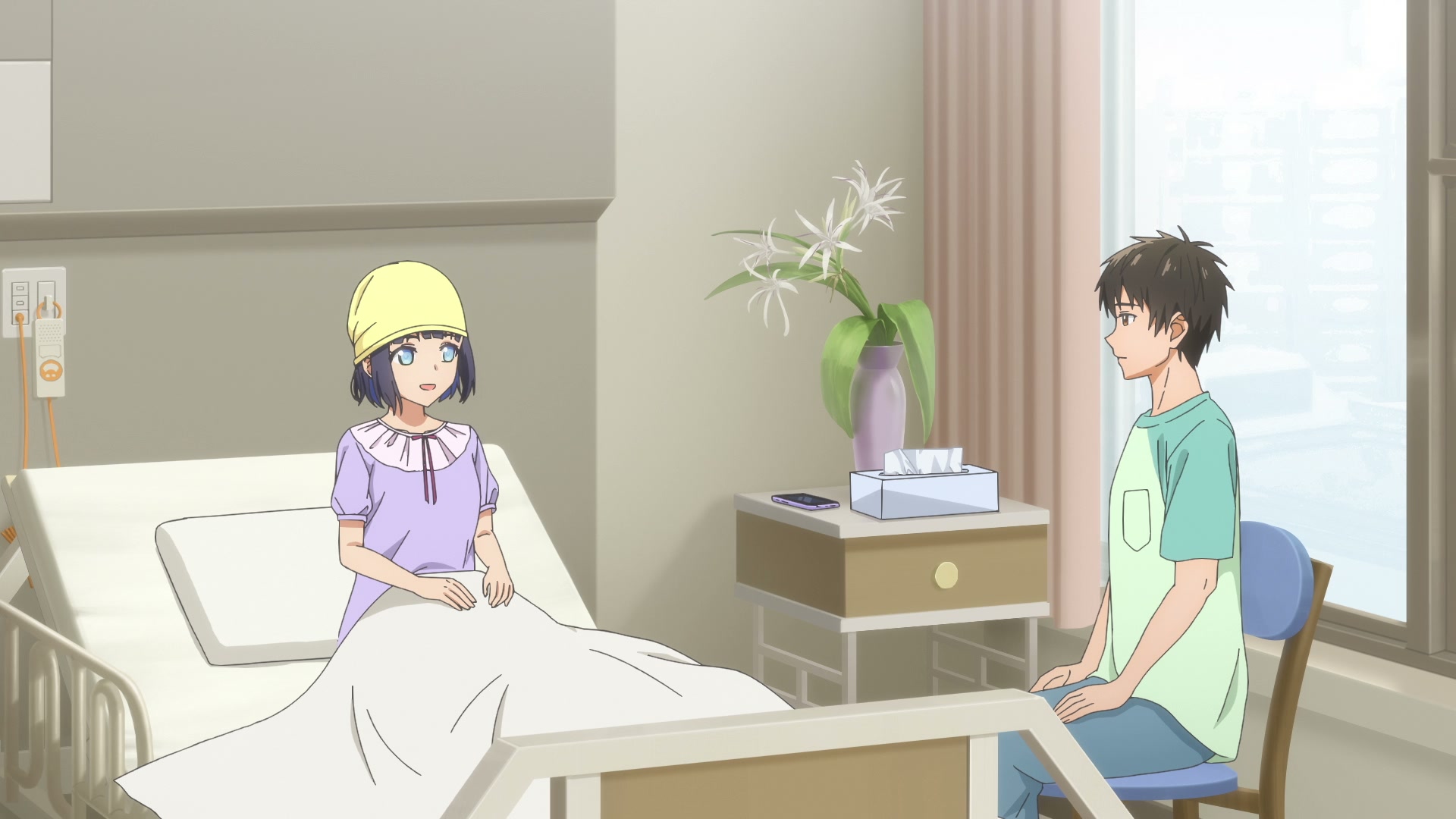
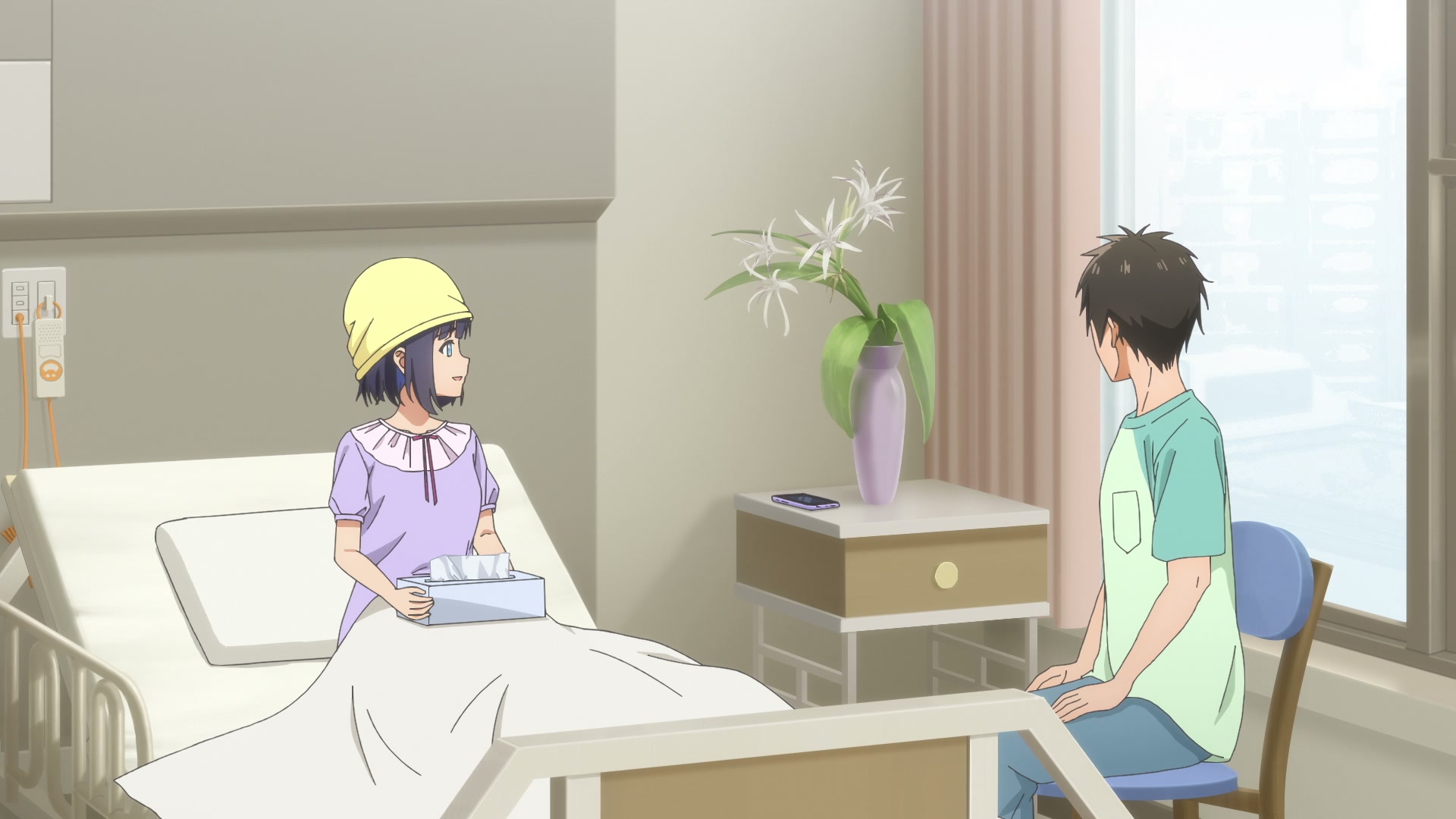
The hospital arc occupies the latter half of the series, and this is where the pacing becomes both more urgent and more meditative. Sorano’s daily visits to Fuyutsuki, her fluctuating condition, and the planning of the fireworks show all unfold with a sense of time slipping away. The series never rushes toward its emotional climaxes, but it also never lingers too long on any single beat.
The epilogue deserves particular attention for how much it accomplishes in limited screen time. We jump forward decades to find Sorano as a middle-aged widower with a daughter, himself battling terminal cancer. The compression of years into minutes could feel abrupt, but the emotional continuity is strong enough to carry the transition. We understand immediately that Fuyutsuki’s influence has shaped Sorano’s entire adult life, and that her death did not end their story but transformed it into something else.
The Symbolism of Fireworks
Fireworks serve as the series’ central symbolic image, and the writing develops this symbol with unusual coherence. Fuyutsuki’s love of fireworks seems almost contradictory at first. Why would someone who cannot see be so drawn to a visual spectacle? The answer, revealed gradually, is that fireworks represent something beyond mere sight.
For Fuyutsuki, fireworks are about the experience of shared wonder. She describes the feeling of standing in a crowd, everyone looking upward together, united in awe. The visual component is only one part of what makes fireworks meaningful. The sound, the smell of gunpowder, the vibration in the air, the collective gasp of the crowd. These elements combine to create something that transcends vision.
Kotomugi’s explanation of how fireworks are made adds another layer. The shells are wrapped in layer after layer of tape, building pressure that eventually explodes into a perfect sphere of light. He observes that “everyone has something they keep bottled up inside” and that fireworks are cathartic because they release that pressure in a spectacular display. This metaphor applies directly to both protagonists. Sorano has spent his life bottling up emotions, avoiding expression, keeping everything contained. Fuyutsuki has been bottling up her fear, her sadness, her knowledge of her own mortality, presenting a cheerful face to the world while privately struggling.
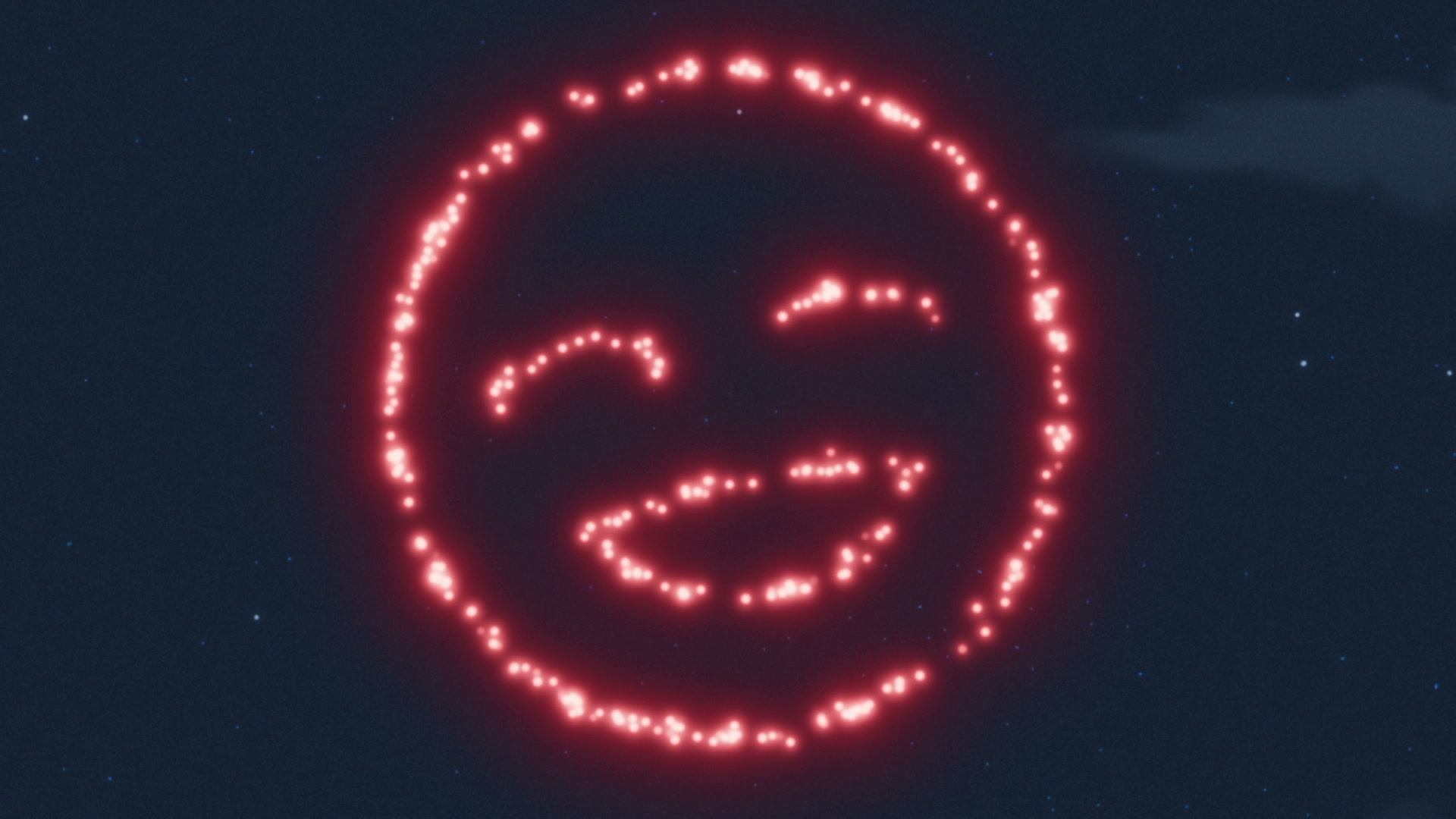
When the fireworks finally launch in the climax, the release is emotional as much as visual. Fuyutsuki’s drawing of a pink heart becomes a declaration of love rendered in light. Sorano’s confession during the show completes his transformation from someone who avoided expression to someone willing to declare his feelings openly. The fireworks become the external manifestation of internal release.
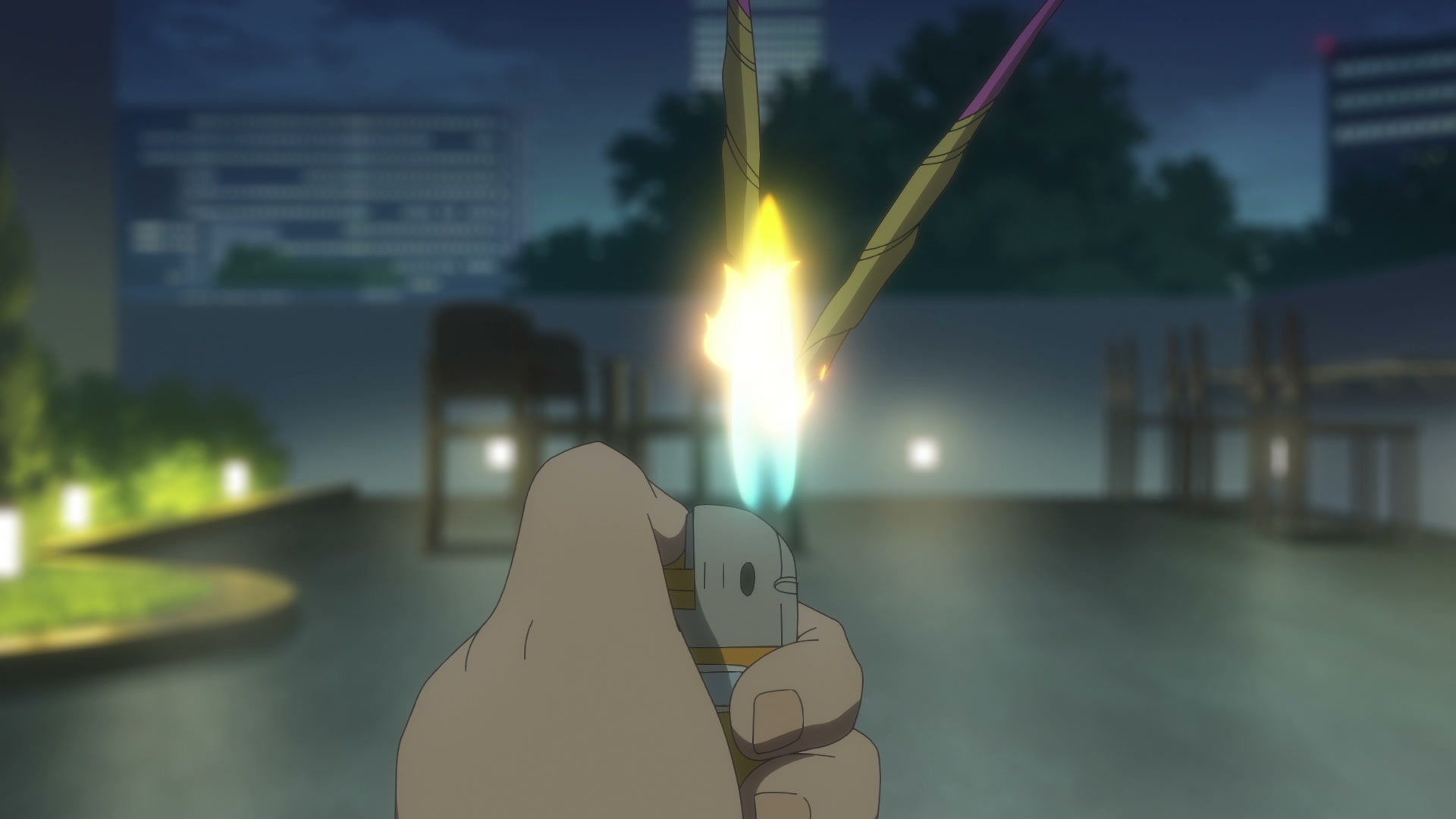
The sparkler scene in the final episode crystallizes the symbolism. Sorano and Fuyutsuki hold sparklers together, and Sorano wants her flame to burn longer than his. The contest becomes a metaphor for her lifespan, for his desperate hope that she will outlive him. When their sparklers touch and burn as one, the image suggests that their lives have merged, that her flame continues through him even after her death. It is a quiet moment that carries enormous weight.
Light, Darkness, and the Experience of Blindness
The series handles Fuyutsuki’s blindness with remarkable sensitivity and nuance. When Sorano asks what blindness looks like, she explains that it is not pitch black but rather “a whitish, transparent blur.” This description challenges the audience’s assumptions and opens up a more complex understanding of her experience.
The contrast between light and darkness operates on multiple levels. Fuyutsuki lives in a perpetual fog, unable to see details but aware of brightness and shadow. Sorano, who can see perfectly well, has chosen to live in an emotional darkness, retreating from connection and refusing to look at what might hurt him. The series suggests that emotional blindness can be as limiting as physical blindness.
Fuyutsuki’s philosophy of “looking upward” becomes a guiding principle. Her childhood memory of watching fireworks with her family, turning around to see everyone gazing at the sky with wonder, taught her something important about how to live. Even when she cannot see the fireworks herself, she can feel the collective experience of others looking upward together. This orientation toward hope, toward beauty, toward possibility, is something she passes on to Sorano.
The final letter from Fuyutsuki to Sorano returns to this theme. She writes that she has faith in him to “look upward and continue on without me.” The phrase carries the weight of everything they shared. Looking upward is not denial of grief or pain. It is the choice to keep seeking beauty and meaning even when life is hard. It is the choice Fuyutsuki made throughout her illness, and it is the choice she hopes Sorano will make after her death.
The Braille Bookmark as Manifesto
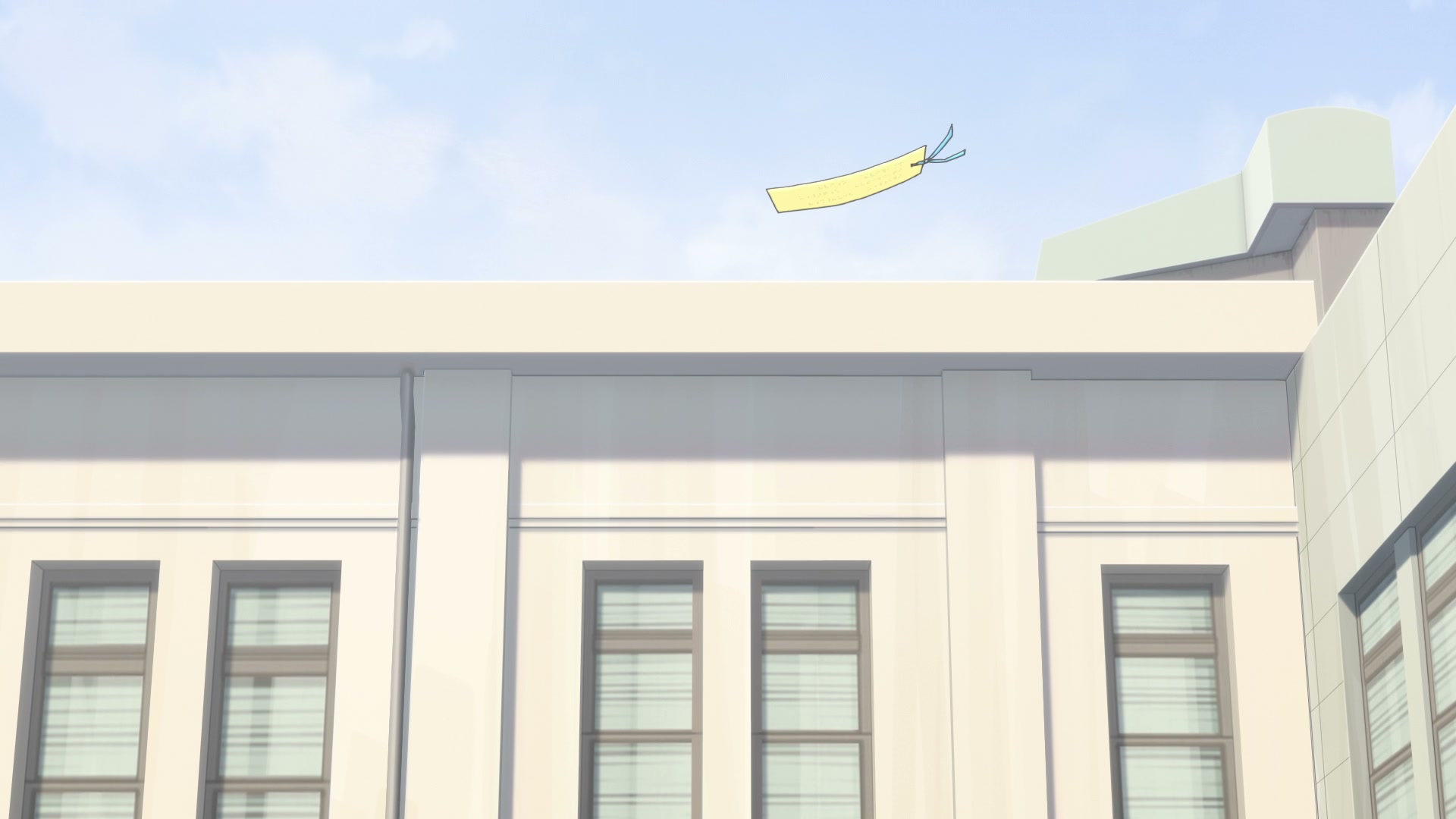
The bookmark that Sorano accidentally loses and later recovers serves as the story’s most tangible symbol. It contains, in braille, Fuyutsuki’s list of things she wants to do before she dies: go to a party, join a club, make friends, go shopping, set off fireworks, fall in love. The list is heartbreakingly ordinary. These are not grand ambitions but the basic experiences of a normal life that Fuyutsuki fears she will never have.
Sorano’s deciphering of the braille represents his effort to understand Fuyutsuki’s inner world. He cannot read braille, but he teaches himself enough to translate the bookmark’s message. This act of learning, of reaching across the gap between their experiences, becomes a declaration of love in itself. He is not content to simply care for Fuyutsuki; he wants to understand her.
The bookmark also connects to The Diary of Anne Frank, which Fuyutsuki reads in braille and which Sorano later records himself reading for her. Anne Frank’s courage in the face of persecution resonates with Fuyutsuki’s own battle against illness. The reference positions Fuyutsuki’s struggle within a larger context of human resilience. Anne’s belief in the goodness of people despite everything aligns with Fuyutsuki’s determination to find joy despite her circumstances.
Cultural Context and Japanese Storytelling
The series is deeply rooted in specific Japanese cultural contexts that enrich its meaning. The college setting, with its welcome parties, festival committees, and student guide system, reflects real aspects of Japanese university life. The “student guide” program for disabled students is a genuine institution at many Japanese universities, and the series depicts it with accuracy and respect.
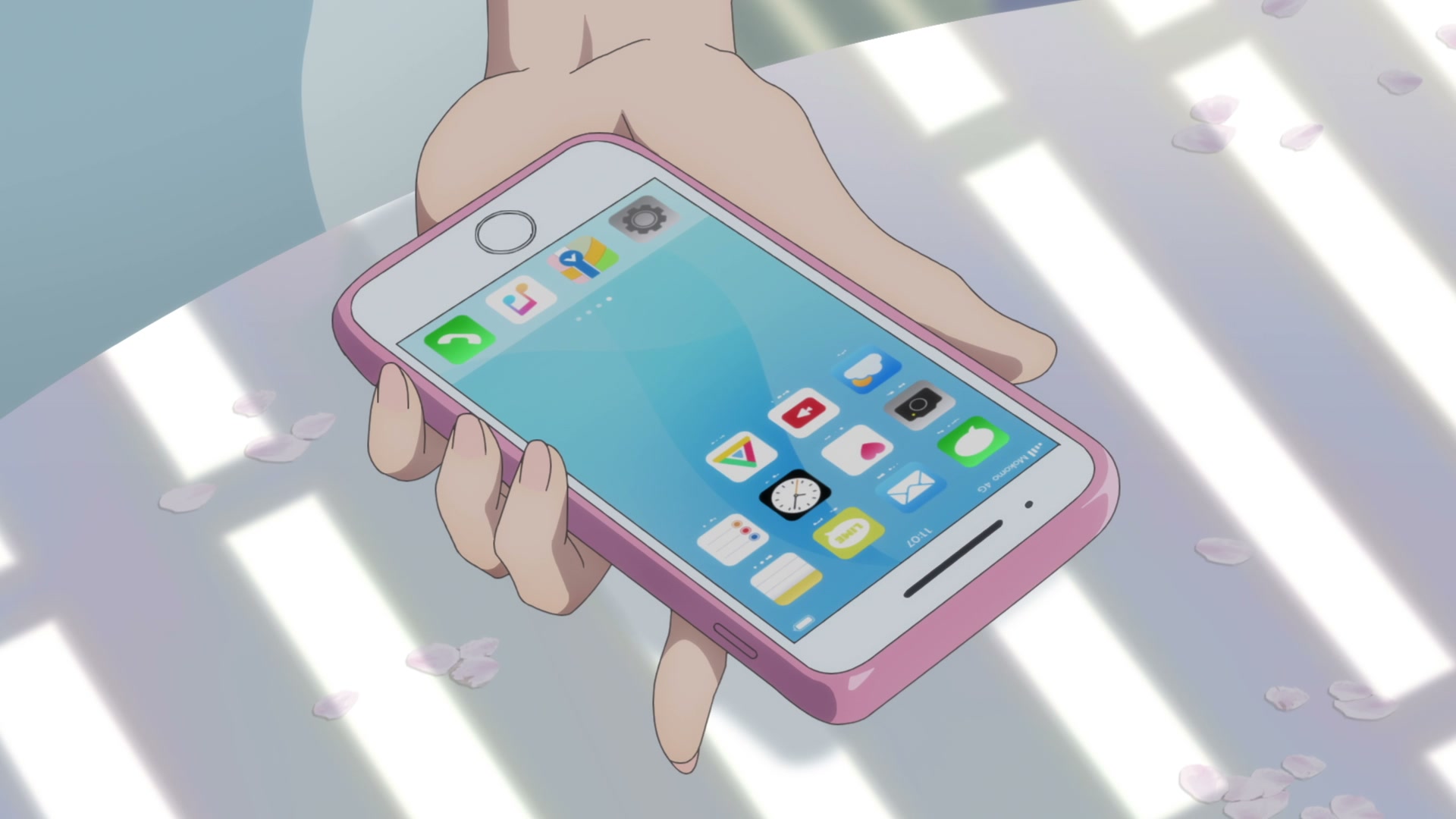
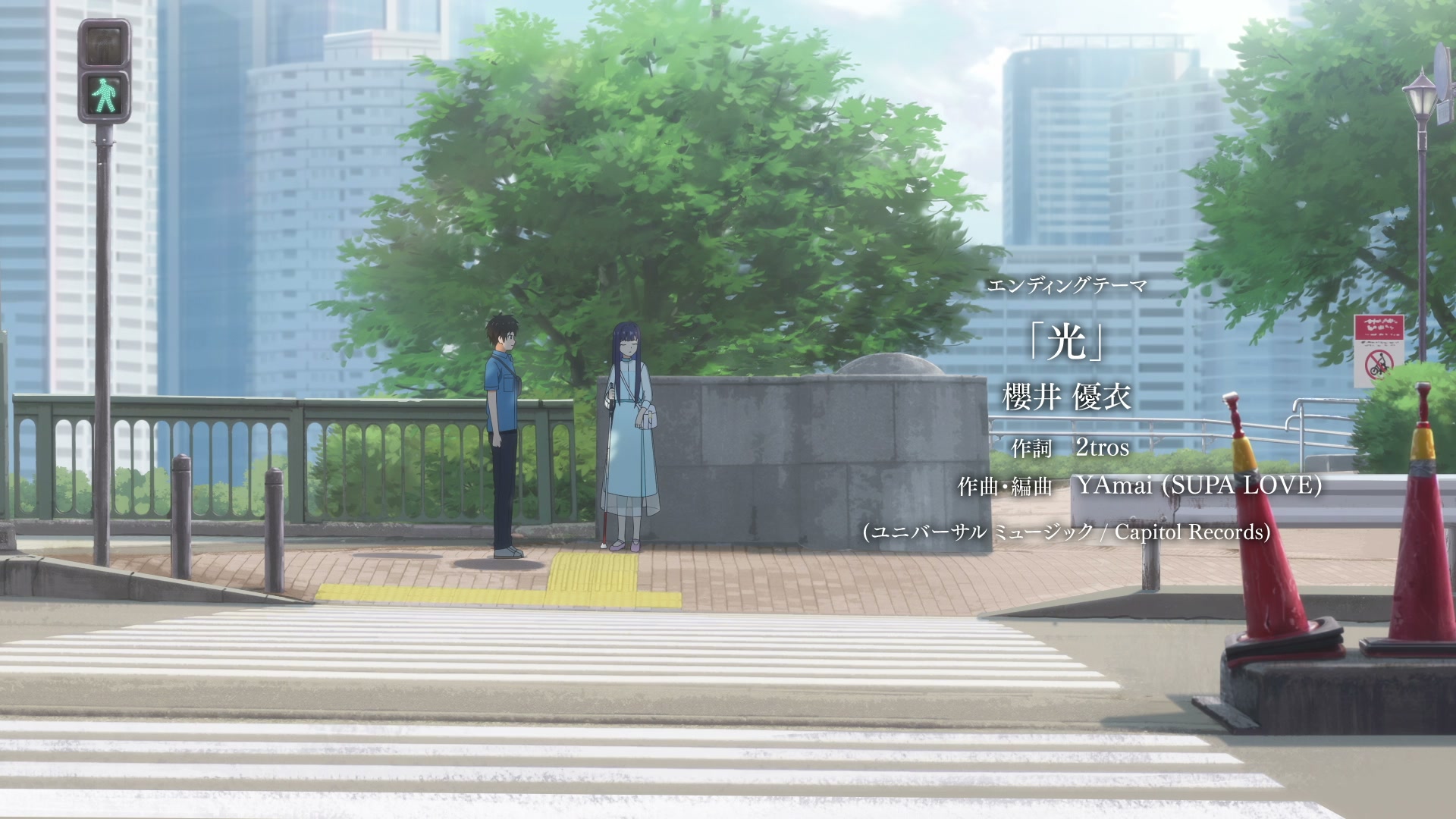
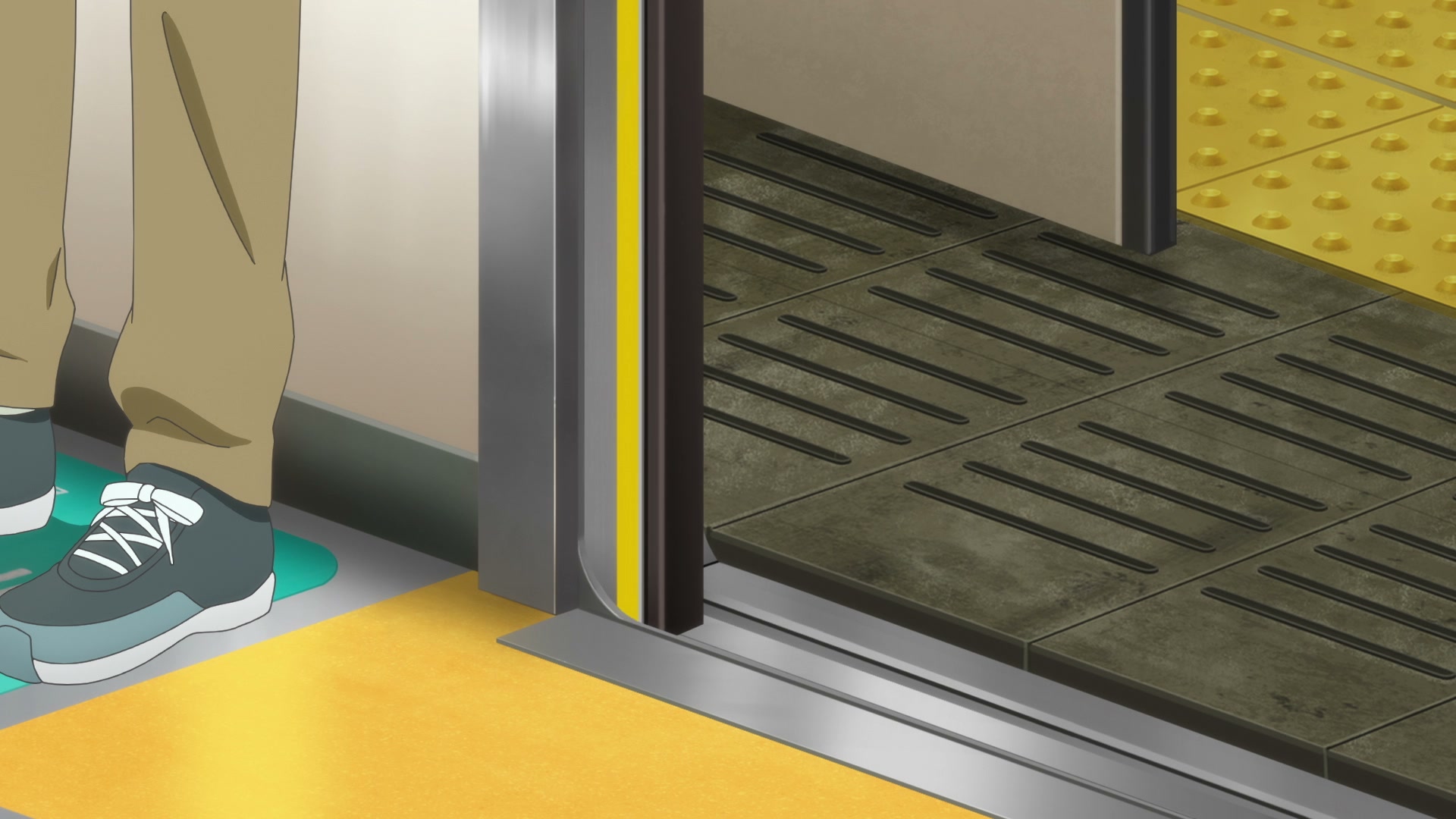
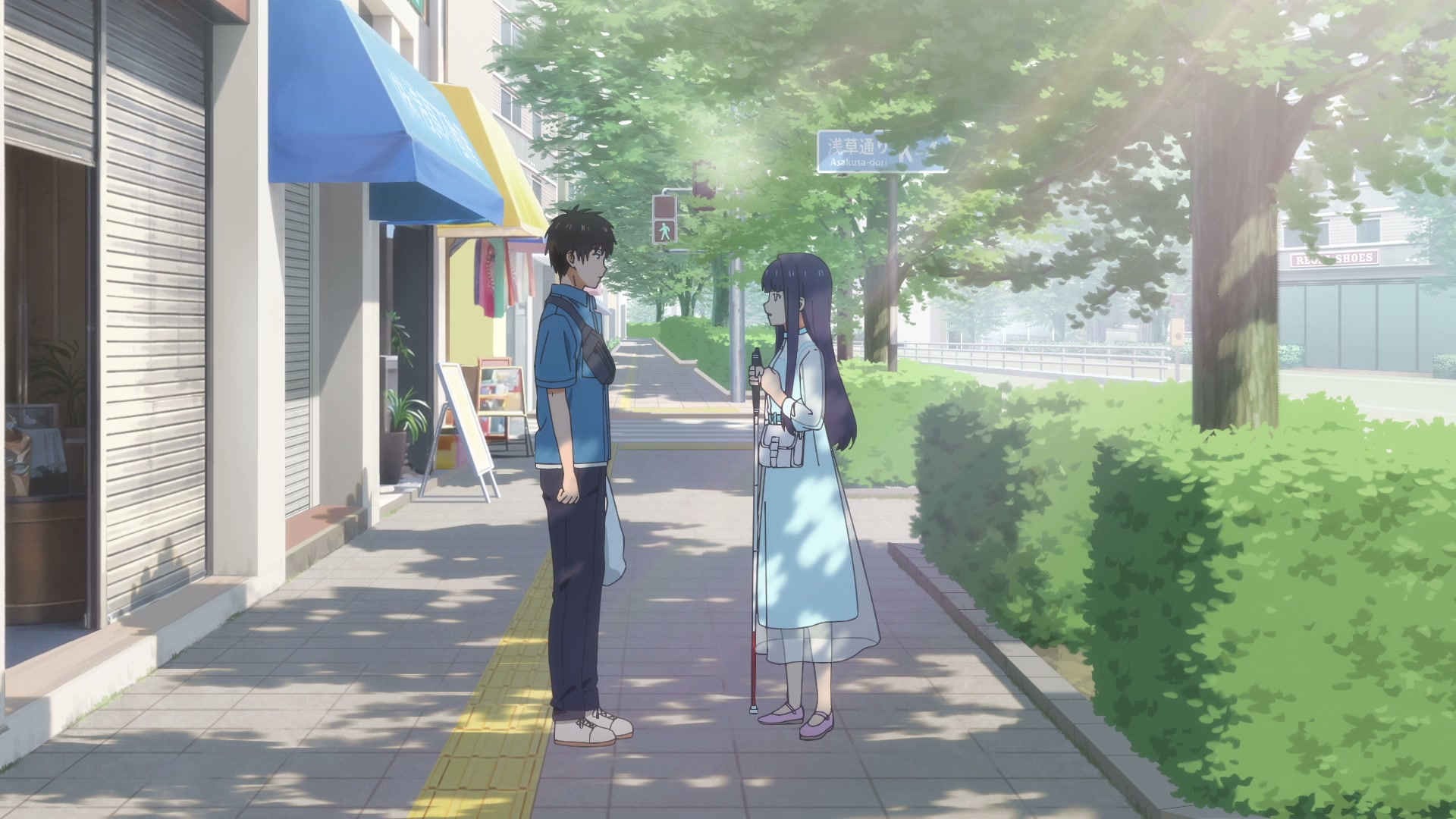
The attention to accessibility infrastructure is notable. Tactile paving, the white cane, screen readers on phones, braille books. These details ground the story in reality and educate viewers without being preachy. When Hayase complains about bicycles blocking the tactile paving, it reflects genuine advocacy concerns within the disabled community in Japan.
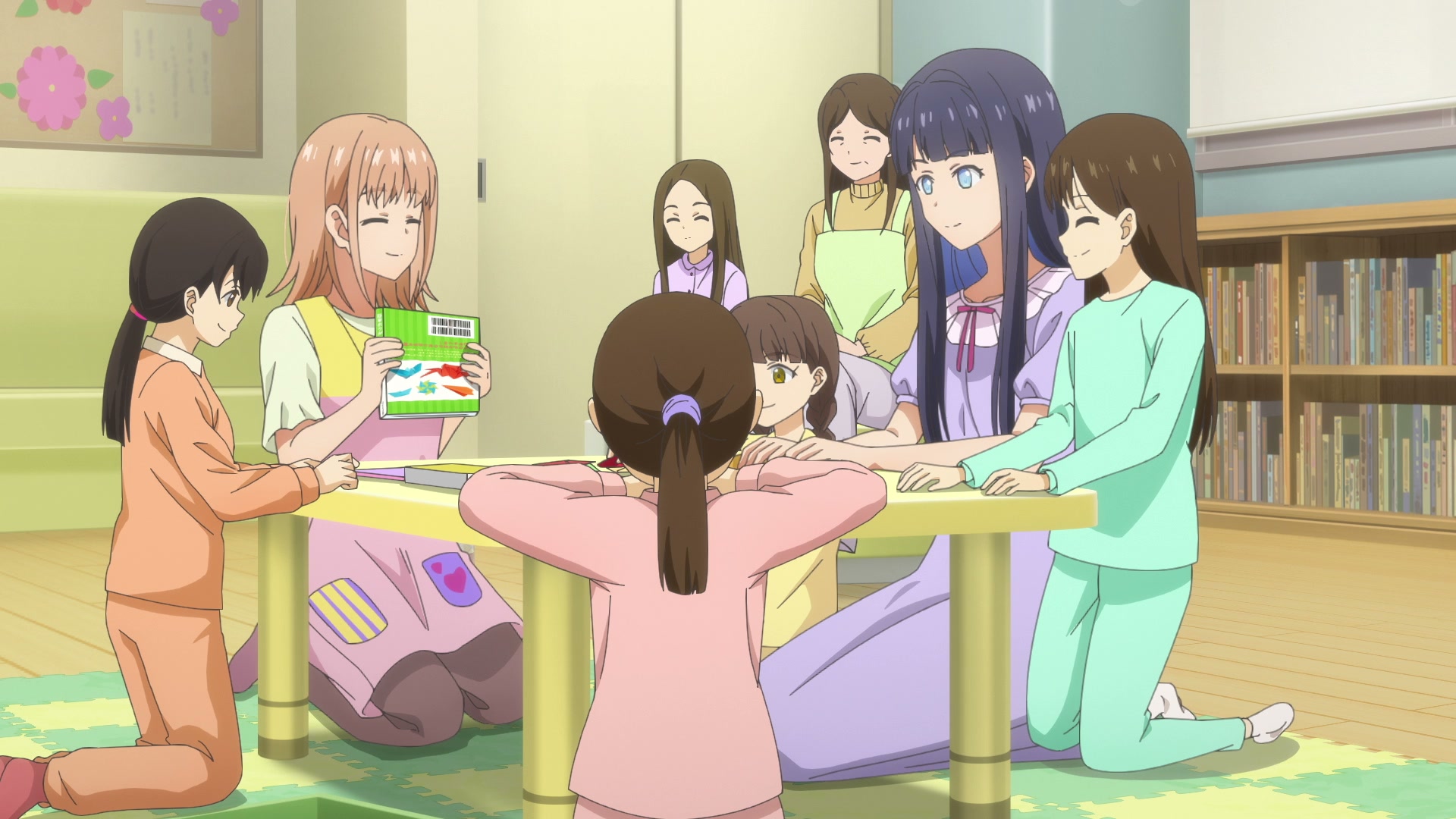
The medical setting also reflects Japanese cultural practices. The involvement of family members in patient care, the hospital’s “kids time” volunteer program, and the difficult conversations about prognosis all ring true. The series does not sensationalize illness but presents it as a reality that families must navigate with courage and grace.
Regional details add texture. Sorano’s hometown of Shimonoseki, famous for fugu and the Kanmon Straits fireworks festival, provides context for his character. The scenes in Tsukishima eating monjayaki, the water bus on the Sumida River, and the fireworks shops of Asakusabashi all ground the story in a specific urban geography.
Adaptation Considerations
I have not read the source material for this series, so I cannot comment on what may have been skipped, compressed, or altered in adaptation. What I can say is that the anime works as a complete emotional experience on its own terms. The pacing issues that exist are primarily in the epilogue, which compresses decades of relationship history into a few minutes. This compression is likely a necessity of the twelve-episode format rather than a failure of adaptation.
The series demonstrates a clear understanding of its own thematic goals and works toward them with consistency. The symbols are developed carefully, the character arcs are coherent, and the emotional payoff feels earned. Whatever the source material may have contained, the anime succeeds in telling its story effectively.
Characters
Sorano Kakeru: Learning to Make a Ripple
Sorano begins the series as someone who has constructed his entire personality around avoidance. His parents’ divorce and subsequent displacement between relatives’ homes taught him that visibility invites pain. His stated goal is to “not even make a ripple” in the world, to pass through life unnoticed and unbothered.
This withdrawal is not laziness or apathy. It is a survival strategy born from genuine trauma. When his father left, Sorano learned that attachment leads to loss, that loving someone means risking abandonment. His solution was to avoid attachment altogether, to keep his head down and his heart closed.
Meeting Fuyutsuki challenges this strategy at its foundation. Here is someone who has every reason to withdraw from the world, who faces obstacles Sorano cannot imagine, yet who engages with life proactively and joyfully. Her example forces Sorano to confront the possibility that his emotional withdrawal is not protection but prison.
The development of Sorano’s feelings for Fuyutsuki is handled with patience and realism. He does not fall in love at first sight. He is initially puzzled by her, then curious, then gradually drawn in by her warmth and humor. The terrace meetings become a ritual of connection that he looks forward to without fully understanding why. By the time he realizes he loves her, the feeling has been building for so long that it seems inevitable.
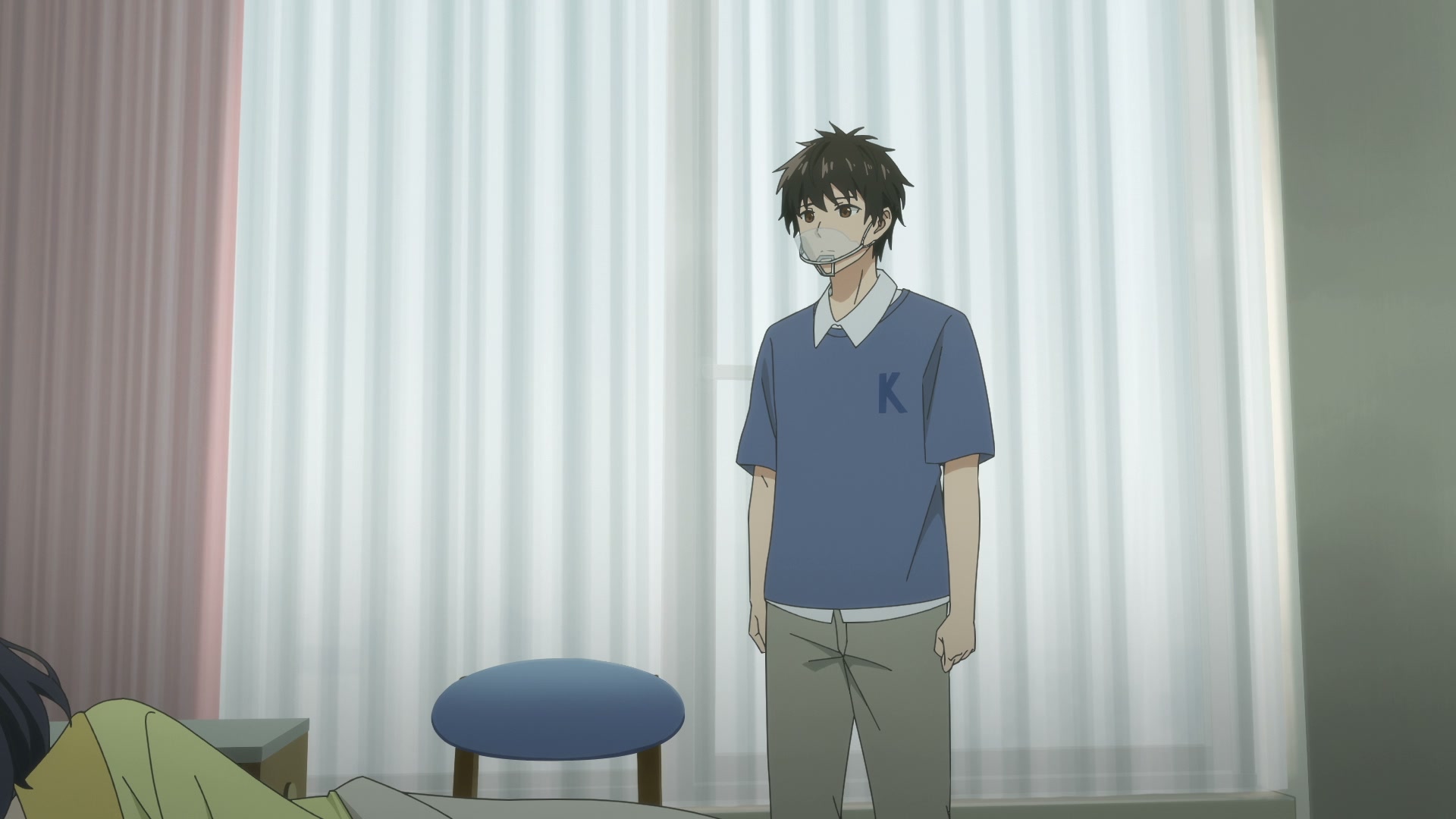
The crisis of Fuyutsuki’s “amnesia” reveals the depth of Sorano’s transformation. The young man who once avoided all connection now finds himself desperately pursuing someone who claims not to know him. He volunteers at a hospital. He visits daily. He refuses to accept her dismissal. This persistence is not stubbornness but love expressed through action.
The epilogue completes Sorano’s arc by showing him facing his own mortality. Diagnosed with terminal cancer, he initially gives up, telling his doctor he cannot continue treatment. It is Fuyutsuki’s letter, written before her death, that rekindles his will to live. Her words, her philosophy, her example. Everything she taught him about fighting for life now applies to his own battle. The student has become the practitioner.
Fuyutsuki Koharu: The Courage to Be Loved
Fuyutsuki is one of the most fully realized female characters in recent anime. She is not defined by her blindness or her illness, though both shape her experience. She is defined by her determination to live fully despite the obstacles she faces.
Her cheerful exterior initially seems like simple optimism, but the series gradually reveals the conscious effort behind her smile. She chooses to find joy because the alternative is despair. She chooses to pursue experiences because she knows her time may be limited. Her bucket list is not a gimmick but a genuine expression of her desire for a normal life.
The “amnesia” arc is Fuyutsuki’s most complex moment. After learning her cancer has spread and she has only months to live, she decides to protect Sorano by pushing him away. Her cold dismissal of him is an act of love, a sacrifice of her own happiness for his sake. She would rather he hate her now than grieve her later.
This decision, while misguided, is deeply sympathetic. Fuyutsuki knows what it means to watch someone you love suffer. She has watched her mother exhaust herself caring for her. She does not want Sorano to experience that pain. Her attempt to spare him is noble even if it is ultimately wrong.
Sorano’s persistence breaks through her defenses. Not through grand gestures but through consistent presence. He shows up. He stays. He refuses to be pushed away. And eventually, Fuyutsuki realizes that allowing herself to be loved is not selfish but generous. It gives Sorano the chance to choose what he wants, to decide for himself whether the joy of loving her is worth the pain of losing her.
Her letter to Sorano, written before her death from breast cancer, reveals that she found peace with her life and her choices. She writes that she has no memories with him that make her sad, only memories that bring joy. She tells him not to cry for her, to be proud of her for living as long as she did. This is not denial of grief but transcendence of it. She wants Sorano to remember their time together with gratitude rather than sorrow.
Hayase Yuko: The Performative Friend
Hayase serves as both catalyst and support throughout the series. She is the one who initially connects Sorano and Fuyutsuki, roping him into being a student guide. She is the one who sends the confession video that forces Sorano’s feelings into the open. And she is the one who organizes the hospital volunteering and fireworks show that give Fuyutsuki reasons to keep fighting.
Her admission that she feels like “the exact opposite” of Fuyutsuki’s sincerity reveals hidden depth. Hayase presents as confident and put-together, but she recognizes that her social performance may be exactly that. A performance. Fuyutsuki’s authenticity inspires her because it represents something she struggles to achieve.
Her emotional breakdown when Fuyutsuki doesn’t recognize her at the hospital is one of the series’ most affecting moments. The composed, capable Hayase crumbles in the face of rejection. Her grief is raw and honest, revealing how deeply she has invested in the friendship.
Hayase’s role in the fireworks show demonstrates her growth. She channels her anxiety into action, organizing an event that brings joy to hospitalized children and gives Fuyutsuki something to look forward to. Her narration during the show, dedicating fireworks to “those who have stood by her,” reveals her understanding of the event’s deeper meaning.
Narumi Ushio: The Emotional Anchor
Narumi could easily have been a one-note comic relief character, but the series gives him genuine depth. His extroverted personality and constant joking mask an emotional intelligence that proves crucial to the group’s functioning.
When Sorano confides his confusion about Fuyutsuki, Narumi’s advice is simple but profound: “Just act normally.” When Sorano worries about how to “deal with” Fuyutsuki’s blindness, Narumi shares his own experience of being treated differently, noting that “it doesn’t feel great when people tiptoe around you like that.” These moments reveal that Narumi’s goofy exterior hides real wisdom.
His absence during the navigation training is felt keenly. The paper cranes he folds with his shipmates become a tangible expression of care from a distance. When he returns for the fireworks show, his presence completes the group dynamic.
Narumi’s limitations are also acknowledged. He cannot fix what is broken. He cannot cure Fuyutsuki or erase Sorano’s grief. What he can do is be present, offer comfort, and remind everyone that life continues even in the shadow of loss.
Kotomugi Yuichi: The Unexpected Mentor
Kotomugi’s initial appearance as the gruff, dismissive fireworks club leader seems designed to obstruct Fuyutsuki’s dreams. His refusal to let her join, his showing of burn scars, his warnings about danger. All of it reads as rejection.
But the series gradually reveals Kotomugi as someone who cares deeply about safety and about respecting the power of fireworks. His concern is not that Fuyutsuki is incapable but that she might be hurt. The burn scars are not a threat but a warning born from experience.
His return of Fuyutsuki’s bookmark to Sorano is the act that sets the entire climax in motion. Without that small kindness, Sorano would never have deciphered the bucket list or organized the fireworks show. Kotomugi’s gruffness hides a generous heart.
His mentorship of Sorano at the fireworks factory provides some of the series’ most philosophical moments. His explanation of how fireworks work, the layers of wrapping that build pressure until explosion, becomes a metaphor for emotional release. His observation that “everyone has something they keep bottled up inside” and that fireworks let it all out speaks directly to Sorano’s emotional journey.
Fuyutsuki Haruka: The Silent Strength
Fuyutsuki’s mother appears only briefly but leaves a lasting impression. She has watched her daughter battle illness multiple times, from the childhood cancer that first threatened her life to the recurrence that took her sight to the terminal diagnosis that frames the series’ present.
Her philosophy is simple: “If she’s going to overcome this, we need to stay smiling for her.” This is not denial but strategy. Haruka knows that her own despair would only burden her daughter. So she smiles. She jokes. She maintains the positive atmosphere that Koharu needs to keep fighting.
Her exhaustion is revealed in a quiet moment when she asks Sorano to stay with Koharu while she rests. The request is small, but it speaks volumes about the toll that caregiving takes. Haruka is not superhuman. She is a mother doing her best under impossible circumstances.
Her teasing of Sorano, suggesting that his calling her “Mom” implies a relationship with Koharu, reveals a playful side that mirrors her daughter’s sense of humor. The apple has not fallen far from the tree.
Visuals and Animation
Art Style and Direction
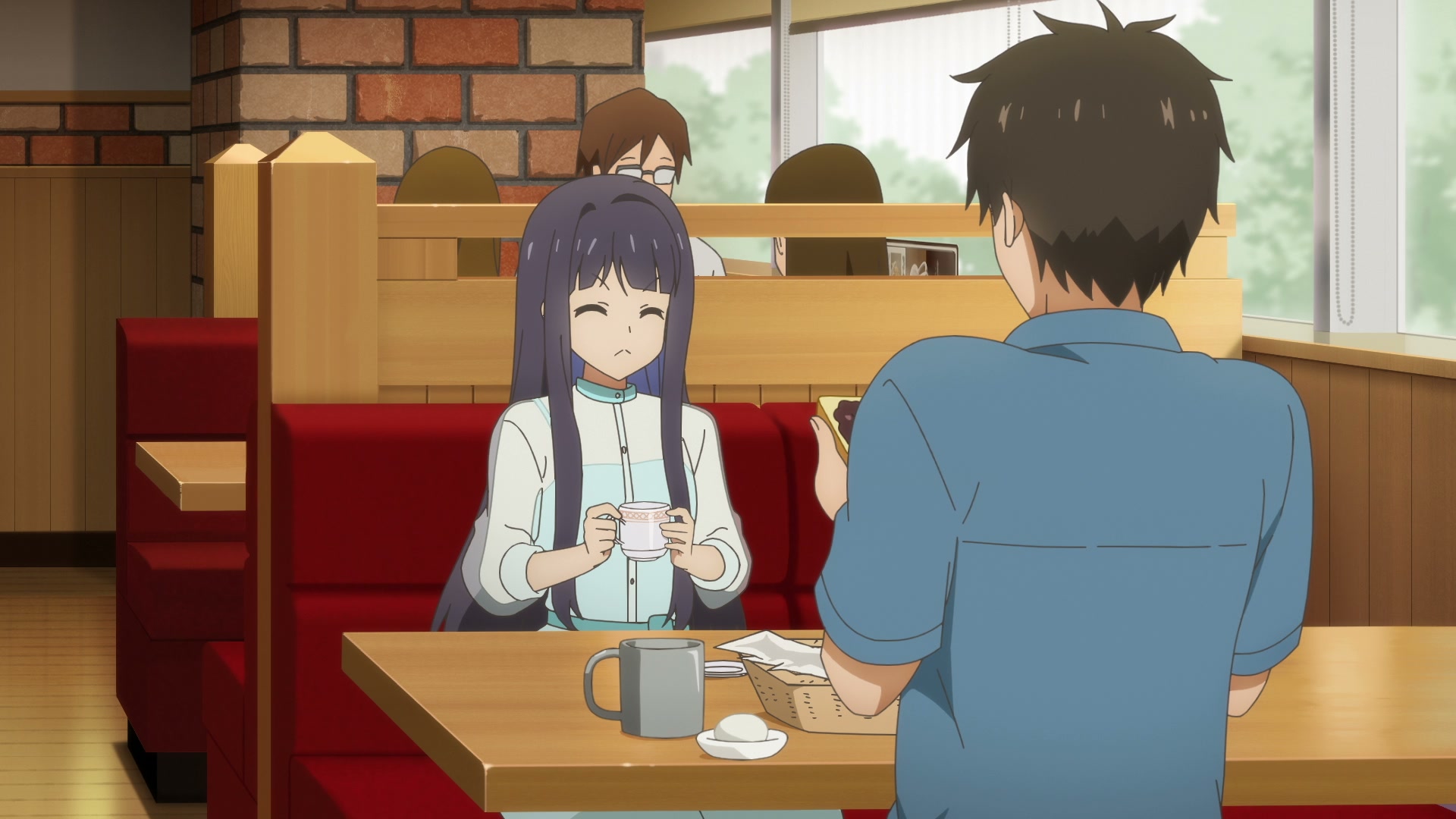
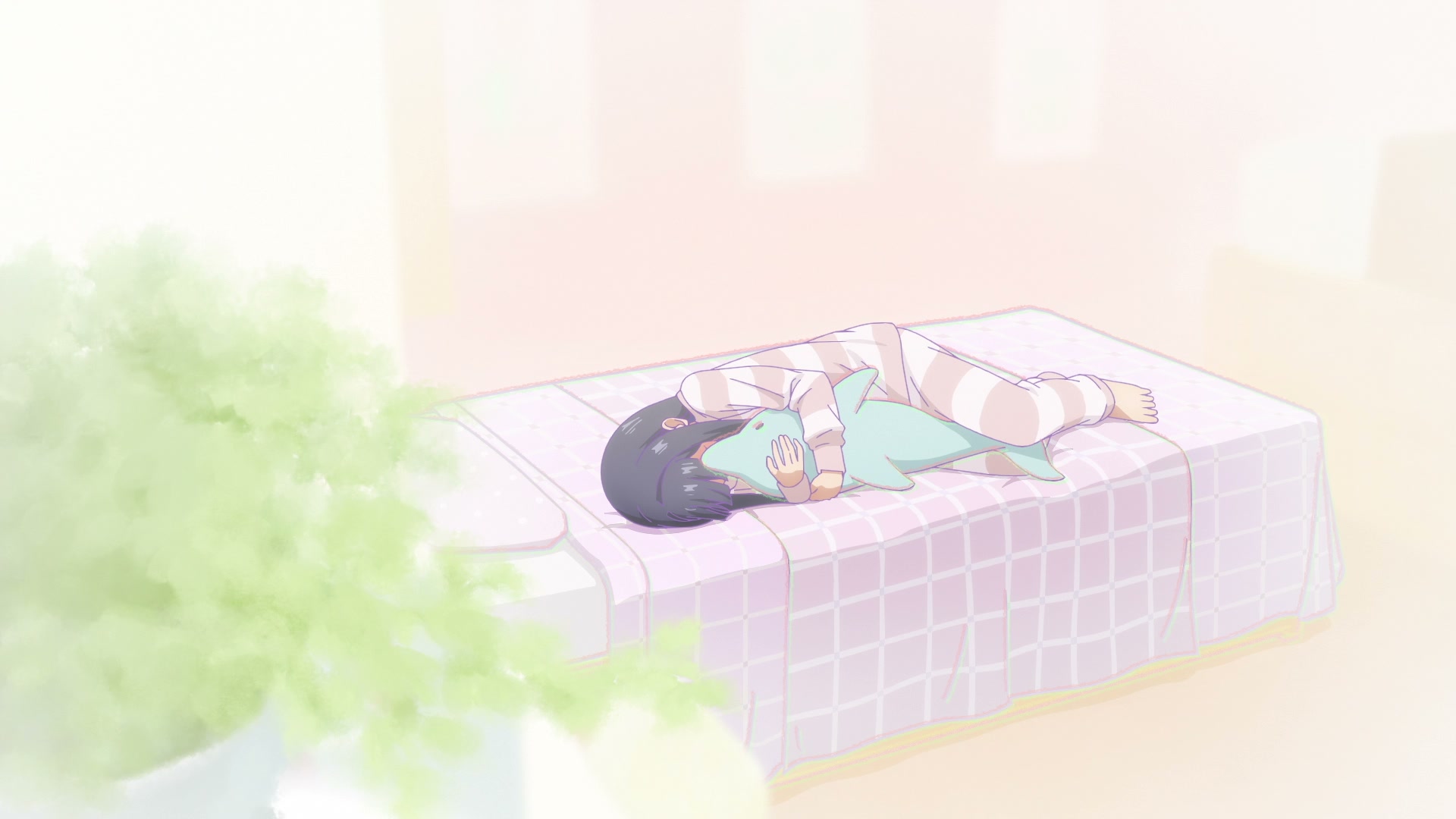
Toumei na Yoru ni Kakeru Kimi to, Me ni Mienai Koi wo Shita employs a clean, soft aesthetic that suits its emotional register. The thin linework and gentle cel-shading create a sense of warmth and approachability. This is not a series that wants to overwhelm you with visual spectacle. It wants to invite you into its world and make you comfortable there.
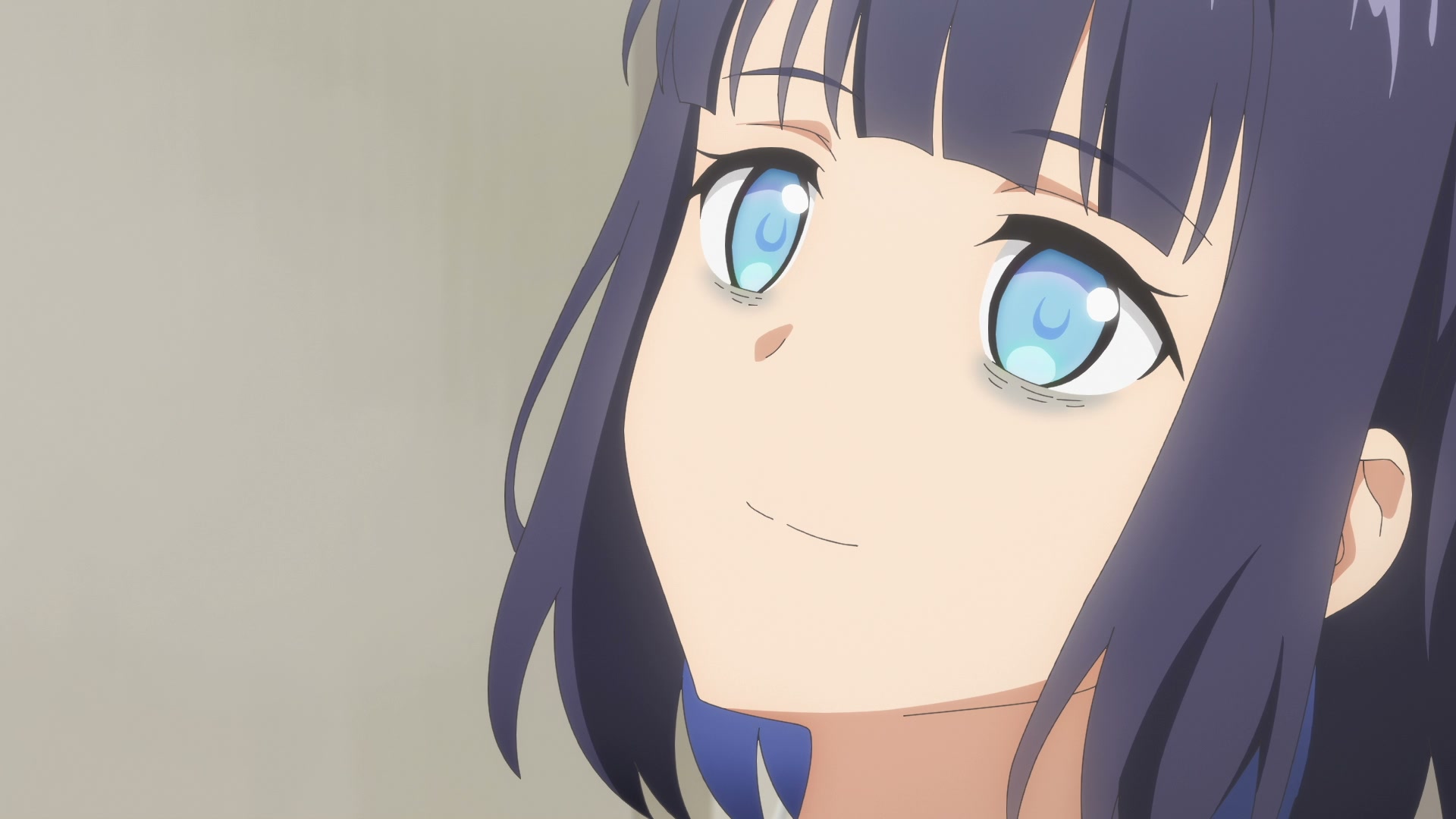
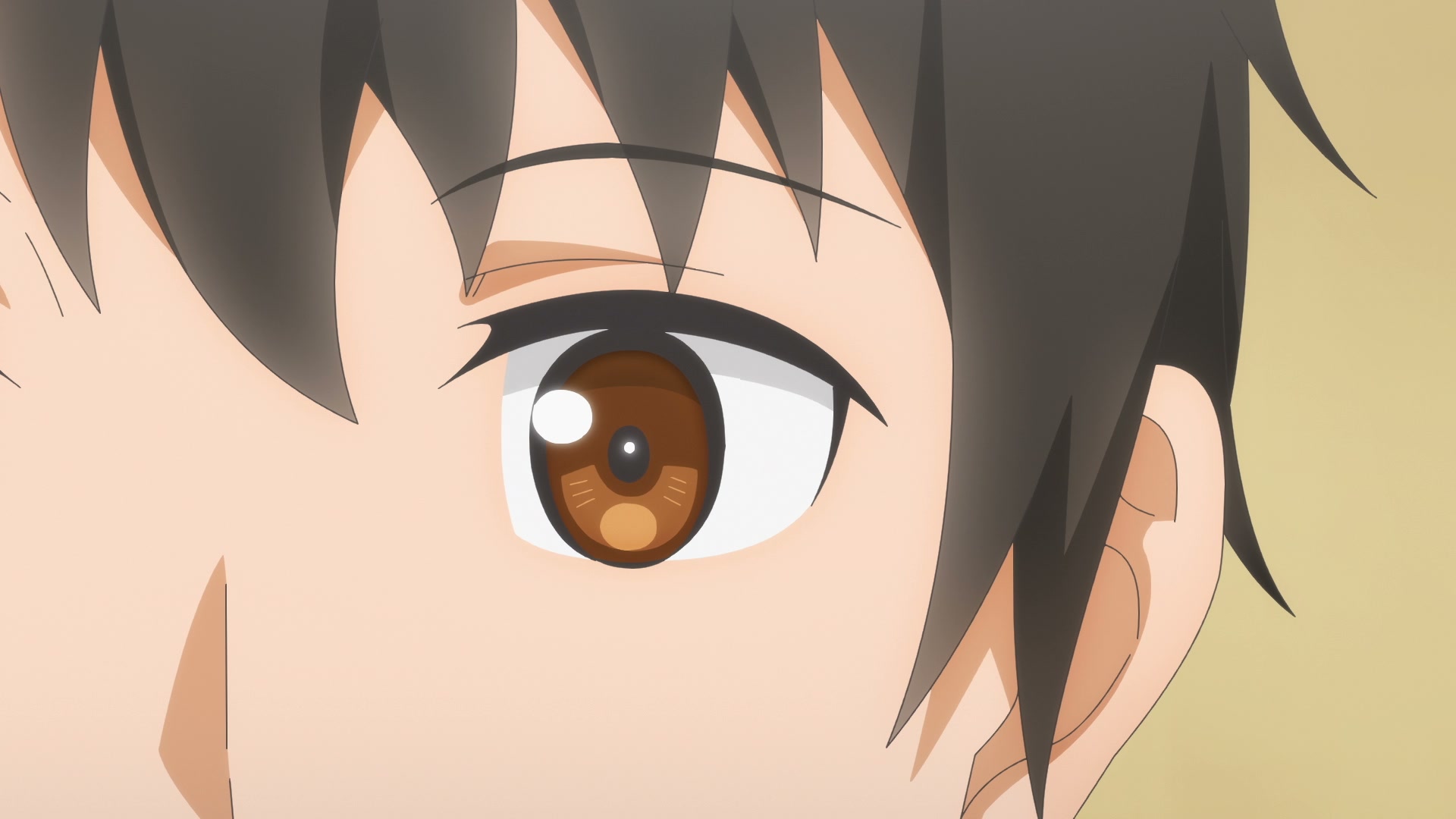
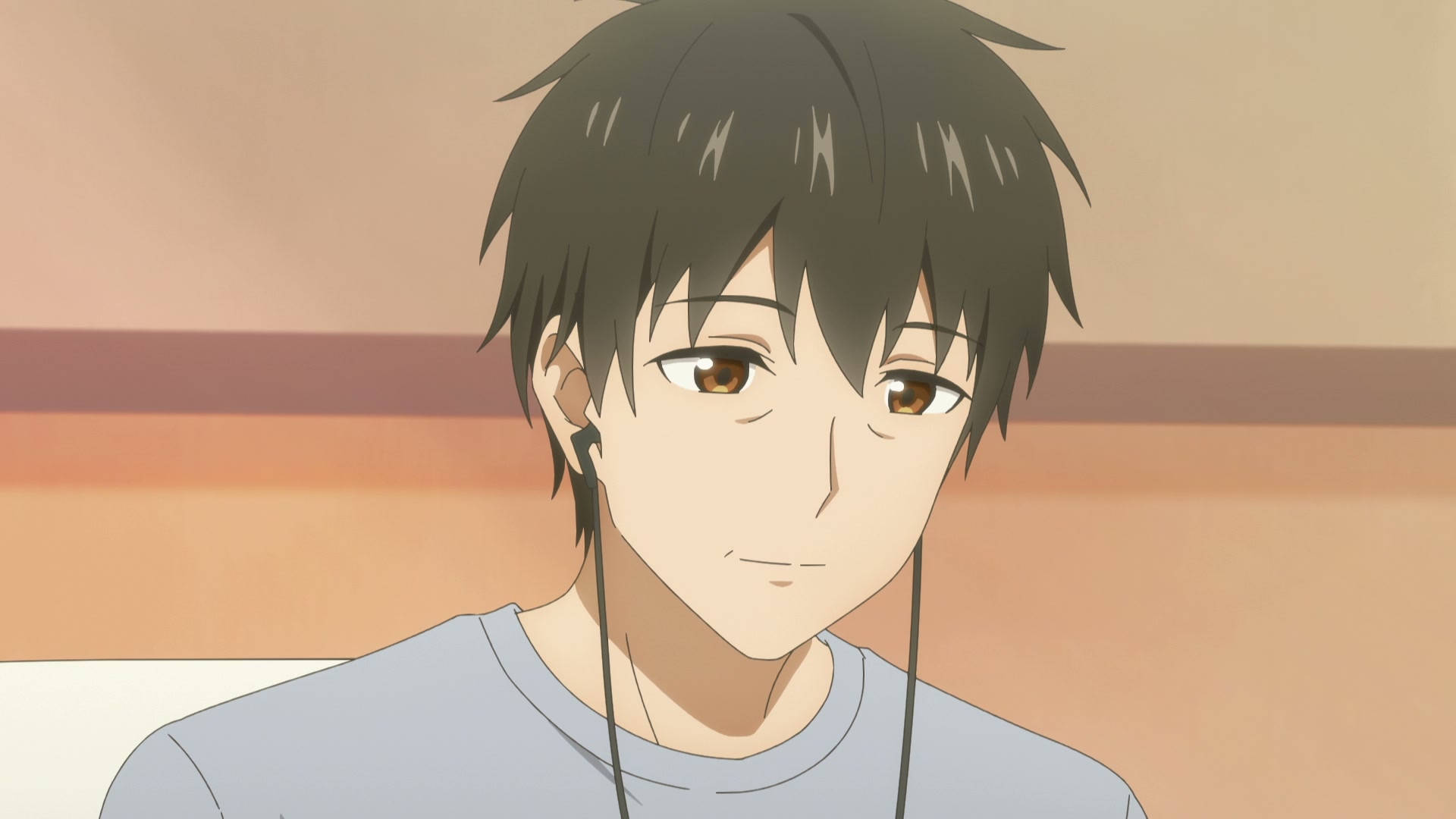
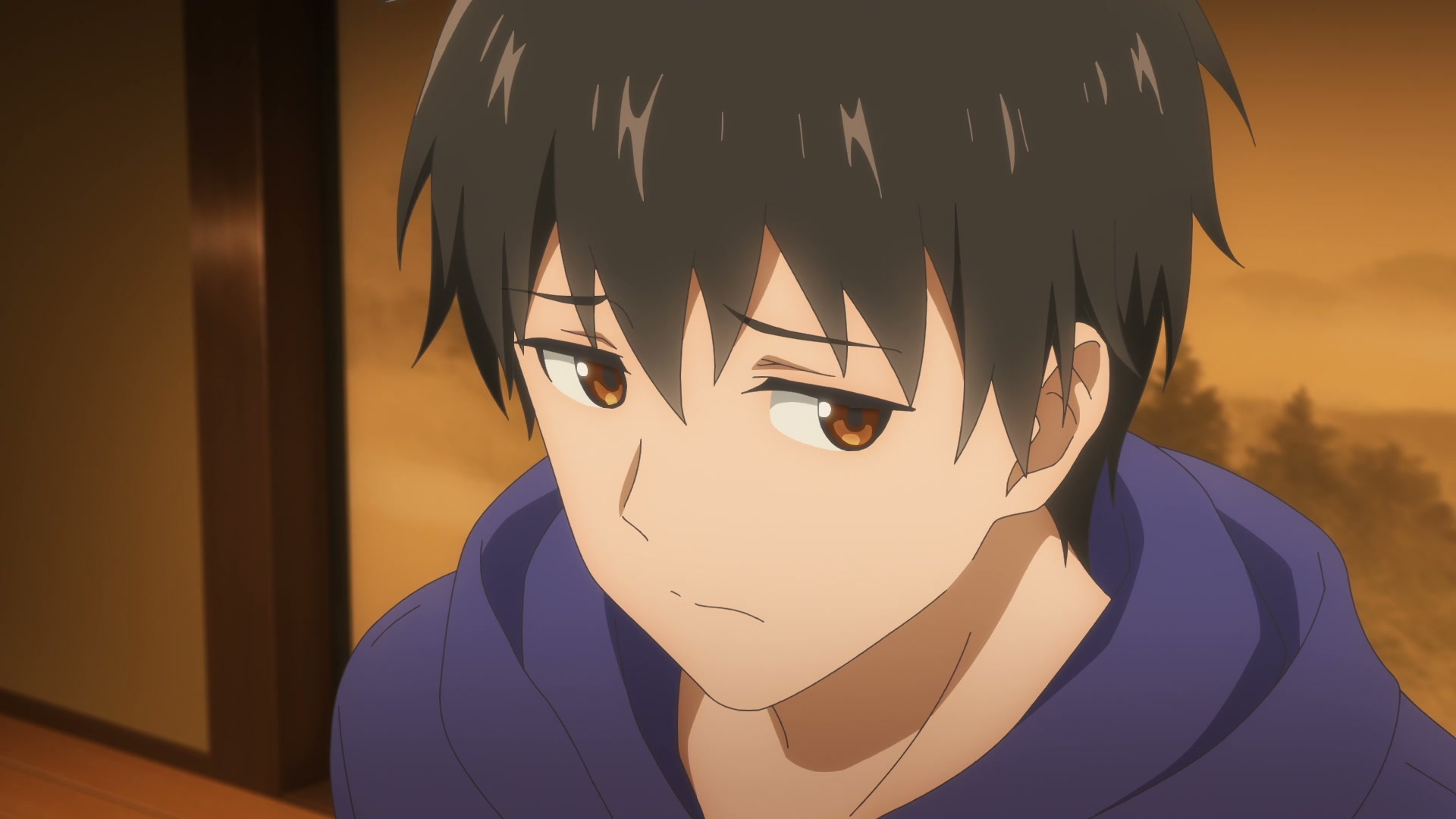
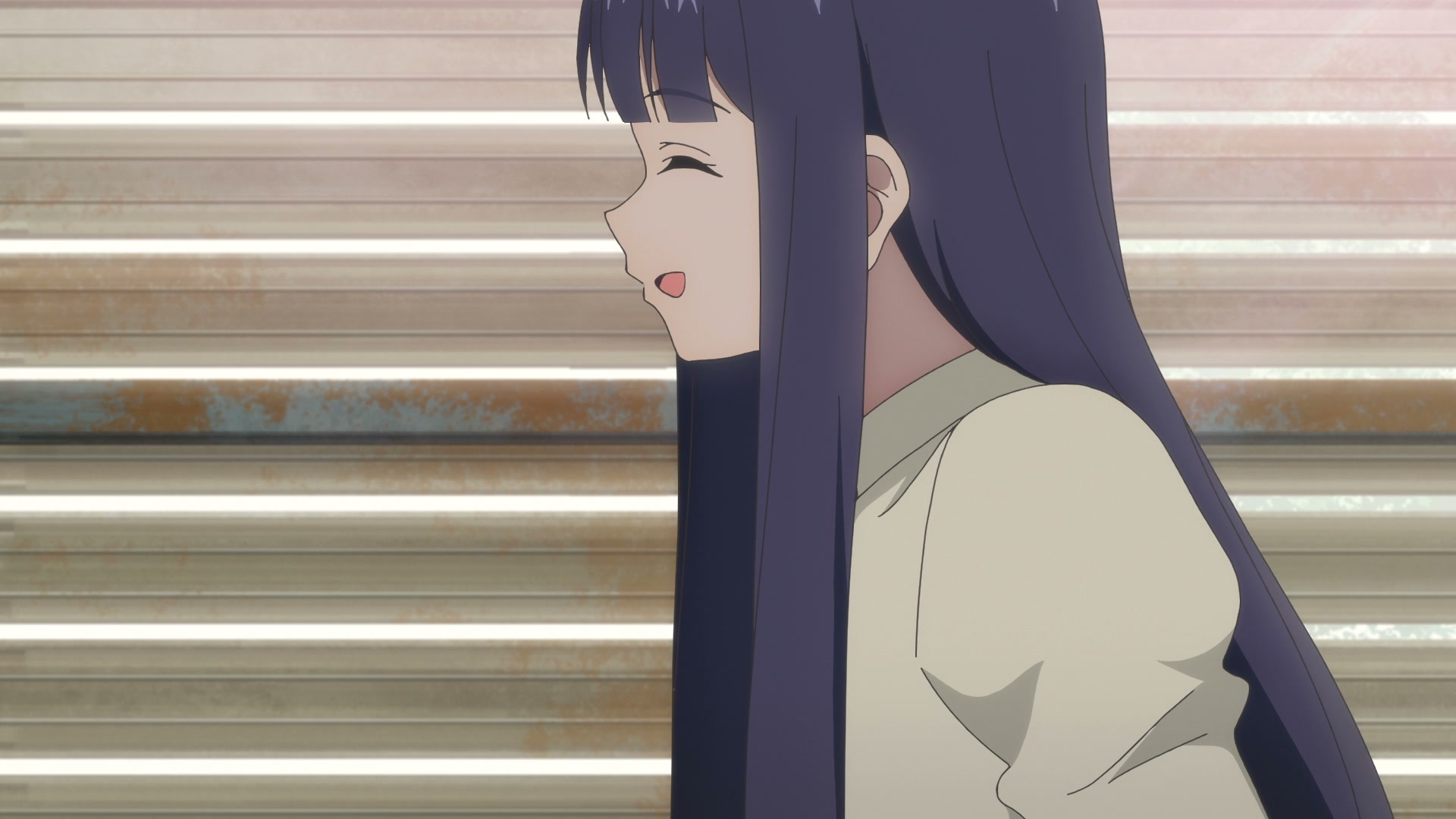
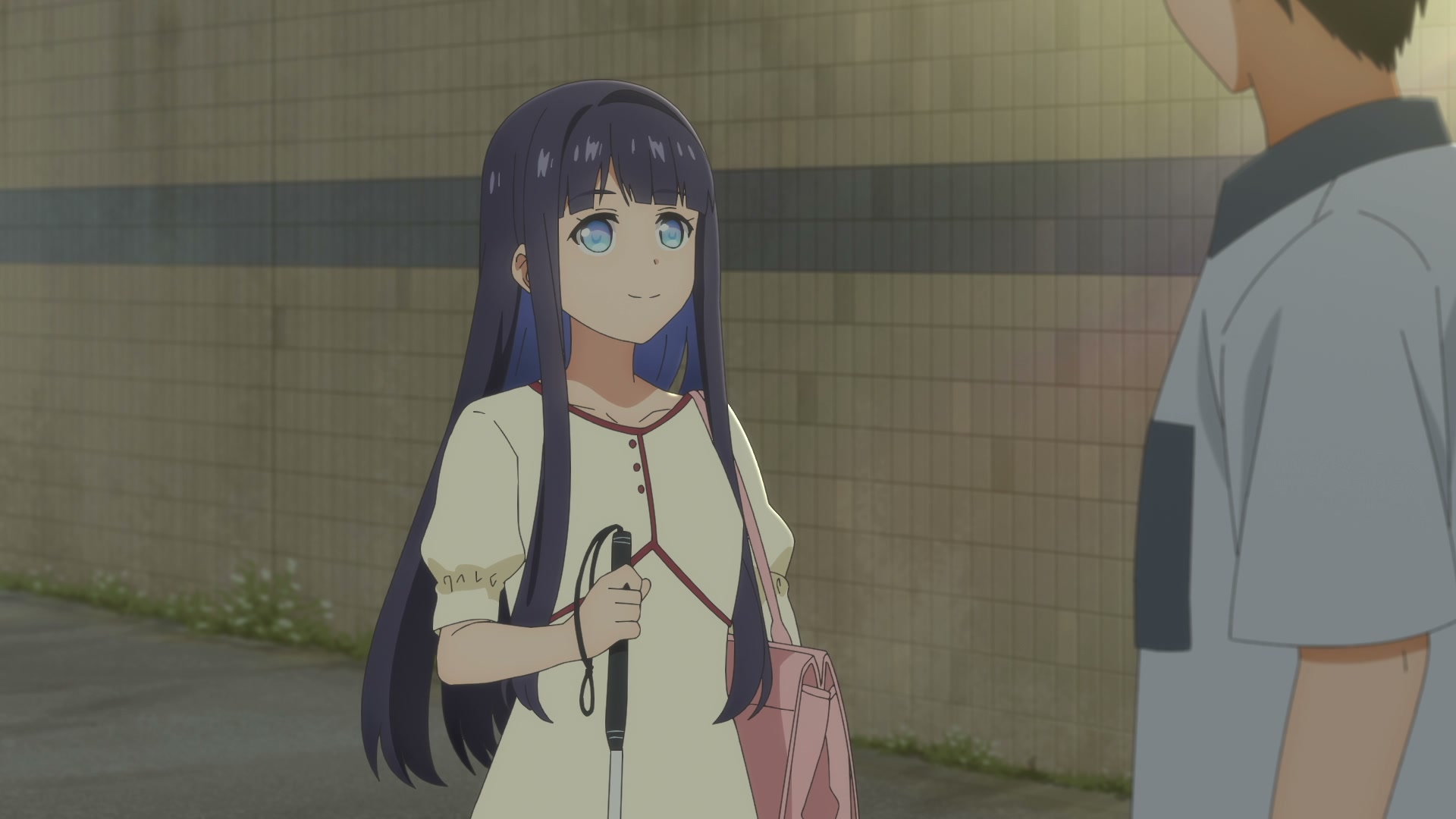
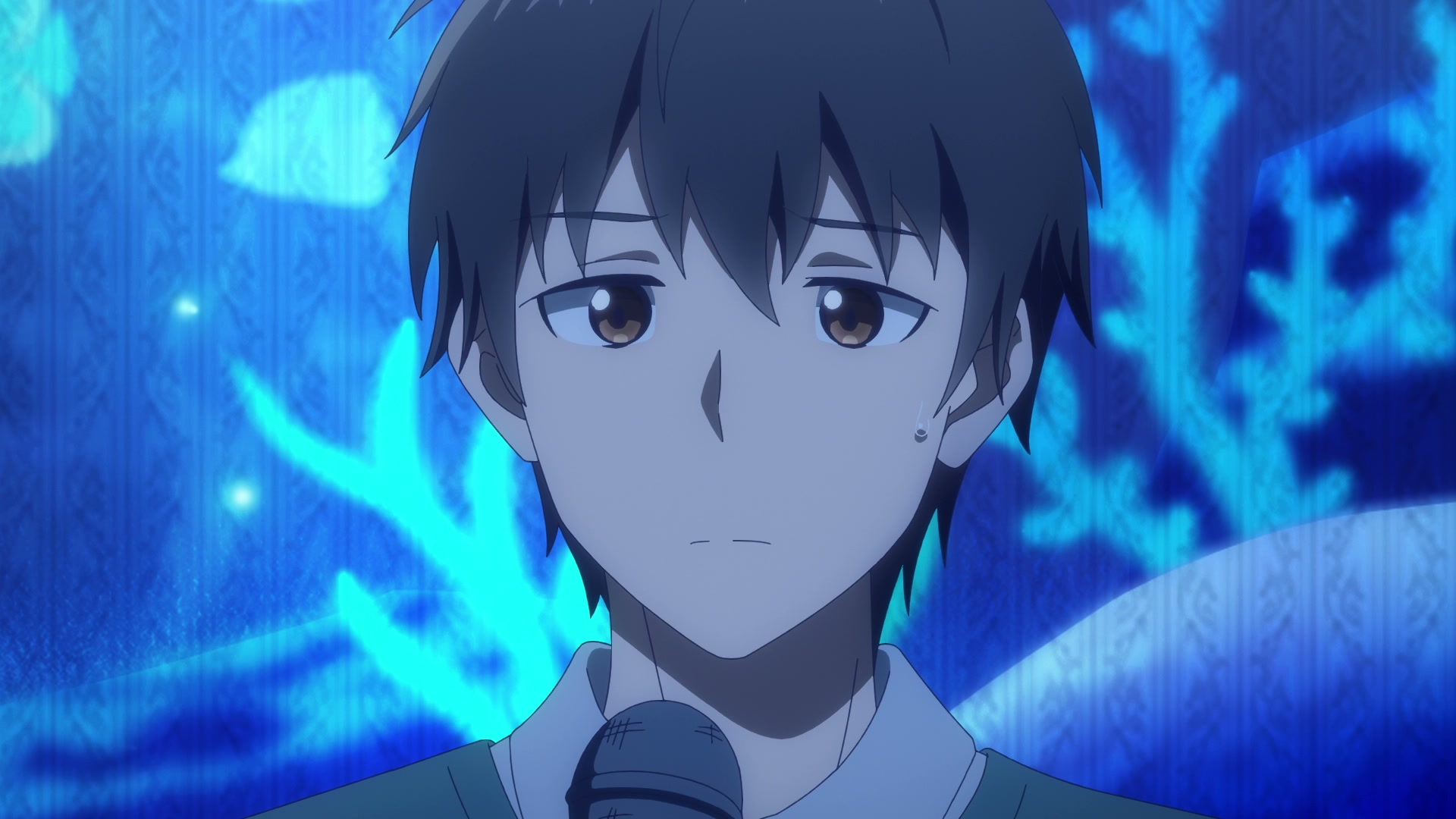
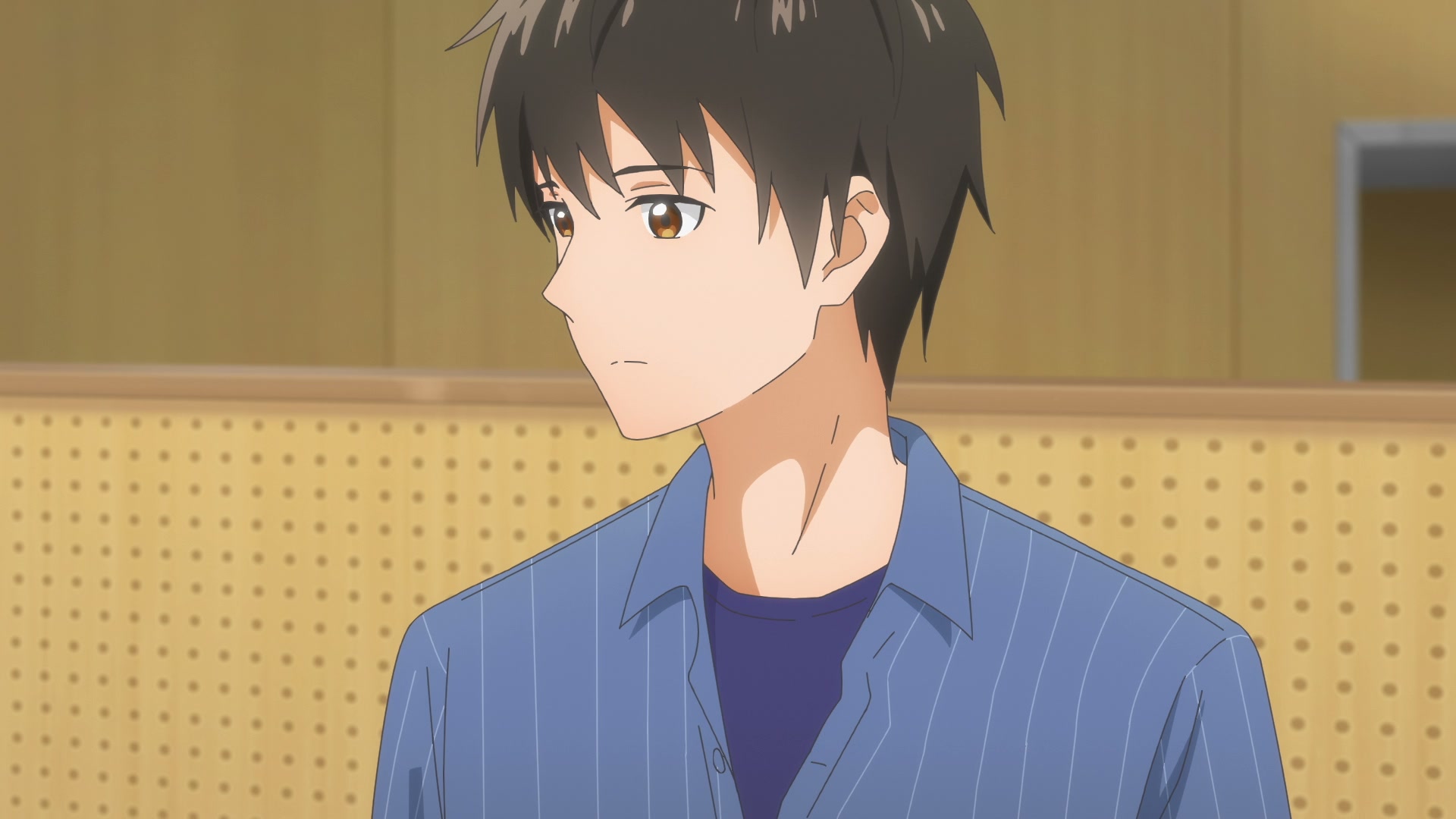
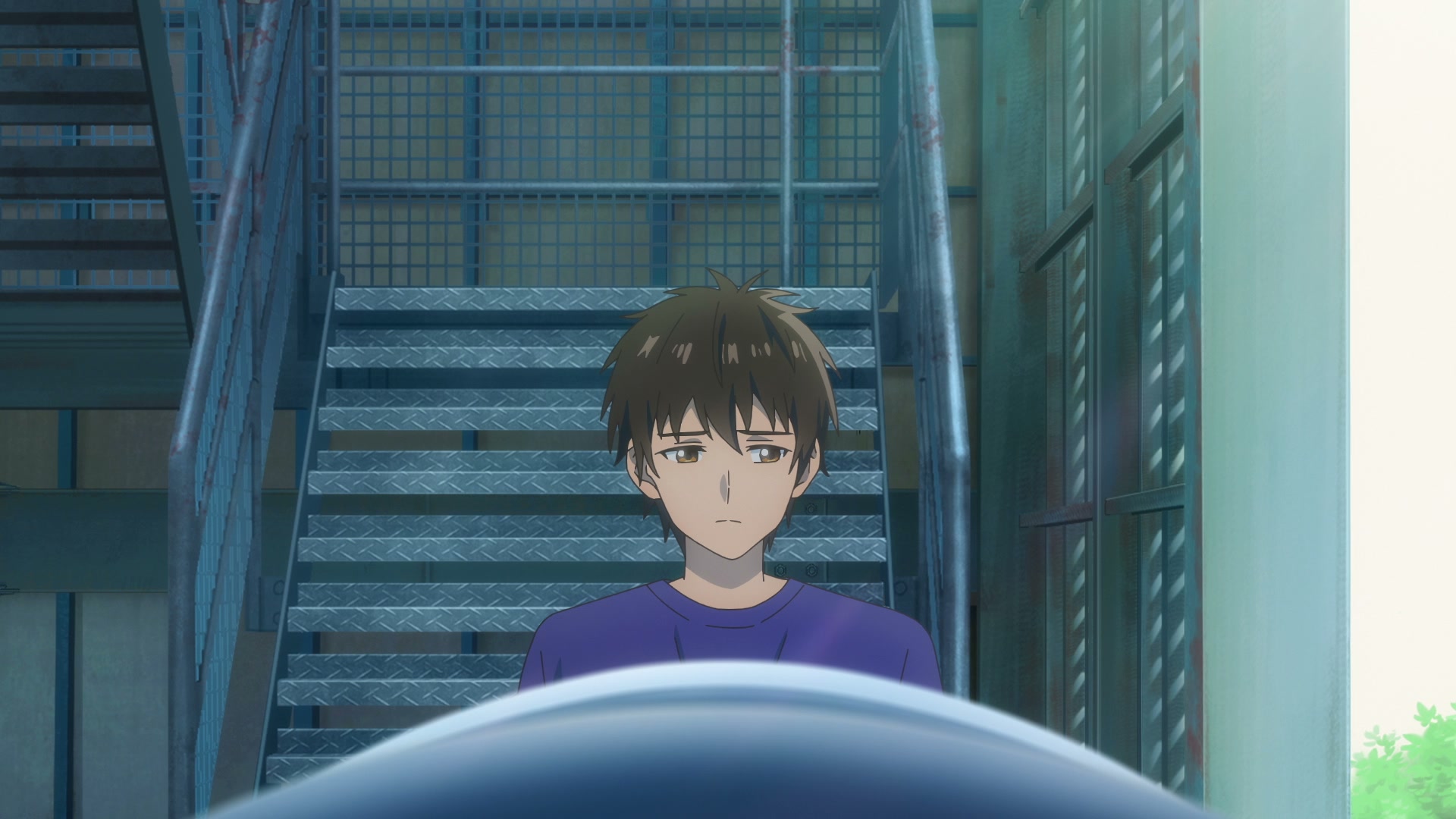
The character designs are grounded in realistic proportions with subtle stylization. Sorano’s messy dark hair and casual clothing reflect his unassuming personality. Fuyutsuki’s large, expressive eyes are the focal point of her design, creating a poignant tension between her beauty and her blindness. The eyes that cannot see are still the windows to her soul.
The art direction demonstrates versatility in its handling of different emotional registers. The early college scenes are bright and cheerful, dominated by pastels and natural light. The hospital scenes shift to cooler tones, with sterile whites and clinical lighting. The night scenes employ deep blues punctuated by warm light sources. Each setting has its own visual language that reinforces the emotional content.
Lighting and Color Design
Lighting is the production’s standout strength. The series uses light not just to illuminate but to communicate mood and meaning.
Outdoor scenes frequently feature komorebi, sunlight filtering through trees and casting dappled shadows. This technique creates a sense of peaceful nostalgia, of summer days that seem endless. The terrace where Sorano and Fuyutsuki meet is bathed in this gentle light, making it feel like a space apart from the rest of the world.
Golden hour sequences wash characters in warm orange glows, creating introspective atmospheres for important conversations. The water bus ride, with its golden light reflecting off the river, becomes a moment of shared beauty that neither character will forget.
Hospital lighting shifts depending on the scene’s emotional register. The cold, clinical light of medical procedures contrasts with the soft, warm light of Sorano reading to Fuyutsuki in her room. The lighting tells us whether we are in a space of treatment or a space of comfort.
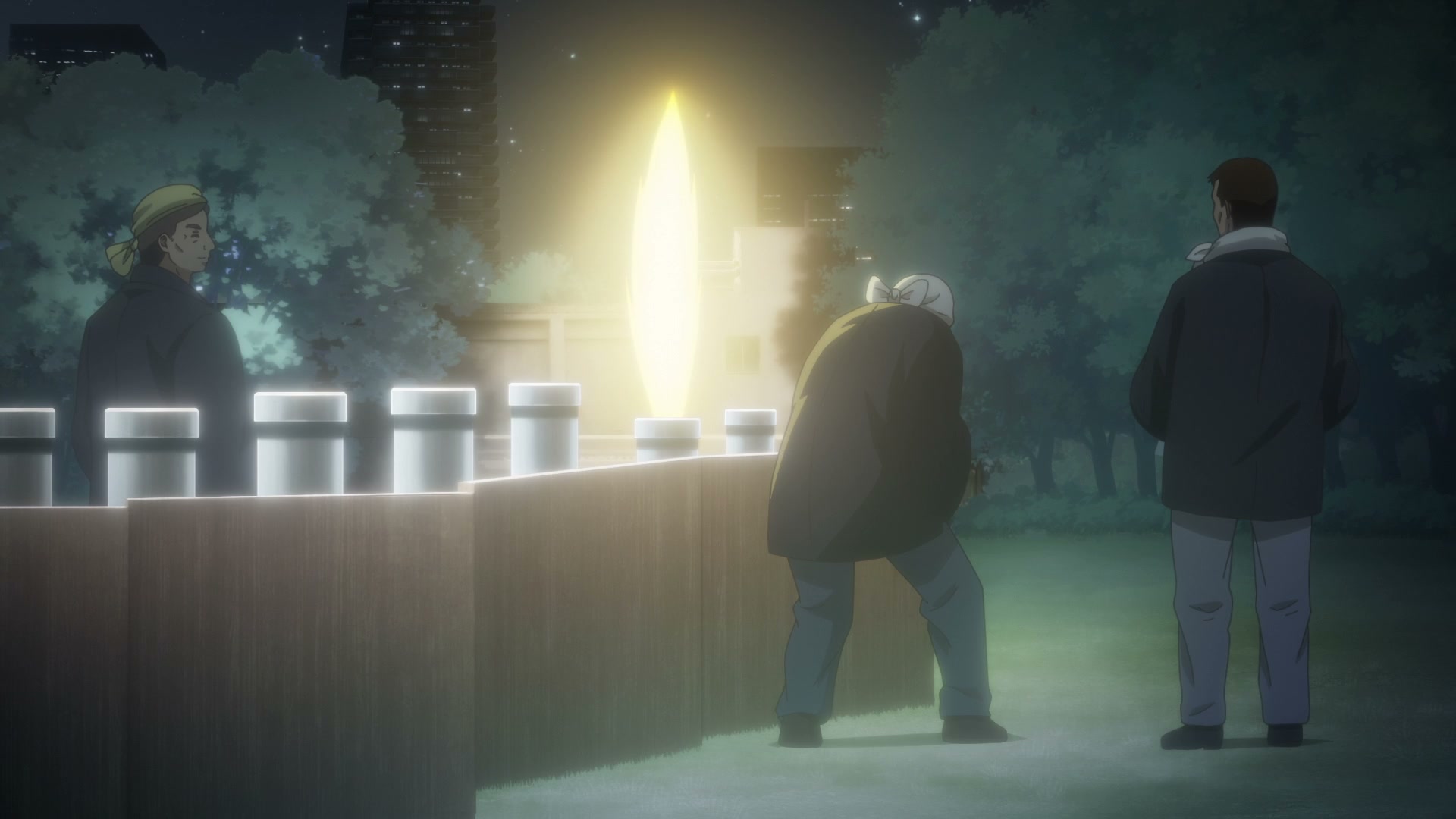
Night scenes employ cool blues with warm accents. The sparkler scene in the final episode is particularly effective, with the warm glow of the flames against the cool night creating a sense of intimate isolation. The fireworks themselves are rendered with bloom effects that make them seem to glow from within.
Background Art and Environmental Design
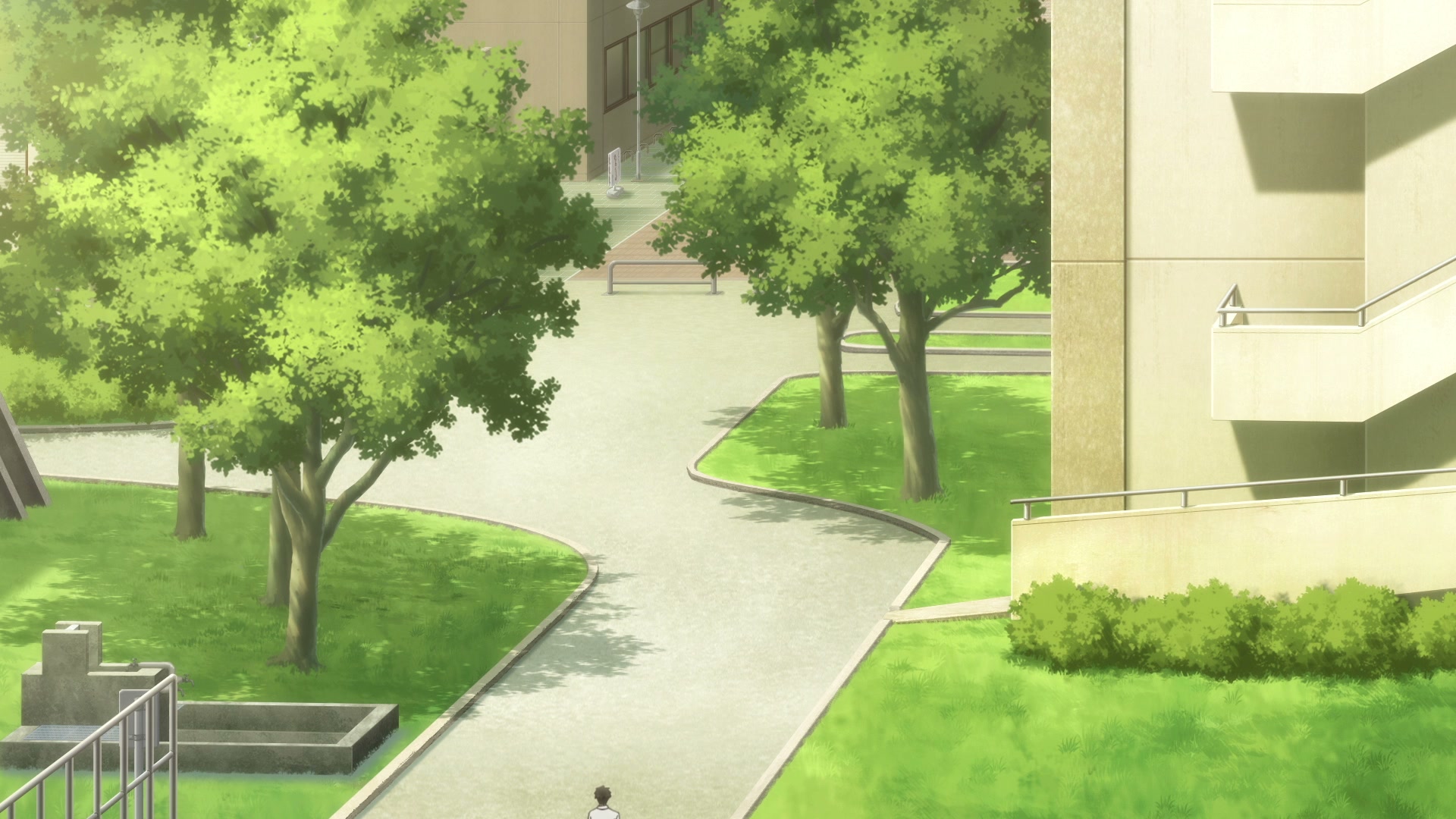
The background art grounds the story in recognizable reality. The college campus, with its terrace, Memorial Hall, and dormitory, feels like a real place where real students might study and fall in love. The attention to architectural detail, from the grand piano in the Memorial Hall to the prefab clubhouse by the pond, creates a world that is easy to inhabit.
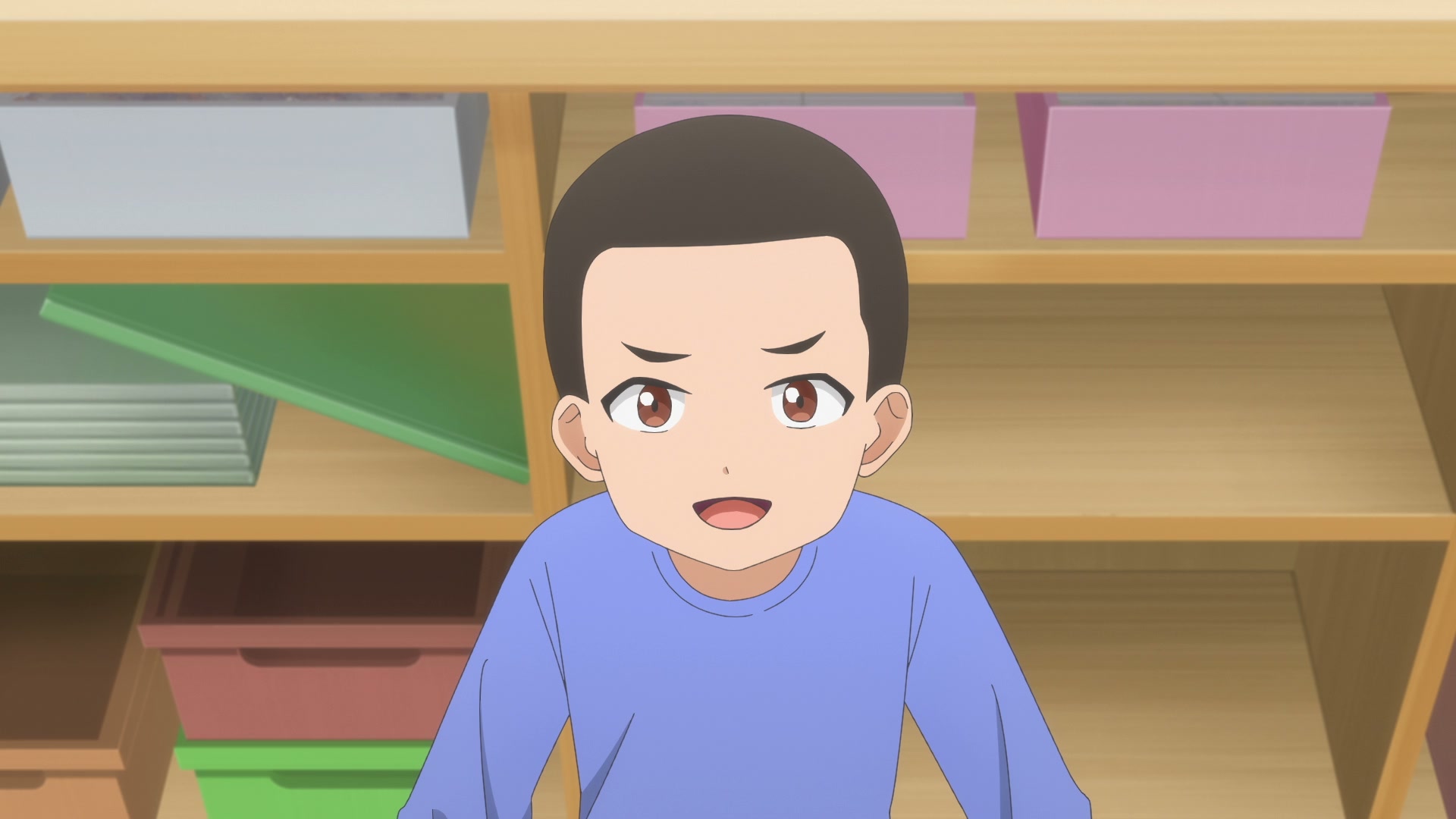
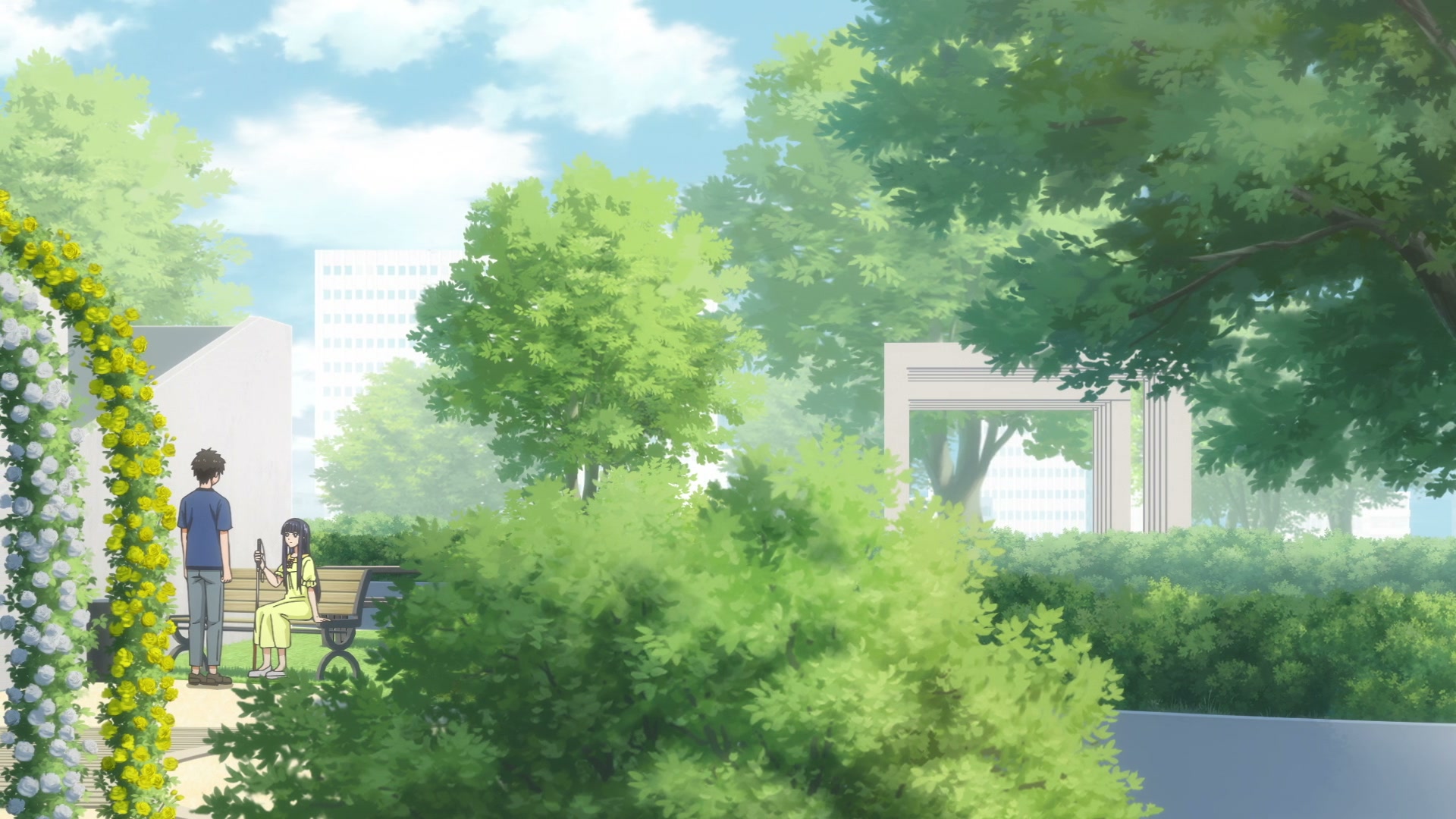
The hospital is rendered with equal care. The children’s ward, decorated with paper cranes and drawings, softens the clinical environment. The rooftop garden where Fuyutsuki and Sorano walk during her recovery becomes a space of temporary freedom, a reminder that life continues even within the hospital’s walls.
Urban environments are detailed and specific. The train platforms with their tactile paving, the fireworks shops of Asakusabashi, the water bus on the Sumida River. These are not generic backdrops but carefully observed locations that add authenticity to the story.
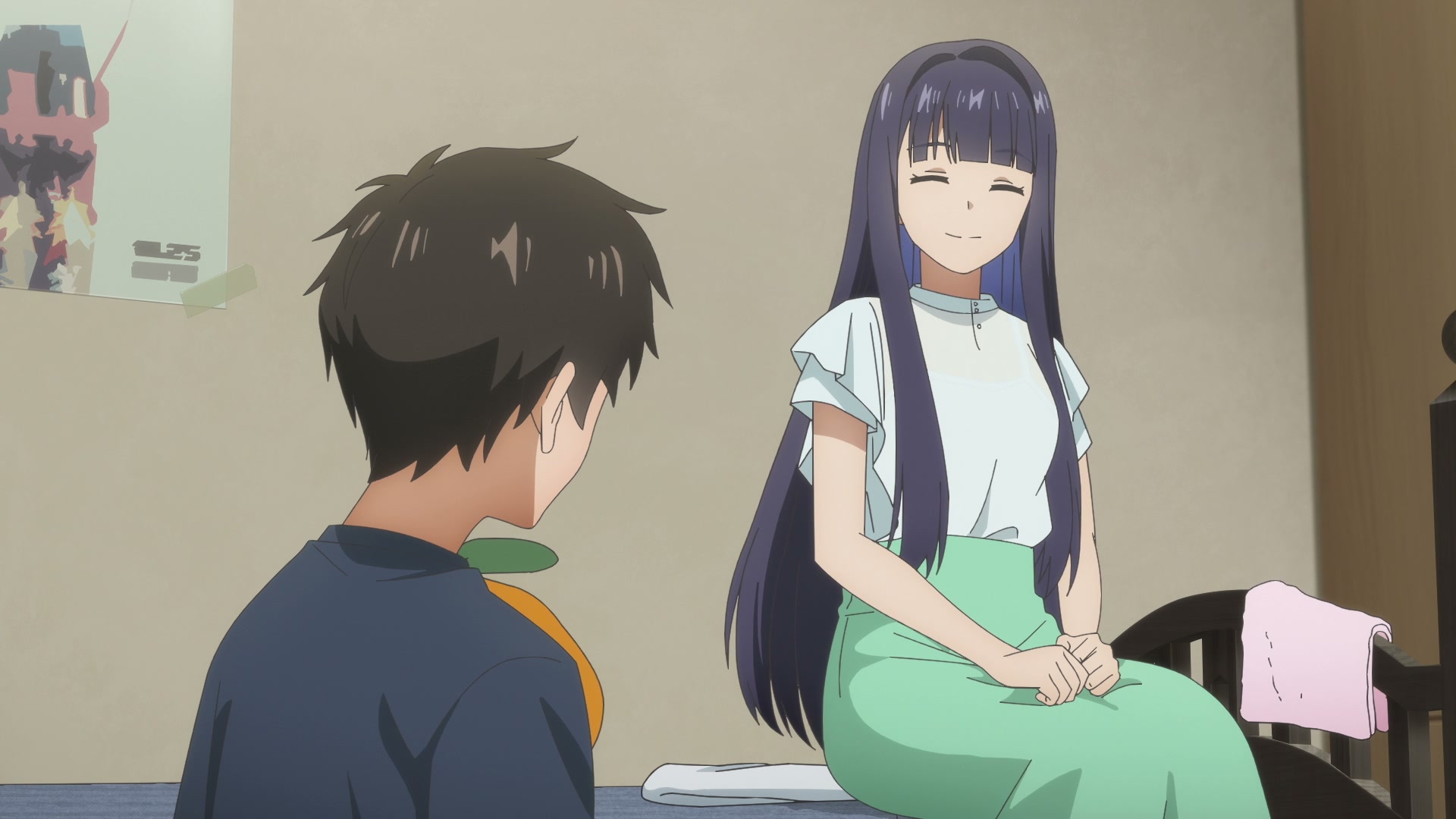
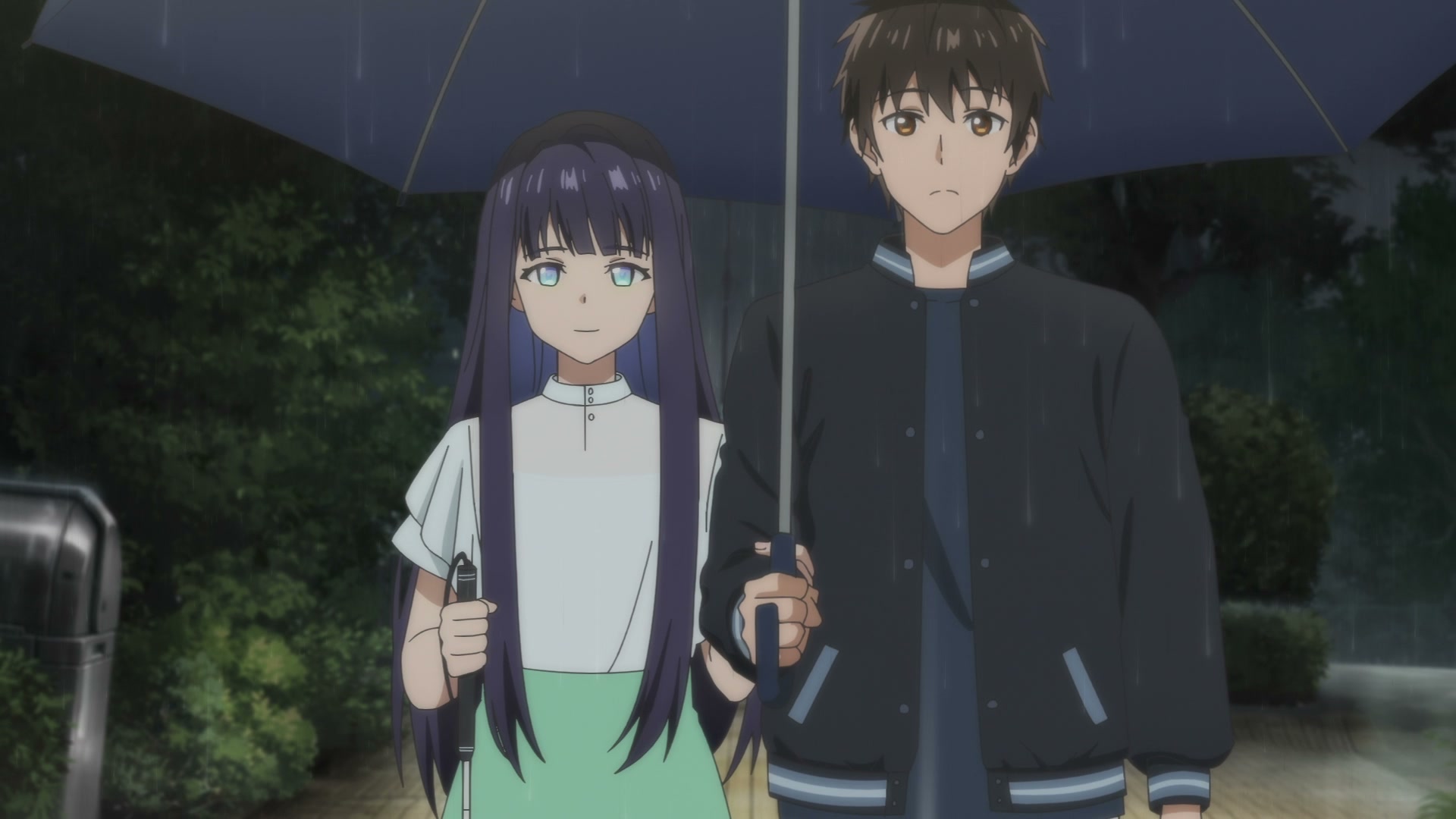
Nature imagery recurs throughout. The crinum lilies that appear in Fuyutsuki’s hospital room connect her to the outside world. The sky, frequently shown in wide shots, suggests the “looking upward” that becomes the series’ guiding philosophy. The rain that cancels the festival fireworks and forces Sorano and Fuyutsuki into his dorm room becomes both obstacle and opportunity.
Character Acting and Facial Expressions
The series relies heavily on subtle facial acting to convey emotion. A slight frown, a bead of sweat, a gentle smile. These small changes carry enormous weight in a story where so much is left unsaid.
Fuyutsuki’s eyes are particularly expressive despite her blindness. The animation gives her eyes a luminous quality that draws the viewer in. The contrast between her unseeing gaze and her emotional expressiveness creates a poignant tension. She cannot see us, but we can see her, and what we see is someone fully alive.
The kiss scene is handled with restraint. The focus is on the emotional impact rather than the physical action. Fuyutsuki’s tracing of Sorano’s face, her sudden kiss, her retreat into her apartment building. All of it is animated with a delicacy that respects the moment’s significance.
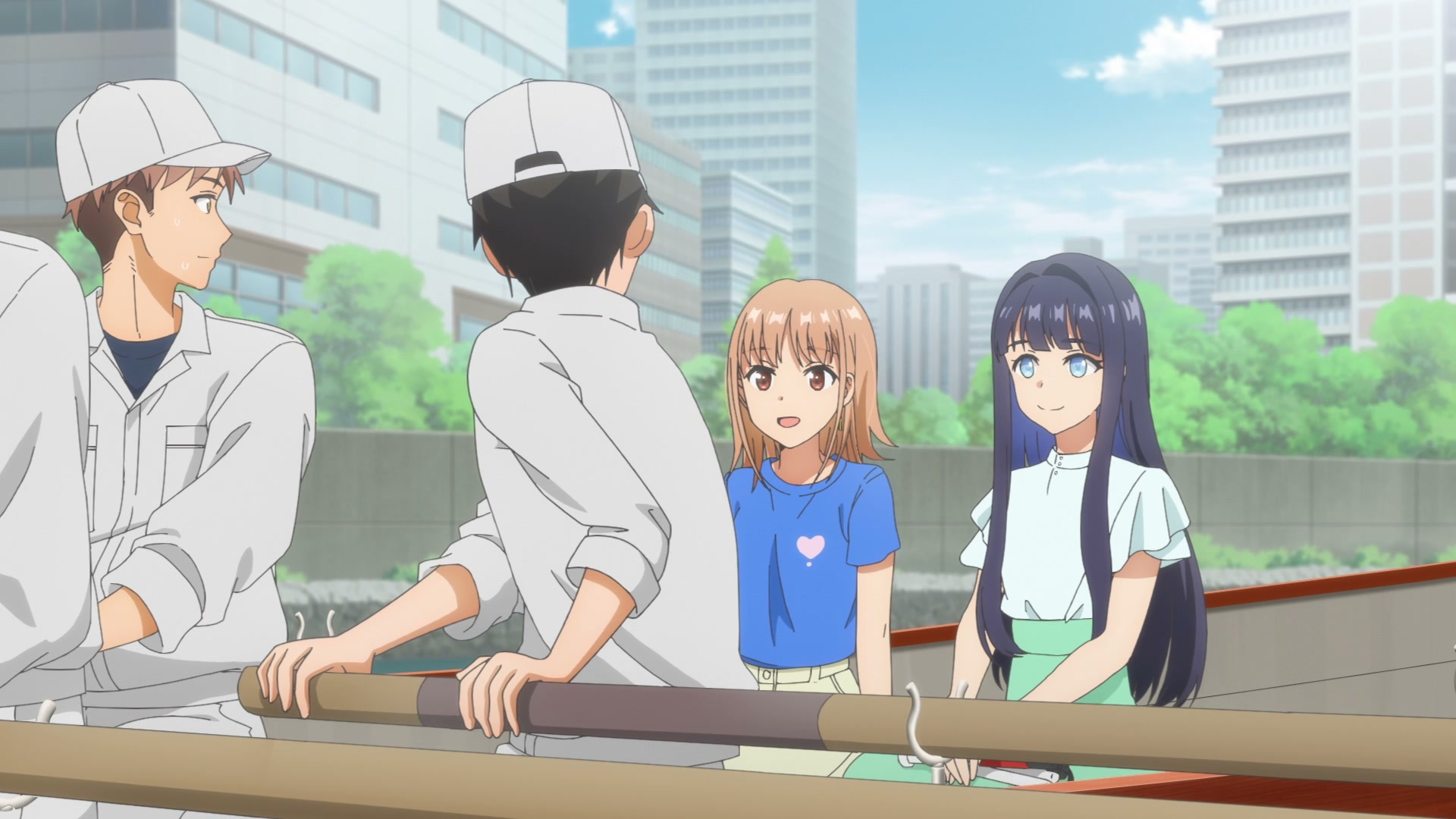
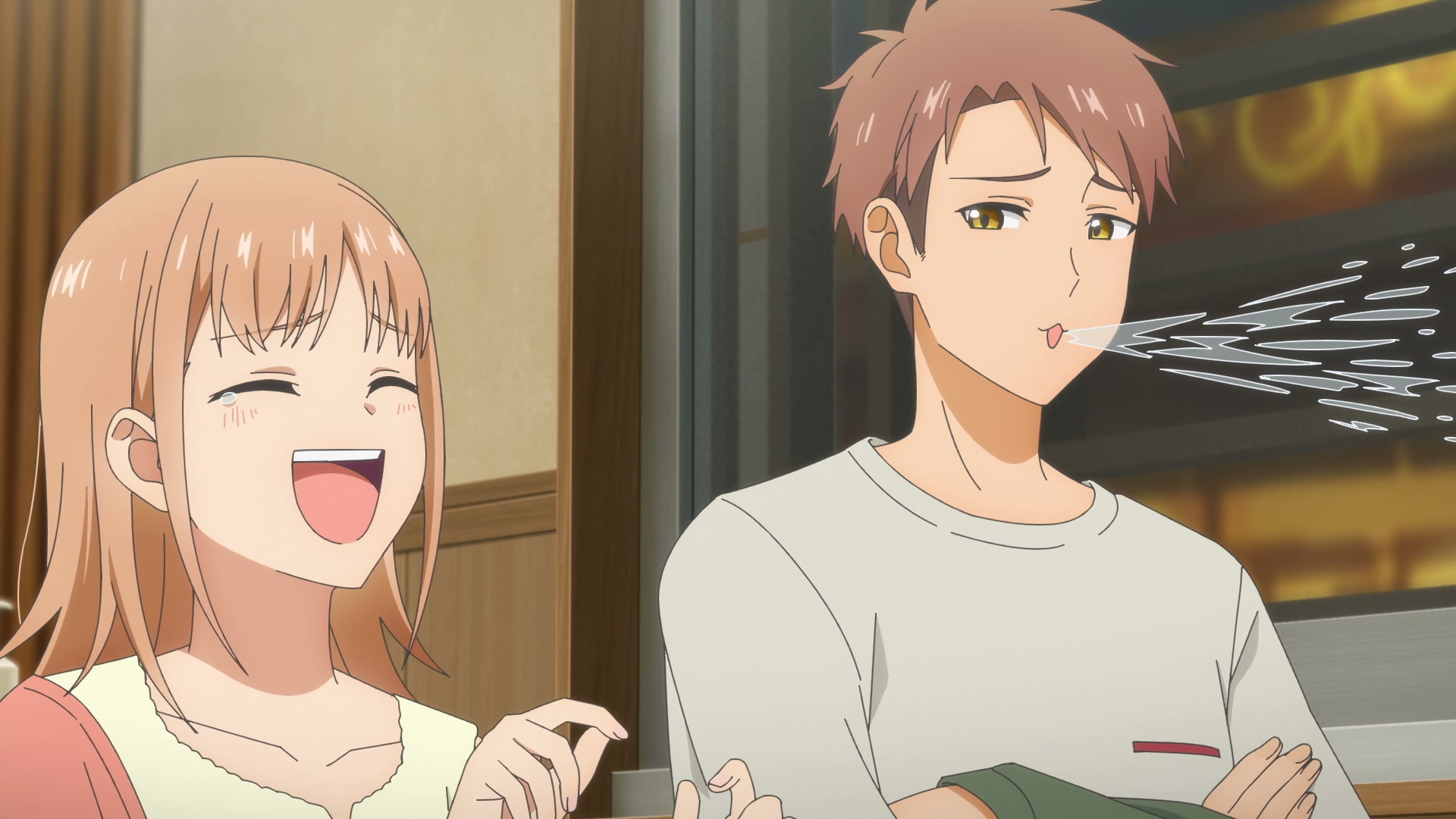
Comedy beats employ broader expressions for contrast. The spit-takes, the exaggerated reactions, the physical comedy of the cutter boat scene. These moments of levity make the serious scenes feel more grounded by comparison.
Animation Quality and Limitations
The animation quality is competent but not exceptional. This is a dialogue-heavy, character-driven drama that does not require dynamic action sequences. The stillness is often appropriate to the material, allowing conversations to breathe and emotions to land.
However, there are moments where the stillness feels less like a choice and more like a limitation. Background characters in crowd scenes may freeze entirely. Walking sequences may lack the physicality that would make them feel alive. The cutter boat rowing scene, which should have a sense of physical exertion, may rely on repeated frames that reduce its impact.
The fireworks scenes are generally well-executed, using light and bloom effects to create spectacle. The emotional weight of the climax carries the scene even where the animation might be simplified. The sparkler scene benefits from the contrast between the warm glow of the flames and the cool night, creating intimacy through lighting rather than motion.
The epilogue’s compression of decades into minutes is the series’ most significant visual challenge. The transitions between time periods feel abrupt, and important events (marriage, childbirth, Fuyutsuki’s death) are conveyed through implication rather than depiction. This compression is likely a necessity of the format, but it does leave the viewer wishing for more time with these characters in their later years.
The Difference Between Stillness and Weakness
It is important to distinguish between stillness that serves the story and stillness that reveals limitations. The terrace conversations, the hospital room visits, the quiet moments between Sorano and Fuyutsuki. These scenes are intentionally still because the focus is on dialogue and subtle emotional shifts. The stillness creates intimacy.
But there are other moments where stillness undermines the intended effect. The walking scenes during Fuyutsuki’s recovery, which should convey the physical effort of rebuilding strength, may feel weightless. The rain scene, where characters should be reacting to getting wet, may lack the physicality that would make the discomfort real.
These limitations do not break the series. The writing, voice acting, and emotional beats carry the story even where the animation falls short. But they do represent missed opportunities to enhance the impact of key scenes.
Sound and Music
Opening and Ending Themes
The opening theme sets the emotional tone for the series from the first episode. Its melody carries a sense of gentle melancholy that hints at the story’s deeper currents without giving anything away. The visuals accompanying the opening, which emphasize light and natural beauty, align with the series’ thematic concerns.
The ending theme provides a softer, more reflective counterpoint. It plays over the credits as the viewer processes each episode’s emotional content, offering a space for reflection. The choice of instrumentation and vocal delivery supports the mood without overwhelming it.
Voice Acting Performance
The seiyuu work in Toumei na Yoru ni Kakeru Kimi to, Me ni Mienai Koi wo Shita is exceptional, carrying emotional weight that compensates for any visual limitations.
Sorano’s voice actor delivers a performance that tracks the character’s development precisely. Early episodes feature a flat, guarded tone that reflects his emotional withdrawal. As the series progresses, the voice becomes more expressive, more willing to show feeling. By the confession scene, the voice cracks with genuine vulnerability. The botched name in the drunken confession, “Surrano Kageryua,” is both comedic and endearing, revealing a character who is trying so hard to be brave that he stumbles.
Fuyutsuki’s voice actor faces the challenge of portraying a character who is cheerful but not shallow, vulnerable but not weak. The performance navigates this balance beautifully. The bright, warm tone of her early scenes contrasts with the cold distance of the “amnesia” arc, making the shift all the more devastating. When she finally breaks down, screaming that she is suffering, the voice cracks with raw pain that feels earned.
Hayase and Narumi’s voice actors provide strong support. Hayase’s confident tone masks vulnerability, while Narumi’s energetic delivery hides wisdom. The chemistry between the four main cast members makes their interactions feel natural and unforced.
Sound Direction and Atmospheric Audio
The sound design enhances the series’ emotional impact through careful attention to atmospheric detail. The ambient sounds of college life, the chatter of students, the clinking of vending machines, create a sense of place. The hospital’s ambient sounds, the beeping of monitors, the hushed conversations, establish the clinical setting without overwhelming the dialogue.
The fireworks scenes benefit from sound design that emphasizes the sensory experience Fuyutsuki describes. The boom of the explosions, the whistle of the shells, the collective gasp of the crowd. These sounds convey what Fuyutsuki experiences even though she cannot see the visual spectacle.
The use of silence is equally effective. The pauses in conversation, the moments when characters sit together without speaking, the quiet before an important revelation. These silences create space for the viewer to process what is happening and to feel the weight of unspoken emotions.
The piano performances, particularly Fuyutsuki’s playing of “The Arabian Sea,” are rendered with enough fidelity to convey the beauty of the music without needing to be concert-quality. The fact that Fuyutsuki plays from memory, having learned the piece when she could still see, adds emotional resonance to the performance.
Overall Verdict
Toumei na Yoru ni Kakeru Kimi to, Me ni Mienai Koi wo Shita is not a perfect series. Its animation is competent but unexceptional. Its epilogue compresses decades into minutes. Its tonal shift from comedy to tragedy may alienate some viewers. But these flaws are outweighed by the series’ strengths: a coherent thematic vision, characters who grow and change in believable ways, and an emotional honesty that respects the audience’s intelligence.
The central relationship between Sorano and Fuyutsuki is one of the most affecting love stories in recent anime. It is built not on grand gestures but on small moments. The terrace conversations, the shared drinks, the walks across campus. These accumulate emotional weight until the viewer is fully invested in the characters’ happiness.
The series’ willingness to confront mortality without flinching is rare and valuable. Fuyutsuki’s illness is not romanticized or sensationalized. It is presented as a reality that must be faced with courage and grace. Her determination to find joy despite her circumstances is not naive optimism but a conscious choice made daily.
The supporting cast elevates the material beyond a simple two-person love story. Hayase’s struggle with authenticity, Narumi’s emotional intelligence, Kotomugi’s gruff kindness, Haruka’s silent strength. These characters create a community around the central pair, showing that love takes many forms.
The thematic consistency, with fireworks and light and looking upward recurring throughout, gives the series a satisfying coherence. The symbols are developed carefully, never feeling forced or pretentious. They enrich the story without overwhelming it.
This series is for viewers who appreciate character-driven drama and are prepared for emotional weight. It is not for those seeking light entertainment or straightforward romance. It is for those who understand that love and loss are intertwined, that joy and sorrow cannot be separated, and that the courage to love despite knowing the cost is one of the bravest things a person can do.
If you have ever loved a story that made you cry not through manipulation but through honest emotional truth, Toumei na Yoru ni Kakeru Kimi to, Me ni Mienai Koi wo Shita deserves your attention. It is a quiet series, but quiet things can leave the deepest impressions.
Rating: 8.5/10
The final image of the series, Sorano looking up at fireworks with his daughter, choosing to continue his own fight against cancer, inspired by the memory of the woman who taught him how to live, is a fitting conclusion to a story about love, loss, and the courage to keep going. Fuyutsuki wanted to “go on living even after my death.” Through Sorano, through their daughter, through everyone whose lives she touched, she does.
Gallery