




A Unique Animated Film Makes Its Mark
The feature-length animated film Hanarokushou ga Akeru Hi ni (which can be translated as “The Day the Flower Verditer Blooms”), the directorial debut of Yoshitoshi Shinomiya, has been selected for the Competition section of the 76th Berlin International Film Festival. It is set for a nationwide release in Japan on Friday, March 6th. To celebrate, a series of behind-the-scenes photos showcasing its stop-motion and special visual scenes have been released.


A Story of Legacy and Illusion
The story unfolds at the 330-year-old fireworks factory, Tachibaki Enbi Ten. With the deadline for eviction due to redevelopment looming, the film paints a picture of two fateful days centered on the future of a phantom firework known as Shuhari and the young people who grew up around it. The title’s “Hanarokushou” refers to a green pigment that turns blue when burned. Once used in fireworks for its beauty, it became a legend due to the toxicity that came with that very beauty.
Fresh Voices and Veteran Talent
Marking their voice acting debuts, talented young actors Riku Hagiwara and Kotone Furukawa take on the dual lead roles, bringing the characters to life with genuine, heartfelt performances. They are supported by the incredible presence of Miyu Irino, a voice behind countless classic works, and Takashi Okabe, known for his powerful roles in many buzz-worthy titles.
Historic Festival Selection
Having just opened today, February 12th, the 76th Berlin International Film Festival saw this film selected for its Competition section, following anime greats like Sen to Chihiro no Kamikakushi (Spirited Away) and Suzume no Tojimari (Suzume). It stands as the only Japanese film in the Competition section this year. Furthermore, it is a historic achievement as the first Japanese animated film to have a directorial debut feature selected for this prestigious category.
A Franco-Japanese Visual Feast
A co-production between Japan and France’s innovative Miyu Productions, the film is not only notable for director Shinomiya’s breathtaking use of color (influenced by his background as a Japanese painter) but also for its unique visual language. It freely mixes traditional, hands-on techniques like stop-motion animation and multi-plane camera work to create a one-of-a-kind cinematic experience.
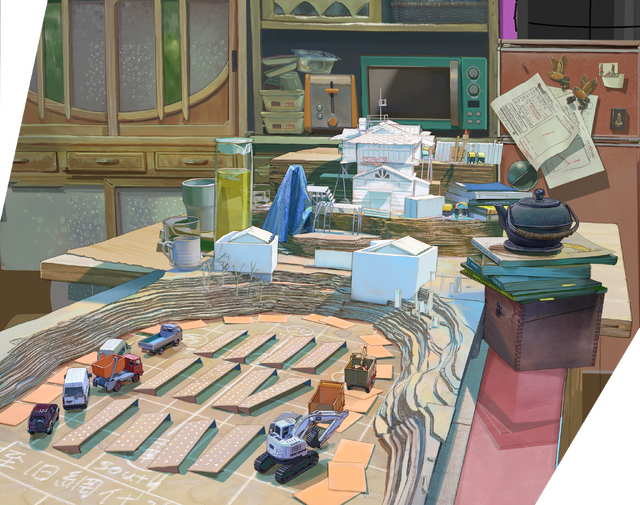
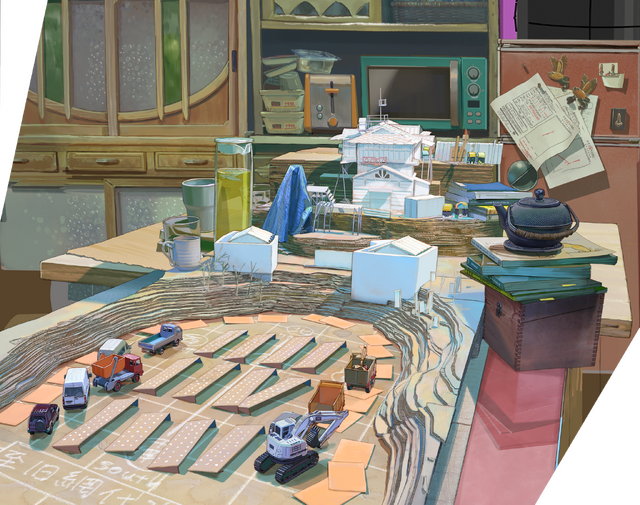
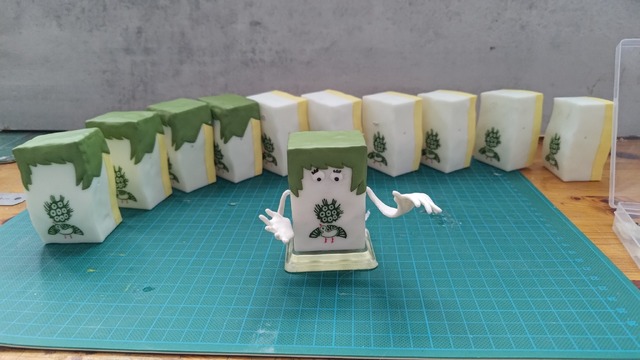
The newly released photos offer a glimpse into the making of these very stop-motion and special visual scenes, which are major highlights of the film.
The Magic of Stop-Motion
Stop-motion animation, known from works like “Pingu” and “Shaun the Sheep,” is a technique where objects are moved incrementally and filmed frame-by-frame. It’s used effectively in a scene where the characters hold a strategy meeting to launch the phantom firework Shuhari on the eve of the factory’s eviction. Miniature sets of the Tachibaki neighborhood, recreated from cardboard, and mahjong tiles standing in for people come to life through stop-motion. The blending of animated and live-action footage creates a world that lightly dances between reality and fiction.
Stop-motion director Victor Haegelin reflected on the challenge of using mahjong tiles for character expression: “The mission itself—to make these square mahjong tiles look like living creatures—was a significant challenge.”
Crafting Liquid Illusions
He also revealed a unique approach for depicting the “sake” that features so impressively in the film. To portray the distorted liquid seen inside transparent bottles and glasses, they used clear clay instead of actual liquid to meticulously control the subtle movements.

Painting with Light and Depth
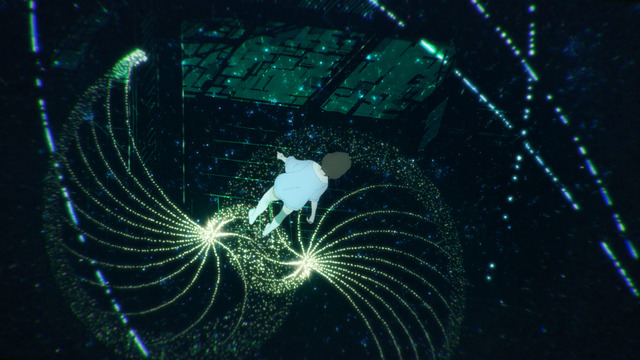
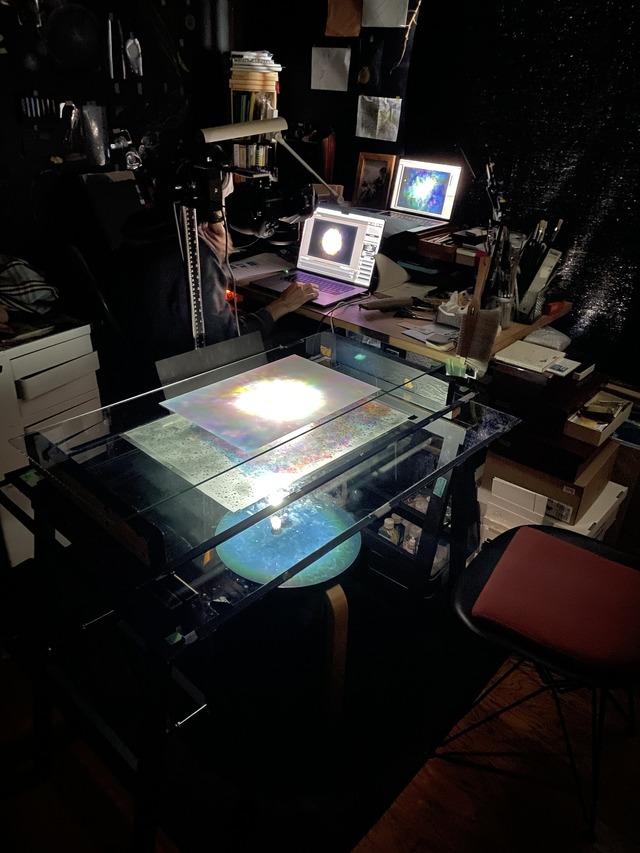
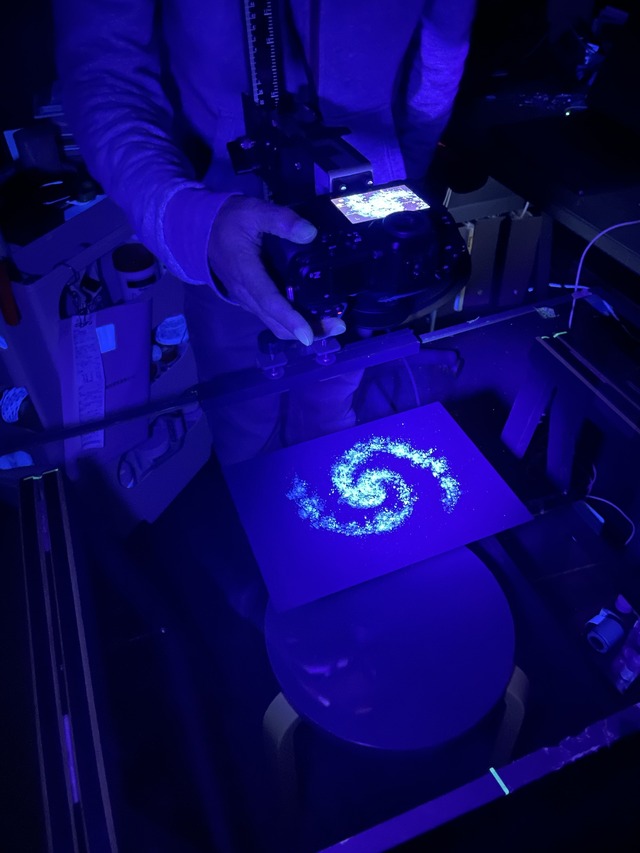
Makiko Sukimaki of SUKIMAKI ANIMATION, who handled the special visuals for underwater, space, and firework scenes, is an artist who uses the multi-plane camera, a special filming technique. Commenting on the expression of space, she said, “It was an application of techniques I tried with direct light and blacklight in a past work set in the deep sea. We expressed hazy light by layering and moving materials with round holes, or applied powdered pastel on a sponge to smear on black paper.”
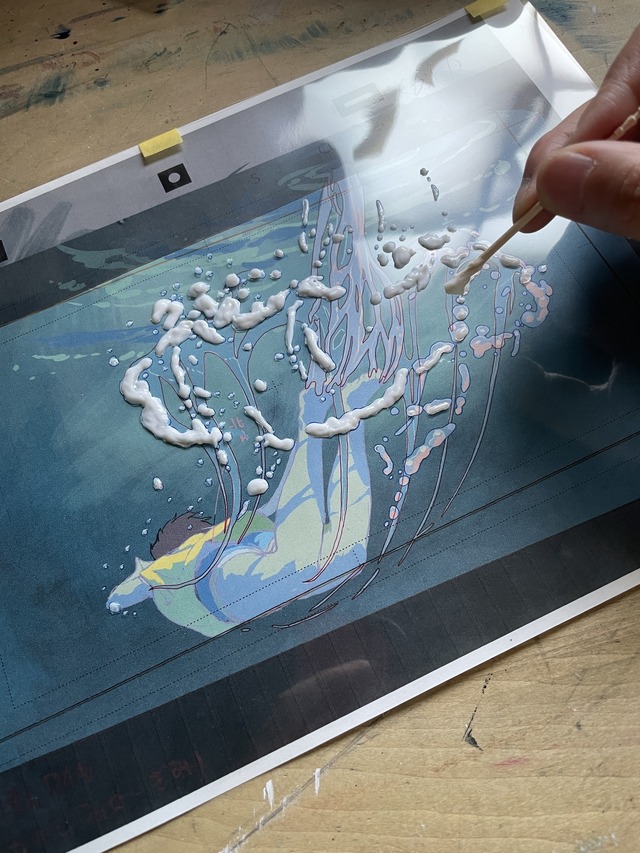
Regarding the scene from the recently released main trailer where the character Kaoru dives into water, she recalled her exchange with director Shinomiya: “We created things like anti-stereoscopic bubbles using transparent gel for filming. Director Shinomiya requested a expression where the entire screen shimmers, like the underwater scene in Disney’s ‘Pinocchio,’ so we made a wavy glass-like filter from resin and placed it in front of the camera.”
A Director’s Vision: Embracing the “Foreign”
Director and screenwriter Yoshitoshi Shinomiya, who comes from a Japanese painting background, revealed his thoughts on this multi-layered expression: “I’ve always liked combinations with a sense of ‘foreignness,’ where completely different materials are placed together in their raw state.” He was influenced by the structure of Japanese painting, where inorganic matter like particles ground from stone is forcibly solidified with an organic animal glue called nikawa. This inspired his past video works to intentionally mix live-action and animation.
By deliberately blending different techniques and textures, the film promises a visual experience unlike any other. It’s one best enjoyed in a theater, filled with fresh surprise.
Hanarokushou ga Akeru Hi ni opens in theaters across Japan on March 6th.
Film Information & Credits
Title: Hanarokushou ga Akeru Hi ni (English Title: A NEW DAWN)
Release Date: March 6th (Nationwide Release)
Cast
| Riku Hagiwara | Kotone Furukawa |
| Miyu Irino | Takashi Okabe |
Staff
| Role | Name |
|---|---|
| Original Story, Screenplay, Director | Yoshitoshi Shinomiya |
| Theme Song | imase “Aoba” (Universal Music / Virgin Music) |
| Character Design | Utsushita (Minamikata Kenkyuusho), Yoshitoshi Shinomiya |
| Animation Director | Yoshitoshi Shinomiya, Syouhei Hamaguchi |
| Art Director | Yoshitoshi Shinomiya, Ryoko Majima |
| Music | Shuta Hasunuma |
| Color Design | Yoshitoshi Shinomiya, Aiko Mizuno, Tomoko Saitou, Nanako Okazaki |
| Director of Photography | Anna Tomizaki |
| Special Visuals | SUKIMAKI ANIMATION |
| Stop-Motion Visuals | Victor Haegelin |
| CG Director | Kotarou Sasaki |
| Editor | Kei Uchida |
| Sound Director | Hirofumi Shimizu |
| Recording & Mixing | Yasuaki Oota |
| Sound Effects | Katsuhiro Nakano |
| Sound Production | Tohokushinsha Film Corporation |
| Animation Producer | Tsutomu Fujio |
| Production | A NEW DAWN Film Partners |
| Animation Production | Asmik Ace / Studio Outrigger / Miyu Productions |
| Distribution | Asmik Ace |
(c)2025 A NEW DAWN Film Partners
《animeanime》
_