





Spring’s Return, Winter’s Guilt
Last week gave us Hinagiku’s quiet miracle on Mt. Ryuugu. This week pulls back hard in the opposite direction, not forward into what spring means now, but backward into the wound that never closed. And it does it through the eyes of the people who failed her.
This is a winter episode in every sense. Not because of snow or cold. Because it sits inside guilt like an old house someone refuses to leave.
Two Guards, One Failure
The cold open drops us into Rousei’s head immediately. “I’m here to save you. You’re safe now.” Lines he never got to say. Then: “If only I’d died back then.”
That is the thesis of this entire episode. Not self-pity. Something worse. The conviction that your death would have been more useful than your survival.
We cut to Hinagiku and Sakura in the aftermath of last episode’s rite, and even here, the winter cast haunts the frame. Sakura warns Hinagiku that coming back means attention, means ignorant people saying horrible things, means getting hurt worse than before. And Hinagiku, in that halting third-person cadence she uses like armor, says she can endure it because she has Sakura.
The line lands differently after you know what this episode is actually about. Hinagiku has her protector. Who protected her ten years ago?
The answer is no one. Or rather, two people who tried and failed, and have spent a decade drowning in it.
Rousei and Itechou
The bulk of the episode belongs to Kantsubaki Rousei, the Agent of Winter, and his guard Kangetsu Itechou. We meet them through Ishihara, a newly assigned winter staff member getting thrown into the deep end immediately. She functions as our audience surrogate, asking the questions we need answered. Why can’t Rousei just go see Hinagiku in person? Why are they only inspecting spring manifestation sites from a distance?
Itechou’s answer is simple and devastating: Sakura will probably never forgive them.
Then we get the flashback.
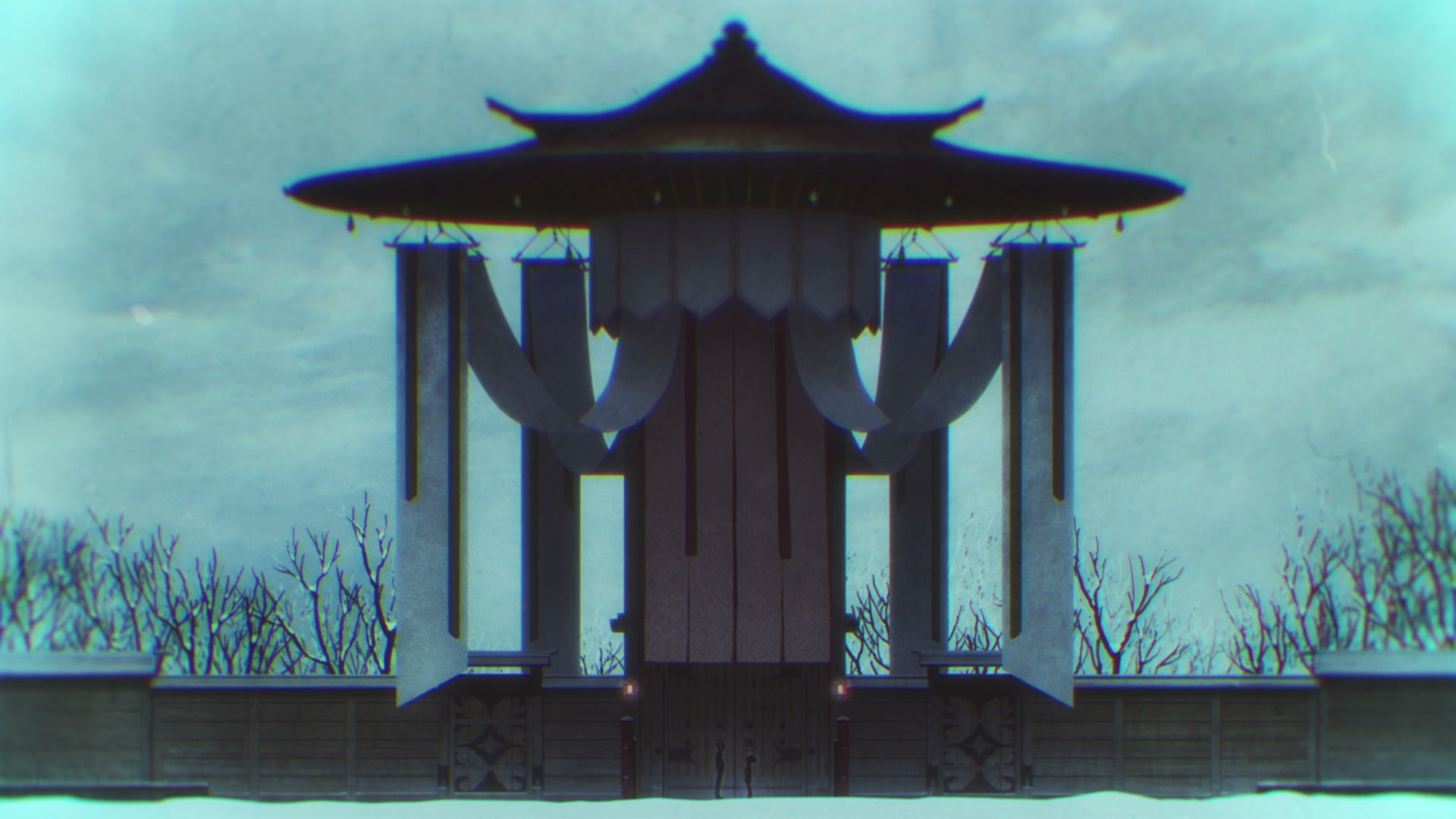
Ten years ago, insurgents attacked the Village of Winter while Hinagiku was staying there. Rousei ordered Itechou to take Hinagiku and Sakura and run while he stayed to die. “That ought to satisfy them,” he said, and you can hear in his voice that he meant it. He wanted it to be enough. He wanted his death to be worth something.
Hinagiku refused. She gave herself up instead, and her final words to Rousei were to thank him for a flower of ice, and to ask him to live.
He’s been living ever since. That’s the punishment.
The Village of Spring Gave Up
This is the detail that sits heaviest. The Village of Spring pulled out of the search after only three months. Three months.
Sakura, having survived when she thinks she should have died protecting Hinagiku, was relieved of duty. She shows up at the Village of Winter’s gate begging them not to abandon the search. Itechou offers her a place with them, offers to keep looking together.
Five years later, the Village of Winter ended large-scale search efforts too.
Sakura vanished. Cut all contact. And you understand why. She watched every institution that should have protected Hinagiku quietly decide it was time to move on.
The episode doesn’t judge anyone directly. It doesn’t need to. It just shows you Sakura’s face when Itechou can’t keep his promise, and that’s enough.
What Winter’s Power Actually Looks Like
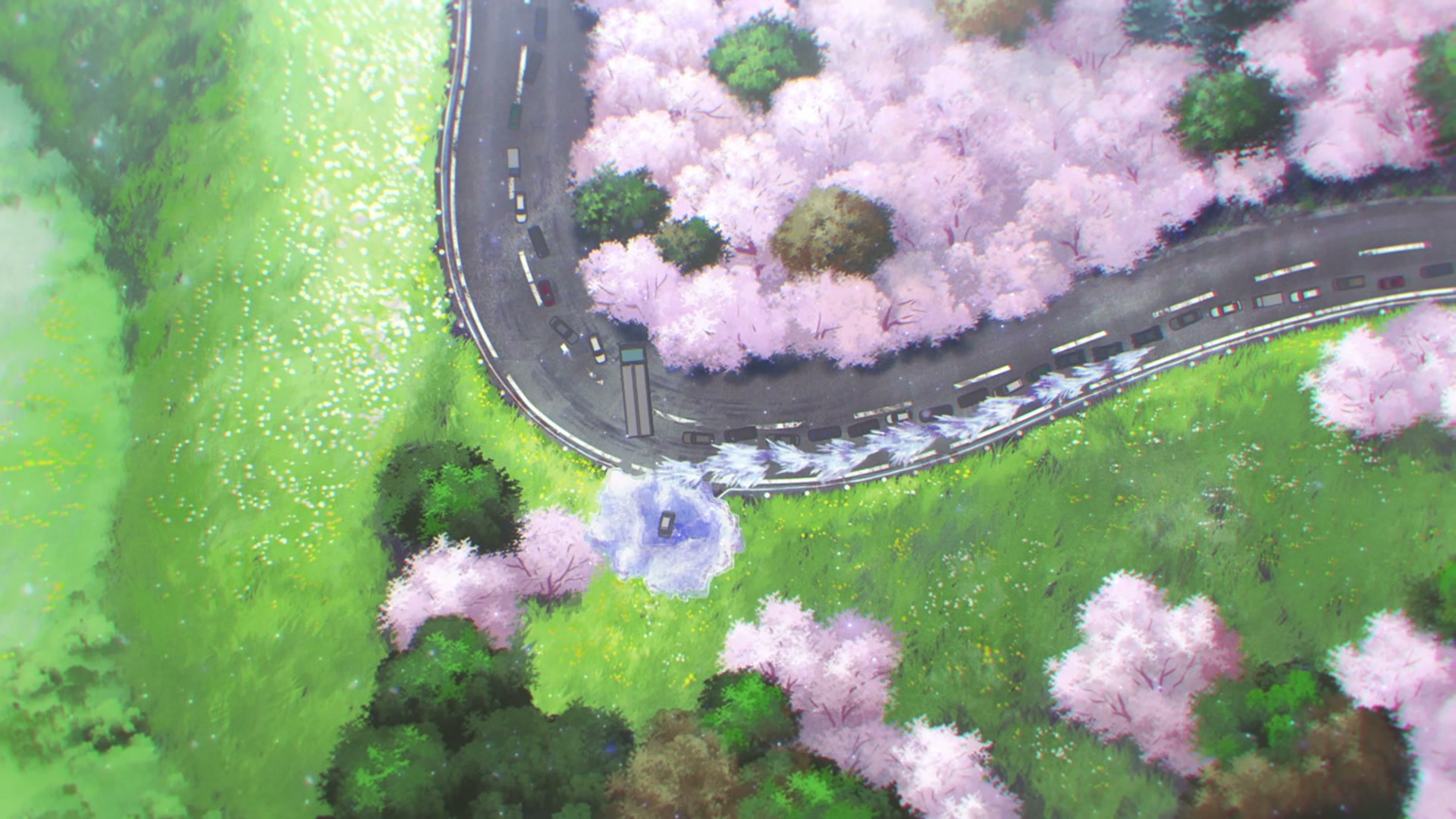
The present-day sequence at the cherry blossoms gives us the clearest demonstration yet of how seasonal powers work in this world.
A bus hangs off a collapsed road. Children are trapped inside. The guardrail is failing. Winter staff confirm it’s a genuine accident, not an insurgent attack, and the rescue teams are on the way.
Rousei moves anyway.
Itechou grabs him, reminds him of the regulations. Agents can only use their powers for seasonal manifestation or self-defense. Using them publicly means exposing his identity, which means more attacks, more restrictions.
Rousei’s response: “There are lives I can save right in front of me.”
That’s the line that breaks Itechou. Because it’s the same argument Hinagiku made ten years ago. The same impossible choice between following the rules and doing what’s right.
Itechou relents with a perfect bit of pragmatism: “You don’t have time to dance, just sing.”
And Rousei sings.
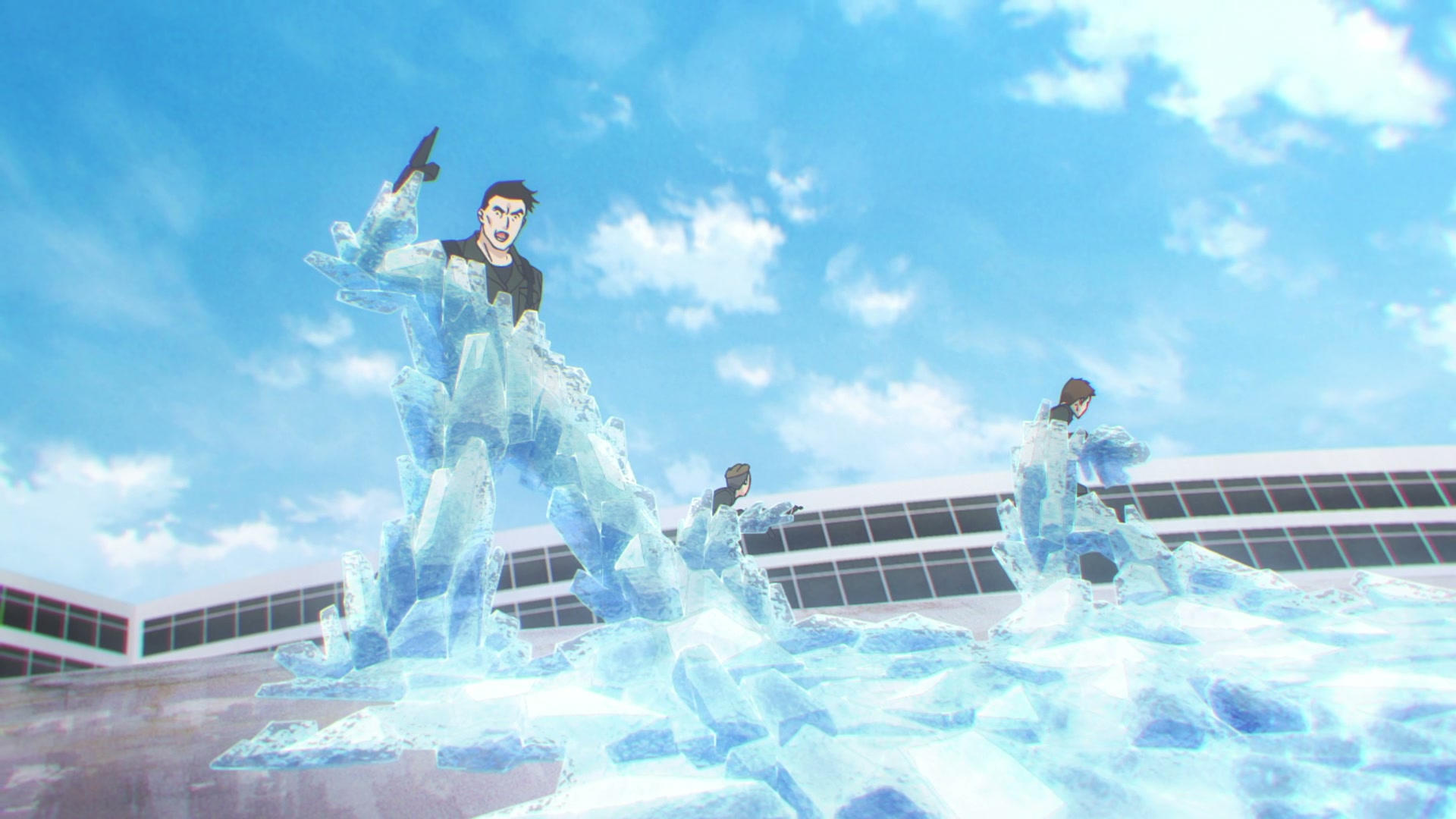
His winter power, what Ishihara identifies as “Life Suspension,” manifests as snow and ice that somehow stabilizes the bus without freezing the children inside. He’s not destroying. He’s preserving. Holding things in stasis just long enough for help to arrive.
It’s a direct thematic counterpoint to Hinagiku’s spring. She brings life back. He keeps it from slipping away. Both are about protecting people. Both are things they couldn’t do ten years ago when it mattered most.
The Performance As Apology
The way Rousei does it is just as telling as what he does. The episode notes explicitly that he’s trying to make it “look like it fits with the spring.” He’s not trying to upstage Hinagiku. He’s not claiming the moment for winter. He’s decorating himself in her colors, blending his power into her season, because he still can’t bring himself to stand beside her directly.
He says those lines to the children that he never got to say to Hinagiku. “I’m here to save you. You’re safe now.” It’s a decade late and addressed to strangers, but he finally says them.
The cherry blossoms are still falling around him when it’s over.
Itechou tells him he did amazing work. Guesses correctly that Rousei held back, shaped his power to not spoil Hinagiku’s spring. Then says, “I’ll take you anywhere you want to go. I live for you.”
And Rousei tells him to save those lines for Sakura.
Which is the other wound this episode keeps prodding. Itechou failed Sakura too. He made a promise he couldn’t keep. And now Sakura is somewhere out there, still angry, still guarding Hinagiku alone, and Itechou can only say he wishes he could apologize to her directly.
The Shape of the Love Story
The closing myth from episode one reframes all of this. Winter created Spring. They fell in love. They gave their power to human Agents so they could be together.
But the human Agents aren’t together. They’re separated by guilt and silence and probably resentment. Rousei can’t write a letter Hinagiku will answer. Sakura won’t speak to Itechou. The divine seasons are in love, and their mortal representatives are choking on everything they couldn’t protect.
That’s the “commonplace love story” the narration promised. Not simple. Not clean. Two pairs of people who care about each other and can’t bridge the distance their failures carved between them.
Ishihara’s Role
New-character-as-audience-stand-in is an old device, but Ishihara works because she’s genuinely overwhelmed the way a normal person would be. She thought she was signing up for administrative duty and immediately gets shot at, then watches her god-king freeze time to save a bus full of children. Her quiet observation about forgetting the world could look like this, her admission that she was still a teenager the last time spring came, all of it grounds the mythology in human experience.
She’s also the one who reads the official record aloud, bridging what the institutions documented and what actually happened. The gap between those two versions of the story is where the episode lives.
A Quiet Visual Note
The cherry blossom viewing sequence is the obvious visual centerpiece, and it earns it. After an episode of sterile winter interiors, airport terminals, and the cold precision of Rousei’s ice magic, the sudden overwhelming pink feels like a physical relief. You understand why Rousei stops in the middle of a post-attack debrief to just stare at it.
There’s also a small touch I appreciated: when Rousei uses his power at the accident site, the snow he conjures doesn’t clash with the cherry blossoms. It complements them. The framing makes the white and pink feel like parts of the same palette rather than opposing forces. Winter and spring, in the one moment Rousei allows himself to act, finally coexist instead of fighting.
Where This Leaves Things
The episode ends with Rousei seeing Hinagiku everywhere in the spring. She’s in every blossom, every breeze, every warm moment he’s been denied for ten years. She came back, and he still can’t reach her.
But he saved those children. And Itechou is still by his side, still promising to take him anywhere, still refusing to let him vanish from this life even when Rousei wishes he could.
That’s not a resolution. It’s barely a step forward. But it’s movement, and after ten years of frozen stillness, movement counts for something.
Sakura and Hinagiku are out there somewhere, probably heading into their own complications. The Village of Winter’s leadership is furious. Insurgents are still hunting Agents. Nothing is fixed.
But spring is back. And Rousei finally said the words. Even if the wrong person heard them.
Screenshots

← Episode 1 | All Shunkashuutou Daikousha – Haru no Mai Season 1 posts →