






After the group’s messy, honest reconciliation in episode four, the show could have coasted on warm vibes for a while. Instead, it pivots to Miori’s basketball world and gives Uta some of her most emotionally exposed scenes yet. The double date framing promises romantic scheming, but the real work is about watching someone who’s been everyone’s blunt support system quietly fall apart on her own.
The Double Date That Was Barely a Date
Miori’s grand plan, the so-called Double Date Strategy, is exactly the kind of overly logical idea someone like her would cook up: bring together four people with intersecting goals and let proximity do the rest. She and Reita-kun can grow closer, Natsuki and Hikari-chan can inch toward something, and everyone wins. The actual outing is pleasant but conspicuously unmagical. They wander a shopping area, Miori gets distracted by a cute top, and Hikari drags Natsuki off with the transparent excuse of giving the other two space. The movie they see, Hero Detective, becomes a comfortable middle ground, not a romantic catalyst.
What makes the sequence work is how thoroughly it refuses to manufacture sparks. Hikari agrees to go only after learning that Miori and Reita will be there, and when Natsuki first asks her one-on-one, her internal monologue calls him “kind of creepy.” That line, delivered with zero malice, lands because it confirms something the show has hinted at since the start: Hikari’s emotional perception is sharp, and Natsuki’s carefully constructed persona still doesn’t sit right with her, even after his confession of dweebdom. She’s not cruel, just instinctively distrustful of anything that feels too manufactured.
Reita, meanwhile, spends the outing being his usual observant self. His parting words to Natsuki, that Miori seems to let her guard down only around him, are the clearest sign yet that he’s been watching Miori with genuine interest, not just polite detachment. And Miori, for all her scheming, comes away from the date admitting it didn’t go well. She’s embarrassed, but not crushed. The outing wasn’t a failure; it just wasn’t the clean victory she wanted.
The Team That Stopped Being a Team
Miori’s actual crisis unfolds on the basketball court. We learn through Uta that Miori, a first-year starter, clashed with a senior named Wakamura over optional practices. Miori called them a waste of time if people weren’t training seriously. The result is isolation: teammates freeze her out, and Wakamura openly snipes at her during a casual restaurant encounter. That scene, where Wakamura interrupts the post-movie meal to make a pointed remark about “skipping practice to hang out with boys,” instantly shifts the episode’s temperature. Miori’s usual armor cracks for a second, and she apologizes to Natsuki for making things weird.
Tatsuya, of all people, provides the analytical key. Watching Miori play, he notes that she’s stopped passing. She’s clearly talented, but her refusal to rely on teammates broadcasts distrust. He doesn’t blame the upperclassmen for feeling alienated. The insight stings because it’s true. Miori, who’s spent the entire series pushing Natsuki to be honest and rely on others, is caught in her own version of the same trap: deciding she has to carry everything alone, then resenting the people who can’t keep up.
Natsuki’s reaction here matters. He doesn’t charge in with a solution. He watches, asks Uta to fill in the details, and sits with the discomfort. That restraint is a direct product of the previous arc—he knows that forcing a fix would only make things worse. When he finally approaches Miori at the end, it’s not with a speech but with a quiet “I was just wondering how you’re doing.” She snaps at him, tells him it’s none of his business, and the episode leaves the tension unresolved. It’s a much braver choice than a quick reconciliation would have been.
Uta’s Video Call and What She Can’t Quite Say
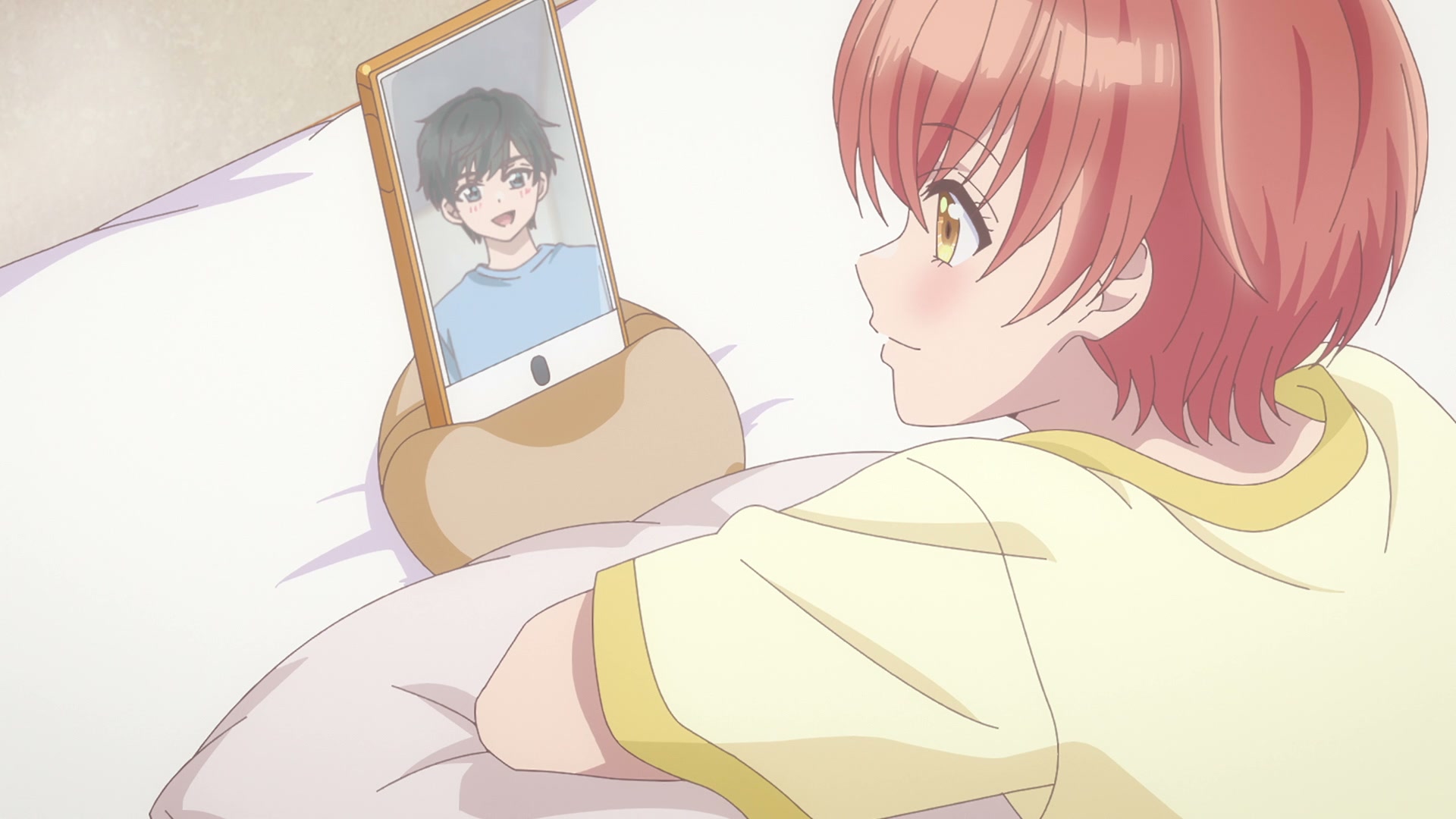
Uta’s role in this episode is deceptively large. She’s the one who explains the team dynamics to Natsuki, and her frustration with the situation is palpable. But the standout moment comes late, when she video calls Natsuki at night. The framing is intimate in a way the show rarely attempts: soft lighting, Uta’s face filling the screen, her voice quieter than usual. She admits she wanted to see his face because it cheers her up. Natsuki, flustered but kind, tells her she can look as much as she wants. It’s not a confession, but it’s the most direct expression of her feelings yet.
The conversation that follows reveals how much the team drama is weighing on her. She tried to mediate between Miori and Wakamura and got called an uppity first-year. She reached out to Miori, who told her not to take sides. The exhaustion in her voice is genuine. Uta is typically the group’s emotional weathervane, the one who keeps spirits up, but here she’s drained and sad. Natsuki asking her to tell him about Miori is the first step toward him actually doing something, not as a show-off, but as someone who wants to understand before he acts.
Hikari’s Creep Radar and Other Small Joys
I can’t let Hikari’s “He’s kind of creepy” line pass without celebrating it. The show has been careful not to make Hikari a passive love interest. She’s observant, a little guarded, and her internal rejection of a one-on-one movie date with Natsuki is perfectly in character. She doesn’t hate him. She just senses something off about his intensity. That suspicion makes her eventual agreement to join the group outing feel earned rather than scripted. When she later enthusiastically discusses the movie’s themes about heroes and culprits, she’s fully herself: a bookish, thoughtful person who can dissect a story and enjoy it without pretense.
Also worth noting: Natsuki’s gentle deflection of Uta’s request to join the movie. He doesn’t lie, doesn’t make excuses. He simply says if she’s not interested in the film, maybe she should sit this one out. It’s a small act of loyalty to his own feelings for Hikari, and it’s handled without cruelty. Miori’s advice afterward—to not push Uta away unless she directly confesses—is practical and slightly cynical, but it fits their dynamic. Miori has always been the strategist, even when her own life is unravelling.
A Quiet Moment That Sticks
The screenshot at around 1109 seconds (I’m guessing from context) likely captures Natsuki watching Miori’s practice from behind a fence. The composition is striking: Miori in motion, the chain-link barrier between them, Natsuki’s face caught between concern and the knowledge that he can’t step onto the court and fix things. The show’s visual language throughout the episode reinforces separation. Characters are often framed with obstacles between them—counters, windows, fences—and the dinner scene with Wakamura puts Miori physically isolated at the table’s edge.
When Natsuki finally confronts Miori directly, the encounter is shot simply. Two figures on an empty street at dusk. Miori’s “It’s none of your business” isn’t angry so much as exhausted. She’s been the one pushing him to stop hiding, and now she’s the one refusing to let anyone in. The parallel isn’t underlined with dialogue, but it’s there in the blocking.
Where This Leaves Things
Episode five deepens the tangle of feelings without rushing to untangle them. Miori’s arc has moved from playful wingman to someone whose independence has curdled into isolation. Uta’s feelings for Natsuki are out in the open, not as a dramatic confession but as a quiet, sad thing she carries. Hikari remains an enigma, warm but cautious. And Natsuki is, for the first time, genuinely trying to be a friend before a strategist.
The closing shot, Miori asking “What do you want?”, leaves the audience in Natsuki’s position: unsure of the right words, but certain that silence isn’t an option. That’s a good place for a series about second chances to land. The colorful adolescence plan was never going to be just about romance. It was about learning to show up for people even when you don’t know exactly how. This episode makes that quiet, difficult work feel more important than any confession.
Screenshots
← Episode 4 | All Haibara-kun no Tsuyokute Seishun New Game Season 1 posts →
[…] ← Episode 5 | All Haibara-kun no Tsuyokute Seishun New Game Season 1 posts → […]