






Maki’s world doesn’t give him time to breathe. The instant the opening credits end, we’re already trapped in the small, awful politeness of bumping into a parent you haven’t seen in months. This episode, titled “Family Sights,” immediately resolves last week’s cliffhanger and then spends its entire runtime showing what it actually costs Maki to keep walking forward. It pairs the fluffiest date the show has given us so far with an undercurrent of quiet family devastation, and the result is the most emotionally coherent episode of Class de 2-banme ni Kawaii Onnanoko to Tomodachi ni Natta yet.
The Encounter Maki’s Been Dreading
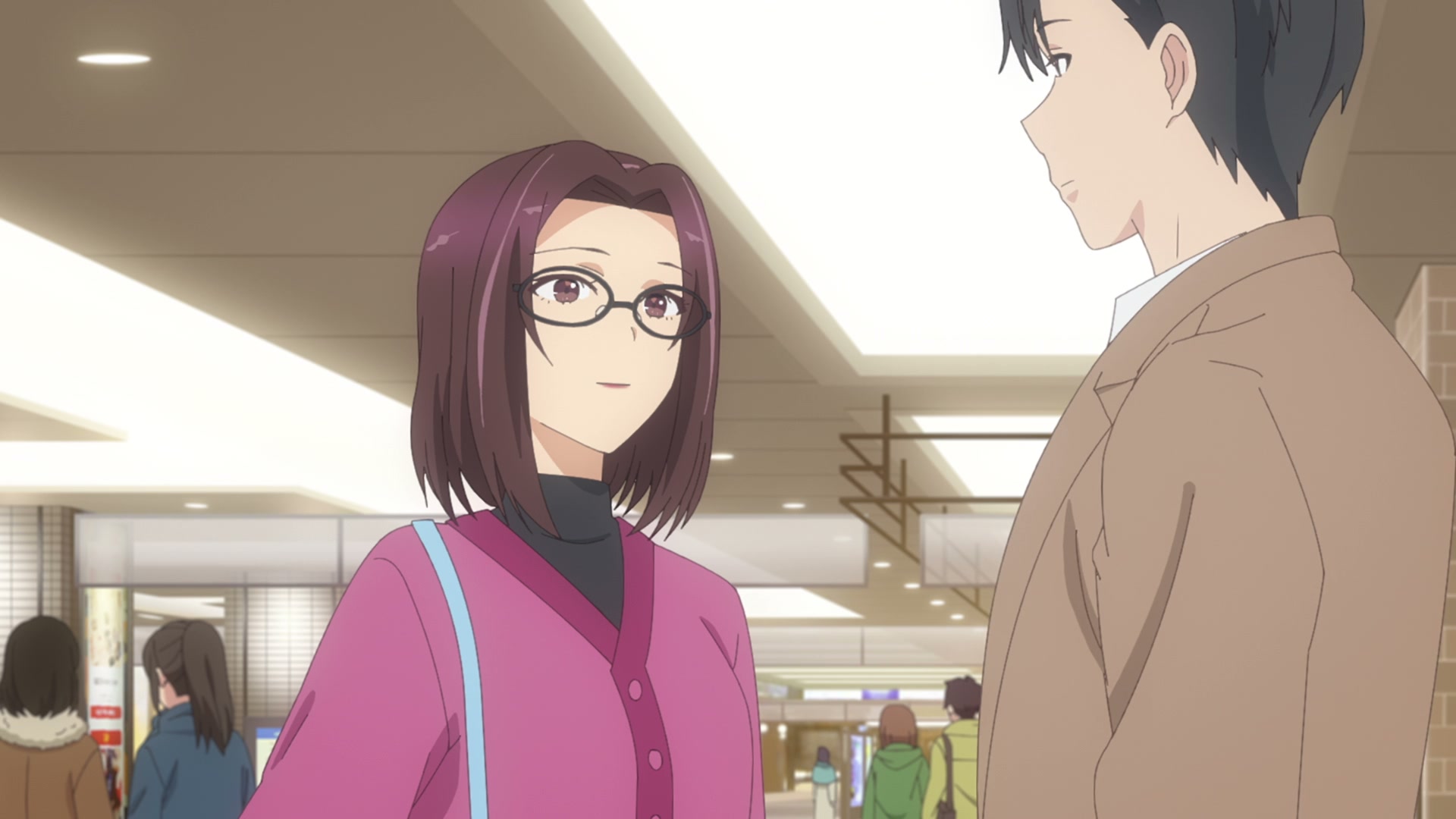
The cold open wastes no time. Maki runs into his father Itsuki, who’s with a sharp-looking subordinate named Minato Kyouka. Itsuki is breezy and awkward, the kind of dad who says “I should’ve made time” but doesn’t sound pained about it. The real sting comes from a flashback, a young Maki’s voice asking why his father never says anything, and Itsuki’s reply: “Forgive me, Maki.” That memory sits under the entire episode like a splinter. It reminds you that Maki’s fear of romantic impermanence didn’t appear out of nowhere. The show doesn’t need to shout about it. It just keeps cutting back to that hollowed-out expression Maki carries while everyone else is eating yakiniku.
The Yakiniku Interlude and Umi’s Karate Chop
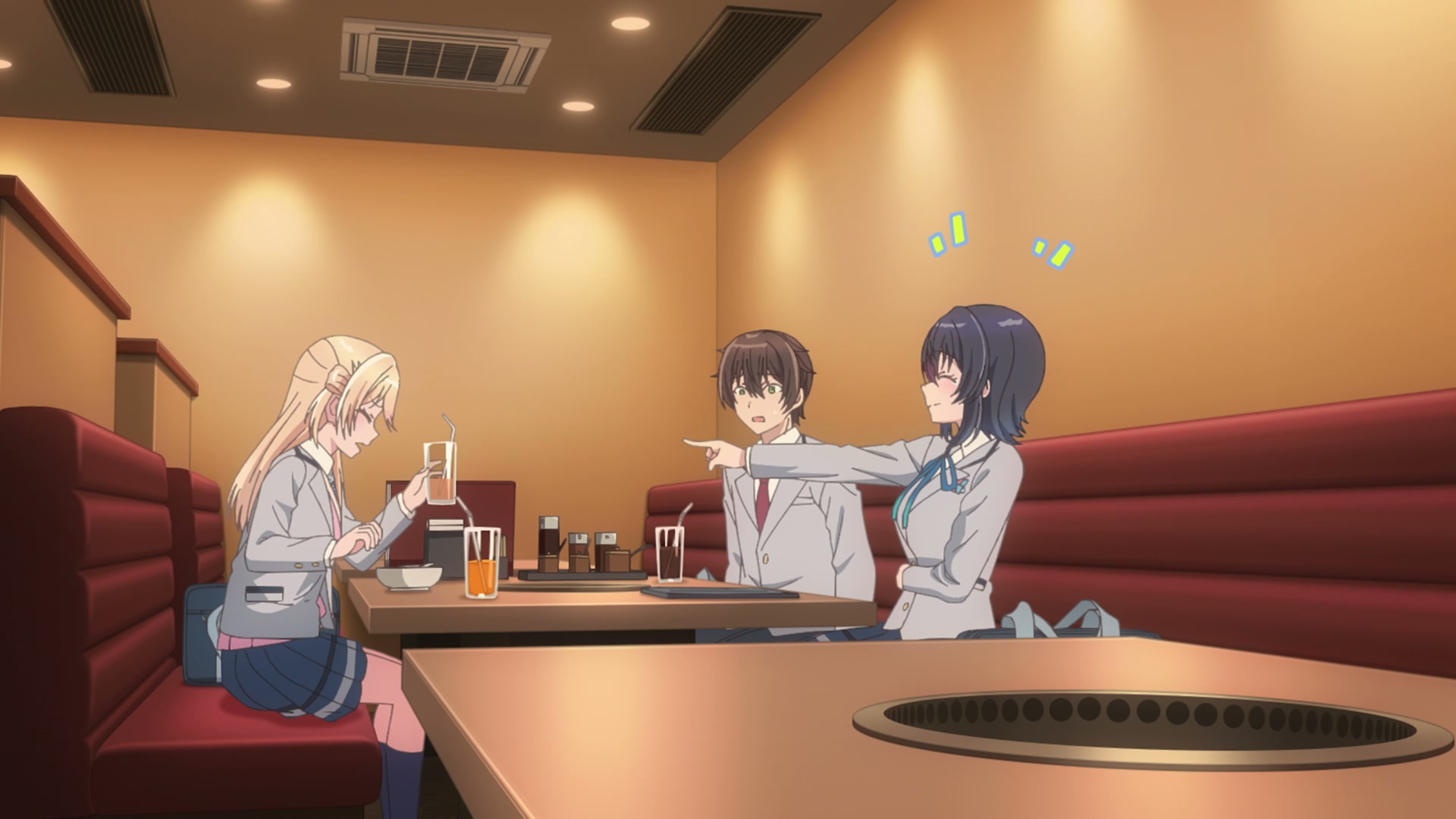
After the awkward street meeting, Maki rejoins Umi and Yuu for what should be a normal post-exams hangout. Instead, he’s so lost in his own head that Umi literally chops him to get his order. Yuu has already descended on the all-you-can-eat ice cream, and Umi is mixing cola and white soda like a small disaster gremlin. The comedy lands because it’s so deliberately ordinary, but Maki’s inner monologue gives it weight: he tells himself he has good people around him now, that he’ll make memories and forget about last year. Listening to him try to will himself into optimism while we know exactly what’s haunting him is wrenching.
The Date Umi Built
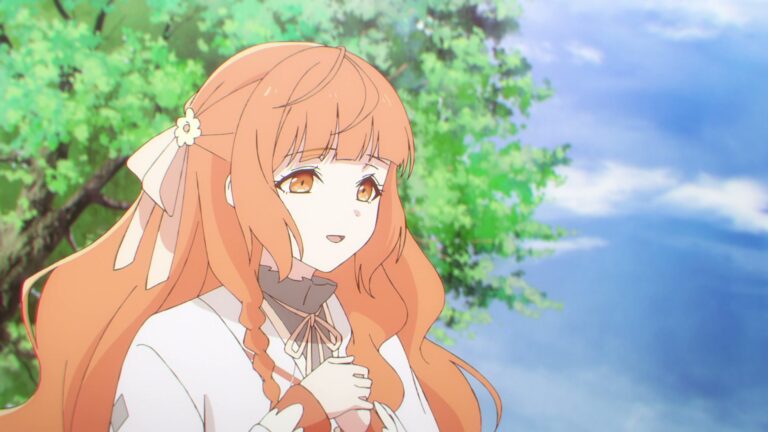
Umi showing up at Maki’s apartment on a cold winter evening, wearing a skirt she immediately regrets, is the most transparently vulnerable she’s been since her rooftop confession. She admits she wanted her date to think she was pretty, and Maki—after stammering—actually says it: she’s beautiful. The hand-hold that follows isn’t the tentative wrist-grab from the previous episode. This time she threads their fingers together, and Maki acknowledges they look like a high school couple trying a little too hard. He doesn’t hate it.
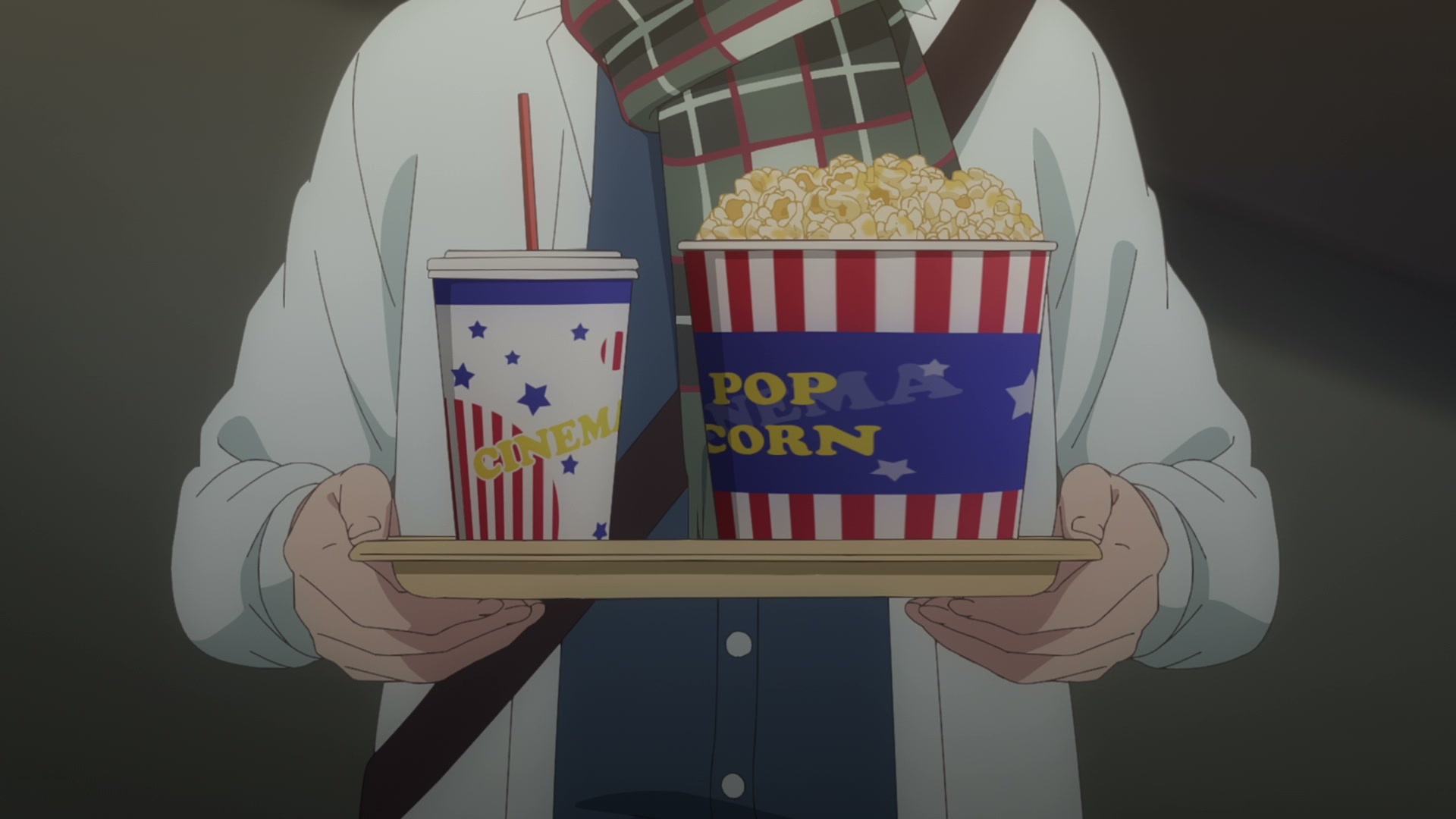
The date’s itinerary is pure Umi: a romance movie she picked blind because she was excited, a film so boring she falls asleep in thirty minutes, followed by an impassioned rant about wanting the giant-cyborg-man-eating-shark-versus-Gustave-kraken-killing-spree-android movie instead. The monster mash title alone is a gift. She then drags Maki to a fancy restaurant where the portions are laughably small, which sends them straight to burgers with onion rings. The whole sequence moves like real young love—impulsive, half-planned, full of detours.
Karaoke and the Confession That Never Happened
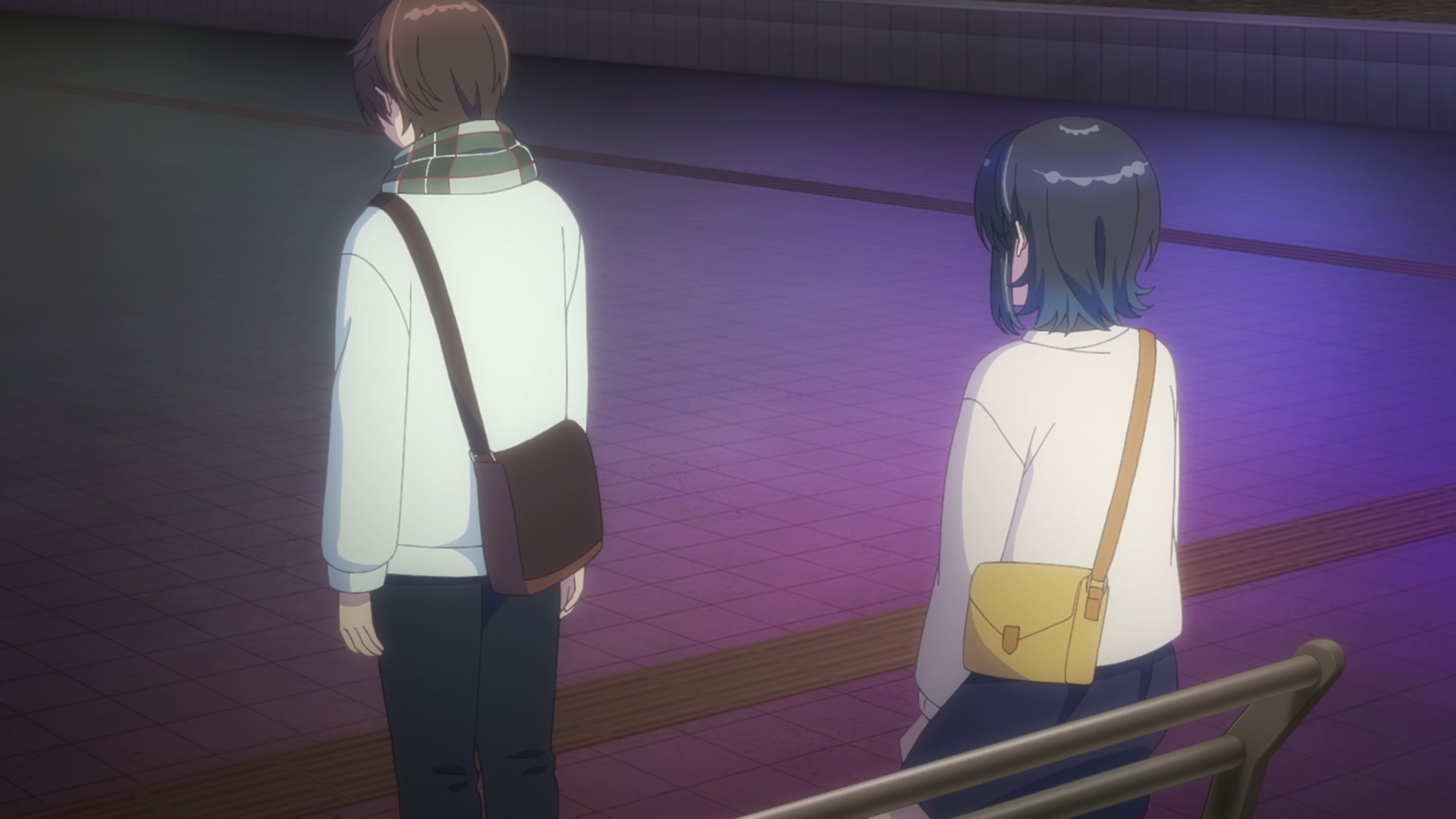
Maki has never set foot in a karaoke booth before. Umi, predictably, treats this as a personal offense and books them in immediately. Her singing is good, but the real moment comes when he admits he doesn’t know what to sing, and she immediately pivots to a duet. There is no mockery, no pressure—just the quiet labor of a girl making sure a first experience doesn’t become a bitter memory. Afterward, bundled up on the cold street, she asks him point-blank how he feels about her. No ultimatum, just “whisper it to me so nobody else can hear it.”
Then the universe intervenes, and it’s not a cute rom-com interruption. Maki spots his father with Minato Kyouka again, this time looking unmistakably close. He freezes, and Umi’s reaction isn’t confusion. She shushes him, pulls him into an alley, and hides them both until the adults pass. She doesn’t ask what that was about. She just waits, and when it’s over, she accepts his apology even though he hasn’t done anything wrong. The whole sequence is a gut punch because Umi’s instincts are perfect in exactly the way Maki isn’t ready to articulate.
What Mom Knows (and What Maki Won’t Say)
Back home, Maki’s mother Masaki is exhausted from end-of-year work and “other stuff” taking its toll. She asks about the date with genuine warmth, then drops the bomb: his father wants to see him next Friday, even though finals are coming. Maki doesn’t fight it. He asks a harder question instead—“Do you still love Dad?”—and her answer isn’t clean. She probably does, deep down. She kept the photo album with all three of them. She couldn’t throw it away.
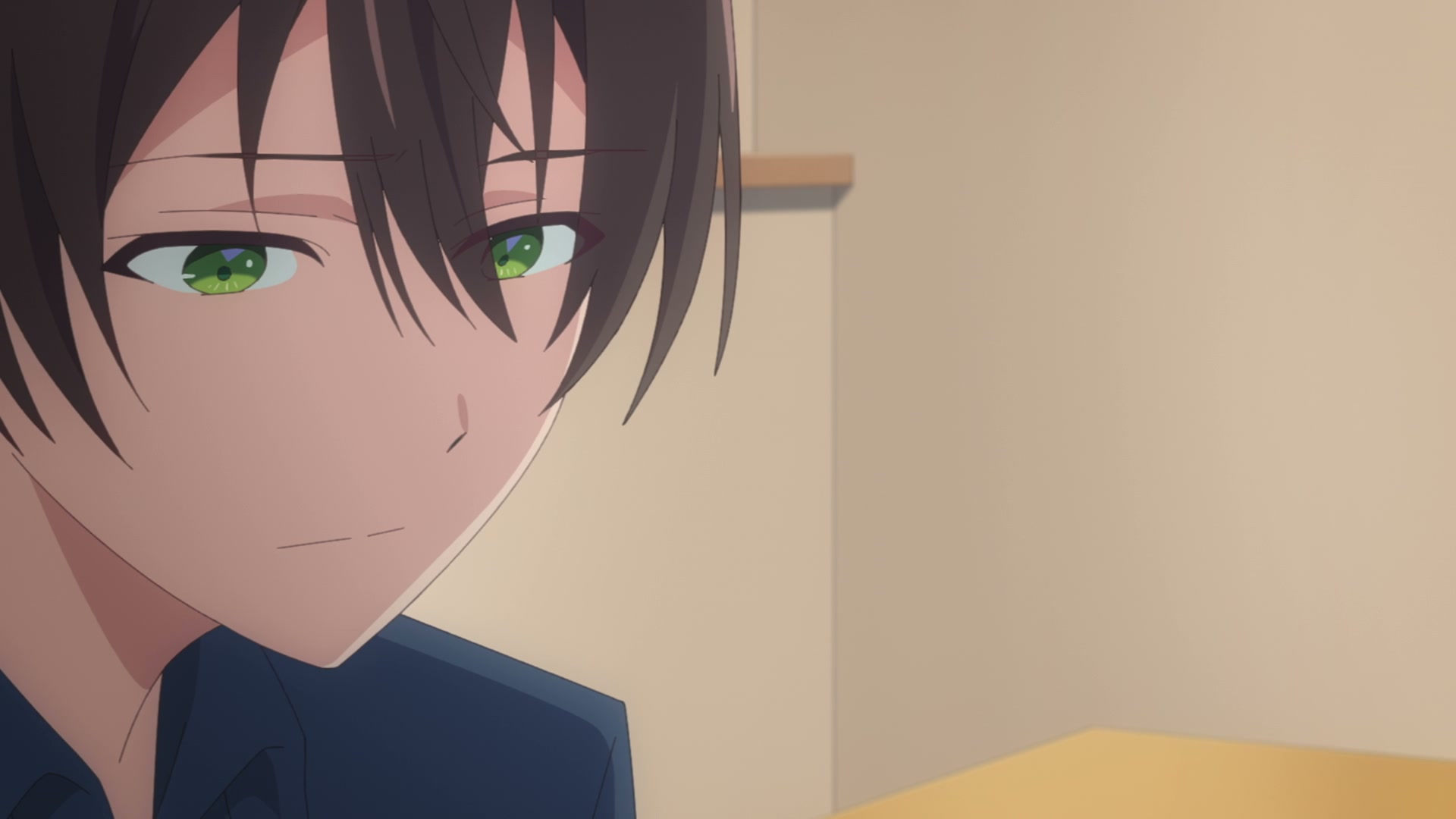
The album itself is a masterpiece of quiet storytelling. Fifteen years of family life, a younger Maki wailing whenever strangers picked him up, hiding behind his mother in photos. Looking at it, Maki decides he will not mention Minato Kyouka. He won’t ask if the relationship started before the divorce. He will “forget about it,” for his mother’s sake and his own. The show doesn’t frame this as noble or cowardly. It just sits there, uncomfortably true, letting you feel how much self-preservation and love can intertwine.
Little Touches That Made It Work
- Umi using a lip-balm promise as a relationship progress bar continues to pay off. She mentions the kiss on the lips can wait until he admits he likes her, which tracks back to her earlier condition and gives their physical affection a slow, deliberate pacing.
- The way Umi calls him “bucko” (in the English subtitle) when he tries to pull his hand away makes her sound like a tiny 1950s greaser, and I genuinely adore it.
- The yakiniku scene gives Yuu just enough space to remind us she’s sharp. She clocks Maki’s mood immediately and asks if he’s okay, no fanfare.
- Maki’s mother asking him not to keep Umi waiting for a thank-you text is small, but it tells you everything about how seriously she already regards this relationship.
Where This Leaves the Season
“Family Sights” is the quietest episode of the season, but it’s also the one that makes Maki’s emotional landscape fully legible. The date moves him closer to Umi. The two encounters with his father drag him backward into old fear. He ends the episode holding a photo album that proves love existed, while hiding a truth that might shatter the fragile stability he and his mother have rebuilt. How that tension plays out over Christmas, with a planned trio gathering at his apartment and a dreaded Tachibana Girls’ party looming for Umi, feels like it’s going to matter a lot.
For now, I’m just struck by how much this anime trusts its audience to handle a love story where the obstacle isn’t a misunderstanding or a love triangle, but a kid trying to believe in forever when the first forever he ever witnessed fell apart. That’s real. That’s what “Family Sights” is about.
Screenshots
← Episode 6 | All Class de 2-banme ni Kawaii Onnanoko to Tomodachi ni Natta Season 1 posts →
[…] ← Episode 7 | All Class de 2-banme ni Kawaii Onnanoko to Tomodachi ni Natta Season 1 posts → […]