



Introduction
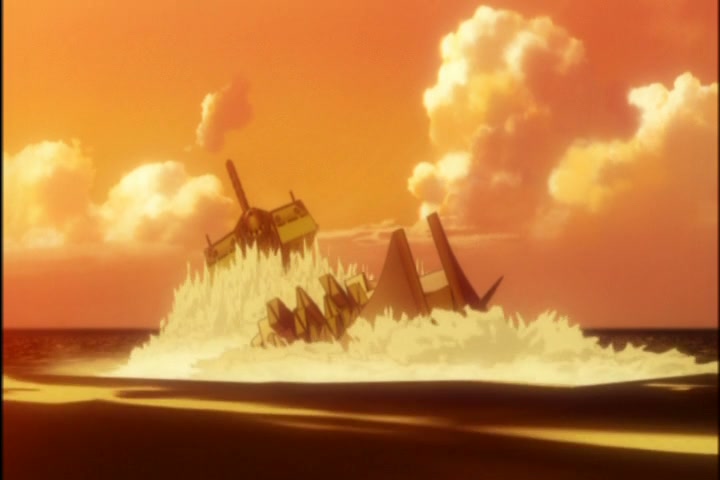
There is a moment late in Blue Drop: Tenshi-tachi no Gikyoku where a girl stands on a shoreline, shouting lines from a school play across a stretch of ocean toward an alien warship. She is not a soldier. She has no weapon. She has no plan. What she has are words written by her shyest friend, words about a condemned woman who can be seen only by someone who loves her, and she hurls them into the void because they are all she has left. The alien commander aboard that ship, poised to ram her dying vessel into the enemy flagship, hears those words and pauses. For the briefest of moments, a story about Joan of Arc stops an interstellar war.
This is the kind of series Blue Drop is. Not a show about giant robots or tactical genius or even, really, about aliens. It is a show about the terrifying, humiliating, and ultimately transformative experience of letting another person see you completely. The aliens and the boarding school and the government conspiracies are the frame. The picture inside is two people, each broken in ways the other can heal, learning that the scariest thing in the universe is not extinction but being loved without armor.
Produced in 2007 by BeSTACK and Asahi Production and directed by Ōkura Masahiko, Blue Drop occupies an unusual space in anime history. It is part of a larger multimedia franchise by Yoshitomi Akihito that includes manga and visual novels, but the anime tells its own original story within that universe. It arrived in a period when digital production techniques were maturing and when yuri narratives were beginning to find space outside niche OVA markets. The series never became a blockbuster, but it has lingered in the memories of those who found it, a quiet, melancholy work that rewards patience with an emotional payoff few louder shows achieve.
This review is for people who already speak the language of anime. I am not going to explain what a tsundere is or why boarding school stories matter in Japanese media or why an all-female cast having romantic feelings for each other is not a gimmick. If you are here, you probably already know those things. What I want to do is take this series seriously as a work of storytelling and see why, more than fifteen years after it aired, it still has the power to wreck someone who gives it their full attention.
Story and Themes
The Architecture of Two Plots
Blue Drop runs two narratives in parallel, and the tension between them is the engine of the whole series. The first is a boarding-school slice-of-life story. Wakatake Mari, a fifteen-year-old amnesiac who has spent five years living in near-total seclusion with her grandmother, is abruptly enrolled at Kaiō Academy, an elite all-girls institution on the coast. She has never attended school, has no social skills, and arrives convinced that her grandmother simply wants to be rid of her. Over thirteen episodes, she makes friends, clashes with classmates, fails chemistry, goes on a summer trip, and participates in preparations for the school festival. This is not prologue or filler. This is half the show.
The second narrative is science fiction. The alien Arume, an all-female species from another phase of the multiverse, have sent an advance fleet to survey Earth as a potential solution to their extinction crisis. Five years before the series begins, one of their ships, the Blue, suffered a catastrophic engine malfunction above Kamioki Island. The malfunction emitted psycho-reactive waves that drove the island’s human inhabitants to homicidal frenzy and killed most of the landing crew. The sole survivor on the ground was Wakatake Mari. Aboard the ship, the captain, Ekaril, lost her lover Onomil in the engine room. Ekaril has spent the intervening years hiding on Earth, wracked with guilt, secretly watching over Mari.
These two stories collide in the person of Senkōji Hagino, the perfect honor student of Kaiō Academy, who is secretly Commander Ekaril. She has enrolled at the school to be near Mari, the living proof of her greatest failure. The collision is not announced with fanfare. It happens in small moments: Mari glimpsing Hagino floating outside the dorm window at night surrounded by birds, Hagino wearing gloves constantly to hide her blue Arume skin, the sudden appearance of an alien warship above the ocean.
The pacing is deliberate to the point of being risky. The series spends its first half establishing relationships and routines before the science-fiction elements fully assert themselves. Episode 7, the summer vacation trip to Funatsumaru Hiroko’s seaside home, is almost entirely slice-of-life, concerned with babysitting a newborn and watching a family move house. In a lesser show, this would feel like stalling. Here, it is essential. The life the characters build together during these quiet episodes is what Hagino ultimately decides to die protecting. The cooking practicum, the failed pasta, the late-night conversations in the dorm, the shared excitement over a first yukata. These are not distractions from the plot. They are the point the plot exists to defend.
Guilt and the Difficulty of Confession
The thematic center of Blue Drop is guilt, and specifically the guilt of surviving when others did not. This is true for both leads. Mari does not remember her parents or the island, but she carries the survivor’s burden in a different form. She feels fundamentally unwanted. Her grandmother’s decision to enroll her at Kaiō, made from love and concern over declining health, reads to Mari as abandonment. She arrives at school planning to run away, only to realize she has nowhere to run to. Her amnesia is both a wound and a strange kind of freedom. She cannot be haunted by memories she does not possess, but she also has no foundation on which to build an identity. She is all present tense, no past.
Hagino’s guilt is more concrete and more corrosive. She commanded the ship. She was responsible for the mission. When the Emil Force Drive went berserk and the psycho-reactive waves spilled out across the island, she could do nothing. She watched her lover die in the engine room. She watched her landing crew perish. She watched, through sensors and reports, as eight hundred humans tore each other apart. The fact that the accident was actually caused by deliberate sabotage from her superior officer, Master Commander Shivariel, does not lessen her self-blame. She was the commander. She should have seen it. She should have stopped it.
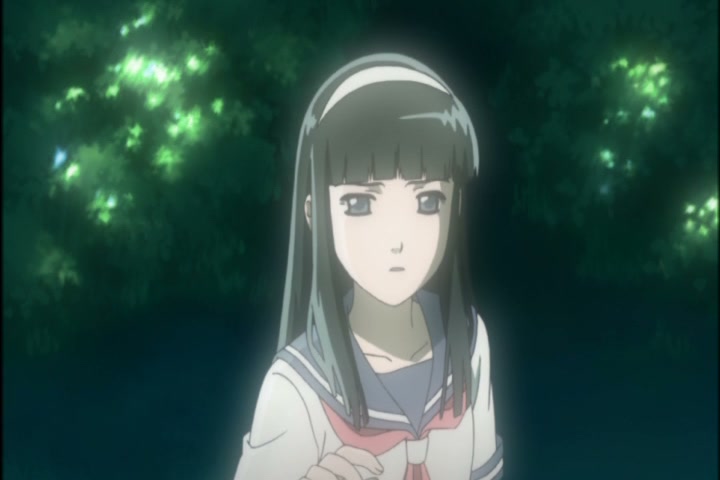
Her guilt manifests as a terror of being known. She has constructed a flawless persona at Kaiō. Top of every class, impeccable athlete, unfailingly polite. Students adore her from a reverent distance. But this perfection is a fortress, not a personality. Nobody is allowed close enough to see the rot she believes is inside her. When Mari, blunt and unpolished Mari, starts pushing through the walls, Hagino panics. Her first real interaction with Mari is an act of violence. She seizes her by the throat. It reads as aggression, but it is fear. The survivor of her greatest sin is standing in front of her, and Hagino has no idea what to do except try to make her go away.
The entire series is structured around the question of whether Hagino can bring herself to tell Mari the truth. She tries, repeatedly, and fails. In Episode 9, walking through the countryside with Mari after a shopping trip, she removes her gloves and reveals her alien skin. She explains that her people are dying out. It is a partial confession, a test of Mari’s capacity to accept her. Mari passes the test, thanking Hagino for saving her life rather than recoiling from her alienness. But Hagino still cannot say the hardest part: that her ship killed Mari’s parents.
That revelation comes instead from Azanael, a vengeful Arume who lost her own lover, Onomil, in the same accident and has spent years nursing a hatred for Ekaril. She locks Mari in a room aboard Blue and tells her everything. The result is devastation. Mari shuts down. Hagino retreats. The relationship that has been painstakingly built across ten episodes seems to collapse in an instant.
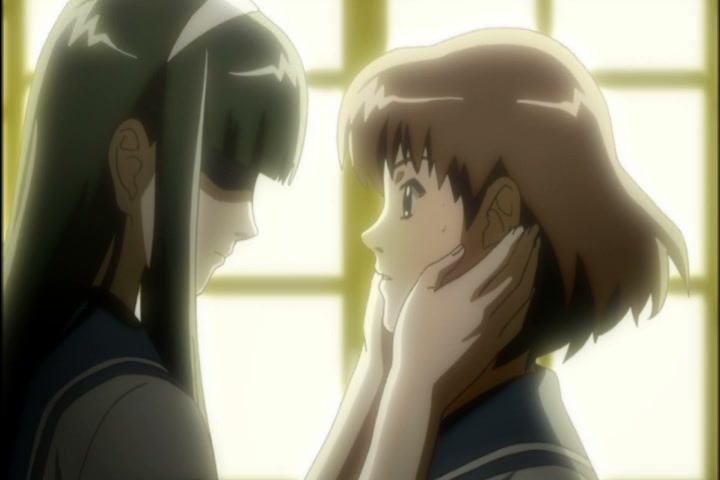
What happens next is why this series matters. Mari, after processing the truth, does not demand an apology. She does not rage or accuse. She slaps Hagino twice. The first slap is for keeping the secret. The second is for making her worry. And then she embraces her and says, “I love you.”
This is radical. It redefines forgiveness not as a transaction, where an apology is offered and accepted, but as an unconditional act of seeing someone as they are and choosing them anyway. Mari does not need Hagino to grovel or explain. She needs Hagino to stop carrying the weight alone. “You always try to shoulder everything yourself, stupid Hagino!” This line, shouted in frustration, is the thesis of the series. Guilt is a form of isolation. The antidote to guilt is not punishment but connection. When Hagino finally understands that Mari loves her not despite her past but including it, something unlocks. She stops being a commander paralyzed by a five-year-old failure and becomes someone capable of action.
The Play Within the Play
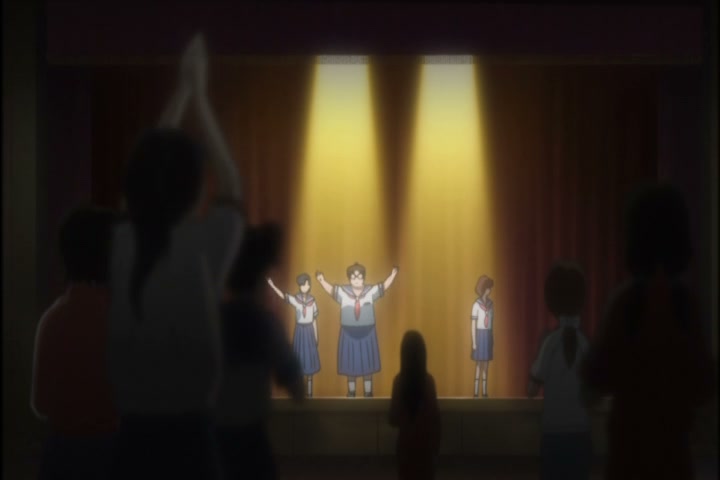
Kōzuki Michiko, Mari’s first friend at Kaiō, is a shy scholarship student from a shopkeeper family who has been writing stories since childhood and has never shown them to anyone. Under pressure from their teacher Sugawara Yūko, she agrees to write the script for the class’s school festival production. The play she creates is about Joan of Arc on the eve of her execution, imprisoned and condemned, able to be seen and heard only by a single pure-hearted girl who appears in her cell.
The parallels to Hagino’s situation are not subtle, and they are not meant to be. Joan, the holy maiden turned heretic, isolated from a world that once revered her, carrying a burden no one else can perceive. The Girl, an ordinary person with no special powers except the ability to see someone everyone else has stopped seeing. The structure of the play itself, with visitors coming to Joan’s cell who cannot perceive her and mistake the Girl for Joan, mirrors the way everyone at Kaiō perceives Hagino, the perfect student, while remaining blind to the real person beneath.
But the play is more than allegory. It becomes the emotional infrastructure of the series’s climax. When Mari learns the truth about Kamioki Island and retreats into trauma, it is the play that pulls her back. She is the lead actress, playing the Girl, and the responsibility to her friends and to the story forces her to keep moving forward even when she wants to collapse. The play gives her a language for feelings she cannot articulate on her own.
In the finale, when Hagino has revealed her alien form to the class and departed for the final battle, Mari runs to the shore and begins reciting her lines across the water. These are not strategic communications. They are not even, strictly speaking, her own words. They are Michiko’s words, written for a fictional Joan of Arc. But they are the truest thing Mari has to offer. “Joan! Oh, Joan! I can still see you! Your form, your smile!” She is telling Hagino, across the gulf between species and the chaos of an invasion, that she is seen. That she is loved. That she is not alone.
This is a profoundly anime idea. Not in the sense of being Japanese, although it is that too, but in the sense of belonging to a medium where a high school play can be the emotional fulcrum of an interstellar war. Anime has always understood, in ways that Western media often struggles with, that the stories we tell each other are not separate from reality. They are the tools we use to make reality bearable. Michiko’s play about Joan of Arc does not just reflect the themes of Blue Drop. It saves a life and ends a war.
The Ordinary as Sacred
I want to return to the slice-of-life elements because they are so easily misunderstood. A viewer coming to Blue Drop for alien battles and conspiracy plots might find the extended cooking sequence in Episode 3, or the baby-bathing chaos of Episode 7, or the costume-sewing montage of Episode 12, to be digressions. They are not.
The series is built on a contrast between two modes of existence. The Arume are an advanced spacefaring civilization, but they are also sterile and dying. Their ships are clean and cold and full of holographic interfaces. Their social structure is military. Their reproduction is technological. When Tsubael, Hagino’s navigator, watches a human baby being fed and changed and bathed, she stares with the bafflement of someone encountering an entirely alien lifeform. The baby is not just a baby. It is a symbol of everything the Arume have lost. The messy, loud, inconvenient continuity of biological life.
The scenes at Kaiō are full of this messy, loud, inconvenient life. Girls argue over cooking duties. They fail exams and take remedial classes. They gossip about teachers. They fight, apologize, and fight again. This is what a living world looks like, and it is specifically what Hagino has never had. Her life aboard Blue before the accident was presumably orderly and purposeful. After the accident, it was a half-decade of frozen grief. Kaiō, with its curfew violations and school festival mania and late-night conversations, is the first genuine community she has ever been part of.
This is why the invasion, when it comes, feels like a violation. The aliens are not just attacking a planet. They are attacking a specific kitchen where a specific girl burned the pasta on her first try. They are attacking a dormitory where a shy writer finally found the courage to share her stories. They are attacking a seaside house where a baby fell asleep in the arms of teenagers who had no idea what they were doing. The scale of the threat is planetary, but the cost is measured in these intimate losses. Hagino’s decision to rebel against her own species is not an abstract moral calculation. It is the decision of someone who has finally found a home and will burn down anyone who tries to take it from her.
Cultural Context and Resonance
The series draws on several currents in Japanese storytelling that are worth noting. The elite girls’ school setting connects Blue Drop to a long lineage of shōjo and yuri narratives, from the Class S literature of the early twentieth century through Maria-sama ga Miteru and beyond. These settings create hothouse environments where intense emotional bonds can develop with a particular intensity, sheltered from the distractions of the outside world. Kaiō Academy, with its century of tradition and its emphasis on decorum and discipline, provides a structured world for Mari’s chaos and Hagino’s secrets to play out within.
The Kamioki Island disaster, while fictional, resonates with Japan’s lived experience of catastrophic tsunamis. The 2004 Indian Ocean tsunami was recent history when the series was in production, and the imagery of a wave annihilating an entire community carries cultural weight that requires no explanation for Japanese audiences. The government’s suspicion that the disaster was not natural, their secret investigation into its true cause, also feels grounded in a particular kind of postwar anxiety about hidden threats and official secrecy.
The school festival, or bunkasai, is a cornerstone of Japanese school life and a ubiquitous setting for anime climaxes. By placing the invasion on the eve of the festival, Blue Drop taps into a shared cultural understanding of what is being threatened. The festival is not just an event. It is the culmination of months of collective effort, a moment when the normally closed world of the school opens its doors to families and the community. Destroying it is a specific kind of sacrilege.
Characters
Wakatake Mari: Emotional Honesty Without a Filter
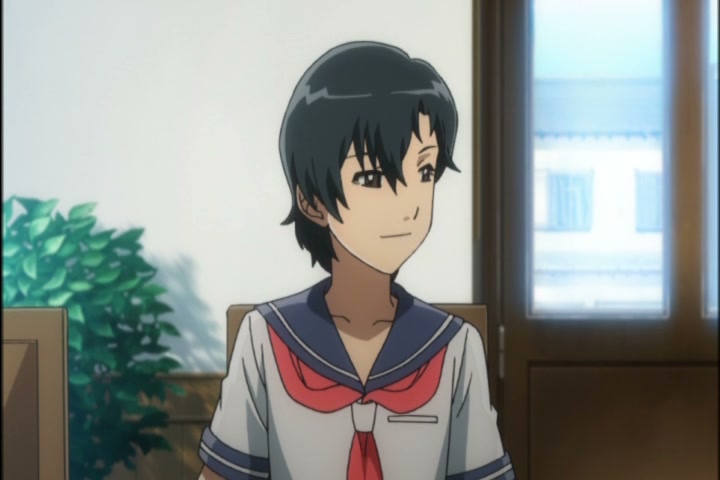
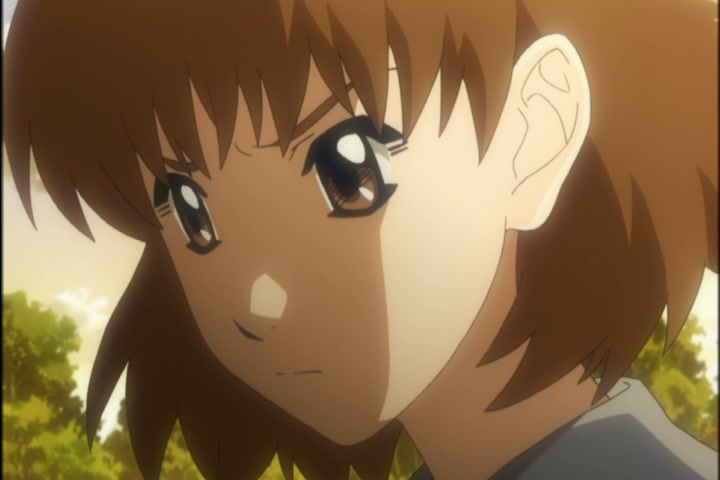
Mari is a protagonist defined by what she lacks. She lacks memory. She lacks social training. She lacks any instinct for dissembling or politeness. What she feels, she says. What she wants, she pursues. This makes her exhausting to the people around her and exhilarating for the audience.
Her lack of filter is not always charming. She is rude to Michiko when they first meet, blowing off her friendly overtures because she has already decided she will not be staying at Kaiō. She picks fights with Hagino’s admirers. She tells Akane, a near-stranger, to visit her estranged father because “he’s your family, right?” She has no sense of proportion or tact. But this lack of a social mask is precisely what allows her to cut through the defenses other characters have built. She sees through Hagino’s perfection because she does not understand the concept of a performance. She pushes Michiko to share her writing because she genuinely cannot comprehend why someone would keep a source of joy hidden.
Her amnesia, while a plot device, also functions as a character trait. Because she does not remember her parents, she does not carry the specific weight of their loss the way a typical revenge-driven protagonist would. Her trauma is defined by absence, not by anger. When she learns the truth about Kamioki Island, her breakdown is not about vengeance. It is about the sudden, vertiginous knowledge that the person she loves is connected to the worst thing that ever happened to her. Her recovery is correspondingly not about forgiving Hagino. It is about deciding that the connection matters more than the guilt.
This is an unusual emotional arc for a protagonist, and it can read as passivity if you are not paying attention. Mari does not drive the plot in a traditional sense. She does not uncover conspiracies or fight battles or make strategic decisions. What she does is harder to dramatize but more fundamental. She refuses to let people she cares about isolate themselves. She demands honesty at the cost of comfort. She loves people in the exact shape of their brokenness, and her love changes them.
Senkōji Hagino / Ekaril: The Prison of Perfection
Hagino is a kuudere in the classic mold. Cool, composed, effortlessly competent. She speaks in soft, measured tones. She never raises her voice. She is deferred to by students and teachers alike. The mask is flawless. The person beneath it is a wreck.
What makes Hagino compelling is that the mask is not a lie in the usual sense. She is genuinely those things she projects. She is smart and capable and, in her own way, kind. The problem is that she cannot let anyone see the rest of her. The guilt about Kamioki Island, the grief over Onomil, the terror that she is fundamentally unworthy of love. These are not hidden behind the mask. They are sealed inside a separate room, and Hagino has thrown away the key.
Her relationship with Mari is structured around the slow, painful process of unlocking that room. Every step forward terrifies her. Revealing her alien skin. Taking Mari aboard Blue. Explaining her people’s extinction crisis. Each revelation is a gamble that Mari will run, and every time Mari stays. By Episode 10, when Azanael forces the final revelation, the audience has been primed to expect disaster. And disaster arrives. But so does something else. Mari’s refusal to accept Hagino’s guilt as a barrier. The slap. The embrace. The words.
Hagino’s arc is not about becoming a better person. She already tries, constantly, to be better. It is about accepting that she does not need to be better to be loved. The love is already there. It has been there the whole time. She just could not see it through the fog of her own self-hatred.
Her final act, steering Blue into the enemy flagship while reciting the poem about the uncuttable rose, is both sacrifice and declaration. She is giving her life to protect the world Mari lives in, but she is also, finally, stating out loud what she believes. The rose that blooms in the wilderness of her home cannot be cut, no matter what blade is raised against it. Mari is that rose. The love between them is that rose. Everything else, including her own life, is secondary.
Kōzuki Michiko: The Courage to Be Seen
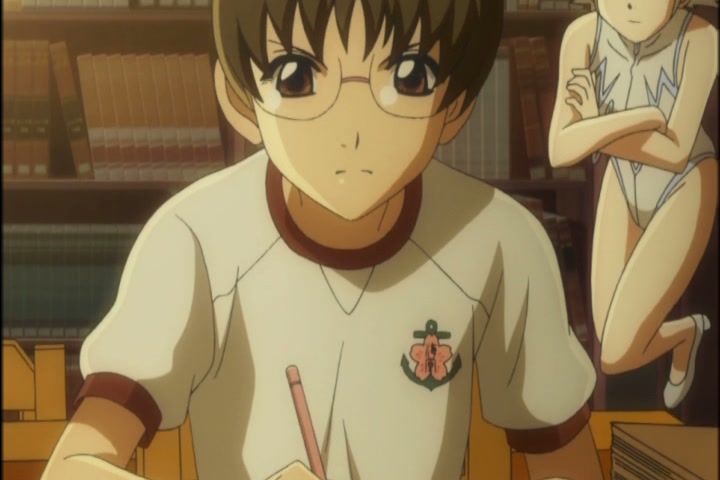
Michiko begins the series as a background presence. The nice girl who shows Mari around. The one who works in the garden. The one who seems to have no sharp edges. It would be easy to dismiss her as a satellite character, orbiting the leads and providing support.
Then Sugawara Yūko asks her to write the play, and Michiko’s entire inner world opens up.
Her arc is about the terror of artistic exposure. She has been writing stories her whole life, but she has never shown them to anyone. The stories are her real self, the part of her that is brave and imaginative and passionate about things. The public self is a quiet, self-effacing scholarship student who tries not to take up space. Bridging the gap between those two selves is agonizing. She lies about her progress on the script. She flees school when the pressure becomes unbearable. She collapses from exhaustion and anxiety.
What brings her through is Mari’s blunt, uncomplicated belief in her. Mari does not understand why anyone would hide a good story. To Mari, the equation is simple. You made something. It is wonderful. Share it. This is naive, and it is also exactly what Michiko needs. Not nuanced feedback or literary criticism. Just someone who believes she deserves to be heard.
The play itself, when she finally writes it, is genuinely good. Not in a “good for a high school student” way, but good in a way that makes the other characters stop and pay attention. The Joan of Arc framework, the themes of isolation and unseen suffering, the message of hope against despair. These are not accidental. Michiko has been watching her friends, absorbing their struggles, and she has poured what she observed into her art without even realizing it. Her growth from someone who could not show anyone a single page to someone who directs the entire production, makes casting decisions, and rallies the cast during a crisis, is one of the most satisfying arcs in the series.
Kawashima Akane: The Sharp-Edged Protector
Akane is a senior student repeating her junior year, a troublemaker who talks back to authority and seems to take pride in her reputation as a delinquent. Her antagonistic relationship with her estranged father, the headmaster of Kaiō, provides the series with its most grounded family drama.
Her arc is about the exhaustion of maintaining anger as a lifestyle. Akane has been furious at her father for a decade, ever since her parents divorced and she was forced to live with a stepfather she never accepted. Her enrollment at Kaiō was her father’s attempt to do something for her, but she has spent her school career punishing him for it. When he collapses from stress and is hospitalized, she refuses to visit him. There is too much history. Too much pride.
Mari, who lost her parents and cannot remember them, has no patience for this. Her intervention is characteristically blunt: “You want his support. Let him give it to you, for his sake!” She refuses to let Akane waste a relationship that Mari would give anything to have. The fact that Mari is an outsider with no stake in the family drama makes the intervention more powerful, not less. She has no reason to care except that she sees Akane suffering and wants it to stop.
Akane’s eventual decision to visit her father, aided by her friends who cover for her curfew violation, does not magically fix everything. But it opens a door that has been sealed for ten years. Her later role in the play, as the knight who fought at Joan’s side and cannot understand why she now sits in a cell, channels her complex feelings about loyalty and betrayal into something productive. She is the character who most clearly demonstrates that being tough and being loving are not opposites. Her toughness is how she loves.
The Supporting Cast and the Arume
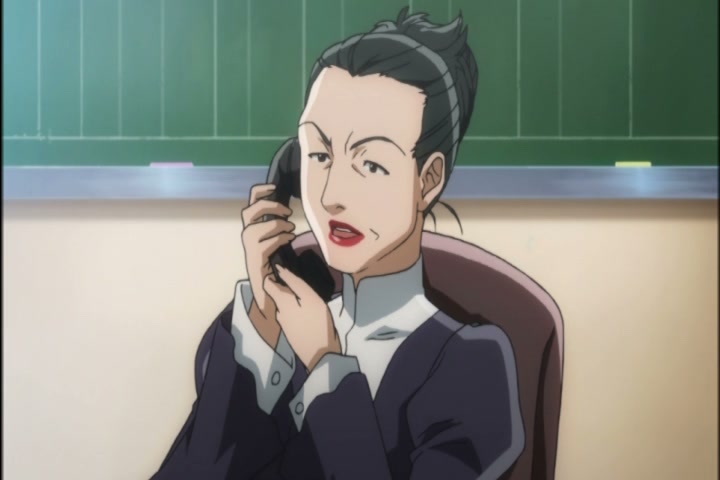
Sugawara Yūko, the homeroom teacher, presents an interesting case of a double role that could have been a cheap twist but is handled with surprising warmth. She is a government investigator assigned to monitor Mari for any recovered memories of the Kamioki disaster. The discovery of this role, when Mari overhears a classified phone call, devastates Mari. “Was it all lies?” The answer is no. Yūko’s affection for Mari is genuine, even if her assignment is deceptive. Her decision to resign as an investigator but stay as a teacher, at Mari’s insistence, provides one of the series’s quieter emotional resolutions. She chose the student over the mission. The student chose her back.
Tsubael, Hagino’s navigator, is the loyal subordinate archetype elevated by specificity. She is not blindly obedient. She questions Hagino’s decisions, urges her to resume their mission, and worries openly about her commander’s emotional state. Her loyalty is a conscious choice, renewed daily, not a reflex. When she plays Onomil’s final recording for Azanael, it is both a strategic move and an act of shared grief. She and Azanael loved the same person, and that shared love becomes a bridge.
Azanael is the antagonist who learns, too late, that she has been fighting the wrong war. Her hatred of Ekaril is understandable. The woman she loved died, and Ekaril was in command. The fact that the accident was actually orchestrated by Shivariel as a weapons test does not come out until the end, and by then Azanael has spent years feeding her rage. Her final choice, to hijack Novaal and turn its weapons against Shivariel, is not redemption in a clean sense. She dies, or transforms, or vanishes into the chaos of the battle. But she dies fighting the actual enemy, not the proxy she invented to make her grief bearable.
Shivariel is a relatively straightforward villain, cold and calculating, willing to sacrifice her own people to test a weapon. She represents the Arume military at its most inhuman, and her defeat at the hands of the ship she tried to destroy carries a satisfying poetic logic.
Onomil, though dead before the series begins, is a constant presence. Her voice on recordings. Her face in flashbacks. Her ghost, generated by Blue‘s AI, speaking to Hagino and later to Azanael. She is the emotional linchpin of the Arume side of the story, the person whose loss set everything in motion. Her posthumous message is consistent: do not carry this alone. Forgive yourself. Live. It takes the entire series for the living characters to hear her.
Visuals and Animation
The Two Palettes of Blue Drop
The visual design of Blue Drop is built around a deliberate contrast between two color worlds. This is its strongest aesthetic asset, and the production commits to it with impressive consistency.
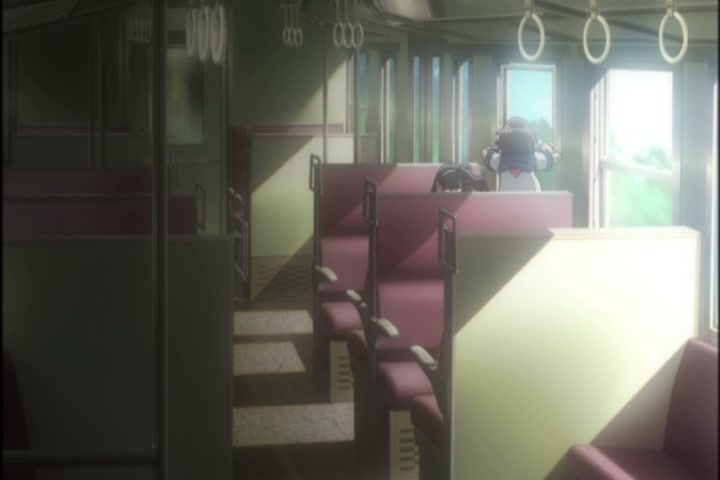
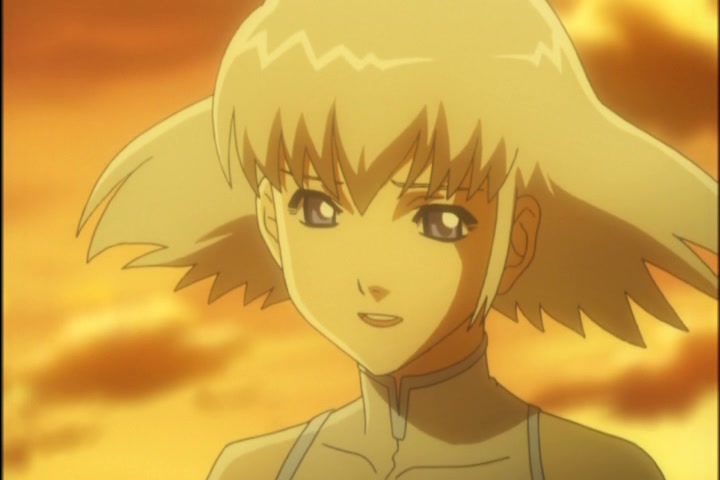
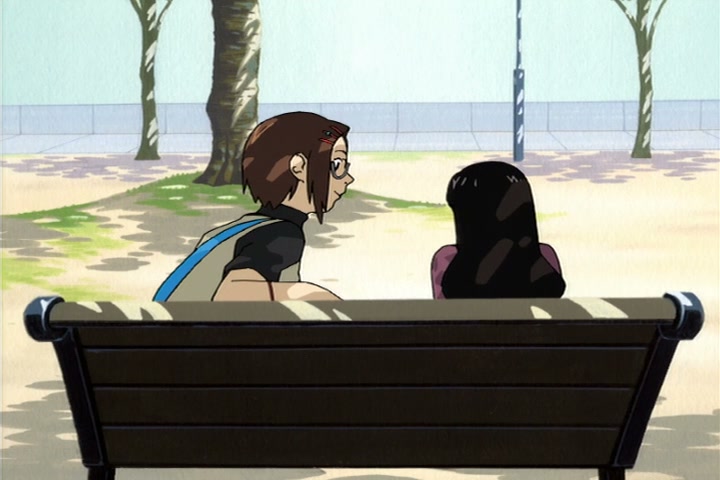
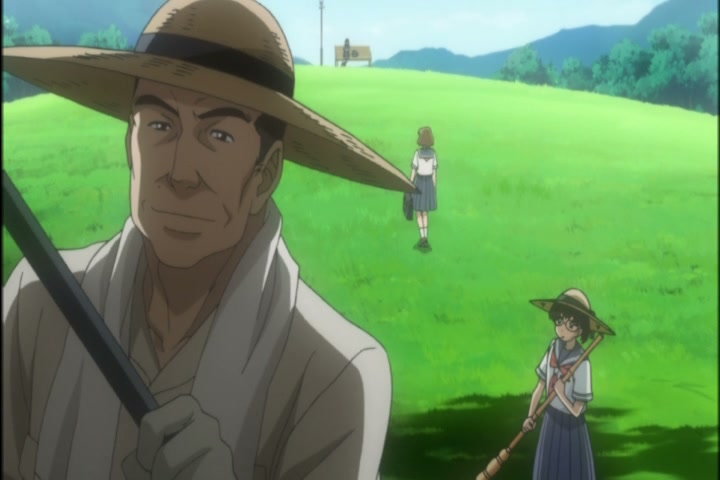
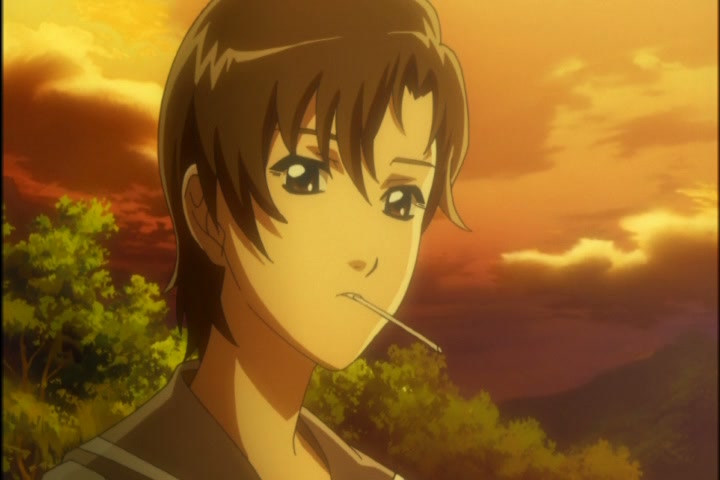
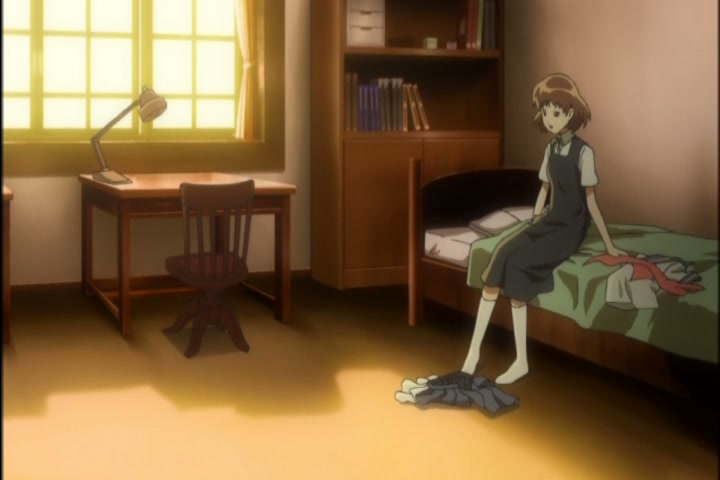
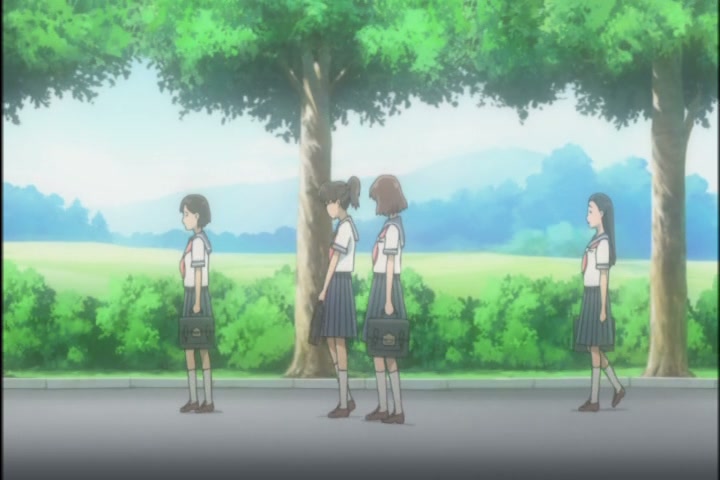
The Kaiō Academy scenes, which make up the majority of the runtime, are drenched in warmth. Golden-hour sunlight pours through classroom windows. Lush greens fill the campus gardens and the countryside surrounding the school. The dormitory interiors glow with amber tones. There is a heavy use of bloom and soft focus that gives these scenes a dreamy, slightly nostalgic quality, as if they are being remembered rather than experienced. This is appropriate. For Hagino, these moments are fragile and precious. For Mari, who has no past, they are the first memories she is consciously making. The visual softness tells you that this world is temporary, beautiful, and worth protecting.
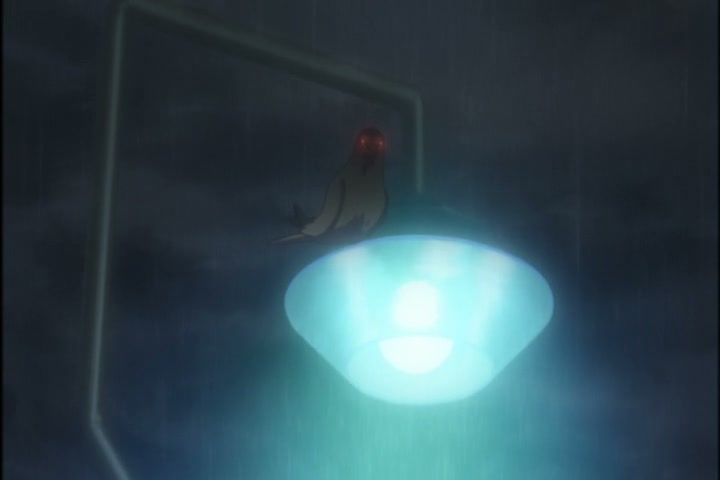
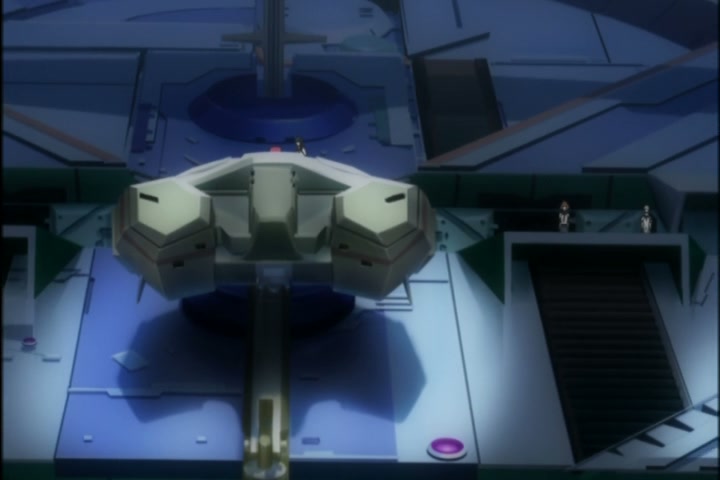
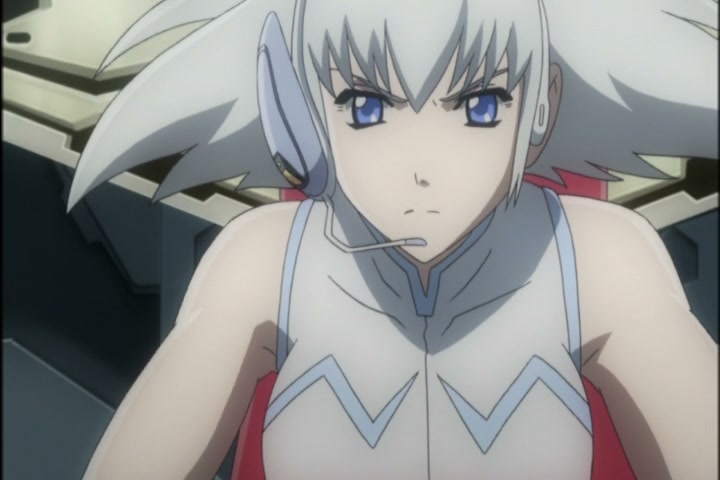
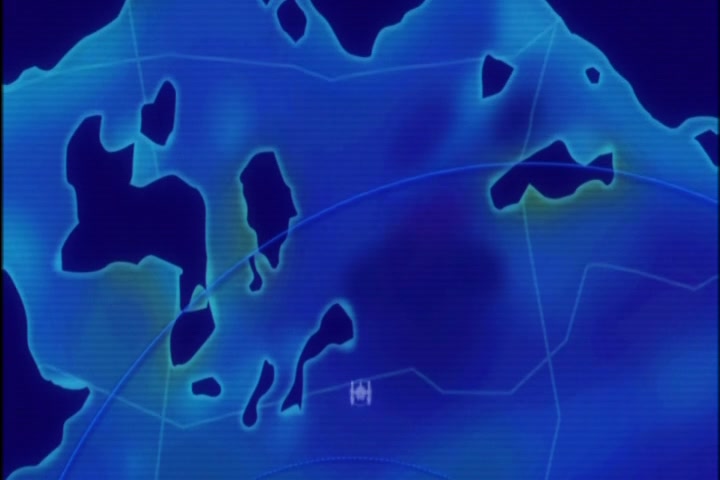
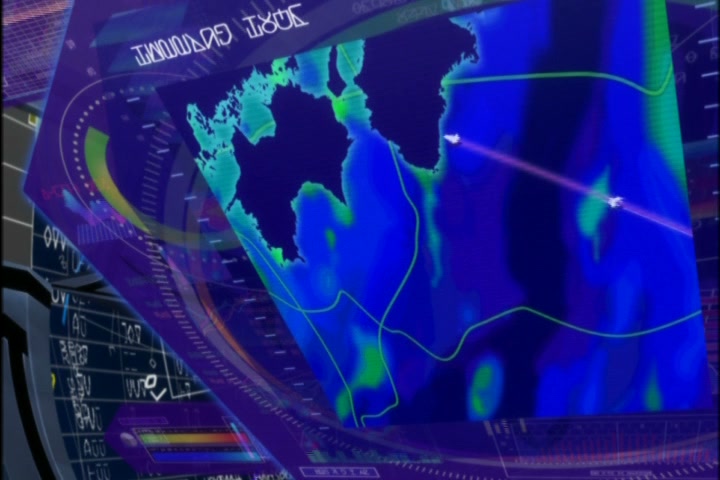
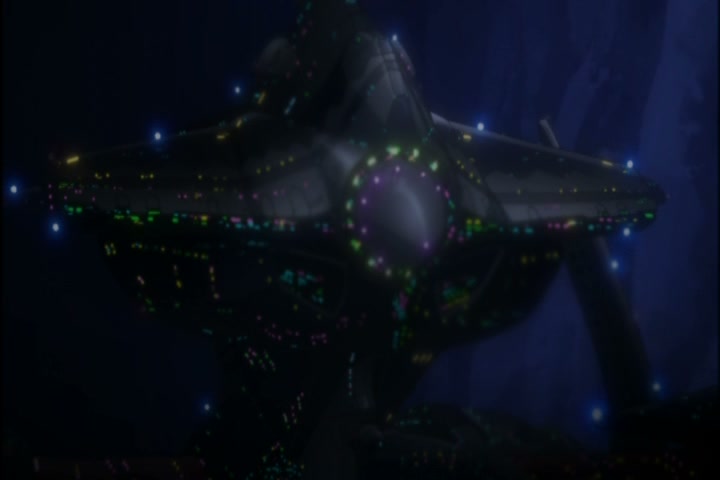
The alien and night-time scenes reverse the palette entirely. Deep purples, cold teals, neon blues. The interior of Blue is a geometric space of hard lines and glowing interfaces, all clinical precision. The lighting in these scenes is directional and high-contrast, casting sharp shadows across faces. When characters stand on Blue‘s bridge, the displays illuminate them from below, giving their features an otherworldly cast. The contrast with the sun-drenched school scenes could not be sharper, and it works. You feel the shift in mood physically, a drop in temperature as the story moves from the human world to the Arume one.
The compositing reflects its era. This is a mid-to-late 2000s digital production, and it shows in both the strengths and weaknesses of that period. The heavy bloom can occasionally wash out fine details, particularly in darker scenes where the contrast between characters and backgrounds becomes muddy. Characters sometimes appear to float slightly above their environments, a common artifact of the transition from cel to digital compositing. But these are not deal-breaking flaws. They are the texture of a particular moment in anime production history, and they contribute to the series’s distinctive atmosphere. The “lo-fi” quality of the digital work, the slight softness around the edges, feels intentional even when it is partly a budget limitation.
Character Designs and Acting
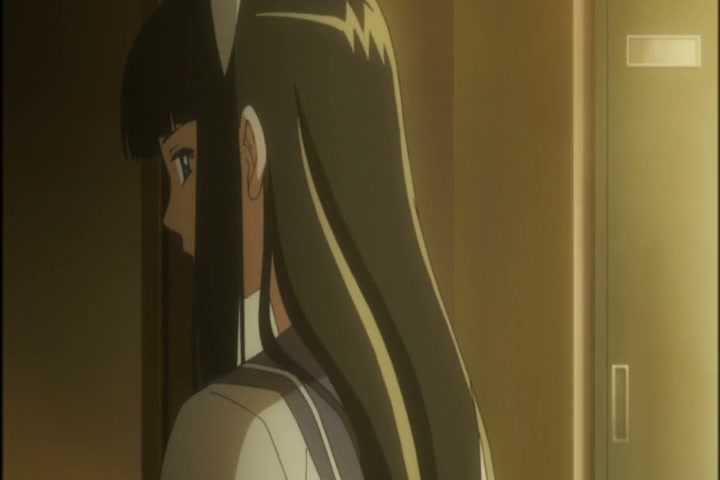
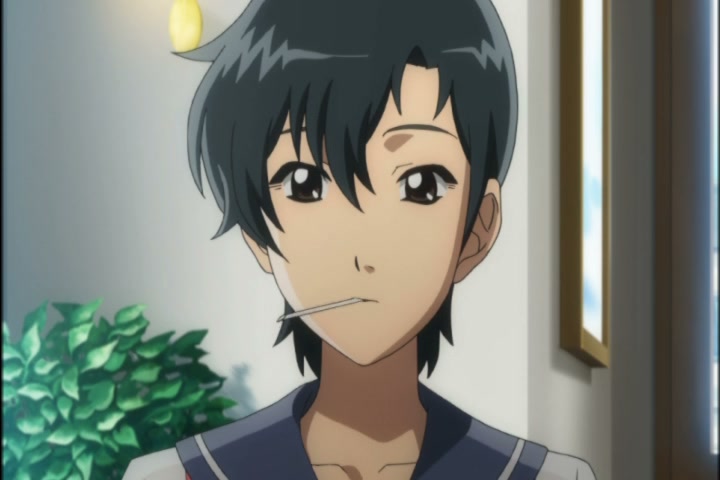
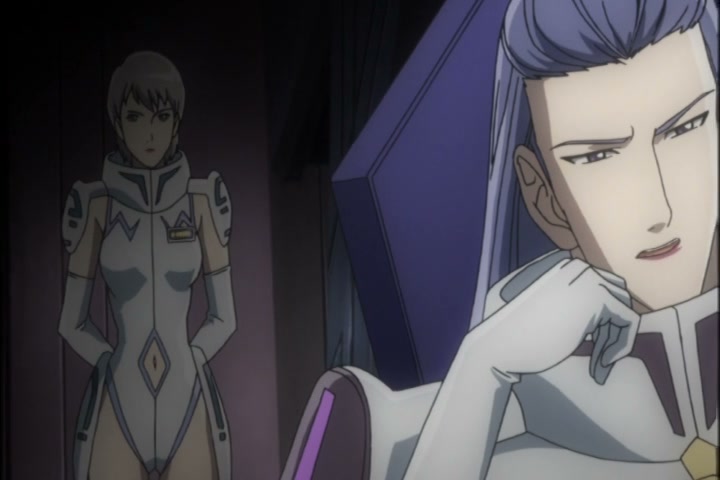
The character designs by Ōtsuka Mai are clean, era-appropriate work. Thin, consistent linework. Large, expressive eyes with detailed iris highlights that catch the series’s abundant light. There is a clear visual hierarchy: authority figures like Shivariel and Director Maiyama have longer, more angular faces. Younger characters like Mari and Michiko have rounder, softer features. Hagino sits between them, her face capable of shifting from approachable warmth to alien severity depending on the angle and lighting.
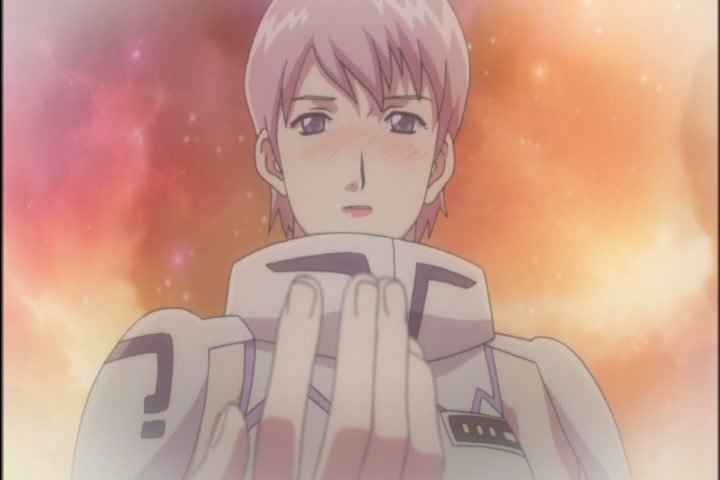
The visual acting in Blue Drop is restrained and often subtle. This is not an action-heavy show, and the character animation reflects that. The emphasis is on faces and posture. Hagino’s gradual softening around Mari is conveyed through small changes in her expression, a slight relaxation around the eyes, a tilt of the head. Mari’s emotional states are telegraphed through her whole body. She slumps, gestures broadly, and cries with an abandon that Hagino would never permit herself. The contrast in their physicality is a form of characterization. Hagino is contained, controlled, always aware of the space she occupies. Mari sprawls.
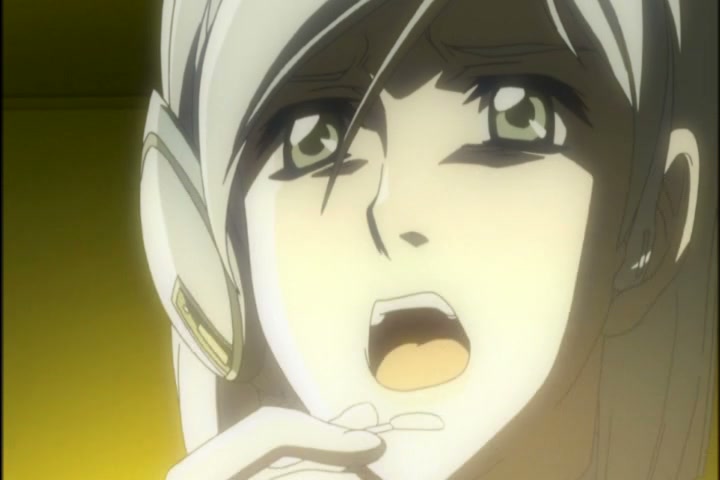
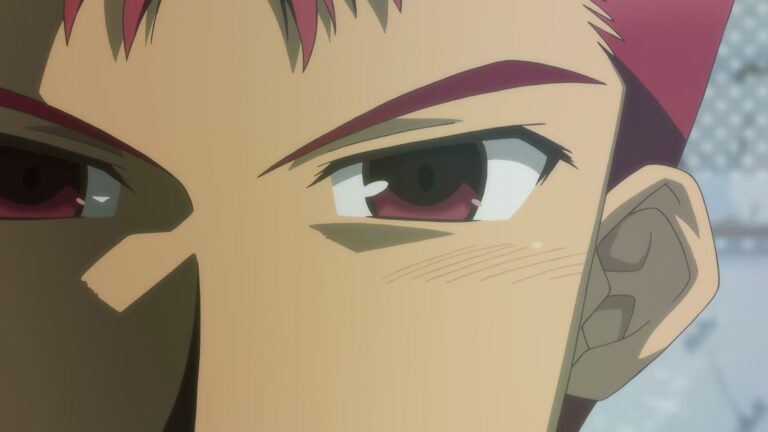
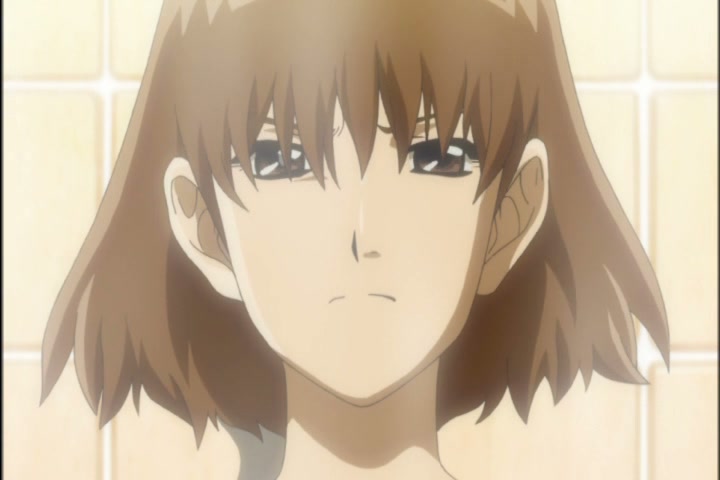
The series uses extreme close-ups effectively but sparingly. When they arrive, at moments of emotional climax, they land hard. A trembling lip. Eyes filling with tears. The slight clench of a jaw before a difficult confession. These are not flashy animation showcases. They are acting showcases, and they work because the character designs give the animators enough detail to play with.
Background Art and Cinematography
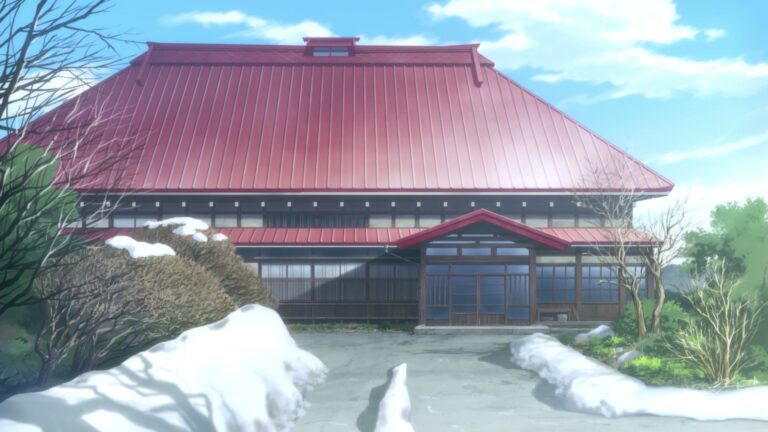
The background art varies in style depending on the setting. Natural environments, the school gardens, the seaside during the summer trip, the countryside Mari and Hagino walk through, are rendered with a painterly quality. Visible brushwork in the clouds and foliage. Soft gradients in the sky. These backgrounds feel tactile and lived-in. The mechanical environments, Blue‘s corridors and hangar bays, are rigid and geometric, all hard surfaces and glowing panels. The contrast is effective.
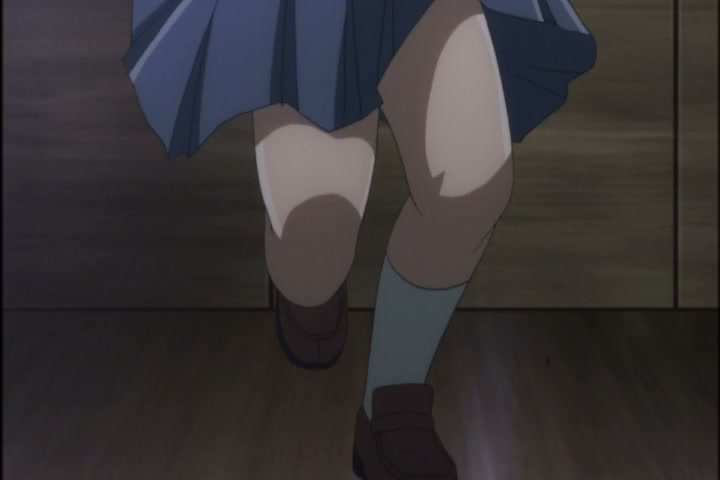
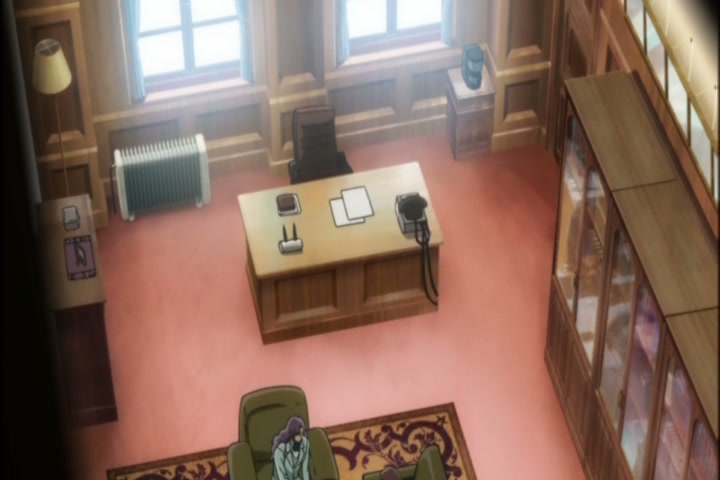
The cinematography, supervised by director Ōkura Masahiko, is more dynamic than the limited animation might lead you to expect. The series uses a variety of framing techniques to keep dialogue-heavy scenes visually interesting. High-angle shots emphasize isolation and scale. Unconventional crops, like focusing on a character’s legs during a run rather than their face, prioritize physical sensation over simple identification. There are frequent “pillow shots,” quiet compositions of empty spaces, a desk, a window, the ocean at dusk, that establish a contemplative rhythm. These are borrowed from live-action film grammar, and they give the series a cinematic quality that compensates for the lack of fluid motion.
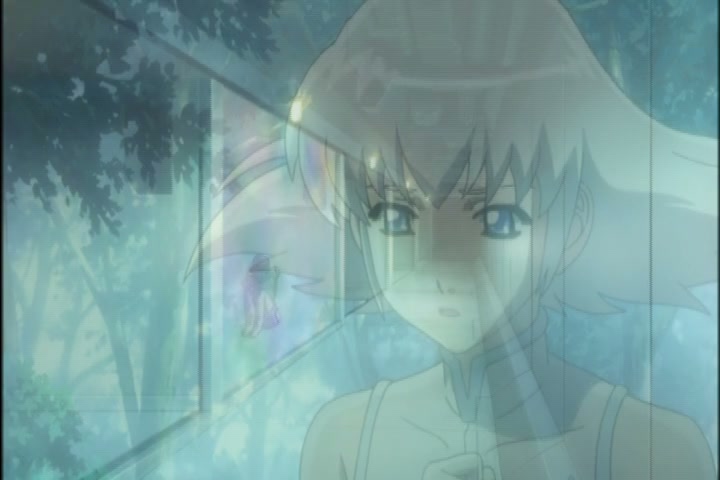
One recurring visual motif worth noting is the use of reflections and glass. Characters are frequently seen through windows, their faces doubled by their own reflections. This reinforces the theme of hidden selves. Hagino, in particular, is often framed behind or beside reflective surfaces, her perfect exterior literally mirrored back at her while her true self remains invisible.
The Limitations
It must be said that the animation is limited, and sometimes genuinely weak. The mecha and ship sequences, which should be the visual highlights of any science-fiction anime, are often static. Ships slide across backgrounds without any sense of weight or momentum. Beam weapons are recycled. The Arume fighters, while sleekly designed, are rarely seen in fluid motion. The final battle, emotionally devastating as it is, relies more on editing and voice acting than on sakuga to sell its stakes.
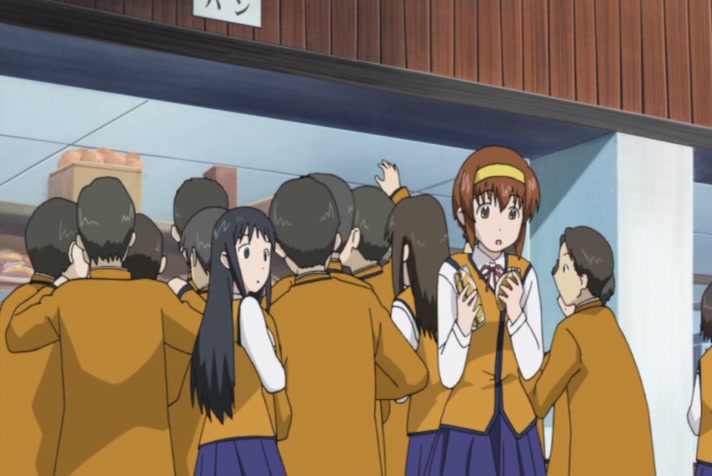
There are also moments in the slice-of-life scenes where the limited animation becomes noticeable in a distracting way. Background characters frozen in identical poses during crowd scenes. Dialogue sequences where only a single mouth moves while the rest of the face stays rigid. Characters walking with the slightly floaty, weightless gait of under-budgeted digital animation.
But here is the thing. I do not think these limitations sink the series. Blue Drop is not trying to be an action spectacle. It is a mood piece, a character drama, a love story. The stillness that results from limited animation can be read as contemplative rather than cheap, depending on the scene. The show earns that reading often enough to make it stick. When the camera holds on Hagino’s face for an extra beat after Mari says something unexpectedly kind, the lack of motion is not a flaw. It is an invitation to sit with the emotion. I would rather have that than a sakuga extravaganza that misses the point.
Sound and Music
The soundtrack for Blue Drop, composed by Ōhashi Megumi, operates in a register of quiet melancholy appropriate to the series’s tone. The score is built around piano and strings, with occasional electronic elements that bridge the gap between the pastoral school setting and the science-fiction undercurrent. It is not a bombastic soundtrack. It does not announce itself. It sits beneath the scenes, supporting the emotional tenor without ever demanding attention.
The opening theme, “Blue” by Suara, is a gentle, swelling piece that sets the mood before each episode. Suara’s voice is clear and emotive, and the song’s lyrics, about searching and connection across distance, align with the series’s concerns. The ending theme, “Tsubomi (Bud)” by Nakayama Arisa, is similarly delicate, a ballad about potential and waiting and the fragile beginnings of something that might bloom.
The voice acting is a particular strength. Yajima Akiko as Mari captures the character’s emotional transparency without making her sound naive or childish. Mari’s outbursts could easily tip into grating, but Yajima keeps them grounded in genuine feeling. When Mari cries, she sounds like someone who is genuinely overwhelmed, not someone performing distress for the microphone.
Watada Misaki as Hagino has the harder job. Hagino speaks in a low, measured register most of the time, and the performance has to convey the turbulence beneath the calm without ever breaking the surface. Watada manages this through small inflections, a slight hesitation before a difficult line, a barely perceptible tremor when Hagino is about to confess something. It is a performance of suppression, and it works because the suppression feels effortful. You can hear the strain.
The supporting cast is solid across the board. Sawashiro Miyuki as Michiko brings warmth without sentimentality. Goto Yuko as Akane nails the brusque exterior and the reluctant softness beneath. The Arume characters have a slightly different vocal quality, more formal and clipped, which distinguishes them from the human cast without resorting to cartoonish alien effects.
Sound design for the science-fiction elements, the hum of Blue‘s engines, the chime of holographic interfaces, the alarming klaxons of the Emil Force Drive malfunction, is competent and atmospheric. The contrast between these clean, electronic sounds and the ambient noise of the school, birdsong, wind through trees, the clatter of a busy dormitory kitchen, reinforces the series’s central duality.

Overall Verdict
Blue Drop: Tenshi-tachi no Gikyoku is not a series for everyone. It is slow. Its animation is limited. Its science-fiction premise is, in the end, a delivery system for an intimate character drama rather than an end in itself. People looking for space battles or complex alien politics will bounce off it. People looking for a fast-paced romance will get impatient. This is a show that asks you to sit with it, to let it build its world through small moments, and to trust that the payoff will justify the deliberate pace.
For those willing to give it that trust, the rewards are substantial. The central love story, between a girl with no past and an alien commander with too much of one, is rendered with a tenderness and emotional intelligence that puts many louder romances to shame. The decision to filter their relationship through a school play about Joan of Arc, to make a shy writer’s creative awakening into the symbolic backbone of the narrative, is the kind of structural ambition that anime at its best can pull off. It pays off here. The finale, in which a high school girl recites her lines across a battlefield to reach the woman she loves, is earned. Completely. Every quiet episode, every failed cooking attempt, every late-night conversation in the dorm has been building toward it.
The visual design, despite its technical limitations, serves the story well. The contrast between the warm, golden Kaiō scenes and the cold, blue Arume environments is simple but effective. The character acting, carried more by faces and posture than by fluid motion, conveys the emotional nuance the script requires. The voice performances, particularly Yajima Akiko and Watada Misaki, elevate the material and make the central relationship feel lived-in and real.
Thematically, the series says something that is not often said this clearly. Guilt is a form of isolation. You can punish yourself forever and it will not bring anyone back. The only way out is to let someone in. To let yourself be seen, in all your brokenness, and to accept that you might be loved anyway. Mari’s refusal to accept Hagino’s guilt, her insistence that the burden be shared, is a radical act of love. It is the thing that saves Hagino’s soul before she sacrifices her life, and it is the reason the sacrifice does not feel like a defeat. Hagino dies protecting the person who taught her that she was worth protecting.
I recommend Blue Drop to anyone who has ever struggled with the belief that they are fundamentally unworthy of love. To anyone who has ever hidden something about themselves because they were afraid of what would happen if it were known. To anyone who understands that the scariest words in any language are not “I hate you” but “I know who you really are and I love you anyway.” This series will not shout these things at you. It will whisper them, gently, over the course of thirteen episodes, and if you are listening, you will hear.
It is not a perfect series. But it is a good one, and the good in it is the kind of good that lingers. Like a drop in the ocean, small from a distance, but sending ripples outward long after it falls.
Gallery