




Introduction
Some anime grab you with high-concept premises or spectacular action. Others work more quietly, building a world you want to live in and characters you come to care about like real people. Class no 2-banme ni Kawaii Onnanoko to Tomodachi ni Natta, which translates roughly to I Became Friends with the Second Prettiest Girl in Class, belongs firmly in the second category. It is a romance that understands loneliness not as a plot device but as a lived condition, and it treats the slow work of connection with the seriousness it deserves.
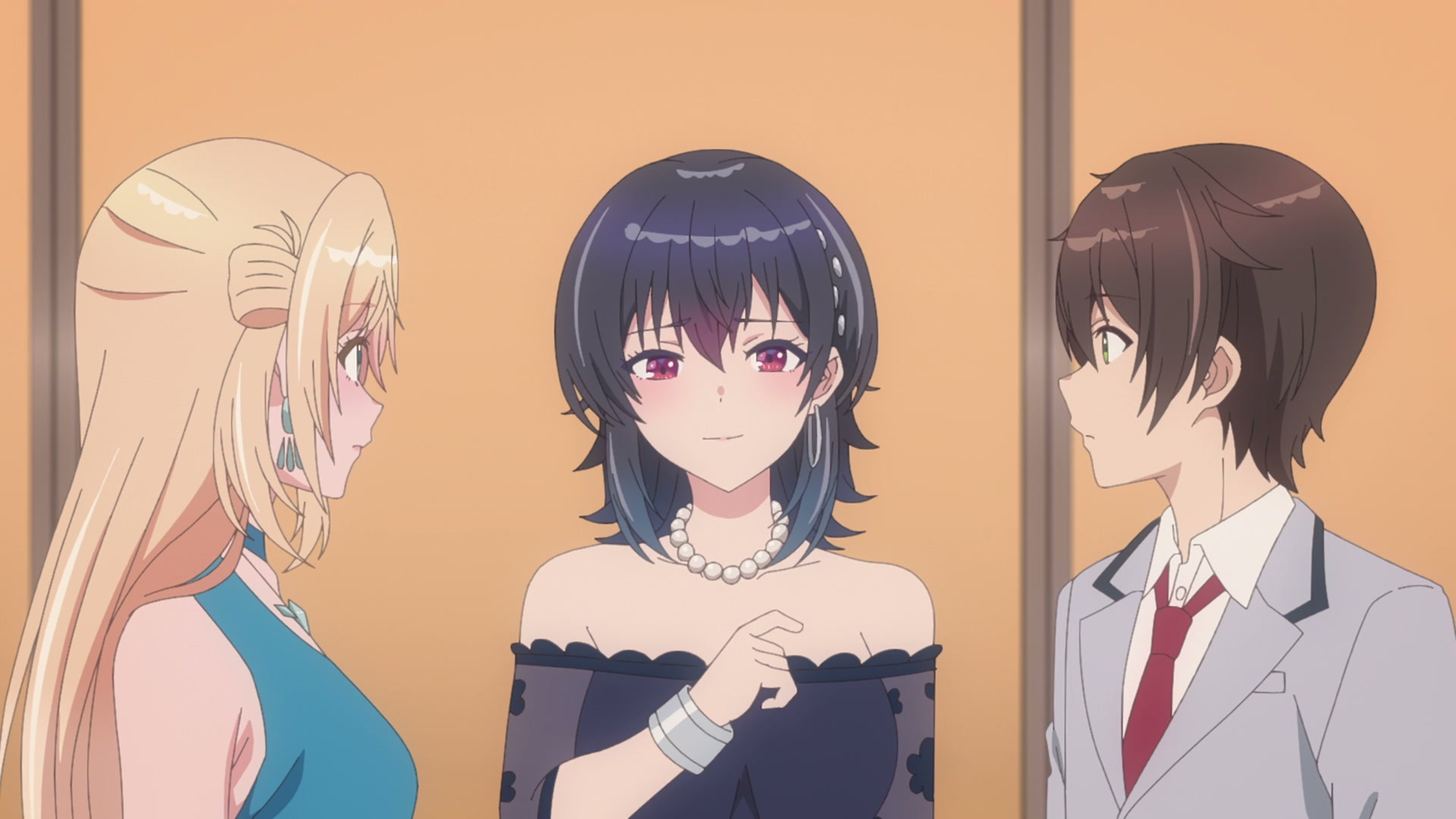
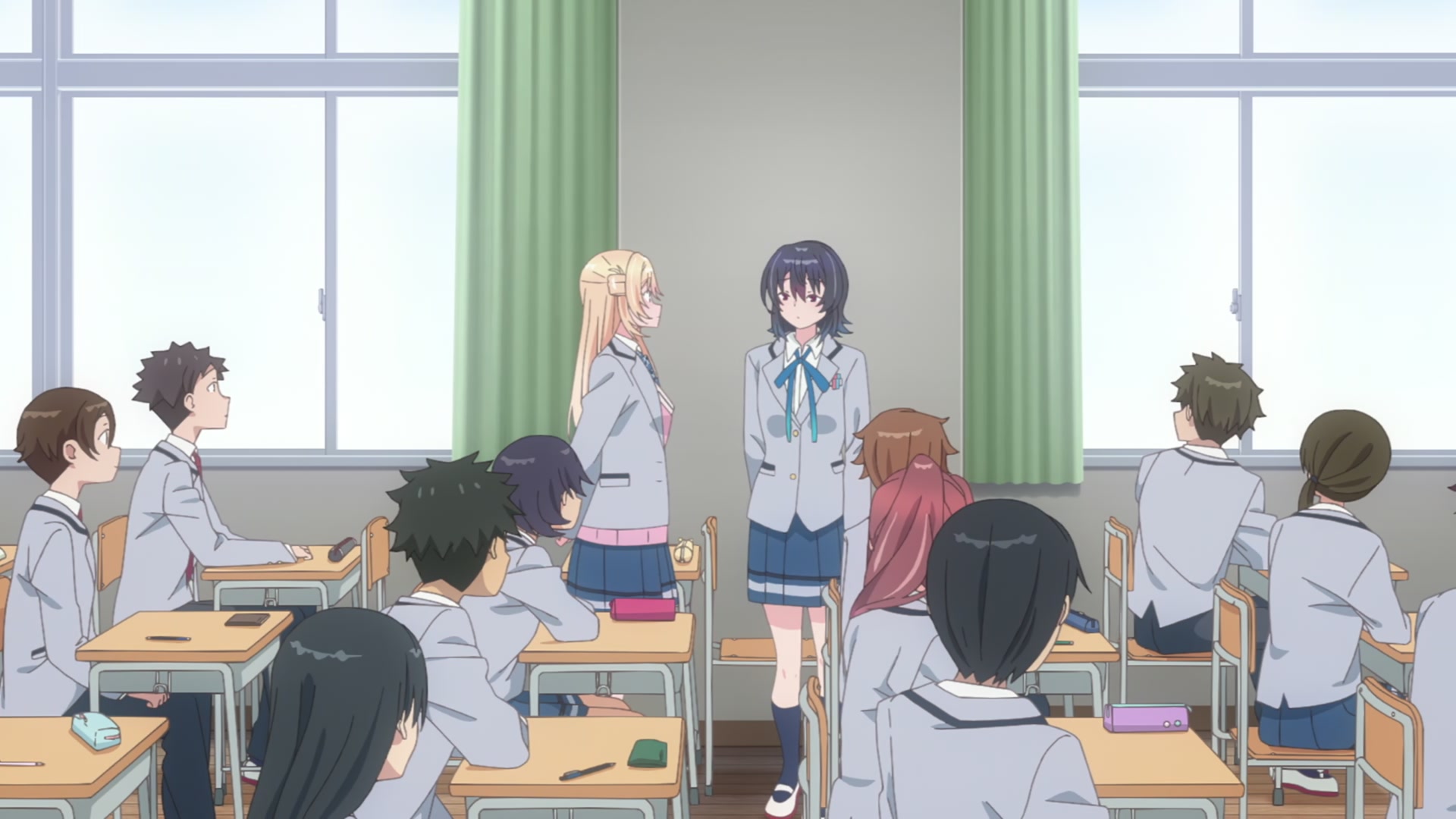
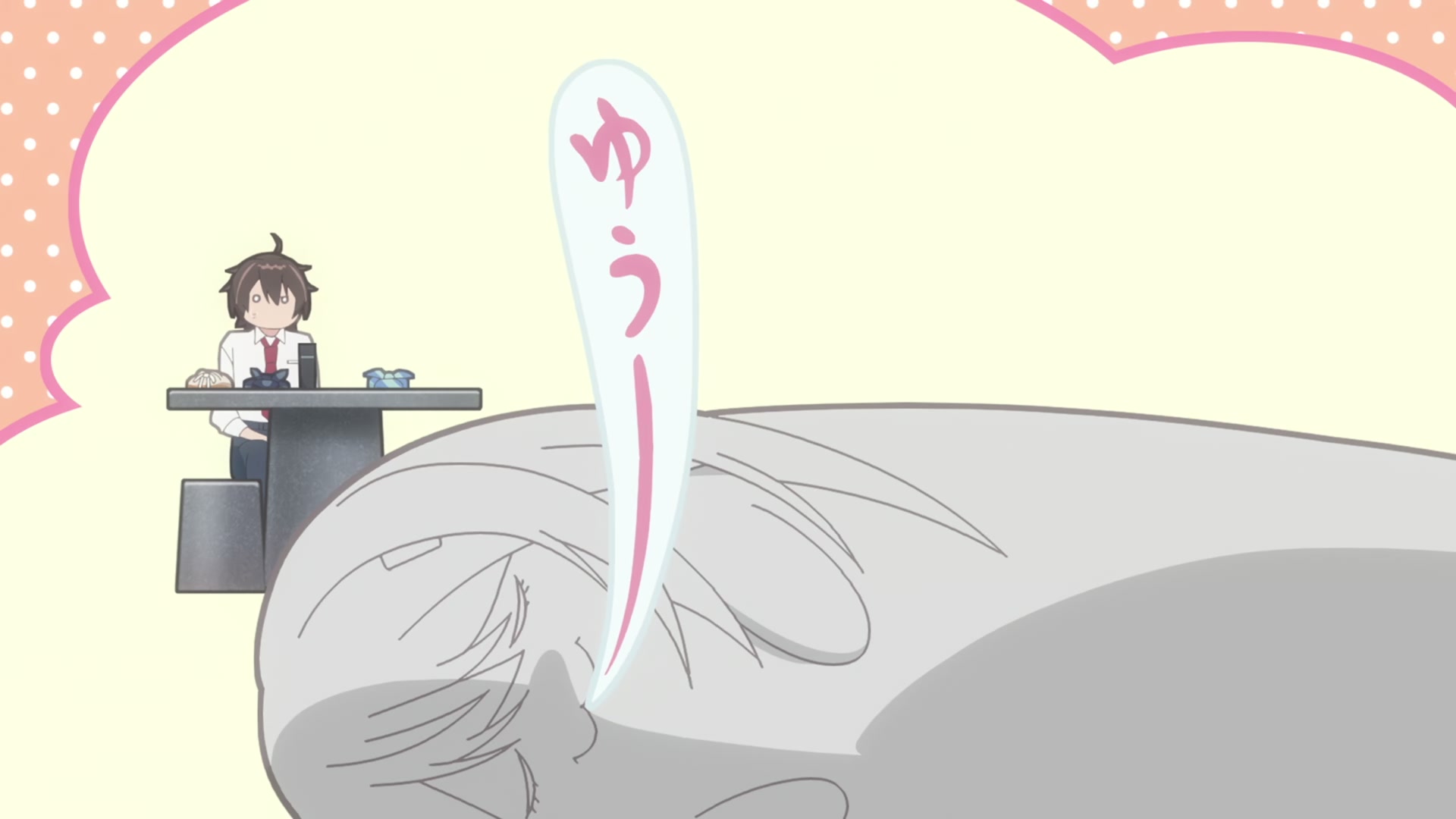
The setup sounds familiar enough. Maehara Maki is a first-year high school student who has resigned himself to solitude. His parents divorced a year ago, he has no friends, and he spends his days moving invisibly through school before retreating to his apartment for solo gaming sessions and B-grade monster movies. Asanagi Umi is the “second prettiest girl in class,” outwardly composed and socially capable, best friend to the class’s undisputed number one, Amami Yuu. When Umi overhears Maki’s disastrous self-introduction, where he honestly admits his love of shark movies and cola, she recognizes a kindred spirit. She approaches him at a video store, reveals she shares his niche interests, and asks to be friends.
What follows is not a whirlwind romance but a careful, patient study of two people learning to be vulnerable with each other. The series takes its characters’ emotional lives seriously, treating their insecurities not as cute quirks to be overcome in a single episode but as genuine psychological realities that require time, trust, and repeated reassurance to heal. If you have ever felt like the second choice, the afterthought, or the person who exists in someone else’s shadow, this series will speak to you with unusual directness.
Story and Themes
The narrative follows the Japanese academic calendar, beginning in April with the new school year and progressing through summer break, the autumn school festival, Christmas Eve, New Year’s shrine visits, Valentine’s Day and White Day, and finally the approach of spring again. This structure is not arbitrary. The cycle of seasons mirrors Maki’s emotional arc, transforming spring from a season he dreads into one he can finally anticipate with something like hope.
Maki’s opening narration sets the tone: “Springtime always gets me down.” For most Japanese students, April means new beginnings, new classmates, new possibilities. For Maki, it means the annual torture of self-introductions, the ritual where he must stand before strangers and somehow summarize himself in a way that will not invite ridicule or, worse, indifference. His honest answers about gaming and B-movies mark him as weird in a culture that values reading the air and fitting in. The series opens with him making “the worst possible first impression like it was second nature,” and he accepts the resulting isolation as inevitable.
The title itself announces the series’ central thematic concern. “Second prettiest” is not just Umi’s social position. It is a psychological condition, an identity formed in relation to someone else. Umi has spent years being “Yuu’s best friend,” a role that grants her social access but also erases her as an individual. Friends she made in middle school would eventually gravitate toward Yuu, leaving Umi feeling like a stepping stone. She loves Yuu genuinely, but she also resents her, and this contradiction becomes the series’ most psychologically complex element.
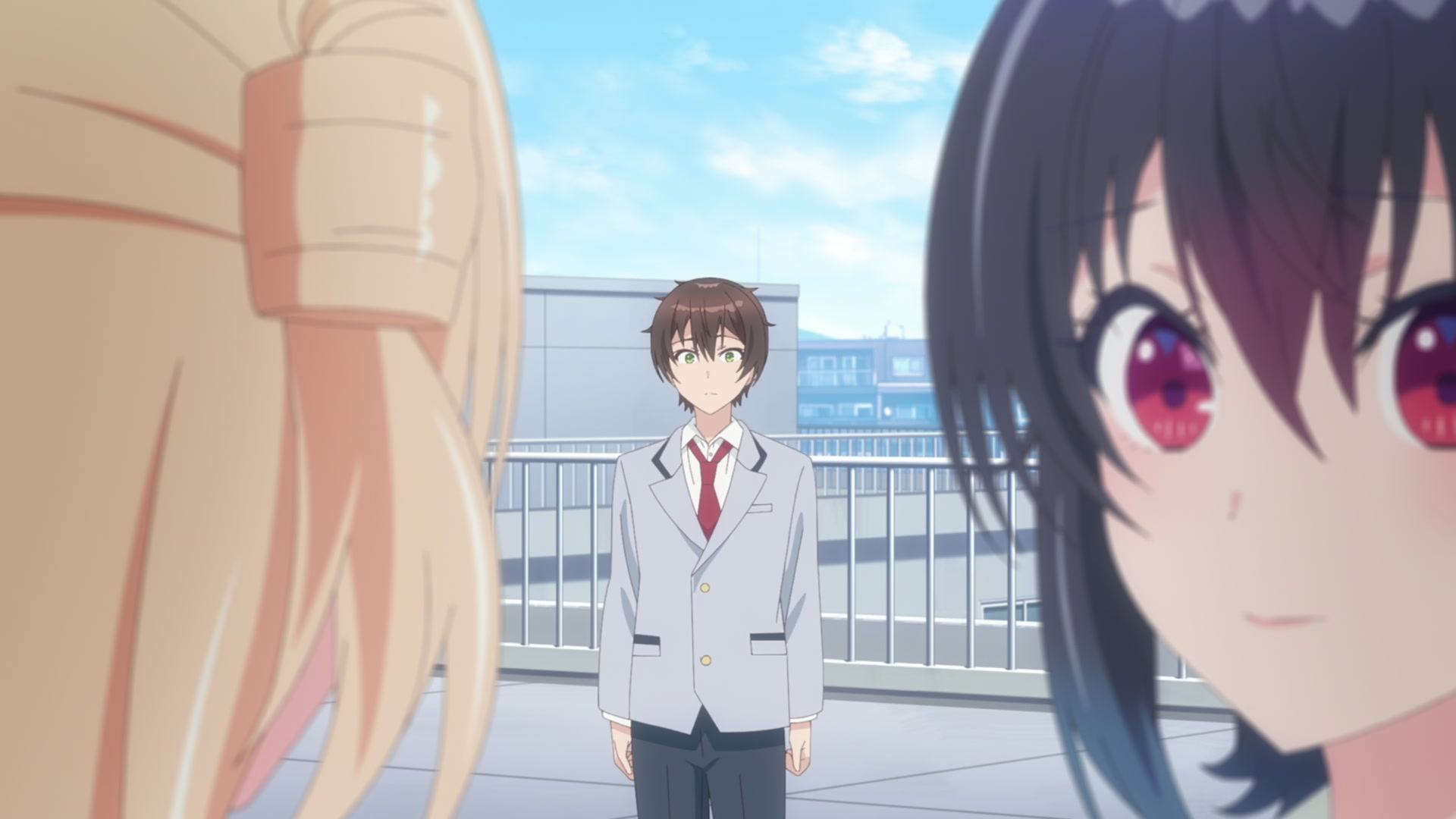
When Umi finally confesses her feelings to Maki and Yuu on the school rooftop, she says something remarkable: “I still love you to bits. But at the same time, I also hate you just as much.” This is not a melodramatic exaggeration. It is an honest acknowledgment that love and resentment can coexist, that being loved by someone can also be a burden, and that the people closest to us are sometimes the ones who hurt us most without ever intending to.
The series explores social hierarchy as a form of invisible violence. Maki occupies the bottom rung, ignored or pitied. Umi occupies a strange middle position, close enough to the top to see what she lacks, far enough to feel the distance acutely. Even Yuu, the “prettiest,” is not immune. Her mixed-heritage appearance, blonde hair and features inherited from a foreign grandmother, made her an outcast before Umi befriended her in elementary school. The hierarchy wounds everyone, just in different ways.
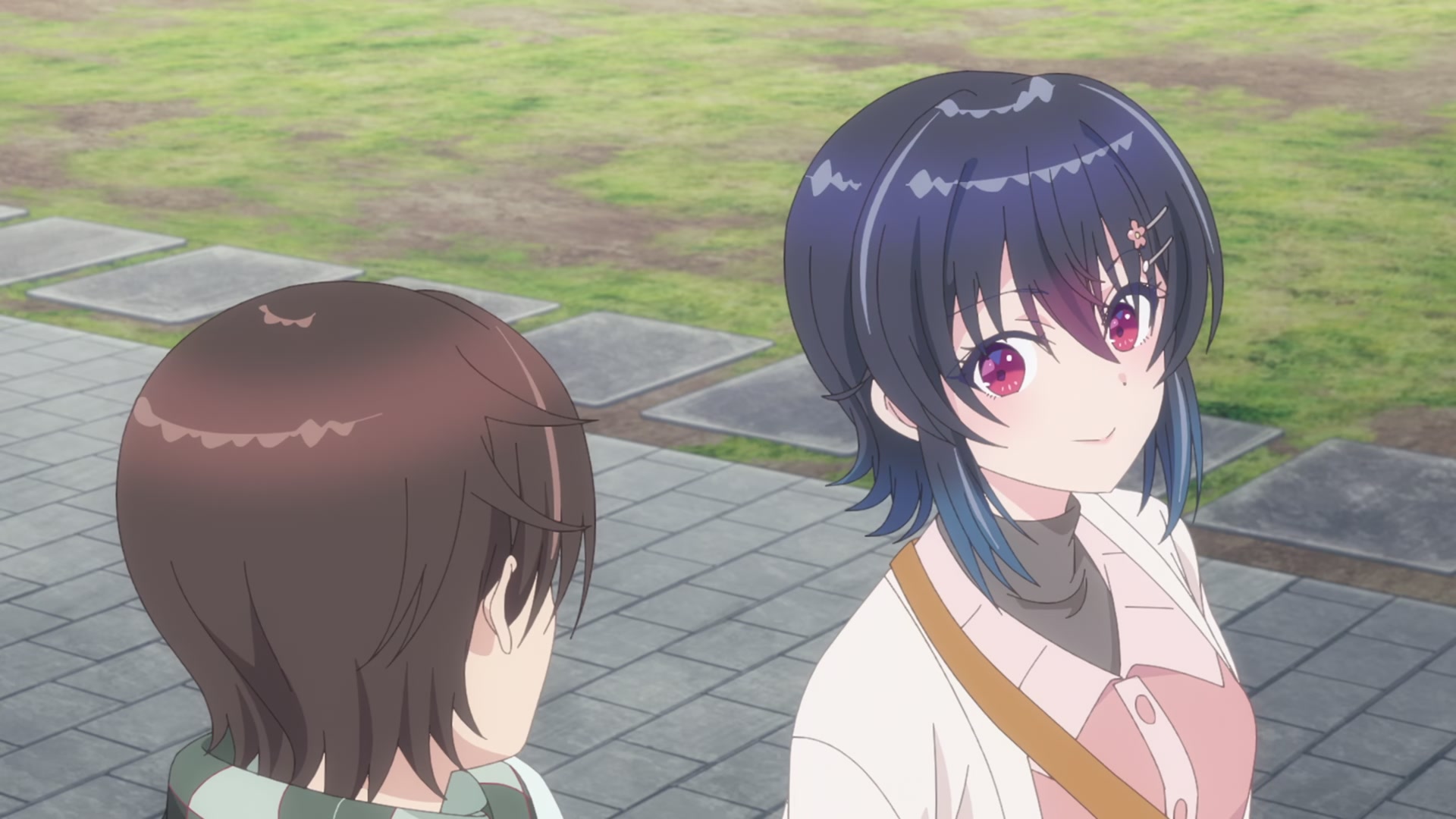
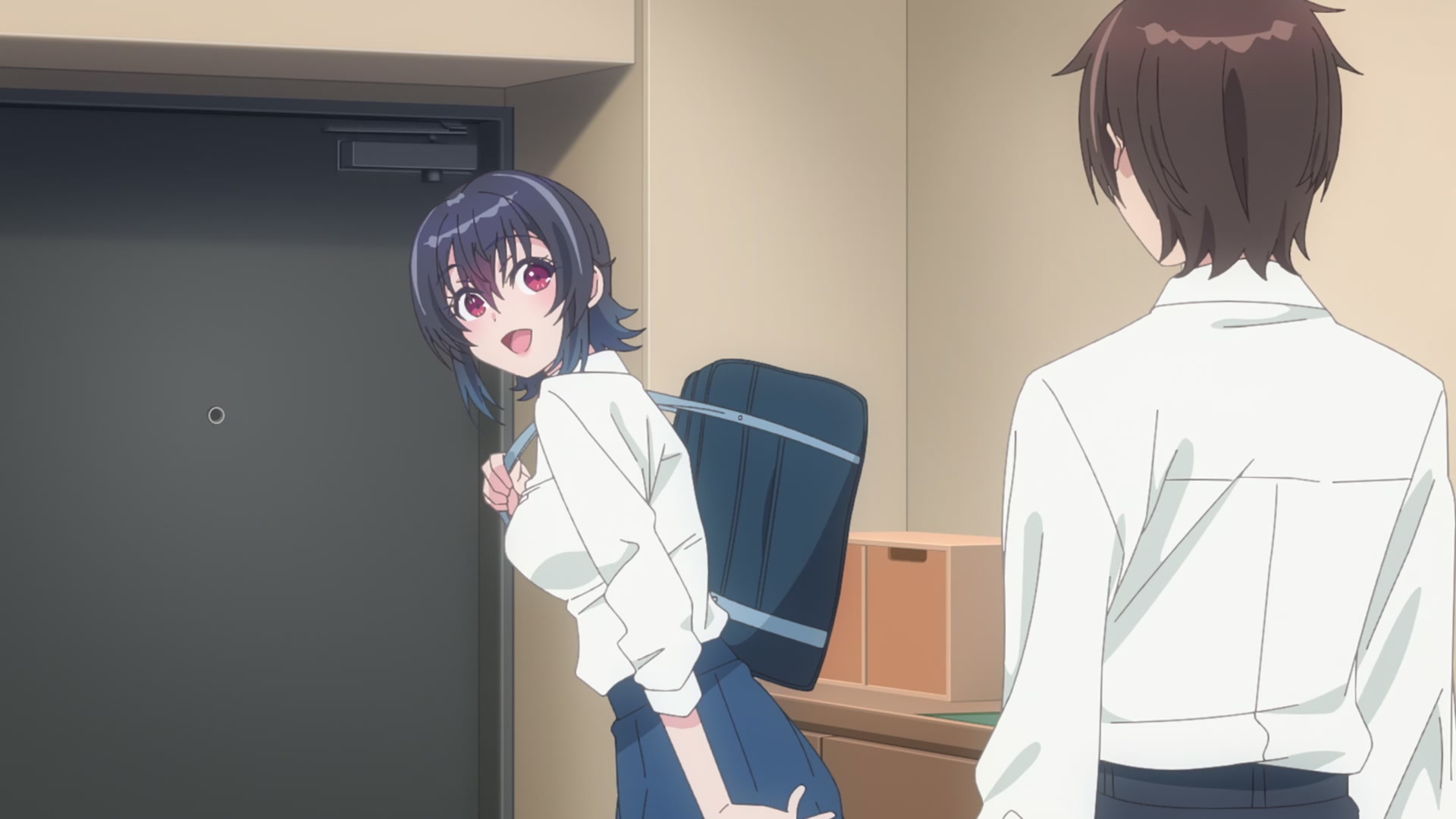
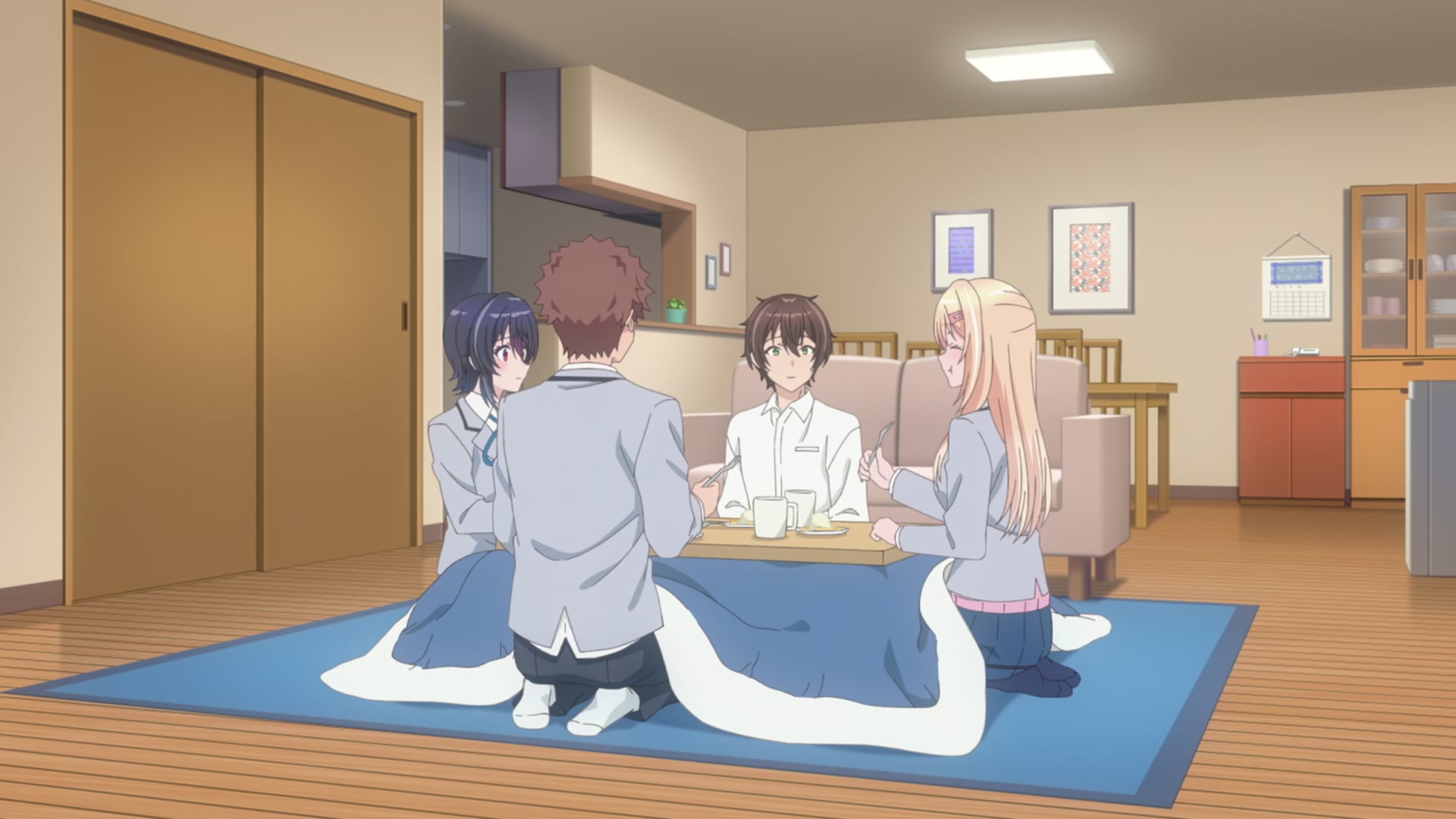
Against this backdrop, Maki and Umi’s relationship becomes a kind of sanctuary. Their Friday hangouts at Maki’s apartment, filled with pizza, cola, video games, and terrible shark movies, exist outside the classroom’s social logic. In that private space, rankings become meaningless. Umi is not the “second prettiest” and Maki is not the “gloomy outcast.” They are just two people who share a genuine enthusiasm for things nobody else around them cares about.
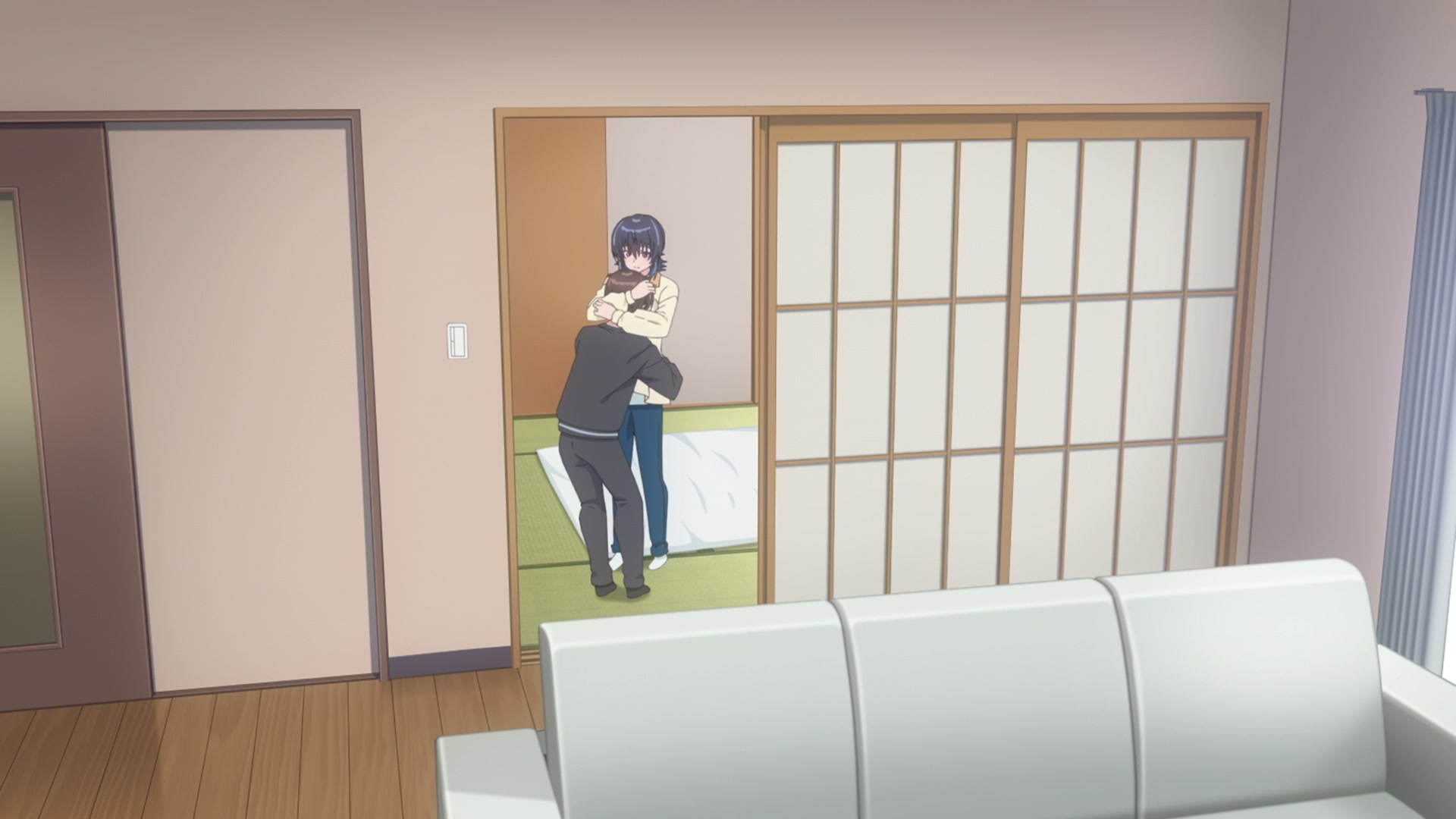
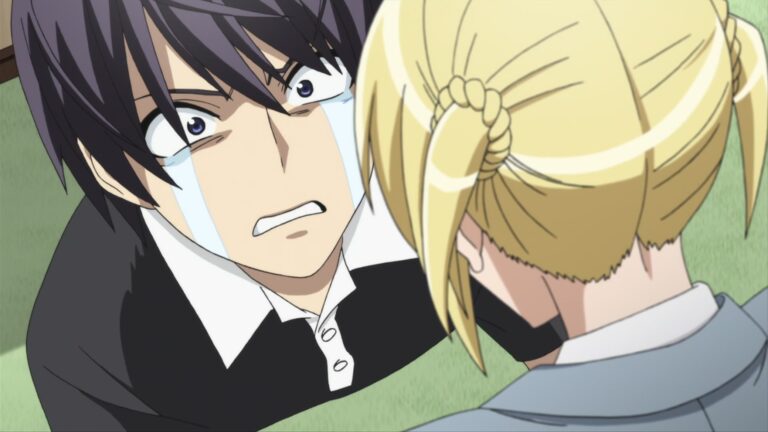
The series also tackles family trauma with surprising depth. Maki’s parents’ divorce is not background flavor. It is the emotional core of his character, the wound that shapes his fear of attachment and his belief that he is fundamentally unfit for connection. A recurring dream shows his mother crying, his father apologizing, and Maki himself unable to speak, frozen as witness to a collapse he could not prevent. The Christmas Eve confrontation, where Maki finally voices the pain he suppressed during the divorce, represents the series’ emotional climax. He cries, begs his parents to make up, and admits what he has been hiding: “I want to be with you both. If it’s not the two of you together, I want no part of it.”
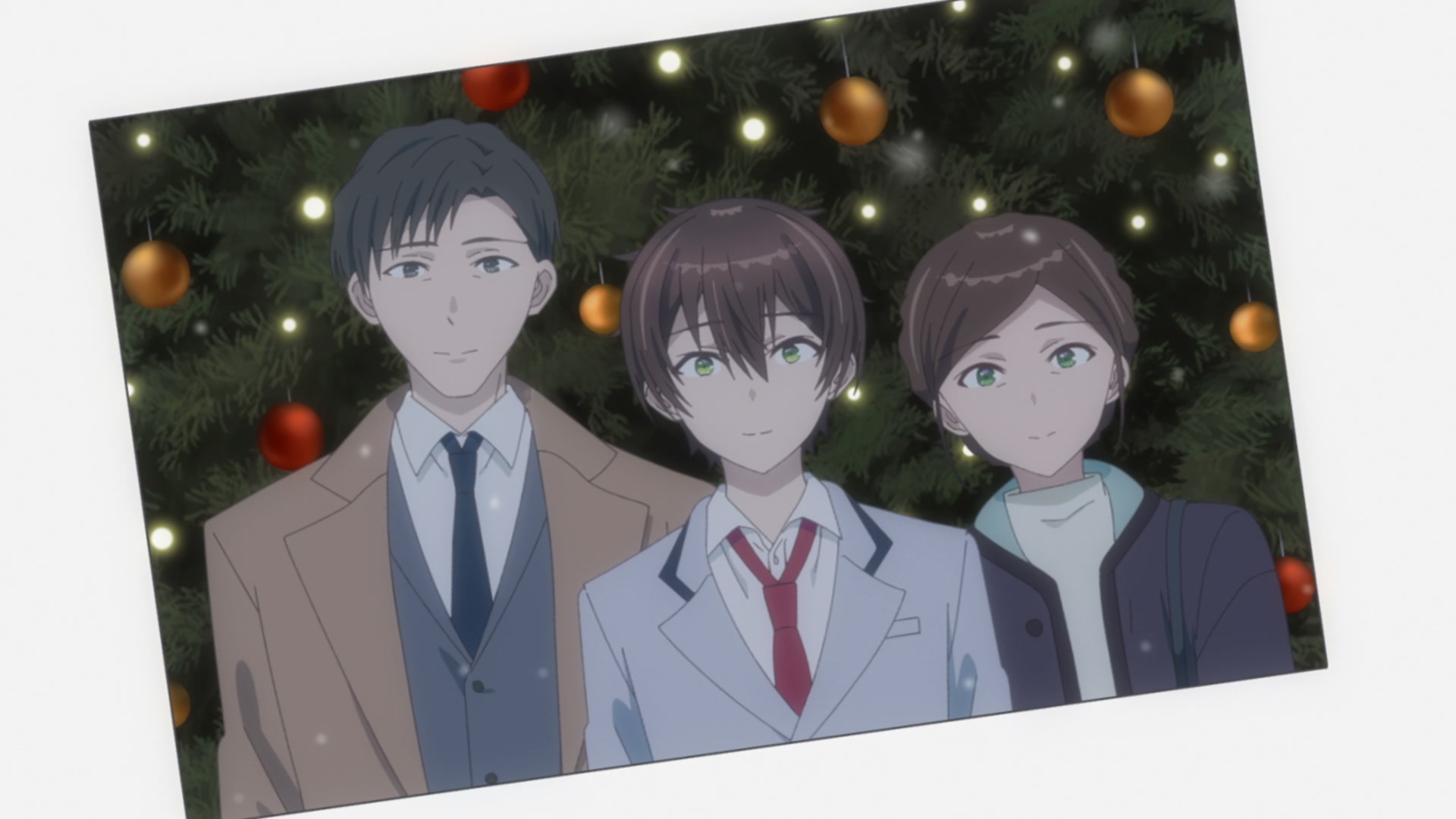
The series is mature enough to know that some damage cannot be undone. Maki’s parents do not reconcile. The family photo they take together is not a restoration but a new beginning, an acknowledgment that they remain connected even if the family structure has changed. This thematic honesty extends to Umi’s arc as well. She reconciles with the middle school friends who excluded her, not because she has forgotten the pain they caused, but because she has grown secure enough to risk reconnection. The series distinguishes between relationships that can be repaired and those that cannot, and it finds hope in both outcomes.
Food and domesticity serve as recurring motifs for care and intimacy. Maki’s cooking and baking skills are not just “husband material” traits played for comedy. They represent his ability to create warmth and comfort, to make love tangible. The pancakes he makes for friends, the obsessive Valentine’s chocolate Umi refuses to compromise on, the shared meals that mark the expansion of Maki’s world from solitary consumption to communal experience. These details ground the emotional arcs in physical, sensory reality.
Characters
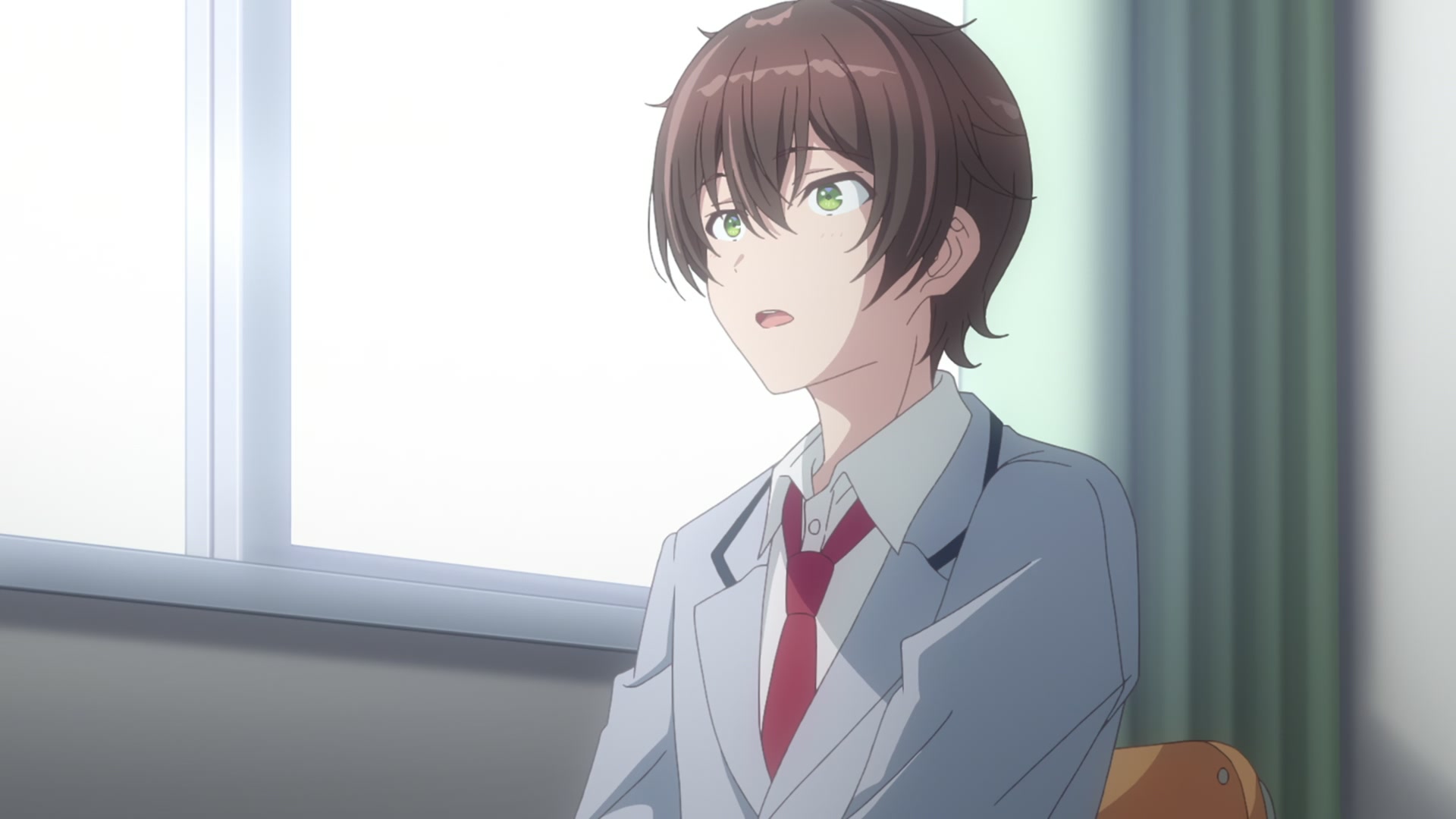
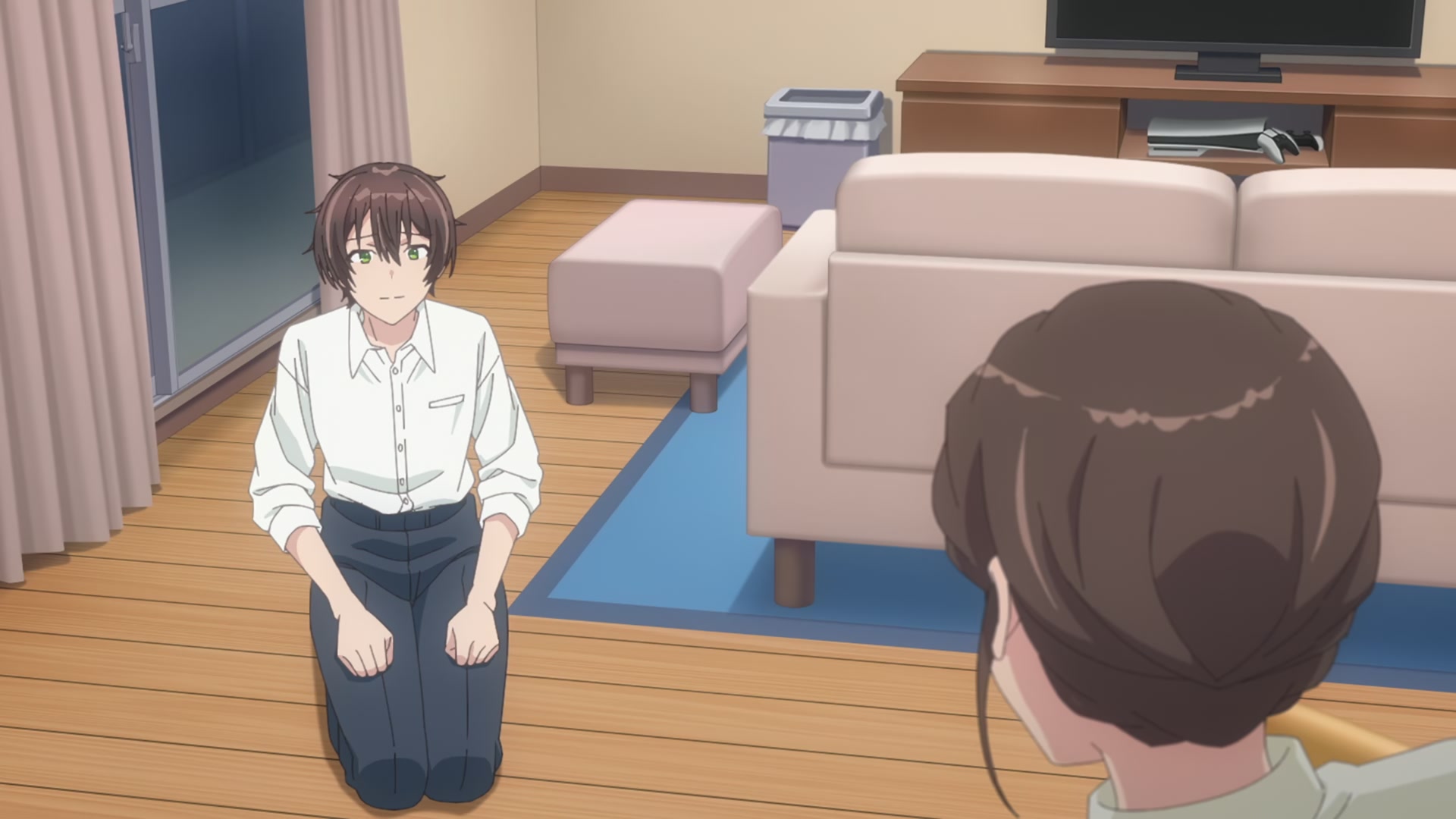
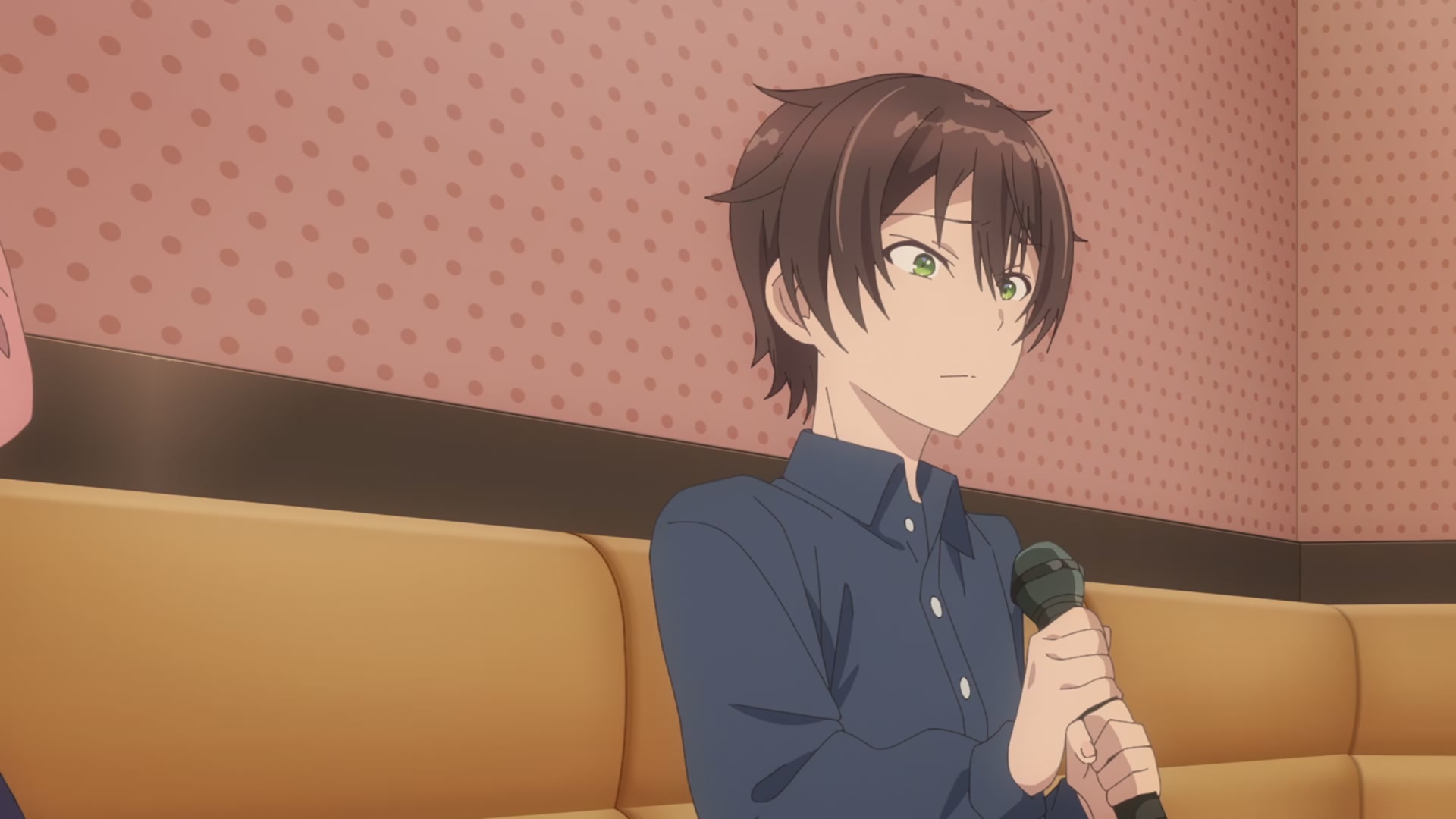
Maehara Maki begins the series as a protagonist who has internalized his outcast status as identity. He does not just lack friends. He believes he is fundamentally unfit for connection, that his presence is a burden, that his authentic self is inherently off-putting. His self-awareness is sharp but not self-pitying. He knows exactly how he is perceived and has made a kind of peace with it, but the peace is hollow, a resignation rather than acceptance.
What makes Maki work as a protagonist is his genuine kindness and his dry, unexpected wit. He is domestically capable, thoughtful about others’ feelings, and surprisingly sharp-tongued when comfortable. His “uncool” traits, crying easily when overwhelmed, being a baby when sick, are presented as human rather than pathetic. The series never mocks him for his vulnerability. It treats his tears as evidence of feeling deeply, not weakness.
His arc moves from passive endurance through secret friendship to public visibility, then to emotional confrontation with his parents, and finally to open romantic commitment. The delay in responding to Umi’s love confession could be frustrating in lesser hands, but the series frames it as genuine insecurity rather than harem-protagonist indecisiveness. He wants to become someone who can “say it loud and proud,” a specifically masculine anxiety about being worthy of the woman he loves.
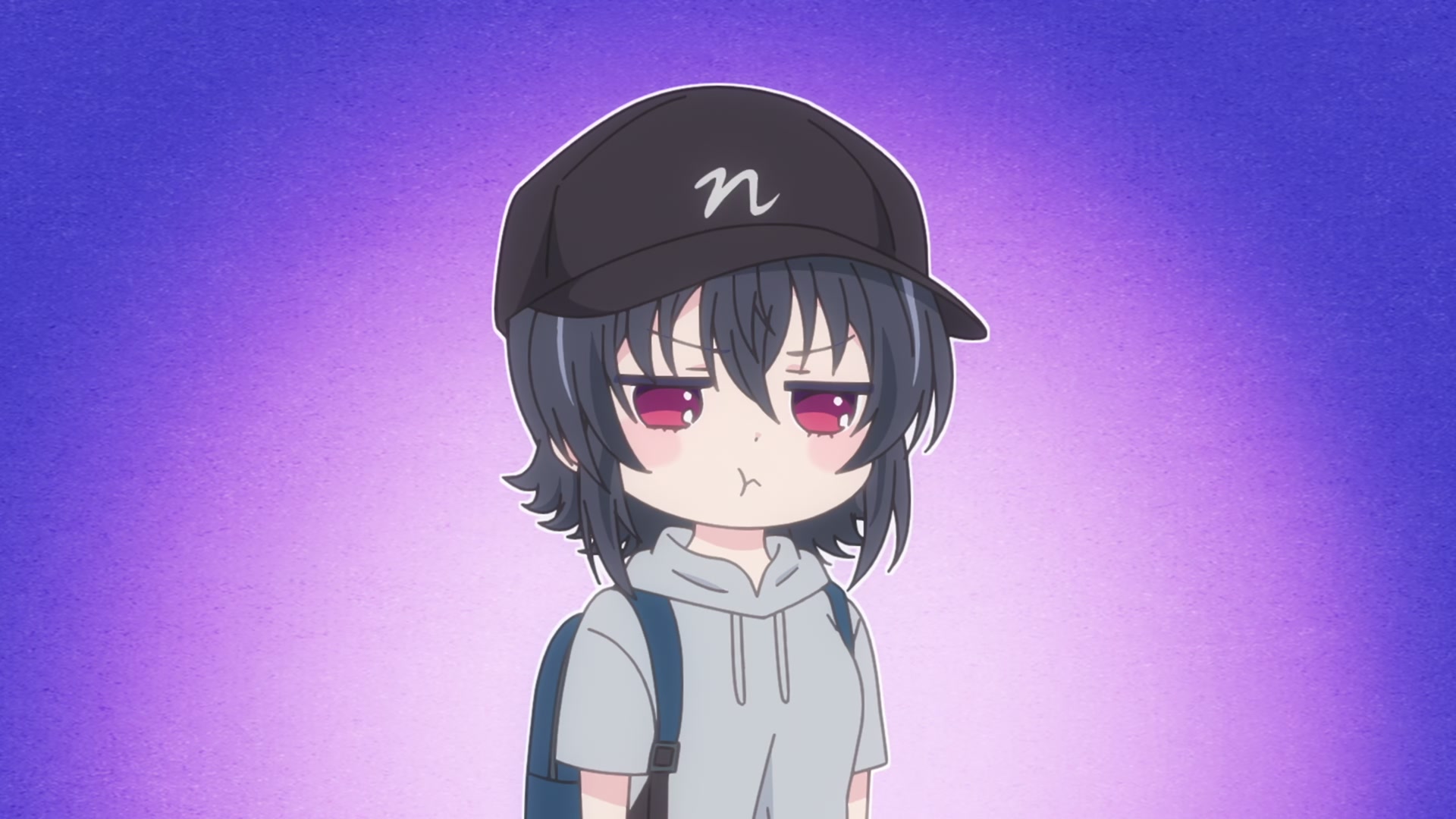
Asanagi Umi is the series’ most complex character, and her interior life drives much of the emotional weight. Outwardly, she is composed, capable, and sharp-tongued. She takes charge in group settings, mediates conflicts, and maintains the “positive vibes” she believes are her responsibility. Inwardly, she is insecure, possessive, and terrified of abandonment. Her hidden enthusiasm for schlocky monster movies and gaming is not just a cute quirk. It is the part of her that exists outside the “second prettiest” identity, the self she has protected from a social world that only sees her in relation to Yuu.
Her confession about loving and hating Yuu simultaneously is the series’ most psychologically honest moment. It refuses to resolve the contradiction, acknowledging that our feelings toward those closest to us are often messy and multiple. Her possessiveness toward Maki, her fear that Yuu will “take” him too, her clinginess when she feels threatened, are not romantic comedy tropes but trauma responses from someone who has been abandoned before.
Umi’s arc involves learning to express her needs rather than suppress them, to accept that she can be loved for herself rather than as a reflection of someone else, and to renegotiate her friendship with Yuu on equal terms. Her reconciliation with her middle school friends Sanae and Manaka, prompted by Maki’s observation that “it’s not too late for you” even though his own parents cannot reconcile, shows her growth. She does not demand apologies. She acknowledges her own role in the breakdown and sets clear boundaries for the future.
Amami Yuu could easily have been written as a shallow sun goddess, beautiful and beloved but empty. The series gives her more dignity than that. Her extreme friendliness is revealed as compensation for early rejection. Her mixed-heritage appearance made her an outcast before Umi befriended her, and her relentless cheerfulness is partly a survival strategy. She is genuinely kind but also genuinely oblivious to the effect her magnetism has on others.
When she learns of Umi’s hidden resentment, she is devastated but not defensive. She immediately wants to change, to be more mindful, to support Umi’s relationship with Maki rather than insert herself into it. Her self-appointment as “ghostly third wheel” is both comic and poignant. She is learning to step back, to not be the sun for once, and the series treats this learning with tenderness.
Nitta Nina functions as the group’s reality check. Blunt, nosy, and emotionally perceptive, she notices subtext the others miss and calls out pretense when she sees it. Her own romantic disappointment, a boyfriend who dumped her for his “number one target,” gives her a slightly cynical edge, but her cynicism is realism rather than bitterness. She tells Maki hard truths because she is invested in his well-being, and her advice, “don’t end up a dud like your dad,” is characteristically sharp but genuinely caring.
Seki Nozomu provides Maki with his first male friendship, a low-stakes relationship free of romantic tension. His failed confession to Yuu and graceful acceptance of rejection models healthy behavior. His easy camaraderie with Maki, “we seem to be on similar wavelengths,” offers a form of connection that does not require deep emotional excavation, just mutual respect and shared experience.
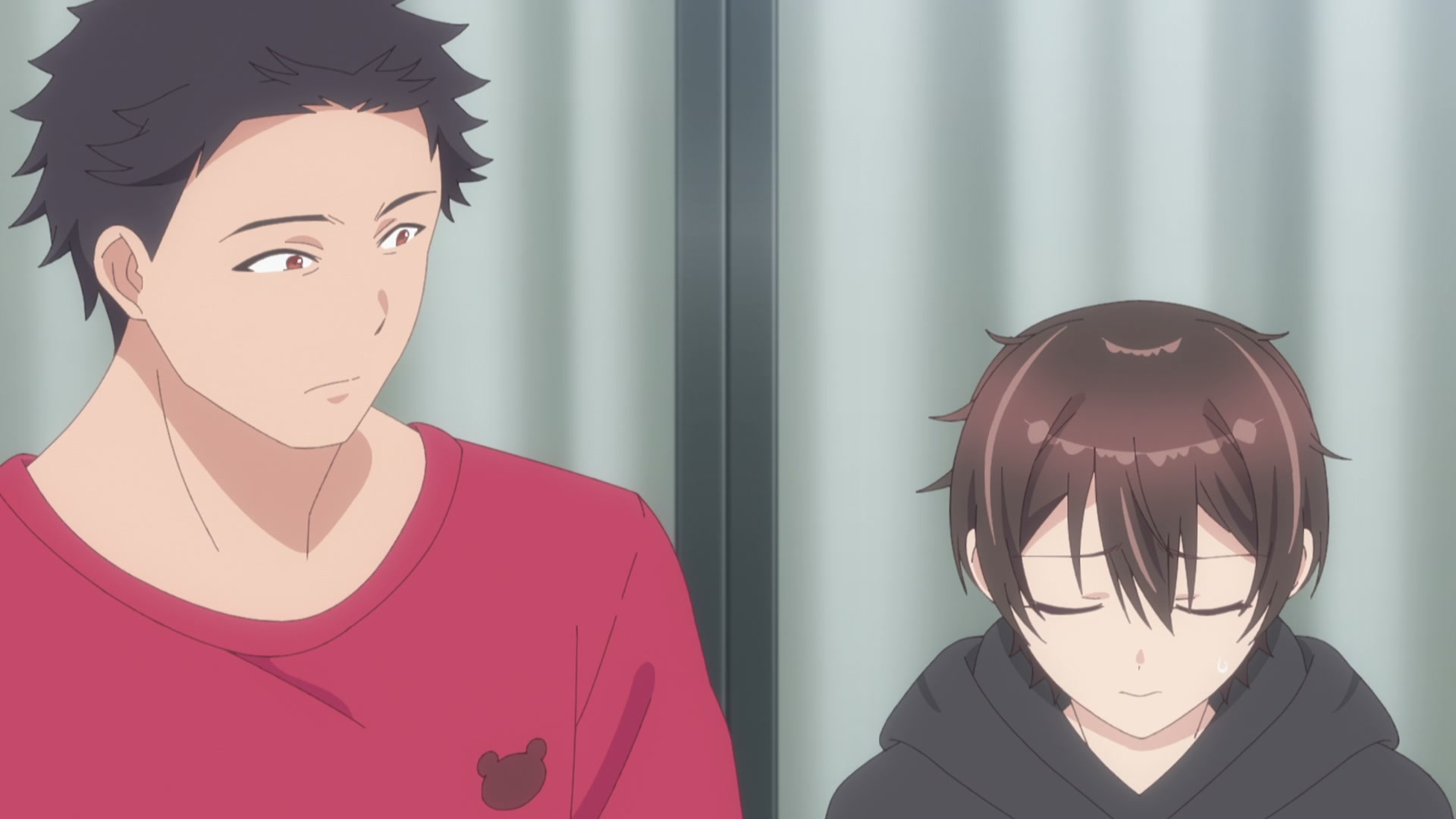
The parents deserve mention as more than background figures. Maehara Masaki, Maki’s mother, overworked herself to exhaustion partly to prove she did not need her ex-husband’s money. Her admission that this was pride rather than necessity, and her apology for making Maki feel alone, is a quietly devastating moment. Maehara Itsuki, Maki’s father, is emotionally evasive but not villainous. He loves his son but cannot express it directly, and his relationship with his subordinate Minato Kyouka complicates any simple narrative of blame.
The Asanagi parents, Sora and Daichi, model a functional, playful marriage that Maki has never seen. Their warmth is not saccharine. It includes teasing, bickering, and genuine affection. When Maki breaks down at their dinner table, they absorb his pain without being overwhelmed by it, offering the kind of steady, unflappable support he has never received from his own family.
Visuals and Animation
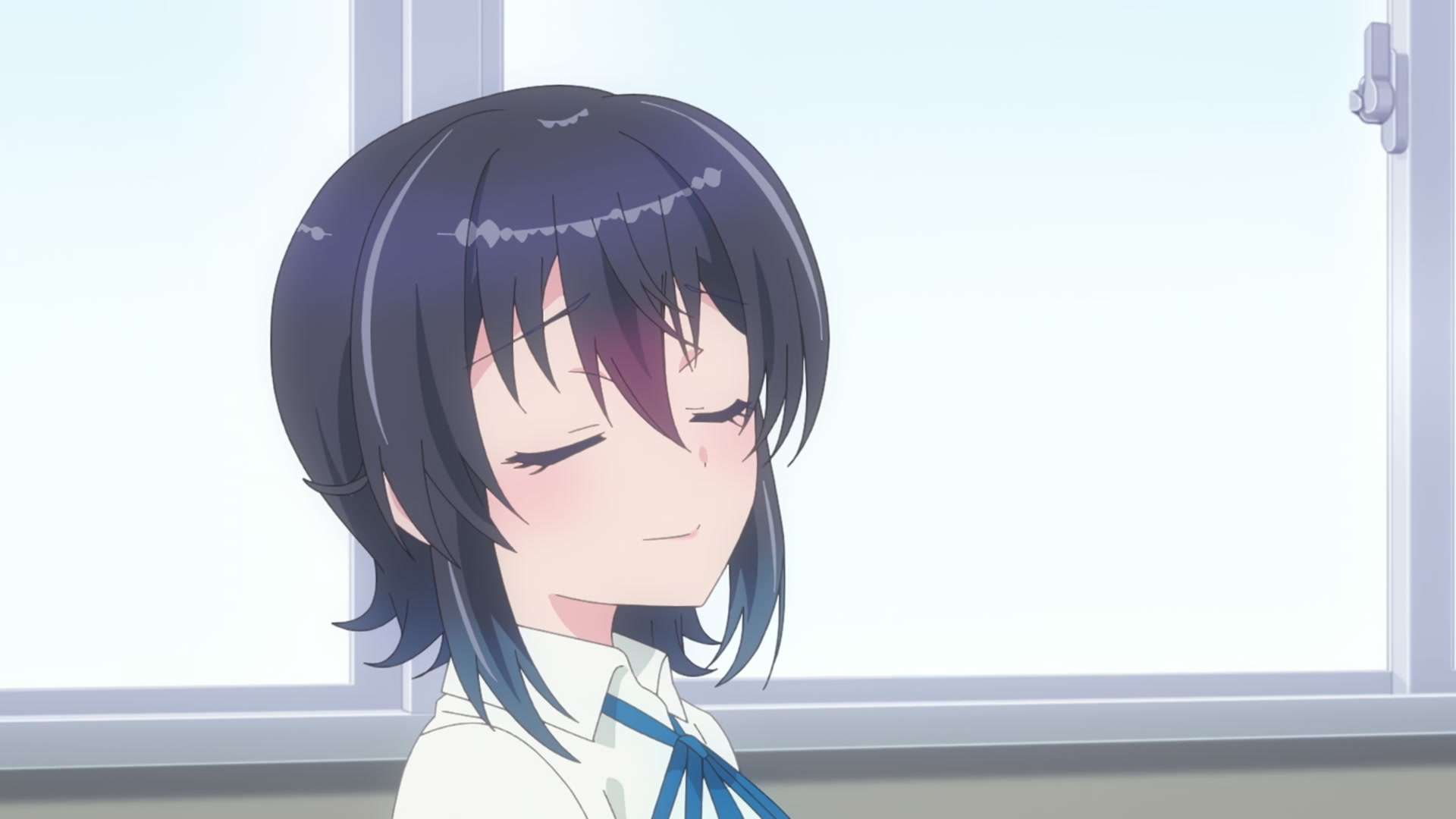
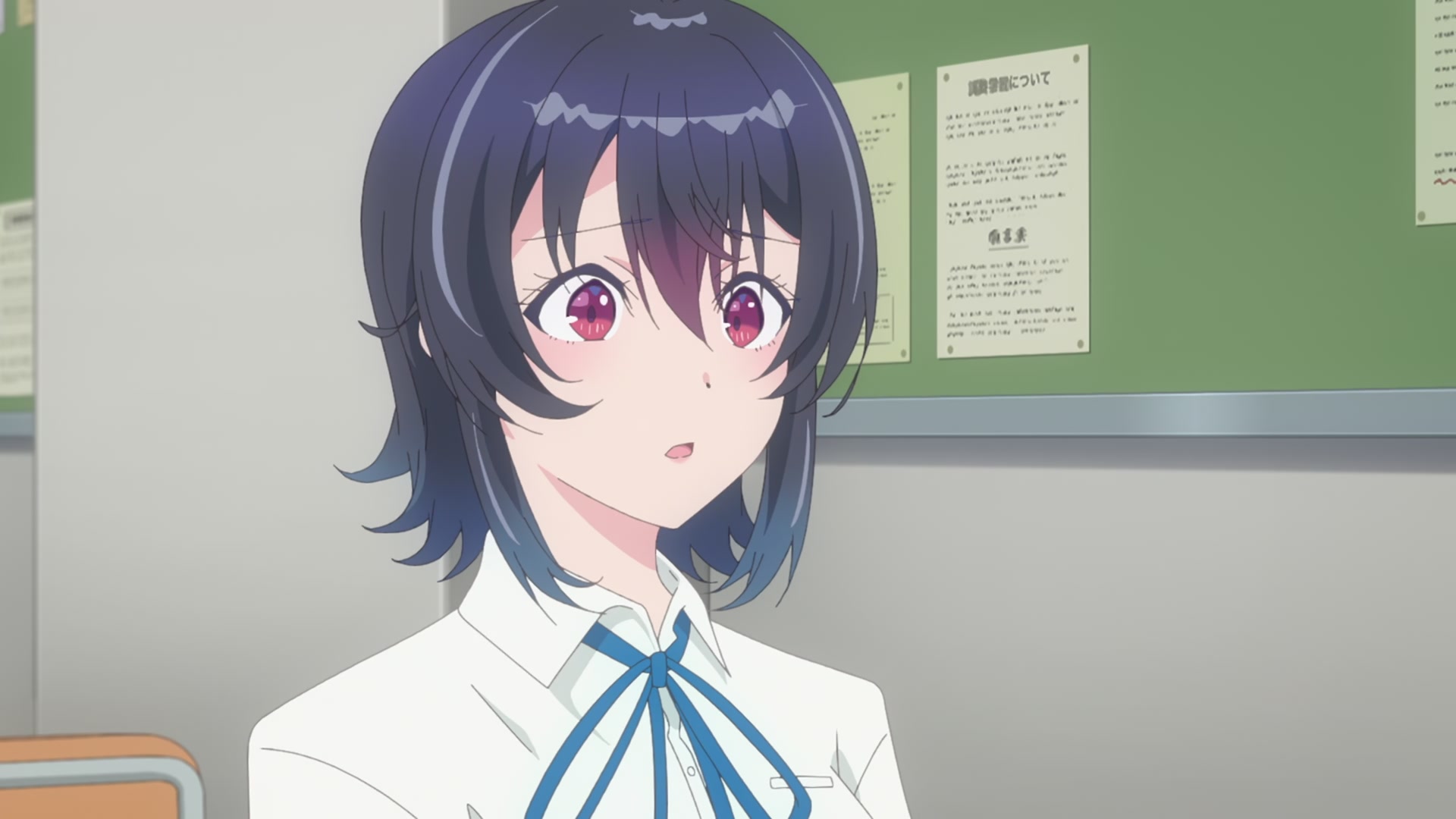
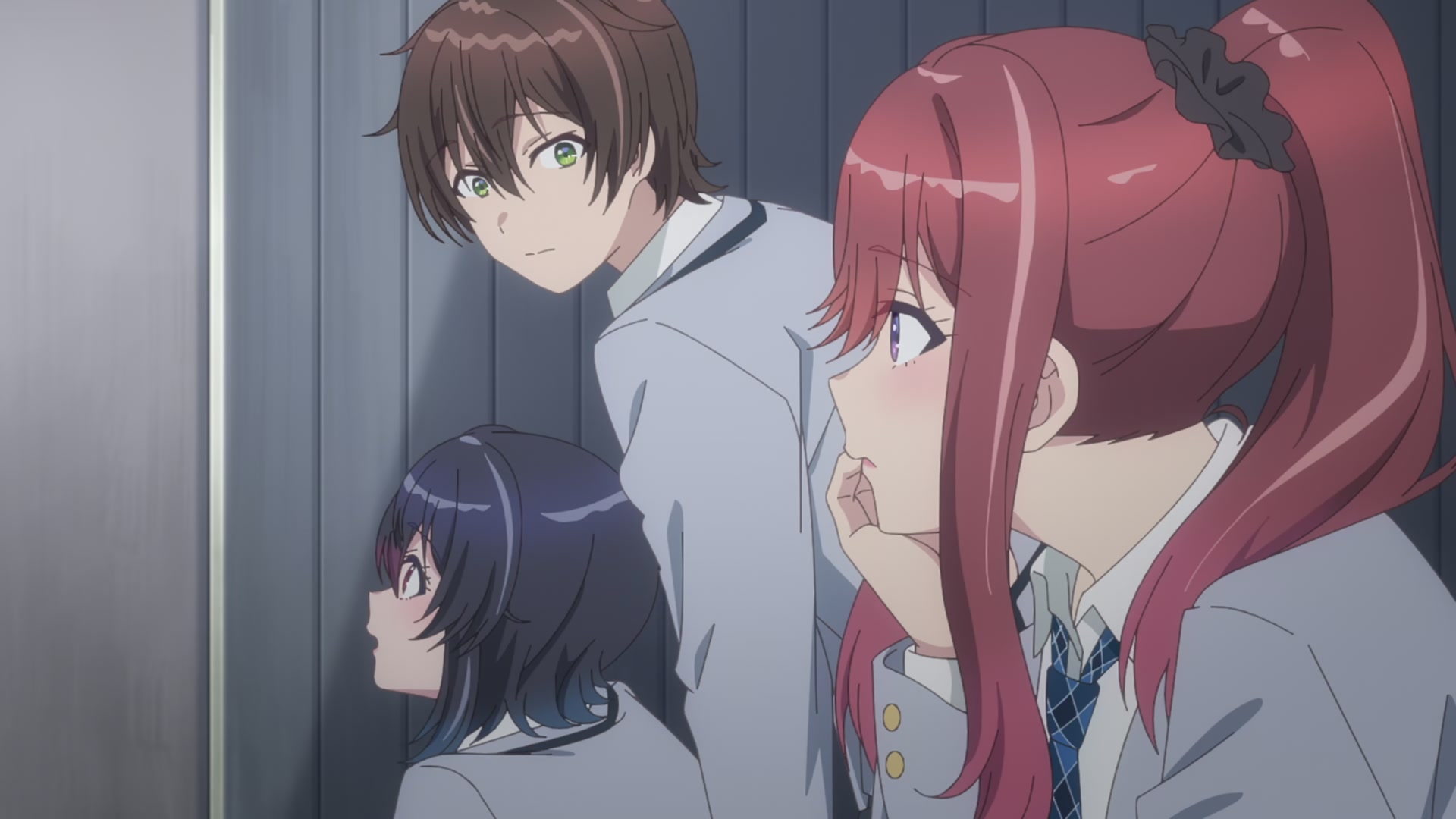
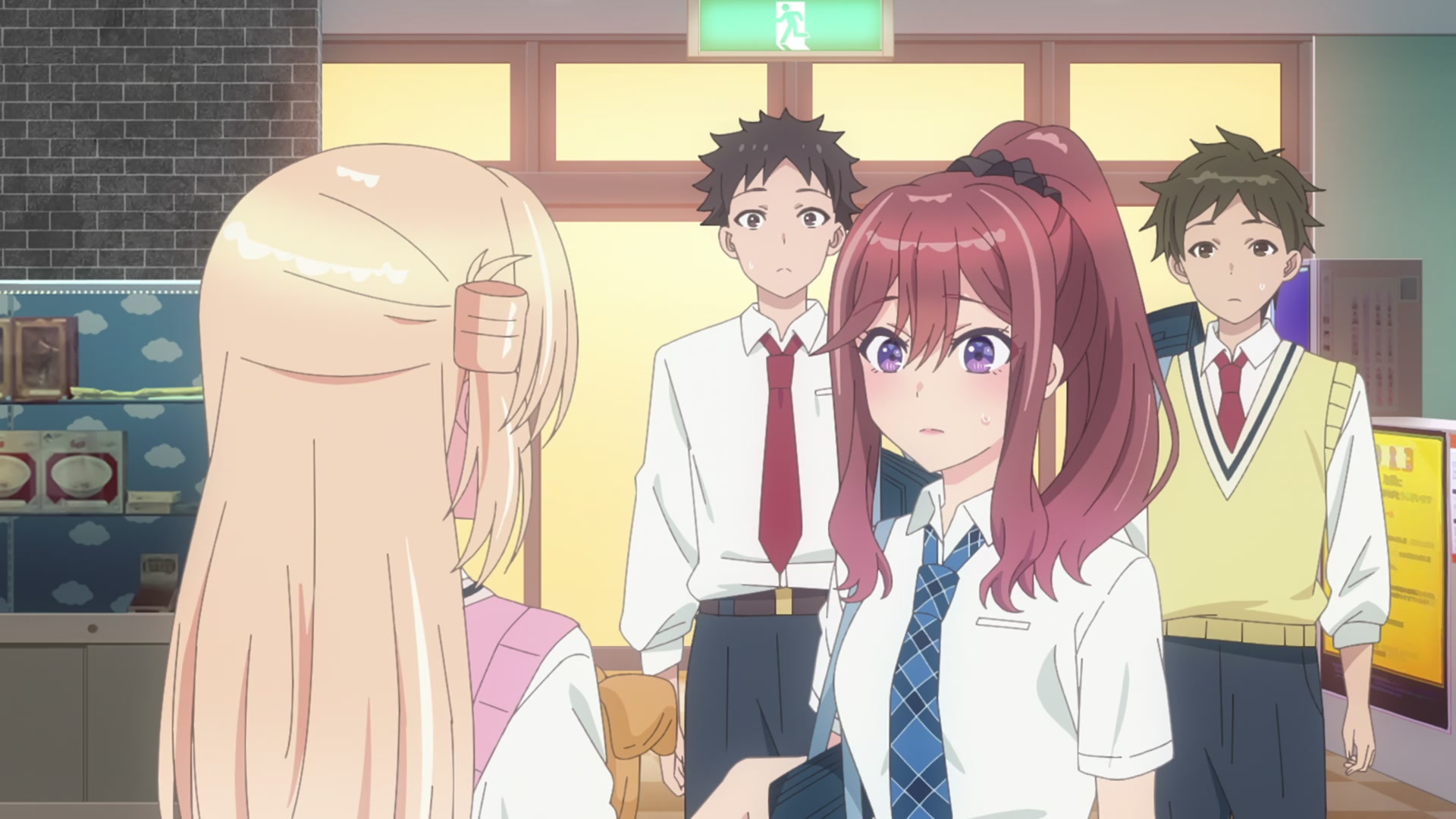
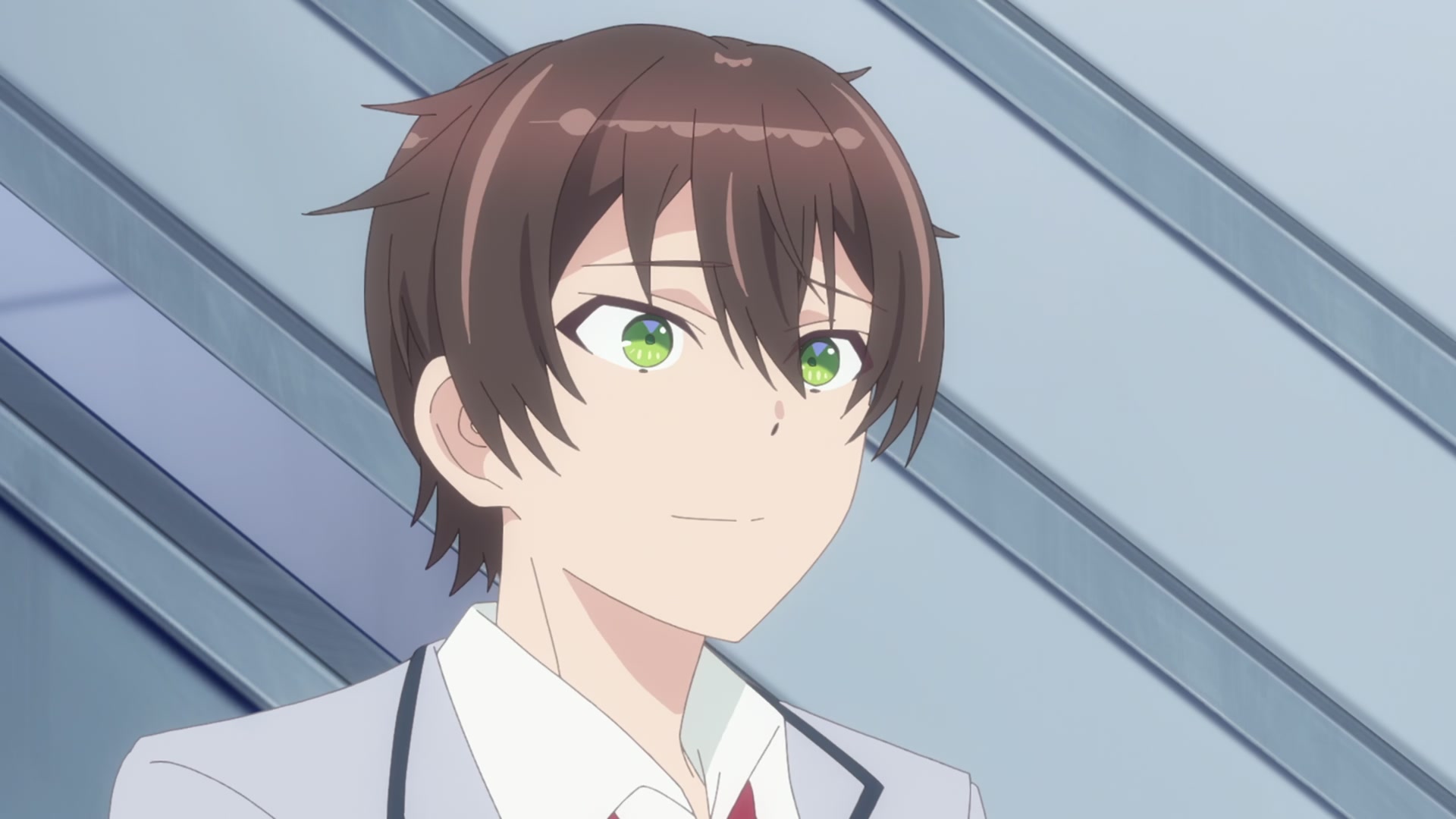
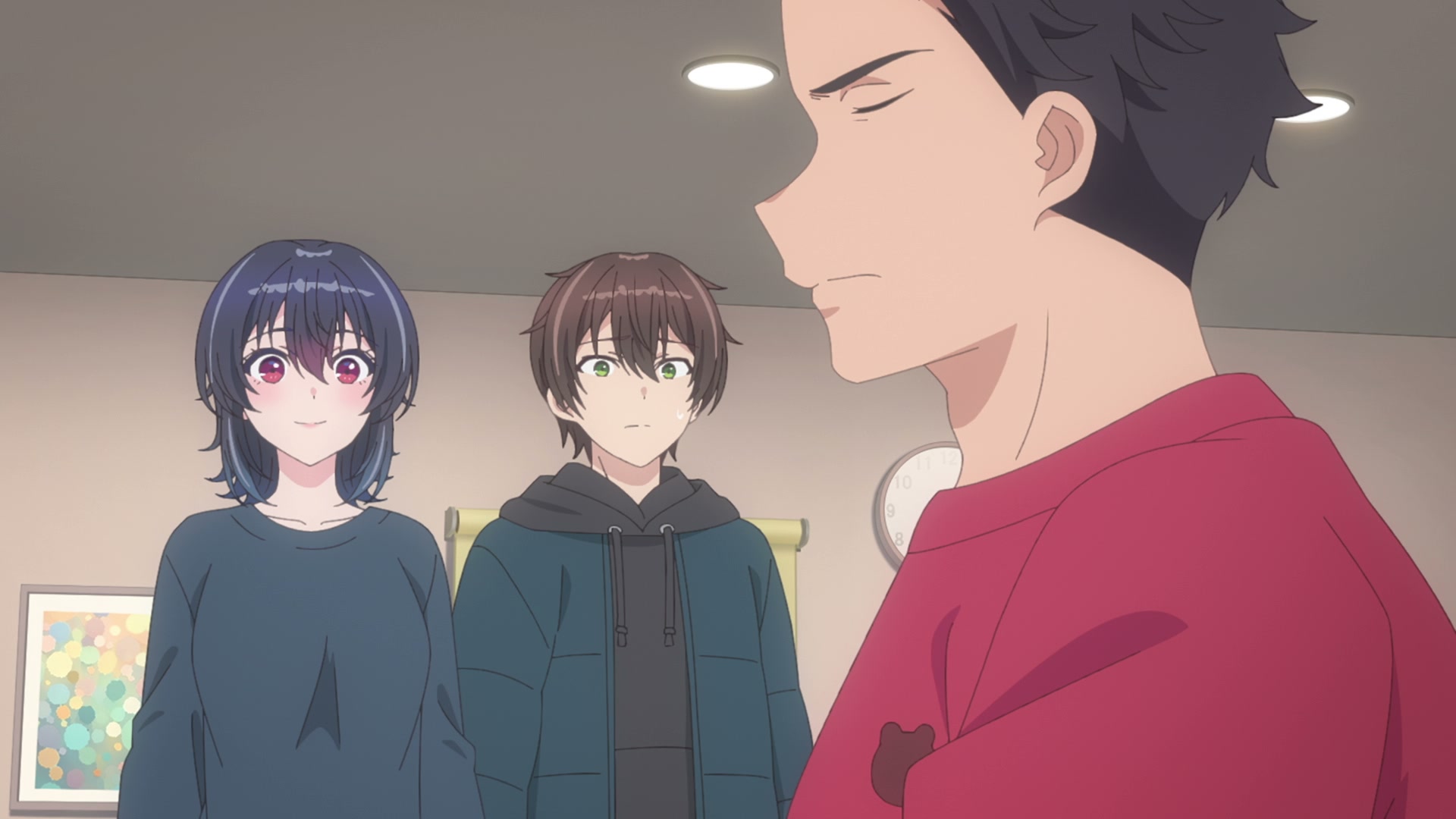
The series’ visual identity centers on its character art, and the production clearly allocated its resources accordingly. The character designs feature sharp, thin linework that often softens its color, using deep purples or browns instead of harsh blacks to better integrate with the pastel-leaning palette. This creates a gentle, inviting look appropriate to the romantic atmosphere.
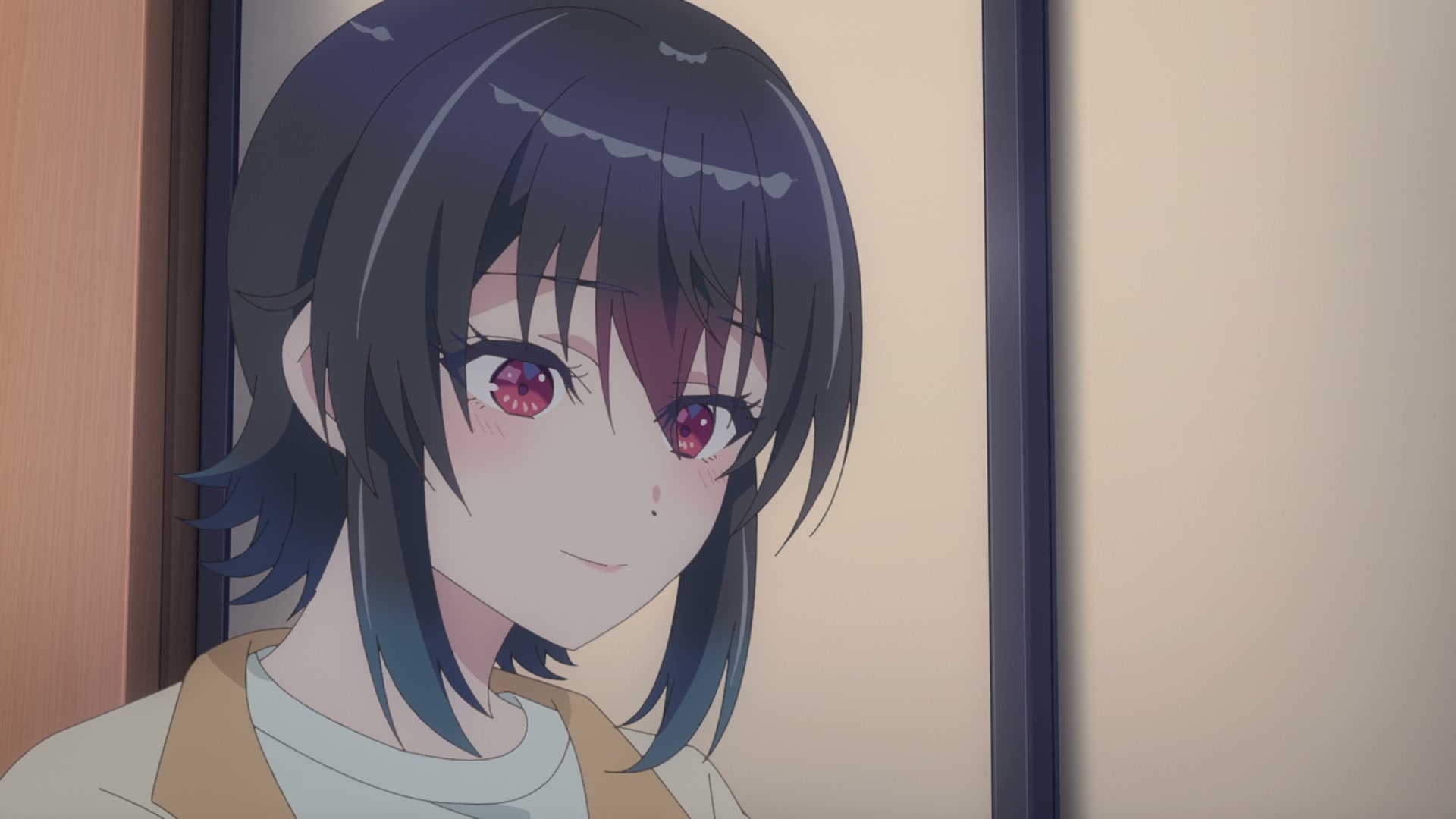
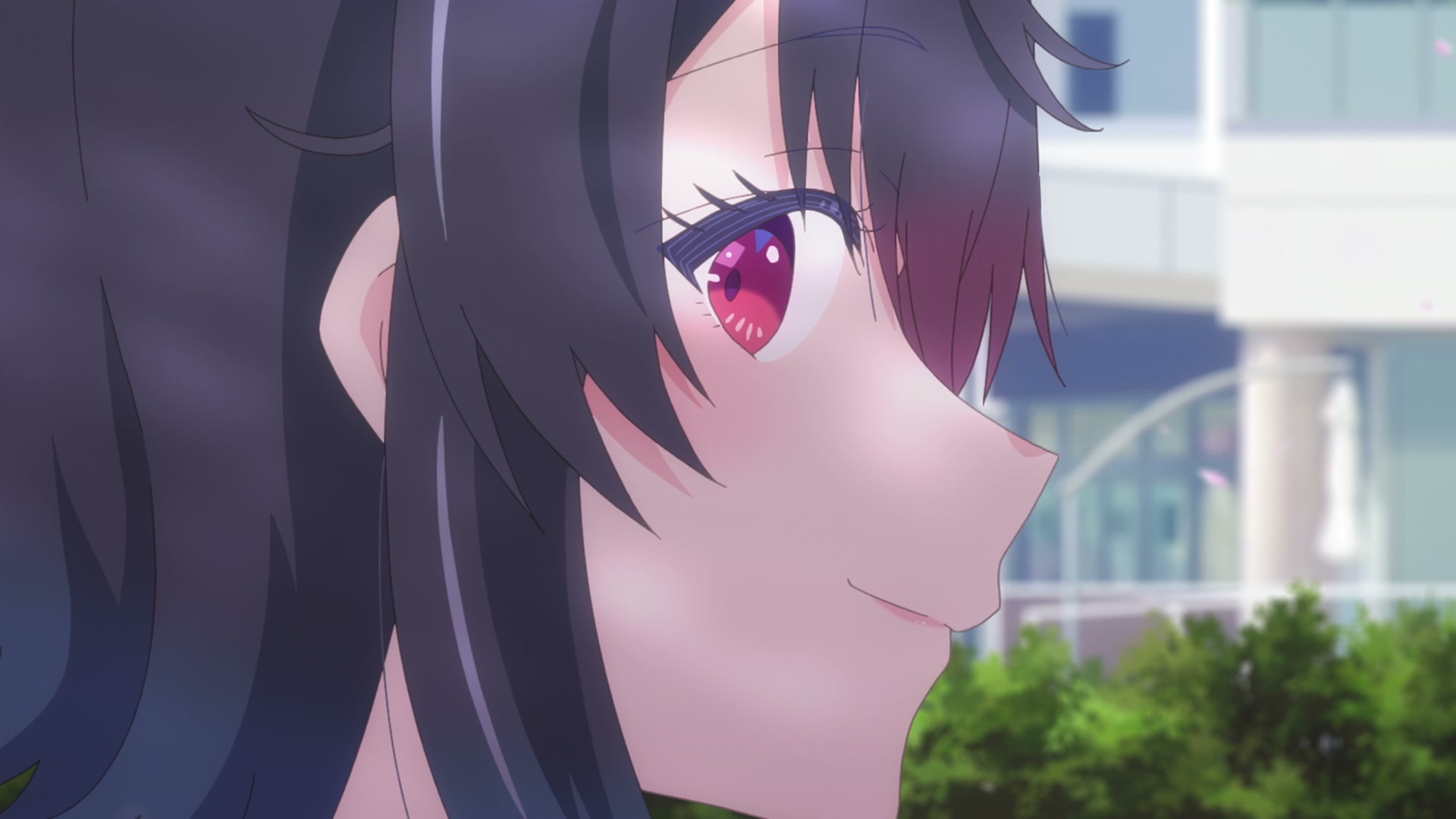
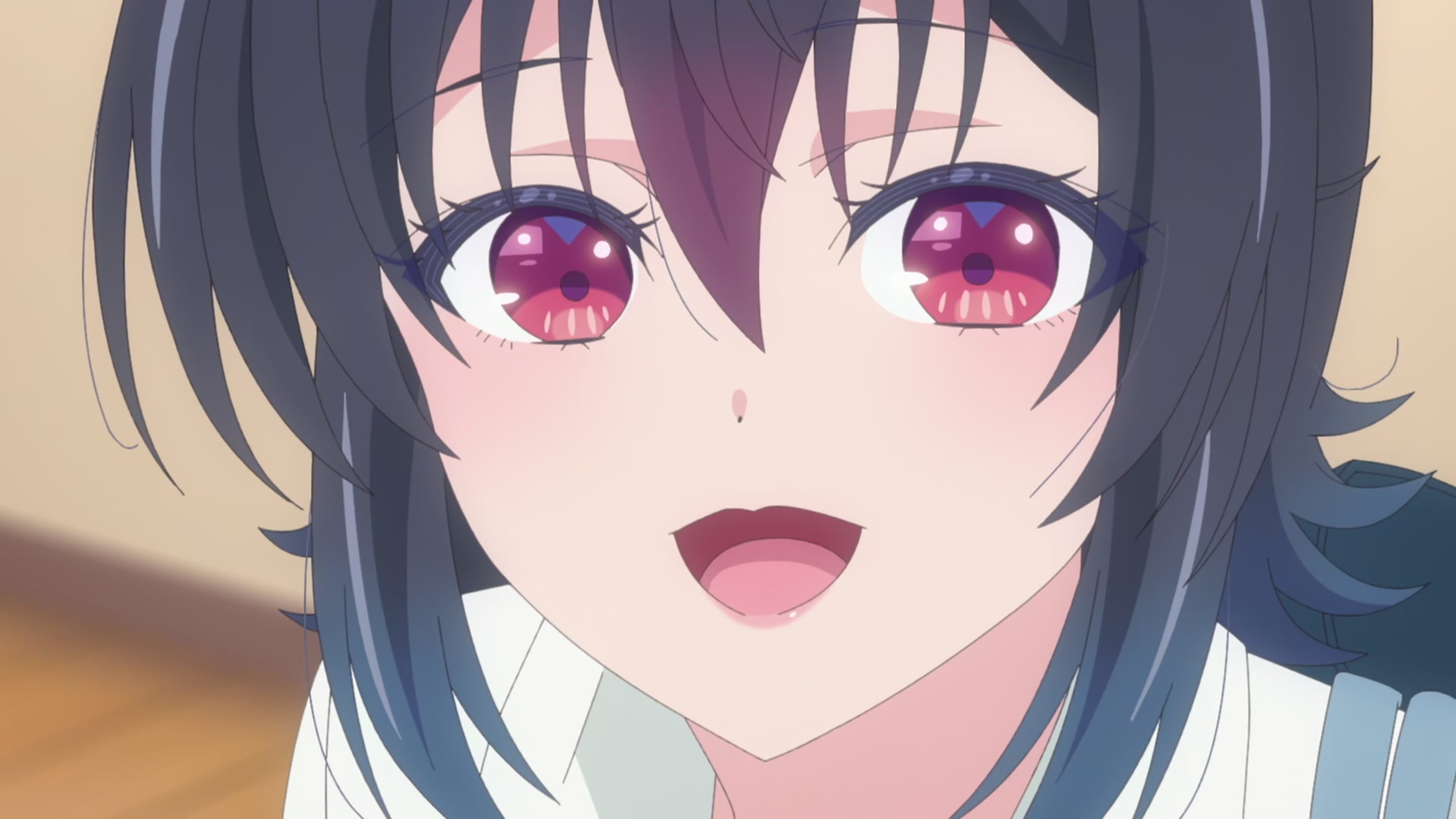
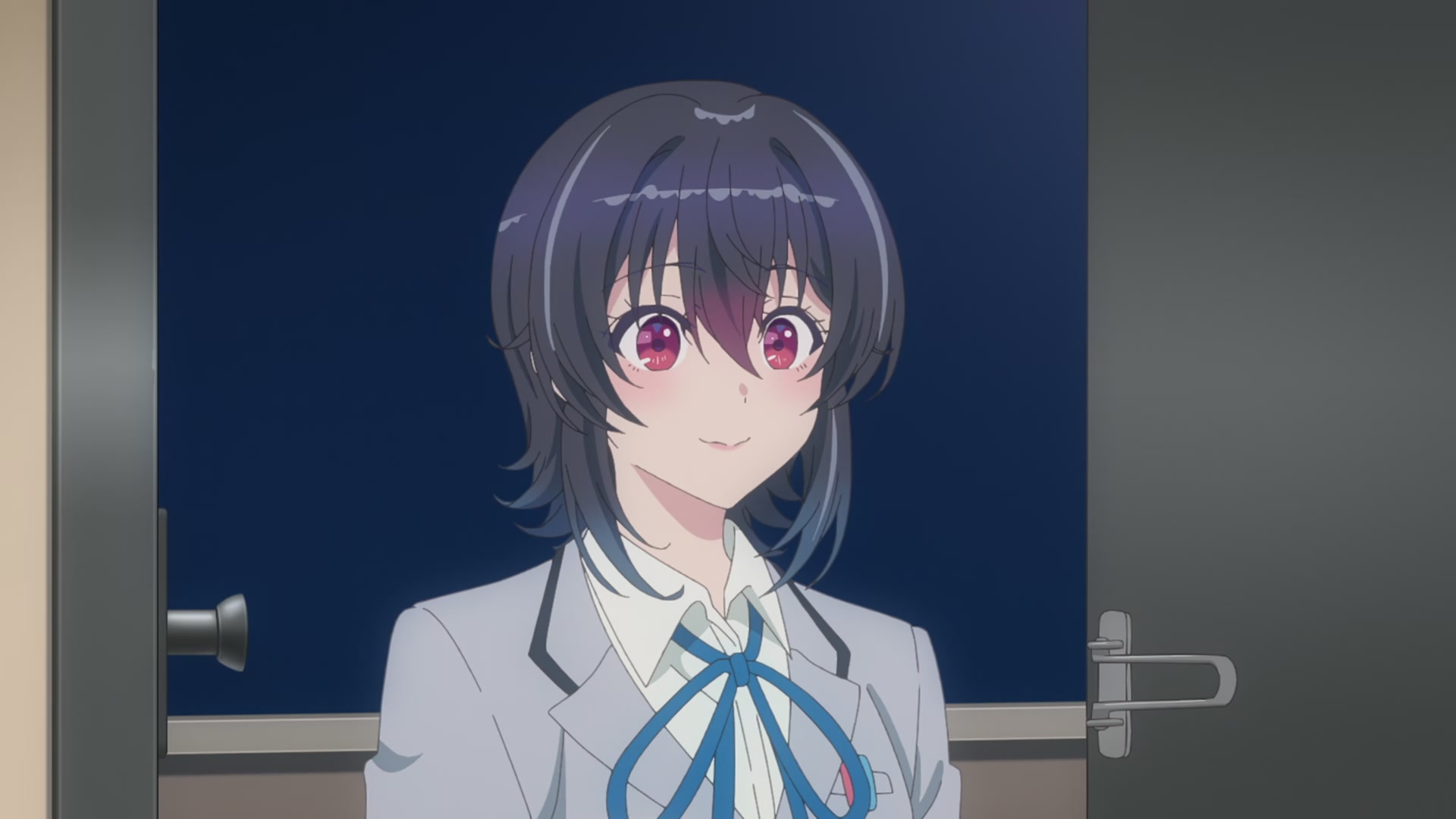
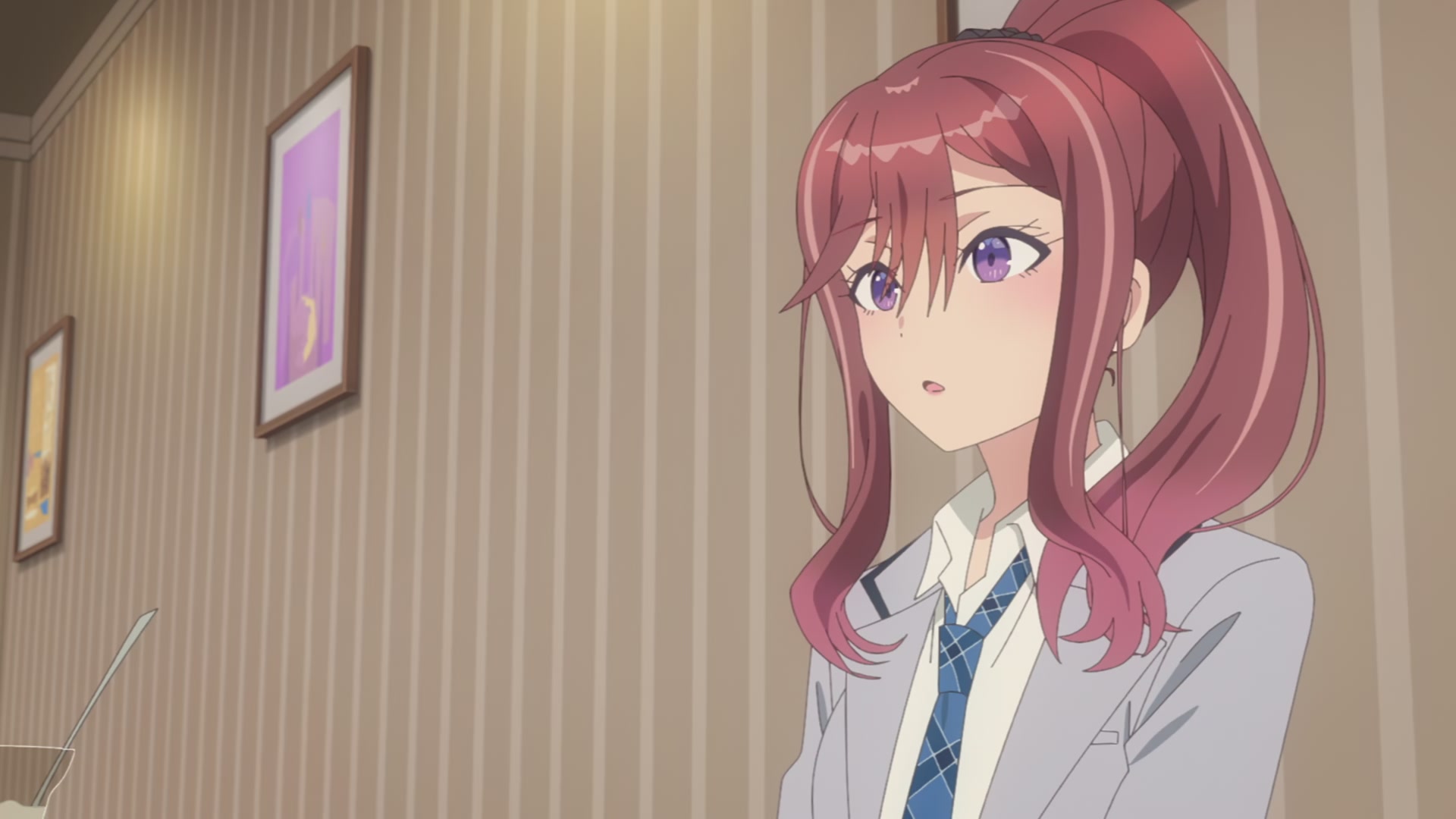
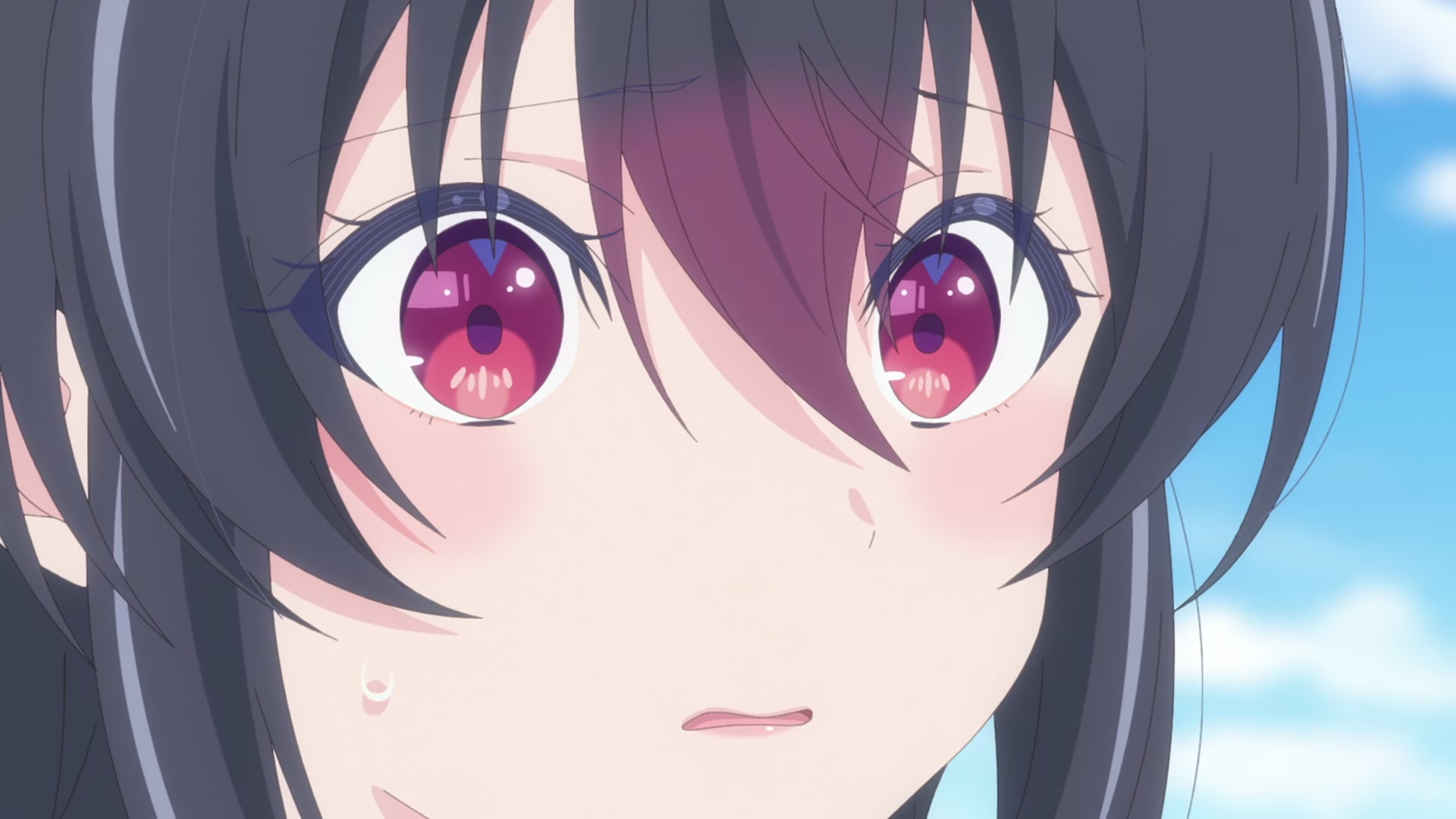
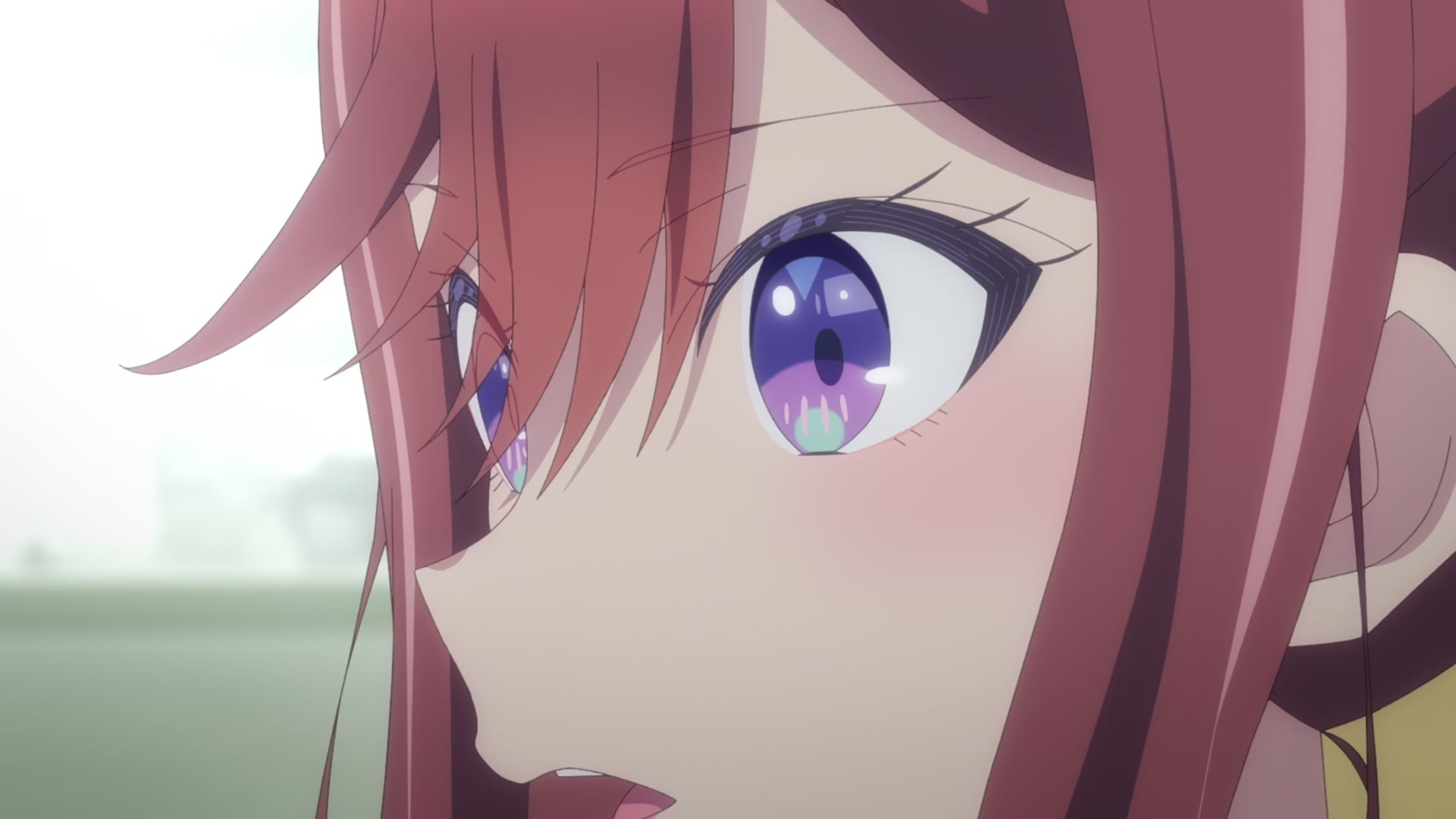
The most striking technical element is the eye-acting. Irises are rendered with complex, multi-colored gradients and geometric highlights resembling stars, diamonds, or floral shapes, framed by thick, dark lashes. This level of detail ensures that internal states are legible through subtle shifts in expression. A slight widening of the eyes, a change in the angle of an eyebrow, a softening around the mouth, all register clearly because the designs are built to communicate nuance.
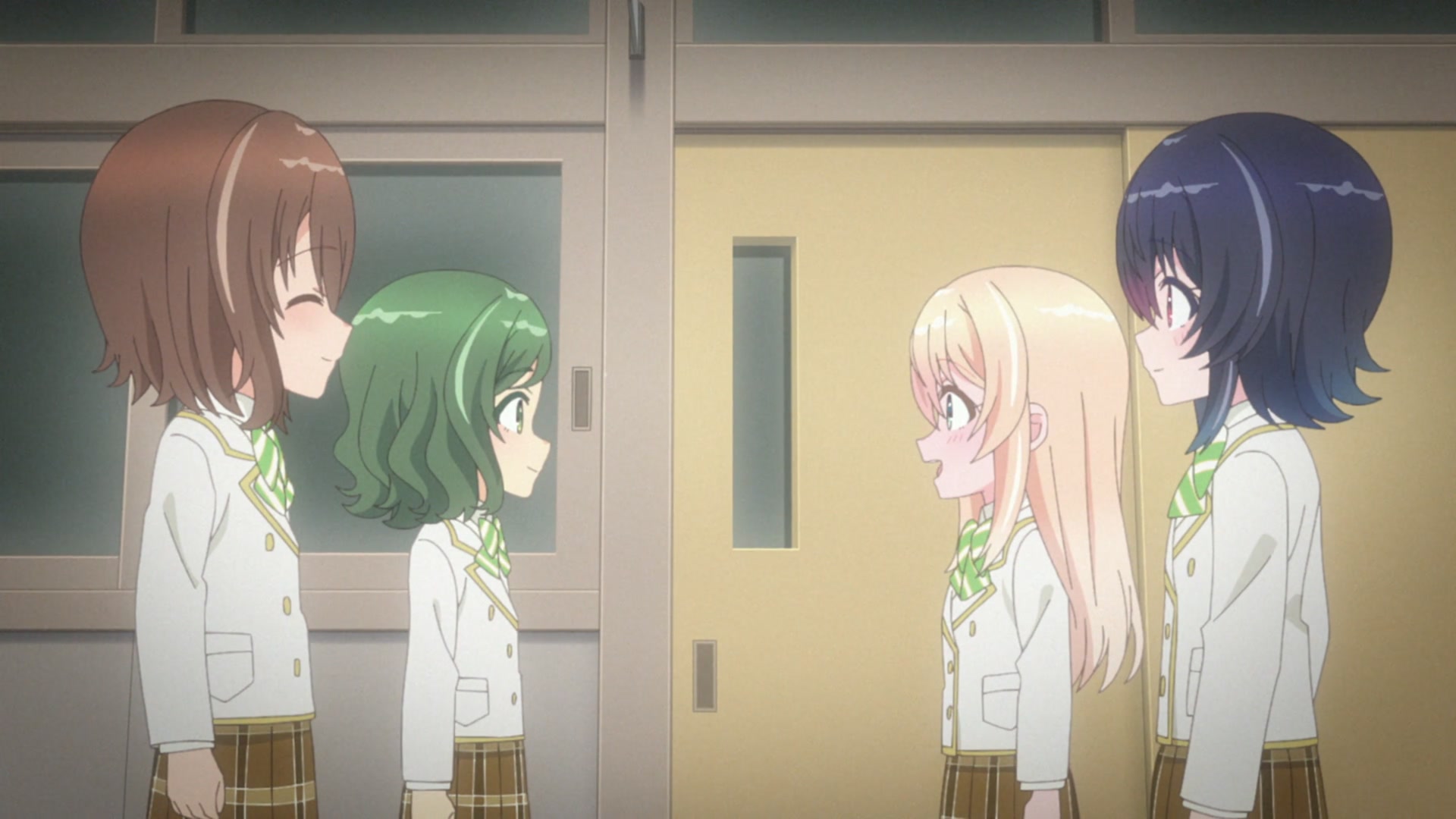
Hair rendering uses glossy, chunky highlights and subtle color gradients. Dark navy hair might transition into teal at the tips, adding visual interest without breaking the naturalistic baseline. The overall effect prioritizes “appeal” in the classic anime sense. Characters are beautiful to look at, which serves the romantic atmosphere and makes the emotional stakes feel heightened.
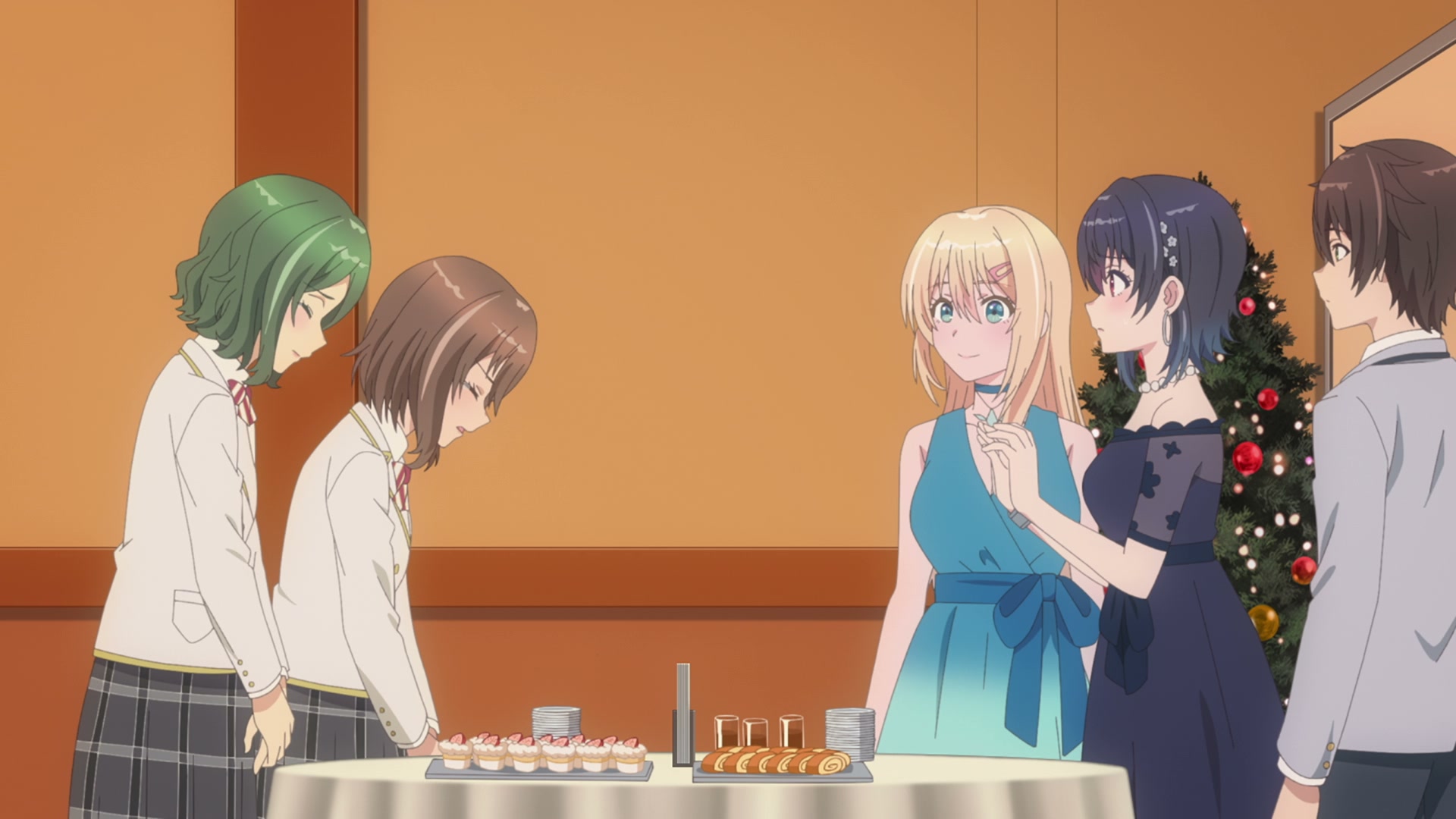
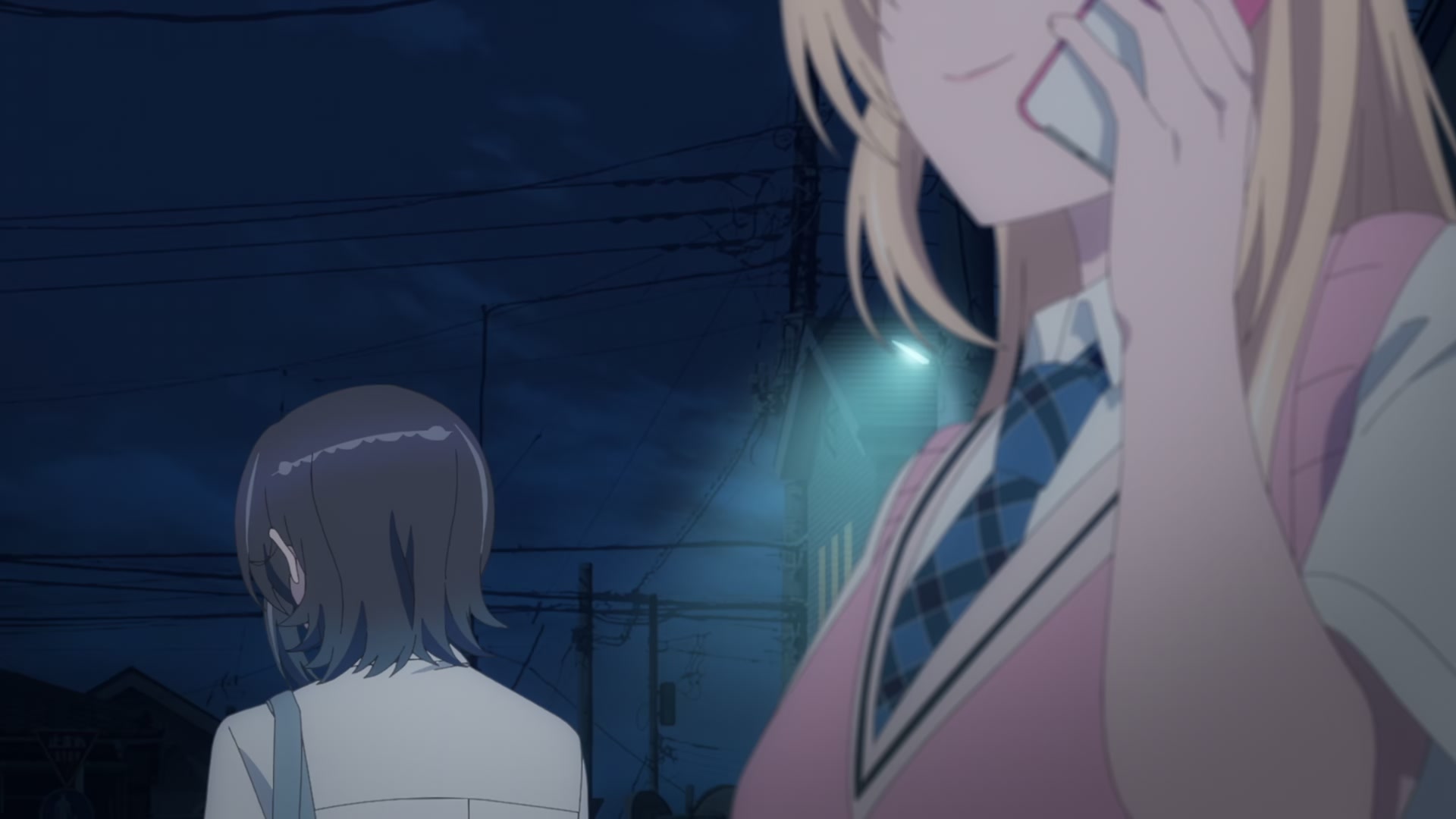
Lighting and compositing work in three distinct modes that create emotional texture throughout the series. High-key school and domestic scenes use flat, diffused lighting with white-out window bloom that creates halos around characters. The palette here is soft creams, light blues, and beiges, establishing a comfortable, everyday baseline. Atmospheric night exteriors shift to a melancholic blue-gray palette with heavy bloom on streetlamps and Christmas lights, creating moody contrast to the daytime interiors. Warm emotional peaks, formal events, and intimate moments use a golden-orange spectrum with light leaks and sepia-adjacent tones, evoking a “treasured memory” quality.
Shallow depth of field, the bokeh effect, is used extensively. By blurring foreground elements like a character’s shoulder or the back of a couch, the “camera” pulls the viewer’s eye toward the mid-ground, creating an intimate, observational feel. This technique suits the series’ interest in private moments and unspoken feelings.
The animation itself is a mixed bag, and honest assessment requires distinguishing between intentional stillness and genuine limitation. The series relies heavily on beautiful still frames and limited animation. Many dialogue scenes consist of characters holding poses with only mouth flaps moving. This is not inherently a flaw. Many character dramas use this approach, and the quiet intimacy of key scenes, Maki and Umi on the couch, the lap pillow sequence, the cherry blossom bench, benefits from minimal movement. The stillness creates a held-breath quality appropriate to the emotional content.
However, crowd scenes, walking sequences, and transitional moments sometimes show genuinely limited frame counts. Background characters in school scenes are often static or looped simplistically. The “gawking” expression, characters staring with wide eyes, is overused as a reaction shot substitute. These are budget limitations rather than artistic choices, and they are noticeable.
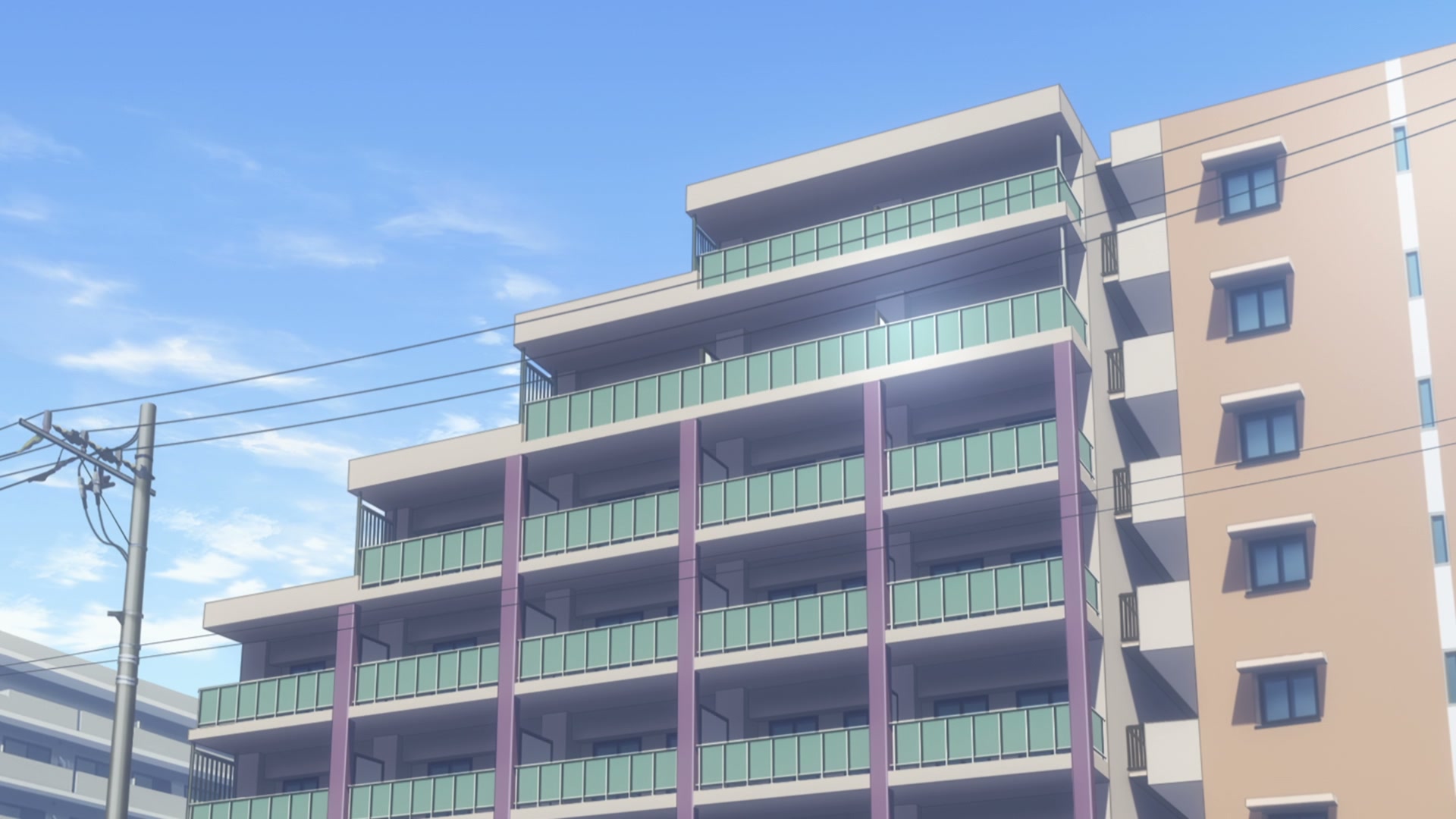
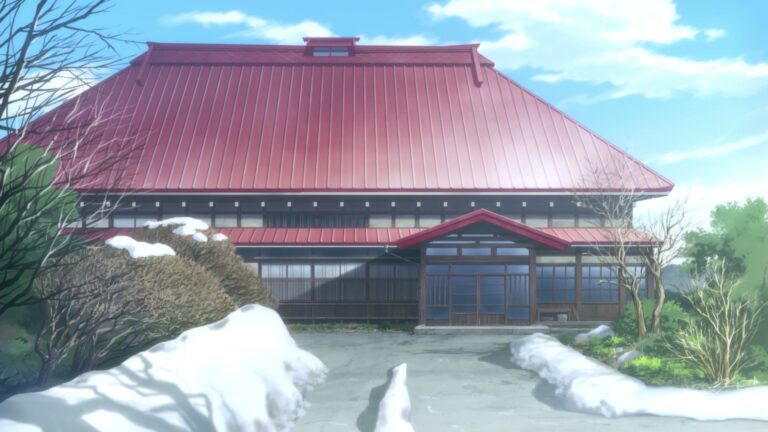
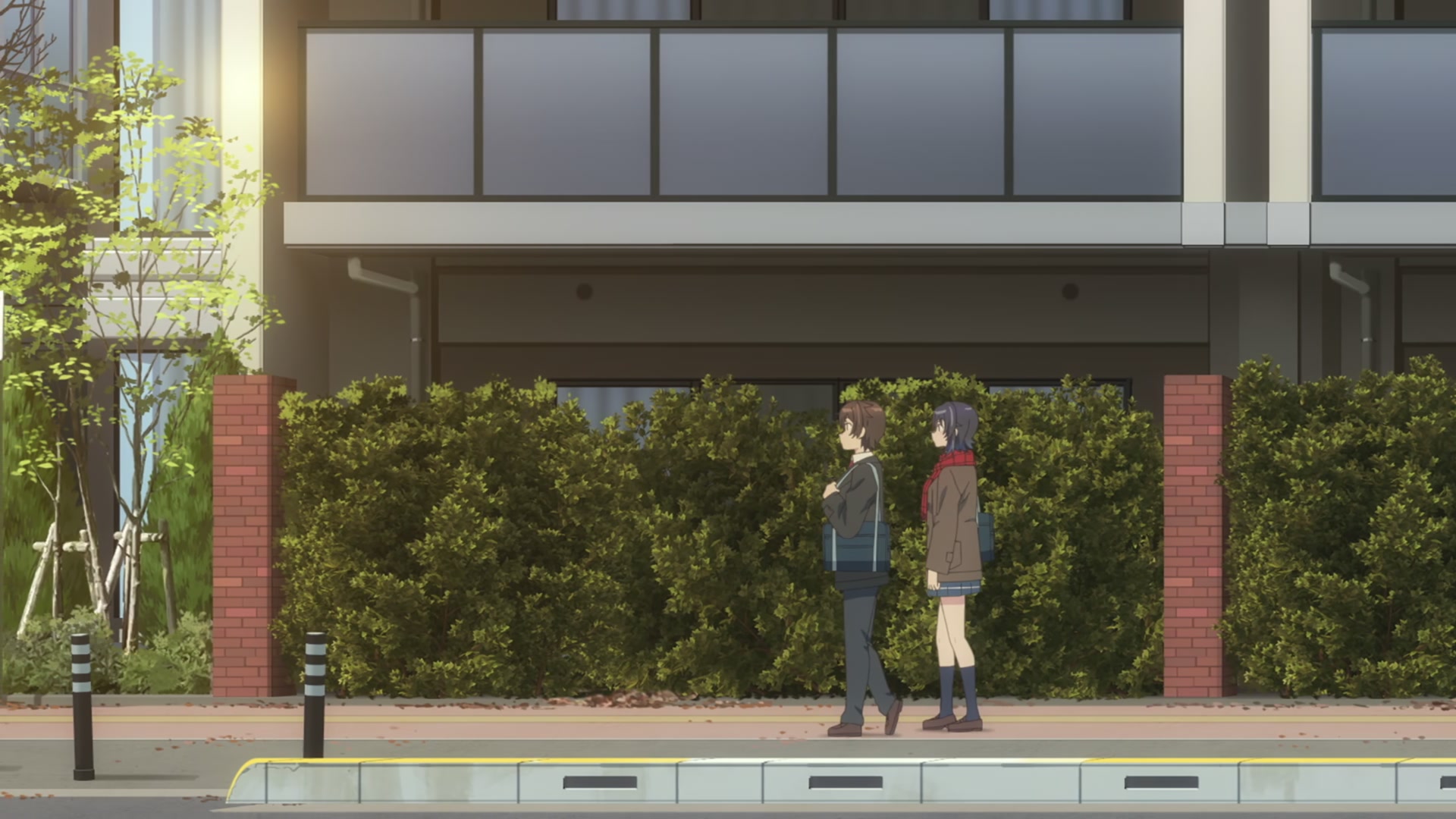
The background art is functional and clean, rendered with architectural precision. Classrooms, apartments, and urban streets are all perfectly legible. But they can feel like stage sets rather than lived-in spaces, especially in wide shots without the benefit of bloom or bokeh. The contrast between highly detailed character art and more generic backgrounds is a common issue in TV anime with limited resources, and this series does not escape it.
Composition and layout are generally conservative, favoring standard medium shots and rule-of-thirds framing. Occasional Dutch angles add tension to dialogue-heavy scenes. Layering, characters positioned behind doorways or foreground furniture, creates spatial depth. Social distance is communicated through character spacing and formal posing, seiza kneeling, bowing. The direction is competent but rarely adventurous. It trusts the character art to carry the emotional weight, and for the most part, that trust is justified.
Sound and Music
The opening theme sets the tone effectively, a bright, melodic piece that captures the series’ blend of melancholy and hope. The ending theme provides a gentler comedown, appropriate for episodes that often end on quiet, reflective notes. Neither is groundbreaking, but both serve the material well and contribute to the overall atmosphere.
Voice acting is where the sound design truly shines. The Japanese cast delivers performances that carry significant emotional weight, particularly in the crying scenes that are central to the series’ dramatic peaks. Maki’s voice actor navigates the character’s range from flat, defensive monotone to raw, broken sobbing with conviction. Umi’s performer handles her shifts between teasing confidence and vulnerable tears with equal skill. The confession scenes, the rooftop breakdown, the Christmas Eve confrontation, all land as hard as they do largely because the vocal performances commit fully to the emotion.
Yuu’s voice work deserves particular mention. Her cheerful, energetic default could easily become grating, but the performance finds enough variation and genuine warmth to keep her endearing. When she drops the cheerfulness for moments of hurt or seriousness, the contrast is effective precisely because the baseline has been established so consistently.
Sound direction uses silence and ambient noise thoughtfully. The quiet of Maki’s empty apartment, the distant chatter of school hallways, the wind on the rooftop, all create a sense of space that supports the visual storytelling. The series understands that what characters do not say is often as important as what they do, and the audio mix respects those silences.
Overall Verdict
Class no 2-banme ni Kawaii Onnanoko to Tomodachi ni Natta is a quiet, emotionally intelligent romance that earns its payoffs through patient character work and a willingness to sit with uncomfortable feelings. It understands that the “second prettiest girl” is not a ranking but a prison, and that liberation comes not from becoming number one but from finding someone who sees you as the only one that matters.
The series will appeal most to viewers who appreciate character-driven romance that takes emotional pain seriously, who are not put off by anime’s visual language of sparkly eyes and soft focus, and who understand that “slow” pacing can be contemplative rather than boring. It rewards attention to its characters’ inner lives and refuses to resolve their contradictions too neatly.
It will not appeal to viewers who demand constant plot momentum or high-concept premises, who are allergic to anime romance tropes, or who require fluid, sakuga-heavy animation in all scenes. The limited animation in non-key scenes and the conservative direction may frustrate those accustomed to more visually dynamic productions.
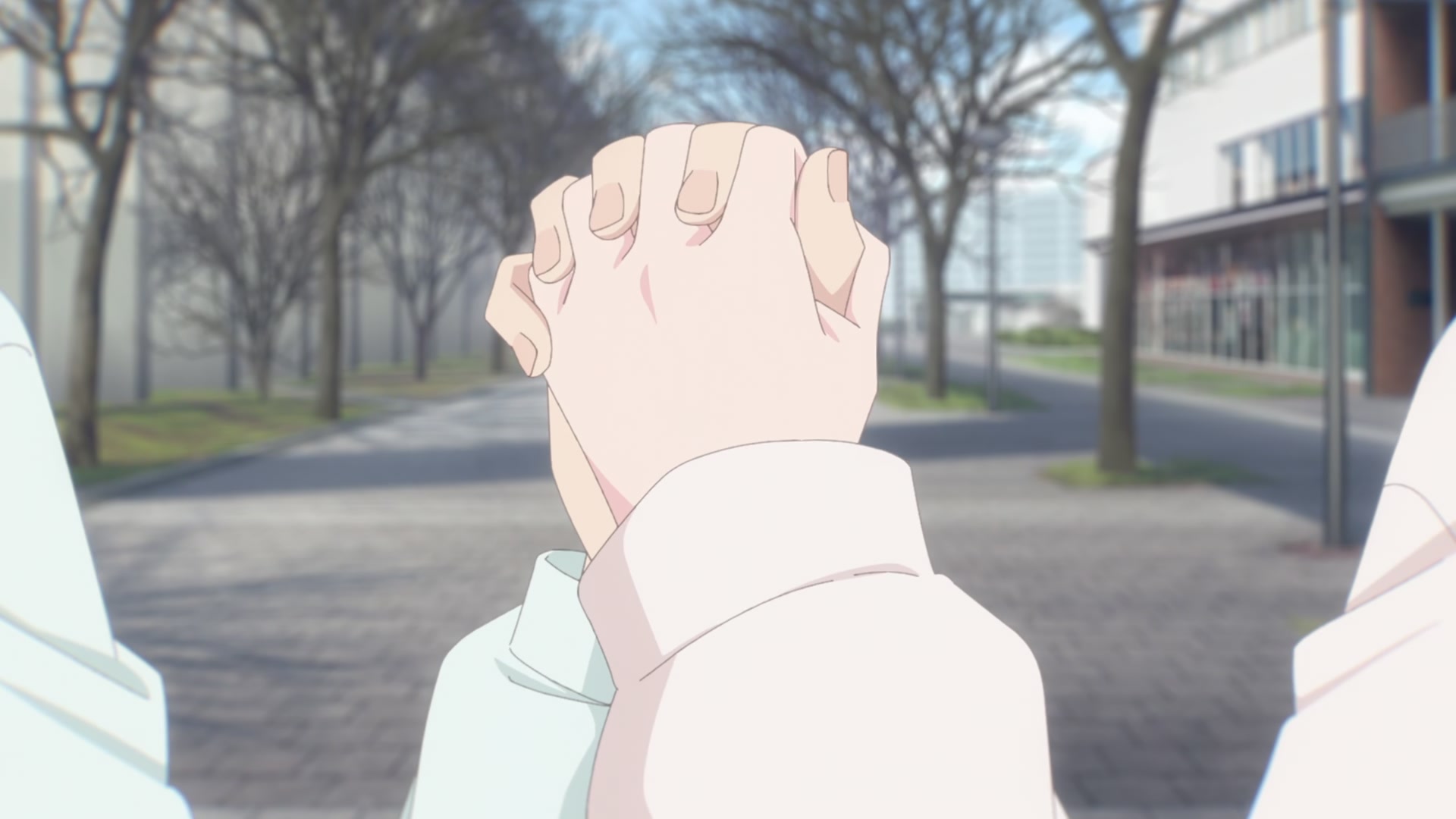
But for those on its wavelength, the series offers something genuinely valuable: a story about two lonely people who find each other through shared enthusiasm for things nobody else cares about, who learn to be vulnerable together, and who gradually build a community around themselves without losing the private world they created. The final image, Maki and Umi under cherry blossoms, Maki having grown slightly taller, walking into a new season hand in hand, is earned. It is not a grand romantic climax but a quiet promise, and the series has done the work to make that promise feel real.
Gallery