
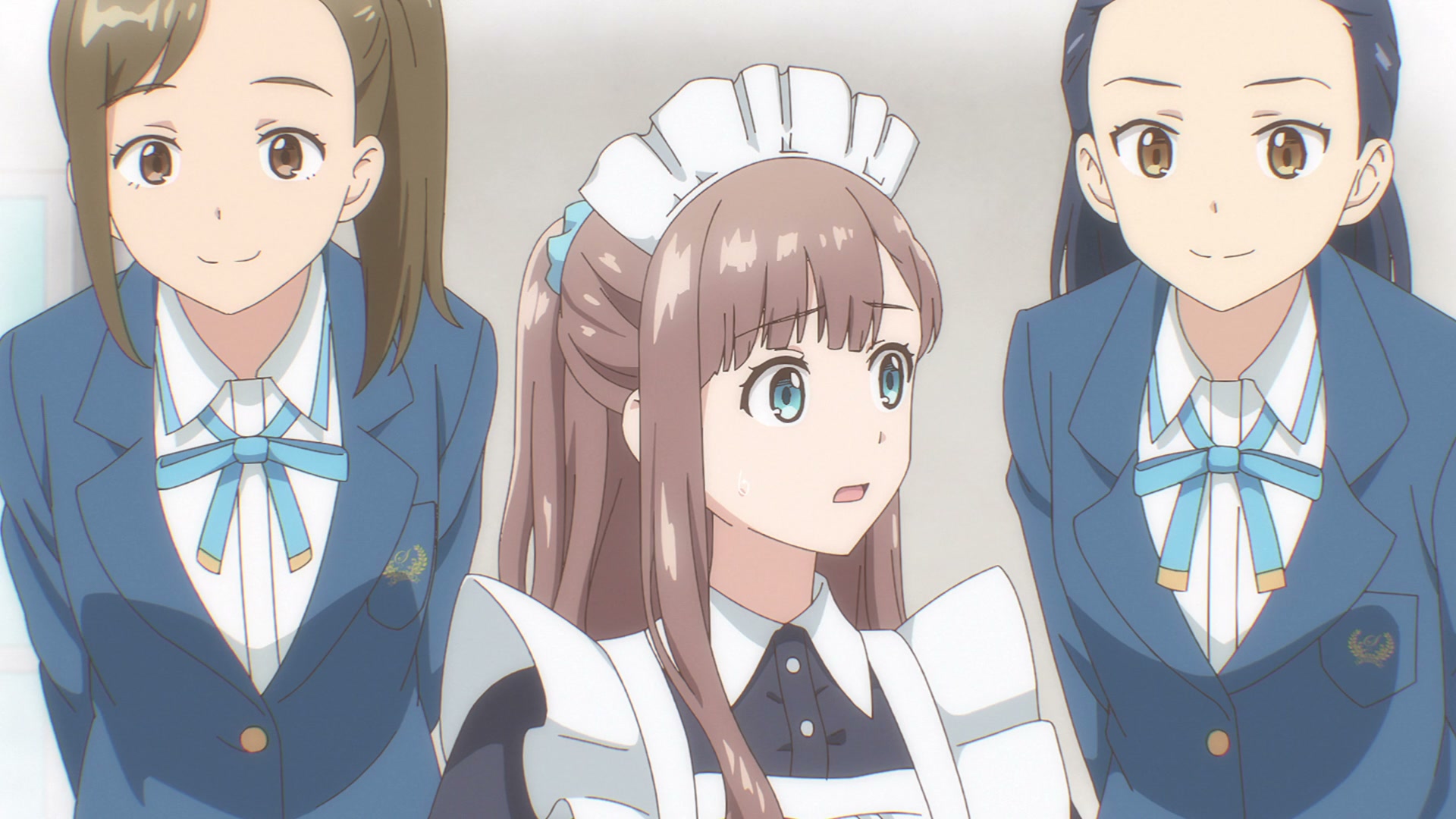
The Seiryo Fest’s second day opens with Nao cheerfully reporting zine sales numbers to Sunao, and for a few minutes it feels like this episode will coast on festival warmth. Then Satou dragoons Nao into a bloody maid costume for the haunted house, and the show reminds you that this series can pivot from gentle slice-of-life to outright physical comedy faster than Nao can scream at a fake ghost. What comes after that scream, however, is far heavier: a long, unflinching conversation with Ryo that gives the replica mythology its most painful human face yet.
The Haunted Hospital Is Absurdly Fun
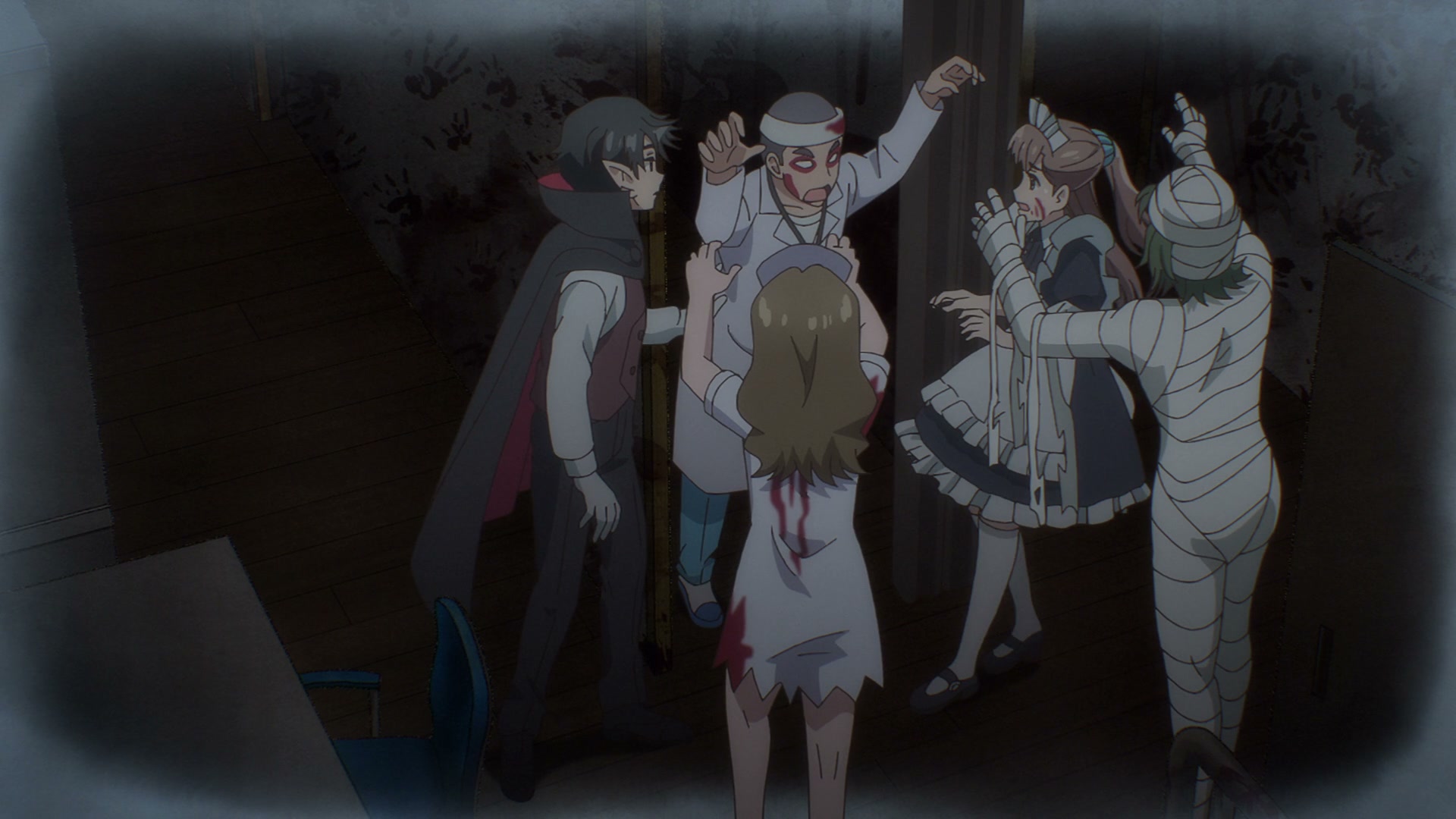
Satou’s “haunted house is totally maid for this” pun sets the tone, and the episode runs with it. Nao, already rattled by the dark, gets a last-minute zombie-maid makeover and is paired with Aki in full Count Dracula regalia. Their assignment is simple: hold signs, pass out flyers, and—according to Satou—enjoy the festival together. The haunted hospital itself turns into an accidental date, the kind where one party is shrieking and the other is quietly amused.
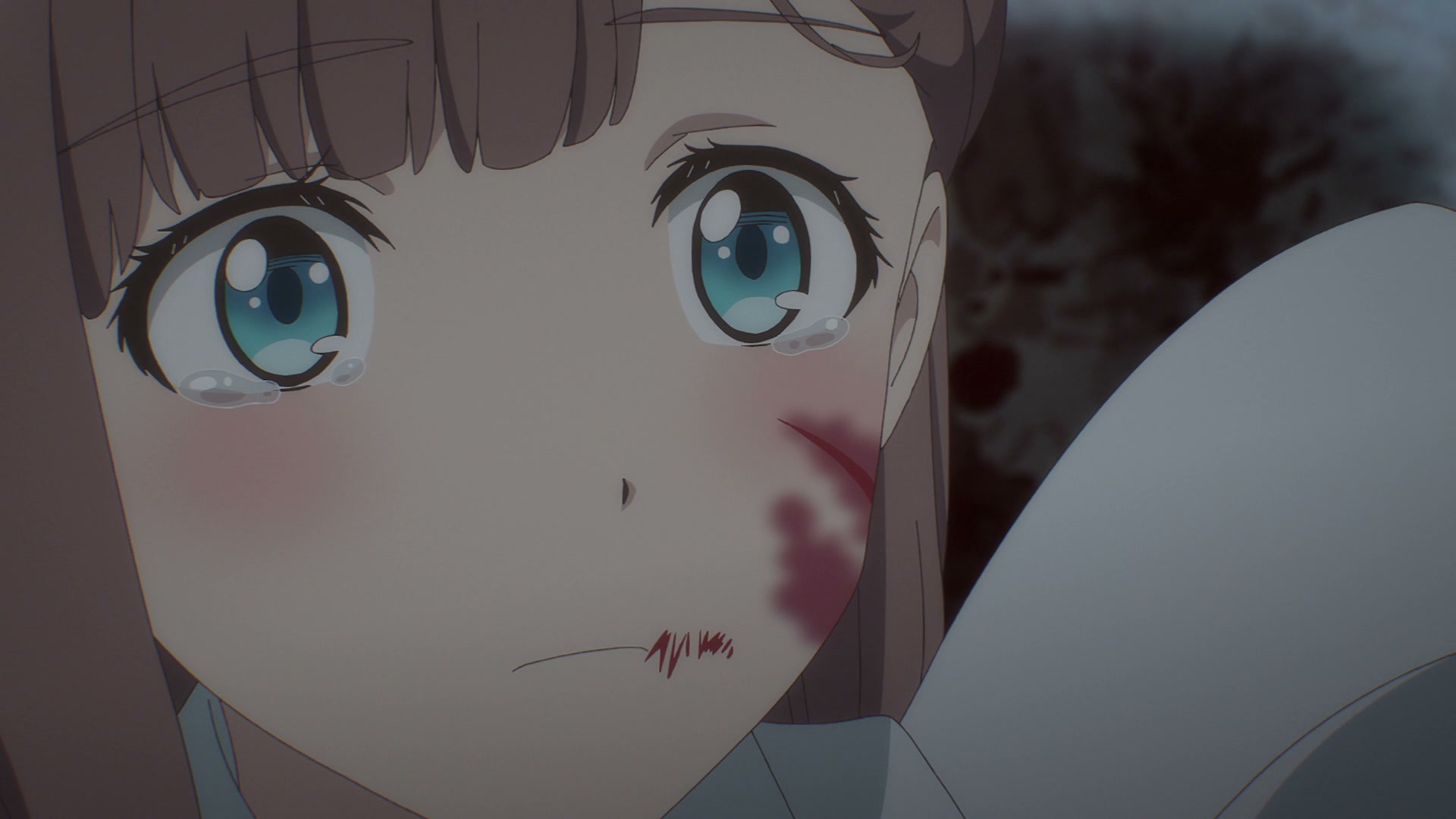
Nao’s terror is played straight enough to be endearing. She can’t stand, she latches onto Aki, and after he retrieves the charts and carries her out, she is still so rattled she threatens to eat the promised taiyaki “from their heads down.” The whole sequence works because the show doesn’t belittle her fear. Instead, it lets Aki be the steady one for once, and his eventual apology—“You’re too adorable”—feels earned rather than cheap. The moment he admits that seeing her scared took the edge off his own fear is a small character beat that says a lot about how far these two have come since the shrine festival. They can tease each other now without the old existential dread undercutting every word.
The visual design of the haunted house is appropriately junky: dark corridors, sudden appearances, one wall that accidentally leads into a taiyaki stall. It feels exactly like a high school culture festival attraction made with enthusiasm and too little budget, and that texture makes Nao’s over-the-top reactions funnier. The joke about her screaming accidentally advertising the haunted house and boosting its popularity is exactly the kind of practical payoff a good festival episode should have.
Counting Coffins and Counting Zines
Amid the chaos, the literature club’s actual crisis ticks along in the background. Ritsuko reports that they’ve sold 33 copies between yesterday and today, still far from the 100 they need to save the club. Her pragmatic anxiety is a quiet counterpoint to the haunted-house silliness, and Nao’s refusal to allow negativity—“No negativity allowed”—shows her actively protecting the club’s morale. The line about finding an empty classroom if things go wrong is both a joke and a genuine admission that the club has become too important to give up, regardless of official status. The zine plot isn’t front and center this week, but it’s there, ticking toward the post-play fireworks that Ritsuko correctly identifies as their one real sales window.
Ryo Speaks Her Truth
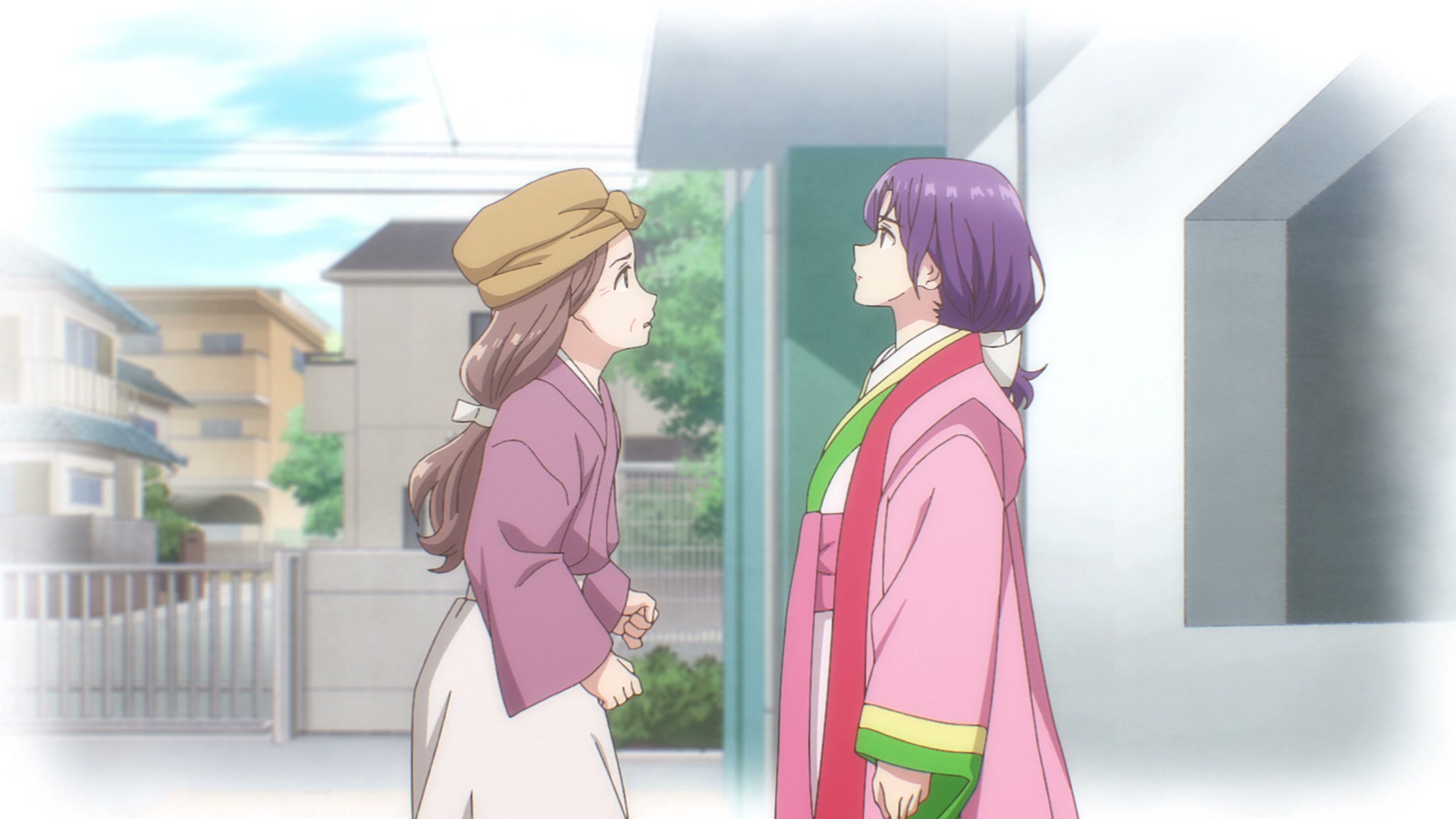
After the makeup retouch and a brief moment of stage fright, Ryo leads Nao outside and, in a quiet stretch of hall, tells her everything. This is the episode’s real center of gravity. Ryo was created when Suzumi was five, made to play the evil stepmother in a kindergarten play because the original didn’t want to do it. She did what she was told, went to school with Suzumi’s mother—and Suzumi followed them, leading to the mother’s panic and the decision to send the replica away to Fujinomiya for thirteen years. Ryo hasn’t seen Suzumi since.
The details are devastating in their specificity. Ryo couldn’t attend high school without a birth certificate. She studied at home with her grandparents, got by, and then, at the end of August, the woman who once couldn’t stand the sight of her came begging. Suzumi is in a vegetative state. Her attendance, her college entrance exams, her future—it all hinges on this replica stepping in and pretending to be the daughter the mother never wanted. Ryo’s description of Suzumi’s mother’s plea is chilling: “You came out of nowhere that day precisely for this reason.” The show doesn’t need to editorialize; the mother’s selfish instrumentalization of a girl she exiled speaks for itself.
Ryo’s self-assessment is brutally honest. She’s not as smart as Suzumi. She’s messing up. She got a five on a high school test with a middle school education and calls it medal-worthy—and she’s right. She’s been the student council president, the forest fairy Moririn, Princess Kaguya, all of it, and it’s never enough. The line that stings most is not the loudest one: “I’m just buying time and messing up. I’m not helping Suzumi at all.”
What makes this confession land differently from Nao’s earlier crises is the sheer weight of accumulated isolation. Ryo wasn’t summoned occasionally like Nao; she was erased entirely from the original’s life for over a decade and then yanked back for a purpose she didn’t choose. Her despair is not about whether she has a right to exist. It’s about the futility of existing for someone else when the goal keeps moving out of reach.
The Cruel Logic of Replicas Gets a New Voice
Ryo’s monologue pushes the series’ replica philosophy into sharper focus. She frames the problem bluntly: “Why are we replicas so stupid, anyway? … We must be messed up in our heads if we’re willing to sacrifice so much of ourselves for our originals.” She brings up the evil stepmother role from kindergarten and admits she didn’t want to do it then either, but she did—because it was for Suzumi. Even after thirteen years of separation, the compulsion remains. Ryo calls it bizarre: on the outside, identical; on the inside, “something very wrong with us.” She describes replicas as puppets with no will of their own.
Nao doesn’t argue. She’s been in that same headspace. But the conversation also shows how different their situations have become. Nao now has a creator who promised to grow old with her. She has a boyfriend who is also a replica and who fights for his own reasons to live. Ryo has none of that. Her original is comatose and cannot grant her anything, and the family that might have given her shelter treated her as a mistake until they needed her. Nao’s quiet “How could she?” after hearing about the mother’s plea is a rare flash of anger, and it underlines how much Nao’s own circumstances have improved by comparison—and how powerless she is to offer Ryo a solution.
When Ryo asks the painful question—“A replica can’t give her life to save the original, right?”—Nao has no answer. The search Ryo has been conducting with the flyers, the desperate hope for a ritual that would let her trade her existence for Suzumi’s recovery, hits a dead end. Nao’s earlier research into the Aloysia Jahn story already concluded that the replica was never truly alive. There’s nothing to trade. Ryo’s despair remains unresolved, and the episode lets it sit there, heavy, as they walk back to the stage.
The Play Must Go On
The episode closes on that unresolved weight. Ryo straightens herself, says “Our audience awaits,” and leads Nao back in. The final line is Nao’s soft “Senpai,” and that’s it. The play hasn’t even started yet, but the Princess Kaguya who will walk on stage is a girl who just told another replica that she wants to disappear so her original can live. The parallel to the tale itself is impossible to ignore: the moon princess who must leave the earth behind, no matter how much the people around her want her to stay.
Ryo’s performance as Princess Kaguya was always freighted with subtext, but now it’s explicit. The play isn’t just a club-saving tactic; it’s a replica acting out a story about someone who can’t stay. That makes the next episode’s inevitable performance feel like more than a school festival set piece. It’s a question: will Ryo find another ending, or is she doomed to walk the same path as the moon princess?
This was an episode that paired one of the funniest sequences the series has ever done with its most emotionally raw confession. Aki and Nao’s zombie-date gave the festival levity, but Ryo’s backstory gave the entire replica predicament a new, sharper edge. The haunted house may be over, but the real fright is knowing that the girl in the princess costume might not see a reason to stay on earth.
Screenshots
← Episode 7 | All Replica datte, Koi wo Suru Season 1 posts →
[…] ← Episode 8 | All Replica datte, Koi wo Suru Season 1 posts → […]