



The episode splits itself into two halves that barely touch in subject but speak to each other in tone: one part is Amamiya Academy’s sports festival, a parade of money-flinging gags that remind you why this school exists in its own tax bracket; the other is a phone call home that quietly tightens the emotional threads Meiko has been carrying since summer break. The contrast works because the show trusts its own rhythms. A pajama party cold open, a helicopter entrance, a bundle-tossing competition, and then a sudden left turn into porridge recipes and a little sister trying to sound stronger than she feels.
The Sports Festival Is Pure Amamiya Excess
The entire sports festival sequence runs on the series’ most reliable fuel: too much money applied to things that do not need it. Rie descending by helicopter, dust kicking up across the field, is exactly the kind of entrance you expect from the girl who once turned a Guam vacation into a school campus. What makes the joke land is Meiko’s immediate thought: “Maybe I should send some sand to Miori and the others… This isn’t Koushien.” Her country-girl frame of reference is still intact even after a semester of rich-kid absurdity, and that disconnect keeps the comedy grounded.
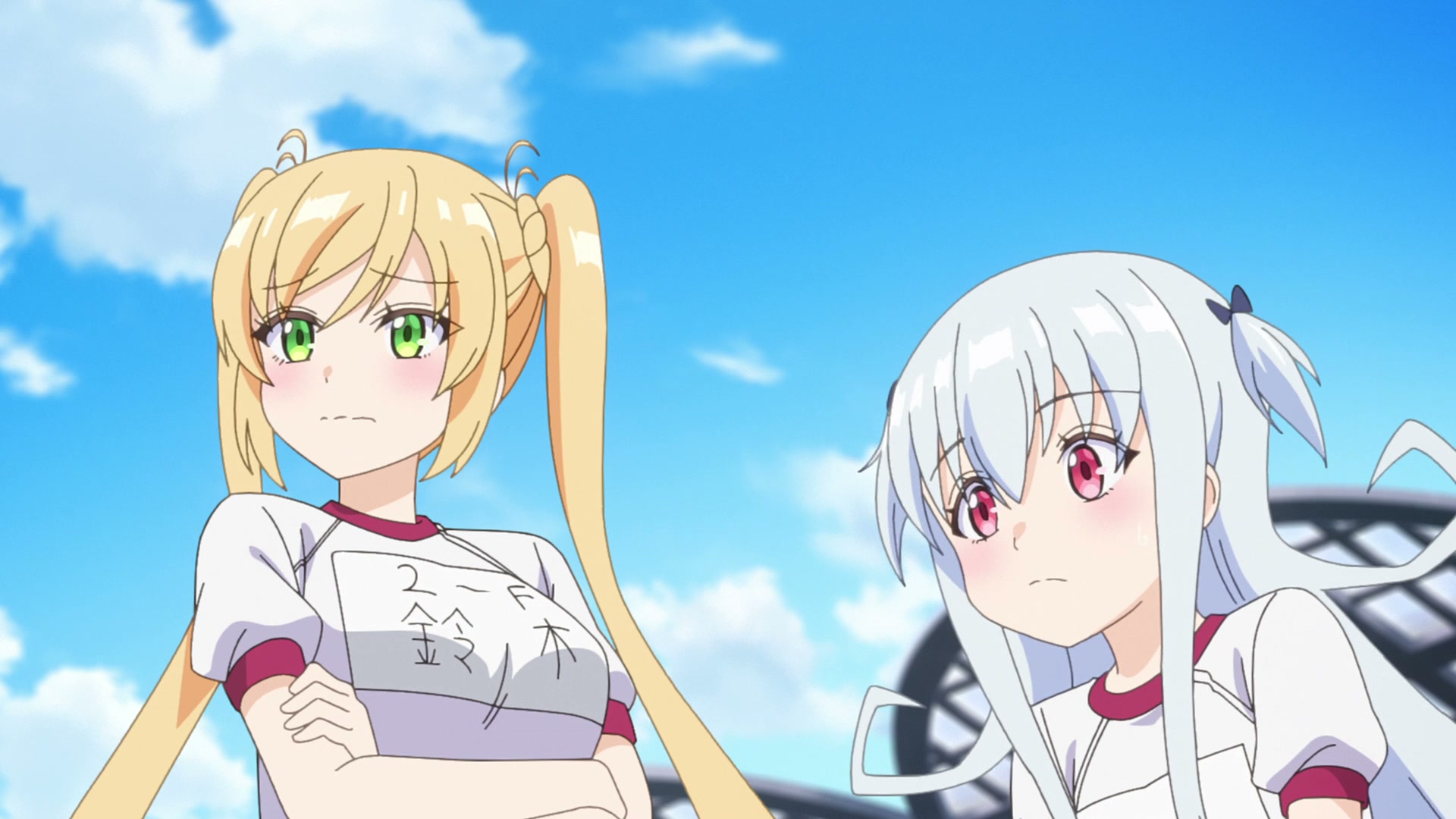
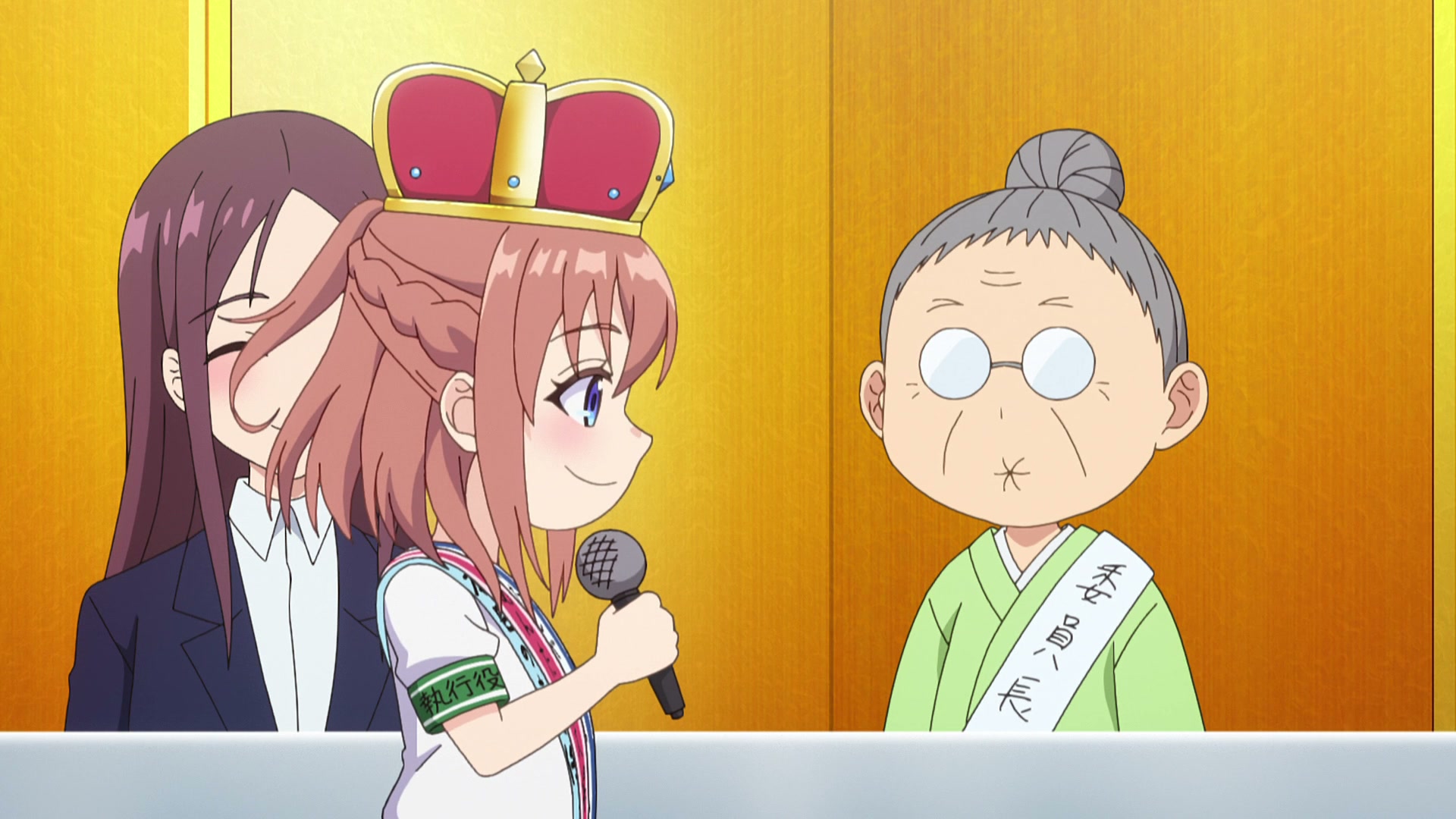
The events themselves escalate beautifully. The inter-class Bundle Toss is introduced with Rie on the mic like a game show host: “Are your stacks of cash ready?!” The rules are a tax-saving scheme disguised as a sport. Throw bundles of cash into a basket, deduct the donation from your income, and win points. It is so uniquely Amamiya that Meiko’s “That’s way too unique!” barely covers it. The visual of cash soaring through the air while students cheer like it is a relay race tells you everything about this school’s relationship to wealth. Rie, in her event-operation outfit radiating what the subtitles call an “overwhelming aura,” has fully embraced her role as heir apparent. She even admits the job is exhausting and that the festival is “practically the same every year,” but the moment she yells for Class 2-F, you can tell she is having the time of her life.
And then there is the grand prize. A whole Wagyu cow per person. The class has a kotatsu and a hot pot set up on the sidelines because, apparently, everyone already knows the drill. Meiko’s brain short-circuits. She collapses from wanting to eat beef too much, but the real engine is her family: if she could send that meat home to Miori and the others, all those growing kids would be overjoyed. The running thread of Meiko’s financial anxiety and her role as the family provider gets twisted into a physical gag, and it is funnier because underneath the faint there is real longing.
Neo Pulls Meiko Into the Dance
After the robot cheer squads (expensive, loud, exactly what you would expect) and Meiko’s class ending up dead last, Rie announces the finale: a dance competition worth six hundred million points, enough to flip the entire ranking. The twist is pure Rie. She wanted an upset that was “unrelated to money,” so she made the last event about appeal and gorgeousness. Meiko, naturally, worries whether a dress will suit her at all. She has never worn anything that elaborate, and the show lets that insecurity sit for a beat before Neo cuts through it.
Neo’s “I want to dance together! With you, Meiko-san!” is not a big dramatic confession. It is the kind of direct, almost tactical declaration that fits a girl who treats life like a game mechanic and affection like a side quest worth grinding. But the warmth is real. Meiko responds with the same softness she always gives Neo, and the two of them walk onto the floor in matching dresses, Meiko muttering “This dress is tight!” as the music starts. The judging result, that the Meiko-Neo pair was “so cute it was an overwhelming victory,” feels like the series rewarding its own central dynamic. Meiko immediately pivots back to sending Wagyu to her siblings, only to learn the cows are dairy cattle. The prize is all-you-can-drink freshly squeezed milk. Neo, frustrated that her small stature held her back in earlier events, promises to get bigger next year, and Meiko’s response, “Neo-chan will absolutely be cute whether she’s big or small! But personally, tiny Neo-chan… No, both of them… No, all of them are…!” before collapsing from loving cows too much, is exactly the kind of chaotic affection that defines their relationship. The dairy cow punchline is so perfectly timed that you almost forget the festival was ever about competition at all.
Miori’s Front Hits Hard
The back half of the episode shifts tone completely. A brief scene at school shows two classmates asking about Morita-san, the older sister who was always working part-time jobs and going straight home, who never really hung out with anyone. Miori tells them with quiet pride that her sister is surrounded by friends in Tokyo and living an incredibly fun life. That small exchange sets up everything that follows.
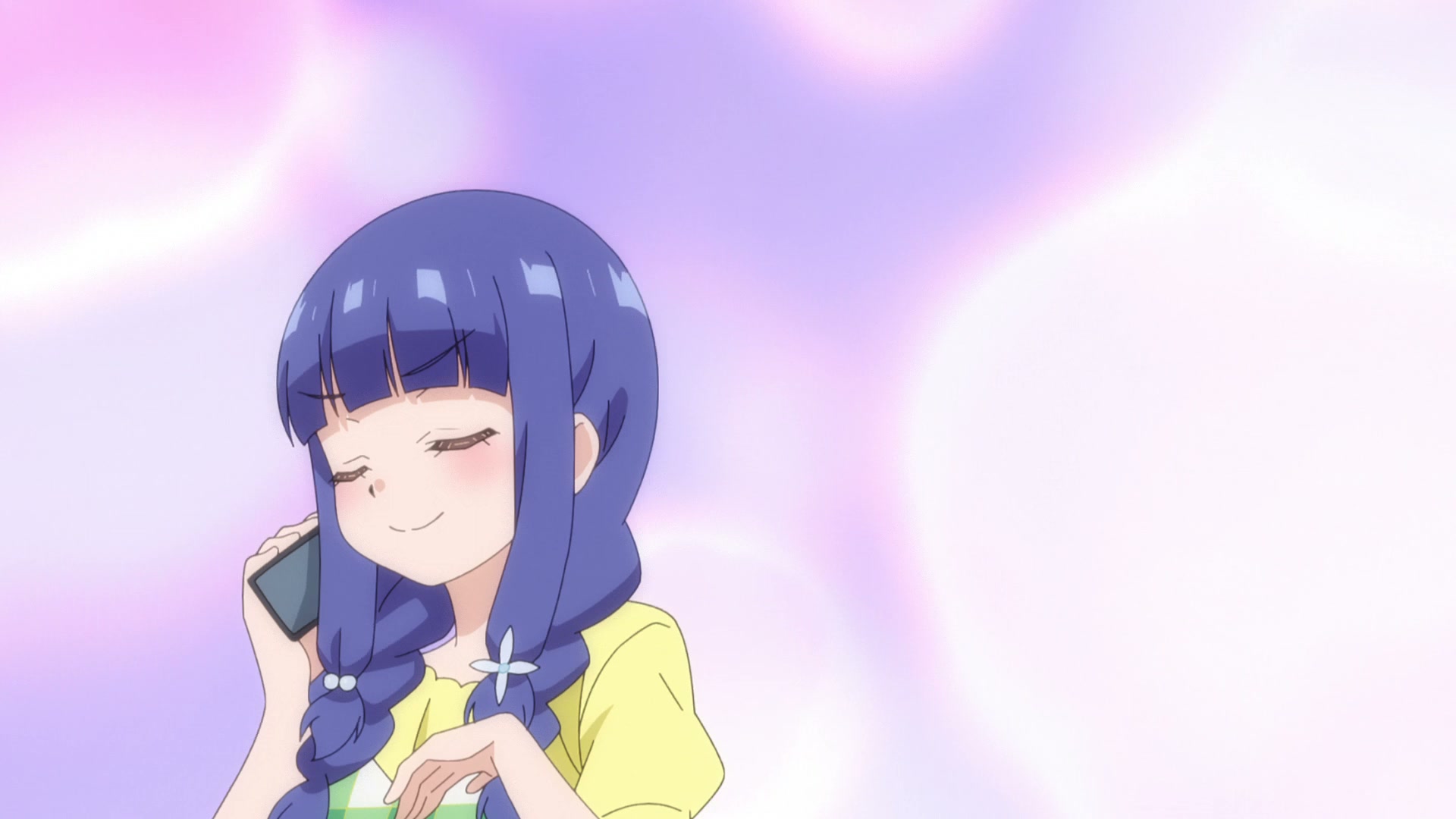
When Miori calls Meiko, the circumstances are messy. Everyone in the house except Miori has come down with the same cold, and she needs the recipe for the rice porridge Meiko always made. The call itself is intercut with Rie’s scandalized defense of the “scandalous little sister manga” she has been reading, because even a family crisis cannot stop Rie from being Rie. But once Meiko and Miori are talking, the comedy recedes. Miori lists the ingredients: ginger, pickled plum, dried sardines, green onions from Shimizu-baachan. Meiko asks after the neighbor, and Miori’s answer, that she still does morning radio calisthenics and is doing fine, is so small and so specific that it anchors the whole conversation in a real place. This is not just a generic hometown. There is a grandmother figure still exercising at dawn, a house that has switched to an IH stove thanks to the money Meiko sends home, a younger sister trying to fill an older sister’s shoes.
Meiko praises Miori for being a splendid older sister, and Miori’s response is the emotional center of the episode. “We’re completely fine over here! Everything is going great even without you!” She delivers it with forced brightness, and Meiko’s stunned reaction, “Great even without you… Great even without you…” lands like a small gut punch. Meiko left Akita carrying a lot of guilt, and Miori’s words are meant to be reassuring but instead underline the distance. The moment passes quickly because Miori still needs practical help with the porridge, and Meiko switches to a video call, marveling at the convenience of civilization while comparing it to Marika’s cooking streams. The show does not dwell on the sadness, but it does not pretend the sadness is not there.
Rie’s Supermarket Is Perfect Rich-Girl Chaos
Just when the scene feels like it will stay tender, Rie wanders into frame with a slight fever, announces that she checked her own temperature, and then casually greets Miori with, “How’s the supermarket we built behind your house, Miori-chan?” The reveal that Rie built a supermarket behind Meiko’s family home is so perfectly in character that it needs no setup. Of course she did. Miori’s shocked “What the heck?!” is the only reasonable response, and Meiko’s immediate “So it was your doing, Rie-san” suggests a long pattern of Rie quietly intervening in Meiko’s life without understanding the scale of her own actions. A thirty-minute bicycle trip is now a ten-second walk, and Miori is genuinely grateful, but the underlying absurdity is that Rie commissioned a building because Meiko is the “super popular manga artist Morita Meiko-sensei.” The misunderstanding continues to generate both comedy and sincere care, and the supermarket stands as a monument to that combination.
A Wrestlemania Over Video Call
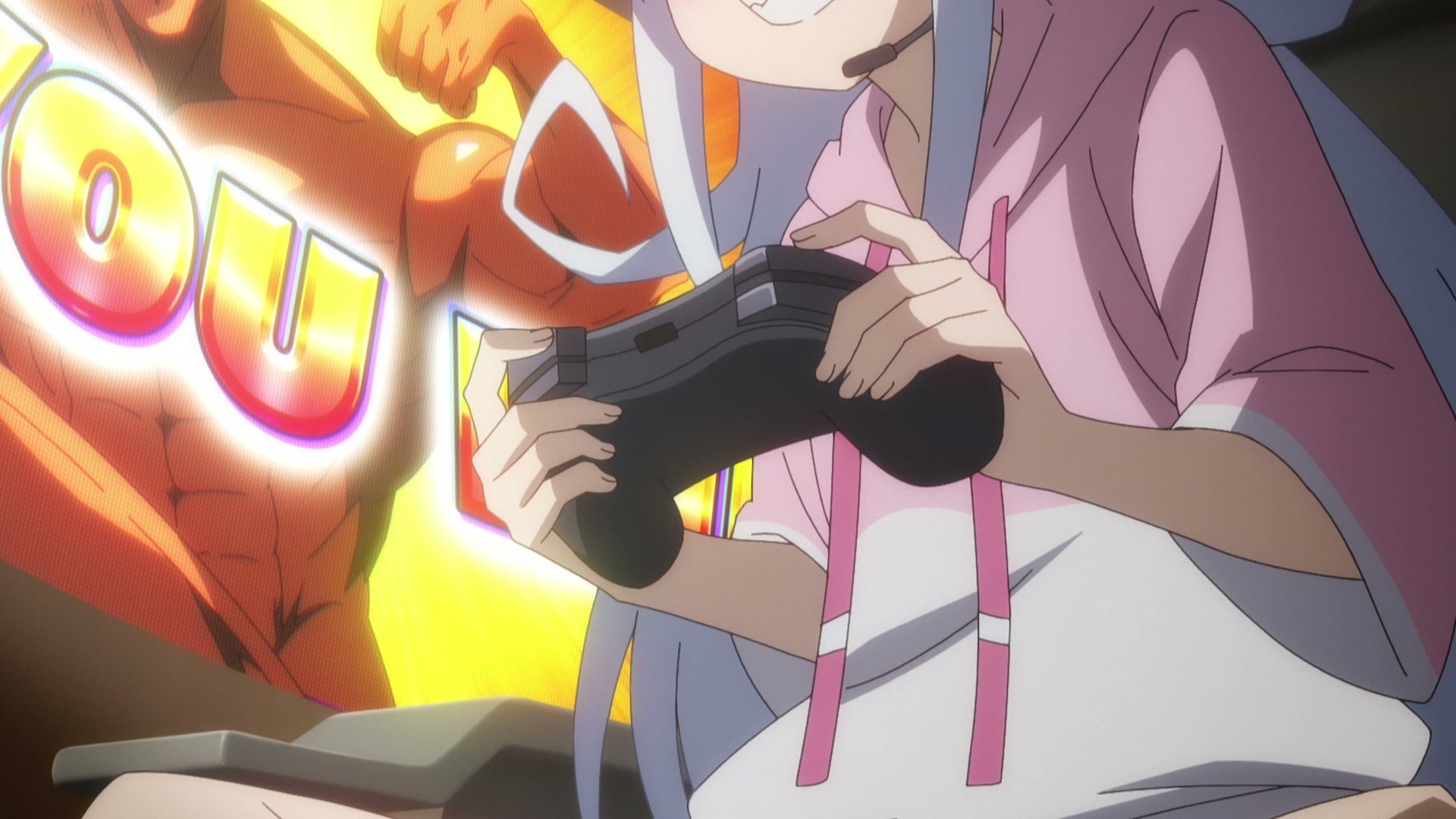
The episode could end there, but instead it detonates into a pro wrestling match. Miori’s secret to staying healthy while everyone else is sick turns out to be watching pro wrestling, because it warms you up and makes you sweat. Rie immediately declares, “Alright, it’s pro wrestling, Meiko!” and the dorm erupts. Neo, analyzing the situation through a game lens, declares martial arts “game-like” and gets fired up. Marika—or whoever it is—joins in. Miori, still on the video call, starts cheering them on, and somehow even she gets pulled into the chaos. The sequence is pure physical comedy, a release valve after the quieter family moments, and it ends with Meiko shouting for Neo to help stop them while everyone ignores her.
The episode closes on that earlier school scene, with Miori’s assurance to the classmates that her sister is living an incredibly fun life. After everything we have just watched, the statement is unambiguously true. Meiko is surrounded by chaos, affection, and a level of absurdity that would flatten most people. The sports festival gave her a dairy cow and a dance with Neo. The phone call gave her a sister trying to be brave and a friend who built a supermarket because she could. The episode does not try to tie these things together with a neat thematic bow. It just lets them sit next to each other, and that feels about right for a show that has always balanced outlandish comedy with the quiet weight of a girl trying to hold her family together from four hundred kilometers away.
Screenshots
← Episode 7 | All Ichijouma Mankitsu Gurashi Season 1 posts →
[…] ← Episode 8 | All Ichijouma Mankitsu Gurashi Season 1 posts → […]