





There are episodes that build tension toward a climax, and then there are episodes that hand you the climax on a stage in front of the entire school and ask you to sit with what just happened. S01E09 of Replica datte, Koi wo Suru is the latter. The Seiryo Fest play was always going to be the centerpiece, but I did not expect it to function as the emotional keystone for Ryo’s entire arc while also delivering the quietest, most devastating epilogue the show has attempted.
The Play Becomes Real
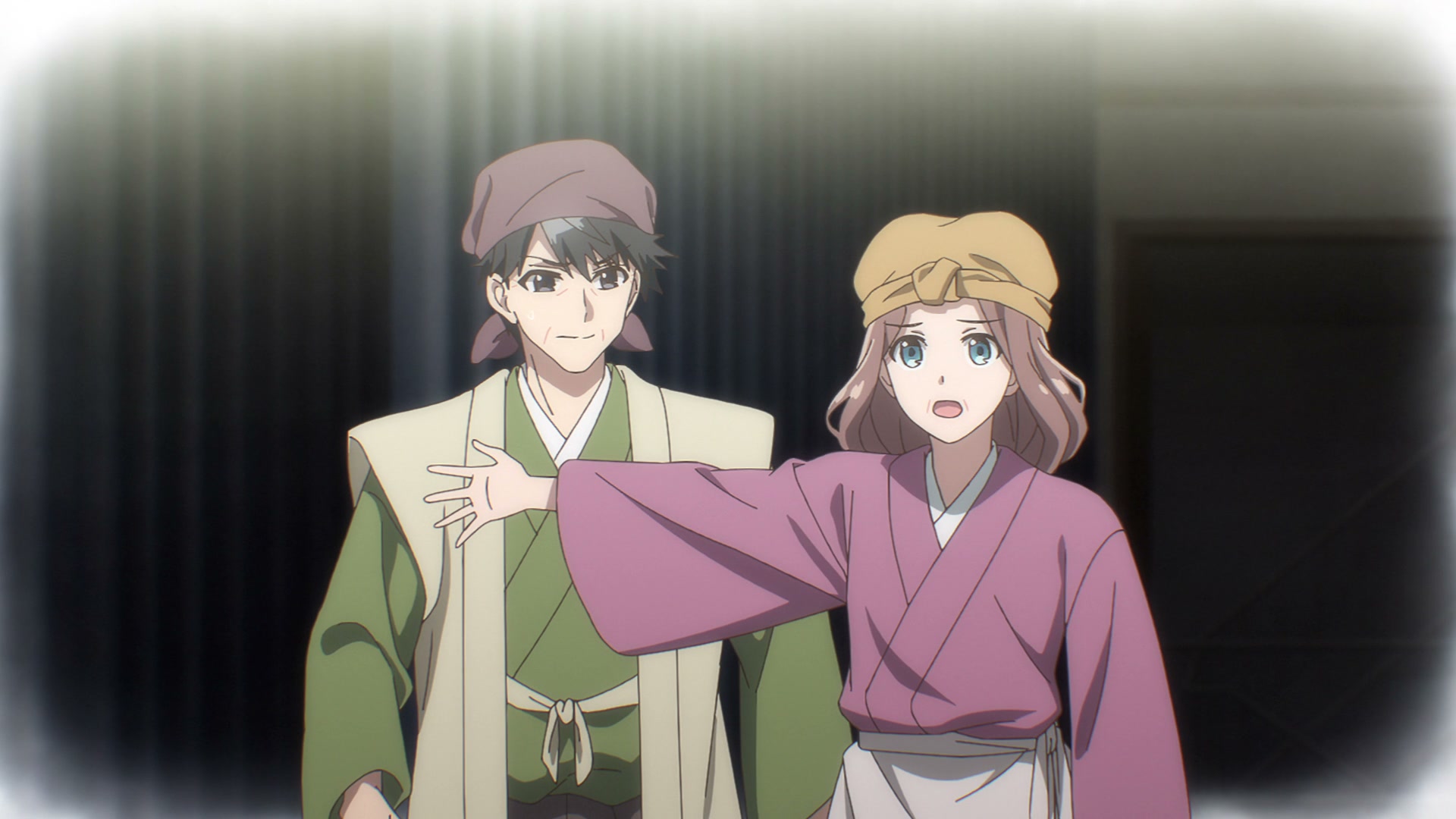
The stripped-down Bamboo Cutter adaptation opens with Ritsuko’s narration establishing the folk tale framework, but the play immediately starts bending toward Ryo’s actual life. Nao’s grandmother character pleads with Princess Kaguya to stay, and the scripted dialogue about celestial messengers coming on the full moon lands differently when you know Ryo has been searching for a way to return to her own “moon” (death, sacrifice, whatever would save the original Suzumi).
Then Nao breaks script.
The ad-libbed lines, “You never wanted to be a puppet on a string with no will of your own,” cut through the theatrical pretense. Nao is not talking to Princess Kaguya anymore. She is talking directly to Ryo, in front of everyone, using the play as cover for a genuine intervention. The line about the flyers being “a cry for help” rather than an accusation reframes Ryo’s entire doppelgänger rumor campaign. Nao understood what Ryo was doing before Ryo could articulate it herself.
What makes the scene work is that the audience in the gymnasium probably thinks this is just intense method acting. Only the literature club members and we know that Nao is begging Ryo to choose life in real time.
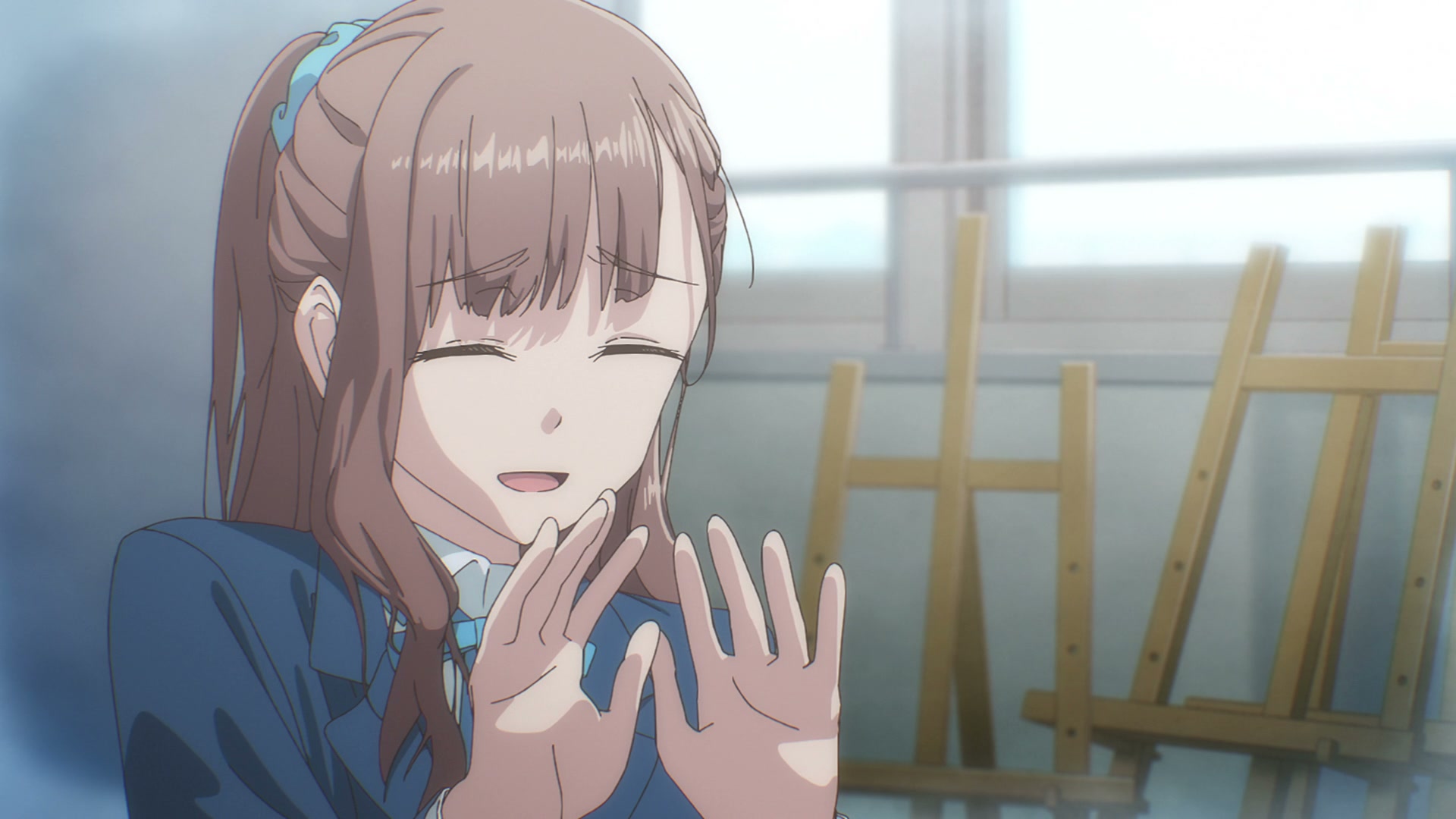
And Ryo breaks too. “Can I really do what I want? Am I really allowed to stay here with my mom and dad?” The switch from the formal Princess Kaguya register to a child’s desperate questions is the moment Ryo stops performing and starts existing as herself. When she says “Okay,” the play’s revised ending (Kaguya stays on Earth with her grandparents) becomes Ryo’s actual decision.
Ritsuko’s post-play narration selling the novella is a clever narrative device. She tells the audience the revised ending where Kaguya chooses her found family over the moon people she has no memory of. The meta-layer is almost too neat: Ritsuko rewrote the ending of The Bamboo Cutter and Ryo rewrote the ending of her own story at the same time.
The Letter
The post-play conversation between Ryo and Nao is the episode’s quiet core. Ryo produces a letter from the real Suzumi, found by Suzumi’s mother and never delivered. The detail that Ryo is “too scared to read it alone” and wants Nao there tells you everything about how fragile this moment is.
The letter itself is a small miracle of characterization. Suzumi’s written voice (voiced in the episode by what I assume is a different actress, softer than Ryo’s) feels distinct from the person Ryo has been impersonating. The revelation that Mochizuki Shun made a promise in kindergarten to make Suzumi a princess to his prince, and that Suzumi remembered this for years, retroactively explains the romantic tension that has been simmering since Episode 7. Suzumi was not avoiding Mochizuki out of disinterest. She was embarrassed and writing a response letter she never got to deliver.
The letter also confirms something the running context has been building toward: Suzumi considered Ryo her “little doppelgänger” and was grateful. Not resentful. Not afraid. Suzumi called her grandparents behind her mother’s back and heard about Ryo’s happiness in Fujinomiya, and she decided the separation was “the right decision.” That is an enormous emotional validation for Ryo, who has spent thirteen years feeling like an unwanted tool.
Ryo’s subsequent admission that she has been in love with Suzumi for thirteen years, experiencing “missing her, hating her, adoring her, and feeling heartbroken,” recontextualizes her entire self-sacrifice quest. She was not just trying to save her original out of replica duty. She was trying to save the person she loved, even if that love was tangled up in abandonment and resentment.
The detail about Suzumi’s current state, smiling like a baby when Ryo plays music, squeezing hands reflexively but not consciously, is handled with clinical precision. Ryo knows the responses are just stimuli reactions. “Nothing I do actually reaches Suzumi.” That clear-eyed grief makes her choice to return to Fujinomiya and wait patiently for a recovery that may never come feel less like hope and more like devotion.
Nao’s response, “You must really miss her,” is the simplest line in the episode and maybe the most important. She does not offer solutions. She does not promise things will get better. She just sees Ryo’s pain and names it.
A Name and a Promise
The exchange of real names between Nao and Ryo has been building since Ryo’s confession in the previous episode. When Ryo explains that her name comes from the character for “cool” in Suzumi’s name, and that her parents (the grandparents in Fujinomiya) gave her “her very own name,” the name becomes an anchor. She is not just a copy. She is Ryo, named by people who loved her.
Nao introducing herself as Nao Aikawa and Aki as Aki Sanada completes the trio of replicas who have claimed their own identities. The shift from “Mori-senpai” to “Ryo-senpai” in Nao’s dialogue is small but earned.
Ryo’s invitation for Nao to visit her real parents in Fujinomiya, complete with a joke about the Makaino Farm Resort (which Nao mishears as “Netherworld Farm”), is the first time Ryo has sounded genuinely light. The promise to meet again gives both of them something to hold onto beyond the festival.
Mochizuki's Confession, Again
Mochizuki corners Ryo after the play, determined to get an answer to his fireworks confession. The scene is almost a romantic comedy beat, except Ryo’s response is devastating in its honesty: she loves someone else. The someone else is Suzumi. The original. The girl in the hospital bed who may never wake up.
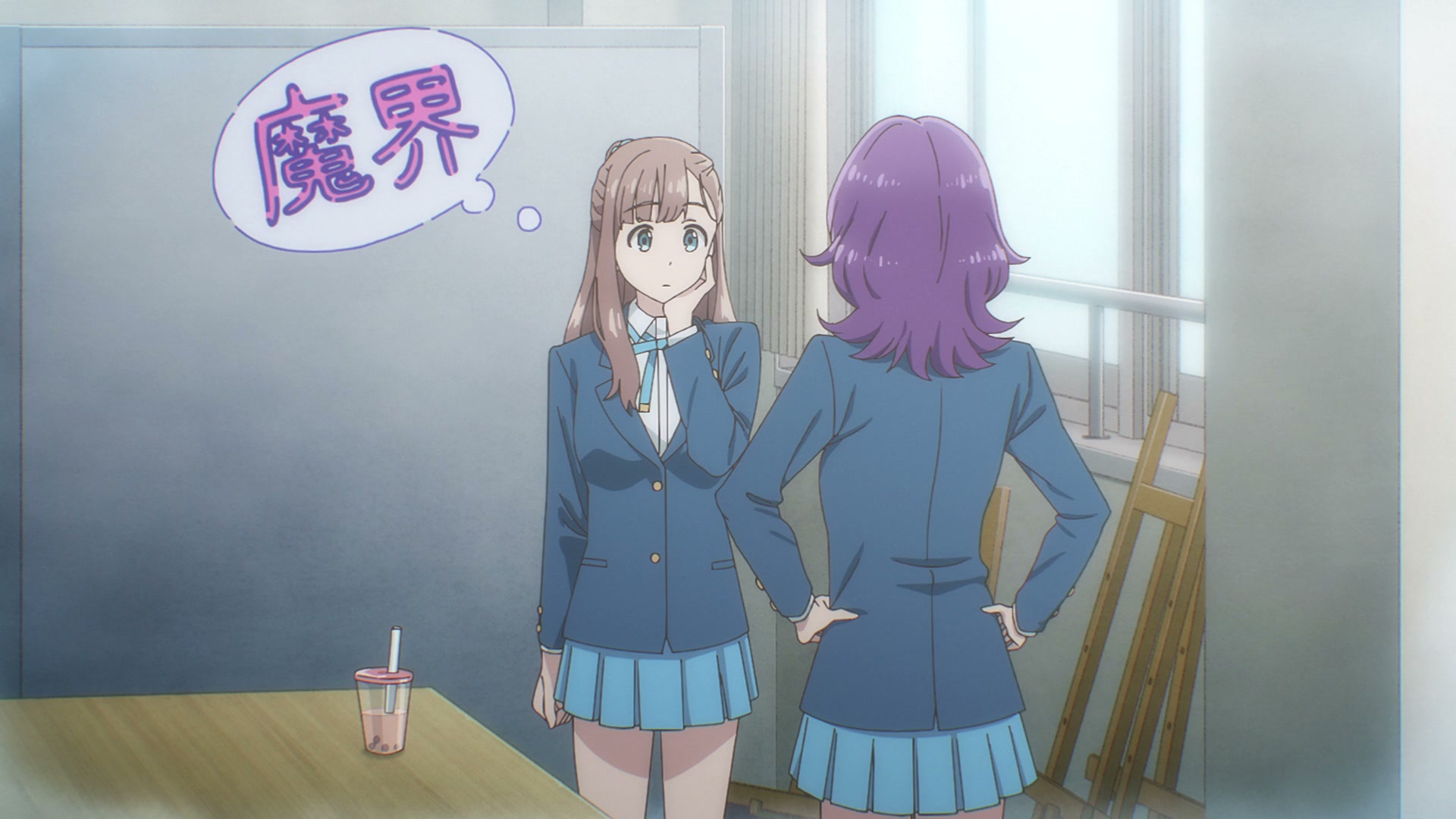
Ryo tells Mochizuki to “cheer up” because Suzumi might feel differently about his confession, and Mochizuki’s complete confusion (“Huh? What? Hm? Suzumi?”) is the moment he realizes he has been talking to the wrong person. Ritsuko’s dry observation that they used the clubroom “for their rom-com again” is a welcome pressure release after the emotional density of the previous scenes.
The Small Moments Between Nao and Aki
The classroom cleanup scene is the show’s softest romantic beat to date. Aki kisses Nao on the nose, and when she asks if he meant to kiss her on the mouth, he admits he kissed her “where I wanted to.” The callback to the aquarium episode where he may have attempted something similar makes the moment feel lived-in rather than sudden.
Nao asking him to try again and explicitly saying she wants to “do it for real” is a quiet milestone for a replica who once believed she had no right to want anything. The kiss that follows, interrupted by Yoshii calling them to the after-fest assembly, is exactly the kind of small, human moment the show does well.
The Ending
Ryo’s after-fest speech as student council president is warm and self-deprecating, joking about being “meddlesome in-laws” to the new council. She thanks everyone for their efforts. She steps down gracefully. The scene has the texture of a normal festival conclusion.
And then she collapses.
The show does not linger on the fall. It cuts to Nao’s numb walk home, her request to Sunao to “erase me on the spot,” and then the school announcement: Mori Suzumi passed away last Sunday, at home, with her parents. The original’s heart stopped, and the replica’s body followed.
The classroom scene where classmates insist they saw “President Moririn” at the festival, holding the microphone, playing Princess Kaguya, is the cruelest dramatic irony the show has deployed. Everyone saw Ryo. Everyone believes she was Suzumi. Only a handful know the truth, and they cannot explain it.
Nao’s breakdown on the rocky beach with Aki is the episode’s emotional low point. She wishes it had rained. She wishes for an out-of-season typhoon, anything to match the weather to her grief. Aki’s quiet permission, “You’re free to cry, whenever you want to,” is the gentlest possible response to someone who has been holding everything together for too long.
Nao’s wail, “We were just starting to get to know each other! I even made a promise!” is the rawest she has sounded since her suicidal spiral in the early episodes. The promise to visit Fujinomiya, to meet Ryo’s real parents, is now a wound instead of a comfort.
The episode ends with Sunao, having witnessed Nao’s grief, announcing she will start attending school every day. No explanation. Just the decision, stated plainly. After everything, Sunao is finally choosing to participate in the life Nao has been living on her behalf. Whether that is guilt, compassion, or something else remains unspoken.
Where I Landed
This is the strongest episode of the back half, and arguably the series so far. The play-within-the-episode could have been a gimmick, but the script commits to making it the mechanism for Ryo’s emotional breakthrough rather than just a performance showcase. The letter from Suzumi is a gift to the audience, filling in the gaps of a relationship we have only seen from Ryo’s side. The final twist (Suzumi’s death and Ryo’s simultaneous collapse) is foreshadowed by the entire Bamboo Cutter framework without feeling cheap.
Nao’s promise to visit Ryo in Fujinomiya now sits in the story as an unfulfillable commitment, a reminder that even when replicas choose life, the bond with their originals can still pull them under. Sunao’s decision to return to school suggests the aftermath will ripple outward, but for now, the episode leaves us on a rocky beach with Nao crying and Aki standing beside her, no rain falling, no typhoon coming.
Just grief, and the space to feel it.
Screenshots
← Episode 8 | All Replica datte, Koi wo Suru Season 1 posts →
[…] ← Episode 9 | All Replica datte, Koi wo Suru Season 1 posts → […]