




How Did “Yoroiden Samurai Troopers”, With Its Sequel Decided, Become a Popular Work? Looking Back at the Time from a Fan’s Perspective
The TV anime series “Yoroiden Samurai Troopers,” which aired in 1988, is making a comeback in the Reiwa era with a legitimate sequel, “Yoroi Shin Den Samurai Troopers”! The series even reached #1 on X’s (formerly Twitter) trends. What exactly made this work so popular? Let’s look back at the movement from that time.
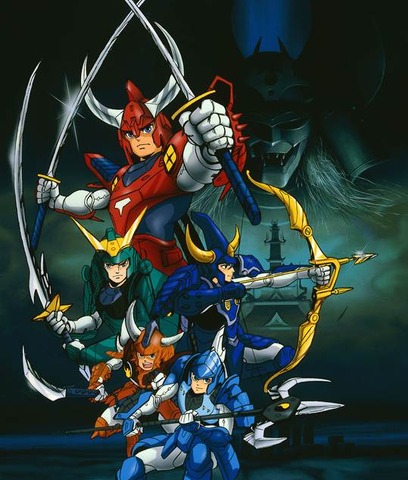
On June 11, 2025, a surprise announcement was made at the Yoroiden Samurai Troopers anniversary screening: a legitimate sequel titled Yoroi Shin Den Samurai Troopers.
Yoroiden Samurai Troopers was a TV anime series that aired in 1988. It depicted a battle hero story where five young boys donned armors called “Yoroi Gia” (Armor Gear) to fight. The storyline began with the sudden appearance of the demonic castle “Arago jou” in Shinjuku, causing the disappearance of people nearby. To counter the “Youja” (demon spirits) responsible, young men carrying the bloodline of famous warlords wore armors designed with the image of samurai helmets and armor.
As soon as the sequel, Yoroi Shin Den Samurai Troopers, was announced, former fans on X (formerly Twitter) erupted in joyous frenzy. Posts expressing surprise at a sequel appearing after roughly 30 years flooded in, with comments like “My head’s spinning from hearing about a sequel,” “A new work in the Reiwa era!?”, and “I hope Moriguchi Hiroko-san does the music again!”. The sheer buzz was evident from it becoming the top trend on X late that night with over 70,000 posts.
Particularly noteworthy were posts from real-time viewers who watched the original broadcast, both male and female, saying things like “This is a page from my youth, gotta watch it!” and “It is my youth!”. Back then, a somewhat “strange phenomenon” occurred in this regard, which is said to have confused the program’s planners.
So, what made this work, which is still loved by both men and women today, so popular? How was it received at the time? In this article, we’d like to focus on these points.
Capturing the Hearts of Female Fans: The “Troopers” Phenomenon
In 1988, when Yoroiden Samurai Troopers (hereafter referred to as “Troopers”) began airing, anime was not yet broadcast in the late-night slots common today. Production primarily focused on children’s anime airing in the evening or 7 PM slots. Shows were often planned to sell toys, and naturally, “Troopers” was created with a male child audience in mind, aiming to sell hero character figures and other merchandise.
At that time, Saint Seiya, which started airing in 1986, was a massive hit. The toy industry was riding a wave of “Cross series” merchandise, where characters wore armor, so it’s easy to imagine “Troopers” was planned to capitalize on this demand. However, despite being planned for boys, “Troopers” featured beautiful young male characters descended from figures like Shinada Yukimura and Date Masamune, which unexpectedly captivated the hearts of female fans, leading to a big hit in that demographic.
Thanks to this, even after the TV broadcast ended, the show continued its run for about three years with OVA (Original Video Animation, works sold directly on video) releases like Yoroiden Samurai Troopers Gaiden (The New York Arc), Yoroiden Samurai Troopers Kikou Tei Densetsu, and Yoroiden Samurai Troopers MESSAGE, maintaining strong support. The popularity among female fans was also apparent from the series of BL (Boys’ Love) anthology books sold in bookstores.
Leading the Voice Actor Boom of the Time
Furthermore, about six months after the TV broadcast, the voice actors from the show – Kusao Takeshi-san, Takemura Hiroshi-san, Nakamura Daiki-san, Sasaki Nozomu-san, and Nishimura Tomohiro-san – formed an idol unit called “NG5” (Enu Jii Faibu) that transcended the boundaries of their respective agencies. Although their active period was short, they gained popularity through face-to-face appearances and activities.
Today, voice actors holding live concerts or engaging in singing careers is not unusual, but in 1989, voice acting was still largely considered a behind-the-scenes profession. For “NG5” and similar groups, their activities were often tied to the work they voiced, appearing as “units spun off from the series,” carrying the characters they portrayed. This movement gradually gained attention, with documentaries occasionally covering the burgeoning voice actor boom, and “NG5” was frequently featured as a main subject.
Particularly memorable was a documentary program called Chikyuu Hatsu 19 Ji (Earth Departure 7 PM). I vividly remember Toushiba EMI’s (now part of Universal Music Japan) Yuumeqs label producer, Fujita Jyunji-san, walking around a doujinshi (fan magazine) convention, asking female fans, “Would you buy a voice actor’s record?”. He wasn’t asking about character songs or the already popular “NG5”, but trying to gauge if fans would follow Kusao Takeshi-san or Sasaki Nozomu-san’s activities as individual artists. This episode clearly illustrates how the voice actor market in the music industry was still undeveloped at the time and showcased the very moment the artist route for voice actors was being explored.
From this period, late-night radio programs focused on anime works started appearing one after another, and by the 90s, the simmering popularity of voice actors truly blossomed. (Note: While “Troopers” itself wasn’t the sole origin of these booms, it was certainly one of the major catalysts).
A Big Hit, Like a “Strike in the Next Lane”
In the same documentary program, a representative from Takara (now Takara Tomy) at the time reportedly offered a wry smile when talking about the unexpected big hit among female fans rather than boys, comparing it to “throwing a bowling ball that went into the gutter in your lane, but got a strike in the next lane.” While they were happy that the work itself was a hit, it must have been complicated that it didn’t directly translate into profit for their company.
Thus, with “Troopers” following Saint Seiya to become a hit featuring beautiful young male characters, the so-called “bishounen anime boom” further intensified. The toy industry, anticipating demand for “Cross series” merchandise, saw a succession of “armor-up” type works follow. Prime examples include Tenkuu Senki Shurato and Chouon Senshi Booguman.
In an unexpected way, Yoroiden Samurai Troopers significantly influenced the anime scene of its time and continues to garner tremendous support from both men and women today. The new work is a direct sequel, and we look forward to seeing how new elements will be introduced, as well as how characters and settings from the original version will be involved.
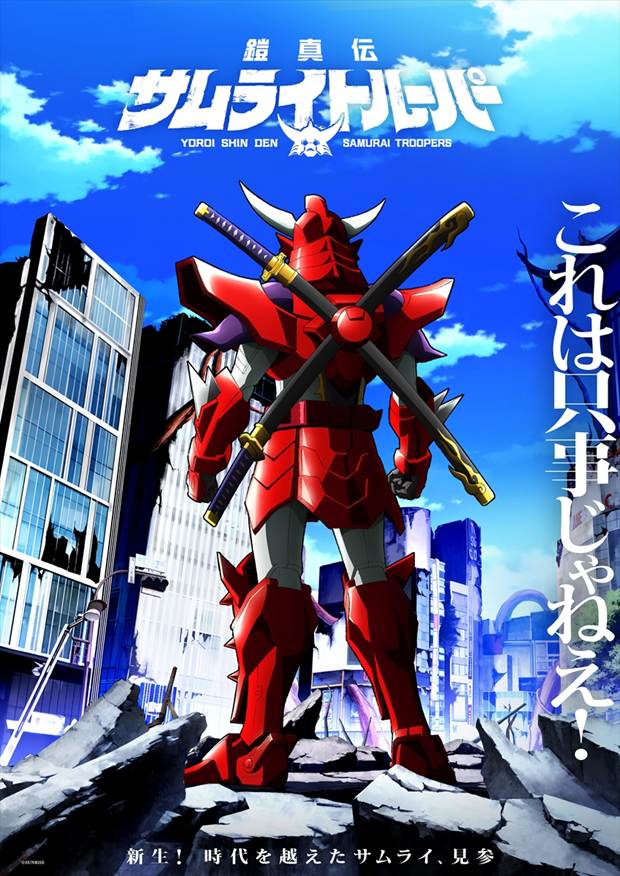
(C)SUNRISE
By Kigasawa Masashi
Images from the article: