





Introduction
Some anime shout. Others whisper. Replica Datte koi wo suru belongs firmly in the second category, and that is precisely what makes it memorable. This thirteen-episode series takes a supernatural premise that could have fueled a psychological thriller and instead uses it to build one of the most quietly affecting character dramas I have encountered in recent years. It is a story about people who are not sure they are real, told with such sincerity and emotional precision that by the end, you believe in them completely.
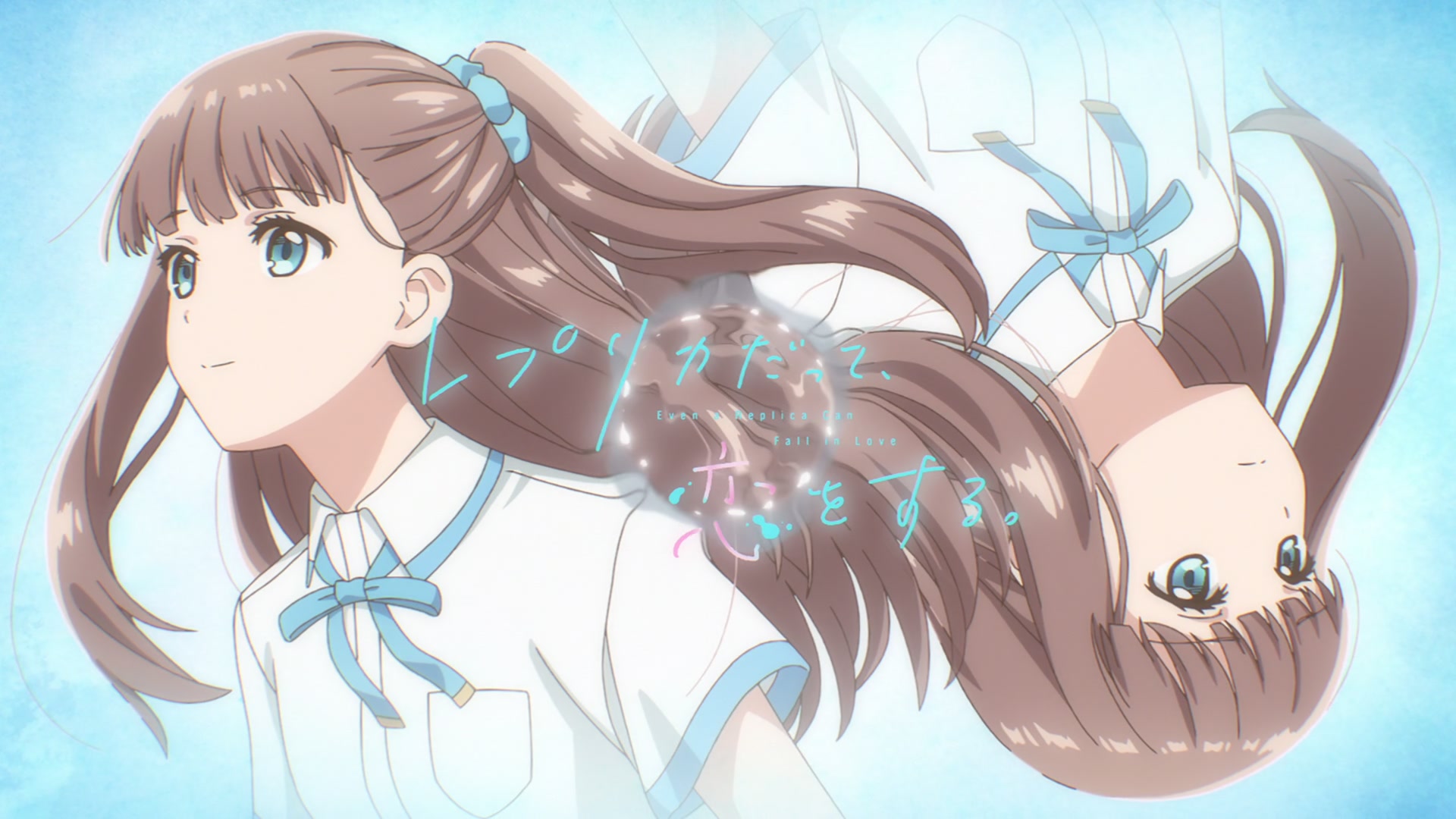
The premise is this: Aikawa Sunao, a high school girl who has become increasingly withdrawn and sharp-tongued, possesses a secret. When she was seven years old, after a fight with her best friend that she could not bring herself to apologize for, she unconsciously created a physical duplicate of herself. This duplicate, whom she named Nao, is not a clone or a twin. She is a “replica,” an externalized fragment of Sunao’s own psyche. Specifically, Nao is Sunao’s kindness given form. From that moment, Sunao began outsourcing her life to Nao, sending her to school, to social obligations, to anything that required warmth or connection, while Sunao herself retreated into isolation and emotional numbness.
What follows is not a thriller about doppelgängers or a mystery about the origins of this power. The series never explains why replicas exist. There are no government conspiracies, no ancient curses, no scientific explanations. The supernatural element functions purely as metaphor, a literalization of psychological dissociation that allows the story to explore questions of identity, self-worth, and the fragmented self with unusual depth. For viewers comfortable with anime’s tradition of using the fantastic to illuminate the real, this approach is a feature rather than a bug.
This is a series for people who love character-driven drama, who appreciate quiet storytelling that trusts its audience to sit with difficult emotions, and who are drawn to stories about what it means to be a person. If you have ever felt like a fragment of yourself, like someone else is living your life better than you could, this series will find you.

Story and Themes
Narrative Structure and Pacing
The series unfolds across thirteen episodes that follow the Japanese school calendar from summer through graduation. This structure is not arbitrary. The rhythms of school life, the changing seasons, the milestones of festivals and trips and ceremonies, provide a framework for the characters’ internal journeys. Time passes visibly. Leaves change. Uniforms shift from summer to winter. The world moves forward even when the characters feel stuck.
The pacing is deliberate, especially in the early episodes. The first two episodes establish Nao’s existence, her relationship with Sunao, and the quiet desperation of her position. She is a person who exists only to serve, who has no legal identity, no future, no right to want anything for herself. When she meets Sanada Aki, another replica who embodies his original’s lost courage, the series finds its emotional center. Their romance develops through small, concrete moments: erasing a blackboard together, visiting a zoo, sharing shaved ice at a summer festival. These scenes are unhurried and tender, and they accumulate weight precisely because the series does not rush them.
The middle section, covering the school festival arc in episodes six through nine, introduces the third replica, Mori Ryo, and expands the series’ thematic scope. This section is denser than what comes before, and I suspect source material may have given Ryo’s story more room to breathe. Even so, her arc lands with devastating force. The final episodes shift focus to the originals, Sunao and Shuuya, as they begin the difficult work of reclaiming their lives and reintegrating the parts of themselves they cast away.
The Fragmented Self
The central metaphor is elegant in its simplicity. When a person cannot bear an aspect of themselves, they unconsciously externalize it. Sunao could not bear her own kindness after her fight with Ricchan, so she excised it. Shuuya could not bear his courage after a career-ending injury deliberately inflicted by a jealous upperclassman, so he excised his. Suzumi could not bear the vulnerability of performing on stage, so she excised her expressiveness. The replicas are not separate souls. They are lost pieces of the originals’ psyches, given temporary autonomy and physical form.
This literalization of psychological dissociation feels distinctly Japanese in its sensibility. The idea that the self can be compartmentalized, that different versions of you exist for different contexts, resonates with concepts like honne and tatemae, the private self and the public face. But the series pushes further, asking what happens when those compartments become so separate that they develop their own personhood. What happens when the mask becomes more real than the face?
The answer, the series suggests, is that healing requires reintegration. Sunao cannot become whole while Nao exists separately. Shuuya cannot reclaim his courage while Aki carries it for him. But reintegration is not destruction. It is a kind of homecoming. The series treats this process with remarkable tenderness, acknowledging both the necessity of wholeness and the genuine loss involved in the replicas’ disappearance.
The Nature of Personhood
What makes someone real? The replicas have no birth certificates, no family registers, no legal existence. Satou Kozue’s experiment in the final episode proves that they cannot even be perceived by third parties when their originals are present. They occupy the same “plane” of existence, borrowing their originals’ physical presence. And yet they think, feel, love, suffer, and dream.
The series’ answer to this question is experiential rather than legal. You are real if you experience yourself as real. You are real if you form relationships that matter. You are real if you are remembered after you are gone. Ryo’s watercolor paintings, her grandmother’s stories about her, the sketch she made of fireflies in a rice field as a child, these are proof that she lived. Nao’s memories of the zoo, of the festival, of Aki’s hand in hers, these are proof that she lived. The series argues, gently but firmly, that personhood is not a status granted by documents. It is something that happens between people.
Sacrifice and Self-Erasure
The replicas are hardwired to serve their originals, to the point of self-destruction. Ryo asks Nao if there is a way to transfer an original’s injury to a replica, if a replica can die to save the original. She is willing to do this. She sees this willingness as proof that she is “messed up in the head.” Nao, after being pushed in front of a train and resurrected by Sunao, tries to walk into the sea because she cannot bear the realization that she cannot even truly die, that she is not real enough to perish.
The series does not condemn this self-erasing impulse. It honors it as an expression of love. But it also mourns the cost. Ryo’s disappearance after Suzumi’s death is devastating precisely because she was a person, with a life and relationships and a name of her own. Her sacrifice is not meaningless, but it is a loss. The series holds both truths in tension: devotion is beautiful, and devotion can destroy.
Memory and Legacy
To be remembered is to continue existing in some form. This idea runs through the series like a thread. Ryo’s grandparents remember her. Mochizuki Shun, who fell in love with her without knowing she was a replica, remembers her. Nao and Aki remember her. The series argues that memory is a form of continued existence, that the dead and the disappeared persist in the minds of those who loved them.
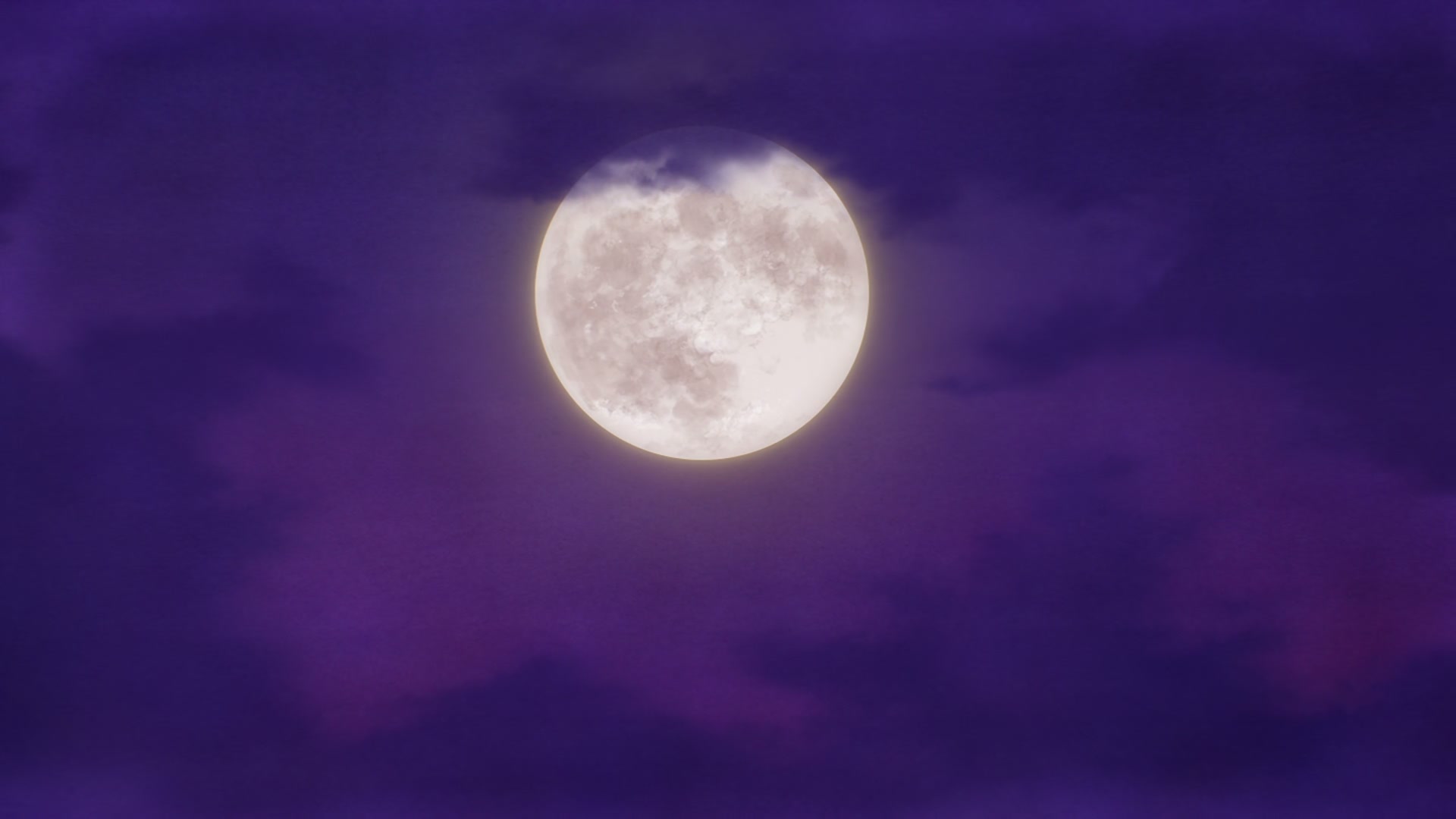
The recurring reference to The Tale of the Bamboo Cutter reinforces this theme. Princess Kaguya must return to the moon, but she promises not to forget her life on earth. Ritsuko’s adaptation of the story for the school play changes the ending so that Kaguya stays with her grandparents. It is a wish fulfillment that the series cannot grant its replicas, but it is a hope it holds out nonetheless. The play itself becomes a form of memorial, a way of saying: you were here, and we will not forget.
The Mermaid’s Return
The novel The Mermaid’s Return, referenced throughout the series, tells of a girl whose doppelgänger walks into the sea, after which the original awakens from a coma. Nao’s question about this story, “What did she feel as she turned into sea-foam?”, is the question the series asks about all its replicas. What does it feel like to exist only to disappear? What does it feel like to be a fragment of someone else, given life for a purpose and then expected to dissolve?
The motif of walking into water recurs at critical moments. Nao tries to walk into the sea in episode five. She and Aki stand on a rocky beach after Ryo’s death. Water is both death and rebirth, erasure and cleansing. The series does not offer easy answers about what the replicas feel as they vanish. It simply insists that the question matters.
Cultural Context
The series is grounded in specific Japanese realities. The school festival, the bunkasai, is a liminal space where normal rules are suspended, the perfect setting for revelations about identity. The class haunted house, the play, the club zine sales, these are familiar tropes executed with genuine warmth. The series understands that school festivals matter to students in ways that can seem disproportionate to outsiders. For the literature club, selling one hundred copies of their zine is existential.
The school trip to Kyoto provides a backdrop for characters stepping outside their normal contexts. Yoshii’s comparison of the Senbon torii gates to Pooky chocolate sticks is exactly the kind of dumb joke a real teenager would make, and Sunao’s laugh in response is a small but significant character beat. She is learning to enjoy things.
The series is also attentive to the Japanese practice of naming as an act of creation and possession. Sunao names her replica Nao, a shortened form of her own name, and later feels that Nao has taken the name from her. Aki’s name is an alternate reading of the first character of Shuuya’s name. Ryo’s name comes from an alternate reading of a character in Suzumi’s name and was given to her by her grandparents. These naming practices reflect the replicas’ ambiguous status. They have names, but those names are derived from their originals. They are both themselves and not themselves.
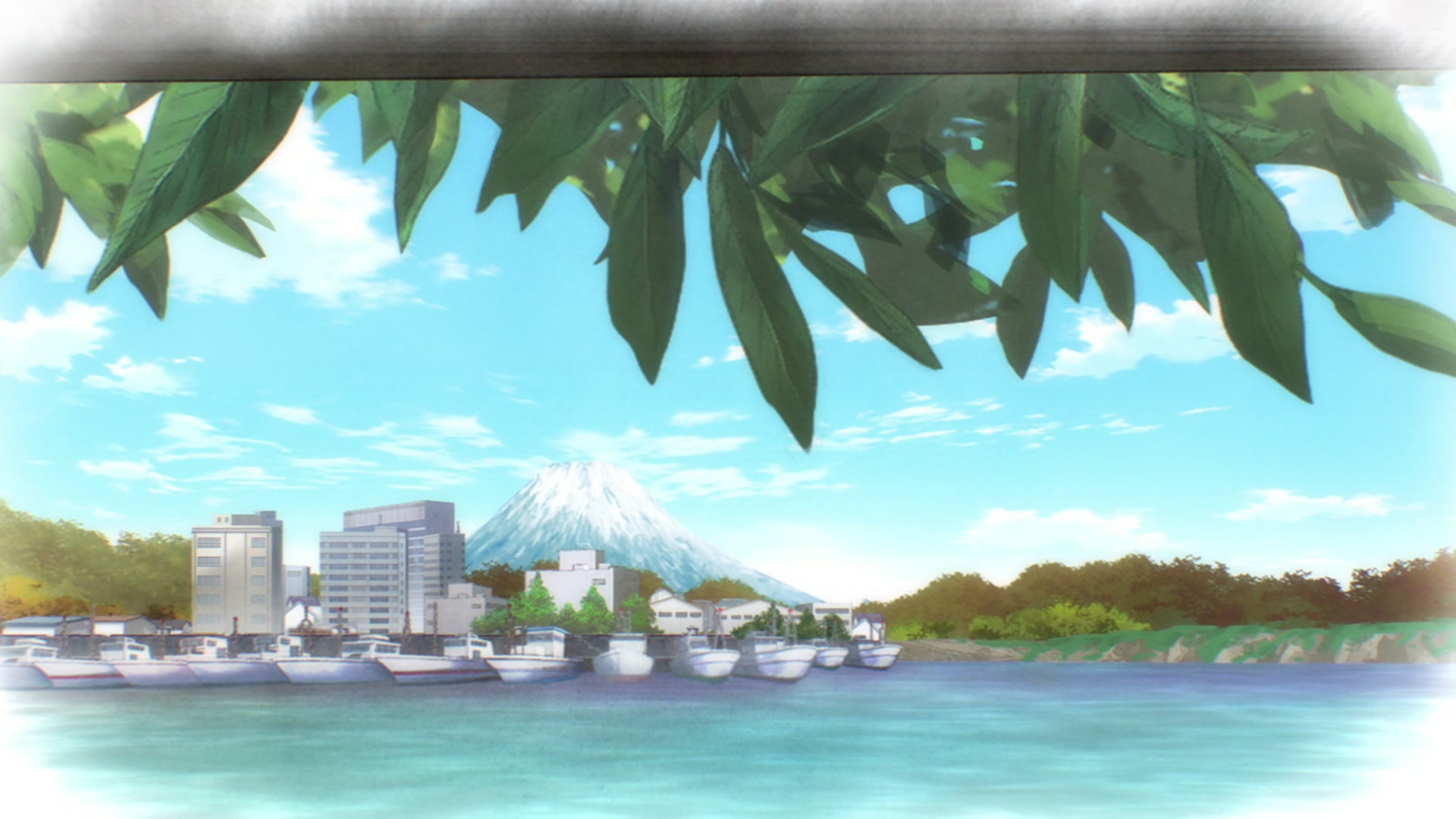
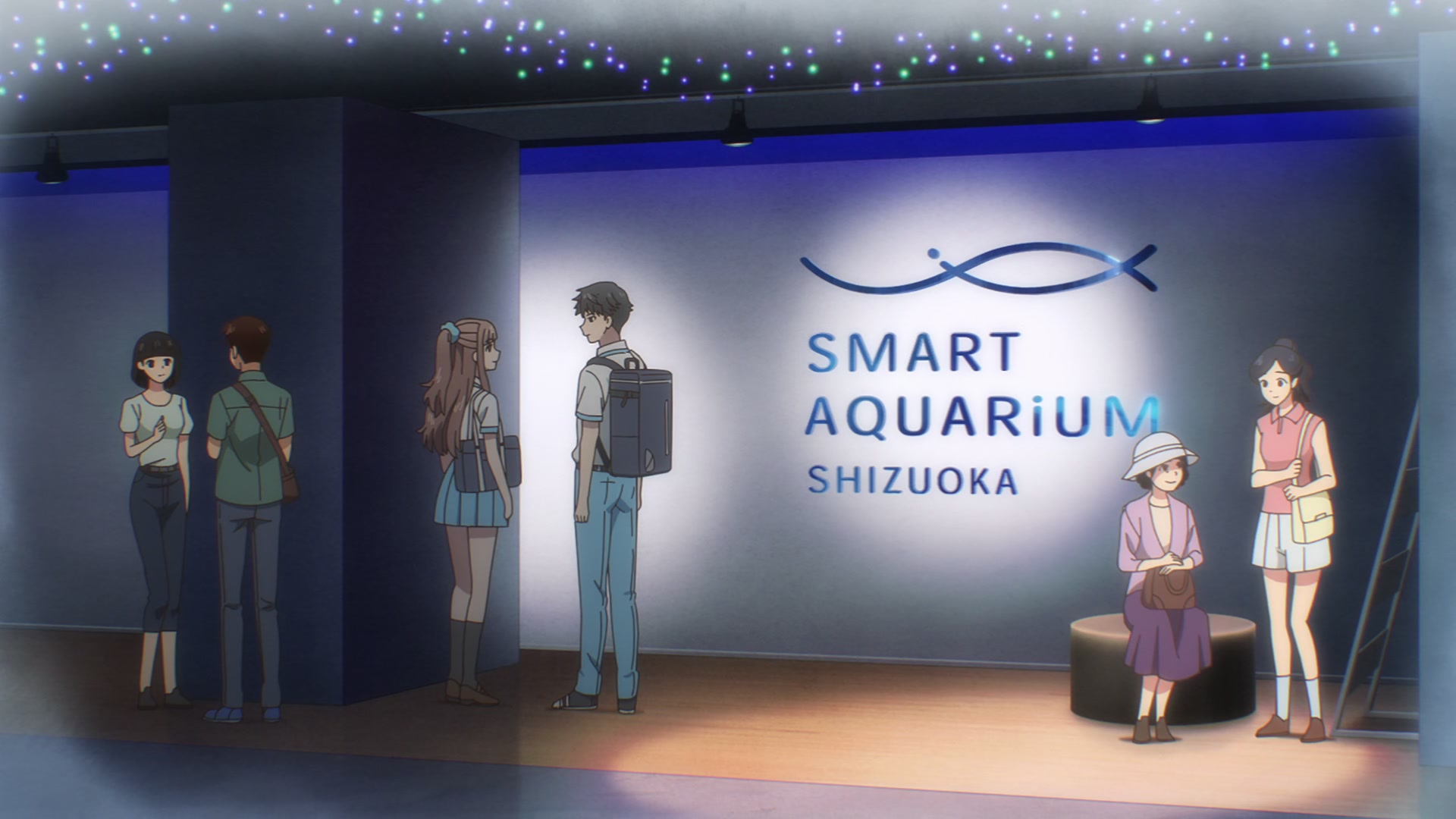
The setting in Shizuoka Prefecture, with specific locations named, Mochimune, Yaizu, Fujinomiya, Nihondaira Zoo, the Abe River, gives the story a sense of place that many anime lack. The trip to Fujinomiya to visit Ryo’s grandparents takes the characters into a more rural, agricultural Japan, a contrast with the school setting that emphasizes Ryo’s separation from Suzumi’s urban life.
Adaptation Considerations
I have not read the source material, if this series is based on a manga or light novel, and I cannot judge what may have been skipped, compressed, or altered in adaptation. The series feels complete and satisfying as a thirteen-episode anime. Character arcs are resolved, themes are developed, and the emotional payoff lands. If source readers have complaints about cut content, I am not in a position to evaluate them, but I can say that the anime works as a standalone narrative.
The pacing of the middle episodes is denser than the early episodes, introducing Ryo and resolving her story within a compressed timeframe. It is possible that source material gave her more room to breathe. Shuuya’s arc is less developed than Sunao’s. He returns to school, participates in the Kyoto trip, and seems to be healing, but his internal journey is sketched rather than fully rendered. This may reflect adaptation compression or may simply be a choice to keep the focus on Nao and Sunao.
Characters
Aikawa Nao: The Protagonist Who Does Not Know If She Is Real
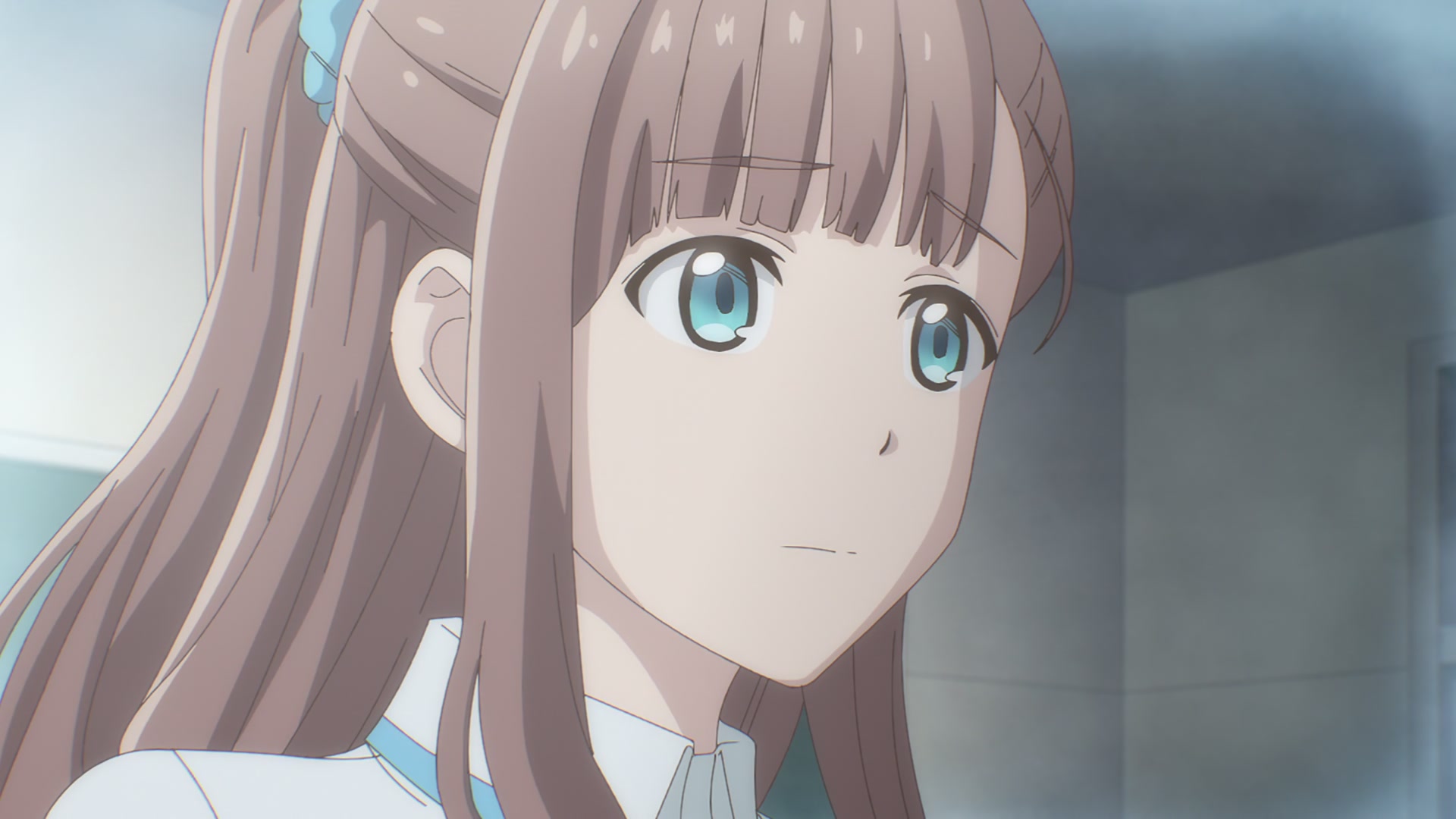
Nao is the heart of the series, and her voiceover narration in the opening minutes establishes the tone immediately. She is warm, earnest, and deeply kind, literally, she is kindness given form. She approaches the world with genuine curiosity and openness, finding joy in small things: the smell of books, red pandas, melon-flavored shaved ice, the feeling of a freshly made bed, which she has never actually experienced herself.
But Nao’s kindness is not simple niceness. It is a profound orientation toward service and self-sacrifice. She exists to help Sunao, and this purpose defines her. She describes Sunao as being “like a god” to her, and her devotion is absolute. She will take tests, attend school, do household chores, endure pain, anything Sunao asks, without complaint.
Beneath this devotion is a deep insecurity about her own worth. Nao believes she has “absolutely nothing,” no name of her own, no legal identity, no future. She is acutely aware that she is a “replacement,” a “fake,” and this awareness shapes her entire existence. She does not dream for herself because she believes replicas are not meant to dream.
Her arc moves from unquestioning service through crisis to a hard-won sense of self-worth. The train incident, being killed and resurrected, shatters her. She realizes she cannot even die, that she is not real enough to perish. Her attempt to walk into the sea is the series’ darkest moment, and Aki’s confession of love, “I love you. That’s why you were created, Nao,” is what pulls her back. His words reframe her entire existence. She was not created merely to serve Sunao. She was created so that she and Aki could find each other.
Her final choice, to merge back into Sunao, is not self-erasure but a conscious act of love. She returns Sunao’s kindness to her, making Sunao whole. Her farewell to Aki, “I was so lucky to have you as my boyfriend,” is heartbreaking but peaceful. She has loved and been loved. That is enough.
Aikawa Sunao: The Original Who Feels Like the Copy
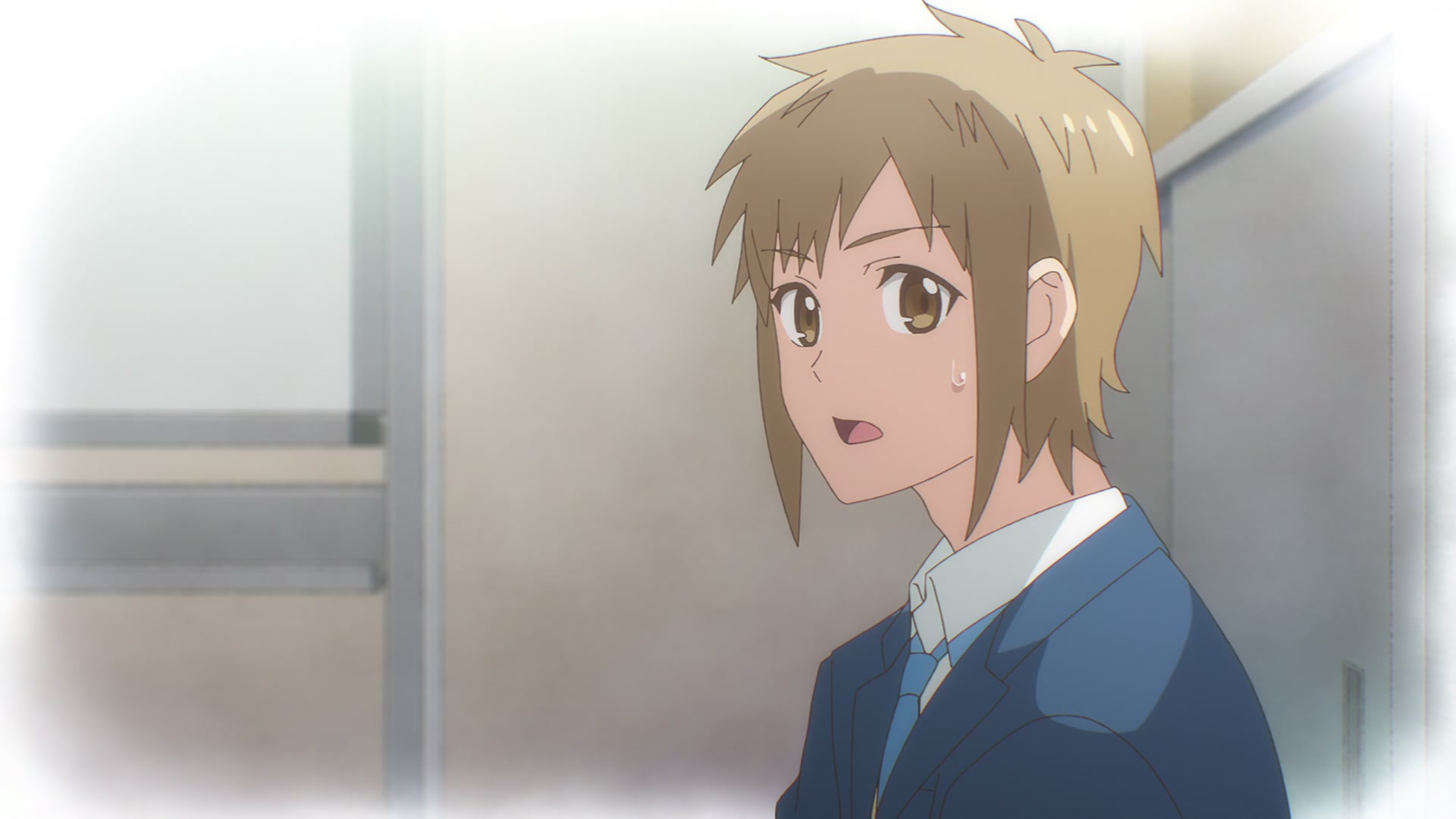
Sunao is one of the series’ most complex creations, and she is not always easy to like. She is cruel to Nao, dismissive, sharp-tongued. She tells Nao she is “just a dumb replica,” orders her to “go away” and “don’t come back.” But the series makes it clear that this cruelty is a defense against unbearable self-loathing.
Sunao has convinced herself that she is “a defective product,” that Nao is the “real Aikawa Sunao,” and that she herself is the impostor. Every time she sees Nao being kind, being capable, being liked, Sunao is confronted with her own deficiency. She lashes out because she cannot bear the comparison. She is jealous of her own replica for possessing the warmth she has lost.
Her self-description as lacking warmth, consideration, and the ability to put herself in others’ shoes is heartbreaking because it is so clearly felt, even if it is not entirely true. She is not incapable of kindness. She has simply externalized it. The kindness exists, but it exists in Nao, and Sunao cannot access it.
Her arc toward wholeness is the series’ most fully realized character journey. She begins attending school herself. She takes mock exams, scoring 44 in English, 52 in math, and 62 in Japanese, not good scores, but hers. She goes on the school trip to Kyoto and has genuine fun, laughing at Yoshii’s antics, connecting with Satou, opening up to Shuuya. When a boy confesses to her and his friend calls her unkind, she breaks down, not in anger, but in painful recognition that he is right. She confesses everything to Satou: the replica, her jealousy, her feeling of being a defective product.
By the final episode, she can embrace Nao, literally and metaphorically, and reclaim the kindness she externalized. The graduation scene shows a young woman who has reclaimed her life and her capacity for warmth. It is a quiet victory, but a real one.
Sanada Aki: Courage Given Form
Aki embodies Shuuya’s courage, the ability to face adversity, to confront his tormentor, to move forward despite pain. But he is not simply a function. He develops his own desires, his own relationships, his own will.
His refusal to carry out Shuuya’s revenge plan is a pivotal moment. Shuuya wanted Aki to lure Hayase out and beat him severely, providing Shuuya with an airtight alibi. Aki refuses. He proposes the basketball match instead. This is an act of defiance, Aki is asserting his own values over his original’s desires, but it is also an act of love. He wants to give Shuuya a different kind of closure, one that does not require violence.
His love for Nao is the emotional anchor of the series. He is protective of her, sometimes to the point of overprotectiveness, but his protectiveness comes from love and from fear, fear of losing the one person who makes him feel real. His confession on the beach is raw and vulnerable. He is willing to “get down on my hands and knees and beg Shuuya not to erase me” if it means he can stay with Nao.
Aki’s fate after the series ends is left uncertain. Shuuya is healing, which means Aki’s reason for existing is diminishing. The series does not show what happens to him, and this uncertainty is itself a statement about the replica condition. They live on borrowed time, and they know it.
Mori Ryo: The Tragedy of Separation
Ryo’s story is the series’ darkest thread. Created when Suzumi was five years old, she was separated from her original almost immediately and raised by Suzumi’s grandparents in Fujinomiya. For thirteen years, she lived a full life, going to school, making art, being loved by her grandparents, while always missing the person she was created from.
Her question to Nao, “Is there a way to heal an original who’s very badly injured? Or is there a way to transfer that injury to a replica?”, reveals the ultimate replica dilemma. She would die for Suzumi, and she sees this willingness as proof that she is “messed up in the head.” But the series ultimately reframes this. Ryo’s willingness to sacrifice herself is not pathology. It is love.
Her confession that she has been “missing her, hating her, adoring her, and feeling heartbroken” for thirteen years, and her realization that this is “the type of love you see in manga and dramas,” is one of the series’ most emotionally complex moments. She loves Suzumi with an intensity that encompasses everything, longing, resentment, adoration, grief. It is romantic love, or something very like it, and the series treats it with complete seriousness.
Her disappearance after Suzumi’s death is devastating but clarifying. It proves the stakes of the replica-original bond and forces Nao to confront what she wants for herself. Ryo’s paintings, her grandmother’s stories, the firefly sketch, these remain. She was here.
The Supporting Cast
Hironaka Ritsuko serves as the bridge between the replica world and the normal world. She figured out the Sunao-Nao situation entirely on her own, simply by observing that “Nao-chan” and “Sunao-chan” were different people. She never made a big deal of it. She just adjusted her language and continued treating both as friends. Her unconditional acceptance is a quiet argument for the replicas’ personhood. When Nao tries to walk into the sea, Ritsuko’s response is not horror at the supernatural but fury at her friend’s self-destructiveness: “You dumbass! God! You’re so dumb!” This is the anger of love.
Satou Kozue provides the intellectual framework for understanding replicas. Her own experience, she had a replica, a “hero” version of herself who stood up to bullies and then vanished, gives her unique insight. Her experiment in the final episode proves that originals and replicas cannot be perceived simultaneously, confirming that they share the same “plane” of existence. Her listening presence during Sunao’s breakdown in the Kyoto hotel is a model of non-judgmental compassion.
Mochizuki Shun represents the normal person who falls in love with a replica without knowing it. His feelings for Ryo, whom he believed to be Suzumi, were genuine, and when he learned the truth, he did not reject her. He simply wanted to understand. His grief after her disappearance is real, and his decision to visit her grandparents in Fujinomiya shows that his love was not contingent on Ryo being “real.”
Yoshii provides comic relief but also serves as a barometer of normalcy. His casual friendliness toward Shuuya helps normalize Shuuya’s return to school. His “reverse Pooky” comparison at Fushimi Inari makes Sunao laugh, a small but significant moment.
Visuals and Animation
Overall Aesthetic
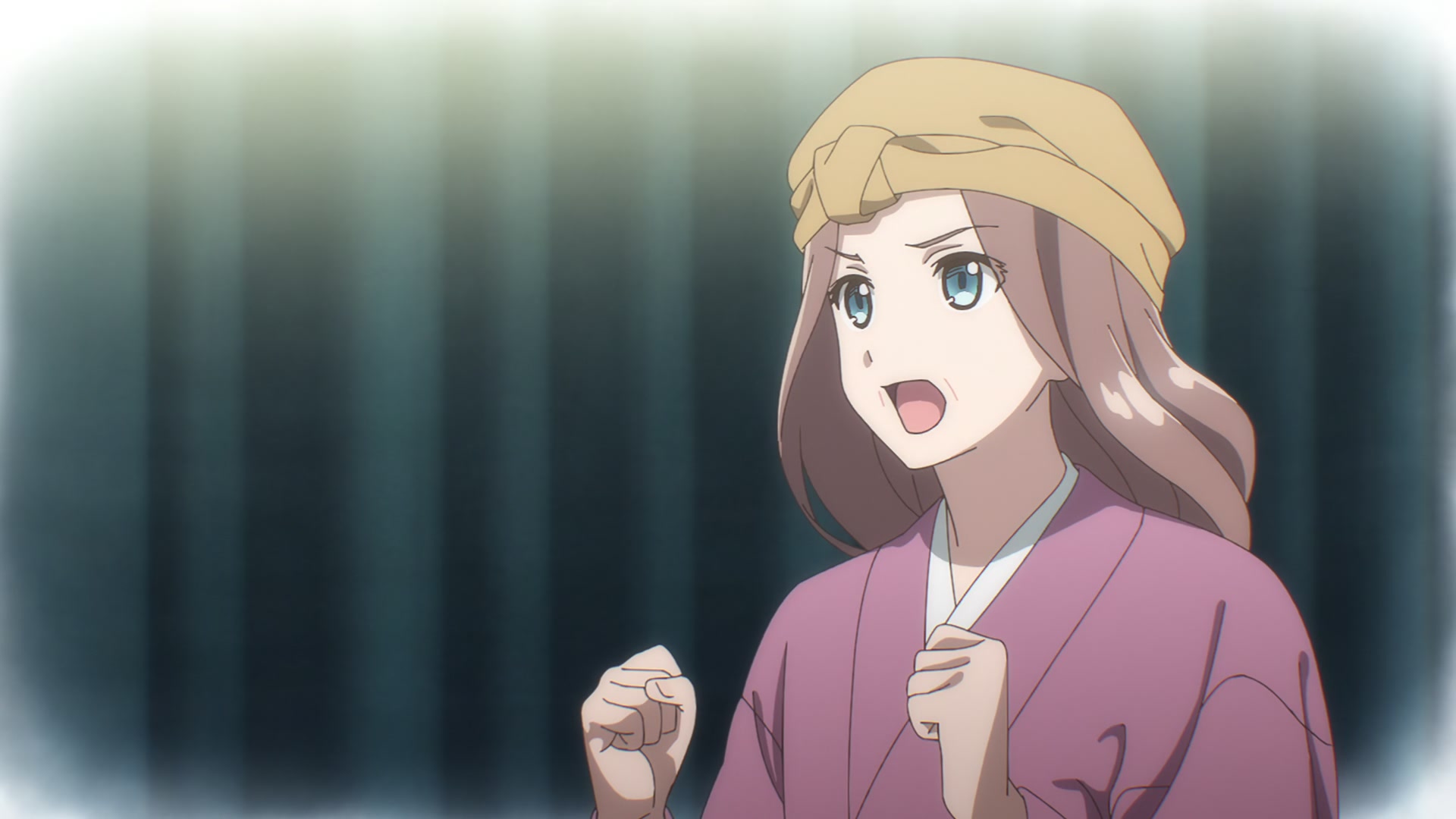
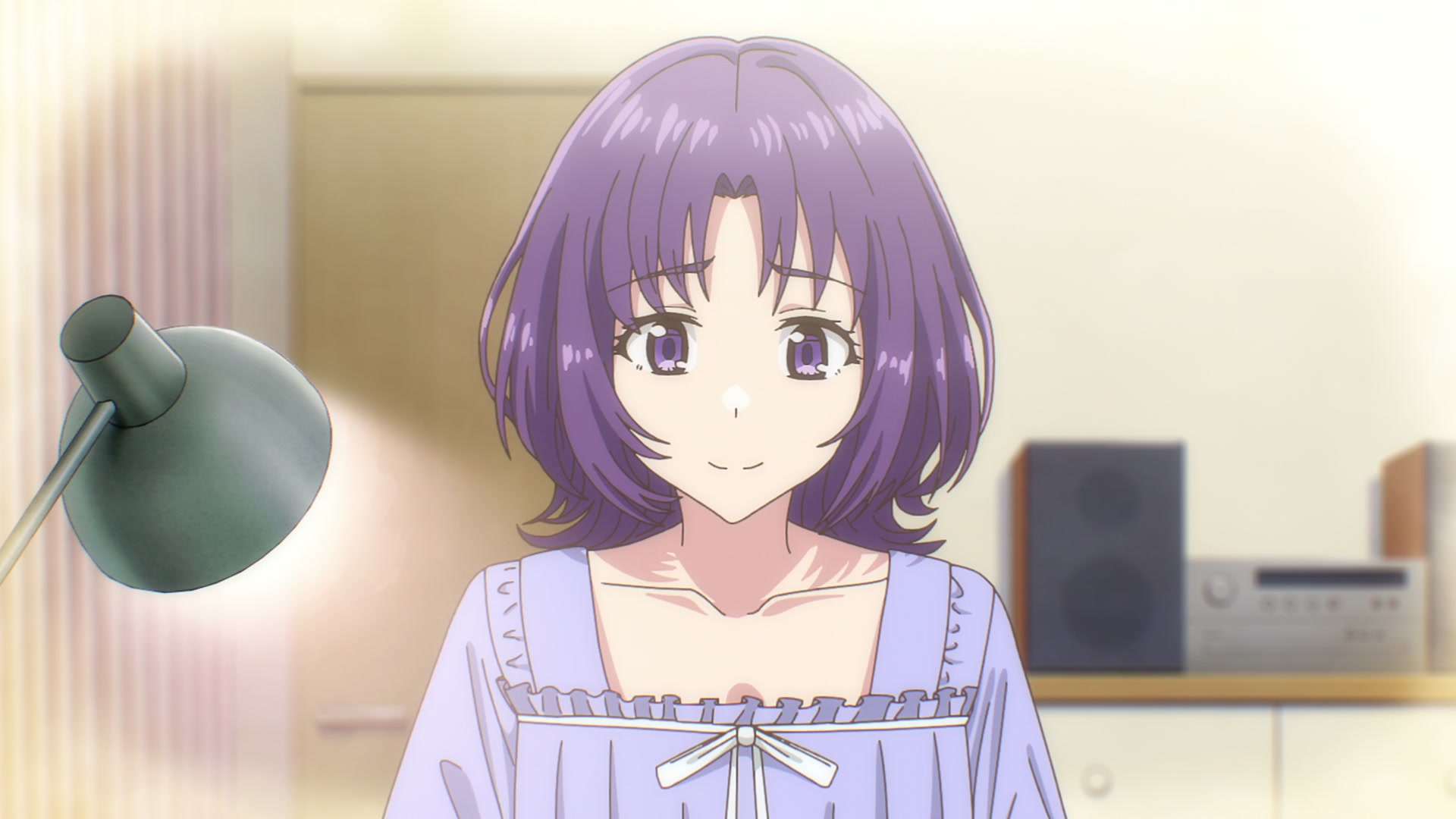
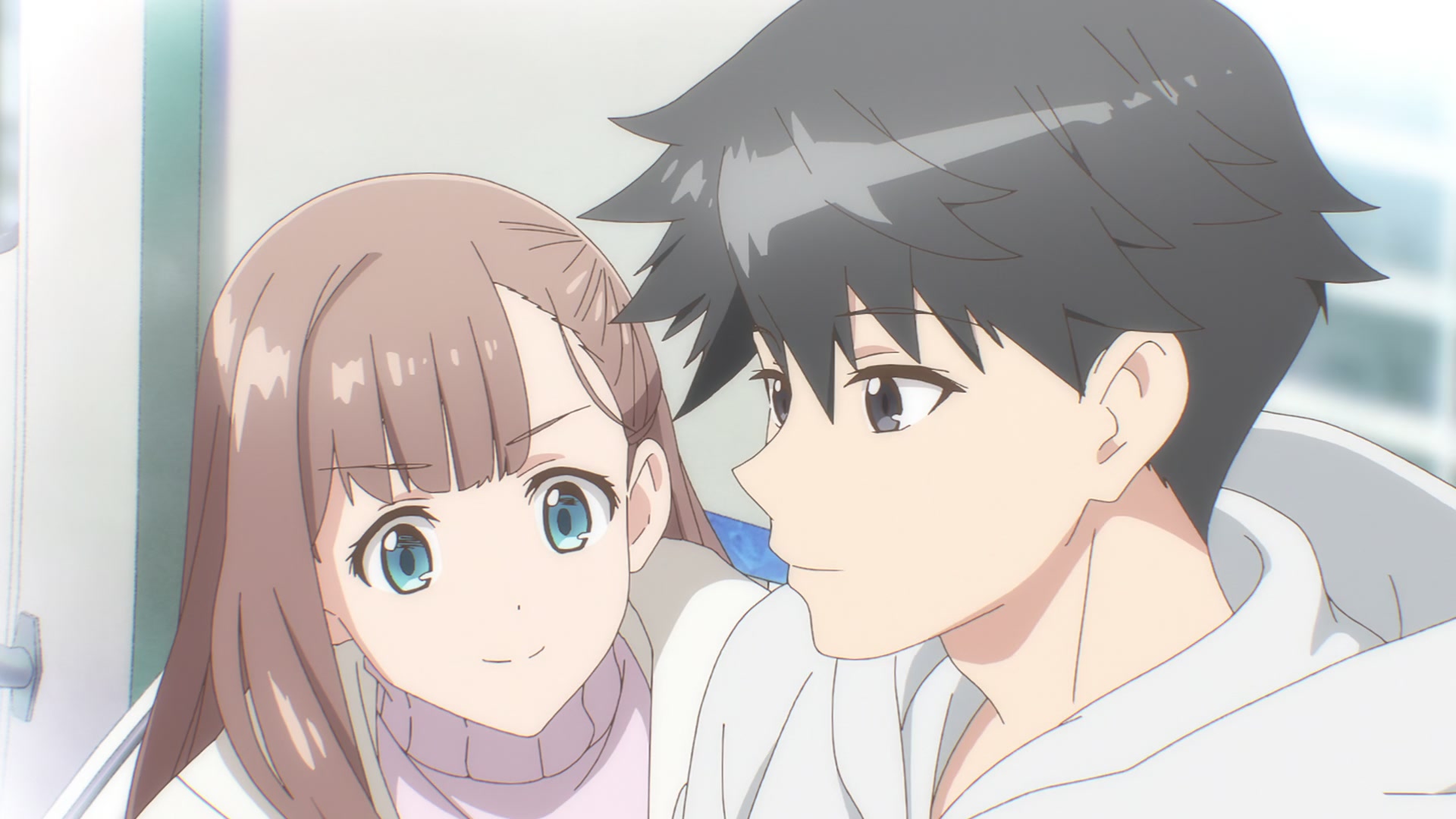
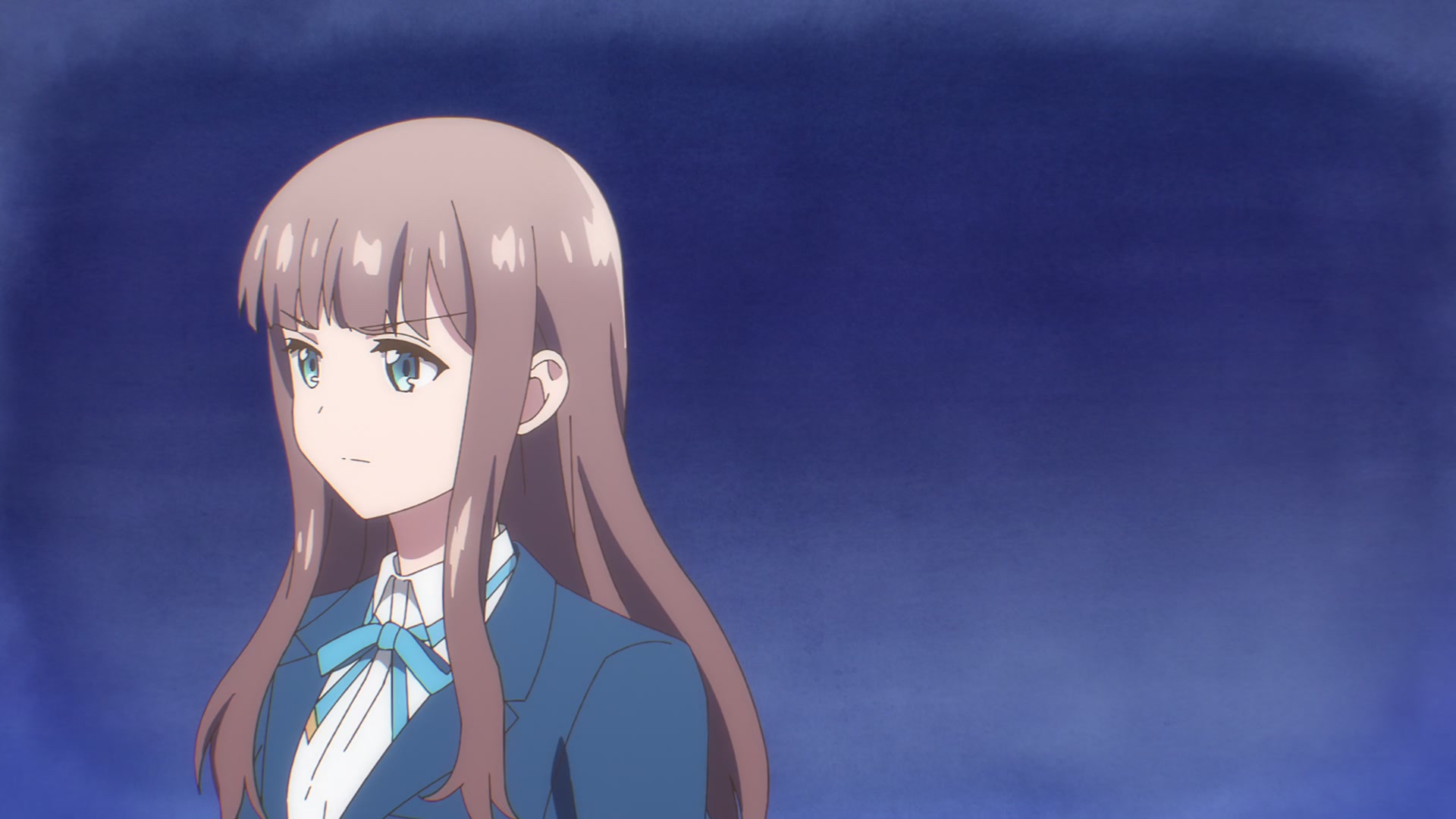
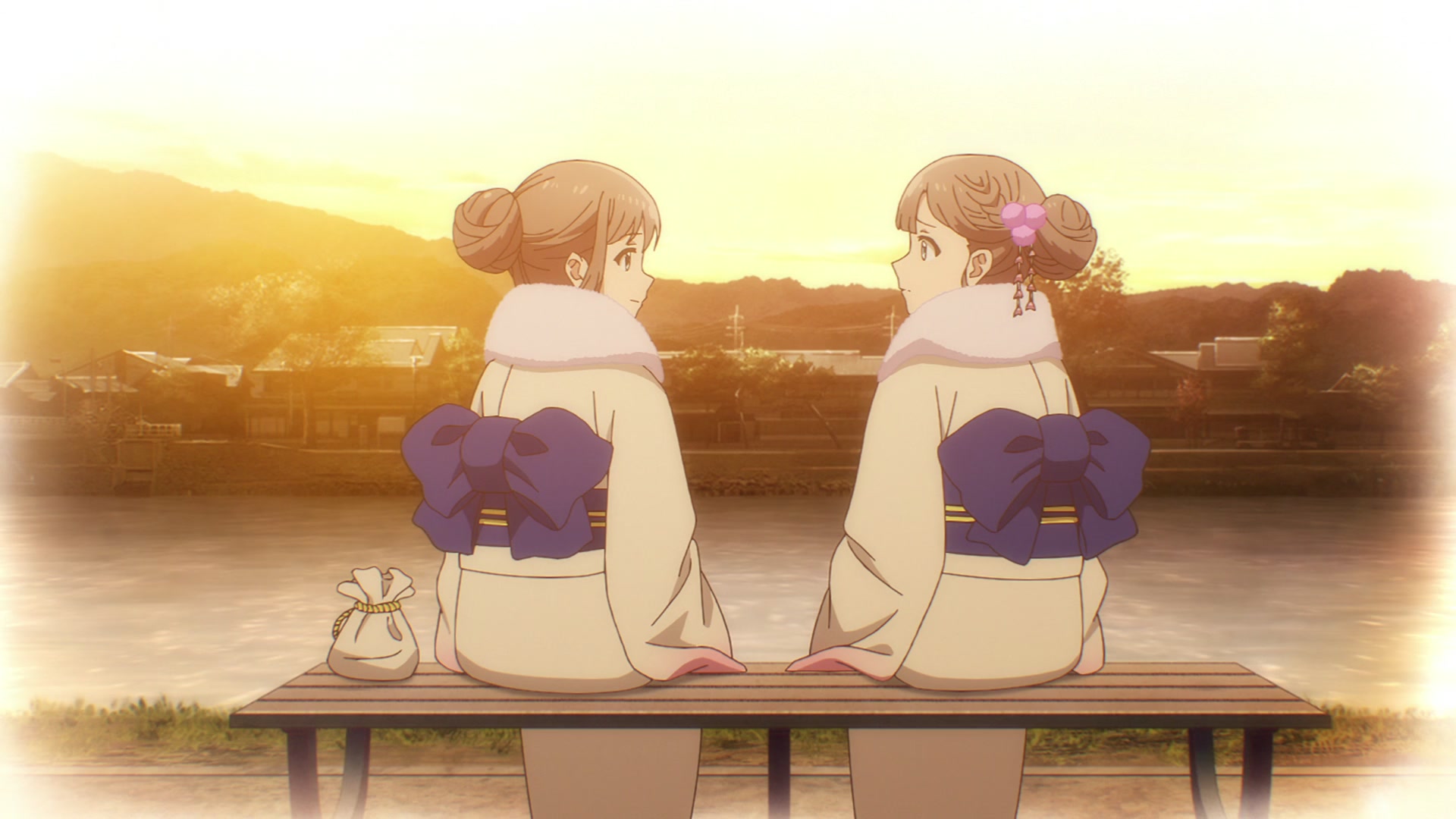
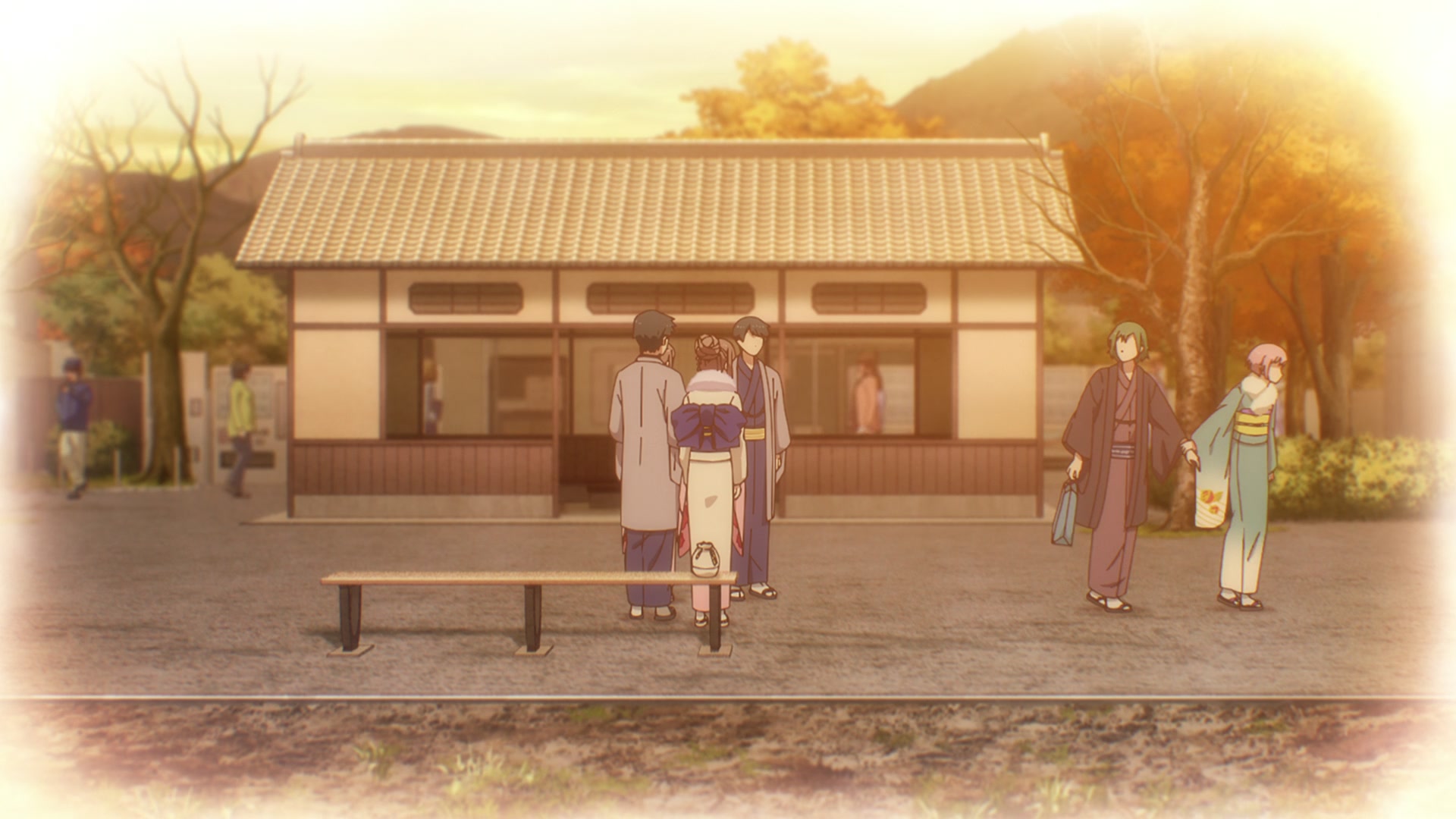
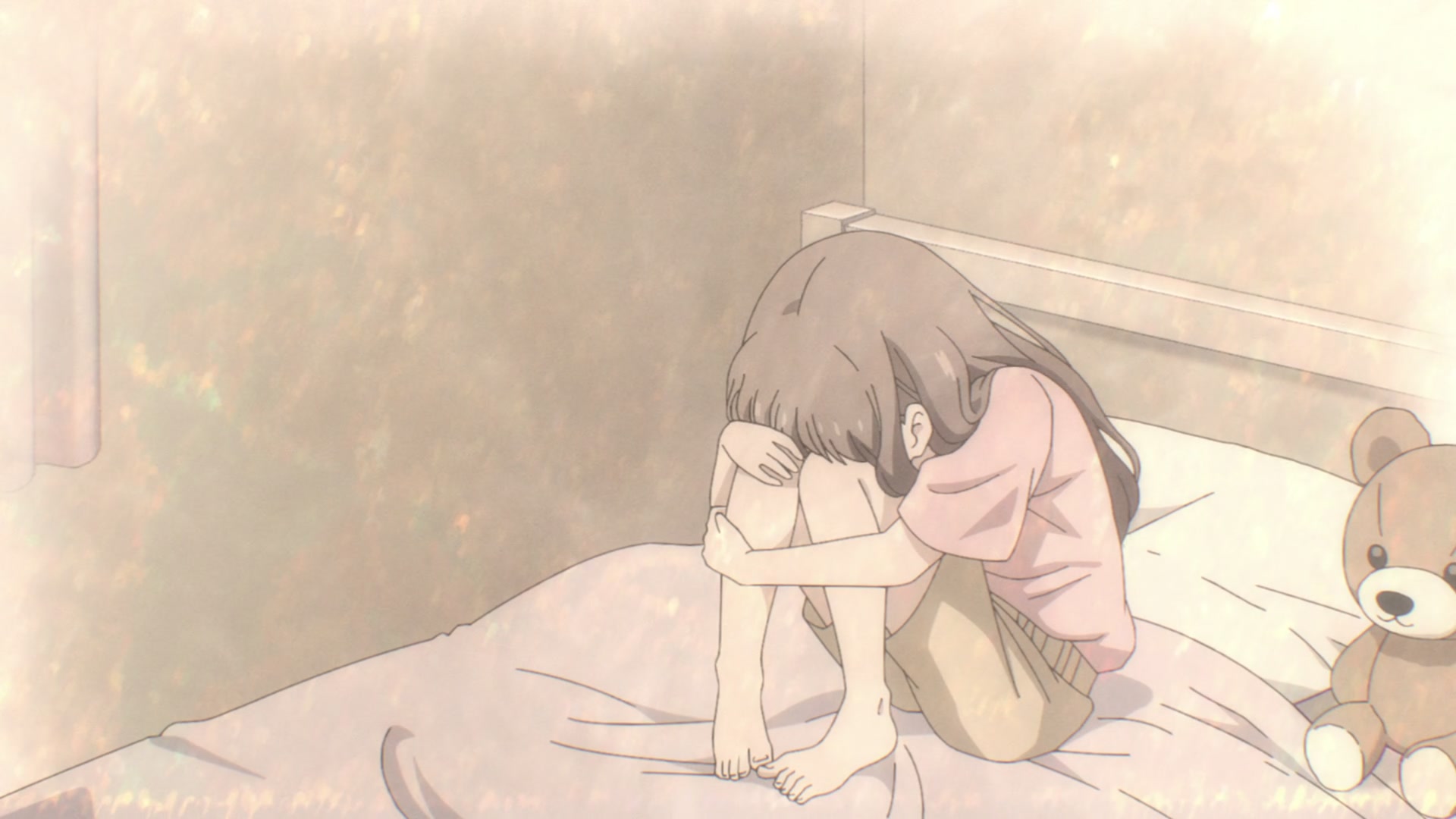
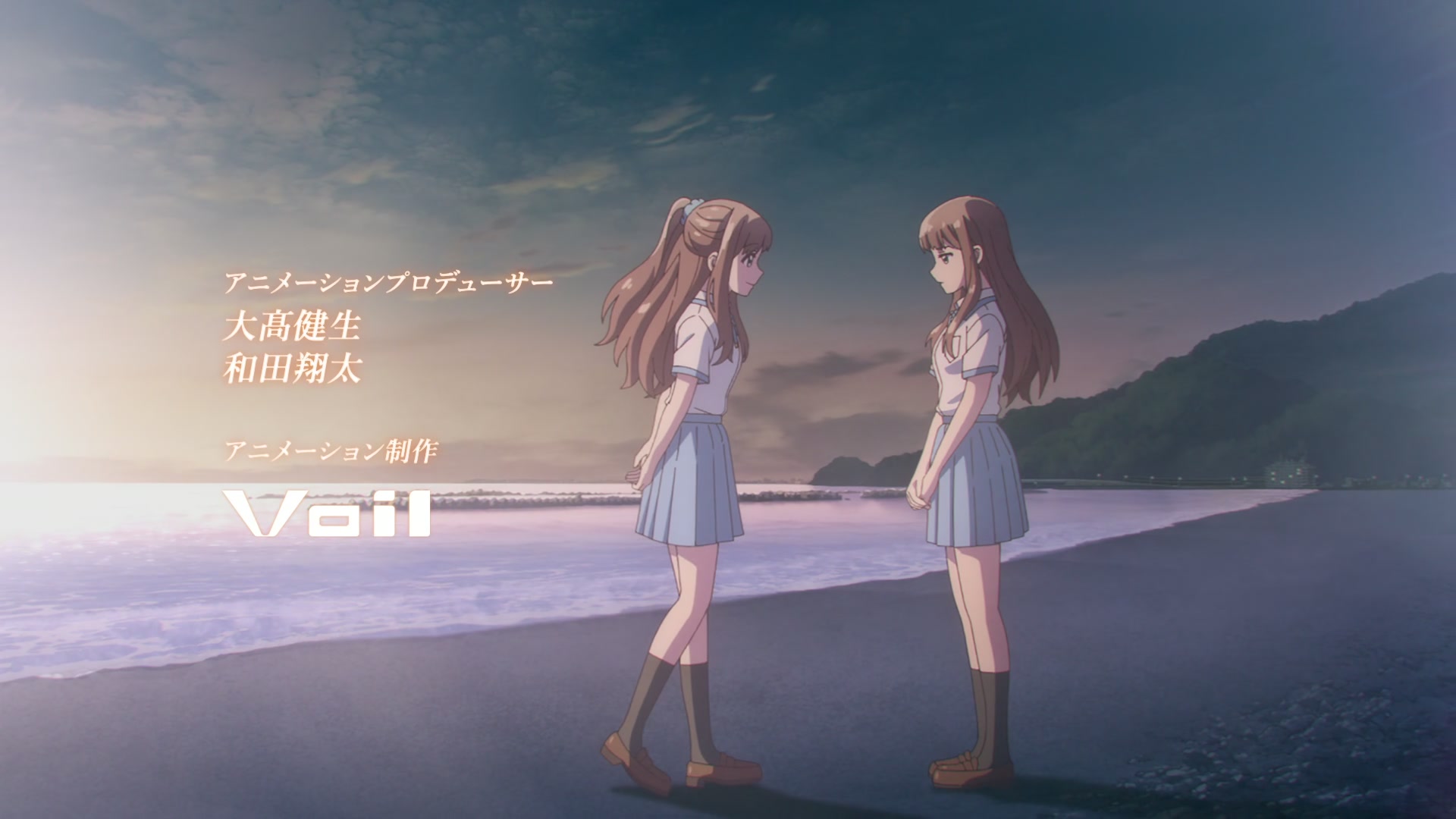
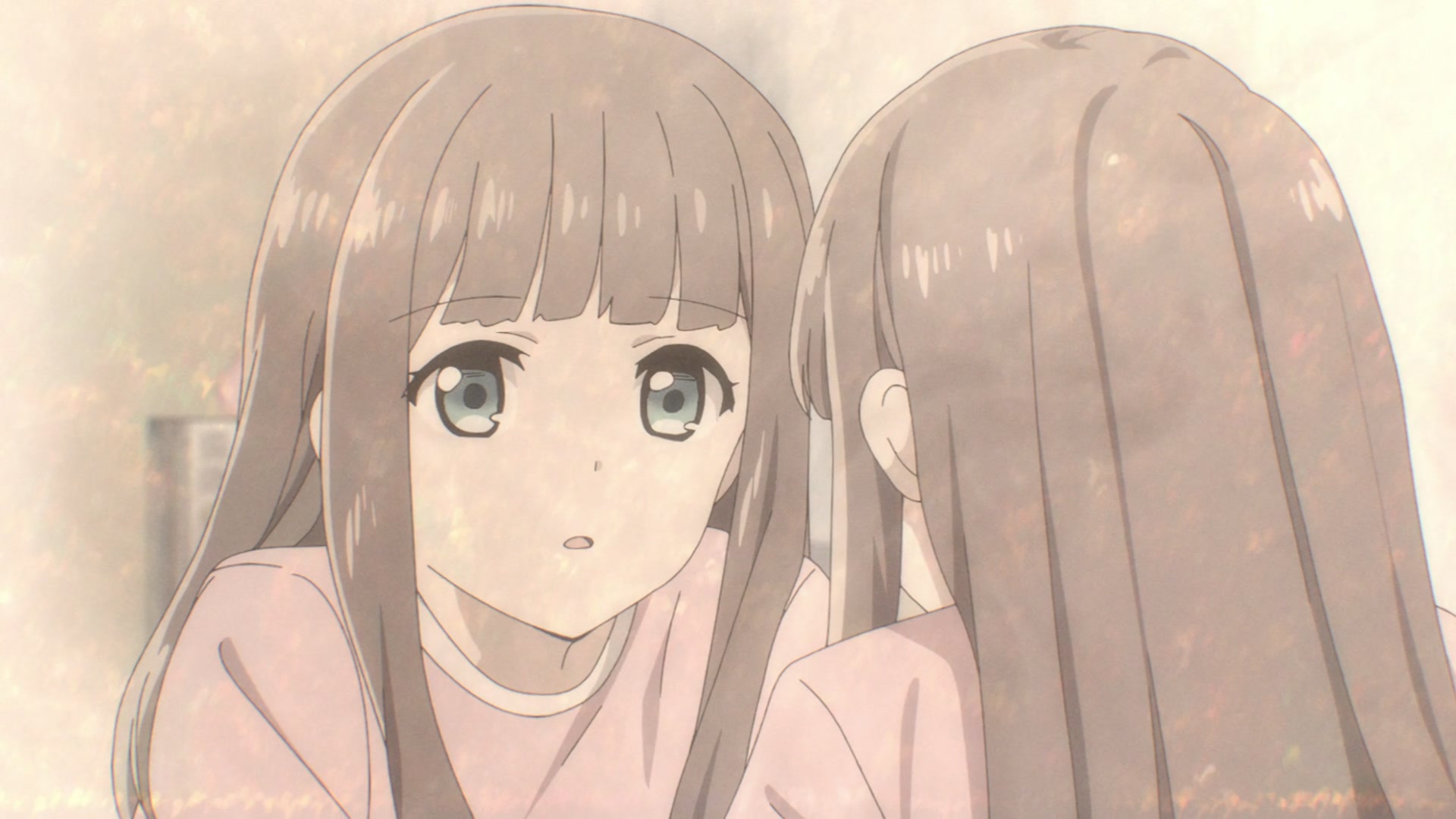
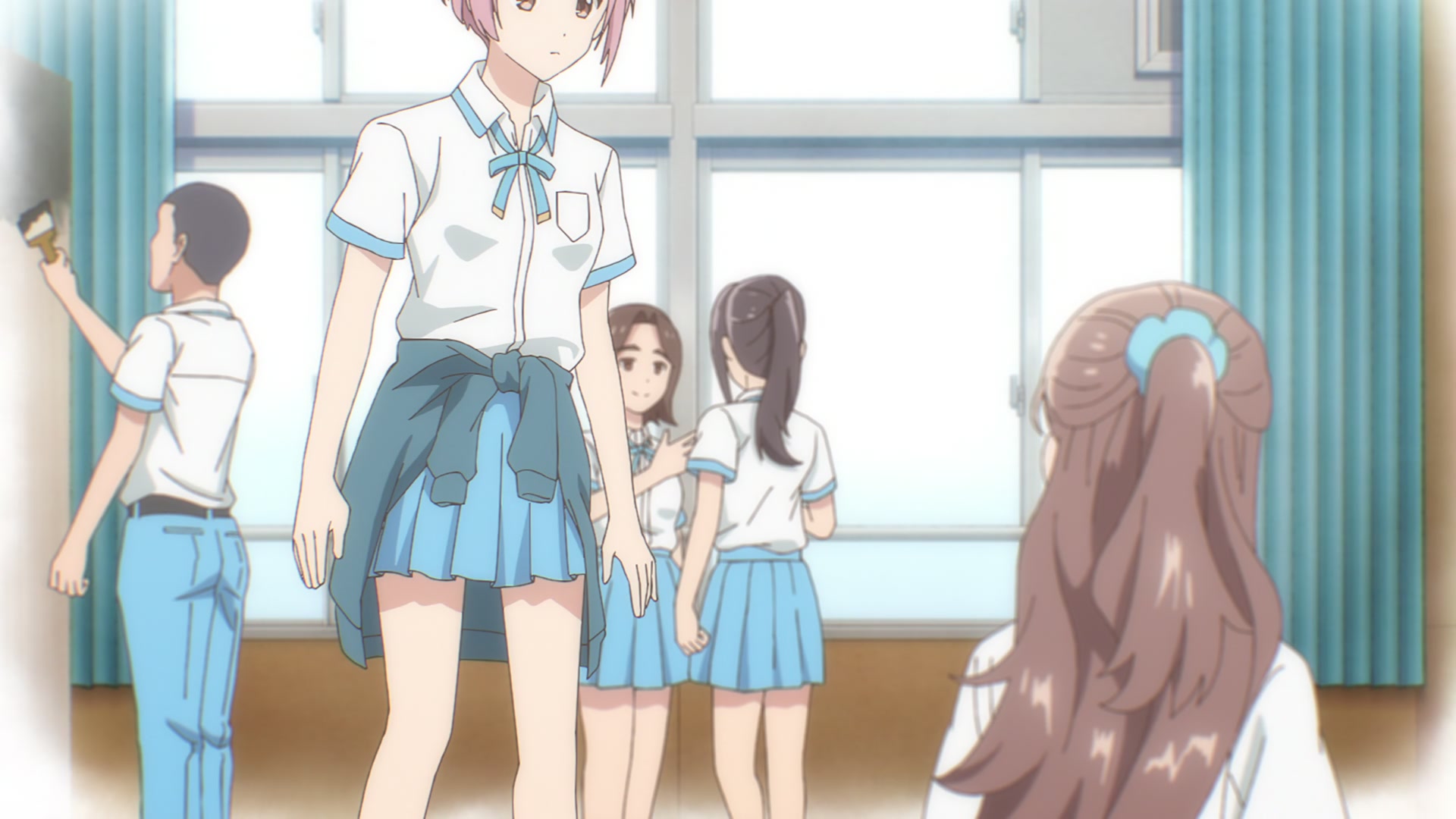
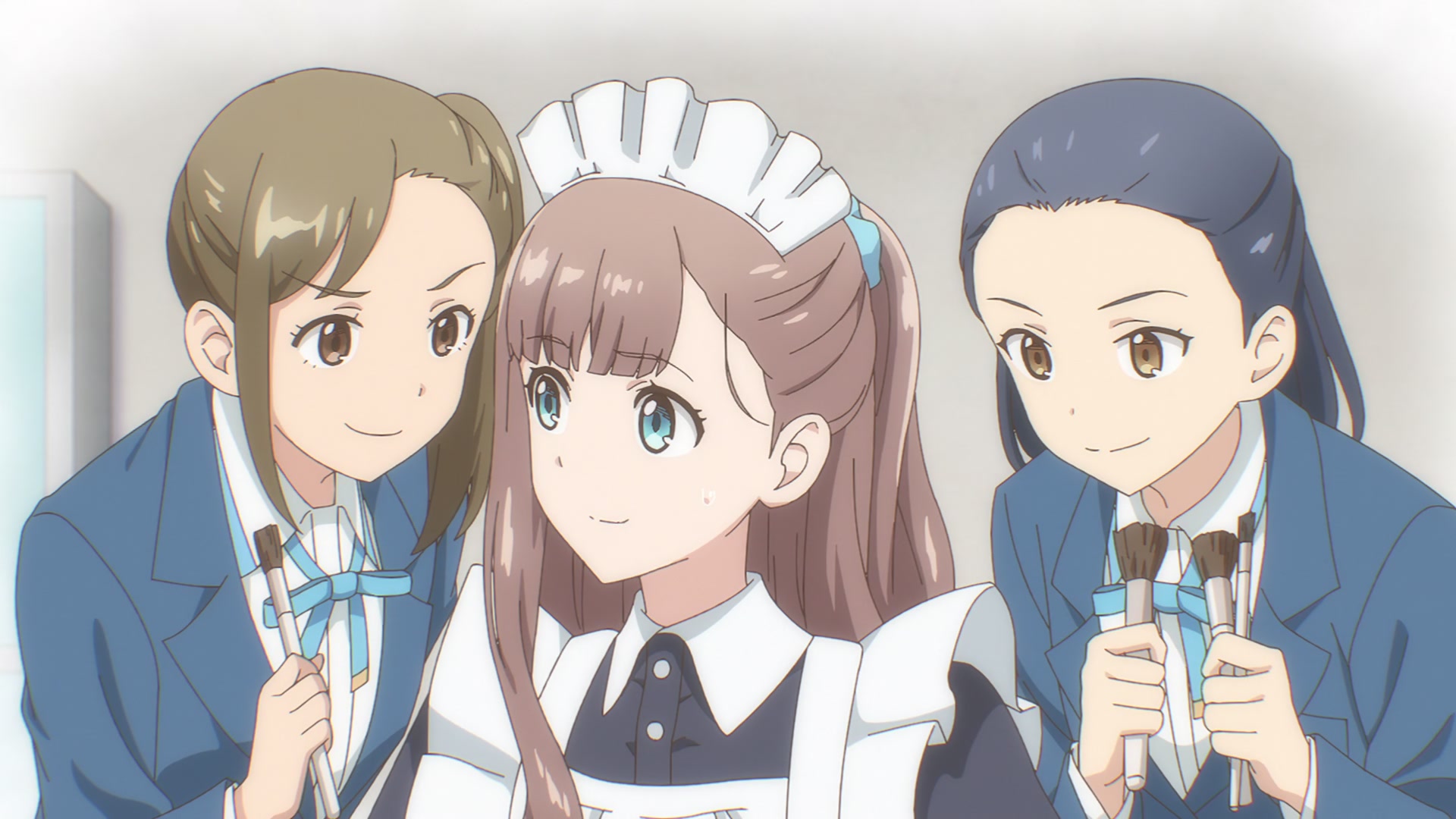
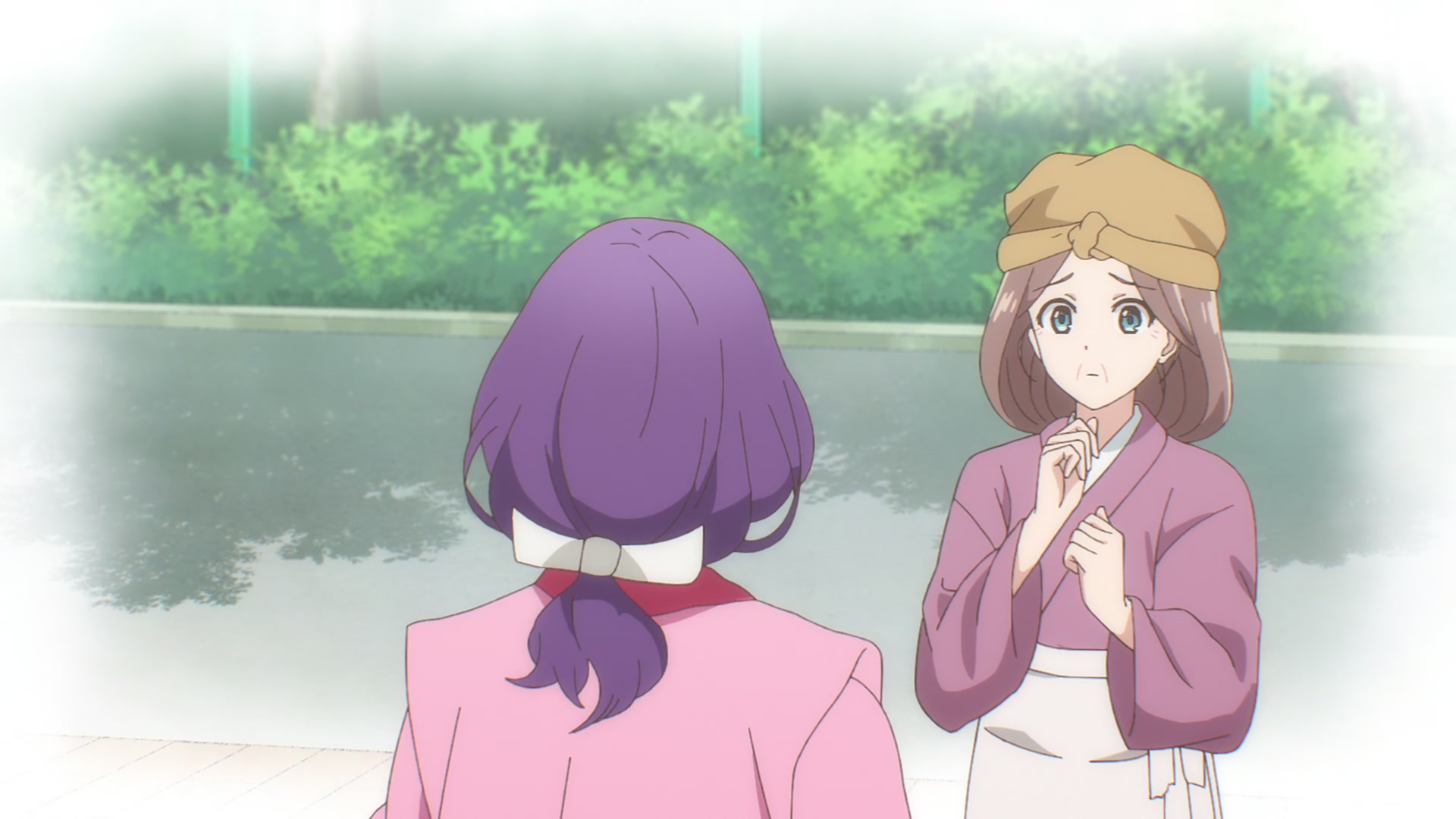
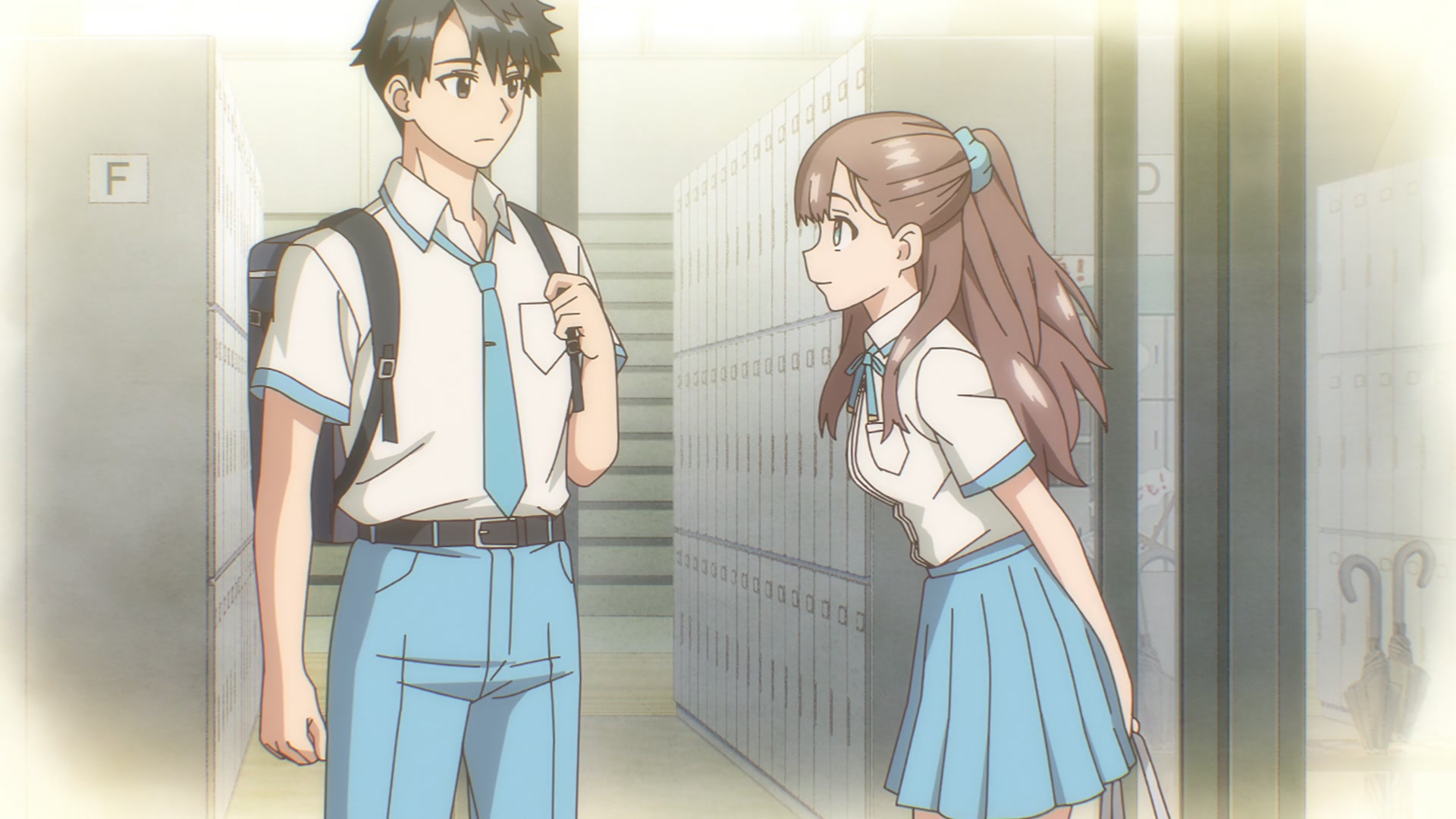
The series employs a soft-focus, high-key lighting style that creates a dreamy, nostalgic atmosphere. This is not a show that aims for visual realism. It aims for emotional truth, and the visual approach supports that goal completely. The pervasive use of bloom, light leaks, and soft-white vignettes gives the series a cohesive “memory-like” quality. Scenes feel less like objective recordings and more like recollections, which is appropriate for a story about identity, memory, and the fragments of the self.
Character Designs and Facial Acting
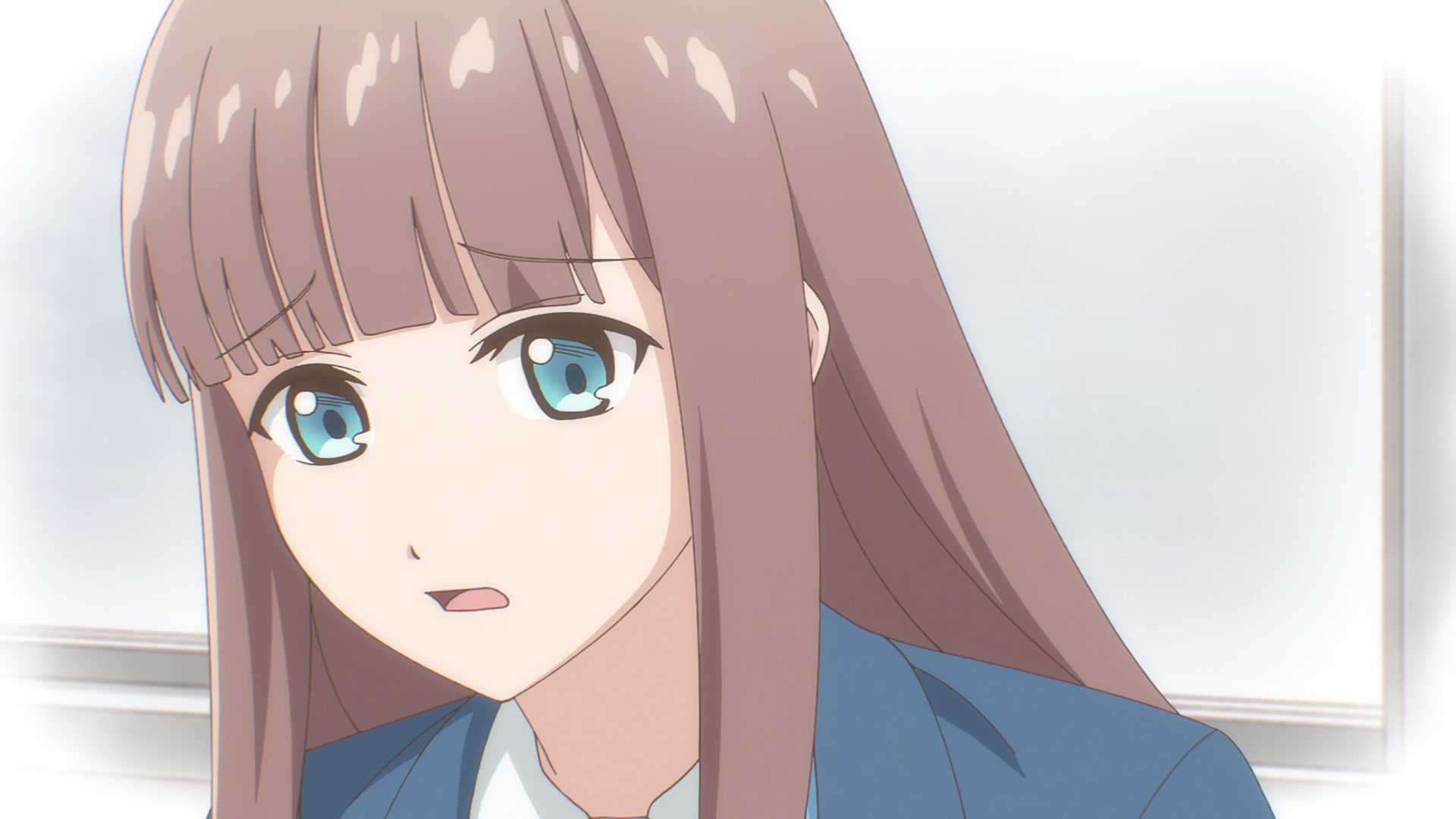
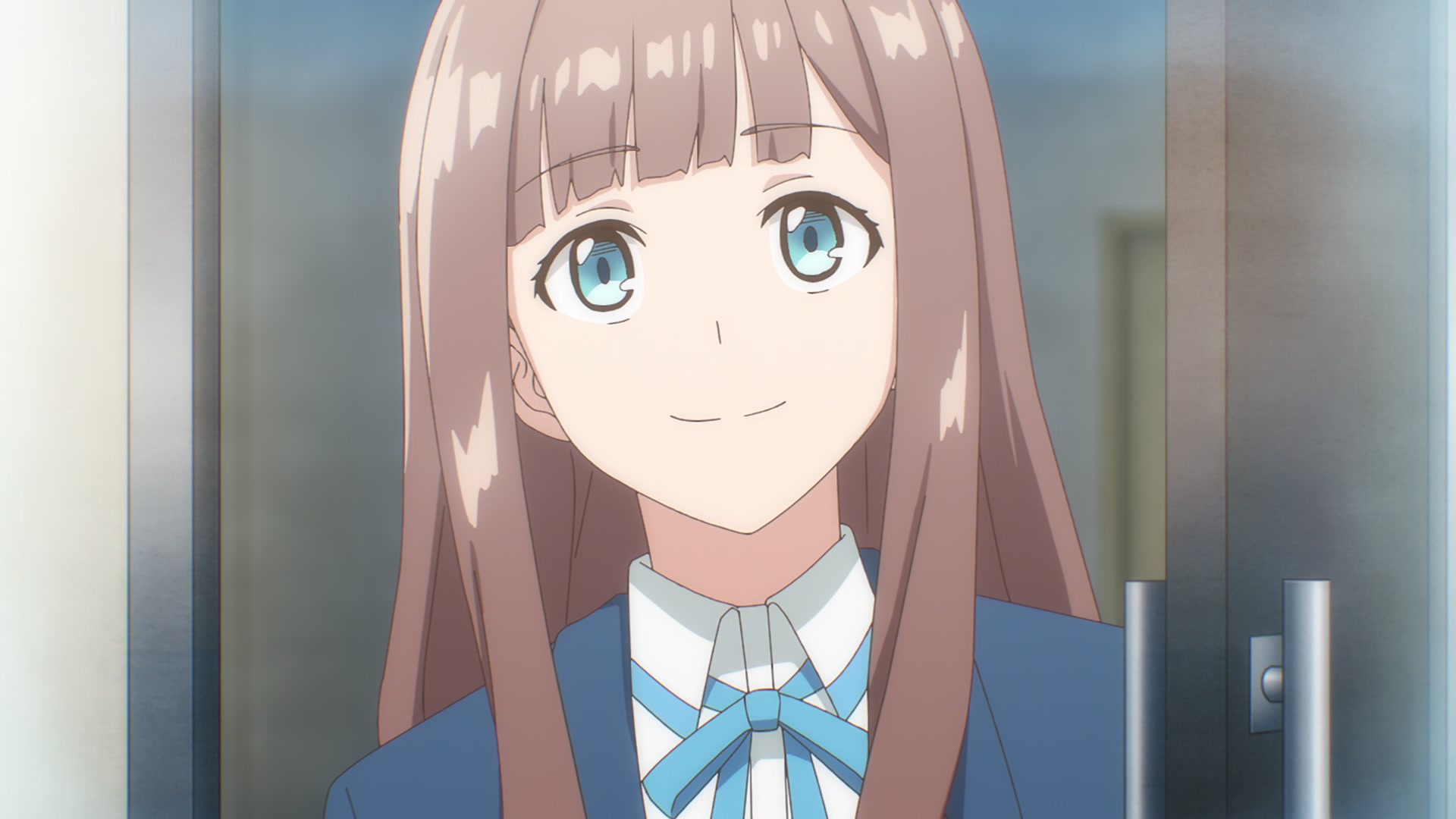
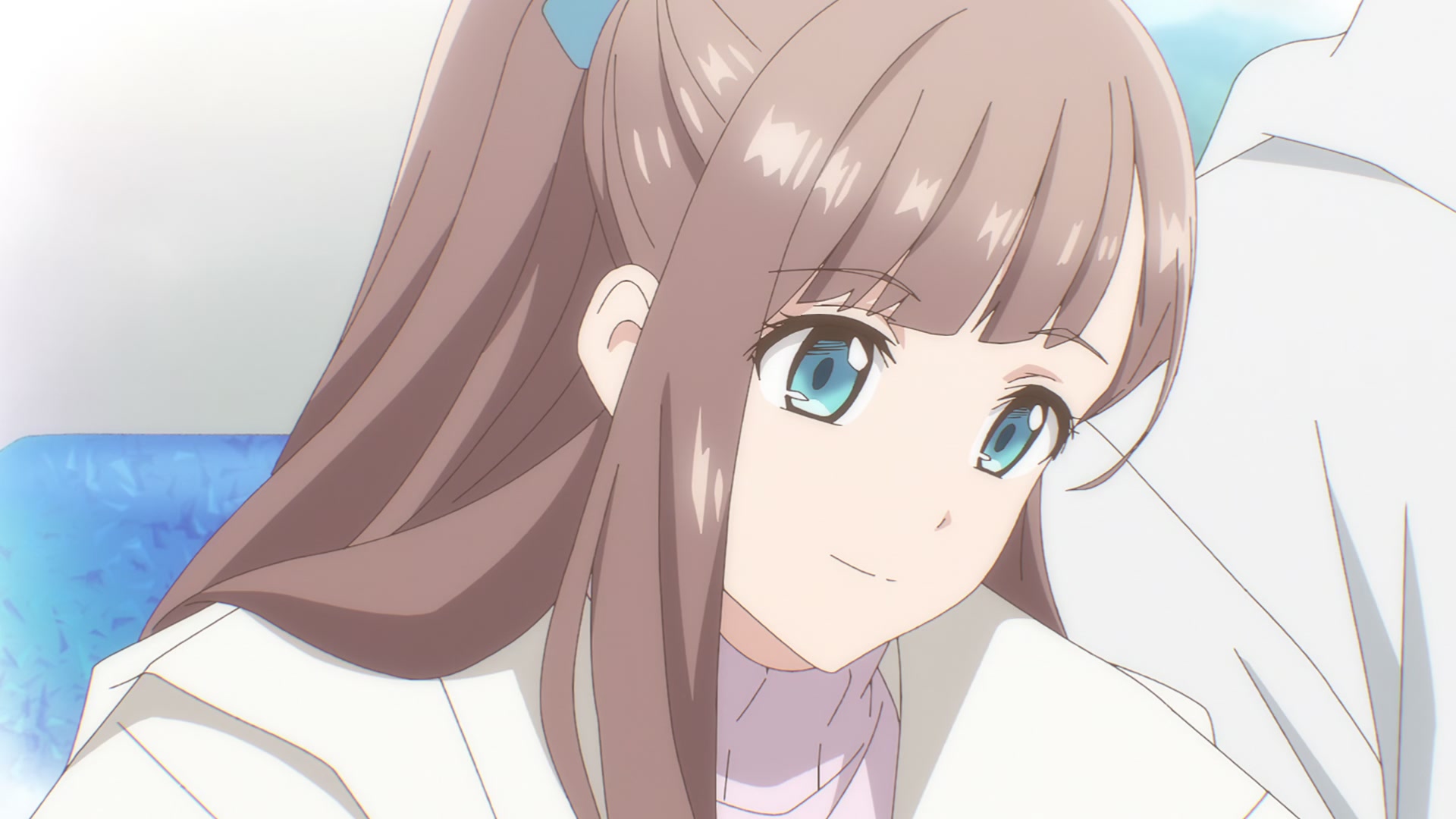
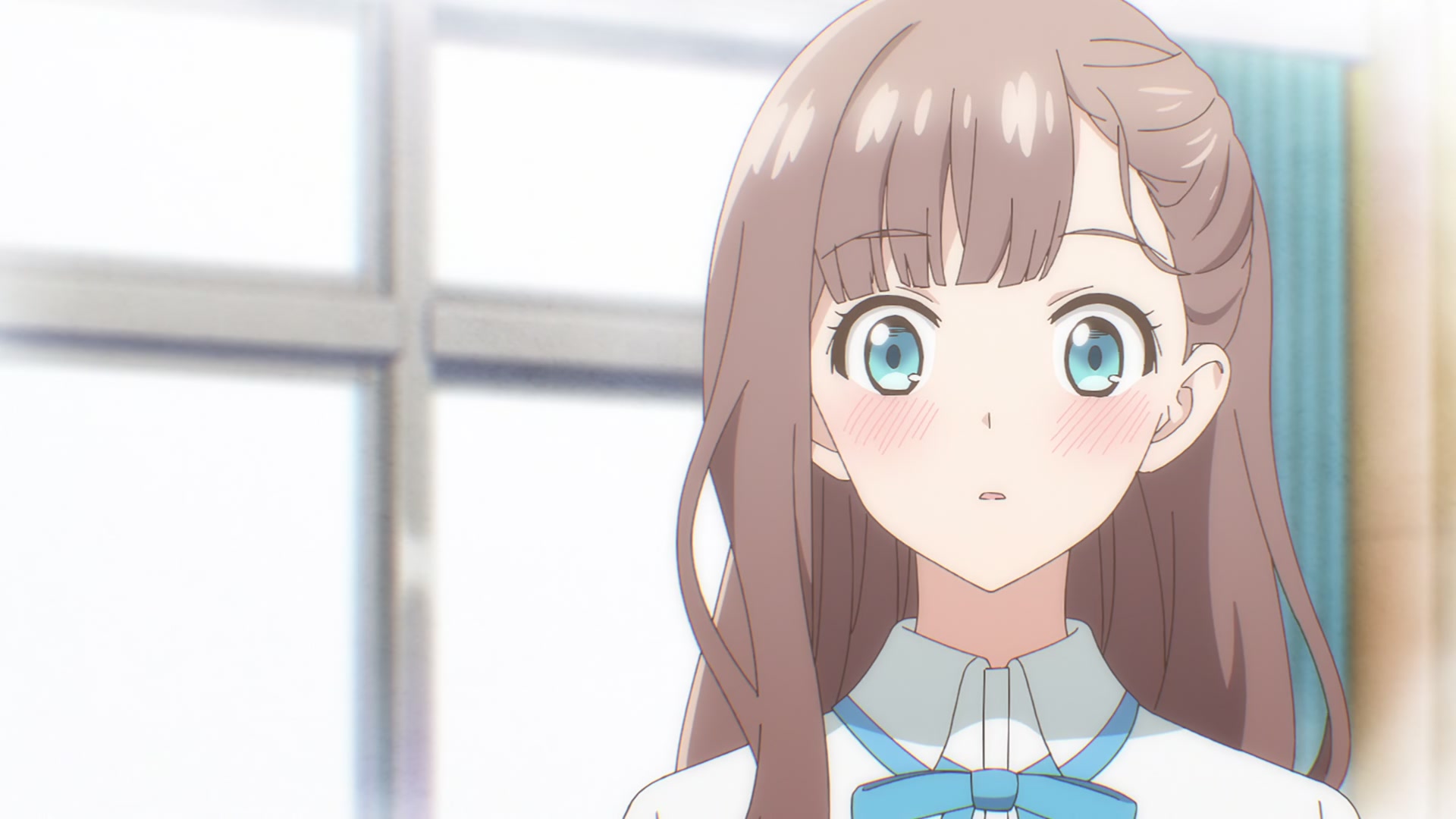
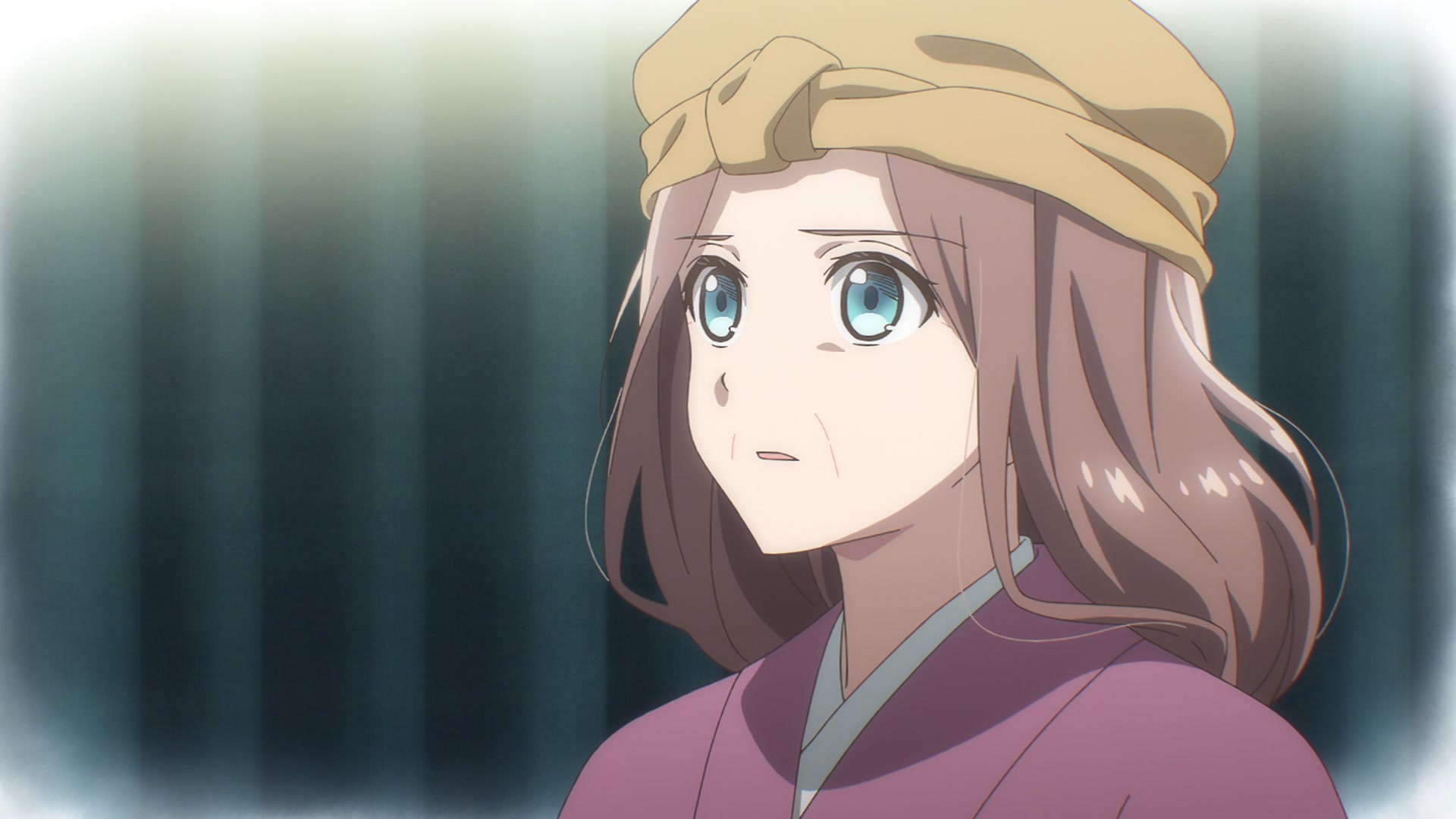
Character designs are clean, modern, and polished, with thin, delicate linework that often takes on the color of surrounding light. The focal point is the eyes. Irises are rendered with multiple layers of highlights and teal-to-blue gradients, giving characters a soulful, liquid appearance. This attention to the eyes pays off in the series’ approach to emotional expression.
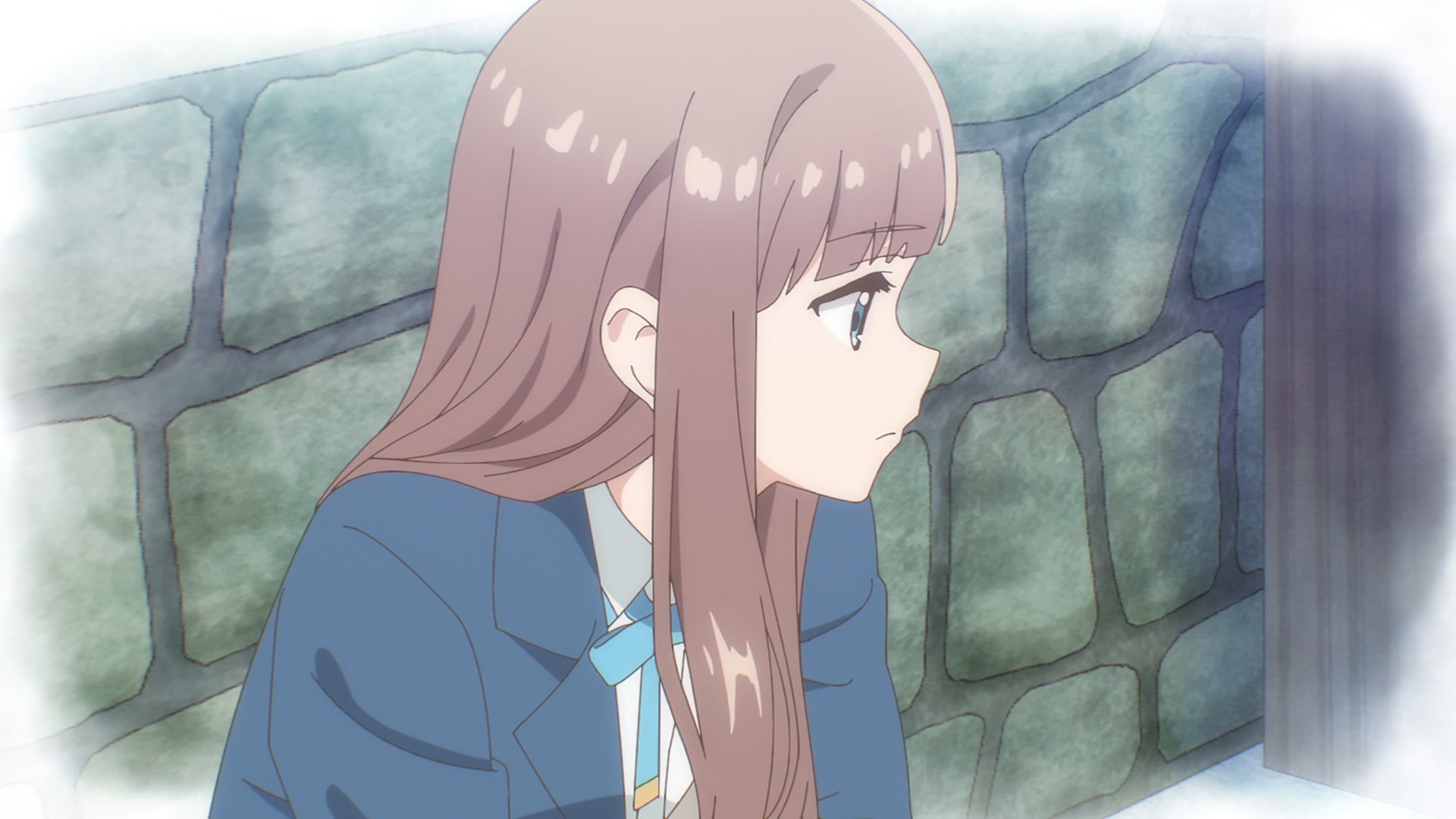
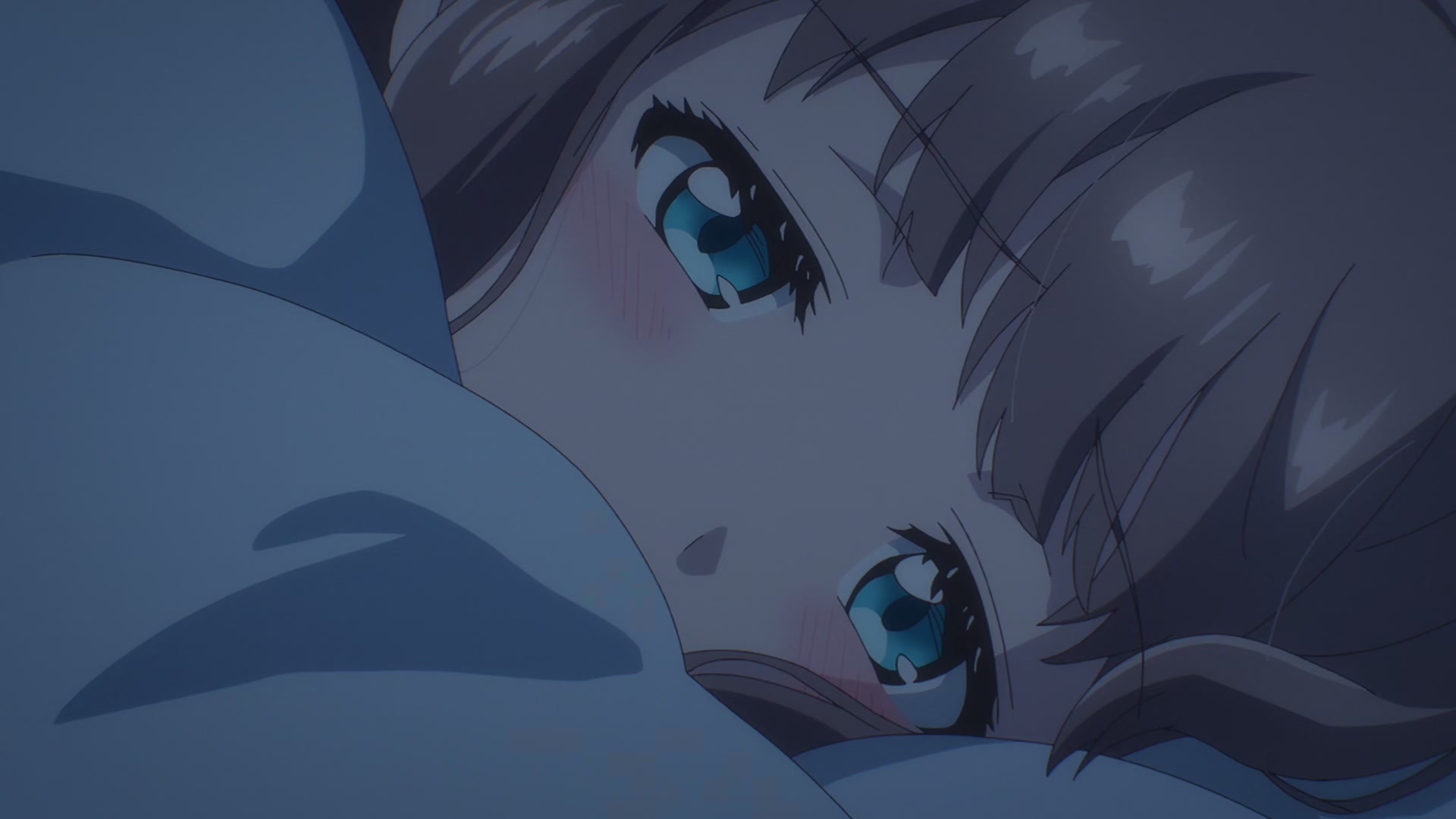
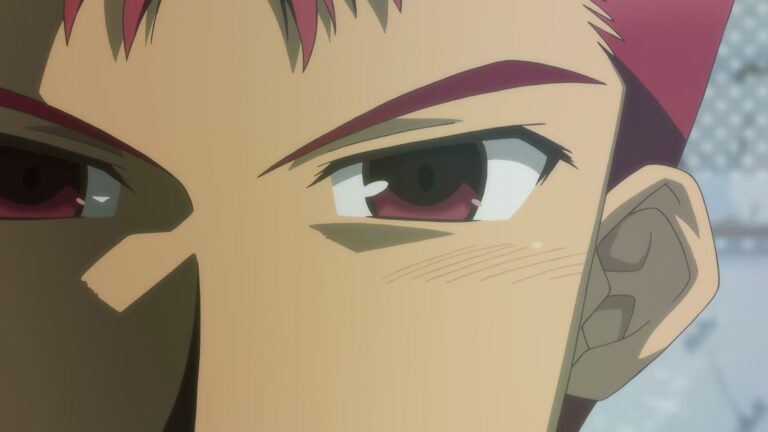
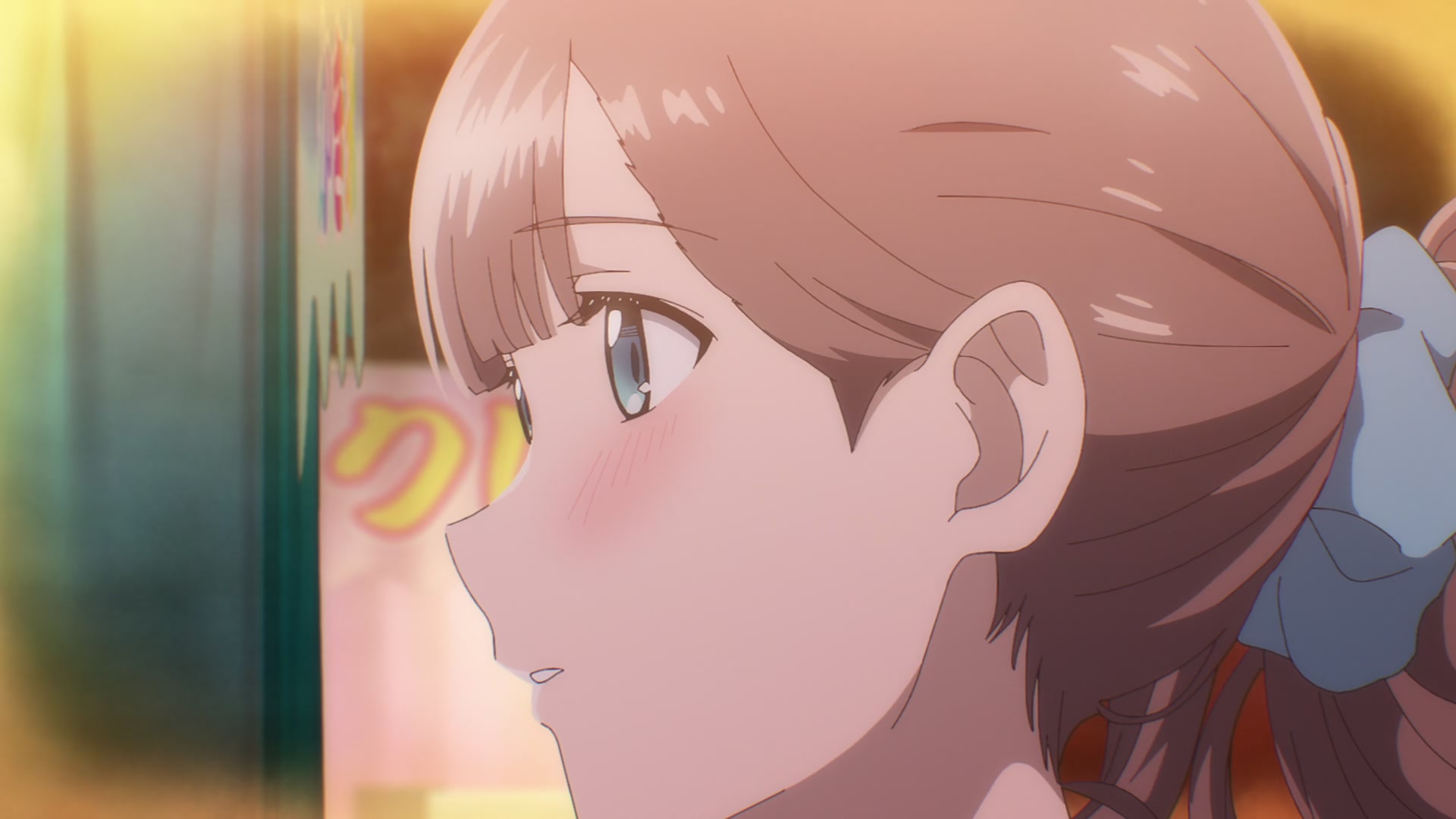
The series excels at subtle facial acting. Rather than relying on exaggerated anime-style distortions, it conveys emotion through nuanced micro-expressions. A slight parting of the lips, a hesitant brow movement, a soft red gradient on the cheeks and ears to denote vulnerability. Extreme close-ups are used effectively to isolate characters in their emotional space. The wide, shimmering eyes draw the viewer into the character’s immediate experience.
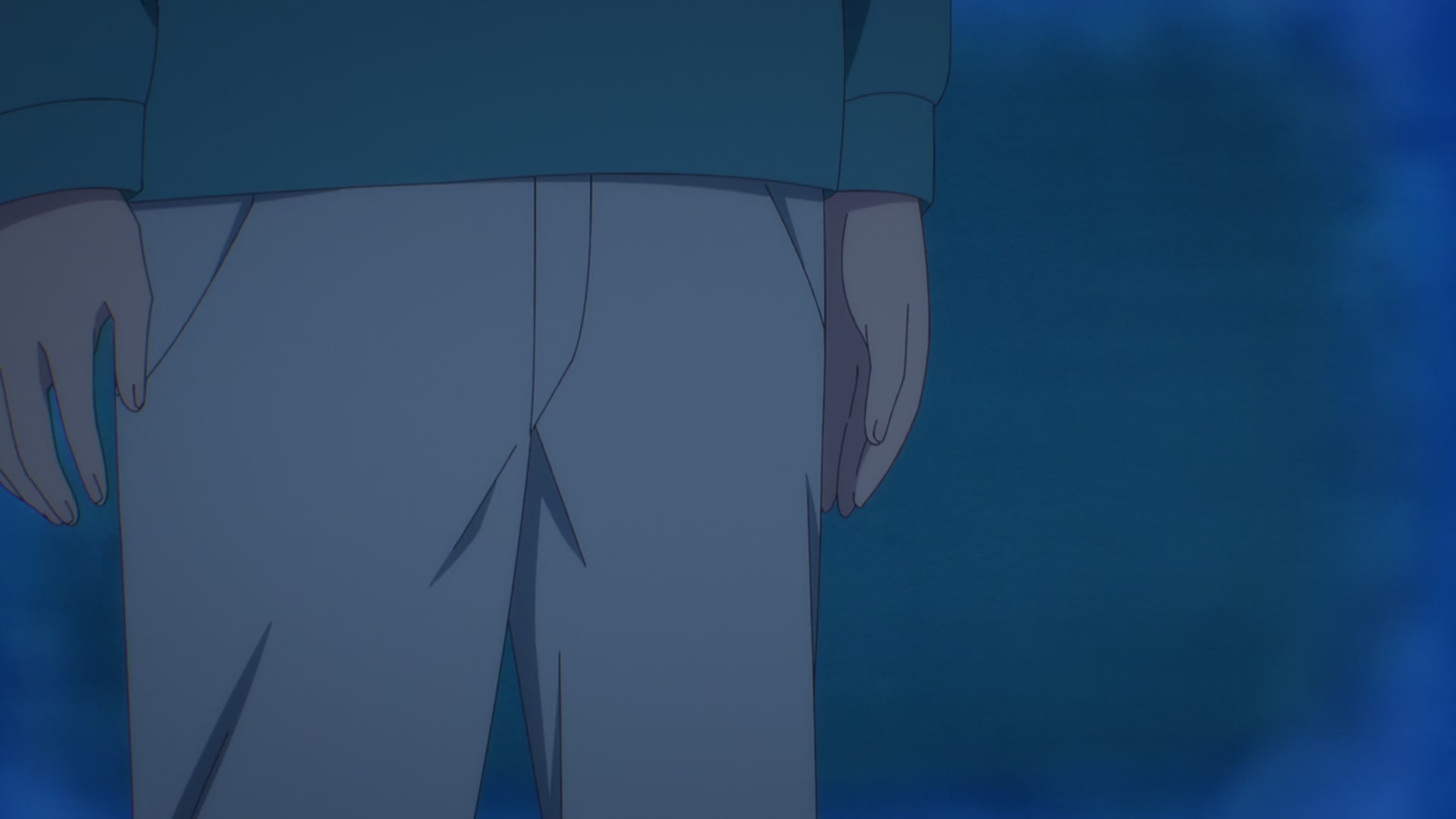
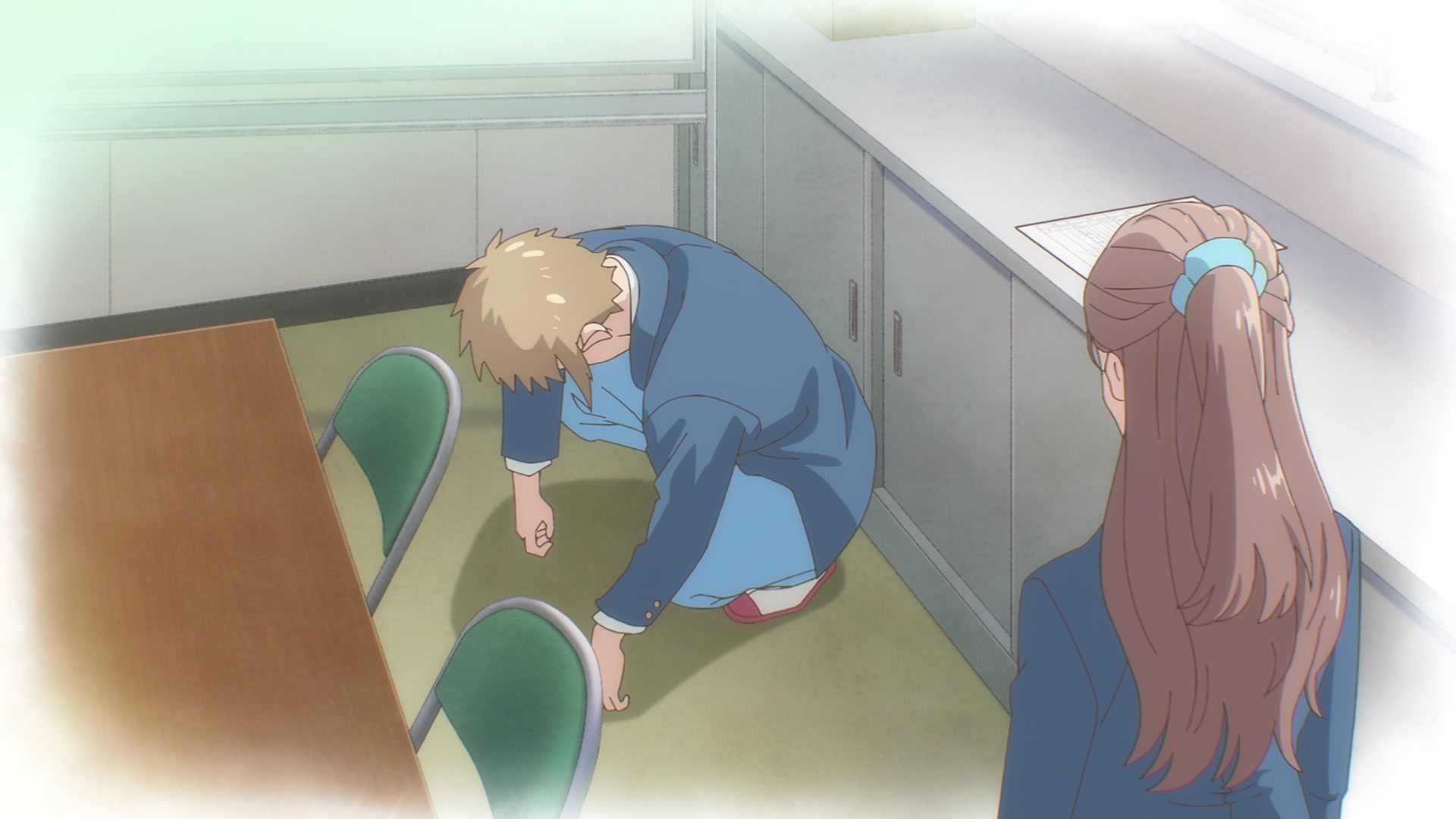
Body language tends toward the reserved and static, emphasizing quiet acting. The defeated slouch of a character on the floor, the tense formality of hands resting at one’s side, these physical choices communicate internal conflict without words. This approach suits the series’ contemplative tone perfectly.
Color Palette and Lighting
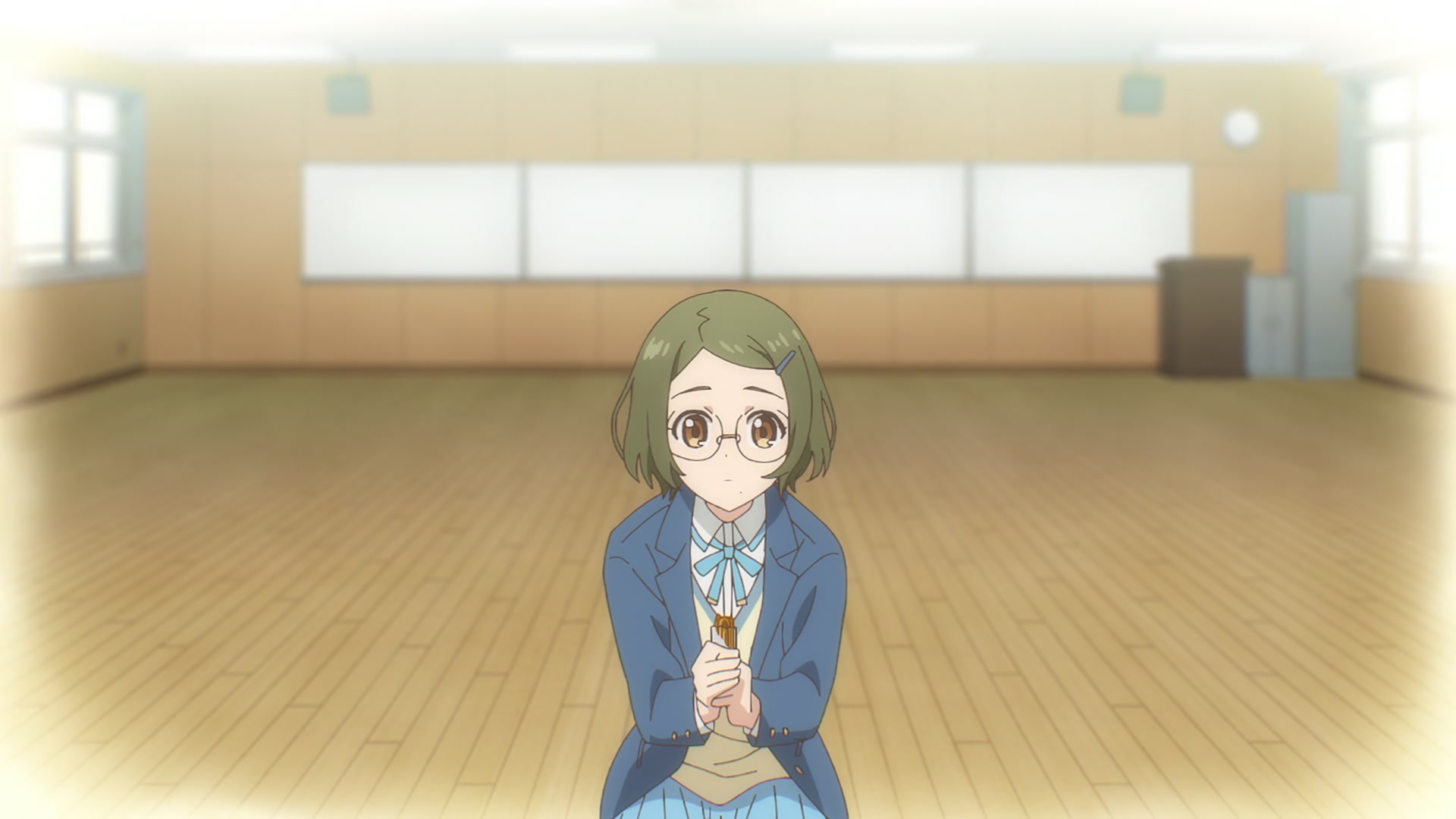
Daytime scenes are dominated by a pastel-leaning palette of sky blues, soft whites, and warm earthy tones, often bathed in golden hour glows or high-key whites that evoke the haze of a hot summer afternoon. The school festival episodes use warmer, more saturated colors to convey energy and excitement, while the quieter episodes lean into cooler, more muted tones.
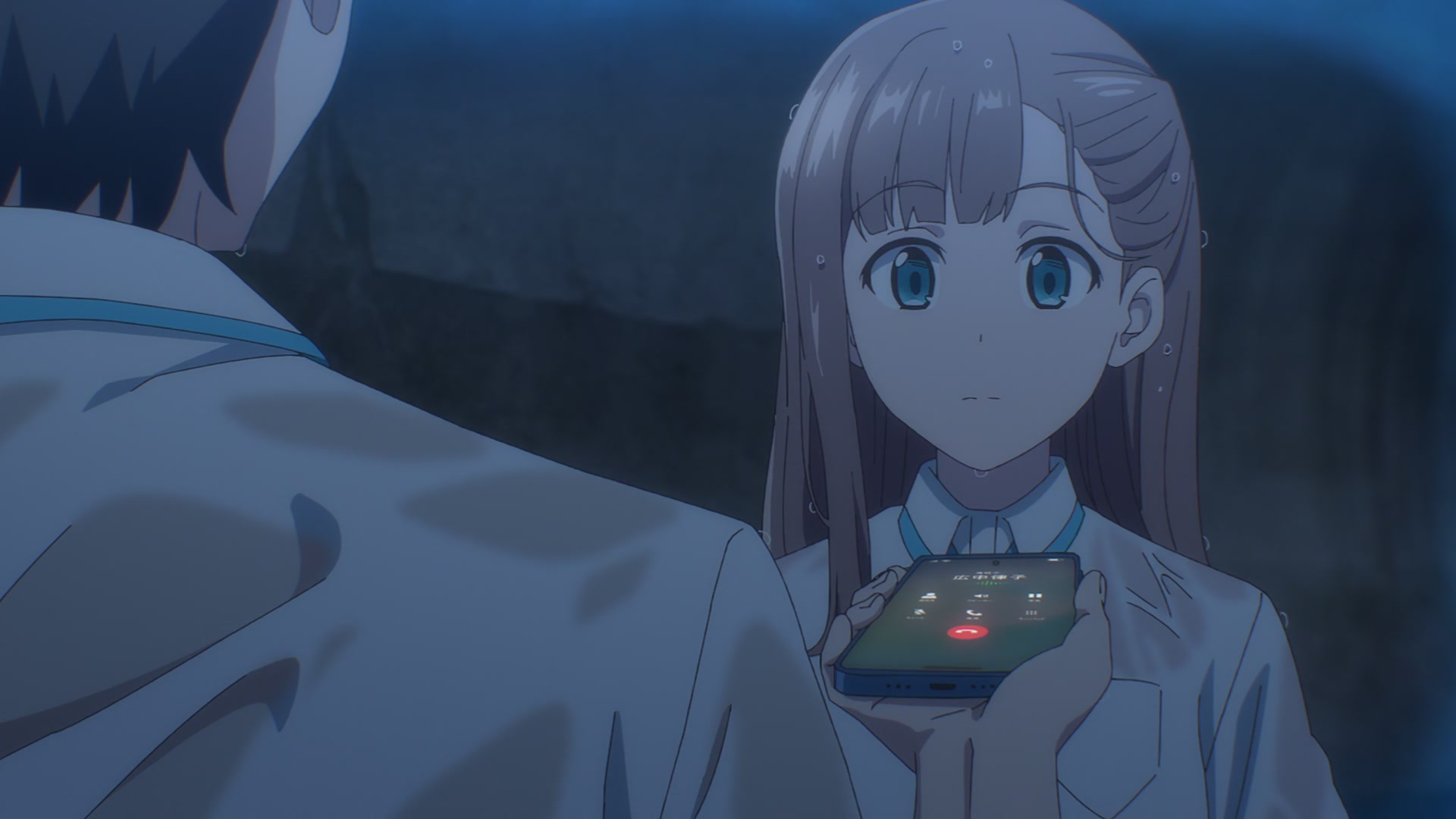
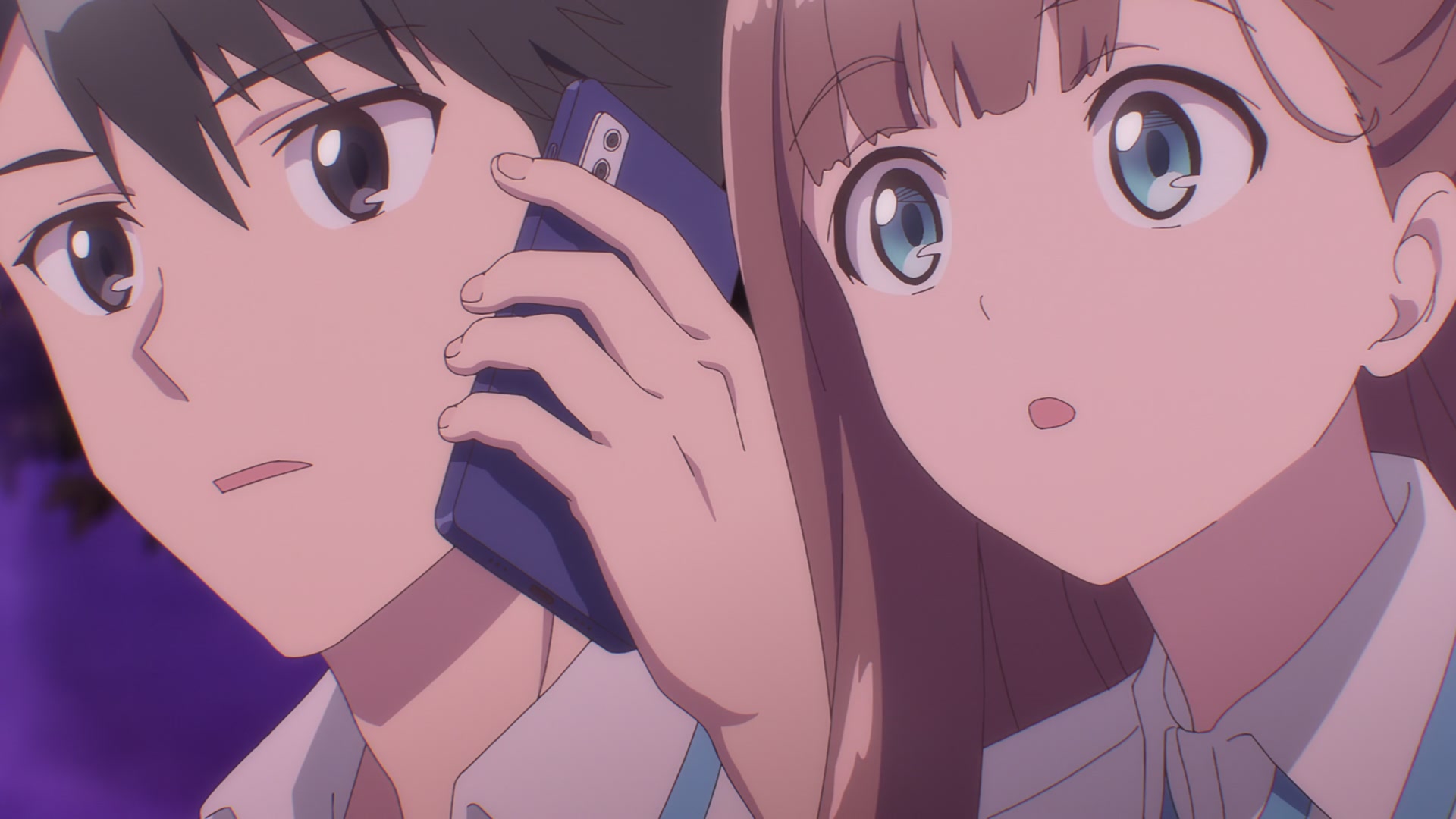
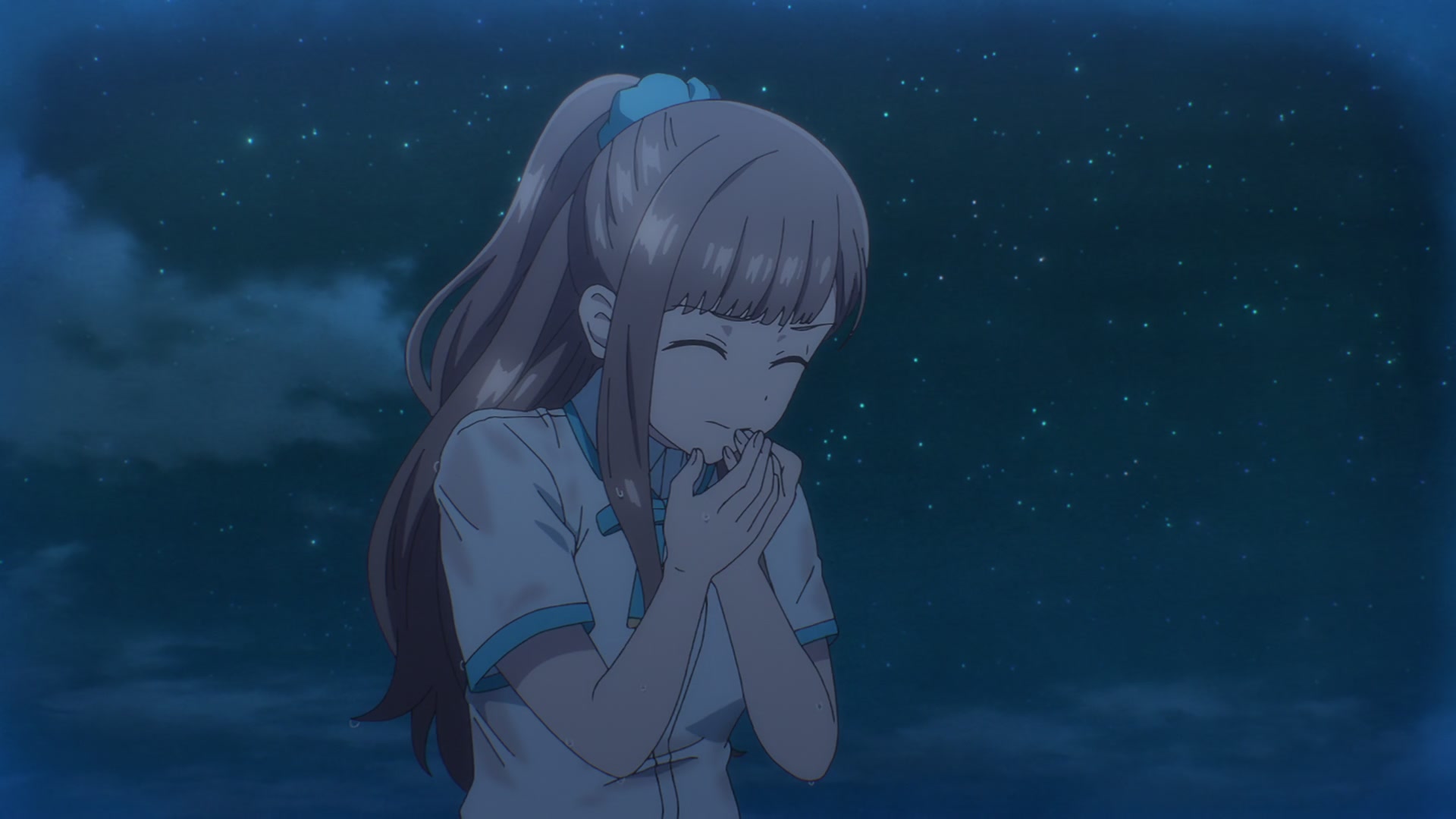
Nocturnal or high-drama sequences shift toward deep, immersive teal and lavender palettes. Rather than using harsh blacks, the series maintains its softness even at night, using cool, directional lighting to cast gentle shadows. The use of moisture as a visual texture, glossed eyes, raindrops on hair, adds tactile depth to melancholic moments.
Background Art
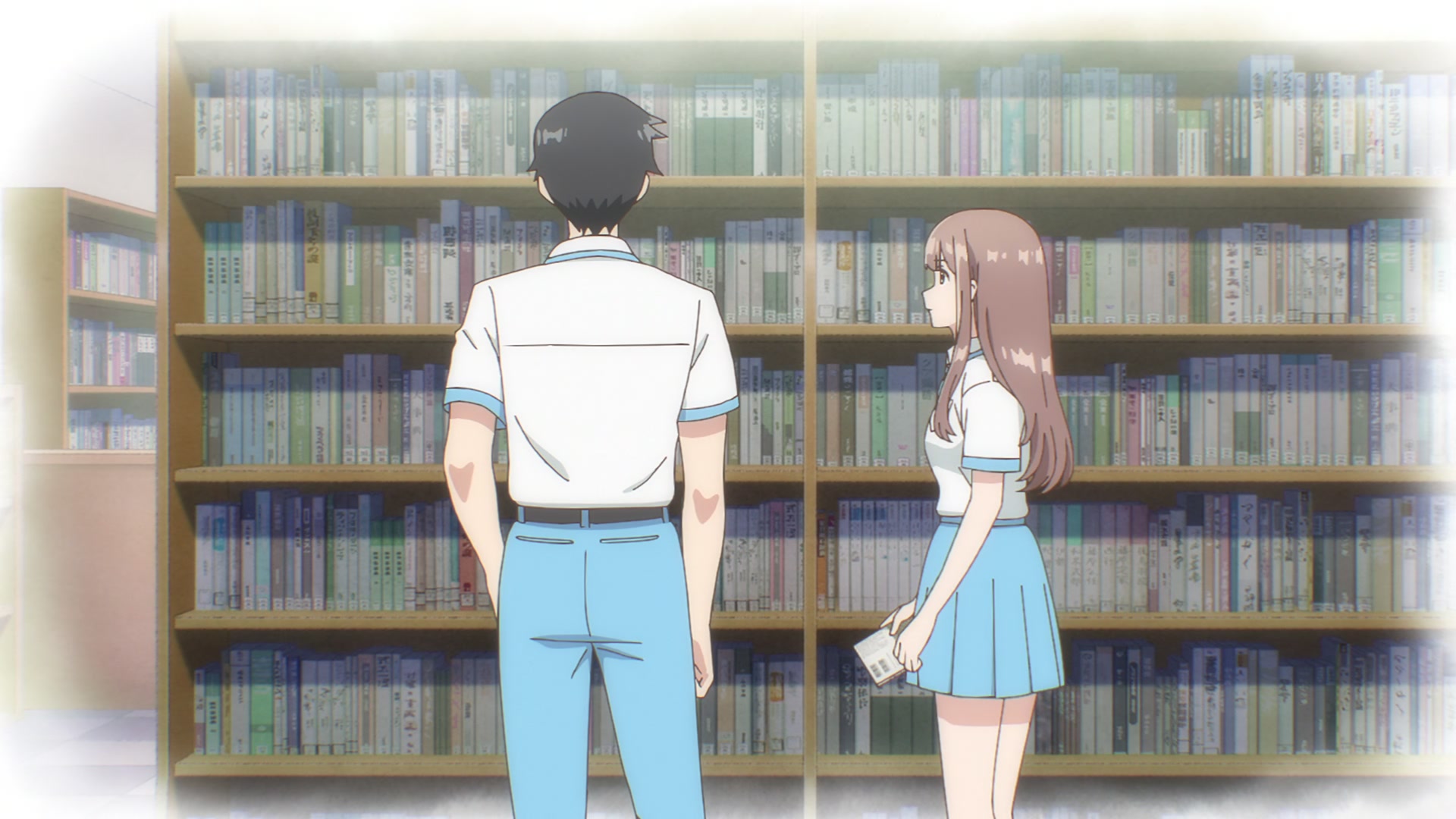
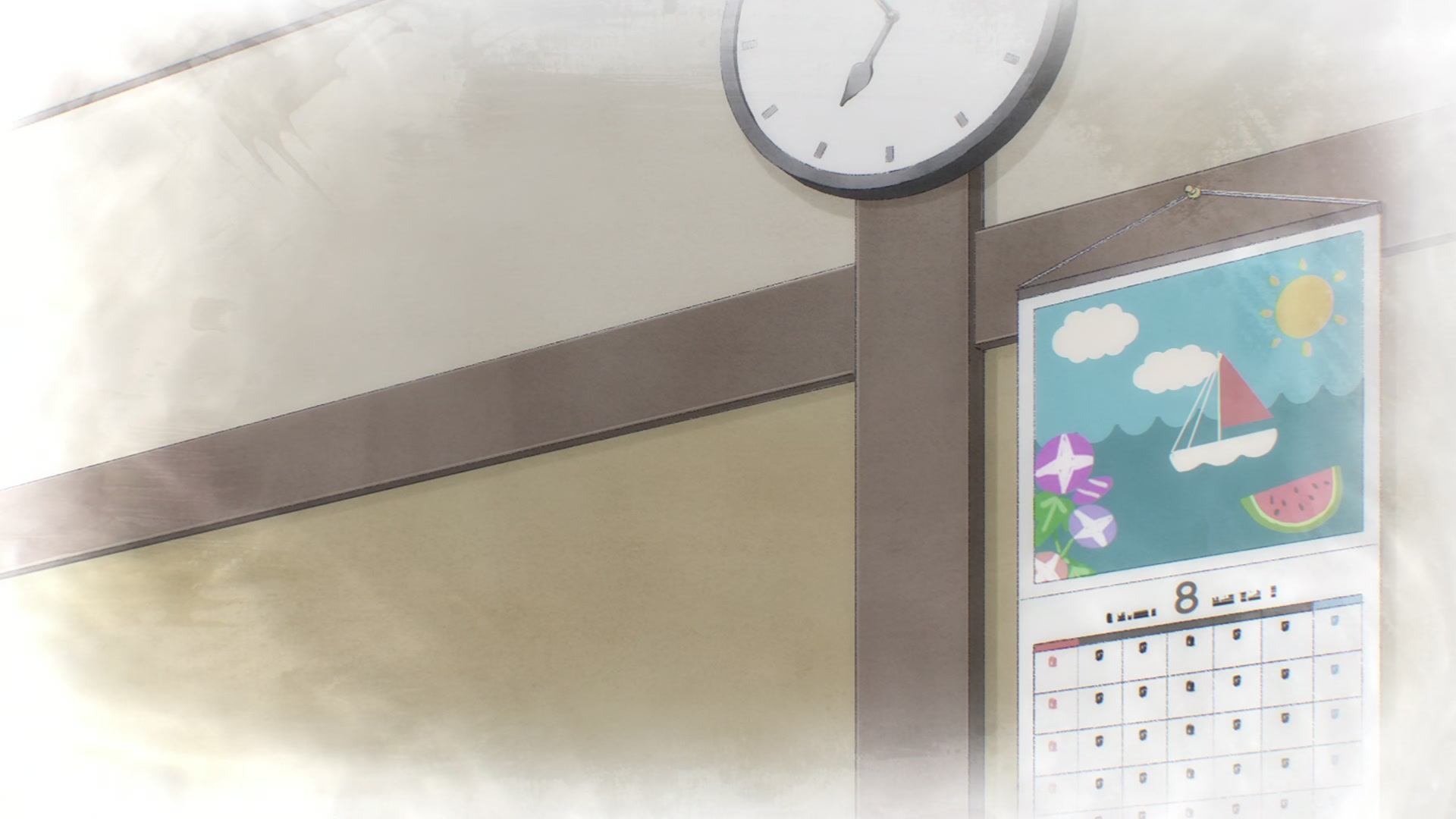
Institutional settings like the library and school show attention to detail, with individual book spines and wall textures providing a sense of place. The series is not afraid to pivot toward watercolor-like textures or abstract voids during key emotional beats. These textures, featuring visible paper grain and irregular edges, move the production away from a purely digital look toward a storybook quality.
Ryo’s paintings deserve special mention. The field in front of her grandparents’ house, rendered in her watercolor style, is a beautiful piece of in-world art that carries genuine emotional weight. When Nao sees the painting and recognizes it as the field Ryo described, the moment lands because the art itself is lovely and because we understand what it meant to Ryo to paint it.
Animation Quality and Limitations
This is where honest assessment requires nuance. The series is not an animation showcase. It does not have the fluidity of a KyoAni production or the kinetic energy of a Bones action series. Much of the “stillness” in the series is intentional, it suits the contemplative tone, the focus on internal states, the quiet rhythms of school life. Not every scene needs movement.
However, there are moments where the stillness feels less like a choice and more like a budget constraint. Characters sometimes hold poses for beats too long. Conversations can feel static rather than merely quiet. The heavy reliance on digital post-processing, bloom, vignettes, light leaks, can sometimes feel like it is compensating for limited animation resources. A beautiful still frame with atmospheric lighting is still a still frame.
Character animation outside of close-ups can be minimal. Walking cycles are functional rather than expressive. Background characters in school scenes are often static or absent. The series uses a limited number of acting poses per character, recycling them across episodes. This is standard for TV anime but becomes noticeable over thirteen episodes.
The basketball match in episode four is the series’ most ambitious action sequence, and it is competent but not thrilling. The series knows its strengths lie elsewhere and does not overextend itself. Lip-sync is standard for the production tier: mouths open and close in rough synchronization with dialogue, but there is little attempt at nuanced lip shapes matching specific phonemes.
The visual notes mention that the heavy bloom and post-processing can occasionally lead to a “flat” look where the line between character and background blurs. This is a fair observation. In some scenes, characters feel less like they exist in the space and more like they are composited onto it. This is not a fatal flaw, the series’ aesthetic priorities are clear, and the dreamy quality is intentional, but it is a limitation of the production’s resources and approach.
What the Series Does Well Within Its Limits
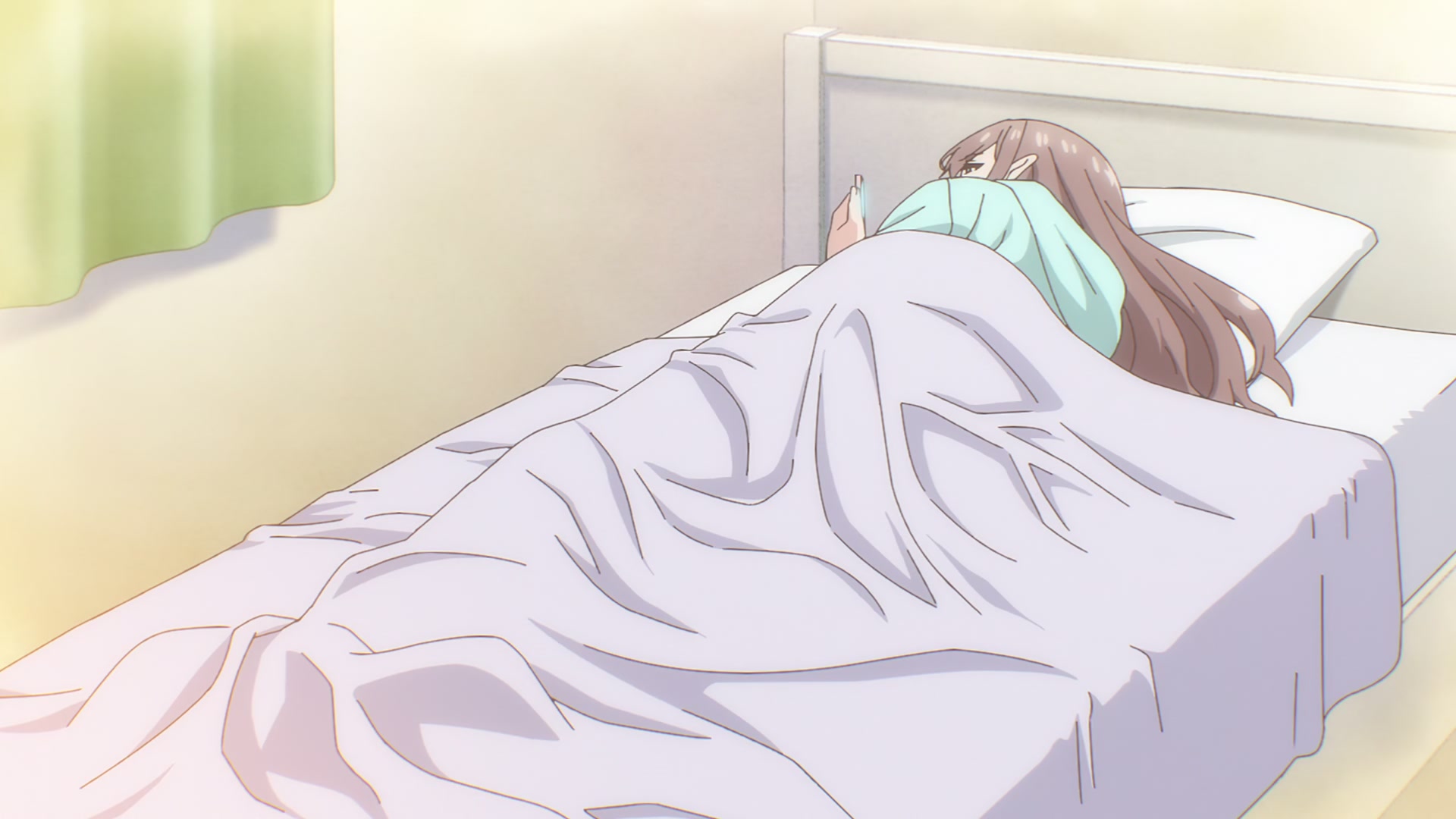
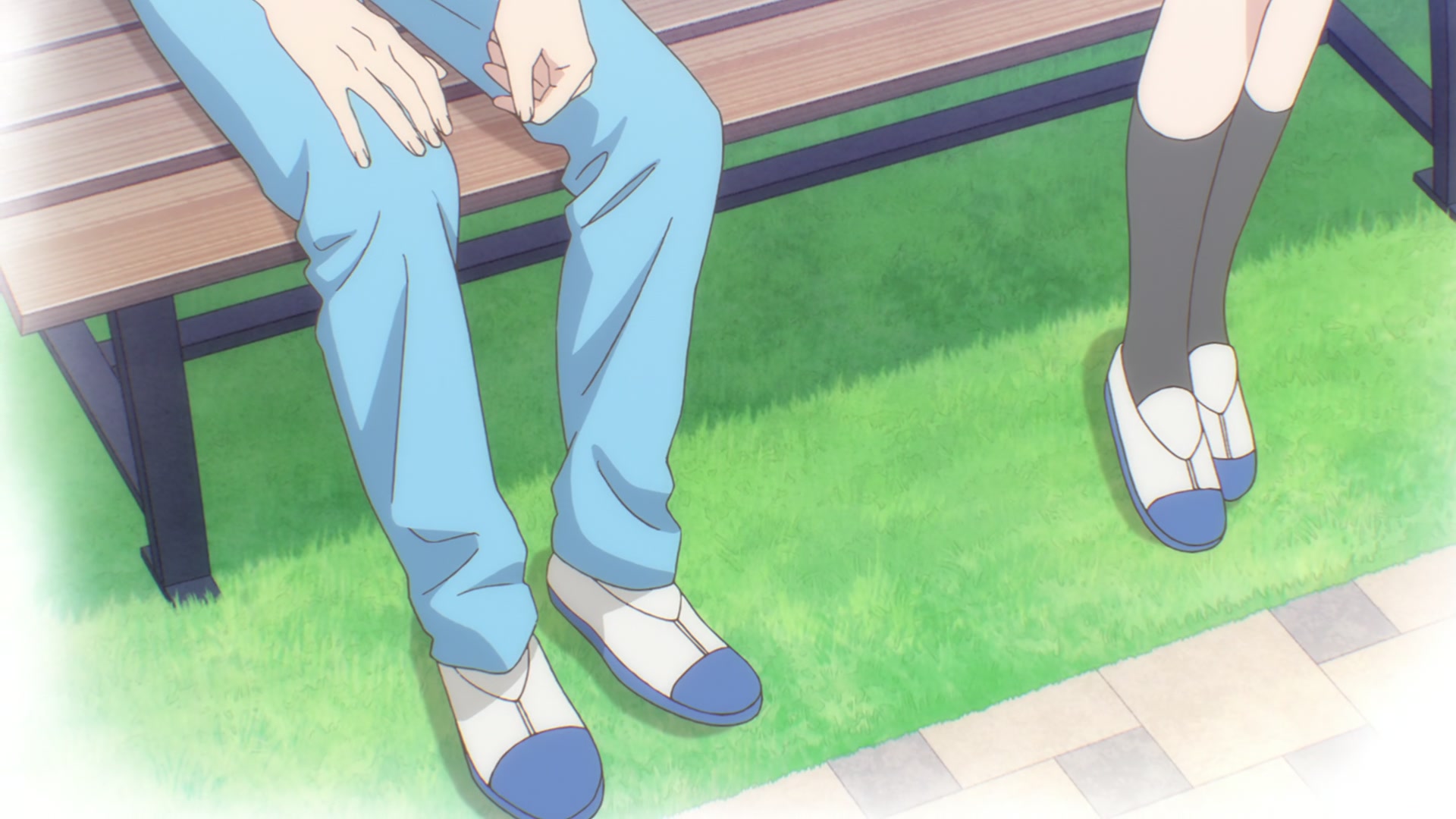
The series understands its strengths and plays to them. It invests its animation resources in the moments that matter: facial expressions during emotional confrontations, the quiet intimacy of hand-holding, the weight of a character sitting alone in a room. The static compositions are often genuinely beautiful. A still frame of Nao and Aki on the beach, or Sunao lying in bed with the afternoon light coming through the window, can carry as much emotional weight as a more animated sequence would.
This is a series that knows it cannot compete with action-heavy productions on animation fluidity, so it competes on atmosphere, composition, and emotional precision instead. For the most part, it succeeds. The visual strengths, atmosphere, color, facial acting, composition, compensate for the animation limitations. This is a series to watch for its emotional and aesthetic qualities, not for kinetic excitement.
Sound and Music
Opening and Ending Themes
The opening theme sets the tone for the series with its gentle, melancholic melody and lyrics that speak to themes of identity and connection. The animation accompanying it uses soft lighting and imagery of the characters in contemplative moments, establishing the visual language the series will employ throughout. It is not a high-energy opener designed to pump up the audience. It is an invitation to slow down and pay attention.
The ending theme provides a quieter, more intimate close to each episode, often beginning over the final scene before the credits roll. This technique, using the ED as a bridge between the episode’s emotional climax and the viewer’s return to reality, is employed effectively throughout the series. The song’s wistful quality lingers after the episode ends.
Voice Acting
The seiyuu performances are uniformly strong, with particular praise due to the actors playing the dual roles of original and replica. The voice work for Nao and Sunao requires conveying two distinct personalities who share the same voice, and the subtle differences in tone, Nao’s warmth and hesitancy versus Sunao’s sharpness and underlying vulnerability, are handled with precision. When Sunao’s voice cracks during her breakdown in the Kyoto hotel, the moment lands because the performance has earned it.
Aki’s voice work similarly distinguishes him from Shuuya. Aki is calmer, more measured, with an undercurrent of quiet determination. Shuuya is flatter, more guarded, the voice of someone who has been hollowed out by despair and is only beginning to refill. The contrast is subtle but effective.
Ryo’s voice carries a melancholy that suits her character perfectly. There is a weariness in her delivery, a sense of someone who has been carrying a heavy weight for a very long time. When she reads Suzumi’s letter aloud, the emotion in her voice is restrained but palpable.
The supporting cast is solid across the board. Ritsuko’s energetic delivery provides a welcome contrast to the more subdued main characters. Satou’s dry, practical tone suits her role as the group’s theorist. Yoshii’s loud, irreverent performance provides comic relief without becoming grating.
Sound Direction and Atmosphere
The series uses sound to reinforce its contemplative atmosphere. Ambient noise, the hum of a fan in the literature club room, the distant sounds of a school festival, the crash of waves on a beach, is deployed thoughtfully. Silence is used effectively as well. Some of the series’ most powerful moments are nearly wordless, carried by visuals and the absence of sound.
The soundtrack supports the emotional register of each scene without overwhelming it. The music knows when to step forward and when to recede. It is not a score that calls attention to itself, but it does its job with quiet competence.
Overall Verdict
Replica Datte koi wo suru is a quiet, lovely series that uses its supernatural premise to explore genuinely human questions about identity, love, and the parts of ourselves we cannot bear to face. It is not flashy, not fast-paced, and not always visually dynamic. But it is emotionally honest, thematically coherent, and ultimately moving.
The series’ greatest strength is its sincerity. It believes in its characters and its metaphor, and it follows both to their logical, bittersweet conclusion. Nao’s journey from self-erasing servant to someone who can claim her own desires, Sunao’s journey from defensive cruelty to vulnerable self-acceptance, Aki’s quiet courage, Ryo’s tragic devotion, these arcs are rendered with care and respect. The series never mocks its characters for their pain, never treats their existential dilemmas as trivial. It takes them seriously, and it asks the viewer to do the same.
The romance between Nao and Aki is one of the most tender and believable I have seen in anime. It is built on shared experience and mutual recognition, two people who see each other clearly because they share the same impossible condition. Their moments together, the zoo, the festival, the aquarium, the haunted house, the beach, are small and concrete, and they accumulate weight through repetition and sincerity. When Aki tells Nao he loves her, it means something because we have watched them earn that love.
The series is not without limitations. The animation is functional rather than impressive, with occasional moments of visible constraint. The middle section is denser than the early episodes, and Ryo’s story, while powerful, feels somewhat compressed. Shuuya’s arc is less developed than Sunao’s, leaving some emotional potential unrealized. The resolution, Nao merging back into Sunao, is emotionally satisfying but may not give every character the closure some viewers want.
But these limitations do not diminish what the series achieves. It is the kind of story that lingers after it ends, not because of plot twists or spectacle, but because it has said something true about what it means to be a person, even, or especially, when you are not sure you are one.
Who Should Watch This Series
This series is for viewers who enjoy contemplative, character-driven drama with supernatural elements used as metaphor rather than worldbuilding. It is for fans of works like Haibane Renmei, Natsume’s Book of Friends, A Silent Voice, or the more introspective Key adaptations. It is for anyone interested in stories about identity, self-worth, and the fragmented self. It is for people who appreciate quiet, atmospheric anime that prioritize emotional truth over plot mechanics.
Who Might Not Enjoy This Series
Viewers seeking action, comedy, or fast-paced plotting will likely be frustrated. Those who prefer their supernatural elements explained and systematized may find the series’ refusal to explain its premise unsatisfying. Anyone who finds slow, introspective pacing frustrating should look elsewhere. And viewers who need every character to get a conventionally happy ending may struggle with the series’ bittersweet resolution.
Final Rating
Highly Recommended. This is a series that knows exactly what it wants to be and executes that vision with sincerity and emotional intelligence. It is not for everyone, but for those who connect with its wavelength, it is something special.
The series ends with graduation. Sunao is whole, her kindness restored. Shuuya is healing. Ritsuko is still writing. The replicas, Nao, Aki, Ryo, have left their marks on the world and on the people who loved them. Ryo’s paintings hang in her grandparents’ home. Nao’s memories live on in Sunao. The final image is of the group writing messages on a board, moving forward into their futures.
It is a quiet ending for a quiet series. No grand revelations, no last-minute twists. Just the acknowledgment that life continues, that people change, that the fragments of ourselves we cast off can sometimes find their way home. For a series about people who are not sure they are real, it ends by affirming that love, memory, and the desire to be better are as real as anything gets.
Gallery