






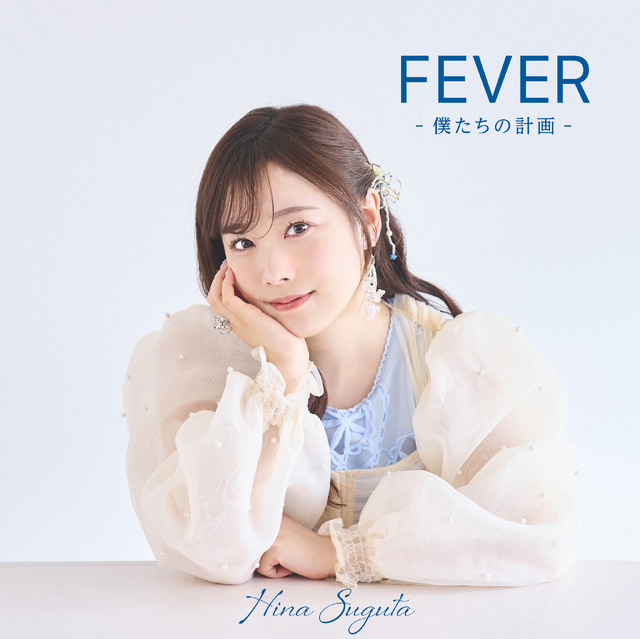
An interview series from the magazine “Megami Magazine,” titled “Megami’s Voice,” features artists who sing theme songs and opening/ending songs for anime and games, discussing their music. The July 2025 issue features Suguta Hinata, who is making her CD debut with her first full album, 『FEVER -Bokutachi no Keikaku-』.
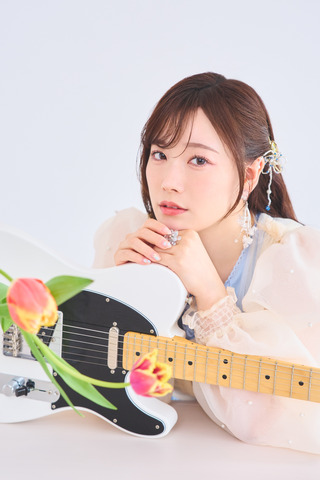
The Joy of Delivering Something Tangible
――Finally, your long-awaited CD debut!
I’ve released three songs digitally so far, and I was happy with just that, but I myself grew up excitedly buying CDs, so being able to deliver something in a tangible form like this makes me truly happy.
――What meaning did you put into the album title 『FEVER -Bokutachi no Keikaku-』?
When we were discussing the title, I felt like I couldn’t think of anything else besides “FEVER” in English and “Bokutachi no Keikaku” in Japanese. “FEVER” is used here to mean “slight fever,” conveying the idea that my artist activities have gradually heated up to reach this point. I also hoped that everyone’s hearts would feel a “fever” when listening to the album. “Bokutachi no Keikaku” (Our Plan) felt like it perfectly described the trajectory of this past year, and it also includes the feeling that I want to continue making plans together with everyone from now on. Since I couldn’t abandon either idea, I decided to use both.
――Out of the 10 songs included, the 7 songs that weren’t released digitally have been performed live. Were they originally created for live performances?
That’s right. The recording for all the songs except “Tadoritsuita Basho de Atashi O-netsu ga Dete iru,” which I performed at an acoustic live show, was finished before my first live performance. At that time, there was no talk about releasing them on CD.
――Perhaps because of that, the songs are quite diverse, aren’t they?
The digital singles “Lavender Blue,” “My Truth,” and “Bakka da na” form a single story across the three tracks, but the others are independent. I didn’t know which direction suited me best or what kind of songs the audience would like, so I had a strong desire to try any kind of song. However, since they were planned for live performance, the songs were created in a way that would make the band sound shine. I think because they are so varied, there’s probably at least one song that will resonate with everyone (laughs).
――How did you decide on the track order?
First, I placed the three digital singles at the beginning, followed by “Tadoritsuita Basho de Atashi O-netsu ga Dete iru,” which sings about the sense of unity with the fans. From the fifth track onwards, I decided to make them brighter towards the end, finishing with a cheerful and happy feeling. Many of my songs are about heartbreak, but among them, “DAYDREAM BEAT” and “ASTRO ESCAPE” are relatively positive, so I placed them near the end. The album concludes with “Suki datta,” which, even though it’s about heartbreak, gives a sense of clarity musically, ending on a bright note. I personally prefer a solid conclusion rather than a sudden climax at the end, so I incorporated my preferences into the order.
Digging Deeper into Each Track
――Could you tell us more about your feelings and memories about the production of each song? Let’s start with the three digital singles.
I wanted the first track to be “Lavender Blue,” which holds special memories as the start of my artist activities. It’s a positive song despite being about heartbreak, so I wanted to start on a bright note. Musically, “Lavender Blue” and “My Truth” depict the same girl but have different directions. So, I sang “Lavender Blue” cutely, “My Truth” coolly, and “Bakka da na” intentionally sang flatly without much emotional fluctuation. These three songs are filled with wordplay in the lyrics, especially “Bakka da na,” which is quite strong. The producer even told me, “We’ve got a crazy song,” and when I actually heard it, it far exceeded my imagination. It also incorporates the content of “Lavender Blue” and “My Truth,” which made me incredibly grateful to the lyricist, Kaneko Mayumi-san.
――The fourth track, “Tadoritsuita Basho de Atashi O-netsu ga Dete iru,” was only performed once at an acoustic live show, right?
It’s a song about the connection between me and the fans and the journey of the past year. Part of the album title, “Bokutachi no Keikaku,” was extracted from the lyrics of this song. It’s such an important song that the album wouldn’t be complete without it. I often sing by becoming the protagonist of the song, but this song feels the most like my own voice, as if I’m telling a story. For the recording, rather than adding many expressions, I aimed for the feeling of talking while looking at a photo album of memories, only adding a little warmth at the end. Since it was arranged for band sound to be included on the CD, it became more vibrant than the live version, and the addition of chorus parts added depth, giving it a different atmosphere from the live performance. I was honored to work with Kaneko Mayumi-san, who has previously written lyrics and even scripts for readings for me, as she was in charge of the chorus for this song.
――What kind of song is the fifth track, “Monday Night”?
It’s the most rock song on the album. I sang it with a raw, almost irritated emotion. However, even a slight deviation in pitch is immediately noticeable, so I made sure to sing it calmly and carefully. I think it’s clearer now how I wanted to sing this song compared to the live performance.
――What are the highlights of the sixth track, “Respiral no Hanataba”?
I played guitar on all the songs, but this track was particularly difficult due to its speed. The rhythm changes quite a bit, which makes it interesting but also challenging. There’s a percussive sound in the right ear, like a guitar string being hit by a pick, which is one of my favorite parts, so please listen for it.
――The seventh track, “N.O.,” is interesting because it includes spoken lines, isn’t it?
This song also had a difficult rhythm, but singing it was a lot of fun. It made me truly feel grateful for being a voice actress. I’m not sure how to describe it – is it singing or shouting? – but I hope you all try singing it too, maybe when you’re feeling a bit smug.
――There are parts where it sounds like you’re shouting to relieve stress, right?
The “No!” parts were recorded with languid voices and shouts and then mixed together, so the sound becomes progressively thicker. You’ll hear various “No!” sounds in the recording, so I hope you’ll try shouting along with me. If we ever get the chance to perform it live again, let’s shout together!
――The eighth track, “DAYDREAM BEAT,” as you mentioned earlier, is a slightly brighter song.
It was created by the drummer, Shibata Hisashi-san, and the drum beat is so cool! It’s a positive song, so it makes you feel energetic whether you’re listening or singing it. I resonated with many parts of the lyrics, like not worrying about small things and accepting things as they are, so I was able to sing it smoothly.
――The ninth track, “ASTRO ESCAPE,” was also composed by Shibata-san, wasn’t it?
That’s right. I think this one is a song about a cute yet strong-willed girl. She’s very confident, thinking there’s no one else like her. It also has a cute feeling, as if she’s drifting through space while unable to hide her excitement about what’s going to happen next. Before, I used to struggle with how to approach singing as Suguta Hinata, but recently I’ve come to realize that I should just sing by expressing the image that comes to mind when I hear the song. So, in this song, I completely became the protagonist and sang. However, since the impression is quite different from the previous songs, some people might think it’s a song by someone else (laughs).
――And the album concludes with “Suki datta.” This one has a refreshing quality that is different from the impression you get from the title.
It’s a sad, pure love song, but the melody is bright and has a sense of speed. The protagonist has a feeling of clarity without any lingering regrets, so I feel that singing it with a bright, clean tone further highlights the sadness of the lyrics. Also, when I performed it at the acoustic live show, it had a very sad resonance, but with the band sound, the impression changes considerably. I hope people can feel the sadness within the brightness.
――Among the diverse songs, which one was the biggest challenge?
Cool songs like “Monday Night” and “My Truth” were difficult because I couldn’t just sing them with momentum. Also, “Respiral no Hanataba” had abstract lyrics, making it difficult to interpret their meaning. I think those three songs were the challenging ones.
The Joy of Playing Guitar
――You played guitar on all the tracks. What was the experience of recording like?
I never dreamed that I would be recording guitar. I do band activities as part of content creation, but I haven’t had many opportunities to hear my own sound combined with someone else’s sound, so I was happy to think that I could be a member of a band. Especially in “DAYDREAM BEAT,” I can hear my own performance very clearly. Guitar is profound, and I haven’t reached a level where I can say I can do it confidently, so I still feel a mix of embarrassment and excitement. But the other day, after the acoustic live show, when I was talking with Riyaju Born, who did the arrangements, they told me, “You should be more confident,” and now I feel like it’s okay for me to just go for it (laughs). I can only play a few songs live right now, so I’m secretly hoping to be able to perform more songs together.
――What do you think is the charm of the guitar?
The sound is cool (laughs). With an electric guitar, it’s also interesting how you can change the sound in so many ways with just one instrument. Bass and drums are cool too, but I like how the guitar has that clear “I’m playing!” feeling. I don’t feel like I could support the band’s sound like bass or drums (laughs), so I’d probably choose the guitar even if I could go back in time and form a band.
――Looking back, what kind of CD do you feel this finished album became?
It became an album where the personalities of the songs clash. It’s filled with songs that hold memories, so it’s an album that makes me want to say thank you to the fans.
――Speaking of albums, the booklet is an essential element, isn’t it?
We took a lot of pictures, so I think it will be fun just flipping through it. Also, you can display it or use it for promoting, so please enjoy supporting your favorite artist to your heart’s content (laughs).
――It truly became an album packed with memories and charm, didn’t it?
That’s exactly right. It’s something I’ve long awaited, and I hope it is for everyone else too. It became a very good album that is the culmination of my artist activities over the past year. I hope we can continue to make plans and move forward together from now on, so please listen to this album, let your hearts feel the “fever,” and continue to support me in the future.
Profile
Suguta Hinata / Born April 17th. From Hyogo Prefecture. Made her artist debut in April 2024 with the digital single “Lavender Blue.” Has released 3 digital singles to date. Major voice acting roles include Kitagawa Marin in 『Sono Bisque Doll wa Koi wo Suru』 (also known as *My Dress-Up Darling*), among others.
Information
『FEVER -Bokutachi no Keikaku-』
Now on sale
Nippon Columbia
3300 yen (tax included)
Suguta Hinata’s first full album CD debut. Includes a total of 10 songs: 3 digitally released songs, 6 songs performed live, and 1 song performed at an acoustic live show. Suguta herself participates on guitar on all tracks, showcasing a diverse range of vocal performances and playing.
《Megami Magazine Editorial Department》
_