



For many Heisei girls, Cardcaptor Sakura was an unavoidable part of growing up. Airing on NHK during the early evening golden time, it was accessible to nearly everyone across Japan. But beyond its wide reach, CLAMP’s dazzling character designs and costumes, combined with a classic magical girl story about saving the world, made it irresistible to elementary school girls everywhere.
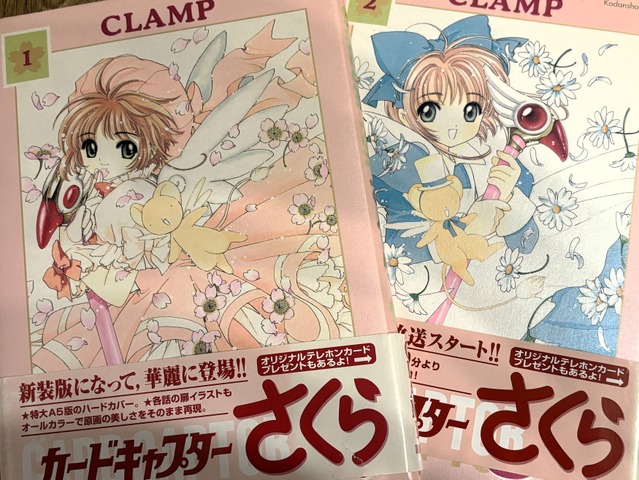
Yet this series had more layers than a simple magical girl tale. Let’s take a nostalgic look back at what made it so special—and how it quietly opened the door to otaku culture for a generation.
What is Cardcaptor Sakura?
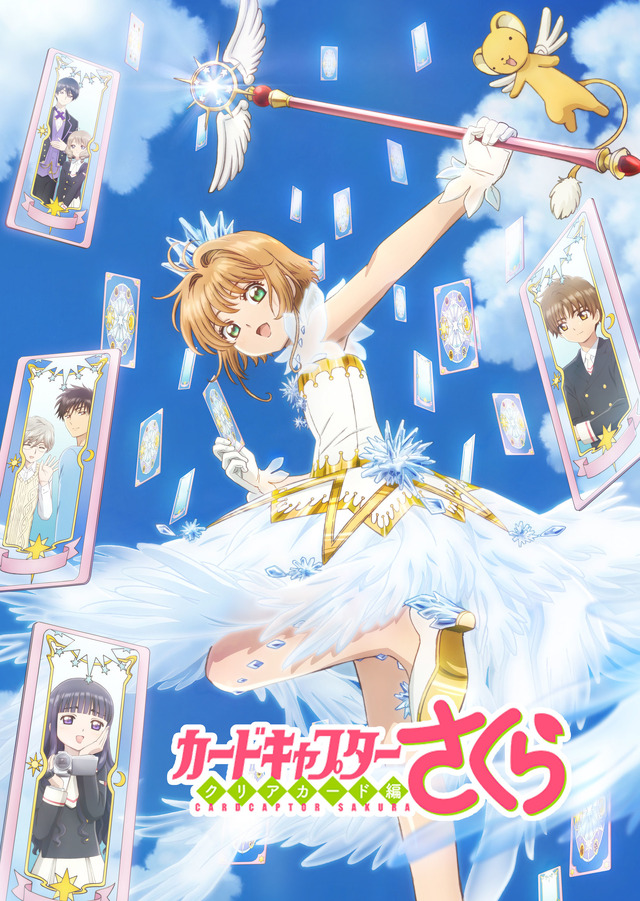
The manga was serialized in the monthly shojo magazine Nakayoshi from June 1996 to August 2000, created by CLAMP. It follows Kinomoto Sakura as she takes on the role of “Cardcaptor” to collect the Clow Cards, which are said to bring disaster to the world. The original series spans 12 volumes. In 2016, for the 20th anniversary, a new arc titled Cardcaptor Sakura: Clear Card began, running for seven and a half years with 80 chapters across 16 volumes. In 2023, the anime celebrated its 25th anniversary, and a sequel to the Clear Card anime was announced.
Sakura-chan is too cute: “Hanyaan!”
The TV anime began on April 7, 1998. The author recalls first meeting Sakura in Nakayoshi before the anime aired, mistakenly thinking it was a horror manga because of the cover featuring a candle. But the anime changed everything: a girl hopping across Tokyo Tower, magical circles and wands, and catchphrases like “hoee” and “hanyaan.” With a stylish uniform and roller skates, she was the ultimate magical girl. How many Heisei girls bought roller skates hoping to be like her? The author certainly did.
The person Sakura likes, and the person that person likes… wait a minute
Then there’s Yukito (Tsukishiro Yukito), her older brother Touya’s friend. The name alone is thrilling. Yukito gives Sakura candy, but he and Touya ride to school on the same bicycle—illegal in modern times, but dreamy. Their closeness—feeding each other cake, touching faces, princess carries, wall slams—goes far beyond friendship.
And then there’s Tomoyo, Sakura’s best friend. She speaks politely, is the heiress of a major corporation with bodyguards, but her real obsession is Sakura. She designs and sews costumes for Sakura’s card-capturing missions, gazes at her in them, and films her battles. It’s like idol fandom.
Arrows of affection point everywhere! It’s a shojo manga after all
Li Syaoran, the transfer student from Hong Kong, also has a crush on Yukito. Tomoyo’s mother Sonomi dotes on Sakura’s mother Nadeshiko. And Sakura’s classmate Rika is dating their homeroom teacher Terada. As a child, this seemed mature, but now it raises eyebrows. Yet in the fantasy world of anime and manga, these feelings are portrayed with such sincerity that worrying feels out of place.
When the true nature of the Clow Cards’ “disaster” is revealed, the weight of it didn’t fully register at first. But rereading the series, one sees that everyone’s “love” takes many forms—joy, excitement, sadness, and the strength to protect. Age and gender don’t matter; liking someone is simply liking them. The desire to be kind, to cherish others, and the joy of shared time are at the core, alongside the magical girl story.
In short, this series contains BL, yuri, age-gap romance, and magical girl tropes all in one. It was a source of admiration and a discovery of new “likes” for Heisei girls. With CLAMP’s other works like Magic Knight Rayearth starting its new anime in autumn, many Heisei girls fell into the otaku swamp. Heisei girls and Reiwa girls alike are invited to dive in.


![Speaking of Clean Characters? Survey Deadline is May 25 [#GomiZeroDay]](https://animeworld.info/wp-content/uploads/2025/05/766970.png)