


Introduction
There is a moment in every long-time anime fan’s life when a series stops being just entertainment and becomes something you carry with you. For me, Mushoku Tensei is that series. It arrived in a genre that has become synonymous with wish fulfillment and power fantasies, and it did something quietly radical: it took the premise seriously. A shut-in dies alone and is reborn in a world of sword and sorcery, but his new body does not erase who he was. His shame, his fear, his perversion, and his desperate desire to be loved all come with him. What follows is not a story about becoming overpowered. It is a story about learning to live.
The series follows Greyrat Rudeus, a prodigy in magic who can cast without incantations and who learns at a frightening pace. But his brilliance is constantly undercut by his emotional immaturity. He manipulates adults, spies on women, and treats early relationships like dating sims. The series does not excuse this; it examines it. Rudeus is a work in progress, and Mushoku Tensei is honest about how slow and painful that progress can be. This is not a show for viewers who want their protagonists flawless from the start. It is a show for viewers who understand that people are messy, that growth is non-linear, and that the people who save us are often the ones we least expect.
If you value character-driven storytelling, emotional honesty, and a world with genuine history and weight, Mushoku Tensei will reward you. If you need a protagonist you can admire without reservation, it will frustrate you. But for those willing to sit with its flaws, it is one of the most emotionally intelligent anime in recent memory.
Story and Themes
Mushoku Tensei is structured as a long journey, not a single arc. It moves from Rudeus’s infancy to his childhood, from his apprenticeship under Roxy to his tutoring of Eris, from the mana cataclysm that scatters his family to the long, dangerous road home. The pacing is deliberate. Early episodes establish the rhythms of daily life: lessons, meals, small conflicts, quiet moments. Later episodes expand into adventure, political intrigue, and cosmic conflict. The series earns its emotional payoffs by spending time on the ordinary before asking us to care about the extraordinary.
The narrative is built around a series of departures. Roxy leaves after Rudeus’s graduation exam. Eris leaves after their first night together. Ruijerd leaves after escorting the party to safety. Paul dies in the Teleporter Labyrinth. Each departure reshapes Rudeus, forcing him to confront what he has lost and what he must become. The series does not treat these as mere plot points. It dwells on the aftermath, letting grief and confusion take up space.
The major themes are woven through every arc. The first is second chances. Rudeus is reborn, but his trauma comes with him. He is still the person who hid from the world for twenty years. His new body and new family give him opportunities, but they do not cure him. Growth is presented as a long, uneven process full of relapses. The series never suggests that a second chance is a reset button. It is a new set of circumstances, and what you do with them depends on the work you are willing to do.
The second theme is family. The Greyrat household is not a traditional happy family. Paul is unfaithful. Lilia is complicit. Zenith forgives in ways that seem almost saintly. The family expands through infidelity, adoption, and polygamy, and yet it works. The series presents family not as a biological given but as a commitment. This extends beyond blood. Ruijerd becomes family. Zanoba becomes family. Julie becomes family. Nanahoshi becomes something like a sibling. The people who save you are not always the people you were born to.
The third theme is prejudice. The Sperd are feared because of their green hair and third eye, hated because of atrocities committed during a war they were manipulated into. Ruijerd’s entire arc is about proving that reputation is not destiny. The beastkin face similar discrimination. Sylphiette is bullied for her hair color. Roxy is an outcast in her own village because she cannot use telepathy. The series does not pretend prejudice is easily overcome. Ruijerd knows his people’s name may never be cleared. But he keeps trying. The message is that you do the work anyway.
The fourth theme is power and responsibility. Perugius represents one answer to the question of what strength is for: self-interest. He helps when it suits him and refuses when it doesn’t. Cliff represents the opposite: the strong have a duty to help the weak. Rudeus falls somewhere in between. He uses his power to protect his family, but he also uses it for personal gain. The series does not resolve this tension. It keeps asking the question.
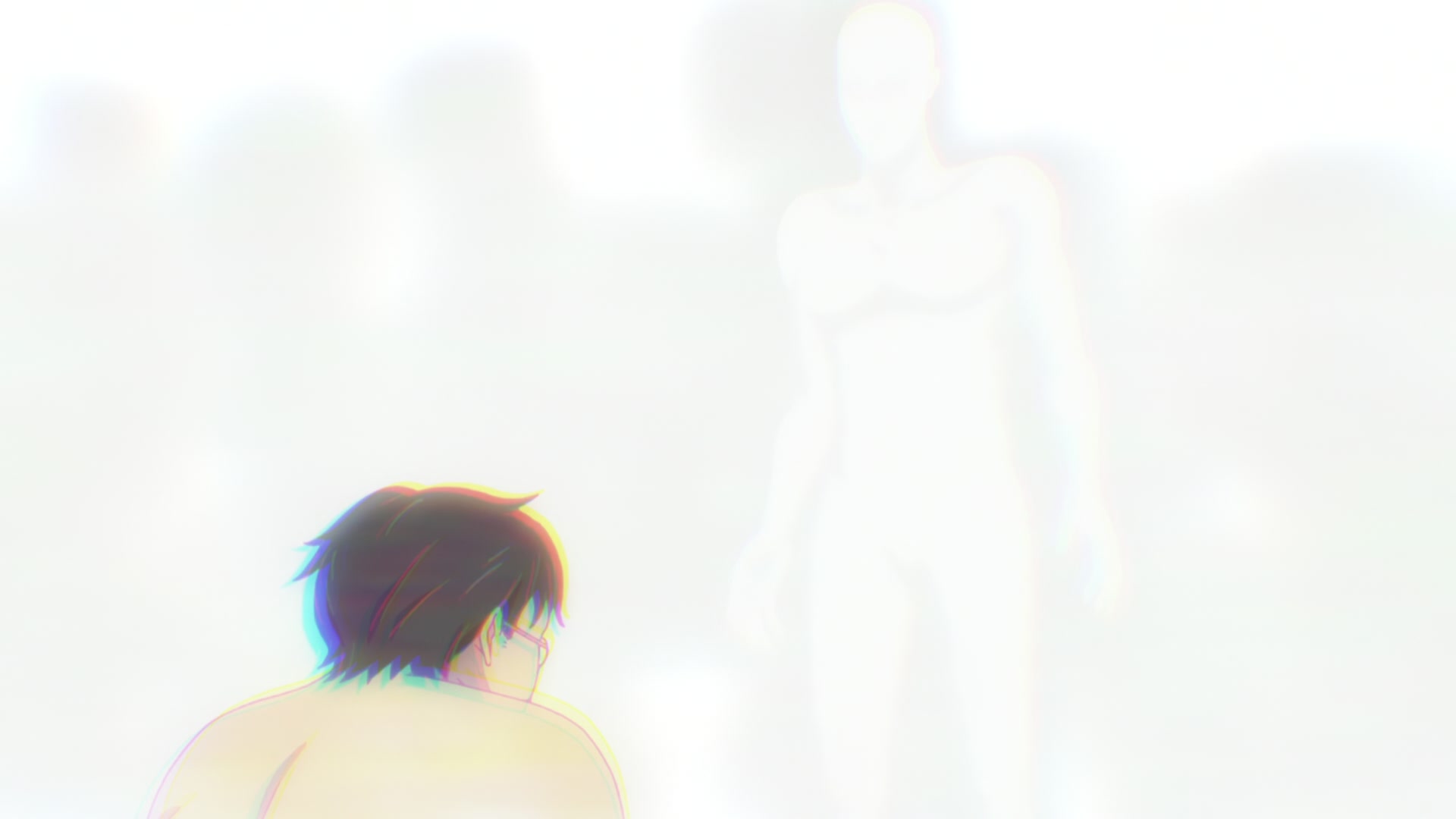
And then there is the theme that sits at the heart of everything: regret. Oldeus, the future version of Rudeus, is a walking monument to regret. He lost everyone he loved because he trusted the wrong person. He traveled through time to warn his past self, and his final words are a plea not to make the same mistakes. The series does not say that regrets can be undone. It says that regrets can be avoided, but only through vigilance, humility, and the willingness to question the voices that claim to help you.
The cultural context of the series is deeply Japanese. Rudeus’s shame about being a NEET is specifically Japanese, tied to the social pressure to work, contribute, and not be a burden. His reclusiveness is treated as a moral failing, not a neutral lifestyle choice. His redemption involves becoming a productive member of society: a teacher, a husband, a father, a homeowner. The polygamous family structure is unusual for Japanese fiction, which tends toward monogamous romance. The series presents it as a practical solution to specific circumstances rather than a utopian fantasy. Zenith’s anger and eventual acceptance are given weight. Lilia’s position as a concubine is not glamorized.
The series is also an isekai, and it knows it. Rudeus’s internal monologue is saturated with references to dating sims, RPGs, and light novels. The series uses this self-awareness to comment on the genre while also indulging in its pleasures. Rudeus expects a power fantasy because that is what he has read. What he gets is a world that is indifferent to his expectations. The Man-God, a smiling voice that offers helpful advice, is a brilliant meta-commentary on the genre’s tendency to hand protagonists convenient guidance. He is the voice that tells the hero what to do, and the series slowly reveals that this voice is not a friend.
As an anime-only viewer, I cannot judge what the adaptation has changed, cut, or compressed. I have not read the light novels or the manga. What I can say is that the anime feels complete. It does not leave major gaps or unresolved threads that suggest missing material. The pacing is deliberate, but it rarely drags. The world feels lived-in, with customs, prejudices, and economies that exist beyond the protagonist’s needs. If source readers have complaints about cut subplots or simplified internal monologue, I cannot verify them. What I can verify is that the story on screen works. It is emotionally coherent, thematically rich, and consistently engaging.
Characters
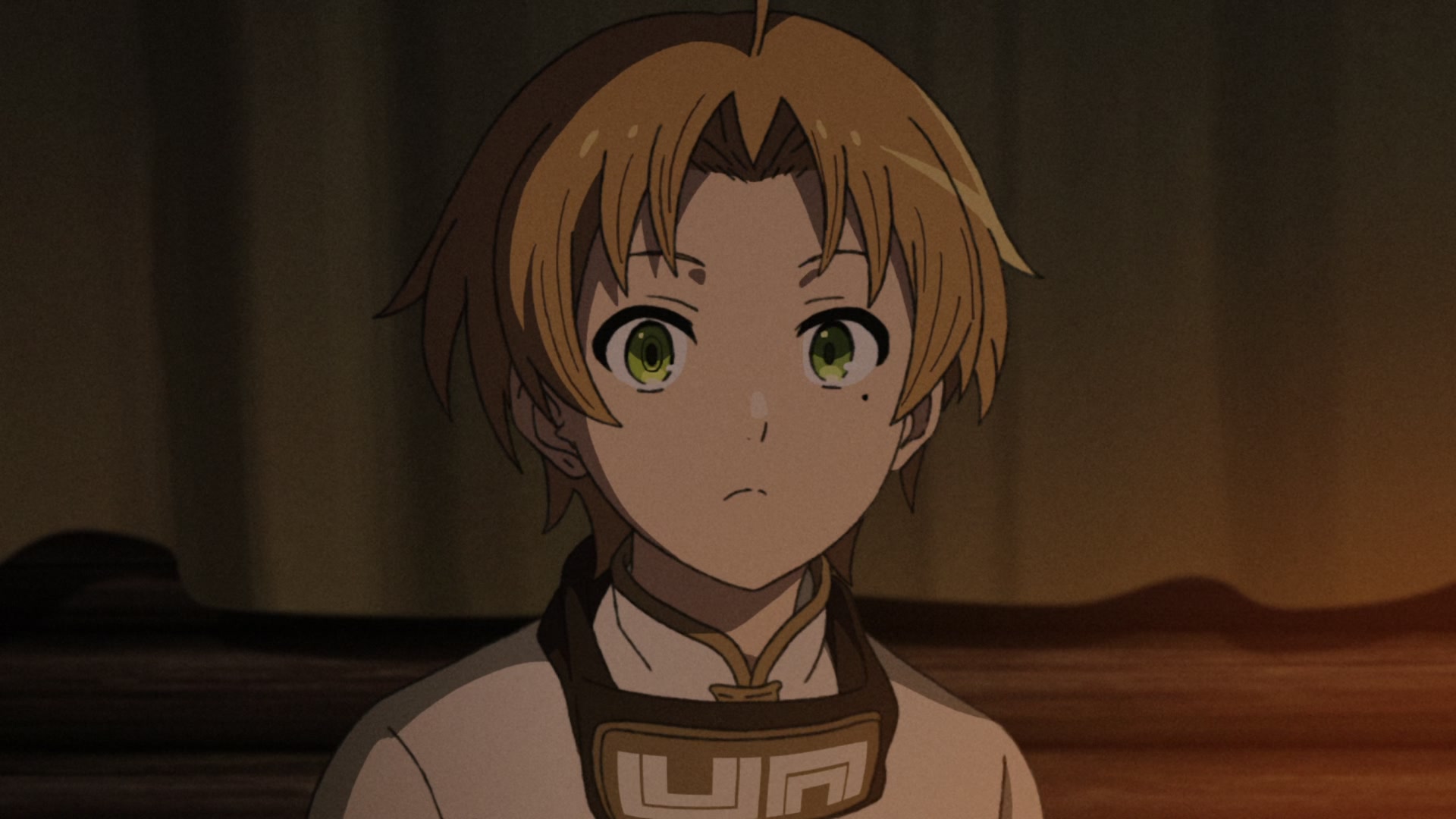
Rudeus is the series’ greatest strength and its most difficult element. He is a genuinely flawed protagonist, perverted, calculating, and cowardly, who is also capable of profound growth. His arc across three seasons is from isolation to family, from shame to acceptance, from passive observer to active protector. His emotional conflicts are specific and well-drawn: fear of abandonment, sexual shame, guilt over Paul’s death, distrust of the Man-God. The series never lets him off the hook entirely, but it also never gives up on him. His recovery from erectile dysfunction is treated with genuine empathy, not as a joke. It is the physical manifestation of his fear that no one will stay, and his healing comes through trust, not performance.
Paul is the father who tries, fails, and tries again. He is not a model parent. He hits Rudeus without listening. He has an affair. He drinks too much. But he also leads the search for Zenith, protects his family, and dies showing Rudeus what a father’s sacrifice looks like. His death is the emotional climax of the second season. It forces Rudeus to grow up, to take responsibility, and to accept that he cannot save everyone. Paul’s relationship with Rudeus is one of the most important in the series, defined by rivalry and reconciliation. He is proud of Rudeus’s talent but also threatened by it. He is impulsive, prideful, and a poor communicator, but he is also brave, charismatic, and capable of genuine love.
Sylphiette is the emotional anchor of Rudeus’s new life. She is patient, kind, and committed. Her disguise as Fitz allows her to observe Rudeus without pressuring him, and her eventual revelation is earned. She is not a passive love interest. She takes initiative, sets boundaries, and builds a life for herself. Her acceptance of Roxy is a major character moment. She does not simply tolerate her husband taking a second wife; she welcomes Roxy because she understands what Roxy did for Rudeus. This maturity sets her apart from typical harem dynamics. She is a devoted mother, a capable bodyguard, and a person with her own trauma and growth.
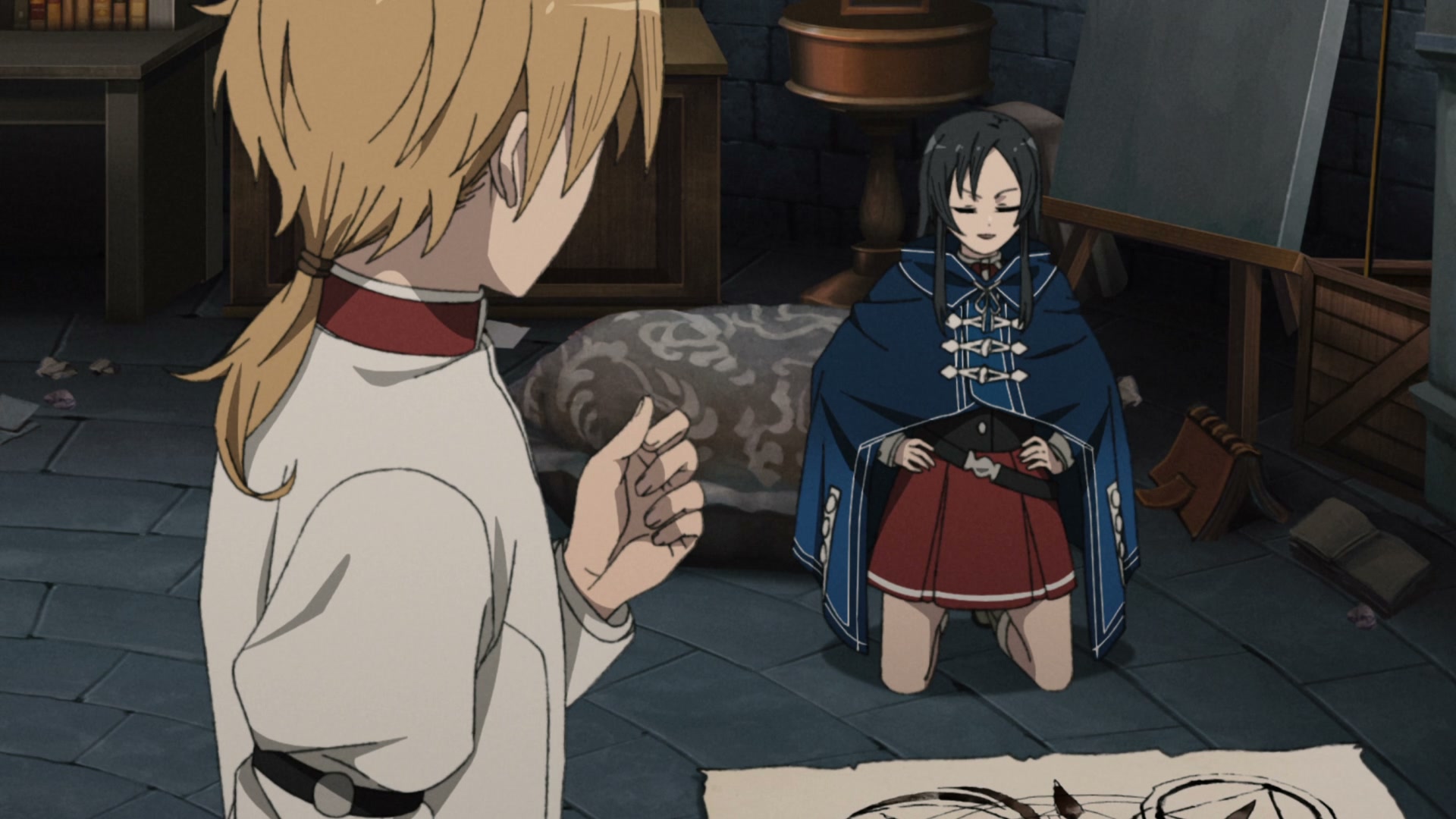
Roxy is the teacher who becomes a wife. Her arc is about finding a place where she belongs. She is an outcast from her village, a tiny mage in a world that judges by appearances. Teaching Rudeus gives her purpose. Rescuing her from the labyrinth gives Rudeus a chance to save someone he loves. Her emotional vulnerability, her fear of being too small, too childish, is handled with sensitivity. Her relationship with Rudeus is built on mutual respect. She calls him a master who saved her by becoming her student.
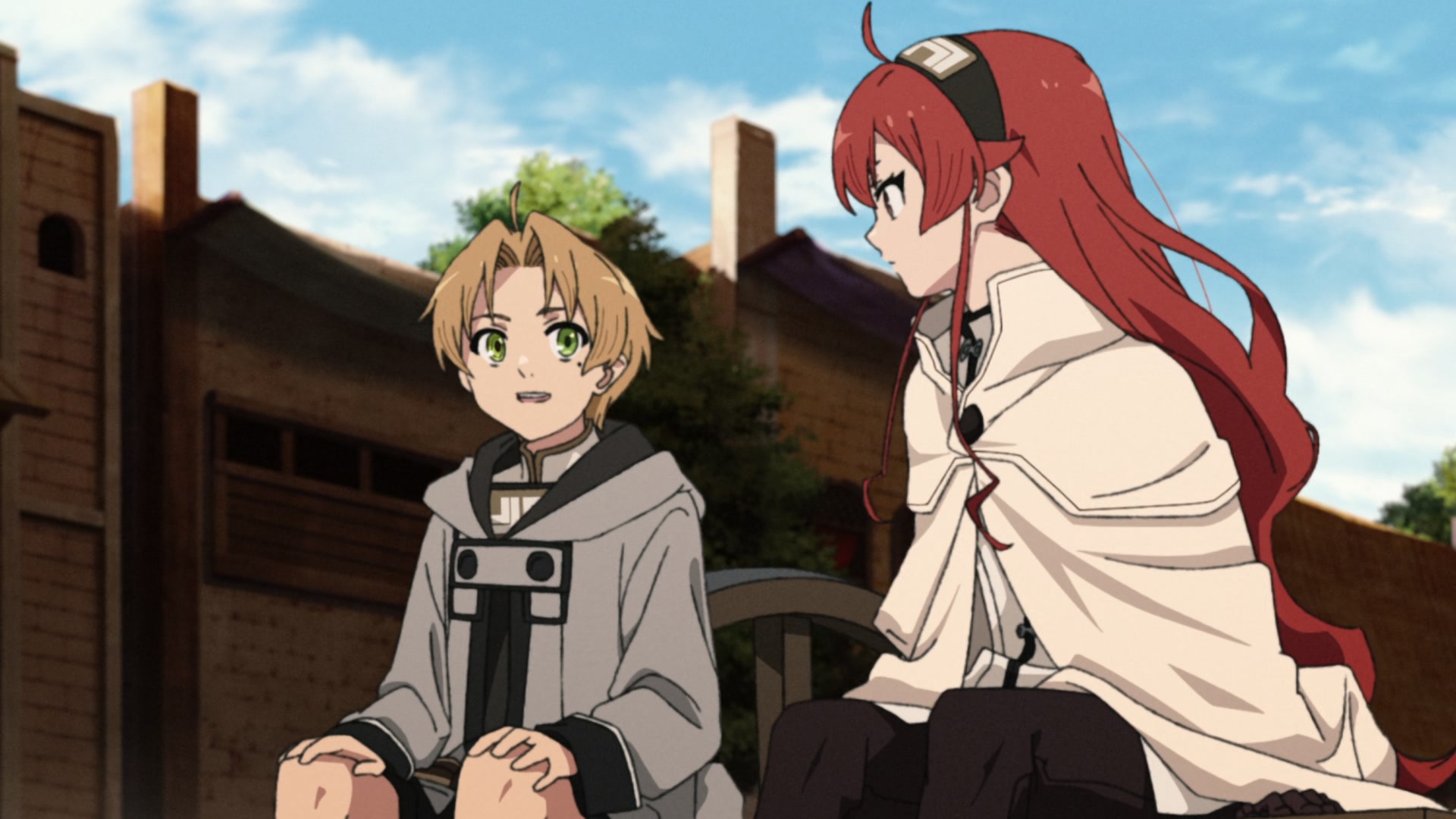
Eris is a fascinating case study in miscommunication. She leaves Rudeus not because she doesn’t love him but because she feels unworthy. She believes she is too weak to stand beside him, and she commits herself to becoming strong enough. Her arc across the third season is a masterclass in showing rather than telling. She trains, she fights, she becomes a Sword King, all while carrying a torch for a man she may never see again. The tragedy of Eris is that her feelings are genuine, but she cannot express them. She is terrible with words. She acts through violence and presence. Oldeus’s revelation, that Eris loved him the whole time and died protecting him, retroactively recontextualizes the entire series.
Ruijerd is the series’ moral center. He is a man judged by his race who refuses to become bitter. He protects children, honors his word, and carries the weight of his people’s genocide without collapsing. His relationship with Rudeus and Eris is one of mutual education. They teach him that trust is possible; he teaches them that strength should protect the weak. He is gentle, honorable, and deeply protective of children, despite his terrifying reputation. His goal is to restore the Sperd’s reputation, though he knows it may be impossible. He is one of the few characters in the series who is almost entirely good without being boring.
The supporting cast is equally strong. Zanoba is a Blessed Child with immense physical strength who accidentally killed his younger brother and has been feared ever since. He is obsessed with figures and becomes Rudeus’s loyal pupil and friend. Despite his terrifying strength, he is gentle, polite, and emotionally vulnerable. Cliff is a genius mage and a devout follower of Millis who falls in love with Elinalise and dedicates himself to curing her curse. He is arrogant, opinionated, and quick to anger, but also brave, loyal, and kind. Elinalise is cursed to have sex regularly or die. She was rescued from a labyrinth two hundred years ago and lost her memories. She is shameless, flirtatious, and blunt, but also wise, loyal, and deeply caring. Nanahoshi is a Japanese girl who was teleported to this world rather than reincarnated. She has no mana, does not age, and cannot use magic. She is cold, impatient, and obsessed with returning home. She and Rudeus share a bond as otherworlders, but she keeps many secrets. Their relationship is not romantic, but it is deeply intimate, two displaced people trying to survive in a world that is not their own.
The character writing is exceptional. Even minor characters have arcs, motivations, and moments of growth. The series does not treat anyone as disposable. Norn’s reconciliation with Rudeus, Aisha’s quiet competence, Lilia’s complicated loyalty, Gyes’s regret over Ghislaine, Tona’s admiration for Eris, all of these are given weight. The series understands that people are shaped by their relationships, and it takes the time to show those relationships developing.
Visuals and Animation
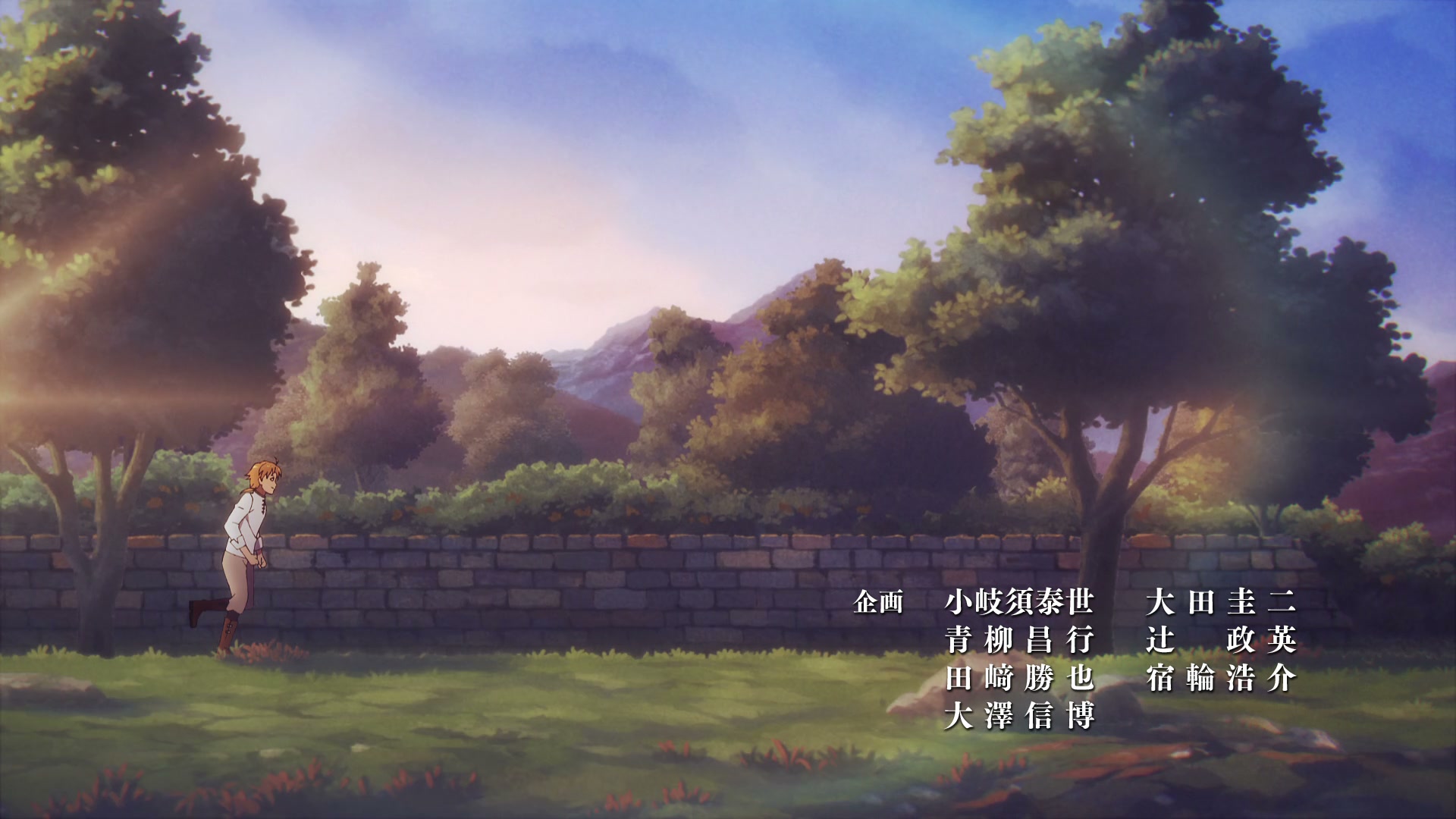
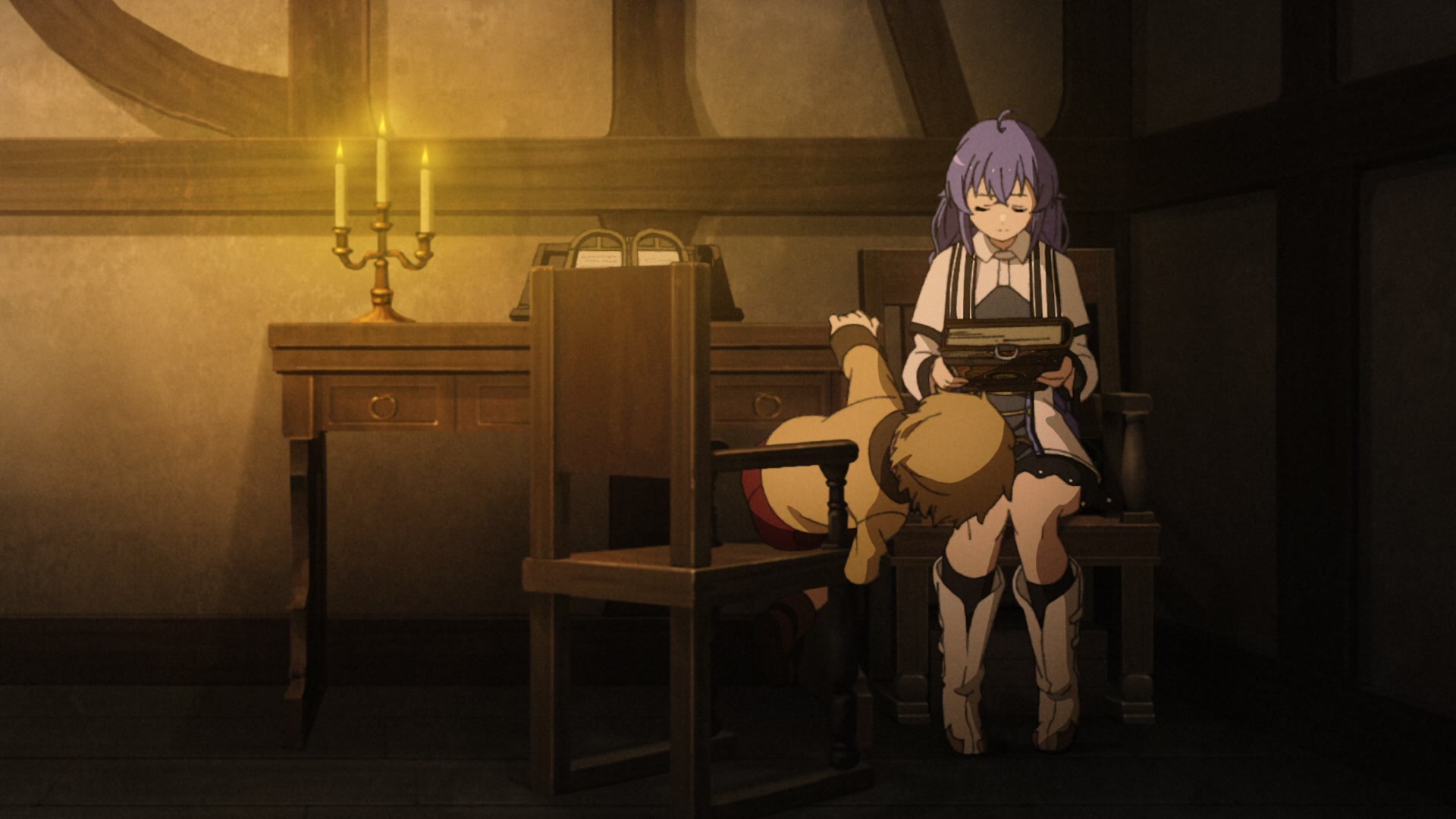
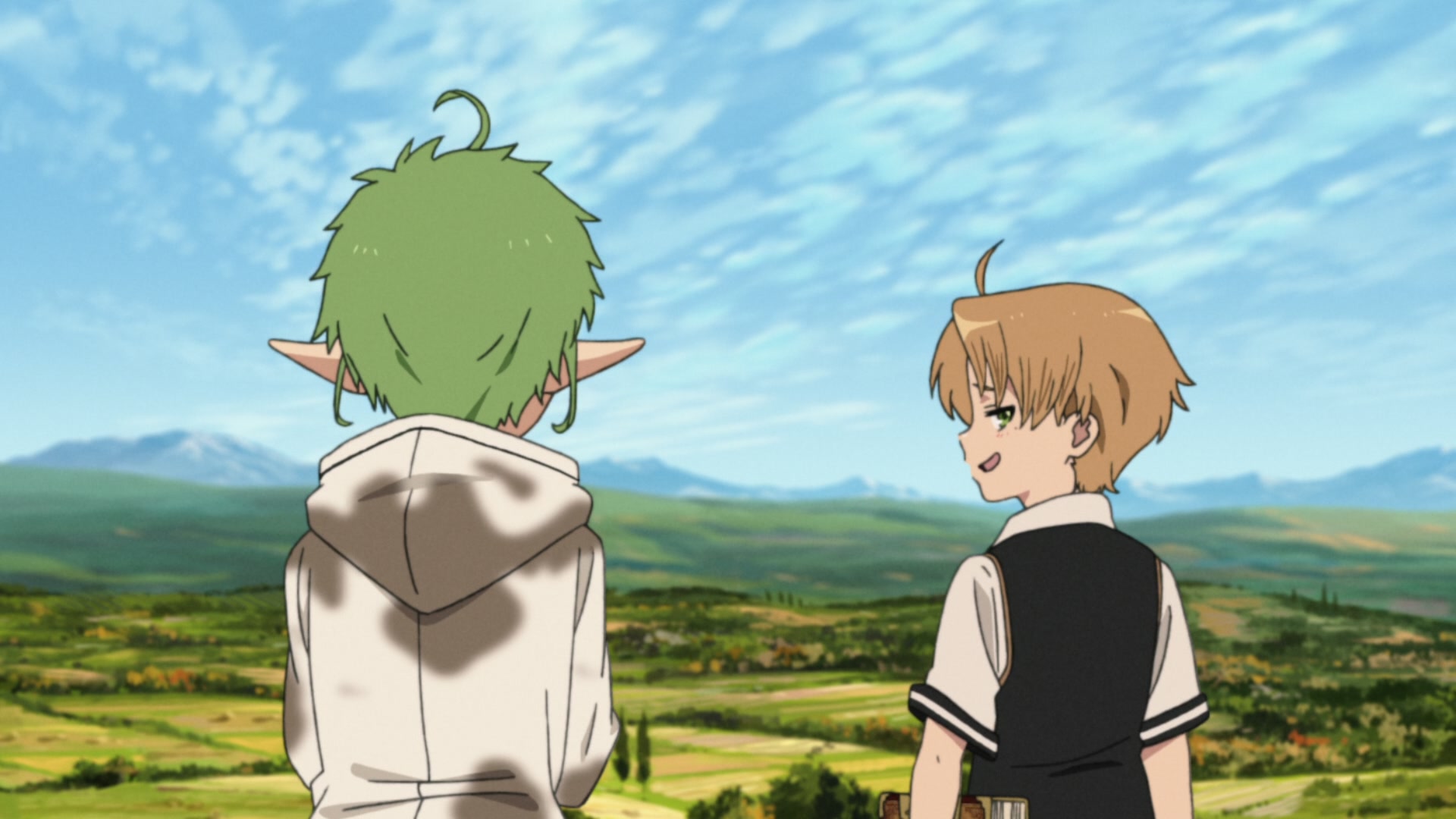
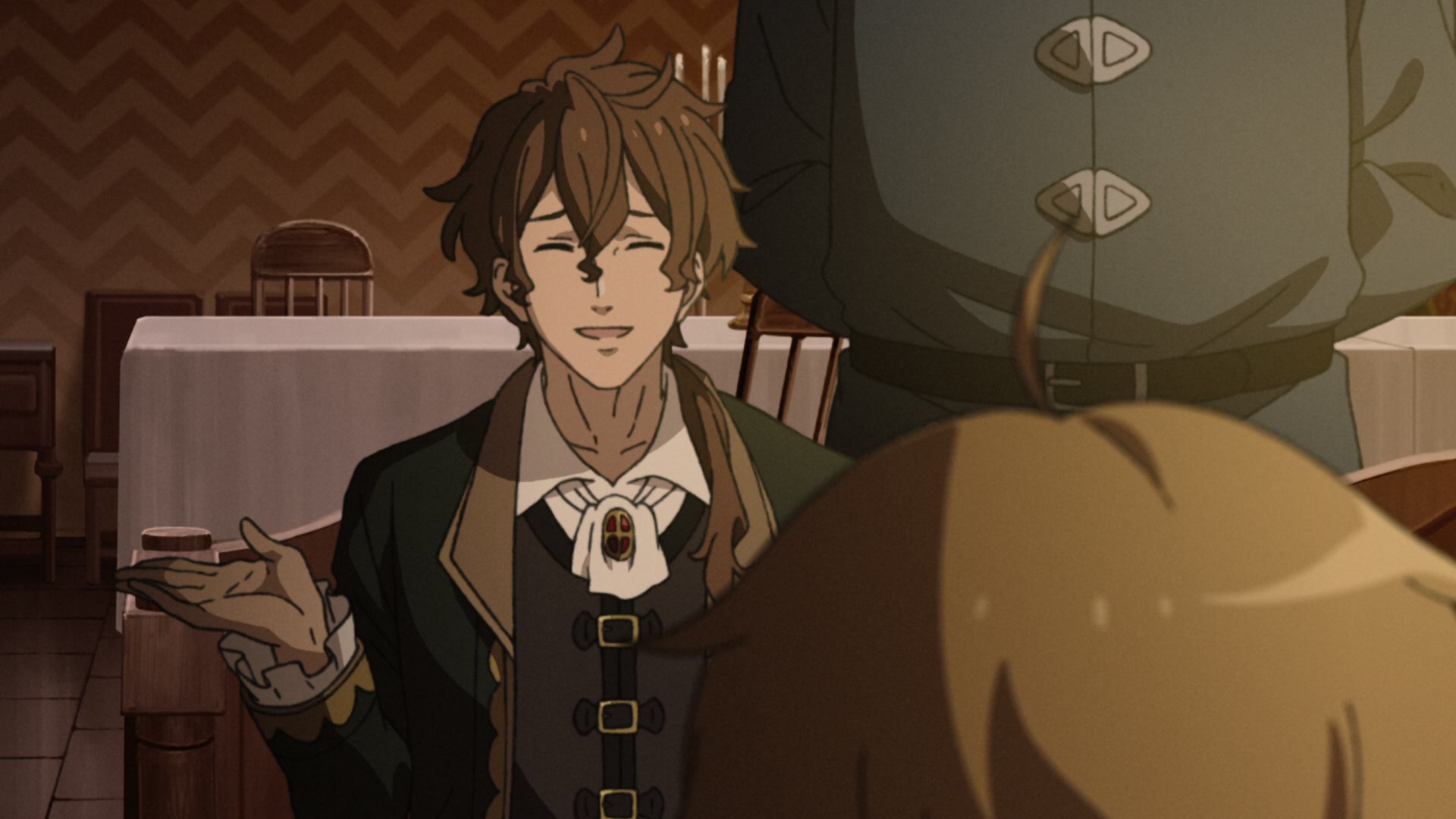
Mushoku Tensei has a deliberate visual identity rooted in muted, earthy fantasy. The art direction favors warm browns, ochres, desaturated greens, slate blues, and selective amber accents over saturated spectacle. This is not a production chasing visual bombast. It treats color as emotional indexing, shifting scene by scene to establish mood rather than continuity. Scenes move from warm amber interiors to cold blue-grey corridors to green-tinted throne rooms to purple-washed despair. This color scripting is deliberate and effective, keeping dialogue scenes visually distinct even when staging is static.
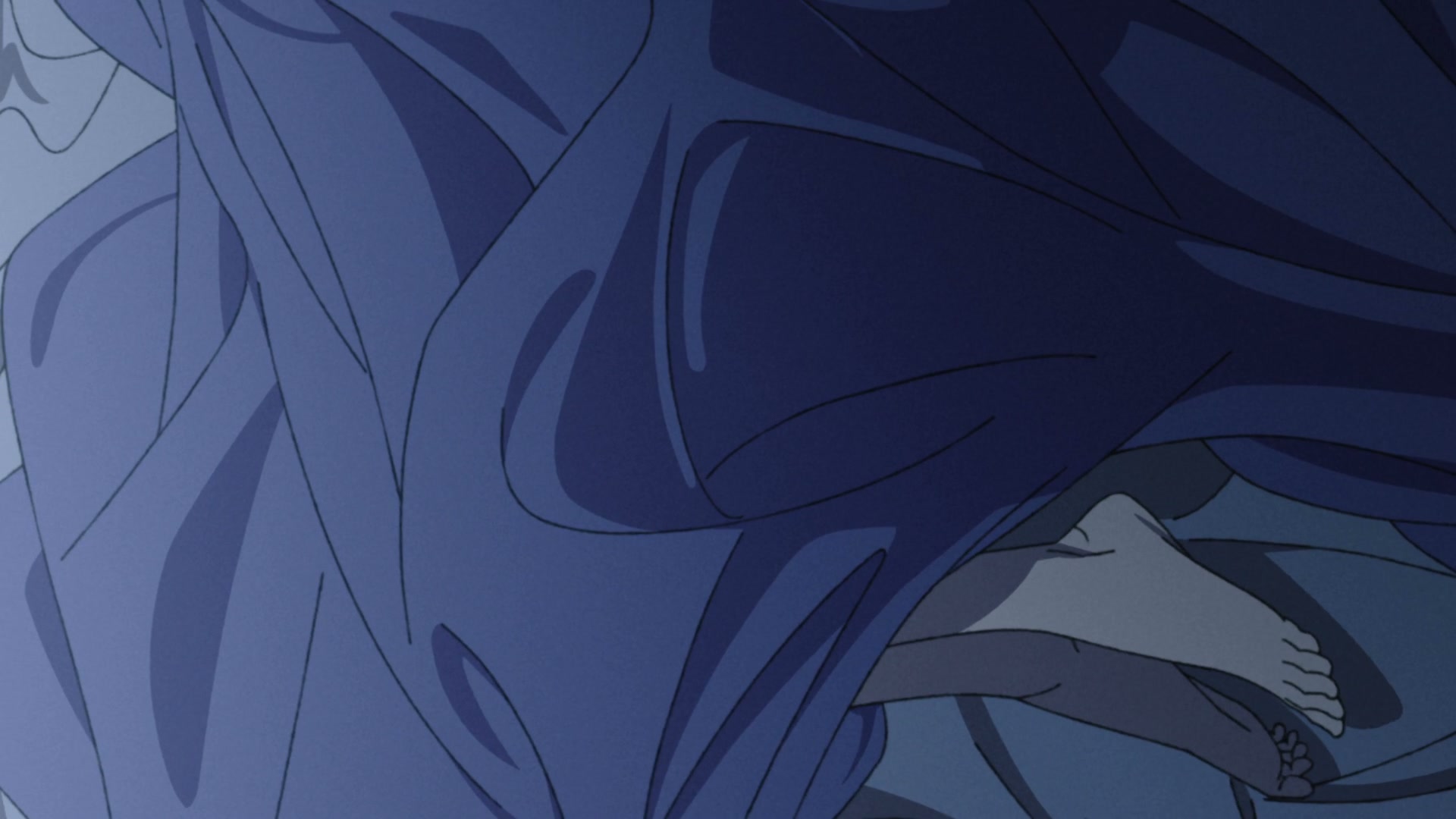
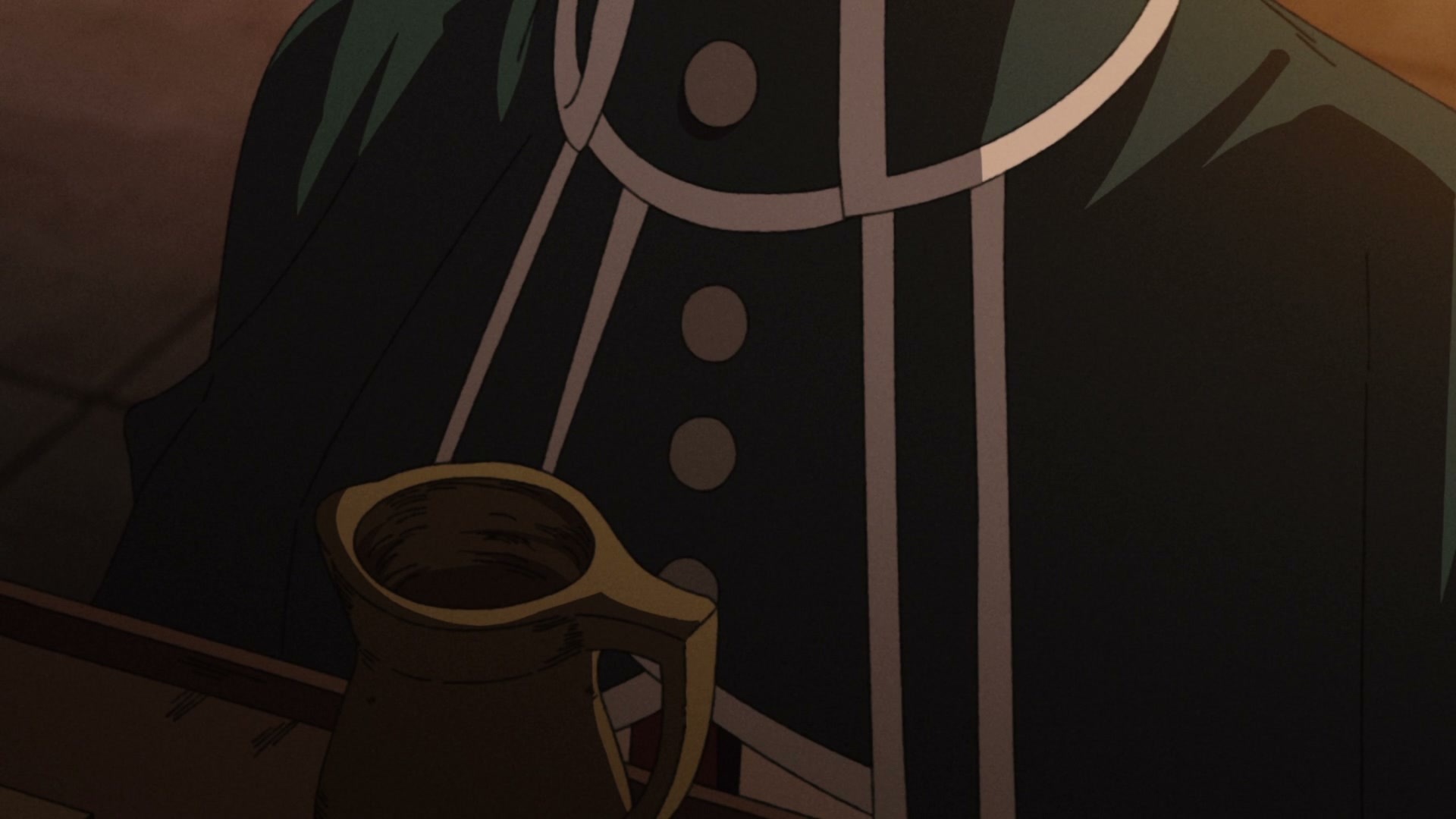
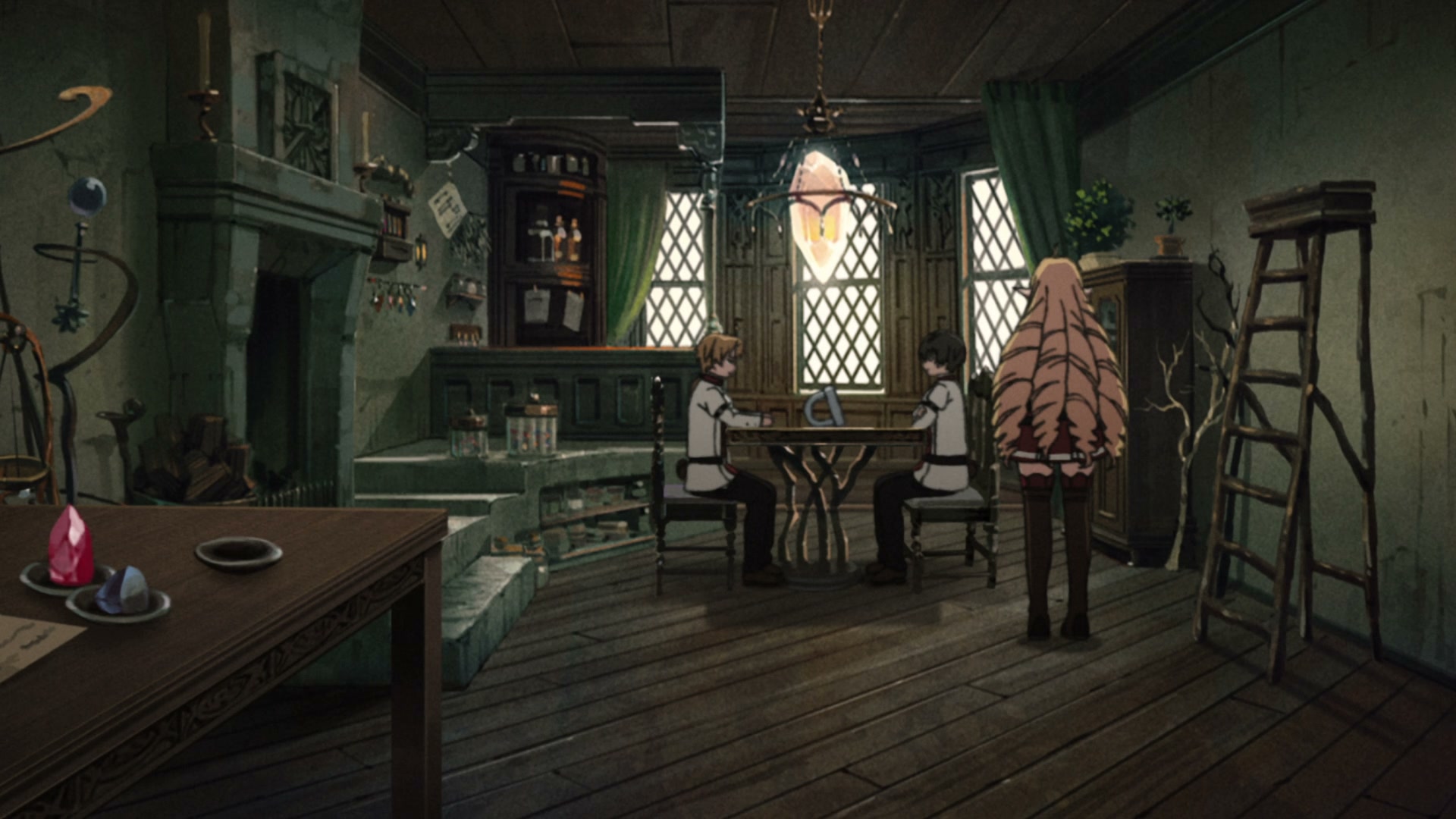
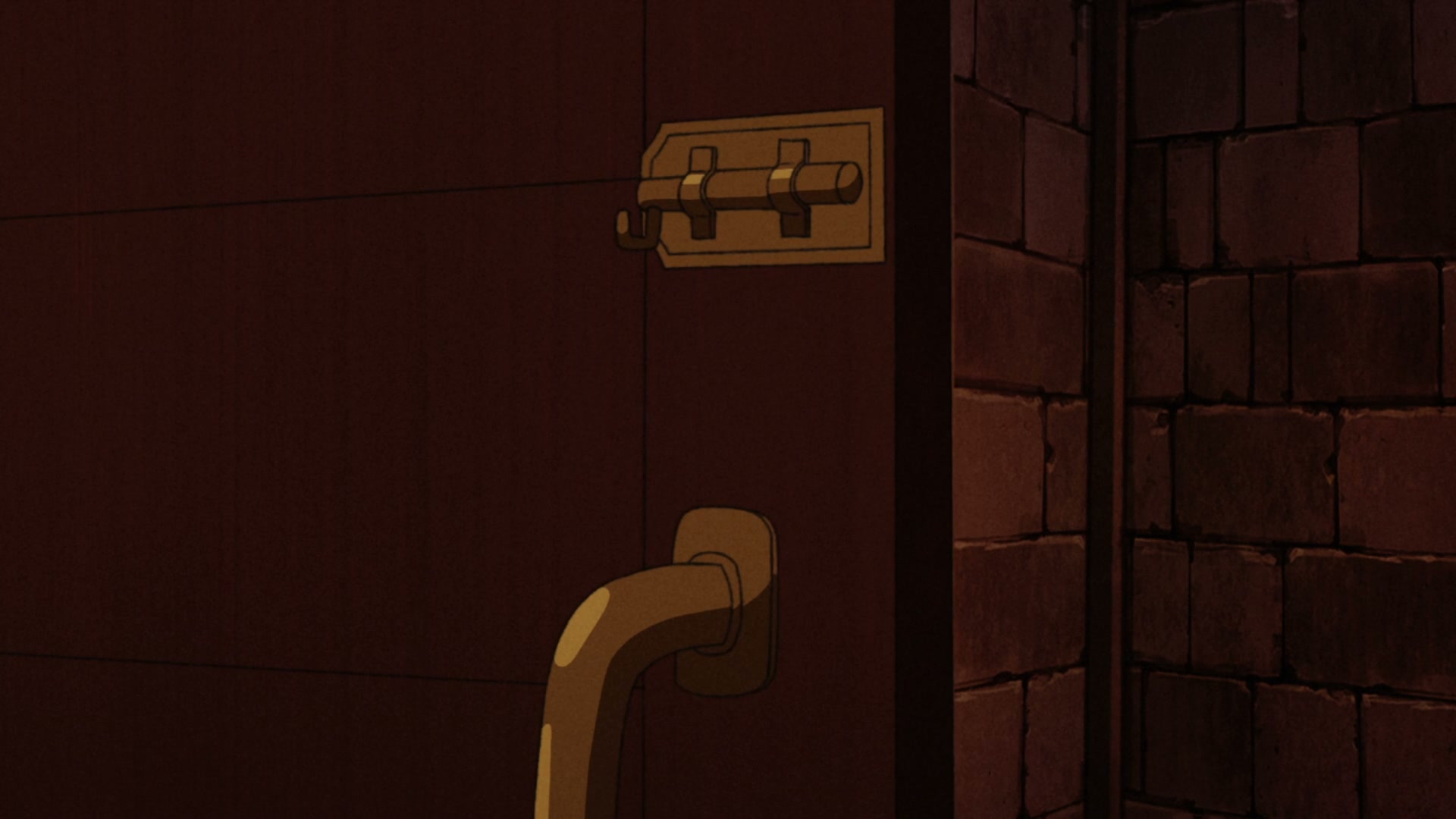
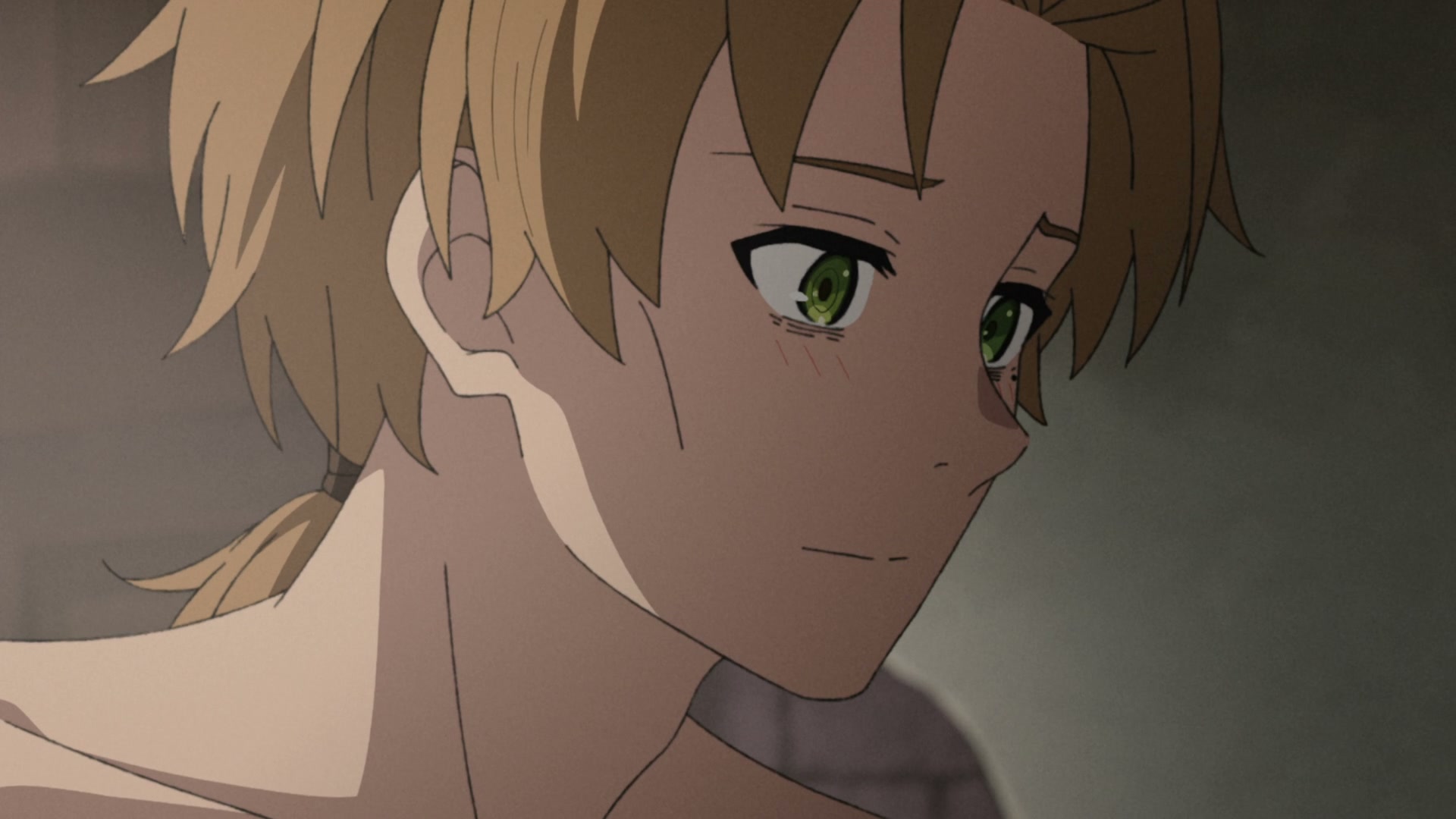
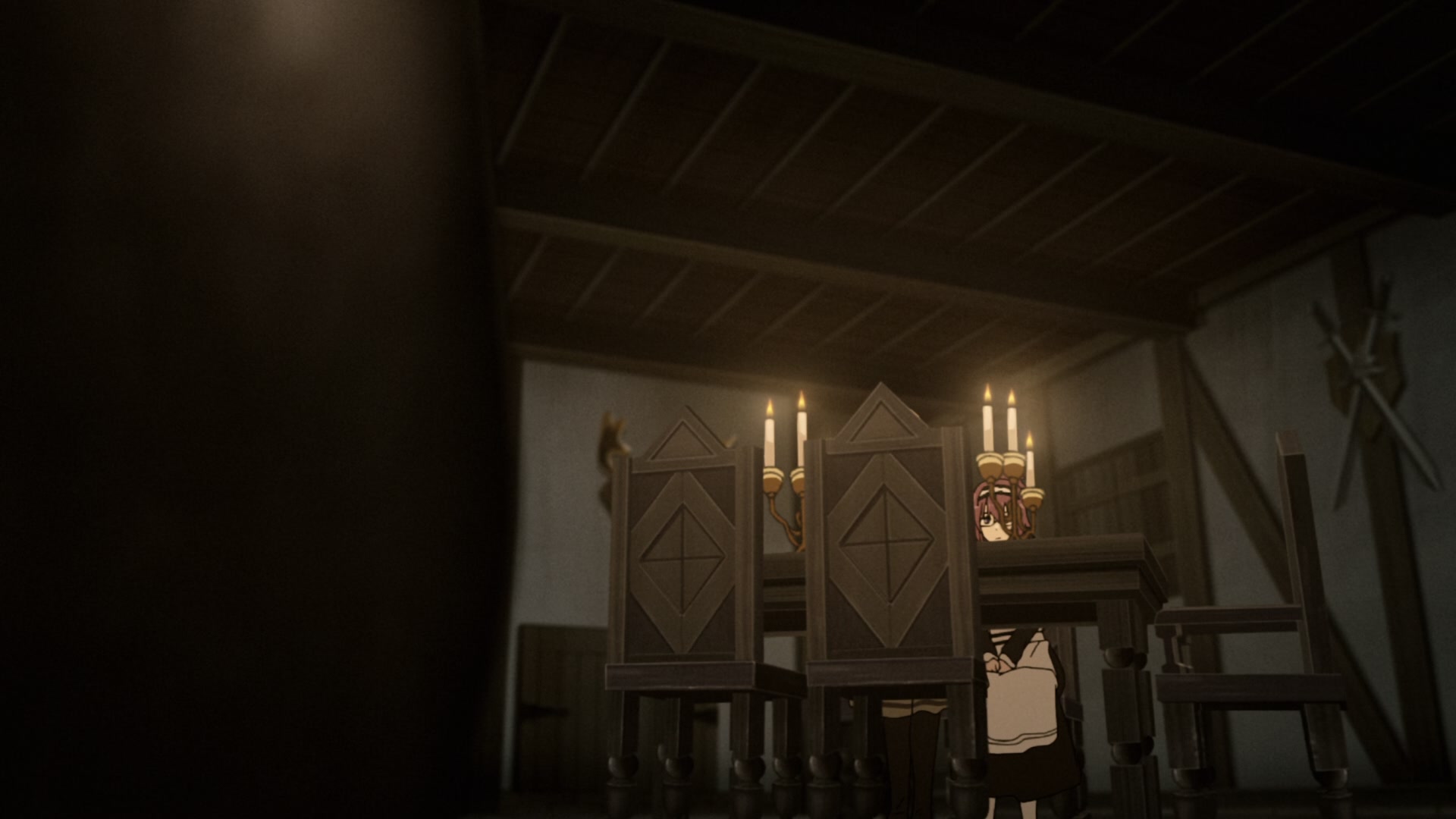
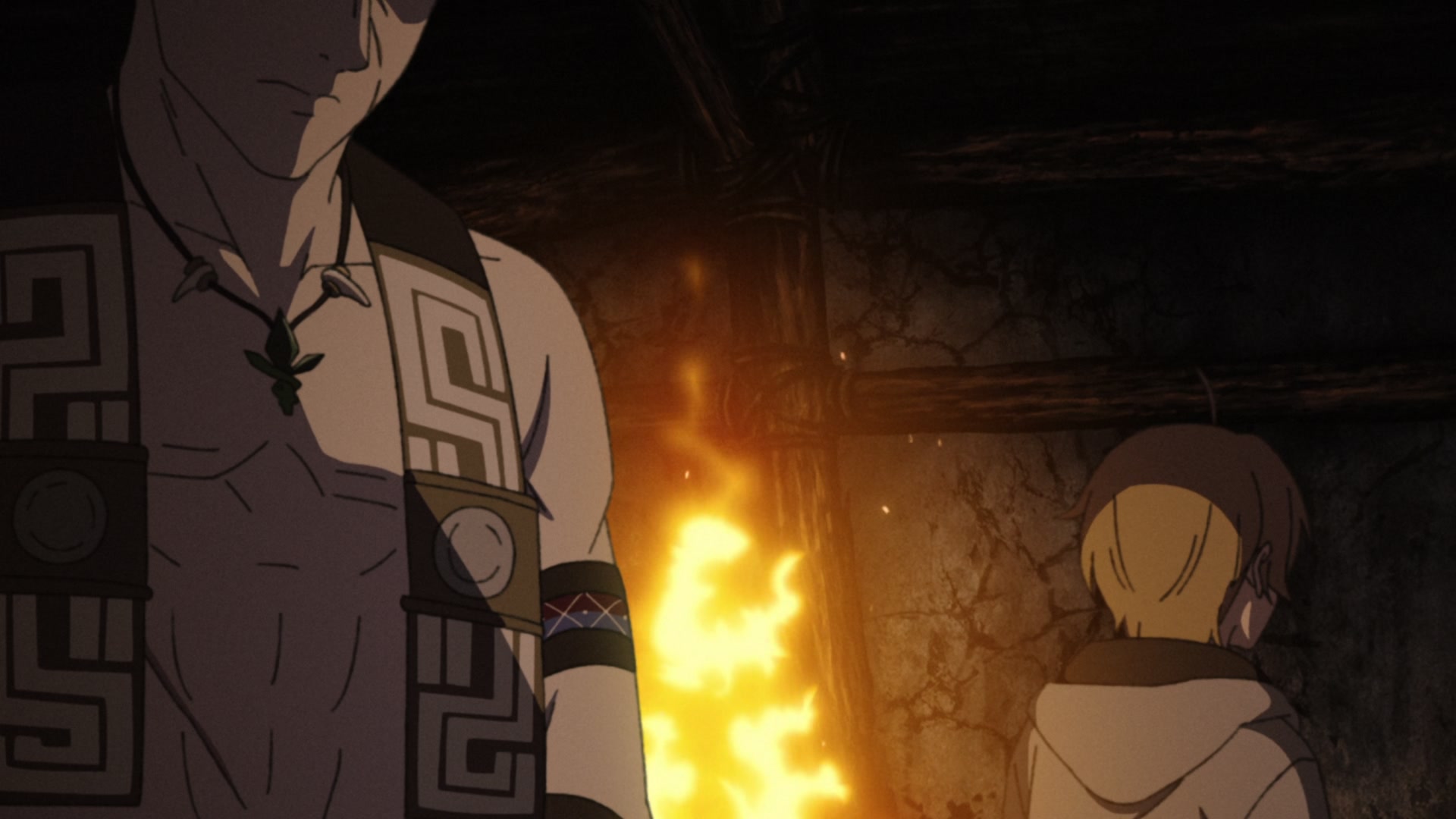
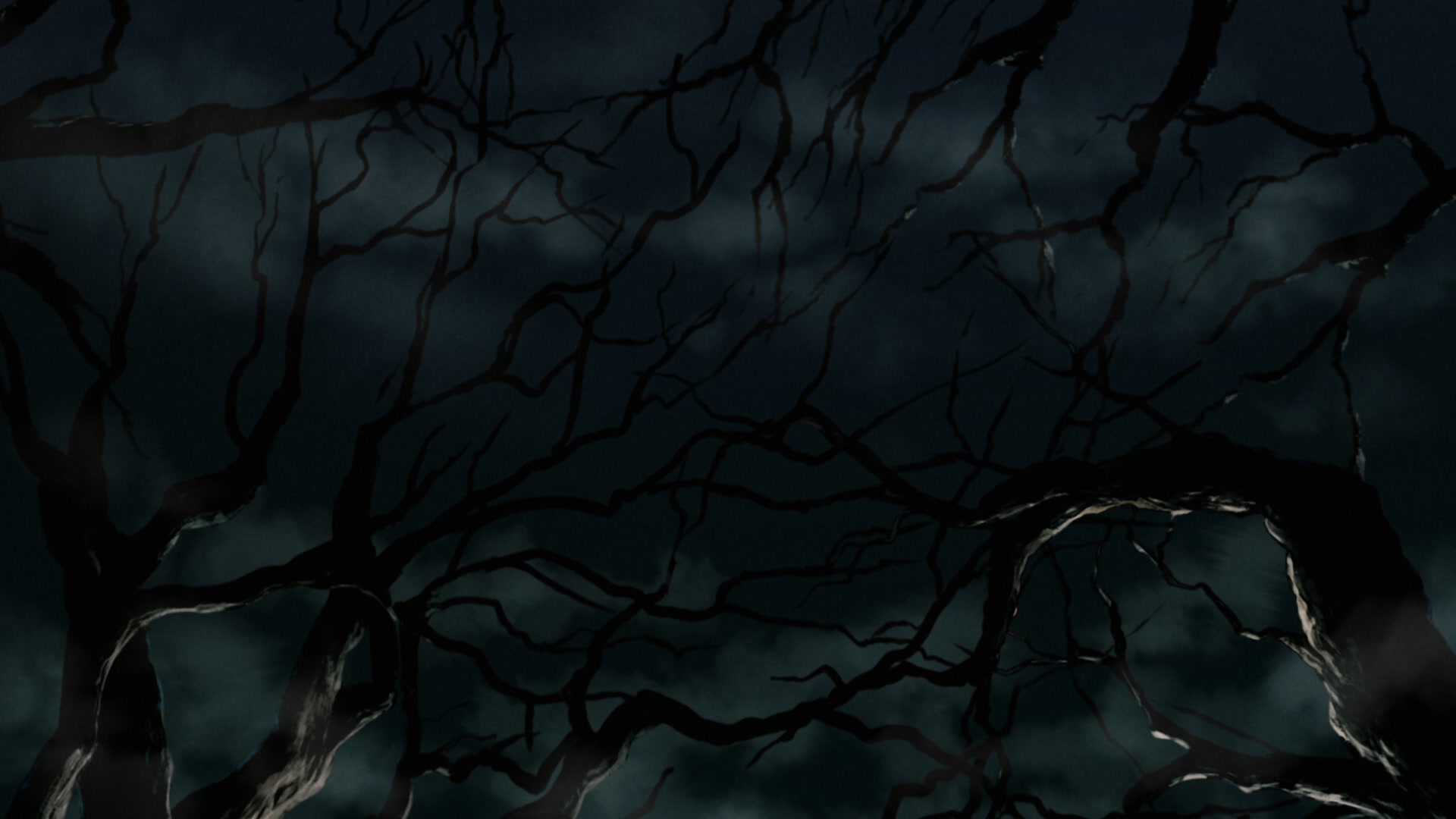
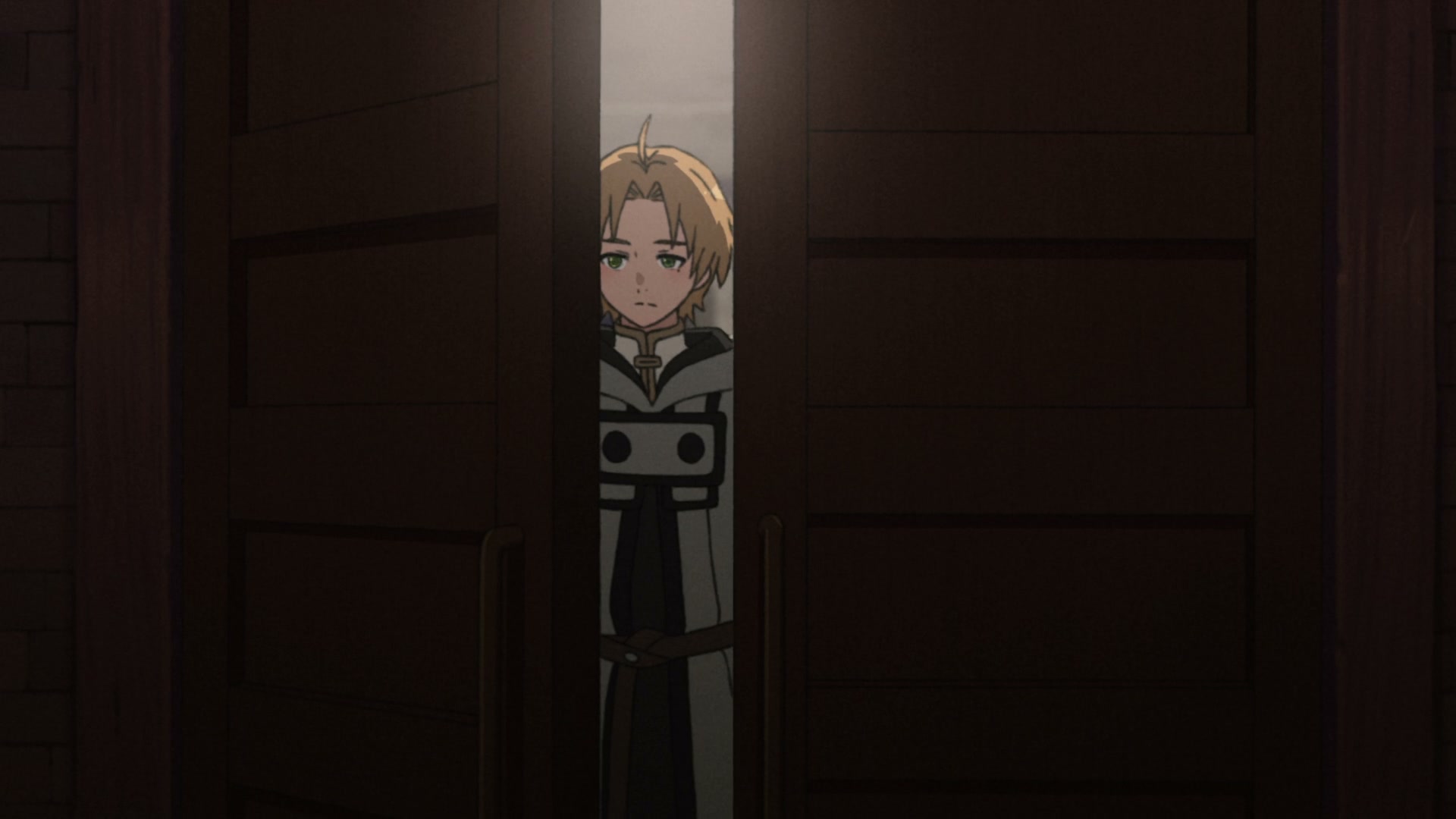
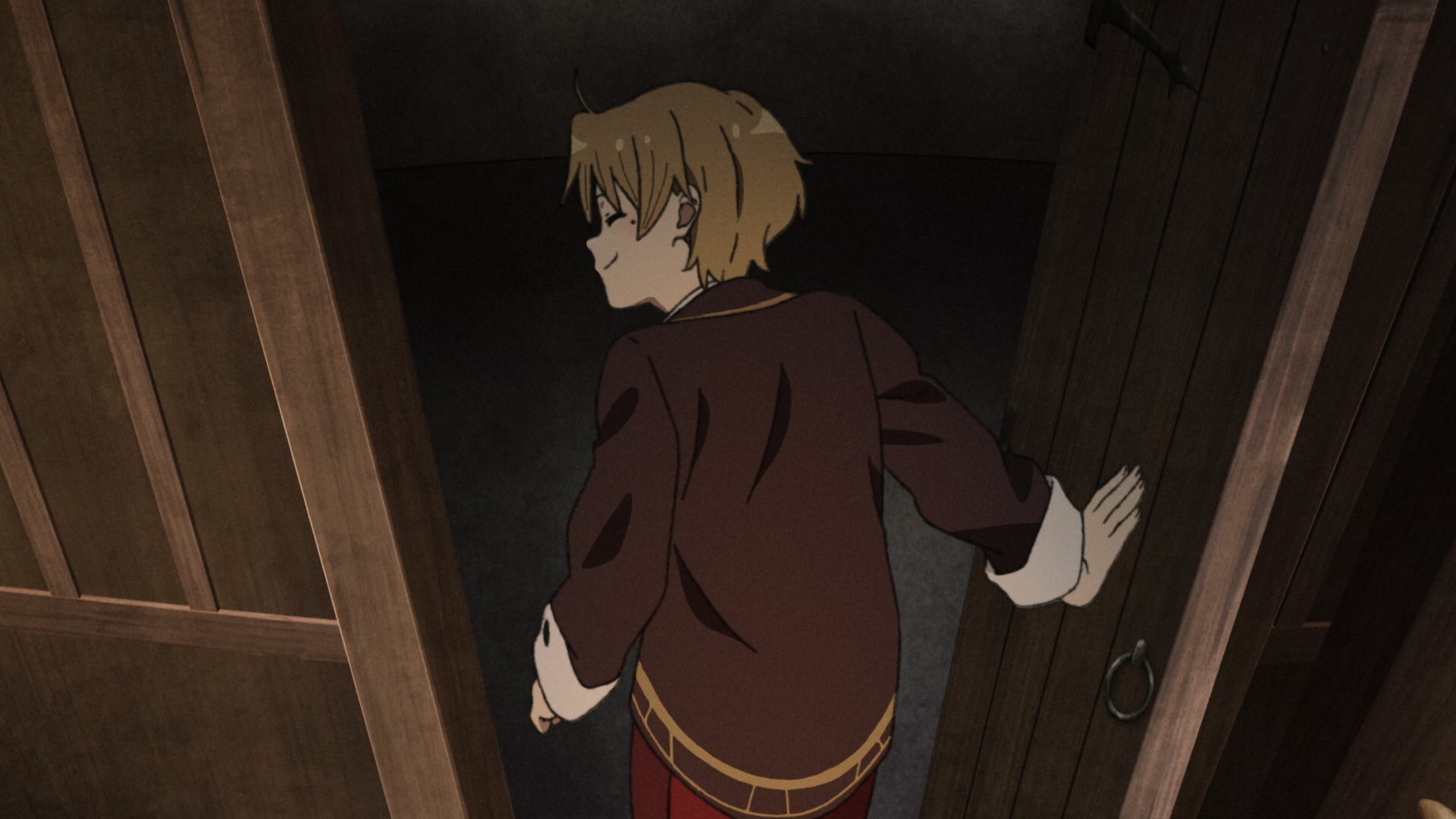
The series uses lighting as its strongest technical element. It consistently uses motivated light sources, candle glow, window shafts, firelight, lantern pools, moonlight, to shape mood and define emotional temperature. The best moments use chiaroscuro effectively: a wall sconce casting a large graphic shadow, firelight carving one side of a face while the rest sits in cool shadow, a sliver of light through a barely opened door creating near-abstract tension. The trade-off is that interiors can feel flat when lighting lacks directional contrast. Some scenes sacrifice depth for atmosphere, crushing blacks or compressing midtones until characters merge with shadowed walls.
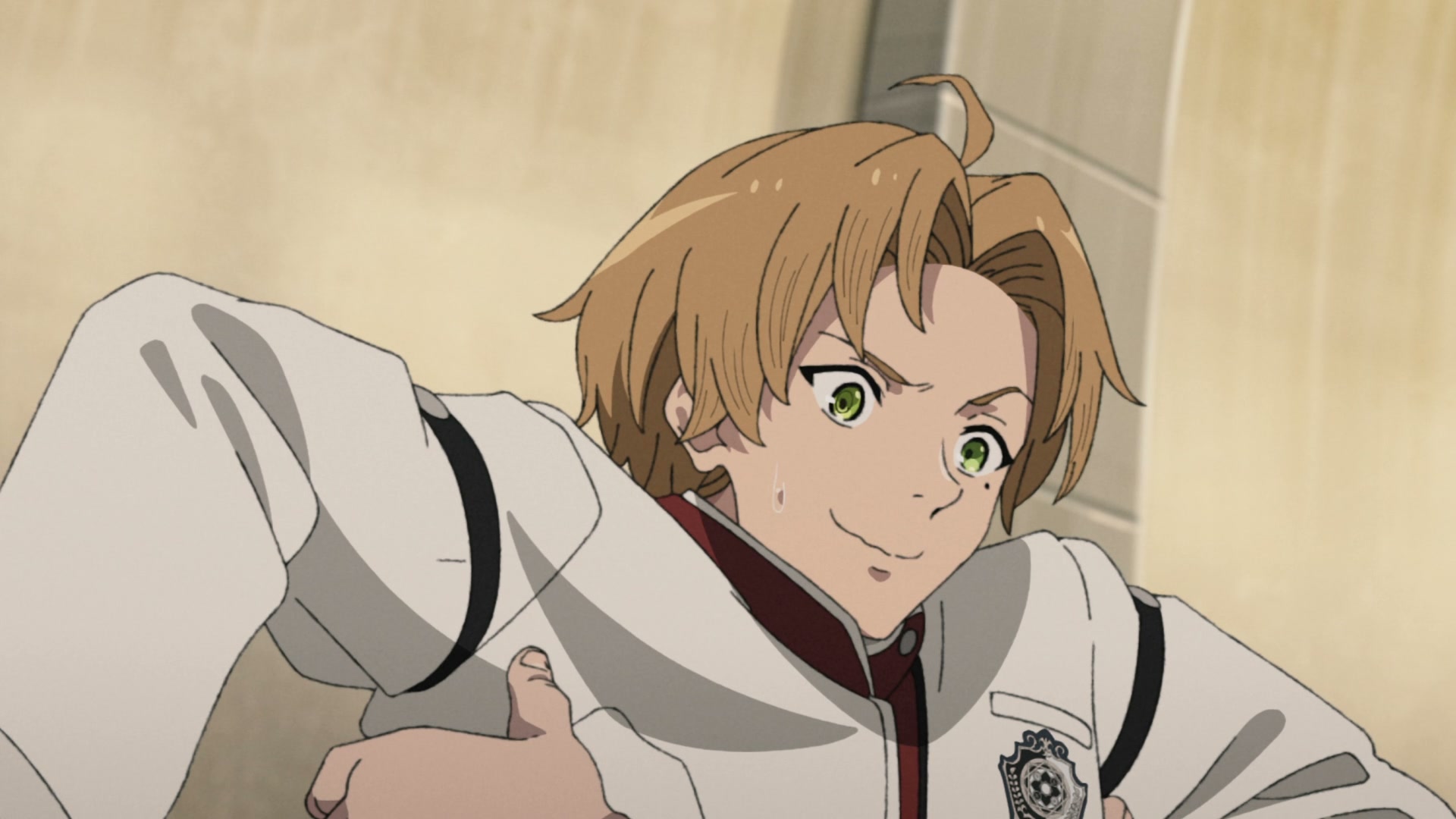
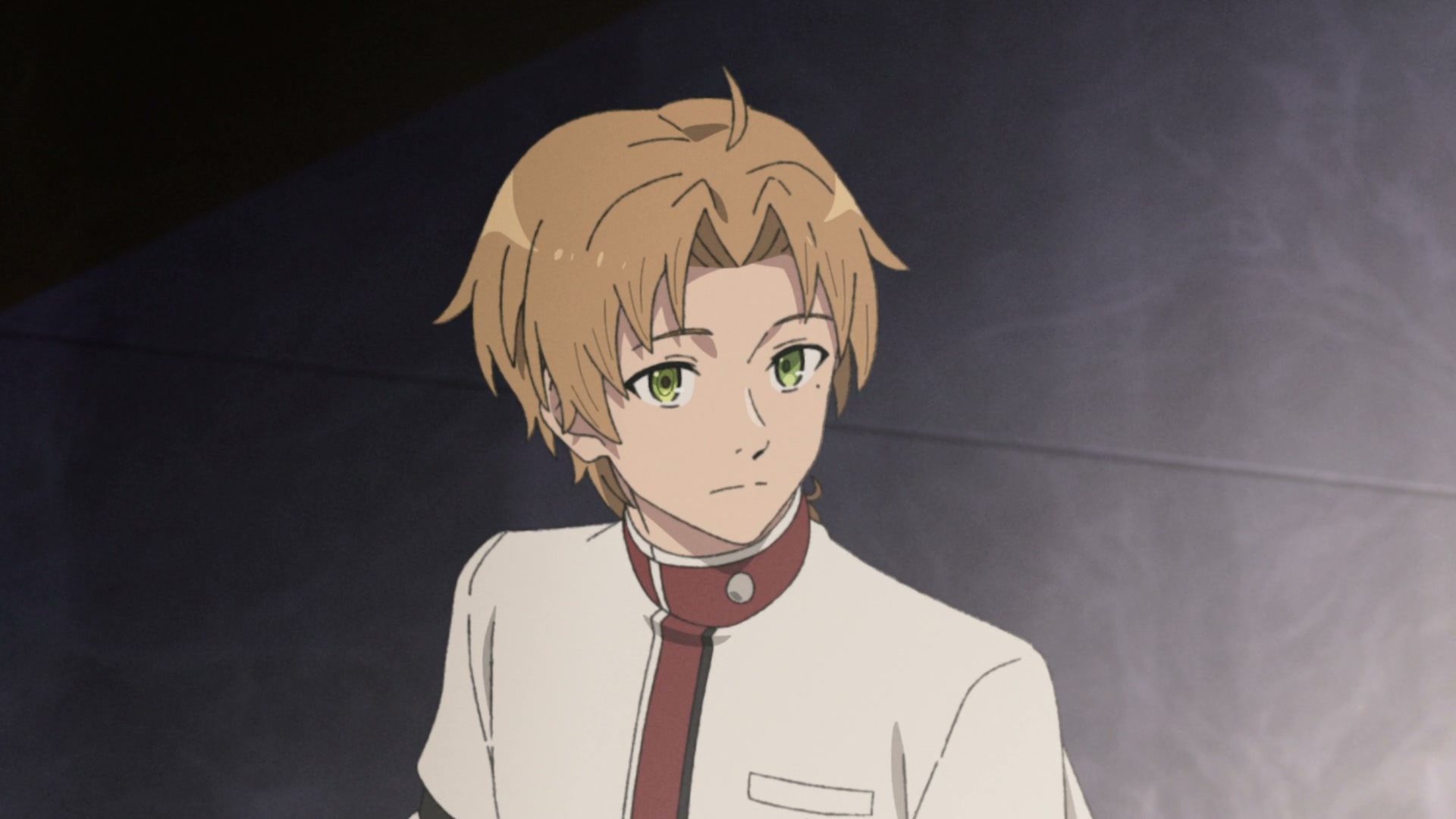
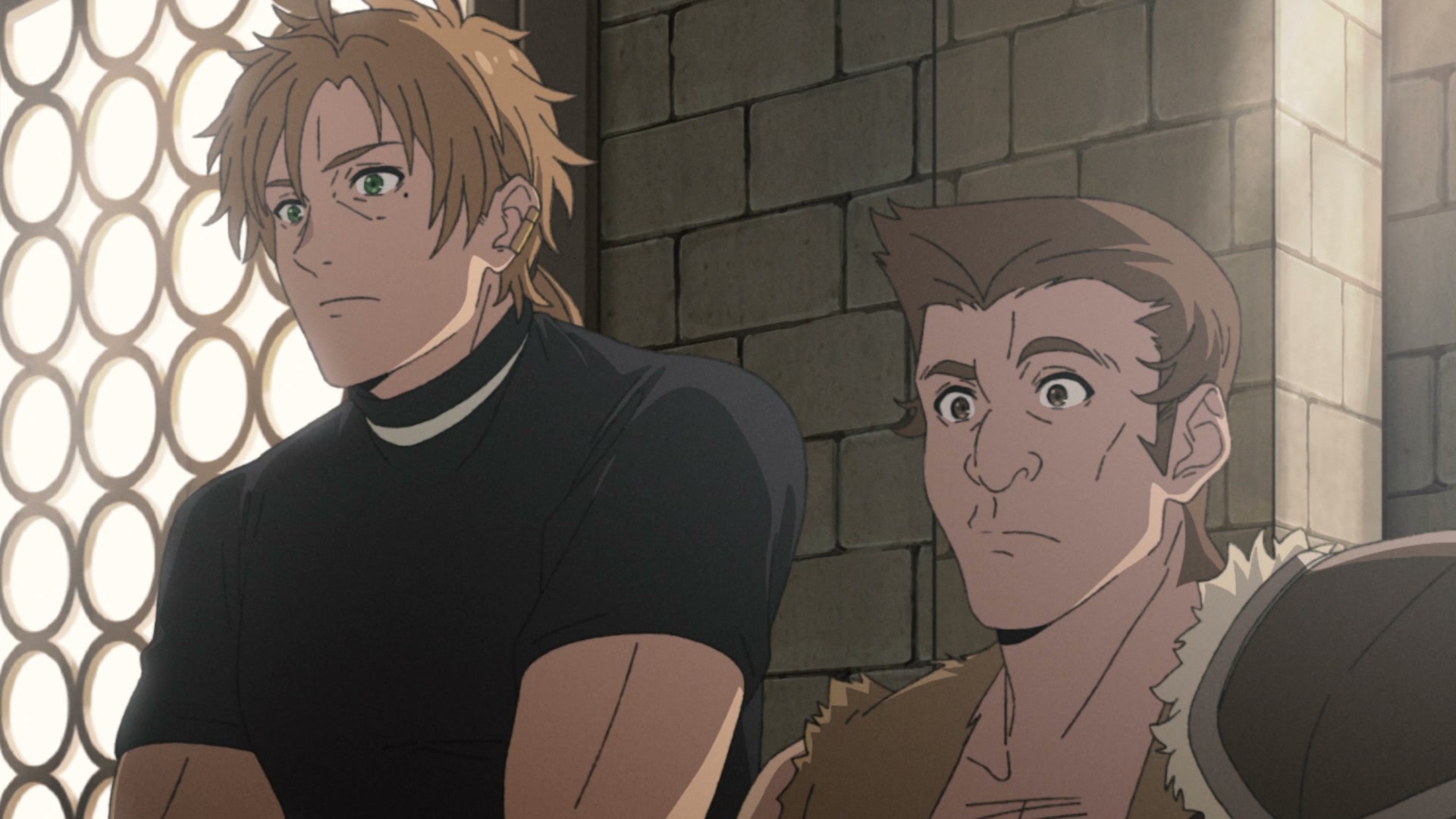
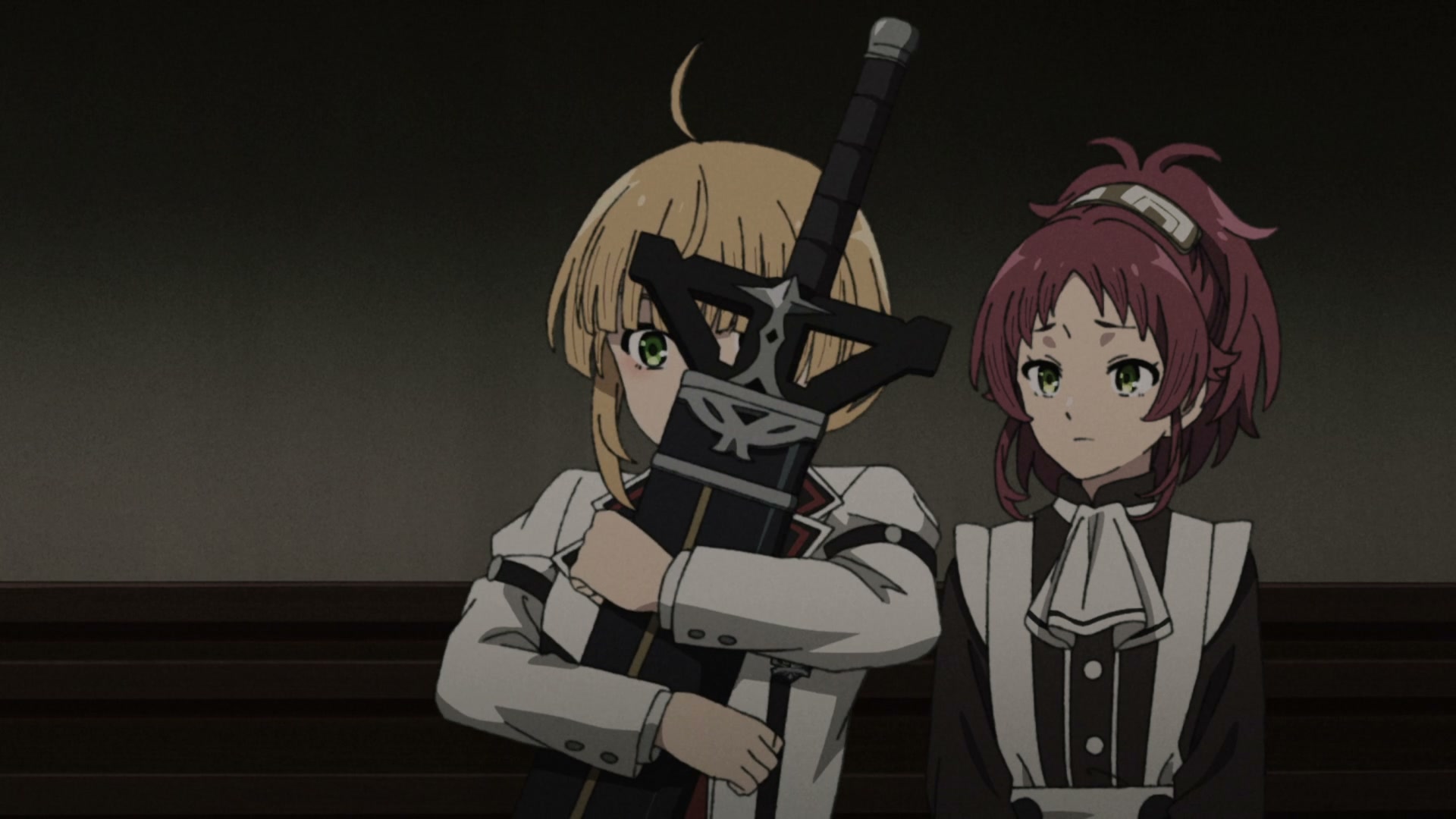
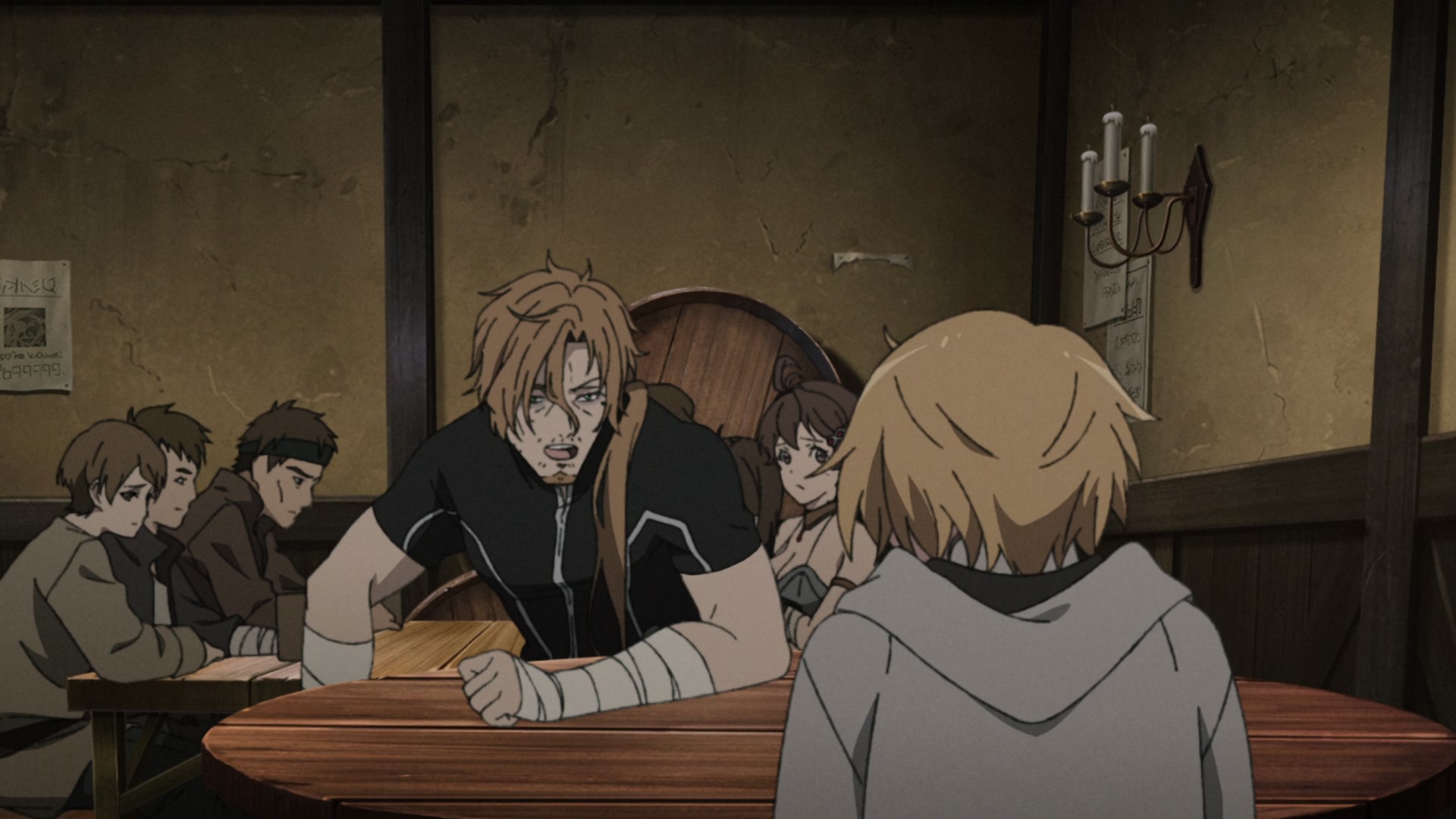
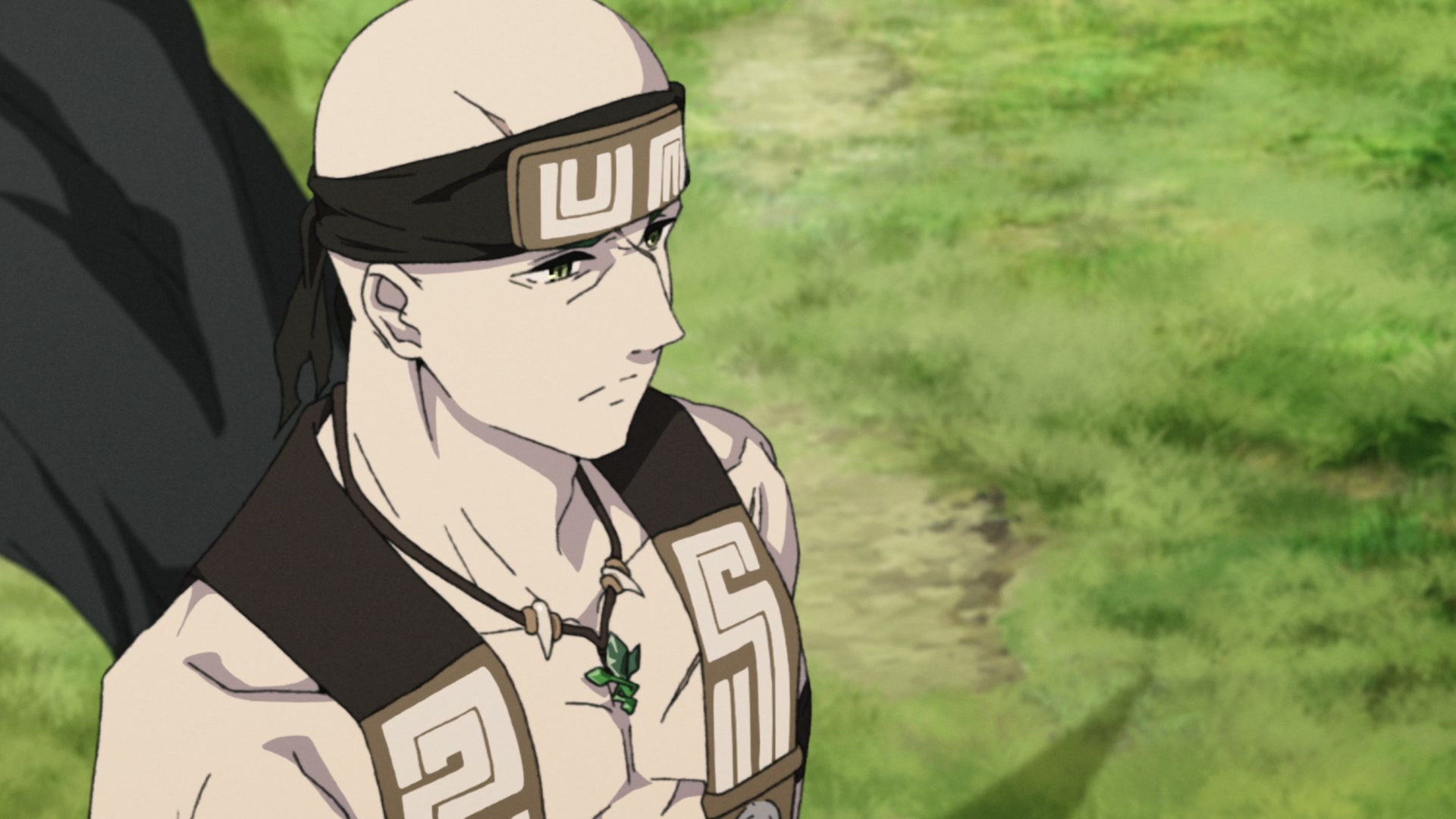
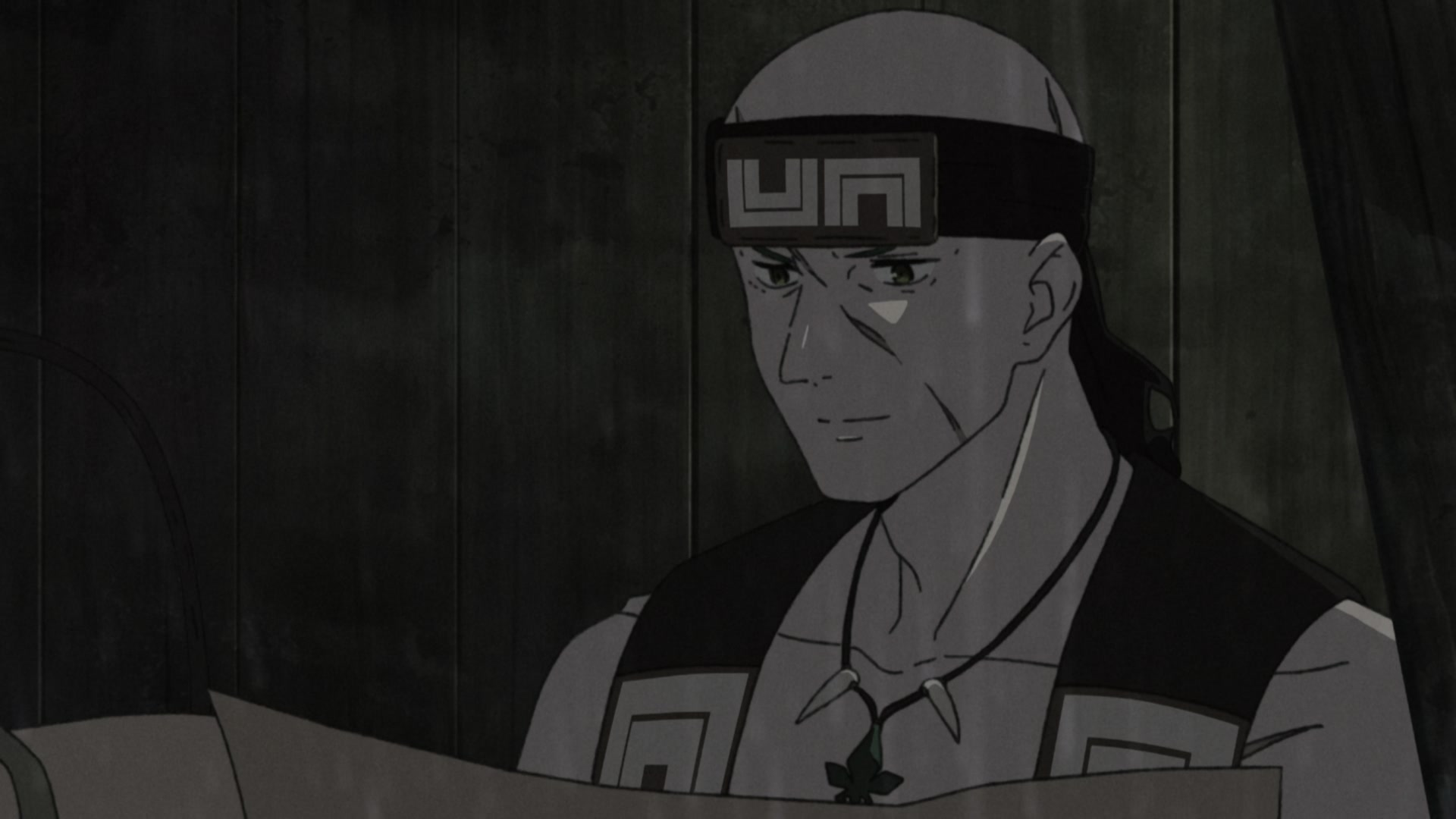
Character designs favor a familiar modern anime vocabulary: large, gradient-shaded irises with multiple catchlights, small noses, simplified mouths, and soft jawlines. The cast is differentiated effectively through silhouette and costume rather than radical stylistic shifts. Youthful characters use rounder proportions and larger eyes; adult designs introduce sharper facial geometry, stubble, wrinkles, and heavier brow structures. Costume details, uniform trim, cravats, fur collars, belts, jewelry, geometric patterns, do significant character-definition work without overcrowding the frame. Model consistency is generally strong. The same character remains recognizable across close-ups, medium shots, and dramatically different lighting conditions.
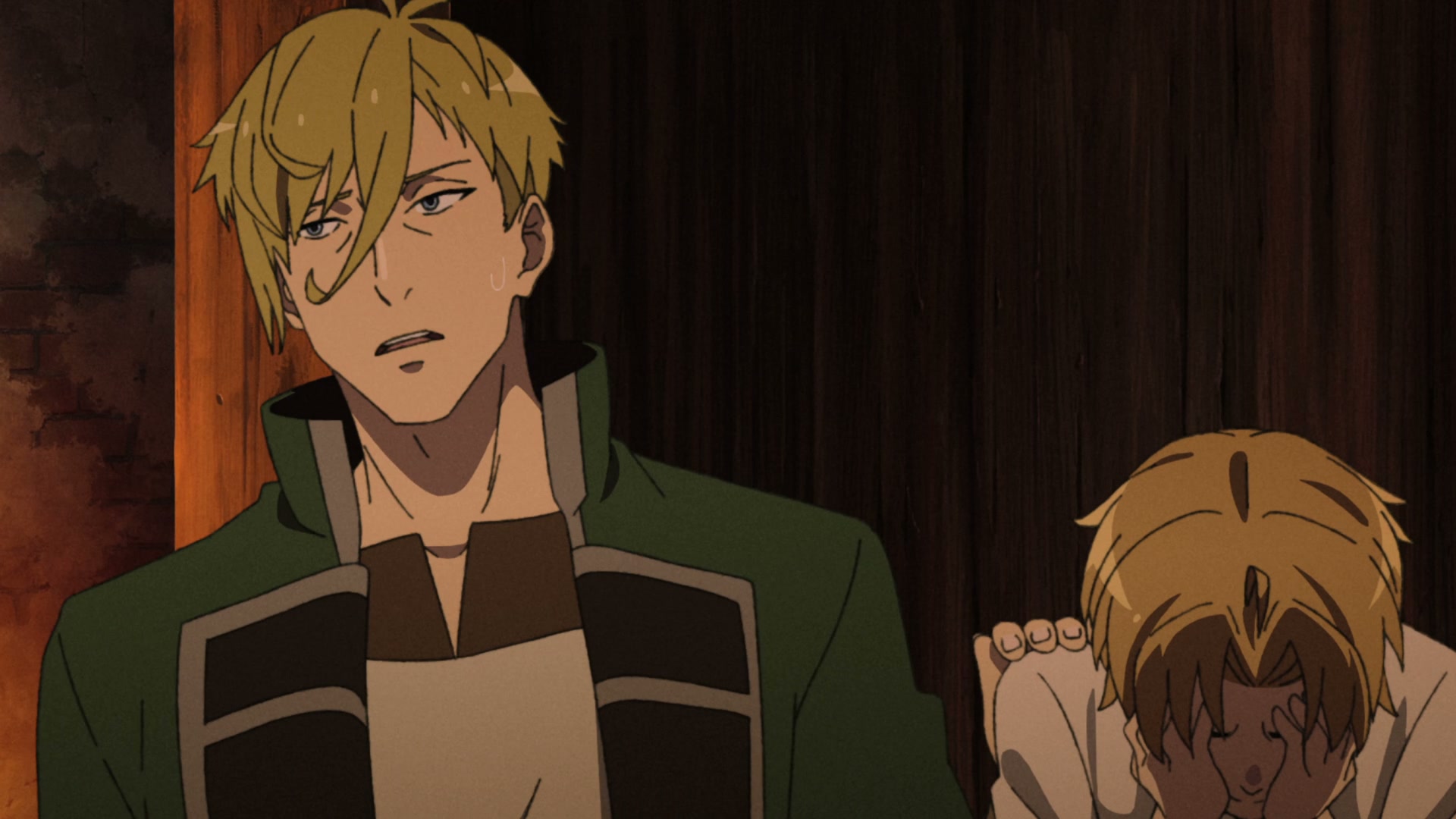
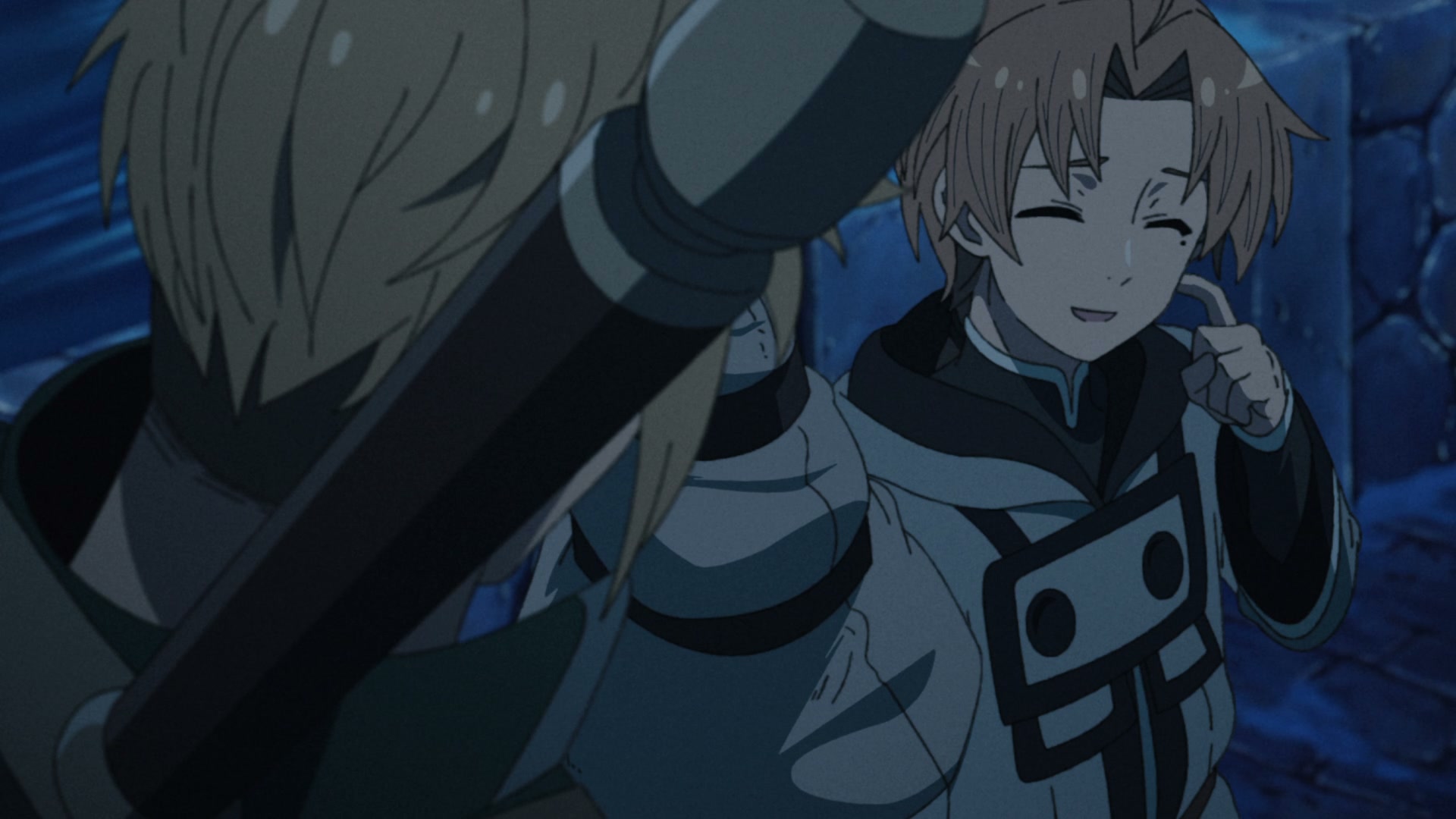
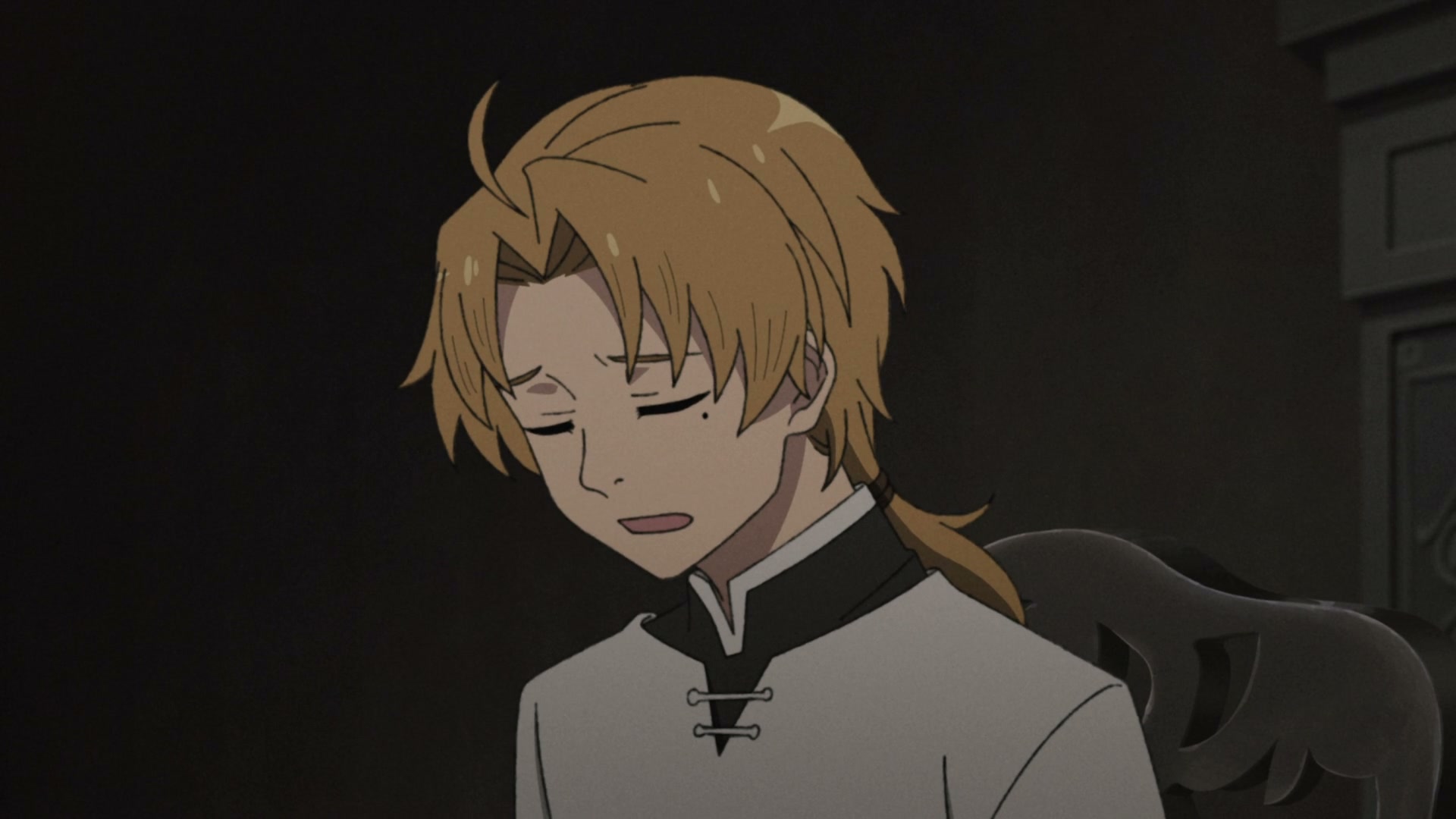
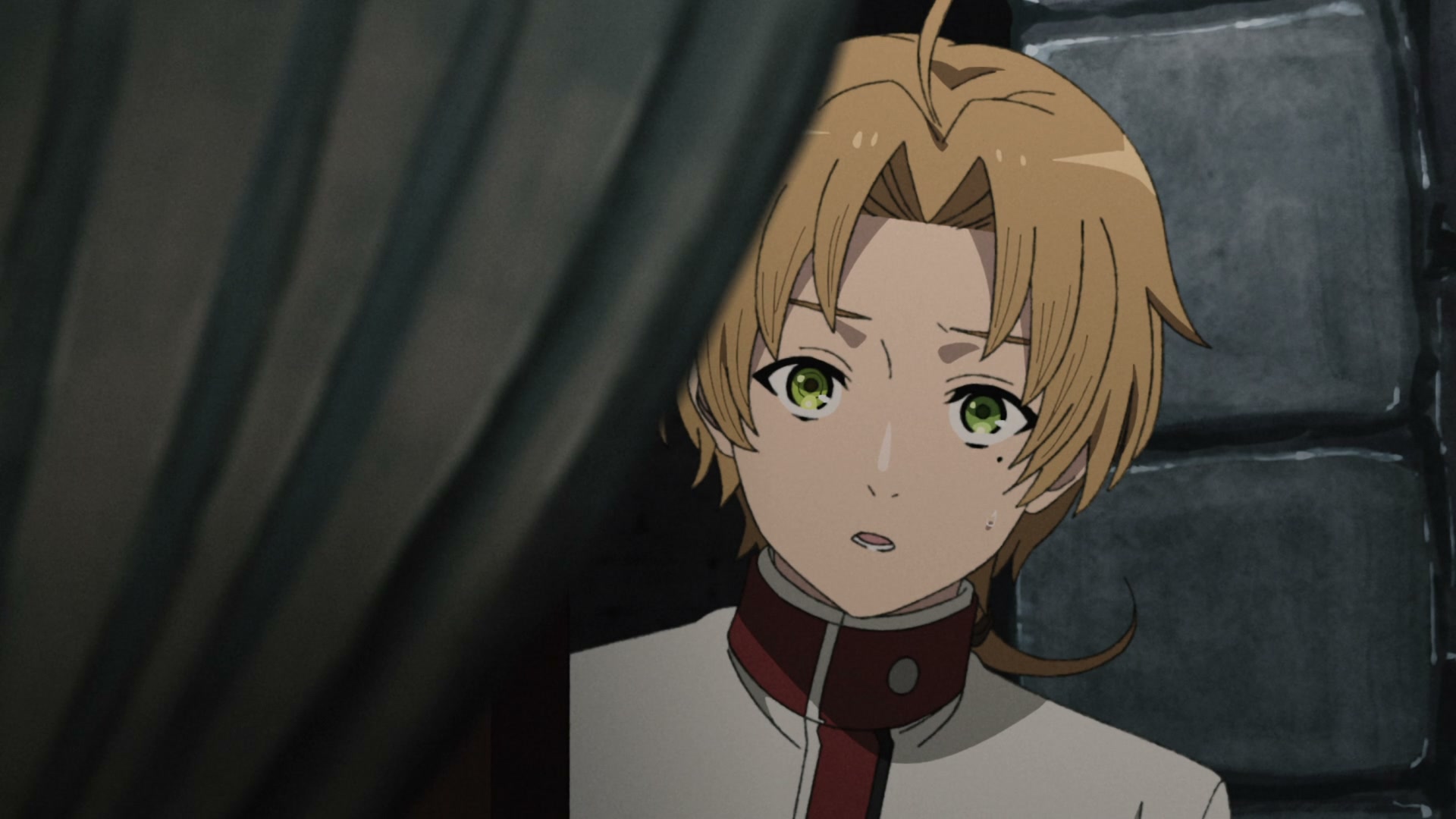
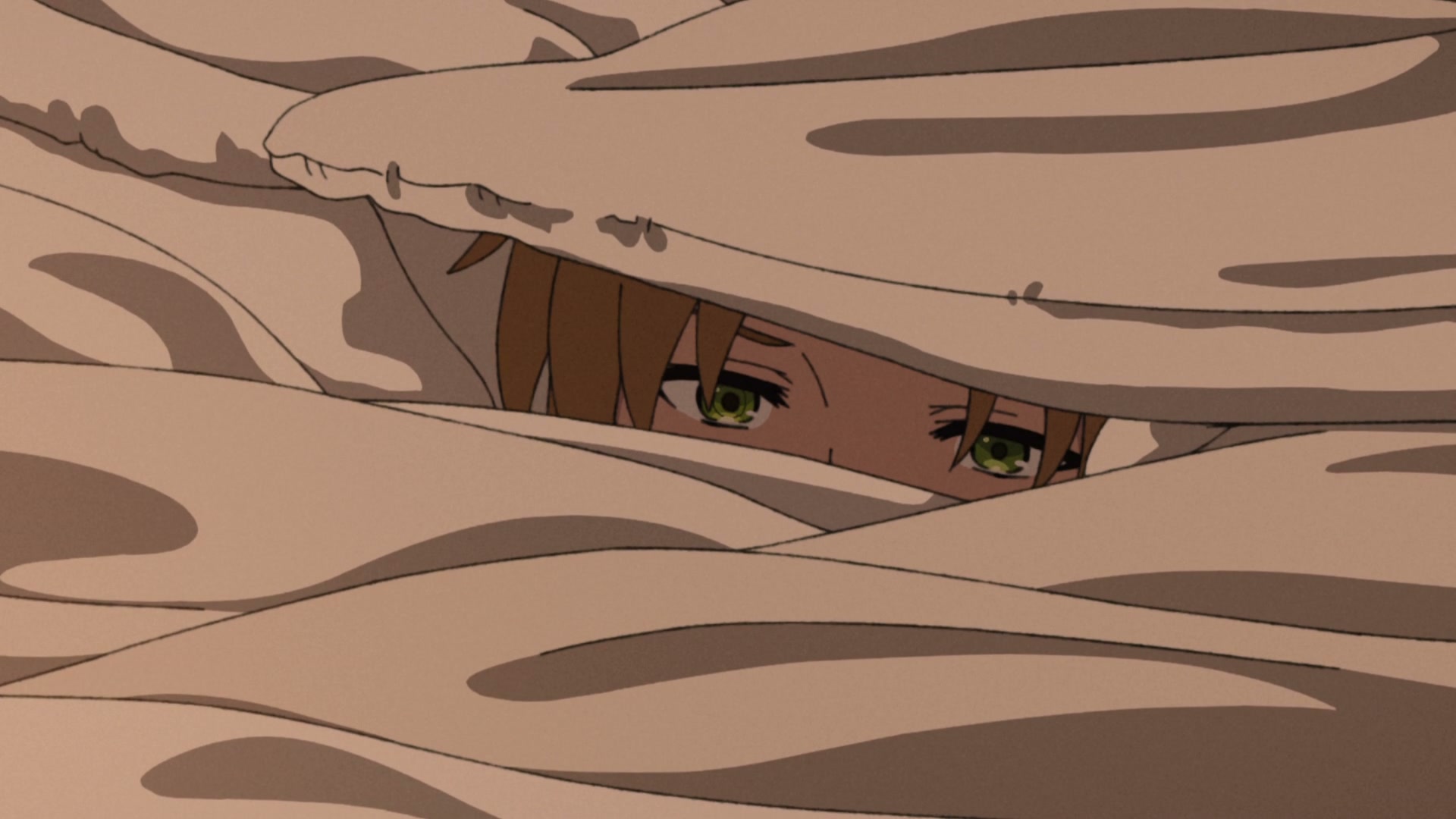
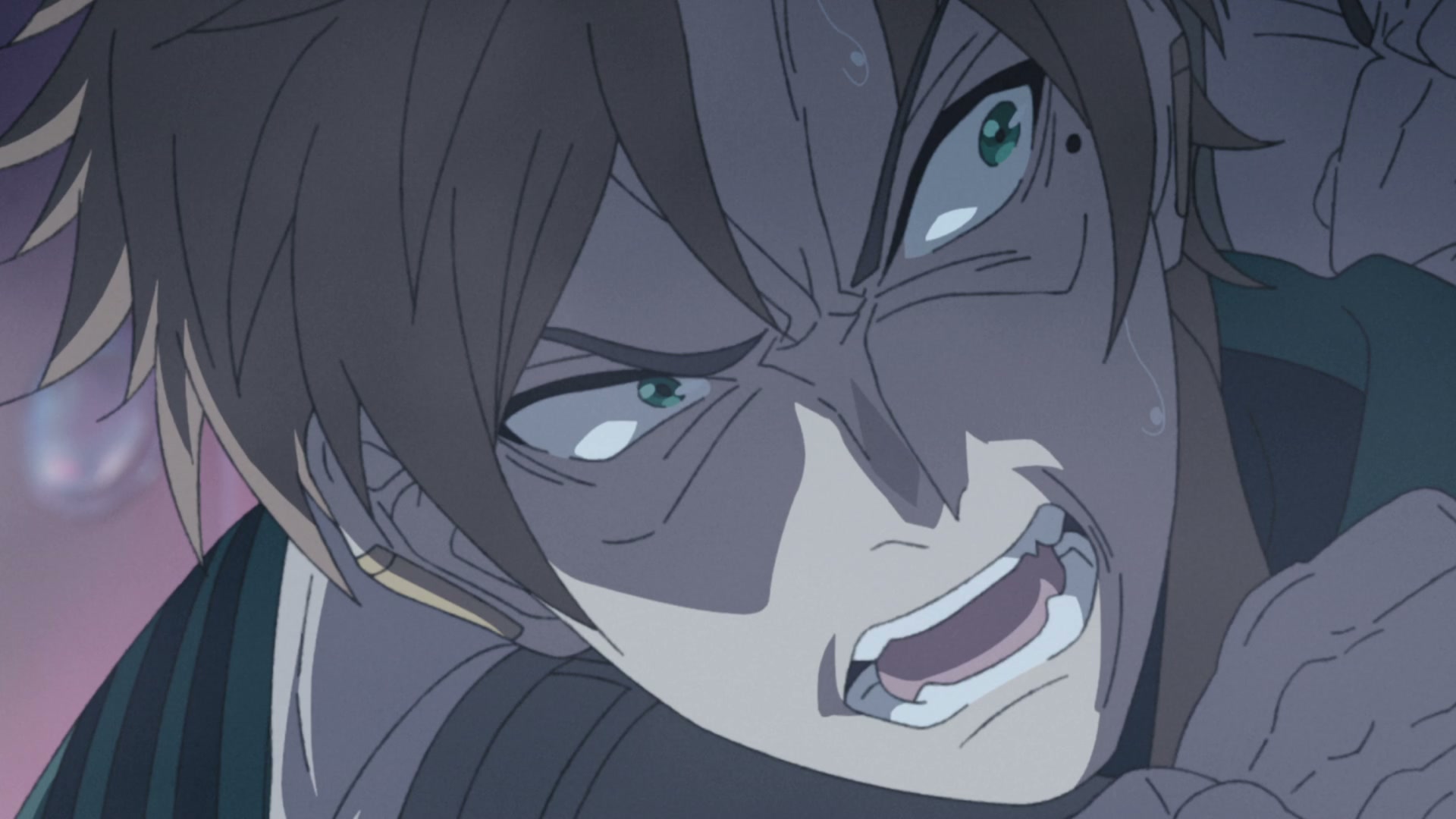
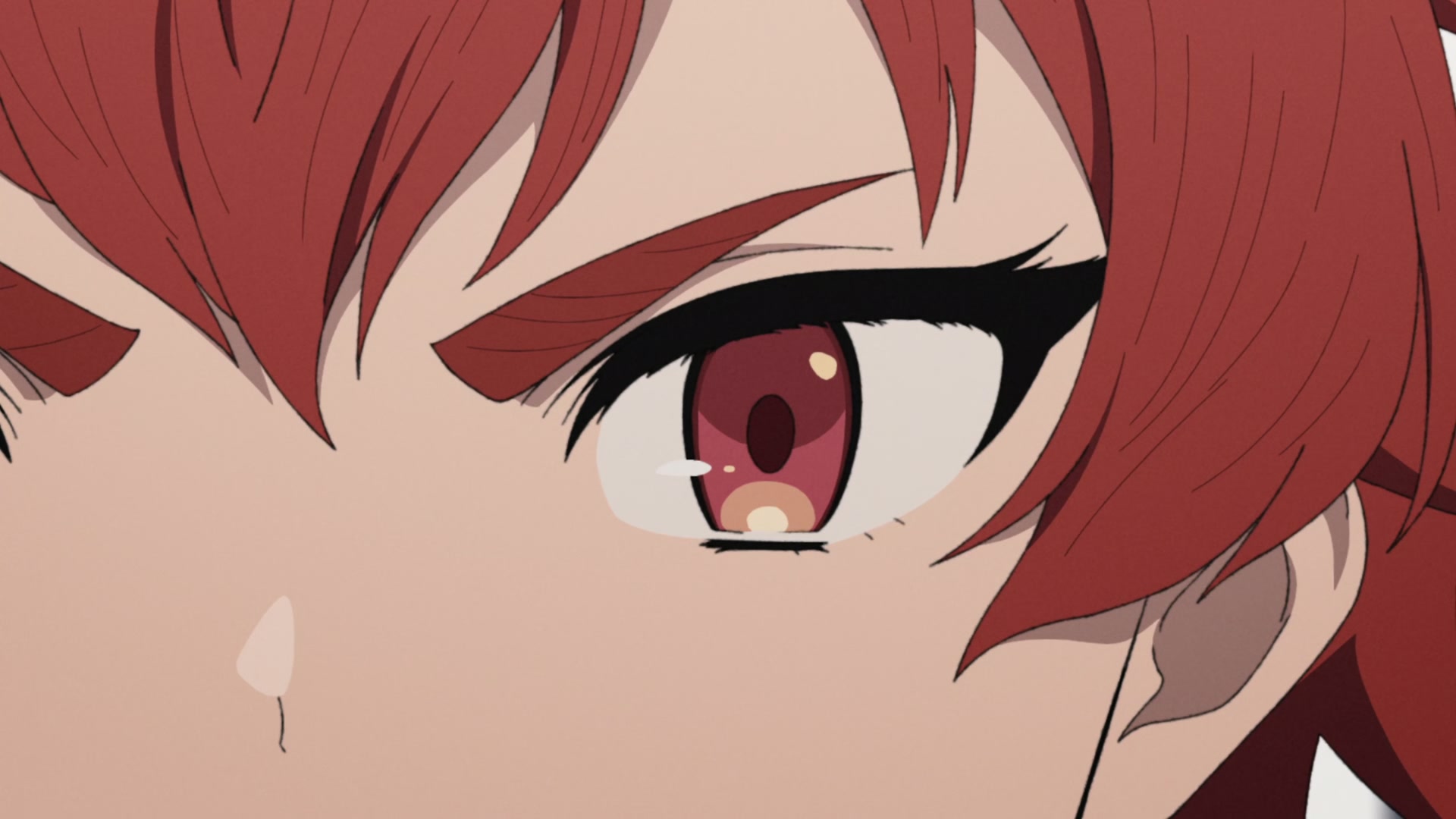
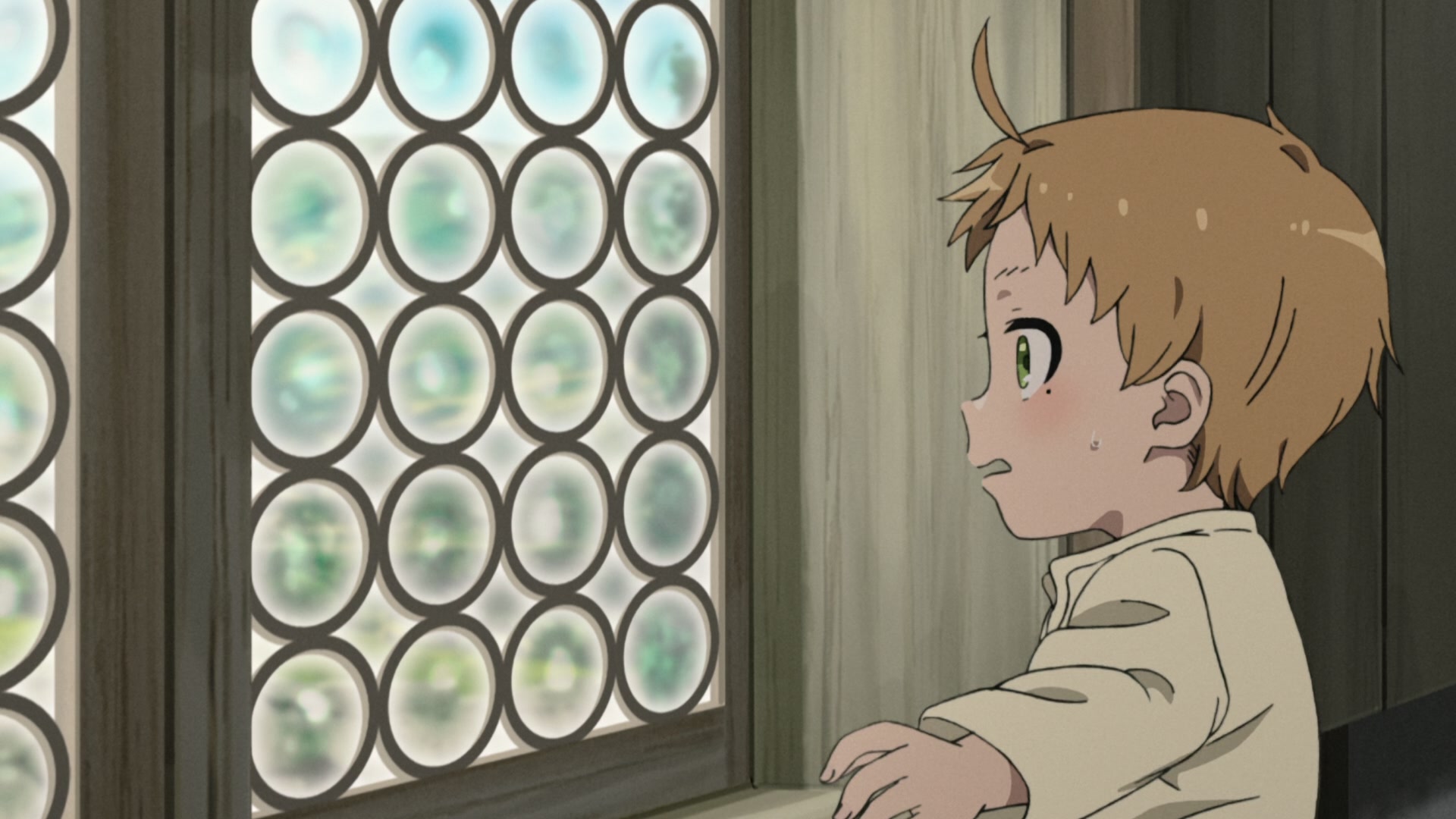
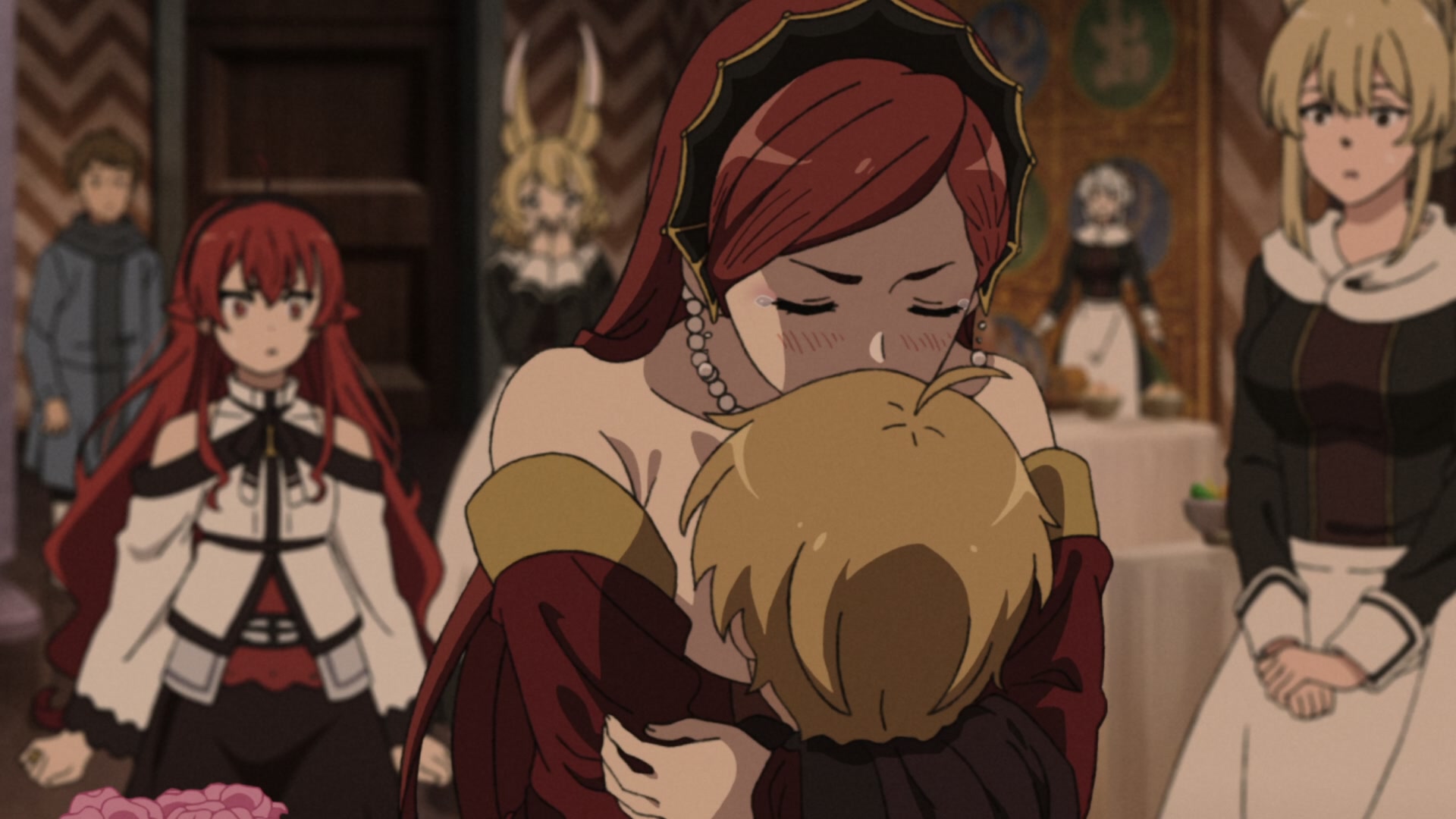
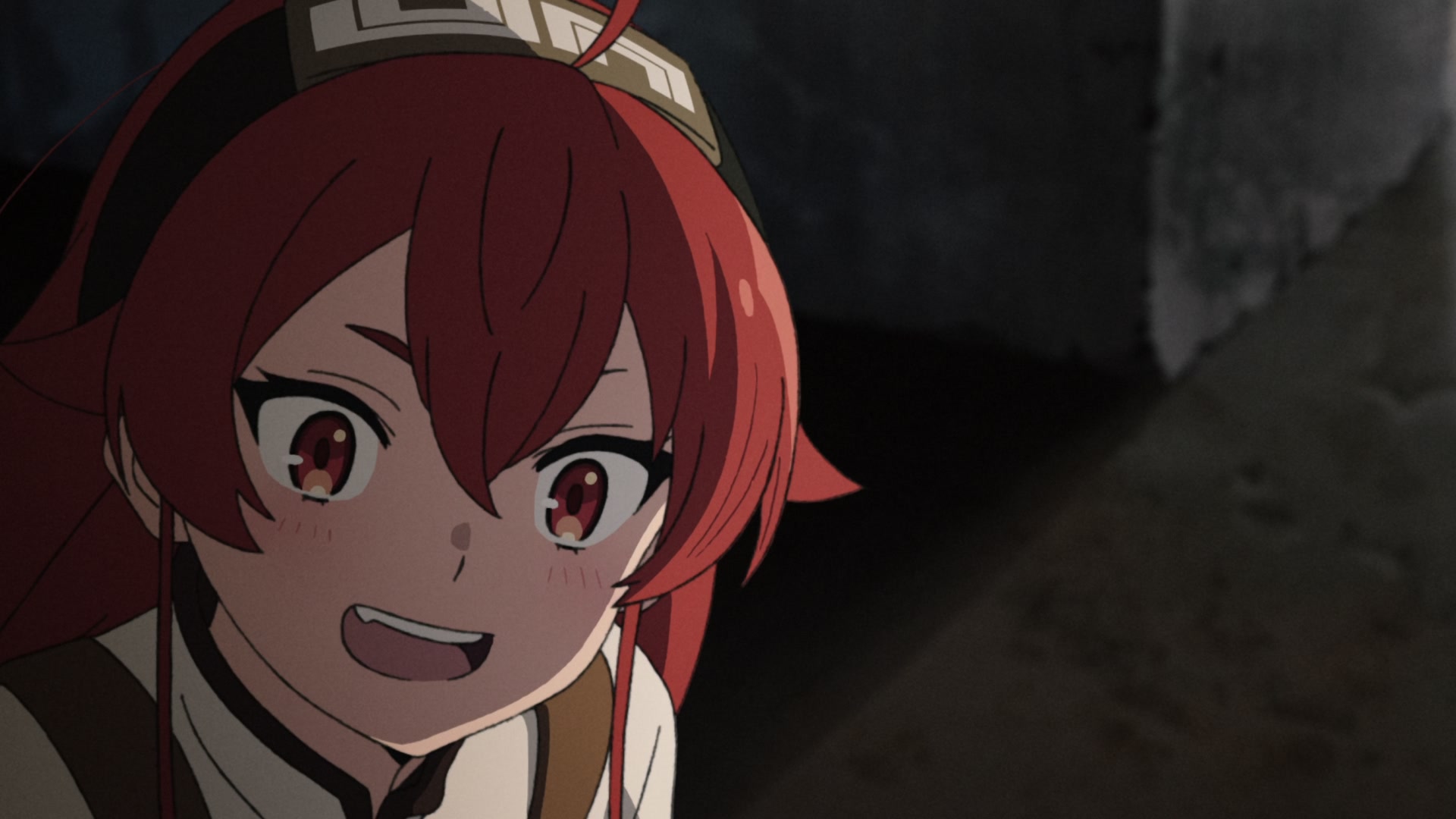
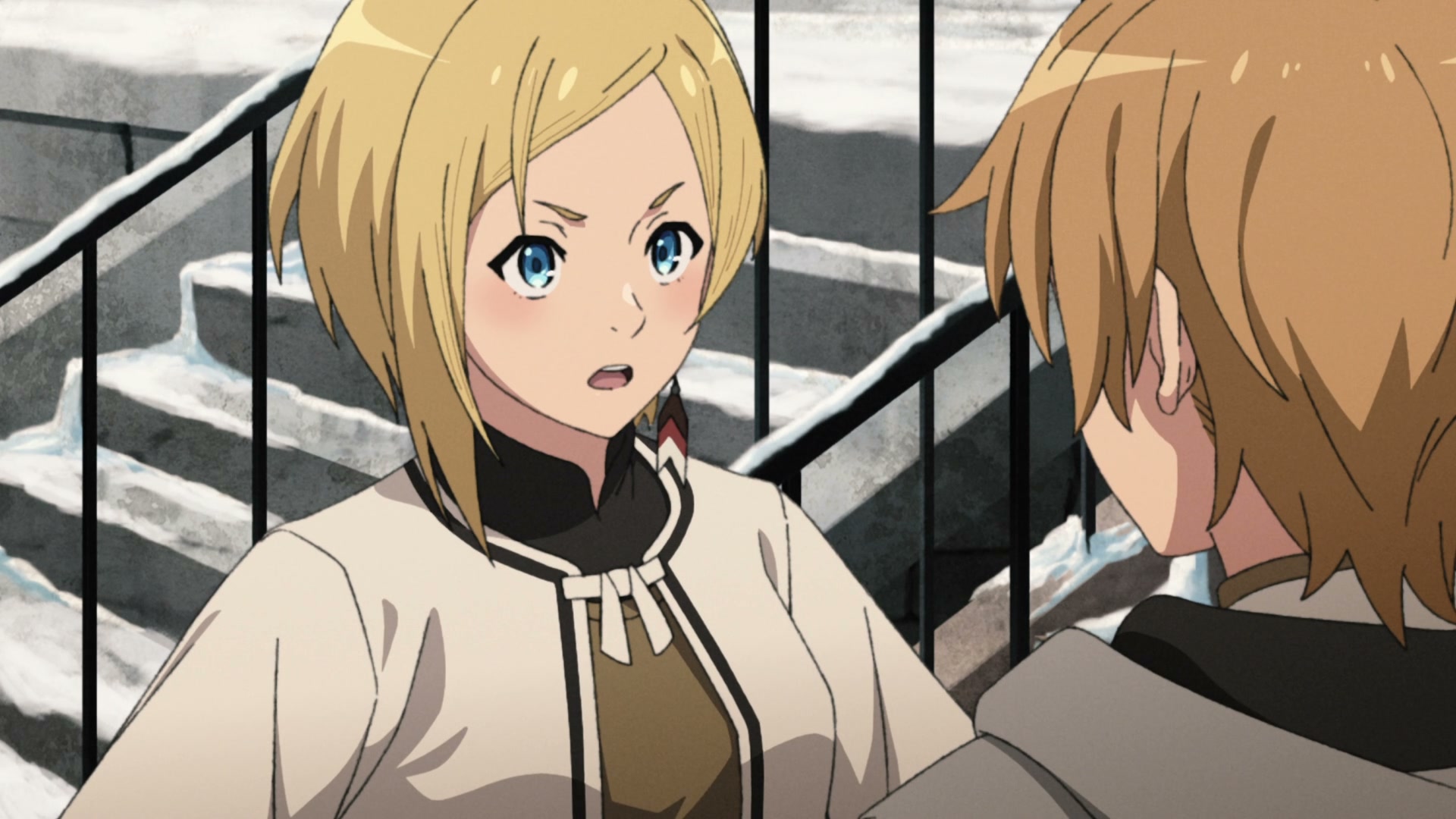
Facial acting is the production’s most reliable asset. The series demonstrates a wide emotional range delivered with restraint. A half-lidded, downcast gaze communicates weariness or resignation. Wet eyes, parted lips, and a slight blush suggest wonder mixed with nervousness. A closed-eye smile with a hand on a shoulder conveys warmth and comfort. An open-mouthed grimace with sweat drops sells panic or distress. The best close-ups use shadow placement, eye direction, and small mouth details to create psychological moments rather than generic expressions. The series trusts viewers to read micro-expressions rather than relying on theatrical reaction faces. This is rare in anime and makes emotional beats land harder.
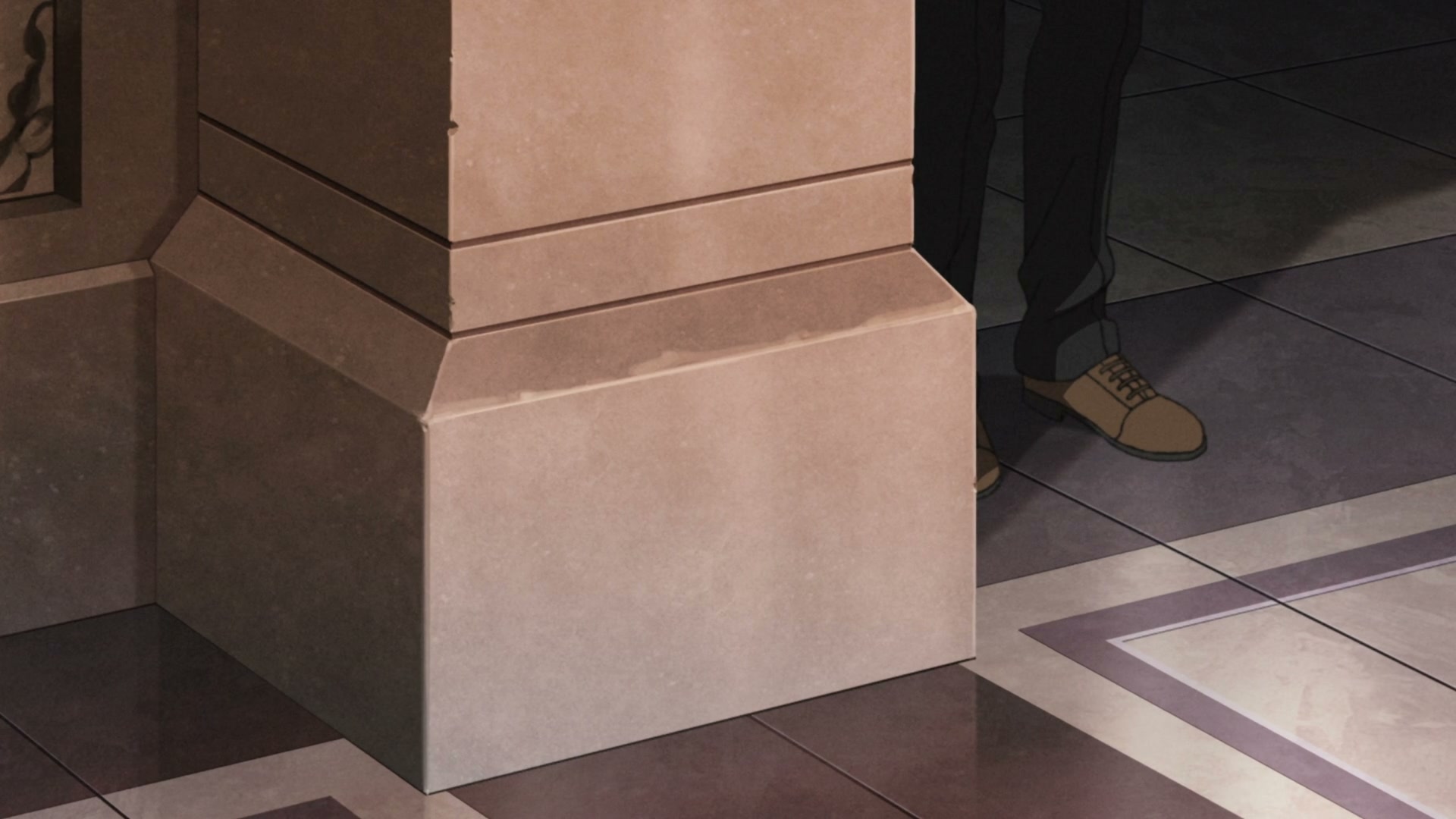
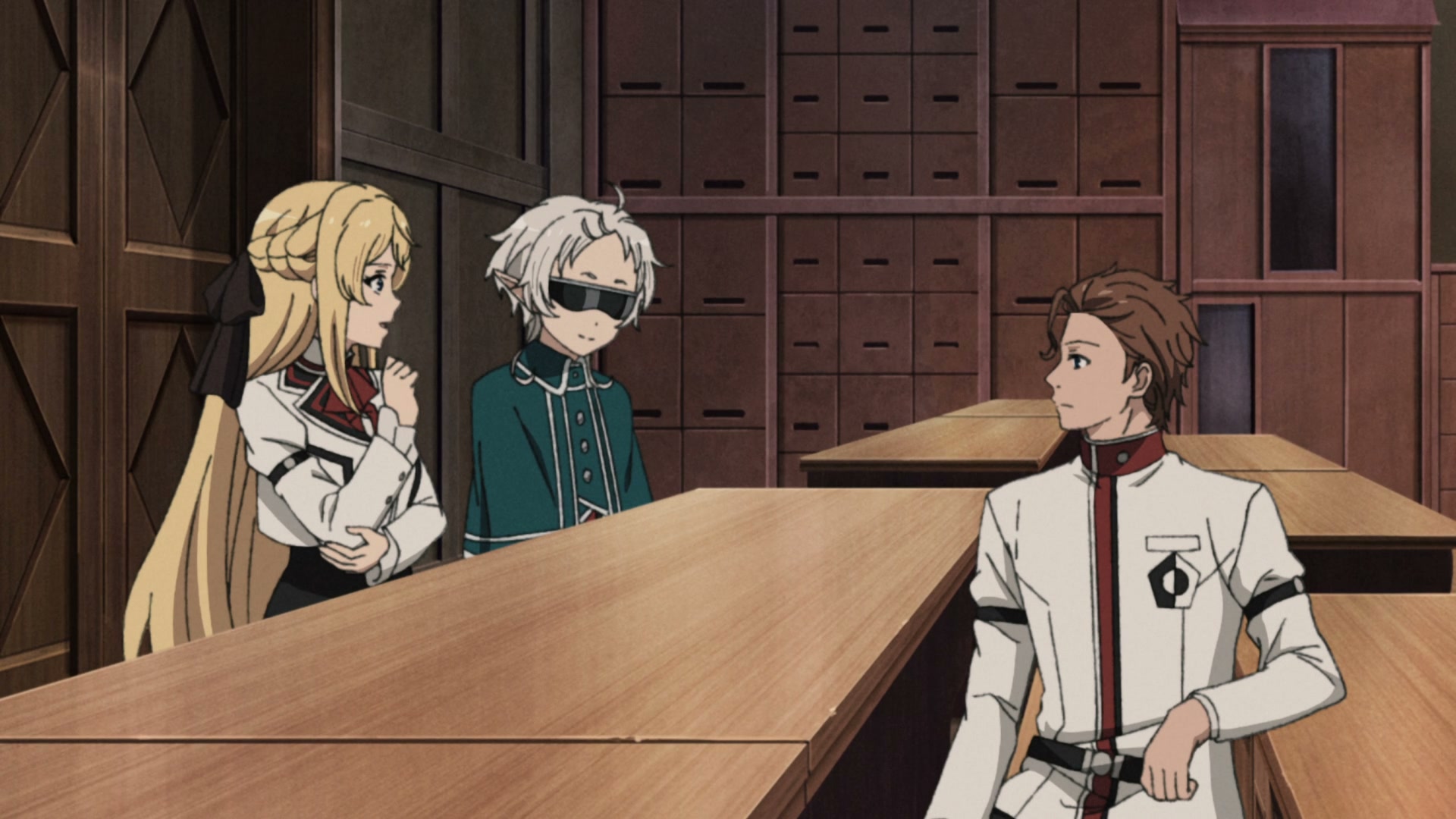
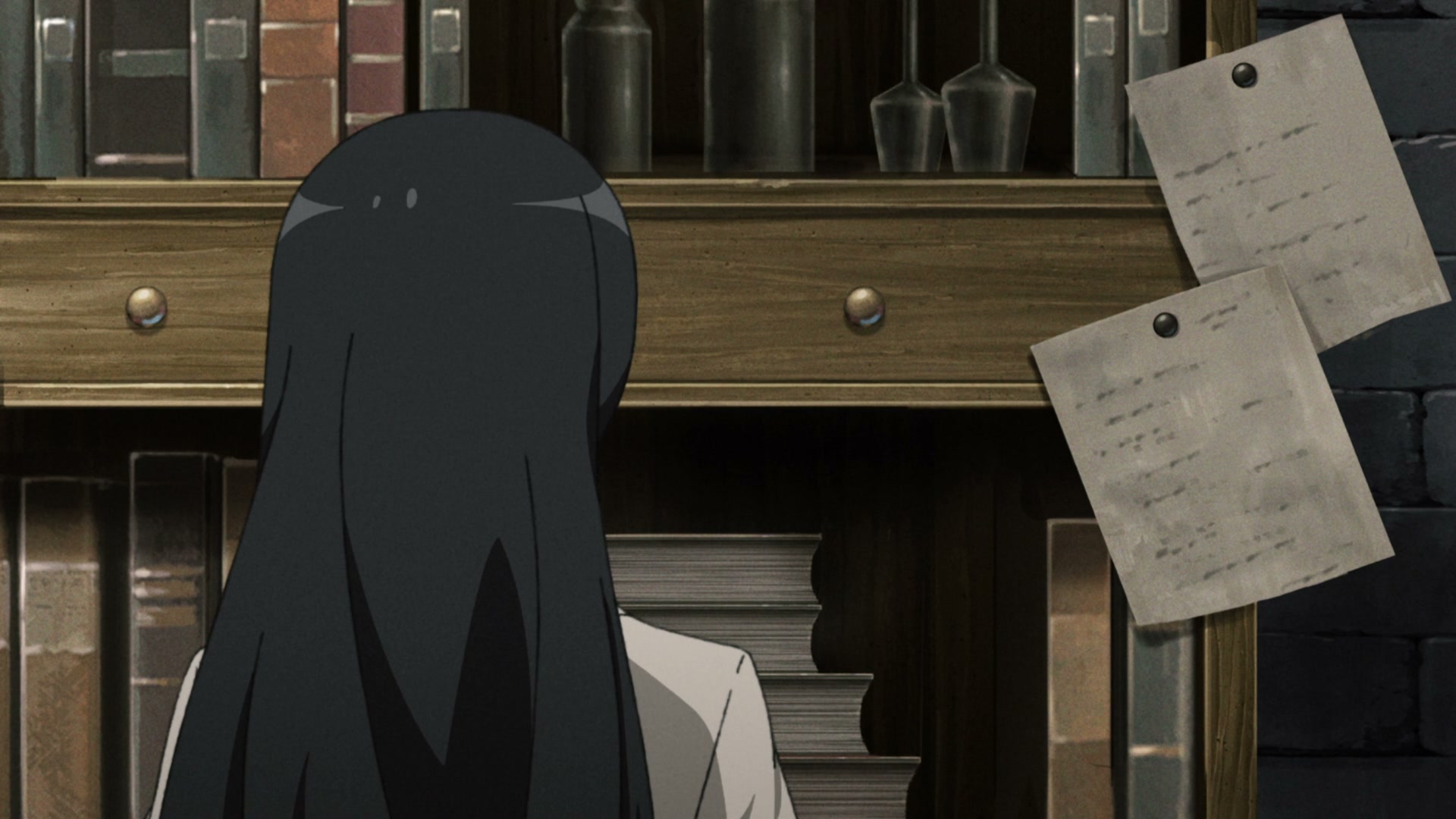
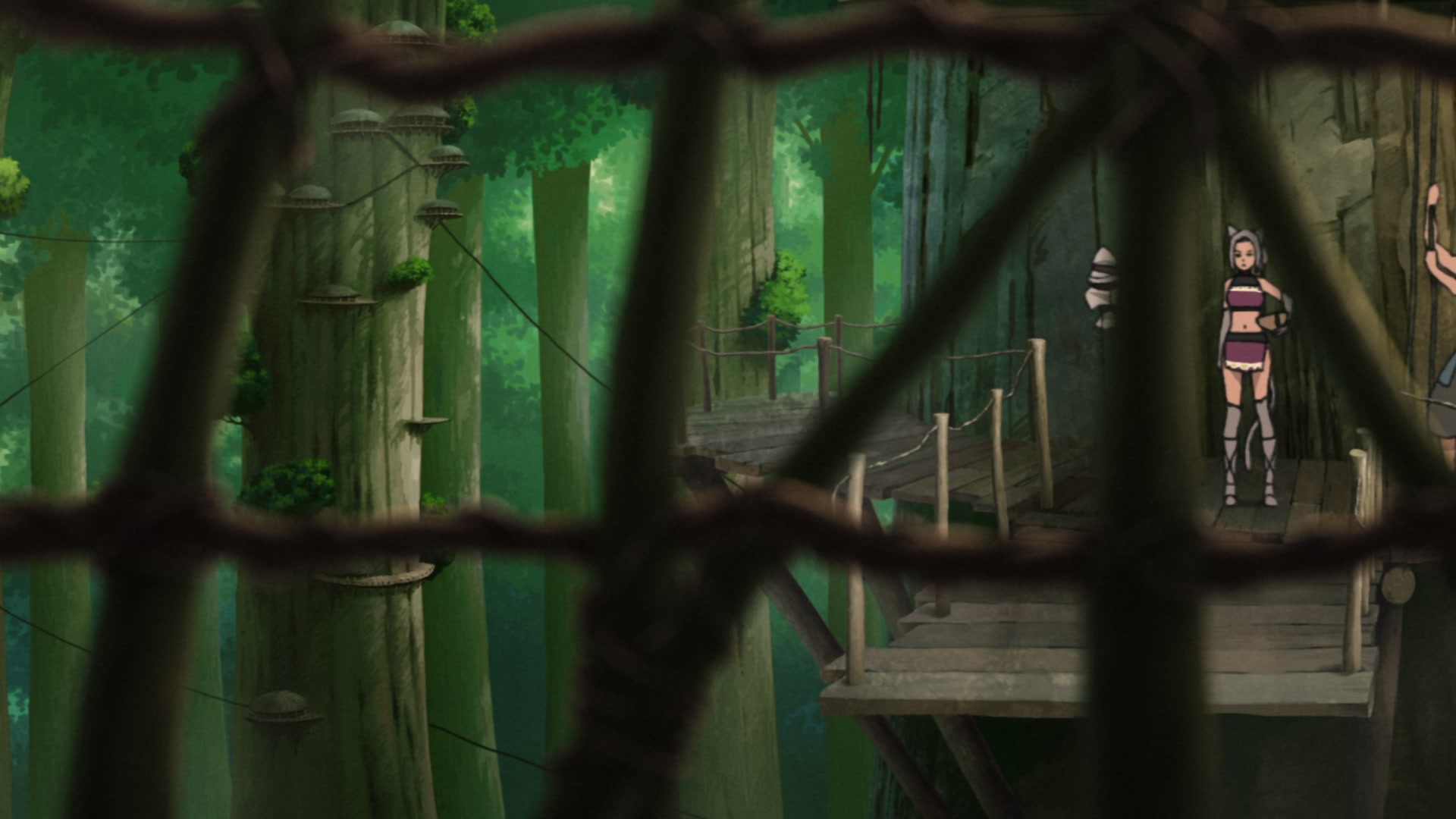
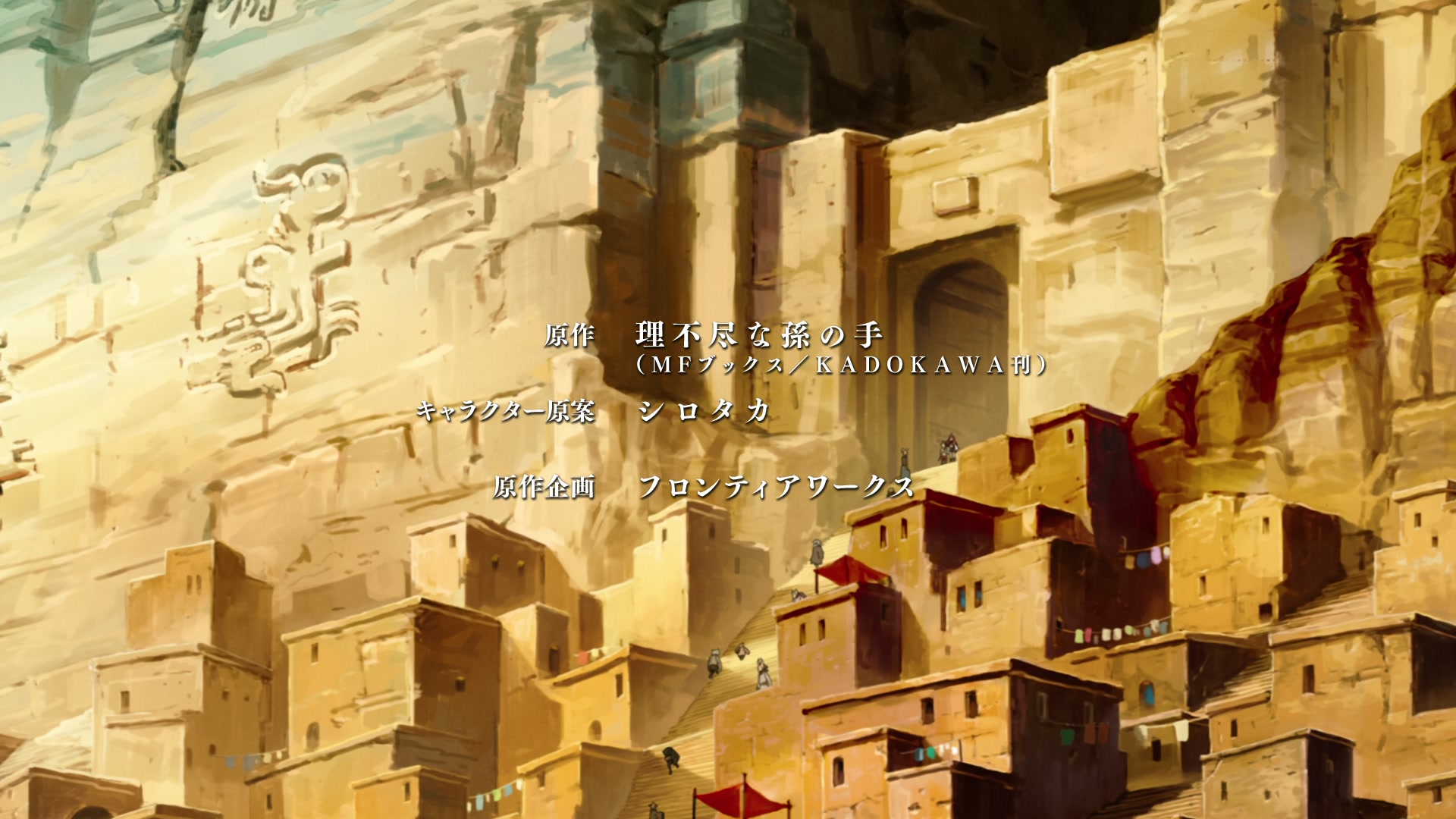
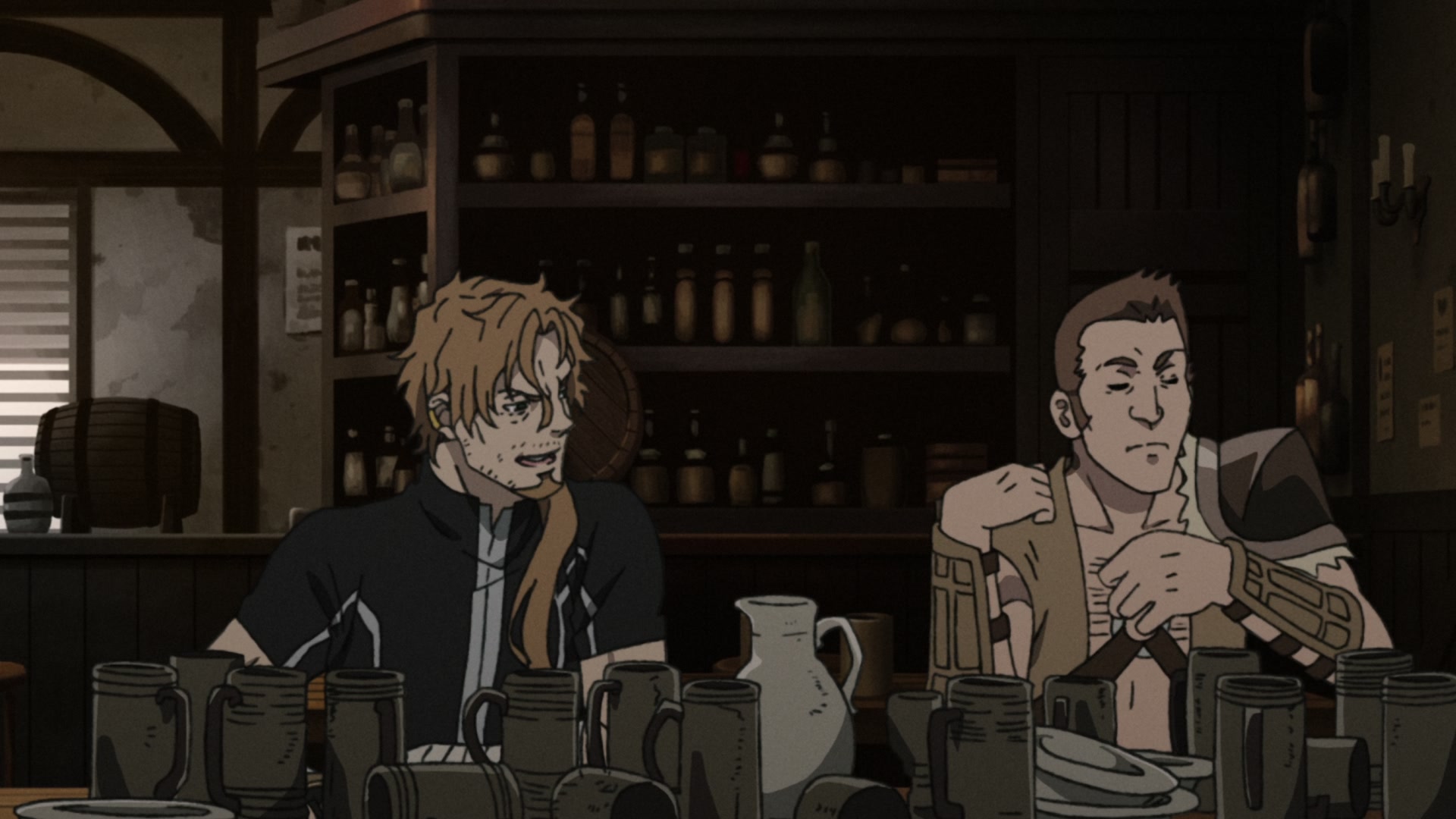
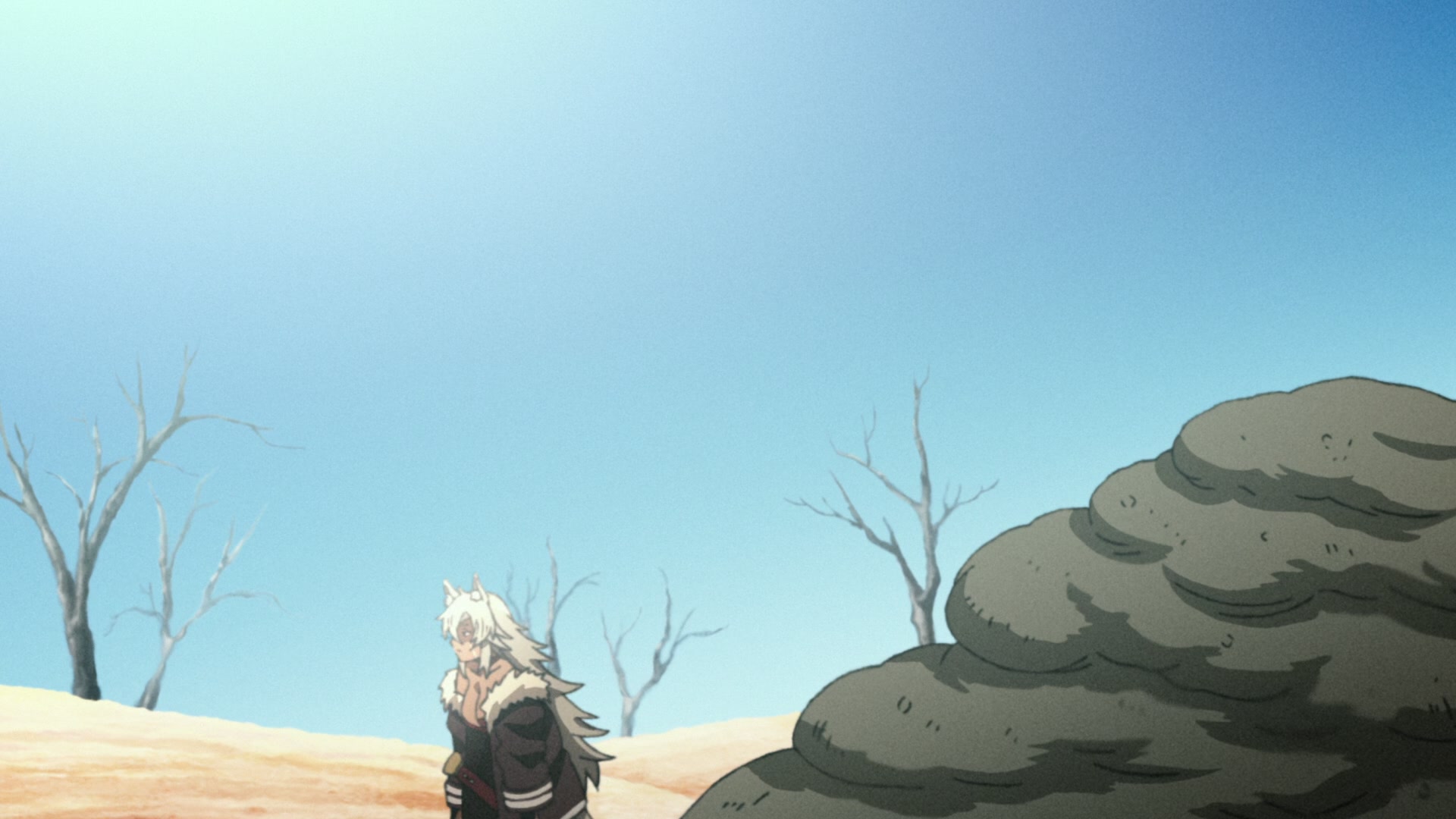
Background art is the production’s most variable element. At its strongest, layered forest scenes, detailed tavern interiors, painterly landscapes with atmospheric perspective, elaborate architectural vistas, it provides genuine depth and worldbuilding. The series invests in environmental illustration for establishing shots and mood pieces, letting those plates carry atmosphere while character-focused scenes simplify. At its weakest, backgrounds reduce to flat color fields, repeated patterns, or sparse walls that function as tonal backdrops rather than lived-in spaces. Wide dialogue scenes can feel stage-like, with characters arranged on the far side of a table facing camera, or standing in evenly spaced lineups against minimal environments. The inconsistency suggests either a modest background budget or a deliberate prioritization of character staging over environmental density.
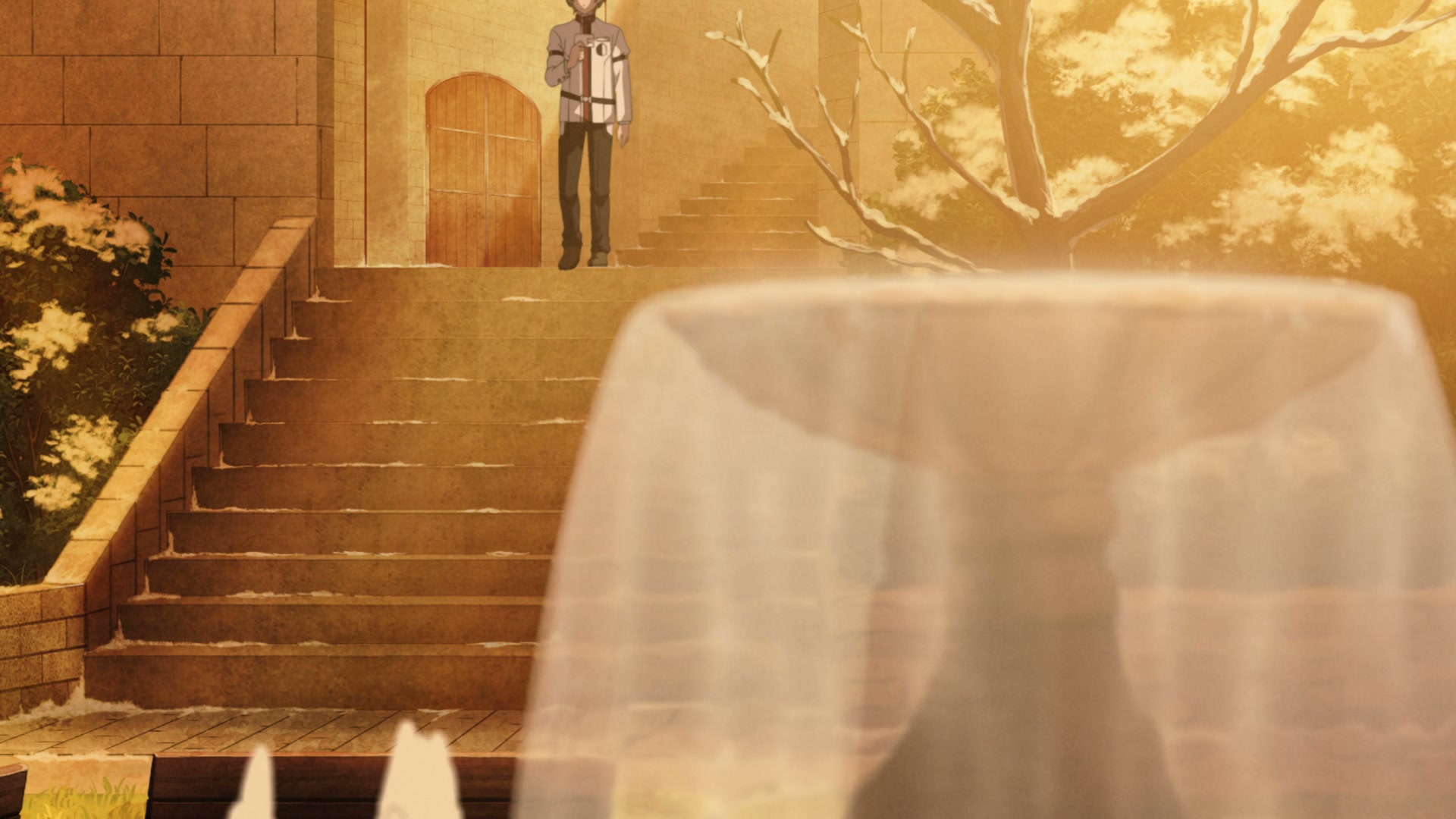
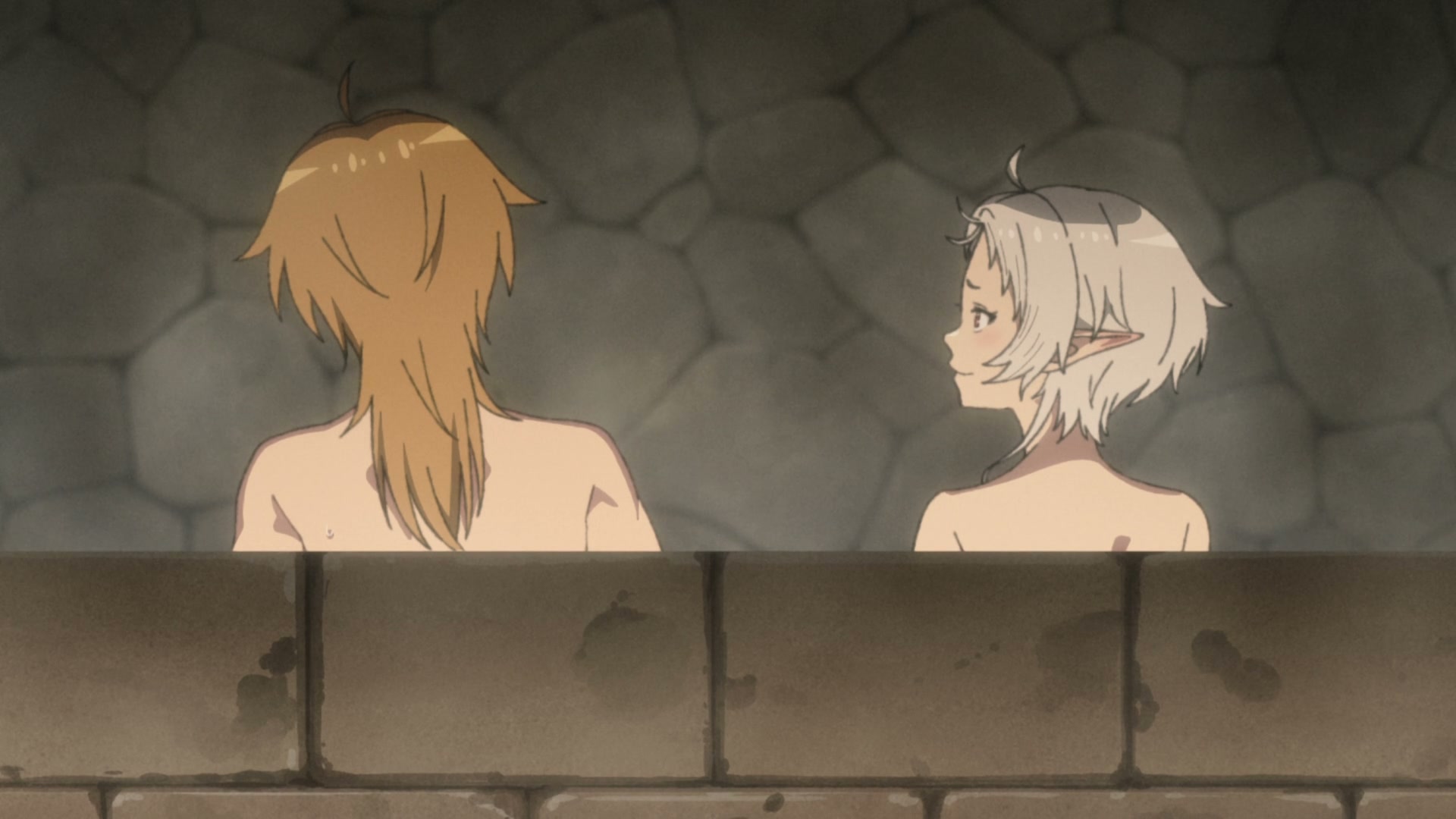
Compositing is generally clean but often flat. Characters can feel pasted onto backgrounds rather than integrated into them, particularly when lighting lacks directional cast shadows or when overall values compress. Depth is frequently achieved through blur, foreground occlusion, or atmospheric haze rather than dimensional lighting and texture. The series uses these tools well when it uses them, a blurred foreground object creating voyeuristic framing, a stone wall blocking lower bodies to focus attention on faces and gaze, but relies on them heavily.
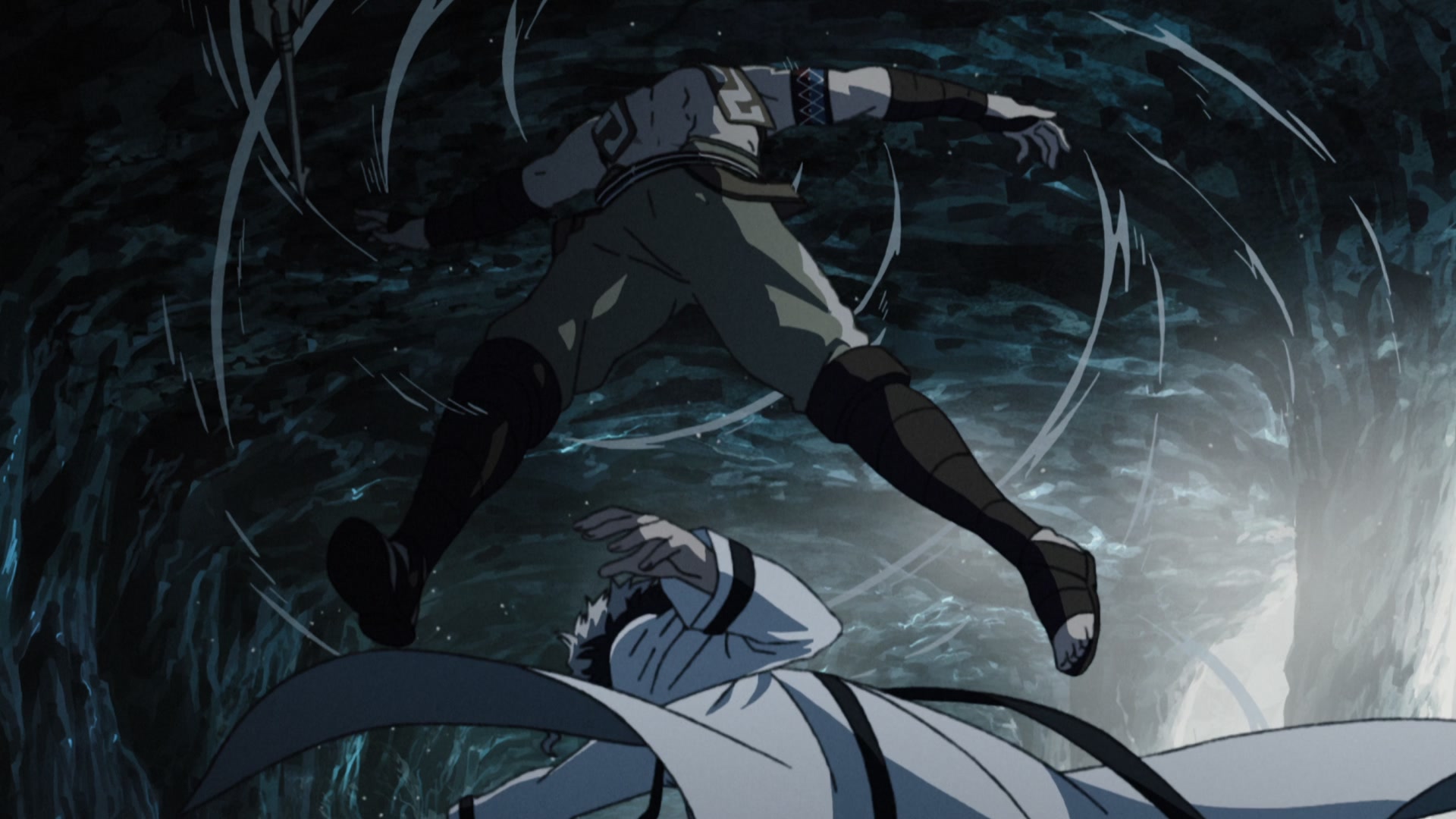
The series is not action-heavy, but when it needs movement, it often cannot deliver. Action sequences rely on speed lines and quick cuts rather than choreography. Crowd scenes freeze background characters. Moments of physical comedy fall flat because the timing is stiff. These are production limitations, not stylistic choices. The difference matters. A static close-up of a character processing grief is not the same as a static wide shot of a battle that should be dynamic. The series knows the difference, but it cannot always afford to animate the latter.
That said, the series compensates with strong layouts, expressive acting, and atmospheric lighting. It understands that stillness can be powerful. Rudeus sitting outside Norn’s door, Oldeus collapsing in the basement, Eris staring at Rudeus across a training ground, these scenes use stillness to create tension and intimacy. The lack of movement is a choice, not a limitation. When the series commits to atmosphere, a volumetric shaft of light through a lattice window, firelight carving a face from darkness, a sun-bleached canyon settlement, it demonstrates genuine visual ambition.
Sound and Music
The soundtrack supports the series’ emotional register without overwhelming it. The opening themes capture the spirit of adventure and self-discovery that defines Rudeus’s journey, blending orchestral elements with contemporary anime sensibilities. The ending themes often serve as quieter, more introspective bookends, giving each episode space to breathe after its emotional climaxes. The music is used sparingly, which makes it more effective when it does appear. A swelling theme during Rudeus’s rescue of Roxy or a quiet piano line during Paul’s death lands harder because the series has not exhausted its musical arsenal.
The voice acting is exceptional across the board. The seiyuu work brings nuance to characters who could easily become archetypes. Rudeus’s voice shifts from childish enthusiasm to weary resignation to genuine warmth, often within a single episode. Eris’s voice is sharp and defensive, but it softens in moments of vulnerability. Sylphiette’s voice is gentle and patient, but it carries an undercurrent of determination. Roxy’s voice is calm and professional, but it cracks with insecurity when she talks about her height. The supporting cast is equally strong. Paul’s voice is boisterous and commanding, but it can drop to a whisper of regret. Ruijerd’s voice is deep and measured, conveying both his physical power and his emotional restraint. The voice acting is one of the series’ greatest strengths.
Sound design is used effectively to establish atmosphere. The clink of glasses in a tavern, the crackle of a campfire, the rustle of wind through trees, these small details ground the fantasy world in sensory reality. Combat sounds are impactful without being cartoonish. Magic has a distinctive auditory signature, a hum of mana that builds and releases. The series understands that sound is as important as visuals for creating immersion.
Overall Verdict
Mushoku Tensei is not perfect. It is often visually limited, occasionally tonally inconsistent, and sometimes difficult to watch. The early perversity can be hard to stomach, even when it is narratively justified. The animation is not always strong, and the pacing is not always perfect. But it is also one of the most emotionally intelligent anime in recent memory. It treats its characters as people, not archetypes. It treats its world as a place with history, not a backdrop. It treats its themes with seriousness, even when it wraps them in fantasy tropes.
This is a series for viewers who value character-driven storytelling over spectacle. It is for viewers who appreciate flawed protagonists, slow-burn growth, and emotional honesty. It is for viewers who understand that people do not change overnight, that they change slowly, through relationships, through failure, through the stubborn decision to keep trying. If you need a protagonist you can admire without reservation, this series will frustrate you. If you are willing to sit with its flaws and let its characters earn your affection, it will reward you in ways few anime can.
I would recommend Mushoku Tensei to anyone who wants a fantasy story with genuine emotional weight. I would warn them about the early perversity and the later darkness. I would tell them that the animation is not always strong, but the writing almost always is. And I would tell them that the series understands something important: a second chance is not a reset button. It is a new set of circumstances, and what you do with them depends on the work you are willing to do.
For me, Mushoku Tensei is a series that lingered. Its images, its characters, its themes, they stayed with me long after the credits rolled. It is not a show I will forget. And in a genre as crowded as isekai, that is the highest praise I can give.
Gallery