






Future Vision for “Healthy Animation Production” Drawn by Aura Studio’s Uema-shi: Sustainable Organization Building Supported by freee
Aiming to promote back-office improvement and efficiency in the animation industry through the introduction of freee, working towards building a sustainable organization.
Category: News
PR

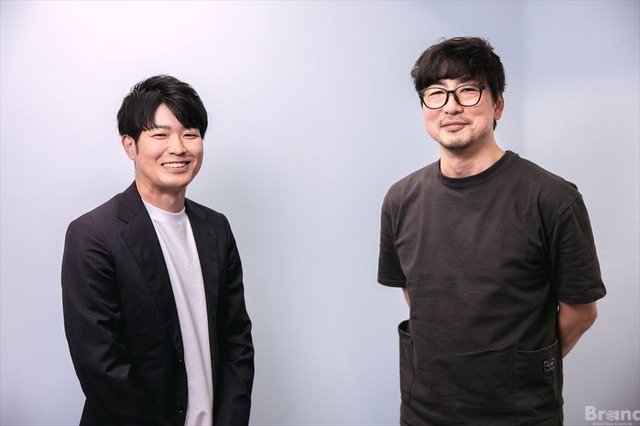
Left: freee Kinoshita Takahito-shi, Right: Aura Studio Uema Yasuhiro-shi

Aura Studio Uema Yasuhiro-shi

freee Kinoshita Takahito-shi

Aura Studio Uema Yasuhiro-shi

freee Kinoshita Takahito-shi
The animation industry, with its large number of freelancers, involves a huge volume of paperwork for tasks like issuing purchase orders and processing invoices. Furthermore, the recent push for work-style reforms (Hatarakikata Kaikaku) has increased the importance of labor management. Consequently, enhancing back-office functions has become increasingly vital within the animation sector. A robust back office is now indispensable for the creation of even better works.
Aiming to improve its back-office operations, Aura Studio Co., Ltd. introduced freee’s services starting in 2025. The company has implemented freee Business Outsourcing Management, freee Accounting, and freee Sales in an effort to digitize their financials and reduce the workload associated with administrative tasks.
Branc had the opportunity to conduct a dialogue between Uema Yasuhiro-shi, a Director at Aura Studio and Manager of their Second Production Department, and Kinoshita Takahito-shi of freee. They discussed how freee’s services can contribute to the digital transformation (DX) of back-office operations within the animation industry.
| Name | Affiliation/Role |
|---|---|
| Uema Yasuhiro-shi | Director, Production Dept. 2 Manager at Aura Studio |
| Kinoshita Takahito-shi | freee |
Pre-emptive Investment for an Environment Focused on “Production”
――Could you first tell us about Aura Studio’s history?
Uema: Aura Studio was founded in 2016, starting as a company primarily focused on 3DCG production for games and animation. This year marks our ninth year. Previously, I worked as a production producer at a company called studio KAI. In February of this year, I joined Aura Studio along with my team members from that time, and we launched a department dedicated to undertaking TV animation production as the main contractor.
Kinoshita: Actually, I’ve had a prior relationship with Uema-san, and that’s how they came to adopt freee products this time.
Uema: The animation industry tends to place a heavy emphasis on creativity, and I feel that back-office operations are often underestimated. My background isn’t solely in production; I’ve also been involved in licensing from the production committee side. Furthermore, I actually came from a general corporate background originally. From that perspective, I strongly felt that having a well-organized back office significantly improves work efficiency and allows everyone to truly focus on what they should be doing. I believe this also changes the sense of security that production staff have towards their work, as well as their approach to business literacy. While animation is a creative endeavor, it is also a business where we are entrusted with production funds from clients. As such, we must understand and act according to fundamental business principles and general societal norms. This includes complying with relevant laws, such as the Freelancers’ New Law and the Subcontract Act. Of course, since our objective is to be a going concern, we cannot and will not neglect the back office. However, obtaining assistance from appropriate personnel for this, particularly in an industry that likely appears specialized to outsiders and for a department we were just starting, seemed difficult. That’s why I was considering utilizing freee even before we merged.
――I heard that the first tool you considered introducing was “freee Business Outsourcing Management.”
Uema: Animation production is an industry with many external partners, including freelancers. Even for a small production company like ours, we have 50 to 100 outsourcing transactions per month. Having to dedicate staff to simple processing and checking tasks along the vertical axis, from issuing purchase orders to confirming deliveries and collecting invoices, and the horizontal axis involving reconciling amounts, feels like a waste. For example, if there’s an error in an invoice, you have to request a correction, which is stressful for both the person requesting and the person making the correction. More than anything, systems are more accurate than humans for numerical reconciliation. “freee Business Outsourcing Management” allows this process, from ordering to invoice collection and reconciliation, to be seamless.
Kinoshita: In the animation industry, I feel there are areas of work that are highly dependent on individuals and have become black boxes. Many companies still handle vast amounts of accounting on paper, and I’ve heard from people in the field that dealing with recent legal compliance issues, as Uema-sama mentioned, generates an enormous amount of processing. freee offers a wide range of tools, from accounting and HR to labor management and sales, as well as business outsourcing management, which Aura Studio-sama is also using. We are confident in our coverage. In that regard, we believe we can meet the diverse needs of the animation industry.
Uema: We want to distinguish between tasks that humans should inherently do and those they shouldn’t. And for things that systems are clearly better at, we should let the system handle them. The time saved can then be used for more thoughtful action and thinking. As a tool for that purpose, freee Business Outsourcing Management seemed very appealing.
――What kind of support does freee provide for the introduction of your services?
Kinoshita: At our company, the goal isn’t just implementation, but for clients to use our services effectively as the ultimate objective. Therefore, we assign a dedicated consultant. During implementation, we listen to the company’s concerns and workflow details to propose what is truly necessary. We build a support system where we walk alongside them to get the system on track and ensure it’s utilized effectively.
Uema: However, there might be challenges in actual operation. Even if we build such a system, the other party might not accept it.
Kinoshita: Naturally, there are people who aren’t familiar with these cloud-based management systems or who don’t want to change their existing methods. While it would be most efficient if both parties used our system, even if only the company side uses it, efficiency should still increase in terms of reduced confirmation work and compliance.
――So, even if the freelance partners receiving orders aren’t familiar with freee’s system, there are still sufficient benefits for the company?
Kinoshita: That’s correct. Besides reducing confirmation work, you can also create a talent management database. For instance, by storing contracts with specific freelancers, you can see what kind of work you’ve requested from them in the past. When requesting a new project, it might have previously been handled based on the intuition of the person in charge. However, by digitizing this data and sharing it company-wide, it can help in assigning the right task to the right person at the appropriate time.
Uema: Ultimately, I think work follows people. Even if you simply share talent information internally, often only those who already have connections can approach that talent. However, knowing that “a person with this capability exists” through a database can certainly spark ideas for future actions. And when that’s connected to the accounting system, it leads to efficiency when actually making a request. While we didn’t introduce this system with that as the primary objective, it seems helpful as a secondary benefit.
――It sounds like it’s still a world where work arises from person-to-person connections.
Uema: In the end, “who says it” matters more than “what is said.” But I don’t think that’s limited to this industry. It’s normal to prioritize sincere and hardworking people, isn’t it? I want to cherish things like that.
Visualizing the Budget to Connect it to Skill Improvement
――Aura Studio also adopted freee Accounting and Sales, is that right?
Uema: What is ordered using Business Outsourcing Management ultimately integrates into Accounting, and it can also link with Sales. So, we introduced Accounting as our core tool, which also serves a workflow role. When we were only handling 3DCG production, the majority of the work was done in-house. However, when undertaking animation production, we outsource a significant amount of work to external partners. We wanted to be able to properly grasp these numbers ourselves.
Kinoshita: With existing accounting software, tasks like journal entry and ledger bookkeeping are often separate. Various operations like managing invoices, income and expenses, and approvals ultimately tie back to accounting. If the software for these tasks is separate, it can lead to duplicate work. freee eliminates that kind of hassle.
――What about freee Sales?
Uema: A key idea is that production managers in charge of specific episodes should understand the cost of their episode, and consequently, the trend of the gross profit. I believe this leads to learning and skill improvement for production managers. As a tool for that, and considering the possibility of連携 (renkei – linking/cooperation) with other products, we decided to try managing things with freee Sales. Regardless of the system used, budget vs. actuals management (Yosan Jisseki Kanri) is necessary. If you try to manage this, for example, in Excel, the information can vary depending on the 담당자 (tamtoja – person in charge)’s literacy, and as independent files, it increases effort.
――So, by “visualizing” the budget, you intend for each production manager to have a stronger awareness of the budget?
Uema: That’s right. Being budget-conscious is very important for career advancement. It would be great if they could understand the numbers and then think about where to prioritize budget allocation for a specific episode’s content in that work. If they can do this, their contribution to quality will increase, and depending on how they use the budget, it can also help build trust with partners. Also, I think being able to do something you couldn’t before is enjoyable and rewarding. I want them to feel this sense of fulfillment in tasks beyond what is traditionally considered “production” work. I mentioned earlier that “who says it” is more important than “what is said,” but when you’re young, it’s actually more about “what do you say?” Through that process, you gain trust and are able to become someone (“who you are”). Although indirectly, I hope this system can also serve as a supporting tool for such skill development.
Kinoshita: Methods for cost calculation vary widely among companies, but manual work can lead to errors or relying on the intuition of the person managing the project, which can result in unexpected losses. freee Sales was built to prevent such oversights. While it’s challenging to handle administrative tasks while maintaining the quality of the work, we want to contribute to the animation industry by making efforts to reduce that workload as much as possible.
Want to Create an Organization That Can Continuously Produce Animation in a Healthy Way
――With the impact of work-style reforms, improving back-office operations is also being sought across the entire animation industry. What kind of impact do you think this improvement will have on the animation industry, Uema-san?
Uema: I want to create a team that can continuously produce animation in a healthy way. To do that, it’s naturally essential to have a correct grasp of costs, including not only the cost of goods sold but also selling, general, and administrative expenses. Furthermore, it’s better if the tools for this can span different sections and allow for further pursuit of efficiency. In that sense, I might not be directly concerned about the direct impact of work-style reforms. Fundamentally, I think that things with a strong base or foundation (“ashikoshi”) are the ones that remain strong continuously. I see the back office as the foundation for business expansion.
――So, to create an organization that can continuously produce animation in a healthy way, you need systems that can support areas other than production as a prerequisite?
Uema: Yes, that’s right. Animation should be something made by human hands, so we should keep the good parts that are dependent on individuals. On the other hand, for things that systems are clearly better at, we should let them assist.
Kinoshita: I myself love animation and want to see wonderful works continue to be created. As Uema-sama mentioned, freee can help in creating a system that allows continuous production, building a growing organization, dealing with legal compliance, and visualizing numbers. We intend to continue updating our systems to provide even more comprehensive support in the future.
Sugimoto Hodaka
_


![What is Your Favorite 2025 Anime Movie? [2025 Anime! Anime! Sousenkyo] Poll Closes December 13](https://animeworld.info/wp-content/uploads/2025/12/818796.jpg)