




![Kidou Keisatsu Patlabor Revival Screening: Reflecting on the Exquisite Human Drama Where Nostalgia and Emosa Coexist [Heisei Shouwa Retro Anime Guide]](https://animeworld.info/wp-content/uploads/2025/10/806670.jpg.jpg)
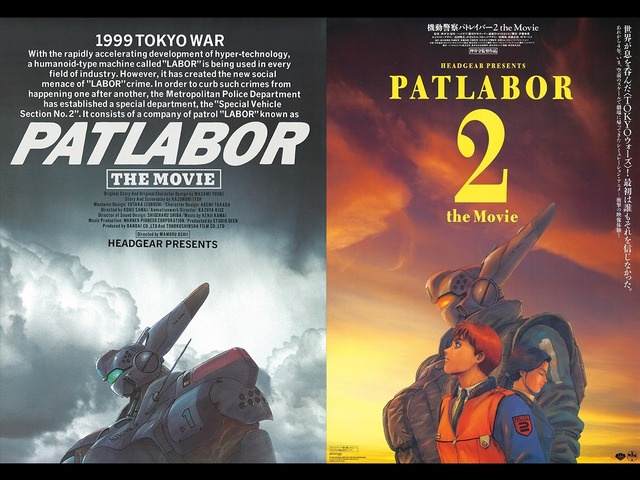
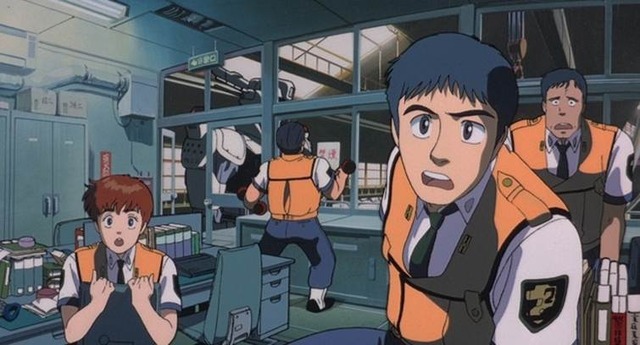

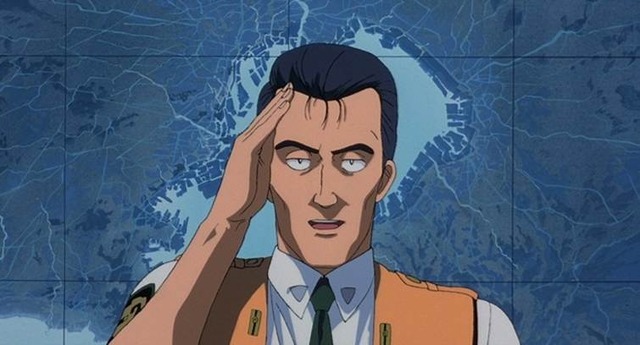
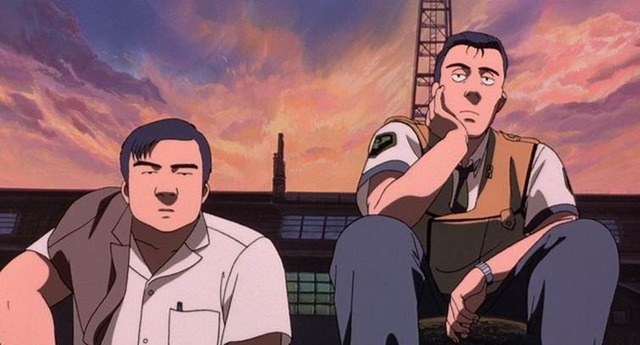
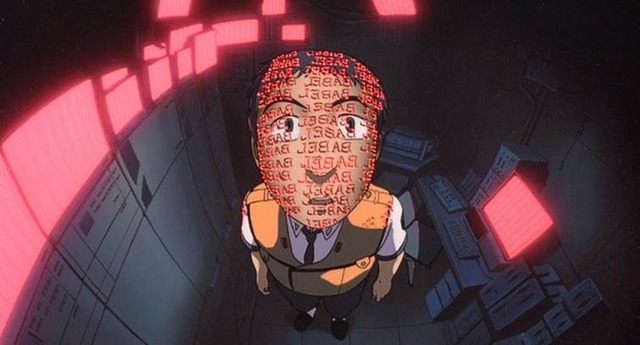
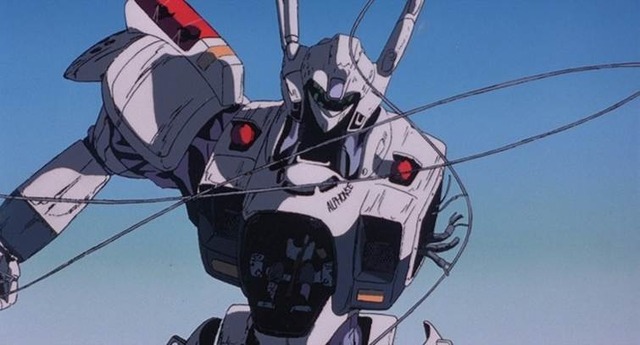
The 4K revival screenings of the theatrical anime Kidou Keisatsu Patlabor the Movie, released 36 years ago in July 1989, and its sequel Kidou Keisatsu Patlabor 2 the Movie, released 32 years ago in August 1993, have been sequentially held since October 2025, garnering significant attention.
These two films, commonly known as Gekipato (short for Gekijouban Patlabor, or “Theatrical Patlabor”), remain remarkably timeless despite being over 30 years old, appealing even to younger generations who weren’t born when they first premiered.
The first Gekipato is set in the summer of 1999, and Gekipato 2 in the winter of 2002. At the time of their release, these were “not-so-distant future stories.” However, in today’s Reiwa era, they’ve become “tales from about a quarter-century ago.” While the animation quality is still stellar, much of what was depicted as “near future” now evokes a strong sense of nostalgia.
What feelings do the Gekipato films inspire when viewed in the Reiwa era? As someone who has watched Gekipato countless times since experiencing it in theaters in real-time, I took the opportunity of the 4K revival screenings to revisit both films.
The Essence of Kidou Keisatsu Patlabor is Human Drama
To briefly explain the Kidou Keisatsu Patlabor series, it’s essentially a story about police officers who solve crimes and help people using humanoid robots instead of patrol cars.
The story unfolds in a world where “Labor” (derived from the English word for work), versatile humanoid working machines, have proliferated into various fields like construction, civil engineering, and underwater operations. To combat the new social threat of “Labor crime” arising from this advancement, the Tokyo Metropolitan Police Department established the “Special Vehicle Section 2” (Tokusha Ni-ka, or SV2). The series chronicles the exploits of the police officers working in this section. Since SV2 operates Patrol Labors instead of patrol cars, the series is commonly known as Patlabor.
The original concept was crafted by HEADGEAR, a collective of then-young creators: Oshii Mamoru, Yuuki Masami, Itou Kazunori, Takada Akemi, and Izubuchi Yutaka. Oshii Mamoru (director), Itou Kazunori (screenwriter), and Takada Akemi (character designer) had gained prominence through the original Urusei Yatsura TV anime and films. Yuuki Masami (manga artist) had just finished serializing Kyuukyoku Choujin A-ru in “Weekly Shonen Sunday”, while Izubuchi Yutaka (mechanic designer) had worked on Kidou Senshi Gundam Gyakushuu no Sha. The concept gradually took shape from Yuuki Masami’s accumulated sketches, which Izubuchi Yutaka then developed into a full-fledged project.
The anime series kicked off with the initial OVA (Original Video Animation) series (7 episodes, now called “Early Days”) released in April 1988, followed by a TV series (47 episodes), a New OVA series (16 episodes), three feature films, and two short films. The TV series, originally planned for six months (two consecutive cours), was extended to a full year (four consecutive cours) due to its popularity. Oshii Mamoru also directed a live-action drama and film series, THE NEXT GENERATION Patlabor.
With so many entries, you might wonder, “Where should I start?” If the movies seem a bit long, I highly recommend “The Longest Day of SV2 (Part 1)” (Early Days Episode 7). This was the first Patlabor episode directed by Yoshinaga Naoyuki, who would later helm all episodes of the TV and New OVA series. While it might seem odd to jump straight to episode 7, this self-contained 25-minute episode brilliantly condenses the world of Patlabor, offering excellent portrayals of each character’s personality and role, along with exciting Labor action scenes.
Kidou Keisatsu Patlabor is, despite its title, often simply categorized as a “robot anime.” However, the robots (Labors) are merely tools within the story. The true focus is the human drama centered around the young woman Izumi Noa, assigned to SV2, and her companion Shinohara Asuma.
Beyond these younger members, the series also features a rich cast of adult characters, including Section Chief Gotou Kiichi and Nagumo Shinobu, who lead SV2, as well as Section Chief Utsumi and his subordinate Kurosaki, who appear as antagonists in the manga, TV series, and New OVA series. Their compelling characterizations attracted many female fans.
To draw a modern TV anime parallel, it could be described as an “workplace anime” filled with laughter and tears, much like SHIROBAKO, which depicts people involved in anime production. Yokote Michiko, who was responsible for the series composition and script of SHIROBAKO, is known as Itou Kazunori’s top disciple, with “Patlabor TV series Episode 12” being her debut work. Following Itou Kazunori’s novelization of Gekipato 1, Kidou Keisatsu Patlabor: Fuusoku 40 Meter, Yokote Michiko published four more volumes (now available as a combined edition).
Nostalgia and “Emozional” Feelings in the Reiwa Era
Revisiting Gekipato 1 and Gekipato 2 now, the once-futuristic atmosphere has completely given way to an overwhelming sense of nostalgia. Gekipato 1 weaves a mystery involving frequent Labor rampage incidents in the Tokyo metropolitan area and the enigma of Hoba Eiichi, a genius programmer who vanished into the sea. Gekipato 2 delves into a serious and weighty plot concerning a military coup by the Japan Self-Defense Forces. Within these narratives, a deep nostalgia permeates various elements:
The Streets of Tokyo
In Gekipato 1, two detectives, Matsui and Kataoka, are memorably depicted tirelessly pursuing Hoba Eiichi’s footsteps, visiting his former residences. Their journey consistently leads them to old, downtown houses left behind by urban development. Hoba Eiichi, despite being a high-earning programmer, repeatedly moved between dilapidated apartments awaiting demolition.
The scenes viewed by Matsui and Kataoka showcase roofs of corrugated iron and traditional tiles, characteristic of the Showa era, huddled together. The Tokyo cityscape, rendered by art director Ogura Hiromasa, evokes a sense of passing time with its muted colors, and iconic locations like Hijiribashi Bridge in Ochanomizu, meticulously drawn from location scouting, provide a striking realism.
Conversely, Gekipato 2 portrays the immediate aftermath of a coup in areas like Ginza, Nihonbashi, and Shinjuku in Tokyo. The official X (formerly Twitter) account previously ran a project comparing real-world locations to those in Gekipato 2. While many of the settings from Gekipato 2 still resemble their animated counterparts more closely than those in Gekipato 1, JR Shinjuku Station’s MYCITY building has since transformed into LUMINE EST.
Floppy Disks
Hoba Eiichi single-handedly programmed HOS (Hyper Operating System), a new version of the OS designed to efficiently operate Labors.
According to official setting materials, the storage medium for the “HOS master copy” is a “floppy disk.” Floppy disks typically had a capacity of 1.2MB. While widely used for exchanging text data when the movie was released, this capacity is so small that it can’t even hold a single smartphone photo today…
The HOS master copy physically resembles an “MO disk” (Magneto-Optical disk). Even MO disks typically only offered 128MB or 230MB, which pales in comparison to modern external SSDs with capacities of 1TB or more (1TB is roughly one million times the capacity of a floppy disk).
From the perspective of the Reiwa era, with its prevalent high-capacity SSDs, one might wonder if a single floppy disk could truly contain the system program to operate giant Labors, each about 8 meters tall. Perhaps, given Hoba Eiichi was a genius programmer, it was indeed sufficient.
The Patlabor boot disk has even been commercialized into goods like keychains.
Words of Maintenance Chief Sakaki
Sakaki Seitarou, the maintenance chief for Labors at SV2, shares a profound line in Gekipato 1 while discussing the Labor rampage incidents:
“No matter how much technology advances, one thing never changes. The people who build machines, the people who maintain them, and the people who use them. If humans don’t make mistakes, machines will never do anything wrong.”
Consider replacing “machines” with “cars.” No matter how much technology progresses, cars themselves don’t intentionally cause harm. While they can malfunction, the vast majority of traffic accidents are attributable to human error. Sakaki Seitarou’s words, spoken as he nears retirement, carry the wisdom of a seasoned technician who lived through the Showa era and witnessed technological evolution.
Millibar? A Different Unit for Atmospheric Pressure
Midway through Gekipato 1, there’s a “weather forecast” scene. The weather announcer states, “Atmospheric pressure is 950 millibars.” However, the unit for atmospheric pressure officially changed from “millibar (mbar)” to “hectopascal (hPa)” on December 1, 1992. The full forecast reads:
“…Large Typhoon No. 19, currently approaching the mainland, is moving north-northeast at 25 kilometers per hour off the Kii Peninsula, and is expected to make landfall in Tokyo Bay in the early hours of the day after tomorrow. Atmospheric pressure is 950 millibars, and areas within a 20-kilometer radius from its center are experiencing winds of over 40 meters per second.”
Since Gekipato 1 is set in 1999, “hectopascal” should have been used. Yet, even in the Kidou Keisatsu Patlabor the Movie Sound Renewal Version, a re-recorded edition released in 1998 for DVD, “millibar” was retained. Generations unfamiliar with “millibar” might wonder, “What’s a millibar?” but it was indeed the term used in that era. Notably, the weather announcer’s voice was provided by Hayashibara Megumi, then in her third year as a voice actress, and she continued in the role for the sound renewal version.
The weather announcer’s image continues to resurface online whenever a major typhoon approaches.
A World Without Widespread Mobile Phones
In the world of Kidou Keisatsu Patlabor, mobile phones had not yet become commonplace. People mostly used green or red public telephones for calls outside.
In Gekipato 2, there’s a scene where SV2 Captain Nagumo Shinobu makes a hands-free call from her car (which itself features futuristic elements like a car navigation system projected directly onto the windshield). Detective Matsui is also shown using a mobile phone, albeit one slightly larger than today’s, but its presence is largely understated.
In a scene where Matsui’s phone is snatched during an investigation, he yells, “Where’s the phone?!” – ironically, with a giant billboard for a phone company positioned directly behind him.
Even the cordless phone in Nagumo Shinobu’s home had a long antenna.
Kawai Kenji’s Score for Patlabor
One cannot talk about the Patlabor series without mentioning the iconic music by Kawai Kenji. He has been an indispensable presence in Oshii Mamoru’s works since their collaboration on the live-action film Akai Megane (starring voice actor Chiba Shigeru). Kawai Kenji is also the only person who has contributed to all visual adaptations of the Patlabor series, both animated and live-action.
Countless masterpieces grace the soundtrack, such as “Heavy Armor” which opens Gekipato 1, and “Asahi no Naka e” (Into the Morning Sun) which concludes it. Kawai Kenji has recently composed for films like Kitarou Tanjou GeGeGe no Nazo and the TV anime Uma Musume Cinderella Gray. He is also frequently commissioned for international projects, boasting a large fanbase for his distinctive “Kawai-bushi” style.
He also composed and arranged “Omoide no Bay Bridge” (Bay Bridge of Memories), a karaoke song featured in a crucial scene of Gekipato 2. This enka-like tune from the Showa era is an absolute must-listen.
The Black Box: “Videotape”
“Omoide no Bay Bridge” was recorded on a videotape brought by the mysterious man Arakawa Shigeki, who visits SV2 and says, “There’s something I’d like you to see.” When played, an intro and title sequence begin, leading to a surreal exchange: “Is this the right tape?” (Nagumo Shinobu) “Yes, this is it.” (Arakawa Shigeki) “I can sing this song.” (Gotou Kiichi).
Before the advent of DVDs, videotapes were the primary medium for recording visual content like television shows. In the year 2002, when the film is set, DVDs should have been common, but Gekipato 2 was released in 1993. DVDs had not even been developed yet, and their format wasn’t announced until 1995, so this detail is understandable.
Prior to the release of Gekipato 2, a video magazine titled “Access the Movie,” compiling interviews and other content, was sold. For Gekipato 1, a “TIKEMAGA” (ticket magazine) package was offered, including an advance movie ticket, a CD single (featuring Kasahara Hiroko’s image song “Yakusoku no Tochi e” and special news), a booklet, and a poster. This shows that Patlabor was a thriving franchise with popular magazines and merchandise.
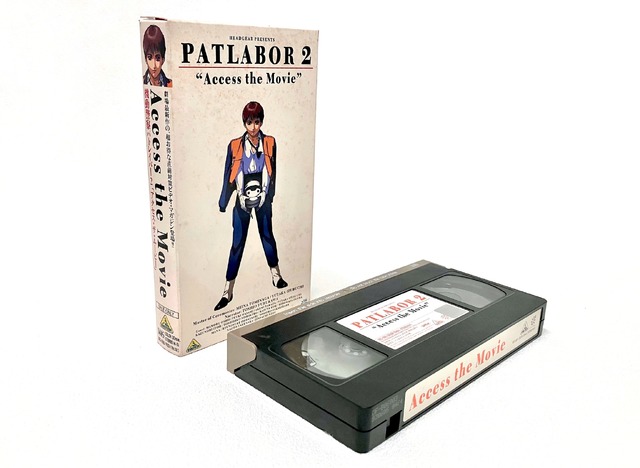
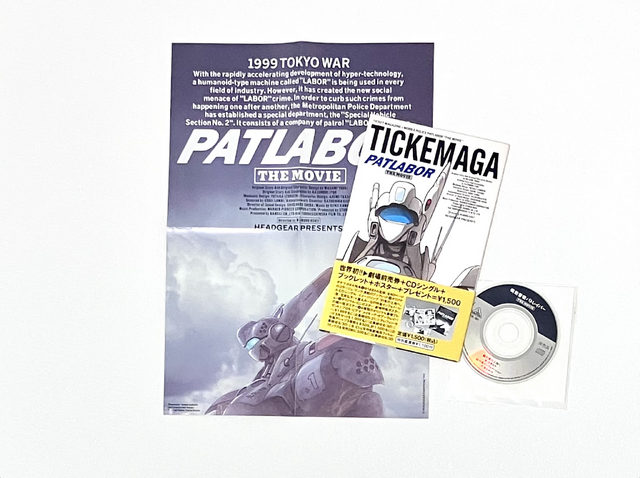
While the depicted scenery and items may evoke nostalgia and a sense of being dated, the exceptional craftsmanship of Kidou Keisatsu Patlabor the Movie and Kidou Keisatsu Patlabor 2 the Movie remains undiminished even when viewed again in the Reiwa era. Even after the 4K revival screenings conclude, there will surely be future opportunities to experience them again. As a line from Early Days Episode 6, “The Longest Day of SV2 (Part 2),” says:
“If we live, we’ll get another chance.” (Kainosho Akiteru)
Director Izubuchi Yutaka’s new anime, Kidou Keisatsu Patlabor EZY, is also set for 2026. We’ll definitely keep a close eye on future developments!
Staff & Cast
Kidou Keisatsu Patlabor the Movie
Staff
| Role | Name |
|---|---|
| Director | Oshii Mamoru |
| Planning & Original Story | HEADGEAR |
| Original Concept | Yuuki Masami |
| Screenplay | Itou Kazunori |
| Character Design | Takada Akemi |
| Mechanic Design | Izubuchi Yutaka |
| Unit Director | Sawaii Kouji |
| Animation Director | Kise Kazuya |
| Art | Ogura Hiromasa |
| Music | Kawai Kenji |
| Sound Director | Shiba Shigeharu |
| Director of Photography | Yoshida Mitsunobu |
| Editing | Morita Seiji |
| Layout | Watanabe Takashi, Tanaka Seibi |
| Color Design | Ike Sayuri |
| Producers | Unozawa Shin, Maki Tarou, Kubo Makoto |
Cast
| Character | Voice Actor |
|---|---|
| Izumi Noa | Tominaga Miina |
| Shinohara Asuma | Furukawa Toshio |
| Oota Isao | Ikemizu Michihiro |
| Shinshi Yasuhide | Futamata Issei |
| Gotou Kiichi | Oobayashi Ryuusuke |
| Nagumo Shinobu | Sakakibara Yoshiko |
| Yamazaki Hiromi | Gouri Daisuke |
| Kanuuka Clancy | Inoue You |
| Shiba Shigeo | Chiba Shigeru |
| Sakaki Seitarou | Saka Osamu |
| Detective Matsui | Nishimura Tomomichi |
| Jitsuyama | Tsujimura Naoto |
| Kaihou | Kojima Toshihiko |
| Fukushima | Ogawa Shinji |
| Kataoka | Tsujitani Koushi |
Kidou Keisatsu Patlabor 2 the Movie
Staff
| Role | Name |
|---|---|
| Director | Oshii Mamoru |
| Original Story | HEADGEAR |
| Screenplay | Itou Kazunori |
| Character Design | Takada Akemi, Yuuki Masami |
| Mechanic Design | Izubuchi Yutaka, Kawamori Shouji, Katoki Hajime |
| Unit Director | Nishikubo Toshihiko |
| Animation Director | Kise Kazuya |
| Photography | Takahashi Akihiko |
| Art | Ogura Hiromasa |
| Color Design | Yusa Kumiko |
| Layout | Watanabe Takashi, Kon Satoshi, Takeuchi Atsushi, Mizumura Yoshio, Arakawa Shinji, Tanaka Yasumi |
| Music | Kawai Kenji |
| Sound Recording | Asari Naoko |
| Editing | Kakezu Shuuichi (JSE) |
| Executive Producers | Yamashina Makoto, Uemura Tooru |
| Producers | Unozawa Shin, Hamawatari Tsuyoshi, Ishikawa Mitsuhisa |
Cast
| Character | Voice Actor |
|---|---|
| Izumi Noa | Tominaga Miina |
| Shinohara Asuma | Furukawa Toshio |
| Gotou Kiichi | Oobayashi Ryuunosuke |
| Nagumo Shinobu | Sakakibara Yoshiko |
| Oota Isao | Ikemizu Michihiro |
| Shinshi Yasuhide | Futamata Issei |
| Yamazaki Hiromi | Gouri Daisuke |
| Shiba Shigeo | Chiba Shigeru |
| Sakaki Seitarou | Saka Osamu |
| Detective Matsui | Nishimura Tomomichi |
| Sakuma | Nakaki Ryuuji |
| Buchiyama | Tachiki Fumihiko |
| Shinshi Tamiko | Adachi Shinobu |
| Kaihou | Kojima Toshihiko |
| Yamadera | Oomori Akimasa |
(C)HEADGEAR all rights reserved. PRODUCED BY GENCO INC. Tokyo, Japan
(C)1989 HEADGEAR/BANDAI VISUAL/TOHOKUSHINSHA
(C)1993 HEADGEAR/BANDAI VISUAL/TOHOKUSHINSHA/Production I.G
《hidegomi》