




A Motorbike Enthusiast Discusses the “Reality” and “Love for Bikes” in “Shuumatsu Touring”! “The Serow is Another Protagonist”
The TV anime Shuumatsu Touring, currently airing, is a unique touring manga. Penned by Saito Ei, it’s serialized in the monthly comic magazine “Dengeki Maoh”, depicting two young girls and a single Serow motorbike adventuring across a post-apocalyptic Japan.
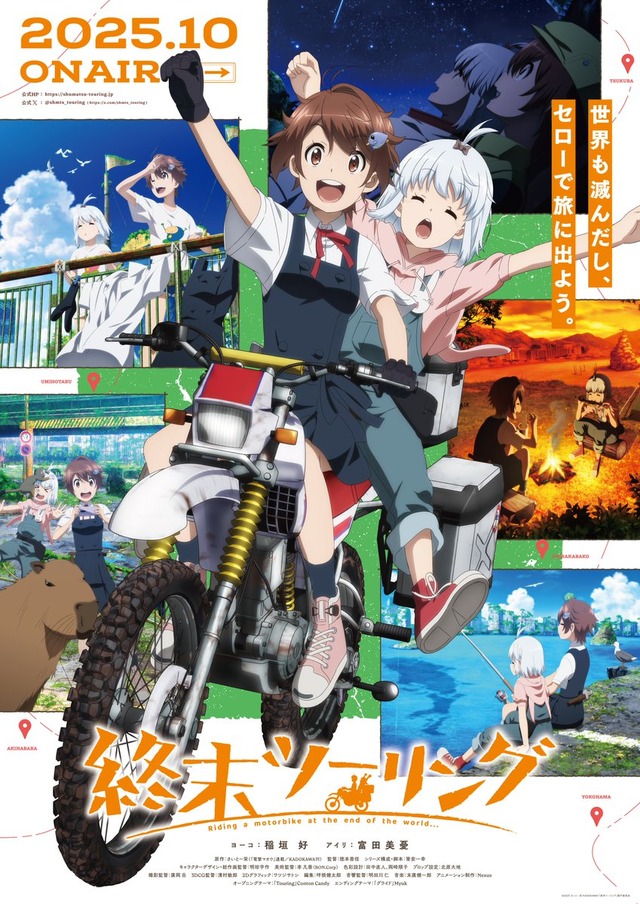
Youko and Airi are two girls traveling through a desolate, post-apocalyptic world, enjoying the solitude of famous landmarks by taking photos, and camping in nature-filled cityscapes. Riding tandem on their off-road motorbike, a Serow, they experience an unparalleled sense of freedom on their journey, unburdened by traffic jams or bothersome stoplights.
The series primarily focuses on Youko’s adventures driving the Serow through this unique world. This portrayal has particularly captivated one individual: Miyazaka Morito-shi, the Deputy Editor-in-Chief and Head of News for the automotive news website “Response”. We seized the opportunity to interview Miyazaka-shi, a passionate motorbike enthusiast, to delve into various intriguing aspects of the series. We discussed the charm and technical features of the Yamaha Serow featured in the anime, the standout points of its modified electric version, and the profound understanding of motorbikes that shines through the original author’s work.
Interviewee Profile
Miyazaka Morito-shi, Deputy Editor-in-Chief & Head of News, Response
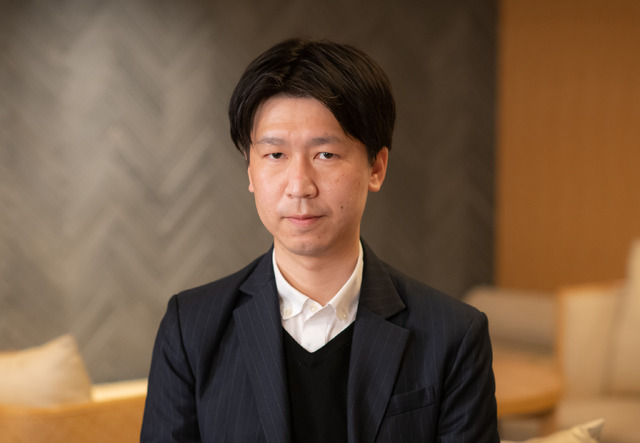
Born in Tokyo in 1979.
After working in the production of used car information magazines, he joined the editorial department of “Response,” an automotive news website operated by IRI Commerce & Technology (now IID, Inc.). He served as producer for the fuel efficiency management service “e-nenpi,” launched multiple new media platforms including the scoop site “Spyder7,” and became Editor-in-Chief of Response in 2017. He assumed his current position in 2023. His current beloved vehicles are a Mazda CX-5 and a Kawasaki W800.
A Work Overflowing with Motorcycle Love, Even Enthusiasts are Impressed! “Youko-chan has quite the riding skills.”
――First off, what were your impressions after watching Shuumatsu Touring?
Miyazaka Morito-shi (hereafter, Miyazaka): The first thing that struck me was how skilled Youko-chan is at driving. I also strongly felt that the author must be a considerable motorbike enthusiast, likely even owning a Serow themselves.
The Serow is categorized as an “off-road motorbike,” meaning it excels not on asphalt roads or in cities, but on mountain trails and rough, unpaved paths. This model, first introduced in 1985, wasn’t designed for speed races in the mountains like a competition vehicle. Instead, its core concept was the freedom to “easily ride anywhere.” For the Serow, riding itself isn’t the sole purpose; it’s about enjoying the journey to “reach your desired destination.” That’s the philosophy behind its creation.
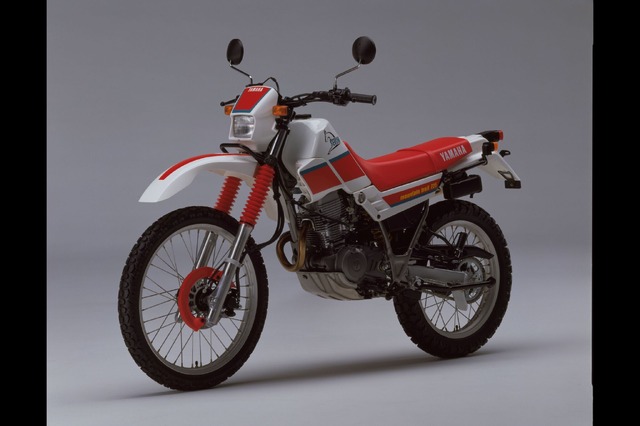
Yamaha calls this a “Mountain Trail Bike.” Just as trail running is a sport where you jog along mountain paths to enjoy the scenery, the Serow was designed to achieve that same experience, but on a motorbike.
Its appeal lies in a riding style that isn’t about tackling challenging terrains aggressively with protective gear, but rather about savoring the touring experience and the landscapes. In the story of Shuumatsu Touring, I really sensed that the creators understood this enjoyment of the Serow and envisioned, “What kind of world would unfold if one traveled on a Serow?” and “What kinds of places would they ride through?”
――So, the motorbike’s inherent concept perfectly aligned with the anime’s concept?
Miyazaka: Precisely. The world of this series is quite harsh, but a Serow can navigate through bumpy roads and overgrown, forested areas. I believe the world-building was crafted based on these inherent characteristics of the Serow.
――Hearing about the Serow’s concept, it certainly gives the impression that Youko-chan was destined to ride a Serow. Upon checking the author’s X profile, it states that their beloved bikes are a “Serow 225W” and a “Serow 225WE.”
Miyazaka: I knew it! You really can’t depict it this realistically unless you’re an actual owner of the bike. To match the series’ theme of “going to various places,” they simply destroyed the world, and I think this motorbike possesses the “resilience” to survive even in such an extreme environment.
――You mentioned, “Youko-chan, your driving skills are impressive,” but what scenes made you feel that way?
Miyazaka: I watched the digest video on the official website for this work, and the scene where they climb the stairs at Tokyo Big Sight, as well as the Episode 1 Hakone Turnpike riding scene, really stood out to me.
That particular road is considered a “sacred place for driving” among car and motorbike enthusiasts. Navigating that path smoothly with two people on board requires considerable skill.
I imagine Youko-chan is set to be around high school age, and for someone that young to possess such riding technique is truly impressive. Furthermore, riding up stairs or traversing bumpy roads with Airi-chan consistently on the back, or even remaining unfazed when chased by tanks – it genuinely amazed me.
――Is riding with two people really that difficult?
Miyazaka: It’s very difficult. Airi-chan is a robot, so she might even be heavier than a human. To ride stably with such a companion on the back, even while standing and being shot at with beams, demonstrates considerable technique.
Riding tandem is much harder to balance than riding alone. The more weight you add, the more sensitive the operation becomes. That’s why I was so impressed by Youko-chan’s riding skills.
――In Episode 3, there was a line about “this is what a gasoline engine sounds like.” Did you realize in Episode 1 that the engine sound was electric?
Miyazaka: Of course. At the beginning of Episode 1, there’s an older sister riding a motorbike, and in that scene, she kick-starts the engine at a gasoline station. That “kick start” is a characteristic of early model Serows, and I found the engine sound to be very realistic.
On the other hand, when the scene shifted to Youko-chan riding, it was clearly a motor sound, a “whirring” as she rode along. The moment I heard that sound, I immediately knew, “This is an electric Serow.” Any motorbike enthusiast would pick up on that one sound.
In reality, an electric Serow model doesn’t exist. The Serow itself ceased production in 2020. That’s why I immediately thought, “Could this be a modified electric Serow?” Furthermore, the depiction of charging it by spreading out a portable solar panel during breaks was quite striking. While such technology doesn’t exist in reality yet, if it did, electric motorbikes would become far more convenient and popular. This kind of world-building, which hints at “future technology,” was incredibly captivating.
It made me wonder a lot about how this electric Serow was created, and who modified it. It also makes perfect sense for a story about traveling a ruined world. If gasoline stations aren’t operational, you can’t refuel, and an engine-powered vehicle would require maintenance like oil changes. But if you can charge with solar power, you can ride indefinitely. This kind of thinking might have led to the creation of the electric Serow setting.
――Were there any scenes that stood out to you regarding the motorbike’s movement?
Miyazaka: The scene where it climbs the stairs was definitely the most memorable. Also, the scene where Airi-chan turns around and fires a beam was impressive. On a more detailed note, I was also intrigued by the depiction of gear changes on what is an electric motorbike.
Typically, gear changes are operations performed on engine-powered vehicles and are not necessary for electric ones. Electric motorbikes, much like scooters, usually run smoothly from start to acceleration just by twisting the throttle.
However, Youko-chan was shifting gears with a “clunk-clunk” sound when starting, which made me wonder, “Does this electric Serow have manual operation?” Such attention to detail makes it feel incredibly realistic, further sparking my interest in “how this motorbike works.”
Perhaps, there are unique mechanisms hidden within the work that even experienced riders might not notice.
――I’d also like to ask about the demand for electric motorbikes. What’s the current situation like? Are traditional engine-powered bikes still preferred?
Miyazaka: Unlike cars, motorbikes are almost exclusively a “hobby vehicle.” Aside from commercial uses like newspaper delivery, motorbikes for off-road riding or touring like the Serow, or sport bikes for mountain passes and racetracks, are almost entirely enjoyed as a hobby. That’s why, even with growing environmental awareness and the trend towards electrification, many people still desire “the pulse of an engine.” Most motorbike enthusiasts simply love the engine sound and vibrations.
While the power of electric motorbikes is appealing, the challenge lies in “battery weight.” To travel the same distance as a gasoline bike requires a large-capacity battery, which inevitably makes the vehicle heavier. This often diminishes the very essence of motorbiking: that feeling of light, nimble handling.
Consequently, electrification hasn’t progressed much for high-hobby motorbikes yet. On the other hand, electric scooter-type motorbikes for city riding are increasing. Manufacturers like Yamaha and Honda are gradually introducing short-distance electric models.
――I see. In that case, an electric Serow that can be charged with solar panels, like the one in Shuumatsu Touring, would surely sell incredibly well.
Miyazaka: It would undoubtedly be a huge seller. Being able to go anywhere, without needing to stop at a gas station, and filling up with solar power during a break—it sounds like a dream. If such a motorbike existed, everyone would want to embark on a journey.
In that sense, the “electric Serow” in this anime is a truly fascinating concept. I really hope people from car and motorbike manufacturers watch it. I can’t help but wish they would actually make it.
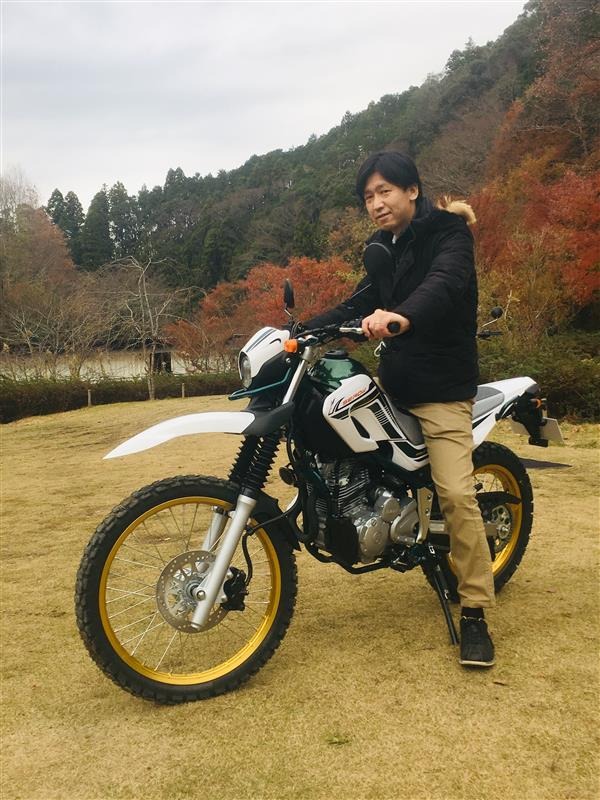
――We’ve discussed the engine sound and movement, but were there any design aspects that caught your attention?
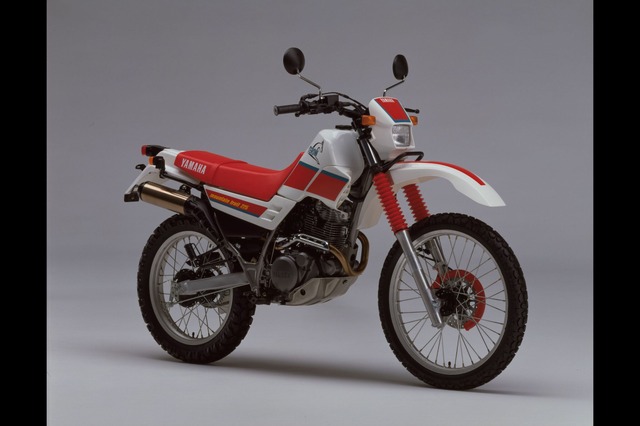
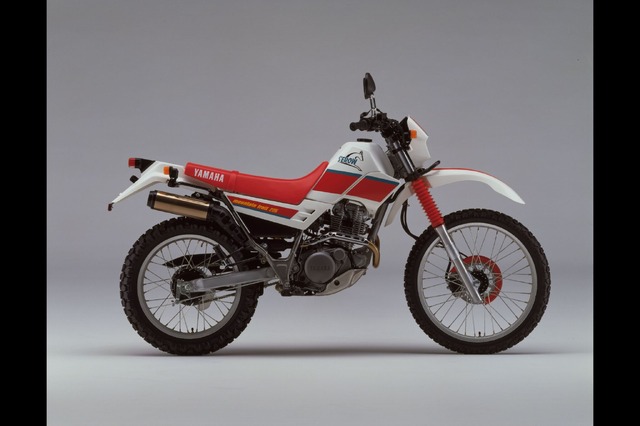
Miyazaka: While looking at the original manga’s package illustrations and the anime’s trailer video, I wondered, “What model year is this Serow?” and did some research. Seeing the older sister kick-starting the engine, along with the coloring and suspension color, led me to believe it’s likely the 1989-model Serow 225.
However, there were subtle differences depending on the scene, making me think they might have modified it based on photographic materials. The faithful reproduction of fine details, making it immediately recognizable as “a Serow from that era,” is truly impressive.
――So, the appearance is quite different from the latest model sold until 2020?
Miyazaka: Quite different, yes. The final model had a rounded headlight, and the overall design changed considerably. The Serow was sold for about 35 years, so its engine and exterior were improved every few years. The displacement, originally 225cc, was eventually expanded to 250cc. It’s a model that gradually evolved over time.
――It seems the differences in models could allow us to infer the setting’s era in the work.
Miyazaka: That’s right. It might even be interpreted that the apocalypse occurred around the 90s. However, the Serow is highly popular, and even older models retain their value, so many people intentionally continue to ride older models.
With motorbikes, many enthusiasts say, “This specific model of this year is the best,” and older models can sometimes be more expensive than new ones. It’s like a vintage motorbike, a realm where they acquire a premium value.
――Many people are particular about design and coloring, and a motorbike truly feels like a “companion,” doesn’t it?
Miyazaka: Absolutely. That’s why I believe the other main character in Shuumatsu Touring is the Serow itself.
The Serow is incredibly light, offering a riding sensation akin to a bicycle. It was particularly popular among female riders, gaining significant support in the 80s and 90s. So, when the older sister appeared on a Serow, I thought, “Ah, this person understands!” And Youko-chan riding it truly felt natural and fitting.
――In the anime, the motorbike had three boxes on the back. Is that a real-life customization?
Miyazaka: Yes. Those are called “pannier cases” and are a classic accessory for touring. Unlike cars, motorbikes don’t have much storage, so when going on long trips, you need ways to carry luggage.
Since the Serow is well-suited for travel, various manufacturers offer a wide range of pannier cases and accessories. There’s a high degree of customization freedom, allowing riders to choose “this manufacturer’s shape” or “this color match,” making it enjoyable to create “one’s own unique Serow.”
The Serow in the anime also had three pannier cases, which would add considerable weight, yet Youko-chan still rode it with such nimbleness, which truly impressed me.
――Finally, do you have anything you’d like to convey to our readers through this work?
Miyazaka: Yokosuka and Hakone, the settings for Shuumatsu Touring, are actually famous touring spots themselves. It would be quite interesting to embark on a pilgrimage, making the places Youko-chan and her companion visited your own destinations.
I hope that through this anime, more people will discover the charm of motorbikes and the joy of travel.
――Thank you very much!
It’s clear that the anime Shuumatsu Touring is not merely a science fiction work, but one imbued with a profound understanding and love for motorbike culture. Specifically, the Serow that Youko rides is integral to the story’s setting, perfectly aligning with the premise of traveling through a desolate world. The meticulous depiction of the motorbike’s details and movements is also noteworthy, suggesting that viewers can find a new perspective when watching the series.
By animeanime