



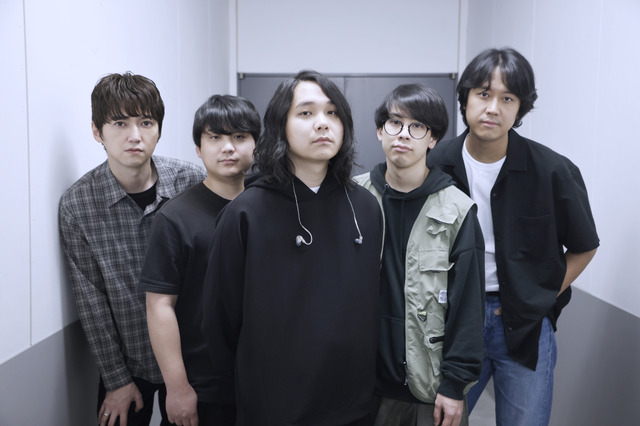
Galileo Galilei Interview: Resonating Talent and Passion, The Story of “Amadeus” and “Ao no Orchestra”


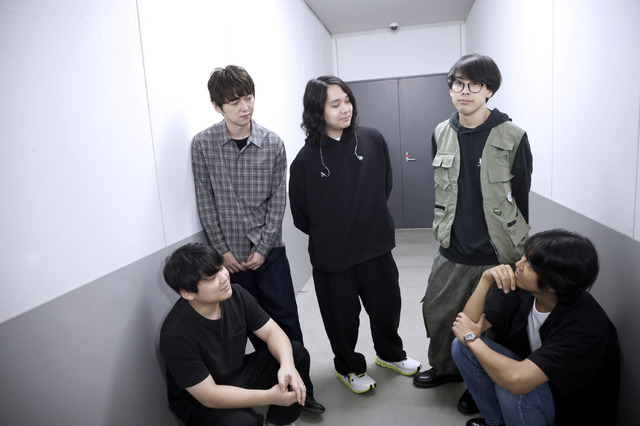
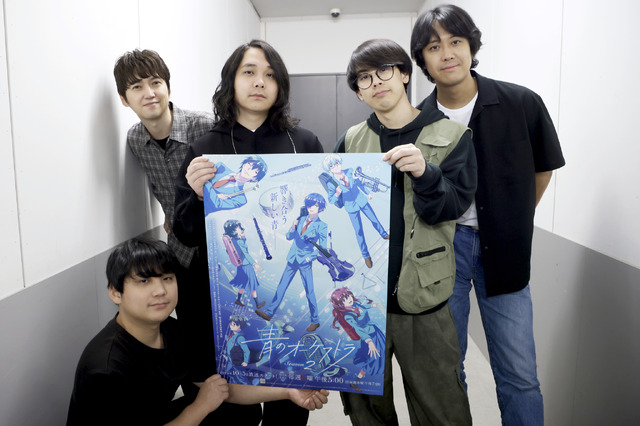
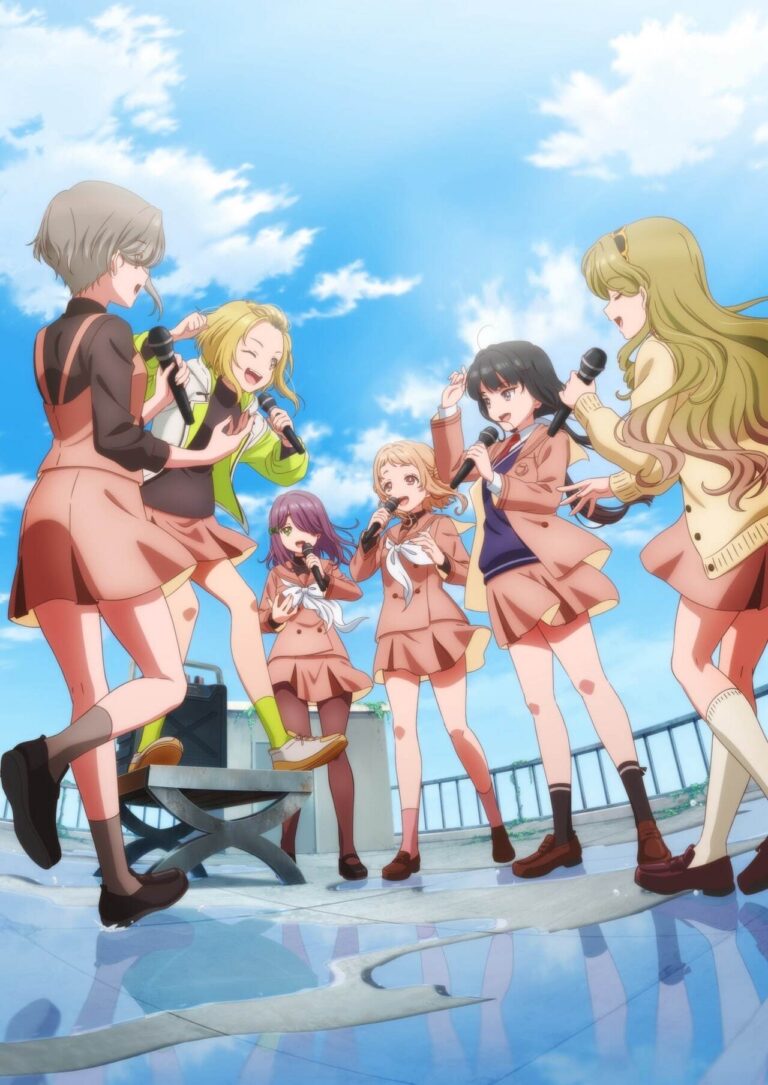
The anime “Ao no Orchestra Season 2” has been airing since October 2025. Based on the manga by Akuu Makoto serialized in Shogakukan’s Manga One, it’s a youth ensemble drama set in the world of a high school orchestra club, encountered by the former genius violinist Aono Hajime, who had quit playing. Under the direction of Kishi Seiji, this TV anime with animation production by Nippon Animation saw its first season air from April to October 2023.
Singing the Season 2 opening theme “Amadeus” is Galileo Galilei. The band, which has previously colored works with theme songs symbolic of youthful brilliance, has now collaborated with this ensemble youth story. They also performed it as an encore at their “TRITRAL TOUR” at Zepp DiverCity on November 26th. The song’s standout emotional pulse, which is part of its charm, filled the venue.
We spoke with Ozaki Yuuki, the songwriter for Galileo Galilei, who said the production of “Amadeus” was “connected to memories of my middle school brass band club days.”
A Story of Jealousy and Respect. The Psychology of Sound Seen in the Anime “Ao no Orchestra” and the Film ‘Amadeus’
― Galileo Galilei’s first anime theme song, “Natsuzora,” was in 2010. Now, 15 years later, how has your awareness and approach to creating anime theme songs changed?
Ozaki: Back then, we had just started the band, won a competition called “Senkou Riot”, made our major debut, and didn’t really have a concrete sense of ourselves as musicians, writing songs for a work, or having our music used. After that, through several opportunities and experiences, I gained the leeway to create songs after deeply understanding the work.
― Through collaboration with a work, are there things drawn out from within you that differ from your original songs?
Ozaki: Fundamentally, my songwriting method isn’t about scribbling down what wells up from inside. For example, I’ve always turned things that happened in life, people I’ve seen, friends, band members, or people I’ve heard rumors about into lyrics and songs with my own perspective, so in a sense, I always feel like I’m collaborating with something when I make music. Even when writing for a specific work, the place and part where the song is born doesn’t change much. I think that’s one of Galileo Galilei’s, our, good points, and I don’t find it particularly difficult just because it’s a theme song.
― Such Galileo Galilei is singing “Amadeus,” the opening theme for “Ao no Orchestra Season 2.” First, please tell us your impression of the work.
Ozaki: After receiving the offer, I got all the currently released comic volumes and read them in one go. By the time I read the latest volume, the idea for this song, “Amadeus,” came to mind. From the title ‘Ao no Orchestra’, I initially imagined a youth story or something with romantic elements, but I thought it was a work where the backstories and burdens each character carries are often heavy. The protagonist, Aono Hajime, is naturally talented and a genius, but I found the other characters’ jealousy and feelings towards the protagonist really interesting, and it linked in my mind with one of my favorite films, ‘Amadeus’ (1984). I think in a chain of associations while making songs, and as I read the original work, I thought about making a song with this film, which connected to something inside me, as the title. I also have experience being in a brass band club in middle school, and the reason I started a band was because the club’s advisor taught me guitar on holidays, teaching me the fun of matching sounds together while hanging out in the music room. “Ao no Orchestra” was something that connected with the image of my past self, wondering “What is my talent?”
― What aspects connected with the film ‘Amadeus’?
Ozaki: I saw that film in a music class taught by that same brass band club advisor. In that work, I think the relationship between Mozart and Salieri, and the psychological portrayal, especially Salieri’s role, is significant. At the time, everyone laughed at Mozart’s flashy, outrageous life and high tension, but I empathized with Salieri. For example, even in Galileo Galilei, our guitarist Iwai (Ikuto)-kun once left the band due to a clash of talents with me, and within the band, there are conflicts involving jealousy—both feeling it and being the target of it. But jealousy is a form of respect. It’s an emotion born from acknowledging, “That guy is amazing.” I think that’s what is depicted in ‘Ao no Orchestra’. It’s not a typical “I’m strong” type of manga where the protagonist mows everyone down with talent, nor is it only depicting the protagonist’s emotions. That story connected with the film ‘Amadeus’.
Translating the Original’s Madness into Sound. The Protagonist’s Anxiety and Energy Infused into the Strings
― What kind of requests did the anime side have during the production of “Amadeus”?
Ozaki: There weren’t any specific orders like “please do it this way.” However, on my end, thinking there would be performance scenes in the OP video, I thought strings probably needed to be included. So, in a meeting with the anime staff, when I asked, “Having string instruments would be better, right?” they said, “It’s fine without them,” which was a bit of a letdown (laughs). In that sense, it was a very fun collaboration where I was allowed to create freely. Also, from “Season 2,” where Galileo Galilei handles the opening theme, the focus begins to shift from the individual to the orchestra playing in unison, and to deciphering the feelings of the person who wrote the piece and the emotions embedded in the music. I was happy that our song could be used at such a timing.
― “Amadeus” features a striking collaboration between the orchestration with strings from the intro and Galileo Galilei’s sound. What were you most conscious of during composition?
Ozaki: I consider commissioned collaboration songs as an opportunity to try things I’ve wanted to do. As long as the song fits the work’s worldview, I try to incorporate even a little of what the band wants to try or new challenges. This time too, even before writing the song, I thought, “I want to try something I haven’t done much before,” so I put in strings.
― Was it a new challenge?
Ozaki: We’ve previously added programmed strings in the background of our band’s sound, and we’ve sampled sounds from a violin we bought and played by imitating, but those were always just a layer in the back of the song, right? I hadn’t written a song starting from a string idea, let alone one where that became the main focus, so I tried it.
― The strings were recorded live, right?
Ozaki: Yes. We had a trio of violin, viola, and cello. We can’t read sheet music, so we sent a demo with a programmed sound source for the recording session, but the players were incredibly adaptable. At the session, we were conveying ideas by humming, and seeing a natural bandmaster emerge among the three of them felt like collaborating with another band, which was exciting to watch. From the moment those three started warming up, I thought, “Yeah, sounds from software can’t match this.” Sampling is different too. The live sound they produce in response to what they actually hear is something software can’t reproduce, and that struck me.
― What aspects of the arrangement did you put particular effort into?
Ozaki: When I first thought about creating from a string idea, I wanted it to be clear from the very beginning, like in Coldplay’s “Viva la Vida,” where the string main theme is obviously important. So, the basic staccato-esque string phrase that plays from the intro continues throughout. Whether it’s the chorus or the B melody. It does fix the chord progression, but I thought about creating development with the band side without losing that chord feel, and I crafted the melody to ride on top of it. We all consciously worked on building the song along with that backbone-like phrase. The rhythm too, but that slightly frenzied, anxiety-seeping sensation is something I received from the manga. I felt an energy from the original work that seemed willing to go right to the edge of madness, and I wanted to express that. I worked on it while watching the teaser visuals for ‘Amadeus’.
― Please tell us about the motif you arrived at while writing the lyrics and the expressions born specifically from pairing with “Ao no Orchestra.”
Ozaki: The anxiety about one’s own and others’ talent. When we first formed the band, no one wanted to be vocalist out of embarrassment, but after hearing me sing, everyone said, “This must be a recorded track.” Those words made me think, “Maybe I can sing.” That’s how we made our major debut. Even now, the self that continues to grapple with whether I have talent connected with “Ao no Orchestra,” so if I were to put this song’s motif into words, I think it’s “about talent.”
― What were your thoughts when the finished product aired in the anime?
Ozaki: I have three kids, two of whom are in elementary school, and they watched it, saying, “Dad’s song is going to be on!” My son said, “Did you make this, Dad?” and when I said, “Yeah,” he asked, “Did you make this anime too?” (laughs). The anime visuals matched the song incredibly well. I like anime, so even while making the theme song, I imagine the OP visuals, but my imagination is surpassed every time. This time, I thought it might be a bit more effective and have more of a school feeling, but I got chills and was deeply moved by how strongly orchestral the visuals were. I like how the character modeling is done properly in relation to the music, and I was moved that it was reflected. The visuals were constructed based on the string idea we created, and the characters were playing it. It felt less like anime visuals and more like the characters themselves were playing our song, which was truly touching.
The Future of Galileo Galilei, Evolving with Live Performances and a New Member
― How were you thinking of expressing it in a live setting?
Ozaki: The piano is playing simultaneously with the backbone string main theme. I created the song imagining Iwai-kun, who had always been saying “I want to play keys,” playing that piano in an anarchic way with his hair flying. I want to do that live. It’s a pretty tough phrase, a fast phrase that’s difficult even for someone who’s played piano for a long time, but I want Iwai-kun to play it lost in the moment. Also, unlike other songs, percussion and drums aren’t entering in a rock band style. Here, my younger brother, (Ozaki) Kazuki, is handling it as percussion, and his playing style is different from usual. This performance reminded me of when Kazuki used to play timpani and such back in our brass band days. That’s really interesting, so in live performances, I want to be conscious of those aspects.
― Galileo Galilei welcomed DAIKI-san as a new member in October. Has there been any change in your mindset or in songwriting with the new lineup?
Ozaki: The timing of “Amadeus” production was before talks of DAIKI-kun joining had progressed much, so we finished it as a four-piece. So, it became the last song by the four-member Galileo Galilei. Just like in ‘Ao no Orchestra,’ the types of talent and the feelings each person invests in their performance or instrument are different, and when someone who threatens your position enters, everyone feels the sting, right? It’s the same for a rock band like us. Because it’s been the same four people for so long, I think a certain complacency develops, assuming we’ll always need each other. With DAIKI-kun joining, that can’t be the case anymore. I think jealousy is born precisely because there’s respect for DAIKI-kun and because we acknowledge him. I was the one who said I wanted DAIKI-kun in, to make the band a five-piece, because I wanted to inject a detonator into the band. Signs of that are very visible now, and I feel it will become an ignition source for the band’s future. I’m confident this addition will make the band change passionately.
― A national tour has been announced for May 2026. What kind of time do you want 2026 to be?
Ozaki: Including provided songs, I wrote a tremendous number of songs from 2024 into 2025. Even if you mention a song title, my mind is so混乱 (confused) from writing so many different songs that the title and the song don’t match up in my head—that happened for the first time. Even with songs I made this year, I’m in the same state, like, “Oh right, I did write a song like that.” I’m constantly immersed in music—writing songs, finishing things, recording bands from Sapporo at our own studio—but it was a particularly intense year, and I think 2026 will be the same. I think being busy is good, and I want to give it my all. As a band, I think 2025 was a time when we could focus on music as members of Galileo Galilei. I think 2026 will be a year of rebuilding that, so I’m looking forward to it. I want to do the band. It’s not that I want to sing in front of people; I want to do the *band*. In 2026, I want to get down and dirty with the band.
Galileo Galilei & Anime Information
■ Galileo Galilei Information
【Paid Live Stream】
Event: Galileo Galilei ‘Aoni Modoru’ at Tokyo Garden Theatre
Stream Period: Saturday, December 27, 2025, 19:00 ~ Sunday, January 4, 2026, 23:59
Ticket Purchase: https://eplus.jp/galileogalilei/st/
【2026 National Tour】
Galileo Galilei Tour 2026 “NAKED HERO”
• 2026/5/10 (Sun) Sapporo cubegarden
• 2026/5/14 (Thu) Osaka BIGCAT
• 2026/5/17 (Sun) Yokohama KT Zepp Yokohama
• 2026/5/19 (Tue) Fukuoka DRUM Be-1
• 2026/5/21 (Thu) Hiroshima LIVE VANQUISH
• 2026/5/23 (Sat) Nagoya NAGOYA CLUB QUATTRO
• 2026/5/26 (Tue) Sendai darwin
Tickets: All Standing (KT Zepp Yokohama has 2nd floor reserved seats)
Advance: 6,500 yen (Standing) / 7,000 yen (2nd floor reserved seats for KT Zepp Yokohama only)
Official Site: https://www.galileogalilei.jp/
■ Anime “Ao no Orchestra Season 2”
【Opening Theme】
“Amadeus”
Lyrics & Composition: Ozaki Yuuki
Arrangement: Galileo Galilei
Performance: Galileo Galilei
【Broadcast】
NHK E-Tele Every Sunday 17:00 (Rerun: Every Thursday 19:20)
2026 New Year Marathon Broadcast:
• 1/2 (Fri) 13:00~15:30 Episodes 1-6
• 1/3 (Sat) 13:00~15:30 Episodes 7-12
【Staff】
| Original Work | Akuu Makoto |
| Director | Kishi Seiji |
| Series Composition | Kakihara Yuuko |
| Character Design | Morita Kazuaki |
| Sound Director | Iida Riki |
| Music | Hara Kanako, Kosemura Akira |
| Animation Production | Nippon Animation |
| Production/Copyright | NHK, NHK Enterprises, Nippon Animation |
© Akuu Makoto/Shogakukan/NHK・NEP・Nippon Animation
_