

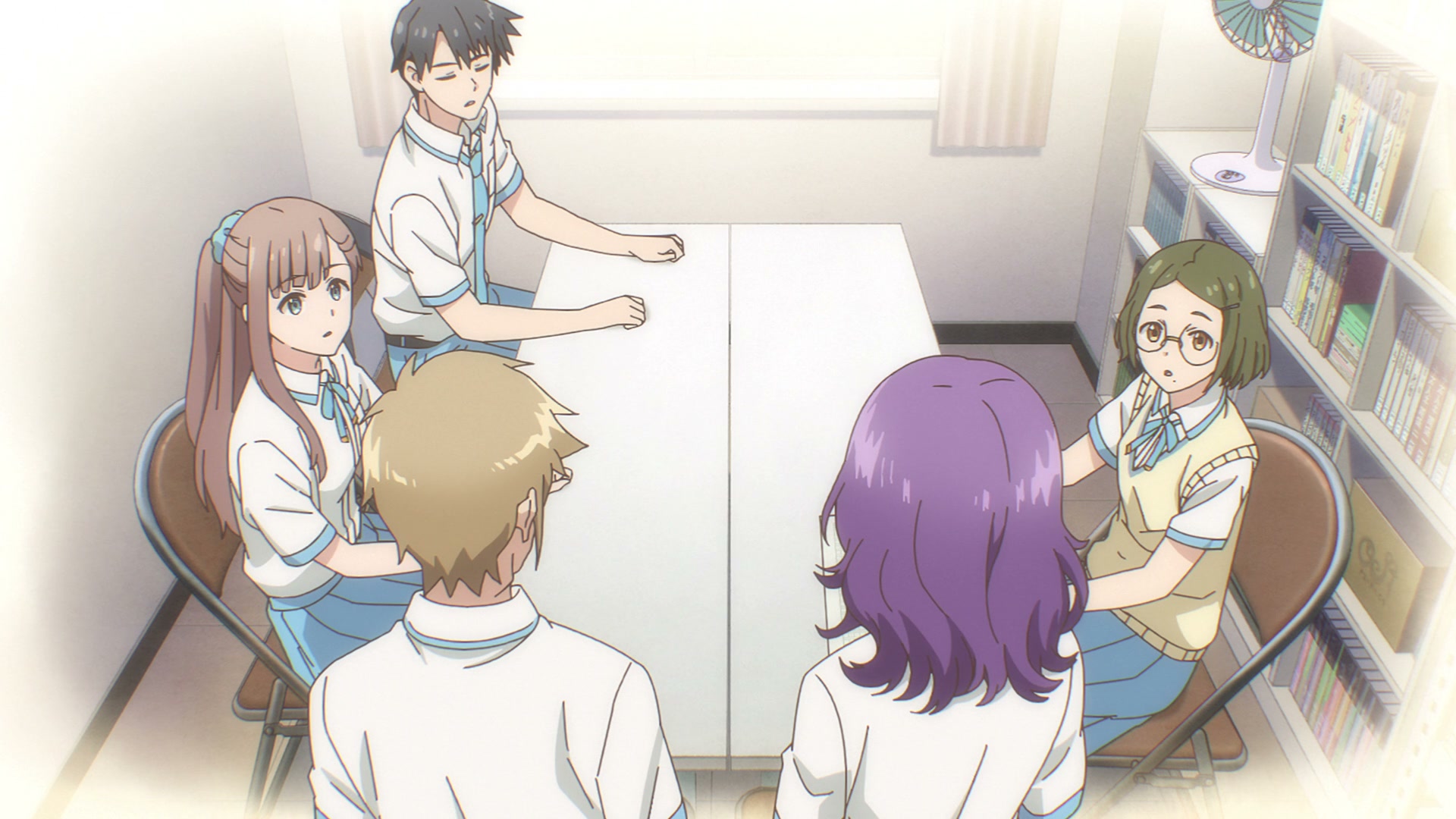
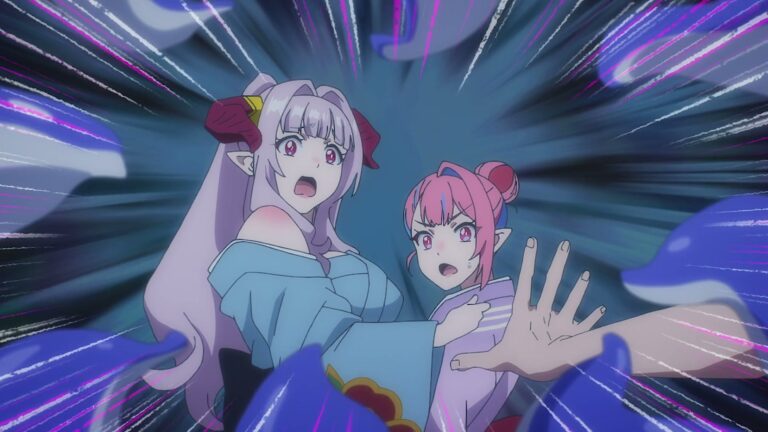
There’s something quietly nerve-wracking about watching a club-threatened-with-disbandment arc when you genuinely care about the characters. The literature club isn’t some ragtag collection of quirky archetypes thrown together for premiere-week appeal. By now, these four people have been through actual life-and-death moments, existential crises, and tearful reconciliations. So when Suzumi shows up with her “bad news” and Moririn the forest fairy routine, the stakes land differently than they would in a conventional school club anime.
Ritsuko’s reaction tells you everything about where the series has arrived tonally. “This is so… It’s so… mega exciting!” She’s not dismissing the threat. She’s thrilled because the threat comes wrapped in a trope she recognizes from anime and light novels, and the meta-awareness is part of her character rather than a wink at the audience. The girl who spent the last few episodes quietly deducing that two of her friends are replicas now faces a problem that can be solved through writing. For Ritsuko, that’s basically a gift.
The Seiryo Fest Problem Is an Excuse to Reorganize the Cast
A hundred copies of a club zine. Five sold last year. The math is absurd, and everyone knows it. But the episode doesn’t waste time on hand-wringing. Instead, it uses the crisis to merge the literature club with the drama club, bring Suzumi into the fold, and give Mochizuki the most unexpectedly sincere character beat he’s had all season.
Ritsuko’s battle plan is clever: write a play based on The Tale of the Bamboo Cutter, cast members from both clubs, and sell a zine containing a spin-off novel of the performance. It’s a cross-promotional strategy that sounds like something a real high school club might attempt, except here the ulterior motives run deeper. Mochizuki agrees on one condition: Suzumi plays Princess Kaguya while he plays the emperor.
And then he explains why, and suddenly the former student council vice president who has mostly existed as Suzumi’s long-suffering foil becomes a character you root for.
Back in kindergarten, their class did Snow White. Suzumi wanted the title role but got stuck as the evil stepmother, the part nobody else would take. Mochizuki made a promise: one day, she’d play the princess and he’d play the prince. They’re going to different colleges next year, so Seiryo Fest is their last shot. He delivers this with the stiff dignity of someone who knows exactly how embarrassing it is to admit he’s been carrying a childhood promise for over a decade and simply doesn’t care anymore.
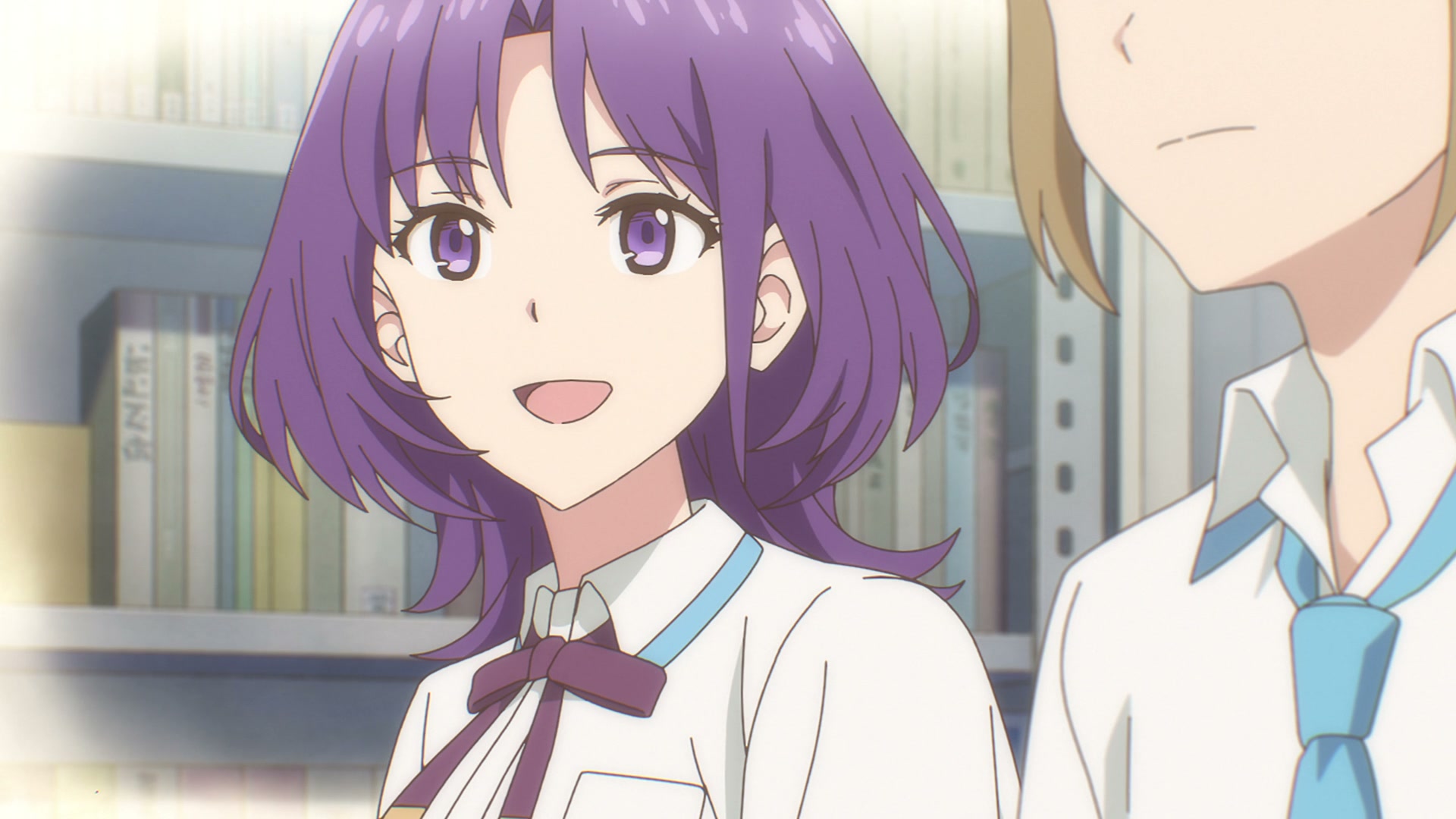
Suzumi figures it out almost immediately when Nao tells her about the role. “That Shun-kun. Why can’t he just let me be?” She says she’d rather play a villain, but she doesn’t refuse. The way she says it, half-exasperated and half-soft, suggests she’s known about the promise all along and has been waiting for him to collect.
The Art Room Scene Is the Episode's Quietest Victory
While searching for someone to draw the zine cover, Nao stumbles into the art room and finds Suzumi working on a painting of a rice field, her grandparents standing in the foreground. It’s the kind of scene that could have been a throwaway transition beat. Instead, it becomes the episode’s emotional anchor.
Suzumi explains that the school is deciding which painting to enter in a competition, and she’s submitted this piece of her grandparents’ home in Fujinomiya. Nao looks at the painting and says, “That’s why they look like they’re enjoying themselves.” She’s not flattering. She’s reading the image and confirming what Suzumi put there, and Suzumi’s small, surprised reaction (“Is that how you see it?”) suggests she doesn’t often get people who look that closely.
Nao asks her to draw the cover, and Suzumi’s immediate response is a joke about being hit on. It’s a deflective reflex, the kind you develop when you’re the former student council president who once dressed as a forest fairy for a PSA assembly. But she follows it with “All right. I’ll give it a shot,” and the tone shift is genuine. Suzumi spent her student council tenure enforcing dress codes and delivering budget ultimatums. Now she’s painting a cover for a zine that will save the club she had to threaten. The arc from bureaucratic antagonist to creative collaborator is clean and satisfying.
Nao and Aki Get a Date, and It Matters
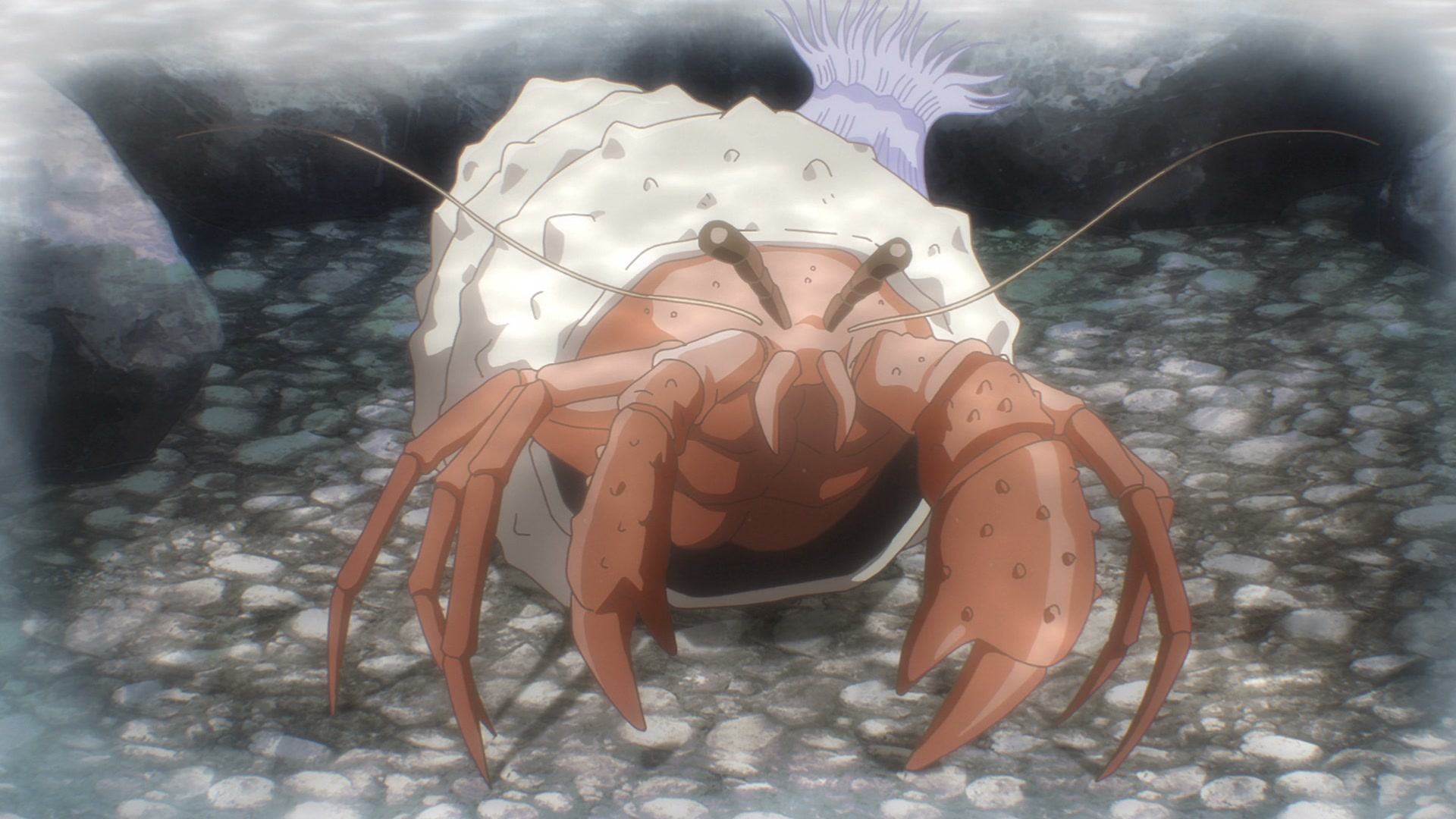
The aquarium scene could have been pure fluff, an “earned it” reward after last episode’s near-suicide and tearful beach rescue. And it is fluffy, in the best way. Nao mimicking the moray eel’s mouth, Aki doing a hermit crab voice, the blacksaddle filefish fact that becomes a quiet metaphor. “If you’re a fish, it doesn’t matter if you’re the replica or the original.” Aki says it casually, but he’s been living that truth since he was created.
Then they compare height and build, Nao noting Aki is taller than Shuuya with a bigger butt, and Aki immediately turning it around on her, and she pinches him. It’s such a normal couple moment. Two replicas who spent months fearing erasure, worrying their existences were disposable, now standing in an aquarium being stupid and affectionate and entirely real to each other.
The pinkie swear at the end lands because the episode earned the lightness. “I’ll never do that again,” Nao says, referring to her attempt to walk into the sea. Aki threatens to make her eat a thousand porcupine fish if she’s lying. “Not a thousand needles?” “That’ll hurt worse.” The callback to the shared-pain motif from earlier episodes is there, but it’s muted, buried under their mutual decision to just be okay for a while. “Let’s make it a great Seiryo Fest.” Pinkie swear. The festival is the immediate goal, but the promise underneath is about staying alive, staying together, making the ordinary moments count.
Sunao Steps Back, and That's Progress
The brief scene between Nao and Sunao clarifies the school-attendance arrangement without fanfare. Sunao offers to swap, citing vague reasons she can’t discuss yet. Nao hesitates but accepts. When Nao asks if Sunao will come to Seiryo Fest, the answer is “Yeah, maybe,” and they agree to each pick a day.
It’s not a dramatic reconciliation scene. It’s two people who have already done the hard work of forgiving each other now figuring out logistics. Sunao dressing after summoning Nao is a small kindness, a way of giving Nao privacy over her own body. “I’ve only started doing that to wake myself up,” Sunao says, deflecting, but the consideration is real. The relationship between creator and replica has shifted from existential threat to awkward cohabitation, and the awkwardness is what makes it feel genuine.
Ricchan's Ambition Finds Its Footing
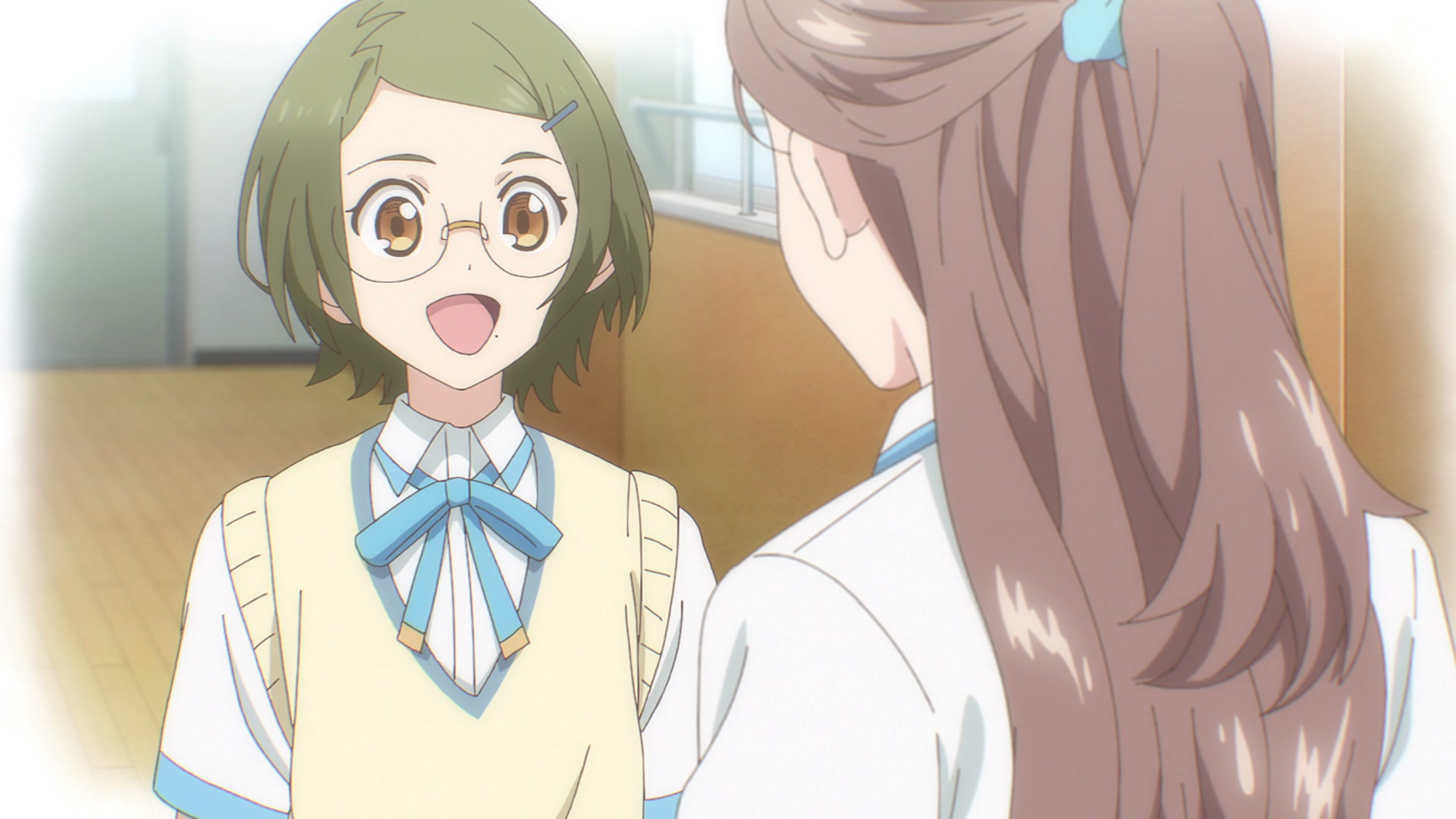
Ritsuko admits she almost abandoned the Bamboo Cutter plan. She wanted to use an original story, to prove her talent could carry the zine without leaning on name recognition. But she lacked confidence, and Nao’s earlier words (“your novels are riveting”) became both encouragement and pressure. She makes a declaration for next year’s Seiryo Fest: she’ll sell a hundred copies purely on her own writing.
It’s the kind of goal-setting that sounds like a throwaway but isn’t. Ritsuko has been the supportive friend, the comic relief with sudden emotional intelligence, the girl who figured out the replica secret and responded with a pajama party invitation. This is the first time she’s stated her own ambition so baldly. “I’ll do my part too, so ask me for anything,” Nao says, and Ritsuko immediately asks for help finding an artist. She’s learning to delegate, to accept that talent doesn’t mean doing everything alone.
The Rehearsal Scene Keeps Things Honest
Aki’s wooden line reading of “Whoa. By thunder” earns Ritsuko’s immediate dismissal: “That sucked. I’ve never seen such wooden acting.” Nao’s delivery isn’t much better. Mochizuki, suddenly in director mode, promises to whip them into “the standard expected of a high school play” and calls them hams. It’s playful but pointed. The literature club members aren’t natural performers, and the episode doesn’t pretend otherwise.
Then Suzumi arrives late, picks up the script, and delivers her lines with the kind of ease that makes everyone stop. “Grandfather, I don’t wish to be married. I want to live here at home with you and grandmother. Tell me, is that so wrong?” Nao asks if she has acting experience, and Suzumi says no, unless you count the wicked stepmother or Moririn. Mochizuki quietly corrects her: “You’ve definitely improved since May.” It’s another small kindness wrapped in understatement, the same way he’s been carrying that kindergarten promise without ever mentioning it until now.
A Quiet Setup with a Doppelgänger Mention
A brief moment in the hallway: two students accuse Nao of being Aloysia Jahn, the figure from “The Mermaid’s Return.” “You’re the doppelgänger, aren’t you? Just admit it.” Aki steers her away, telling her to ignore it. The series has been threading the doppelgänger folklore through the season, and here it surfaces as school rumor, the kind of thing that could easily spiral into something uglier if the wrong people pay attention. For now, it’s just a passing shadow. But the mention lands differently after everything Nao has been through, and the episode doesn’t linger because it doesn’t need to. We know what the word means to her.
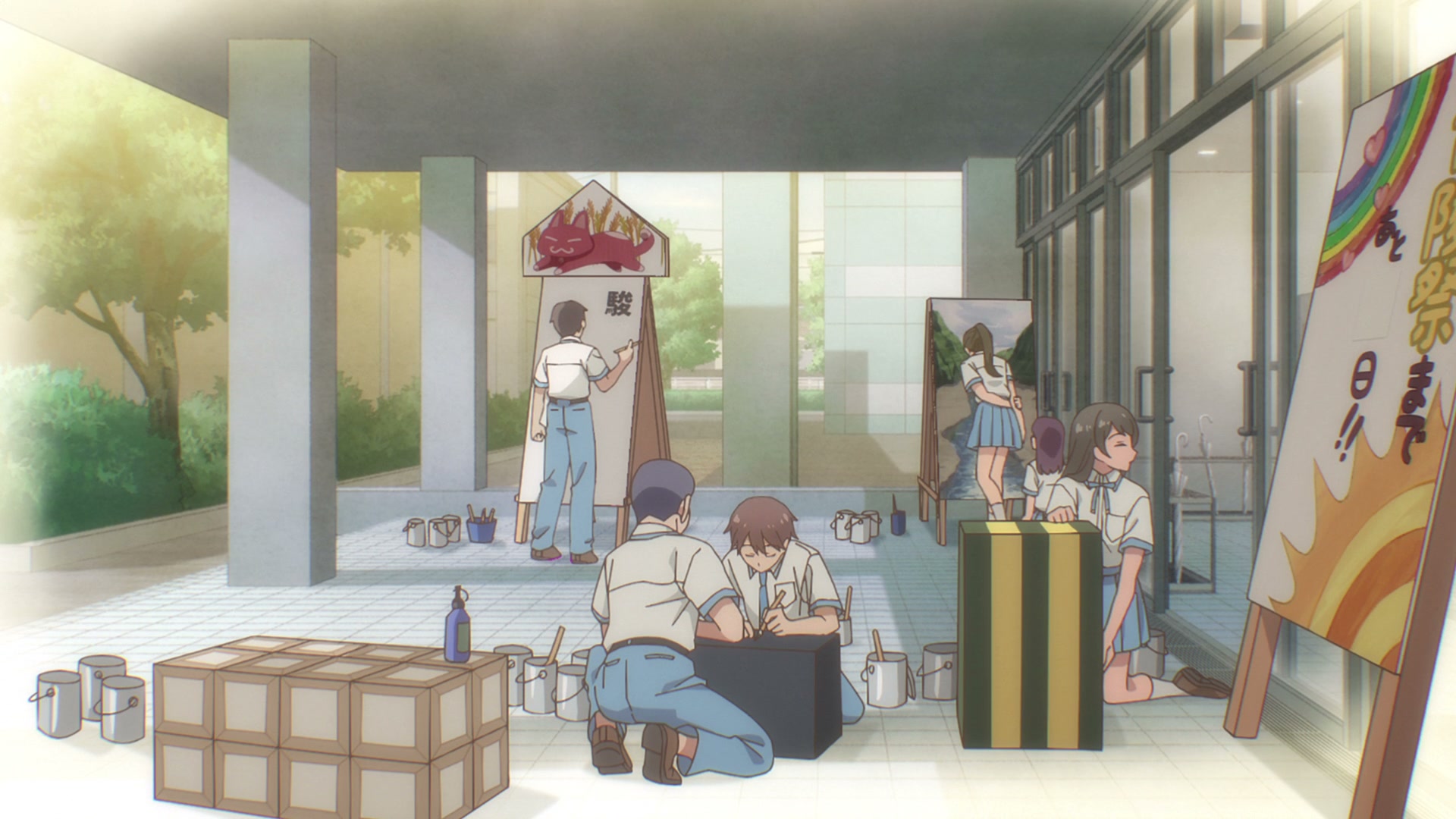
The episode closes the way it opened: on forward motion. The clubs are collaborating, the script is written, the zine cover is in capable hands, and two replicas made a pinkie swear at an aquarium. After the emotional cliff faces of previous episodes, “Replica datte, Koi wo Suru” lets its characters breathe and plan and joke around. The Seiryo Fest arc is set up cleanly, and for the first time in a while, everyone seems to be looking ahead instead of over their shoulders.
Screenshots
← Episode 5 | All Replica datte, Koi wo Suru Season 1 posts →
[…] ← Episode 6 | All Replica datte, Koi wo Suru Season 1 posts → […]