





The acclaimed historical manga Tenmaku no Jadugar, winner of multiple manga awards, is now airing as a TV anime on TV Asahi’s IMAnimation slot and BS Asahi. Based on the original manga by Tomato Soup (serialized in Akita Shoten’s Souffle), the story is set in 13th-century Mongolia and follows former slave girl Shitara as she shakes the empire.
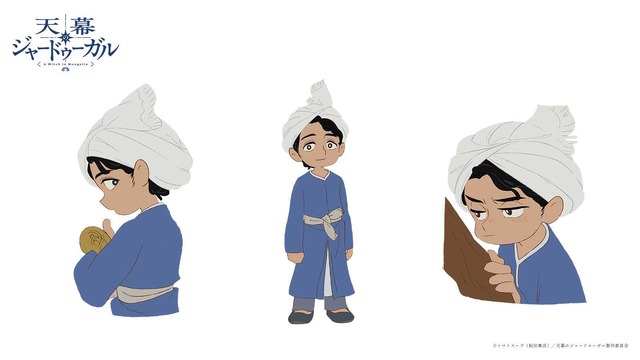
In the series, the young boy Muhammad, who teaches Shitara the importance of “knowing,” is voiced by Saitou Jun in his first-ever TV anime role. Saitou sat down for an interview to discuss the character, the lessons he learned, and the challenges of stepping into a voice acting booth for the first time.

“Knowing” Gives You Strength to Live – The Message Saitou Received from Muhammad
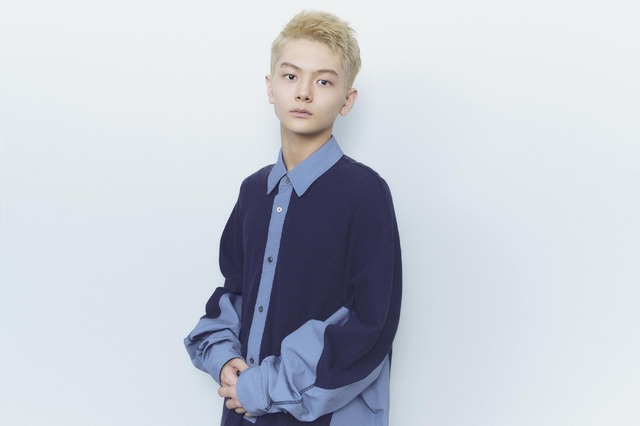
—This is your first TV anime role. How did you feel when you were offered the part?
Saitou Jun: When I heard about it, I was really happy to have another new challenge. I read the original work and was overwhelmed by the scale of the world—the Mongol Empire I didn’t know about. I’m truly glad to be voicing a character in such a grand production. But since all the other cast members are professional voice actors, I was also very nervous about joining them.
—So there was pressure?
Saitou: Yes. Actually, that pressure hasn’t disappeared even now. Since the broadcast hasn’t started yet, I still have a lot of anxiety. But everyone around me kept telling me, “You’ll be fine,” so I think I was able to approach it naturally.

—What part of the original story or script appealed to you most?
Saitou: I think one of the charms of this work is that you can learn about various cultures and historical backgrounds. At the same time, it depicts the harshness of life—differences in status and culture, slavery—there are many scenes that make your heart ache. But within that, the power of “knowing” and “learning” is portrayed. As Muhammad says, by acquiring knowledge you can predict the future and deal with it. I strongly felt the message that having wisdom gives people the strength to live. I thought that was really wonderful.
—What was your first impression of the character Muhammad?
Saitou: He’s a character who is in a different position from those around him, but he himself doesn’t seem to mind that. I felt that way of being is connected to his way of life and his kindness. He’s young but very wise and intellectual, and above all, his curiosity about knowing is really cool. As the one playing him, I actually learned a lot from Muhammad.
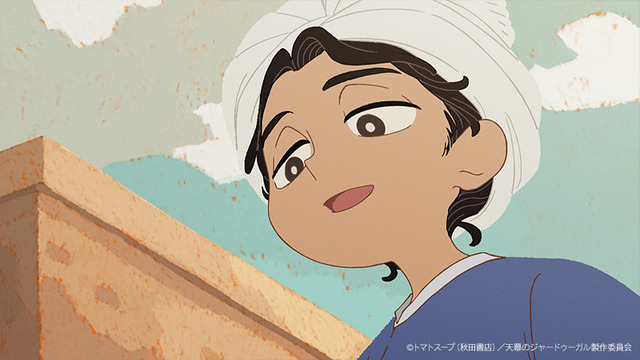
—He seems very mature for a 12-year-old. What did you keep in mind when playing him?
Saitou: Right. But sometimes he shows a childish side—like his reaction when teased—which feels his age. On the other hand, he’s called a “genius,” so I wanted his voice to have calmness. I thought it would be nice to bring out a kindness and sense of security, like someone reaching out and guiding others. I explored what kind of voice would work so that when it’s paired with the visuals, it would properly come across as Muhammad.
—His gentle way of speaking is distinctive, and it conveys kindness and reassurance to the viewer.
Saitou: Thank you! I hoped that Muhammad’s calmness would become a source of comfort for the audience. Especially the gentle way he speaks to Shitara—I was particularly conscious of that.
First Voice Acting Challenge: Expanding Expression and the Meaning of “Learning”

—What direction or interactions with the staff and co-stars stood out at the recording studio?
Saitou: Every single line of Muhammad is very important. So I received detailed direction like, “Say this line more as if calling out to the other person,” or “Speak as if talking to someone more distant.” They guided me step by step, like “Try something in between what you just did.” I was really helped by everyone during recording.
—As you say, Muhammad’s lines are all important and memorable. Do you have a particular scene or line that stands out?
Saitou: The line, “If you know many things, you can predict the future and deal with things. That’s why you study,” really stuck with me. Muhammad’s words are all wise and full of kindness. I remember every recorded scene vividly. The one that left the biggest impression was the conversation with Shitara before departing for Mishapur, where he talks about his hopes and desire to learn more. In that scene, I performed it not as if conveying something to the other person, but as if speaking toward his own future. Petals were falling in that scene, and I got direction like, “Send them floating gently, as if blowing them a little farther.” Even among the few scenes, that one was especially hopeful for me, so it became a favorite.
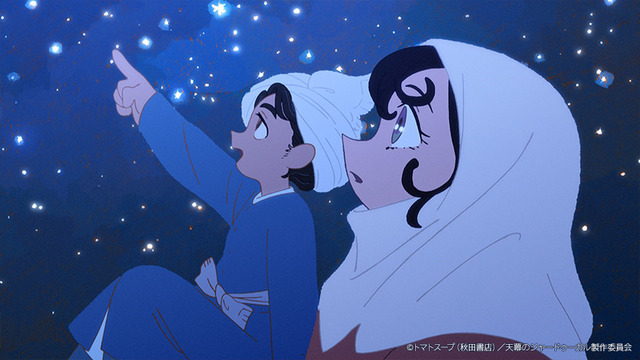
—Do you personally relate to Muhammad’s value of the importance of learning?
Saitou: Yes. I think there are many kinds of wisdom in the world, and I feel there’s a huge difference between knowing and not knowing. I’m currently attending university, but I actually hesitated a lot about whether to go. But there are many things you can’t know without actually going, and there were things I could only learn there. I think the knowledge and experience you gain accumulate as real assets. Both wisdom and firsthand experience become your weapons. That’s why I strongly sympathized with Muhammad’s talk about the importance of studying, and I felt encouraged to want to know as much as I can and store it as wisdom within myself.
—Does “knowing” also connect to your acting and work as an actor?
Saitou: Yes. In acting, if something isn’t inside you, you can’t express it. Of course, I research and study, but what I value most is being honest with my own feelings and thoughts. I don’t want to lie about that. It might be a bit different from knowledge, but I think “what I want to know” includes that emotional part. I try not to forget what I felt or my honest impressions. For example, I write in a diary about things like “something happened today” or “someone made this expression.” I want to properly capture the things I feel in daily life.

—After two voice acting experiences, what do you find appealing about the work of a voice actor?
Saitou: I felt it’s really difficult and a very professional job. In voice acting, you add voice to a character that already has a design and visuals. So while acting as myself, there’s a sense of making the character come alive with voice. That felt different from my usual acting. Also, performing while watching the video—matching the timing, mouth movements, and speed—was really hard. When I saw the finished video, I was surprised at how it turned out. There are many aspects that differ from the senses I use in live-action acting, and I realized voice acting is truly a different field of expression.
—Finally, a message for viewers looking forward to the broadcast.
Saitou: Muhammad doesn’t appear in many scenes, but I feel that the “beauty of his wisdom” is a major core of this work. The importance of learning and knowing connects to the whole story. Through this work, you can encounter history and culture you didn’t know, and I think you’ll feel a bit like you’re on an adventure. I hope you enjoy that aspect as well. I myself am really looking forward to seeing how the story unfolds, and I think it will be a work that everyone watching will enjoy.
TV Anime Tenmaku no Jadugar Overview

Broadcast Information:
First episode: July 4, 2026 (Saturday) at 11:00 p.m. – 2-episode 1-hour special!
Thereafter: Every Saturday at 11:30 p.m.
Airing on TV Asahi nationwide network “IMAnimation” slot and BS Asahi.
Staff:
Original story: Tomato Soup, Tenmaku no Jadugar (Akita Shoten “Souffle” serialization)
Chief Director: Yamada Naoko
Director: Abel Gongora
Character Design & Animation Chief: Yoshida Kenichi
Series Composition: Kato Kaichi
Music: Hino Koshiro
Animation Production: Science SARU
Art Director: Kabasawa Yuri
Color Design: Konno Narumi
Director of Photography: Takahashi Naoki
Editing: Hirose Kiyoshi
Sound Director: Konuma Noriyoshi
Cast:
Shitara: Sekine Akira
Dregena: Koshimizu Ami
Fatima: Kuwashima Houko
Muhammad: Saitou Jun
Ogotai: Shimono Hiro
Tolui: Suzuki Ryota
Shira: Irippu Jiyuu
Chagatai: Namikawa Daisuke
Juchi: Nojima Kenji
Music:
Opening Theme: SEKAI NO OWARI “Stella”
Ending Theme: Queen Bee New Single “Hoshi”
Streaming & Download: July 5, 2026 early release
—Yoneda Kaori

![2.5D Utaite Group Ireisu Holds First Fan Club Event! Intense Team Battle & Emotional Finale [Part 2 Report]](https://animeworld.info/wp-content/uploads/2025/06/776097.jpg)