





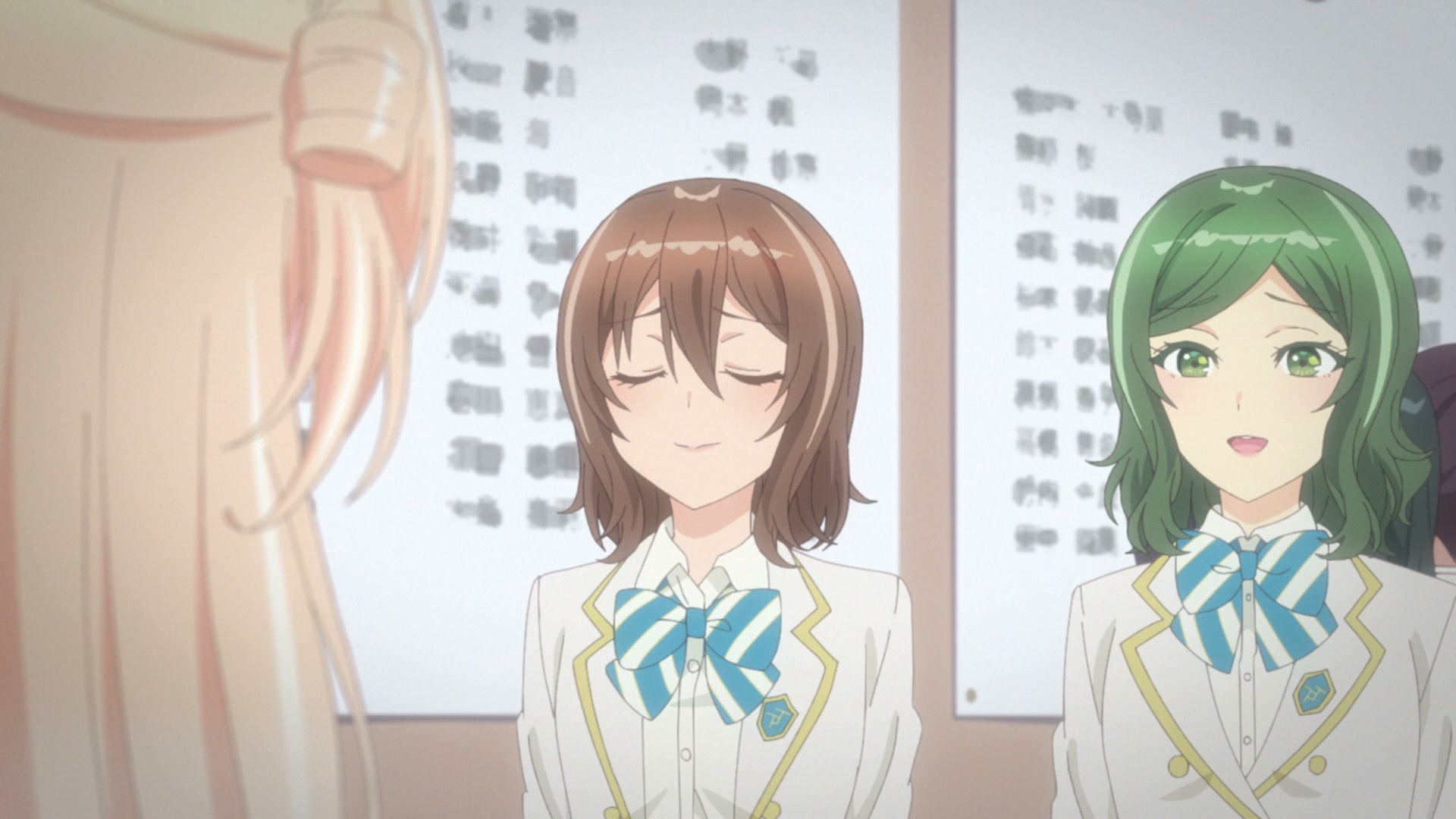
For an episode with this many moving parts, “December with Friends” starts in exactly the right place: right where the last one left Umi frozen in front of Yuu, unable to give the clean answer either of them wanted. That tension doesn’t get defused. It gets dug into, and what comes out is something I didn’t expect a fluffy slice-of-life to attempt — a confession so tangled in resentment and affection that it takes the whole episode to sort out.
Umi Finally Says the Ugly Parts Out Loud
The flashback that opens the episode doesn’t just fill in backstory. It reframes Umi’s entire emotional vocabulary. We see her meet Yuu as a scared transfer student with unusual hair and eyes, the kind of kid who was already convinced people would avoid her. Umi reaches out without hesitation, and that kindness creates a bond that sustains Yuu through elementary and middle school. But as they get older, the dynamic calcifies. Yuu becomes the radiant center of their year, and Umi becomes “Yuu-chan’s best friend” — a title other girls covet, and one that slowly erases Umi’s own presence.
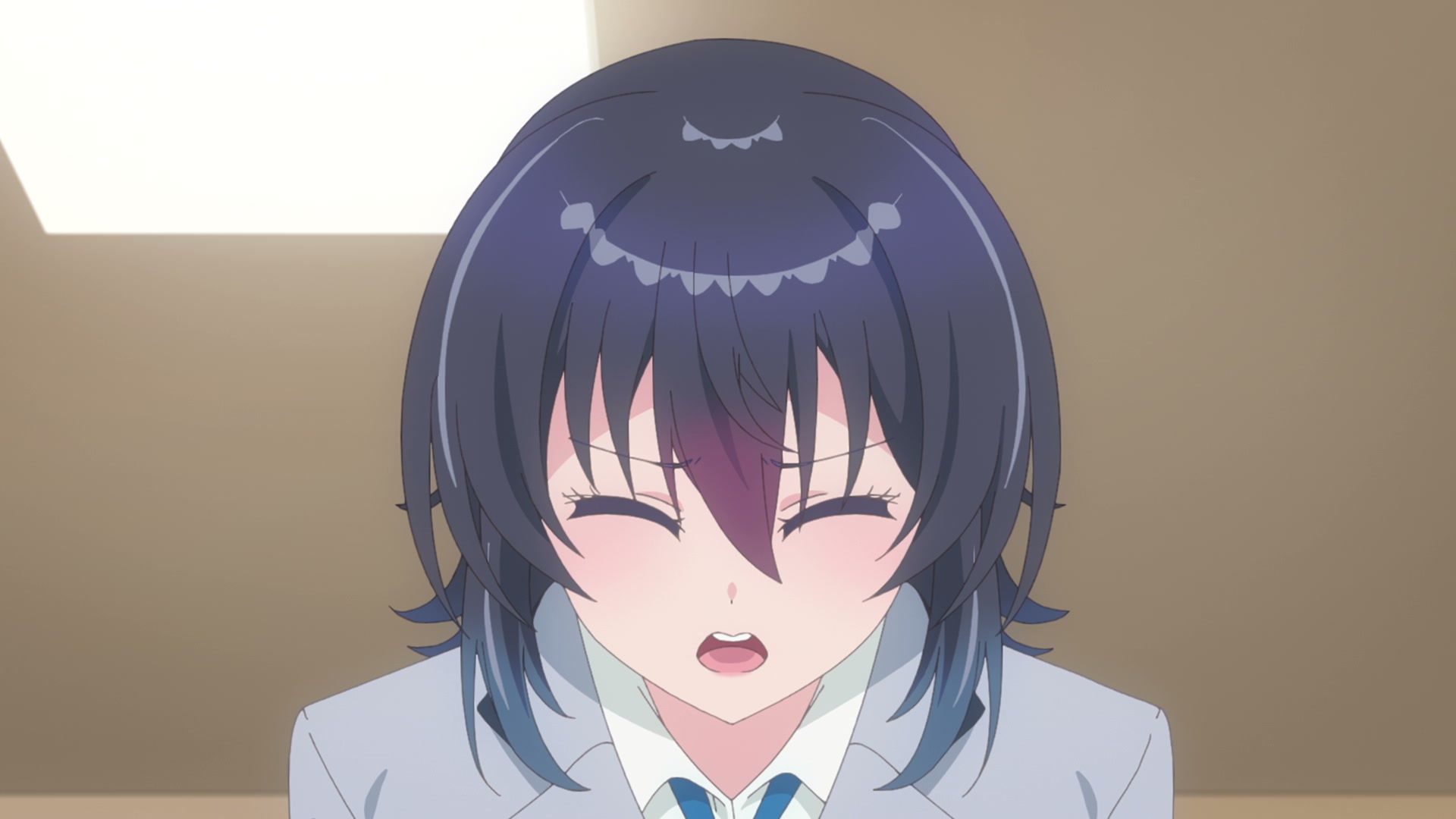
When Umi tells Yuu, “I still love you to bits. But at the same time… I also hate you just as much,” the scene doesn’t play it as melodrama. It’s quiet, almost clinical, which makes it hurt more. She enumerates the small betrayals: friends who first approached Umi gradually migrated to Yuu. Sanae and Manaka admitted on graduation day that they’d treated Umi as a stepping stone. All of it happened around Yuu, with Yuu remaining blissfully adored, and Umi learning to smile through it because getting upset would have meant losing the one person who actually mattered.
The line that stuck with me most isn’t the “hate” part. It’s Umi saying, “I need us to be friends and equals, rather than best friends in name alone.” That’s the kind of emotional honesty that slice-of-life usually avoids in favor of smoothing things over. She’s not asking to be more important than anyone else. She’s asking not to be a supporting character in a story Yuu has never even noticed she was writing.
Maki Gives Umi Space Without Going Anywhere
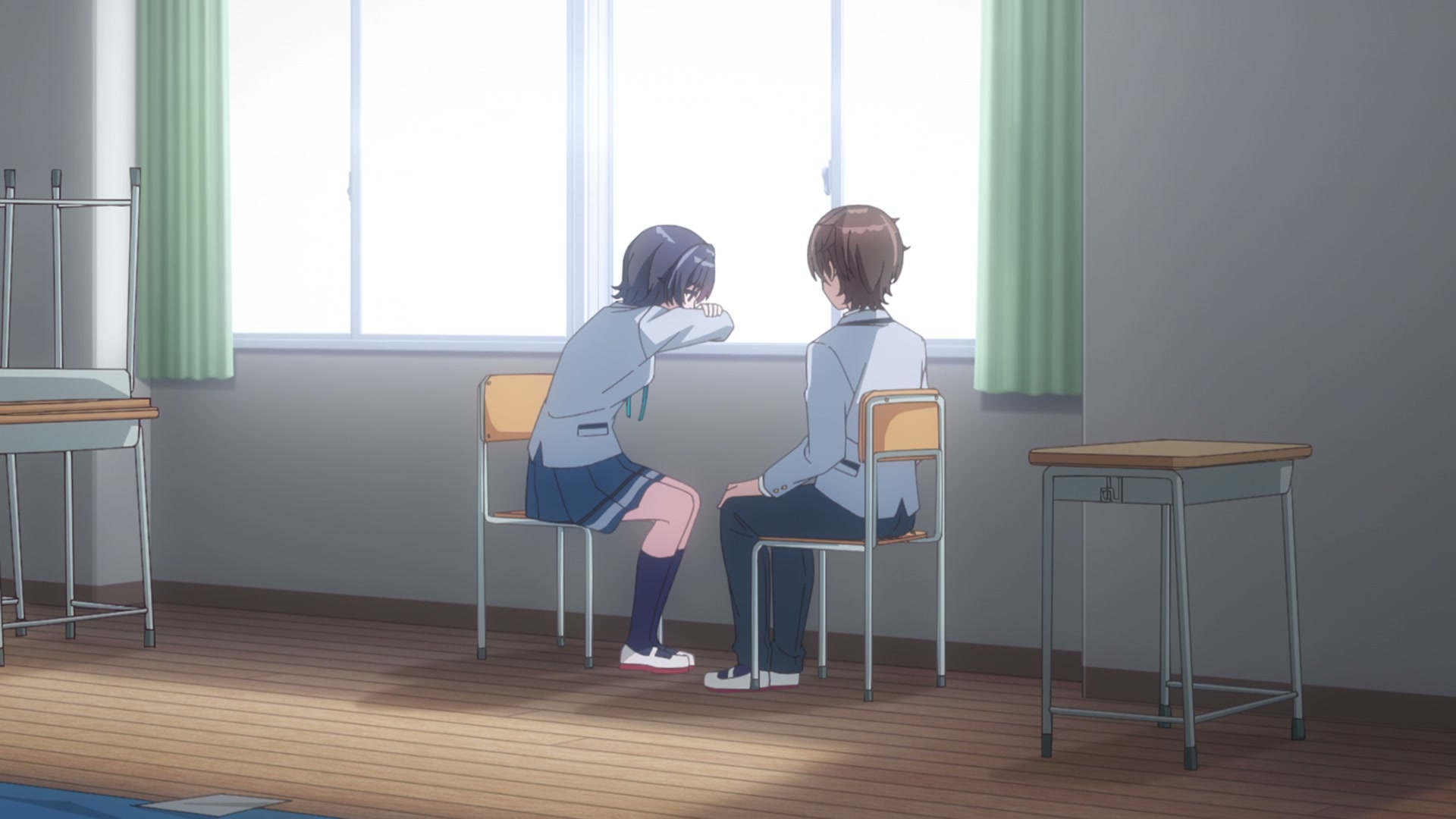
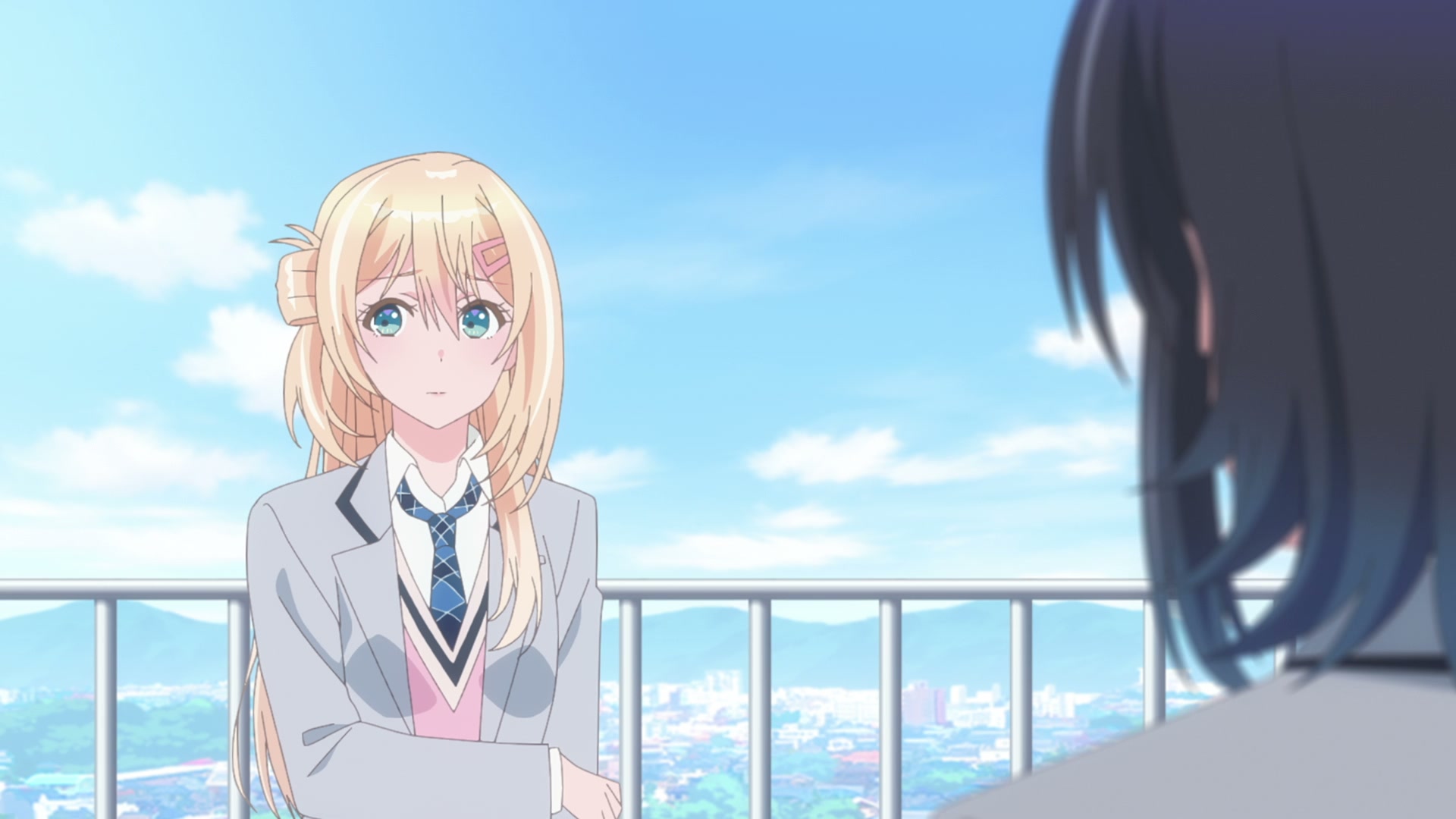
After the blowup, Maki follows Umi onto the roof. What he does here is small but perfectly in character. He doesn’t offer a solution. He tells her she did good. He listens. He proposes they put their hangouts on pause — not because their friendship is a problem, but because Umi needs bandwidth to figure things out with Yuu, and he doesn’t want to be another source of guilt for her. The key detail: he frames it as taking a break from “hanging out,” not from being friends. They’ll still see each other as classmates and committee reps, and the texting won’t stop. It’s the kind of thoughtful emotional logistics that this series has been quietly good at since Maki’s mom noticed the air freshener on Saturdays.
Maki’s “attagirl” is worth mentioning because it lands without condescension. He recognizes that what Umi just did — telling Yuu the ugly, contradictory truth instead of running — took years of suppressed hurt to get to. He gives her credit for that, and she finally lets herself accept it. The roof scene is the first time Umi doesn’t deflect a compliment with a self-deprecating joke.
Yuu Becomes a Friendly Ghost
If the episode had ended with Maki and Umi agreeing to separate for a while, it would have felt honest but incomplete. What actually happens is much stranger and more satisfying. Yuu, after her own bit of self-reflection (prompted by Nina’s offhand remark that Yuu “was thinking about something”), shows up at Maki’s apartment again. But this time she’s not here to confront Umi. She’s here with a demand.
Yuu declares herself a “ghost,” a third wheel who’ll haunt their secret hangouts from now on. She orders them to go enjoy the school festival together, holding hands, while she watches. And she makes it clear this isn’t a concession she’s offering — it’s a condition. If Umi wants a real friendship, not one built on old hierarchies, then Umi has to let Yuu see this other version of her, the one who gets competitive over fighting games and drinks her coffee with too much milk and sugar.
This is where Yuu’s character finally breaks out of the “perfect idol” mold. She’s petty and pushy and obviously enjoying the role reversal. The way she repeats “You’d like that too, right, Maki-kun?” until Maki squeaks out a nervous agreement is pure comedic menace. For someone who spent years being the gravitational center of every room, willingly stepping into the role of a nosy observer is a genuinely generous act. It also gives her something she’s clearly been missing: an honest, uncurated look at who Umi really is when she’s not performing the best-friend role.
The Ship Sails — and Umi Takes the Wheel
The festival sequence, with Umi and Maki wandering from stall to stall with their fingers awkwardly intertwined, is exactly the kind of low-stakes payoff the premise needed. Their dynamic hasn’t fundamentally changed — she’s still barking at him, he’s still dryly deflecting — but now it’s all out in the open, under Yuu’s gleeful supervision. The class thinks they’re doing it for a dare, which is close enough to the truth. Nina snapping photos adds a layer of chaos that keeps the scene from tipping too far into sentimental territory.
The real shift, though, comes afterward. They settle onto a bench by the river, and Umi abruptly offers Maki the other end of her scarf. This is the girl who, two episodes ago, couldn’t even admit to Yuu that she enjoyed spending Fridays in a dusty apartment with a guy who eats bad pizza. Now she’s casually draping them both in the same piece of cloth, scolding him for not saying he was cold, and deciding on the spot that she’s going to start calling him “Maki.”
The name change is the hinge the whole relationship turns on. Earlier in the episode, they’d been circling the idea of dropping -san suffixes, but Umi was still testing it. On the bench, after they’ve spent the day as a public “couple,” she just commits. And when he calls her “Umi” in return, she karate-chops him for “getting too big for his britches.” That’s the same girl who hid her Friday rituals for months, now blushing behind the violence of a chop she’s delivered a hundred times before. The familiarity is what sells it.
Then comes the confession. Maki, flustered and fumbling, says that when she smiles the way she just did, she’s “prettier and cuter than anybody.” Umi processes this for a beat, then asks, calm and direct, “You really do like me, don’t you?” No deflection, no ranking. Just an observation.
And then she drops the bomb. “I don’t like you… I love you.” She delivers it as a fact, the same way she’d announce she’s ordering triple-cheese pizza. The kiss that follows — explicitly not on the lips, because he hasn’t admitted his feelings yet, she says — is the perfect capstone to her arc. She’s spent so long feeling like her feelings were always secondary to someone else’s narrative. Now she’s the one setting the terms. Maki can have the lips when he earns them.
Maki’s final, breathless “Seriously, that’s just not fair” is the funniest and most honest reaction he could have had. He’s been outmaneuvered by a girl who, until very recently, couldn’t even assert her own right to exist outside of Yuu’s shadow. The power shift is total.
Where This Leaves the Triangle
I went into this episode expecting a resolution that preserved the trio’s equilibrium without resolving the romantic subtext. Instead, the show dismantled the hierarchy entirely. Yuu abdicated her role as the sun, Umi asserted her own desires without apology, and Maki’s quiet steadiness got rewarded with a confession that left him completely wrecked on a riverbank bench.
The “ghostly third wheel” arrangement might sound like a compromise, but it’s actually a renegotiation. Yuu isn’t losing a best friend. She’s gaining access to a friendship she was never meant to see, on Umi’s terms. And Umi, finally, gets to be the protagonist of her own relationships — both with the girl she loves and resents, and with the boy she’s decided she loves, full stop.
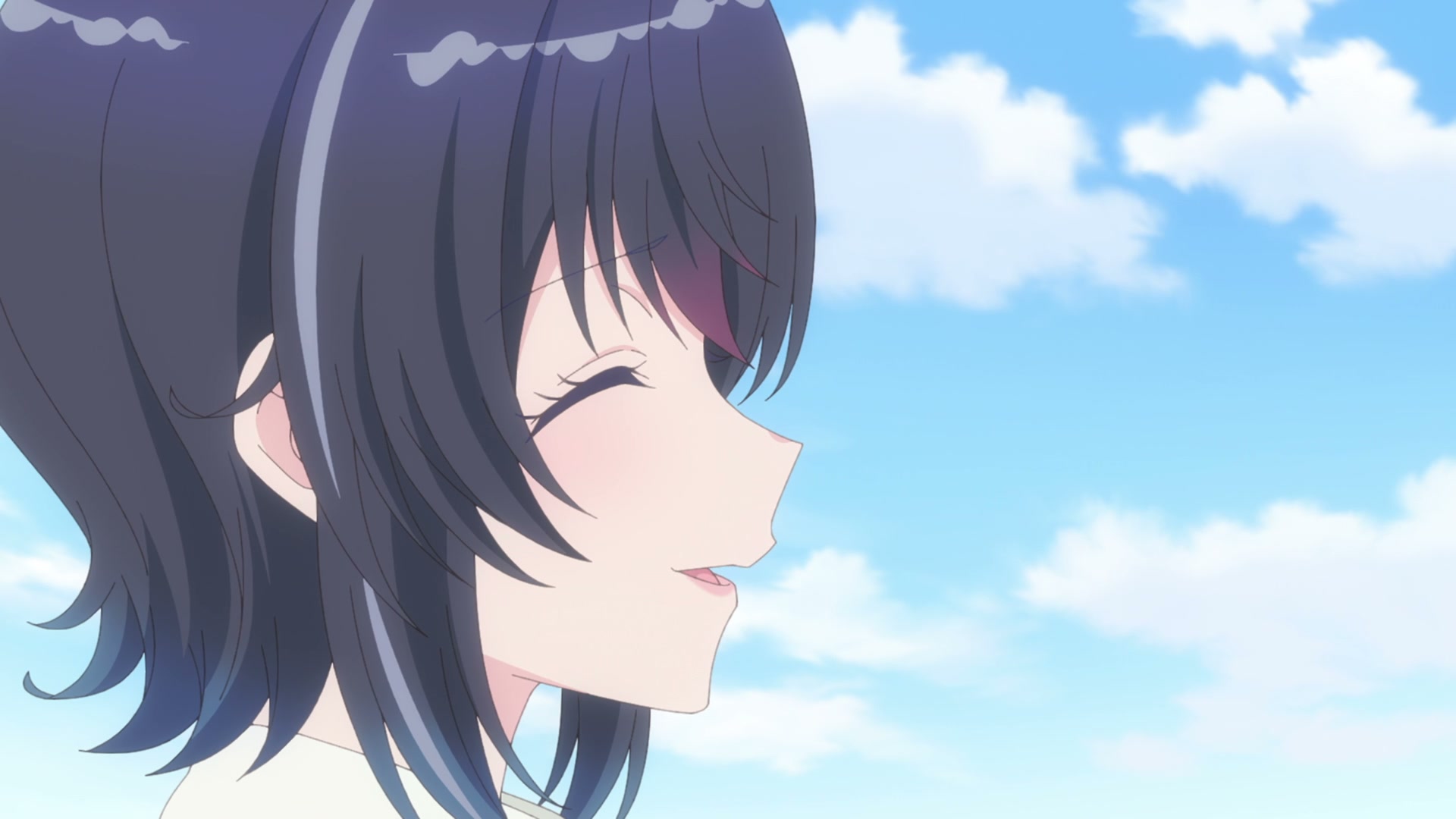
The episode ends on a freeze-frame of Umi’s smug smile and Maki’s shell-shocked expression, with Yuu peeking into frame as if to say, “This is exactly what I wanted.” It’s weird, it’s a little messy, and it’s the most emotionally honest place this series has landed yet. I’m not sure where the back half of the season goes from here — Maki still hasn’t confessed, and the business with Sanae and Manaka feels like it could resurface — but for now, the triangle feels less like a problem and more like a pact.
Screenshots
← Episode 4 | All Class de 2-banme ni Kawaii Onnanoko to Tomodachi ni Natta Season 1 posts →
[…] Class de 2-banme ni Kawaii Onnanoko to Tomodachi ni Natta Episode 6: First Date Class de 2-banme ni Kawaii Onnanoko to Tomodachi ni Natta Ep. 5: Love and Resentment Class de 2-banme ni Kawaii Onnanoko to Tomodachi ni Natta Episode 4: From Now On, and Then […]