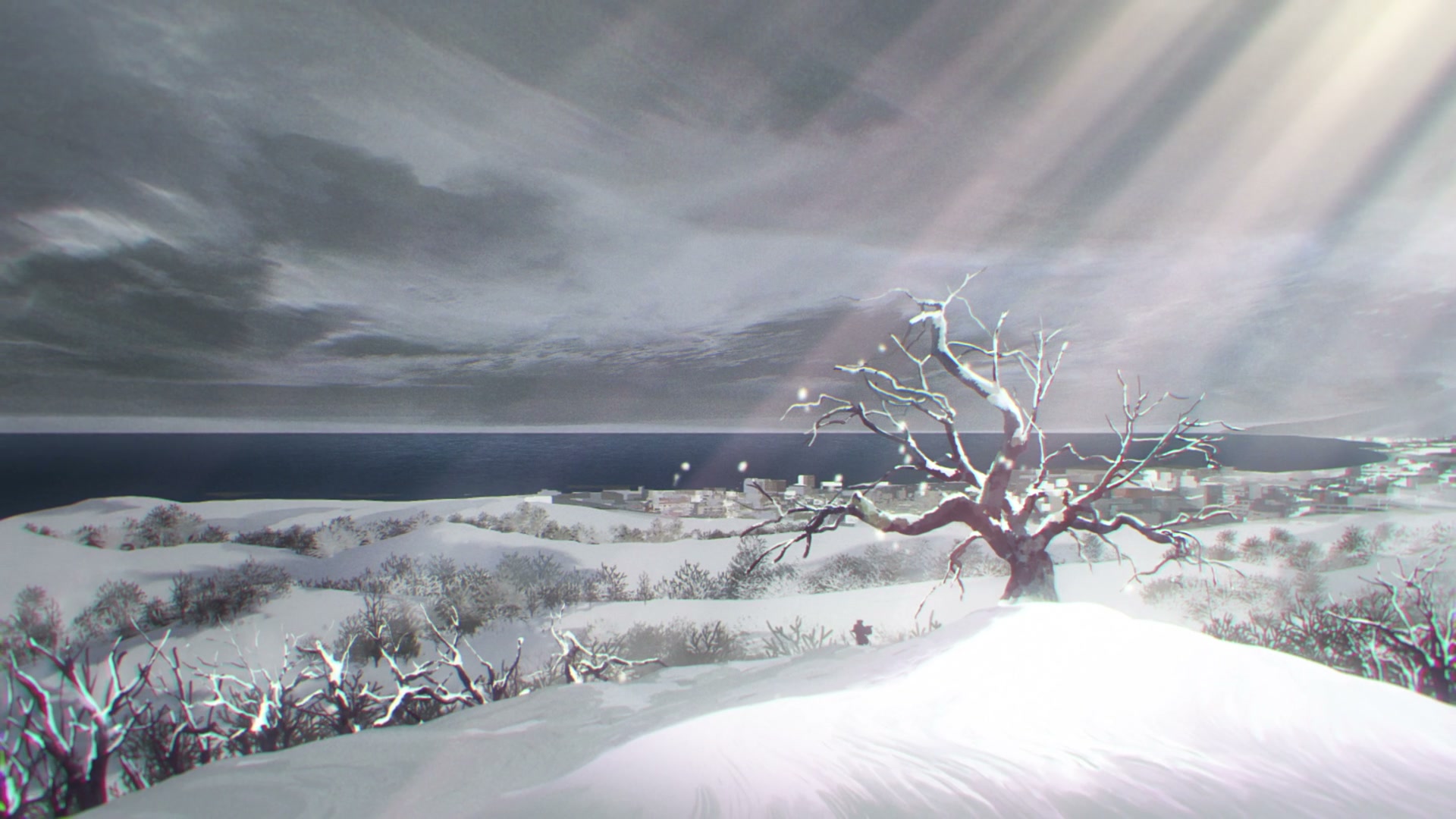





The first episode of Shunkashuutou Daikousha – Haru no Mai opens not with a sweeping seasonal vista but with a voice telling someone to endure. “Running away doesn’t mean you’ve lost. Whatever you do, live.” The words hang over a snowy mountain path and a woman in a kimono, her breath visible in the cold. Right away, the show tells you this is a story about waiting out a long, brutal winter, both literal and emotional.
Ten Years of Endless Winter
The world has four seasons, but only three have been showing up to work. Spring vanished ten years ago when Kayou Hinagiku, the Agent of Spring, disappeared. Now it’s always winter somewhere, seasons are out of balance, and people have grown up without ever seeing cherry blossoms. The episode drops you into a country where that absence is felt in daily life, in struggling tourism, in a girl who can’t remember spring even though she saw it once as a baby. The premise is mythic and melancholy, and the script wears that tone comfortably without drowning in it.
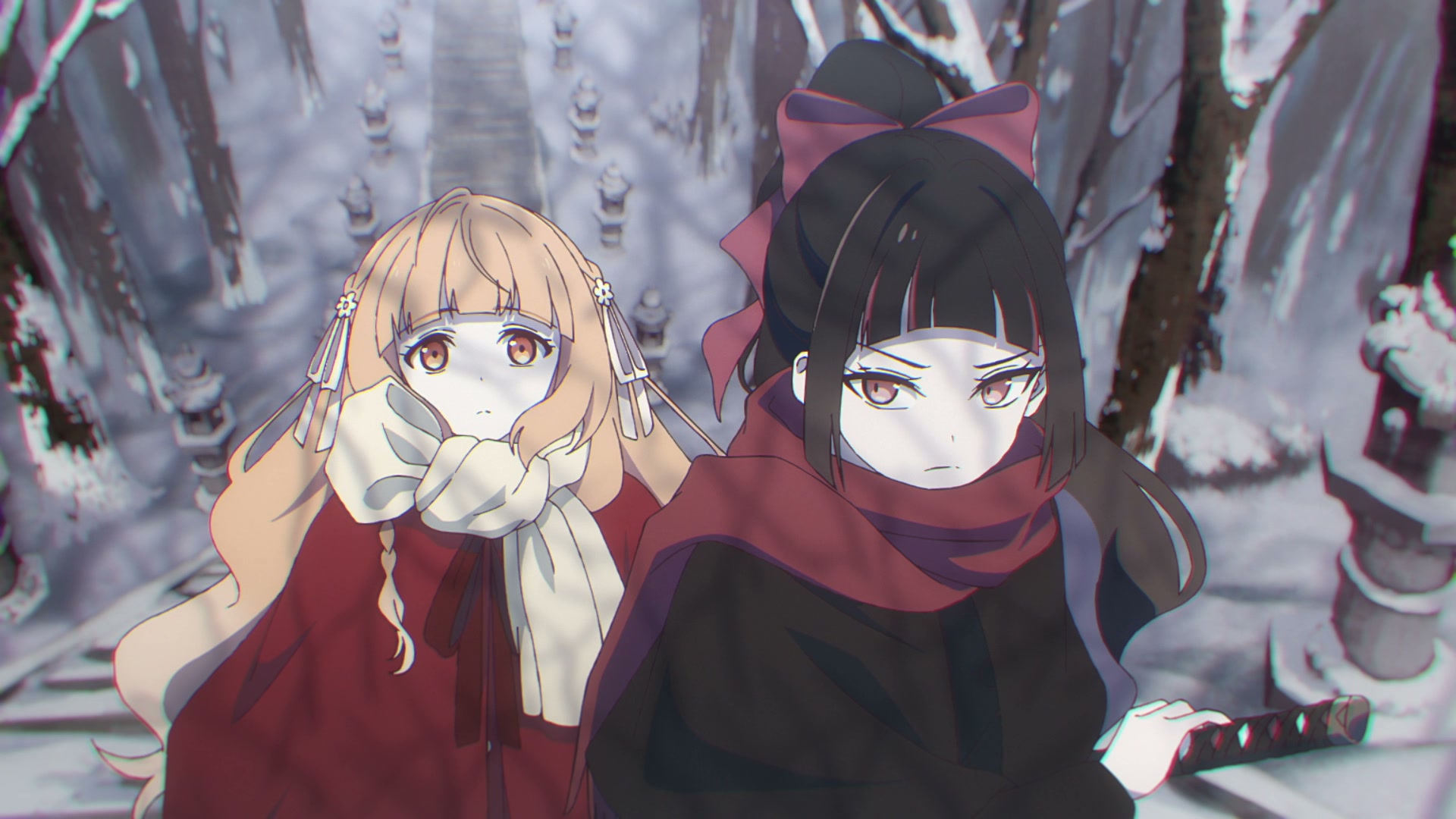
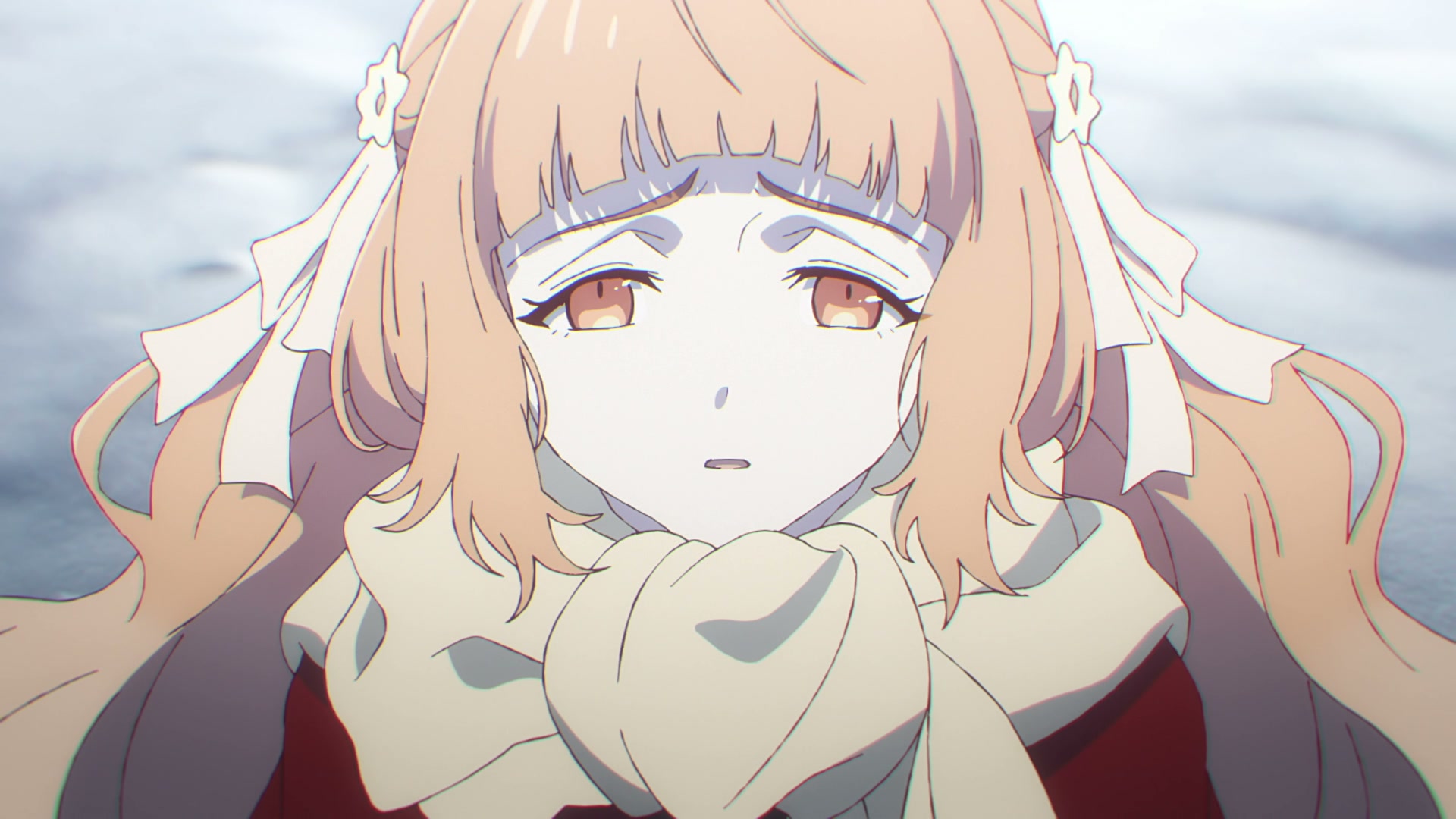
Hinagiku has returned, but she’s not triumphant. She speaks in soft, halting fragments, often referring to herself in the third person, as if she’s still getting used to being a person who exists in the present. Himedaka Sakura, her guard and self-described sword, treats every interaction as a mission to protect her charge from harm and, just as much, from self-doubt. Sakura’s ferocity is the episode’s engine. When she refuses a crowd of handlers, scolds a child, and drags Hinagiku up a mountain on a secret rite, you feel the weight of a decade of guilt behind every sharp word.
A Guard and Her Goddess
The bond between Hinagiku and Sakura is the heart of the episode, and it works because the show trusts you to infer without long flashbacks. Sakura blames herself for whatever happened ten years ago. In an internal monologue she seethes, “If I could go back in time, I’d take my past self and kill her,” and the rawness of that line lands hard. You don’t need to know exactly what occurred, only that Sakura failed to protect Hinagiku once and has built her entire identity around never letting it happen again.
Hinagiku, for her part, keeps quietly trying to release Sakura from that burden. She says “You don’t need to blame yourself anymore,” but Sakura promises she will, for as long as she lives. Their dynamic feels lived-in: Sakura’s formal, near-feudal devotion (“I am the sword that defends you”) paired with Hinagiku’s gentle, stubborn insistence that she’s just “an Agent who manages the seasons,” not a goddess. The show respects both perspectives. Sakura’s protectiveness isn’t treated as smothering, and Hinagiku’s humility isn’t weakness.
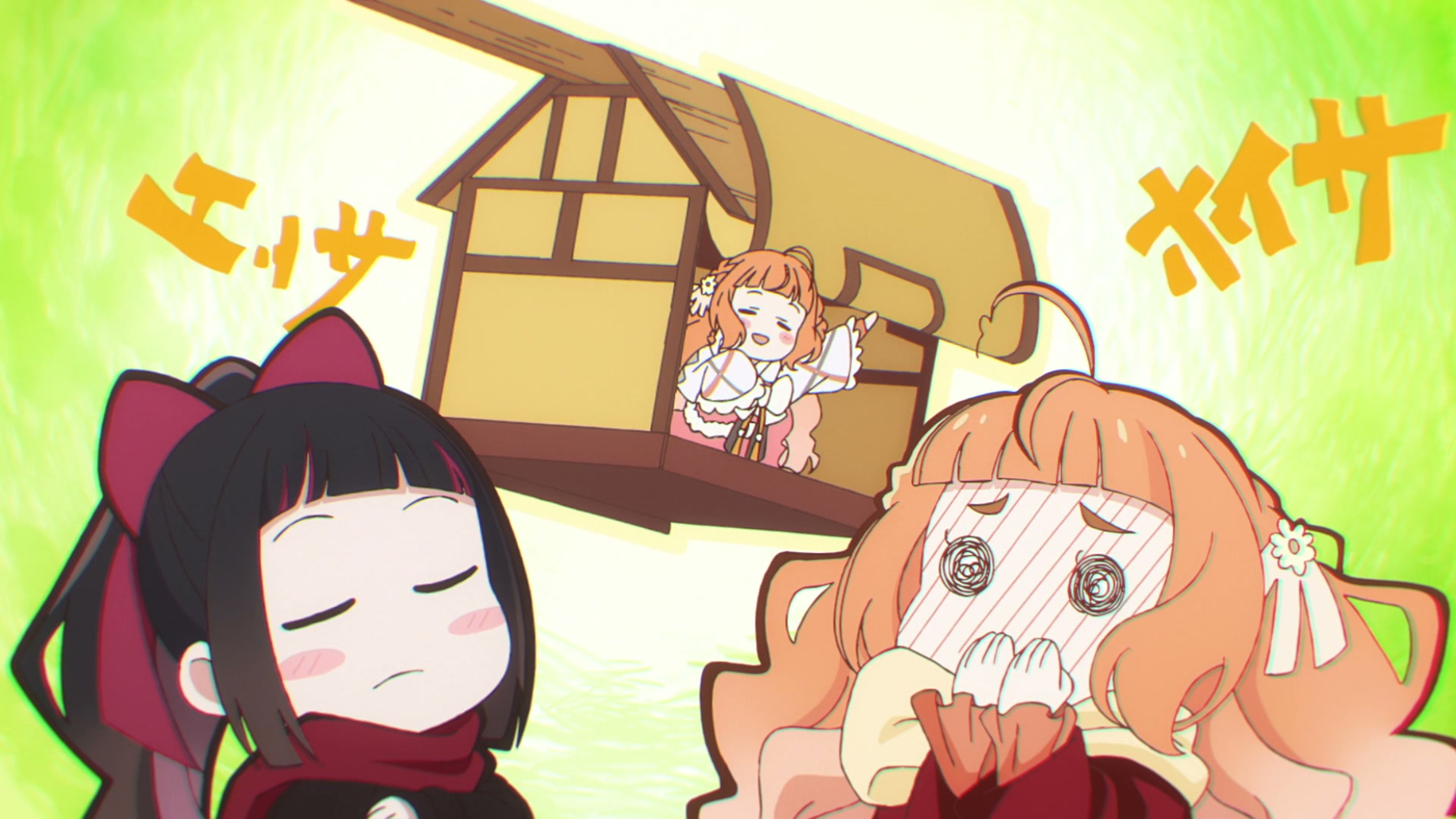
One moment that quietly defines them comes early on a snowy trail. A local official mentions that if they’d known a goddess was coming, the whole city would have turned out to carry her in a litter. Hinagiku goes pink and stammers, “A litter? Fie. How mortifying,” slipping into archaic speech out of sheer embarrassment. Sakura, straight-faced, notes that she’s so flustered she’s lapsed into archaisms. It’s a tiny, warm beat that shows how much Sakura understands her, and how much they’ve been through together even before the episode started.
The Girl on the Mountain
The rite is supposed to happen at the summit of Mt. Ryuugu, alone. Instead they meet Nazuna, a shrimp of a girl shoveling snow in the middle of a restricted area, stubborn and loud and determined not to leave. Sakura wants to haul her down the mountain. Hinagiku asks to stay.
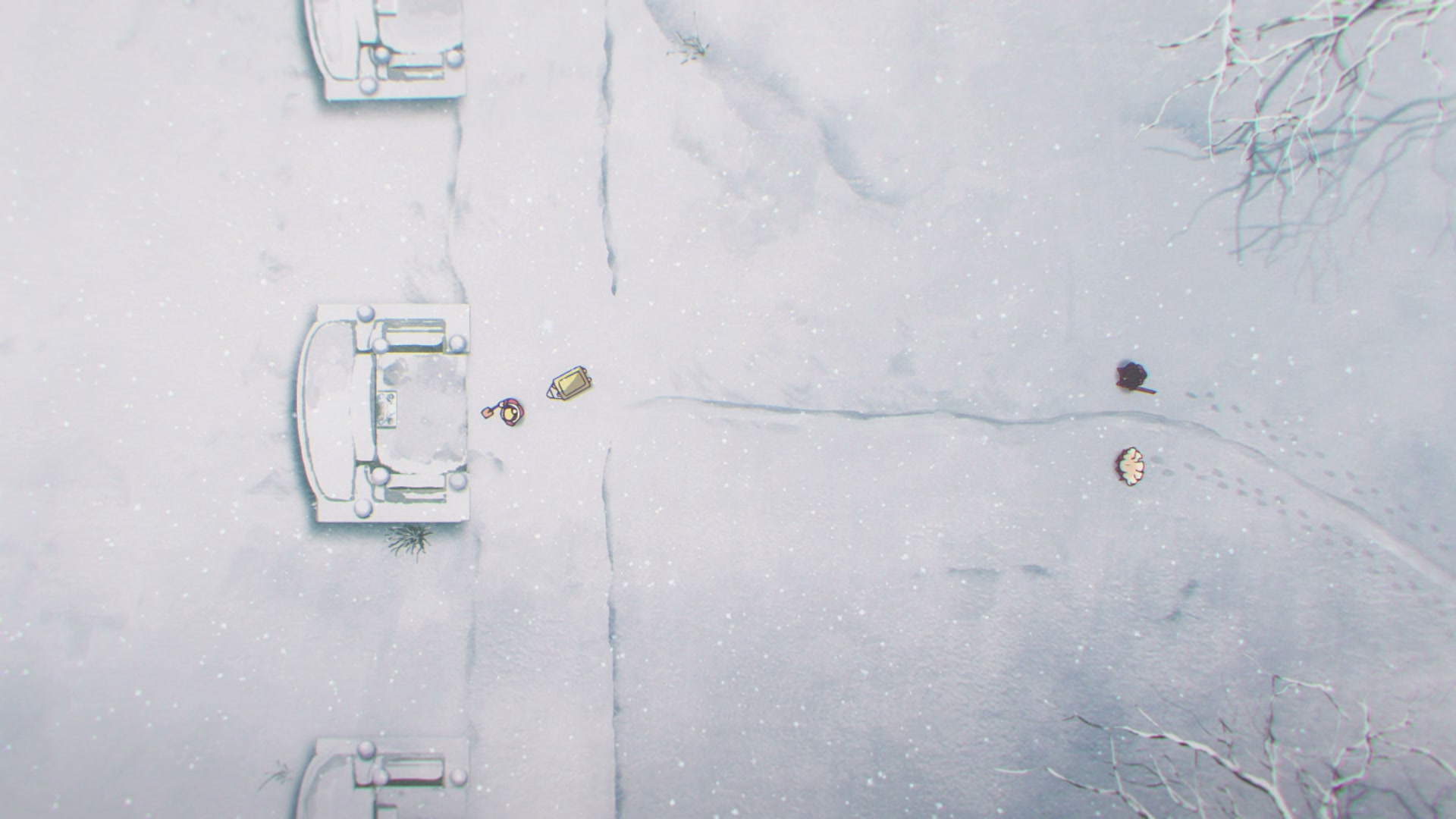
Nazuna is almost twelve, which means spring has never been a real season in her memory. She doesn’t know what it is. When Hinagiku explains, the girl challenges her to prove it. The episode could have made this a bratty-kid encounter, but Nazuna’s defiance comes from a genuine place. Her father works in tourism. The perpetual winter has hurt their finances, and on top of that, her mother is dead. She’s shoveling snow off her mother’s grave so she won’t feel cold.
The reveal of the grave is handled with quiet restraint. Nazuna points out that from her window she can see this spot. In summer the flowers were pretty and her mother didn’t look lonely. In autumn the fallen leaves made a blanket. But in winter she worries. She says, “Even if she doesn’t, I want to do this. Is that wrong?” Sakura, who’s been itching to drag her away, stops. It’s not silly. It’s not weird. It’s love.
Hinagiku gets it immediately. “Nazuna wants to tell her mother she loves her. Because she loves her. That’s all.” The line is simple, but hearing it from someone who has been missing for a decade, who doubts anyone needs her, gives it weight. This is the moment Hinagiku decides to perform the rite right here, at the grave, for one child. The rules about secrecy and protocol don’t matter.
Spring Blooms at a Grave
The rite itself is a dance and a song, passed down from the original seasons themselves. The subtitles render the lyrics with a poetic, slightly archaic cadence: “Bear up against your yearning for the banquet of the spring. Let wisteria, dazzling, deck you out, O hills and fields.” The animation during this sequence shifts into something softer and more painterly. Snow melts into petals. The gray of the mountain blurs into pink and yellow. There is a wide shot of the three of them, tiny against the burst of color, and it’s the kind of image that makes you forget any nitpicks about budget or pacing.
What’s striking is that the ritual isn’t framed as a massive spectacle. It’s intimate. Hinagiku dances for an audience of two, and the episode doesn’t cut away to the city below reacting in awe. The emotional payoff belongs entirely to Nazuna, who suddenly remembers seeing spring as a baby, held in her mother’s arms. “That memory meant a lot to me, so how come I couldn’t remember?” she asks. The answer is obvious: because winter has lasted her whole conscious life. The return of spring triggers a personal, almost cellular memory of warmth and love.
Sakura, watching, finally lets herself cry. She’s been so tightly coiled for the entire runtime that the tears feel earned. “Hinagiku-sama has been pushing herself for people like you. For other people, never herself.” She doesn’t say it to Nazuna alone. She’s finally letting herself believe that all the years of waiting and guilt have led to something good.
The Myth That Frames It All
The episode closes with a narrative flourish that recontextualizes everything. A chorus of unseen voices recites the creation myth of the four seasons: Winter, lonely and eternal, made Spring. Spring adored Winter, Winter adored Spring. Eventually, the seasons entrusted their power to human Agents, giving Winter and Spring time to love each other forever. Then the voices name themselves, one by one, and you realize these are the other Agents of Summer, Autumn, and their attendants, and the story you just watched is only the beginning of something larger.
The show is explicitly calling itself a tale of murder, rescue, friendship, and “a commonplace love story.” It wears its dramatic ambitions openly, and the mythic framing works because the episode earned its small, human victory first. You care about the larger cosmology because it’s grounded in a girl shoveling snow and a woman learning she’s still needed.
Final Thoughts
Shunkashuutou Daikousha – Haru no Mai opens with a measured, confident episode that trusts its audience to sit with quiet grief and tentative hope. It doesn’t overexplain the lore. It doesn’t rush to show off all its characters. Instead it focuses on Hinagiku and Sakura, their shared trauma, and the way a single act of spring can heal more than the land. The third-person speech patterns, the formal guard-and-charge relationship, and the ritual dance all feel rooted in a specific, cohesive world. The episode knows exactly what it wants to be: a myth-adjacent character drama about seasons and sorrow. I’m all in.
Screenshots