




Introduction
An anime original series about a struggling theater troupe in a post-disaster Ikebukuro does not sound like the setup for a sprawling time travel saga, yet that is exactly where Gekidol ends up. The series begins with a shy middle school girl discovering the magic of live performance and finding a home among a chaotic found family of actresses. By its final act it has moved into a realm where a play becomes a literal reenactment of a cosmic catastrophe, and the border between the stage and reality dissolves completely. That might sound like a bait and switch, or at least a wild gamble, but Gekidol makes it work through sheer sincerity and an unshakeable belief in theater as a force that can mend broken people and even broken timelines.
The show is not for everyone. The pacing is uneven, the animation budget is clearly modest, and the back half piles on science fiction concepts at a rate that can feel overwhelming. But for viewers who appreciate character driven stories about guilt, identity, and the slow, painful process of becoming your own person, Gekidol offers something quietly remarkable. It takes an unabashedly Japanese blend of idol culture, small theater grit, and post-3.11 disaster anxiety and weaves them into a narrative that is both personally intimate and cosmologically ambitious. If you have ever been moved by the way a performance can feel like a temporary resurrection, this series was made for you.

Story and Themes
A Theater Troupe and a Broken World
The story takes place five years after the Global Synchronic Urban Disappearance, an event that wiped entire districts off the map, Ikebukuro being one of the hardest hit areas. The disaster is never explicitly called an earthquake or tsunami, but the parallels to the 2011 Tōhoku catastrophe are unmistakable. Reconstruction is still underway, electromagnetic anomalies known as Auroras linger in the sky, and the survivors carry a heavy load of grief and survivor’s guilt. This is not a post-apocalyptic wasteland. It is a world that looks almost normal, where teenagers go to school and visit cafés, but the shadow of loss hangs over everything.
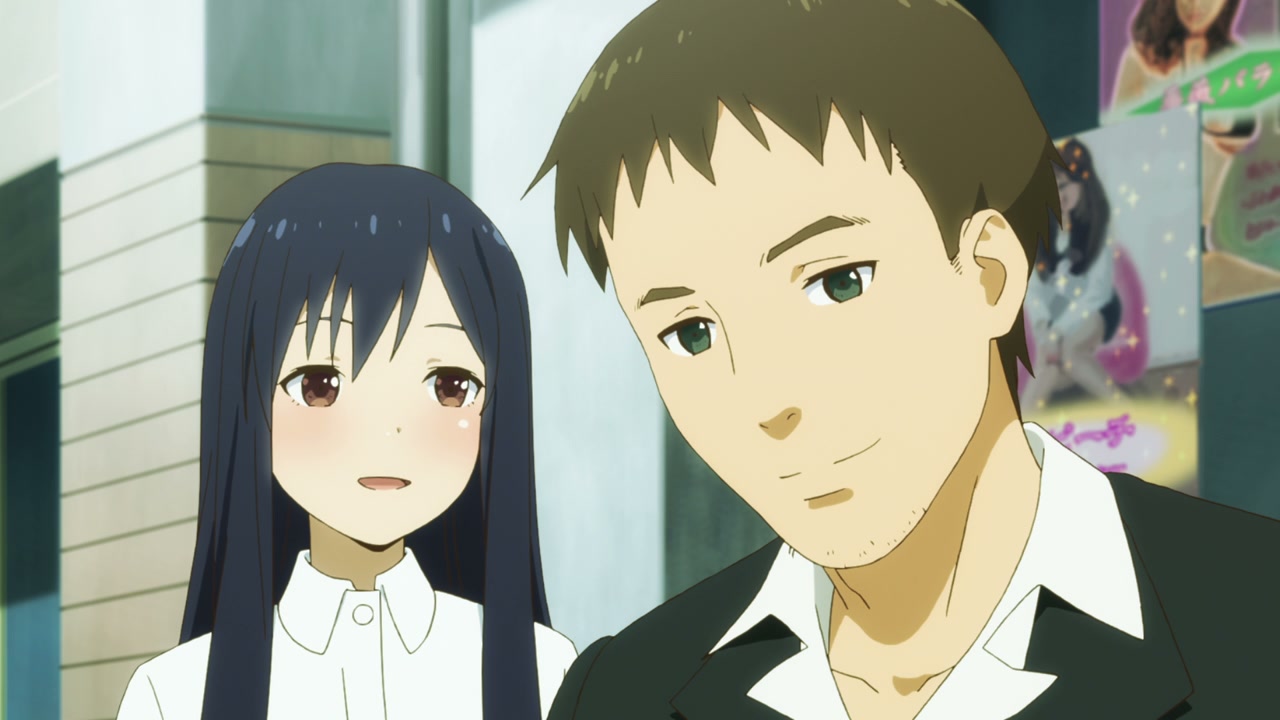
Into this landscape steps Seria Morino, a middle school student who has never had a passion for anything. She attends a performance by the Super Material Theater, a high-tech company that uses a holographic projection system called the Theatrical Material System to create stunningly immersive stage productions. The experience shakes her to the core. She immediately begins quoting the play’s climax in public, and when a flamboyant woman with a cane hands her a flyer for a tiny troupe called Alice in Theater, she follows the thread. That woman is Kaworu Sakakibara, the troupe’s perpetually broke director, and Seria’s decision to join Alice in Theater sets the whole story in motion.
The first half of the series focuses on the troupe’s struggles to stay afloat. They put on idol-adjacent live shows to boost ticket sales, lose their lead actress to the rival SMT, deal with financial crises, and eventually face the threat of their building being seized. This is all rendered with a scrappy, low-rent charm that feels true to the indie theater scene in Ikebukuro. The members bicker, support each other, and gradually become a family. Seria discovers that she has a peculiar talent: she can perfectly imitate any performance she sees. At first this seems like a gift, but it quickly becomes clear that her mimicry is a symptom of a deeper emptiness. She cannot create, only copy, because she does not yet have a self to express.
The Theatrical Material System as Metaphor
The TMS technology that both Alice in Theater and SMT use is never just a cool gadget. It is a device for materializing memory and emotion. It projects sets, costumes, and even entire character performances onto the stage. In the hands of the corporate SMT, it is a tool for spectacle and profit. In the hands of the ragtag Alice in Theater, it becomes a medium for processing trauma. The most potent example is an Act Doll, an android actress that is unique to the small troupe. Seria impulsively names the doll Alice, after her deceased twin sister. Through the doll, she begins to externalize her guilt, speaking to it as if her sister could hear. The TMS can also project memories, and when the doll malfunctions during a performance, it forces Seria and the audience to relive the true events of the day her family disappeared. That is a literal mind-link forged through shared artistic experience, a piece of science fiction that serves a deeply psychological purpose.
Later the series introduces the Grand Material System, a larger version of the TMS that can affect the entire world. The corporate producer Takezaki Hirokazu, who stole the TMS from Alice in Theater, plans to use the GMS to absorb the minds of all humanity into a unified dream. His motivation, once revealed, is not simple villainy. He lost the woman he loved, and his amnesia-protected grief has been driving him to rebuild a world where no one has to suffer loss. The TMS and GMS are the outward manifestations of an inner fantasy: that technology can undo the past. The series’ central argument is that this fantasy is both seductive and monstrous.
Theater as a Technology of Survival
The series proposes that theater existed as a way to confront death and loss long before the TMS was ever invented. The troupe is forced to confront this directly when they lose access to the TMS and must build everything by hand in an abandoned school. They paint backdrops, sew costumes, and construct props. It is slower, harder, and less spectacular. But it is also more theirs. The homemade production becomes a ritual that reconnects them to the essence of performance as a communal act.
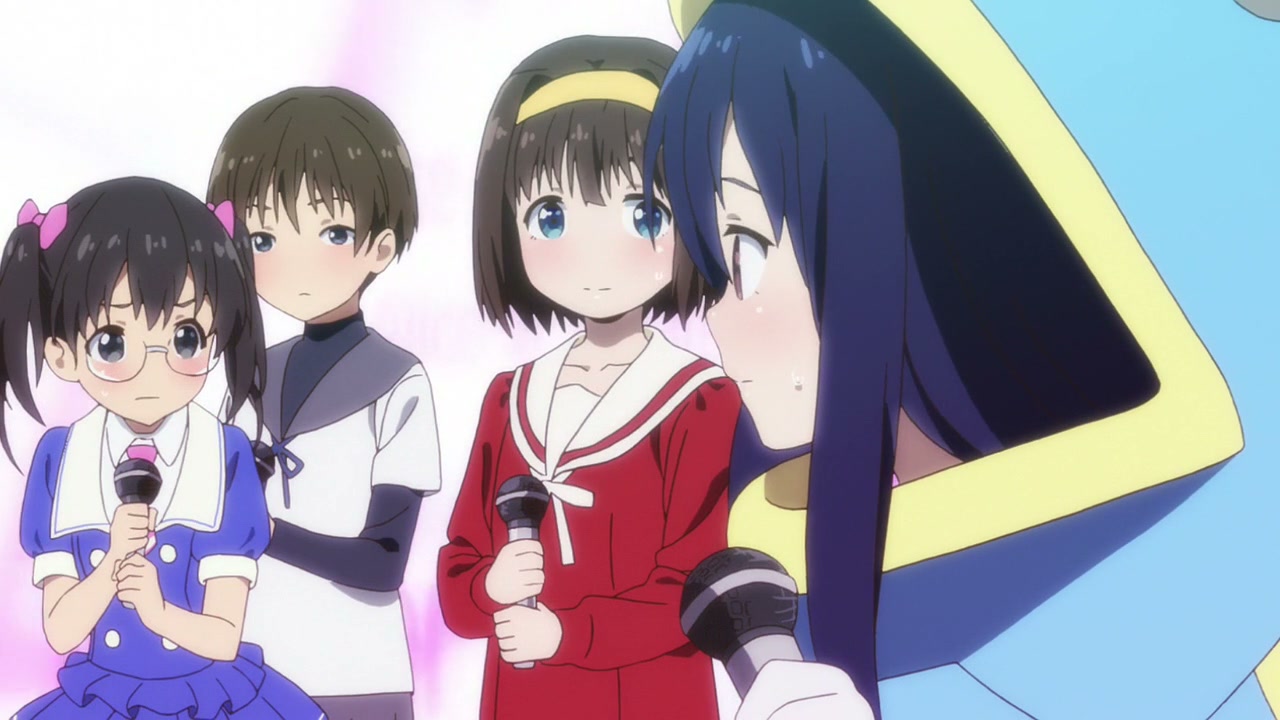
In the final arc, the line between the play within the story and the story itself dissolves entirely. The troupe performs Chrono Geizer, a time travel drama based on a diary left by Kaworu. As they act out the pivotal moment when a future officer named Kyouko was supposed to kill her friend Azusa, the fictional situation mirrors the real cosmic standoff happening outside the theater. Seria, playing the role of Miki, refuses to follow the script. She ad-libs, insisting that understanding is possible even between enemies. Her improvisation alters the reenactment and, through the GMS, reaches the minds of five billion people watching the performance. It is a moment of staggering chutzpah on the part of the writers. A play saves the world not through magic, but through a change in perspective that breaks a cycle of predetermined violence. The message is that we can rewrite our own tragedies, not by erasing them, but by choosing a different response to them.
Guilt, Identity, and the Twin Motif
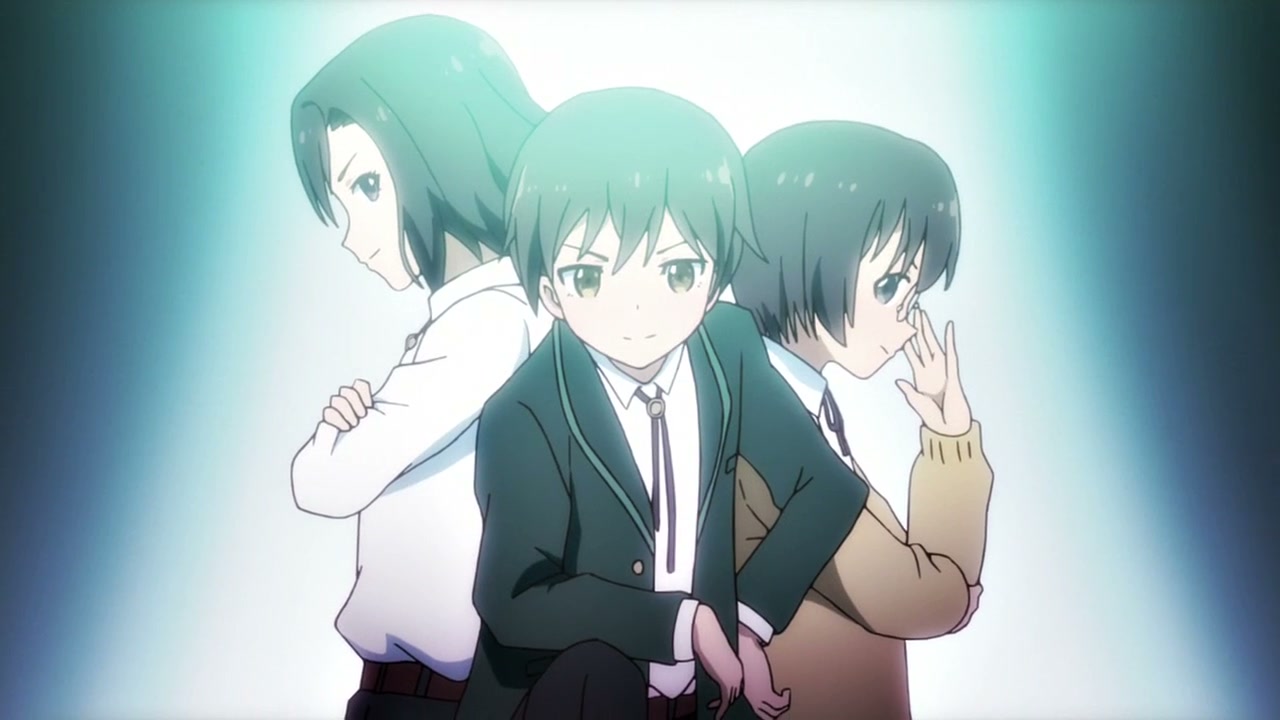
The show is saturated with twin imagery and questions of identity. Seria and Alice are literal twins. The Act Doll is a mechanical twin. Kaworu is actually Miki Schteinberg, a time traveler hiding under a false identity. The antagonist Enri Viano wears the face of the kindly student council president Azusa. The series uses these doubles to explore how people construct their selves. Seria’s guilt has caused her to invert her memories: she believed she was the talentless sister who caused the brilliant Alice’s death, but in truth she was the outgoing one, and Alice was shy. The false memory was a coping mechanism, a way to punish herself for surviving. When the truth is restored, she does not become a different person overnight. She has to build a self from scratch, and she does it through acting. Performance becomes a laboratory for identity formation. Every role she takes on teaches her something about who she might be.
The theme extends to the larger conflict between the Geizers, who protect the “correct” timeline, and the Innovators, who want to overwrite it to save their dead-end future. Both sides treat the current timeline as disposable, a mere branch that should be pruned. The series rejects this framing. The broken timeline, full of pain and loss, is still home to real people with real lives. Erasing it would be a second atrocity. The resolution comes when the characters refuse to play the roles assigned to them by cosmic fate. They claim the right to define their own world.

Characters
Seria Morino
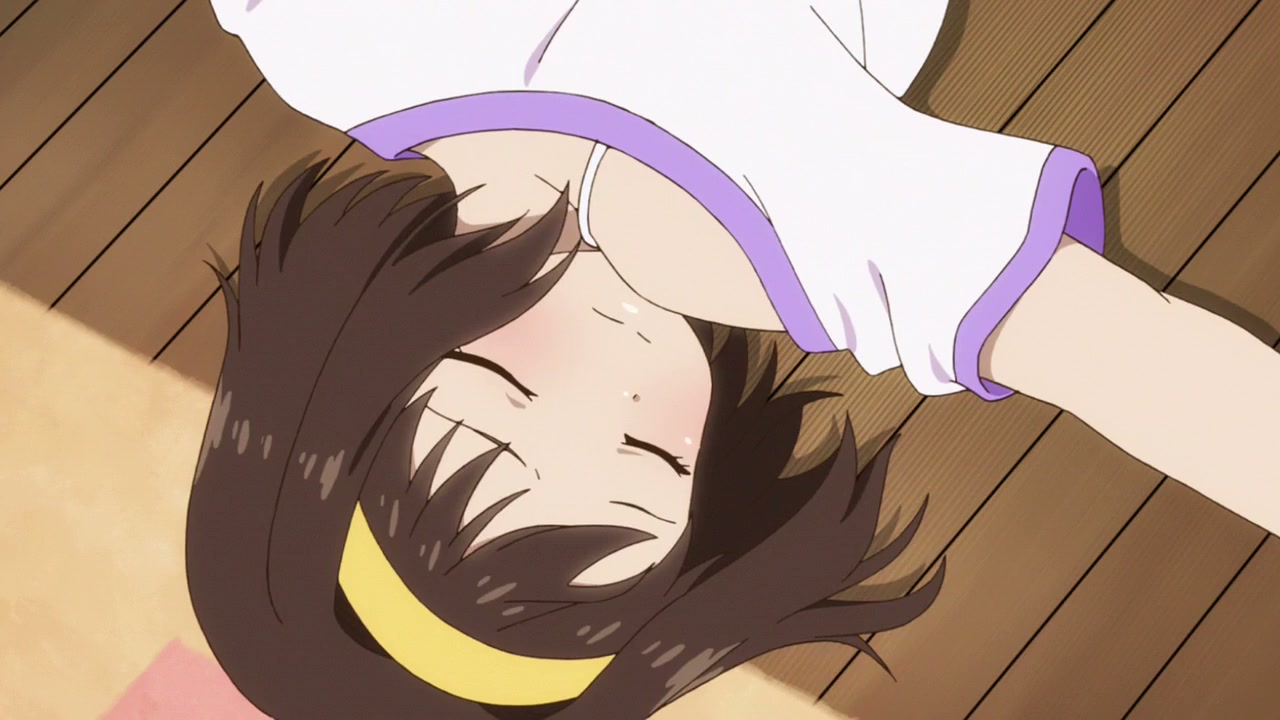
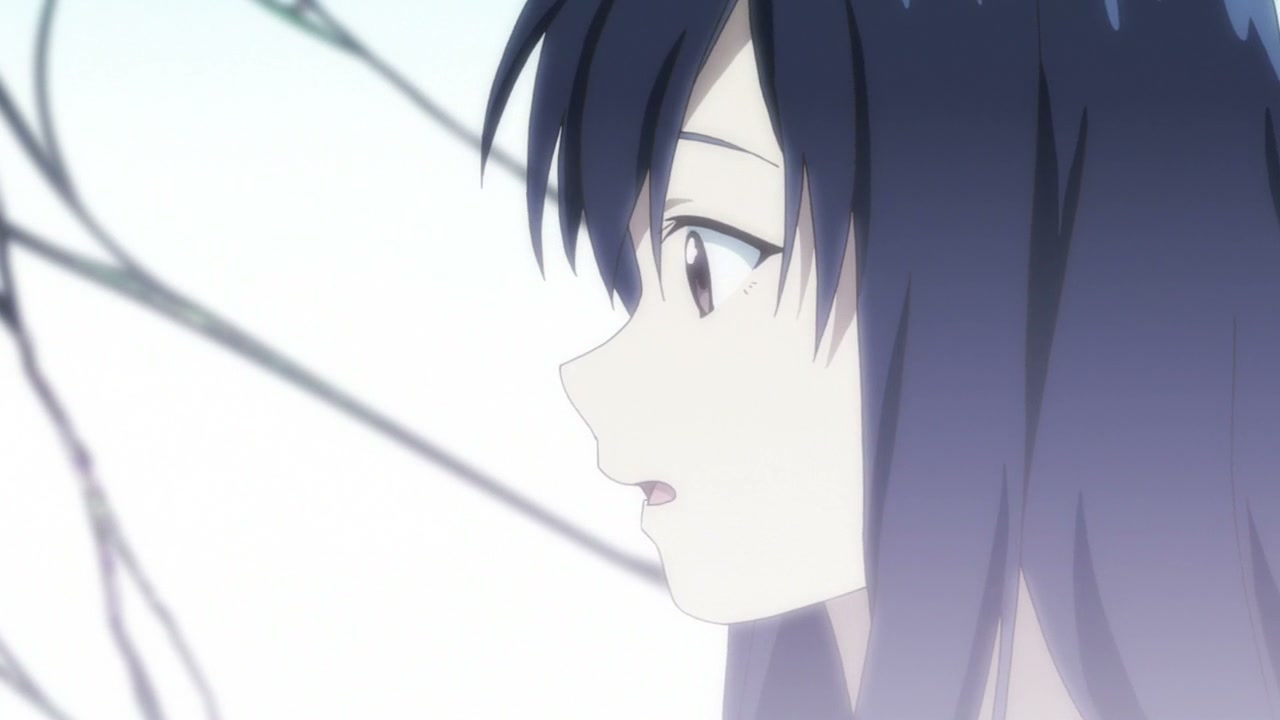
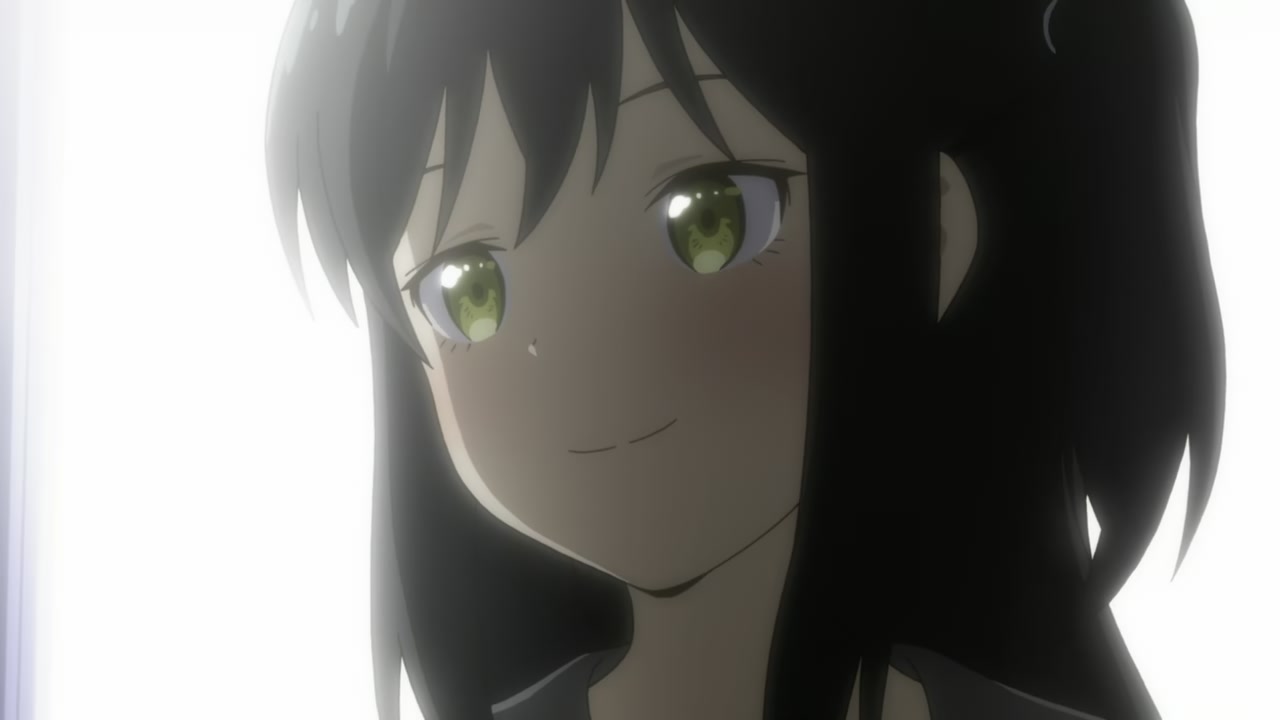
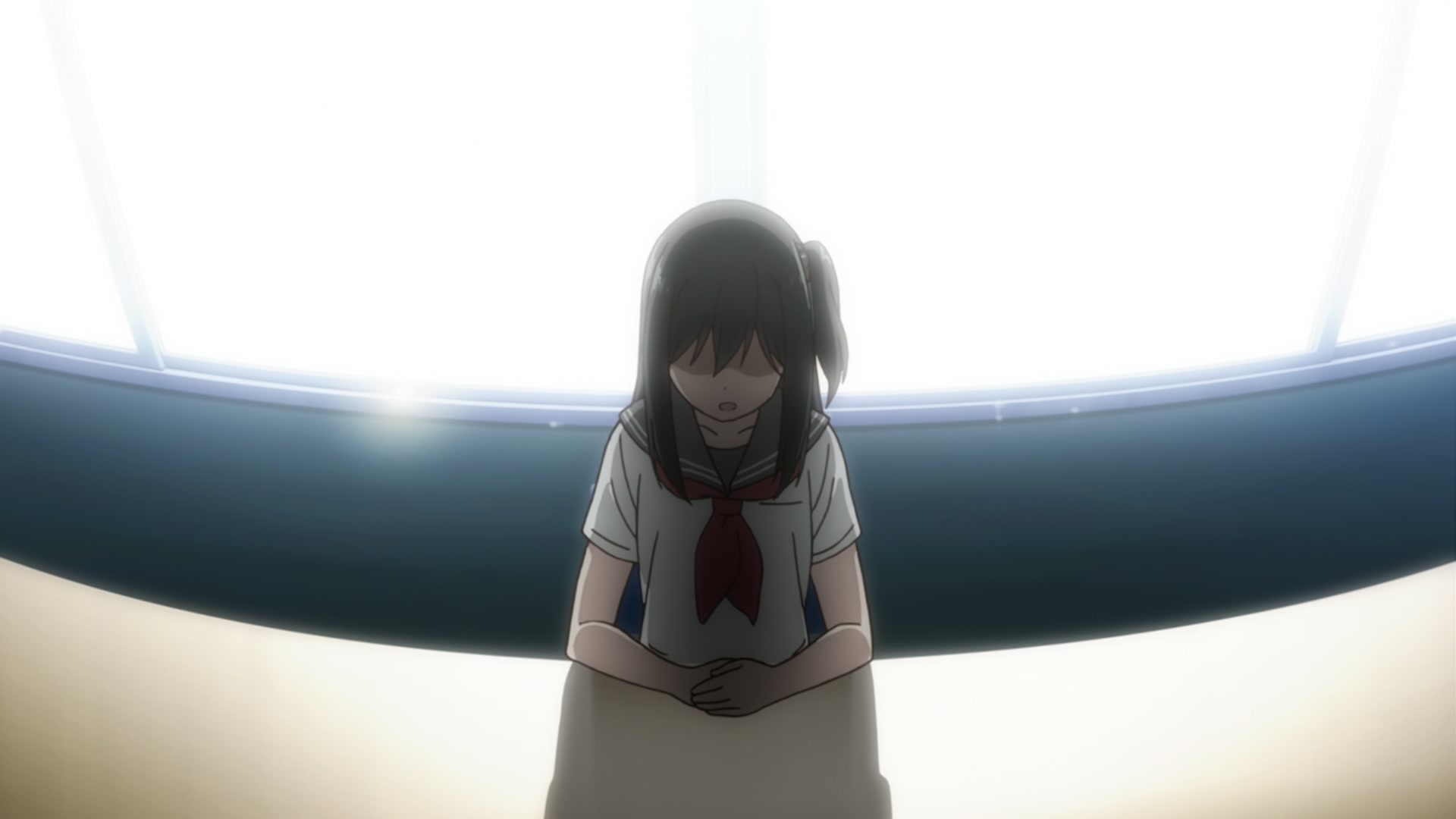
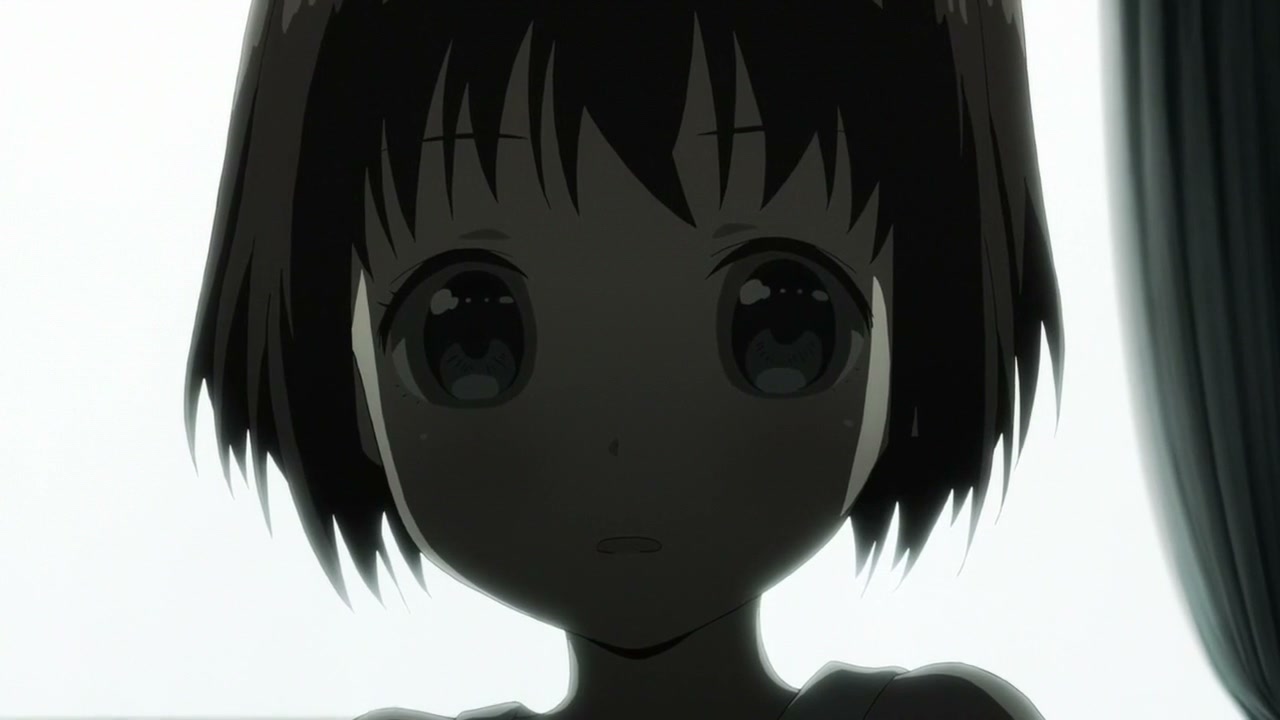
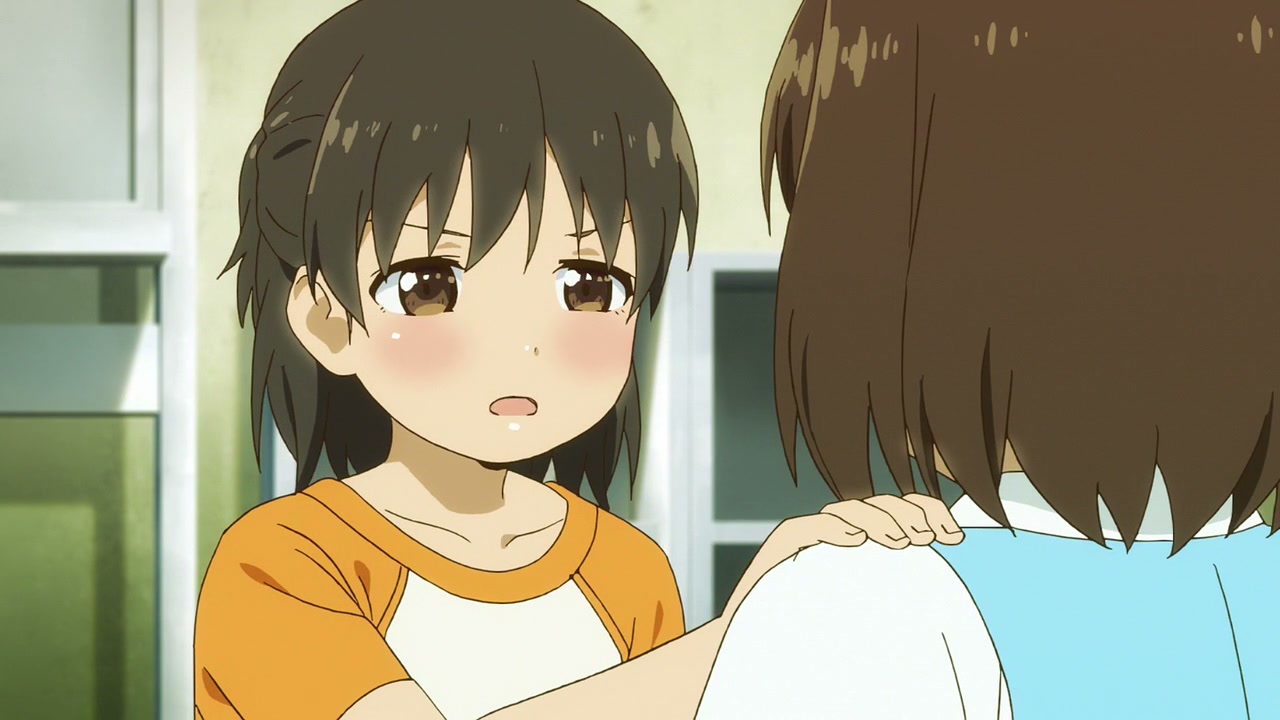
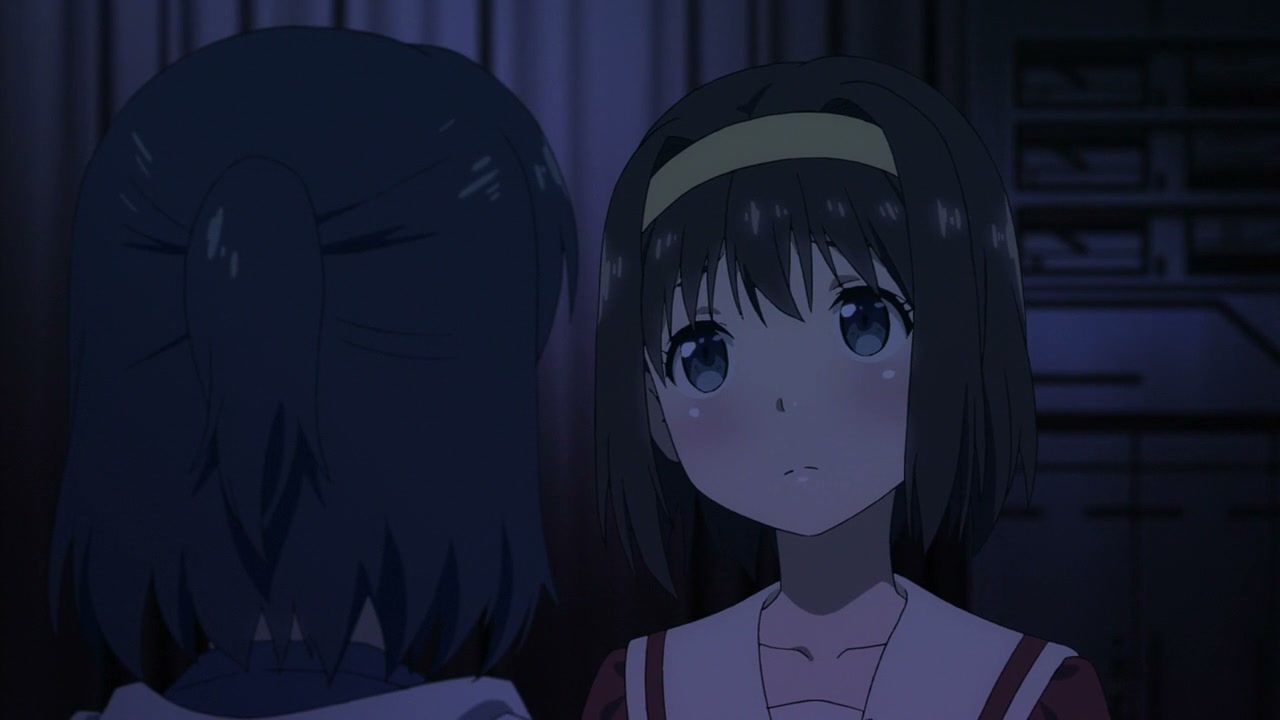
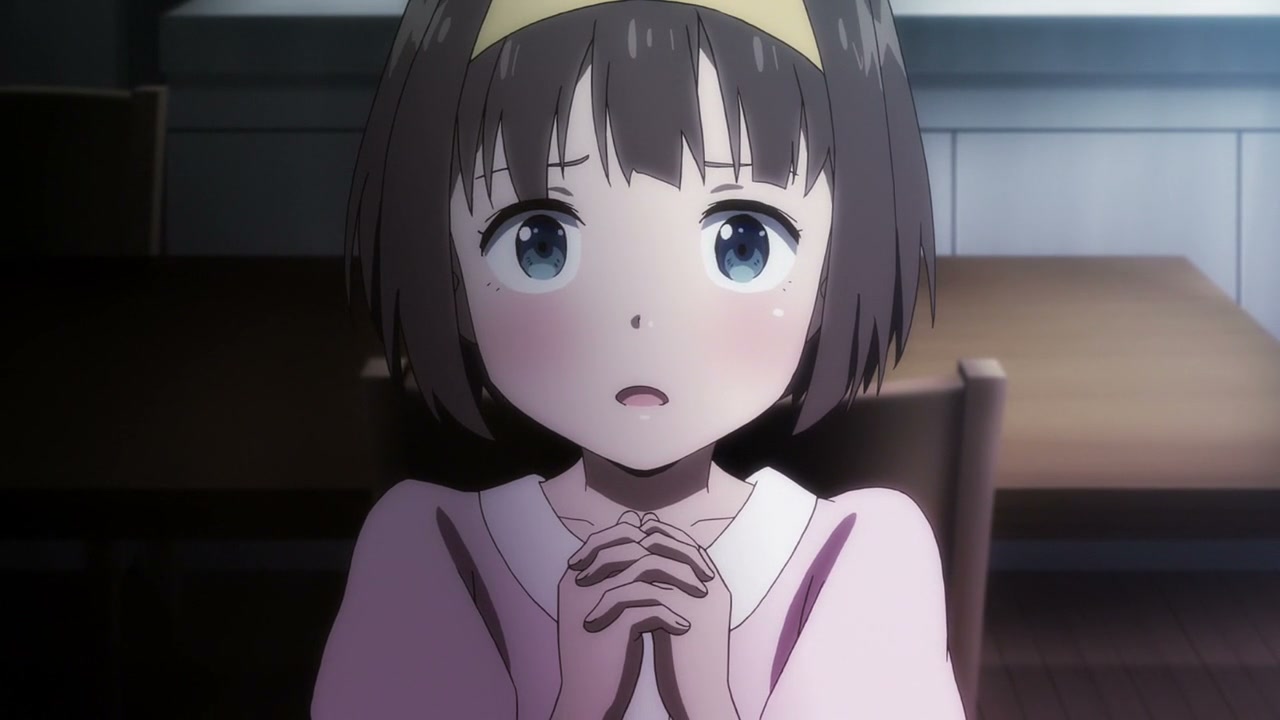
Seria’s arc is the spine of the series. She begins as a hollow shell, defined entirely by absence. Her parents and sister are dead. Her grandmother is overseas. She has no hobbies, no ambitions, and a single traumatic memory that has shaped her entire self-concept. Her talent for perfect mimicry is both her greatest asset and her most severe pathology. She can slip into another person’s performance so completely that her own personality vanishes. This makes her useful to the troupe, but it also traps her. She is always a copy, never an original.
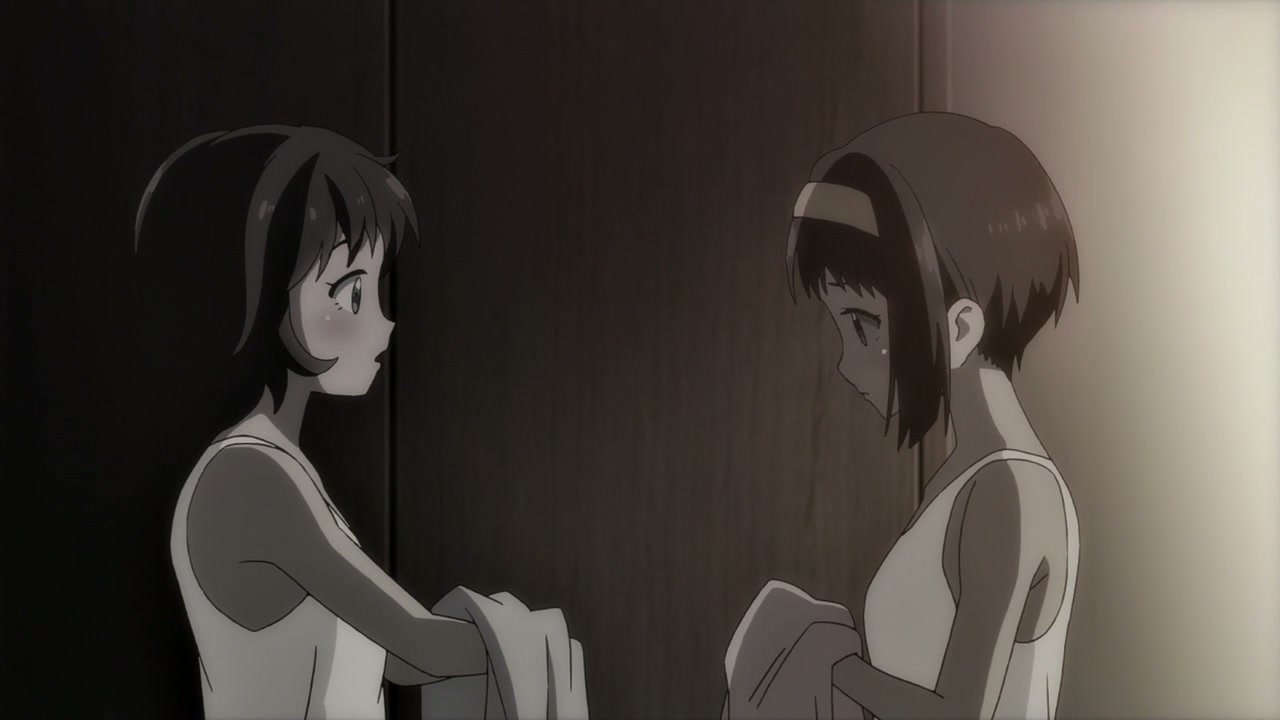
Her growth is coaxed out of her by Airi Kagami, the troupe’s fierce co-lead. Airi’s method is harsh. She demands endless retakes, calls Seria’s imitation “meaningless,” and pushes her to the edge of a breakdown. It would be easy to read Airi as simply abusive, but the series frames her cruelty as a form of desperate investment. She needs Seria to become real because she cannot bear another partner who leaves or fails her. When Seria finally breaks, sobbing about her guilt over Alice, Airi breaks too. The mutual vulnerability transforms their relationship from a teacher-student power struggle into a genuine partnership.
Seria’s breakthrough comes during the audition for Chrono Geizer. Competing against the seasoned Izumi Hinasaki, she improvises a memory of a summer festival that was never in the script. The moment feels spontaneous and true. She wins the role not because she can imitate better, but because she has finally started to bring her own experiences into her acting. By the finale, she is the one who stops the play’s cycle of violence, speaking directly to the cosmic audience and choosing a different ending. It is a quiet but profound transformation. The empty girl at the start of the series has become someone with a voice.
Airi Kagami
Airi is my favorite kind of difficult character. She is abrasive, possessive, and quick to run away from her own problems. Her past as a junior idol who performed risqué photo events for male fans is a source of deep shame. She joined Alice in Theater to escape that identity, but the past keeps finding her. When a fan recognizes her at an idol event, she panics and hides for days. Her instinct is always to flee first and deal with the consequences later.
Beneath the prickly exterior is a woman terrified of abandonment. Her former partner Izumi left for SMT, and that wound has never healed. She transfers all her intensity onto Seria, both mentoring her and smothering her. Her jealousy flares when Izumi returns, and she physically attacks her former partner in the street. The fight is ugly and cathartic. It clears the air and allows both women to admit they still need each other. Airi’s arc culminates in her ability to stand on stage with both Izumi and Seria, no longer needing to be the sole focus of anyone’s attention. She learns to share love without losing it.
Kaworu Sakakibara / Miki Schteinberg
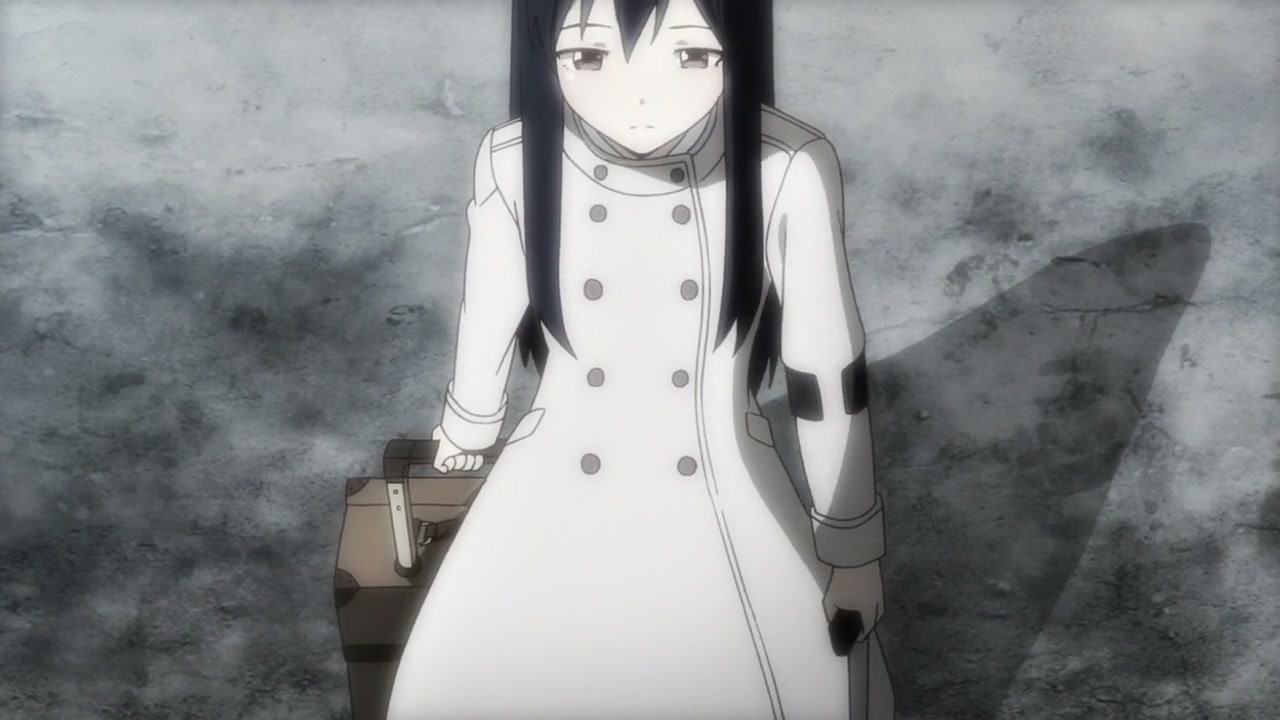
Kaworu is the troupe’s chaotic mother figure, always scheming, always broke, always pouring her troubles into a glass of cheap booze. She calls her actresses “cash cows” and cheerfully plans to profit off their labor. But there is steel under the flamboyance. She built Alice in Theater as a refuge for lost young women because she herself is the most lost of all.
The revelation that she is actually Miki Schteinberg, a time-traveling officer from a far future, recontextualizes everything. She fell in love with Takezaki Hirokazu during a mission and chose to die in his place rather than let history take him. That act of love created an alternate timeline, a branch reality that should not exist. She has been hiding from her own identity ever since, constructing the Kaworu persona as a shield against unbearable guilt. Her final confrontation with Takezaki, where she apologizes for running and he remembers her for the first time in five years, is the emotional high point of the series. Their love story is a tragedy, but one that ends with acceptance rather than erasure.
Izumi Hinasaki, Akira Asagi, and Manami Fujita
The supporting cast is well realized. Izumi is the prodigal daughter who left to protect the troupe and returns humbled and desperate. Her arc addresses the loneliness of being the “star” and the difficulty of coming home after you have hurt people. Akira is the stoic, androgynous backbone of the group, the one who takes over as director when Kaworu vanishes. Her quiet competence and hidden self-doubt are a grounding presence. Manami, the eternally optimistic idol-aspirant, provides creative energy and emotional warmth. Her journey from a mocked indie performer to a respected playwright mirrors Seria’s own growth. Even the nearly invisible Kazuharu, who speaks so rarely that characters forget she is in the room, has a show-stopping moment where she delivers a torrent of observation that forces Mayuri to stop holding a grudge.
Takezaki Hirokazu
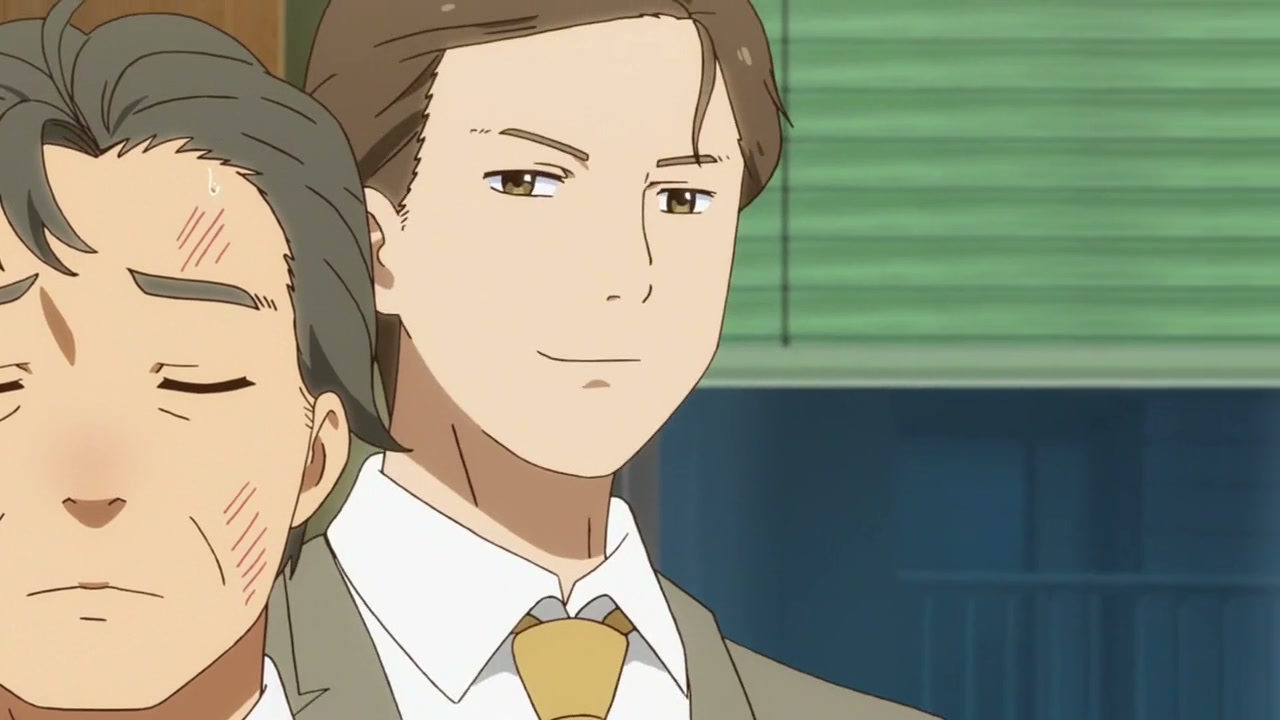
Takezaki is not a cackling villain. He is a grief-stricken amnesiac whose subconscious has been steering him toward recreating the conditions of his lost love. He stole the TMS, built a corporate empire, and now plans to rewrite reality itself, all because he cannot let go of a woman he does not even remember. His manipulative coldness toward Alice in Theater reads very differently once his backstory is revealed. He is pitiable rather than evil, a man who has been a puppet of the true antagonist Enri Viano the entire time. His breakdown when his memories return is genuinely affecting, and his final reunion with Miki offers a bittersweet closure.

Visuals and Animation
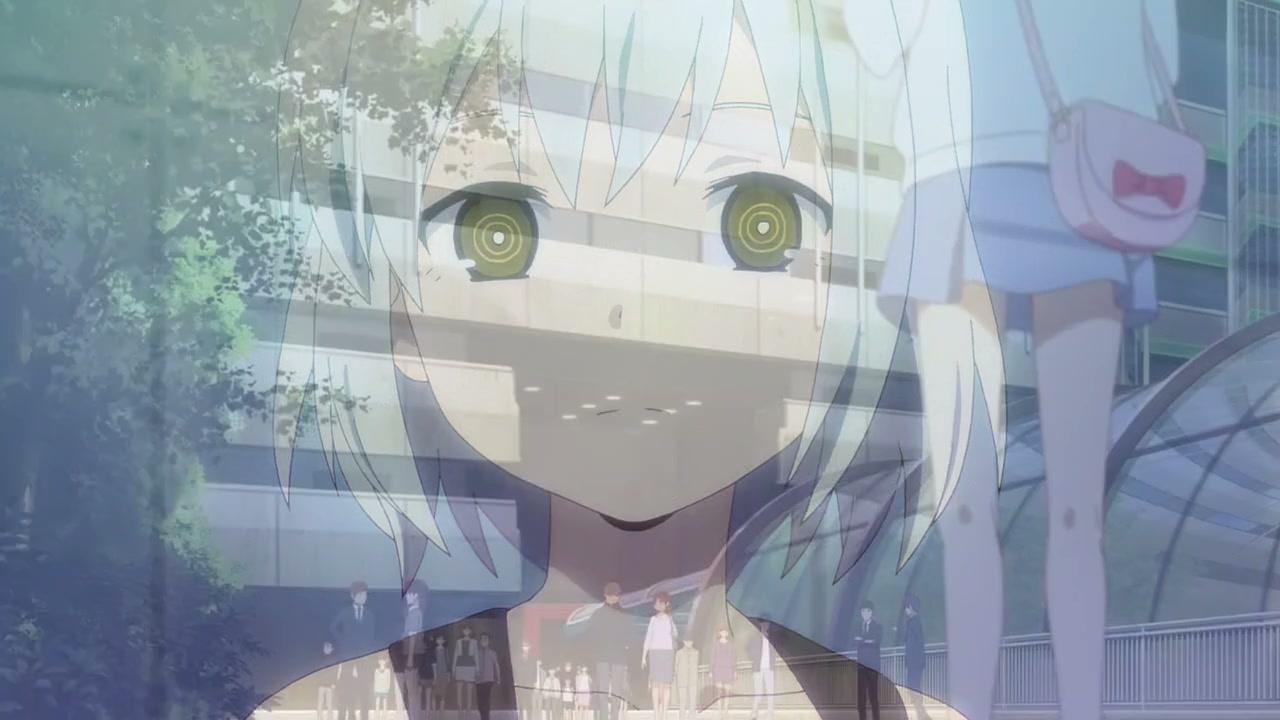
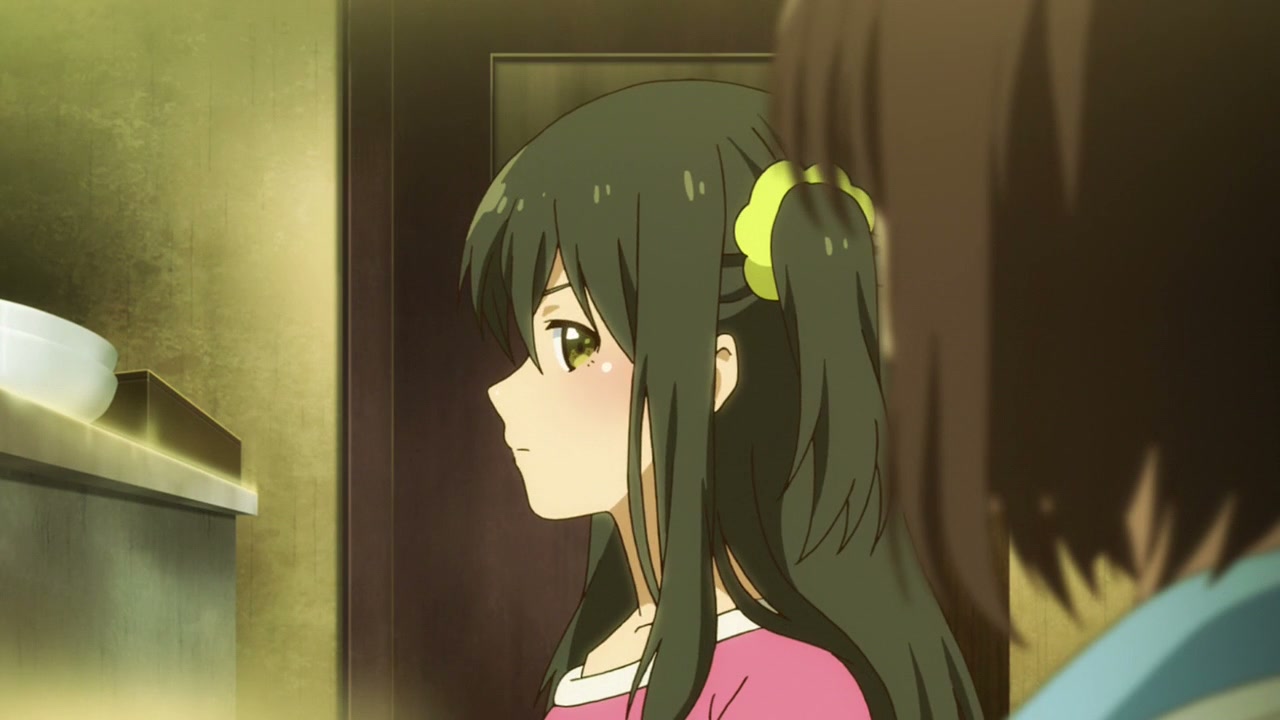
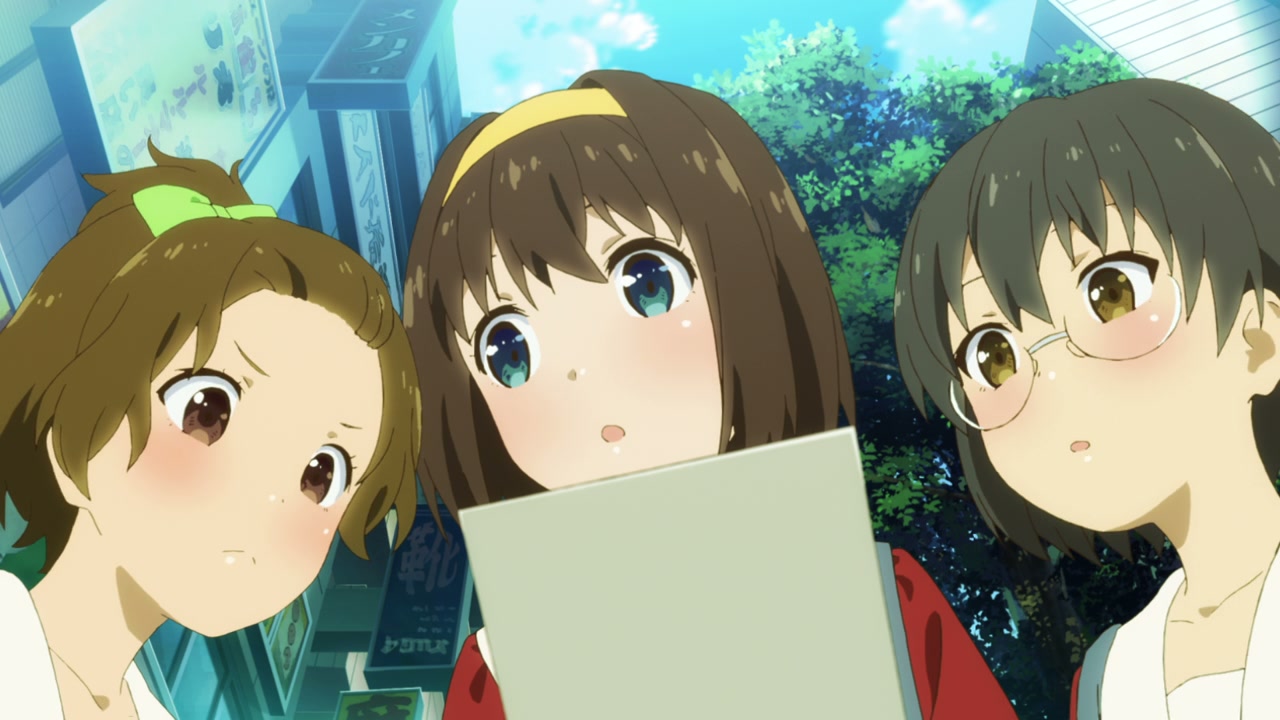
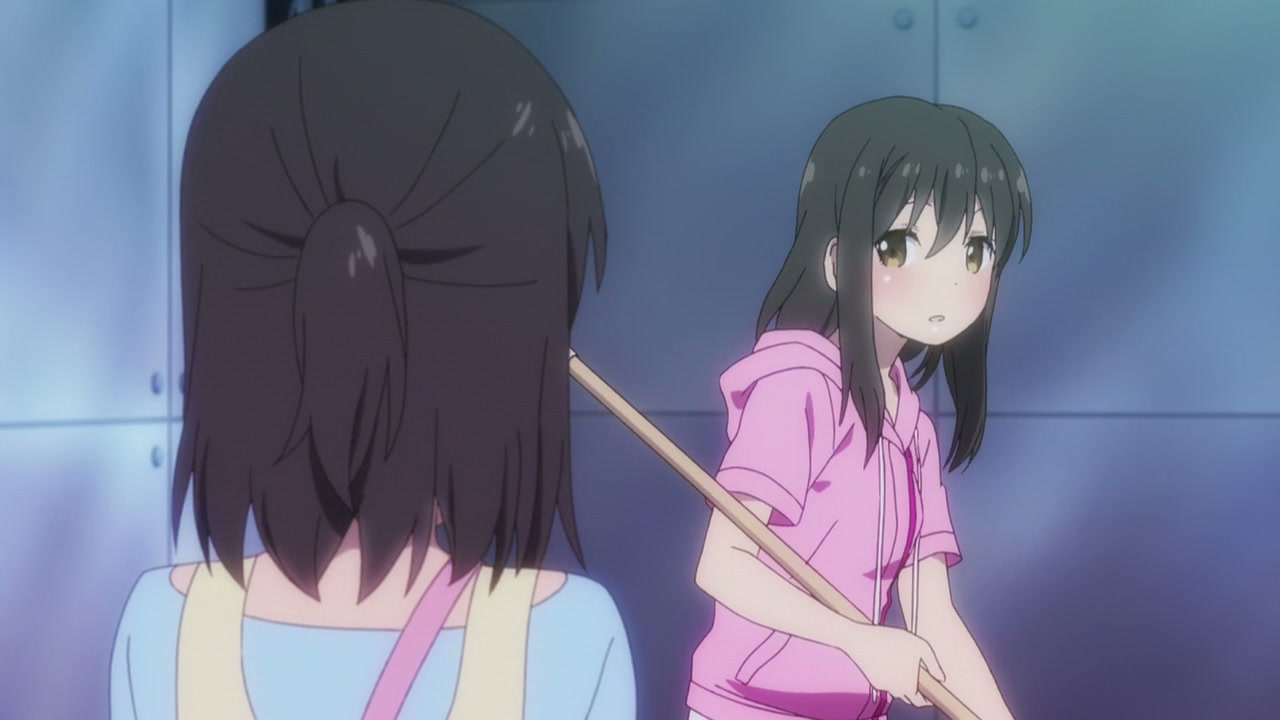
Gekidol was produced with a clearly limited budget. The character animation during dialogue scenes is often minimal. Mouth movements are basic, held poses abound, and panning shots carry a lot of the visual storytelling. This can make some scenes feel static, especially when characters are just sitting and talking about their problems. The action sequences during the climax, including Airi and Izumi’s fistfight and the metaphysical chaos of the GMS collapse, push against the production’s capabilities. The choreography is conveyed more through impact frames and dramatic stills than through fluid motion. It gets the point across, but a viewer hoping for sakuga spectacle will be disappointed.
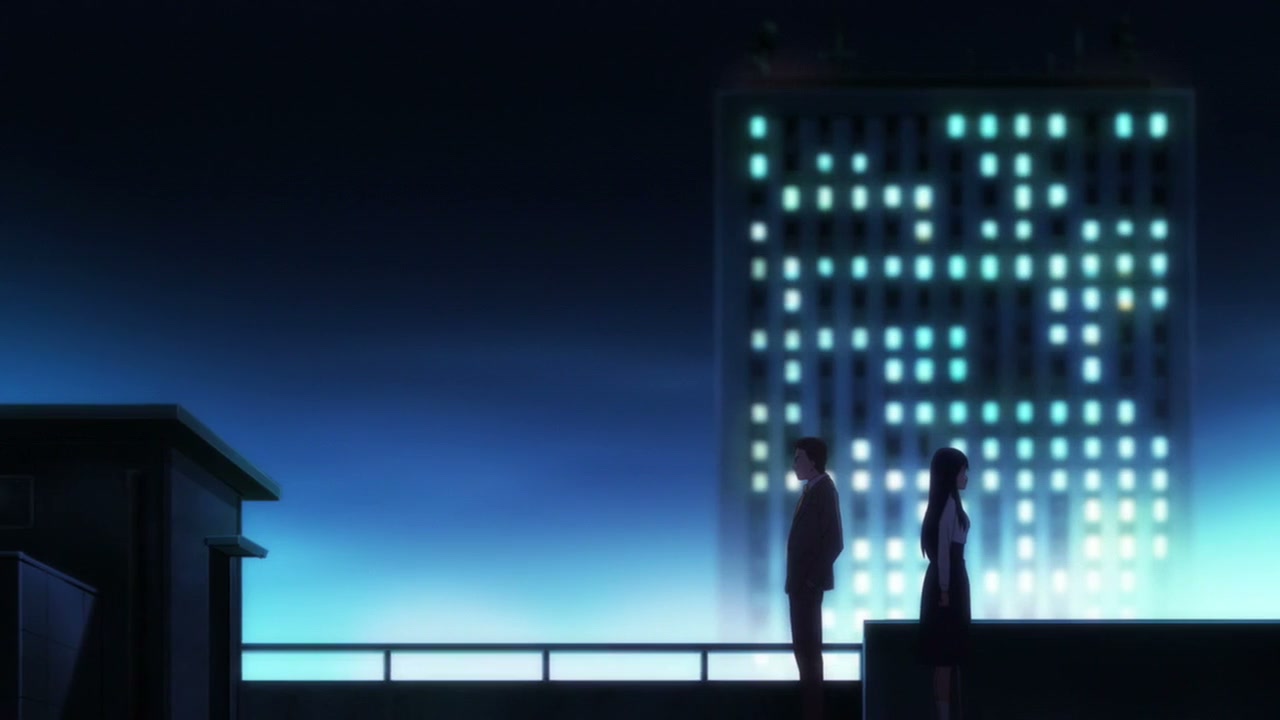
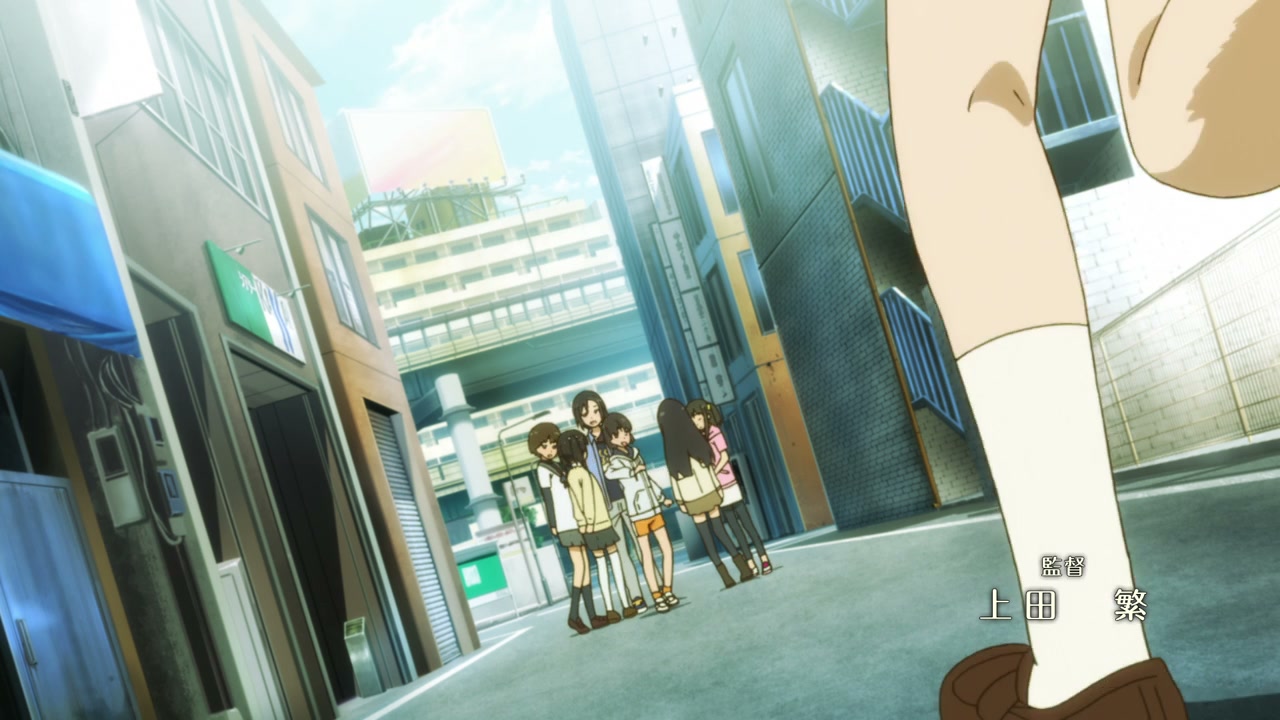
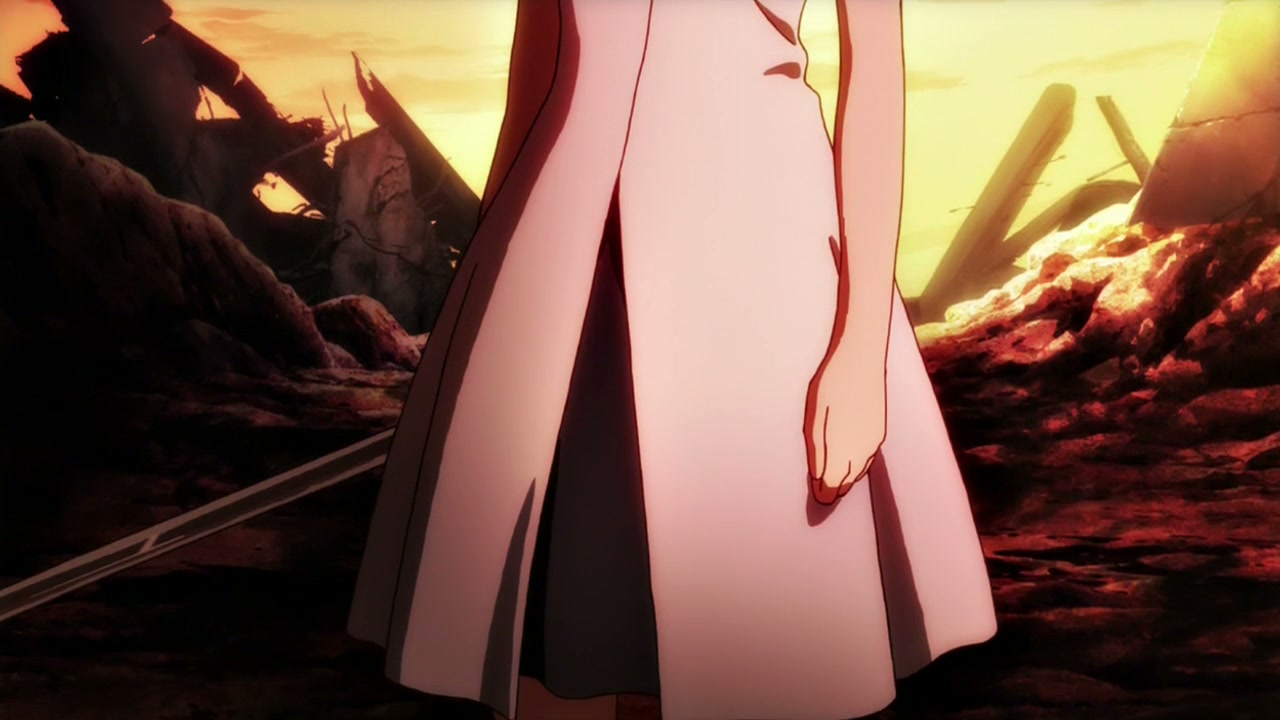
However, the series makes smart use of its resources. The background art depicting a still-scarred Ikebukuro is consistently atmospheric. The abandoned areas near the crater, the half-empty streets, the sense of daily life continuing around the edges of catastrophe, all contribute to a mood of quiet resilience. The abandoned school that becomes the troupe’s new theater is a standout location, its decay and repurposing embodying the show’s theme of making something new in a damaged space.
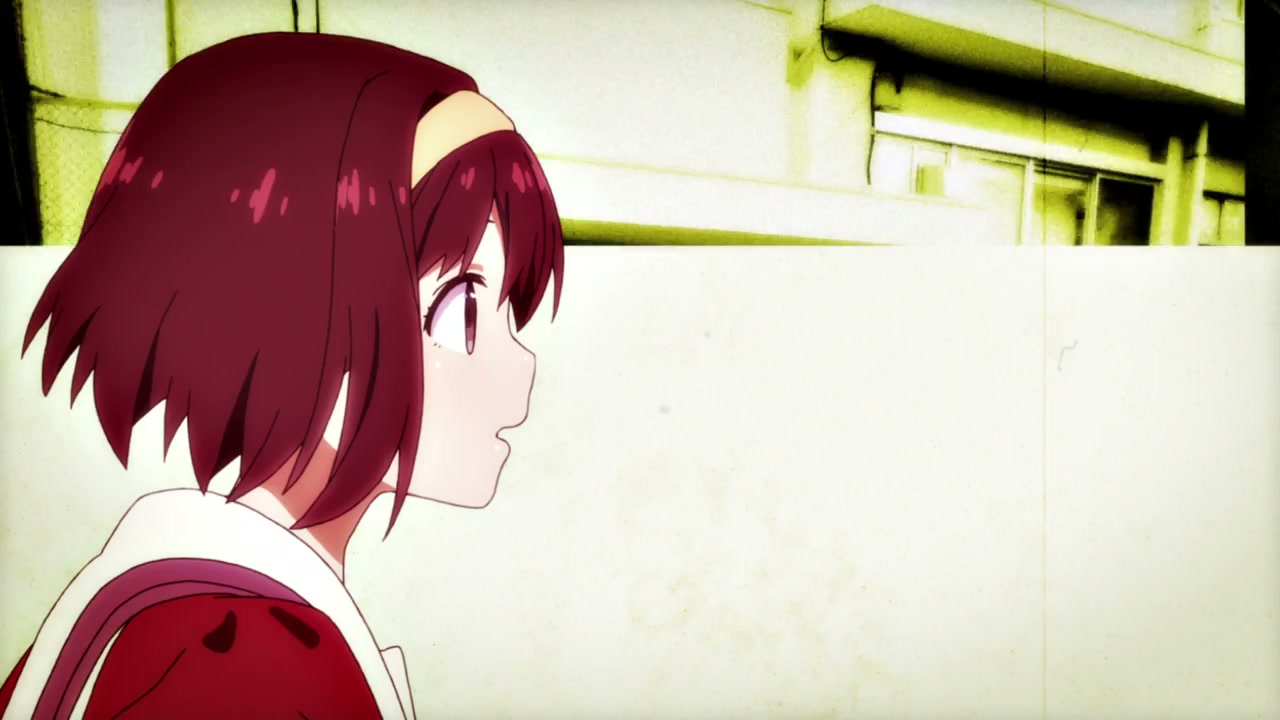
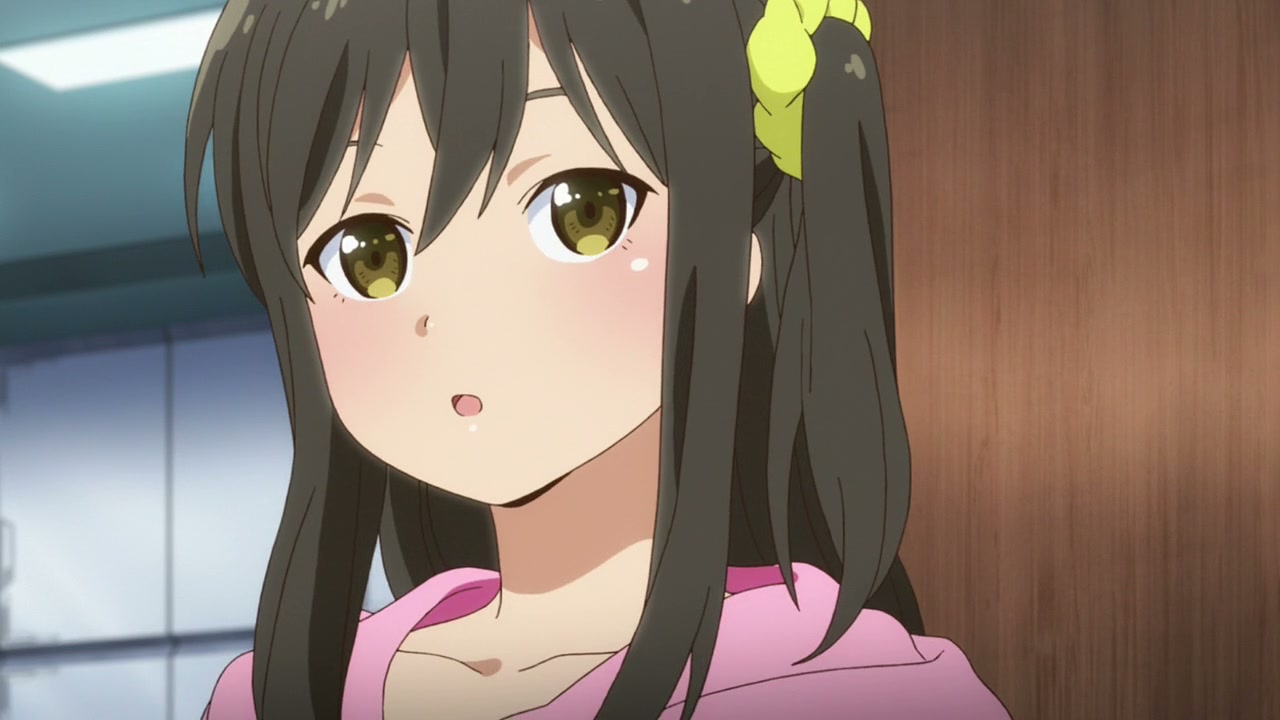
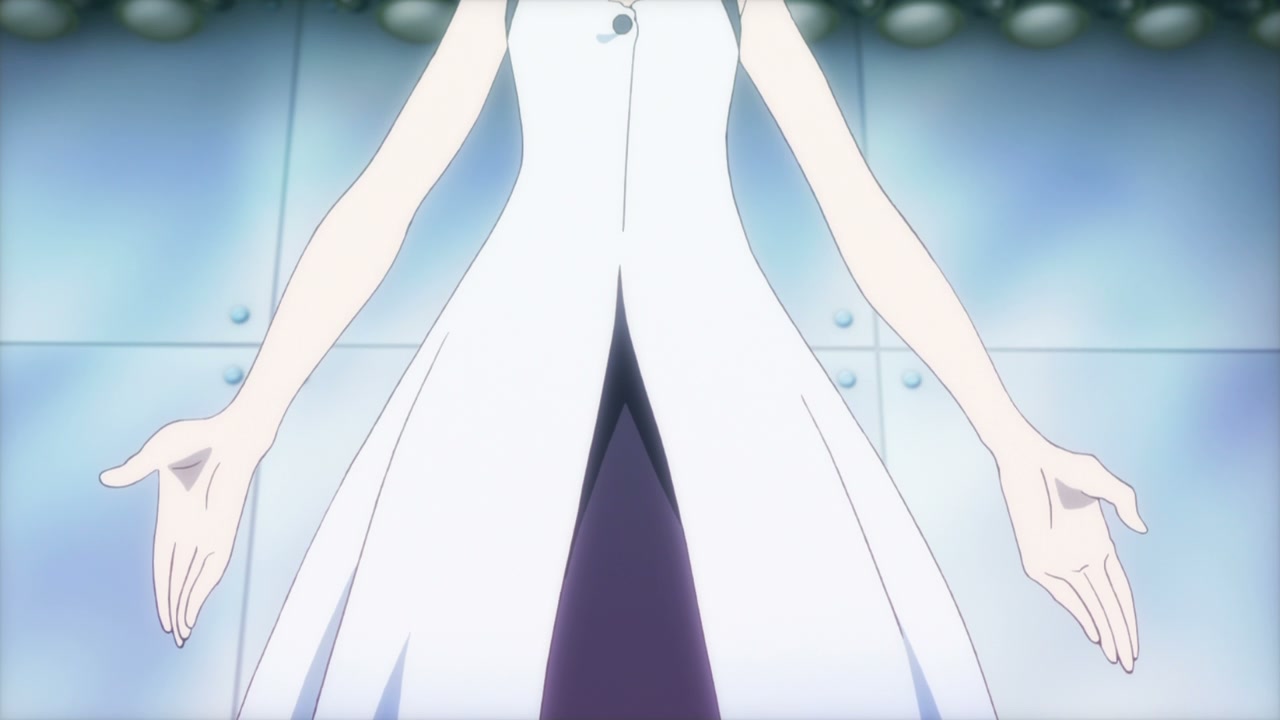
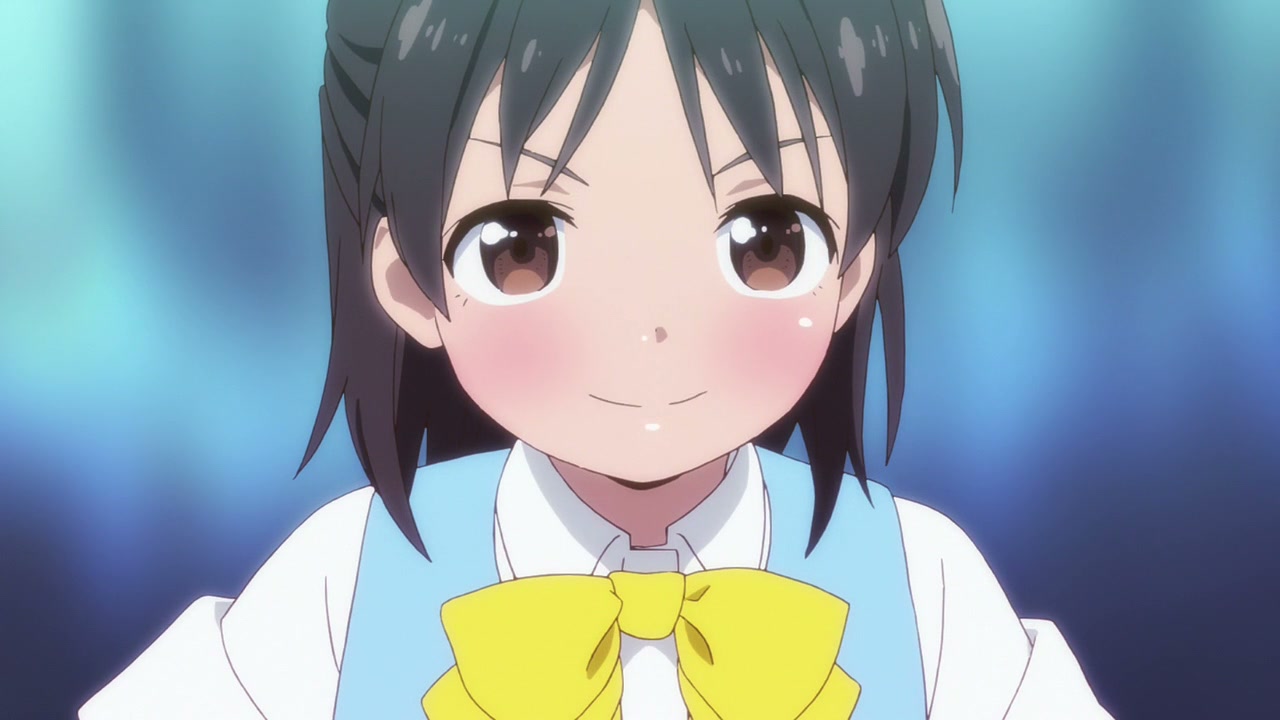
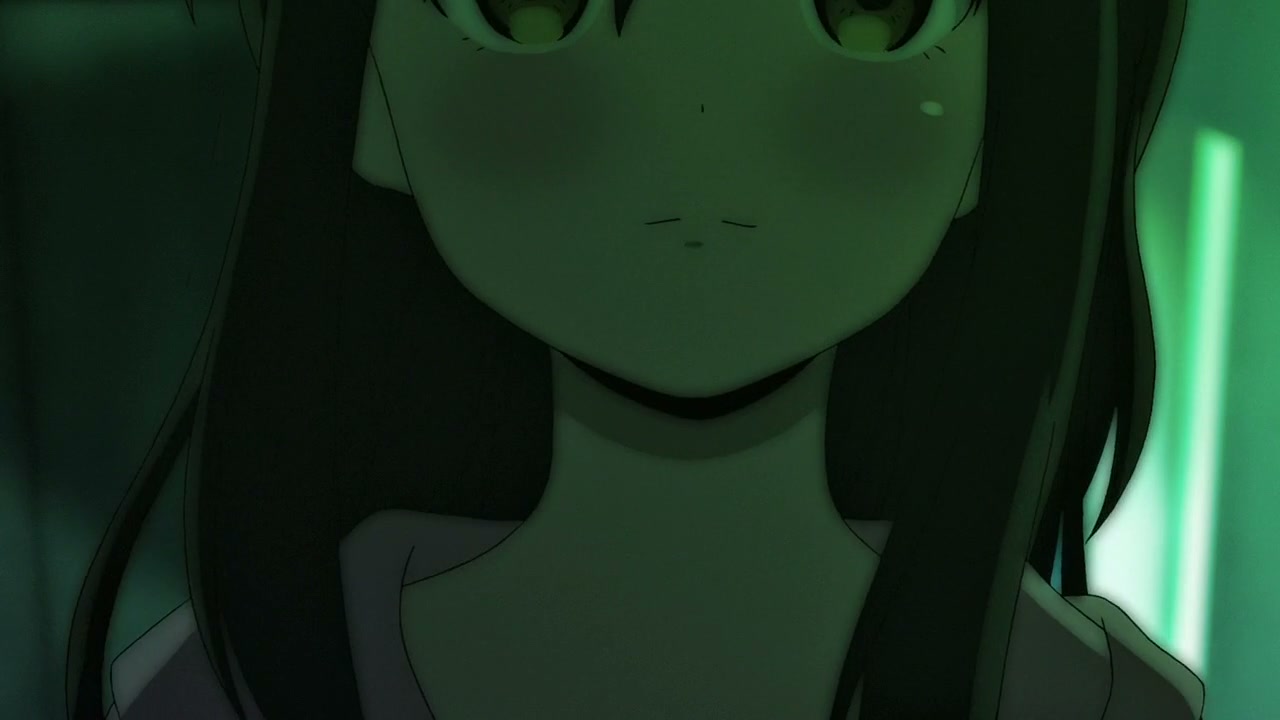
The character designs are distinctive and expressive. Kaworu’s tall, elegant frame and ever-present cane immediately signal her theatricality and hidden authority. Airi’s design balances cuteness with a sharp, almost aggressive edge, reflecting her idol past and her current intensity. Seria’s initial plainness is deliberate. She is meant to be a blank slate, and as she develops a stronger sense of self, her expressions gain nuance. The Act Doll deserves special mention. Her movements are slightly too smooth, her smiles just a fraction delayed. The uncanny effect serves the story perfectly.
The in-universe performances are given a different visual treatment from the rest of the show. The lighting becomes more dramatic, the colors shift, and the framing adopts a theatrical, proscenium-conscious composition. This differentiation helps the viewer track the layers of reality and fiction, which becomes crucial as those layers collapse in the finale. When the performance of Chrono Geizer bleeds into the real world, the visual continuity between the two modes of presentation makes the transition feel inevitable rather than jarring.

Sound and Music
The soundtrack supports the series well, shifting between gentle acoustic pieces for intimate character moments and more driving tracks for the idol-stage performances. The music inside the plays themselves, like the songs performed during the Alice in Deadly School and MARKER LIGHT-BLUE sequences, captures the energy of live theater. The idol number “Actress Girl” is deliberately catchy, with a slightly amateurish charm that fits a troupe that is not a polished pop unit.
The opening theme establishes a tone of bittersweet determination. The lyrics speak of chasing a dream through uncertainty, a fitting overture for a story about finding purpose after loss. The ending theme is more subdued, a reflective piece that lingers in the mind after emotionally heavy episodes. Its melancholic melody works particularly well when an episode ends on a cliffhanger or a revelation, letting the weight of the moment settle.
The voice performances are a highlight. Seria’s seiyuu carries the difficult task of portraying a character who is initially almost void of personality, then gradually infuses more warmth and confidence into her delivery as Seria grows. Airi’s voice work is sharp and passionate, capable of switching from barking criticism to tearful vulnerability on a dime. Izumi’s voice has a cool, composed quality that makes her rare moments of emotional collapse all the more effective. Kaworu’s actress manages to balance flamboyant comedy with genuine pathos, and the shift in her vocal register when the Miki persona emerges is handled with subtle control. The Act Doll’s voice is deliberately flat, just slightly off, which adds to the uncanny effect.
Overall Verdict
Gekidol is an ambitious, emotionally intelligent series that takes a strange and wonderful path from indie theater drama to temporal science fiction. The tonal whiplash is real, and the back half’s rush of exposition about Geizers, Innovators, and Chrono Crystals can feel like too much too fast. The animation limitations are visible throughout, and viewers who demand visual polish and smooth pacing may struggle.
But these flaws are far outweighed by the show’s strengths. The character writing is genuinely strong. Seria’s journey from a hollow imitator to a woman who can improvise her own future is one of the most satisfying arcs in recent anime originals. The supporting cast is full of distinct personalities whose relationships evolve in believable, sometimes messy ways. The series’ thematic ambition, its willingness to argue that theater can be a literal technology for healing, is both audacious and, by the end, emotionally convincing.
I would recommend Gekidol to anyone who values character-driven storytelling, to fans of post-disaster narratives that handle grief with nuance, and to viewers who enjoy anime that blend the mundane and the cosmic. It is not a series that fits neatly into a genre box, and it will likely remain a cult favorite rather than a mainstream hit, but the people who connect with it will find a work that respects their intelligence and leaves them with a lingering sense of hope. Sometimes a play really can save the world.

Gallery