


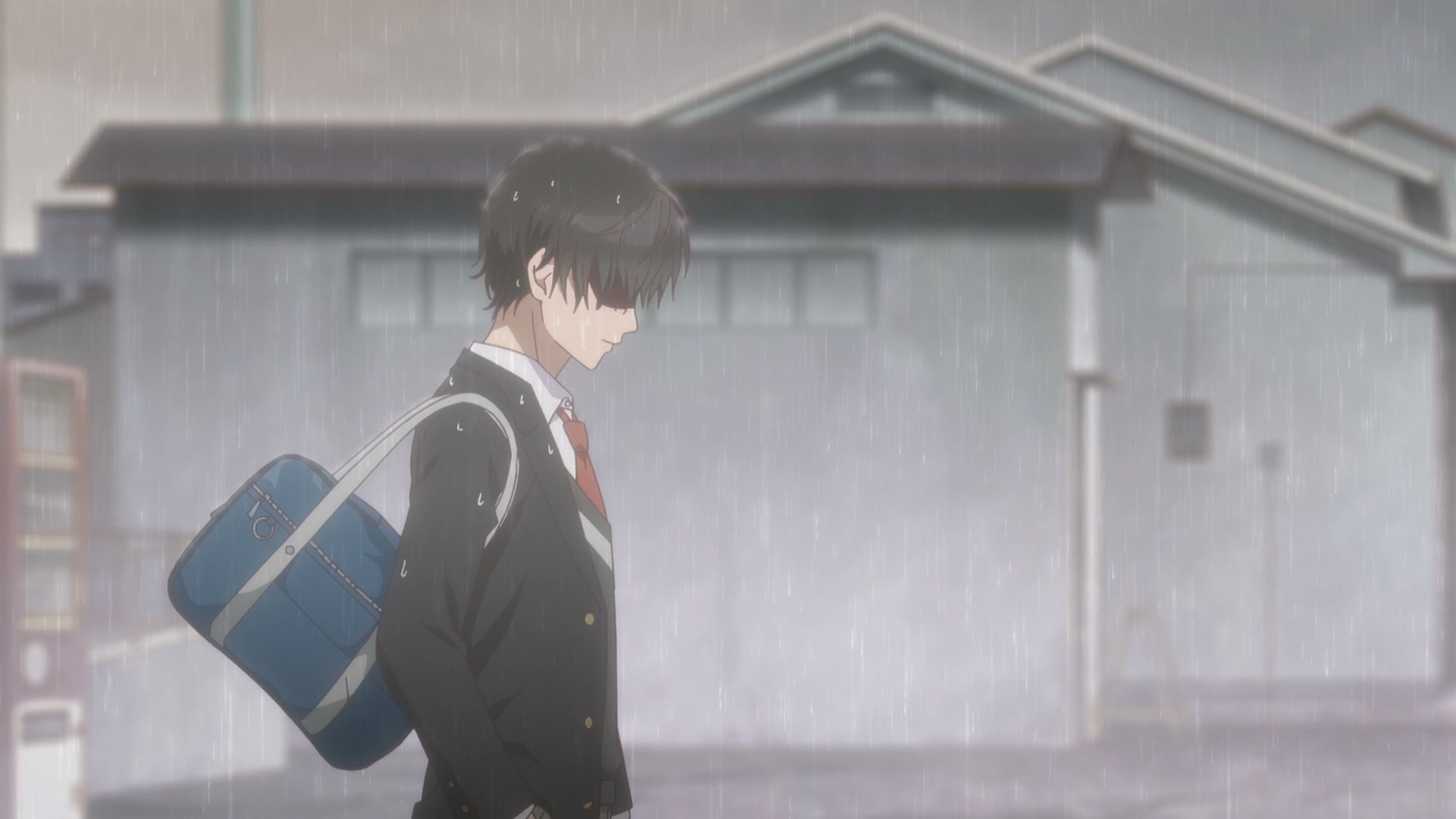
The rain comes back almost immediately. Not as a dramatic storm, just a steady downpour that soaks Natsuki as he walks home alone, head full of everything that went wrong. The opening voiceover tells us exactly where he is: the world he carefully repainted in color is losing its brilliance, and the gray adolescence he tried to escape is calling him back. That quiet sense of unraveling, told in a few simple lines, sets the tone for an episode that does something harder than the first three. It lets the group actually fracture, then puts it back together in a way that feels messy, embarrassing, and human.
The Superman Problem Finally Breaks Open
Last episode ended with Reita calmly explaining that Tatsuya likes Uta and is jealous of Natsuki, and Natsuki realizing that his accidental excellence had alienated the guy he admired most. Episode four starts in the fallout. The group “drifted apart,” as Natsuki narrates, and the days became boring. That line stings because it’s not dramatic. It’s just emptiness. Tatsuya’s absence makes every interaction feel hollow, and nobody knows how to fix it.
So Natsuki does what he always does when he can’t read the emotional air. He retreats. He tells Uta he wants to spend the weekend alone, dodges the hangout invitation, and walks home in the rain, berating himself for even trying. “I shouldn’t have tried if this was how it was going to be.” That line, delivered in his inner voice, is the first time we hear genuine despair bleeding through the “plan for a colorful adolescence” framework. He’s not strategizing. He’s just tired.
And then Miori appears under her umbrella, calling him “Mr. Top of the Class” in that teasing lilt that has already become one of the show’s best weapons. She doesn’t push immediately. She offers to carry his bag, jokes about being “just so nice,” and lets the silence do some work. When she finally asks what happened, Natsuki tells her to butt out, and she fires back, “It totally is. Because I’m helping you with your plan.” That sentence, delivered with absolute certainty, is the moment the episode shifts. She isn’t just a childhood friend with a transactional deal. She’s someone who knows him before the high school debut and isn’t impressed by the new coat of paint.
Miori’s Quiet Authority
The scene in Natsuki’s room is easily my favorite stretch of the episode. Miori lets herself in, comments on the unchanged layout, teases him about his nerdy books, and casually discovers his more embarrassing collection. The exchange where she calls him a virgin and he threatens to really assault her, only for her to say “You don’t have the balls,” is the exact blend of familiarity and bluntness that makes their dynamic work. These two have a history that predates the whole redo, and she’s not going to let him forget it.
But what matters more is what she says after the teasing stops. Sitting on his bed, scrolling through his old room with her eyes, she tells him something he doesn’t want to hear: she knows he’s not cool. She knows he’s pathetic, bad at talking to people, and that not everything will go well. And then the line that lands hardest: “You don’t have to act tough around me. You don’t have to hide who you really are.”
Coming from anyone else, that might sound like generic encouragement. From Miori, who has known him since kindergarten, who saw him cry, who knows about the “plan” and finds it hilarious, it’s something more complicated. She’s not just comforting him. She’s calling out the entire premise of his redo. The high school debut was built on hiding. She’s telling him that the hiding is what broke things.
The Confrontation, Finally
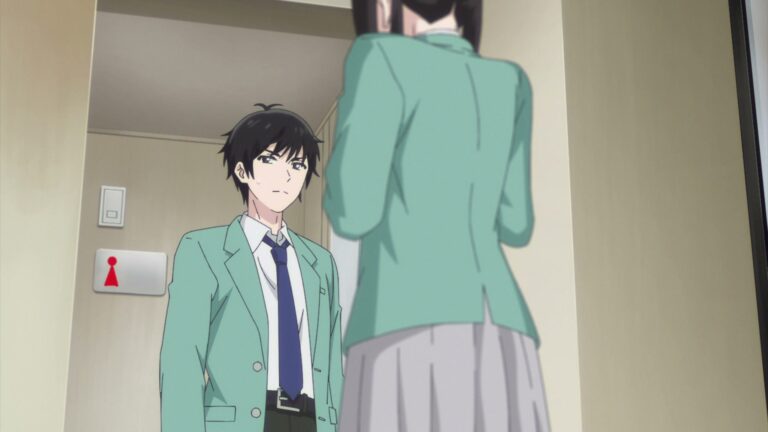
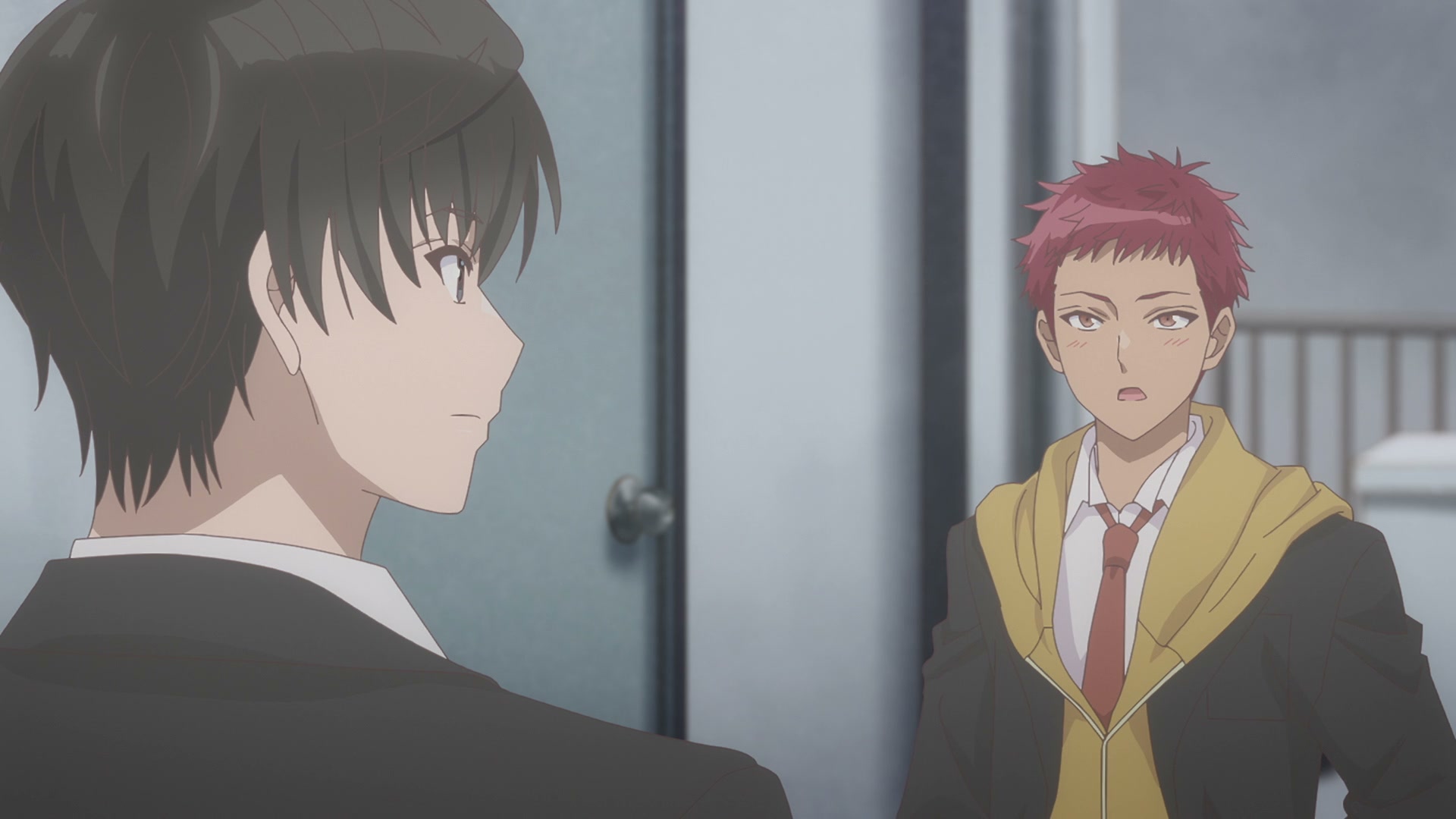
The episode then unfolds the conversation Natsuki had with Tatsuya earlier, and it’s a scene that could have gone very wrong if handled with too much sincerity. Instead, the show makes a smart choice: Natsuki doesn’t apologize. When Tatsuya says “You’re not responsible for any of this,” Natsuki snaps, “Don’t be so damn stupid! I came to complain to you.”
That inversion, the guy who feels like Superman telling the guy who feels inferior that he’s the one who’s envious, is what makes the whole thing click. Tatsuya has been seeing Natsuki as someone who breezes through everything. Natsuki, meanwhile, has been “anxiously doing everything carefully and deliberately,” stressed out of his mind, looking up to Tatsuya’s natural extroversion. The mutual misunderstanding is so perfectly teenage that you almost want to shake both of them.
And then Miori’s advice, spoken through Natsuki’s memory, finally takes shape: “Show everyone the real you.” The solution isn’t to be more perfect. It’s to deliberately, awkwardly, drop the act.
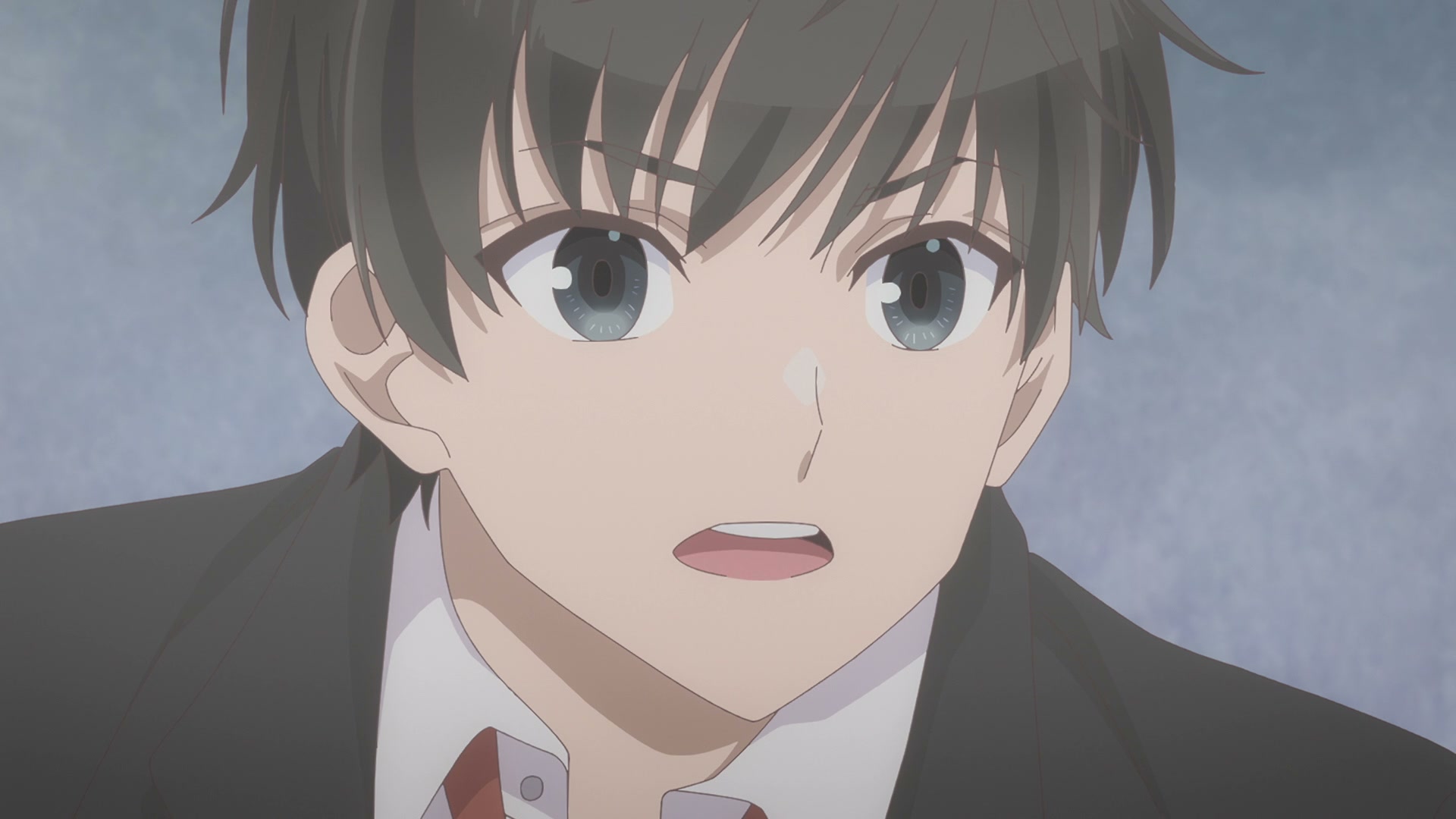
What follows is genuinely funny and deeply embarrassing in equal measure. Natsuki announces loudly, “I’m an ex-gloomer and dweeb who reinvented himself in high school!” and shoves a middle school photo in Tatsuya’s face. Tatsuya, incredulous, starts flipping through his old otaku collection while Natsuki shrieks at him to stop looking at his “waifus.” The tonal shift from angsty rain-soaked introspection to two boys squabbling over a body pillow is jarring in the best way. It punctures the tension without dismissing the emotional stakes.
Because the real point isn’t the comedy. It’s that Tatsuya finally sees Natsuki as someone who worked hard, who was scared, who was just pretending. And Natsuki, for the first time, admits he looked up to Tatsuya. “That envy is mine, too. Give it back.” That line, delivered petulantly, is the emotional core of the entire episode. It reframes their entire dynamic. Tatsuya wasn’t losing to a perfect rival. He was losing to someone who was terrified of him.
The Eavesdropping Trope, Used Well
The twist, of course, is that everyone was listening. Uta, Hikari, Yuino, Reita. The show doesn’t try to be subtle about it. They literally burst out of hiding because Uta “can’t take it anymore.” And in a lesser series, this would be the moment everything becomes painfully awkward and resolved through speeches. Instead, the show mines it for maximum cringe-comedy and then lets the fallout happen naturally.
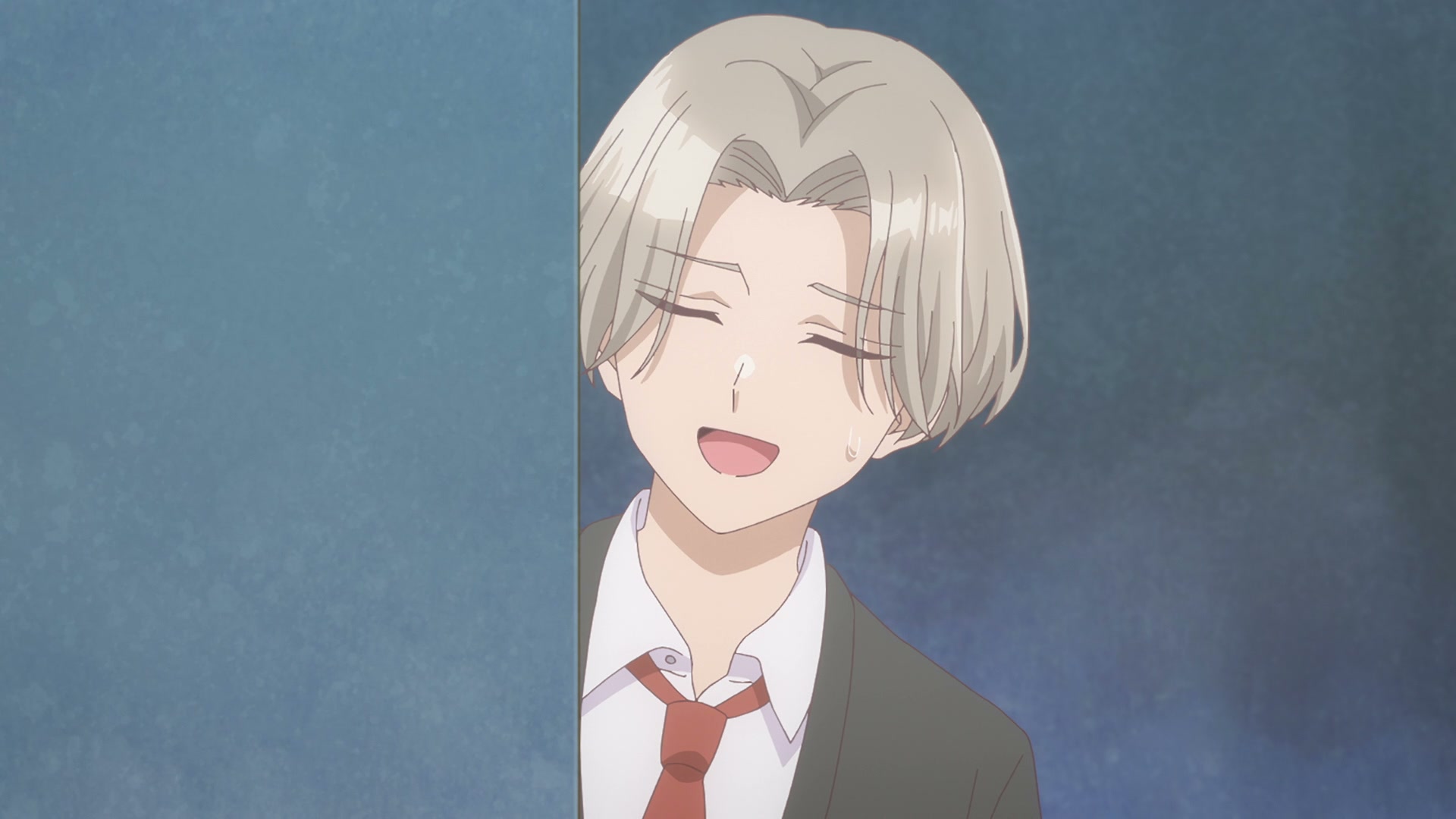
Uta immediately friend-zones Tatsuya. “I only see you as a friend!” she blurts, clearly panicked. Tatsuya, just moments after recovering his confidence, basically ascends to another plane of existence. Natsuki, watching this, yells at him to hang in there. Reita, ever the observer, quietly tells Uta that’s enough. Yuino, with perfect deadpan, says she hates when people try to be considerate by avoiding things and calls out “Mr. High School Debut” directly. Hikari, softer, says they shouldn’t bring it up but then immediately asks to see the photo too.
The group doesn’t pretend the confession didn’t happen. They just absorb it. And Natsuki, now fully exposed as a former dweeb, has to live with the fact that everyone knows. His inner monologue, “They heard everything, so I know exactly what she’s getting at,” is a perfect little note of adult exhaustion inside a teenage body. He’s not even surprised. Just resigned.
Tatsuya’s Small Victory
Amid all the mortification, there’s a tiny beat that I want to highlight. After everyone settles down, Tatsuya turns to Uta and says, quietly, “I won’t give up.” It’s not grand. It’s not a declaration of war. It’s just a guy who has been feeling like nothing, who just got shot down, choosing to stay in the ring anyway. Natsuki’s inner voice, immediately afterward, says “See? I knew he could do it.” That’s the sound of genuine admiration, free of envy. For the first time, Natsuki isn’t comparing himself to Tatsuya or worrying about being outshone. He’s just proud of his friend.
Hikari remarks that it’s “the bloom of his youth,” and Natsuki agrees, “Yeah, it’s nice. We really are.” That closing exchange, simple as it is, feels earned. The friend group isn’t back to the easy, frictionless dynamic of the early episodes. There’s still a confession hanging in the air, still the knowledge that Uta’s heart is somewhere complicated. But they’re together again, and the pretense is gone.
Miori’s Last Line Reframes Everything
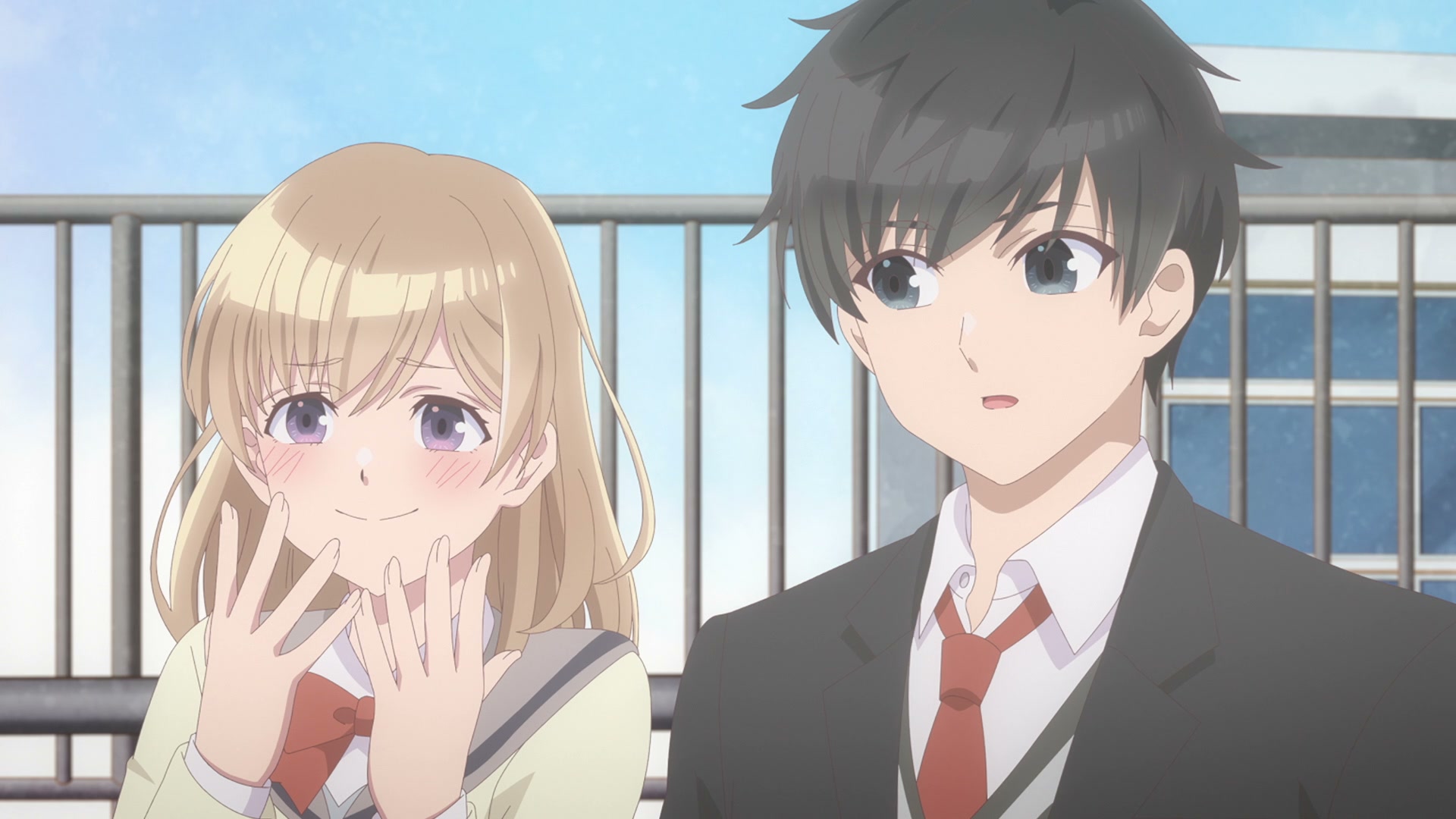
The episode ends back on the bridge with Miori, and this is where the show reveals its hand about her character. After Natsuki thanks her, she says, almost casually, “I like this tryhard version of you, but I like the real you, too.” Then she immediately adds, “Don’t get the wrong idea, though. I just like you as a childhood friend I’m stuck with, okay?”
That backtrack is so fast and so pointed that it practically underlines itself. Miori has spent the entire series so far being transactional, teasing, and deliberately unserious about her own feelings. This is the first crack. She’s not confessing anything, not even close, but the show is telling us to pay attention. She knows him. She likes him. The terms of their partnership just got a little less businesslike.
The final post-credits scene, with Uta’s inner voice realizing that “Natsu’s heart probably belongs to someone else,” confirms that the romantic tangle isn’t resolved. It’s just been rearranged. The Superman mask is off, but the feelings underneath are all still there, waiting to cause more trouble.
Where This Leaves the Season
Episode four does the thing that solid character-driven shows do when they’ve spent three episodes building chemistry. It tests that chemistry against real friction and lets it bend without breaking. The solution, “show the real you,” isn’t a magic fix. It’s embarrassing, it backfires partially, and it doesn’t make anyone’s crush go away. But it lets the group breathe again.
Natsuki’s redo project has fundamentally changed. He can’t keep optimizing his way into a colorful adolescence. The color has to come from something messier. I’m genuinely curious where the season goes from here, because the easy path, Natsuki and Tatsuya as rivals for Uta, is already complicated by Hikari’s presence, Miori’s quiet investment, and the fact that Uta knows she’s probably not the one he’s aiming for. That’s a good knot to have in a show about second chances. It means the second chance isn’t going to be clean.
Screenshots
← Episode 3 | All Haibara-kun no Tsuyokute Seishun New Game Season 1 posts →