



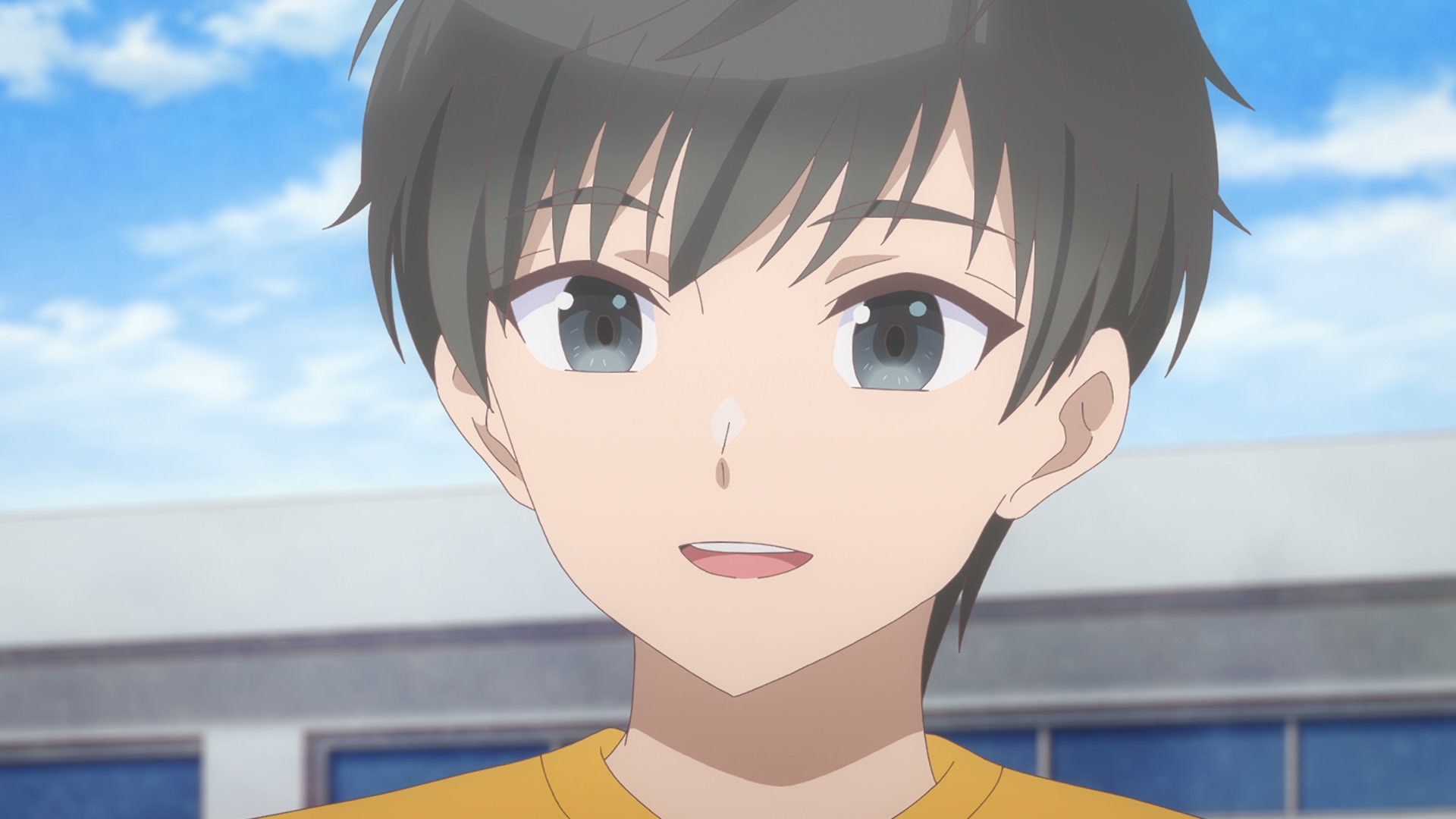
The cultural festival performance was always going to be the season’s centerpiece, but I did not expect the episode to pack this many emotional resolutions into twenty-four minutes. The band plays, Uta confesses, Tatsuya breaks, Natsuki finally chooses, Hikari demands honesty, and Miori quietly closes a door. It is a lot, and somehow the episode never feels rushed. Every beat lands because the show has spent eleven episodes building the weight behind each one.
The Band Finally Plays
Mishmash Leftovers take the stage as the final act of the festival’s second day, and the performance is exactly what a band of misfits should sound like: rough, earnest, and completely alive. Serika’s guitar work anchors everything, Iwano’s drumming has the force of someone playing his last real set before exam hell, and Shinohara, the self-described invisible boy, is visibly present in a way he never was before. Natsuki’s vocals are not technically polished, but the emotion carries.
The setlist is two songs we already know about and one that becomes the emotional core of the entire season. “Monochrome” lands first, the song Natsuki struggled to write until Hikari pushed him to stop being gloomy and sound like himself. Then comes “To the Stars,” the song he wrote from scratch, the one whose lyrics left Hikari asking herself what she was supposed to do after reading them. On stage, Natsuki dedicates it openly: “I dedicate this song to the girl I like.” No vagueness, no hiding behind metaphor. The internal monologue confirms what the audience already suspects: the song reaches Hikari’s heart. The performance itself becomes the confession he could not make in words, and the show lets the music do the heavy lifting instead of cutting away to reaction shots every five seconds.
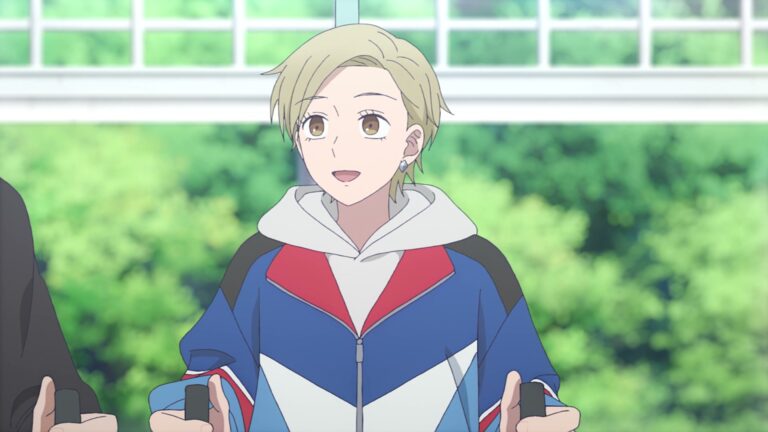
The backstage moments before the set are just as important. Iwano casually mentions that he learned drums from a girl he had a crush on, and that she recently told him about her new boyfriend. His response is not bitterness. He plans to celebrate her happiness through his playing. Serika calls it “rock as hell,” and she is right. Shinohara thanks Natsuki for inviting him, saying he would have stayed alone forever otherwise, and Natsuki finally gets him to drop the “Haibara-kun” and use first names. These are small exchanges, but they cement what the band actually is: a temporary alliance of people who needed one good memory before moving on. Serika sums it up: “Our reasons are all different. But we all want to put on the best show possible.” That is the band’s entire philosophy in two sentences.
After the set, Serika shouts “We won!” and the four of them share a cheers. It is not a competition, but the victory is real. They pulled off the thing they set out to do, and for a group of leftovers, that counts as changing their world.
Uta’s Confession and the Walk Back
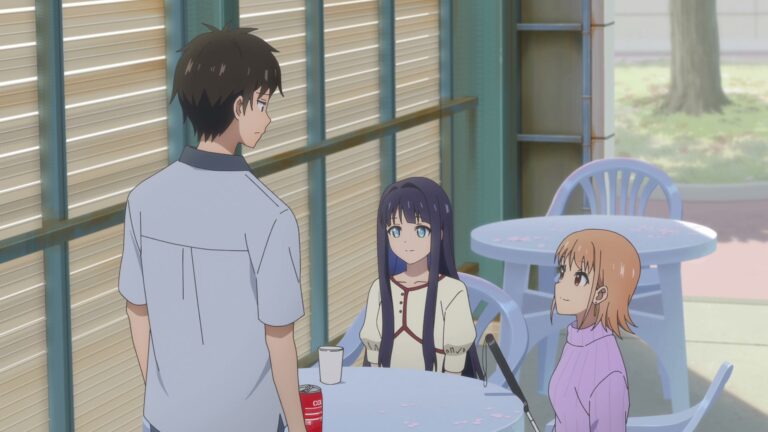
The episode does not wait until after the show to resolve the romantic tension. It front-loads the hardest scene right in the middle, during a supply run for the café. Uta volunteers to go with Natsuki, and the cold October air makes the whole conversation feel exposed and fragile. She has been building toward this since summer, and she finally says it plainly: “I like you. I like you more than anyone. Will you go out with me?”
Natsuki’s answer is immediate and clear. He apologizes and says he has feelings for someone else. There is no hedging, no “I need time to think.” The indecision that paralyzed him for half the season is gone. Uta’s reaction is what makes the scene devastating in the best way. She does not lash out or crumble. She admits she had a plan: she knew his heart was already set, but she hoped she could use his kindness to create space for herself before he made up his mind. She calls it taking advantage of him, and she apologizes for making things hard. Then she does something that redefines her entire role in the love triangle. She tells him to confess to Hikari after tomorrow’s show, and she promises to support him. “This time, I’ll give my crush the push he needs to be happy.”
Uta’s grace here is not saintly. It is the kind of painful, clear-eyed decision someone makes when they realize they have already lost and want to salvage something from the wreckage. She still asks him to find happiness, and she tells him not to make it hard for her to get over him. The walk back is quiet, and the episode lets the silence sit.
Tatsuya has been listening. He confronts Natsuki afterward, demands to know why it is not Uta, and when Natsuki says feelings are not logical, Tatsuya punches him. It is the first time Tatsuya’s frustration turns physical, and the show does not frame it as righteous. It is a guy who has been watching the girl he loves get hurt, and he cannot do anything about it. Natsuki takes the hit and apologizes. Tatsuya walks away cursing. The scene is ugly and honest, and it closes the book on the Tatsuya-Uta-Natsuki chain without pretending everything is fine.
The Moon Is Beautiful, But Say It Properly
After the band’s victory, Hikari finds Natsuki and tells him he was really cool. He responds with the classic Japanese indirect confession: “The moon is beautiful, isn’t it?” It is the kind of line that would work as a romantic payoff in a more conventional show, but Hikari immediately calls him on it. She feels insecure when he uses vague language. She wants him to say it properly.
This is the Hikari who spent years being controlled by a father who decided everything for her, who called herself a puppet, who ran away from home and fought for the right to be seen as herself. Of course she demands clear words. A poetic allusion is not enough for someone who has been denied autonomy her whole life. Natsuki, to his credit, does not argue. He tells her he likes her more than anyone in the world and asks her to go out with him. She says yes, and then she asks for one more thing she has wanted for a long time: for him to call her by her name.
The shift from “Hoshimiya” to “Hikari” is the real emotional climax of their relationship. It is not just a first-name basis milestone. It is her claiming an identity that is not mediated by family name, social expectation, or anyone else’s framework. When she says “I’m Hikari, your girlfriend,” the line lands with the weight of everything she fought for this season. The moon is still beautiful, but the words that matter are the ones spoken plainly.
Miori’s Tears and the End of the Deal
The episode’s quietest and most ambiguous scene comes near the end. Miori and Reita are now dating, which closes the wingman arrangement that started way back in the early episodes. Miori thanks Natsuki for his help, but then she declares their partnership over. “From now on, Hikari-chan will support you.” She says she achieved her goal, and he achieved his, so they do not need each other anymore.
Then she cries. She insists it has nothing to do with that, and she tells him not to worry about it. Natsuki is visibly confused, and the show does not explain further. The running context has already planted the possibility that Miori’s feelings for Natsuki were more complicated than she ever admitted. Her tears here do not confirm anything outright, but they make it hard to read the scene as a simple clean break. She is with Reita now, and she seems genuinely glad about that, but closing the door on her childhood friend dynamic with Natsuki hurts in a way she cannot or will not articulate. The episode leaves the ambiguity intact, and that feels truer than a tidy resolution would have.
Where the Season Lands
This finale does what a good season finale should: it pays off the arcs it built, and it leaves a few things unsettled in a way that feels intentional rather than incomplete. The band arc closes with a triumphant performance and the knowledge that Iwano will still quit drums, Shinohara will still be invisible in daily life, and Serika will still be searching for people who take music seriously. But they had this one show, and it mattered. The love triangle resolves with Natsuki choosing Hikari, Uta stepping aside with painful dignity, and Tatsuya left with nothing but frustration. Miori’s tears hint at feelings the show may or may not ever address directly.
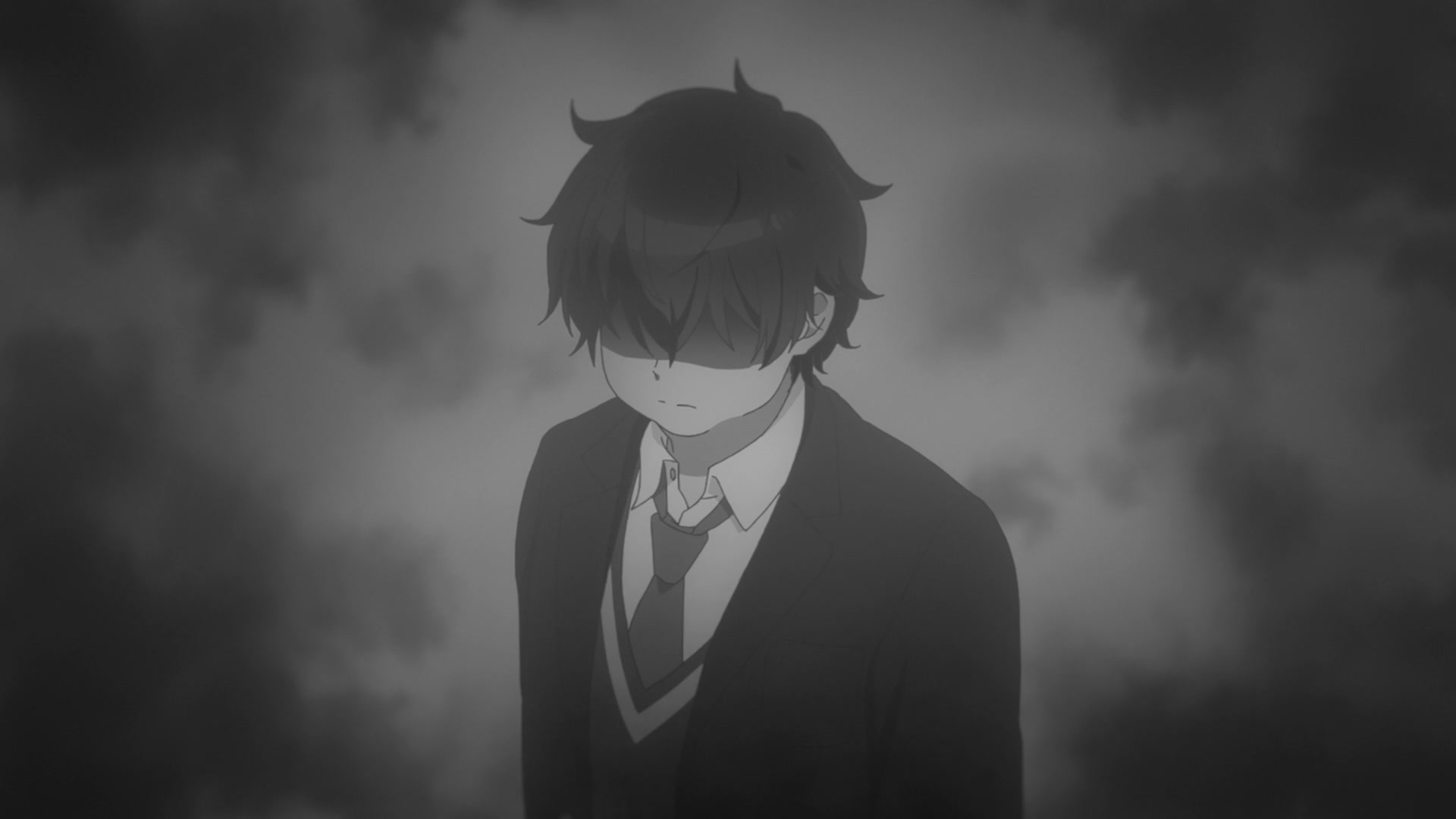
The season’s central question was whether Natsuki’s second chance at youth could actually be different. The answer, by the end, is yes. He dropped the fake cool persona, built real friendships, played in a band, and confessed honestly. He did not get everything right, and he hurt people along the way, but he did not repeat the same mistakes. That is enough.
The final image is Natsuki and Hikari together under the night sky, and Miori walking away with tears she will not explain. It is a happy ending with a quiet ache underneath, and that balance is exactly what the show has been good at all season.
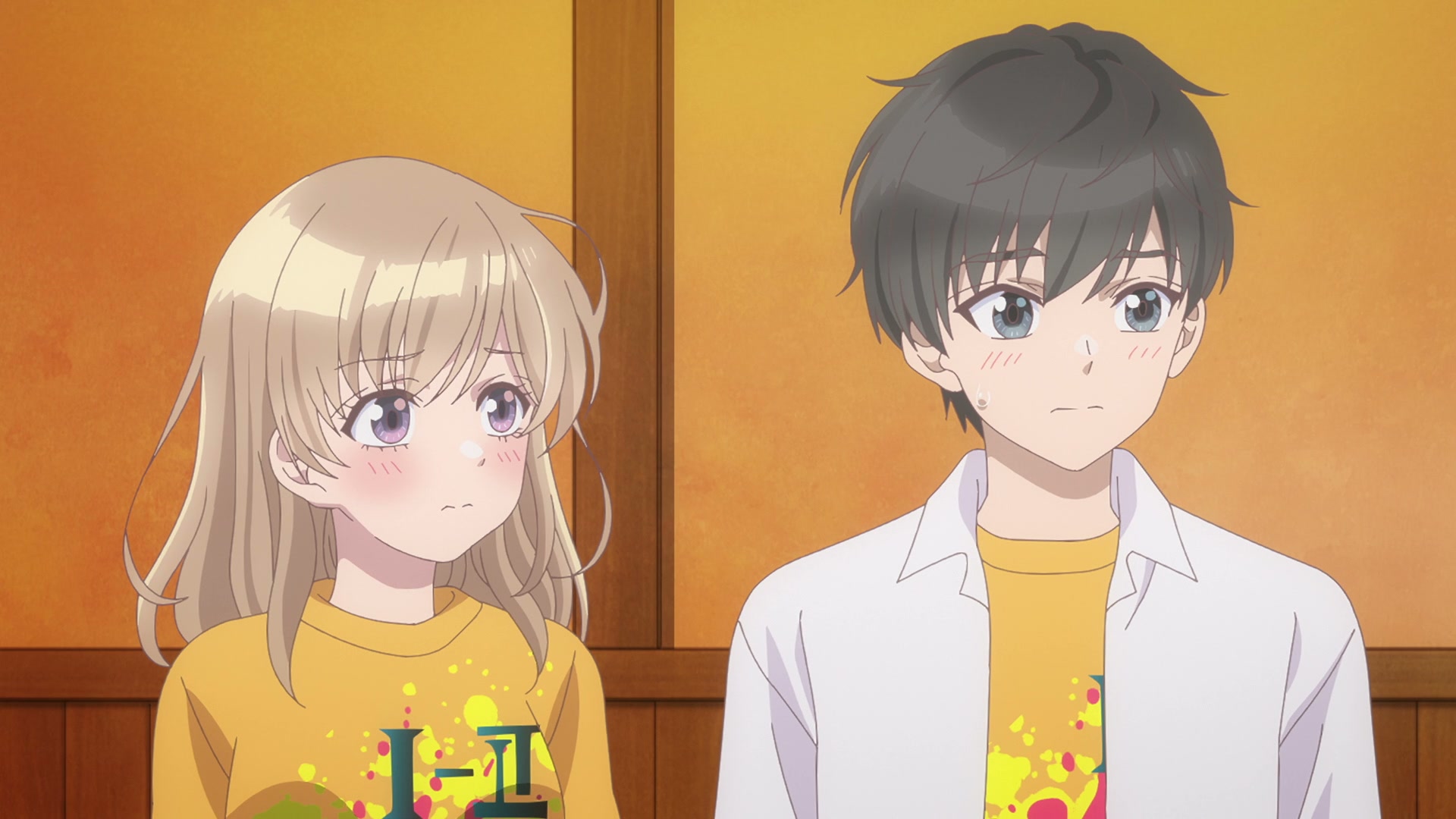
Screenshots


← Episode 11 | All Haibara-kun no Tsuyokute Seishun New Game Season 1 posts →