


Introduction
There is a particular kind of warmth that comes from watching characters discover they are allowed to be happy. Not the explosive happiness of a dramatic confession or a hard-won victory, but the quieter, more fragile happiness of realizing that the things you love do not make you unlovable. Otaku ni Yasashii Gal wa Inai!? understands this distinction. It knows that for someone who has built their identity around a niche obsession, the scariest question is not “will they reject me?” but “do I deserve to be accepted?”
The series follows Seo Takuya, a first-year high school student and devoted fan of Glittery Monpets (Kiramon), a Sunday morning anime for little girls that has, against all odds, captured the hearts of a loyal subset of older viewers. Seo is what you would call a hardcore otaku. He collects limited-edition merchandise, draws fan art, memorizes episode numbers and animator names, and lives in a world where his passion is both his greatest joy and his deepest source of shame. He believes, with the certainty of someone who has been burned before, that gals, those trendy, popular, socially dominant girls who seem to rule the high school ecosystem, will never be kind to someone like him.
Then Ijichi Kotoko borrows his Kiramon eraser, and everything changes.
What follows across twelve episodes is not a revolutionary narrative. The beats are familiar to anyone who has watched romantic comedies in this subgenre. What distinguishes Otaku ni Yasashii Gal wa Inai!? is its sincerity. The series takes its characters seriously. It respects their passions, their fears, and their slow, stumbling efforts to connect with each other. It never mocks Seo for loving Kiramon. It never treats Ijichi’s gal identity as shallow. It never reduces Amane’s secrecy to a simple joke. Instead, it builds a world where these three very different people can find in each other something they did not know they needed.
This is a series for anyone who has ever felt that their interests made them an outsider. It is for anyone who has hidden a part of themselves to survive socially. And it is for anyone who wants to believe that the boundaries between subcultures are thinner than they appear.
Story and Themes
The Artificiality of Subcultural Boundaries
The central question posed by the title, “Can gals be kind to otaku?”, is not really a question. The series answers it almost immediately. Ijichi does not mock Seo’s eraser. She is curious about it. Amane does not dismiss his trivia. She corrects it, revealing her own deep knowledge. The question is not whether gals can be kind but whether Seo can accept that kindness without suspicion.
Seo’s internal monologue throughout the early episodes is a constant negotiation between hope and self-protection. When Ijichi praises his fan art, he braces for mockery. When Amane invites him to her house, he assumes it must be a misunderstanding. His default response to kindness is to look for the trap. This is not paranoia. It is learned behavior. The series implies, without needing to show, that Seo has been burned before, that his otaku identity has been a source of ridicule, and that he has internalized the belief that people like him do not get to be friends with people like them.
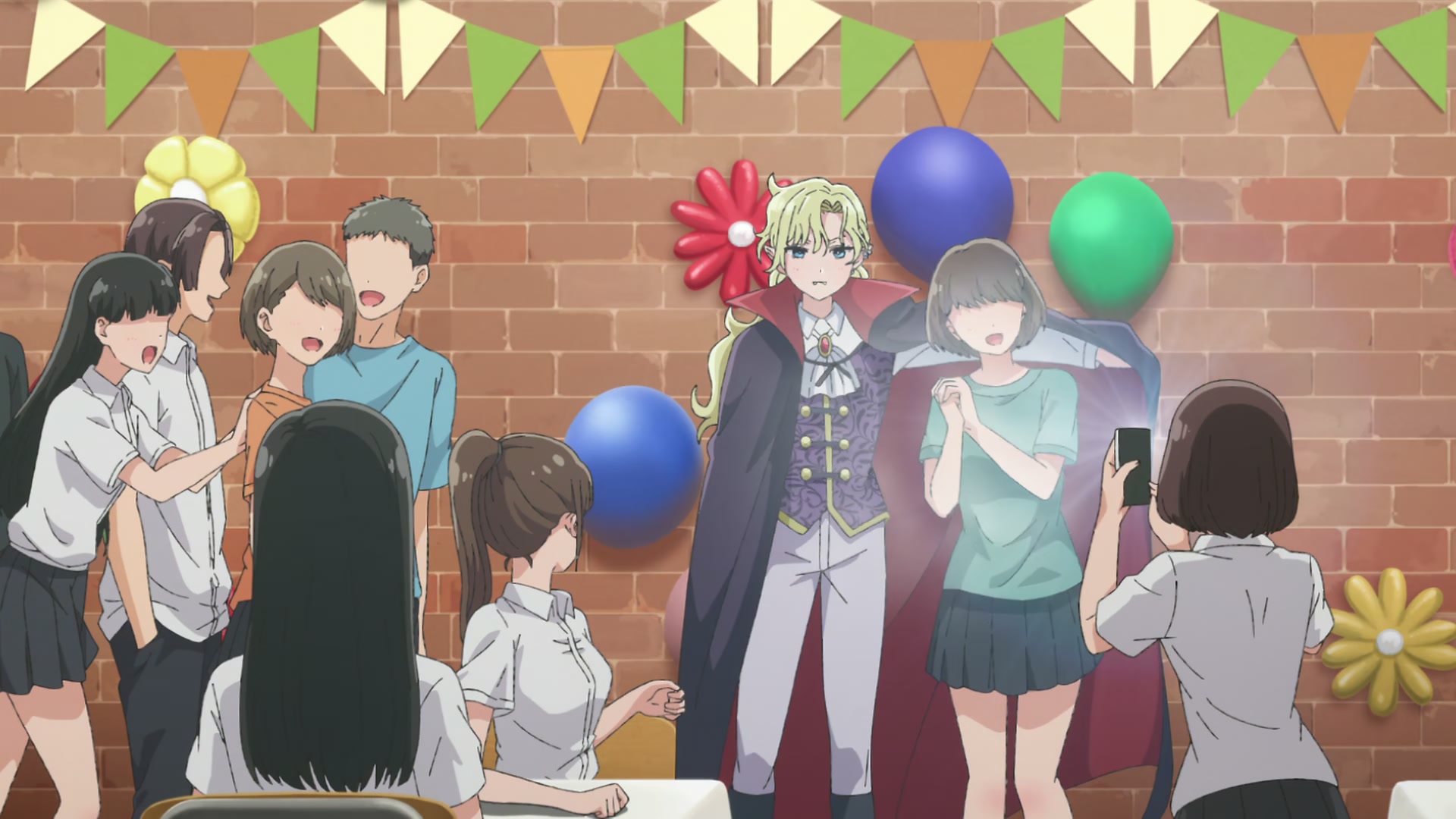
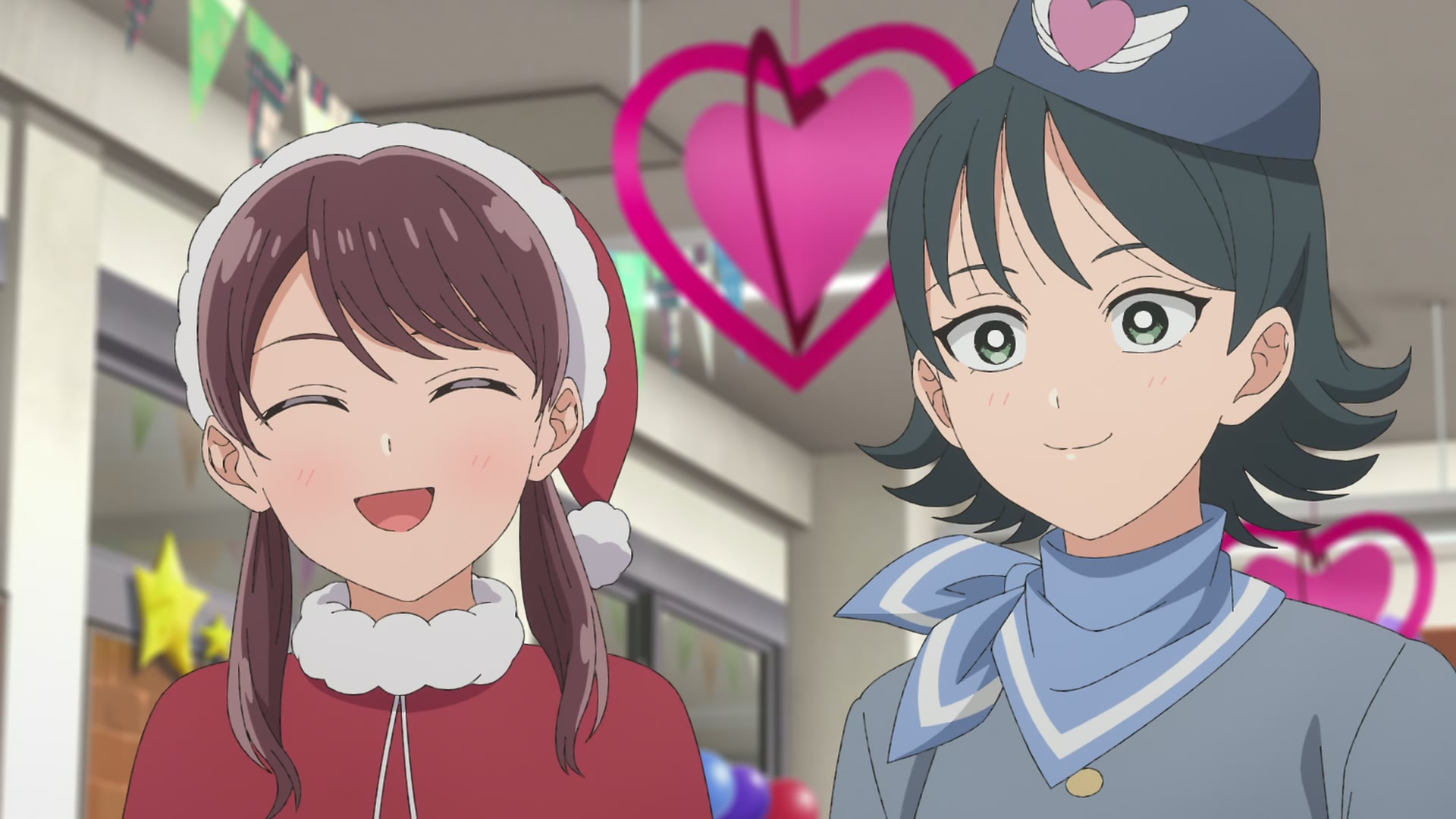
The narrative systematically dismantles this belief. Each episode presents a situation where Seo expects rejection and receives acceptance instead. The Kiramon viewing party in his room, where he fully unleashes his otaku enthusiasm and is met not with disgust but with matching energy from Amane and genuine enjoyment from Ijichi. The beach barbecue, where Ijichi’s family treats him as a welcome guest rather than a weird outsider. The school festival, where his Lord Earth cosplay earns him recognition from a young Kiramon fan and a shared photo with Amane’s Vamp the Great. These moments accumulate, and Seo’s defenses slowly lower.
The portmanteau “Otagal,” spoken at moments of group harmony, functions as a verbal symbol of synthesis. It is not half-otaku, half-gal. It is something new, a space where the categories themselves become irrelevant.
The Performance of Identity
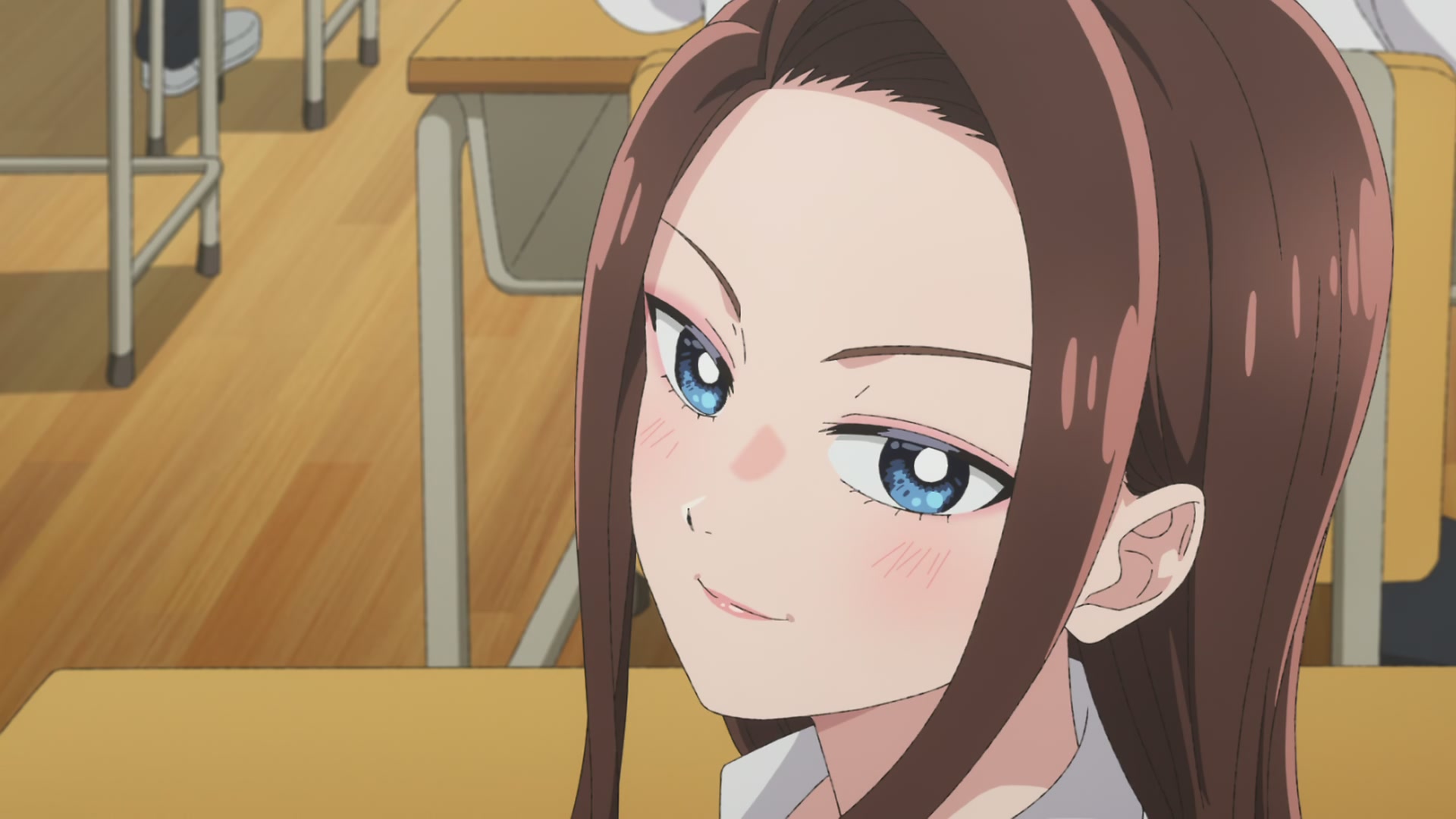
Amane Kei is the series’ most complex character, and her arc is built around the gap between who she is and who she allows the world to see. At school, she is the “Iron Mask,” a cool, aloof beauty who rarely smiles and seems emotionally untouchable. Her classmates admire her from a distance. They call her “Amane-sama.” They assume she is naturally cold.
The truth is that Amane is a deeply passionate Kiramon fan who has spent years hiding her interests out of fear. In middle school, she tried to talk about anime with her peers and found no one who shared her enthusiasm. The other girls talked about boys and celebrities. She learned to stay quiet. She learned to suppress her reactions. She learned, as she puts it in Episode 8, to ignore her own feelings and care only about what people thought. The result was a kind of emotional death. She stopped enjoying things. She stopped feeling like herself.
Her catchphrase, “It’s not what you think. It’s my sister!”, is a running joke, but it masks genuine trauma. The “younger sister” is real, a neighbor girl named Sayu who did introduce Amane to Kiramon, but Sayu outgrew the series in first grade. Amane never did. The excuse is a shield, and the series treats it with surprising gentleness. It does not force Amane to publicly out herself. It allows her to maintain her persona while finding private spaces where she can be authentic.
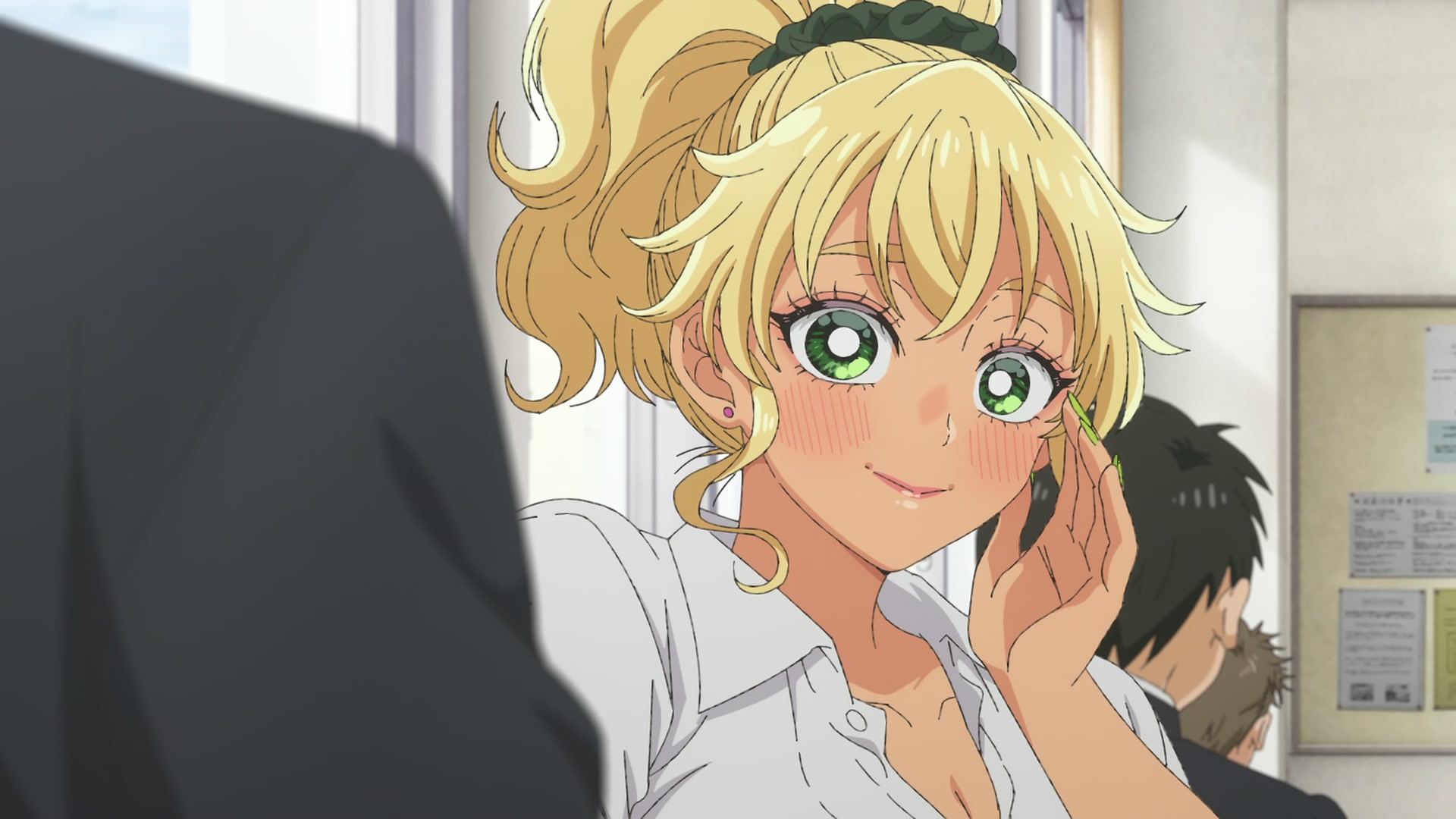
Ijichi’s performance is different but no less real. She presents as a carefree, slightly airheaded gal who loves karaoke, nail art, and photo booths. This is not false. She genuinely enjoys those things. But she is also a responsible older sister who cooks for her family, scores over 400 points on exams, and possesses sharp emotional intelligence. The series does not frame her gal identity as a mask over a “real” self. Both are real. She is the cheerful friend who teases Seo and the exhausted sister who collapses after putting her brothers to bed. The duality is not a contradiction. It is a full person.
The Sacredness of Shared Passion
Kiramon functions in the series as something close to a secular religion. It has sacred texts (the episodes), relics (limited-edition merchandise), rituals (viewing parties, live-reacting via DM), and a moral framework (the characters’ sacrifices and loyalties). When Patch dies in Episode 1, both Seo and Amane grieve. Seo cries all night. Amane comes to school with red eyes. Their shared mourning is the first real bond between them, a recognition that they are part of the same congregation.
The eraser in Episode 1 is a holy object. Seo’s reluctance to lend it is not pettiness. It is the instinct to protect something sacred from profane hands. Amane’s recognition of its significance, her immediate understanding that this is not just an eraser but a limited-edition Kiramon item, is the moment Seo realizes he is not alone.
The drawing battles, the merchandise hunts, the cosplay coordination, all of these are acts of shared devotion. When Seo and Amane pose for a photo at the school festival, recreating a specific scene from “episode 34, Struggle for the Golden Chest,” they are speaking a language only they understand. It is a public act that is also intensely private, a declaration of their shared world coded in references that pass unnoticed by everyone else.
Seo’s climactic declaration in Episode 11, “The time we spend together is just as important to me as Kiramon is now,” is the ultimate statement of his growth. His devotion has not diminished. It has expanded to include other people. The sacred has become shared.
The Management of Romantic Tension
The series operates as a gentle love triangle that never becomes acrimonious. Both Ijichi and Amane develop feelings for Seo. Seo, for his part, is genuinely devoted to both of them. The series refuses to resolve this tension in favor of one girl or the other.
This refusal is not cowardice. It is a structural statement. The friendship among the three is more important than any romantic pairing. The fireworks rumor, that holding hands at the closing ceremony will bring eternal happiness, is a classic romantic trope. The series subverts it. All three hold hands together, creating their own ritual that defies the couple-centric superstition. The message is clear. Happiness does not require a pair. It can be found in whatever configuration of people genuinely care for each other.
The “confessions” throughout the series are deliberately ambiguous. Ijichi tells Seo she “likes” him at the summer festival but immediately qualifies it as friendship. Amane admits she would be okay holding his hand at the fireworks but only hypothetically. Seo declares he is “into” both of them but frames it as platonic. These are not lies. They are accommodations. The characters are protecting something fragile, a dynamic that works, and they are unwilling to risk it for the sake of romantic clarity.
Some viewers will find this frustrating. The desire for a “winning girl” is deeply ingrained in harem and love-triangle narratives. But Otaku ni Yasashii Gal wa Inai!? is not interested in that kind of resolution. It is interested in the moment before resolution, the suspended state where everything is possible and nothing is broken. The final episode does not end with a confession. It ends with Seo styling his hair, trying to become someone worthy of his friends, and the girls noticing and teasing him affectionately. The story continues. We just stop watching.
Cultural Context
The series is deeply embedded in specific Japanese cultural institutions. The school festival (bunkasai) is a staple of both real Japanese high school life and anime storytelling. The class cosplay café, the Miss and Mister pageant, the club exhibitions, the closing fireworks, all of these are authentic elements that Japanese viewers would recognize from their own experiences. The series uses the festival as a meta-commentary on performance. Everyone is in costume. Everyone is playing a role. The question is which roles are chosen and which are imposed.
The gyaru subculture that Ijichi and Amane represent is a real and complex social phenomenon. Gyaru fashion, with its emphasis on tanned skin, bleached hair, decorated nails, and trendy clothing, emerged in the 1990s and has evolved through various substyles. The series does not delve into this history, but it accurately captures the social position of gals in the high school hierarchy. They are visible. They are influential. They are often assumed to be shallow or boy-crazy. The series subverts these assumptions by making its gals kind, intelligent, and emotionally complex.
The otaku stigma that Seo fears is also real. While anime fandom has become more mainstream in recent years, there remains a hierarchy of acceptable interests. Liking popular shonen series is one thing. Liking a Sunday morning anime for little girls is another. Seo’s fear of being seen as a “disgusting otaku” reflects genuine social dynamics, and the series does not dismiss his anxiety as irrational. It simply shows him that there are people who will not judge him.
Characters
Seo Takuya: The Narrator Who Learns He Deserves Happiness
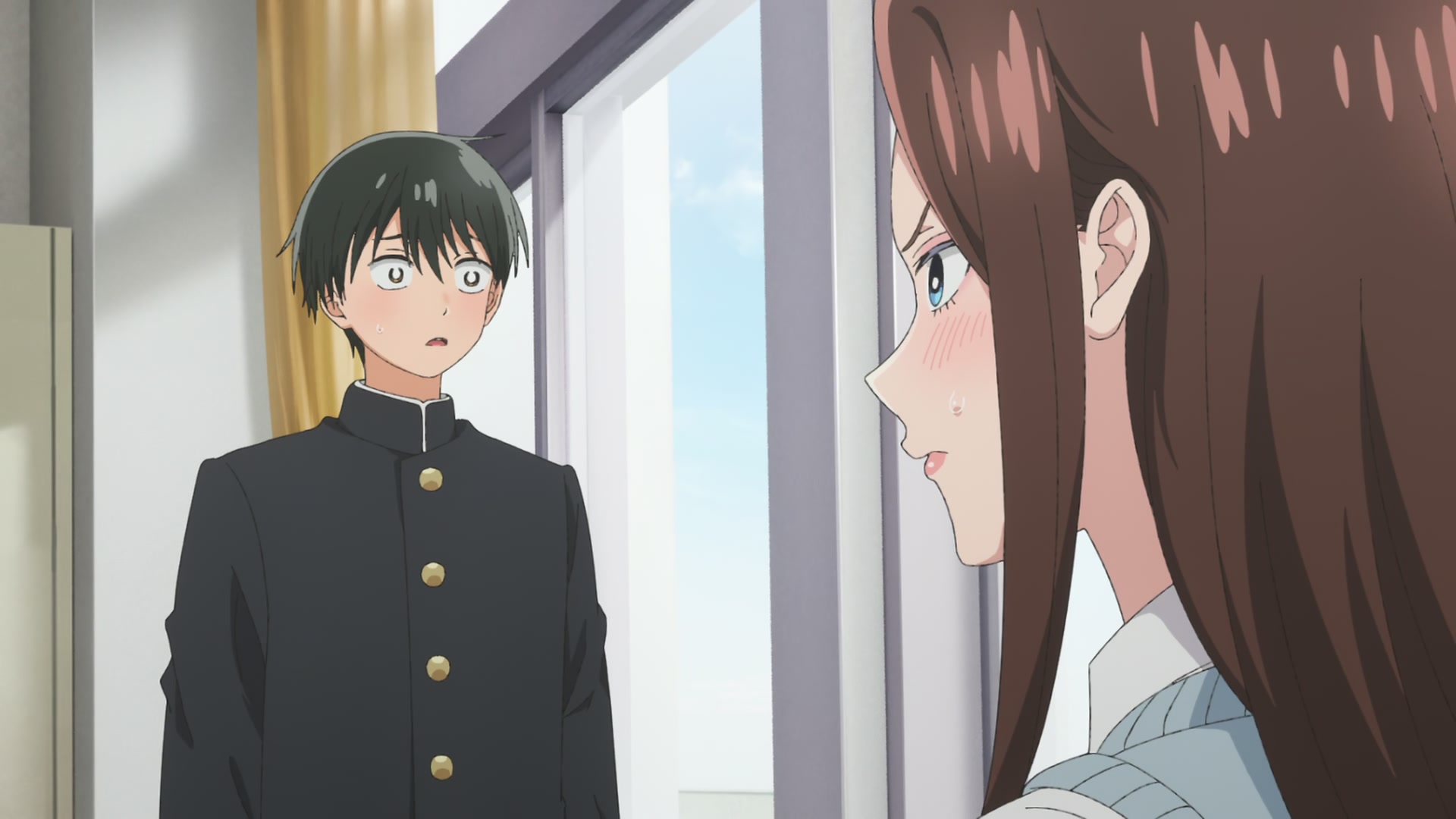
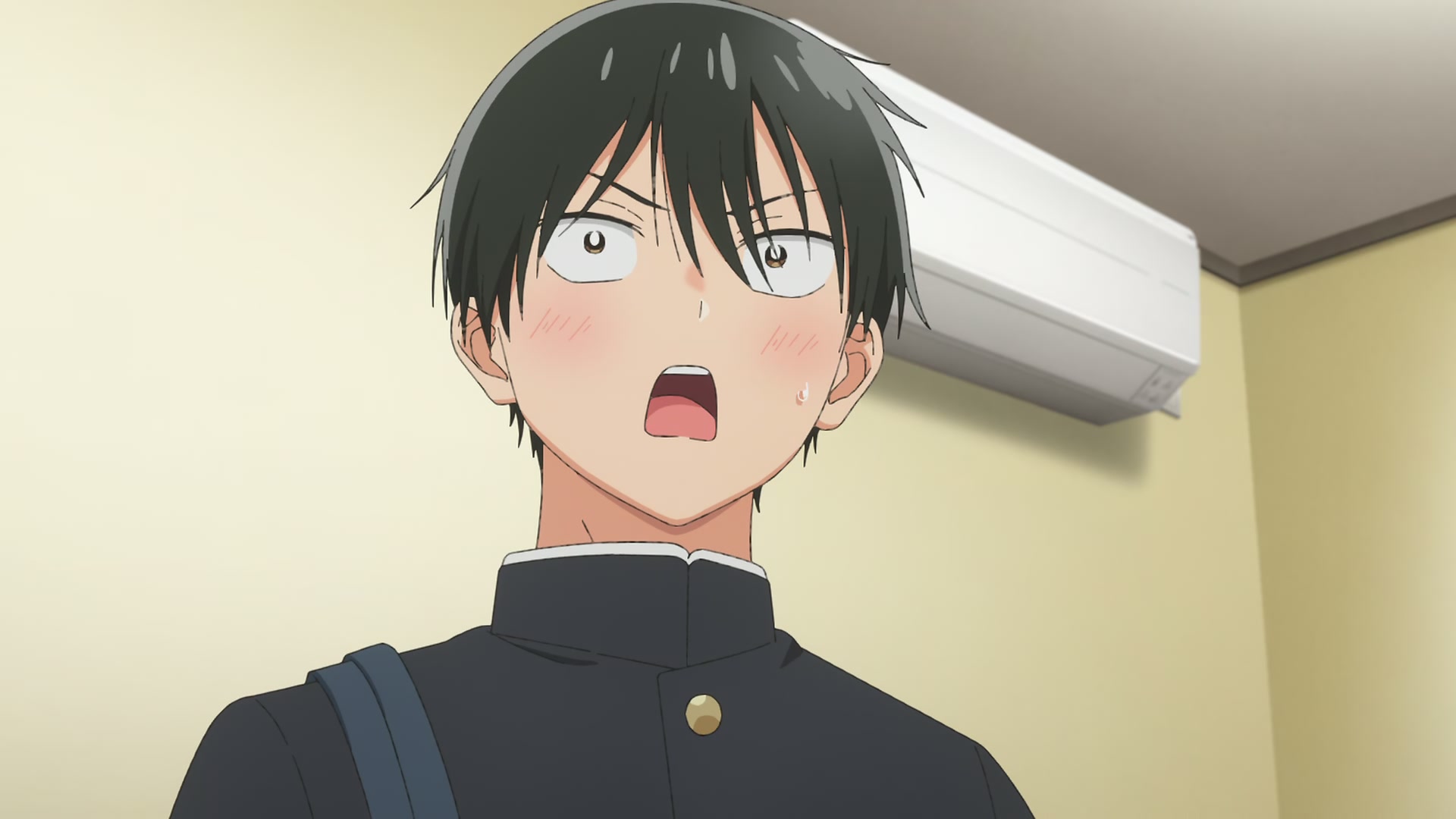
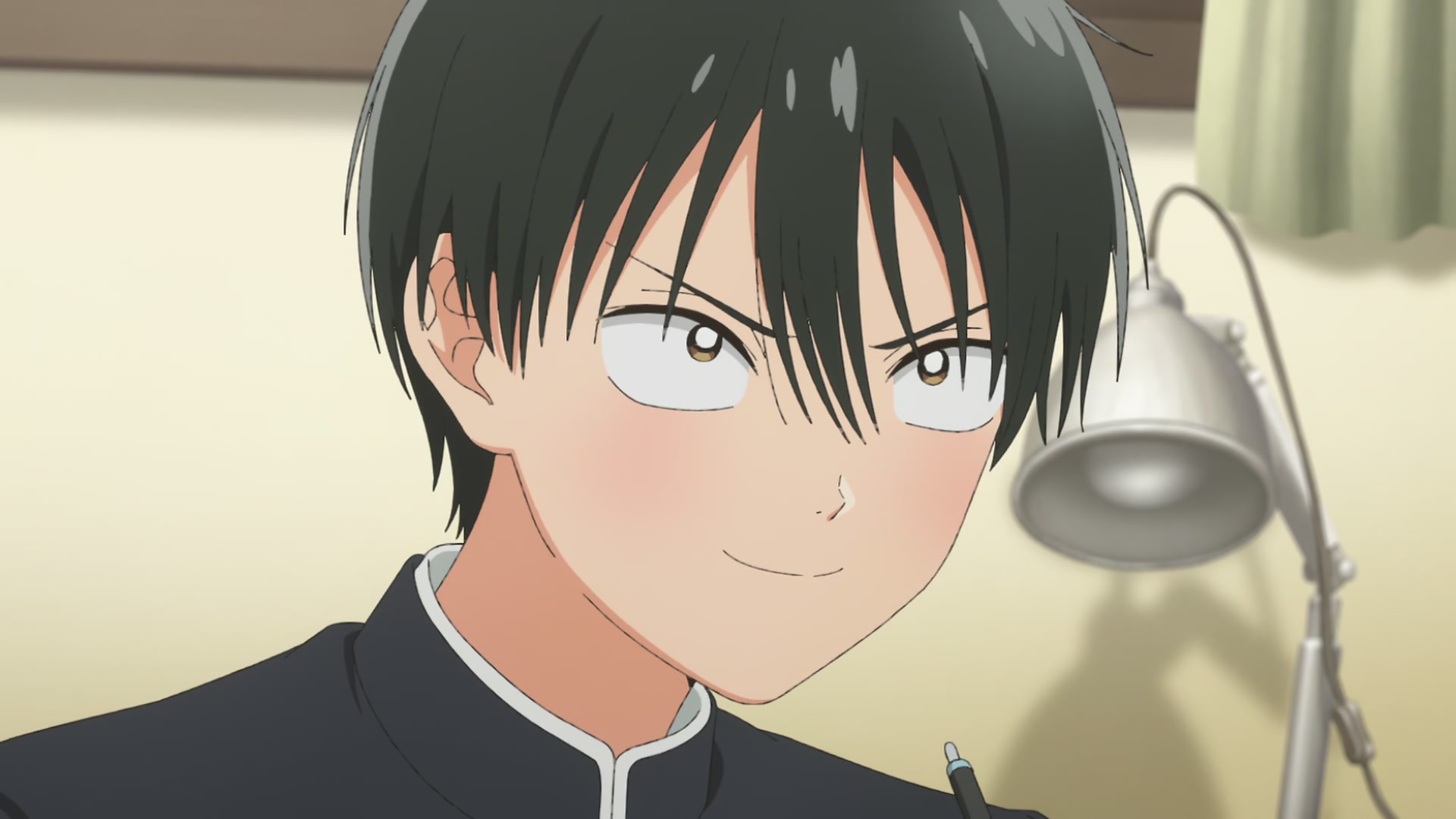
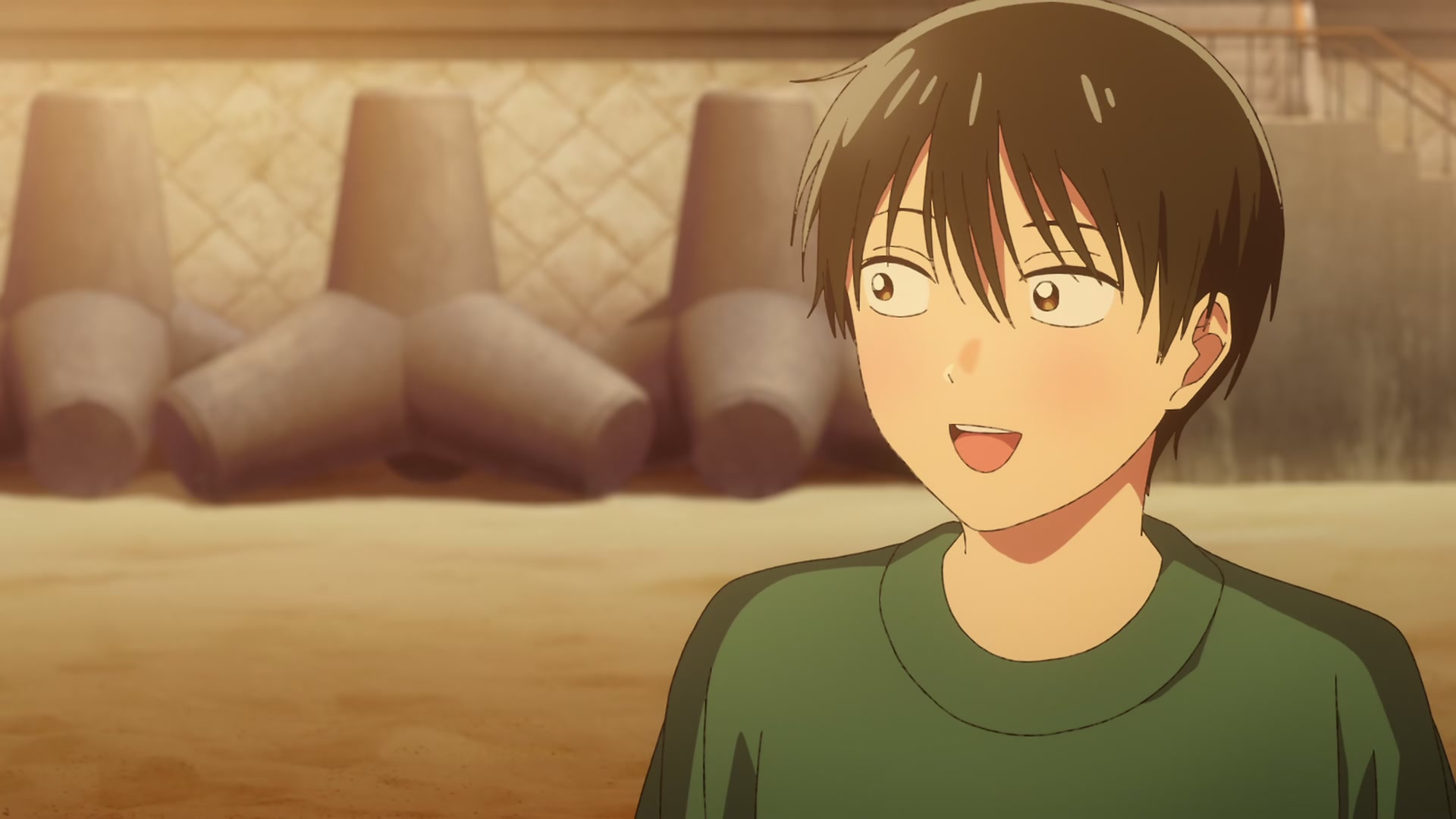
Seo is the viewpoint character, and his internal monologue drives much of the series’ emotional texture. He is anxious, self-deprecating, and prone to catastrophizing. He assumes the worst in every social situation. When Ijichi borrows his eraser, he braces for mockery. When Amane invites him to her house, he looks for the hidden camera. His default emotional state is a kind of preemptive rejection. If he rejects himself first, he cannot be hurt by others.
This could be exhausting to watch, but the series balances Seo’s anxiety with genuine passion. When he talks about Kiramon, he comes alive. His knowledge is encyclopedic. His enthusiasm is infectious. He is not a sad-sack protagonist defined by his suffering. He is a person with a rich inner life who has been taught that sharing that life will lead to pain.
His growth across the series is gradual and believable. He does not transform into a confident social butterfly. He remains awkward. He still panics when girls get close. He still overthinks every interaction. But he learns to trust. He learns that Ijichi’s kindness is not a trap. He learns that Amane’s shared passion is not a trick. He learns, in the climactic scene of Episode 11, to articulate what his friends mean to him, to say out loud that he wants to keep spending time with them even if he feels unworthy.
His attempt to style his hair in the final episode is a small but significant step. He is not trying to become a different person. He is trying to become someone who feels worthy of the happiness he has found. The girls’ response, noticing immediately and offering to help, is the perfect reassurance. He does not need to change. But wanting to improve is not wrong.
Ijichi Kotoko: The Catalyst Who Is More Than She Appears
Ijichi is the engine of the series. Without her, nothing would happen. Seo would remain isolated. Amane would remain behind her Iron Mask. It is Ijichi who borrows the eraser, Ijichi who invites herself to Seo’s house, Ijichi who organizes the beach barbecue, Ijichi who pushes Amane to open up. She is the bridge between worlds, and she crosses it so casually that she does not seem to notice it exists.
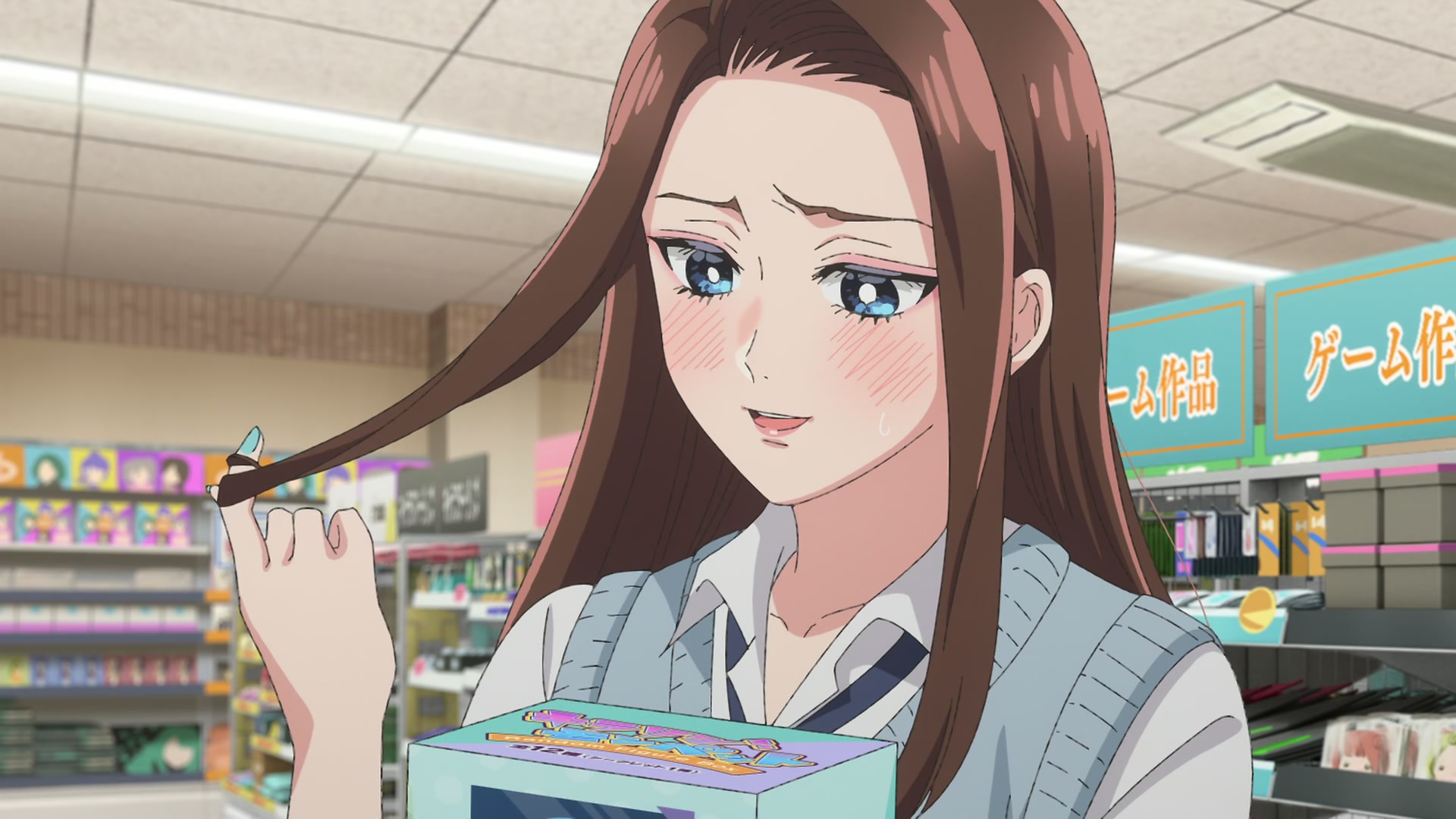
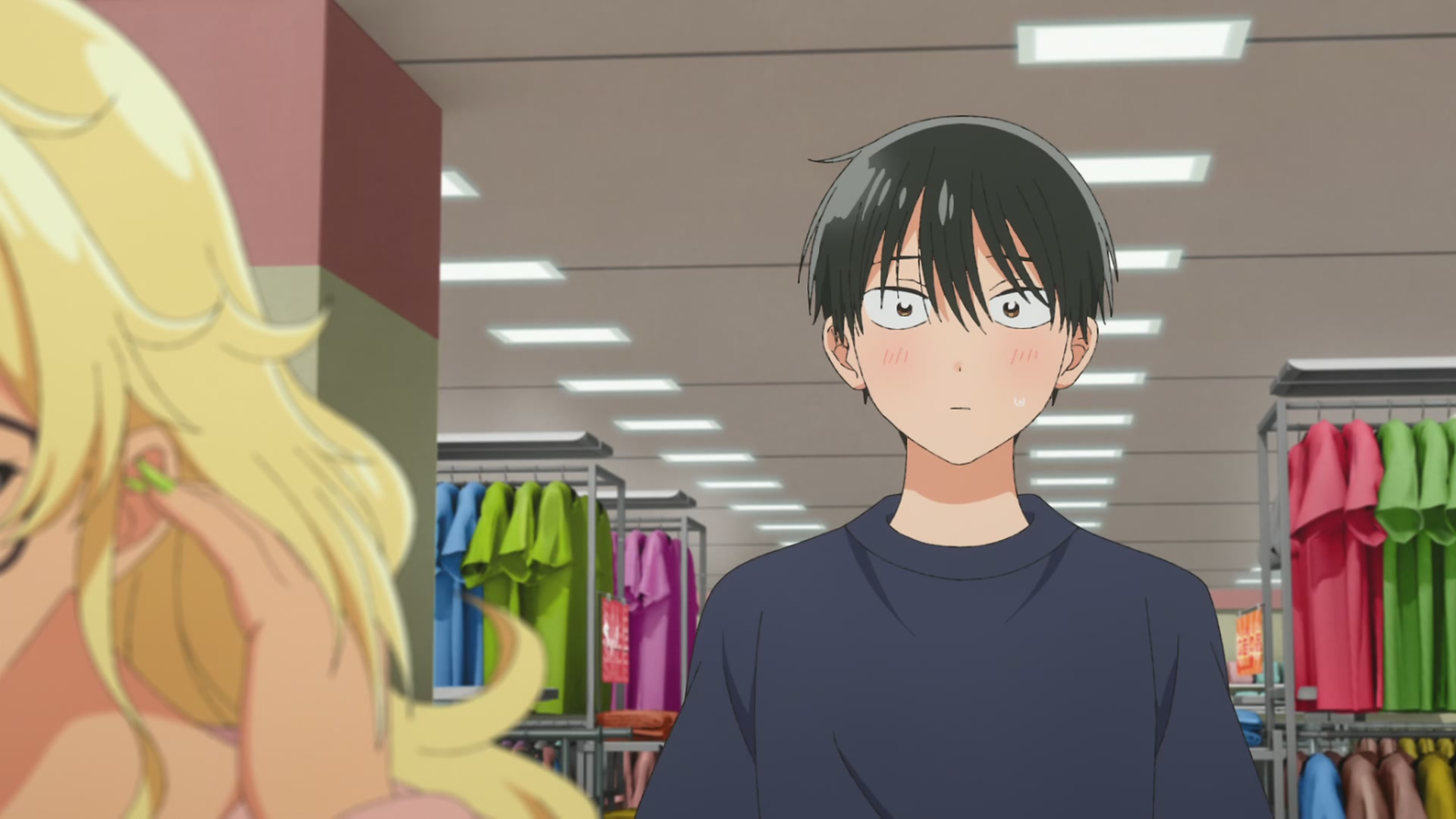
Her characterization is a careful balancing act. She is an airhead, but she scores over 400 points on exams. She is a carefree gal, but she cooks for her family and takes care of her younger brothers. She is emotionally perceptive, noticing Seo’s forgotten textbook and covering for him, noticing Amane’s discomfort and adjusting her approach. She is also vulnerable in ways she does not always show. The supermarket scene where Seo catches her without makeup reveals her insecurity about her appearance. The photo misunderstanding where Seo and Amane fear she has a sugar daddy reveals how much she values their opinion of her.
Her feelings for Seo are the series’ most carefully guarded secret. She tells him she “likes” him at the summer festival but immediately retreats into the safety of friendship. She nearly confesses to Mayu during the school festival, catching herself at the last moment. She is afraid, not of rejection, but of disruption. The triad works. Why risk it?
Ijichi’s role as emotional caretaker is both her strength and her burden. She gives so much to others that she sometimes forgets to take care of herself. The series acknowledges this without making it a crisis. She is allowed to be tired. She is allowed to be unsure. She is allowed to want things she cannot name.
Amane Kei: The Iron Mask Who Learns to Smile
Amane is the series’ most emotionally resonant character. Her arc from cold distance to warm openness is the story’s backbone, and it is handled with remarkable patience. She does not suddenly become bubbly. She remains cool and aloof at school. But in private, with Ijichi and Seo, she allows herself to be silly, competitive, passionate, and vulnerable.
Her backstory, revealed in fragments across the series, explains her defenses without excusing them. In middle school, she was unable to share her interests. She learned to suppress her emotions. She earned the nickname “Iron Mask” because she never smiled. The result was a kind of living death. She stopped enjoying things. She stopped feeling like herself. Her friendship with Ijichi, and later with Seo, is not just a social connection. It is a resurrection.
The “younger sister” excuse is both a joke and a tragedy. It is funny because it is so transparent. Seo sees through it immediately. Ijichi figures it out quickly. Even Sayu, the actual sister, calls Amane out on it. But it is also sad because it represents years of fear. Amane has been hiding for so long that she cannot stop, even when she is safe. The excuse is a habit, a reflex, a scar.
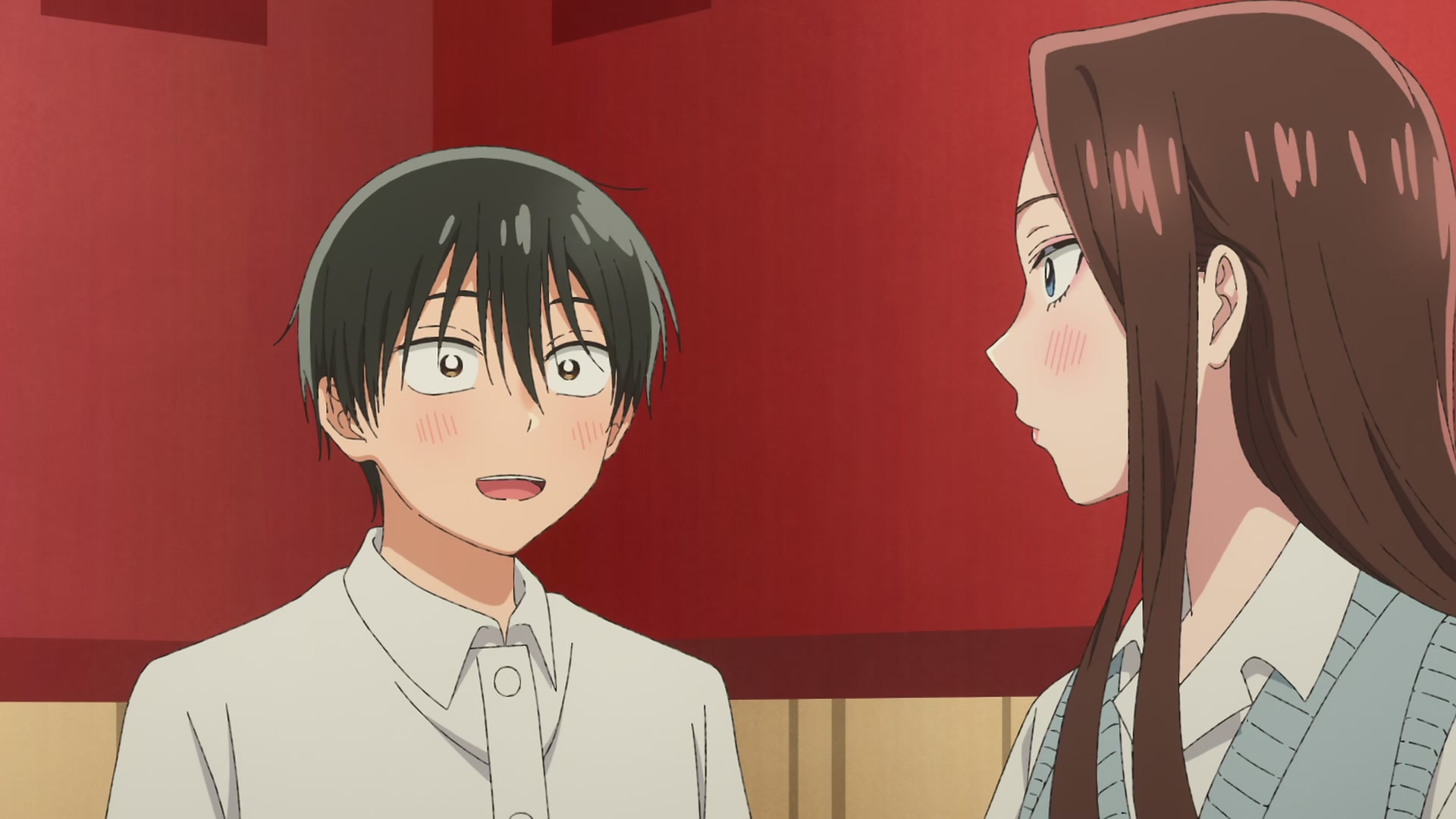
Her moments of genuine expression are the series’ most rewarding beats. The otaku viewing party where she grabs Seo’s arm in excitement. The drawing battle where she wagers her prized Miss Luna standee and loses, then jokingly offers “something dirty” instead. The slumber party where she stays up late with Seo, talking about loneliness and friendship, and suggests they take a photo to remember the moment. The school festival where she cosplays as Vamp the Great and poses with Seo in a Kiramon tableau. Each of these is a small victory, a crack in the Iron Mask, a smile earned.
Her final reassurance to Seo, “It isn’t about being worthy. Just stay the way you are,” is the culmination of her arc. She has learned to accept herself. Now she can help Seo do the same.
Supporting Characters
The supporting cast is small but effective. Sayu, Amane’s honorary younger sister, is a precocious third-grader who speaks like an adult and sees through everyone’s pretenses. Her matchmaking efforts provide comic relief, but her genuine care for Amane is never in doubt. Her apology to Ijichi’s brothers at the beach barbecue shows a maturity beyond her years.
Genichirou, Ijichi’s oldest brother, initially appears as the intimidating protective sibling but quickly reveals himself as a supportive ally. His grilling of Seo at the beach is less a threat than a test, and Seo passes it by being sincere. His hosting of the slumber party, with reasonable boundaries and genuine warmth, makes him one of the series’ most likable adult figures.
Kakeru and Hibiki, Ijichi’s younger brothers, mirror Seo’s own journey. They are initially suspicious of him but warm up quickly, calling him “Otacchie” and including him in their games. Their crushes on Sayu provide gentle comedy and a reminder that these are still children, despite their occasional bravado.
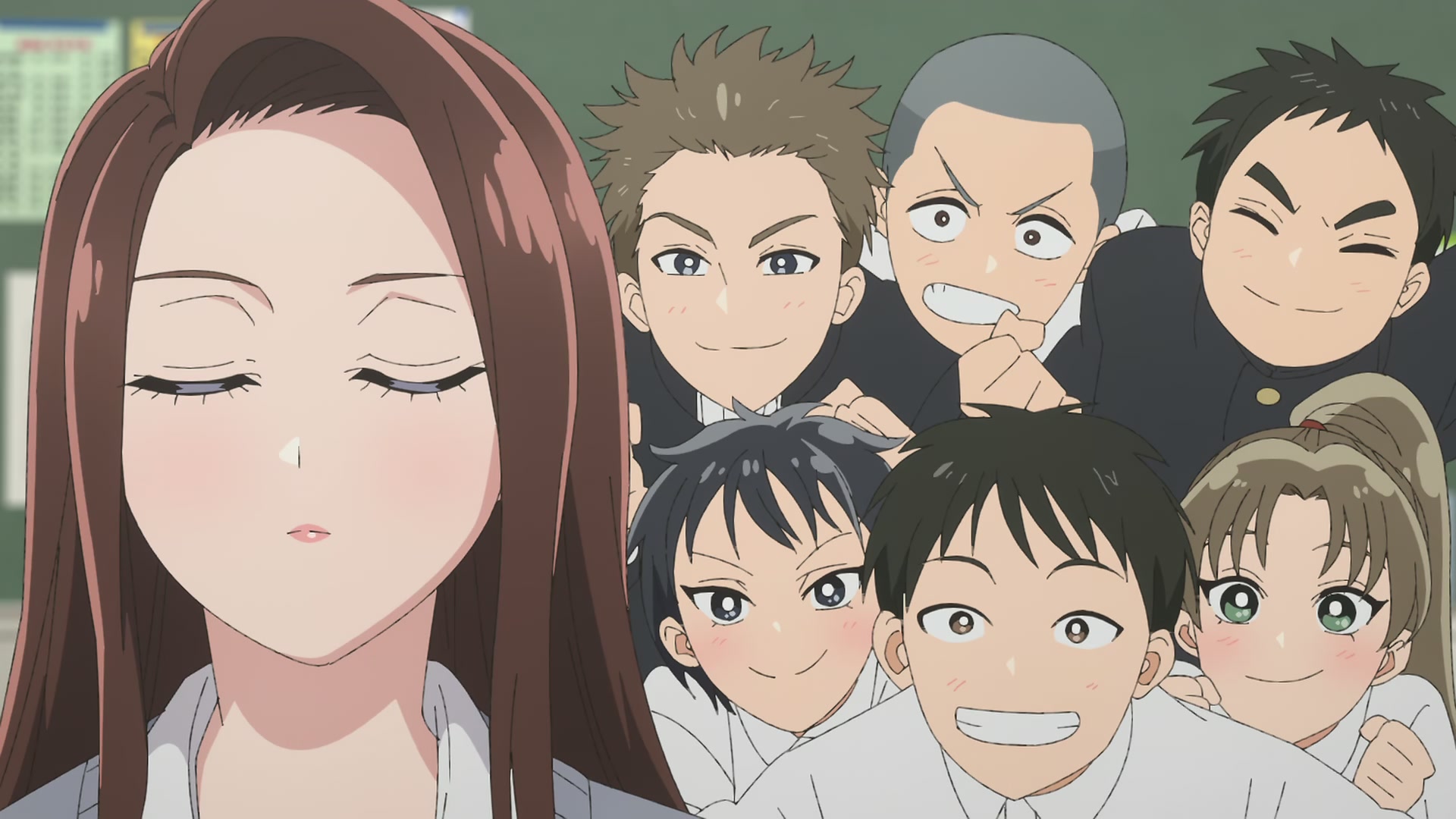
Shion and Mayu, the girls’ friends, serve as a Greek chorus. They comment on the action, provide support, and occasionally nudge the plot forward. Shion’s perceptiveness about Amane’s feelings and Mayu’s gossip about the fireworks rumor are both functional and natural. They feel like real friends rather than plot devices.
Visuals and Animation
Art Direction and Aesthetic Identity
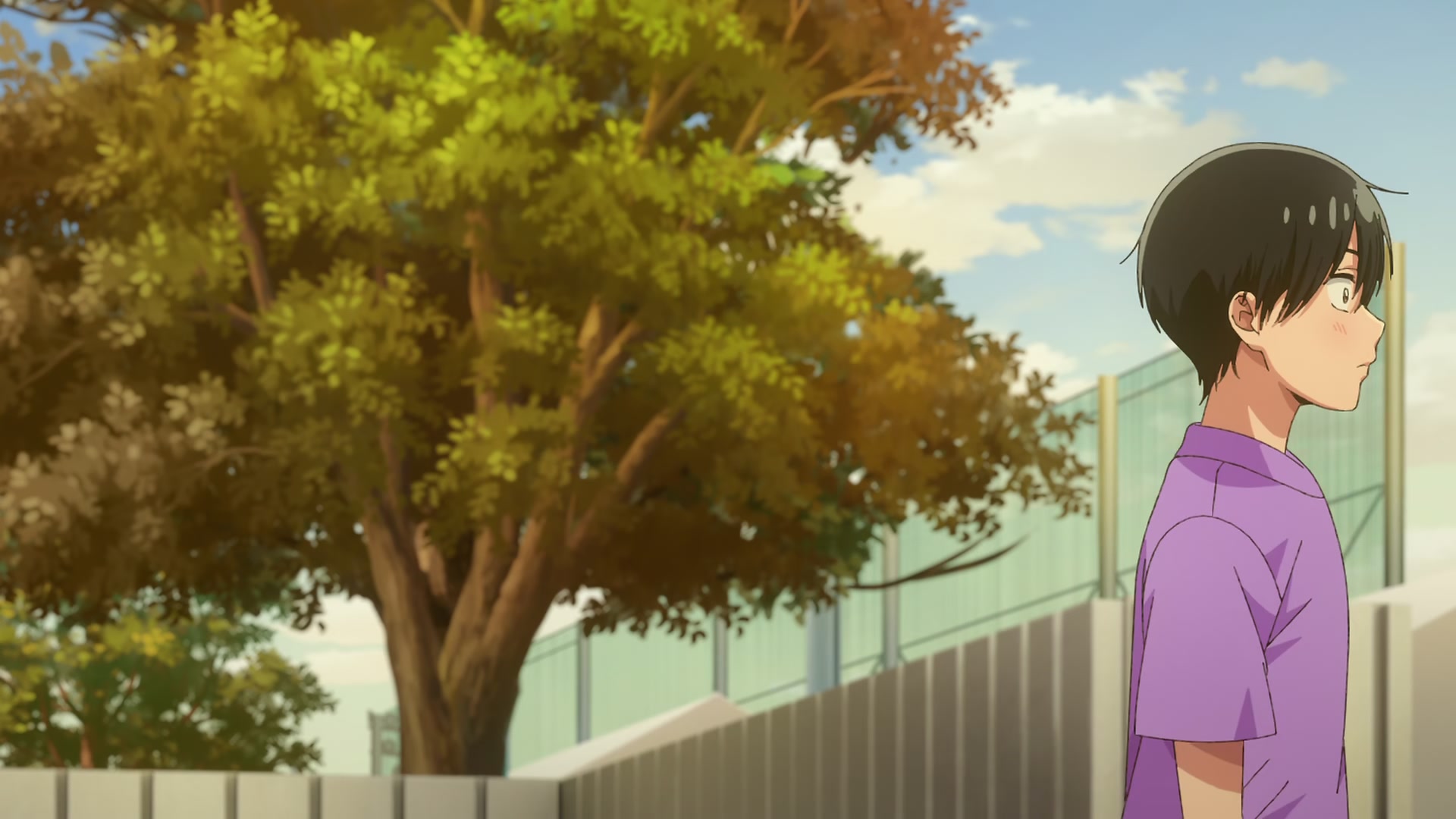
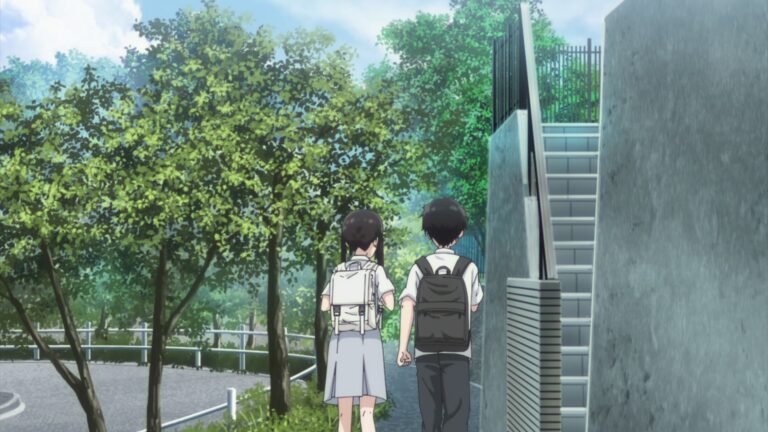
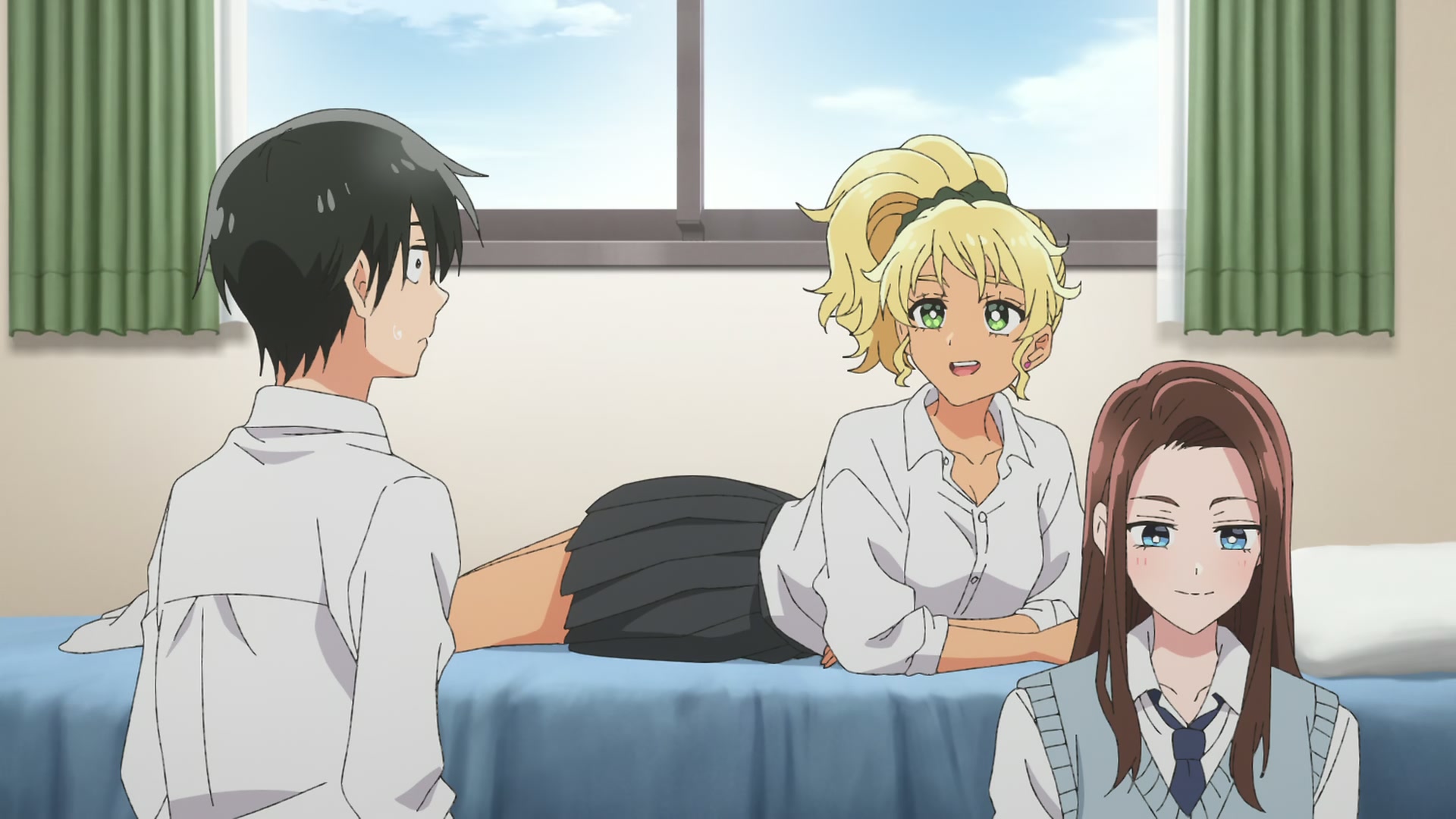
The series possesses a polished, modern visual identity that prioritizes warmth and intimacy. The art direction leans into a “shining” aesthetic, with frequent light blooms, vibrant color saturation, and a focus on fashion-forward character details. This is not a gritty or realistic world. It is an idealized one, where even ordinary classrooms feel cinematic and golden hour light transforms a simple walk home into something nostalgic.
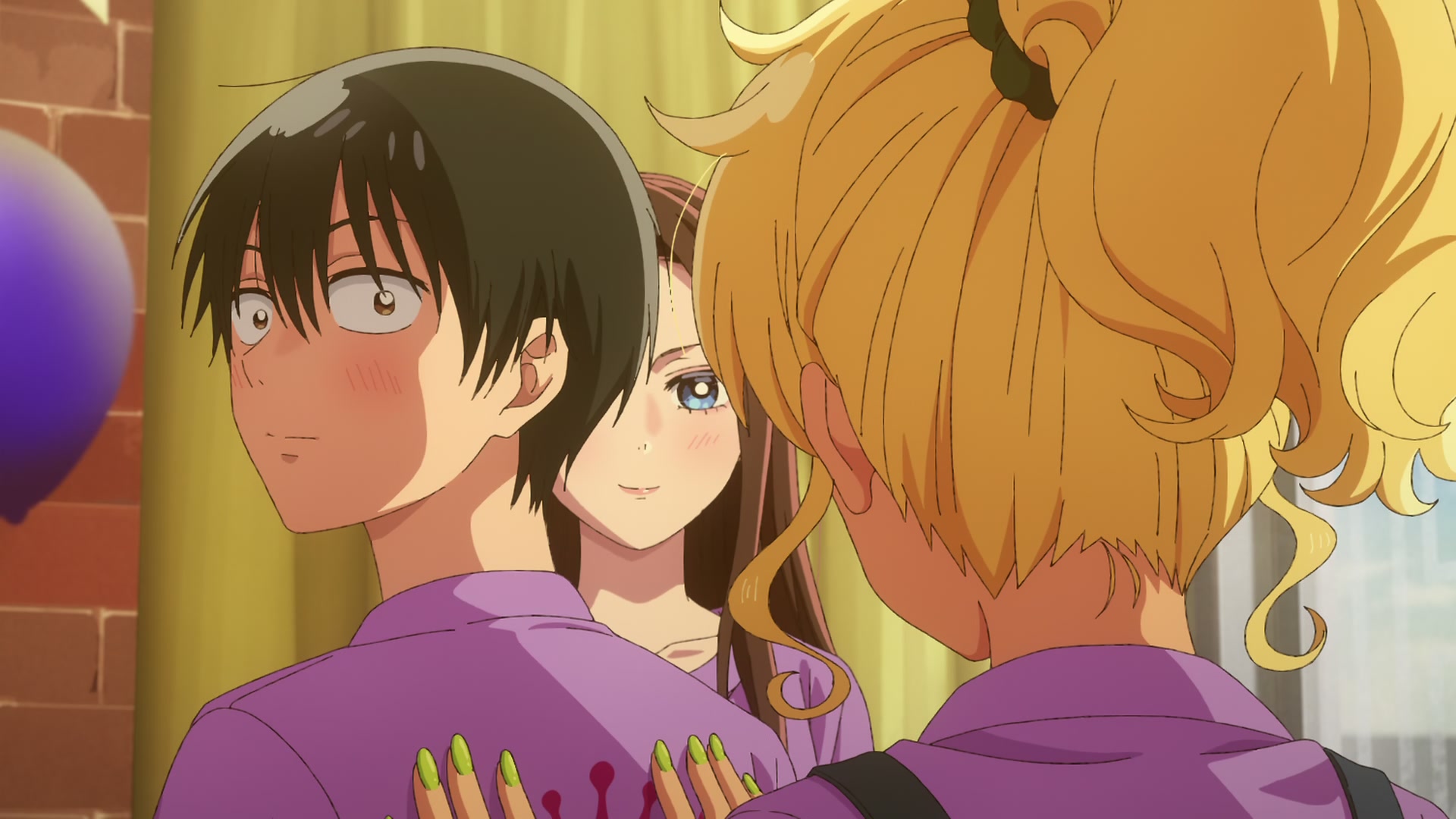
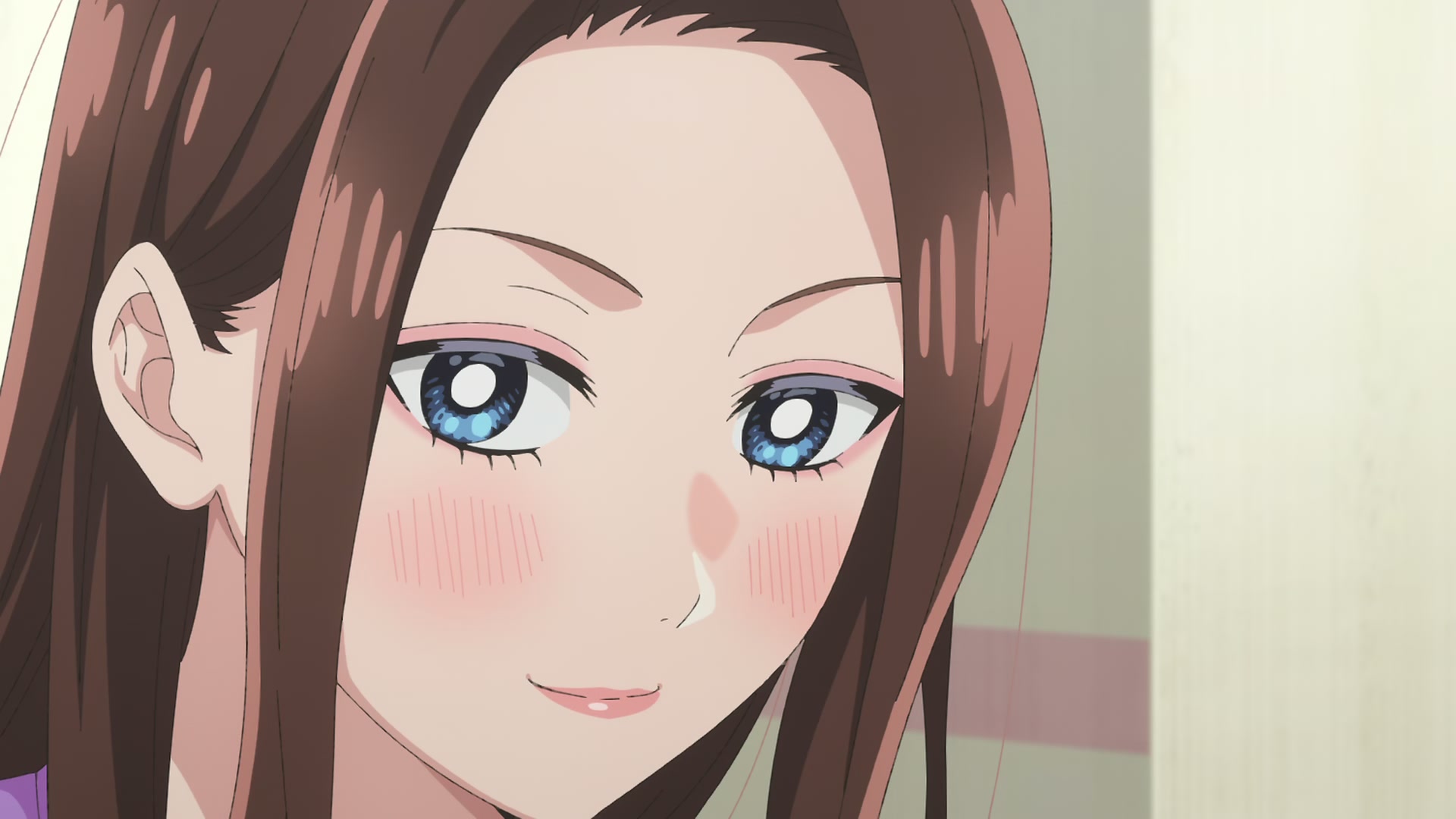
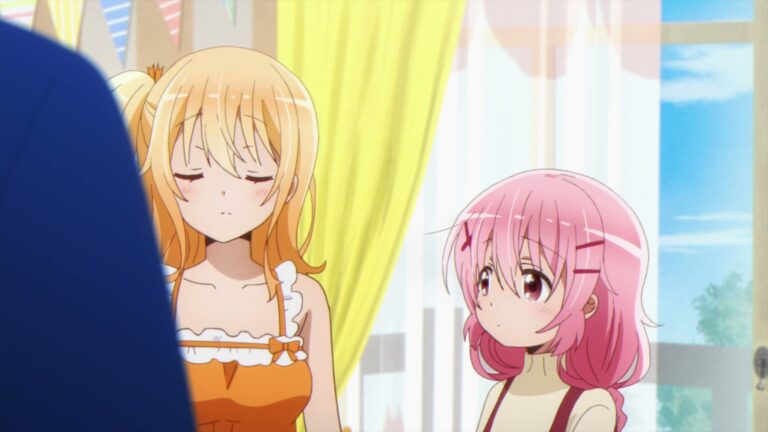
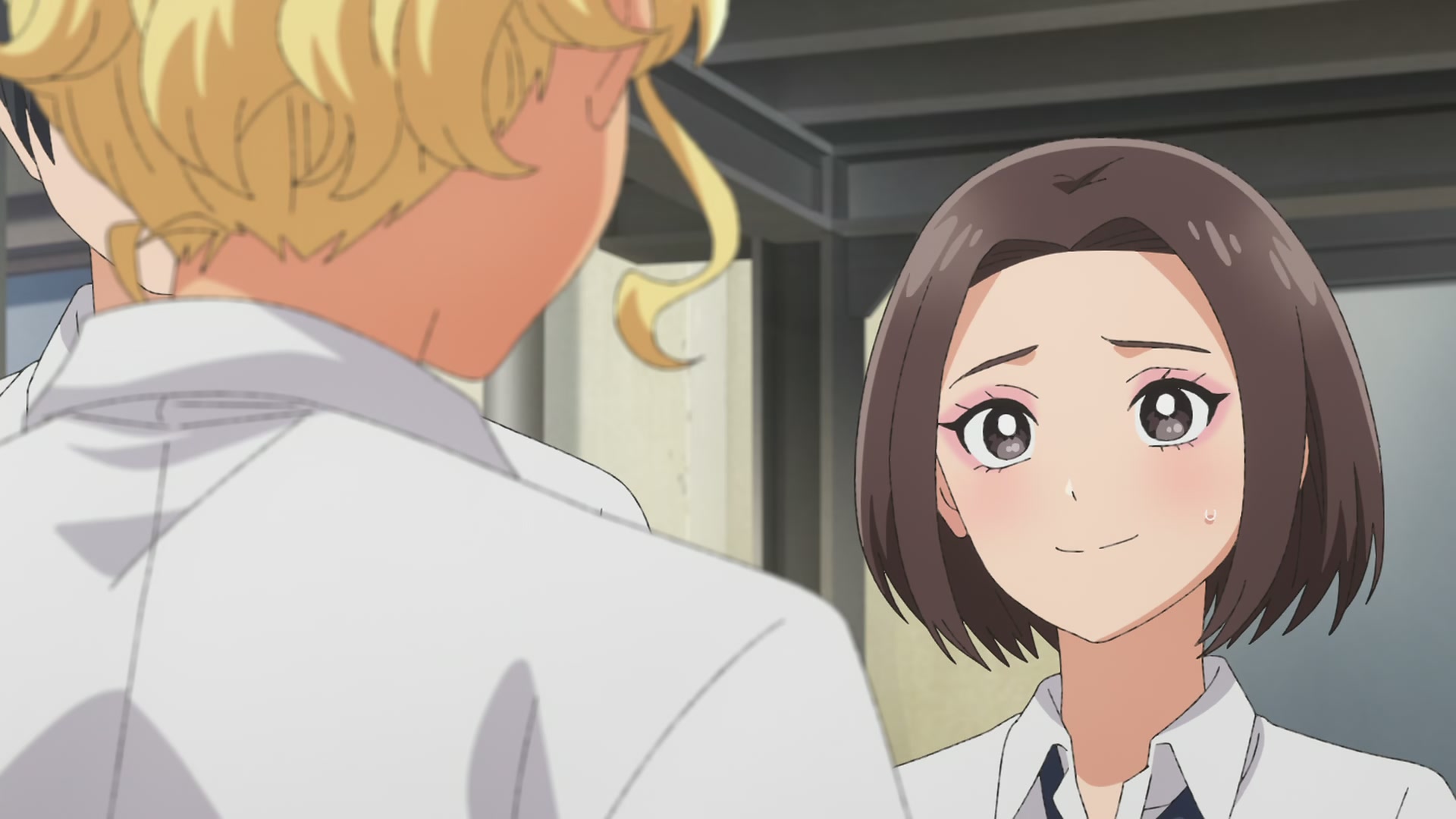
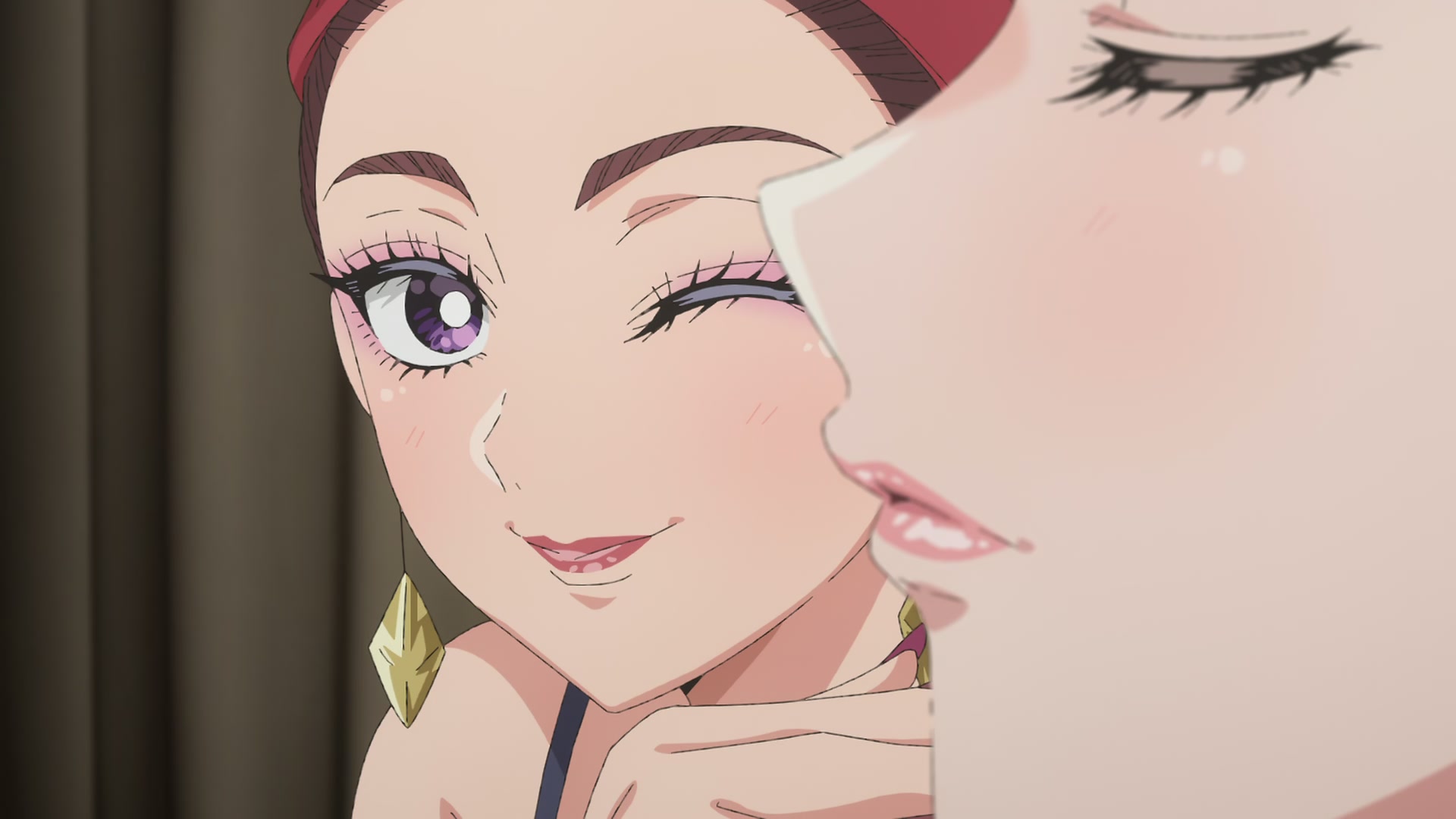
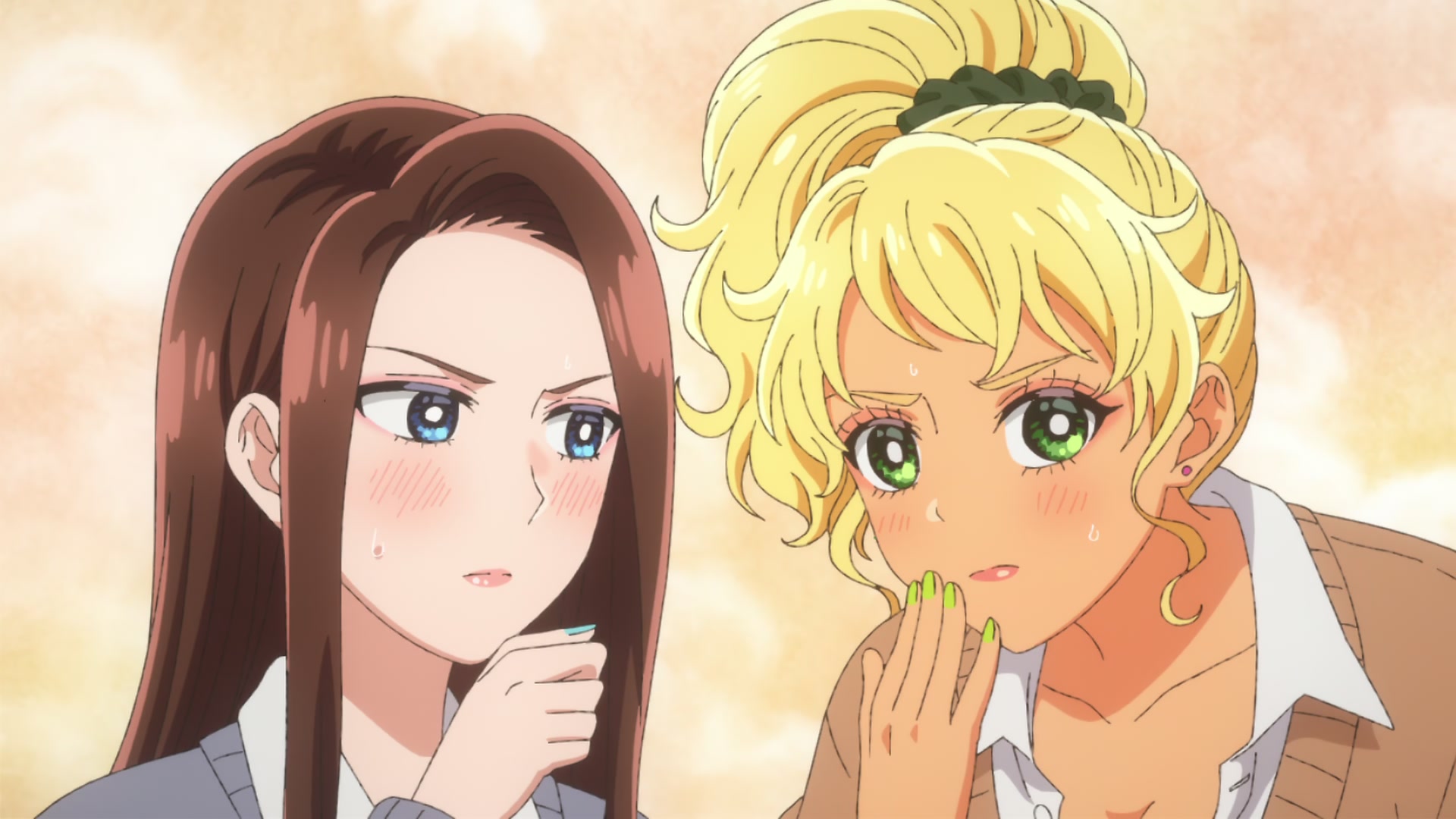
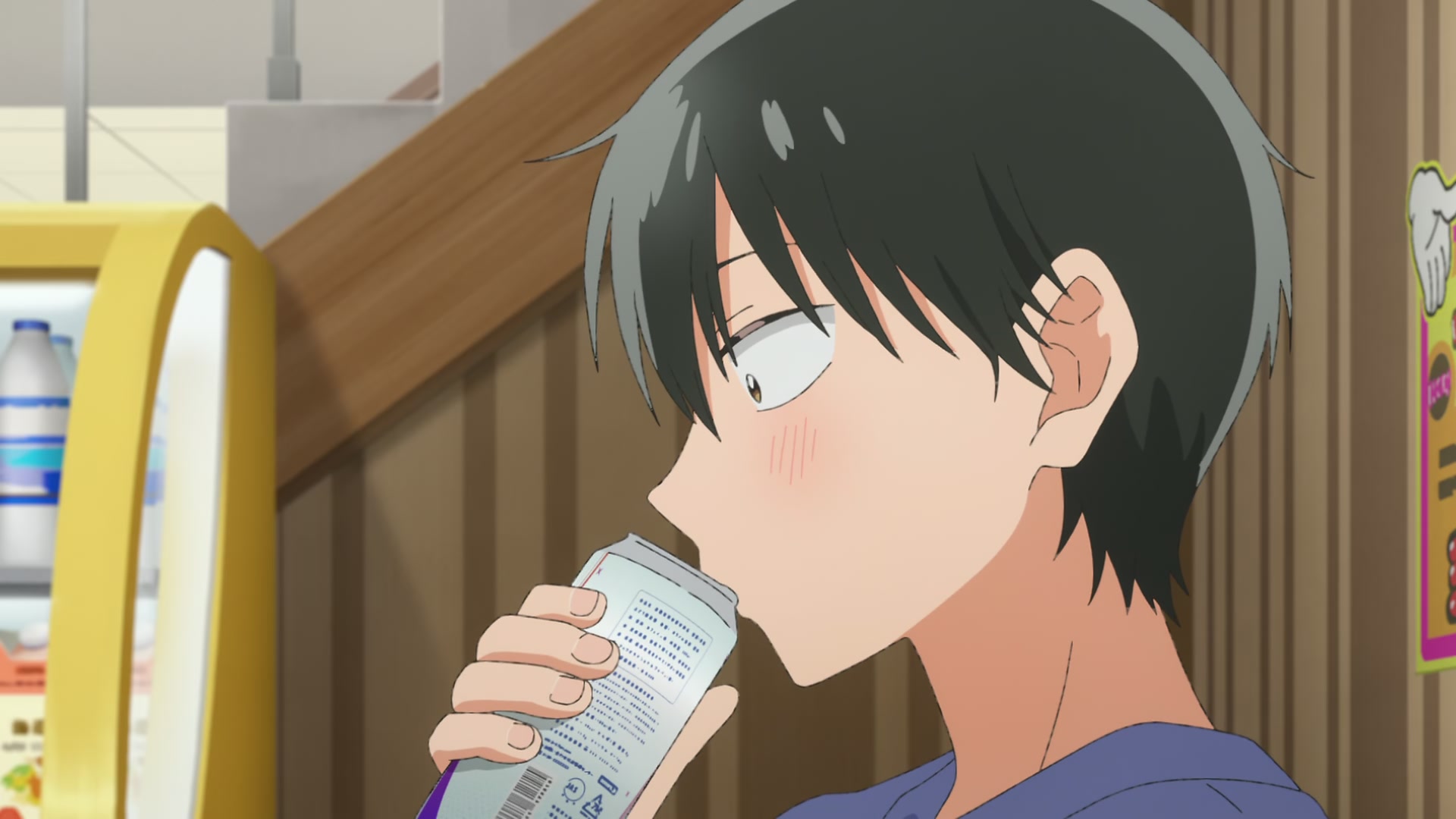
The character designs are the production’s primary strength. The linework is clean and thin, with colored line-art used for skin and hair edges. This technique softens the characters against their environments and prevents a stark, cut-out look during intimate scenes. The attention to fashion and grooming is notable. Ijichi’s decorated nails, Amane’s layered hairstyles, the variations in makeup and accessories, all of these communicate personality through visual shorthand.
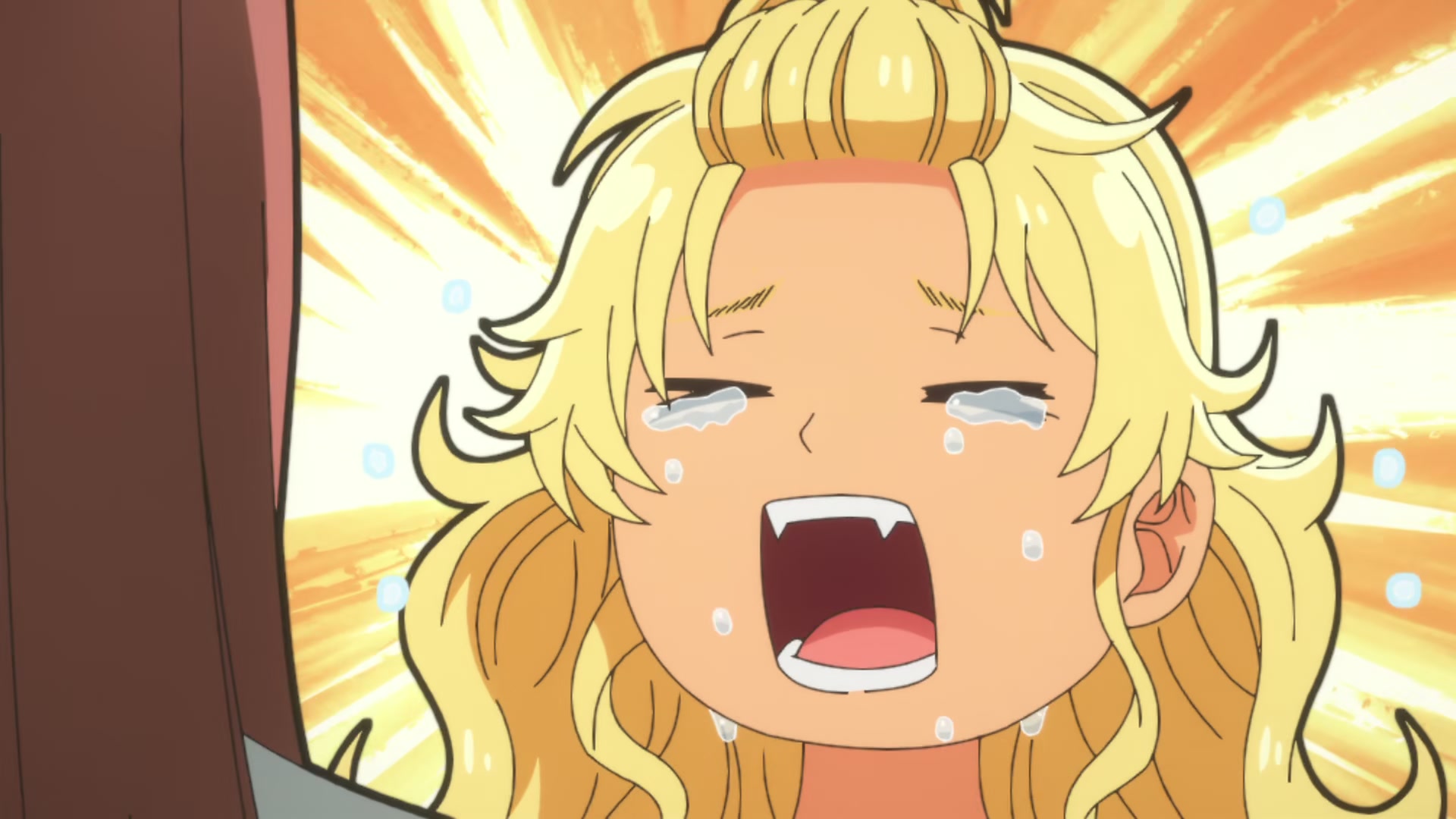
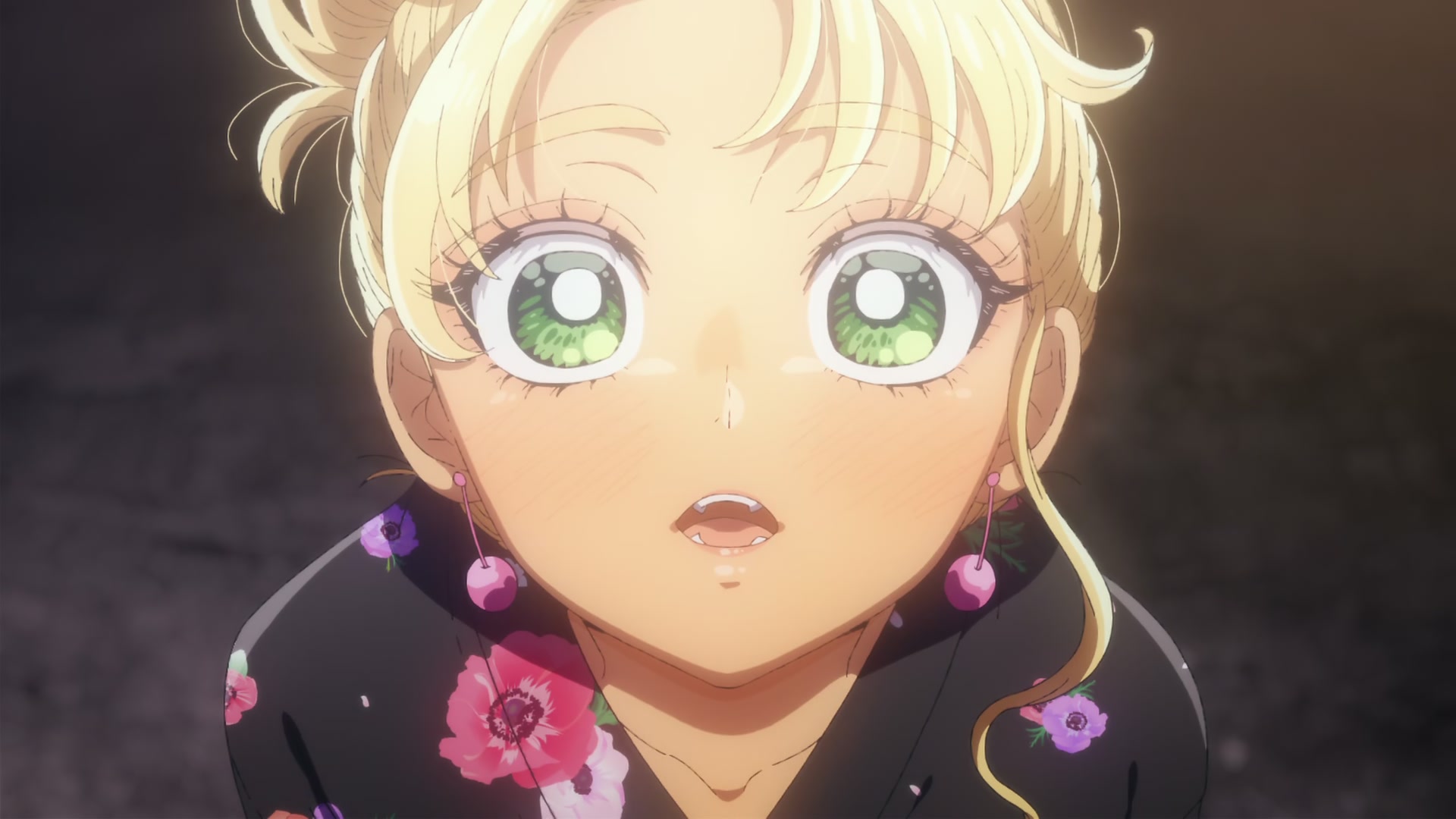
Eye rendering is where the production invests most heavily. Irises are large, multi-colored, and highly reflective, often featuring complex gradients and multiple points of light. This “money shot” approach ensures that emotional beats feel high-stakes and visually arresting. When Amane smiles, when Seo tears up, when Ijichi gets flustered, the eyes carry the weight of the moment.
Character Acting and Expressions
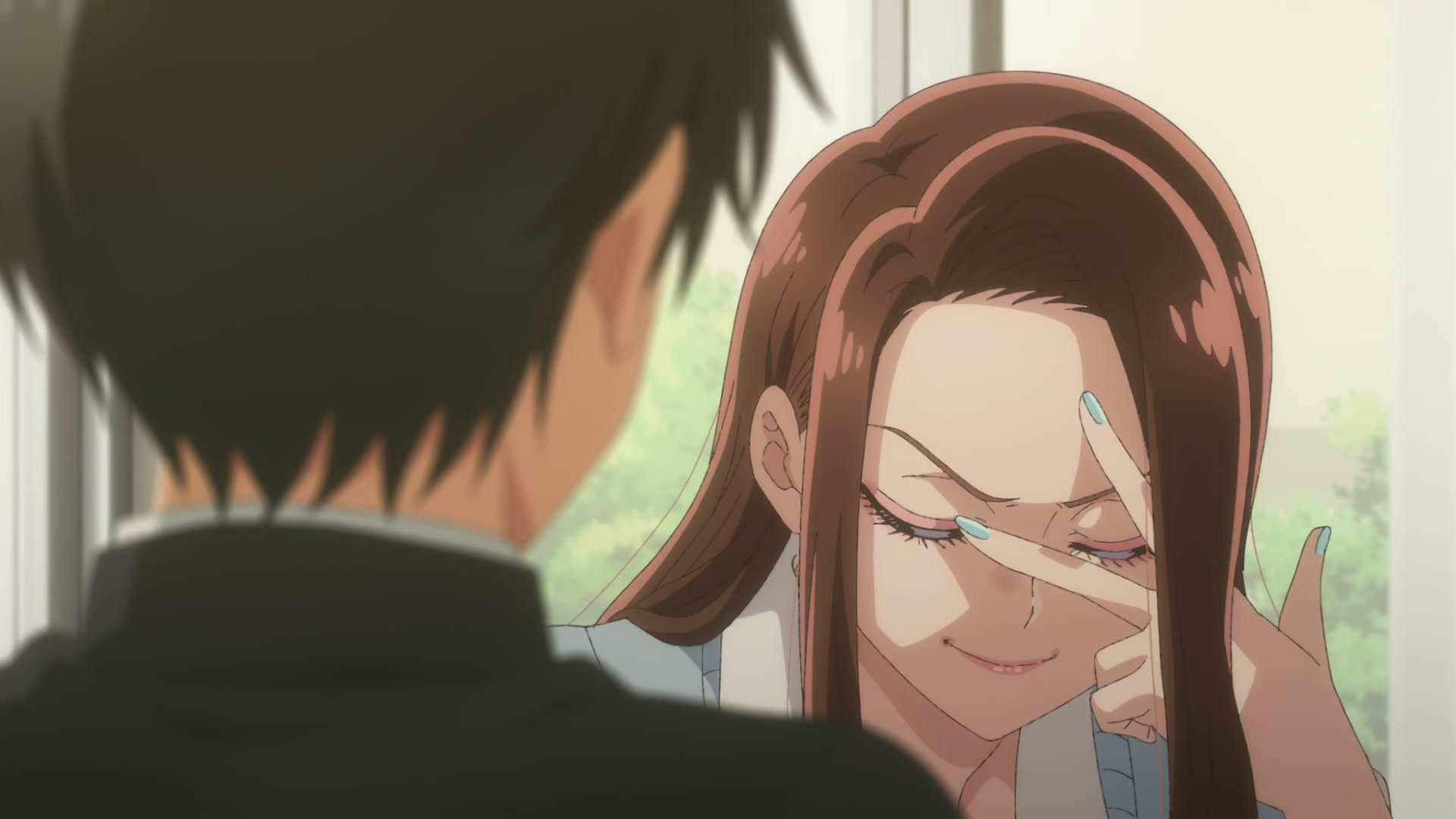
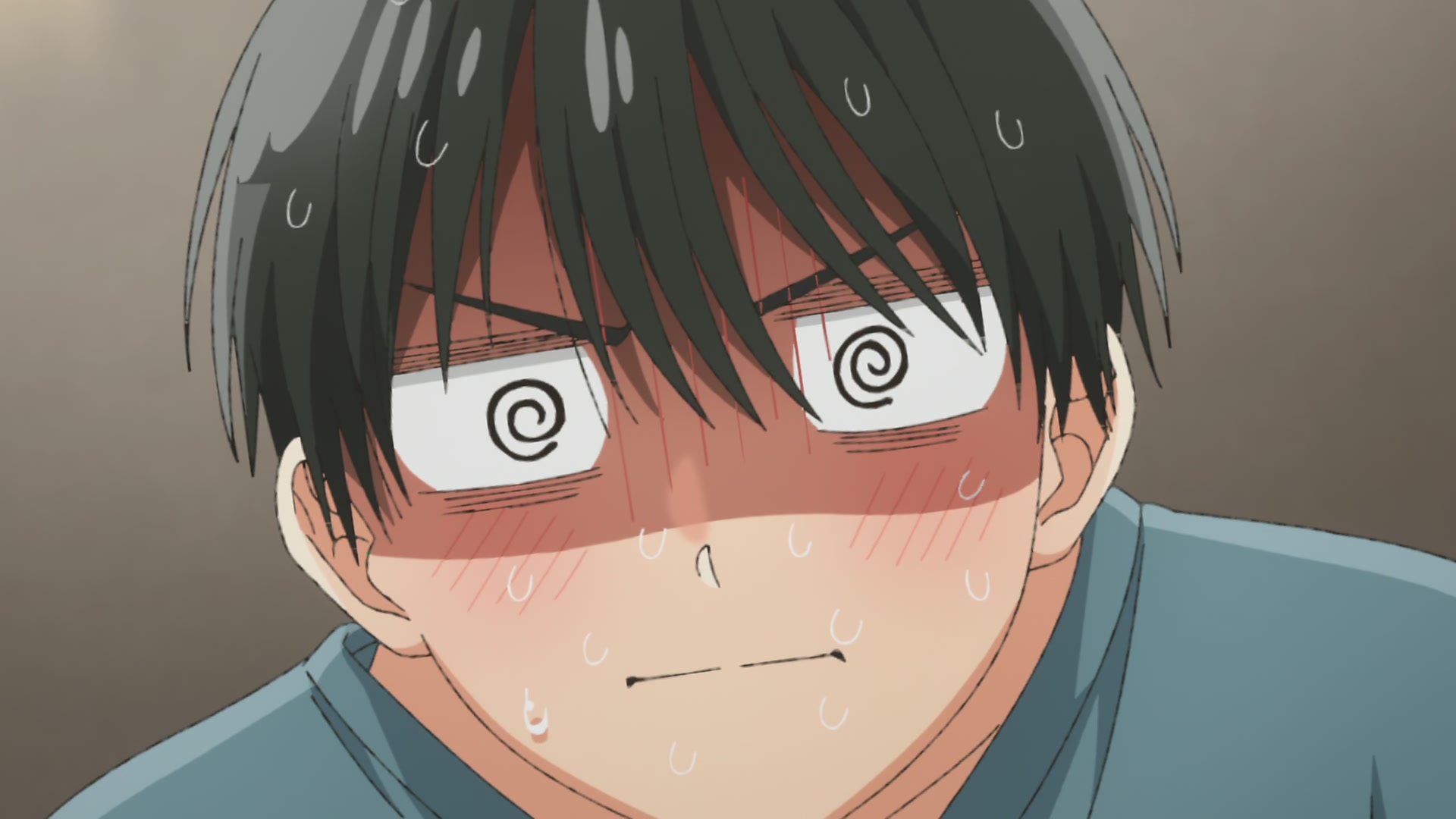
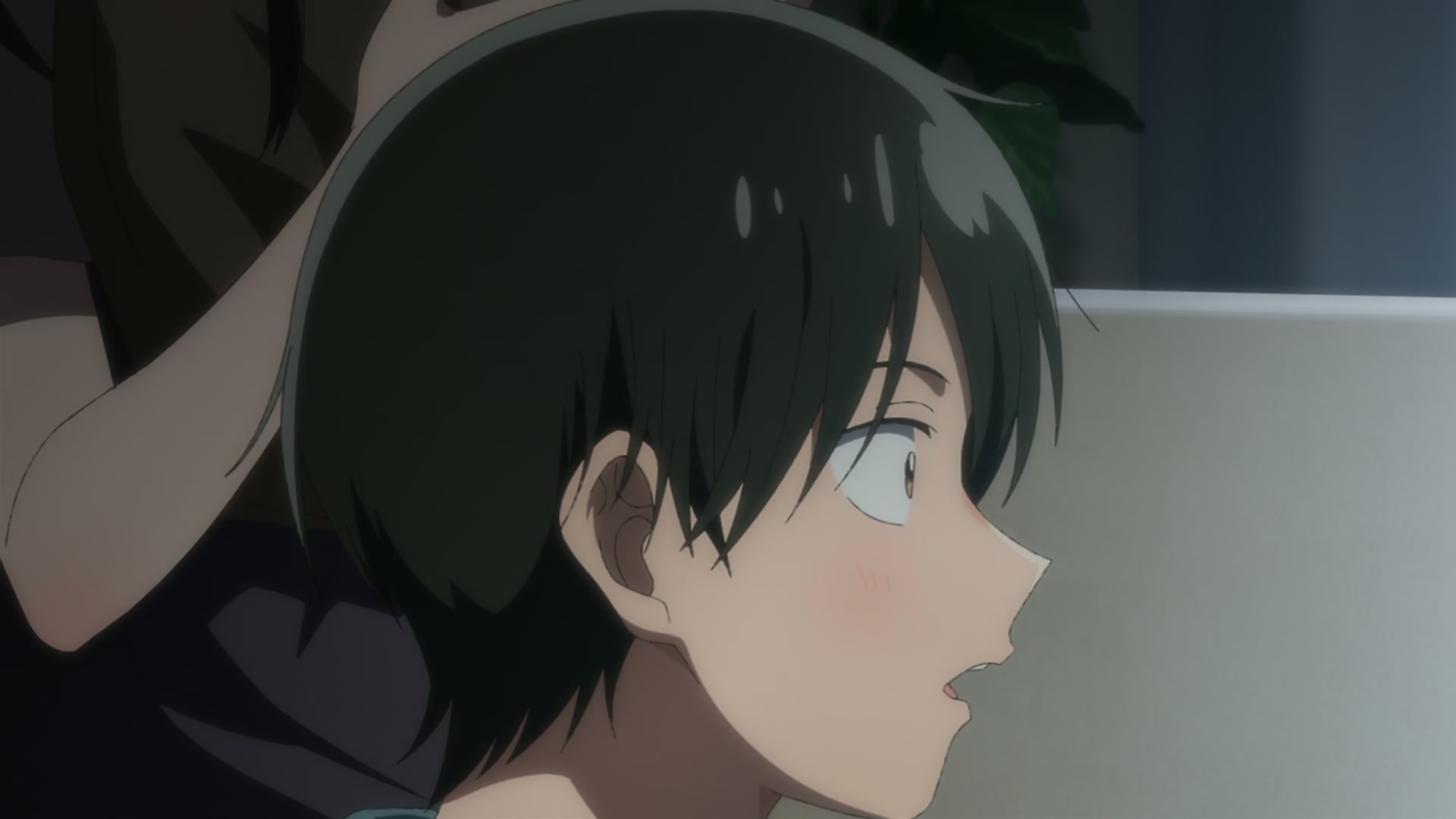
The series excels at micro-expressions. Subtle shifts in pupil size, hesitant gazes, knowing smirks, and varied blushing effects communicate complex interpersonal chemistry without dialogue. Amane’s rare smiles are animated with deliberate care, each one feeling like a small victory. Seo’s panic faces are exaggerated for comedy but never break character consistency. The “otaku excitement” expressions, when Seo and Amane geek out over Kiramon, are broad without becoming grotesque.
Body language is used effectively to establish social tension or comfort. The way Amane holds herself at school, stiff and guarded, contrasts with her relaxed posture at home or during viewing parties. Ijichi’s physical affection, the casual touches and playful shoves, communicates her comfort with Seo in a way words cannot. The slumber party conversation between Seo and Amane uses stillness to create intimacy. The held frames on their faces, the minimal movement, the weight carried by voice and expression, all of this is deliberate and effective.
Comedic Expressionism
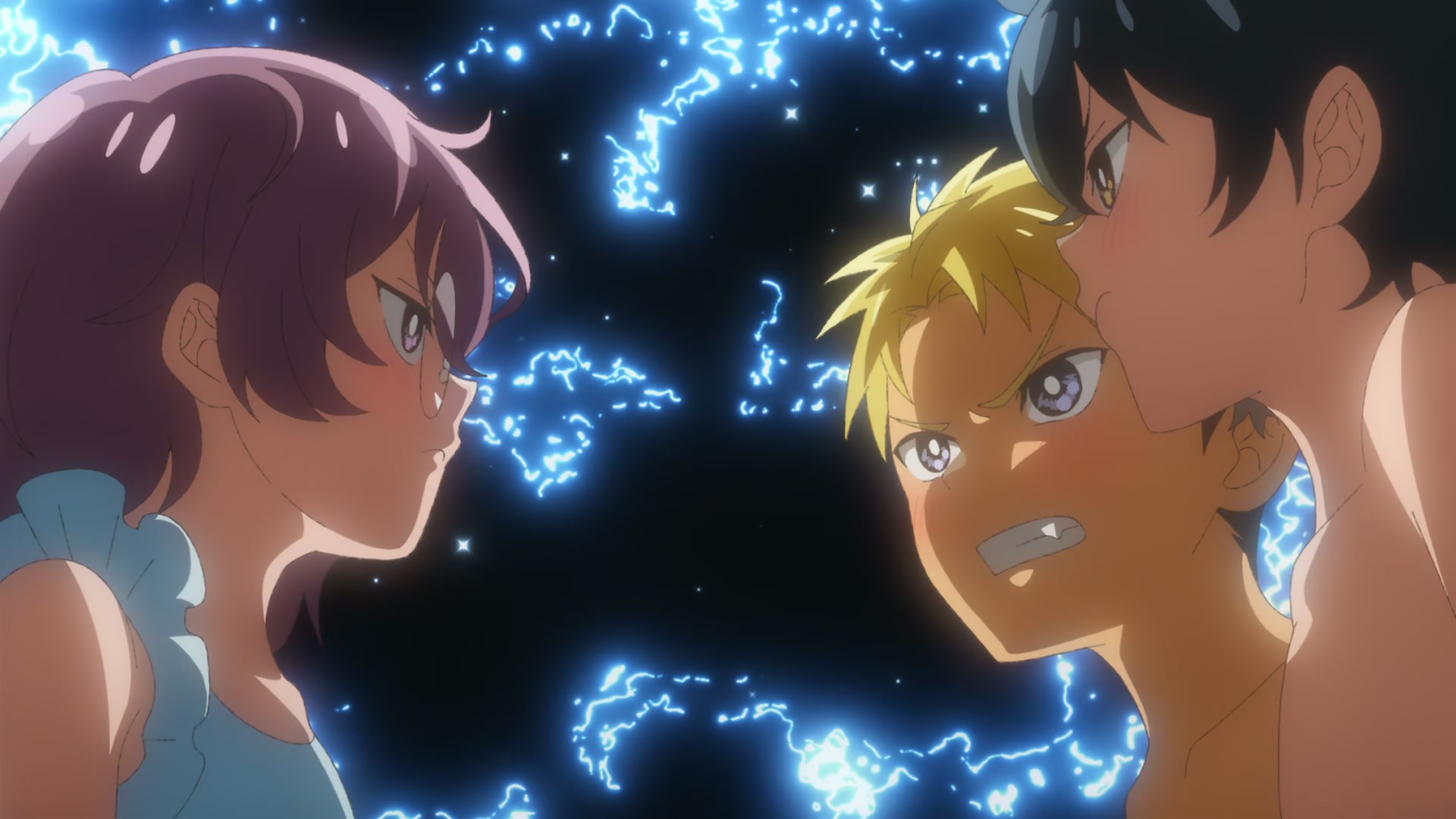
To punctuate humor, the art style frequently breaks into chibi or super-deformed modes. Swirly eyes, stylized tear-tracks, fang teeth, and electric blue “anger” energy are deployed for comedic effect. These transitions are well-executed and tonally appropriate, though their frequency can occasionally undercut emotional buildup. A scene building to sincerity will sometimes cut to chibi for a gag, creating a moment of tonal whiplash. This is a minor issue, but it is noticeable.
Background Art and Environments
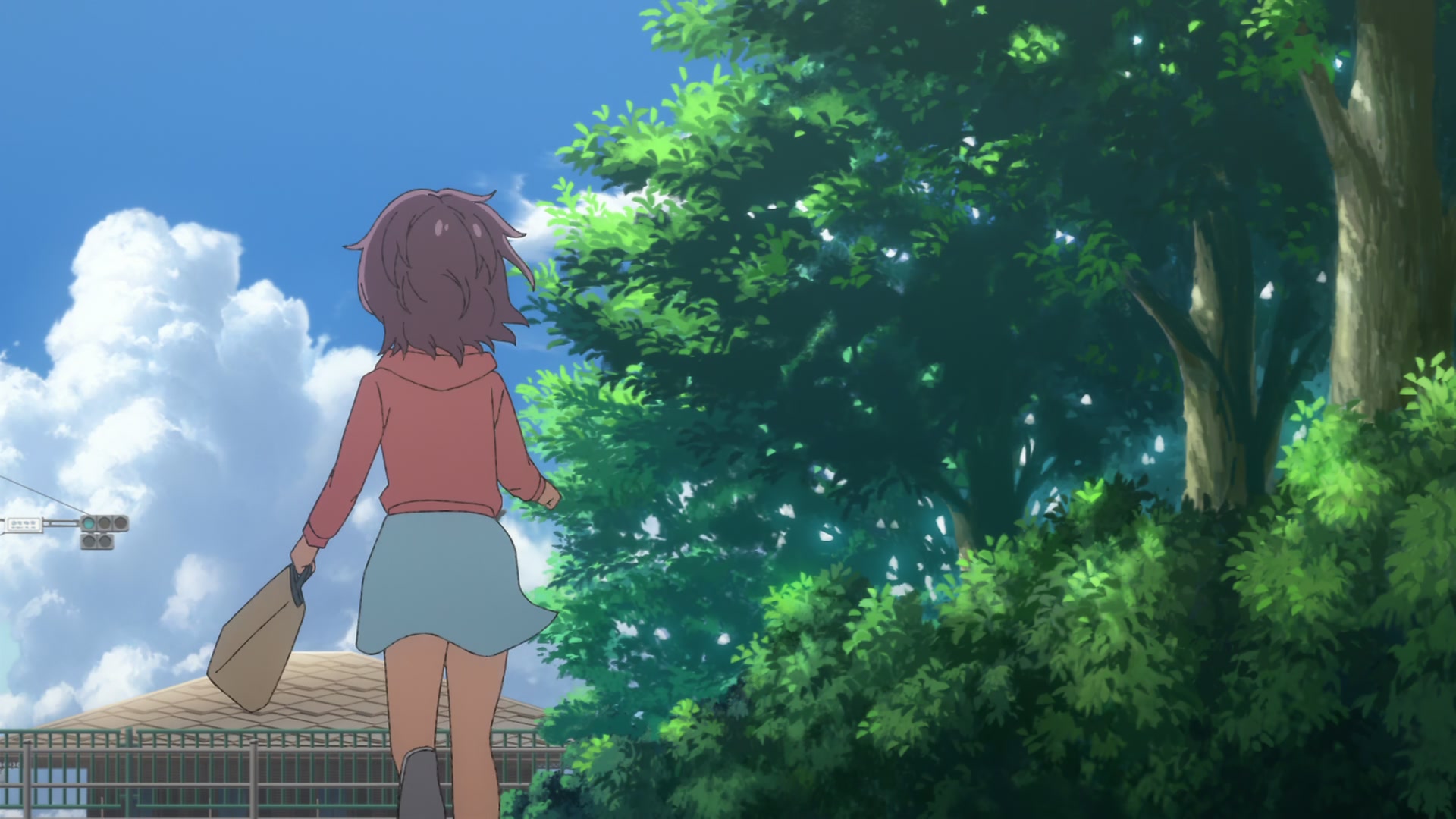
The background art is detailed and painterly, particularly in the rendering of foliage and interior spaces. Outdoor scenes use various shades of green and dabs of white light to simulate sunlight filtering through leaves. Indoor spaces feel lived-in. Seo’s room is cluttered with otaku merchandise. Genichirou’s apartment has the sparse functionality of a single adult’s living space. Amane’s bedroom balances girlish decoration with a hidden Kiramon collection. The school festival transformation of ordinary classrooms into themed cafés shows background art versatility.
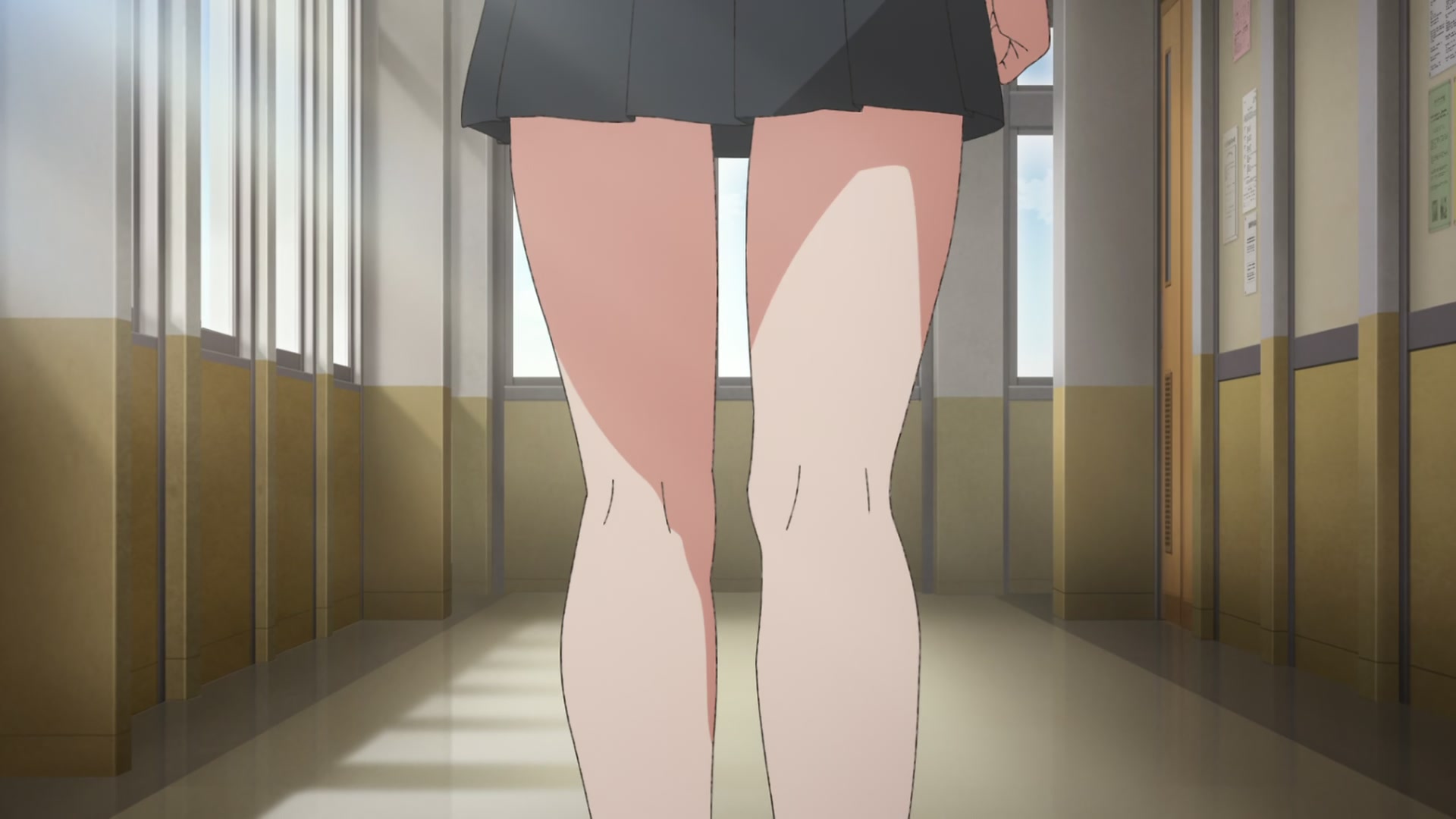
The framing is character-centric, often using tight over-the-shoulder shots to create a sense of physical proximity. Occasionally, the series employs more experimental layouts, such as wide-angle fish-eye perspectives in school hallways, to add cinematic scale to otherwise standard locations.
Lighting and Compositing
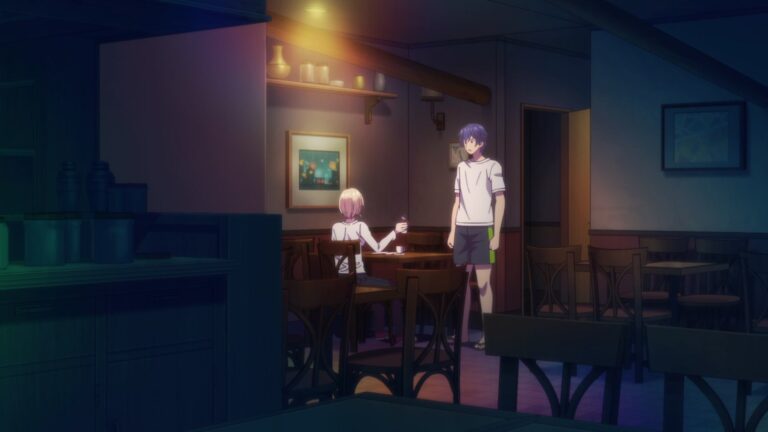
Lighting is perhaps the most transformative element of the series’ visual toolkit. The production uses time-of-day dynamics to dictate mood. Harsh, bright whites and saturated greens evoke the intensity of high noon. A heavy orange-and-yellow golden hour overlay creates nostalgia during outdoor walks. Deep blues with singular bright highlights establish a somber, reflective atmosphere for night scenes.
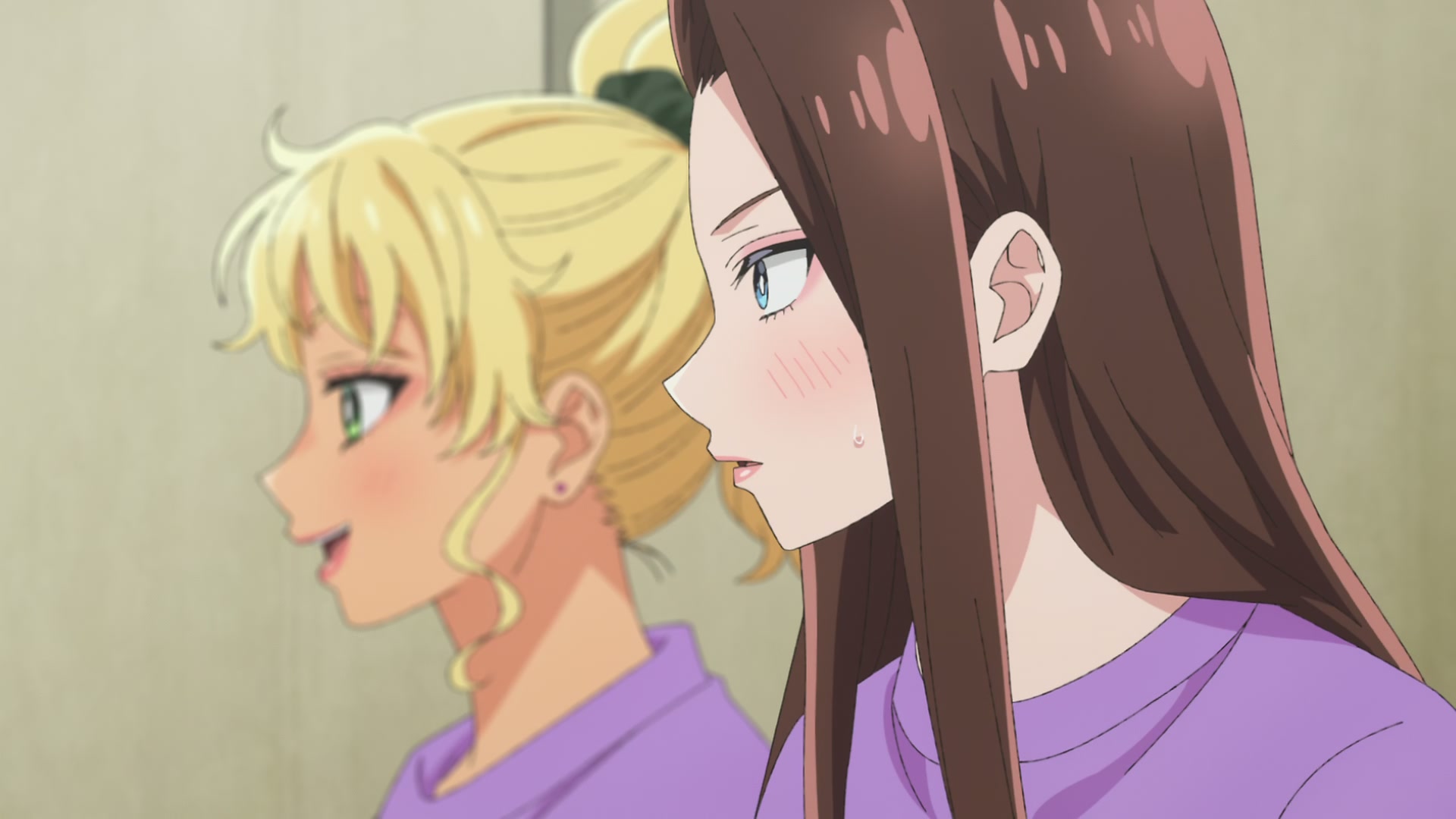
There is a heavy reliance on bloom and bokeh effects. This shallow depth-of-field keeps the viewer’s eye fixed on character reactions while giving the environment an airy, idealized feel. The fireworks scenes use light against darkness effectively, with characters illuminated by bursts of color. The overall effect is warm and inviting, a world that feels beautiful because the characters are experiencing beauty.
Animation Limitations
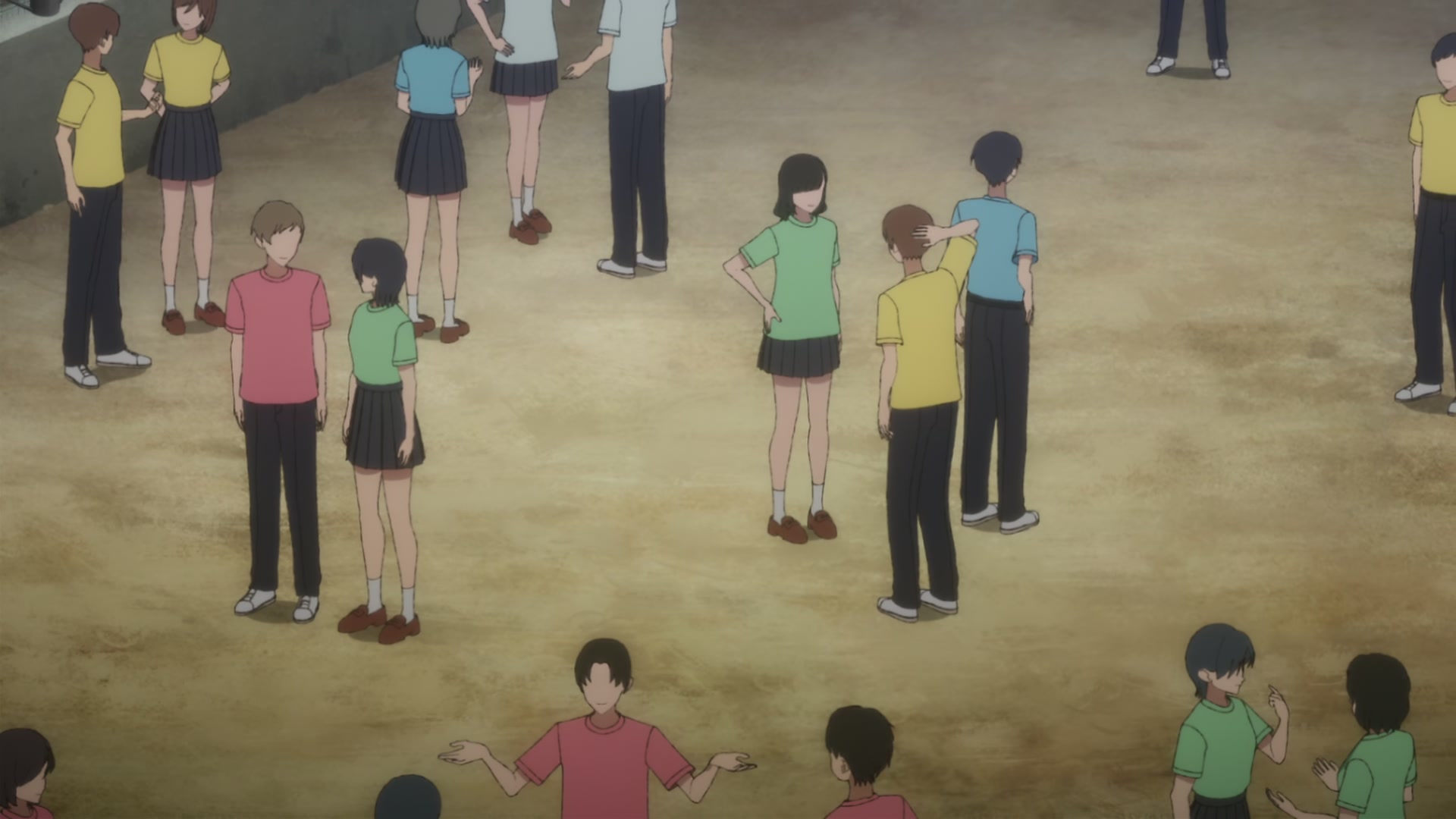
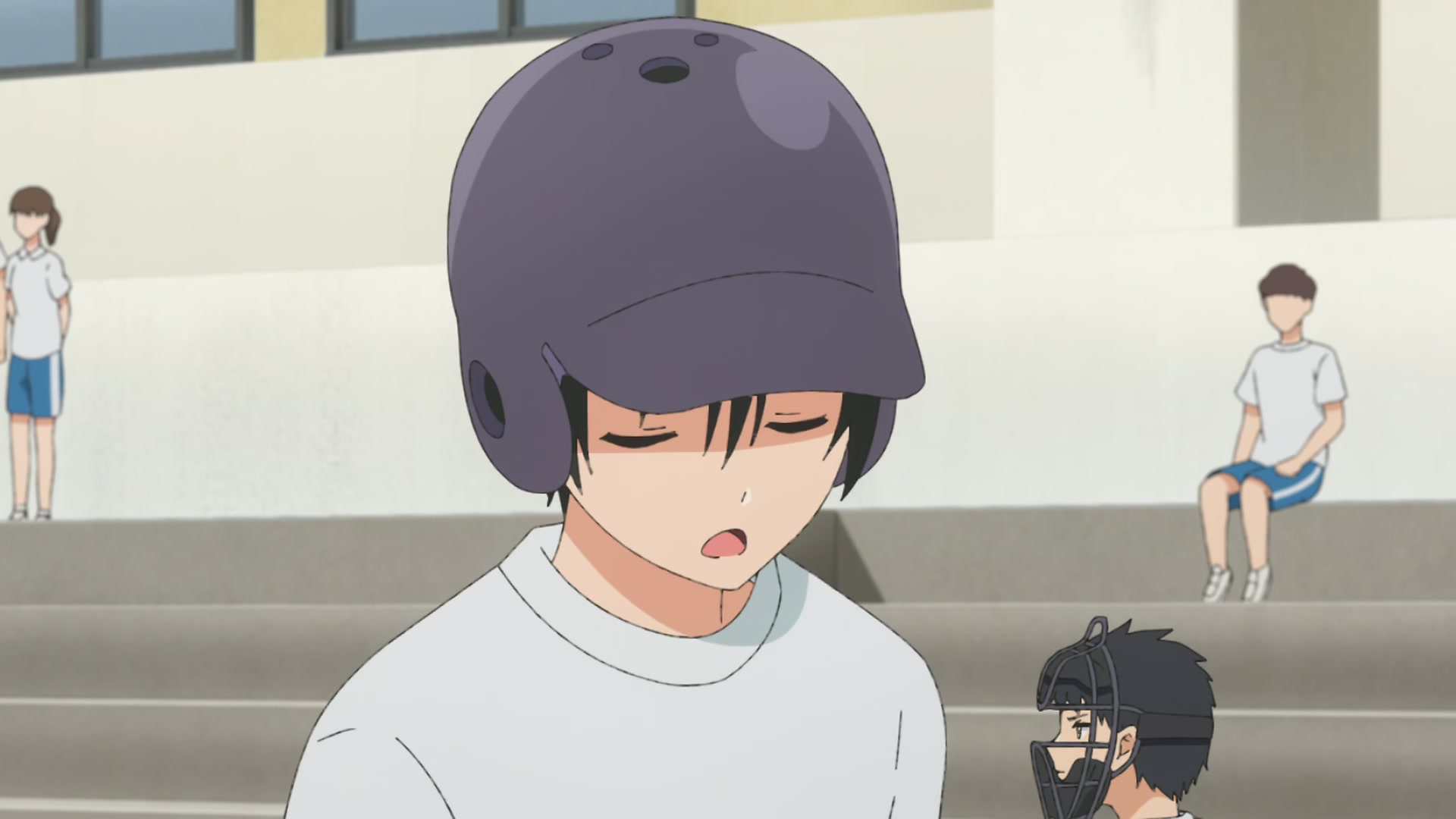
The series is not an animation showcase. Crowd scenes frequently use simplified or faceless background characters, creating a visual disconnect between the high-detail protagonists and the abstracted world around them. Walking cycles, background activity, and transitional movements are often minimal. Conversations sometimes use held frames with only mouth flaps, relying on voice acting to carry the scene.
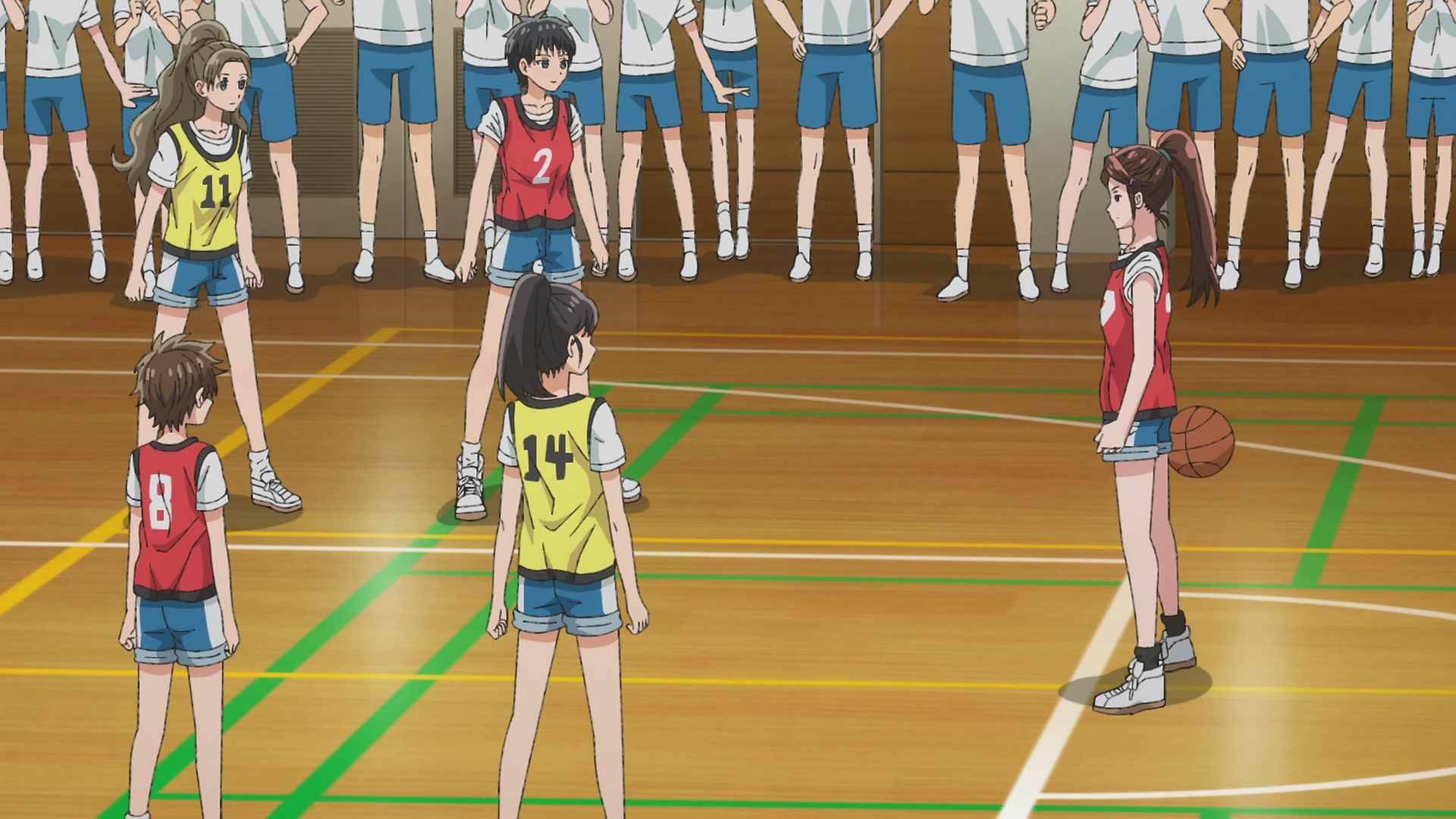
This is standard for dialogue-driven TV anime, and the series generally allocates its resources wisely. Emotional climaxes get the “money shot” treatment. The otaku viewing parties, the cosplay café, and the fireworks are given more attention than transitional moments. The sports festival episode has notably limited animation during the games, but the focus is on character reactions rather than athletic action, so the limitation is less damaging than it might be.
The line between deliberate stillness and budget-saving stillness is sometimes blurry. The slumber party conversation uses stillness to create intimacy. Some classroom scenes use stillness because they cannot afford to do otherwise. A discerning viewer can tell the difference, but the series’ emotional sincerity usually compensates for its technical limitations.
Sound and Music
Opening and Ending Themes
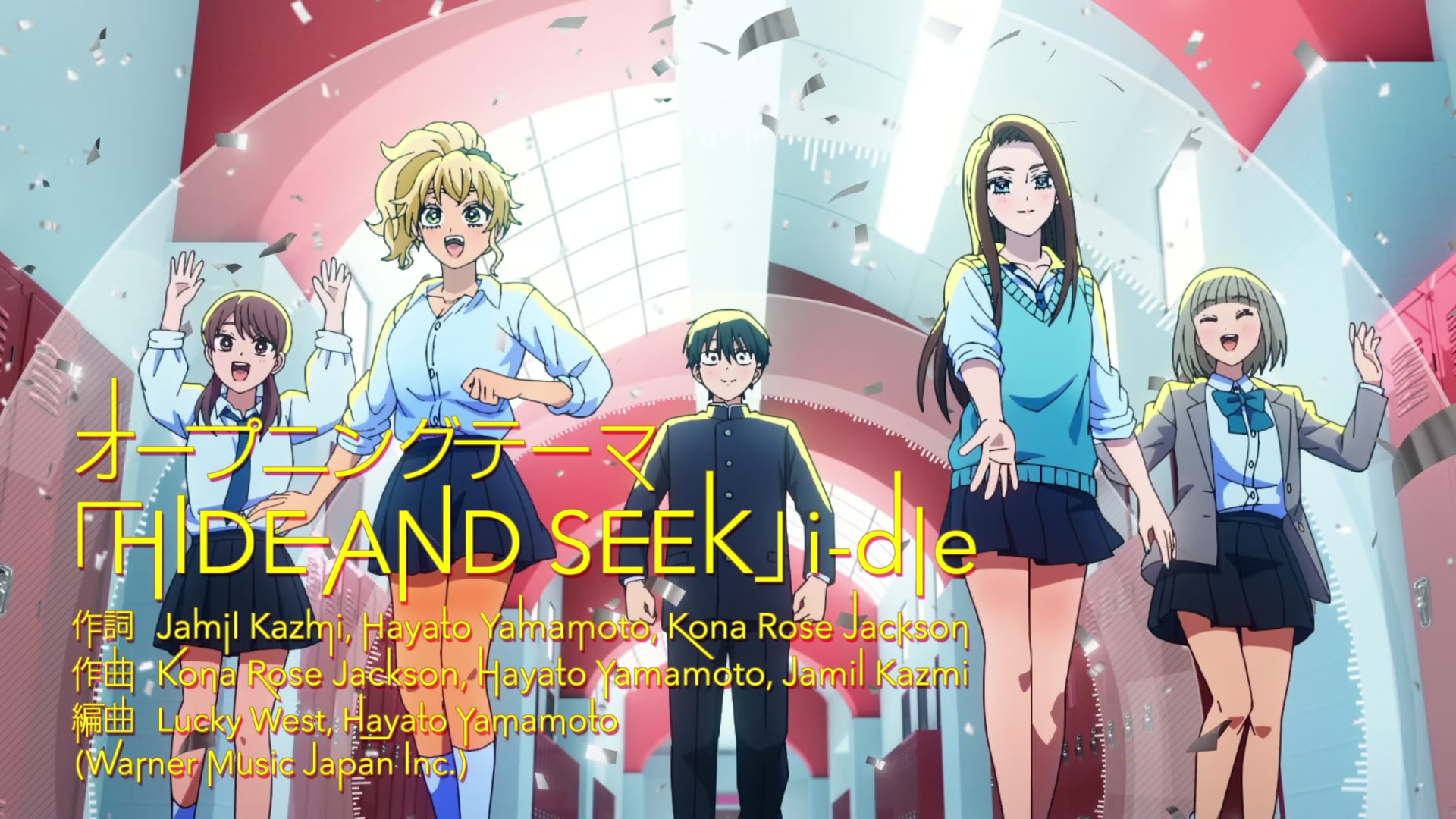
The opening theme sets the tone effectively, with an upbeat, pop-infused energy that matches the series’ balance of comedy and warmth. The animation sequence accompanying it introduces the main trio and establishes their dynamics through visual shorthand: Seo’s otaku enthusiasm, Ijichi’s playful energy, Amane’s cool exterior cracking into smiles. It is the kind of opening that puts you in the right mood for what follows.
The ending theme takes a softer approach, with a more melancholic melody that reflects the series’ underlying emotional seriousness. The visuals are simpler, often featuring the characters in quiet, reflective moments. The contrast between the energetic opening and the gentle ending mirrors the series’ own tonal range.
Voice Acting
The seiyuu performances are a significant strength. Seo’s voice actor captures his anxious, overthinking internal monologue without making him sound whiny or pathetic. The shift between his panicked internal voice and his hesitant external speech is well-modulated. When he gets excited about Kiramon, his voice rises in pitch and speed, and the performance sells both the enthusiasm and the slight embarrassment that follows.
Ijichi’s voice actress balances the character’s bubbly exterior with moments of genuine warmth and vulnerability. The teasing tone she uses with Seo is distinct from the softer voice she uses when she is being sincere. Her delivery of the “I like you” scene at the summer festival, with its hesitation and quick retreat, captures the character’s internal conflict without overplaying it.
Amane’s performance is the most challenging, requiring a character who is outwardly cold but inwardly passionate. The voice actress navigates this by keeping Amane’s default tone flat and measured, then allowing warmth to seep in during private moments. Her otaku excitement is a revelation, a complete shift in energy that makes the character’s hidden self feel real.
Sound Direction and Atmosphere
The sound design supports the series’ emotional goals without drawing attention to itself. Ambient sounds, classroom chatter, festival noise, ocean waves, all are present and appropriate. The use of silence in intimate moments is effective, allowing the weight of a conversation to settle before the next line. The Kiramon viewing parties include snippets of the in-universe anime’s soundtrack, a nice touch that makes the fictional series feel like a real production.
The soundtrack itself is pleasant and functional, with light piano and guitar pieces for reflective moments and more energetic tracks for comedic or celebratory scenes. It does not call attention to itself, which is appropriate for a series that prioritizes character interaction over dramatic scoring.
Overall Verdict
Otaku ni Yasashii Gal wa Inai!? is a warm, sincere series that earns its emotional payoffs through patient character writing and genuine respect for its subject matter. It is not a visual showcase. It is not a narrative innovator. It is a story about three people who find in each other the acceptance they could not find elsewhere, told with care and without cynicism.
The series’ greatest strength is its treatment of fandom. Kiramon is never mocked. Seo’s passion is never presented as something he needs to grow out of. The series understands that loving something deeply, even something as niche as a Sunday morning anime for little girls, is not a flaw to be corrected. It is a source of joy, a framework for understanding the world, and, in the right circumstances, a bridge to other people.
The refusal to resolve the romantic triangle will frustrate some viewers. The series ends without a confession, without a chosen girl, without the clarity that the genre typically demands. But this refusal is itself a statement. The friendship among the three is more important than any romantic pairing. The final image, three people holding hands at the fireworks, creating their own ritual outside the crowd, is a fitting conclusion. They have built their own world. We were lucky to visit it.
This series is for anyone who has ever felt that their interests made them an outsider. It is for anyone who has hidden a part of themselves to survive. It is for anyone who wants to believe that the boundaries between subcultures are thinner than they appear. It is not a masterpiece. It is something rarer. It is kind.
The question posed by the title is answered not with a simple yes but with a demonstration that the question itself is flawed. Gals can be kind to otaku. Otaku can be kind to gals. The categories do not matter. What matters is the courage to be honest about what you love and the grace to accept others when they do the same.
Gallery