







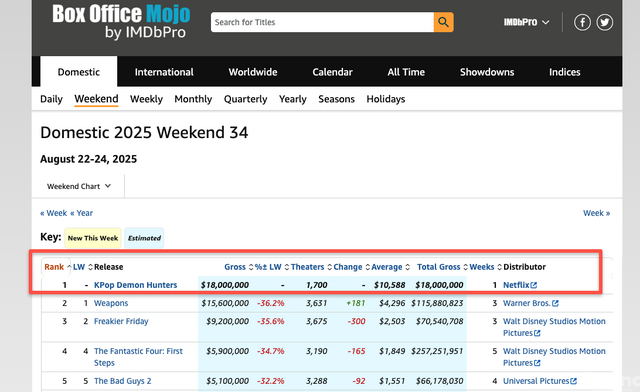
The animated film KPOP Girls! Demon Hunters, distributed by Netflix, has achieved a historic triple crown, reaching the pinnacle in three major areas: streaming platforms, music charts, and film box office. This incredible feat includes securing the number one spot in Netflix’s weekly Top 10 film rankings, its in-film song hitting number one on the Billboard Song Chart “Hot 100,” and also claiming an estimated number one position in North American weekend box office revenue.
The “Phantom No. 1” that Conquered North American Box Office
This animated feature made waves by securing the top spot in North American box office revenue for the weekend. While specific numbers are still being tabulated, industry experts are already calling it a “phantom No. 1” due to its unexpected and powerful performance. This success demonstrates the film’s broad appeal beyond just its streaming availability, drawing audiences to theaters and proving its commercial viability in a highly competitive market.
In-Film Song Sweeps Billboard, Rewriting K-Pop History
Adding to its list of groundbreaking achievements, a song from KPOP Girls! Demon Hunters not only entered but soared to the number one position on the prestigious Billboard “Hot 100” song chart. This momentous achievement is a significant milestone, not only for an animated film but also for K-Pop as a genre, as it continues to expand its global influence and break new records. The catchy tunes and powerful vocals have clearly resonated with listeners worldwide, solidifying the film’s impact beyond just its visuals.
A Global Hit Born from Animation and Music
The immense global success of KPOP Girls! Demon Hunters is a testament to the powerful synergy between captivating animation and compelling music. The film has captivated audiences across various platforms, from streaming services to cinemas, proving that a well-crafted story combined with a strong musical component can transcend cultural and linguistic barriers. This unique blend has positioned the film as a truly international phenomenon, leaving a significant mark on the entertainment industry.
By Sugimoto Hodaka
_