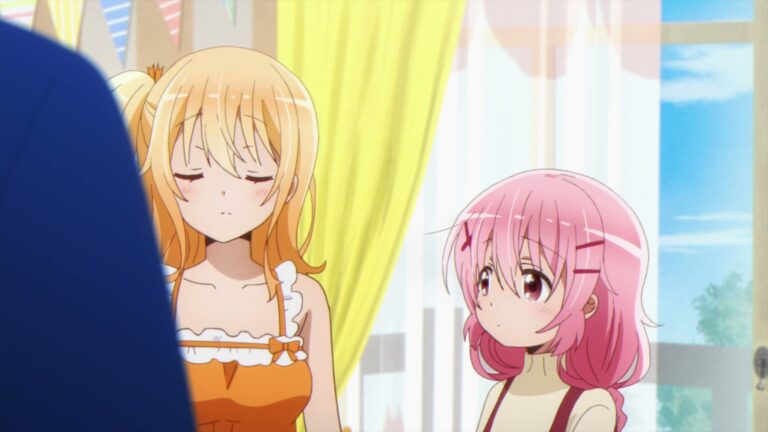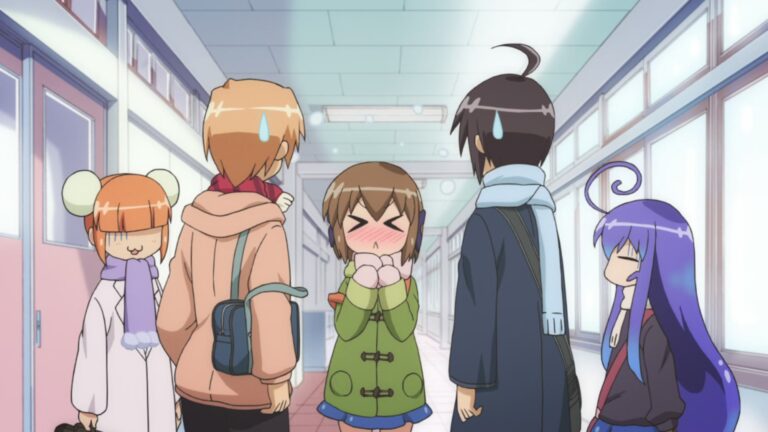






Story and Themes: The Architecture of Small Moments
Structurally, Seihantai na Kimi to Boku moves like the seasons it lovingly depicts. The narrative drifts from the first tremulous days of a new relationship, through culture festivals and summer vacations, into autumn dates and the chaos of the class trip, before landing gently in the quiet of winter. There are no villains, no artificial third-act breakups, no love triangles designed to spark fan wars. Instead, conflict rises from the most intimate of places: the gap between what a person feels and what they can bring themselves to say. This is a series where a study session in a library, a sudden downpour, or a bag of oddly shaped vegetables from a grandmother’s garden can carry as much narrative weight as any dramatic confrontation.
The show’s thematic core is announced in its title. Polarity, however, is never treated as a mere gag. Suzuki and Tani complement each other not because they balance a spreadsheet of traits, but because their very extremes offer the other something they desperately need. Suzuki’s warmth and social fluency draw Tani out of his self-contained shell, teaching him that relationships—messy, confusing, inconvenient as they sometimes are—actually add texture and joy to life. Tani’s unwavering honesty, in turn, grants Suzuki permission to stop performing. With him, she doesn’t need to worry about the “right” way to look or speak. He likes the dish, not the plating.
This brings us to the series’ most incisive interrogation: the performance of self. Suzuki is a master of kūki o yomeru—reading the air—a quintessential Japanese social skill that, as the series acknowledges with painful honesty, is often “completely for [her] own sake,” a survival mechanism to avoid the discomfort of standing out. Her internal monologue is a torrent of self-doubt beneath a surface of easy cheer. Tani’s directness, by contrast, is initially mistaken for coldness, but it stems from a simple fact: he’s never felt the need to perform. His journey, however, reveals that even someone so seemingly self-assured can discover whole new continents of anxiety the moment they fall in love—jealousy, inadequacy, the desire to be “cool” for someone else.
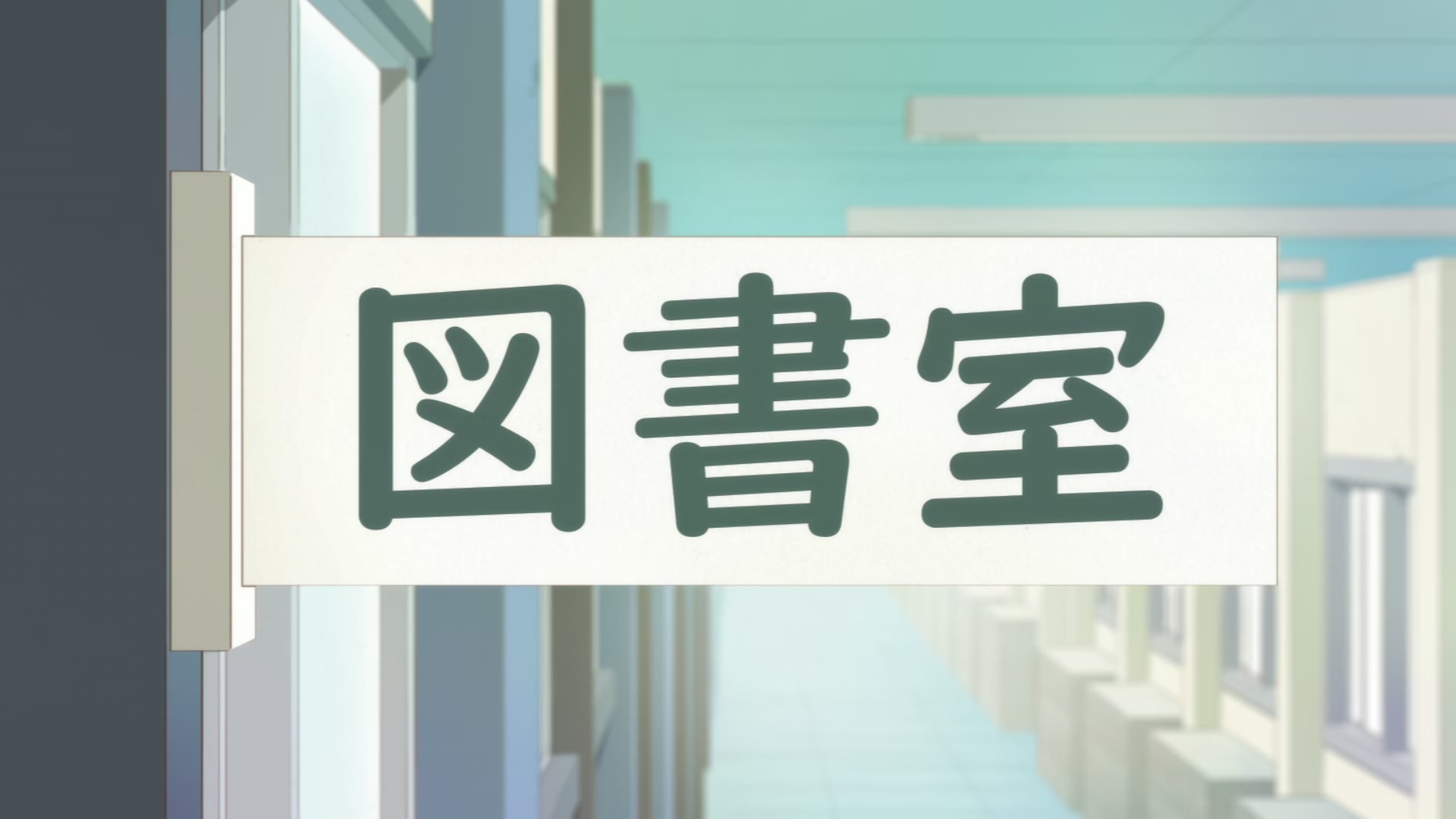
The series argues that communication is the central drama of all relationships. Tani, early on, believes that if something isn’t said, it doesn’t need to be. When Suzuki calls almost everything “adorable”—from a tiny teacher’s bicycle to Tani’s awkward jealousy—he takes a trip to the library and ends up reading books on conversational competence and the gap between words and intent. He realises, with a jolt, that he’s never once worried about whether his meaning was actually received. Suzuki, meanwhile, devours a magazine article titled “Conversational Techniques for Those Who Want to Be Loved” and then proceeds to bungle a walk home by forcing herself into a “good listener” mode that only makes things stilted. The takeaway is never that these characters should just speak their minds perfectly; it’s that the attempt to bridge the gap—the fumbling, the overcorrection, the embarrassment—is the very stuff of intimacy.
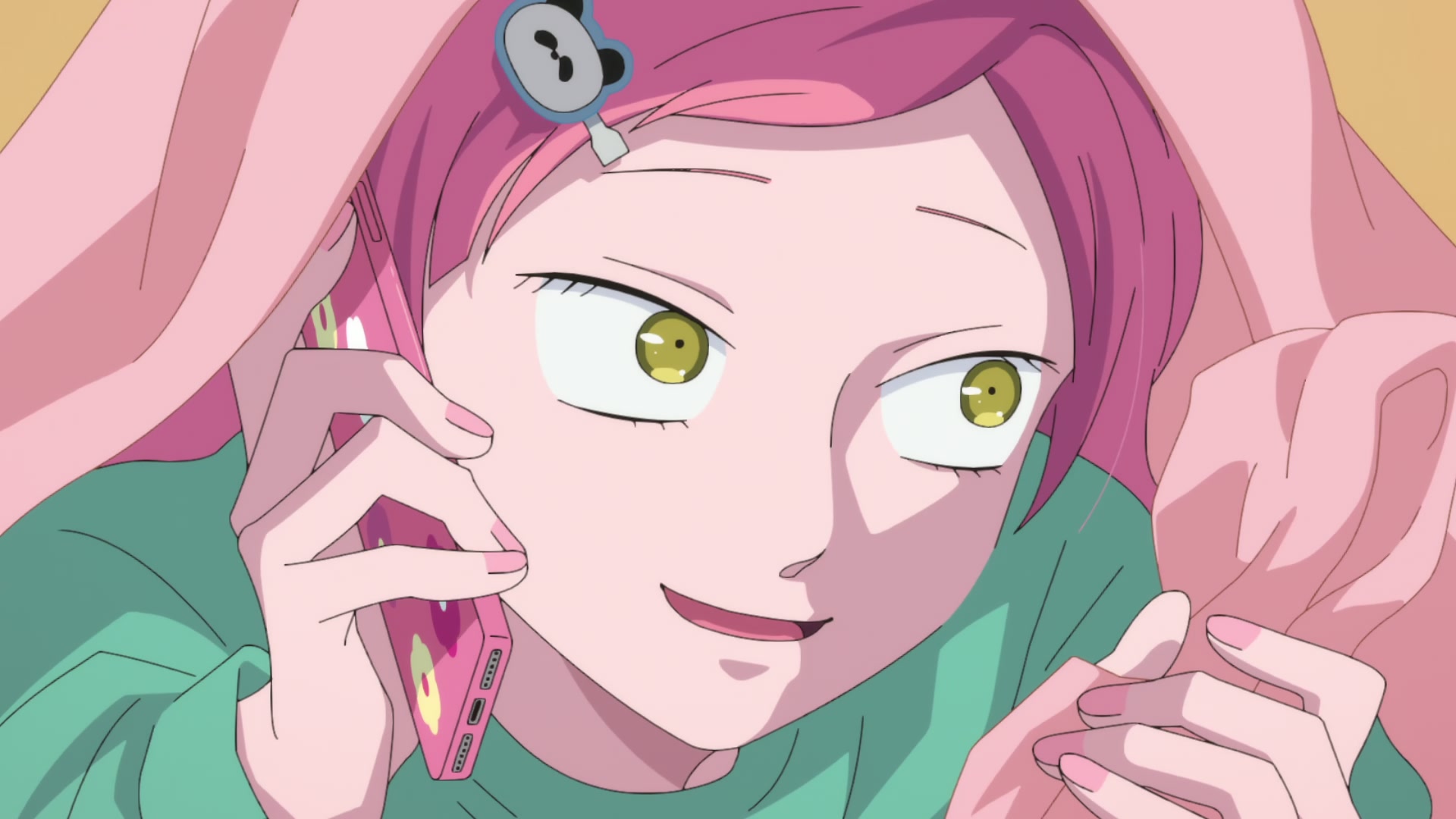
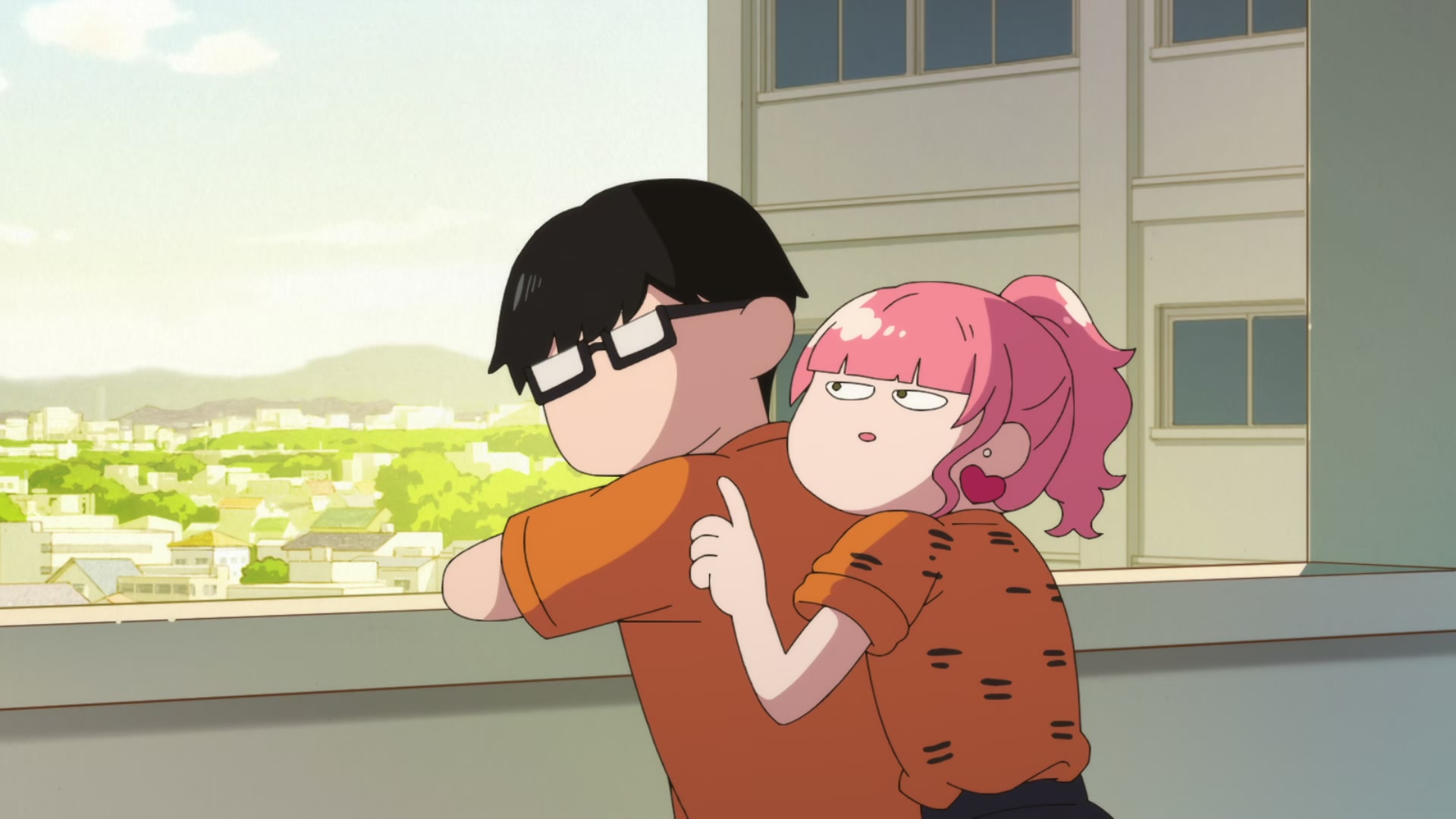
The show also masterfully deploys small-step romanticism. It rejects the notion that love is proved through grand, cinematic moments. Instead, it accumulates through a hand held on a walk home, a midnight birthday call that wakes the receiver, a bike ride on a summer night, a request for a hug in a bedroom cluttered with the ordinary detritus of a life. The emotional logic is that real closeness is built from these mundane, monumental gestures, and by the time Tani finally calls Suzuki “Miyu” without a suffix, the moment has the impact of an earthquake.
Culturally, the series is steeped in the specific textures of Japanese adolescence without ever feeling like a textbook. The culture festival with its food stalls and class exhibits, the detailed planning for the class trip to Kyoto and Osaka, after-school library duties, electives like Japanese sweet-making—all these form the authentic backdrop against which the characters’ inner lives play out. Taira’s obsession with social rank, a dark reflection of the pecking order he desperately tried to escape from middle school, adds a layer of cultural critique that never becomes preachy. And the subtle, carefully plotted shifts in how characters address one another—from “Tani-kun” to “Yuusuke-kun” to “Miyu”—function as a kind of emotional barometer, charting the terrifying intimacy of dropping honorifics step by step.
Characters: Case Studies in Becoming Yourself
The cast of Seihantai na Kimi to Boku is one of the most uniformly well-drawn ensembles in recent anime romance. Every character, no matter how minor, is treated with empathy, and the writing resists the easy lure of archetypes. The “loud genki girl” is anxious; the “cynical snarker” is profoundly insecure; the “shy dandere” is wryly funny when she’s not paralysed by fear.
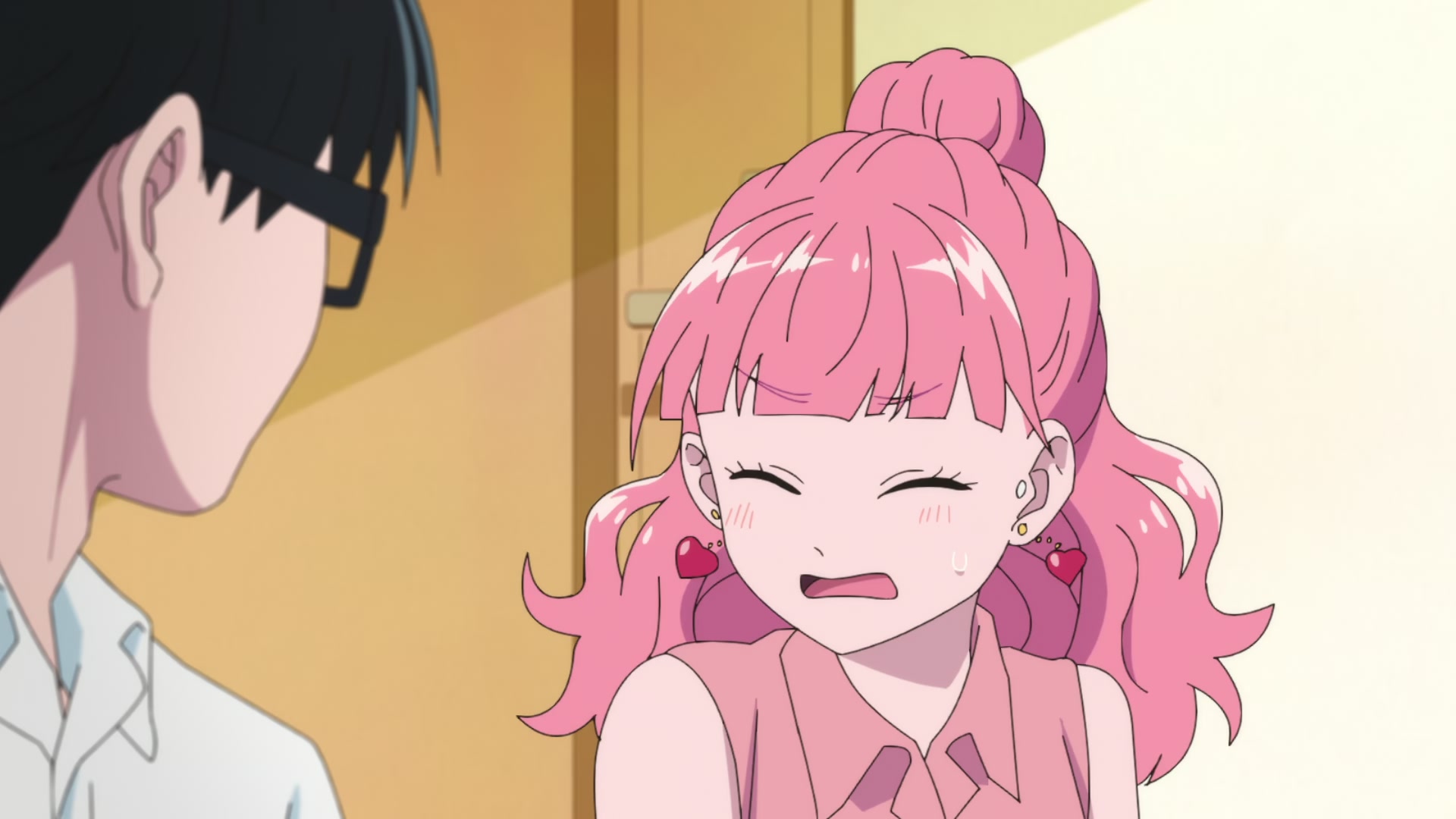
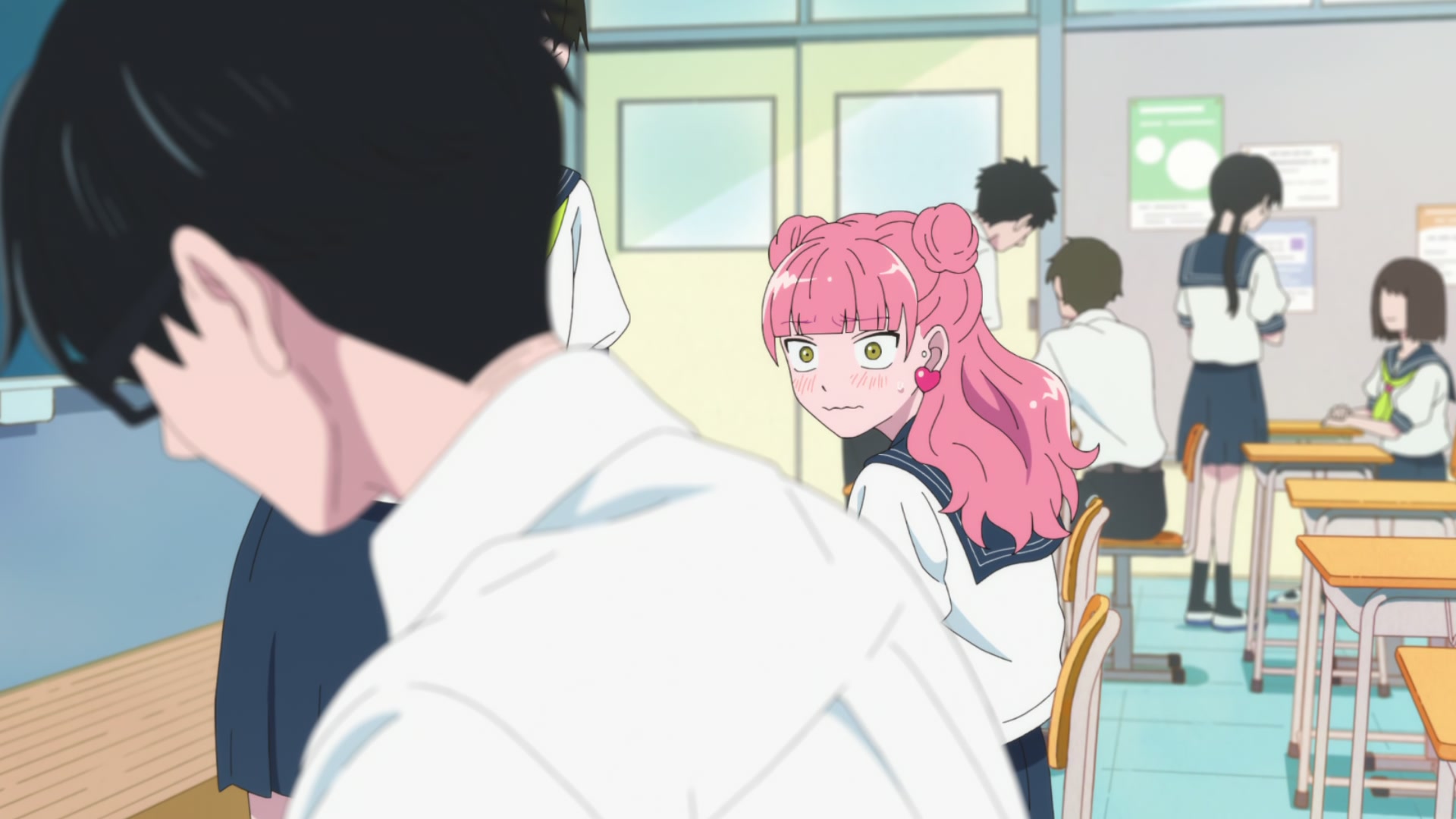
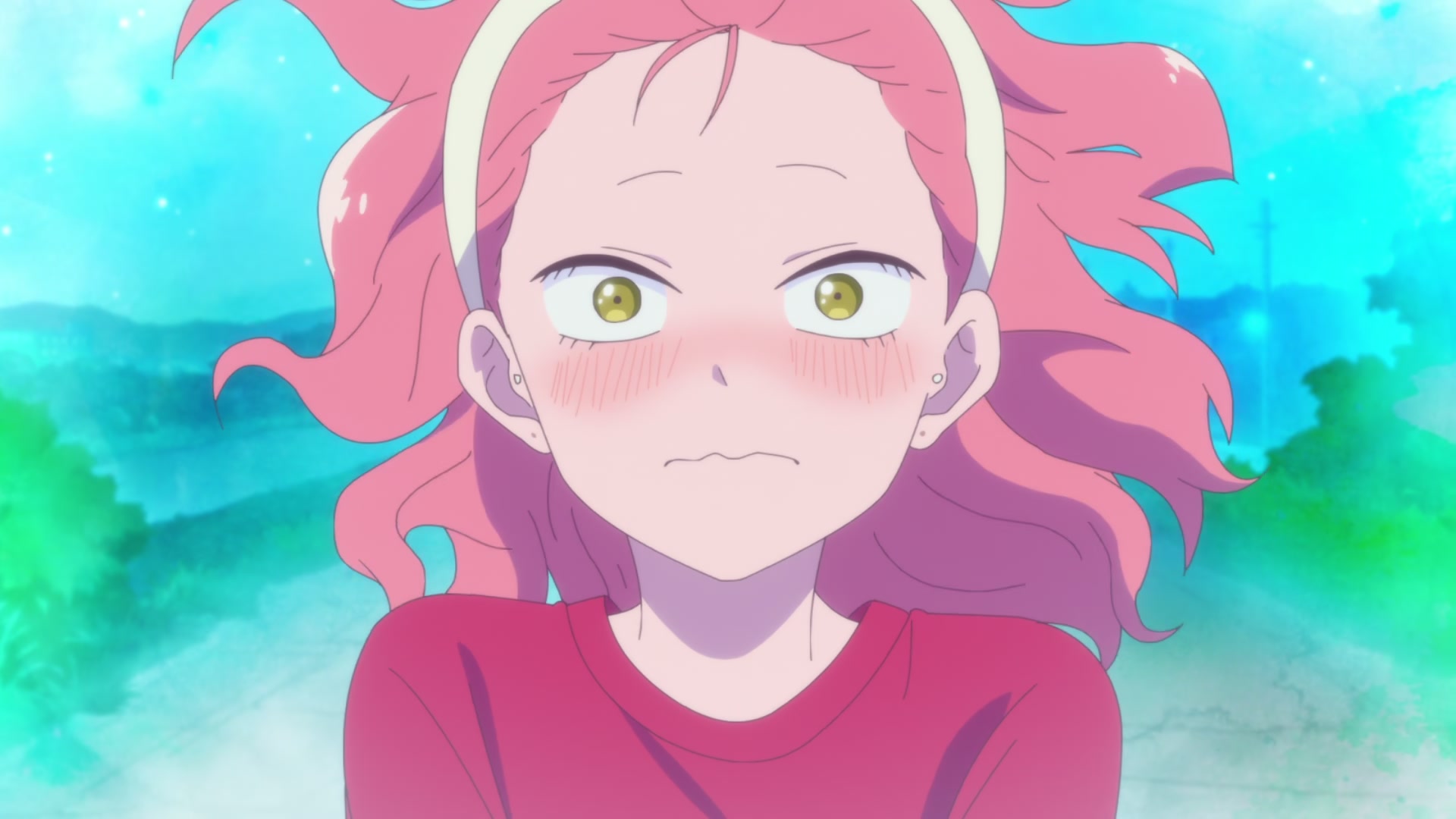
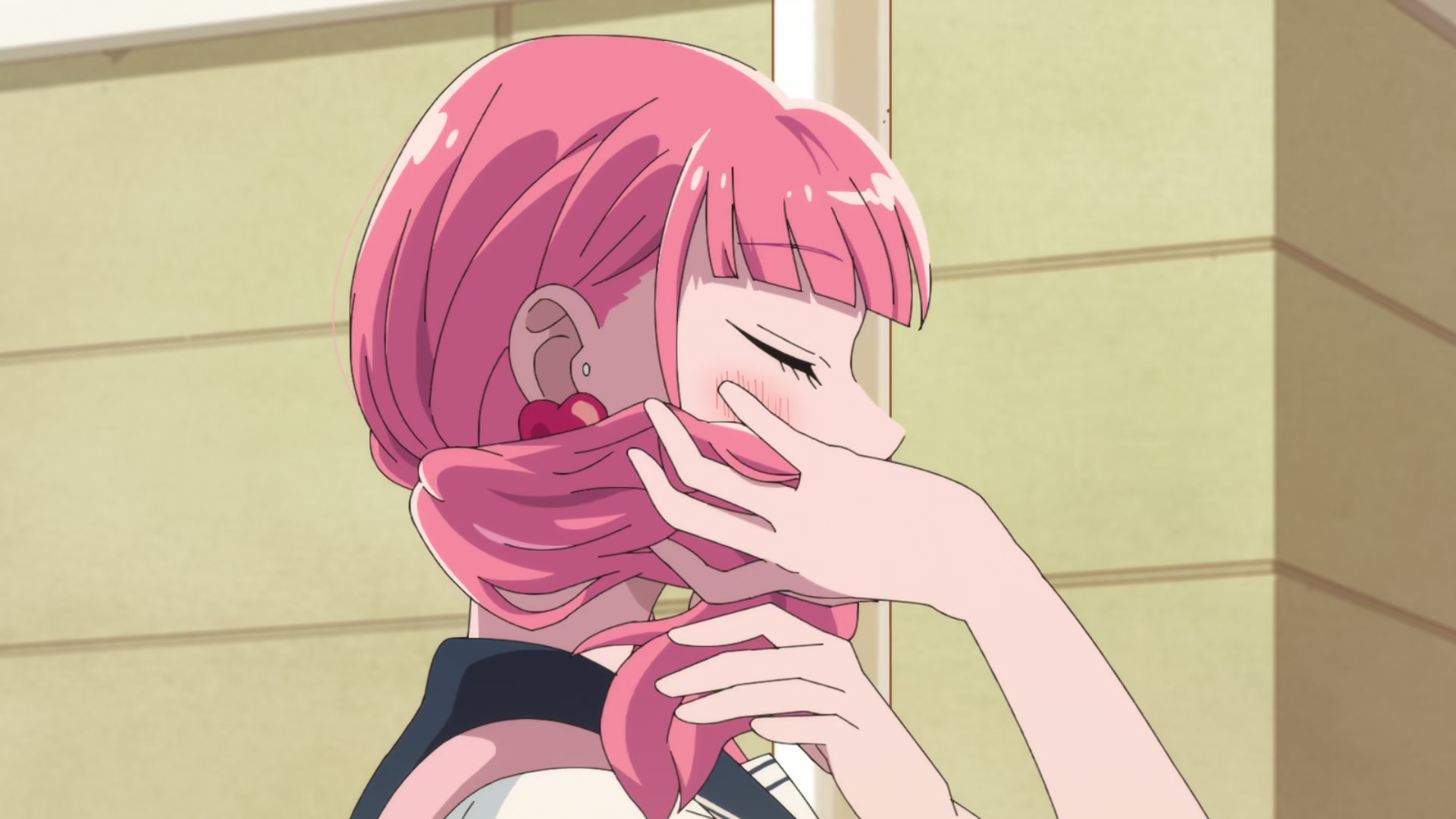
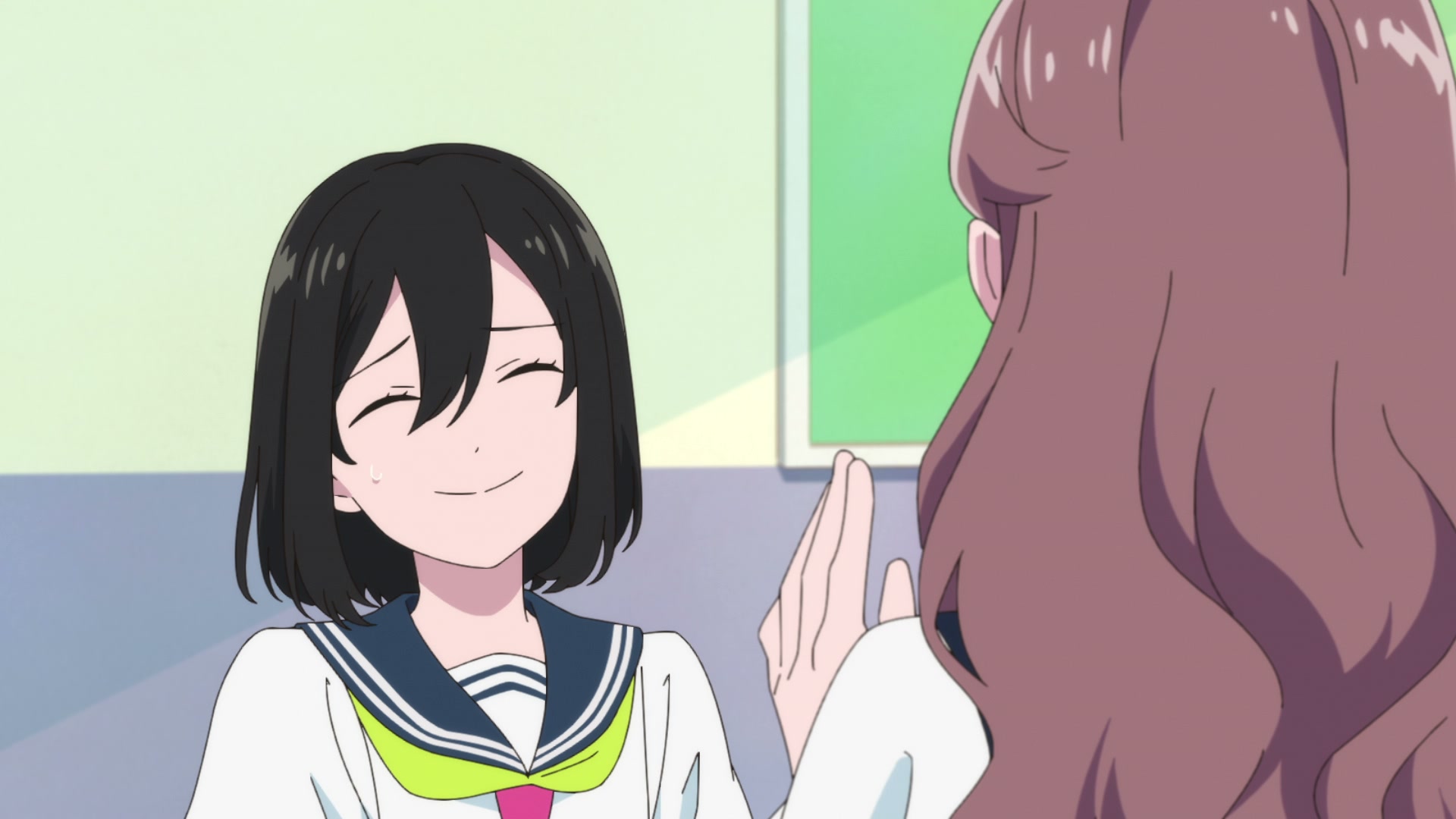
Suzuki Miyu is the story’s engine. She vibrates with energy, flipping between exaggerated reactions and genuine panic. Her love of the actor SudaKen and her shojo-manga-fueled romantic dreams make her endearing, but it’s her constant, interior war between wanting to be liked and wanting to be honest that gives her depth. In the first episode, when asked if she and Tani are dating, she blurts “It’s not like that!”—a reflex of self-protection that wounds Tani and nearly sinks the relationship. Her subsequent run through the schoolyard, friends cheering her on while she cries out a rambling confession, is the rawest kind of bravery: the kind that comes after a failure. Throughout the series, Suzuki learns, in fits and starts, that Tani isn’t looking for a perfectly plated dish; he wants the meal itself. Whether she’s fleeing in her middle-school gym shorts or eating a burger with unladylike gusto, his steady acceptance gradually frees her from the tyranny of other people’s gazes.
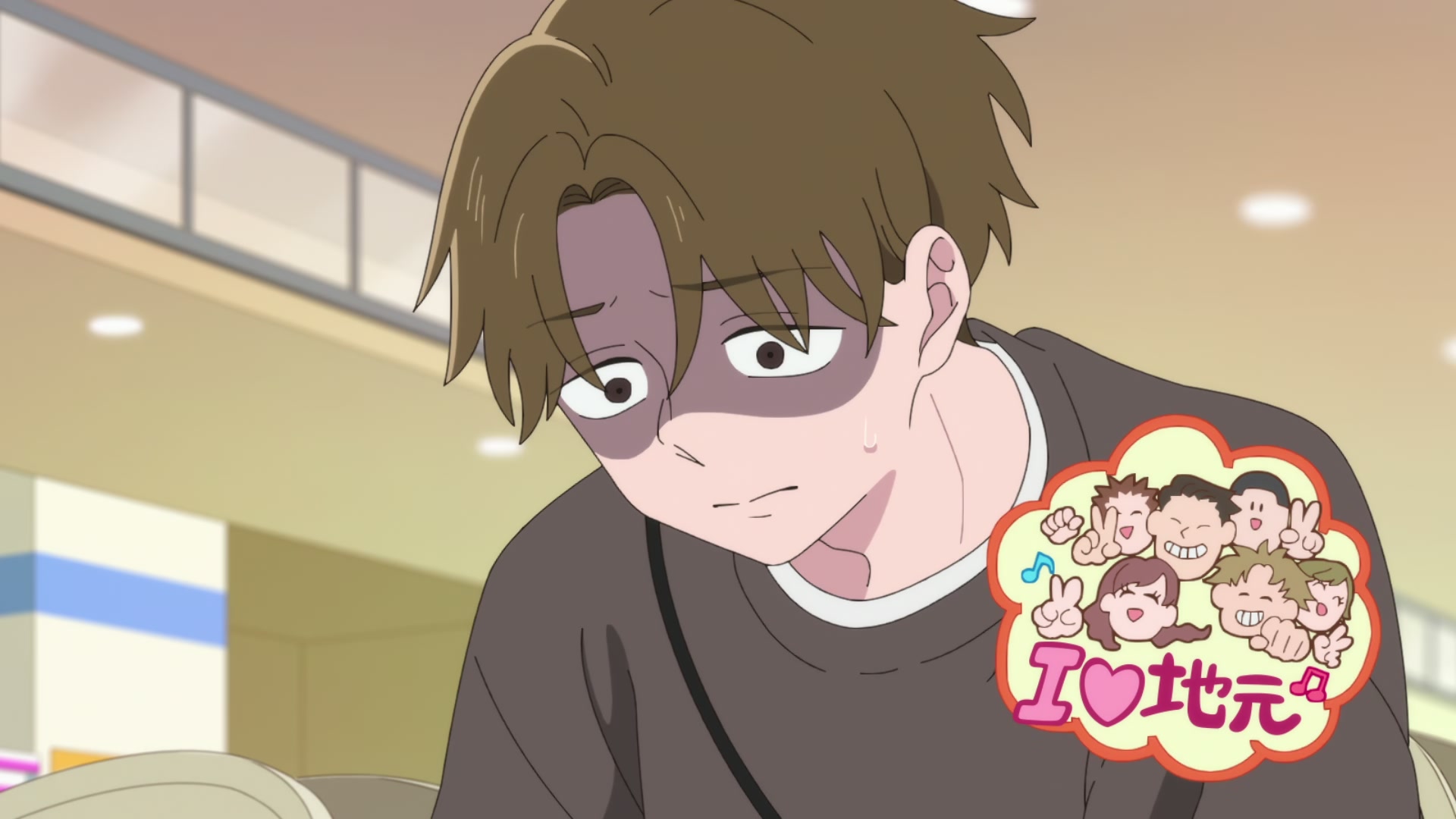
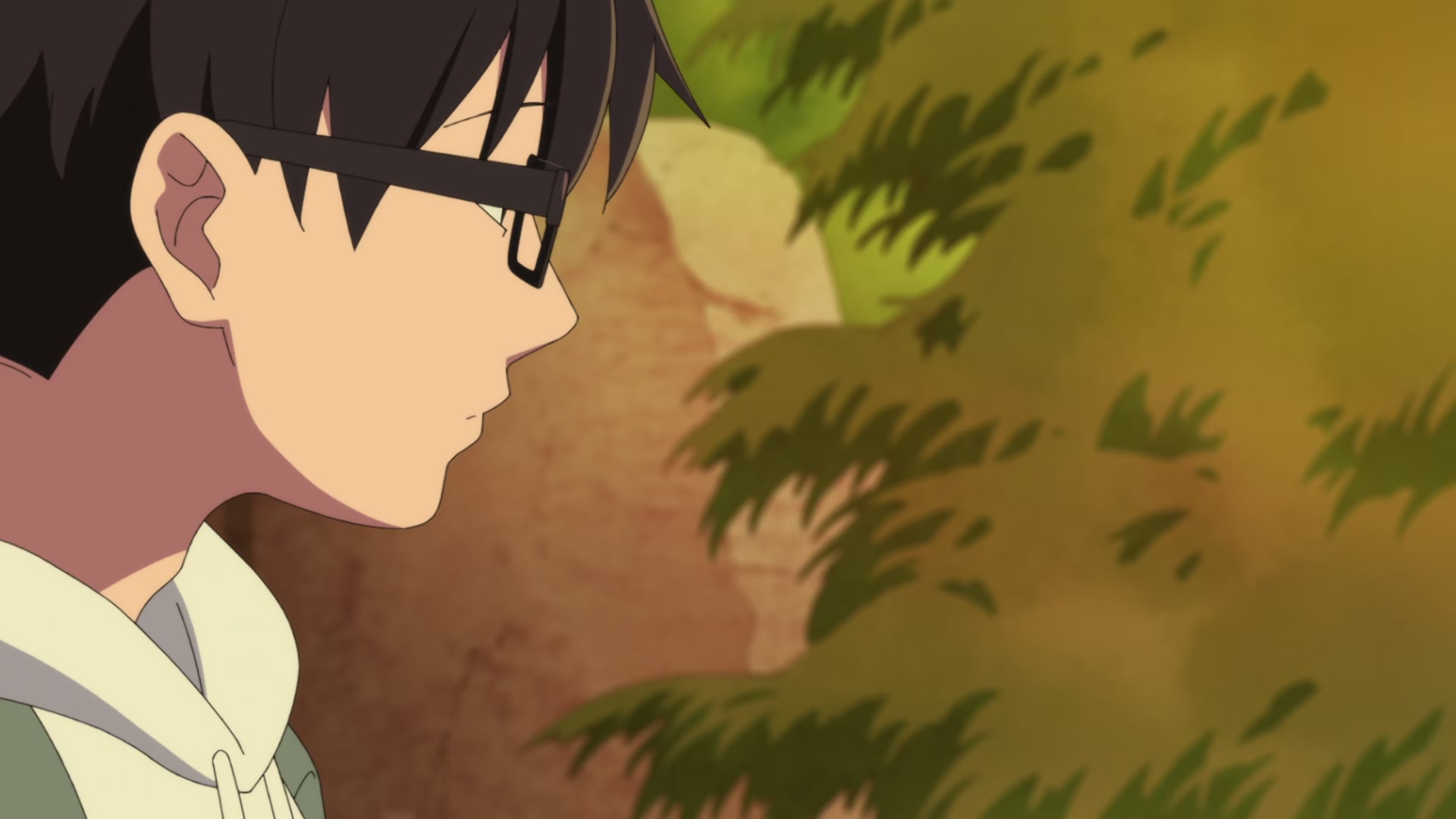
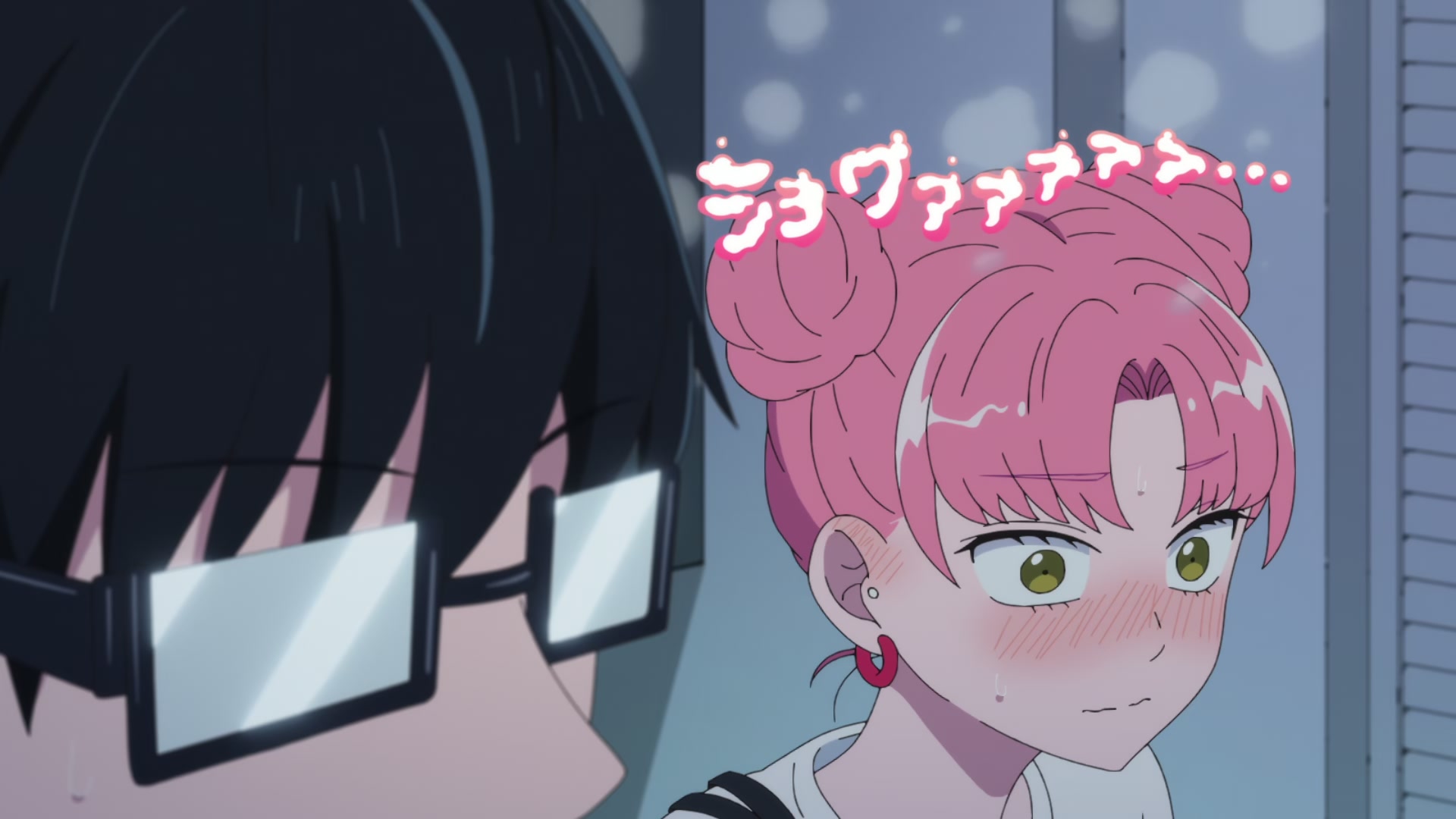
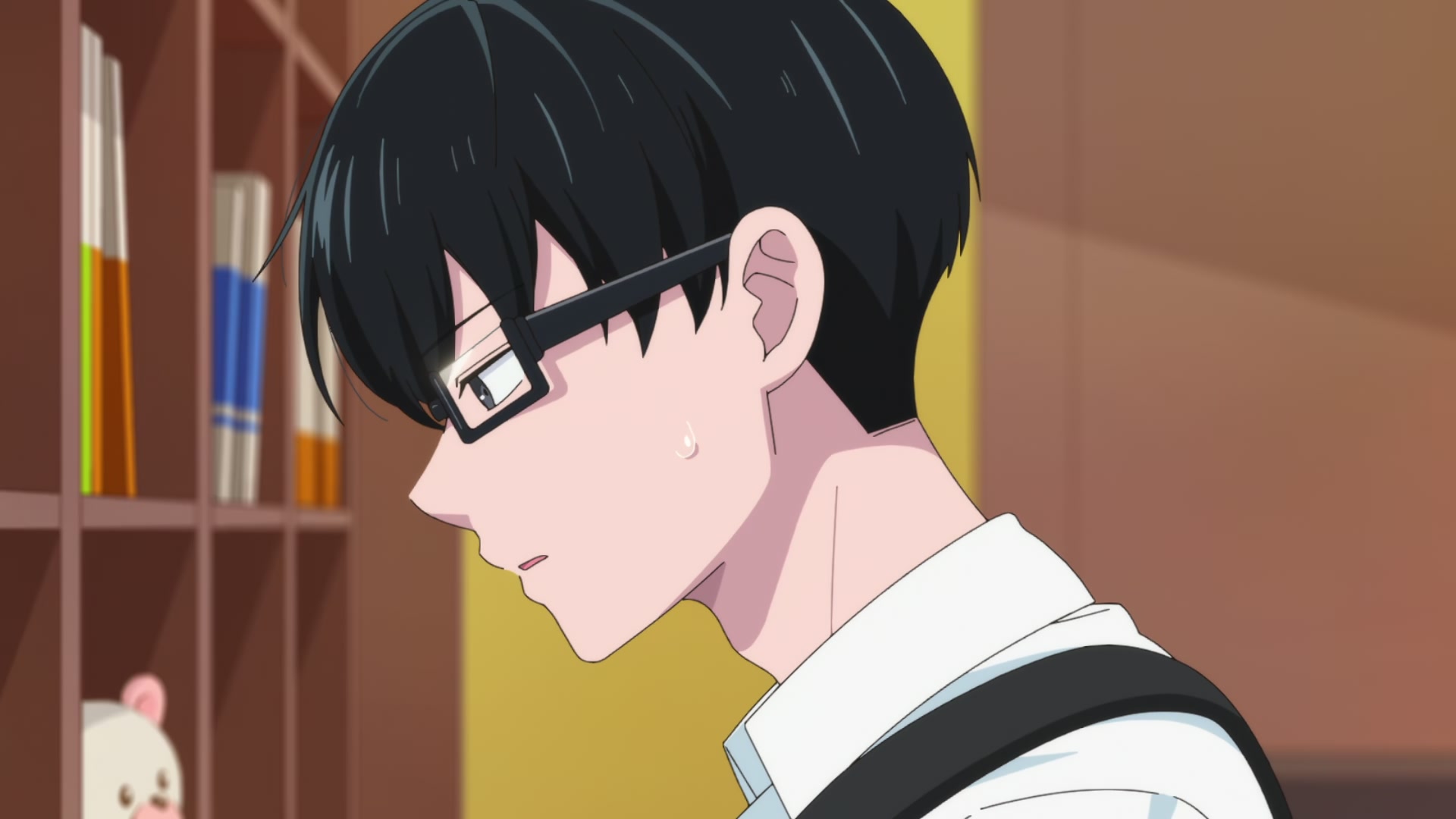
Tani Yuusuke is her perfect foil. His emotional journey is less about changing who he is than about discovering who he is. He begins the series insulated, genuinely baffled by jealousy when he overhears Suzuki rhapsodising about a “bad boy” actor. His confession in episode one is a masterpiece of understated vulnerability: “When you’re not talking, I don’t know what to do. That’s the kind of pathetic human being I am.” Tani is, in his own words, “constantly doubting” himself, and his arc traces the gradual, often embarrassing process of learning to voice those doubts. He researches dates, agonises over birthday reactions, and, in a pivotal moment, admits he’s jealous—not because he distrusts Suzuki, but because he despises the ugly feelings inside himself. By the season’s end, he’s not a completely different person, but he smiles more, engages more, and can call her “Miyu” with a quiet warmth that feels fully earned.
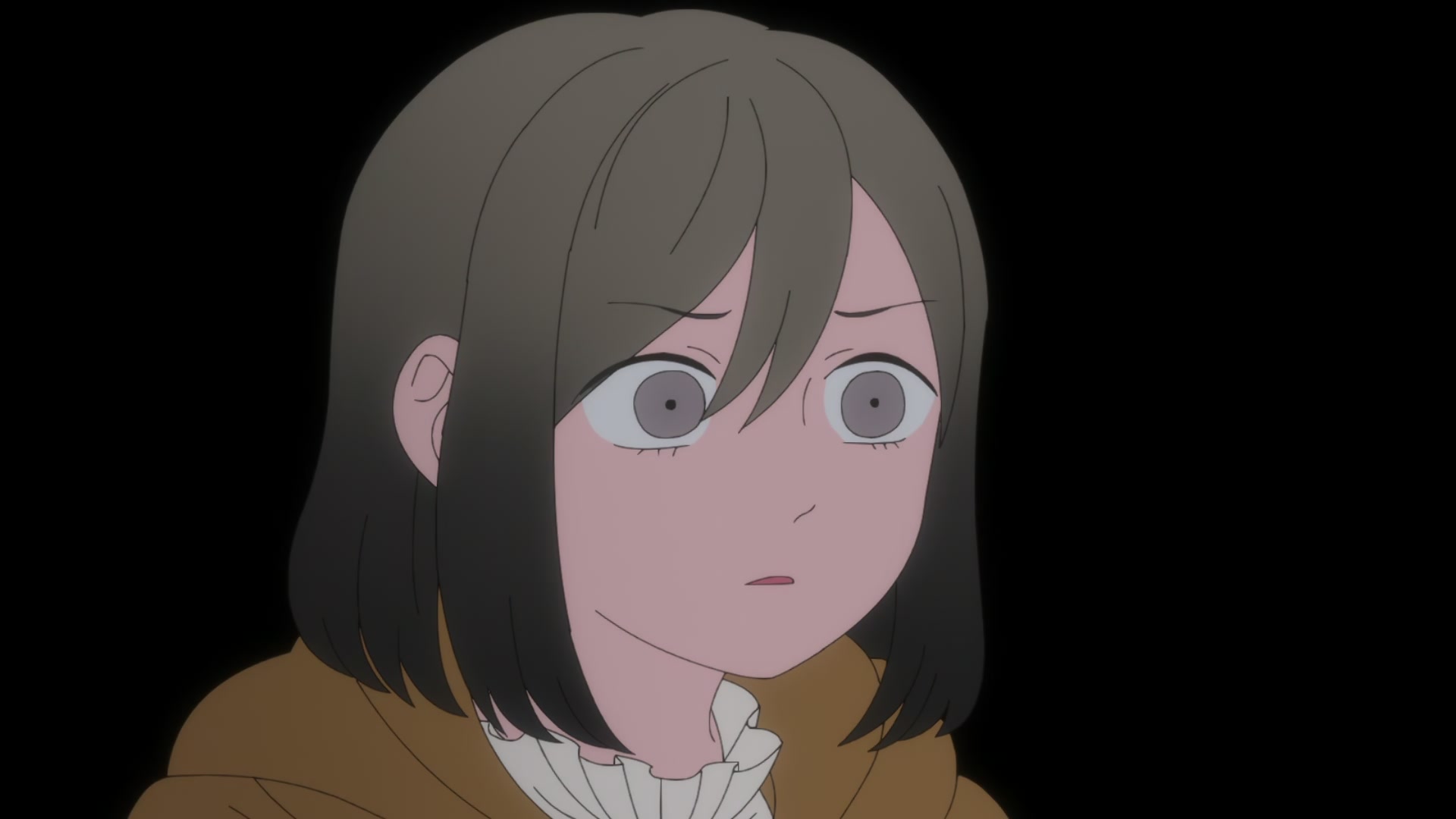
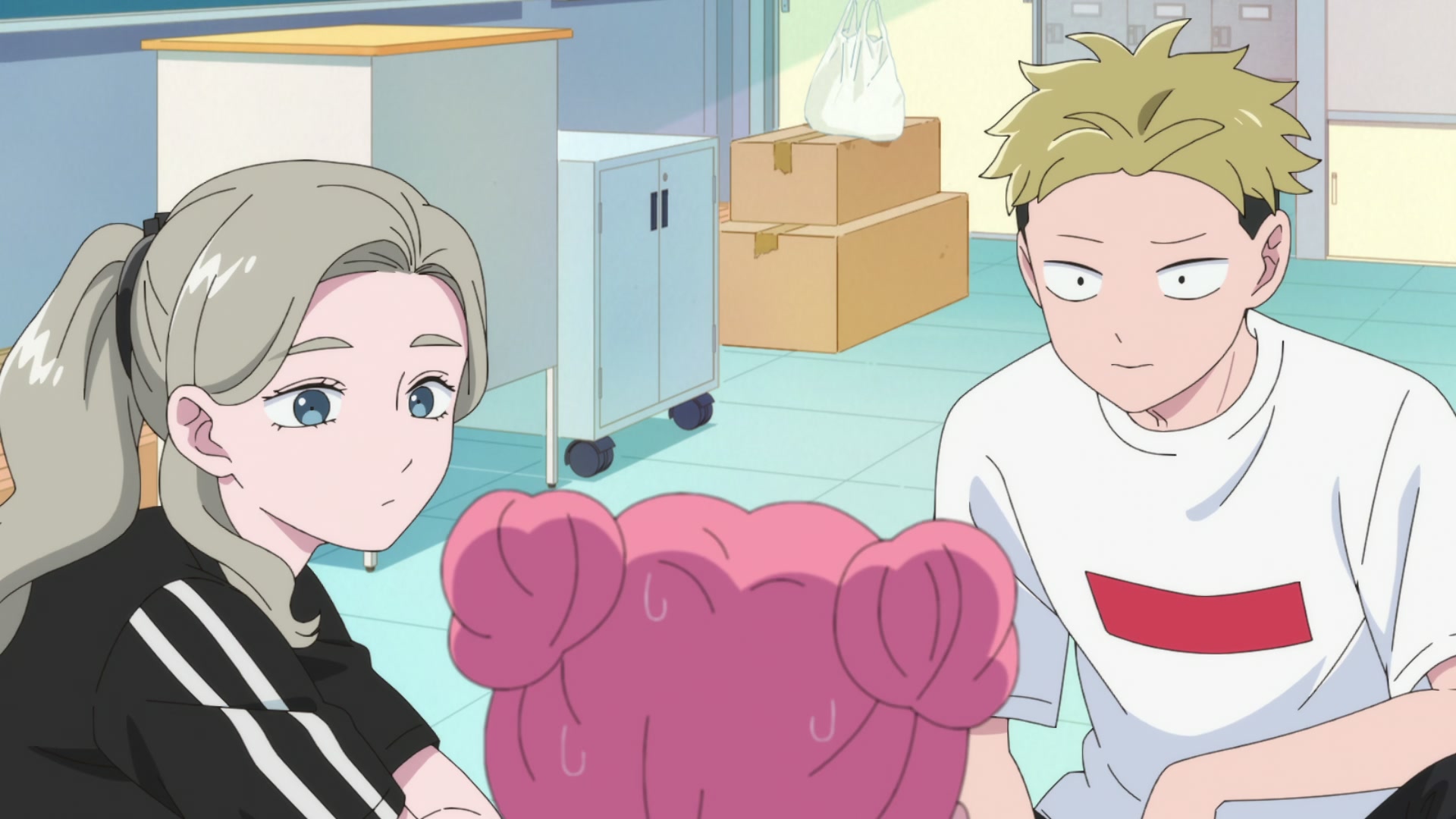
The second couple, Yamada and Nishi, mirror the central pair’s polarity in a quieter register. Yamada is a boy whose defining trait, revealed by the series’ playful “yeti” narrator, is an attraction to the laughter of someone he wouldn’t expect to laugh. Nishi, a photography club member with crippling social anxiety, is the embodiment of that unexpected laughter. Her internal monologue is a relentless stream of self-reprimand: “I’m sorry I can’t expand the conversation,” “It’s creepy that I was smiling.” When Yamada approaches her, her heart pounds so hard she can hear it, but she can’t tell if it’s the situation or him that’s causing it. Their breakthrough, at the culture festival, when he tells her “You should just make mistakes! With me. Because I’m not someone you need to be careful around at all,” is a devastatingly simple absolution that unlocks something in Nishi. Her journey toward accepting that these feelings “can’t be explained away anymore” culminates in a Chinatown date where she laughs out loud and meets his gaze, a victory as profound as any battle.
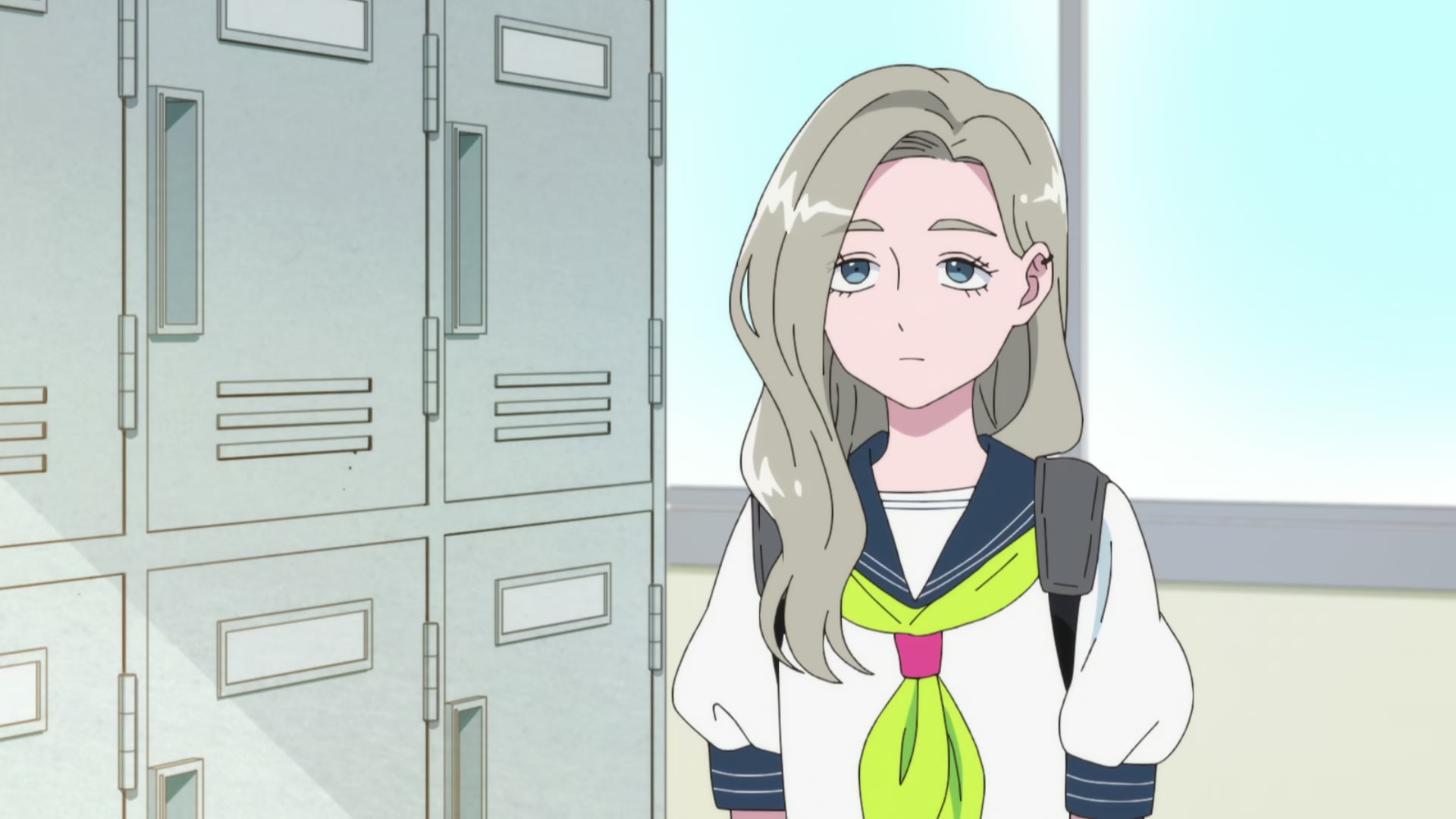
Taira and Azuma provide the series’ most adult emotional texture. Taira is a cynic who has painstakingly reinvented himself in high school, only to find he can’t escape his own internal hierarchy. Azuma is a girl whose breezy, “cool older sister” persona shields a history of being used—her exes and former friends casually passed her around, and she learned to forgive everything because “I can’t really bring myself to hate them.” When Taira hears her numbly recount this history, labelling people with numbers, he explodes: “You’re being treated like trash, so you should get angry! There’s no way it’s worth it, is there?” It’s a moment of such righteous fury that it reconfigures both characters. Azuma has never had anyone take her pain seriously; Taira has never allowed himself to care so openly. Their dynamic doesn’t fully blossom into romance within the first season, but the groundwork is laid with extraordinary sensitivity.
The central friendship group—Satou, the deadpan voice of reason, Watanabe, with his dry observations and morbidly realistic relationship advice, and the indispensable Honda, who bulldozes Nishi’s anxieties with ruthless logic—provides a support structure that feels organic and essential. They tease, they prod, they celebrate, and their presence ensures that the central romances never float in an isolated bubble. The series understands that love happens within a larger web of connections, and it treats those connections as just as vital.
Visuals and Animation: When Stillness Speaks Volumes
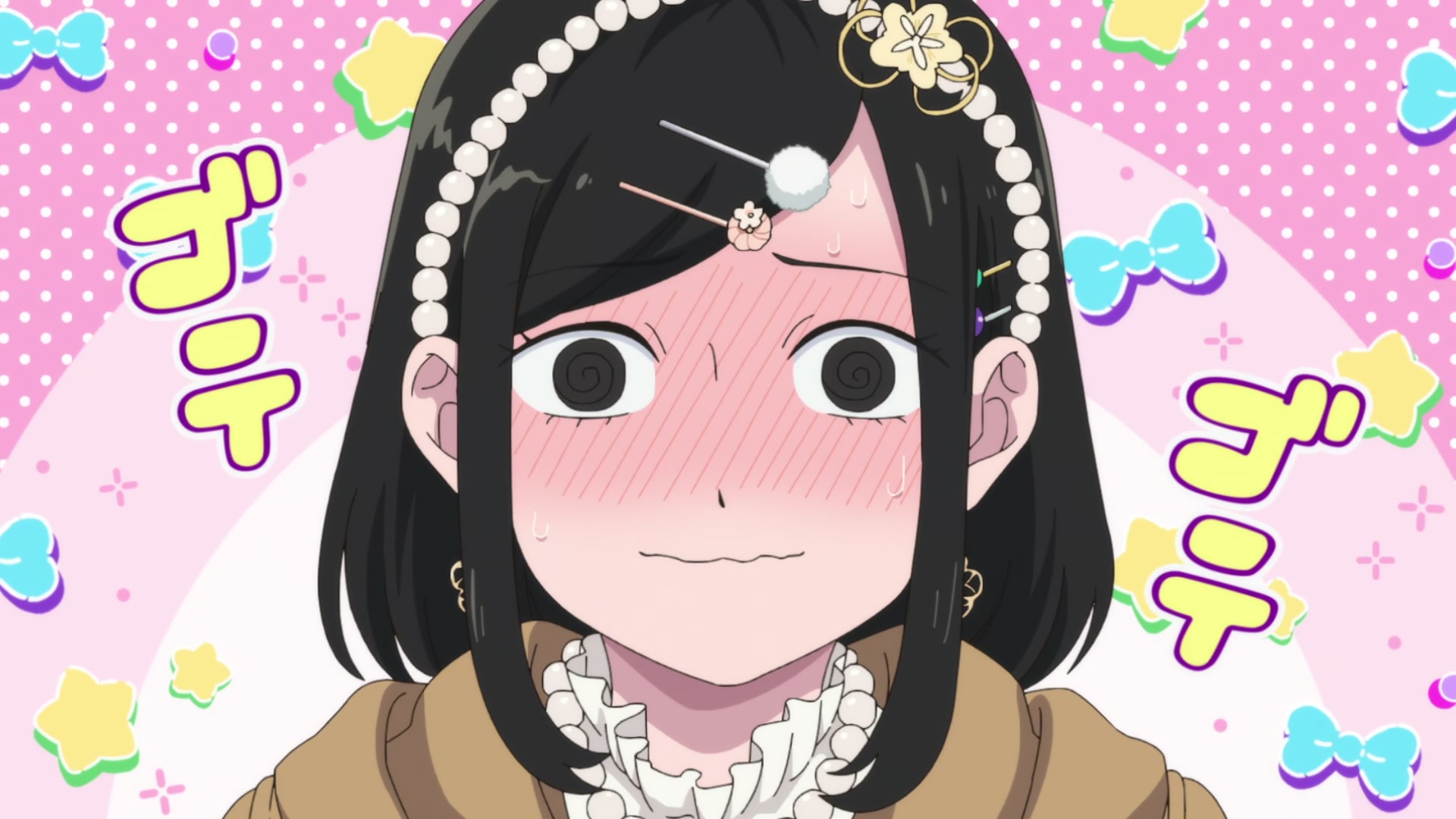
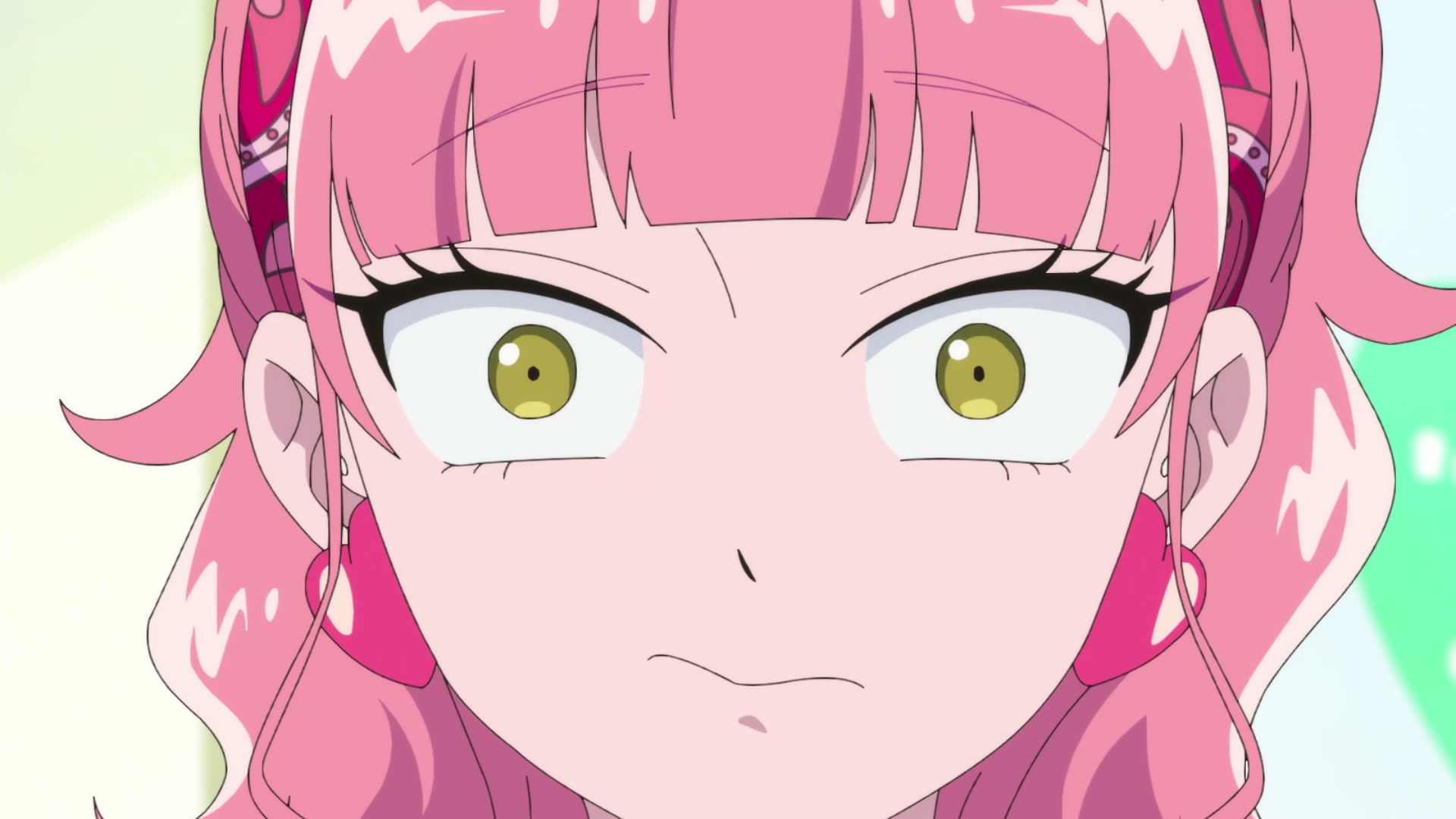
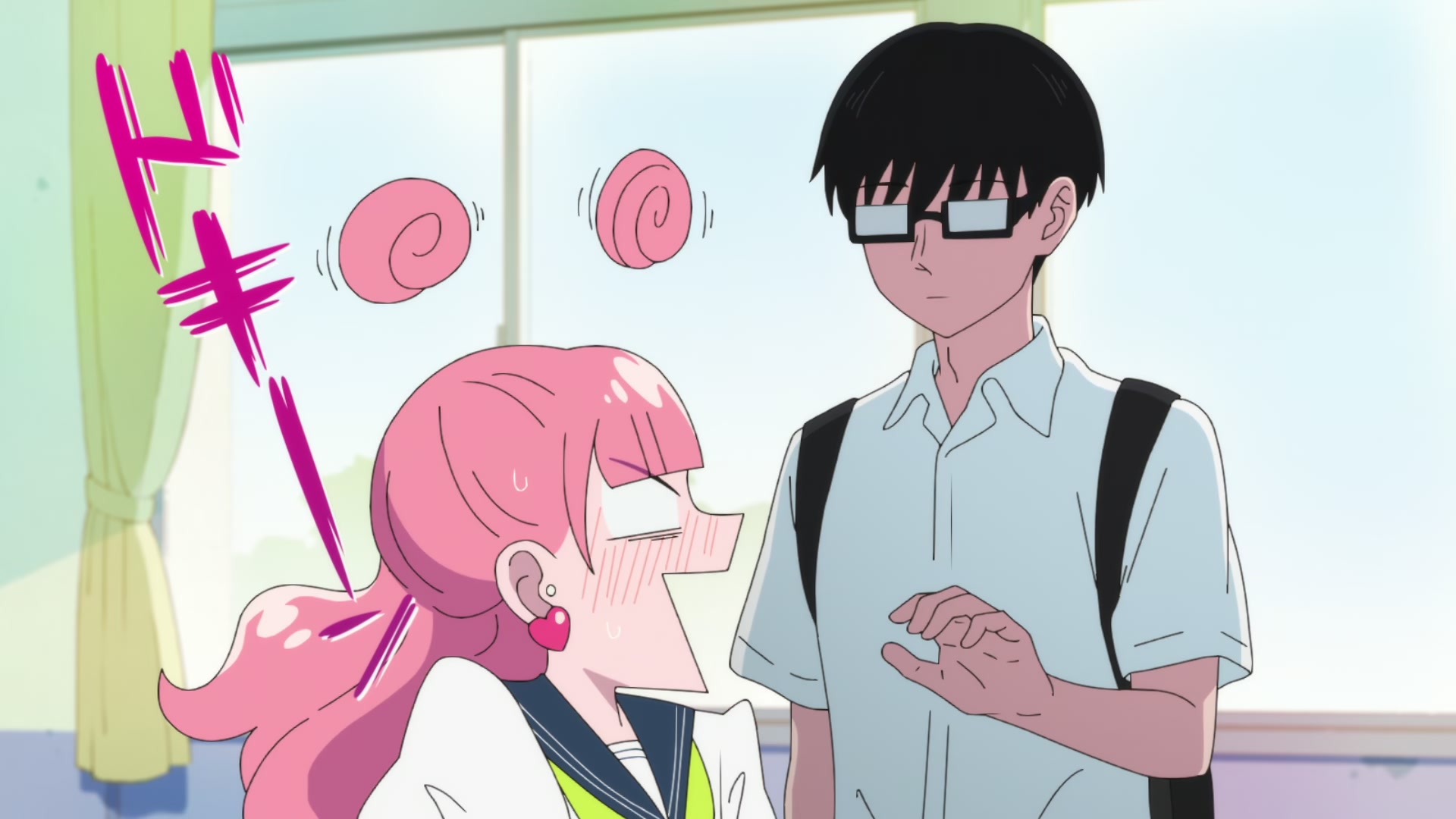
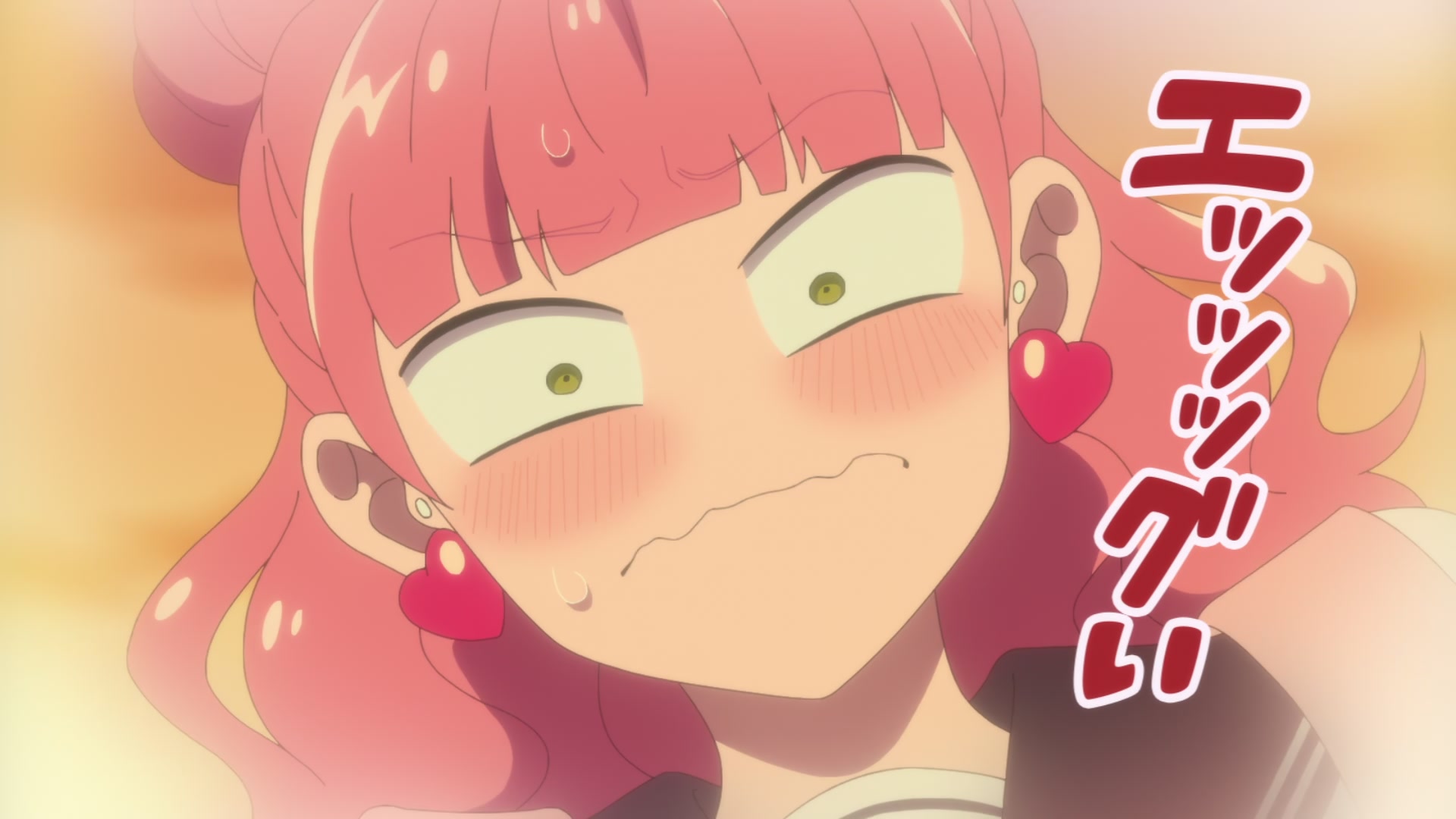
Visually, Seihantai na Kimi to Boku is a showcase of intelligent resource allocation. It’s not a sakuga powerhouse; extended dialogue scenes are often static, with movement limited to mouth flaps, eye blinks, and the occasional character acting. But this stillness is not a flaw—it’s a deliberate, effective choice. The show’s true subject is interiority, the churning thoughts behind a polite smile or a quiet averted gaze. When the animation does kick into a higher gear, it’s for moments of exaggerated comedy—spiral eyes, chibi-style collapses, full-body blush lines—that land all the harder because of the surrounding calm. This elasticity, the ability to pivot from a subtle lip quiver to an all-caps panic, is the signature of a confident director.
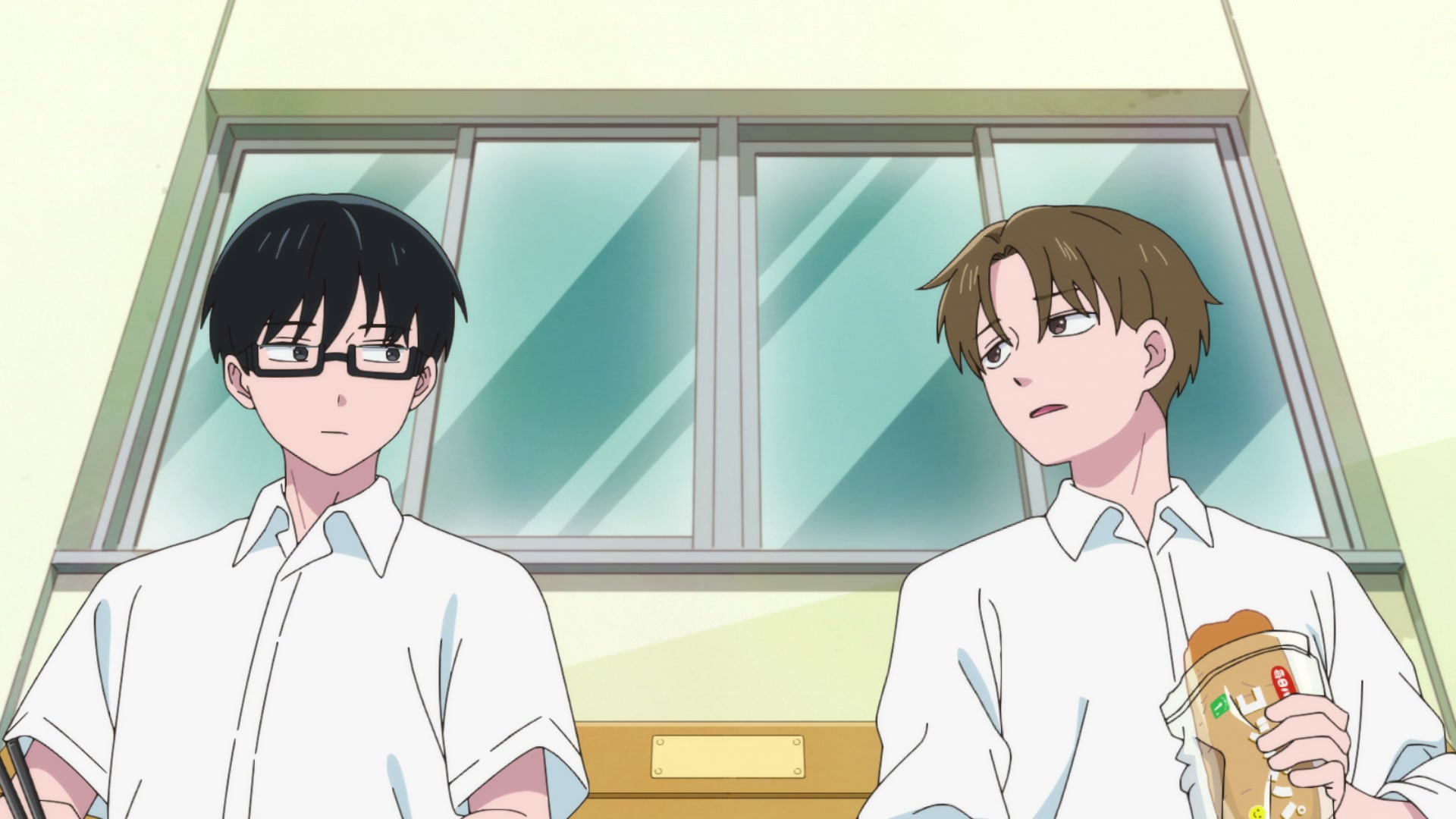
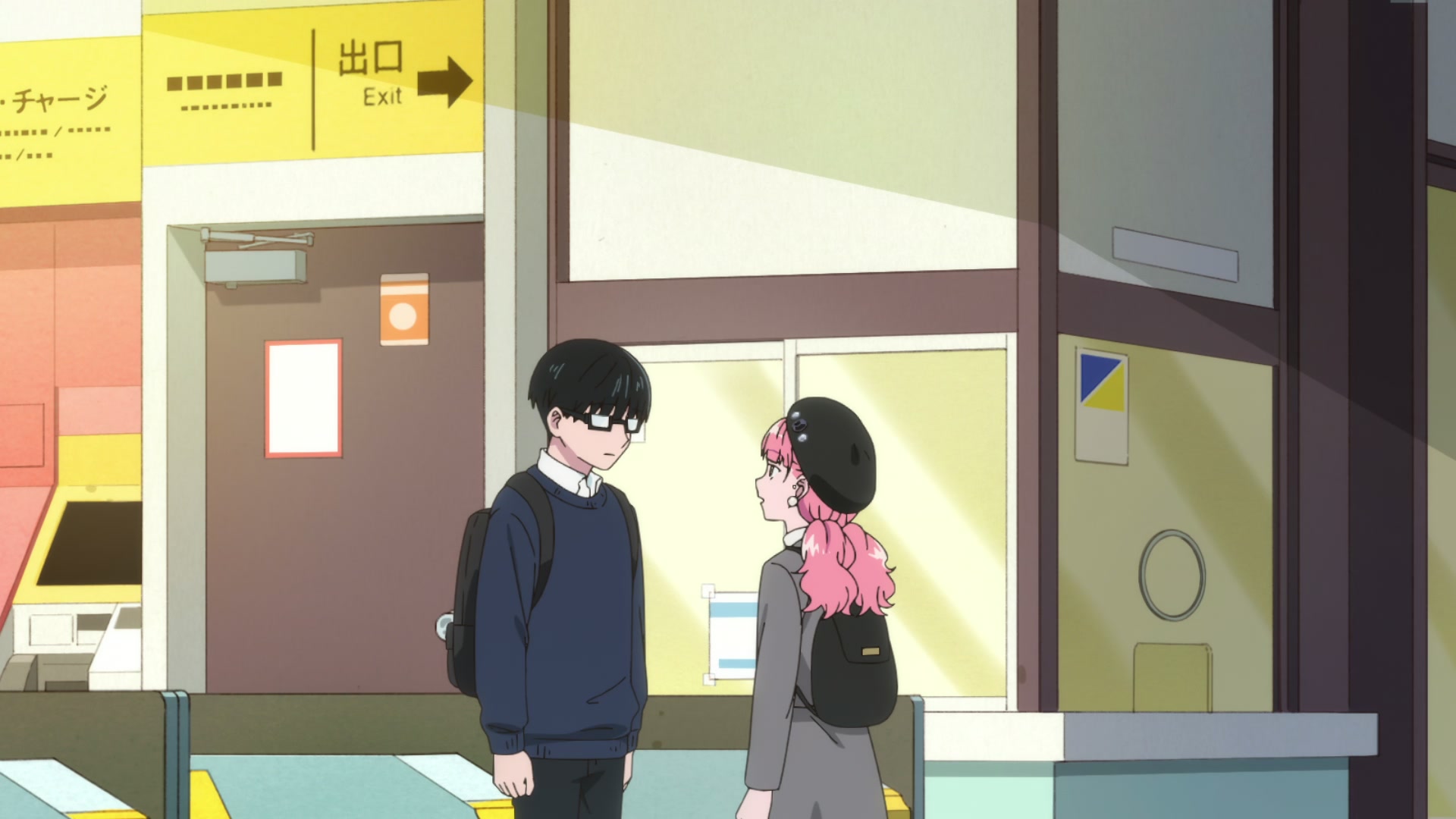
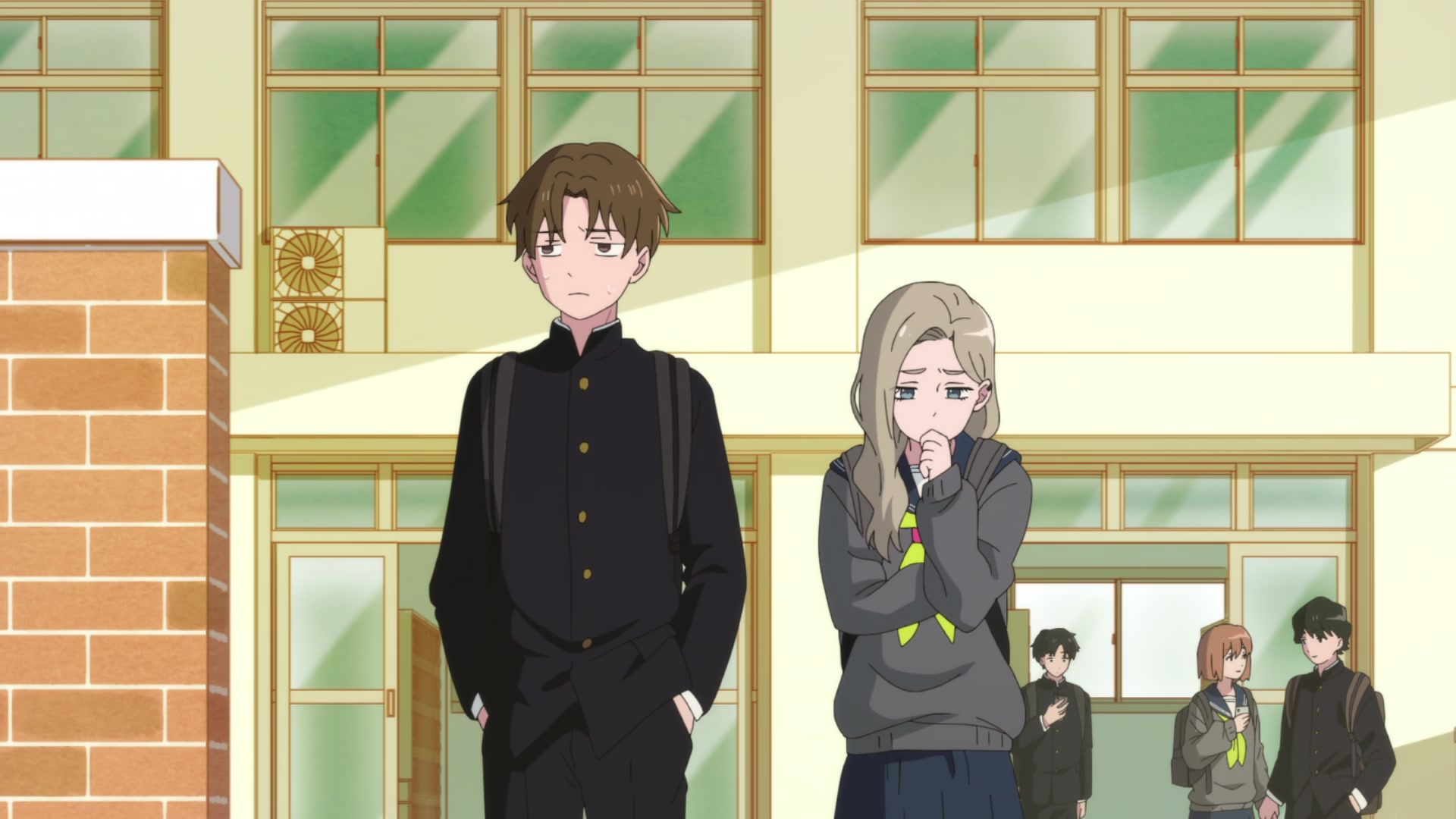
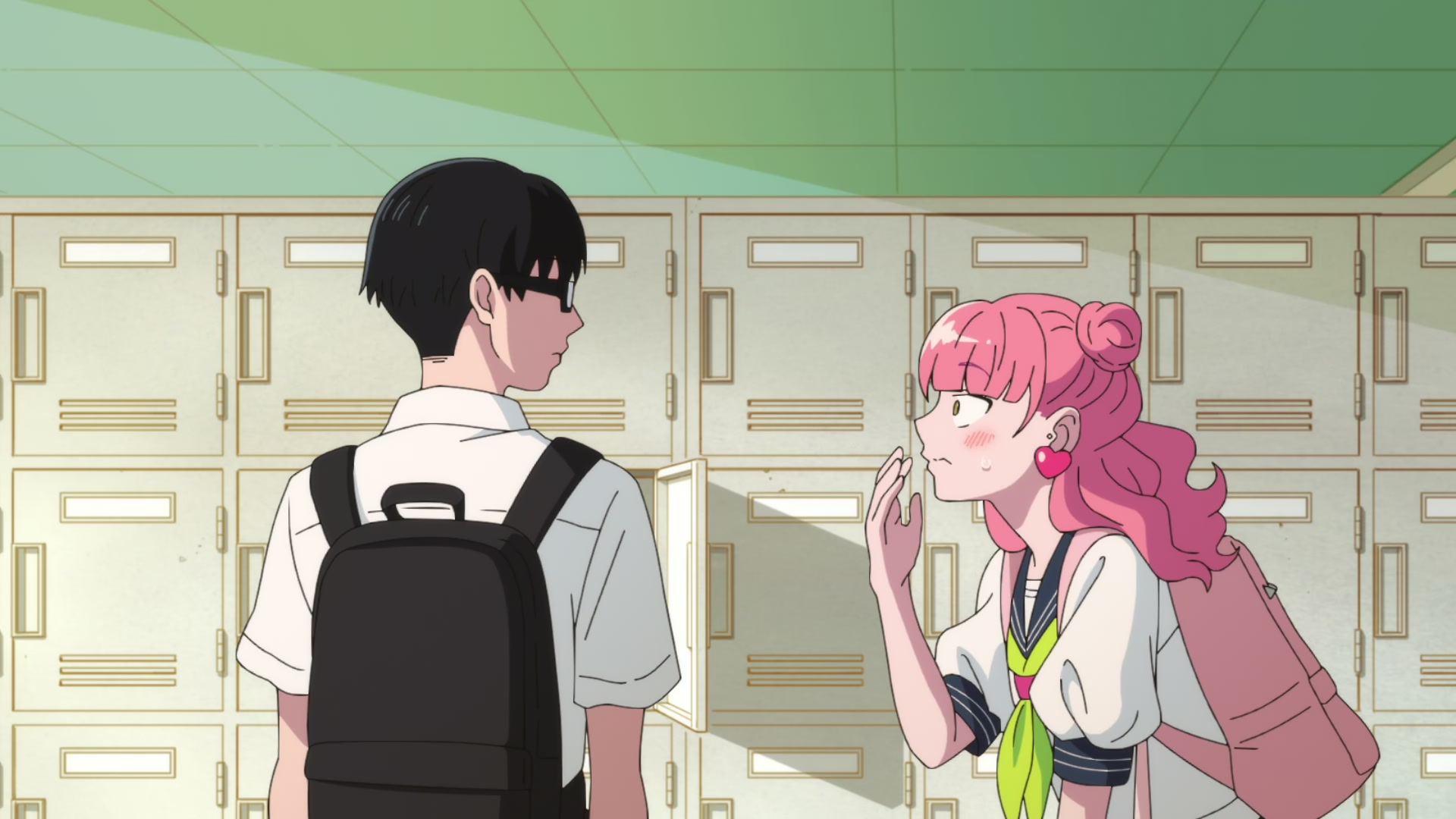
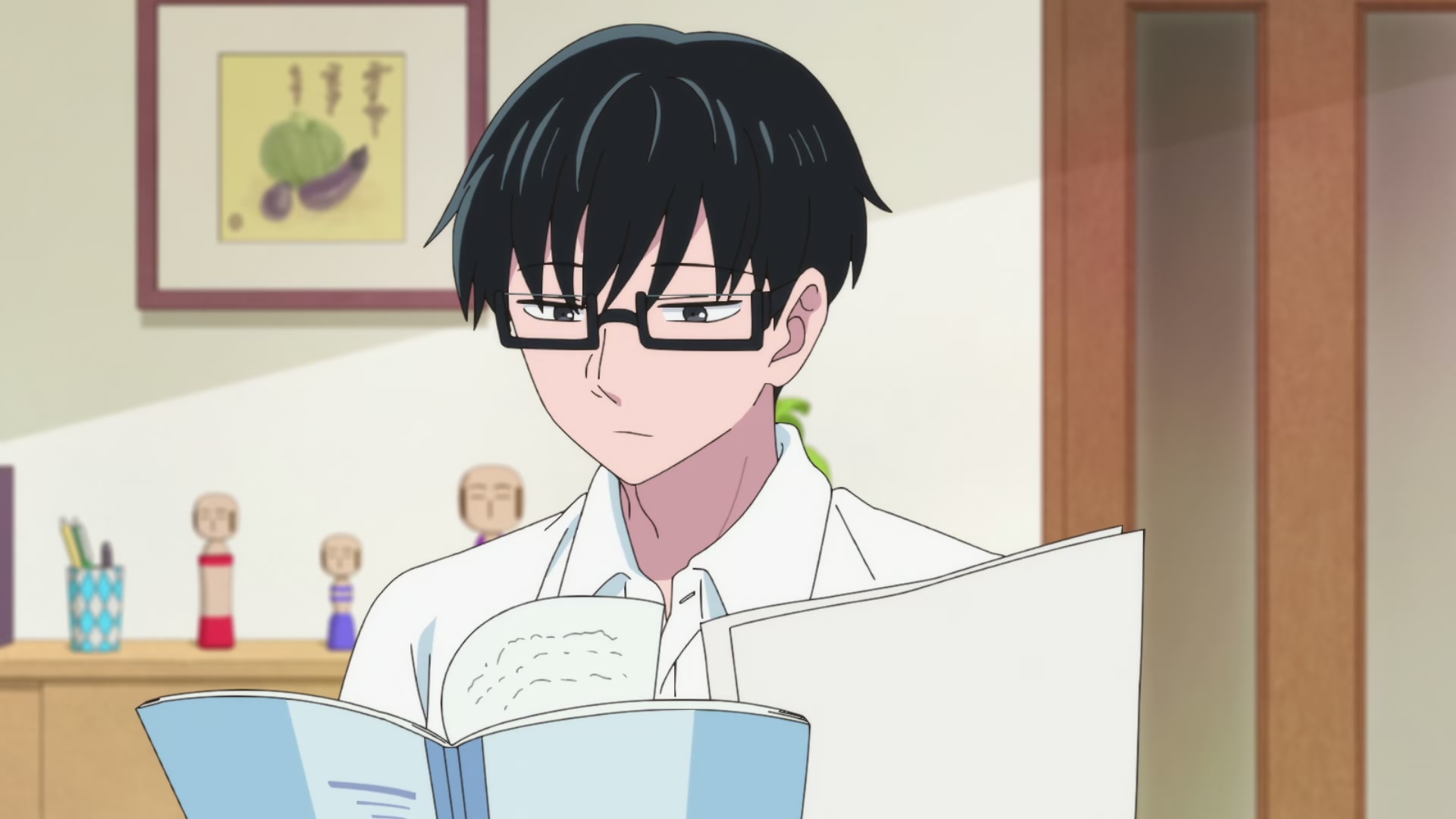
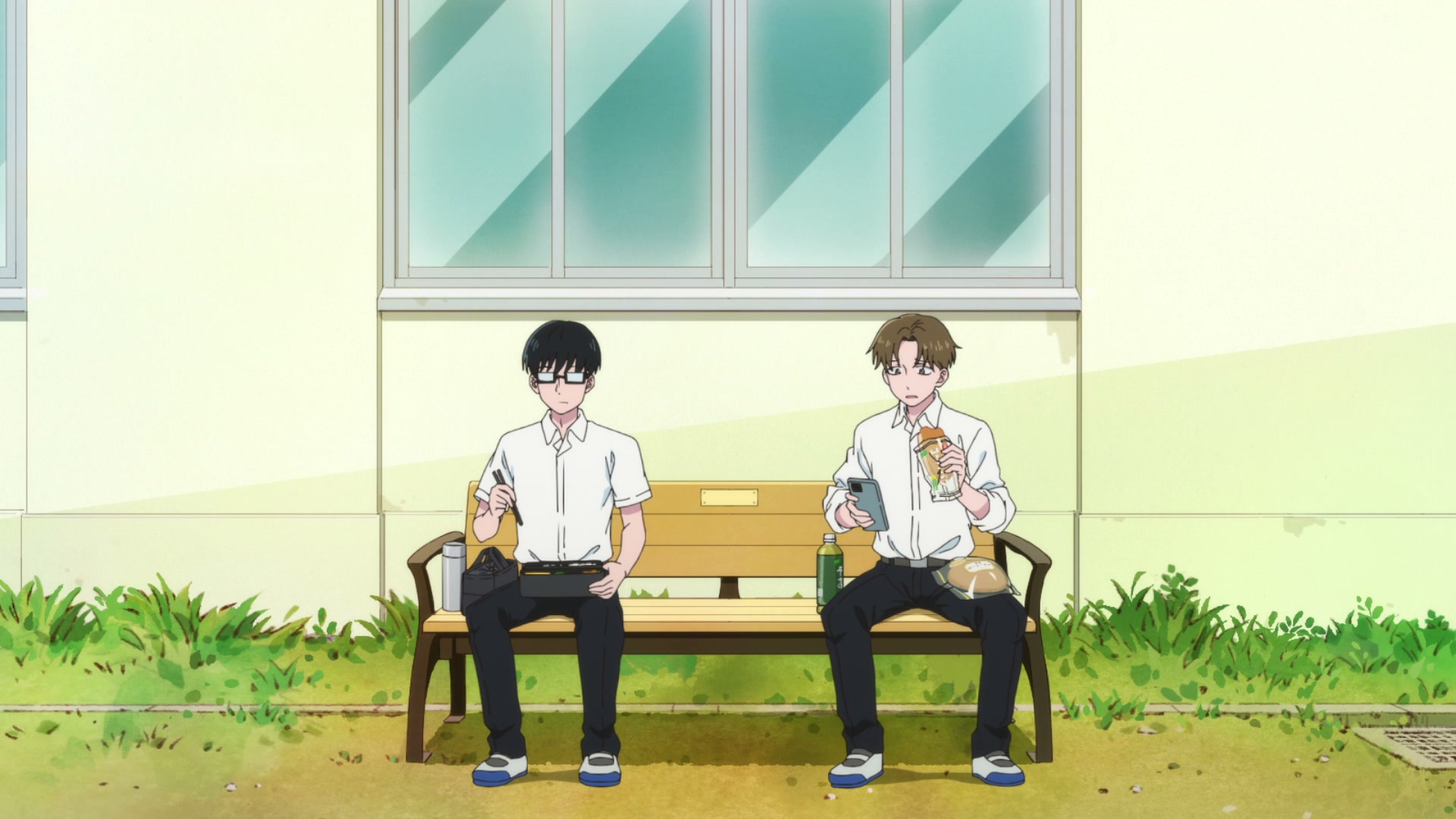
Character design does heavy thematic lifting. Suzuki is rendered in bright, saturated tones, with expressive accessories and a face that cycles through a hundred emotions per scene. Tani, by contrast, is a study in muted earth tones, minimalist glasses, and an economy of motion. The visual language immediately tells you who they are and what they represent. Even when they’re just standing next to each other, the composition speaks.
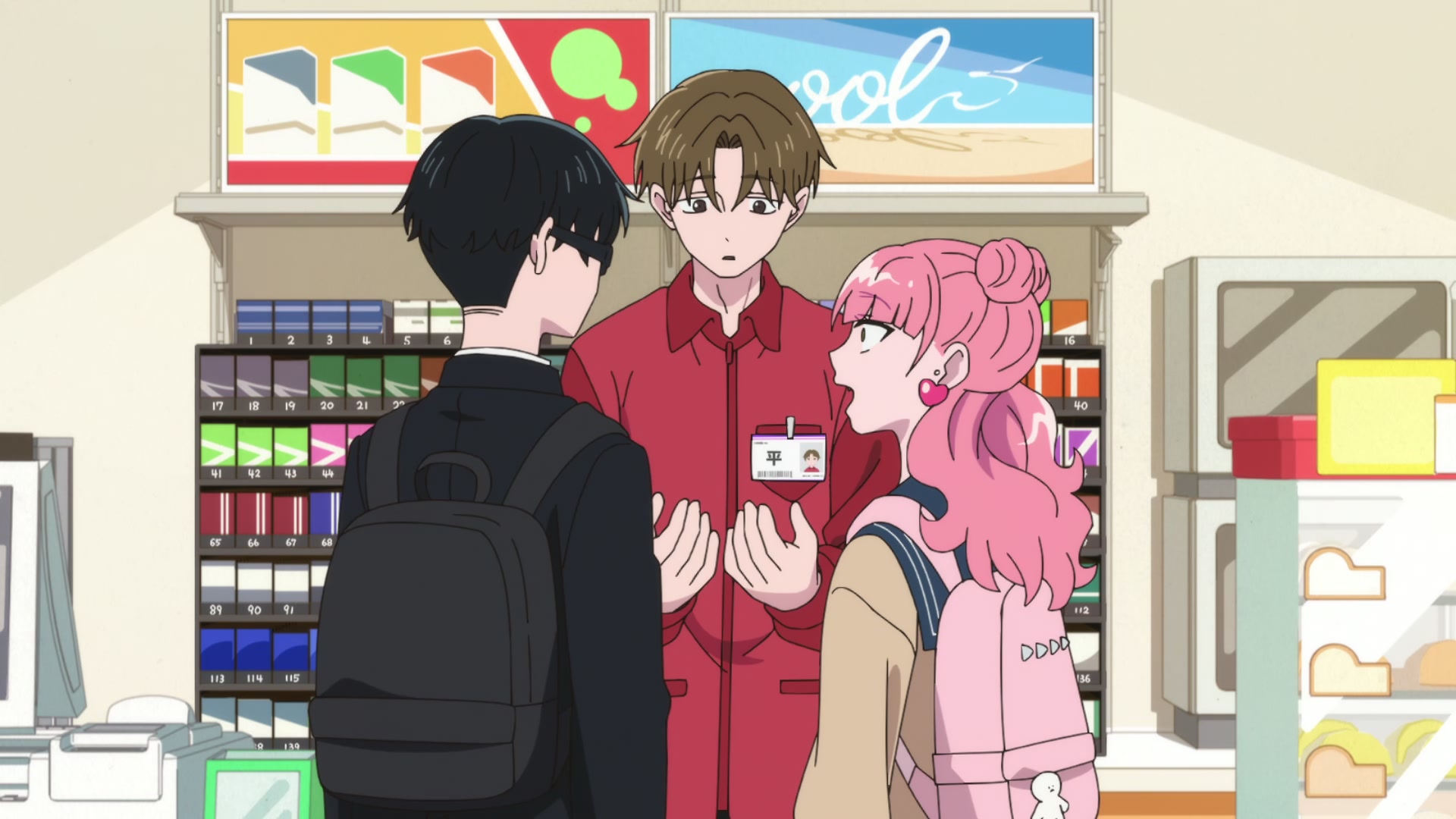
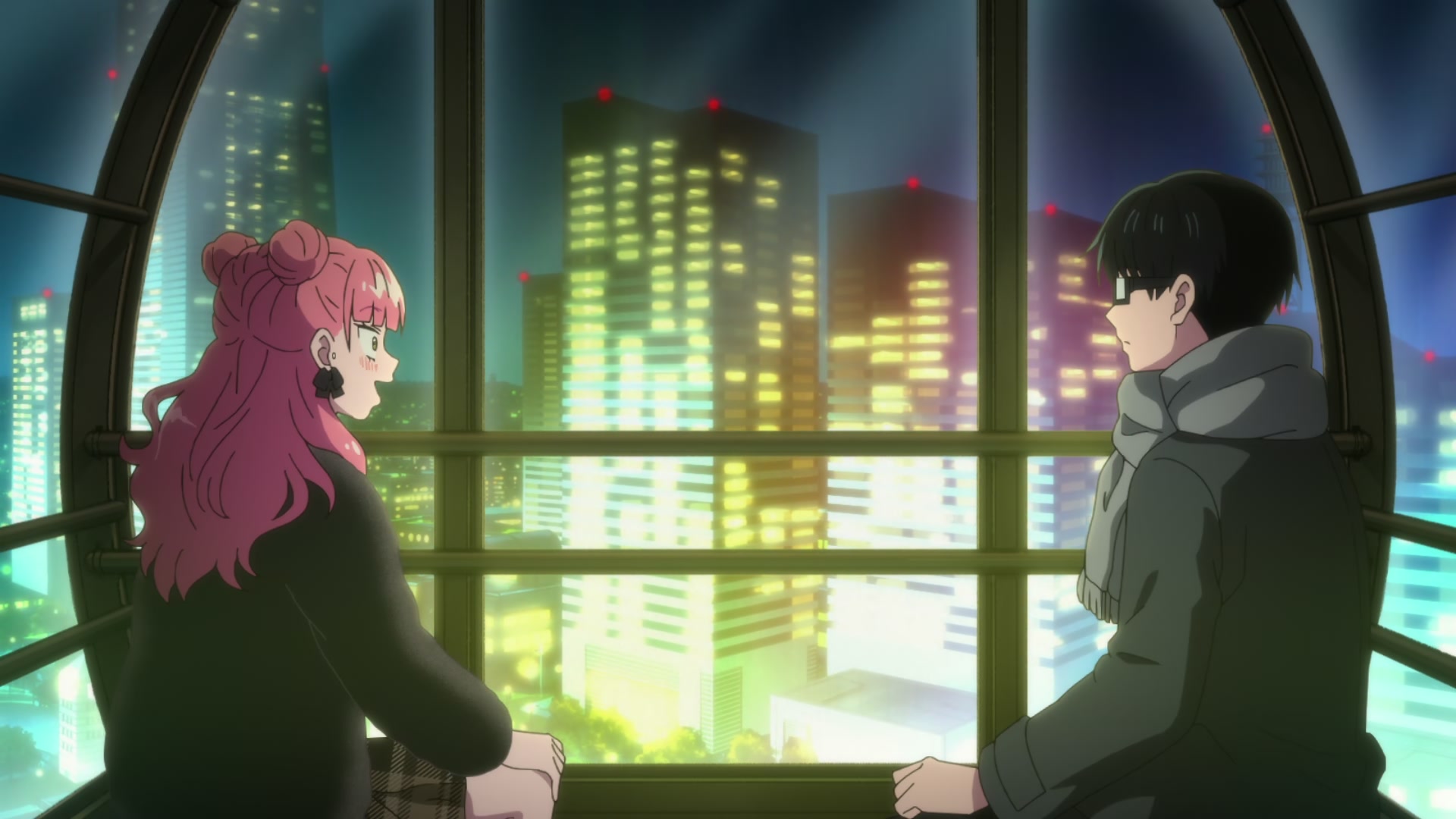
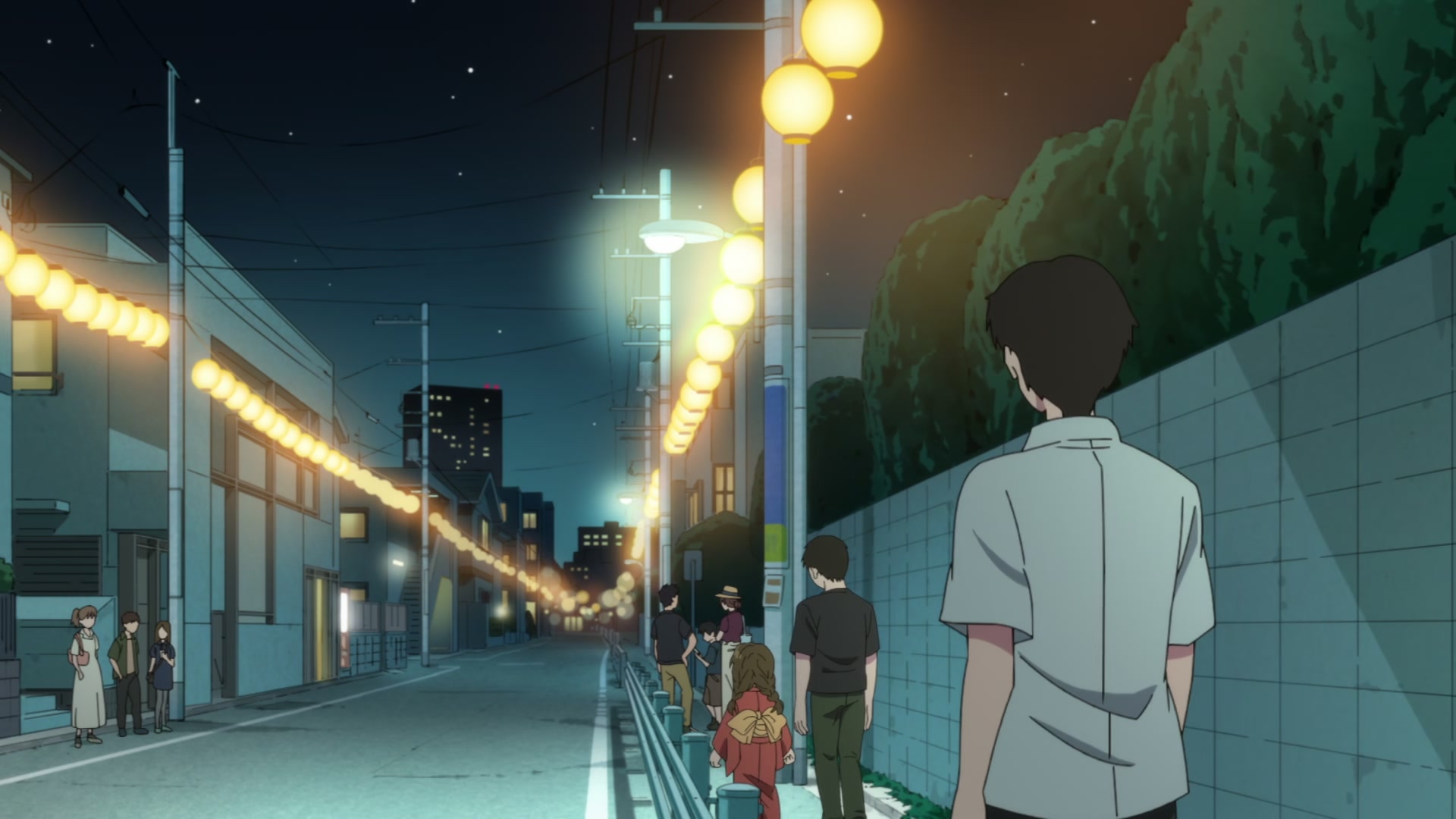
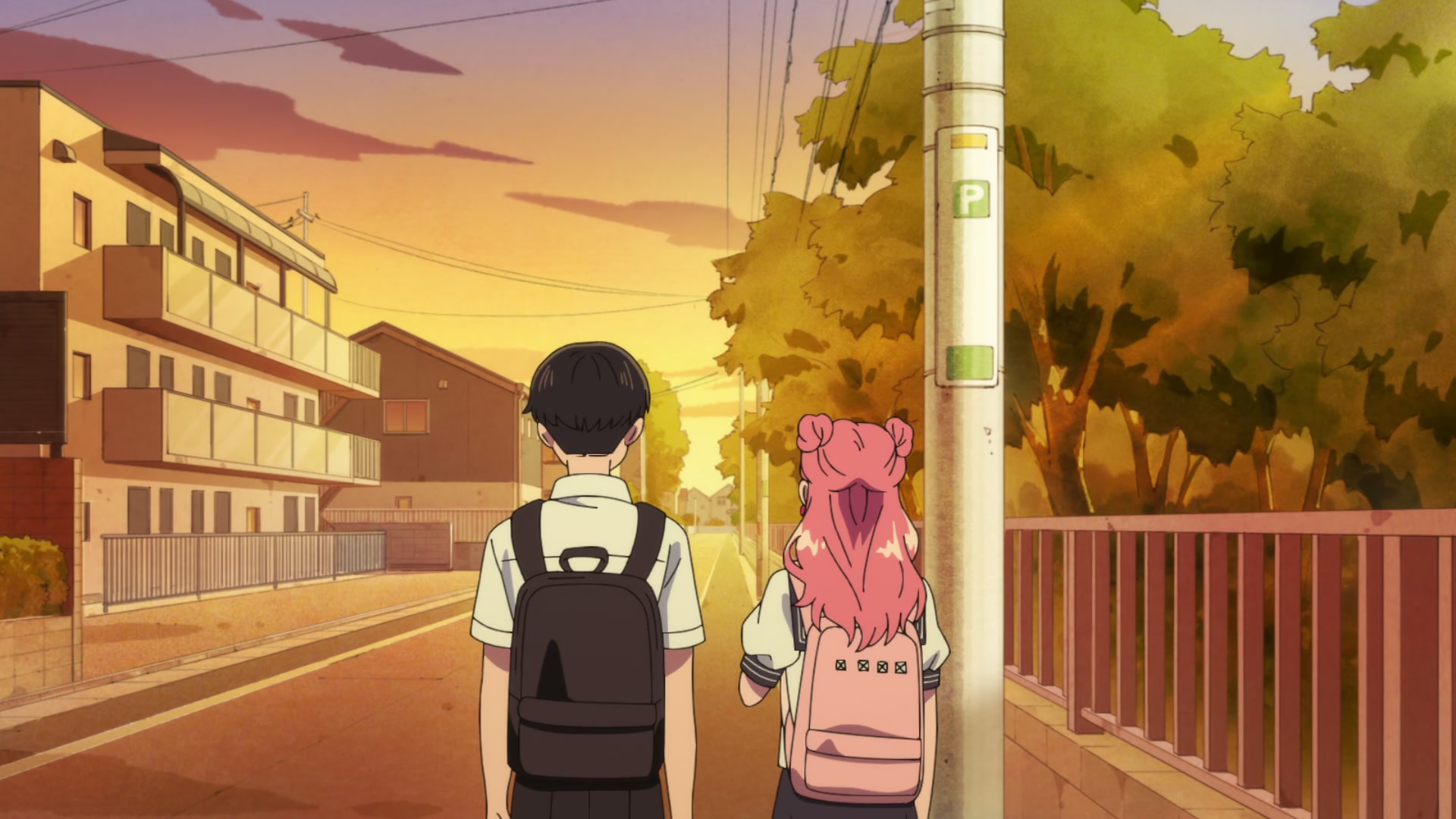
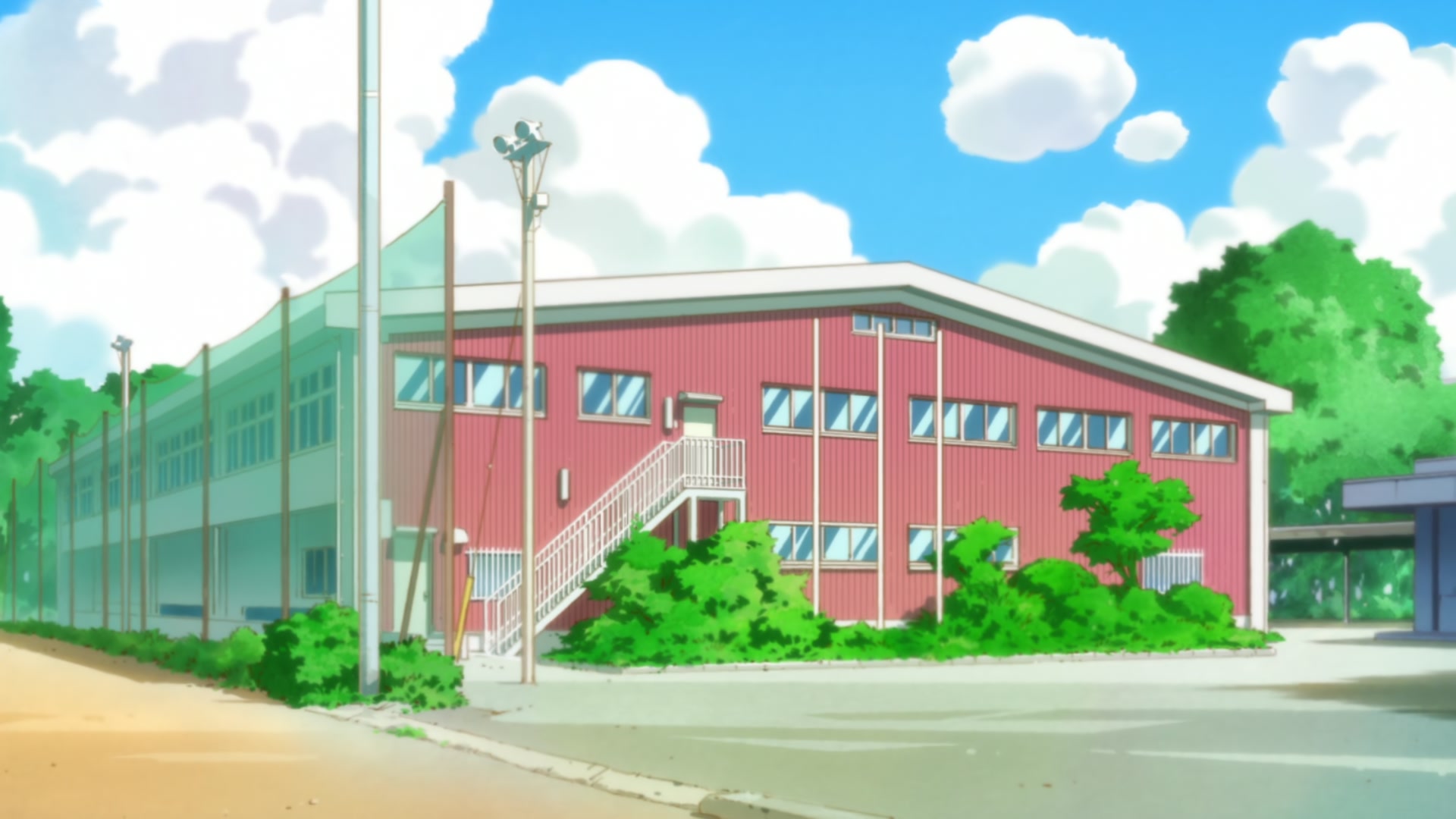
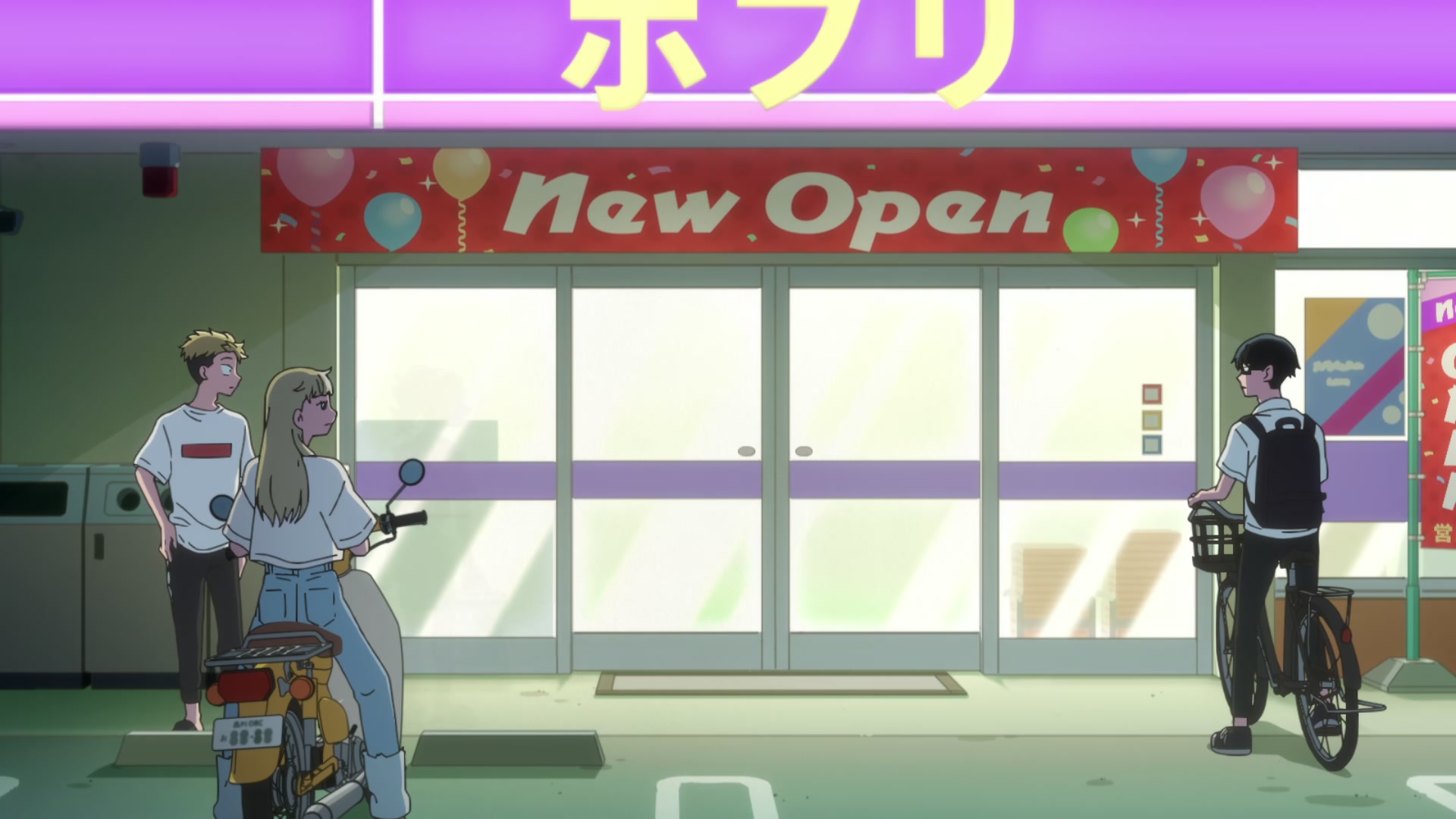
Background art follows a similar strategic divide. Interiors—classrooms, library shelves, convenience stores—are clean and functional, never distracting from the characters. But when the story moves outdoors, the show saves its most painterly sensibilities for the moments that matter. Sunsets bleed into soft watercolour washes; a Ferris wheel overlooks a twinkling bayside nightscape; a rainy street after a bowling outing is rendered with a cool, dreamlike glow. Depth-of-field effects, bokeh, and careful colour grading—warm oranges for connection, cool blues for loneliness—externalise internal states with a delicate, almost cinematic touch.
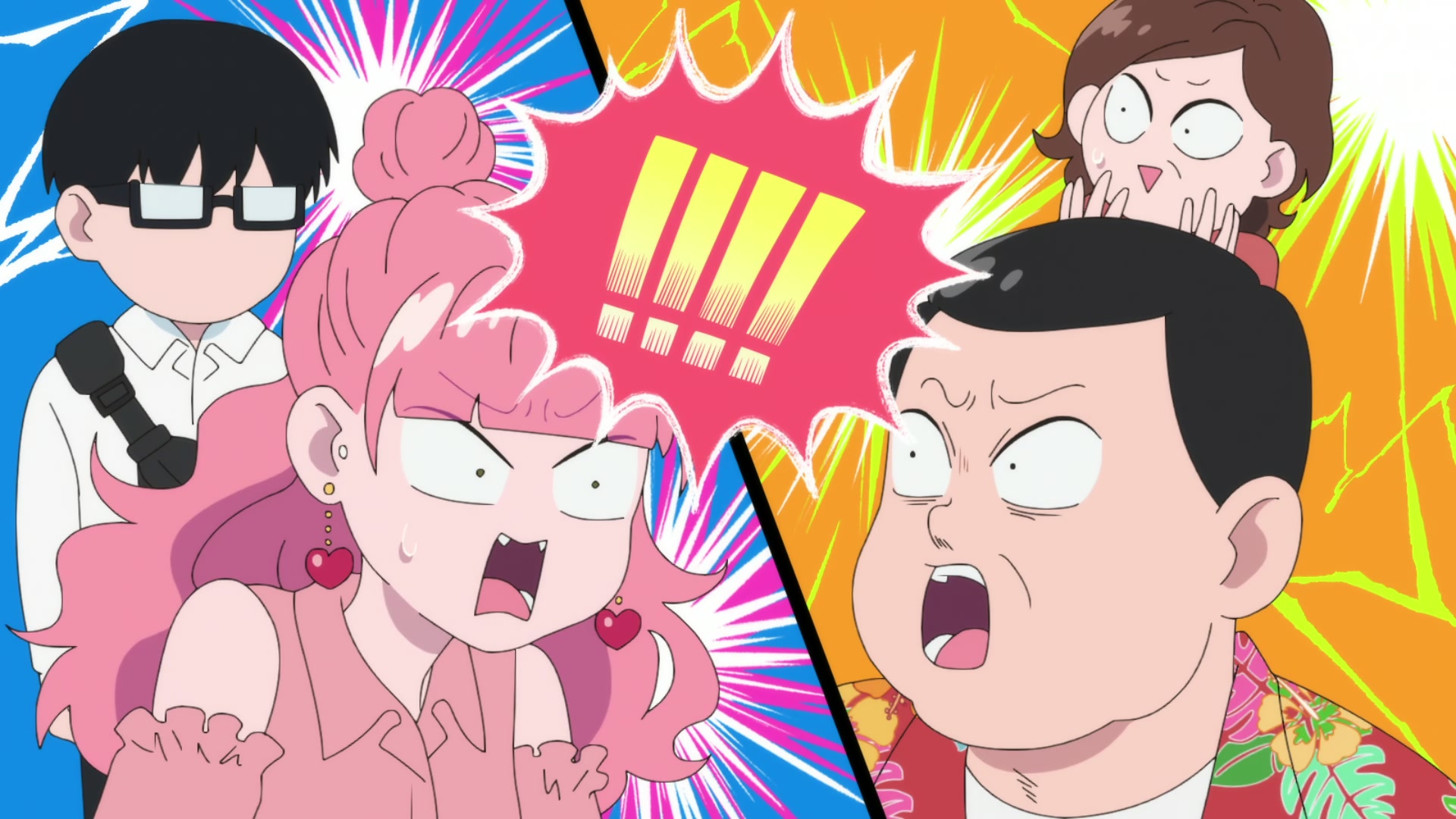
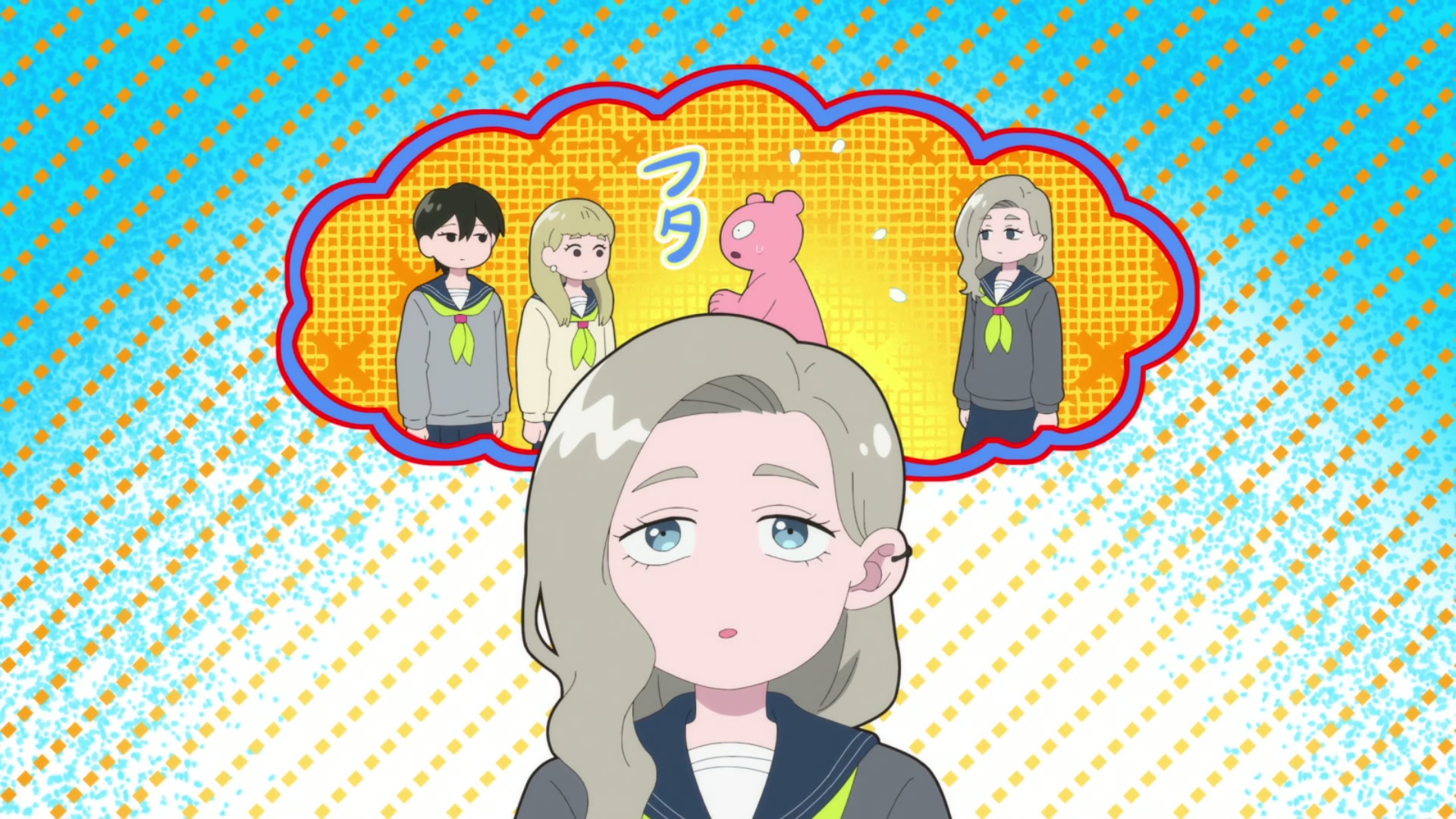
The series’ most distinctive visual feature is its meta-textual integration. On-screen text effects—hand-drawn sound effects, mangá-style thought bubbles with half-tone dots, split-screen reaction panels—are woven directly into the scene’s space. These aren’t cheap overlays; they feel like a natural extension of the characters’ internal monologues, a way of showing the constant, messy, overlapping nature of thought. And then there’s the yeti, a fluffy, fourth-wall-breaking narrator who occasionally appears to explain a character’s hidden trait or the passage of time, adding a layer of gentle humour that never undercuts the emotional sincerity.
Compared to the kinetic energy of Kaguya-sama or the lush, soft-focus romance of Horimiya, Seihantai na Kimi to Boku occupies its own distinct lane: less fluid, but with a stronger, more coherent emotional palette. It knows exactly when to hold a shot and let the silence breathe, and when to break into a flurry of comic distortion. It’s a show that respects its viewer’s attention span and rewards patience.
Sound and Music: The Art of the Unspoken
While this review cannot offer a track-by-track breakdown of the soundtrack, the audio experience of Seihantai na Kimi to Boku is inseparable from its emotional impact. The voice acting (seiyuu work) across the board is exceptional, capturing the fine gradations between public cheer and private terror. Suzuki’s voice can be a whirlwind of energy one moment, then drop into a soft, hesitant whisper the next. Tani’s lines are delivered with a deadpan that subtly cracks as the series progresses, his rare, blunt declarations of love gaining earthquake force precisely because they’re so underplayed. Nishi’s quavering, apology-laden speech, and Honda’s flat, analytical tone, round out a cast that never sounds like they’re “acting”—they sound like confused, hopeful teenagers.
The sound design leans into the series’ core theme of communication and its failures. The frequent silences between dialogue are not empty; they’re charged with things left unsaid. The whoosh of text captions, the background ambience of cicadas in summer or rain against a window, all contribute to an immersive atmosphere. The opening and ending themes—whether they’re upbeat, infectious tunes or more melancholic ballads—set an emotional tone that carries through each episode, underscoring the gentle, reflective nature of the narrative.
Overall Verdict: The Quietest Conversations Are the Loudest
Seihantai na Kimi to Boku is, quite simply, one of the most emotionally intelligent romance anime to come along in years. It takes teenage love and social anxiety seriously without ever slipping into melodrama. It’s funny, sweet, and humane, filled with moments that will make you laugh out loud and then, a second later, feel a lump forming in your throat. Its characters don’t undergo radical transformations; they get a little braver, a little more honest, a little more willing to let another person see the mess behind the mask. And that, the series gently insists, is exactly the point.
This is a show for anyone who has ever felt like they’re “too much” or “not enough,” for anyone who treasures the exquisite awkwardness of a first name dropped after months of suspense, and for anyone who believes that the quietest conversations can echo the loudest. It may not satisfy viewers who crave fast-paced plot twists or dramatic external conflict, and its deliberate pace could test the patience of those accustomed to more eventful romances. But for those on its wavelength, it’s a nourishing, heart-filling experience—the kind that makes you grateful for the medium’s ability to capture the subtle, seismic shifts of the human heart.
Final Rating: 9/10 — A masterfully understated gem that absolutely deserves a place in your watchlist.
Watching Suzuki Miyu and Tani Yuusuke fumble their way toward each other, one imperfect, courageous step at a time, is a reminder of something we all too often forget: that love isn’t about finding someone who’s perfect, but about finding someone with whom you can finally, fully, be yourself. And as Tani himself might say, in his own quiet way, that’s something truly worth holding onto.
Gallery