





Introduction
There is a particular ache familiar to anyone who has spent years with romantic comedy anime. It is the feeling of watching two characters who have shared a lifetime of memories circle each other, too paralysed by the weight of their own history to ever close the gap. The childhood friend is the genre’s most bittersweet promise, the one who was there first, the one who knows everything, and, cruelly often, the one who loses. Osananajimi ga Zettai ni Makenai Love Comedy, affectionately shortened to Osamake, grabs hold of that ache and builds its entire identity around it. This is a series that does not simply deploy the childhood friend trope. It names it, dissects it, and then runs headlong into the exact dread that makes it so maddening and so beloved.
Sakai Eiyu is a self-confessed rom-com junkie who devours manga and light novels about childhood friends finally getting together. He analyses their beats, memorises their clichés, and then immediately declares that such things never happen in real life. The dramatic irony arrives in the form of not one, but four childhood friends who are all, with varying degrees of obviousness, in love with him. What follows is twelve episodes of Eiyu’s desperate mental gymnastics as he scrambles to reframe every accidental embrace, every loaded silence, and every whispered confession as just more evidence that a real rom-com is impossible. The series is a love letter to the trope, written by someone who understands that the real reason childhood friends hesitate is not a lack of love, but an overwhelming terror of losing the precious world they already have.
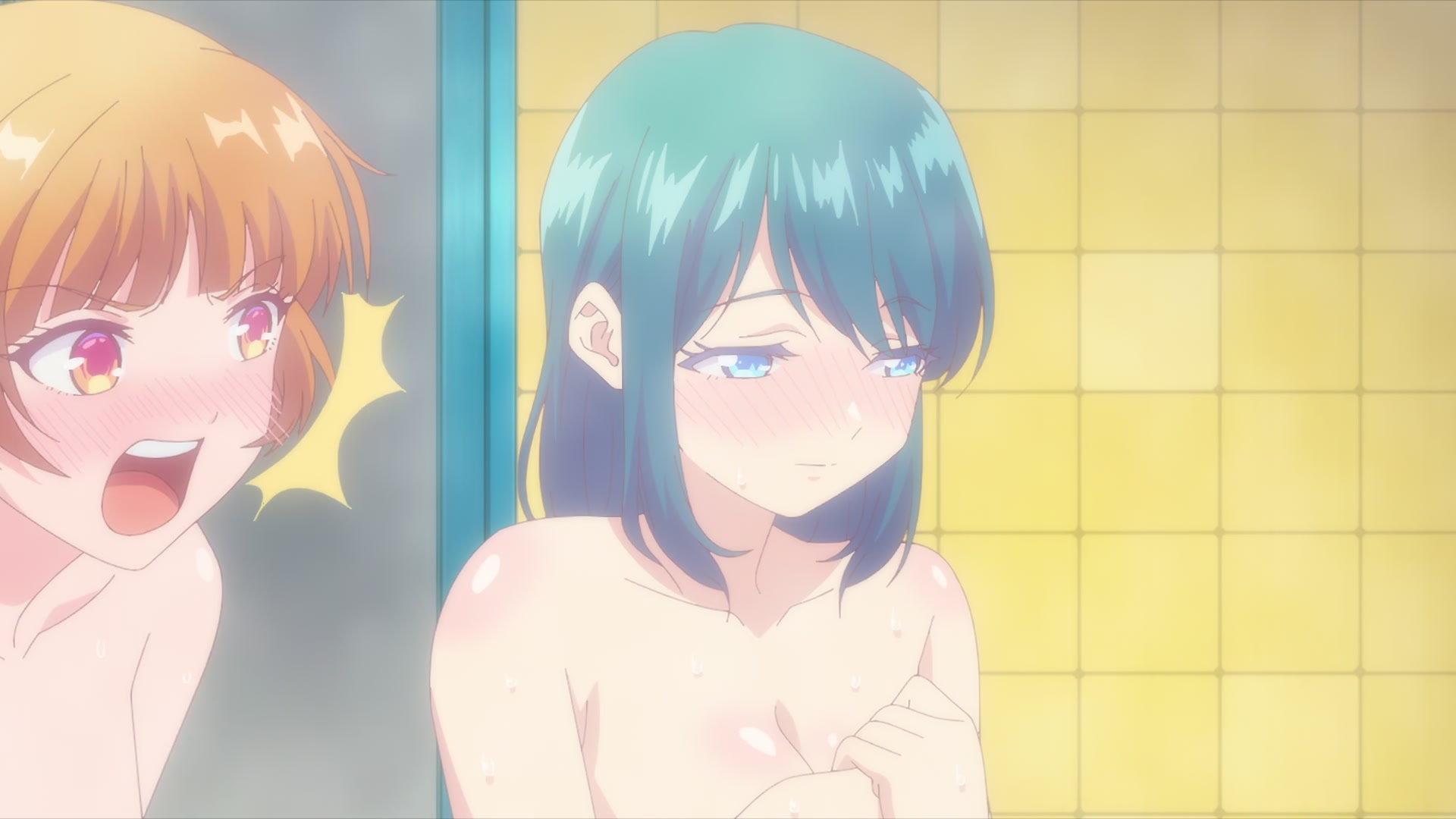
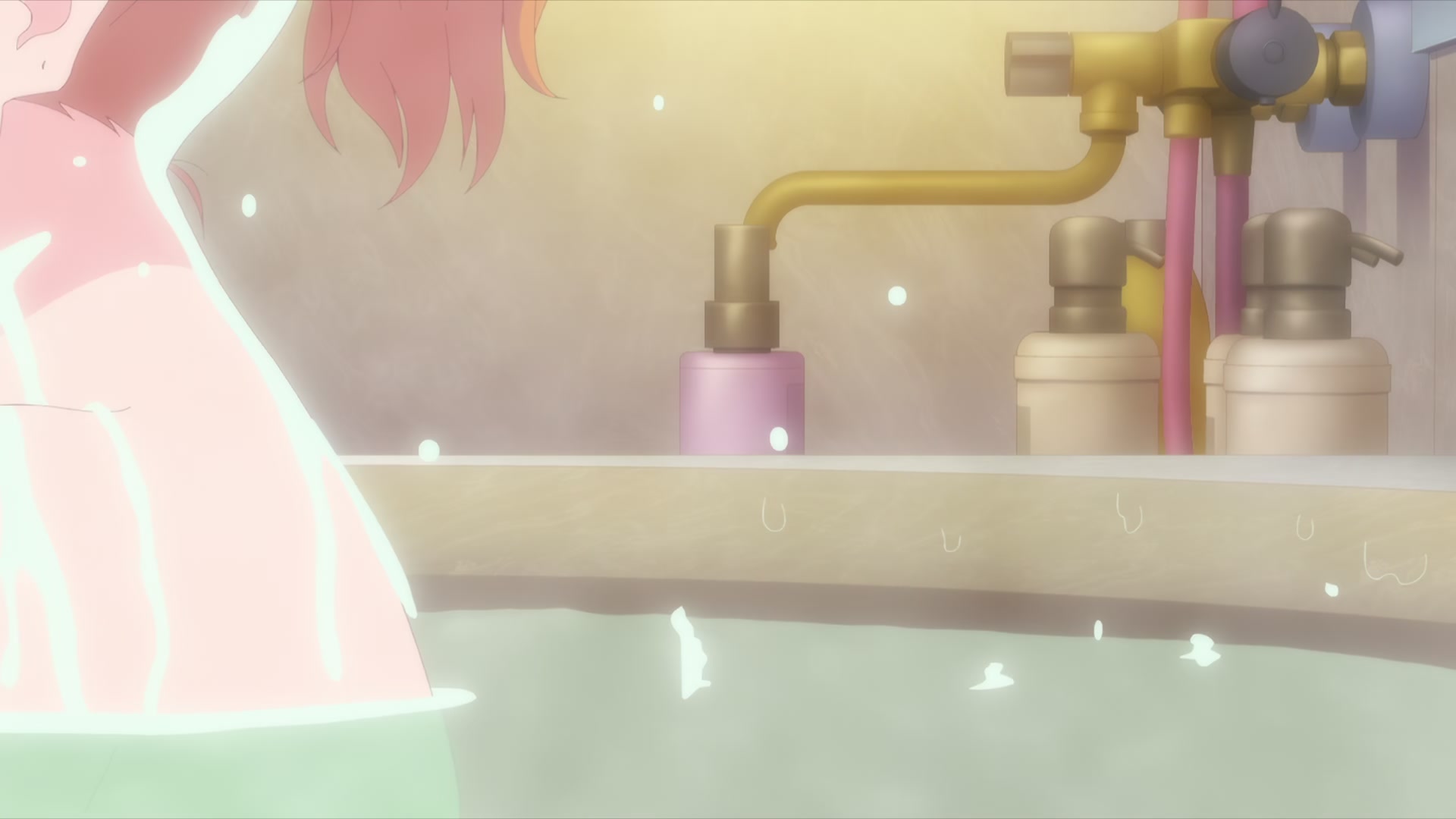
Osamake will not appeal to everyone. It is unapologetically a harem-inflected romantic comedy, complete with beach episodes, bath scenes, and a protagonist who is both frustratingly dense and painfully self-aware. For those who adore the emotional minefield of long-term friendship turning into something more, however, it is a small gem. It takes the familiar architecture of the genre and uses it to ask a genuinely unsettling question: what if the thing stopping you from being happy isn’t fate, but your own cowardice?
Story and Themes
The narrative of Osamake unfolds across a single Japanese school year, moving from spring into summer and finally resolving during the autumn sports festival. This seasonal framing is not accidental. It uses the rhythms of the Japanese academic calendar, the beach trips, the fireworks festival, the culture of undōkai, as markers for emotional change. The story begins by establishing a comfortable, chaotic status quo. Eiyu bickers endlessly with Hiodoshi Akari, who calls him a horny monkey at every turn. Minamo Shio enters his bedroom via the second-floor window every morning, clings to him at school, and stages elaborate accidents cribbed from the very manga Eiyu keeps hidden under his bed. It is intimate, familiar, and so deeply settled that none of them can imagine a future where it disappears. That fear is the engine that drives everything.
Eiyu’s narrative voice is the series’ most distinctive tool. In nearly every episode, he narrates his life as if he were a spectator at his own rom-com, identifying classic set-ups in real time, the indirect kiss, the gym storage confinement, the sharing of an umbrella, and then loudly insisting that none of them count because this is reality, not fiction. It is a defence mechanism of extraordinary power. By framing every moment of genuine emotional vulnerability as a trope, he can intellectualise his way out of having to feel it. The series understands this about him. His genre-savviness is not a cute quirk; it is a fortress, and the girls spend twelve episodes laying siege to it.
The central thematic tension is the gap between romantic fantasy and the paralysing weight of a shared past. Shio articulates this better than anyone in a quiet scene at the library. She asks Eiyu whether they will always be childhood friends, even after they marry other people and have children. Her voice trembles with the unsaid question underneath: if we try to become something more and fail, does the friendship die too? This is the burden of familiarity. When your roots are so deeply tangled with another person’s, pulling them up to replant them as romance risks killing the entire garden. The series does not treat this as mere shyness. It frames it as a kind of existential dread, a horror of destroying the single most stable relationship in your life.
Then there is the theme that Runako, the youngest of the group, brings into sharp focus. Throughout the season, Eiyu is wracked with guilt over his own physical attraction to the girls. He calls it being horny and sees it as a betrayal of the pure, protective love he claims to feel for his precious childhood friends. During the sports festival, his shame becomes so acute that he splits off a hallucinatory alter ego, Gross Eiyu, a balloon-headed spectre that mocks his desires and urges him to suppress them entirely. Runako finds him in this state and, with the guileless clarity that defines her, says something that reframes the entire series. It is okay, she tells him, to feel naughty and want to cherish someone at the same time. Those two impulses are not enemies. They are both love. This single insight heals the fracture inside Eiyu and allows him, in the finale, to act with a kind of halting, terrified honesty.
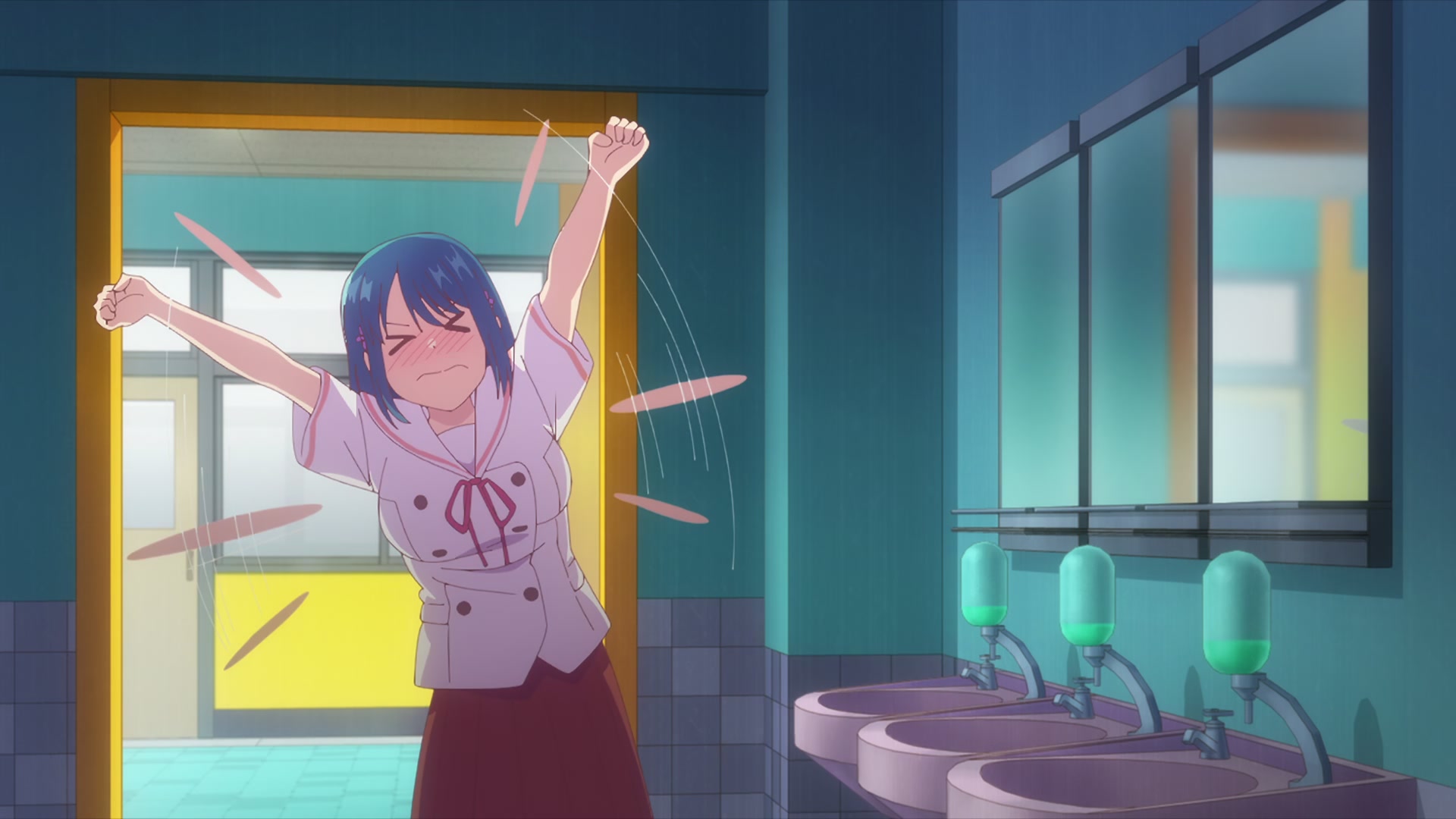
Symbolism in the series is not especially subtle, but it is effective. Shio’s window entrance is the physical embodiment of her refusal to respect the boundary between childhood friend and lover. Eiyu’s stoic face, the frozen mask he wears to hide any flicker of arousal or affection, serves as a running visual gag and a metaphor for his entire emotional strategy. Shared spaces, umbrellas, bottles of sunscreen, a futon in a seaside inn, become pressure cookers where intimacy is forced upon characters who would never choose it willingly.
It is worth noting that Osamake is an adaptation of a light novel series, and as someone who has not read the source material, I cannot speak to what may have been compressed or altered. The twelve-episode run sometimes feels like it is sprinting to hit its seasonal milestones, particularly in the rapid introduction of the fourth childhood friend, Hinata Haru, near the end. A lighter touch with the early ensemble comedy might have given the later dramatic beats more room to breathe. Still, the anime stands convincingly on its own. Its ending is not a clean resolution but a thematic comma, a moment of collective honesty that feels earned even if it leaves every romantic thread dangling. That open-endedness may frustrate viewers who want a clear winner, but for those attuned to the series’ core argument, it is the only ending that makes emotional sense.
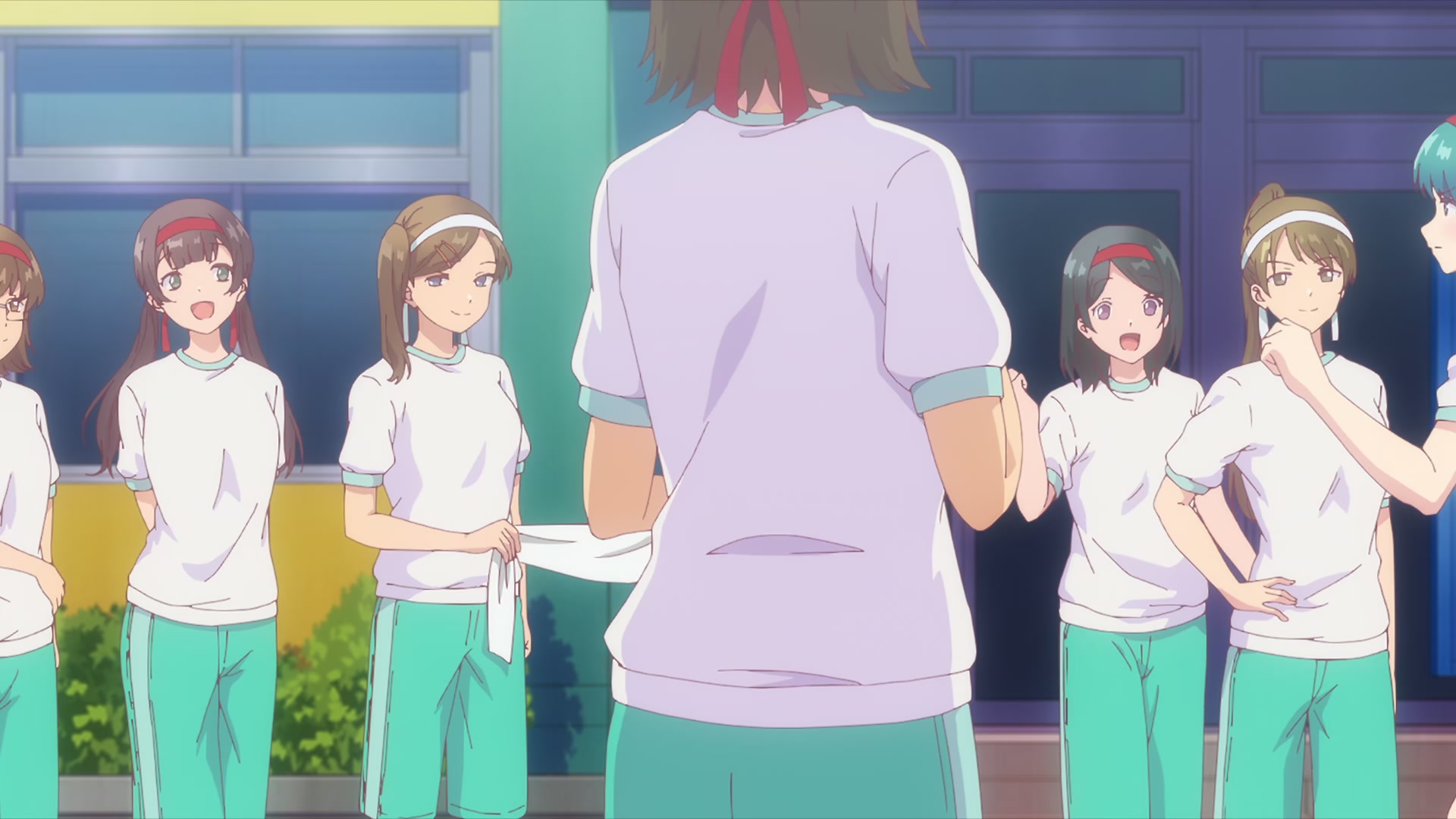
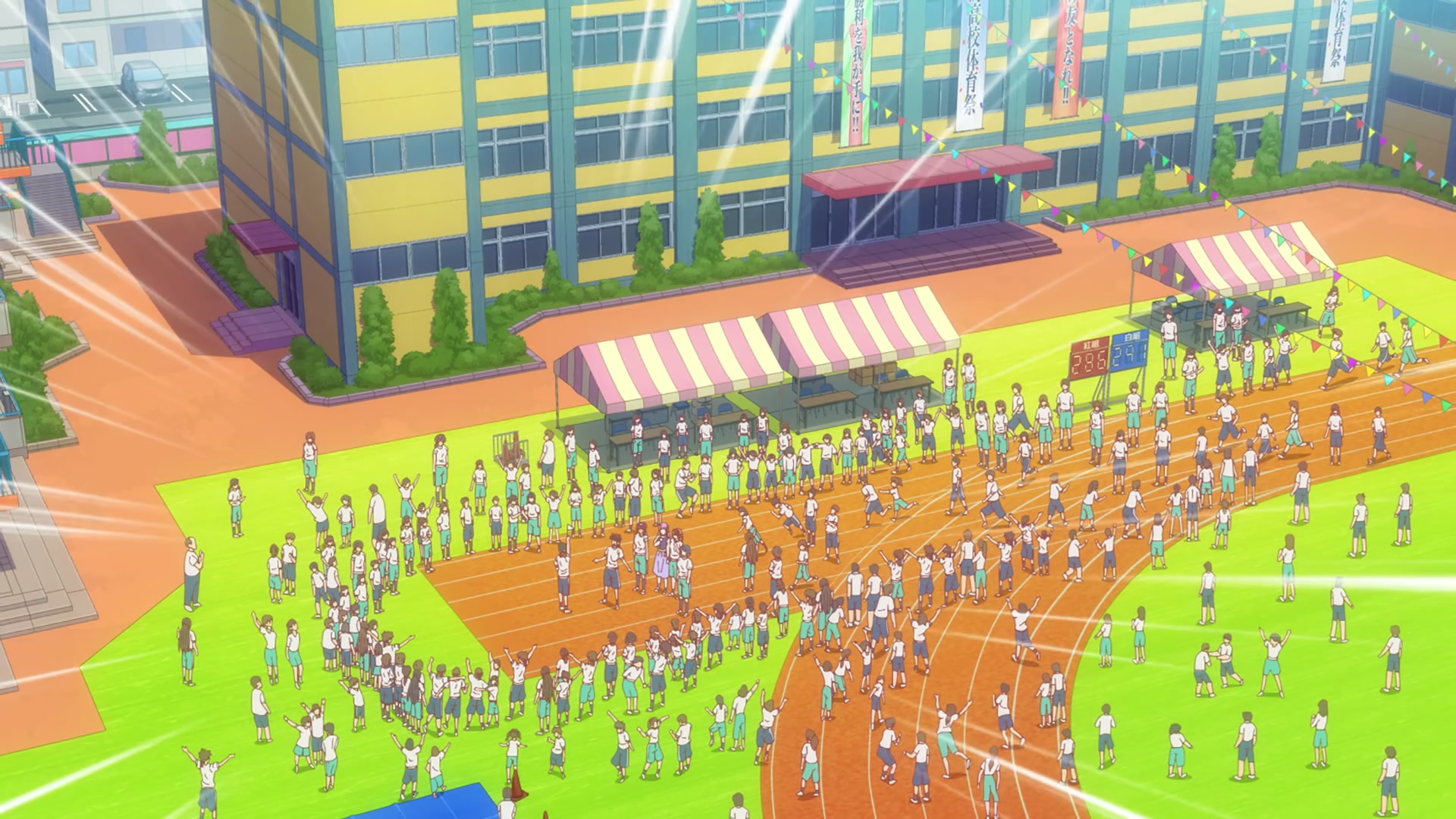
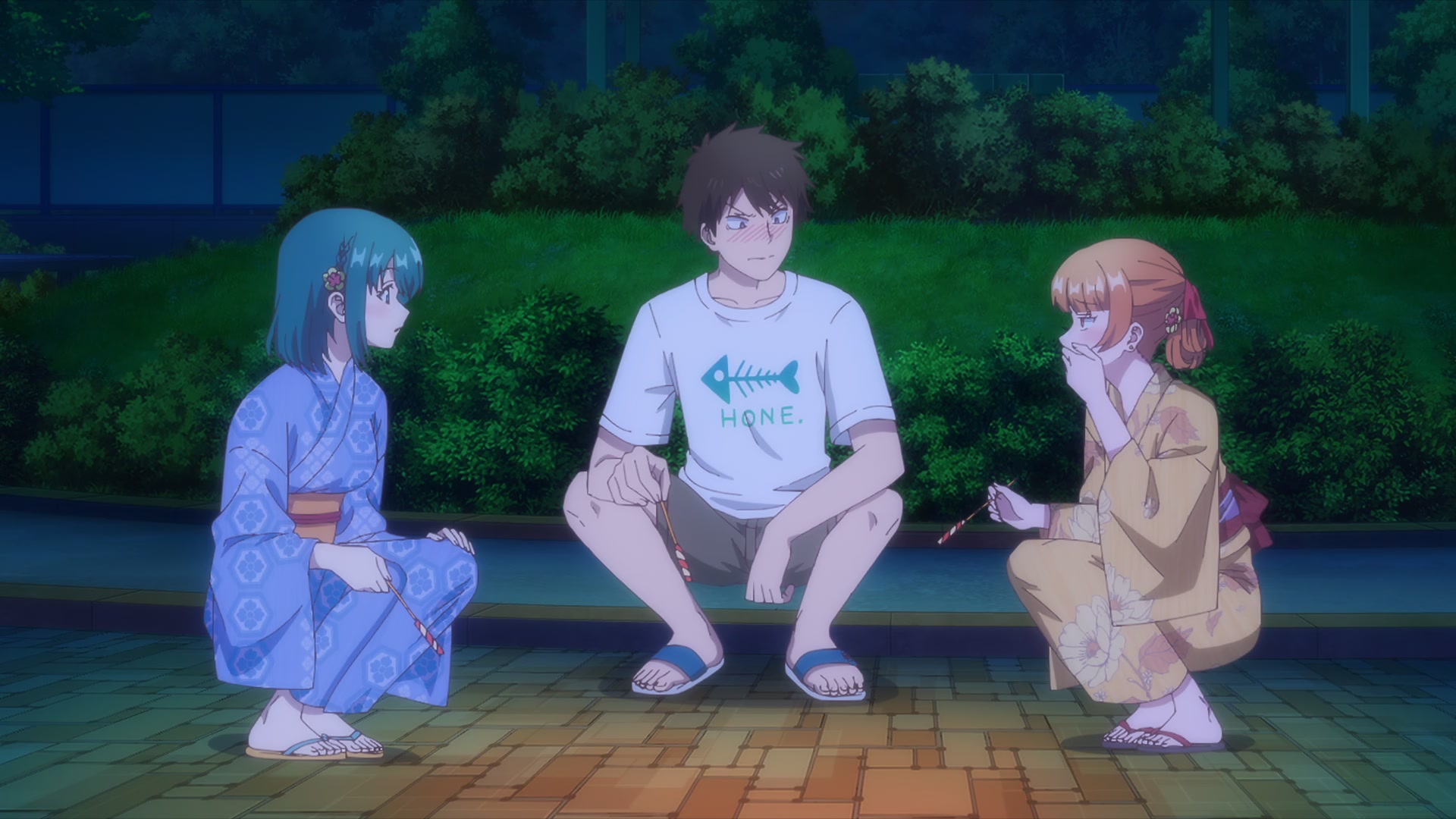
The cultural grounding of Osamake adds another layer of meaning. The osananajimi figure carries deep resonance in Japanese storytelling, a vessel for nostalgia, for unspoken understanding, for a bond that predates language. This series pokes at that ideal without mocking it. The fireworks festival episode, with its local legend that two people who kiss during the massive finale are destined to be together, externalises the pressure the girls feel in a way that any fan of summer romance anime will recognise. The sports day events, the three-legged race, the scavenger hunt with its impossible red slip challenge, are not filler; they are the stage on which Akari’s public confession and Eiyu’s final declaration are performed, lending them a weight that a private conversation could never carry.
Characters
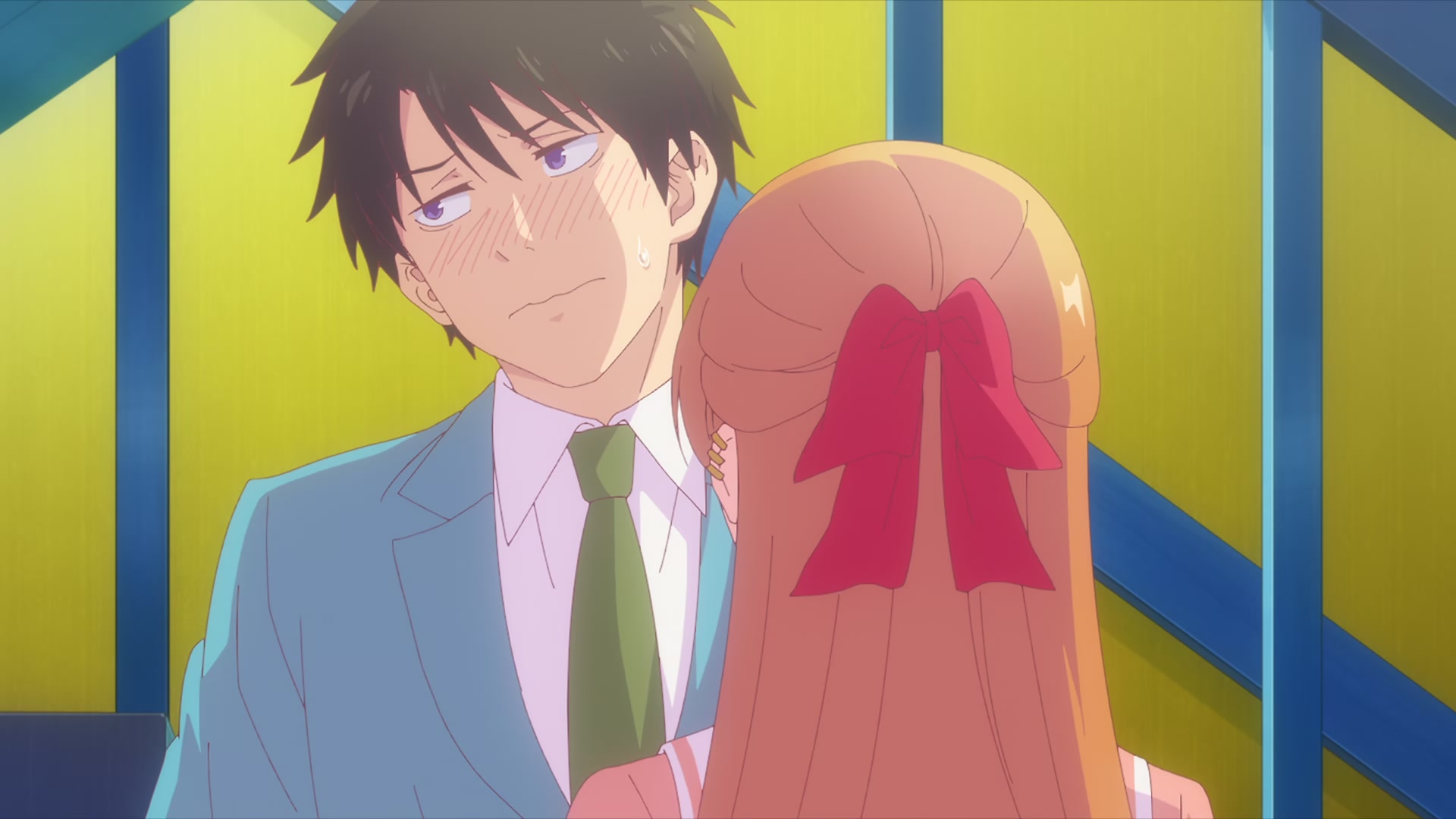
Sakai Eiyu is a protagonist who should, by all rights, be insufferable. He is stubborn, competitive, and so relentlessly committed to his own denial that his narration becomes a kind of running joke. Yet there is something deeply recognisable in him. He has constructed an elaborate psychological safety net out of rom-com tropes, and every time one of his childhood friends does something that might shatter it, he scrambles to reinterpret the event as something innocent, something that cannot possibly mean what it so obviously means. His arc is not a clean line from denial to acceptance but a messy spiral downward into confusion, then into the grotesque overcorrection of Gross Eiyu mode, where he aggressively sanctifies everyone as his precious childhood friends while suppressing any hint of desire, and finally into a fragile, honest admission that he loves all four of them without knowing what to do about it. It is a rare portrayal of male romantic anxiety that feels genuine rather than perfunctory.
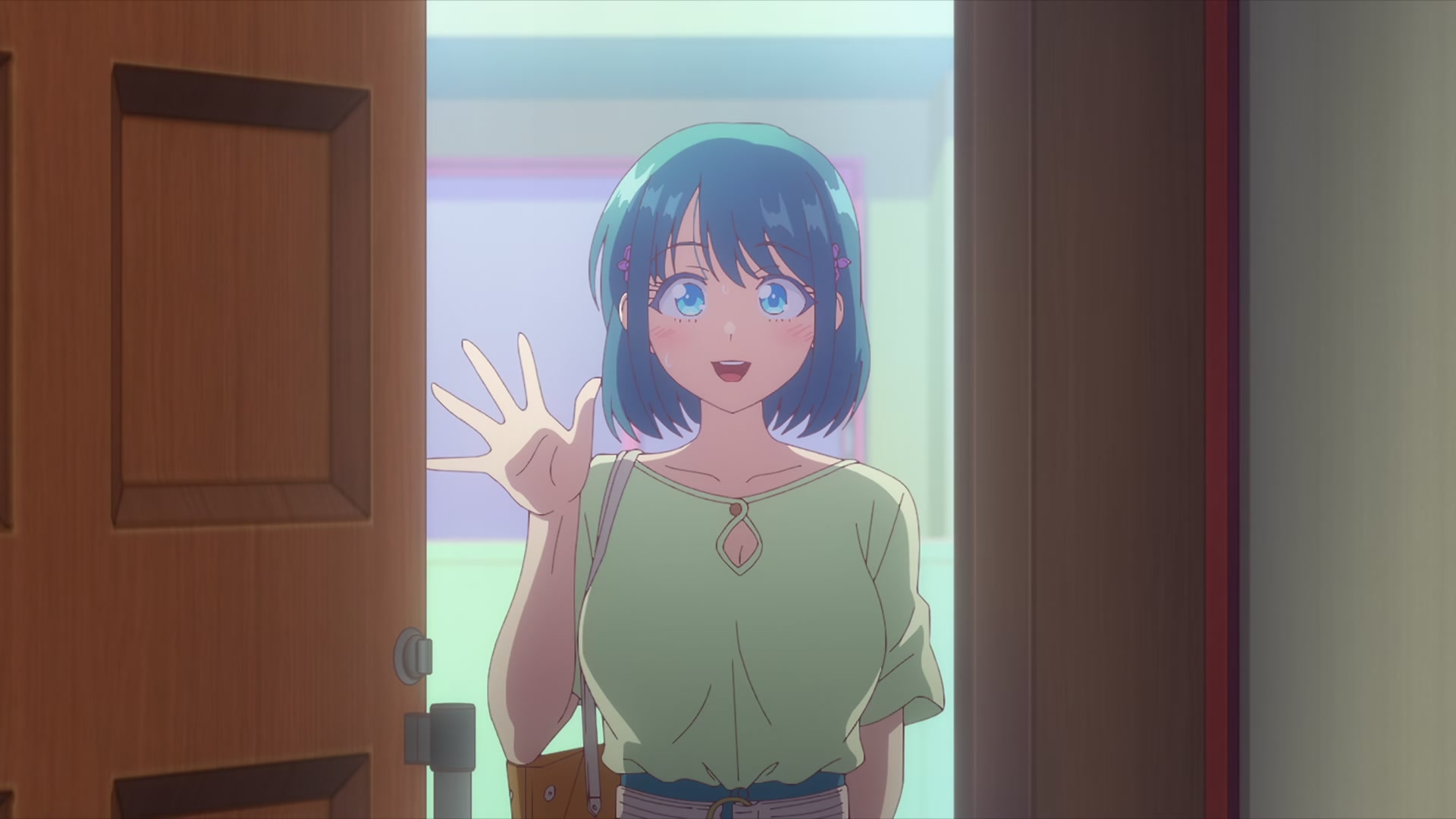
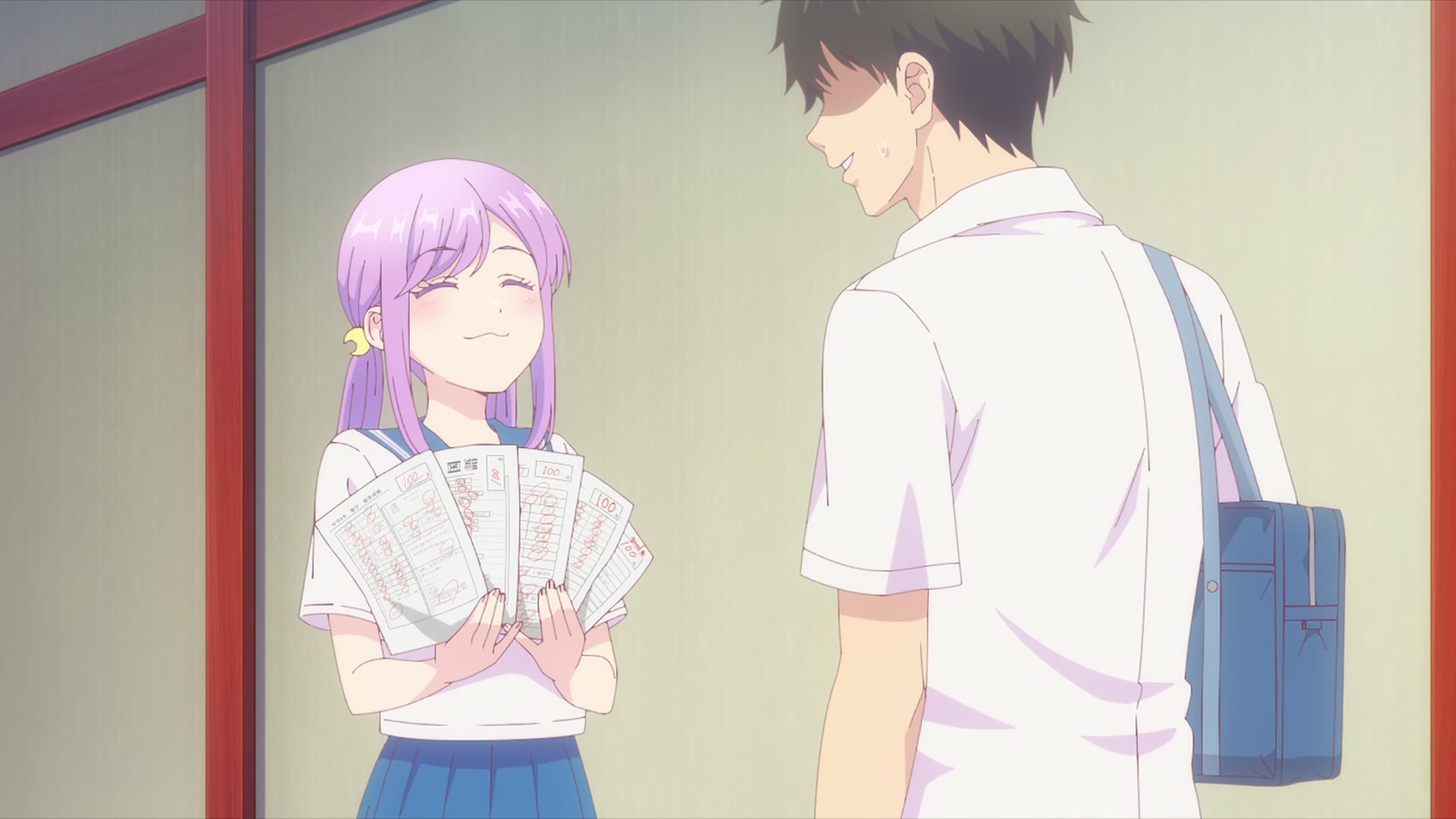
Minamo Shio is the series’ emotional heartbeat. On the surface, she is a classic genki girl, sunny, energetic, and physically affectionate to a degree that scandalises her classmates. She sits on Eiyu’s lap, clings to his arm, and stages fake ankle sprains with the strategic precision of a military operation. But beneath the playfulness is a profound insecurity. She is terrified that they will never move beyond this endless loop of friendly intimacy. Her self-sacrifice during the fireworks episode, when she abandons her own romantic chance to help a lost child, an injured elderly woman, and a woman in labour, reveals that her love for Eiyu is not possessiveness. It is a deep, almost maternal desire to protect happiness wherever she finds it, even at her own expense. The fact that she cannot bring herself to confess directly, even when she has resolved to do so, is heartbreaking because it springs from the exact terror that defines the series. She knows what she wants, but she cannot bear to hear that he does not want it back.
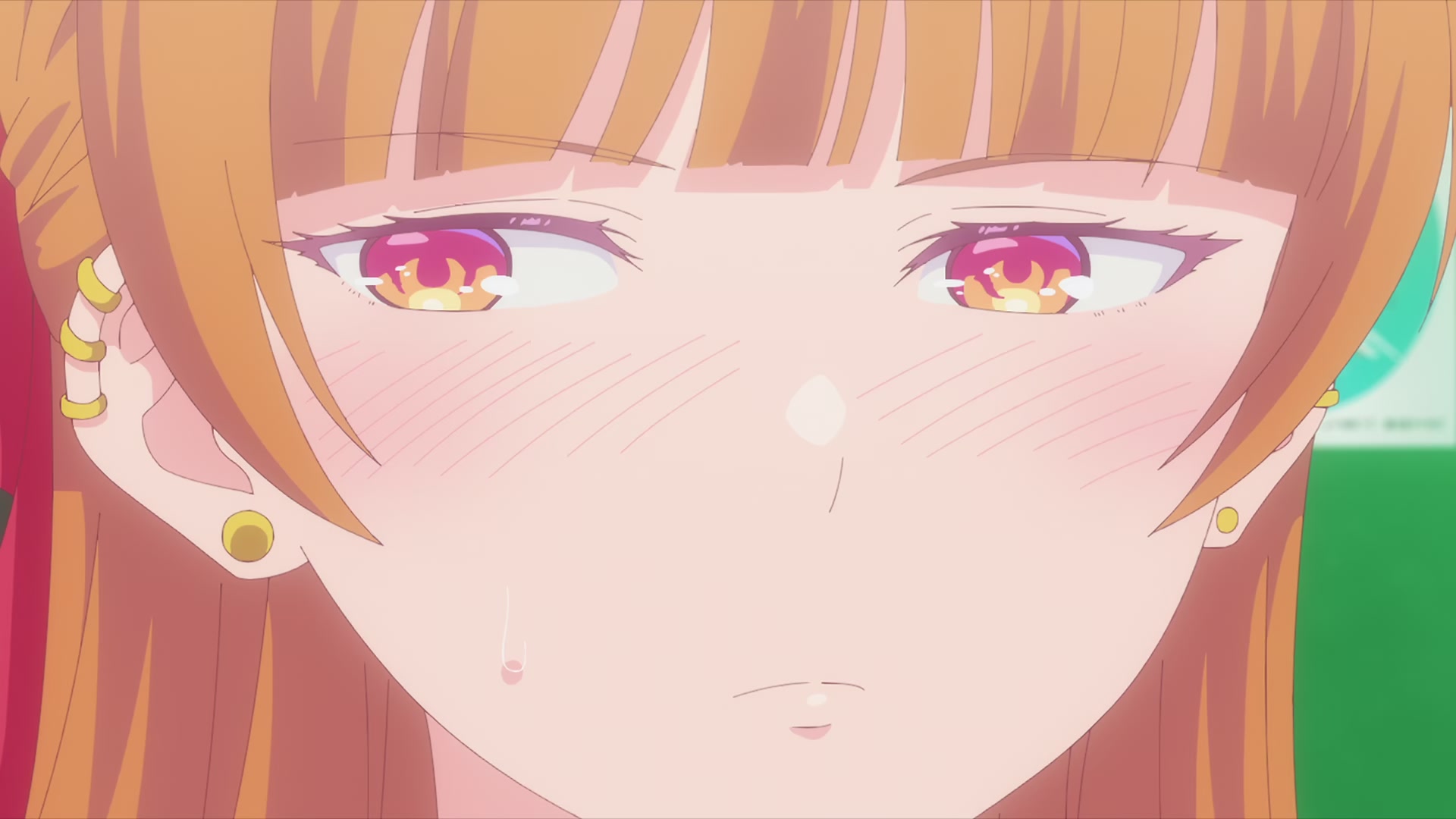
Hiodoshi Akari is the tsundere rendered as a genuinely tragic figure. She insults Eiyu relentlessly, calls him a horny monkey, a creep, a pervert, and physically assaults him with a frequency that would be alarming in any other genre. But her meanness is not a personality quirk. It is a scar left by a childhood promise Eiyu made to never leave her alone, a promise she has treasured and that she believes he only half-remembers. Every cruel word is a defence against the vulnerability of admitting how much she needs him. When her walls crumble, as they do at the seaside inn when she whispers I love you into the darkness, or during the sports festival when she shouts I like you in the middle of a three-legged race, the rawness of her feelings is staggering. Her confession comes not under fireworks but in a moment of sheer frustration, when she realises he has become a sanitised imposter, Gross Eiyu, who won’t even be his usual stubborn, infuriating self. She demands the real Eiyu back, flaws and all, and that demand is the most honest thing she ever says.
Runako is the youngest, one year below the main trio, a junior high school girl who lives temporarily with Eiyu’s family. At first glance, she appears to be the clingy little sister archetype, calling him Onii-chan, cooking elaborate meals, and announcing her intention to do naughty things with him as casually as she discusses the weather. The series quickly reveals, however, that she is the most emotionally intelligent member of the group. Her dream of becoming a doctor is treated with genuine respect, and a scene where she calmly treats a boy’s scraped knee demonstrates a competence that shames Eiyu’s view of her as a child. Runako’s greatest contribution is the philosophical permission she grants Eiyu, the idea that feeling horny and wanting to cherish someone are not contradictory. She embodies both impulses without contradiction, and her quiet patience becomes the foundation on which Eiyu’s final honesty is built.
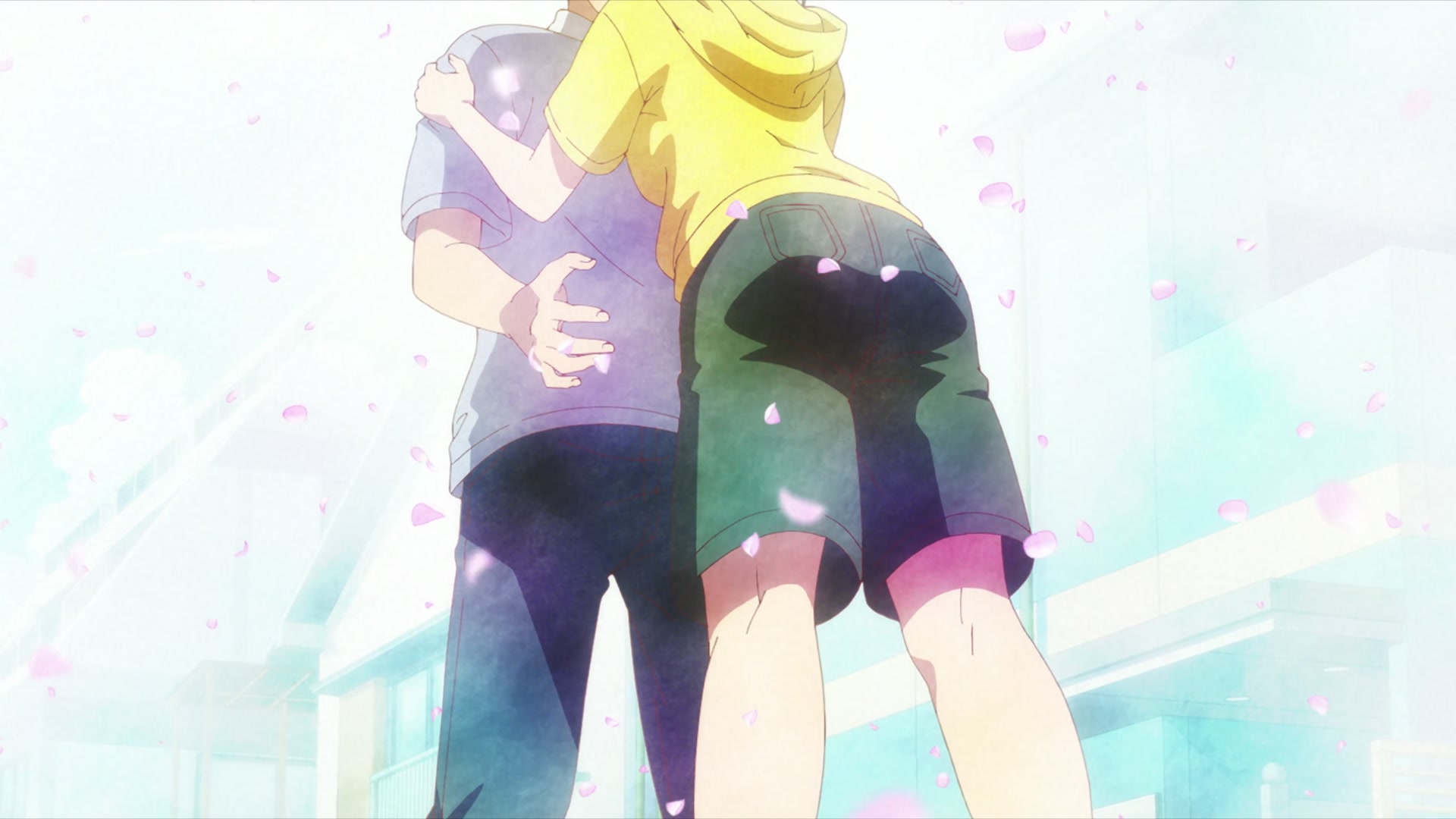
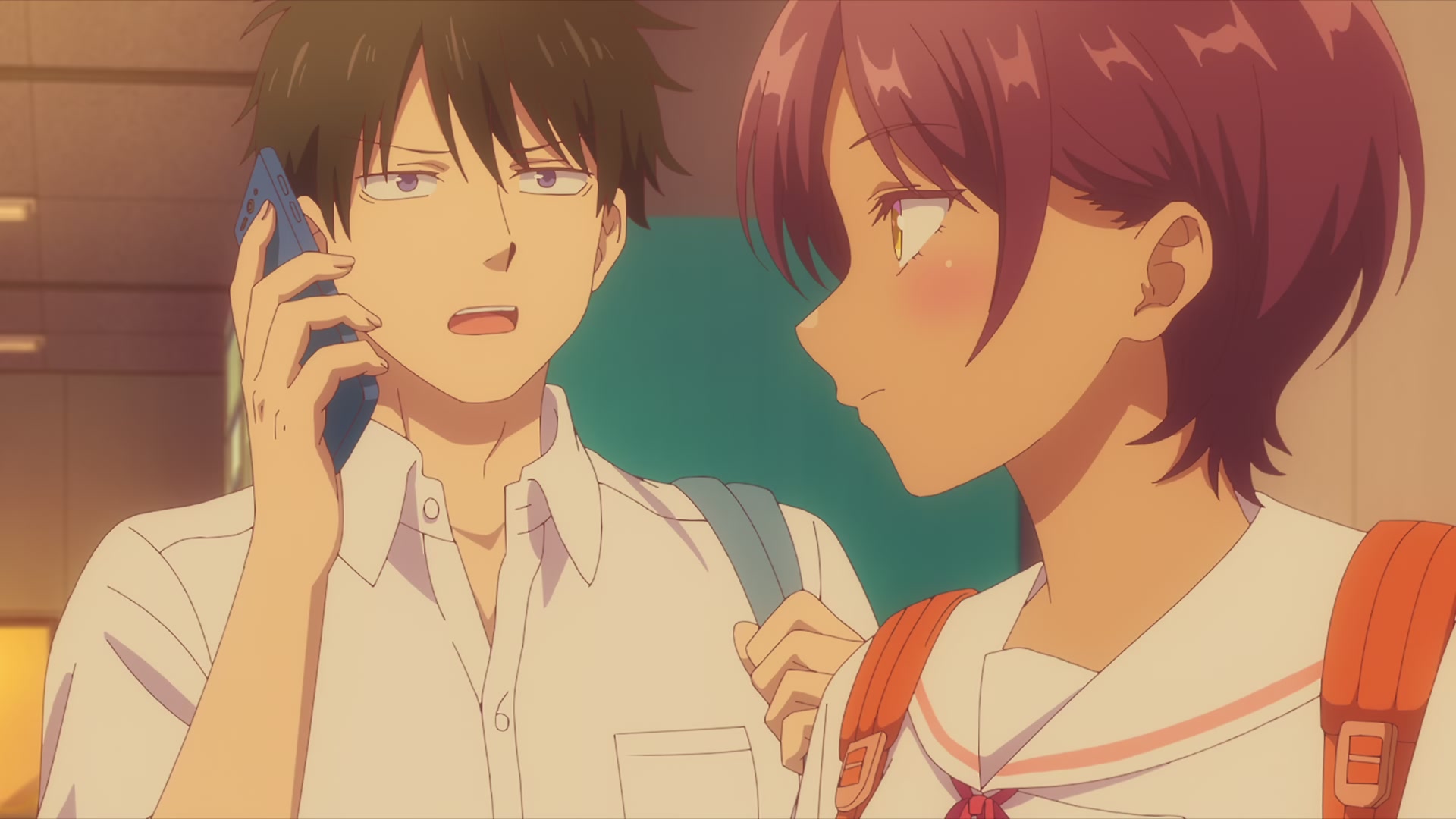
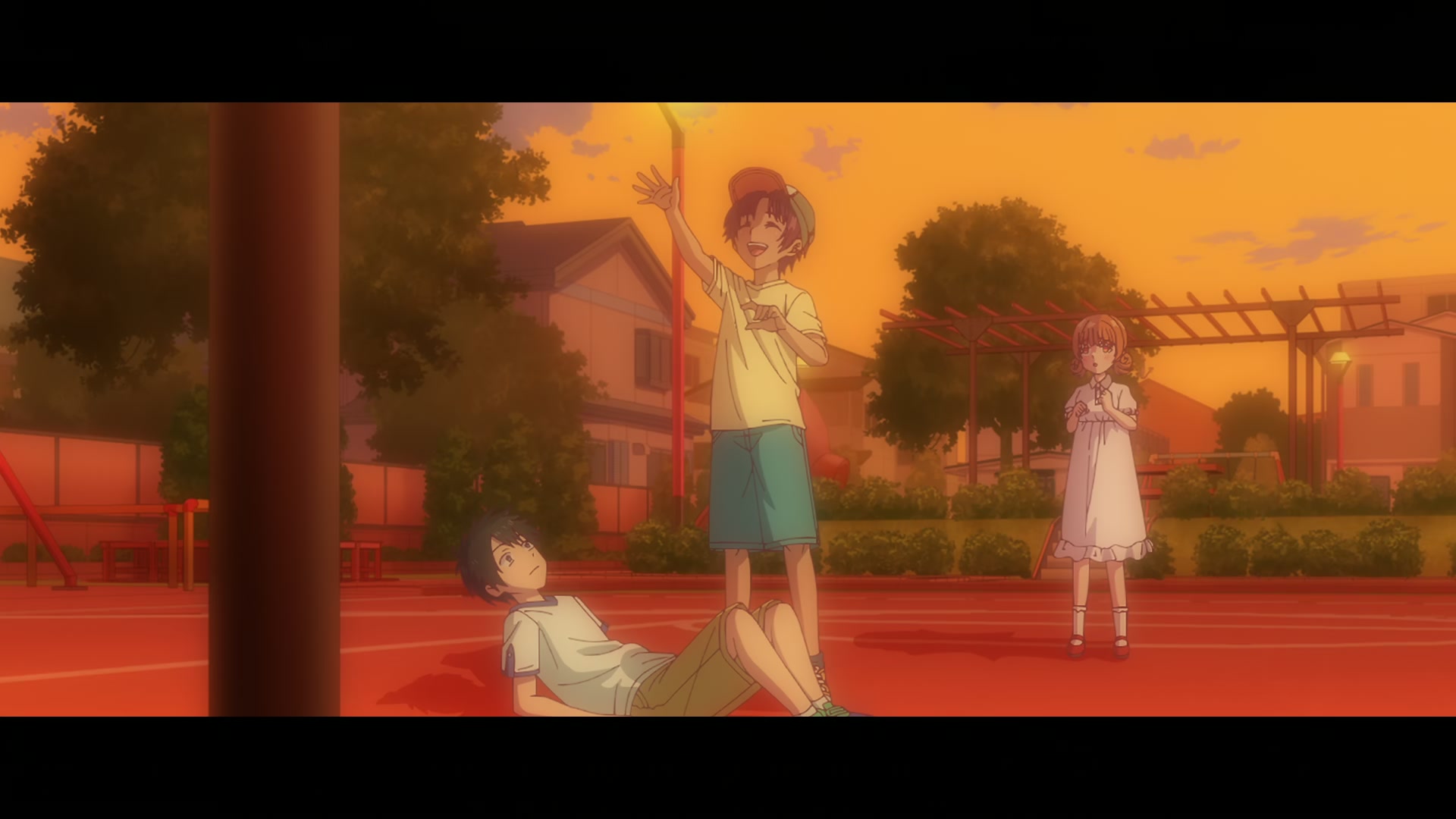
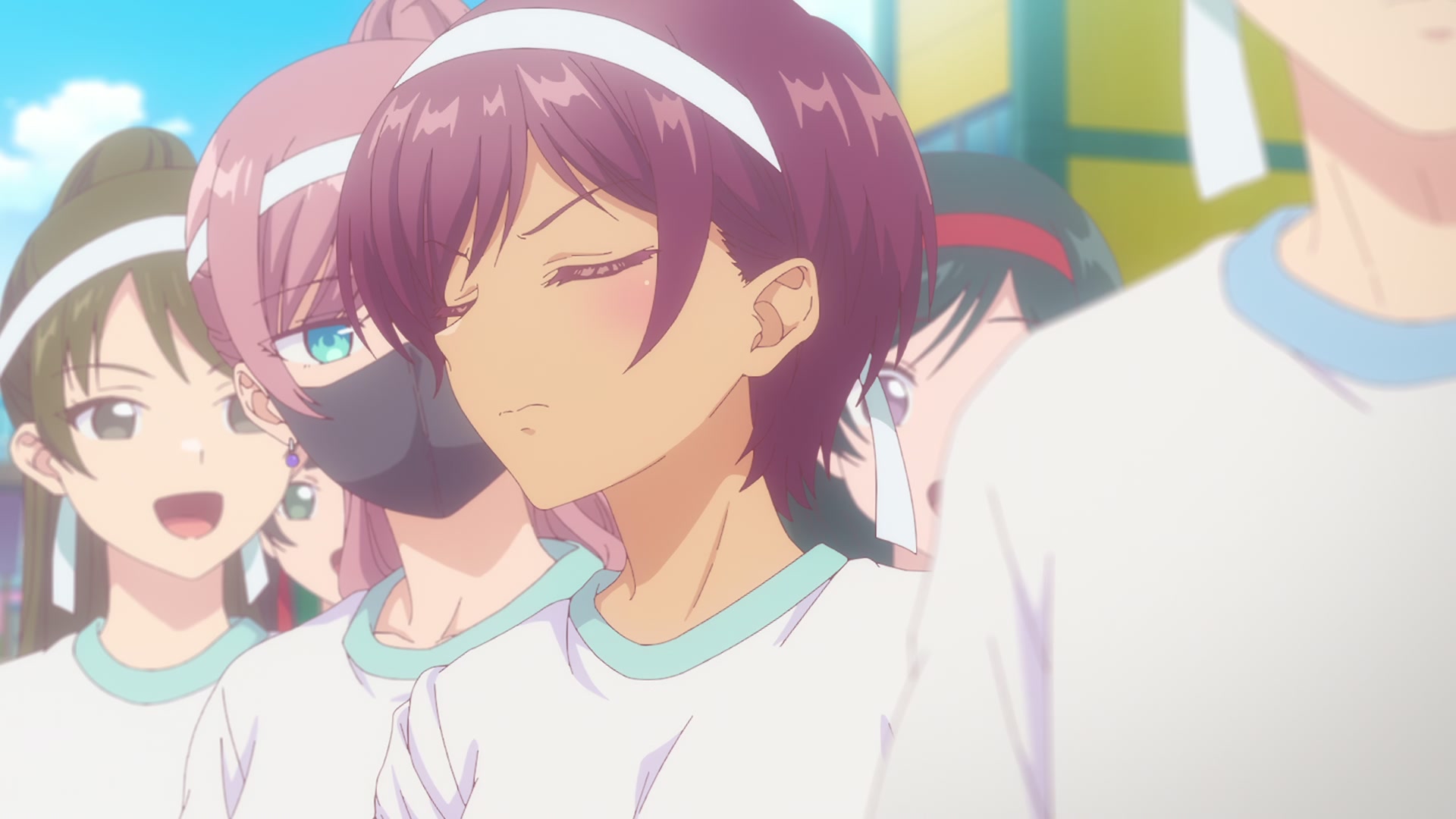
Hinata Haru is the wildcard. She was part of the elementary school gang, the athletic competitive boy whom everyone remembers wrestling, bathing, and accidentally kissing Eiyu during a Pocky game. When she reappears in high school as an undeniably beautiful girl, a track star with a tan and an easy laugh, the entire group is forced to re-examine a shared history they had never questioned. Haru positions herself as a supporter of Eiyu’s love life, cheerfully interrogating him about his feelings and declaring she will cheer him on. This is as much a defence mechanism as Eiyu’s denial. By casting herself as a helpful observer, she can stay close without risking her own increasingly visible emotions. The moment Eiyu gives her a rare collectible figure she had wanted as a child, her casual armour falls away entirely. She is silent, flustered, and the series wisely lets the moment sit without underlining it. Haru’s arc is unfinished, and that feels intentional. She is still figuring herself out, and her place in the group’s romantic constellation remains a beautiful open question.
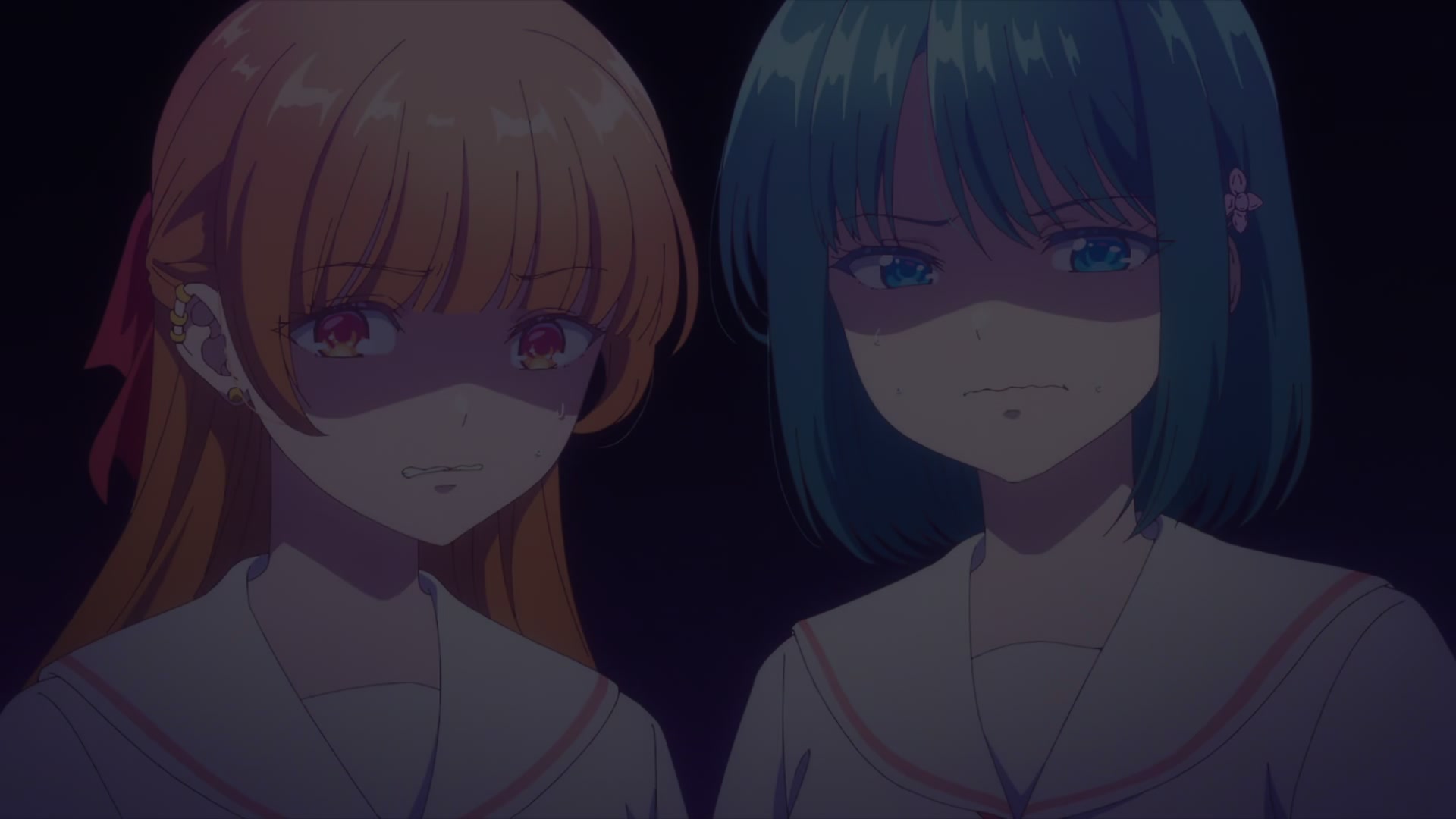
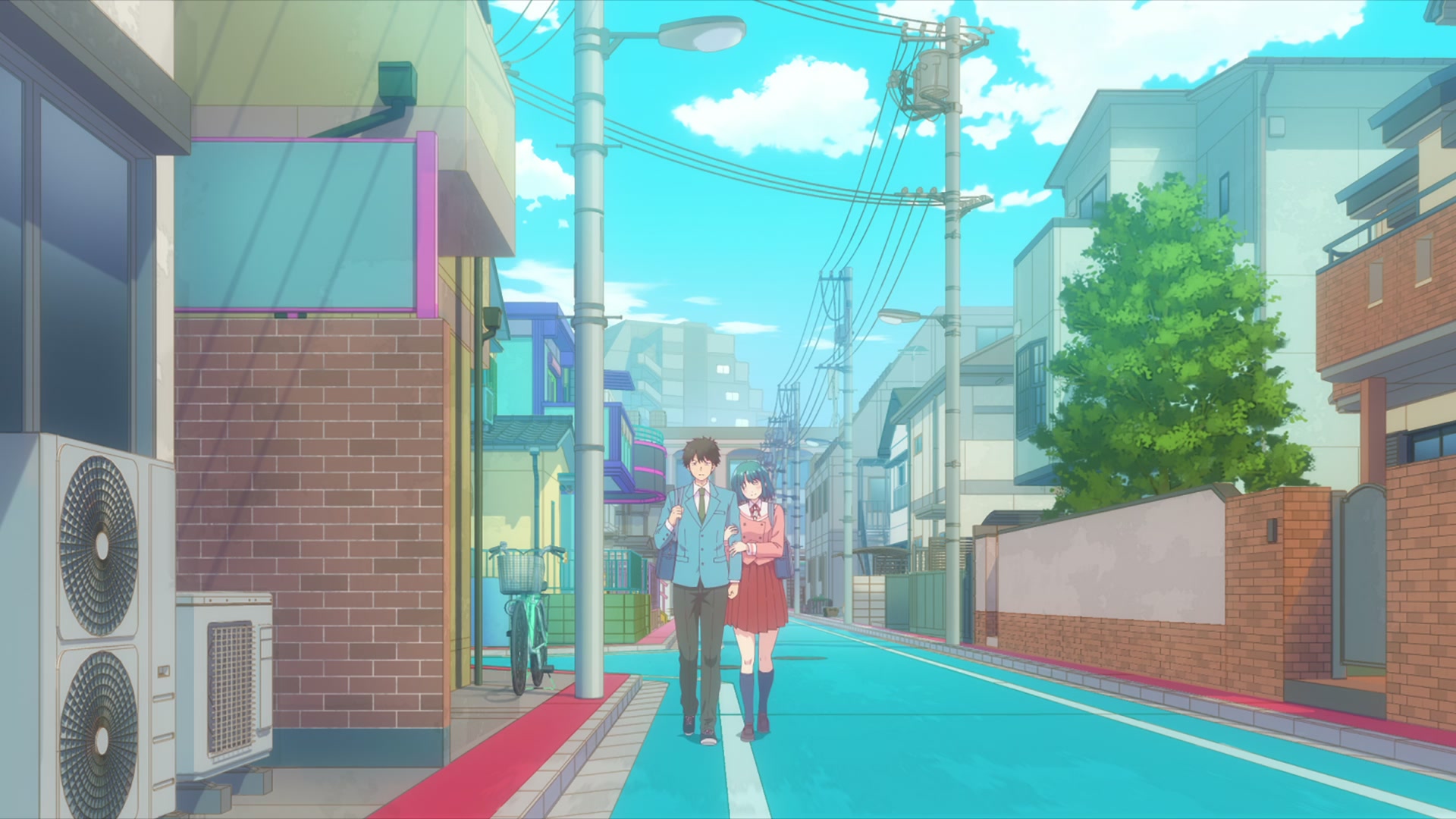
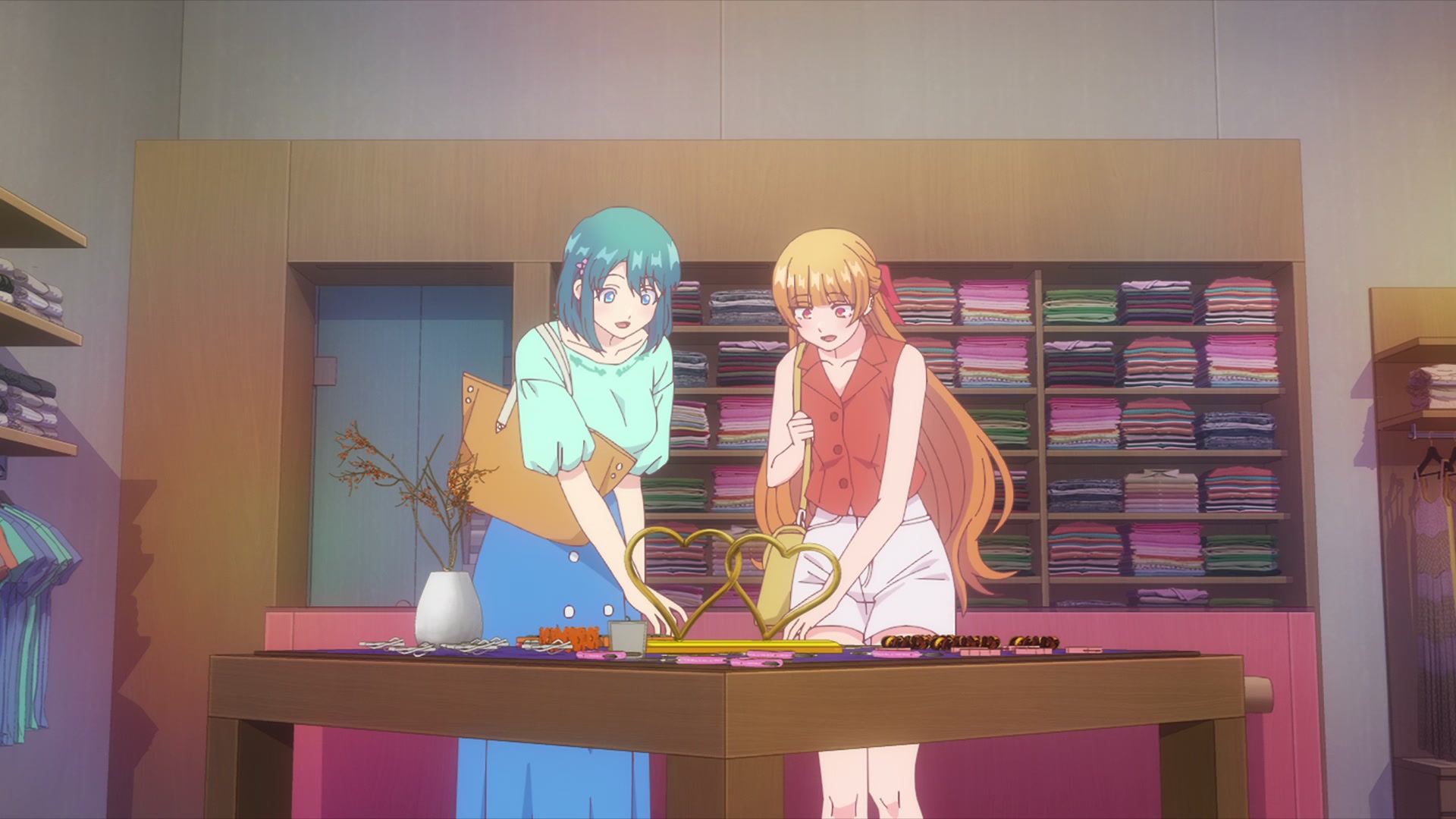
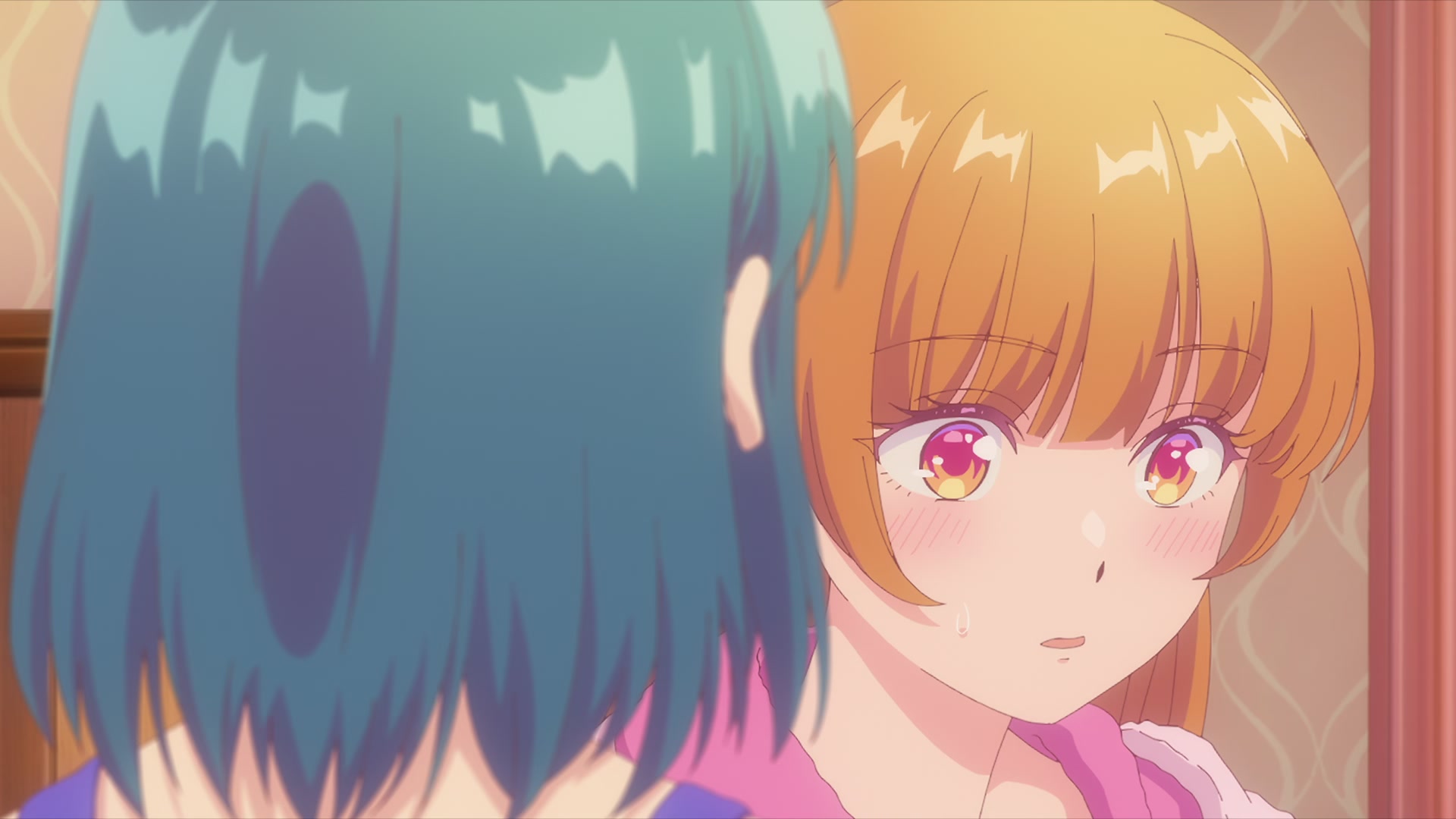
The dynamics between these characters are as important as the characters themselves. The Shio-Akari-Eiyu triangle could easily have become toxic, but the series resists that path. During the fireworks festival, the two girls openly acknowledge their shared feelings and agree to compete without hard feelings. When Akari mistakenly believes Shio has been rejected, her immediate response is comfort and self-sacrificing support. That is not harem logic. That is genuine friendship, and it gives the romantic competition a tenderness that makes the stakes feel higher rather than lower. Runako’s refusal to treat love as a zero-sum game quietly reorients the group, allowing them to be honest with each other in ways they cannot manage with Eiyu. Haru accelerates everything, forcing conversations and kisses that nobody else would initiate, and by the finale she has been integrated into the morning walk to school, no longer an intruder but a permanent thread in the fabric.
Visuals and Animation
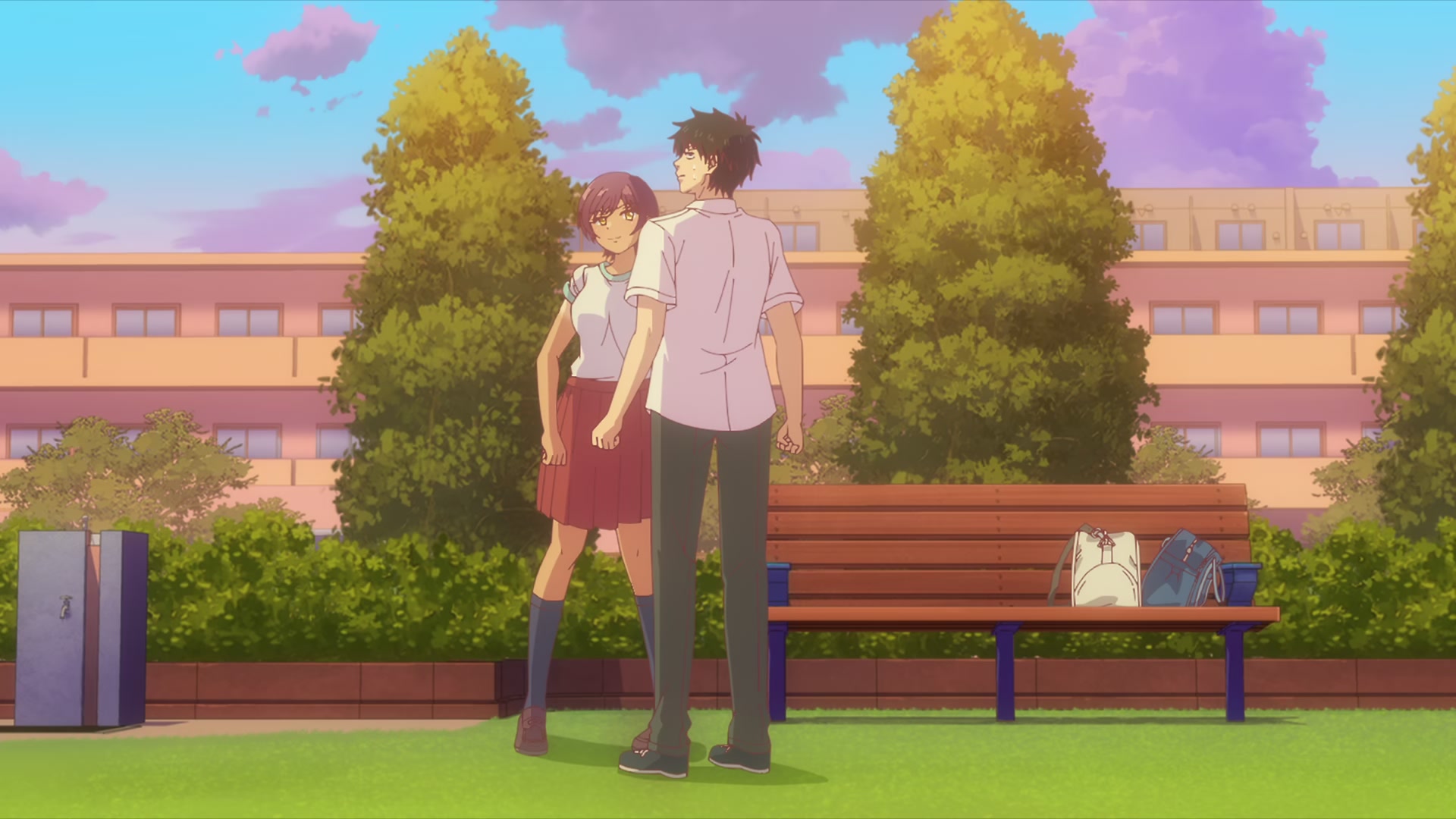
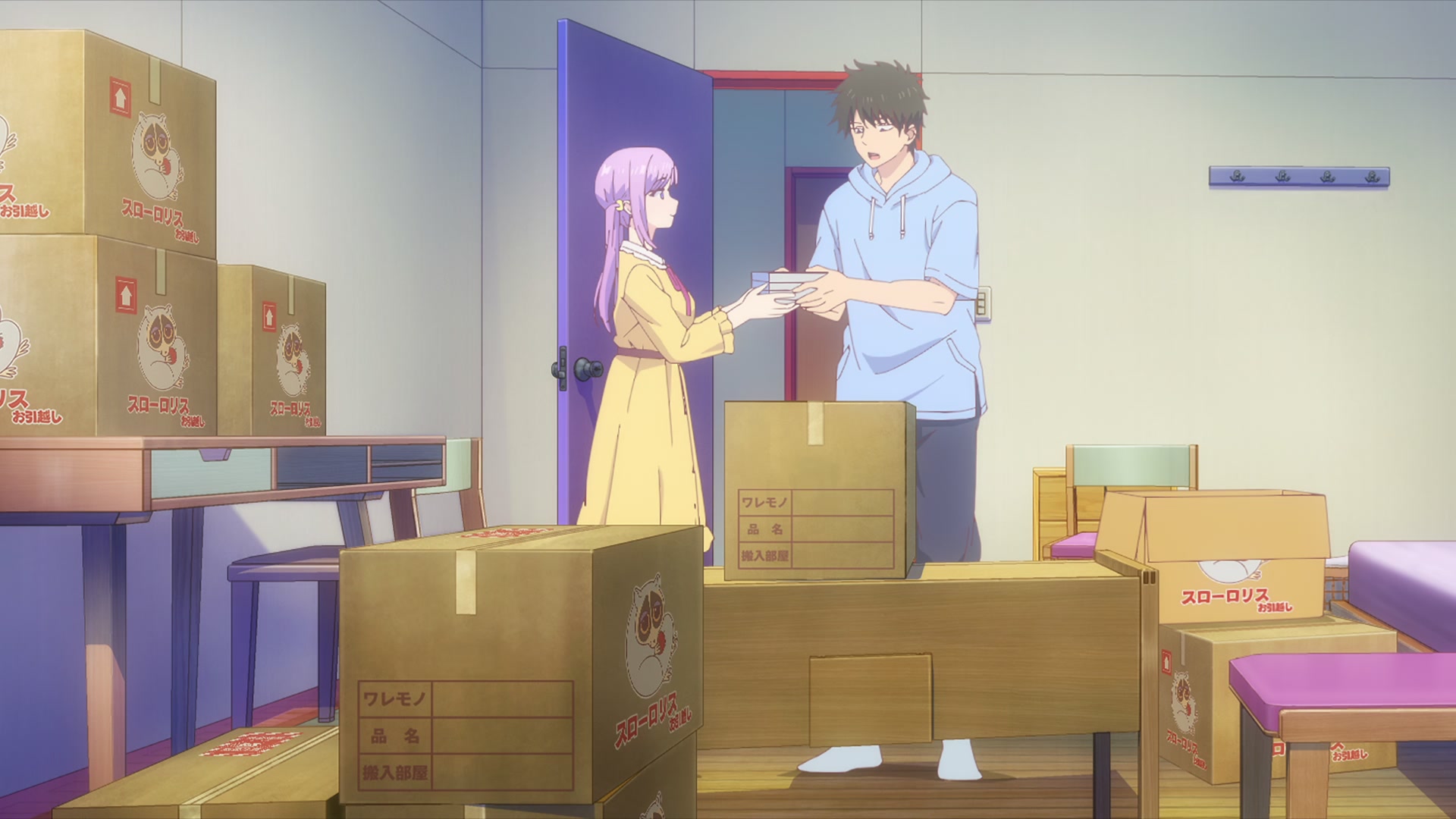
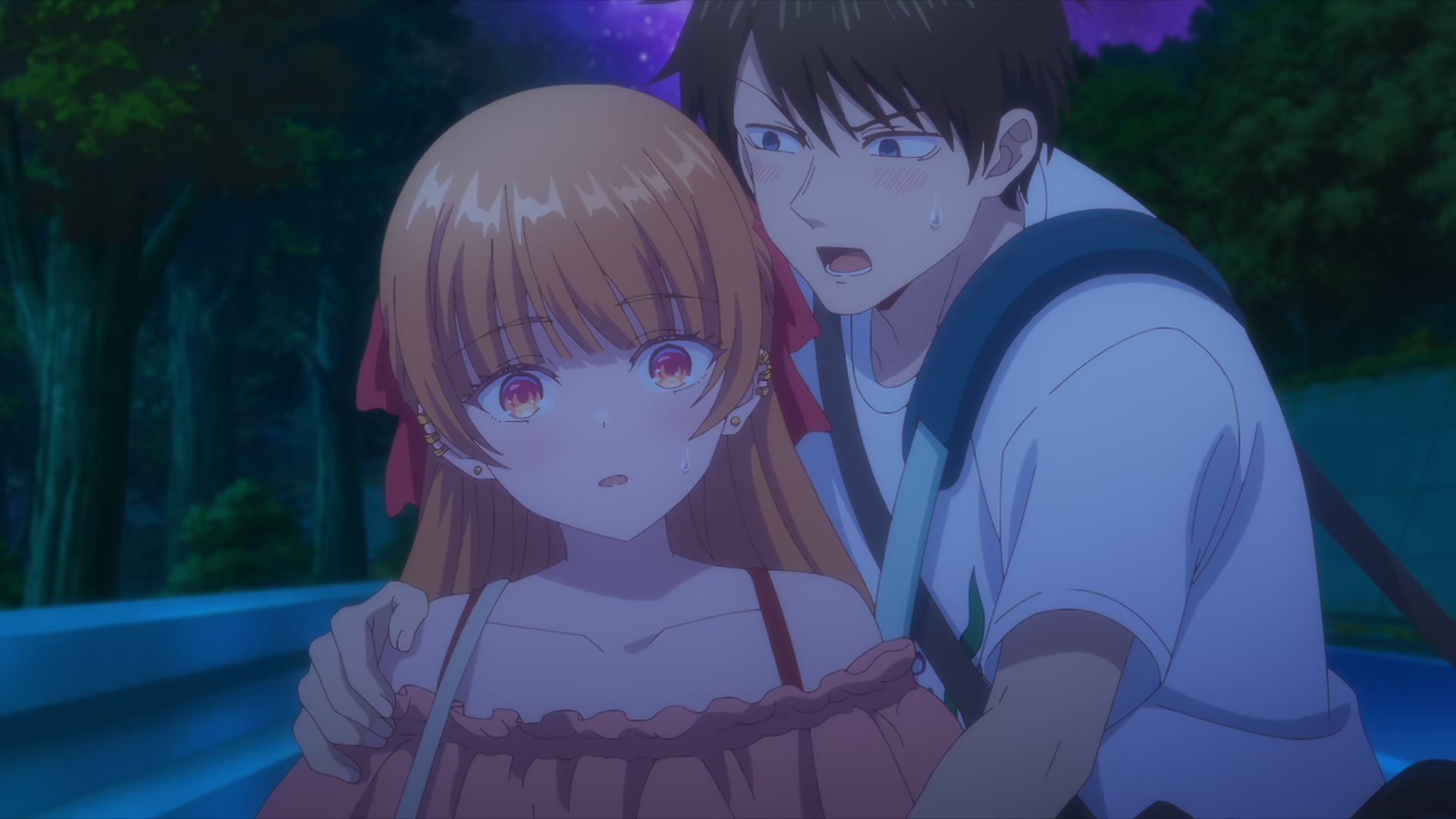
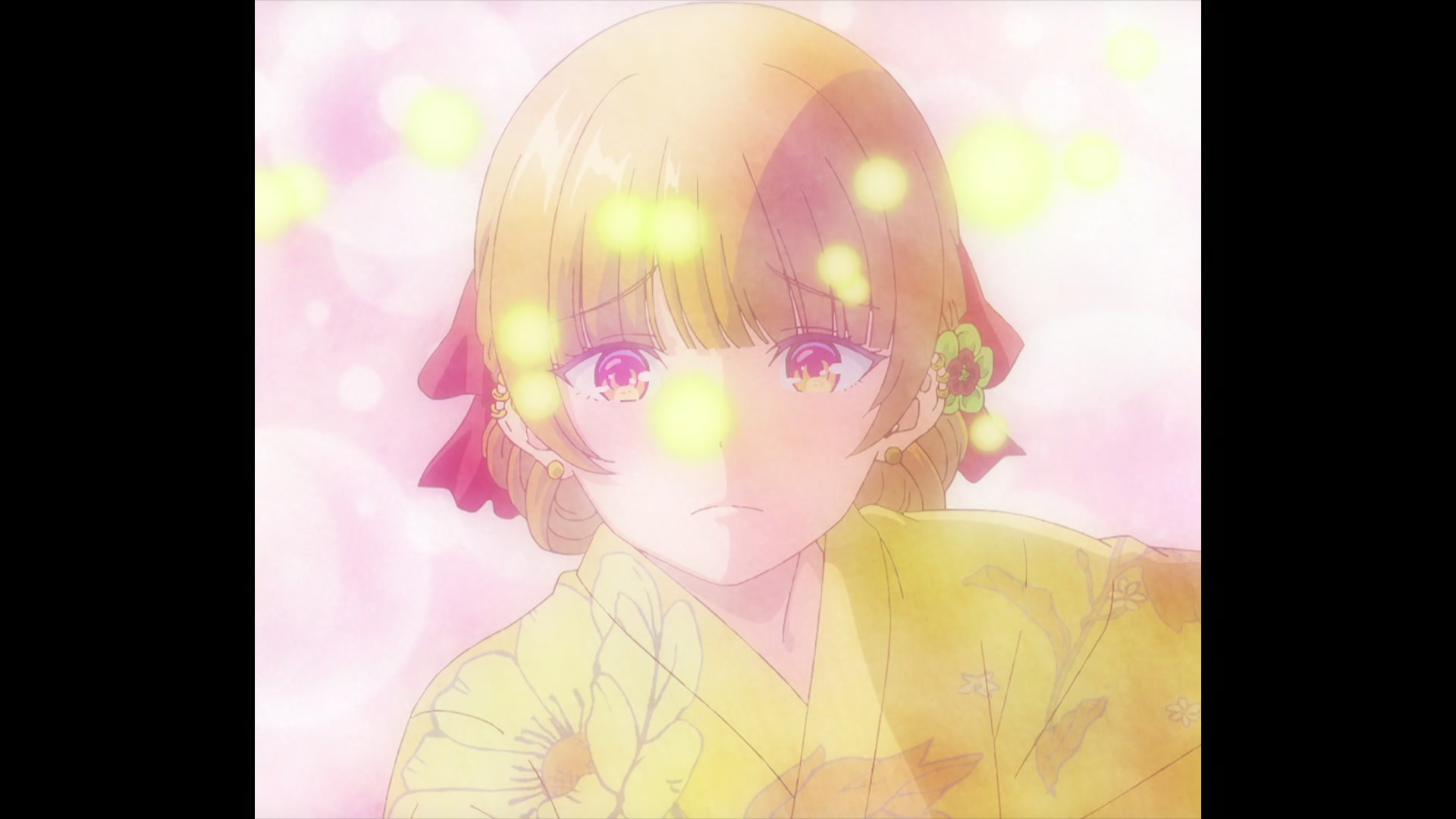
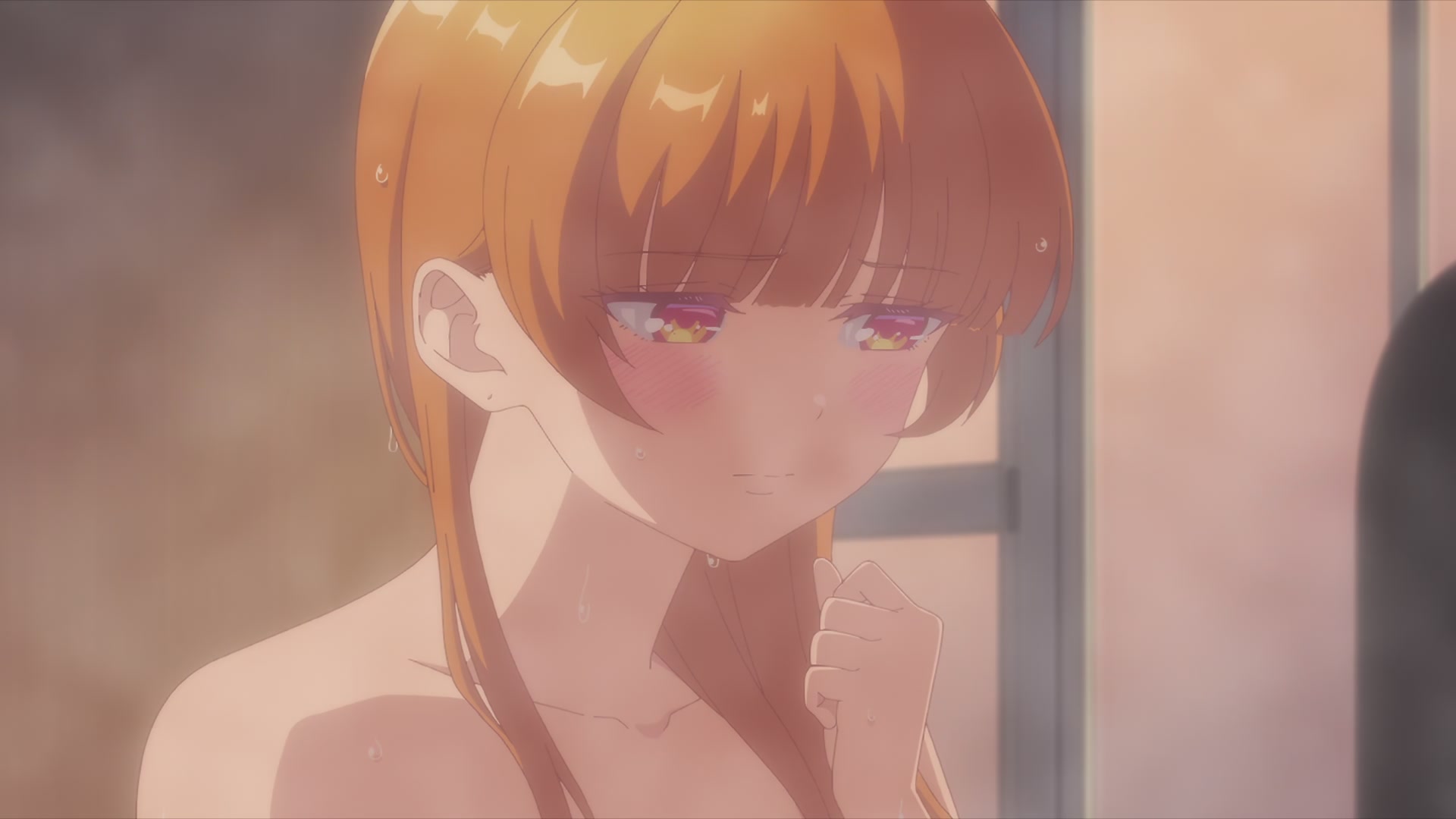
Osamake is a mid-tier production that knows exactly where to spend its limited resources. The character designs are clean, expressive, and efficiently distinct. Shio’s soft, round features and generous silhouette contrast with Akari’s sharper, more fashionable lines. Runako’s slightly smaller build and looser clothing, along with her endless, bouncy physicality, sell her junior-high energy instantly. Haru’s athletic tan, sporty posture, and casual way of occupying space make her an immediate visual outlier among the group.
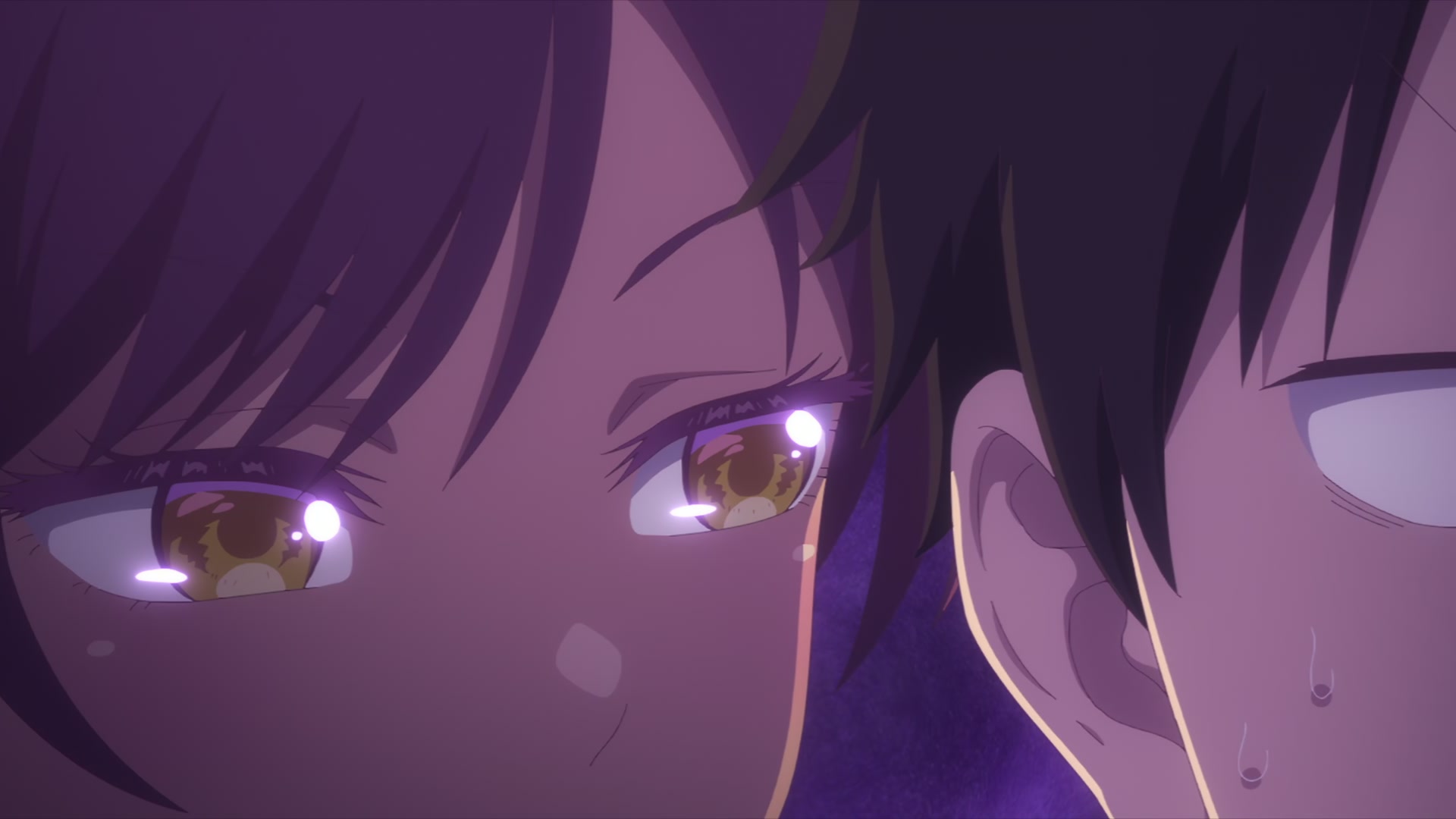
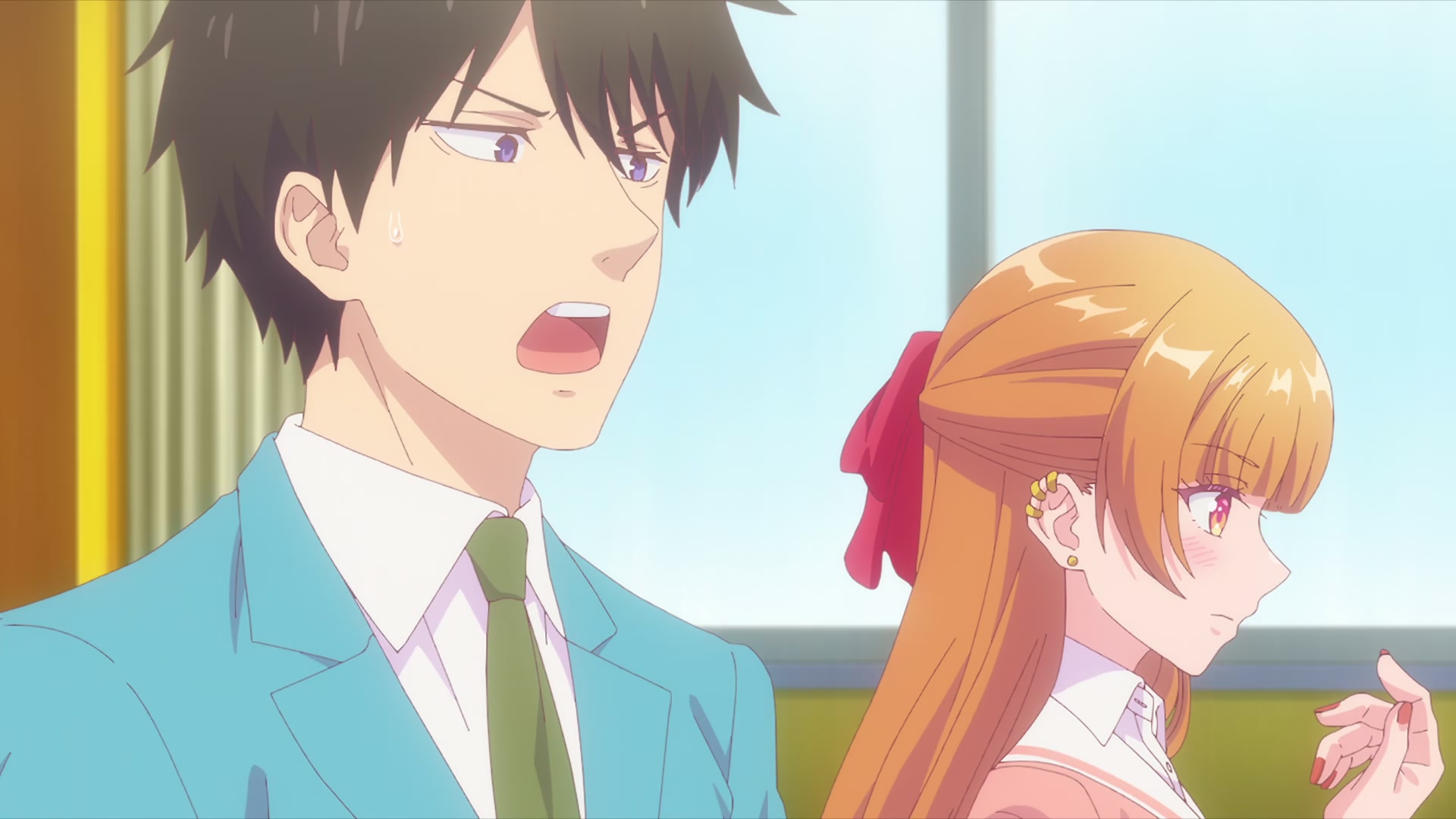
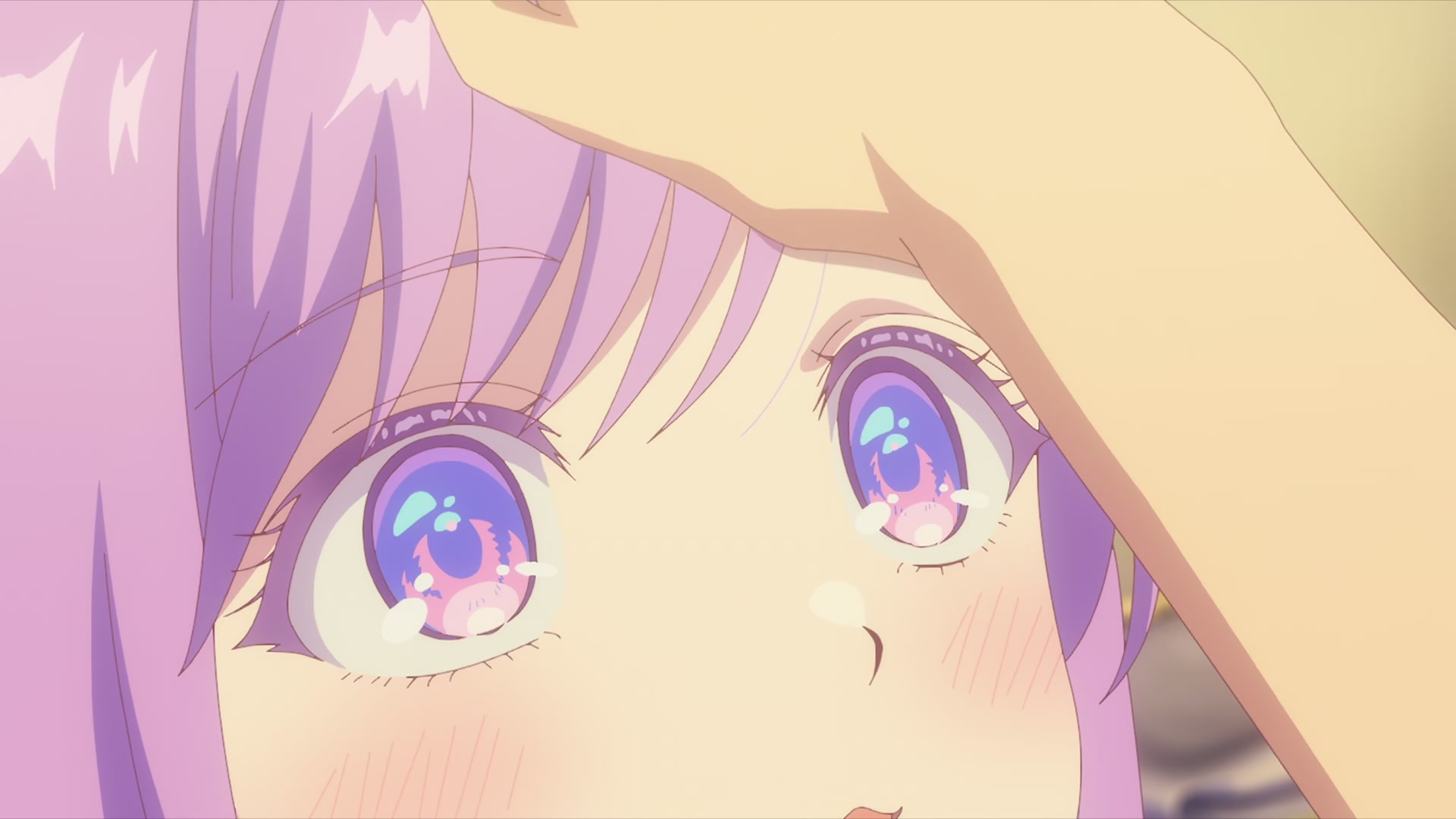
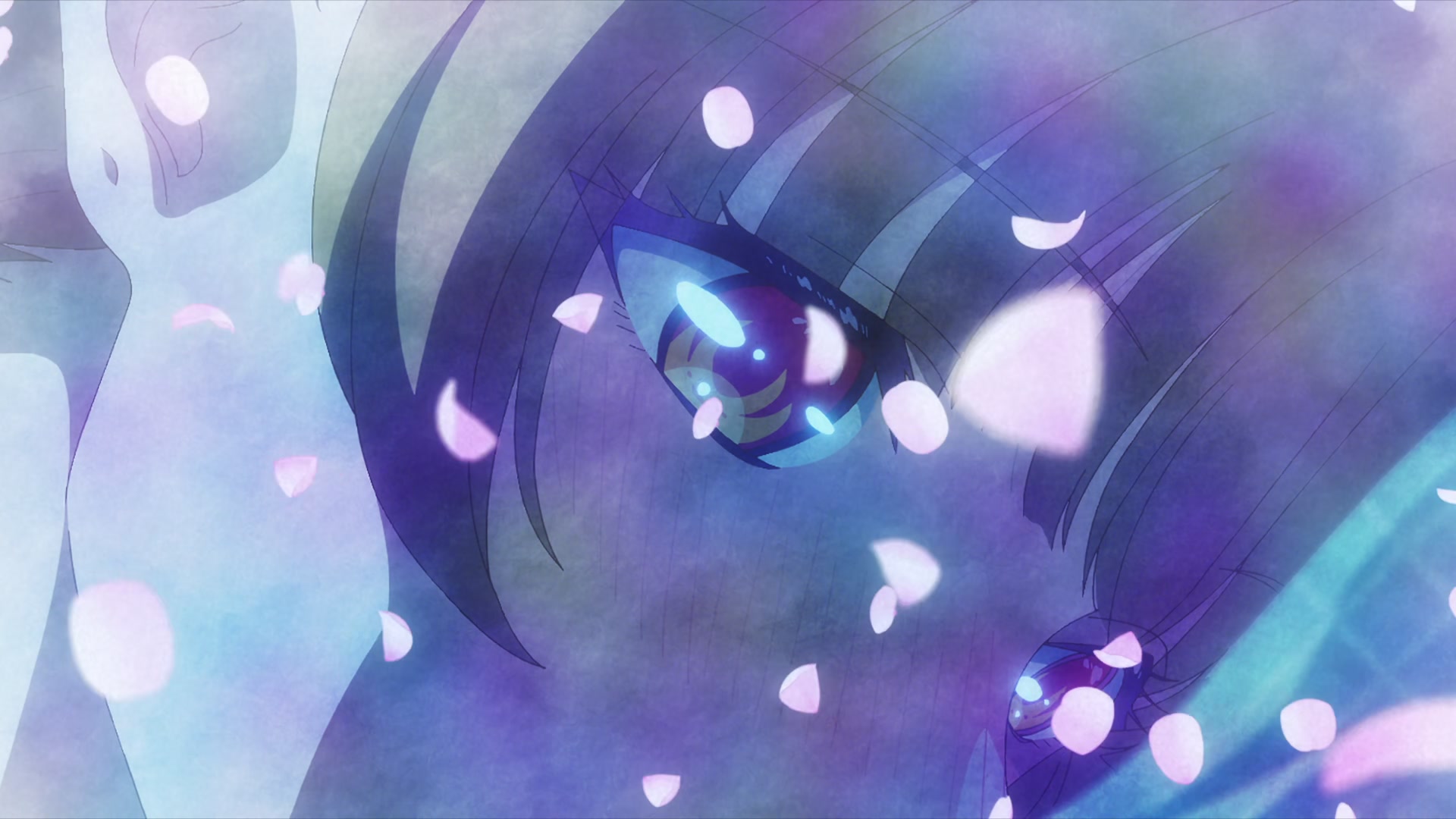
The show lives or dies on its facial expressions, and for the most part, it lives. Eiyu’s stoic face, blank and composed, is a running visual gag. The way that mask crumbles, a bead of sweat, a twitching eyelid, an eventual catastrophic nosebleed, is timed with a comedian’s instinct for the exact moment when control becomes impossible. Akari’s rapid shifts between fury, mortification, and fleeting, unwilling softness are a delight for any tsundere fan. And the Gross Eiyu mode, featuring sparkling eyes, a vapid, beatific smile, and a posture of saintly condescension, is so successfully unnerving that it becomes its own joke long before the series explains it.
The animation itself is functional rather than spectacular. This is not a sakuga showcase. Movement outside key emotional beats, walking scenes, background crowds during the festival, the basketball game in Episode 10, can feel stiff and minimally animated. The one-on-one basketball match, which should crackle with the competitive energy that defines Eiyu and Haru, is conveyed more through poses and cuts than through fluid motion. The three-legged race that contains Akari’s climactic confession relies heavily on the voice performance and the script because the actual running is animated in a way that prioritises clarity over momentum.
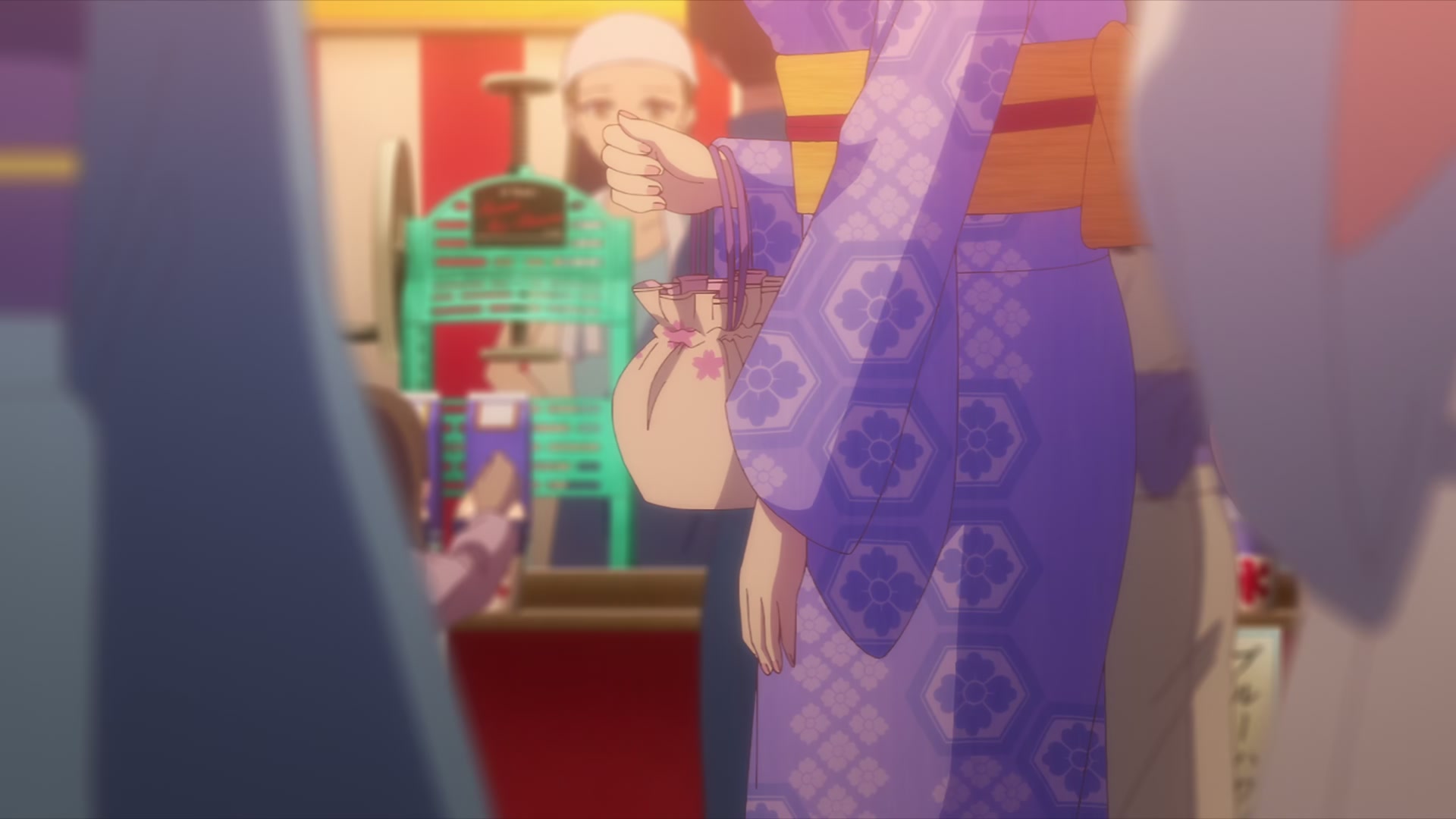
There is, however, an important distinction between limited animation that hurts a scene and intentional stillness that serves the tone. Much of Osamake’s comedy is dialogue-driven, and so static reaction shots, held expressions, and close-ups that let the timing of the voice acting do the heavy lifting are entirely appropriate. The library conversation between Shio and Eiyu, the porch scene where Akari asks her wedding question, the futon scene at the inn, all of these work because the camera simply sits with the characters and trusts the viewer to read their faces. The background art, while not groundbreaking, provides the seasonal beauty the story needs. The secluded beach cove, the lantern-lit path to the torii gate, the festival stalls, and the sports day grounds all create a warm, nostalgic atmosphere that supports the emotional tenor of each arc.
Sound and Music
The sound design in Osamake does exactly what a good rom-com soundtrack should: it stays out of the way when the dialogue is carrying the scene and swells with gentle, melodic insistence when the emotional temperature rises. The background music leans on acoustic guitar, light piano, and playful percussion, never pushing the comedy into farce or the romance into melodrama. It is a comfortable, familiar soundscape that matches the lived-in quality of the characters’ relationships.
The opening theme captures the series’ tonal tightrope with impressive precision. It is breezy, catchy, and full of the kind of forward momentum that promises hijinks and heart-fluttering moments in equal measure, while the visuals foreshadow the entire childhood friend ensemble in a way that rewards rewatching after the season’s revelations. The ending theme is quieter, more wistful, a gentle comedown that reflects the melancholy undercurrent of the childhood friend dilemma.
Voice acting is the true star of the audio experience. Eiyu’s seiyuu carries the immense burden of making a character who is constantly narrating his own emotional avoidance both sympathetic and funny. The rapid internal monologues, the panicked asides, the moments where his voice cracks from the strain of maintaining his stoic façade, all of these are delivered with impressive comic timing. Shio’s performance threads a needle between genki exuberance and genuine vulnerability. The shift in her voice when her cheerful mask slips, most notably in the library scene and during her phone call from the hospital, is a quiet masterclass in character acting. Akari’s seiyuu has the task of making constant verbal abuse feel rooted in deep affection rather than cruelty, and she succeeds through micro-inflections, the way an insult can suddenly soften at the edges, that let the audience hear everything the character cannot say. Runako’s bright, childlike delivery makes her moments of unwitting wisdom land with surprising impact because they arrive without any portentousness. And Haru’s energetic, casual tone, the easy laugh, the rough edges that come from years of being one of the boys, complete the ensemble with a distinctive, likeable presence.


Overall Verdict
Osananajimi ga Zettai ni Makenai Love Comedy is a series for those who have spent years rooting for the childhood friend and wondering why she never wins. It takes that familiar ache and turns it into the entire point. This is not a story about a boy choosing between beautiful girls. It is a story about a boy who is so terrified of losing his most precious relationships that he convinces himself romantic feelings do not exist, even as they consume him. The comedy is sharp and self-aware, the character writing is surprisingly tender beneath the fanservice, and the themes of fear, longing, and the complex permission to both desire and cherish someone feel genuinely thoughtful.
The series will frustrate viewers who want a decisive romantic resolution or who have little patience for the push-pull of will-they-won’t-they. The harem structure, the bath episodes, the accidental falls into compromising positions, all of that is part of the genre’s language, and if that language irritates you, this show will not change your mind. But for anyone who loves the childhood friend trope enough to watch it be deconstructed with clear affection, Osamake is a rewarding experience.
This is a series about the moment before the answer, not the answer itself. The final line, “Or maybe you can! Who knows?!”, spoken for the first time after twelve episodes of dogmatic denial, is the sound of a door creaking open. It is not a promise that the rom-com will happen. It is something more valuable. It is the admission that it could. That, for a love story about childhood friends, is the bravest thing it can say.
Gallery