


Introduction
There is a certain kind of anime that never makes the seasonal hype lists, never trends on social media, and never gets a big-budget sequel a decade later. These shows arrive quietly, tell their stories, and leave behind a small but devoted audience who stumbled upon them by accident and never quite forgot the experience. Nekogami Yaoyorozu is exactly that kind of series, a twelve-episode slice-of-life comedy from 2011 that blends Shinto folklore, otaku humor, and genuine warmth into something far more memorable than its humble production values would suggest.
The premise is straightforward. Mayu, a cat goddess with a gambling problem and a chronic allergy to responsibility, gets banished from Takamagahara (the High Plain of Heaven) after her latest escapade. Stripped of most of her divine powers, she lands on Earth and ends up living at Yaoyorozu-dou, a small antique shop run by Komiya Yuzu, a gentle young woman who lost her parents years ago and has been managing the shop alone ever since. Mayu spends her days playing retro RPGs, napping, eating Yuzu’s cooking, and occasionally using her remaining power, finding lost items, to help the eccentric gods and spirits who drift in and out of their lives.
What follows is a series that understands something fundamental about the “supernatural roommates” subgenre: the magic is never the point. The ghosts, gods, and dream-eaters are delightful, but the show’s real interest lies in the quiet moments between them, the shared meals, the ghost stories told during a sleepover, the way a recovered childhood memory can heal a wound that never fully closed. Nekogami Yaoyorozu is a comedy first, but it earns its emotional beats with surprising patience and sincerity.
This review is for the viewer who has already seen the big-name iyashikei titles and is looking for something smaller, stranger, and unexpectedly touching. If you enjoy series like Kamichu!, Gingitsune, or the lighter episodes of Natsume’s Book of Friends, this one belongs on your radar.
Story and Themes
Narrative Structure and Pacing
The twelve-episode run breaks naturally into three movements. The first four episodes establish the status quo: Mayu’s daily loafing, the arrival of the Goddess of Poverty Shamo, the search for a missing cherry blossom pot, and a madcap dash to help a manga artist meet her deadline. Episodes five through eight form a loose middle act, deepening the ensemble through a beach trip, a flashback to Yuzu’s apprenticeship, a shrine festival, and a dice-gambling rematch. The final four episodes shift into something more serialized, introducing Amane the lunar guardian cat, revealing the backstory of Mayu’s arrival on Earth, and culminating in a two-part finale where Mayu’s friends storm Heaven to rescue her from an arranged marriage that turns out to be a misunderstanding.
This structure works because the episodic adventures never feel like filler. Each standalone story introduces new characters, reinforces existing dynamics, or quietly plants a thematic seed that pays off later. Yoshino’s debut in episode two establishes her anxiety about inheriting her grandfather’s role, a mirror for Mayu’s own reluctance to accept her potential as a guardian. The beach episode is pure comedy until Gonta’s earnest but foolish attempt to fight a typhoon reveals how seriously he takes his self-appointed role as Yuzu’s protector. Even the dice game episode, which seems like a frivolous diversion, ends with the revelation that the video game Mayu was fighting to recover had been lent to her by Gonta over a year ago, a small but meaningful detail that reframes their bickering relationship.
The final arc does not rush. Episode nine devotes almost its entire runtime to a single extended flashback, the story of how Mayu came to Earth, which recontextualizes everything that came before it. The two-part finale then balances comedy (the absurd marriage-meeting farce, Tsukuyomi’s deadpan “emergency drill” dismissal) with genuine tension (Mayu’s powers sealed, her friends expelled from Heaven, Yuzu’s quiet anguish back at the shop). The pacing trusts the audience to sit with both tones without needing to resolve them immediately.
Memory, Loss, and Guardianship
The series’ most persistent theme is memory: what it means to lose it, guard it, recover it, and be changed by it. Cat gods in this universe are explicitly guardians of forgotten items and memories. The lunar vault they protect stores humanity’s lost recollections, which are constantly under threat from the Nezumi of the Underworld, rat-like creatures that devour memories. This is not just background lore. It directly shapes the emotional arc of the series.
The dream-eating baku episode (episode four) is the clearest statement of the theme. Yurara, an ancient Baku who has spent millennia consuming nightmares, invades Yuzu’s dream and forces her to relive the day her parents died. Mayu tries to stop it, but Yurara explains something crucial: painful dreams cannot simply be erased. “When people dream, their experiences are crystallized into memories, one by one. That’s why I can’t just erase painful nightmares.” The function of a nightmare, in this cosmology, is not to torment but to process, to transform raw grief into something that can eventually be held without breaking.
Yuzu’s dream reveals a forgotten promise with her father. He hid a precious Kutani rice bowl inside a less valuable piece, telling her she would find it “once you understand the value of things.” She had buried this memory beneath the weight of her loss. Recovering it does not undo her parents’ death. It gives her back a piece of her father that she had lost, a warm recollection alongside the painful one. The next day, she finds the bowl and displays it in the shop. She is not “over” her grief. She has simply learned to carry it differently.
This logic extends to the series’ entire worldview. Yuzu’s antique shop is not merely a setting. It is a reflection of the theme. Every item in Yaoyorozu-dou was chosen by Yuzu’s father Makitarou, and each one carries a history, a previous owner, a reason it mattered to someone. Yuzu’s eventual goal, articulated in her confrontation with the dishonest dealer Katou, is to reopen the shop and find every piece her father collected a new owner. Antiques, like memories, are meant to be brought out into the light, not locked away in storage. The series argues that the proper response to loss is not preservation in amber but a careful, loving continuation.
Mayu’s latent power to find lost items is the practical expression of this theme. It is her one remaining divine ability after her banishment, and it is the one she uses most often. She finds Yuzu’s hidden emergency funds. She finds Yoshino’s discarded bloom pot. She finds her own lost video game. The power is modest, almost trivial compared to the cosmic scale of the lunar vault, but it is exactly what the people around her need. Guardianship, the show suggests, does not have to be grand. It can be as small as locating a misplaced object for someone who is too tired or sad to find it themselves.
Chosen Family and Divine Hierarchy
Takamagahara is depicted as a place of rigid hierarchy, formal protocols, and stifling expectations. Mayu’s mother Akari-hime rules with an iron authority, grounding Mayu for weeks, sealing her powers, and eventually attempting to force her into an arranged marriage because Amaterasu herself requested it. Even the well-meaning Tsukuyomi, who turns out to be a decent superior, communicates through misdirection and tests rather than direct honesty. Heaven is not evil. It is simply a place where formality and rank take precedence over individual feeling.
Earth is the opposite. Yaoyorozu-dou is chaotic, financially precarious, and filled with uninvited guests, but it is also warm, forgiving, and fundamentally accepting. Yuzu never asks Mayu to justify her presence. She never demands rent, labor, or even gratitude. She simply makes room at the table, and that radical hospitality creates a gravitational pull that draws in everyone else. Shamo, the Goddess of Poverty, arrives expecting to be feared and driven away. Instead, Yuzu fixes her sandal, offers her tea, and scolds the other gods for ganging up on her. Shamo postpones her official judgment indefinitely and quietly becomes a regular. Amane, the rigid lunar guardian cat, spends twenty-four hours on Earth eating chestnut rice, visiting a candy shop, and watching the town cats cooperate to hunt a Nezumi, and it reshapes her understanding of what guardianship means.
The series never frames this as a simple “Earth good, Heaven bad” binary. Tsukuyomi is reasonable, Kukuri-hime is kind, and Mayu’s father clearly loves her. The point is subtler: genuine belonging cannot be imposed from above. It must be chosen and reciprocated. Mayu’s engagement to Sasana, formalized in front of Amaterasu by their fathers, is a comedic running gag precisely because it represents the Heaven-style approach to relationships. The papers exist, but they matter less than the feelings of the people involved. Sasana’s arc in the final episodes, where she nearly gives up because “neither Amaterasu-sama nor Mayu-sama’s mother is on my side anymore,” is resolved when Meiko tells her, “What’s important is how Mayu and we feel!” The legitimacy of a bond comes from the bond itself, not from external validation.
Cultural Texture and Folklore
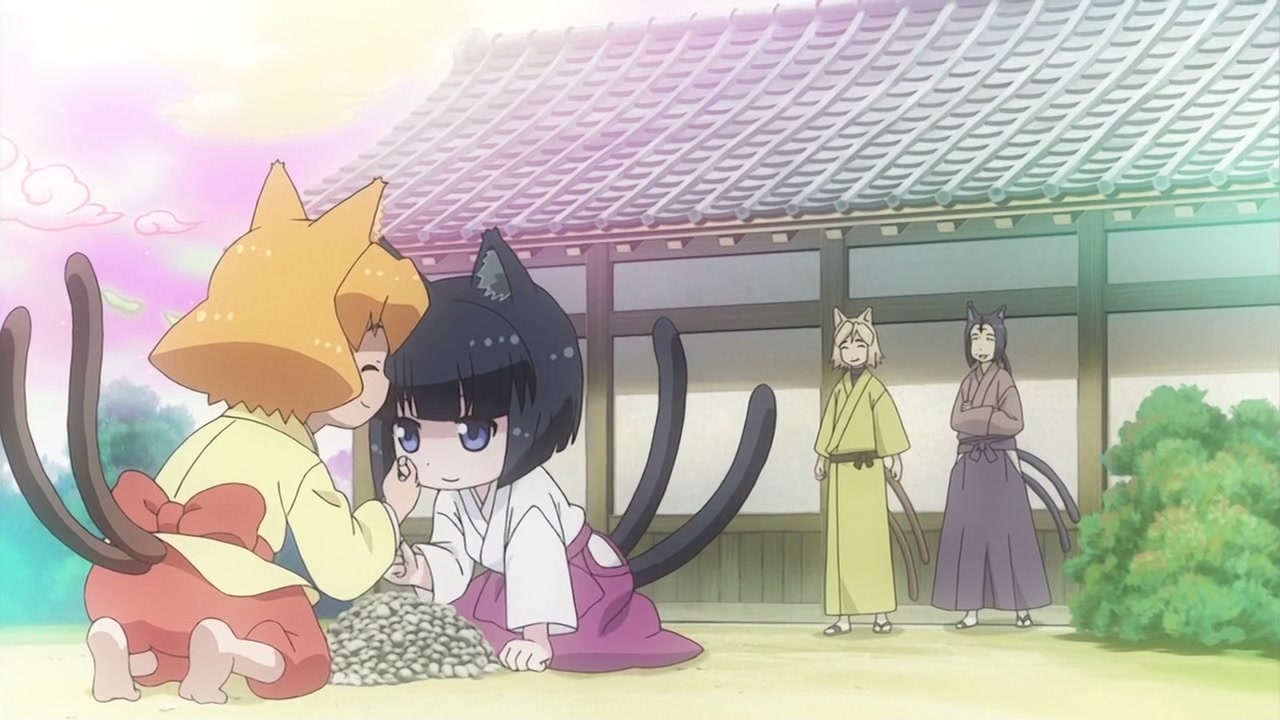
One of the series’ quiet pleasures is how casually it weaves Japanese folklore and Shinto practice into a modern setting. The gods are not distant abstractions. They are neighbors, shopkeepers, festival organizers, and video game buddies. Gonta is an Inari fox guardian who manages a local shrine and files paperwork with the divine bureaucracy. Shizuha, his mother, is a hard-drinking trickster who cheats at dice and donates the winnings to Yuzu for Mayu’s care. The cherry blossom god Shoudou has chronic back pain and a gambling habit his granddaughter Yoshino is constantly trying to curb. The hurricane god is one of Mayu’s online gaming friends and can be called on the phone to divert a typhoon.
This demystification is affectionate rather than irreverent. The festival episode (episode seven) is a detailed, ground-level look at shrine preparation: setting up stalls, organizing offerings, cleaning the grounds, and managing the influx of visitors. The gods drink ramune, take communal baths, and tell ghost stories under the moonlight. The Rice Field God, a mud-covered figure briefly mistaken for a zombie, is treated with quiet respect once his identity is known. The series loves its pantheon without worshipping it, treating the divine as something that coexists naturally with the mundane.
The antique shop itself introduces viewers to a vocabulary of Japanese ceramics: Ko-Imari, Kutani, Shigaraki, Oribe, Kakiemon. Yuzu’s expertise is treated seriously. When a customer asks about a piece, Yuzu explains the glaze, the period, the kiln, and any later modifications with the confidence of someone who has spent years studying. The series does not lecture, but it assumes the viewer is intelligent enough to find this world interesting. The test Genzou gives young Yuzu, asking her to identify counterfeits and then to determine which piece has the highest monetary value, is a genuine introduction to the philosophy of antique appraisal. Yuzu fails the second question because she has never considered objects in terms of market price, only in terms of beauty and history. Genzou’s quiet admission that “there’s no correct answer really” is a lesson in wabi-sabi, the acceptance of impermanence and imperfection that underpins so much of Japanese aesthetics.
Adaptation Notes
I have not read the original manga (if one exists in a form that diverges from this adaptation), so I cannot comment on skipped arcs, compressed storylines, or altered characterizations relative to any source material. What I can say is that the anime stands perfectly well on its own. The twelve episodes tell a complete story with a clear beginning, middle, and end. Character arcs resolve or reach satisfying resting points. The pacing does not feel rushed or padded. If the manga contains additional stories, they would be welcome supplements, but their absence does not make the anime feel incomplete. The work succeeds as a self-contained narrative.
Characters
Mayu and Yuzu: The Core Bond
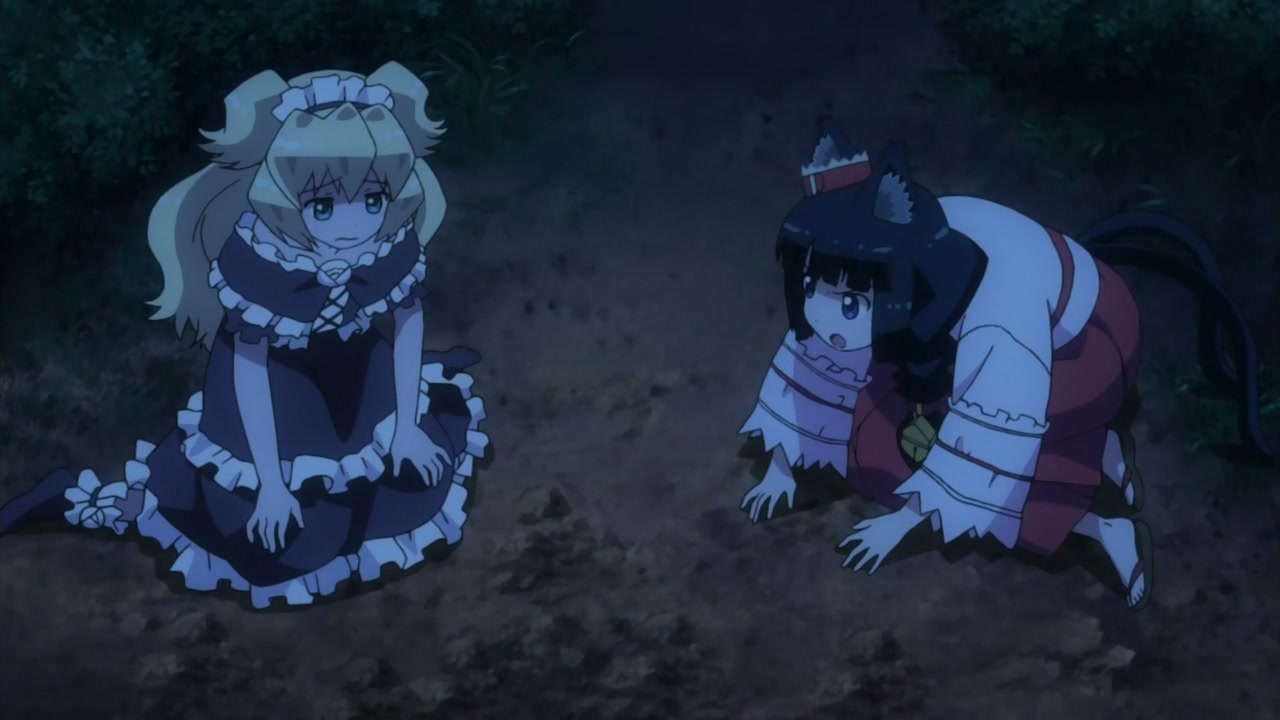
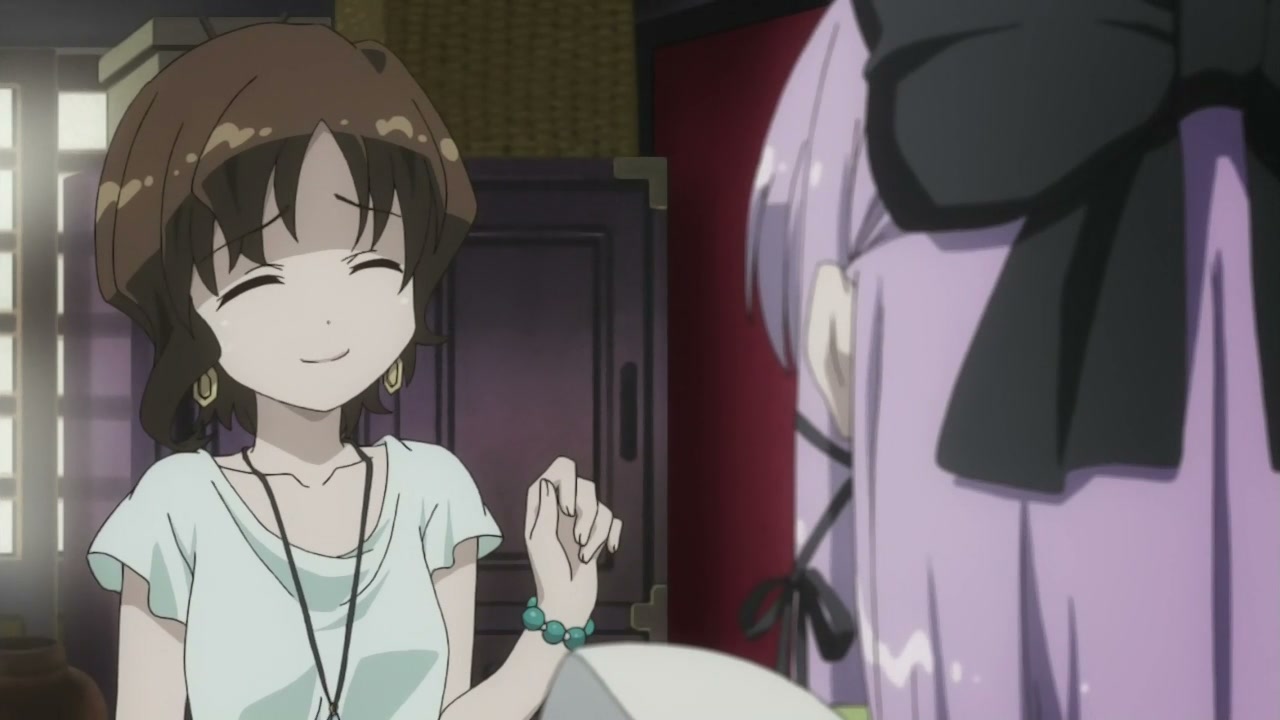
Every other relationship in the series orbits around the central pairing of Mayu and Yuzu. On the surface it is a simple arrangement: Yuzu provides a home, food, and stability; Mayu provides companionship and the occasional burst of supernatural assistance. The emotional reality is more layered.
Mayu is lazy, sarcastic, and allergic to sincerity. She deflects gratitude with bravado, insults her friends as a form of affection, and would rather play a thirty-year-old RPG than engage with any divine responsibility. This persona is not entirely a mask. Mayu genuinely enjoys sloth and genuinely resents authority. But it is also a defense. Her banishment was a rejection by her family and her entire society, and her response was to preemptively reject them back (“I wouldn’t go back even if you asked me to!”). Yuzu is the first person who has never demanded anything of her except her presence. That unconditional acceptance dismantles Mayu’s defenses in a way she never quite acknowledges aloud.
The flashback in episode nine recontextualizes everything. Mayu did not simply wash up at Yuzu’s shop by chance. She was asked, by the ghost of Yuzu’s dying cat Kotetsu, to watch over the girl. Kotetsu’s exact words: “I want you to help a human girl in my stead. It should be simple for a goddess, right?” Mayu accepted, though she would never admit it. Her loafing around Yaoyorozu-dou is not idleness. It is the fulfillment of a promise made to a creature whose only concern was that his human would be alone. When Yuzu finally learns bits of this story, she does not press for details. She simply says “Welcome back,” a phrase that carries the weight of years.
Yuzu herself is easy to underestimate. She is gentle, hardworking, and unfailingly polite, the kind of character who could easily become a bland receptacle for the audience’s sympathy. The series avoids this by giving her a quiet, steely competence. She sees through Katou’s three counterfeits in seconds and negotiates a business mentorship instead of calling the police. She manages the shop’s finances, cooks for an ever-expanding household, and handles every supernatural visitor with the same calm courtesy she would offer a human customer. Her grief over her parents is real but not paralyzing. She carries it, and the series lets her carry it without making her suffering the entire point of her character.
The finale crystallizes their bond. Mayu is gone for several days. Yuzu insists to everyone that she is fine, that she is actually relieved to have less work, that Mayu’s absence is no big deal. The moment Mayu crash-lands back in the shop, Yuzu’s composure shatters. She embraces Mayu, crying, and says she “had enough” of being afraid Mayu would never return. It is the only time in twelve episodes that Yuzu loses control, and it lands precisely because the series spent eleven episodes showing her maintain it.
Mayu’s response is characteristically deflective. She asks for dinner. She does not say she missed Yuzu, does not apologize for worrying her, does not explain what happened in Heaven. But later, quietly, she asks: “Can I stay here a little longer?” Yuzu does not answer directly. She does not need to. Mayu is already home.
The Rivals: Sasana and Meiko
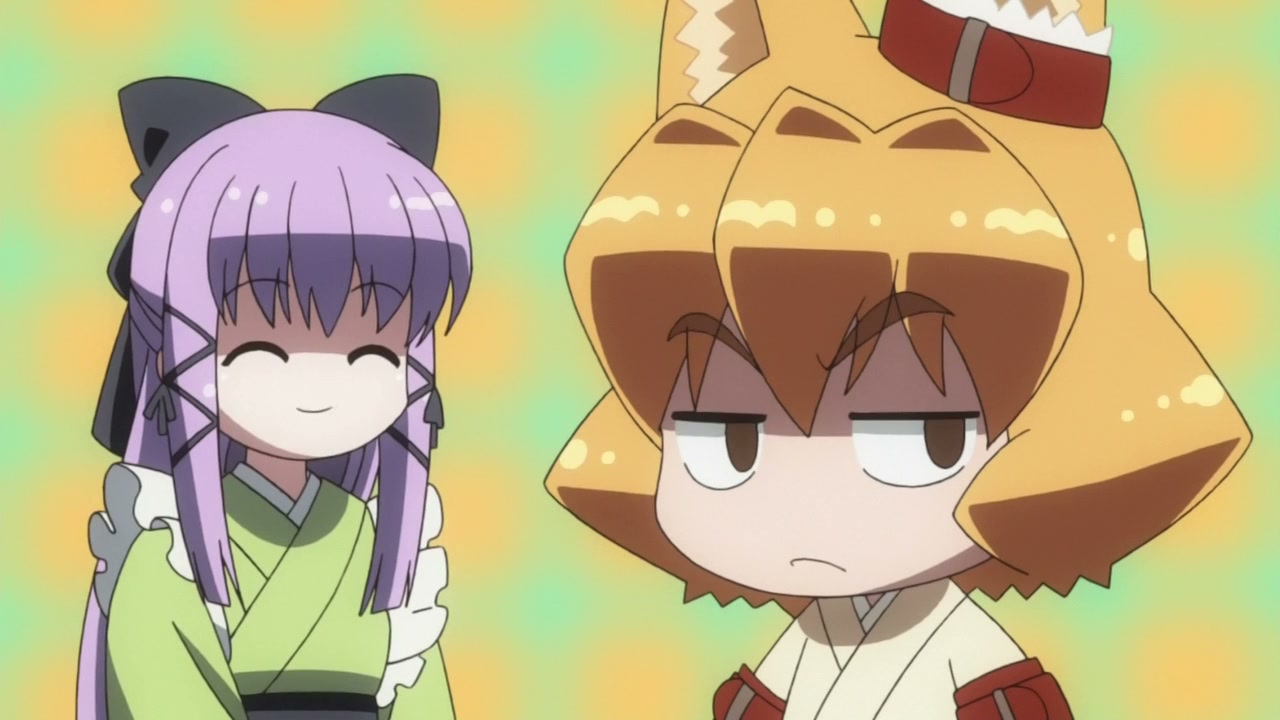
Sasana and Meiko share a goal (marrying Mayu) and almost nothing else. Their bickering is the series’ most reliable comic engine, a slapstick duel that runs from the first episode to the last, but it evolves into something more interesting over time.
Sasana is dignity and insecurity in equal measure. Her claim to Mayu rests on a drunken engagement pact between their fathers, formalized before Amaterasu herself. She wields the longsword Mekajiki, speaks in formal registers, and presents herself as the proper, legitimate choice. Underneath that composure is a deep fear that without the papers, without the external validation, she has no reason to be in Mayu’s life at all. Her collapse in the Heaven arc, “The only thing that kept me going were those papers,” is the most vulnerable moment any character other than Yuzu is allowed.
Meiko is the opposite. She has no formal claim, no divine sanction, no documents. She simply decided she loved Mayu and has been aggressively pursuing her ever since. She is loud, brash, quick to draw her taser, and terrible at reading social situations. But she is also fiercely loyal and emotionally perceptive in ways that surprise the people around her. Her childhood flashback reveals the root of her attachment: Mayu was the first person to invite her to play, back when Meiko was a lonely rich girl with no friends. That debt of kindness has never been repaid, and Meiko has spent her life trying.
Their rivalry resolves not through one “winning” but through mutual recognition. When Sasana is at her lowest, it is Meiko who rallies her: “What’s important is how Mayu and we feel! If something gets in the way, we should just blow it away!” The words are pure Meiko, blustery and simplistic, but they are exactly what Sasana needs to hear. She rises, and they storm Heaven together not as competitors but as partners. The rivalry does not end. They will be fighting over who gets to sleep next to Mayu for the rest of their lives. But they now fight as equals who respect each other’s legitimacy, even if they will never admit it aloud.
Gonta: The Well-Meaning Fool
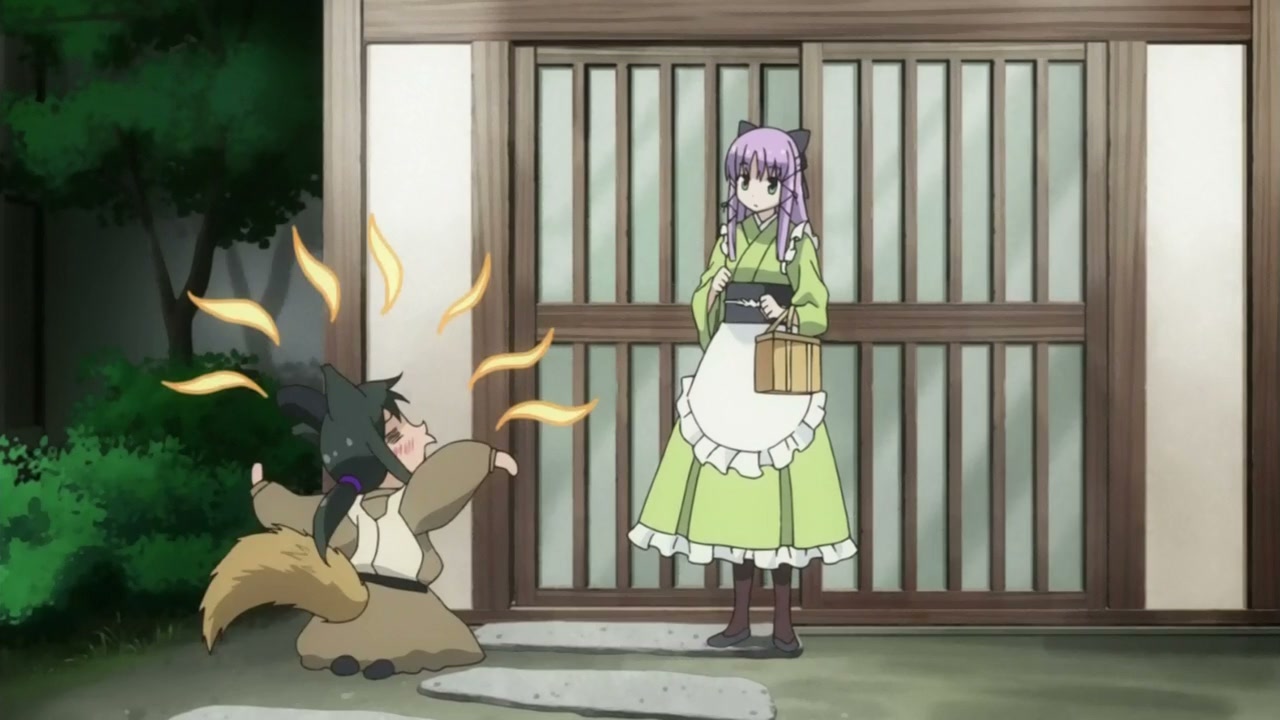
Oomiya-Michinushi-no-Mikoto, known to everyone as Gonta, is the fox guardian of the local shrine and Yuzu’s most devoted admirer. He is also the show’s primary punching bag. His romantic fantasies are constantly interrupted, his stories are never allowed to reach their punchline, and his grand gestures (fighting a typhoon, storming Heaven) invariably end with him catching a cold or being frozen in place by a god’s command.
What saves Gonta from being purely pathetic is his sincerity. He genuinely wants to protect Yuzu, even if his methods are foolish. His attempt to fight the hurricane god is absurd, but he goes out into the storm alone because he promised Yuzu she would get to wear her new swimsuit. His bus story, which he tries three times to tell, is probably not even funny, but he wants to make Yuzu smile, and when she smiles at him anyway without hearing the punchline, that is enough. The series never punishes Gonta for his feelings. It gently suggests that Yuzu values him exactly as he is, a flustered, well-meaning guardian who brings fried tofu and helps with festivals, and that being Gonta is better than being the mighty Oomiya-Michinushi-no-Mikoto he wishes he could be.
Shamo, Yoshino, and the Outer Circle
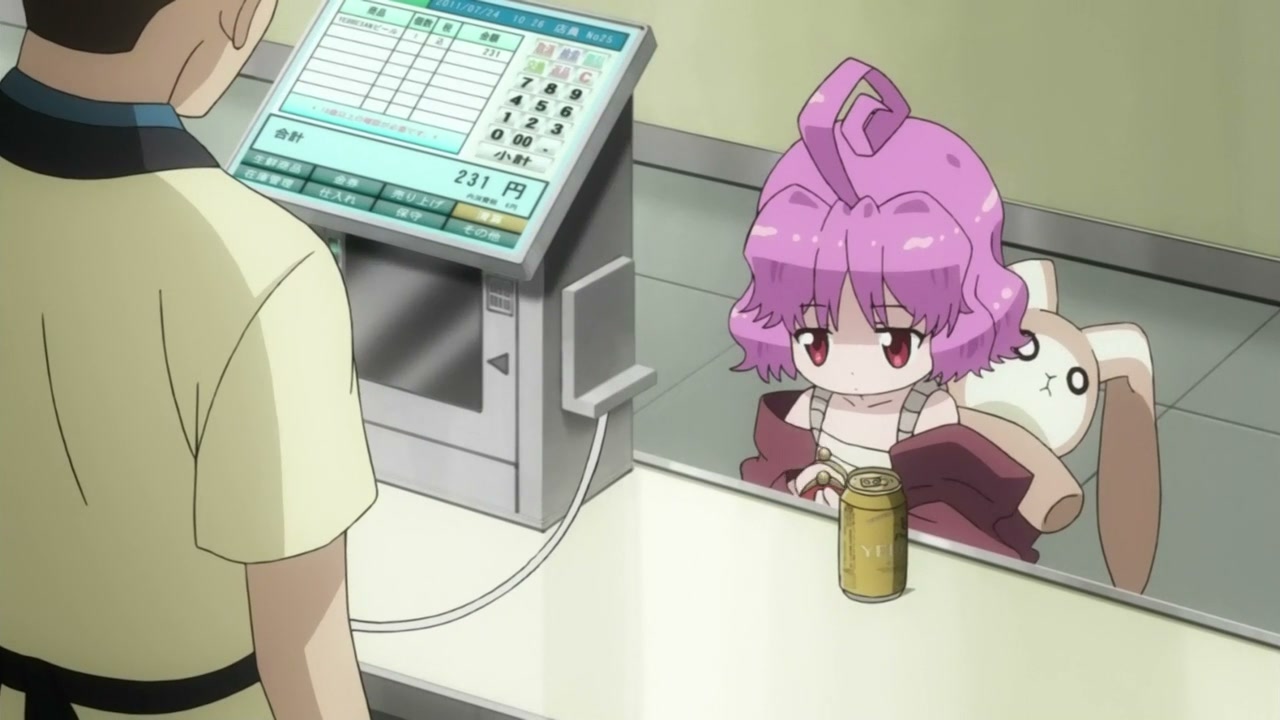
Shamo, the Goddess of Poverty, is a quiet triumph of understated character writing. She speaks in a monotone, masks all affection with deadpan criticism, and always has a practical excuse for showing up (“I’m here to return the manga,” “I won a trip in a raffle”). Her power is immense and genuinely feared, the Great Depression was reportedly her fault, but she never uses it maliciously. She simply wants a place to exist without being driven away. Yuzu gives her that, and in return Shamo becomes a loyal, if emotionally inexpressive, member of the household. Her constant presence, game console under her arm, snide remark on her lips, is her declaration of belonging.
Yoshino, the cherry blossom goddess, is the soft heart of the ensemble. She cries easily, spooks even more easily, and idolizes Mayu with an earnestness that would be cloying if it were not so sincere. Her function is to be the person Mayu can openly protect. With Yuzu, Mayu’s guardianship is covert. With Yoshino, it is overt: finding the bloom pot, including her in adventures, telling her the story of her banishment. Yoshino’s growth from panicked heir to quietly confident goddess mirrors Mayu’s own journey, and their bond, part mentorship, part sibling affection, is one of the series’ most consistent pleasures.
Amane and the Lunar Arc
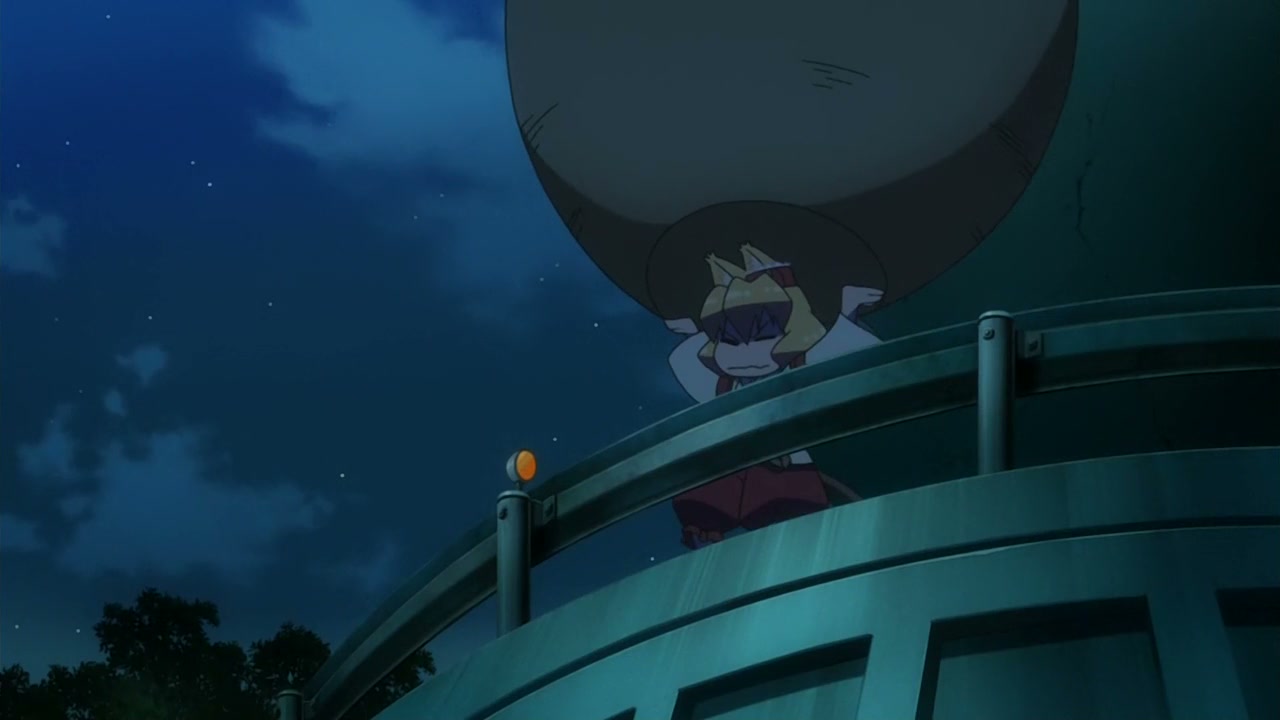
Amane arrives late in the series as a foil for Mayu. She is everything Mayu is not: disciplined, serious, duty-bound, and utterly without humor. Her initial contempt for Mayu is professional and personal. How could a lazy gambler possibly be chosen to share her sacred duty? Her time on Earth does not change her personality. She remains rigid and awkward. But it shows her that guardianship takes forms she had not considered. The town cats unite to hunt a Nezumi without any divine command. Yuzu’s cooking and the grannies’ candy shop provide a warmth she has never experienced. Mayu, who seems to do nothing, has created a network of people who would fight Heaven itself for her. Amane’s eventual acceptance of Mayu as a partner is not a softening of her principles. It is an expansion of them.
Visuals and Animation
Art Style and Direction
Nekogami Yaoyorozu was produced by AIC Plus+, a studio not known for lavish budgets, and the show’s visual priorities reflect its resources. This is not a series that impresses with fluid action sequences or intricate background detail. What it does offer is charming, expressive character work and a smart use of stylistic flexibility to compensate for limited animation.
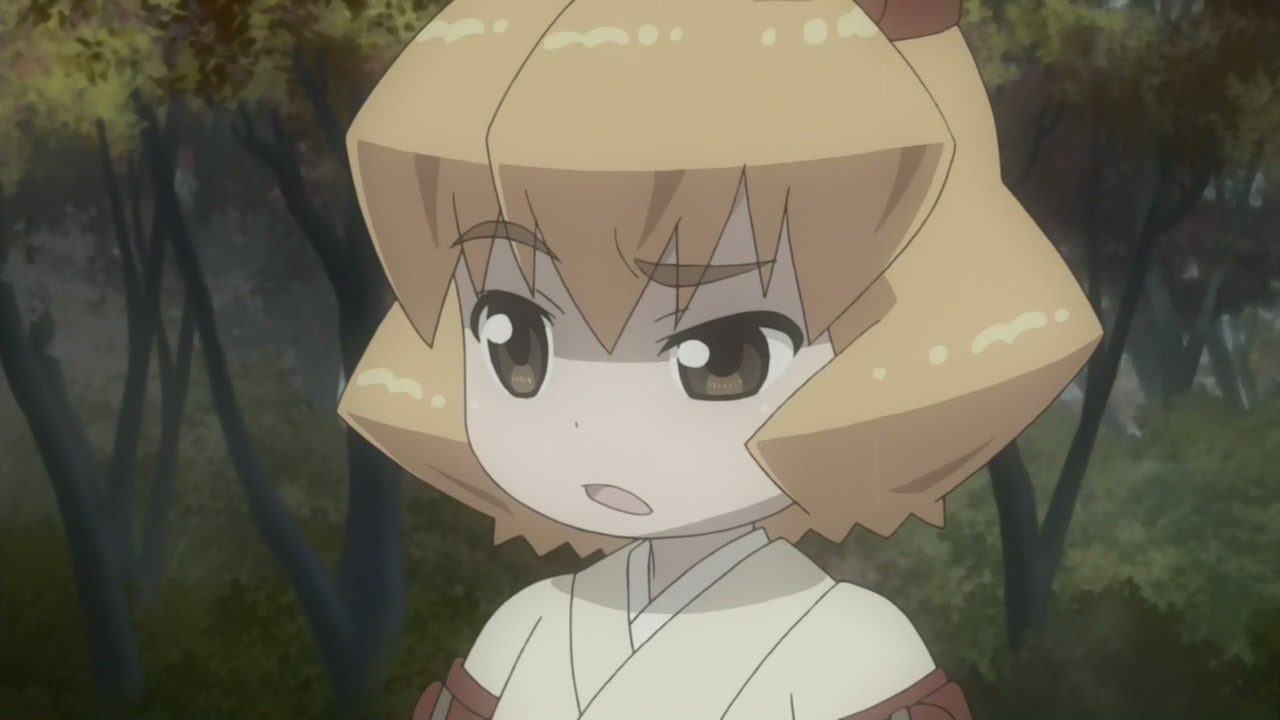
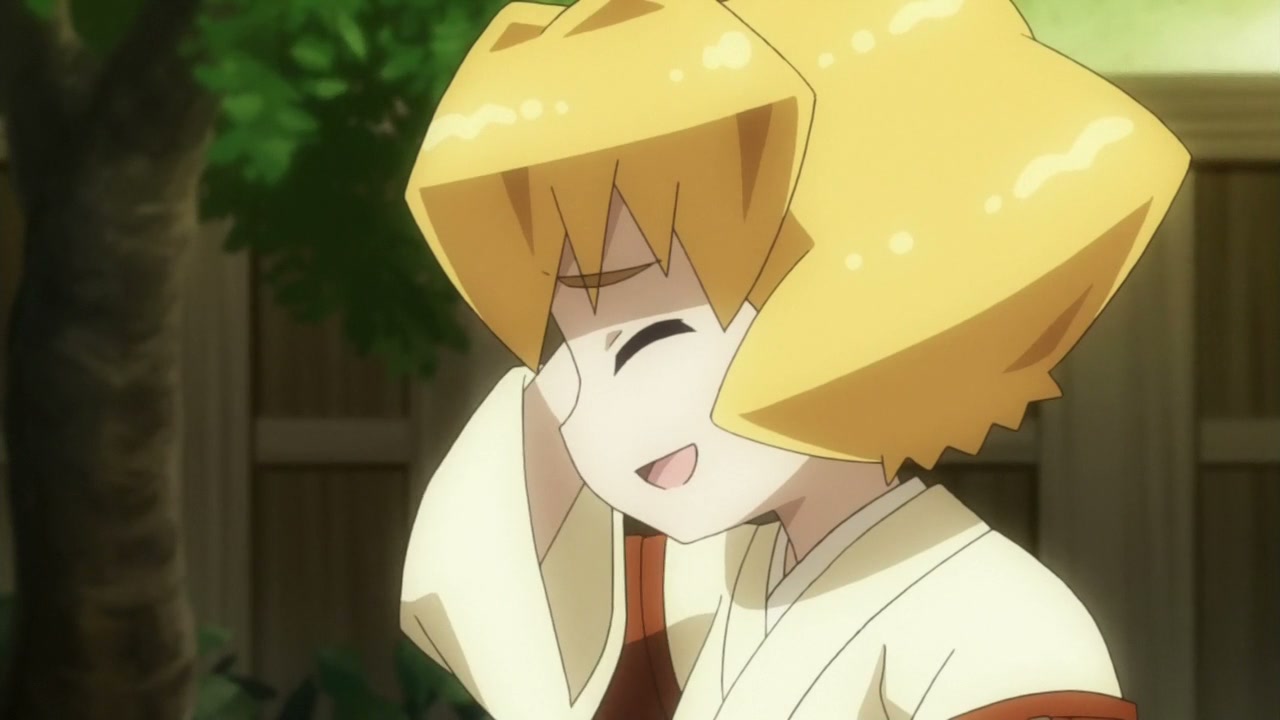
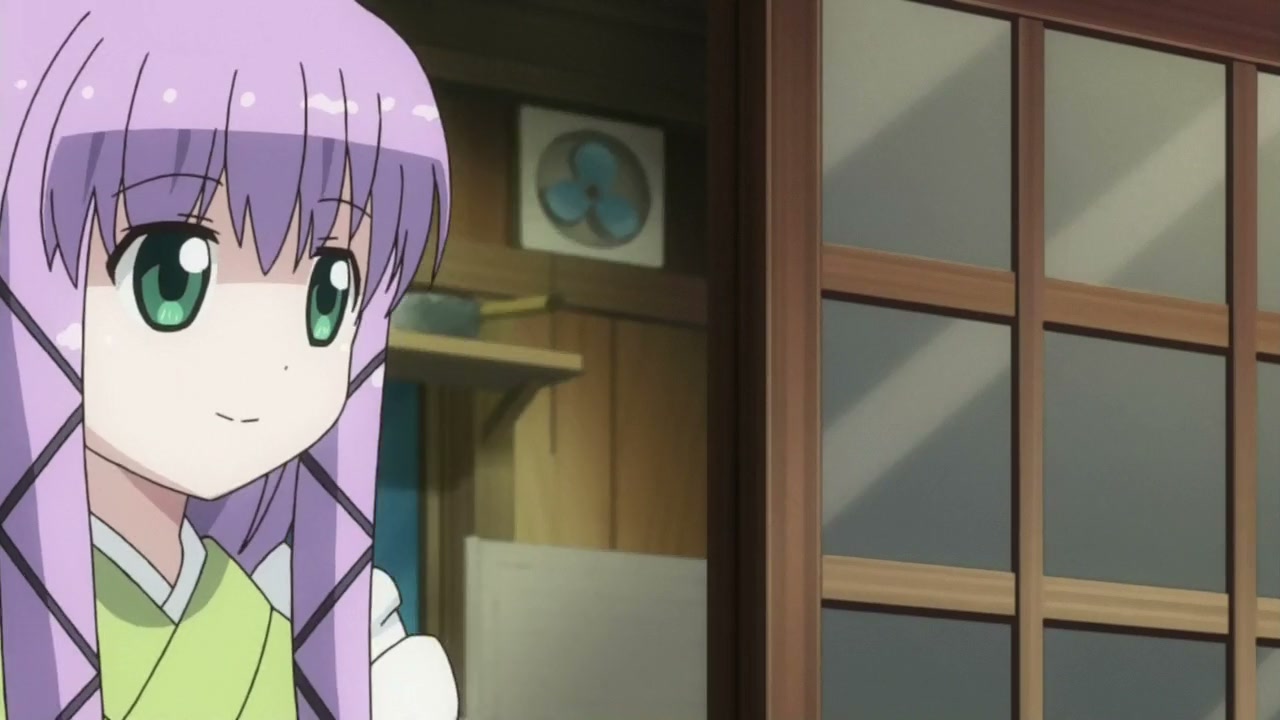
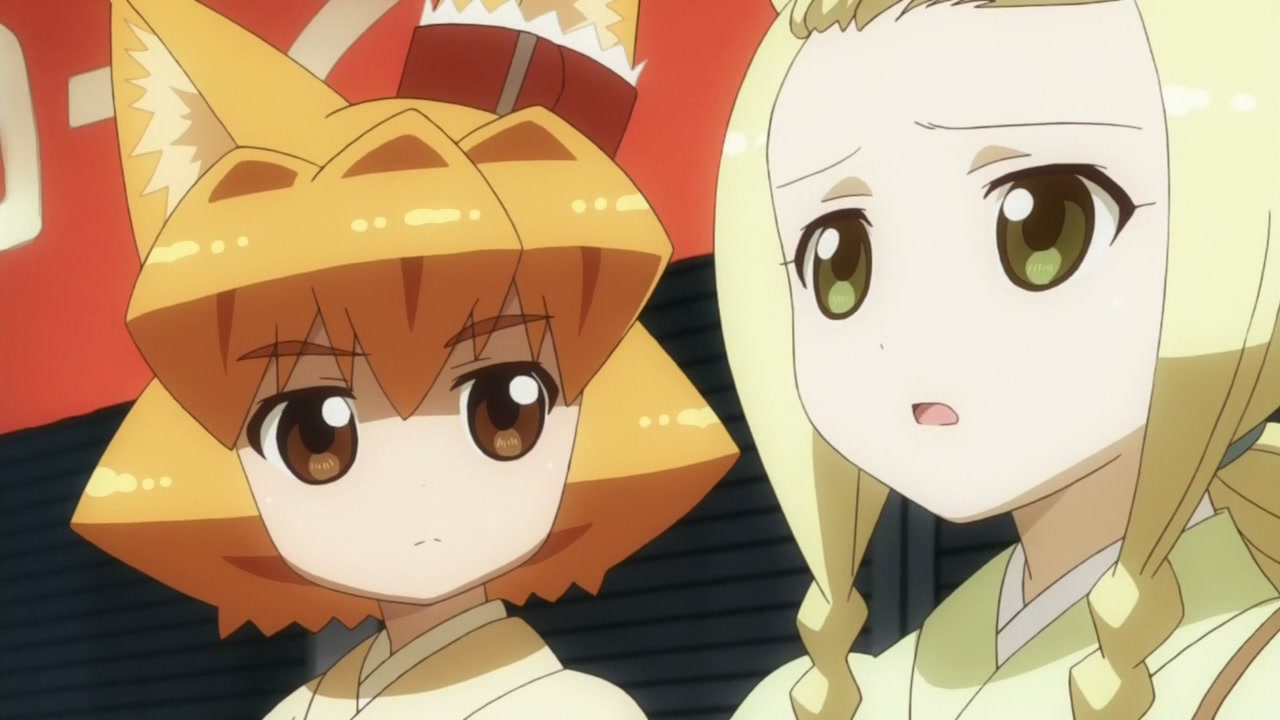
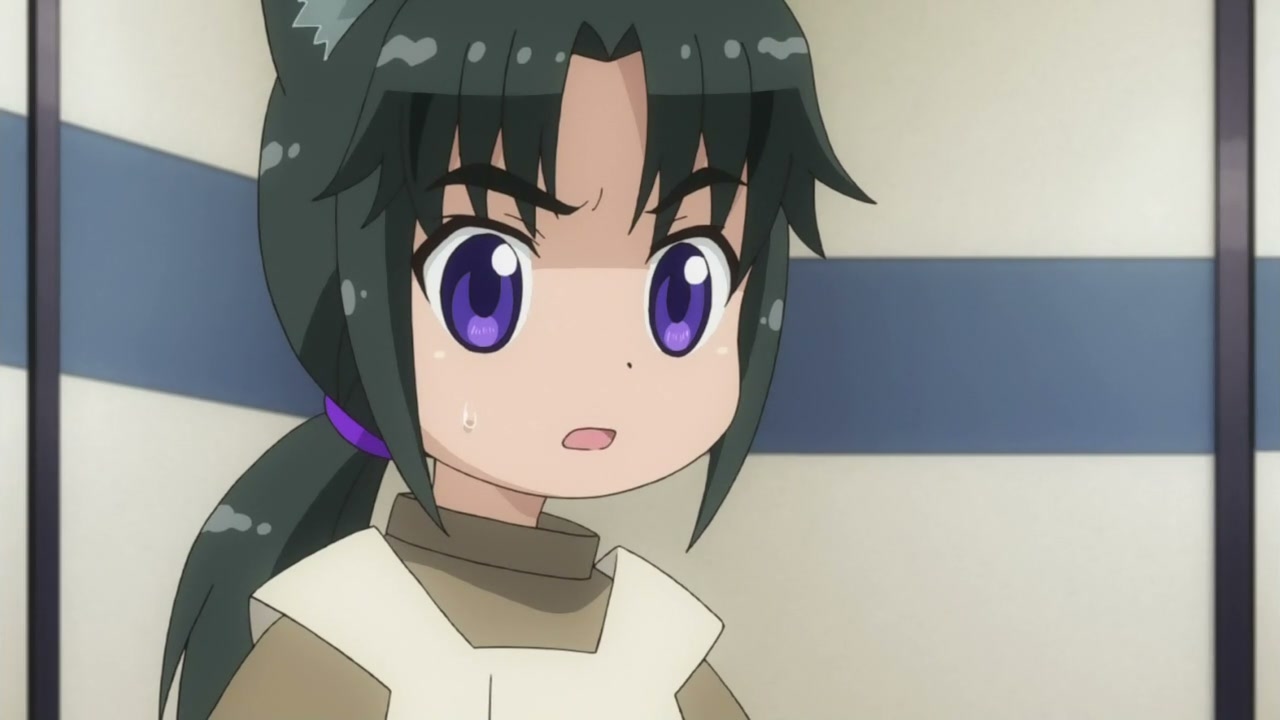
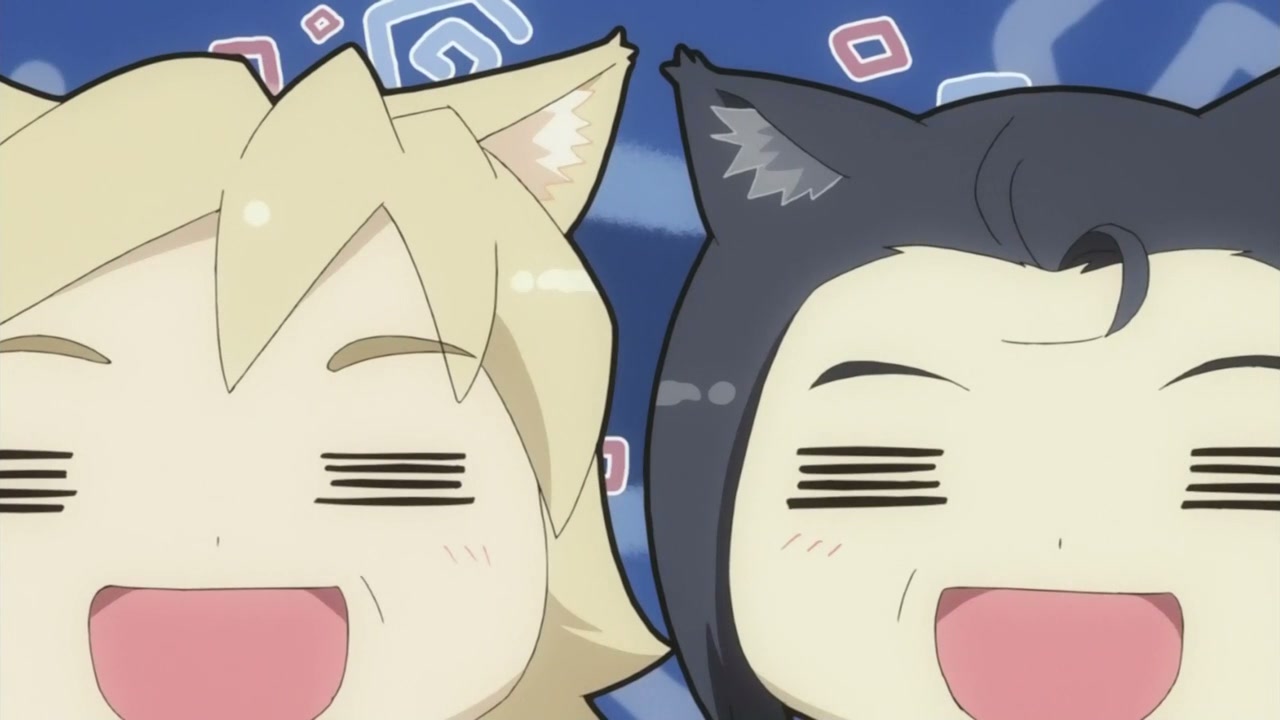
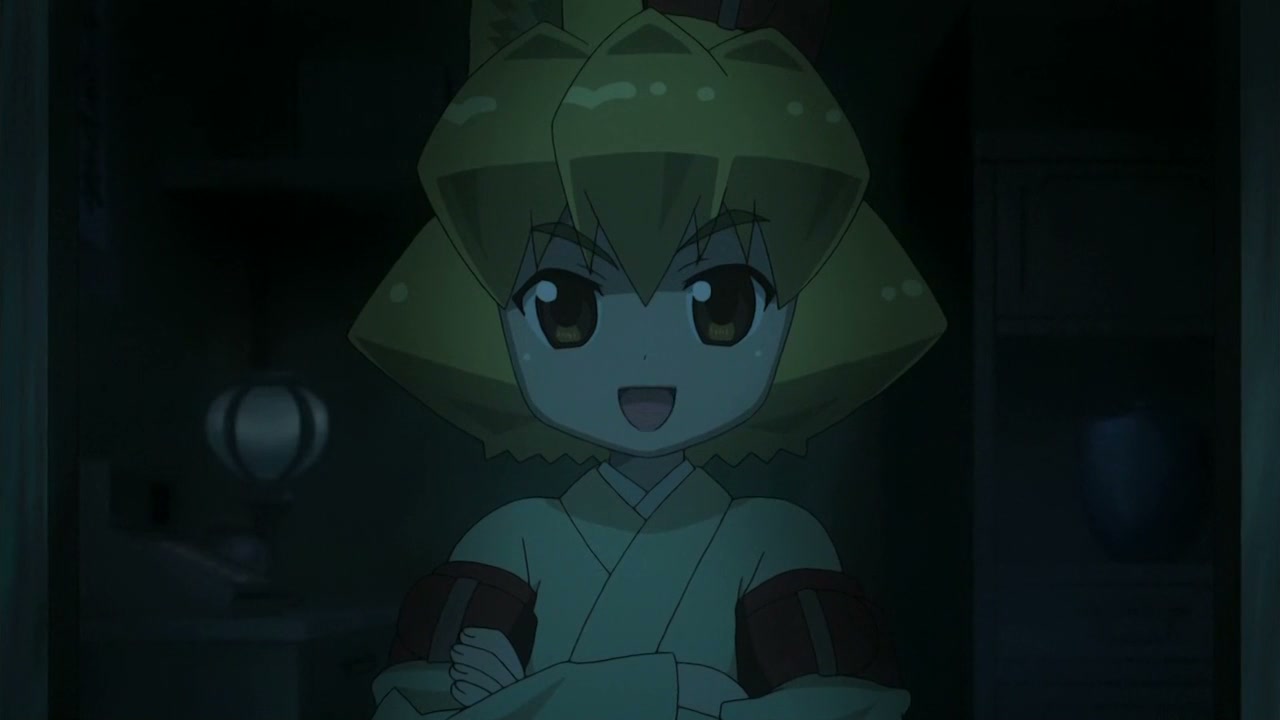
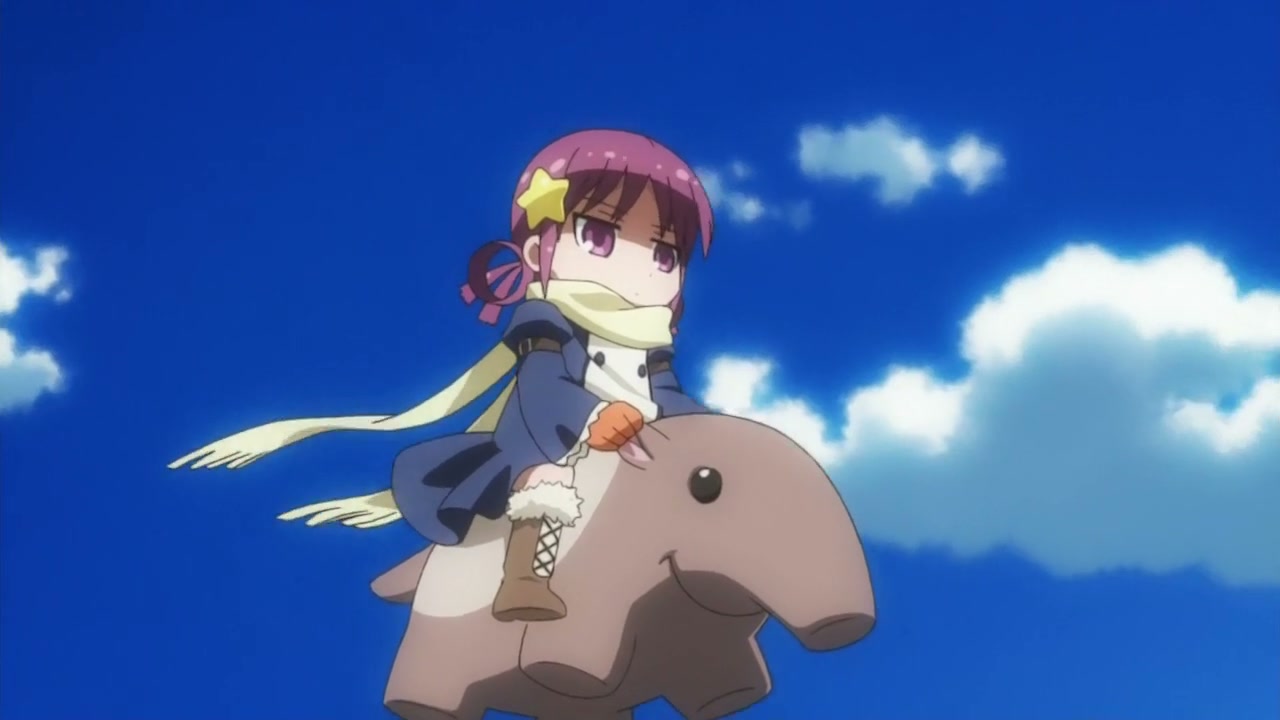
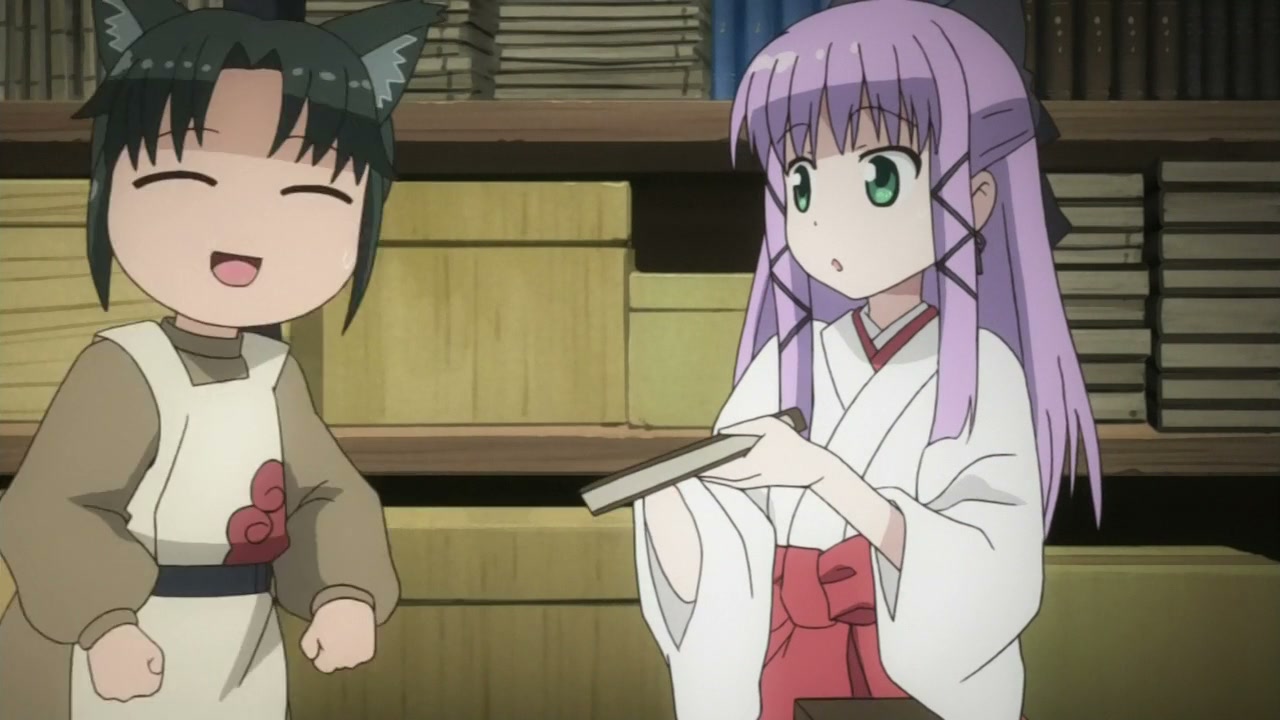
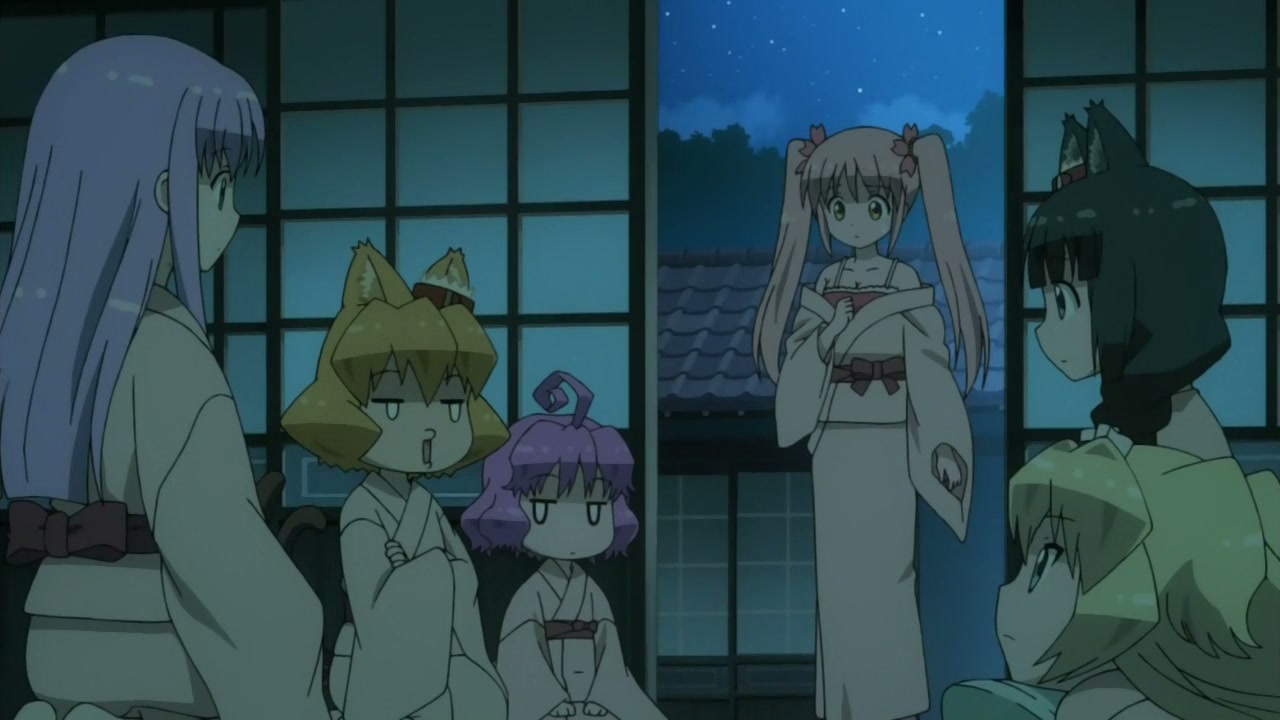
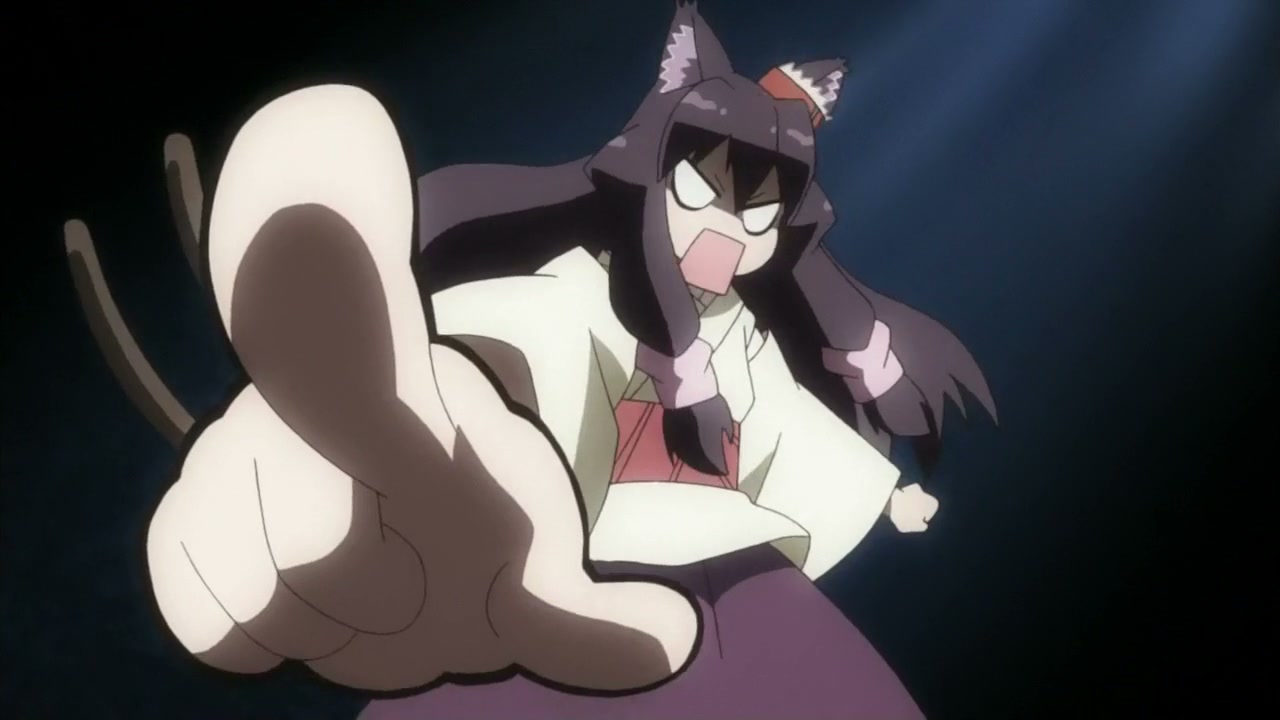
The character designs by Watanabe Atsuko are clean, soft, and built for comedy. Mayu’s cat ears and perpetual slouch, Yuzu’s modest sweaters and apron, Gonta’s fox ears and flamboyant haori, Shamo’s elaborate hair and detached expression, each design communicates personality at a glance. The “puni” style (rounded faces, plush cheeks) emphasizes the moe aesthetic without pushing it into saccharine territory. The thin, consistent linework keeps characters readable even when they are shrunk into super-deformed chibi forms or stretched into theatrical poses.
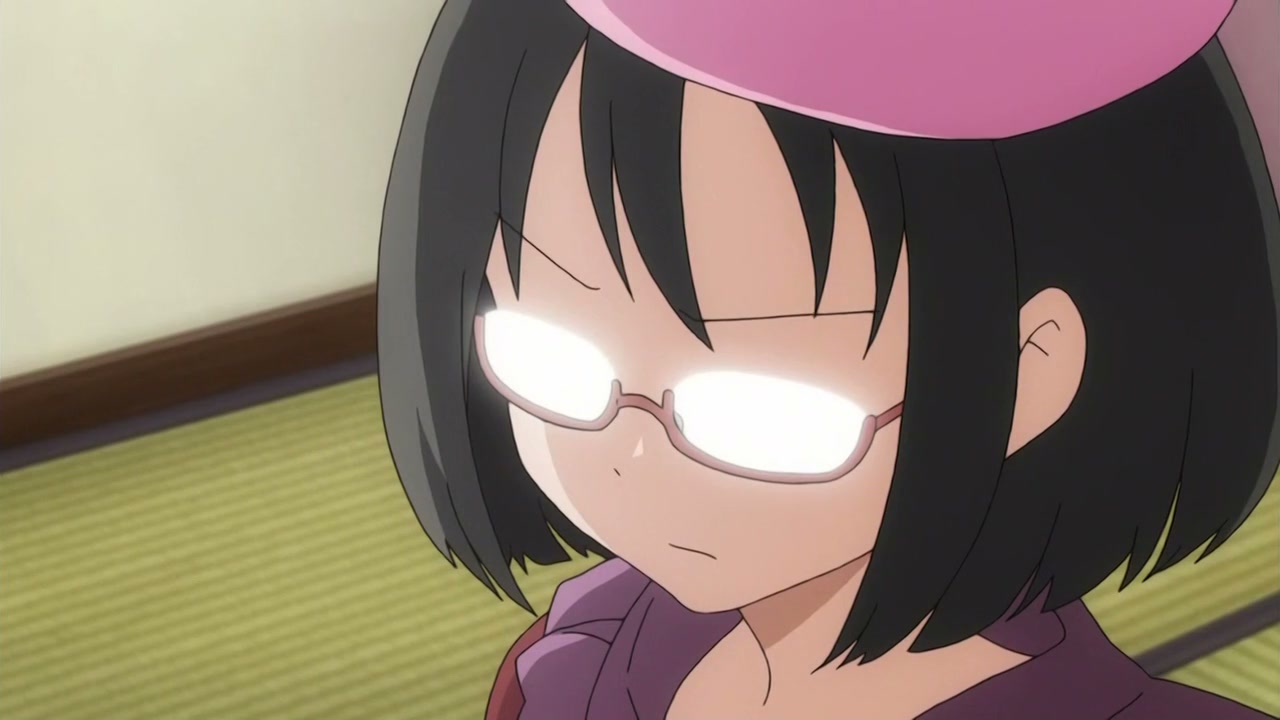
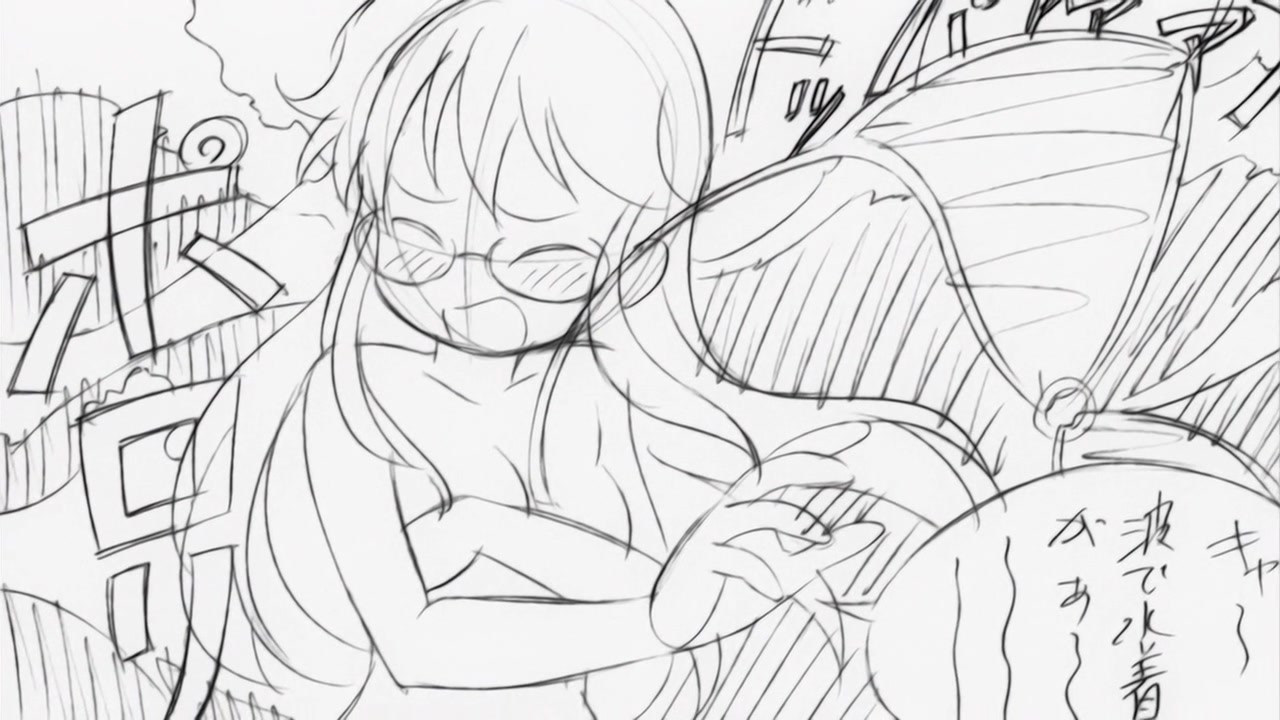
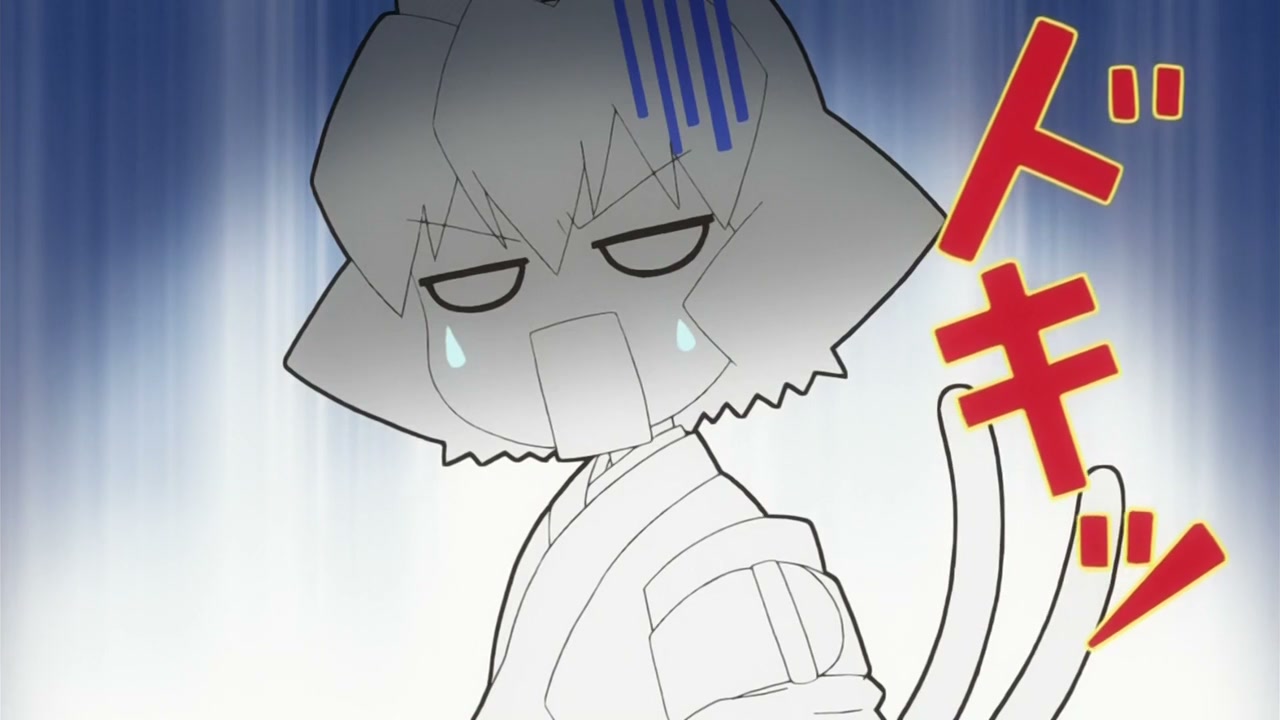
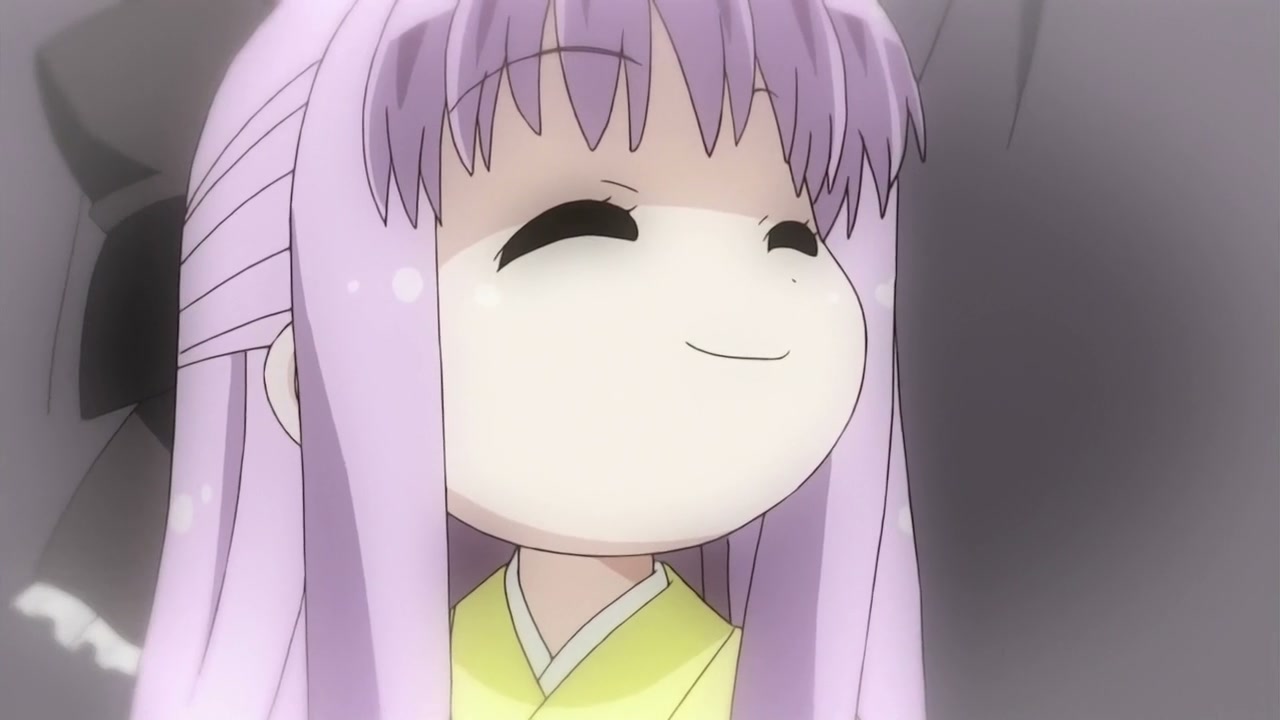
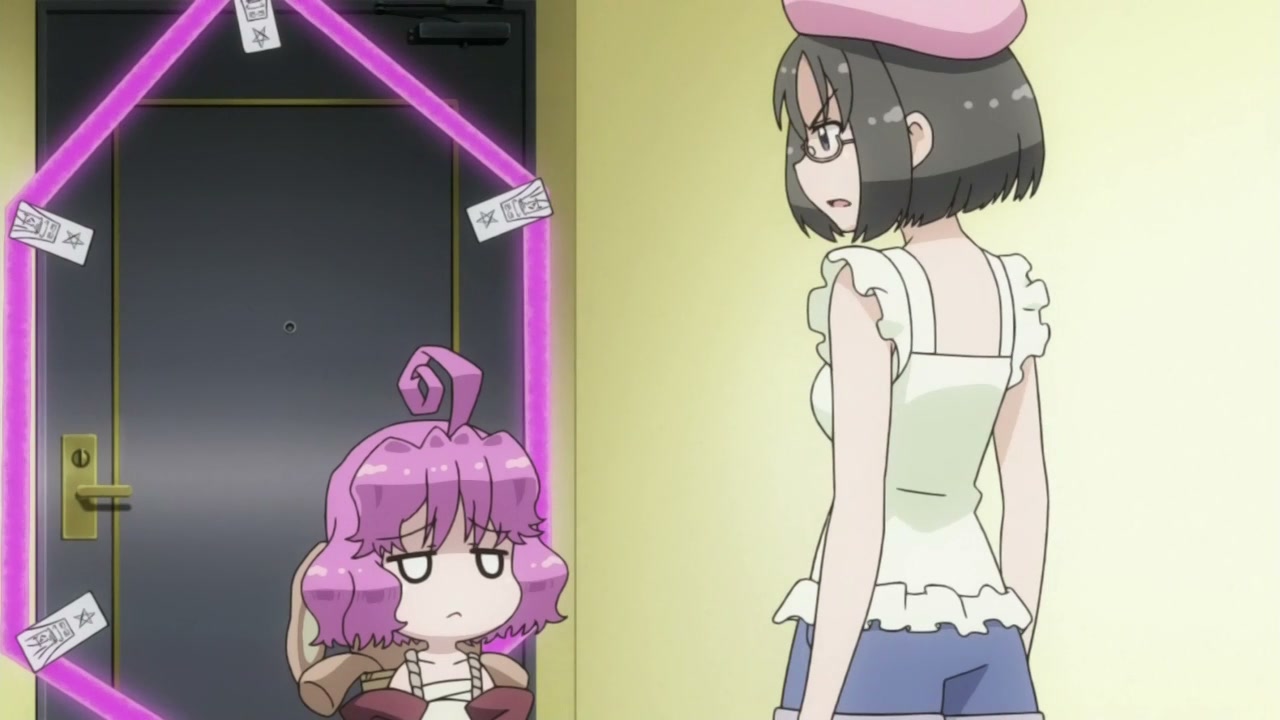
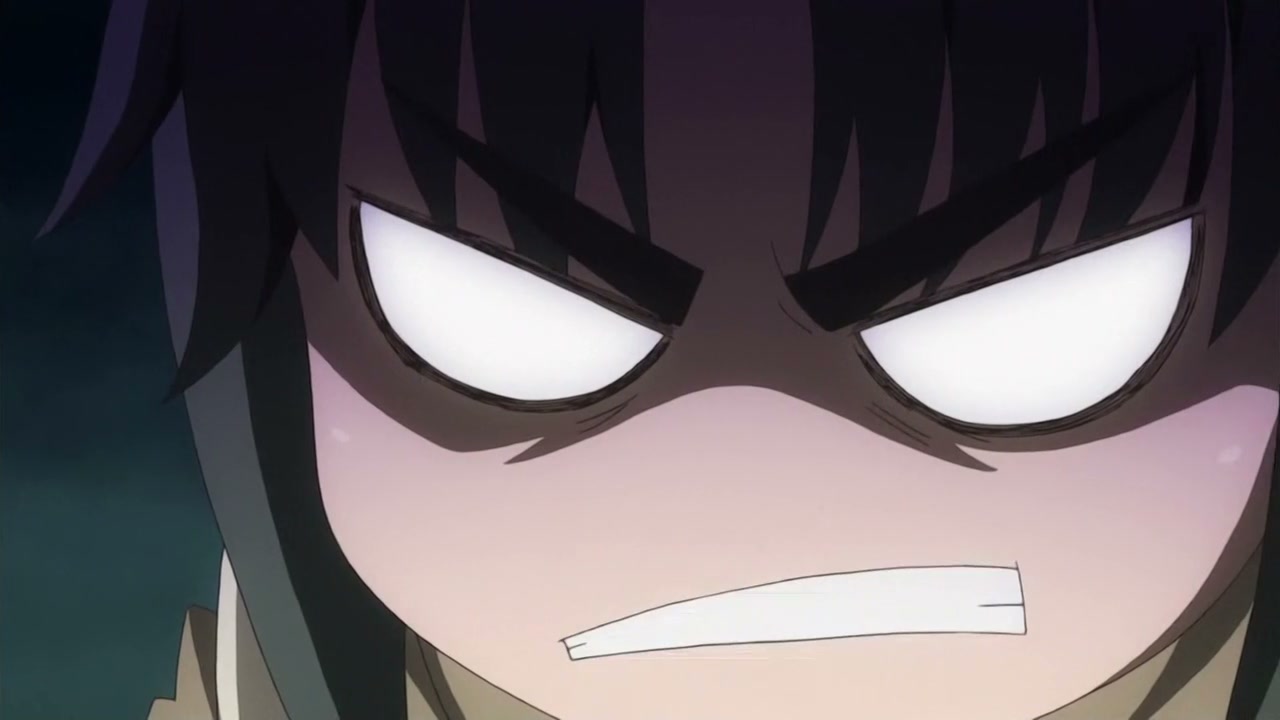
That stylistic fluidity is the show’s greatest visual asset. The series shifts between “standard” proportions and exaggerated chibi modes seamlessly, often within a single scene. A conversation might begin with normal character models, then snap into dot-eyed deadpan for a punchline, then into shivering anxiety lines for a reaction, then back to normal for a sincere moment. The transitions never feel jarring because the character designs are built to accommodate them. The visual shorthand, sweat drops, glowing glasses, on-screen katakana sound effects, sharp-toothed rage faces, is a direct inheritance from manga and four-panel comedy strips, and the series wields it with confidence.
Color and Lighting
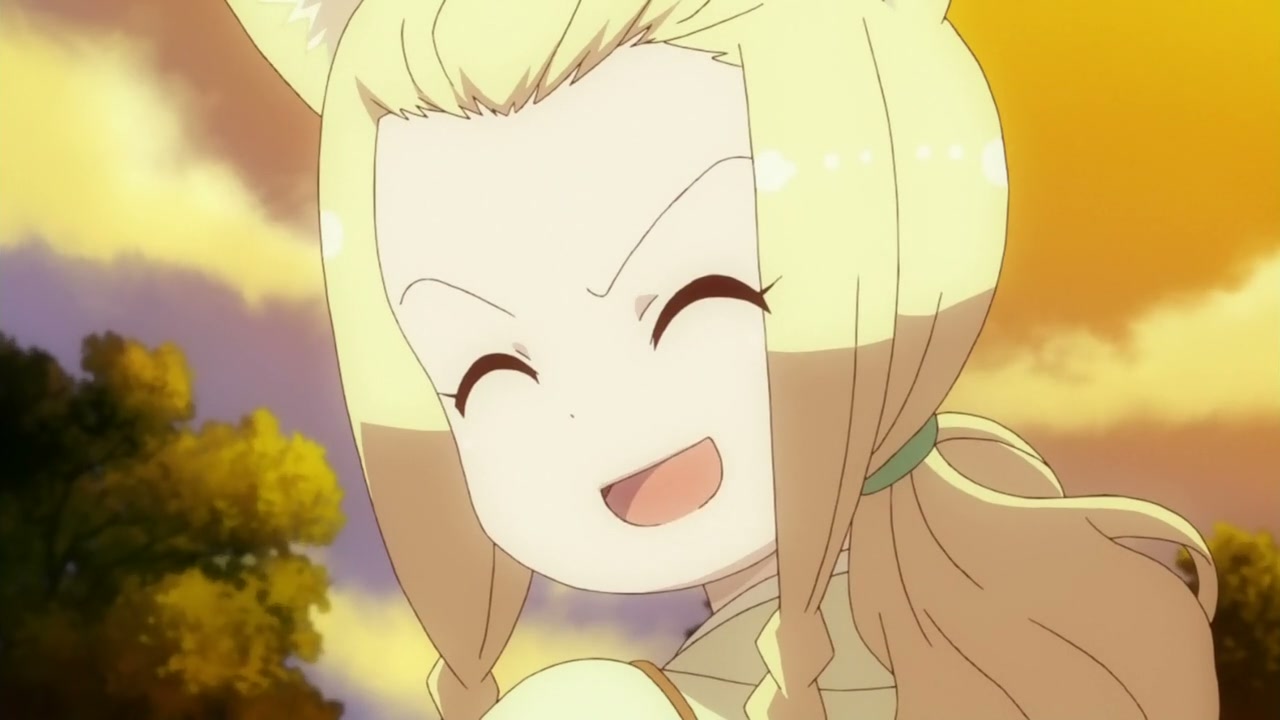
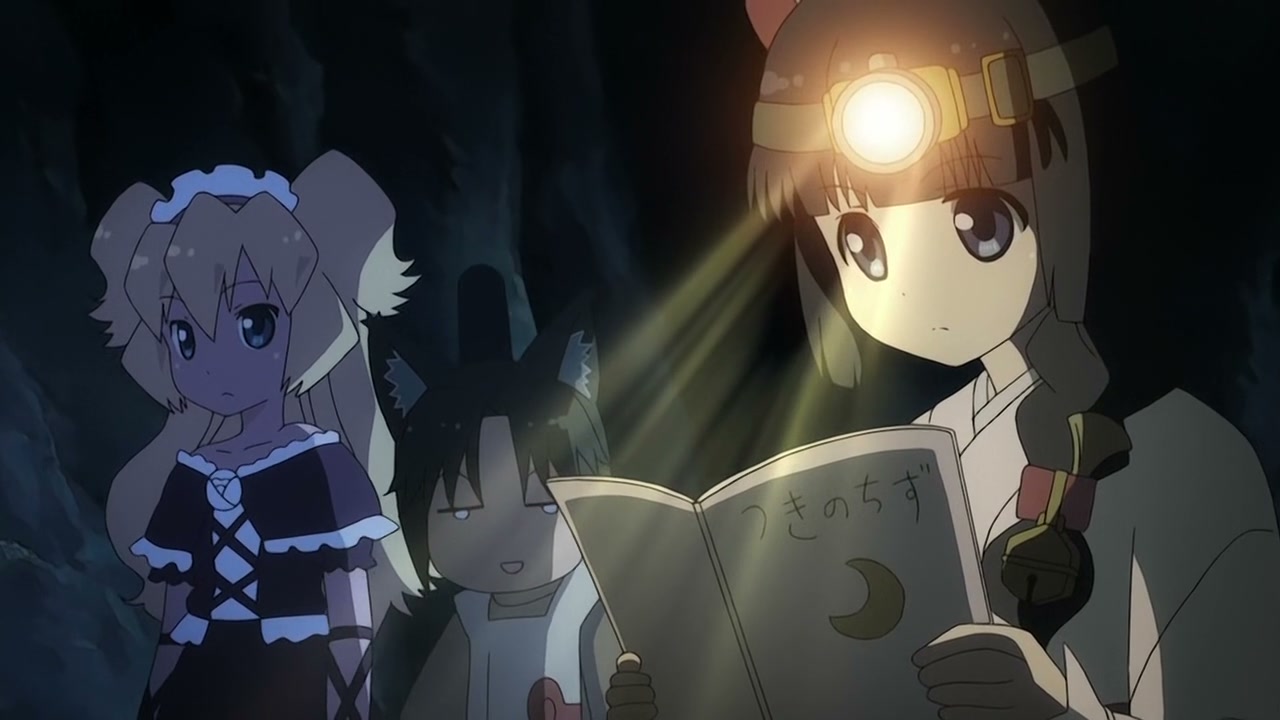
The color design deserves genuine praise. The palette is bright and poppy for comedic scenes, with saturated primaries and neon accents that give the mundane setting a slight pop-art energy. When the series shifts into emotional or atmospheric territory, the lighting follows. Evening scenes use heavy cyan and blue washes that make the warm interior lights feel cozy by contrast. Flashbacks employ golden-hour amber tones that evoke nostalgia without being cloying. The lunar vault sequences use cool silvers and pale blues to create an ethereal, slightly sterile otherworldliness.
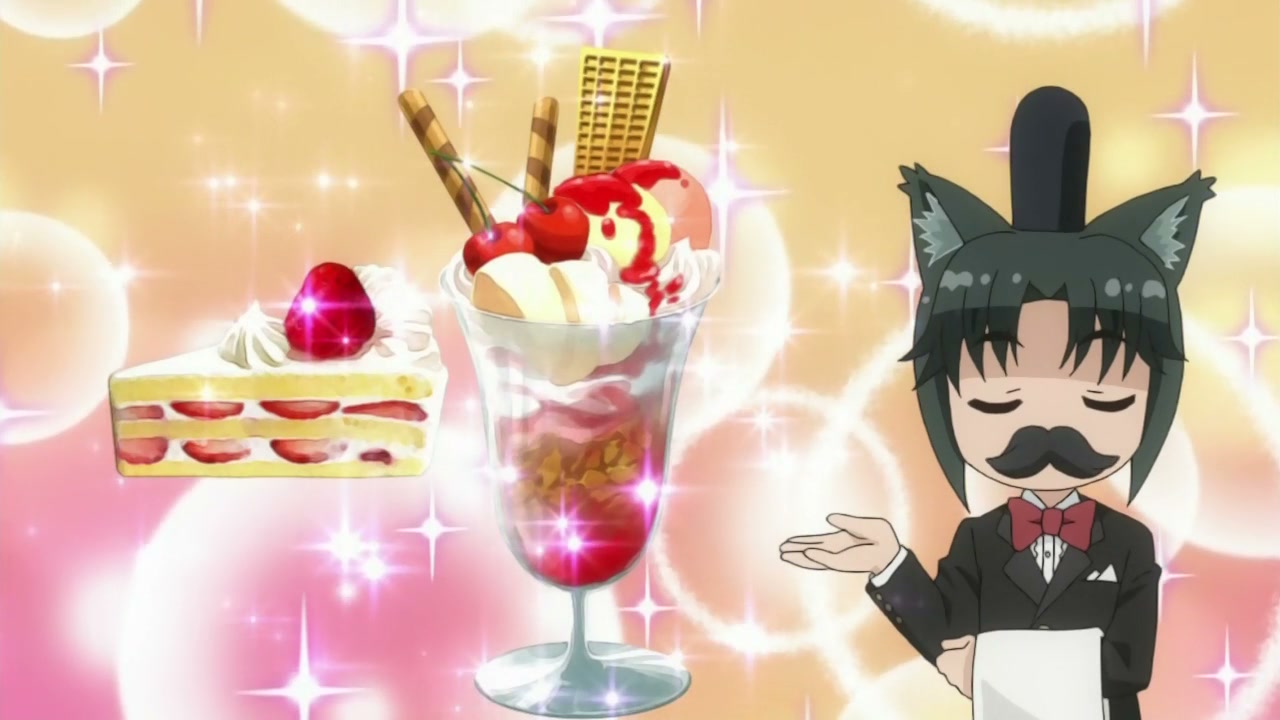
Compositing effects, light rays, soft glow overlays, shallow depth-of-field, are applied with restraint and generally enhance the intended mood rather than distracting from it. The “food porn” inserts, where Yuzu’s cooking is rendered with semi-realistic detail and sparkling highlights, are a recurring gag that the series commits to fully. The chestnut rice in episode ten looks genuinely delicious.
Backgrounds and Environments
Background art follows a clear hierarchy. Interior spaces (Yuzu’s shop, the living room, Gonta’s shrine quarters) are functional and slightly sparse, with clean digital rendering and minimal texture work. This is partly a budget limitation and partly a deliberate choice. The show wants attention on the characters, and cluttered backgrounds would compete with the expressive facial acting.
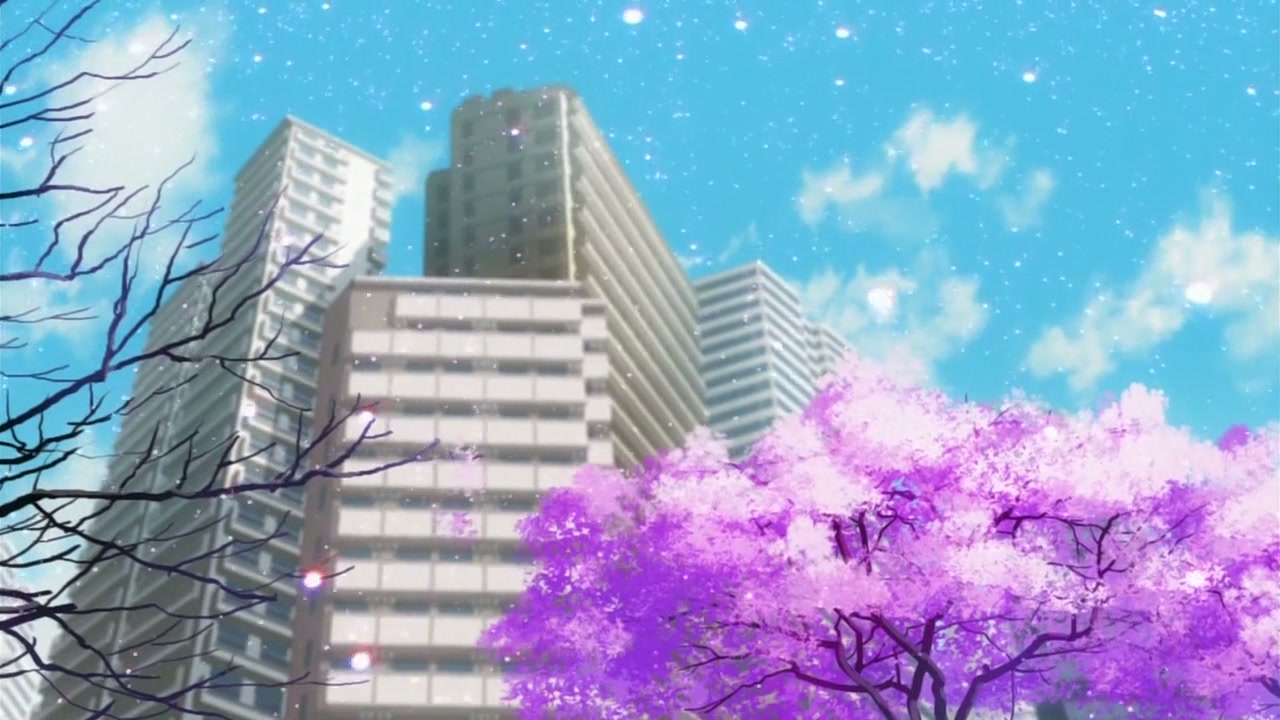
Exterior scenes, by contrast, often receive a more painterly treatment. Cherry blossom groves use soft watercolor textures and saturated pinks. The moonlit shrine in the festival episode has genuine atmosphere. The dream sequences in episode four shift into abstract, surreal landscapes that the show’s limited animation budget handles surprisingly well, because the unreality of the setting excuses the lack of detail. The contrast between flat interiors and more evocative exteriors is noticeable, but it rarely undermines the intended effect of a scene.
Animation Strengths and Weaknesses
The show’s animation is functional rather than impressive. Dialogue scenes rely heavily on static shots, held frames, and limited mouth movements. Secondary characters and crowds are often still images. Action sequences, Amane’s fights against the Nezumi, the shikigami’s forest skirmish, Meiko and Sasana’s clashes, tend to use quick cuts, speed lines, and flashy compositing effects rather than fluid hand-drawn motion. A viewer expecting dynamic fight choreography will be disappointed.
However, distinguishing between “limited animation” and “bad animation” matters here. The slice-of-life format thrives on stillness. Comedic timing often depends on a held frame after a punchline, a long pause for a reaction shot, or a static tableau that lets the absurdity of a situation sink in. When Gonta freezes mid-proposal, when Yoshino strikes a “gasp-shock-squeak” pose, when Shamo delivers a deadpan insult and the frame just sits there, the lack of movement is the joke. These moments work because the character designs and facial expressions are strong enough to carry them.
The show struggles when it attempts kinetic energy it cannot fully deliver. Amane’s vault-defense sequences aim for tension and speed but land as a series of pose-to-pose cuts with limited in-betweening. The shikigami’s “military” forest traps are conceptually funny but visually underwhelming. The series is at its best when it leans into its strengths (character acting, comedic timing, atmospheric stillness) and at its weakest when it tries to be an action show on a budget that does not support it.
Facial Expressions and Character Acting
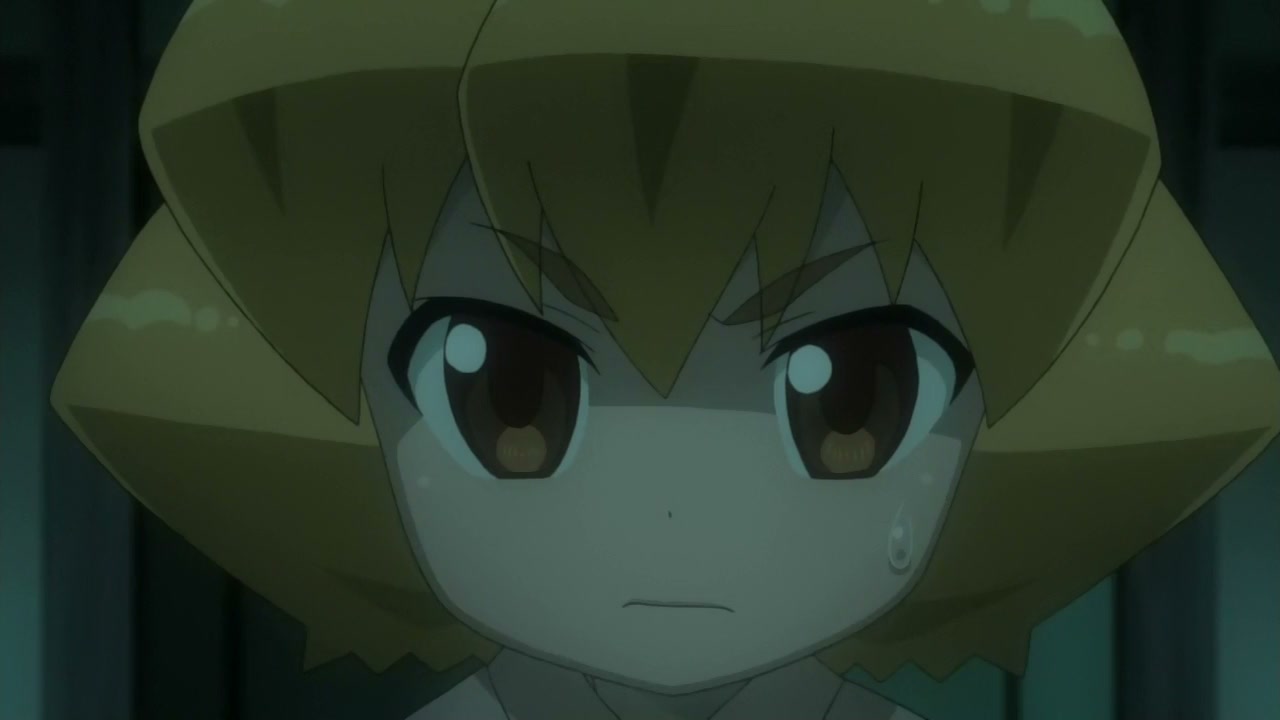
This is where the limited resources are deployed most effectively. Mayu’s deadpan shifts to genuine softness through tiny adjustments, a slightly wider eye, a marginally softer mouth line, that the clean character designs make legible. Yuzu’s breakdown in the finale works because the series has spent eleven episodes showing her as composed. Her crumbling face, the tears she has been holding back, lands as a genuine disruption of her established visual mode.
Gonta’s over-the-top blushing, Yoshino’s theatrical terror, Meiko’s sharp-toothed rage, Sasana’s formal composure cracking into flustered embarrassment, the ensemble communicates emotion through faces first and dialogue second. The show trusts its viewers to read expressions, and it rewards that trust with consistently clear, appealing character acting that transcends the limited frame count.
Sound and Music
The opening theme, “Kamisama to Issho” by Tomatsu Haruka and Horie Yui, is an energetic, bouncy number that sets the comedic, slightly chaotic tone of the series perfectly. The duet format mirrors the dual-lead structure of Mayu and Yuzu, and the upbeat instrumentation (synths, bells, a driving pop rhythm) establishes that this is a show about fun first. The ending theme, “Oh My God” by Tomatsu Haruka solo, is slower and more reflective, a gentle wind-down that matches the series’ quieter closing moments.
The voice acting (seiyuu) cast is a significant strength. Tomatsu Haruka voices Mayu with a perfect balance of laziness and hidden warmth. Her deadpan delivery of Mayu’s sarcastic lines is consistently funny, but she also handles the rare sincere moments with an understatement that makes them land. Horie Yui as Yuzu brings a gentle warmth that never tips into sentimentality. Her voice carries Yuzu’s quiet competence and her deeper reserves of feeling with equal ease.
The supporting cast is equally strong. Kugimiya Rie voices Shamo with a flat, almost bored register that makes her occasional emotional cracks all the more effective. Sakurai Takahiro’s Gonta is all bluster and sudden deflation, a performance that makes a potentially irritating character endearing instead. Nonaka Ai (Sasana) and Sanpei Yuko (Meiko) nail the bickering-rivals dynamic, their voices rising and snapping in perfect synchronization. Chihara Minori (Yoshino) delivers the show’s most purely adorable performance, all squeaks and gasps and trembling determination.
Sound design is competent and unobtrusive. The ambient audio of the shop (creaking floors, distant traffic, the chime of the front door) creates a sense of lived-in space. Festival episodes use crowd noise and stall sounds to build atmosphere without overwhelming the dialogue. The Nezumi sequences employ skittering, unpleasant scrabbling sounds that make the creatures feel genuinely invasive. The soundtrack, while not a standout element, supports the show’s mood shifts reliably, moving from bouncy comedy cues to gentle piano for emotional scenes without calling undue attention to itself.

Overall Verdict
Nekogami Yaoyorozu is not a masterpiece. Its animation budget is modest, its action scenes are underwhelming, and its humor will not land for viewers who dislike anime comedy tropes. But within its limitations, it accomplishes something genuinely rare: it builds a world you want to live in, populated by characters you want to spend time with, and it tells a story about memory, loss, and found family that earns its sentiment through patience and sincerity.
The series understands that the best slice-of-life comedy is not about jokes per minute. It is about creating a space where humor and emotion can coexist naturally. Mayu’s sarcasm and Yuzu’s gentleness, Gonta’s bluster and Shamo’s deadpan, Sasana and Meiko’s endless bickering, these are not competing tones. They are different facets of the same community, and the show moves between them with an ease that makes the whole enterprise feel effortless, even when the production limitations are visible on screen.
The thematic core, cat gods as guardians of memory, lost objects as vessels of history, grief as something that transforms rather than disappears, gives the comedy a weight it would otherwise lack. The antique shop setting is not decorative. It is integral. Every piece in Yaoyorozu-dou was chosen by someone, cherished by someone, and is waiting for its next chapter. The same is true of the characters. Mayu was banished, Shamo was feared, Amane was rigid, Yoshino was anxious, Sasana was insecure, and each of them found, in Yuzu’s quiet, hospitable presence, a place where they could simply be. That is the show’s quiet argument: belonging is not something you earn. It is something you accept when it is offered.
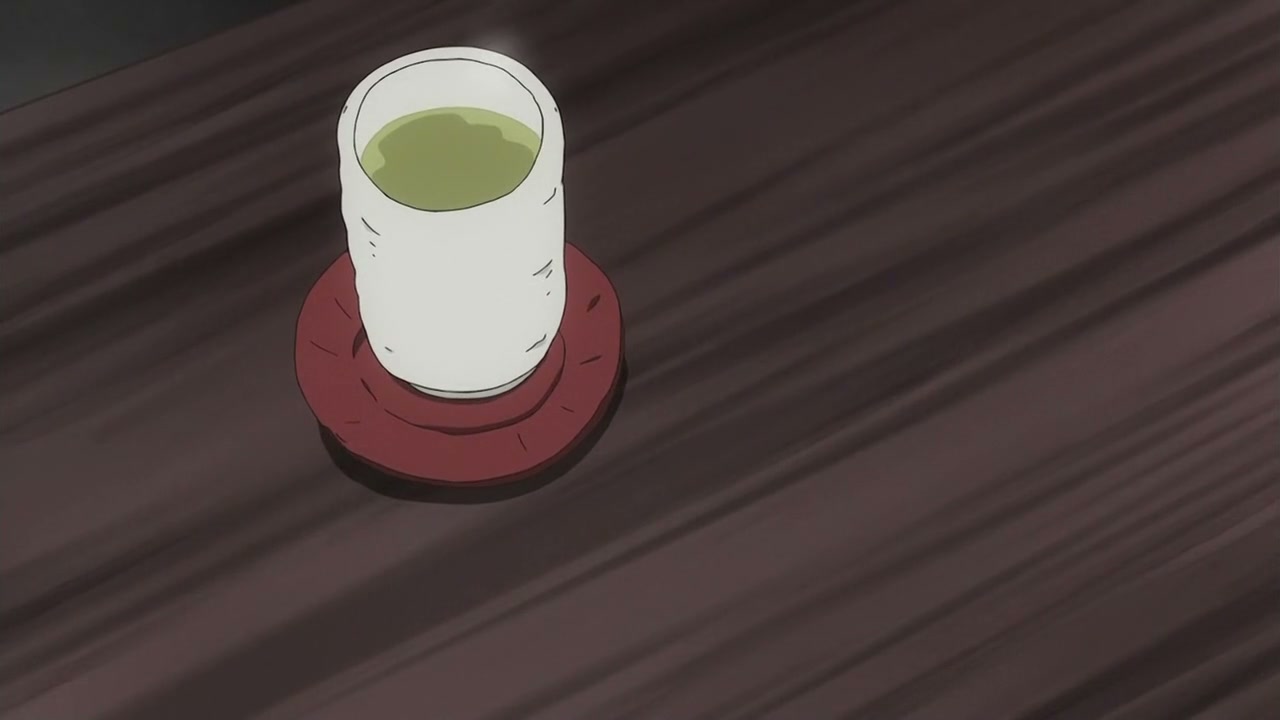
I recommend this series to anyone who loves supernatural slice-of-life comedies, anyone who enjoys Japanese folklore woven casually into modern settings, and anyone who has ever wished for a show that feels like a warm blanket and a cup of tea on a rainy afternoon. If you need high-stakes plots, fluid action, or constant novelty, this will not satisfy you. If you are willing to sit with a small story about small gods and the humans who shelter them, Nekogami Yaoyorozu will repay your patience with charm, humor, and a handful of moments you will not easily forget. Not bad for a show about a lazy cat who just wants to play video games.
Gallery