





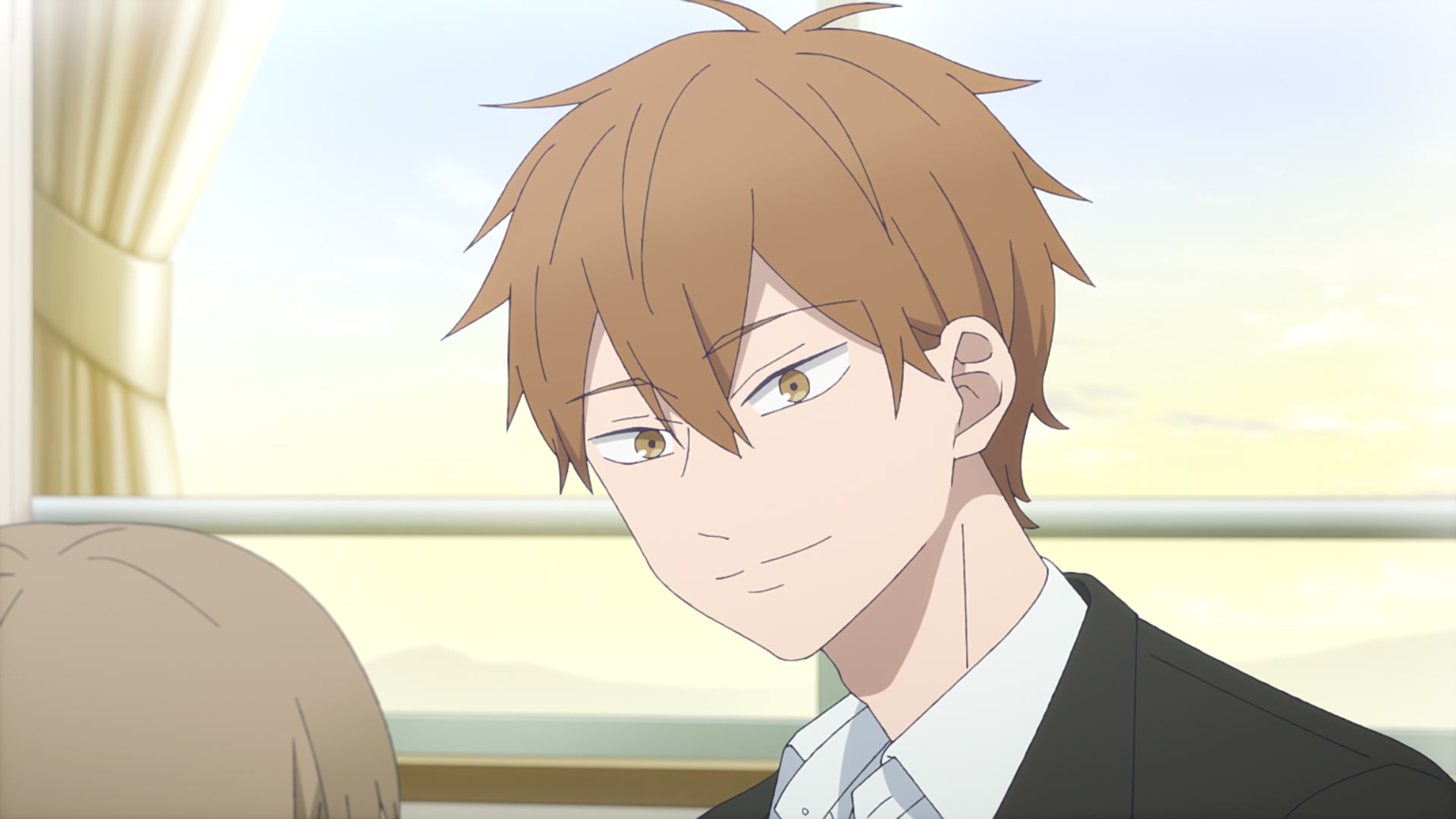
The flashback that opens this episode changes everything I thought I knew about Amamiya Minato. Up until now, he’s been the pushy guy from class who ignores personal space, drops honorifics like they’re optional, and treats Koyuki’s cold front like a puzzle to be solved. But episode three shows us their first meeting, months before Meiten High, and suddenly his behavior scans differently. He wasn’t just some classmate who decided to pick on the ice queen. He was the stranger who sat next to Koyuki when she was completely alone in a cram school full of cliques, asked if he could join her, and gave his name like it was the most natural thing in the world. That tiny scene recontextualizes every interaction they’ve had since, and it makes the episode’s present-day awkwardness feel less like an intrusion and more like a fragile thread neither of them quite knows what to do with.
The Cram School Memory That Changes the Game
Koyuki’s middle school wound is still raw. The episode starts with a memory of the club she couldn’t wait to escape, the way Miki (then her classmate, not yet her friend) was the only one who didn’t treat everything as a joke, and the quiet terror of realizing that people who smile at you will gossip about you the moment you turn your back. So she decides to aim for a high-difficulty high school and enrolls in a cram school outside the city, hoping a blank slate will fix her. It doesn’t. The room is already full of tight-knit groups, and she freezes. The internal monologue is painfully specific: calling out is impossible, and even if people act friendly, they’ll just talk behind her back later. That fear isn’t exaggerated. It’s the exact shape of teenage social trauma, and the show doesn’t soften it.
Then Minato appears. The framing is almost absurdly casual: “Hey. Are you alone? Can I sit next to you?” When she asks who he is, he just says, “Me? I’m Amamiya Minato.” No explanation, no context, no attempt to sell himself. He simply parks himself beside a girl radiating “don’t talk to me” energy and gives his name like they’ve already been introduced by the universe. Koyuki doesn’t know what to make of it, and neither did I on first watch. Now, knowing what comes later, it feels less like a random act of extroversion and more like Minato’s own strange instinct. He’s drawn to isolated people. Miki even says as much later in the episode: Minato can’t seem to ignore people who are alone, because he apparently feels sorry for them. Whether that pity is condescending or genuinely gentle is a question the show has yet to settle, but the origin point matters. He saw Koyuki as someone who needed company, not someone who rejected it.
Four People, Four Walls
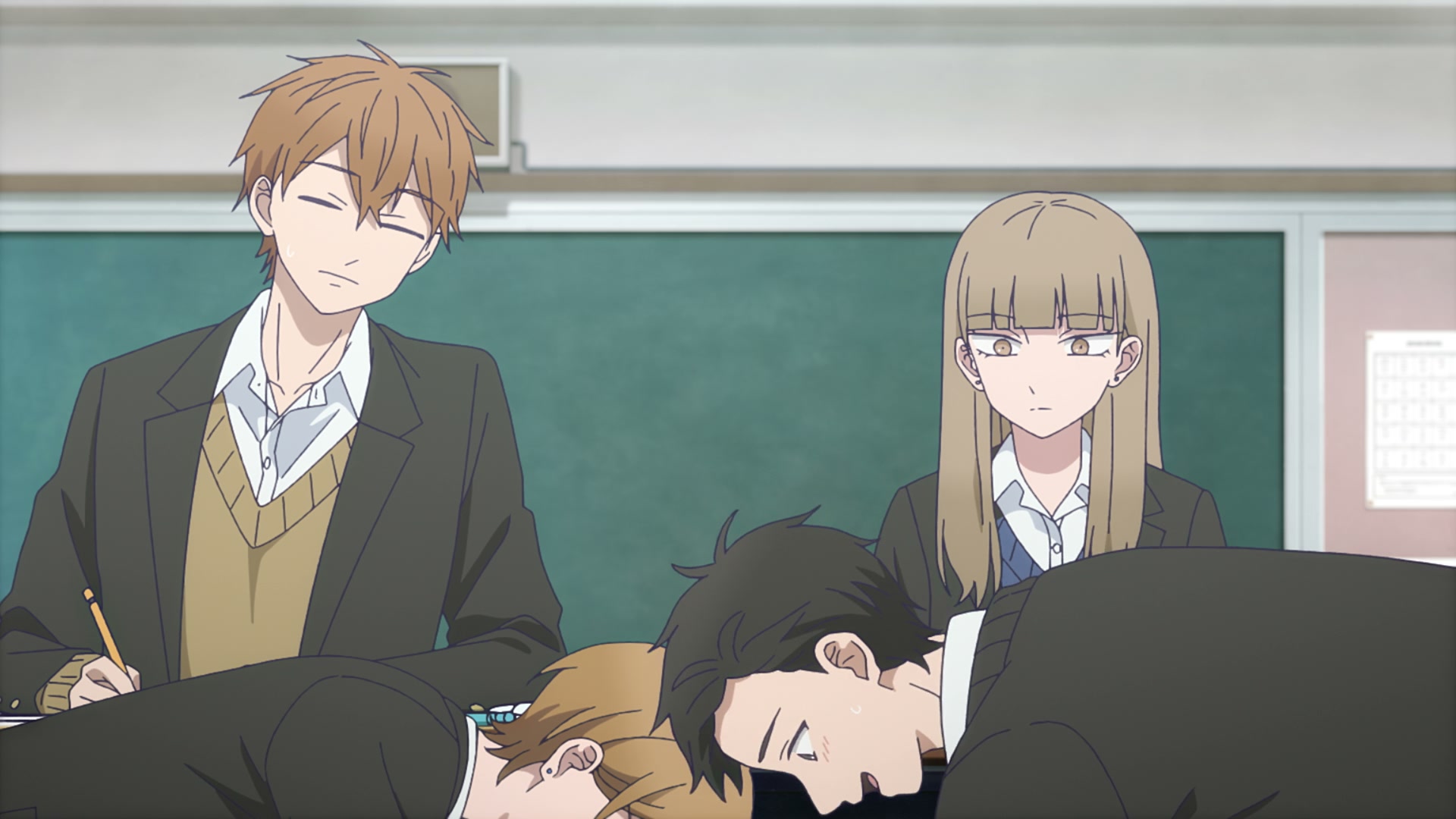
The present-day study group has settled into an uneasy rhythm by this point. Miki and Yoota form a warm backdrop: Miki chatters about side dishes and Yoota’s ridiculous study habits, Yoota is tall and soft-spoken and perpetually dropping things, and Koyuki hovers on the edge, participating but still mentally cataloging every risk. The scene where Miki asks Yoota about his test scores and he dodges the question with a “don’t remain silent” jab is exactly the kind of natural, low-stakes friendship riffing that makes the group feel real. Miki’s teasing is friendly, never pointed, and Yoota’s gentle evasiveness keeps him from ever becoming a butt of jokes.
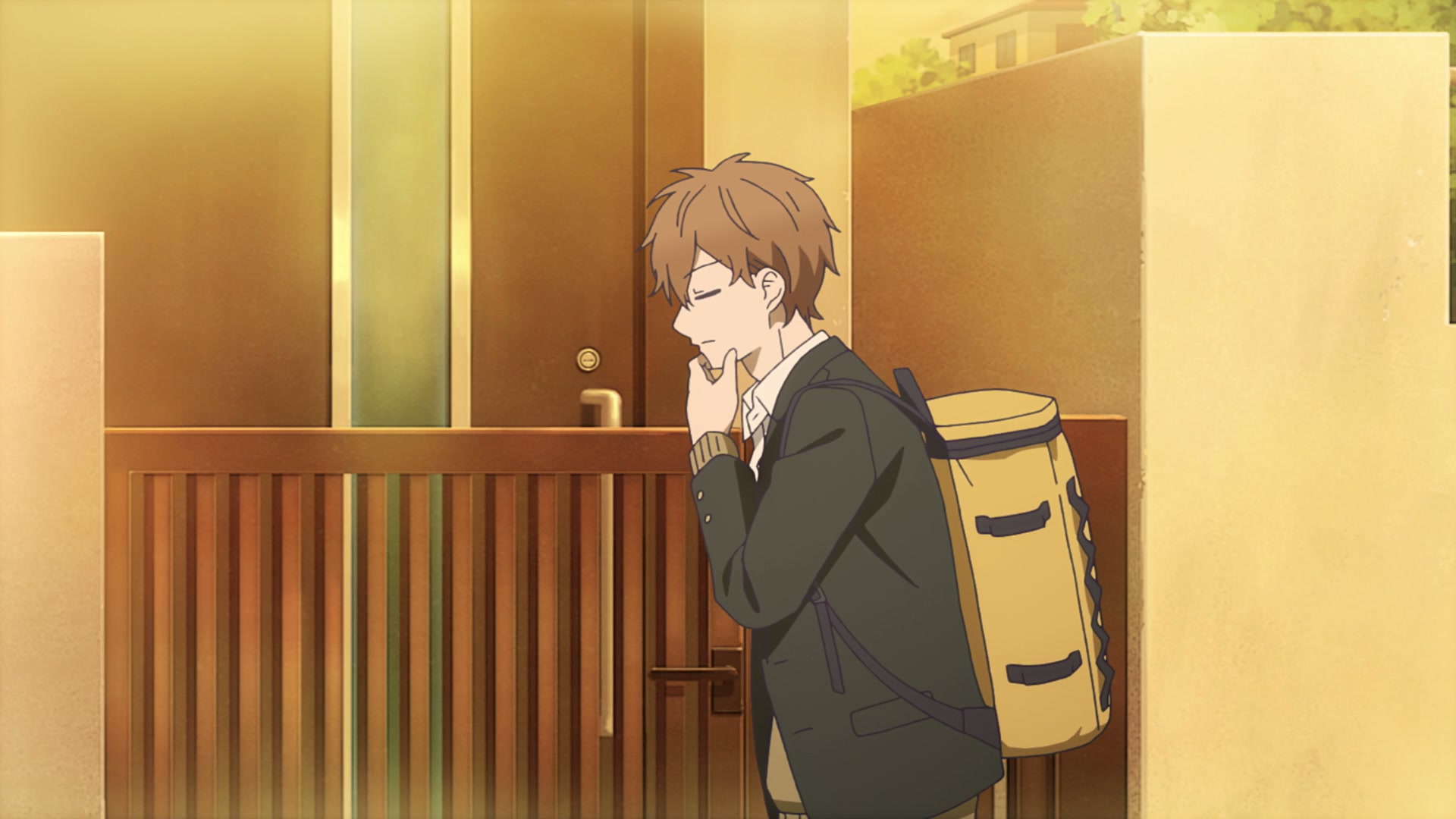
Minato, on the other hand, actively pokes at Koyuki’s comfort zone. He asks for her contact info, and she reacts like a startled animal, popping out from behind a wall in the hallway. The physical comedy of her trying to slip past unnoticed only to have him wave his whole arm and call out is exactly the kind of awkward that lands. And when she finally gives him her number, he immediately follows it up with, “What’s in that bag?” because of course he does. He’s constitutionally incapable of leaving a silence empty. But the most interesting beat comes when Minato casually describes getting dumped and says he feels more like “Thanks for liking me even for a short while” rather than resentment. Koyuki is thrown. She expected bitterness, and instead she gets a shrug. It’s the same emotional deflection we glimpsed in his previous breakup scene, but here it reads less like emptiness and more like a deliberate refusal to be hurt. It’s not that Minato has no self; it’s that he keeps the self so tightly wrapped that even a breakup can’t get a rise out of him. That’s a wall, same as Koyuki’s, just built from charm instead of ice.
Miki’s Question Sharpens Everything
The episode’s final exchange is a tiny masterstroke. After the study session, Miki walks off with Minato and asks him, point blank, “How do you feel about Koyun?” The question is so direct that it cuts through all the earlier teasing and evasion. Minato’s startled “Eh?” tells us he wasn’t expecting to be read so easily. Miki’s motivation is layered: she’s protective of Koyuki, aware that Minato’s attention could be casual or something more, and she’s not above calling him out in the middle of a convenience store run. The show has established Miki as someone who genuinely wants Koyuki to have real friends, not just surface-level connections, so her radar is up. By framing the question not as “are you interested in her?” but “how do you feel,” she forces Minato to define something he’s been purposely vague about for three episodes. And the fact that he can’t answer immediately is the most honest reaction he’s given all season.
That question also pulls Koyuki’s own feelings into sharper focus. Earlier, she wonders if Minato’s connection to Igarashi (a name from her past that clearly unsettles her) makes him dangerous. She actively tries to keep distance. Yet Miki’s interrogation suggests that even from the outside, Minato’s behavior doesn’t look like simple friendliness. Whether Koyuki herself has feelings for him remains unsaid, but the episode leaves us with the distinct impression that the ice wall isn’t just to keep people out. It’s also to keep her own reactions from spilling out.
Little Moments That Stuck Out
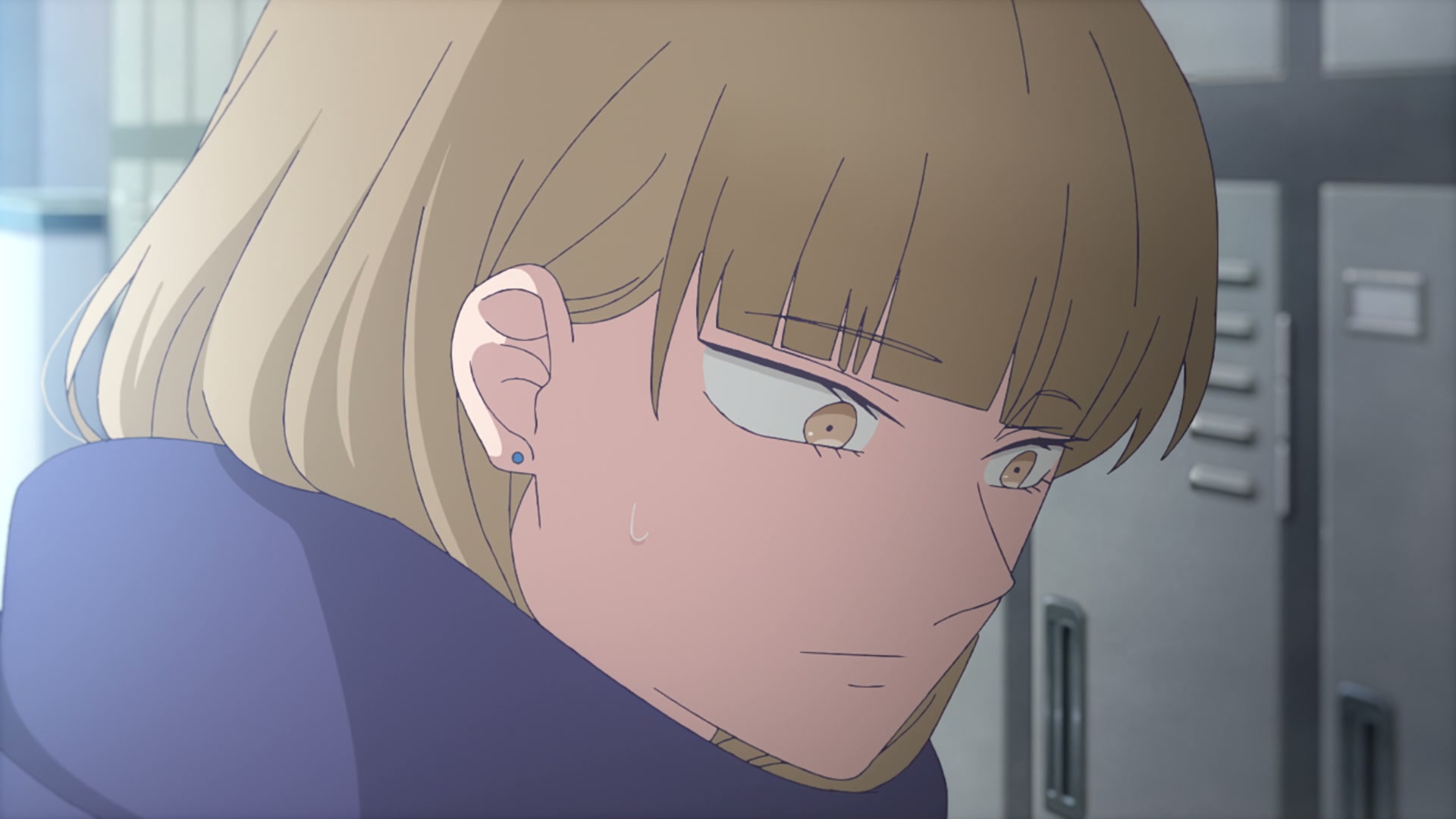
A handful of small visual choices made this episode feel lived-in. The shot of Koyuki in the art prep room, hugging her paint set and sketchbook while trying to calculate the exact moment she can slip past Minato, is perfectly awkward. You can see her mental checklist: don’t make eye contact, don’t slow down, and for god’s sake don’t pop out like a jack-in-the-box. Then Minato notices her anyway and waves with full-body enthusiasm. The contrast between her internal panic and his external brightness is the whole dynamic in one hallway.
There’s also a quiet moment when Miki buys a drink for Koyuki at the vending machine and Minato insists on paying for Koyuki’s, referencing the time he startled her into buying a weird flavor. It’s a tiny callback that shows Minato remembers details, even if he acts like everything slides off him. And the episode’s early framing of Koyuki’s cram school isolation uses a lot of wide shots with her small figure surrounded by groups, which reinforces the loneliness without needing dialogue. The whole episode feels like it’s holding its breath, waiting for someone to exhale.
Where This Leaves the Tension
Episode three doesn’t resolve anything, and it shouldn’t. Instead, it deepens the central question of the series: can Koyuki lower her walls without getting hurt again, and who around her is genuinely safe? Miki has proven herself to be a real friend, Yoota is a steady, undemanding presence, and Minato… Minato is a wildcard with a history of noticing Koyuki when she wanted to be invisible. The fact that he was there in that cram school, offering a seat before either of them knew anything about each other, makes his current behavior feel less predatory and more like a weird, persistent kindness. But the show is smart enough to keep the “feels sorry for them” note hanging in the air. Pity and connection can look frustratingly similar, and Koyuki isn’t wrong to be suspicious.
Miki’s question leaves the episode on a cliffhanger that isn’t about plot. It’s about emotional honesty, something Minato has been dodging since day one. Whether his answer is flippant, sincere, or another dodge will tell us a lot about which kind of wall he’s hiding behind. And Koyuki, who spent the whole episode carefully measuring distance, might not be ready to hear any of it.
Screenshots

[…] ← Episode 3 | All Koori no Jouheki Season 1 posts → […]