





Introduction
There is a specific kind of satisfaction that comes from watching an anime that knows exactly what it looks like on the outside and uses that expectation to smuggle in something smarter. Tonagura! presents itself as a standard mid-2000s ecchi romantic comedy. The childhood friends reunite after ten years, the boy has become a pervert, the girl hits him repeatedly with escalating force, and a colorful supporting cast orbits around them stirring up chaos. On paper it could be any of a dozen series from the same season, the same year, the same production committee meeting.
What it actually delivers is a quietly coherent deconstruction of the very nostalgia that fuels its premise. Arisaka Kazuki spent a decade polishing the memory of a sweet, gentle boy who moved away when she was a child. When Kagura Yuuji moves back next door and immediately confirms he is now a walking catalog of lecherous impulses, her entire emotional architecture collapses. The series then spends thirteen episodes patiently demonstrating that the boy she remembered never existed, that her “first love” was a curated fiction, and that the pervert in front of her is the same person he always was. This is not the usual rom-com moral about reforming the bad boy. It is something rarer: a story about the danger of loving your own memories more than the actual people they are supposed to represent.
Tonagura! is not a secret masterpiece. Its animation budget is visible in every held frame, its supporting cast members sometimes feel like they are waiting for development that never quite arrives, and anyone allergic to panty shots or accidental groping should stay far away. But for viewers who can speak the language of mid-2000s ecchi comedy and are willing to pay attention to what the series is actually saying beneath the noise, there is a warm, psychologically honest story about accepting flawed reality over polished fantasy.
Story and Themes
The Childhood Friend Reunion as Subversion
The childhood-friend-returns premise is one of anime romance’s most durable setups. Usually it plays as sweetness, as melancholy, as the comfort of the familiar against the excitement of the new. Tonagura! opens with Kazuki narrating about the thirty centimeters that separated her from Yuuji when they were children, the distance she believed she could someday close. The series lets this fantasy breathe for exactly long enough to establish it before detonating it. Yuuji’s reunion with Kazuki involves him lunging at her in an enthusiastic embrace, declaring how cute she has become, and immediately getting shot by his younger sister’s air rifle.
The subversion is structural. The series says: you know this story. You have seen it a hundred times. Here is what would actually happen if the sweet boy of memory turned out to be a horndog, and here is why that might not be as simple a problem as it seems.
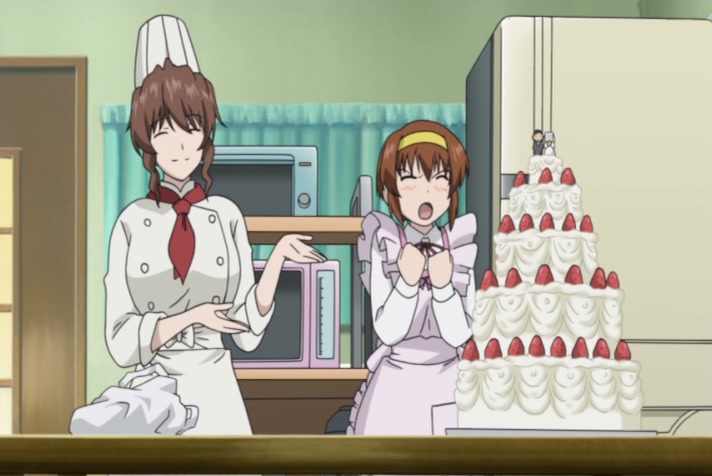
Kazuki’s response to the revelation that Yuuji is a pervert is not simple disappointment. It is genuine cognitive dissonance. She has spent ten years talking to a photograph, dreaming about a reunion, baking cakes overnight to celebrate his return. The boy who arrives does not match the image she preserved, and her conclusion is that he must have changed. She repeats variations of “Yuuji didn’t use to be this perverted” like a mantra, as though saying it enough times will make it true.
Nostalgia as Self-Deception
The emotional climax of the series arrives in Episode 12, when Kazuki finally opens the letter she wrote to Yuuji ten years ago. This letter has been Chekhov’s gun since the first episode. The audience knows it exists. Kazuki has kept it sealed all this time, believing that opening it would somehow end her first love. The expectation, built by a thousand anime romances before this one, is a tearful confession, a declaration of pure childhood feeling, a document of innocent love.
What Kazuki finds instead is a litany of complaints. She wrote, at length, about how much she hated the way young Yuuji teased her. How he pulled her hair. How he stole her food. How he dragged her into games she did not want to play. The photographs she meant to enclose with the letter show her crying, pouting, and fighting with him. There is no idyllic love scene. There never was.
This is genuinely clever thematic work, and it lands with force precisely because the series spent eleven episodes establishing Kazuki’s version of the past before pulling the rug out. Her “first love” was a curated memory, a highlight reel with all the friction edited out. She fell in love with a story she told herself about a real boy, polished it for a decade, and then blamed the real boy for not matching the story.
The series argues, gently but firmly, that this is what nostalgia often is: self-deception dressed as sentiment. Kazuki did not remember Yuuji wrongly because she was foolish or shallow. She remembered him wrongly because human memory is selective, because we sand down the rough edges of the past, because it is easier to love a polished ideal than a complicated person. She is not a villain for this. She is just wrong, and the work of the series is bringing her to recognize that wrongness.
The Perversion as Identity
A lesser series would treat Yuuji’s lechery as a flaw to be cured by the power of love. Tonagura! explicitly, repeatedly, and in its final scene permanently rejects this framework. This is the series’ second major thematic commitment, and it is the one that most distinguishes it from its genre peers.
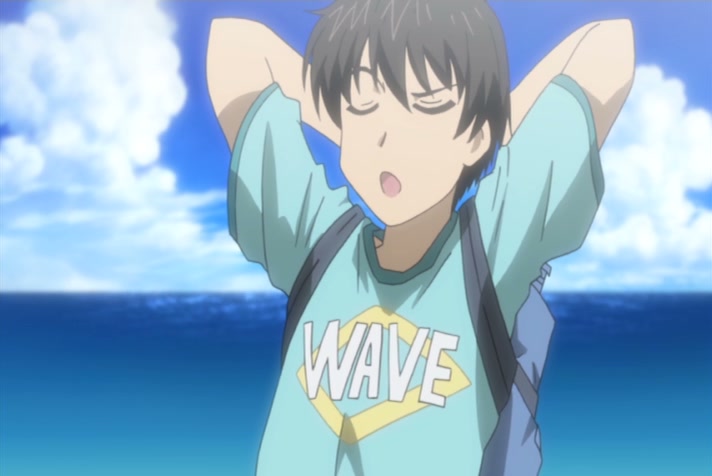
In Episodes 11 and 12, after a disastrous beach trip where Kazuki tells Yuuji to be more like the mature, composed student teacher Kogorou-sensei, Yuuji attempts to suppress his entire personality. He stops being perverted. He becomes polite, proper, and utterly hollow. He joins every sports club. He runs for student council. He exhausts himself into a walking shell of a person, walking into drains, getting attacked by dogs, failing at everything he attempts.
The metaphor is not subtle, and it does not need to be. Yuuji’s perversion is not an appendix that can be safely removed. It is connected to everything else about him: his teasing humor, his attention-seeking behavior, his fundamental aliveness. Cut it out and the whole organism collapses. Marie, deprived of her role as the sibling who shoots him for misconduct, becomes listless too. The entire household ecosystem breaks down.
The final scene of the series is Kazuki and Yuuji on the veranda where they first met. Kazuki makes a declaration that functions as the series’ thesis statement: “I’ll allow you to be the normal, perverted Yuuji.” Then she immediately adds that she retains the right to hit him for every offense. She is not asking him to change. She is not asking herself to stop reacting. She is offering a contract: be yourself entirely, and I will be myself entirely, and our mutual incompatibilities will just have to coexist in the same space.
This is not the fairy-tale ending. The perversion is not cured. The violence is not resolved. What changes is that both parties now understand what they are signing up for. Kazuki has stopped loving a ghost and started negotiating with a person.
Sibling Bonds as Parallel Structures
Both sibling pairs in the series operate on the same underlying principle: genuine devotion expressed through channels that could easily be mistaken for something else.
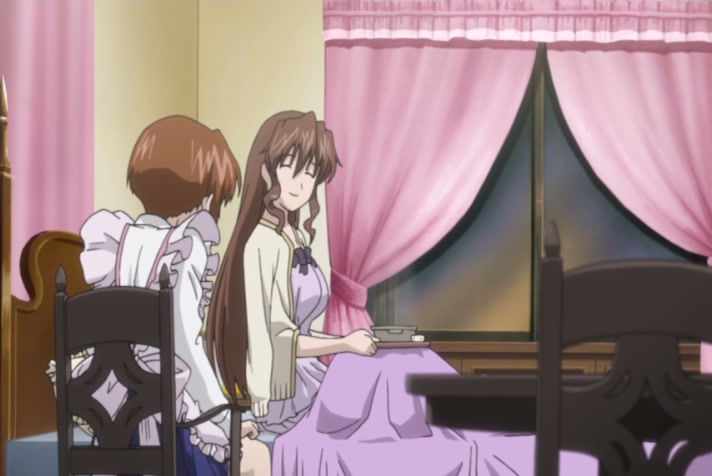
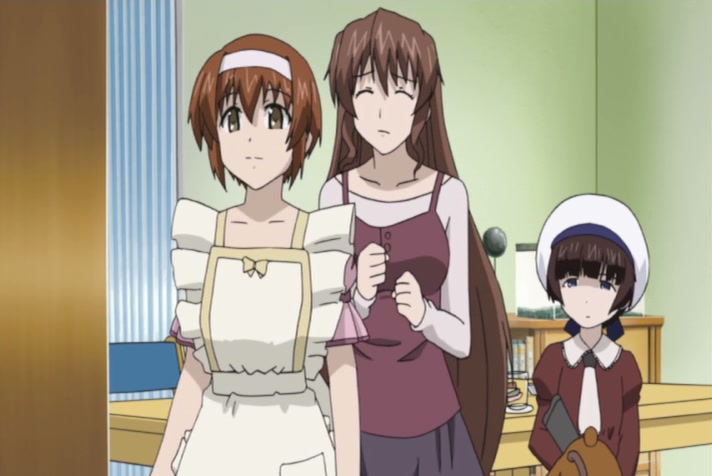
Arisaka Hatsune, Kazuki’s impossibly perfect older sister, spends most of the series looking like a benevolent sadist. She unlocks the veranda window so Yuuji can sneak into Kazuki’s bed. She designs an apron that falls apart with a single pull. She watches Kazuki’s romantic disasters with an amused smile and a cup of tea. It would be easy to read her as simply enjoying her little sister’s suffering.
Episode 7 provides the corrective. Hatsune catches a mild cold, and in her weakened state, her flawless facade cracks. She becomes clumsy. Her cooking, normally exquisite, turns into the same kind of bizarre, inedible chaos as Kazuki’s. She admits, with no particular embarrassment, that she has no club, no external ambition, and no desire that does not involve doting on Kazuki. Her teasing is not cruelty. It is the shape her love takes when it has no other outlet. She has organized her entire emotional life around her sister, and the mischief is just the friction of that devotion rubbing against daily reality.
Kagura Marie’s air-rifle discipline of her brother follows the same template. Her deadpan “Eliminating threat” and “Mission accomplished” are the series’ best running gag, but they are also a genuine expression of sibling care. She believes, correctly, that Yuuji’s uncontrolled behavior will inconvenience others and damage his relationships. The rifle is how she protects him from himself while maintaining the emotional distance that a childhood of constant relocation has taught her is necessary for survival. When Yuuji suppresses himself and she loses the ability to shoot him, she does not celebrate. She deflates.
Festival, Veranda, and Liminal Spaces
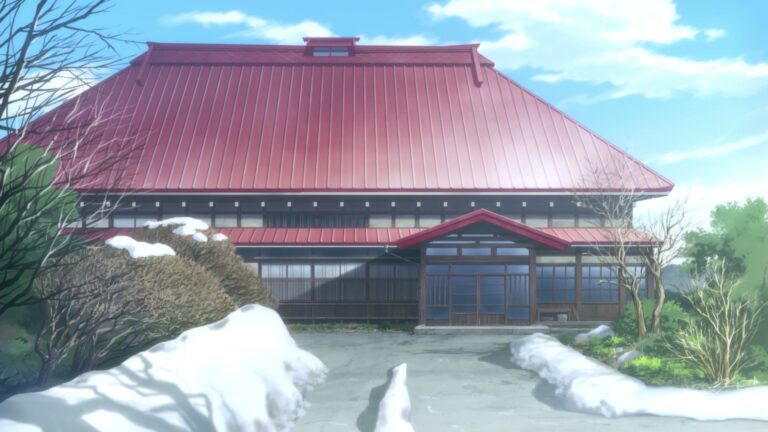
The series makes repeated, deliberate use of the veranda that connects Kazuki’s room to Yuuji’s. This is the space where they met as children, where Yuuji sneaks in (or attempts to) as a teenager, where Kazuki overhears his confession about keeping her photo, and where their final contract is negotiated. The veranda is neither inside the house nor outside it, neither private nor public. It is a threshold, a wa space in the Japanese spatial imagination, and the relationship it hosts is appropriately liminal. Kazuki and Yuuji are not family but more than neighbors. Not lovers but more than friends. The veranda is exactly where they belong.
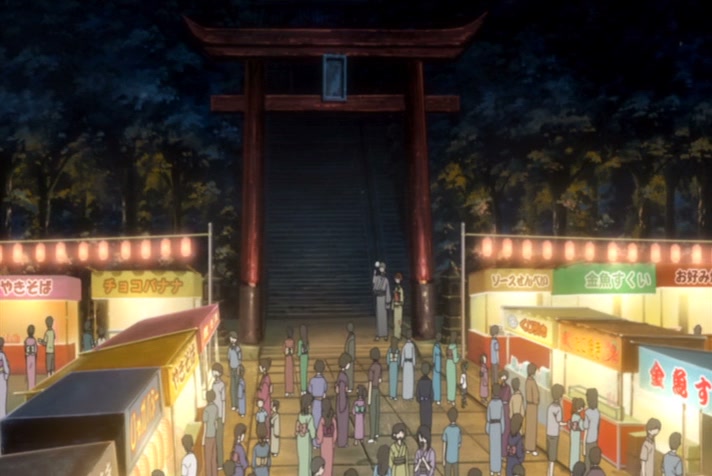
The festival episode deploys another deeply embedded piece of anime cultural vocabulary. Yukata, goldfish scooping, fireworks, the bath house afterward. These are the mandatory summer episodes that every school-life series includes, functioning as a shared emotional shorthand between the production and its audience. Tonagura! uses this comforting framework to stage its most destabilizing moment. The announcement of the Kagura family’s move to New York drops into the middle of the festival’s warmth like a stone into still water. The contrast is calculated and effective.
Characters
Arisaka Kazuki
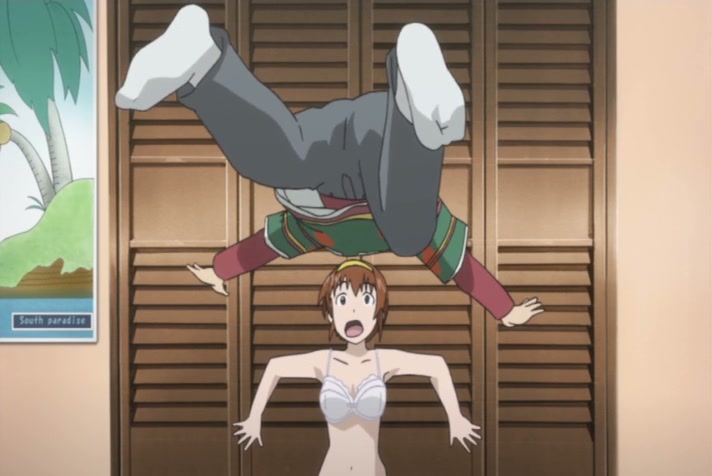
Kazuki anchors the series as both narrator and emotional center. Her defining trait is a decade-long commitment to a version of the past that never happened, and everything about her behavior flows from that commitment.
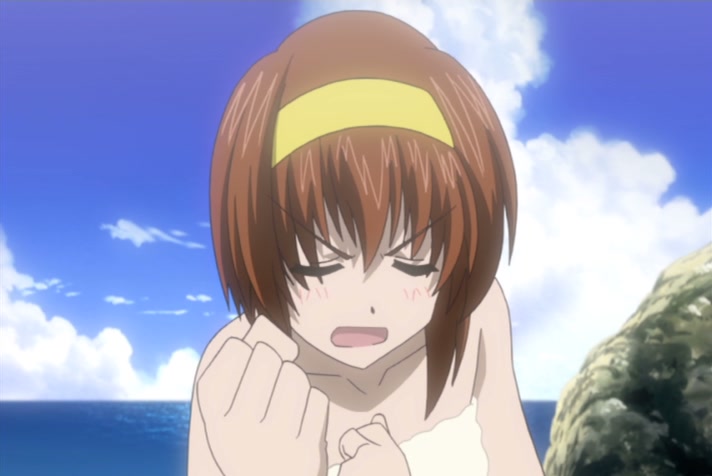
The tsundere label applies cleanly enough. She hits Yuuji, she yells at him, she denies her feelings with transparent insincerity. But the violence is more specific than a personality quirk. It is the panic response of someone whose worldview is being attacked. When Yuuji acts perverted, he is not merely being annoying. He is, from Kazuki’s perspective, vandalizing the memory of the boy she loves. Every grope, every lewd comment, every panty shot is a small act of desecration against the shrine she built in her head. She is not just angry. She is grieving.
Beneath the bluster, Kazuki is profoundly insecure. She believes she is not cute enough, not feminine enough, and not capable of the kind of warm smile that she imagines other girls deploy effortlessly. Her breakdown scene in Episode 6, where she cries to Chihaya that “nobody likes a girl that’s not cute at all,” is a raw moment that the comedy framing does not undercut. It is genuine pain, and it reveals how much of her hostility toward Yuuji is actually fear that he could never love someone like her.
Her growth arc is a slow, painful process of epistemological correction. She has to learn that her memories are false, that her ideal is a fabrication, and that the real person in front of her is both more annoying and more worth loving than the ghost she constructed. The opening of the letter is her moment of truth, and the airport confession that follows is her finally speaking to the real Yuuji instead of the one in her head.
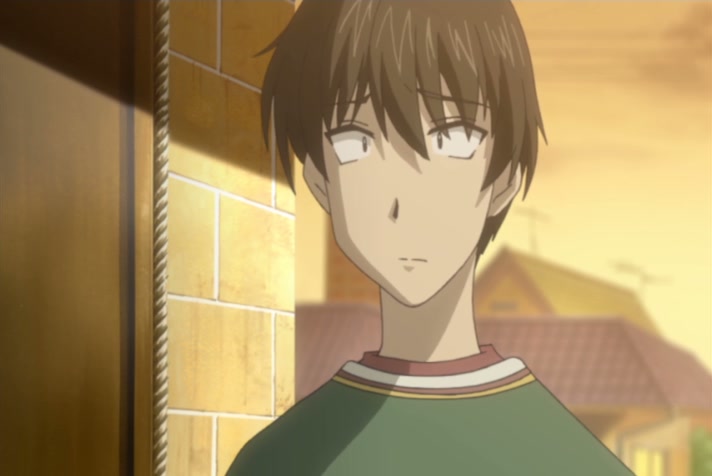
Kagura Yuuji
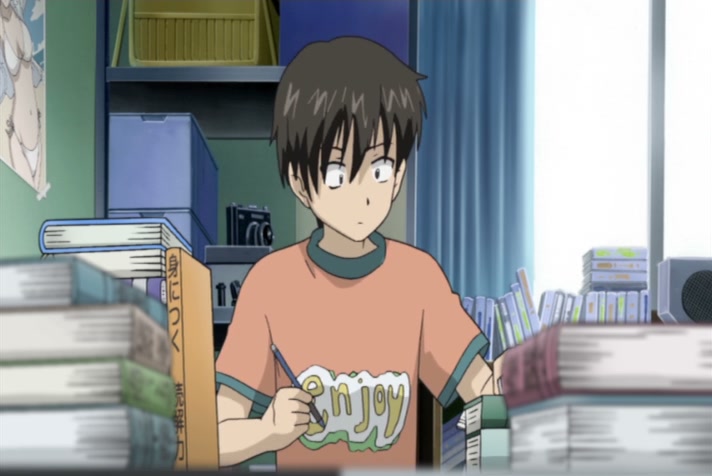
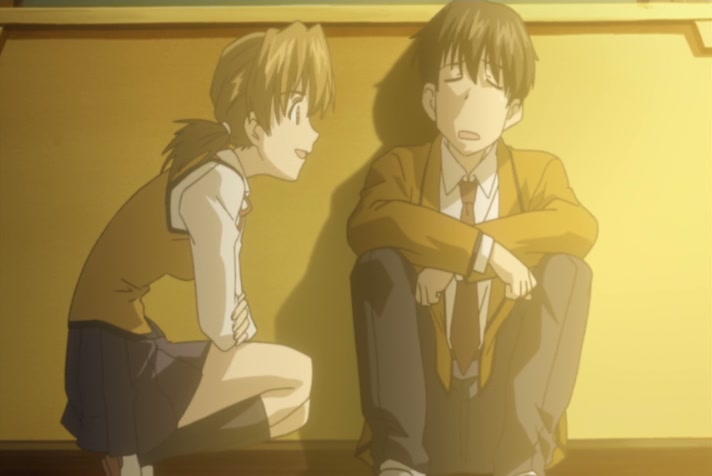
Yuuji’s function in the narrative is to be exactly himself at all times and let everyone else’s reactions drive the drama. He is a pervert and seems genuinely untroubled by this fact for most of the series. He peeps, he gropes, he collects erotic photos, and he says exactly what is on his mind without apparent filtration. In the context of 2006 ecchi comedy, this is standard operating procedure.
What makes Yuuji interesting is not his perversion itself but what the series does with it. His lechery is framed as an extension of childhood behavior, not a corruption of it. The flashbacks to young Yuuji show a boy who pulled Kazuki’s hair, stole her food, and dragged her into games. The adult version is more sexually explicit, but the root impulse (demanding her attention through provocation) is identical. He has not changed. He has just aged into a vocabulary that Kazuki finds more threatening.
When Kazuki compares him unfavorably to Kogorou-sensei, Yuuji’s response is not to brush it off but to attempt a complete personality deletion. His two-episode suppression arc is the series’ most direct statement of theme. He becomes proper, polite, and functionally dead. The message is unmistakable: Yuuji without his perversion is not an improved Yuuji. He is no Yuuji at all.
His other note of depth is the photograph he has kept for ten years, a candid shot of a genuinely smiling young Kazuki. He treasures this image precisely because he does not believe she will ever smile at him that way again. His perversion does not preclude tenderness. It coexists with it, messily, the way real personality traits coexist rather than resolving into a coherent package.
Arisaka Hatsune
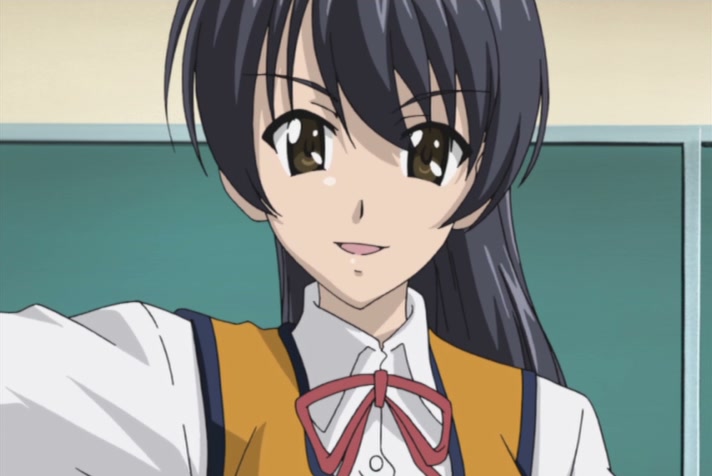
Hatsune is the series’ most consistently entertaining presence and its most structurally peculiar character. She is perfect in every visible dimension: beautiful, brilliant, domestically omnipotent, and admired by a dedicated fan club. She has no apparent weaknesses, no arc of growth, and no internal conflict that the series is interested in resolving.
Episode 7 complicates this without exactly subverting it. Hatsune’s “weakness” turns out to be her obsessive devotion to Kazuki, which is so all-consuming that she has abandoned any independent ambition. She does not join clubs, pursue romance, or express interest in anything outside the household. Her perfection is the side effect of a life organized entirely around her little sister’s well-being, and when she loses focus (illness, distraction), her competence collapses into the same chaos that defines Kazuki’s own efforts.
She functions in the narrative as a maternal figure with a prankster’s sense of humor. She enables Yuuji’s antics not because she ships the couple but because Kazuki’s flustered reactions are her favorite entertainment. Her love is genuine, but it expresses itself as mischief, and the series never asks her to become more conventional in her affections.
Kagura Marie
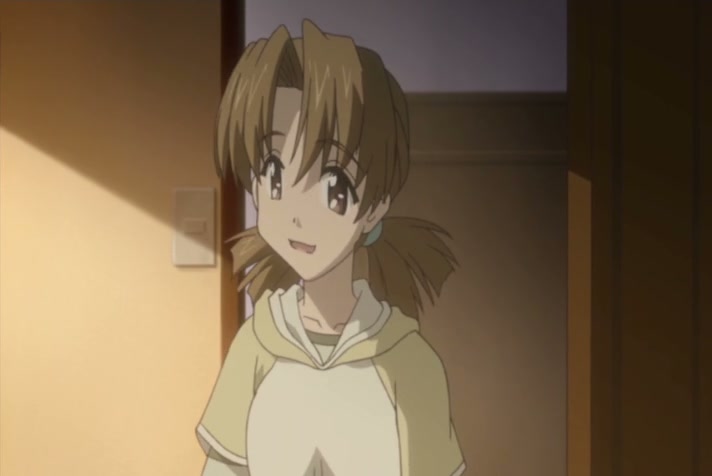
Marie is the series’ deadpan anchor, a kuudere whose emotional flatness is both her comic signature and her primary defense mechanism. A childhood of constant relocation has taught her not to form attachments, because attachments will be severed when her father’s whims dictate another move. The air rifle is her way of exerting control in a life where she otherwise has none.
Her dynamic with Yuuji is the most stable relationship in the series. She shoots him. He deserves it. They both understand the rules. When he suppresses himself and the shooting stops, she loses not just a target but a brother, and her own vitality drains in sympathy.
Her forced friendship with Isokawa Neena is the only subplot that cracks her shell. Marie genuinely hates clingy, persistent people, and Neena is the clingiest, most persistent person in the cast. The slow process of Marie’s acceptance (protecting Neena from cats, making gyoza together, a quiet goodbye at the airport) is understated and effective. She never becomes warm. She becomes tolerant, which for Marie is a form of love.
Suzuhara Chihaya
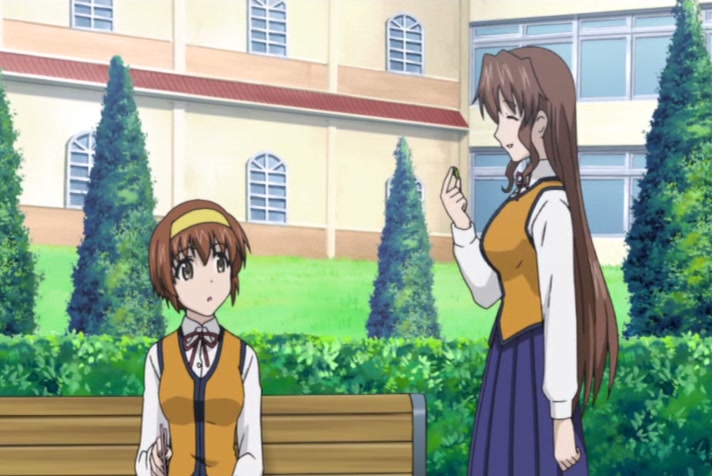
Chihaya is the best friend with a Kansai accent, a boisterous personality, and a remarkable lack of boundaries. She flips Kazuki’s skirt, shows her own panties, and cheerfully discusses sexual topics. She also bonds quickly and genuinely with Yuuji over photography and martial arts, creating a triangle of jealousy that drives the middle arc of the series.
Her structural role is almost purely catalytic. She exposes Yuuji’s “dapper” act. She sparks Kazuki’s jealousy. She repairs the rupture she helped cause. She introduces Kogorou-sensei, setting off the entire jealousy arc. She is delightful in every scene and absolutely essential to the plot’s forward motion, but she has no real arc of her own. Her potential romantic interest in Yuuji is raised and quietly set aside, which feels less like a character decision than a narrative one. A longer series might have given her interiority. This one uses her as a very charming wrench in the machinery.
Yuuki Kogorou
Kogorou-sensei, Chihaya’s distant relative and the new student teacher, serves a dual function. To Kazuki, he is the embodiment of mature, gentle masculinity, a man who can deliver compliments without flustering and who seems to float through social situations with effortless grace. To Yuuji, he is a threat, a walking reminder of everything Kazuki wishes Yuuji would become.
The series slowly reveals that Kogorou is not the paragon he appears to be. He peeps on the girls at the beach with the same enthusiasm as the teenage boys. He “accidentally” touches bodies in ways that would get Yuuji shot. He is, in essence, the same species of pervert as the male lead. The difference is adult poise. Kogorou has learned to frame his impulses as spontaneity, to deliver his lechery with a smile and a breezy apology. Yuuji has not learned this and perhaps cannot.
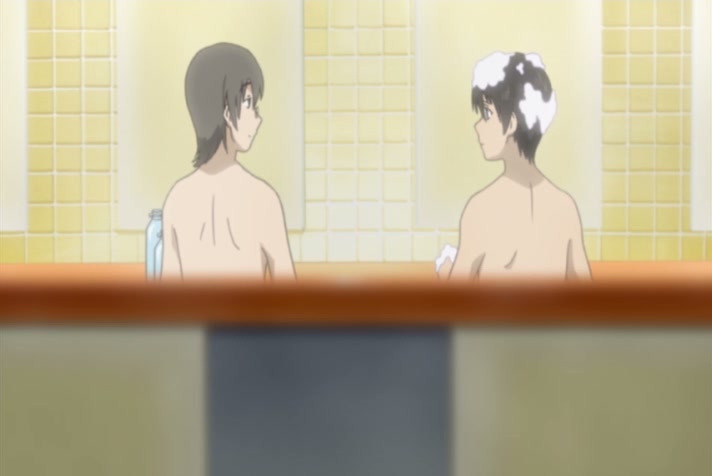
Kogorou’s sincere advice to Yuuji in the bath house (listen to Kazuki’s feelings, or she will hate you for real) and his private admission that he too has someone he likes mark him as fundamentally decent despite his flaws. He is not a rival. He is a cracked mirror, showing both Kazuki and Yuuji that the “ideal” they imagined does not exist.
Isokawa Neena
Neena is a half-American girl who attaches herself to Marie with the force of a natural disaster. She follows Marie everywhere, chatters constantly, and offers unsolicited choices between vacuum cleaners and electric fans. She is exhausting and deliberately so, a character designed to test Marie’s patience to its absolute limit.
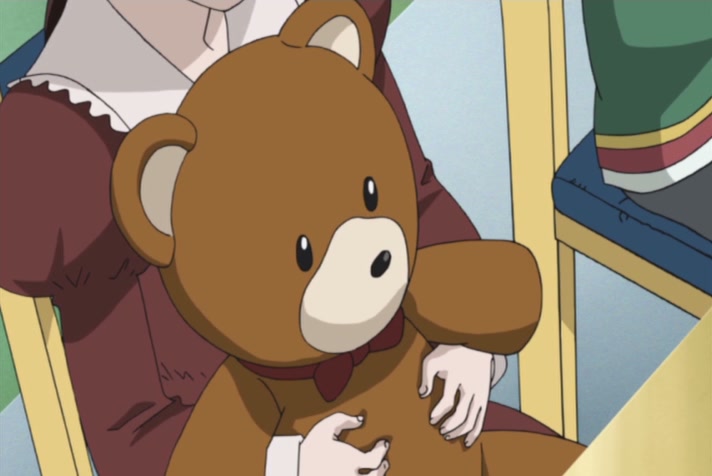
Her backstory (lonely home life, absent working father, a stuffed animal named Rakkun as her only confidant) reframes her clinginess as a response to isolation rather than mere eccentricity. When Marie finally softens and allows Neena into her orbit, the moment is earned. Neena’s tearful goodbye to Marie at the airport is the most openly emotional scene in the series, a sharp contrast to Marie’s controlled sadness.
Machida Kousuke and Serizawa Miu
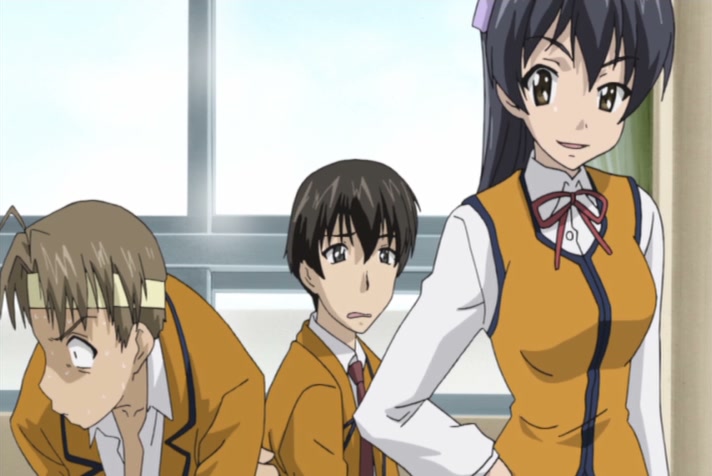
The class president and vice-president function as a background comic duo whose bickering, hit-and-insult dynamic mirrors the main couple. Machida is an openly lecherous schemer who tries to leverage his position to attract girls. Serizawa is his childhood friend who physically abuses him for his idiocy while clearly enjoying their combative rhythm. They spread the rumor about Kazuki’s “unforgettable person” and later fuel the misunderstanding about Kogorou-sensei. They are not developed beyond their comic function, but they add texture to the school environment and reinforce the series’ recurring theme that genuine affection can wear a combative face.
Visuals and Animation
The Mid-2000s Digital Aesthetic
Tonagura! is a time capsule of 2006 digital anime production. It sits in that transitional period when studios had mostly abandoned cel animation but had not yet settled into the high-gloss compositing standards that would define the 2010s. The result is clean, functional, and slightly flat, but with specific strengths that make it more visually appealing than many of its contemporaries.
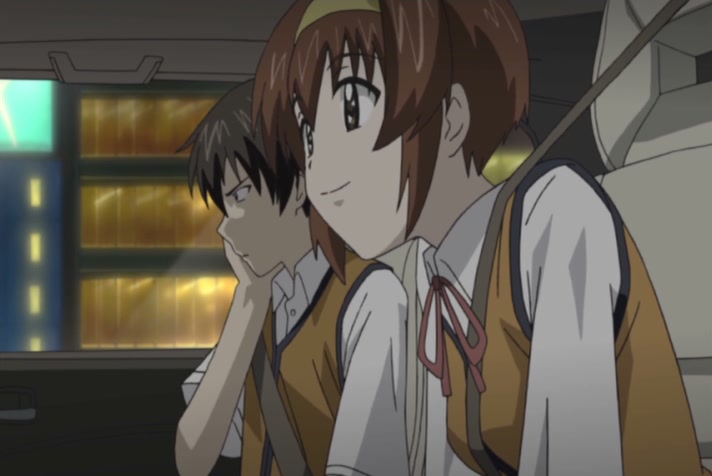
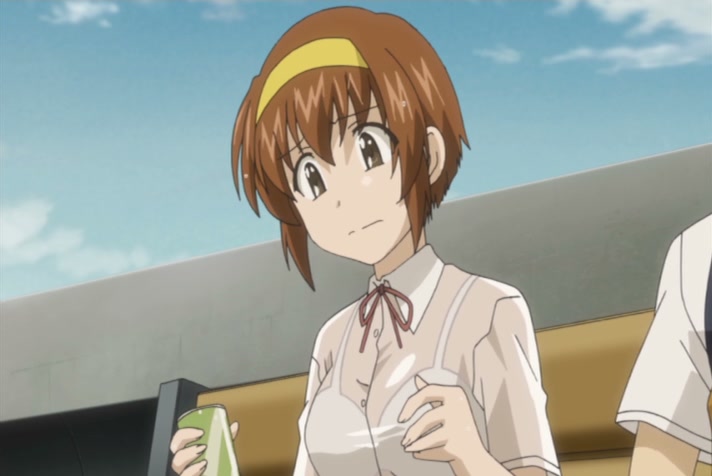
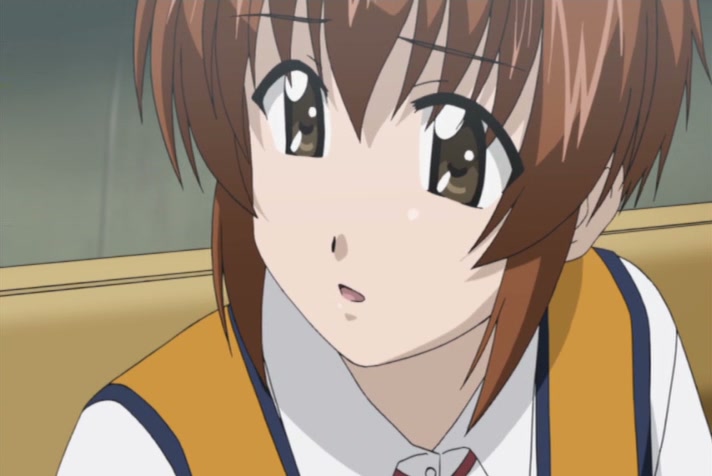
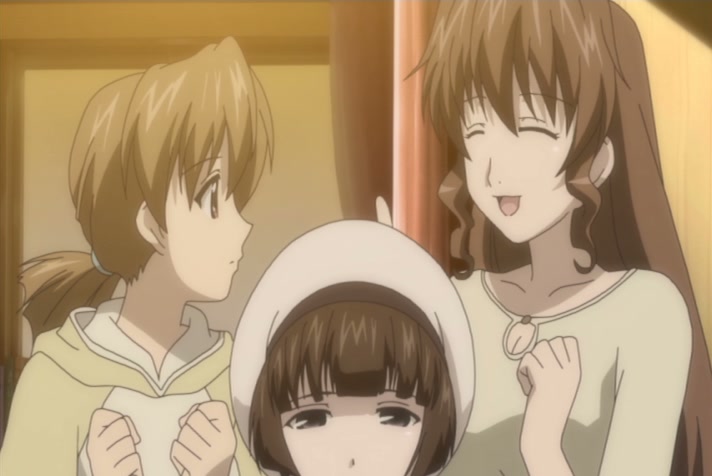
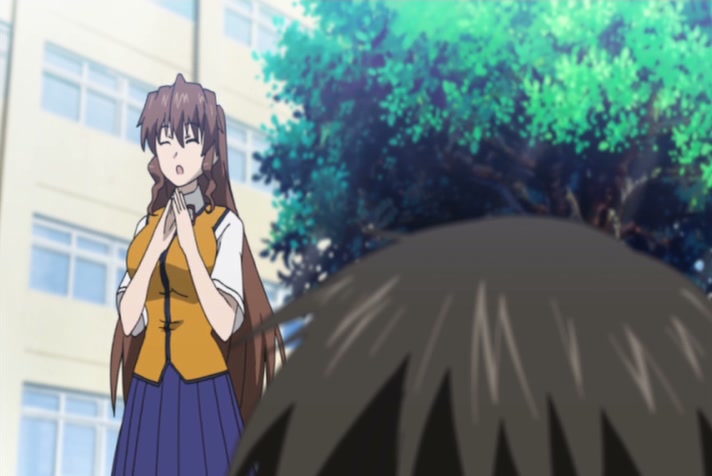
The character designs follow the mid-2000s bishojo template: slender proportions, large eyes with multiple highlight layers, and consistently thin linework that prioritizes on-model stability over organic hand-drawn texture. The eyes do the heavy lifting for facial expression, using color gradients and highlight placement to convey life even when the rest of the character model is simplified for budget reasons.
Two-Mode Expression System
The facial acting operates in two distinct registers. In comic mode, the series deploys the full arsenal of genre shorthand: dot eyes for background characters, massive sweat drops, trembling pupils, simplified v-shaped eyes for frustration, and extreme facial compression for reaction shots. Marie’s deadpan and Yuuji’s lecherous grin are particularly well-calibrated within this vocabulary.
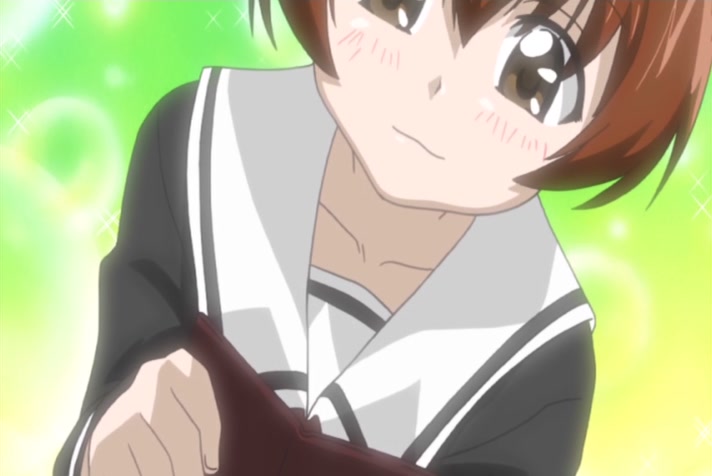
In intimate mode, the expressions become more grounded. Subtle brow movements, downward gazes, and blush stickers (horizontal lines on the cheeks) communicate hesitation, embarrassment, or domestic warmth. These moments cluster in close-ups, where the production invests whatever detail budget it has. Kazuki’s face is the test case. She cycles through indignation, panic, vulnerability, and genuine softness multiple times per episode, and the character art maintains legibility through all of these transitions. The shift from angry Kazuki to soft Kazuki, the face Yuuji treasures in his photograph, is rendered with enough precision that the emotional stakes land.
Color and Lighting
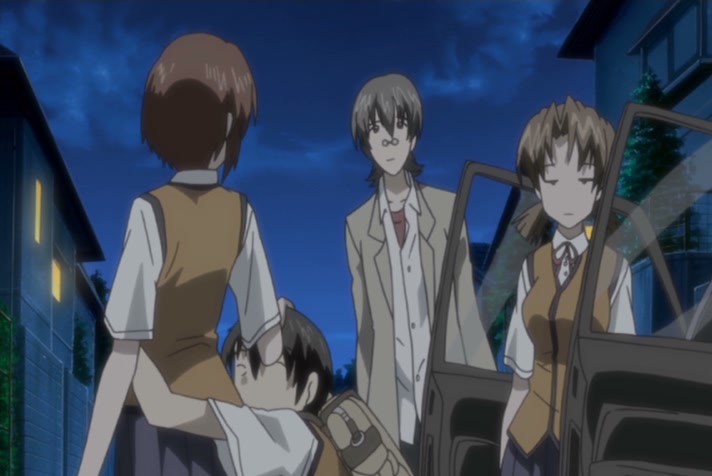
The palette is warm and approachable, dominated by soft yellows, pinks, and earthy browns for domestic and school interiors, contrasted with cool blues and purples for night scenes and contemplative moods. This is standard rom-com color theory, executed competently.
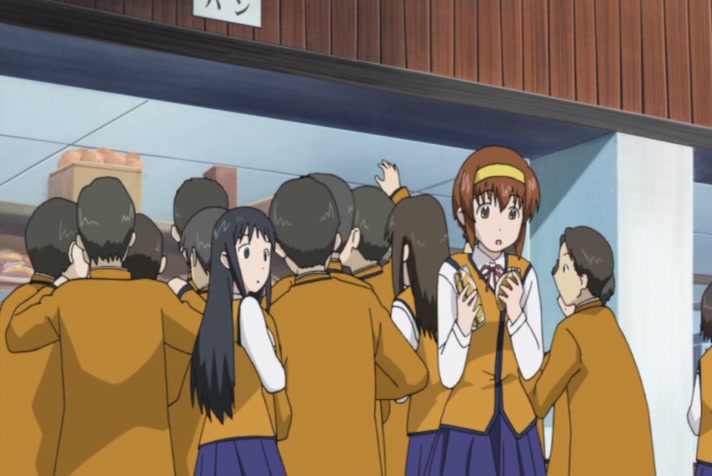
The most notable visual signature is the heavy use of bloom or soft-focus post-processing. Sunlight through windows, afternoon interiors, and particularly the veranda scenes are bathed in a diffuse glow that softens the transition between sharp digital linework and painted backgrounds. The effect has a dual function. It evokes the golden-hour warmth associated with nostalgic memory, appropriate for a series about nostalgia. And it masks the relative simplicity of the background art by blending foreground and background into a unified atmospheric wash.
The trade-off is occasional haziness. Some scenes feel over-processed, with character outlines bleeding into backgrounds in a way that reads as muddiness rather than intentional softness. This is a limitation of the era’s compositing tools as much as an artistic decision, and viewers accustomed to the crisp digital compositing of modern productions may find it distracting.
Background Art and Environmental Detail
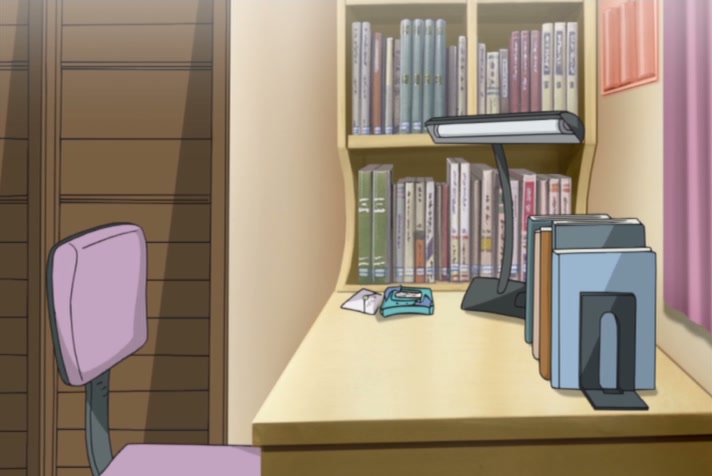
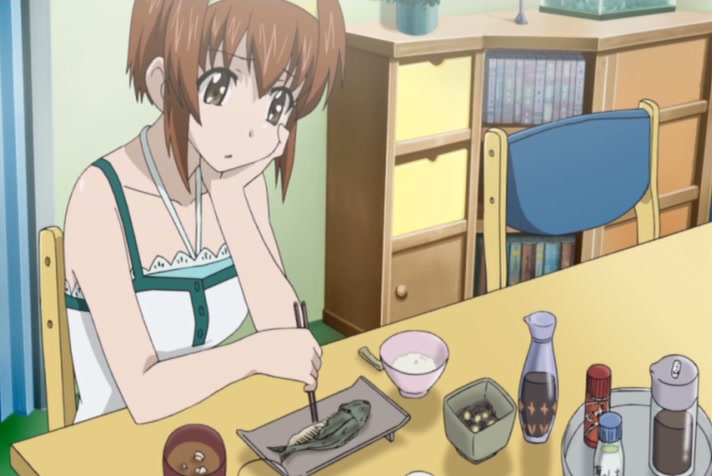
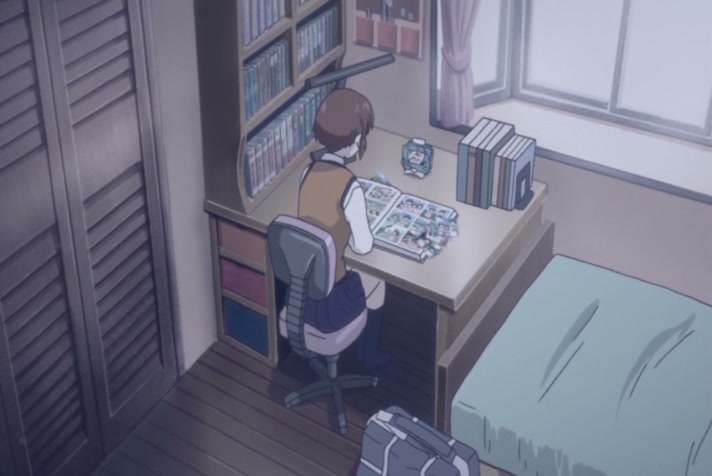
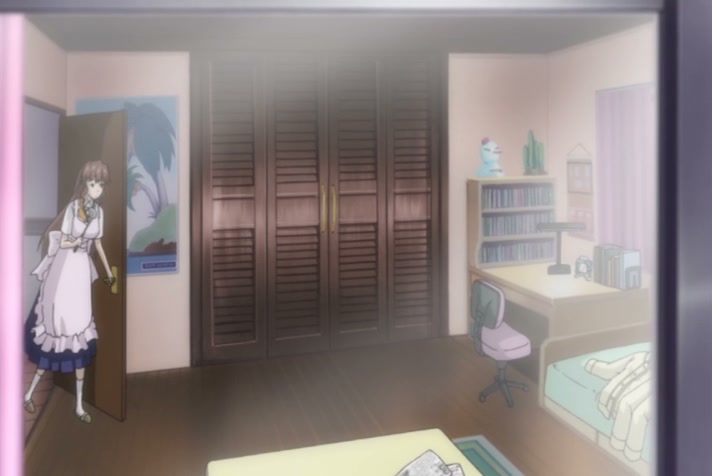
The background work reveals a clear priority hierarchy. Kazuki’s bedroom, with its cluttered desk, personal items, and lived-in disarray, is the most carefully rendered interior in the series. The veranda, the festival grounds, and the beach also receive above-average attention. These are the emotional stages, and the art team knew where to direct their effort.
School hallways, generic classrooms, and the kitchen during non-critical scenes are rendered with flat geometric simplicity. Characters in these spaces can occasionally feel disconnected from the floor plane due to minimal shadow integration. This is a common shortcut in dialogue-heavy television anime of the era and is not egregious here.
Props and detail shots occasionally pull focus to specific, highly textured objects: vintage cameras, Yuuji’s photo collection, festival game equipment. These moments suggest an art team capable of detailed work when the shot list permits, and they stand out precisely because they contrast with the functional simplicity of the default backgrounds.
Composition and Direction
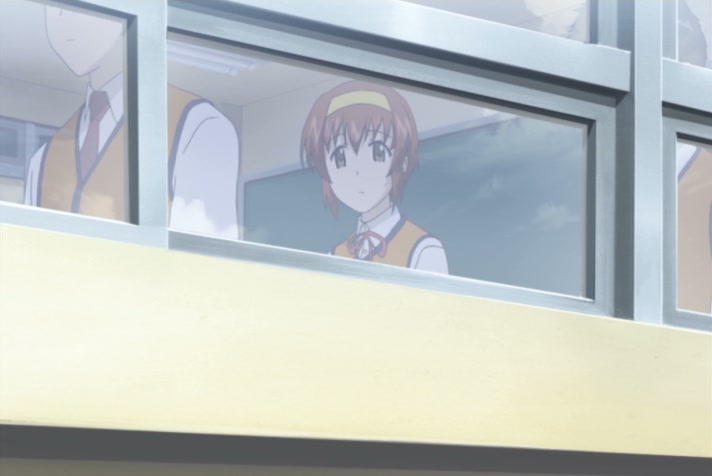
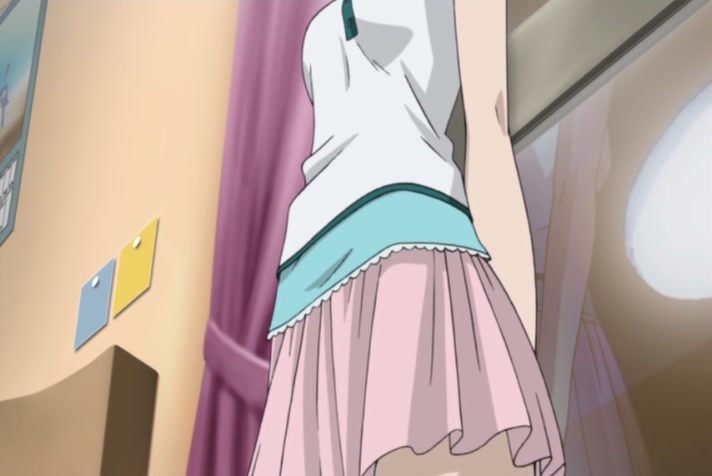
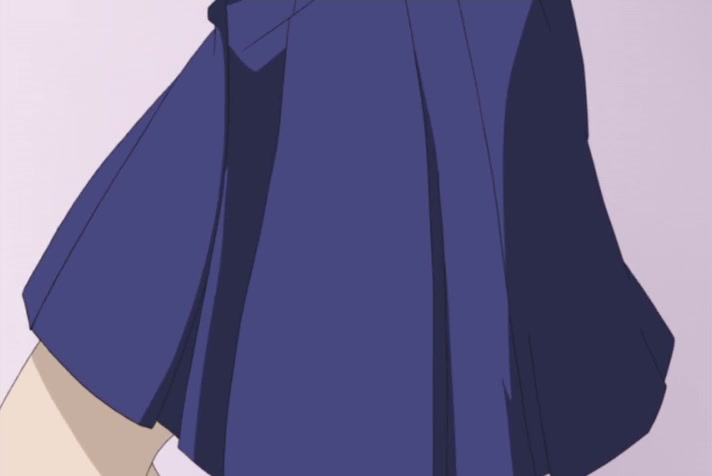
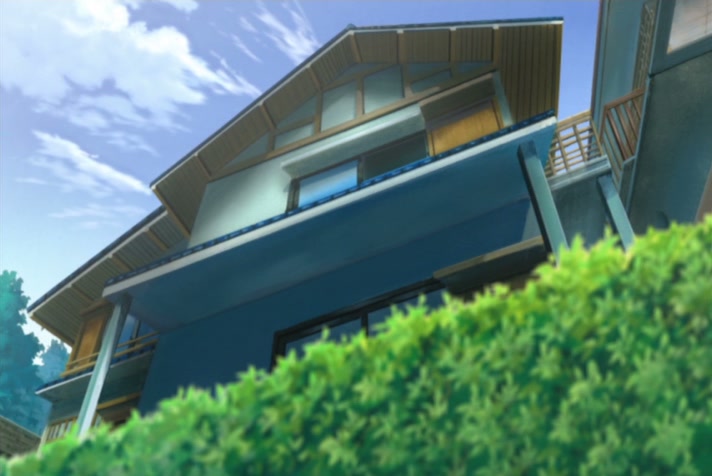
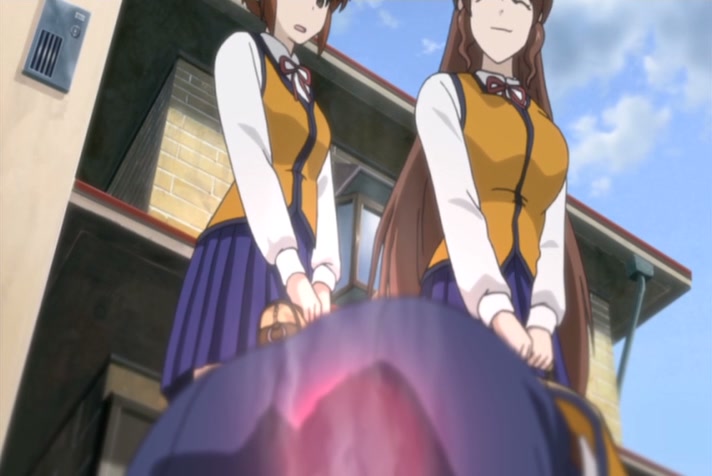
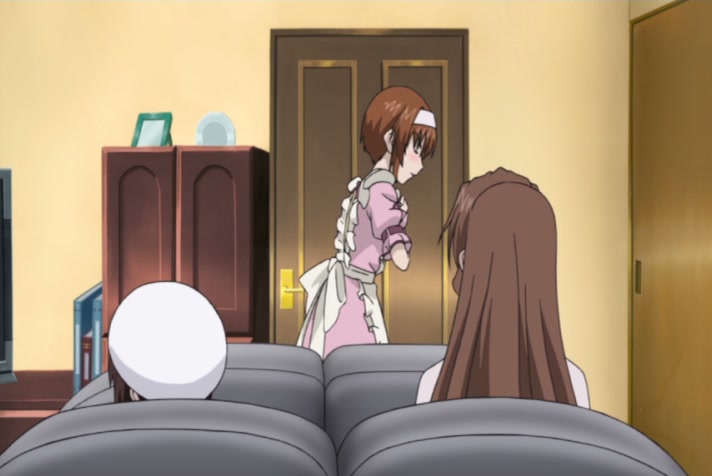
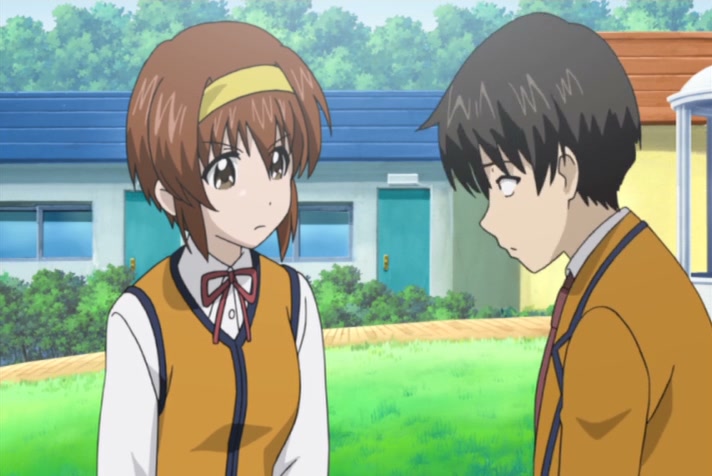
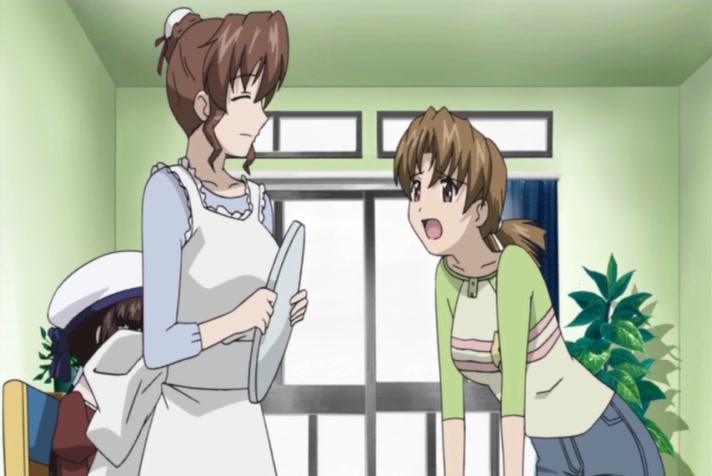
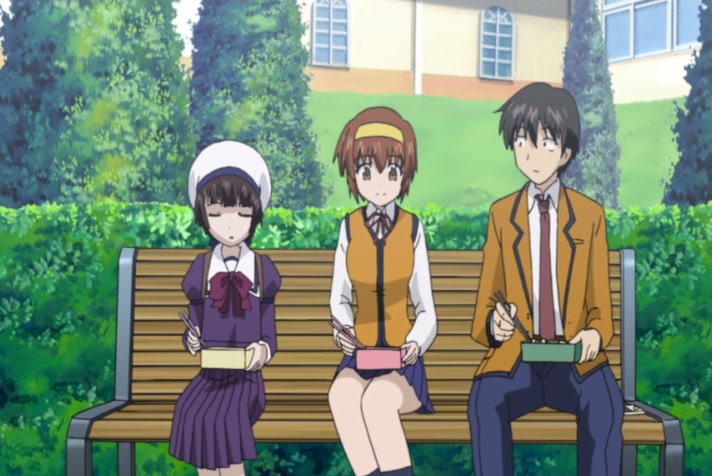
The default visual grammar is functional medium-shot dialogue coverage, which suits a series driven by character interaction. The direction does, however, employ several recurring techniques to keep the frame interesting. Frame-within-a-frame compositions using school windows, doorways, and the veranda railing isolate characters or suggest separation. Occasional low-angle shots add scale to buildings. Point-of-view shots appear sparingly but effectively during moments of romantic tension, particularly the photo sessions. Tight crops on specific details (a pleated skirt, a seated midsection, hands gripping fabric) maintain visual interest while minimizing the need for complex full-figure animation.
The Static-Scene Distinction
A technical point worth making: Tonagura! contains many static scenes where characters stand and talk with minimal movement. In a domestic comedy built on verbal sparring and awkward silences, stillness is often appropriate. These are not animation failures. They are tonal choices.
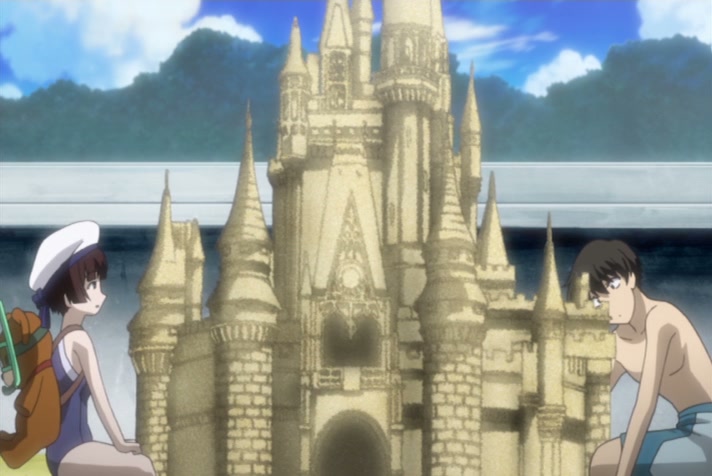
Where the series shows genuine animation weakness is in transitional motion. Characters walking across rooms, standing up from seated positions, or performing actions that require weight and momentum sometimes appear floaty or under-keyframed. The swimming sequences in Episode 8 rely on held frames and water-surface cuts rather than fluid in-water motion, which is a clear budget indicator. The physical comedy (Marie’s shooting, Kazuki’s slaps, Yuuji’s pratfalls) generally receives more attention and reads clearly, suggesting the production prioritized its primary genre beats over incidental movement.
The overall visual package is competent, occasionally charming, and entirely representative of its production context. It will not impress viewers who expect modern sakuga showcases, but it serves its story effectively.
Sound and Music
Opening and Ending Themes
The opening theme, “Dramatic” by Honey Bee, is a peppy, guitar-driven pop-rock number that efficiently sets the series’ energetic tone. It does nothing revolutionary, but it matches the visual montage of character introductions and comedic beats with professional competence. The ending theme, a softer, more contemplative piece, provides the necessary emotional cooldown after each episode’s chaos, its gentle melody accompanying still images or simple animation of the cast in quieter moments.
Voice Acting
The seiyuu cast delivers strong, character-defining performances across the board. Kazuki’s voice work navigates the full tsundere spectrum from volcanic rage to trembling vulnerability, and the rapid transitions between these modes are handled with comic precision. The actress understands that Kazuki’s anger is performative in a way her sadness is not, and the tonal distinction between “real anger” and “embarrassment dressed as anger” is consistently legible.
Yuuji’s performance threads a difficult needle. The character must be obnoxious enough to justify Kazuki’s reactions while remaining charming enough that the audience wants him to succeed. The actor leans into a slightly nasal, unself-conscious delivery that makes Yuuji’s lecherous comments sound more clueless than predatory, which is exactly the register the material requires.
Marie’s deadpan monotone is the series’ secret weapon, landing every “Eliminating threat” and “Mission accomplished” with perfect comic timing. Hatsune’s warm, slightly amused alto suggests constant private entertainment at everyone else’s expense. Chihaya’s Kansai-accented energy fills every scene she enters, and Neena’s relentlessly cheerful chatterbox delivery is calibrated to be endearing and exhausting in equal measure.
Sound Direction and Score
The background music is functional and unobtrusive, the standard light orchestral and synth-pop cues that mid-2000s rom-coms used to underline comic beats, tender moments, and transitions. It does its job without calling attention to itself. The sound design for Marie’s air rifle, with its distinctive compressed-air pop and the whistle of the non-lethal round, is satisfying and adds weight to the running gag.
Overall Verdict
Tonagura! understands something that many ecchi romantic comedies do not. The perverted male lead is not a problem to be solved. He is a person to be accepted, or not, on his own terms. The series builds its entire emotional arc around this idea and follows it to a conclusion that is both comedically satisfying and thematically coherent.
The journey to that conclusion has rough patches. The animation budget is visible in every held frame and floated walk cycle. The supporting cast, while charming, sometimes feels like they are waiting for development that the thirteen-episode format cannot provide. Chihaya in particular deserves more interiority than she receives. The pacing of the final arc compresses Yuuji’s suppression and recovery into a tight space that a longer series might have let breathe.
These are real limitations. They do not outweigh the series’ strengths.
Kazuki’s arc is genuinely well-constructed. Her journey from nostalgic delusion to clear-eyed acceptance is built patiently, with the letter serving as a properly setup payoff rather than a sudden twist. The series earns its emotional climax by spending eleven episodes establishing the false memory before shattering it. The final scene on the veranda, with its negotiated contract between two stubborn people who have finally stopped pretending, is a more honest romantic resolution than most anime manage.
The thematic work around nostalgia and selective memory gives the comedy a backbone that similar series often lack. Tonagura! is not just arranging its characters into funny situations. It is making an argument about how people remember the past, how they construct ideals from those memories, and how those ideals can blind them to the value of what is actually in front of them. Kazuki’s realization that she was the one who changed, that Yuuji was always this way, that her “first love” was a story she told herself, is a genuinely adult piece of emotional insight delivered through the vocabulary of an ecchi gag series.
This is a series for people who enjoy mid-2000s romantic comedy aesthetics, who can tolerate or appreciate the genre’s fanservice vocabulary as a legitimate mode of expression, and who are interested in seeing that vocabulary used to say something slightly smarter than average. It is not for people who flinch at panty shots, who demand that female characters embody aspirational feminism, or who need every series to push the medium forward technically.
For those in its target audience, Tonagura! offers a warm, funny, and unexpectedly thoughtful experience. The pervert and the tsundere negotiate a peace treaty. The contract terms are specific. She will allow him to be himself. He will accept that being himself comes with consequences. They will continue to bicker, to fight, to drive each other up the wall. And they will do it together, on a veranda that is neither inside nor outside, in a relationship that is neither childhood friendship nor adult romance but something messier and more honest than either.
That is a good ending. It deserves to be recognized as one.
Gallery