






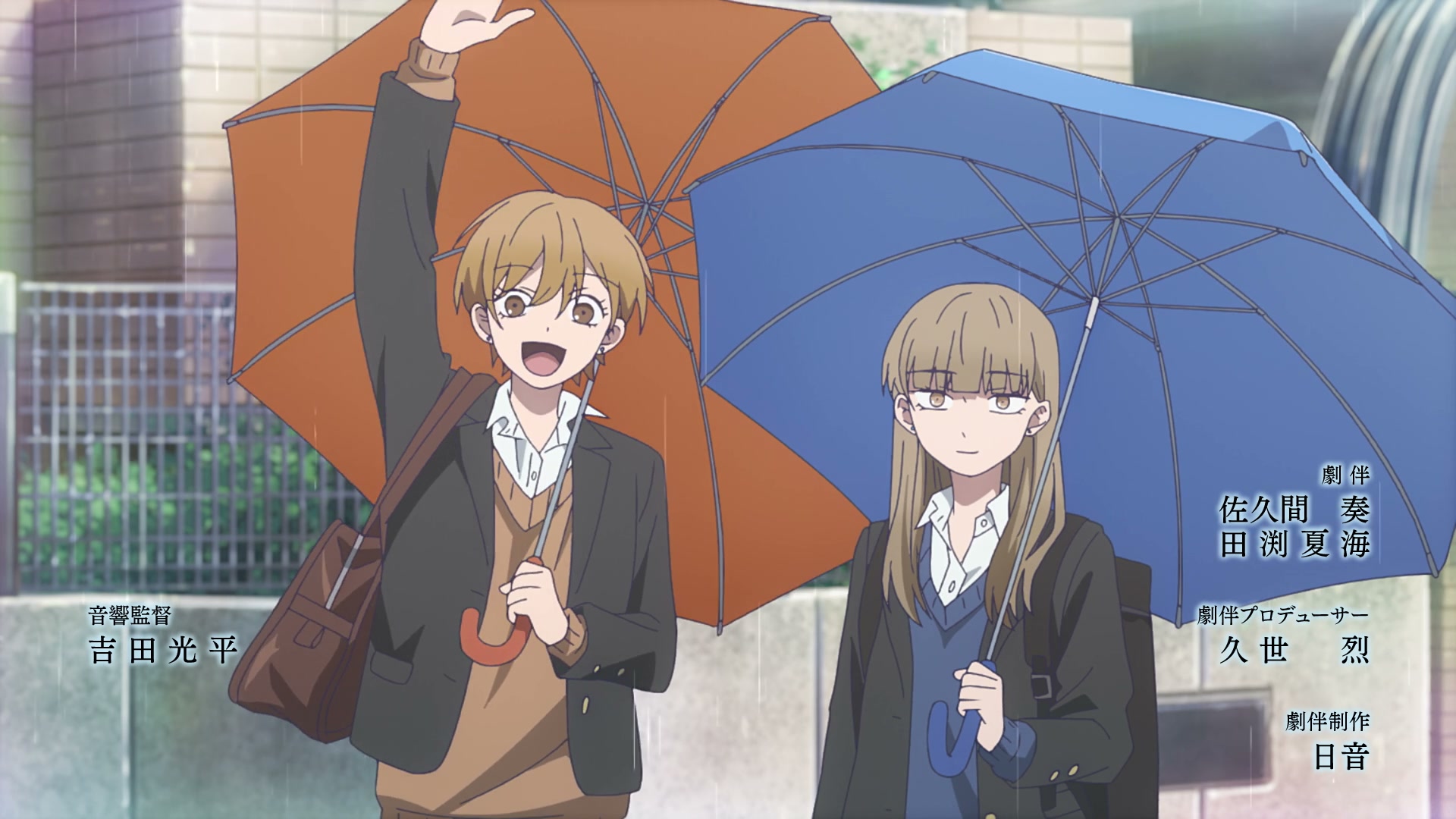
This episode shifts the emotional weight onto Koyuki in a way that feels overdue, and it does it without letting anyone off the hook. After last week’s cathartic release for Miki, the series turns inward again, but this time the subject isn’t just Koyuki’s past pain. It’s her present guilt.
The cold open picks up right where the previous group outing left off, with Miki and Koyuki scrambling to keep Igarashi out of sight. The frantic dog-spotting diversion is played for nervous laughter, but the tension underneath is genuine. Miki’s protective instinct kicks in immediately, and even Minato, who usually deflects everything with a joke, falls into step with the plan. For a group of teenagers still figuring out how to be friends, they read the situation fast and move as a unit. That alone shows how far they’ve come.
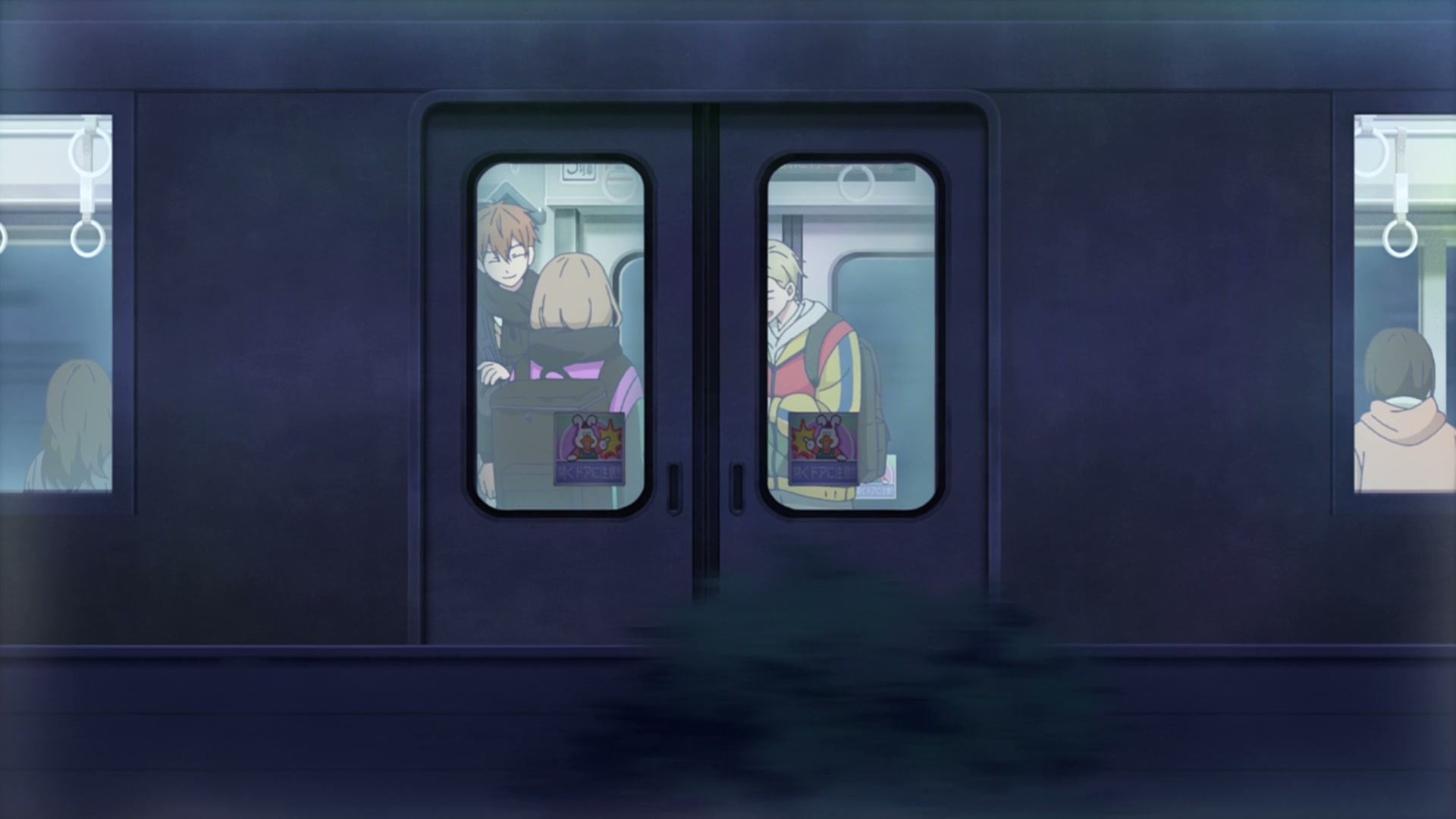
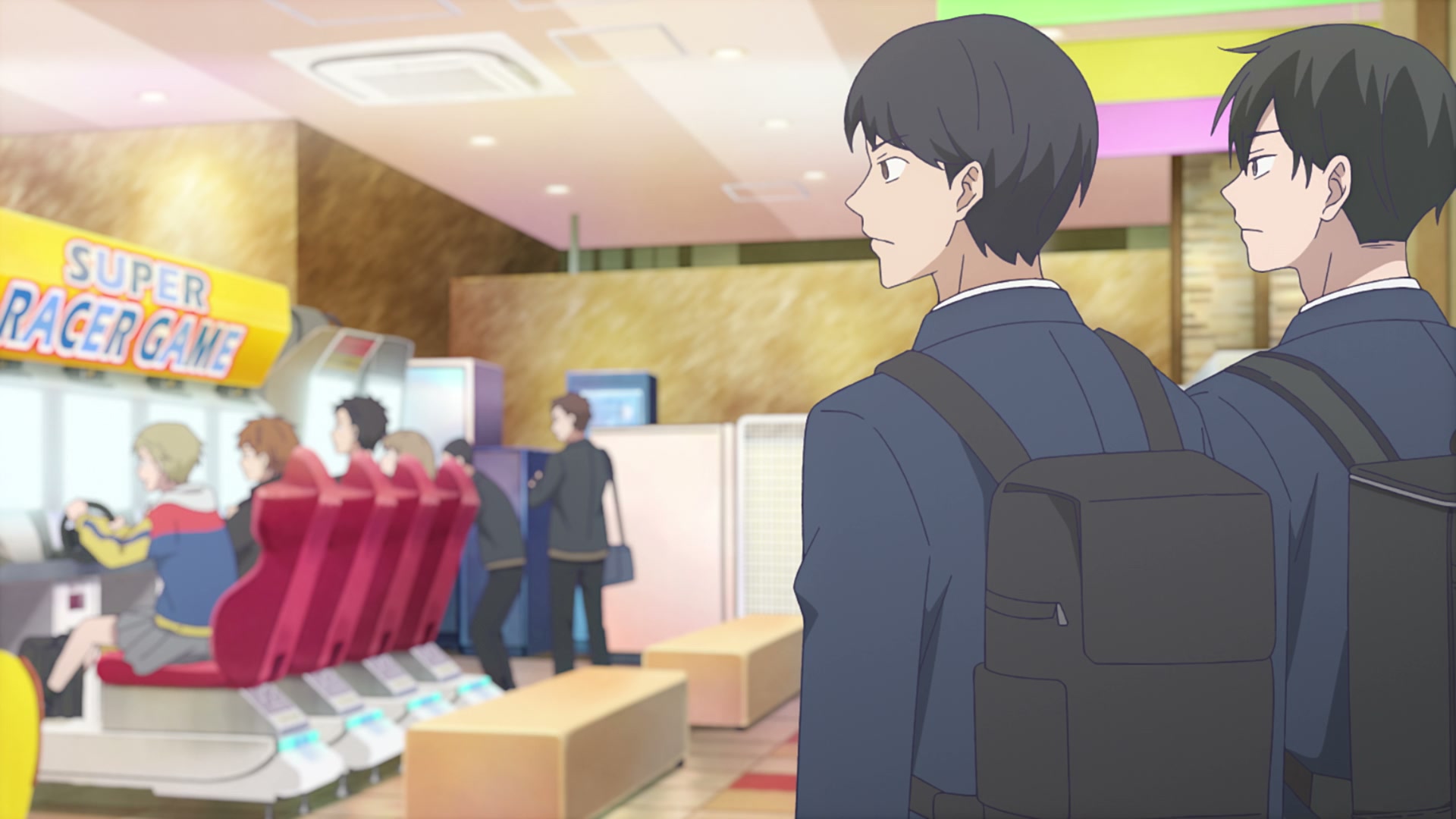
The mall sequence that follows is the kind of easy, unforced slice-of-life material this show does well. The curry detour, the purikura booth, Yoota bracing himself against the train ceiling while Miki competes to stand without holding on. These moments aren’t dramatic, but they land because the dynamics have been built carefully. Shimojima’s lunchtime confession in the art room earlier in the episode adds another thread to that tapestry. Her story about drifting away from a large friend group because the “unspoken rule” of waiting for everyone felt performative rather than genuine resonates with Koyuki immediately. When Koyuki says she’s “bad at group activities too,” Shimojima’s reply, “Honestly, you do give off that vibe,” is matter-of-fact rather than judgmental. It’s a small beat of recognition between two people who find social performance exhausting.
But the episode’s center of gravity sits squarely in the second half, when Koyuki runs into Igarashi alone.
Their exchange is brief and uncomfortable in exactly the right way. Igarashi’s first reaction to her changed appearance, “What’s with that head?”, is dismissive without being openly hostile. He’s not the same aggressive presence from middle school, but he’s not warm either. Koyuki’s question, “Are you enjoying high school?”, sounds so painfully stilted that Igarashi laughs it off as something a distant relative would ask. She knows it’s awkward. She forces it out anyway.
What makes the scene work is the internal monologue running underneath. Koyuki admits to herself that she never liked Igarashi. Not even for a second. The flashback to middle school confirms what we’ve suspected: the teasing about her and Igarashi being a couple, the classmates treating it as entertainment, and her own resentment hardening into something cold and pointed. She hurt him deliberately. That’s the part she can’t dismiss as someone else’s fault.
The visual of her standing in the station corridor after he leaves, holding a shopping bag over her head to hide her face from someone she might run into, is quietly devastating. She’s not hiding because she’s scared of him. She’s hiding because she can’t face what she did.
The conversation that follows with Miki is where the episode earns its weight. Miki has been carrying the assumption that Koyuki dated Igarashi because of something she said back then, some careless remark about “being liked is luxury enough.” When she apologizes for it, Koyuki’s reaction is confused. She barely remembers that conversation. The real reason she went out with Igarashi was uglier: she thought that if she could make herself like someone who already liked her, everything would be easier. Instead, it kept hurting, and in the end, she went out of her way to hurt him. “I was only thinking about myself.”
There’s no softening of that admission. The show doesn’t rush to reassure her or frame it as a misunderstanding. Koyuki describes her heart and actions being completely out of sync, and Miki listens without offering easy forgiveness. When Miki finally responds, her honesty feels earned. She points out that no matter which choice Koyuki made, Igarashi was probably going to get hurt anyway, and she can’t bring herself to hate Koyuki over something like this. It’s not absolution, exactly. It’s the kind of acceptance that leaves room for someone to be flawed without being discarded.
Miki’s pivot to romance talk afterward is deliberate and gentle. “Let’s have a good romance and overwrite those memories.” Koyuki deflects, saying she’ll leave her share to Miki, but the exchange opens into something warmer. They describe ideal partners for each other: for Miki, someone with a big heart who accepts her fully; for Koyuki, someone kind and floaty, the complete opposite of Igarashi, who can match her pace. The cherry tomato metaphor, romance adding color to an already satisfying life like a tomato in a bento, is silly in the best way. Miki’s delivery makes it land.
Then Miki mentions that Atagawa has been coming on strong lately, and she’s not interested in anyone besides the person she likes. The camera doesn’t linger on it, but the implication hovers. Earlier in the episode, Yoota’s two friends spotted his crush on Miki from a mile away, teasing him about it on the train platform. The matching profile pictures, the way he gravitates toward her, the quiet resignation in his earlier confession to Koyuki that he won’t act on it. The triangle, if it even qualifies as one, is still lopsided and mostly unspoken. But the pieces are arranged now.
Koyuki’s closing thought, “Miki, you should find happiness,” carries a specific kind of weight. She’s not saying it because she thinks Miki and Yoota belong together or because she’s trying to play matchmaker. She’s saying it because she genuinely believes she can’t recommend herself to anyone right now. That line isn’t self-pity. It’s a clear-eyed acknowledgment of where she stands with herself.
The episode ends without resolving anything cleanly. Koyuki has named her guilt out loud. She has heard Miki refuse to condemn her. But that doesn’t erase the memory of Igarashi’s face in the station, or the years of resentment she built up, or the knowledge that she hurt someone on purpose. The fish tank metaphor she used earlier, about escaping a tiny world and realizing she never needed to endure that pain, now has a wrinkle. She escaped, but she didn’t leave unscathed, and she didn’t leave without leaving marks on someone else.
That’s what makes this episode feel substantial. It doesn’t treat Koyuki’s past as something that happened to her and is now over. It treats it as something she participated in, messily and with real consequences, and it trusts the audience to sit with that discomfort alongside her.
Screenshots

[…] ← Episode 9 | All Koori no Jouheki Season 1 posts → […]