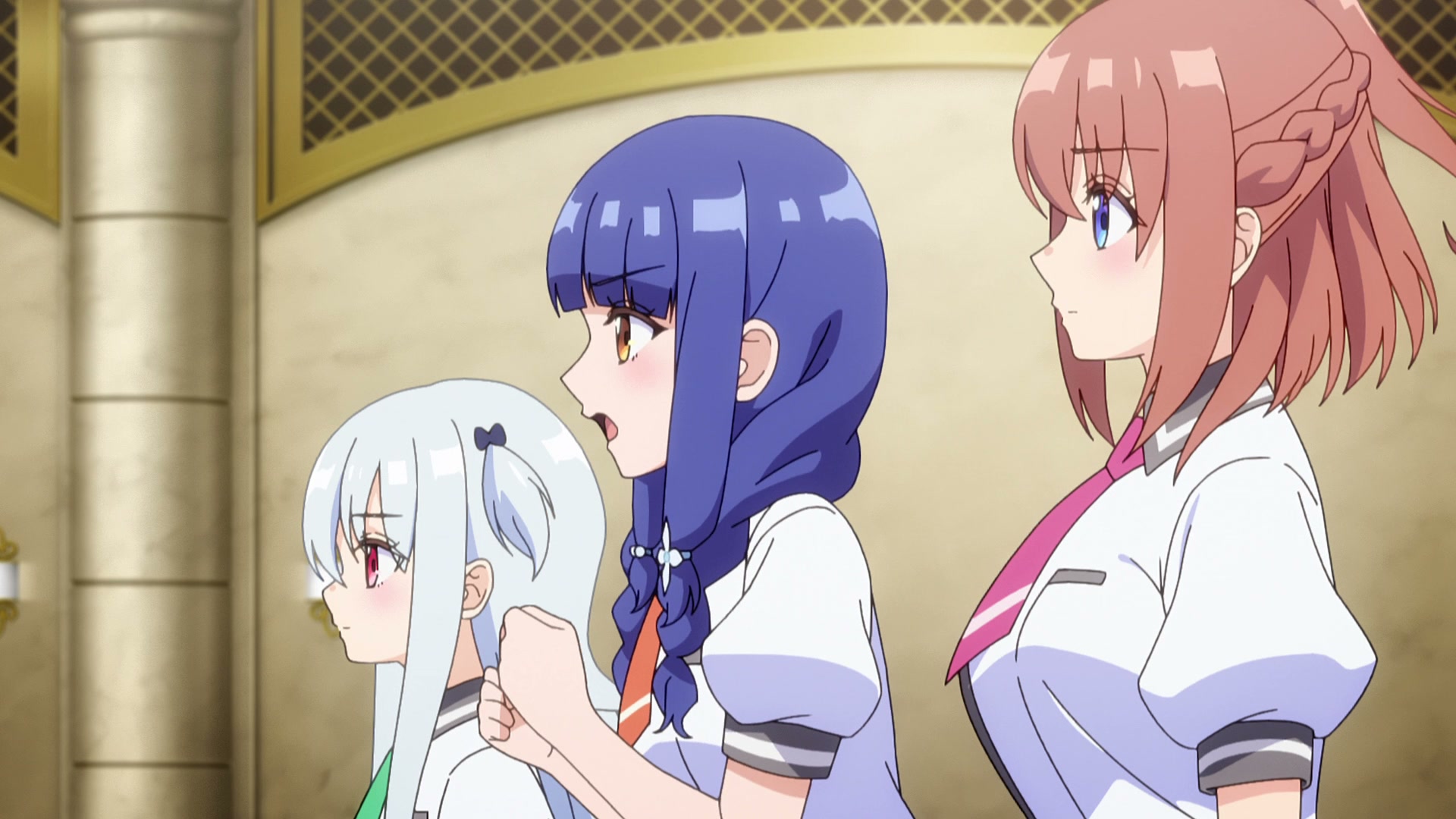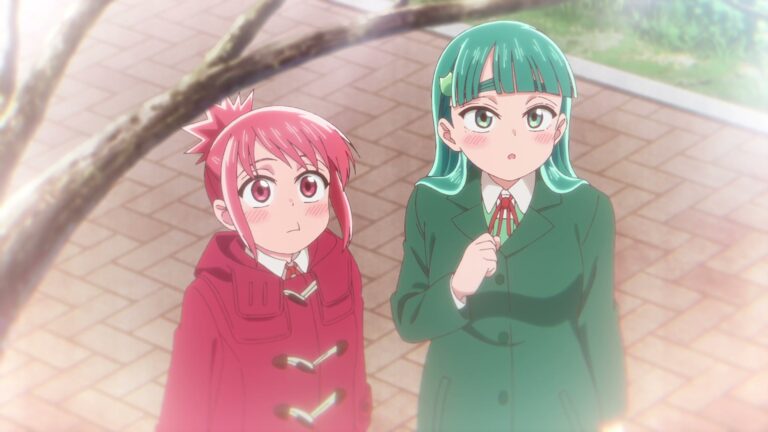







Introduction
There is a particular kind of warmth that the best slice-of-life anime can generate, a feeling like sinking into a kotatsu on a cold evening with a cup of something hot and a stack of manga nearby. Ichijouma Mankitsu Gurashi understands this feeling intimately. It is a series set almost entirely in and around a manga café that doubles as a dormitory, and it radiates the specific comfort of a space where you can be completely, unapologetically yourself. I went into this show expecting a light comedy about cute girls running a café. I came out of it genuinely moved by a story about guilt, self-worth, and the quiet courage it takes to accept that you deserve to be loved.
The premise is the kind of absurd setup that only anime can get away with. Morita Meiko, a country girl from Akita with no special talents and a large family back home that depends on her, receives a miraculous scholarship to the elite Amamiya Girls’ Academy in Tokyo. The catch, and there is always a catch, is that the dorm head, Amamiya Rie, has mistaken her for a rising star manga artist who happens to share the exact same name. Meiko, desperate and terrified, cannot bring herself to correct the error. She moves into Hedgehog, a combined manga café and dorm, and begins a life built on a lie that she is certain will destroy her the moment it is exposed.
What follows across eleven episodes is a masterclass in ensemble character writing, a comedy that knows when to be silly and when to be sincere, and a visual production that, while not pushing any technical boundaries, delivers exactly what it needs to with polish and heart. This is a series for anyone who has ever felt like a fraud in a room full of talented people, for anyone who has found family in unexpected places, and for anyone who just wants to watch four girls run a manga café while slowly becoming inseparable.
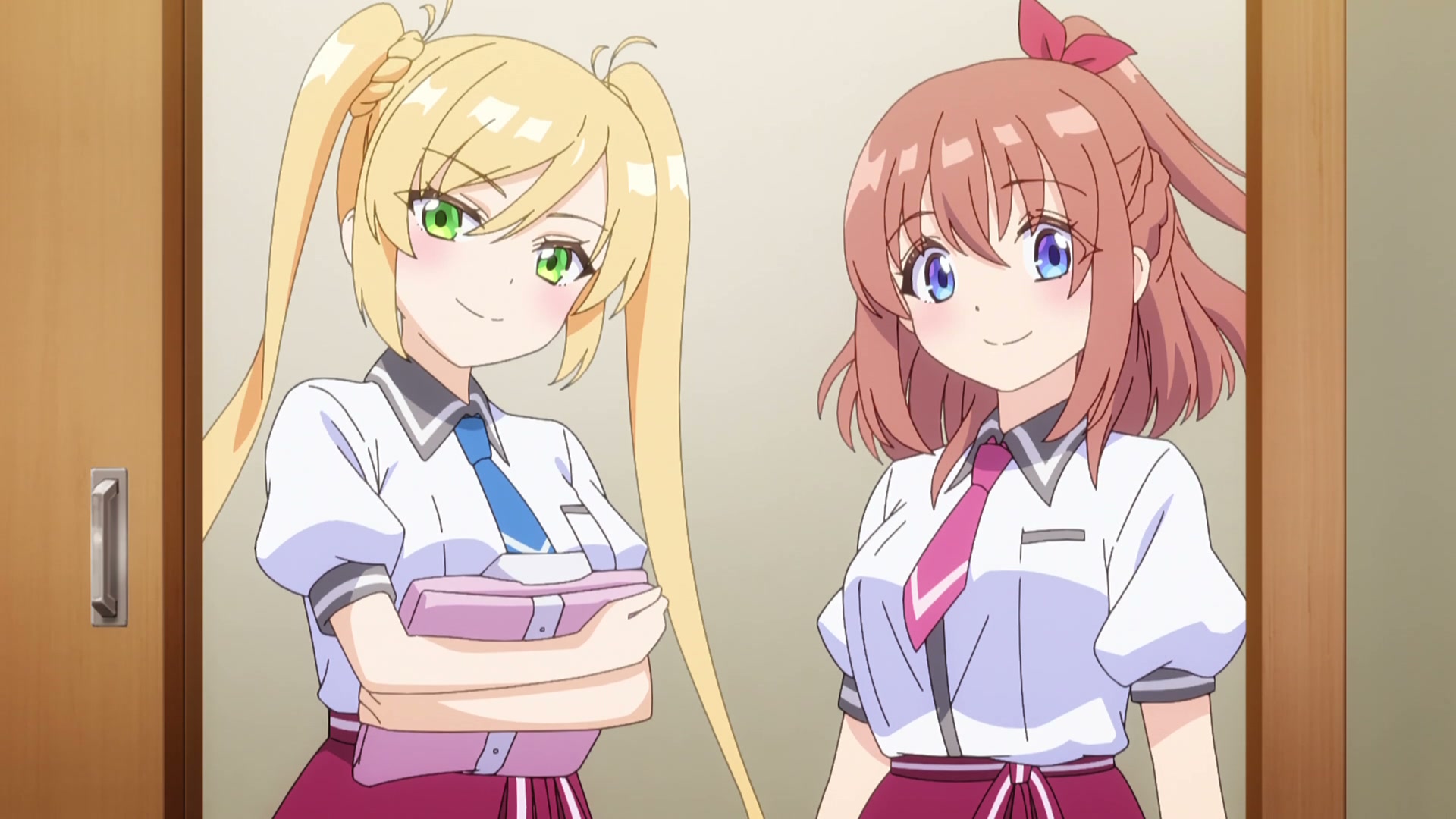

Story and Themes
The narrative structure of Ichijouma Mankitsu Gurashi is episodic in the classic slice-of-life tradition, with each episode containing a self-contained comedic or dramatic situation while the central misunderstanding about Meiko’s identity simmers in the background. The pacing is leisurely but never aimless. Early episodes establish the café’s routines, introduce the core cast, and layer in complications like the café’s massive debt and the arrival of Michika from the cat café downstairs. The middle stretch deepens the bonds through shared experiences, a trip to Guam, a study camp, a sports festival. The final arc brings the long-dreaded confrontation, as Meiko’s secret is exposed and she must finally reckon with the consequences.
What makes this structure work is the series’ commitment to emotional continuity. Meiko’s guilt does not disappear between episodes. It surfaces in small moments, a hesitation before accepting a gift, a panicked deflection when someone mentions manga, a quiet sadness when she watches her friends pursue their passions with confidence. The show trusts its audience to remember this undercurrent even when the surface is pure comedy.
The central theme is imposter syndrome, rendered with a specificity that suggests genuine understanding. Meiko is not merely insecure. She is living inside a misunderstanding that has materially improved her family’s life. The supermarket behind her house, the modern appliances, the money she sends home, all of it flows from Rie’s belief that she is supporting a genius manga artist. This makes Meiko’s guilt practical as well as emotional. She is not just afraid of being found out. She is afraid that the truth will take food off her siblings’ table. The series never treats this as melodrama. It is simply the reality of being poor and being given a chance you did not earn.
The resolution, when it comes, is not a punishment but an embrace. Rie’s tearful insistence that Meiko is a precious friend regardless of her identity reframes the entire preceding narrative. The misunderstanding was the catalyst for their meeting, but the bond they formed is real and independent of it. This is a profoundly kind message, that you do not need to be exceptional to be loved, that your presence in people’s lives is not contingent on your resume.
Found family is the other major thematic pillar. The Morita household in Akita is large, chaotic, and loving. Hedgehog becomes a second home that mirrors it. Both spaces are defined by a particular kind of warmth, the willingness to accept people as they are, mess and all. The series draws explicit parallels between the two, culminating in Rie’s visit to the Morita home in Episode 10, where she is overwhelmed by the sisterly bonding she never had as an only child. The note she leaves behind, thanking the family for letting her meet Meiko, is one of the quietest and most affecting moments in the show.
Otaku culture functions as a unifying force throughout. Rie’s manga obsession, Neo’s competitive gaming, Marika’s streaming, Michika’s cat devotion, Suzu’s historical appraisal, all of these are treated not as quirks to be mocked but as genuine passions that bring people together. The café is a sanctuary where these interests can coexist and cross-pollinate. A cat-loving tsundere can become friends with a samurai-speaking antique appraiser because they both appreciate a well-curated manga shelf. A hardcore gamer can find common ground with a lazy streamer because they both understand the pull of online communities. The series argues, gently but firmly, that shared enthusiasm is a form of love.
Wealth and class provide both comedy and subtext. Rie’s relationship with money is genuinely unhinged. She buys helicopters, expands the café on a whim, flies everyone to Guam, builds a supermarket behind the Morita house. These gags are funny because of their scale, but they also serve a narrative purpose. Rie’s wealth is never corrupting. She uses it to support her friends’ dreams and to create a space where everyone can belong. The contrast with Meiko’s poverty is stark but never cruel. The series suggests that money can facilitate kindness, and that genuine connection transcends economic disparity.
The rural-urban divide adds texture. Meiko’s wide-eyed wonder at vending machines, instant miso soup dispensers, and the electronics wonderland of Akihabara is played for gentle comedy, but it also grounds her character. She is not stupid. She is simply from a different world, and her perspective allows the series to defamiliarize the mundane aspects of city life that the other characters take for granted.
Symbolism is deployed with a light touch. The hedgehog itself is an apt mascot, a small creature that curls into a protective ball, spines out, but is soft underneath. The café functions the same way, a slightly prickly exterior that shields a warm interior. The bathhouse that appears in the final episode serves as a space of communal renewal, where the characters can be literally and figuratively naked with each other. Suzu’s ability to see the “aura” of value in objects is a literalized metaphor for the series’ core belief, that true worth is not always visible on the surface, whether in antiques, manga, or people.
Characters
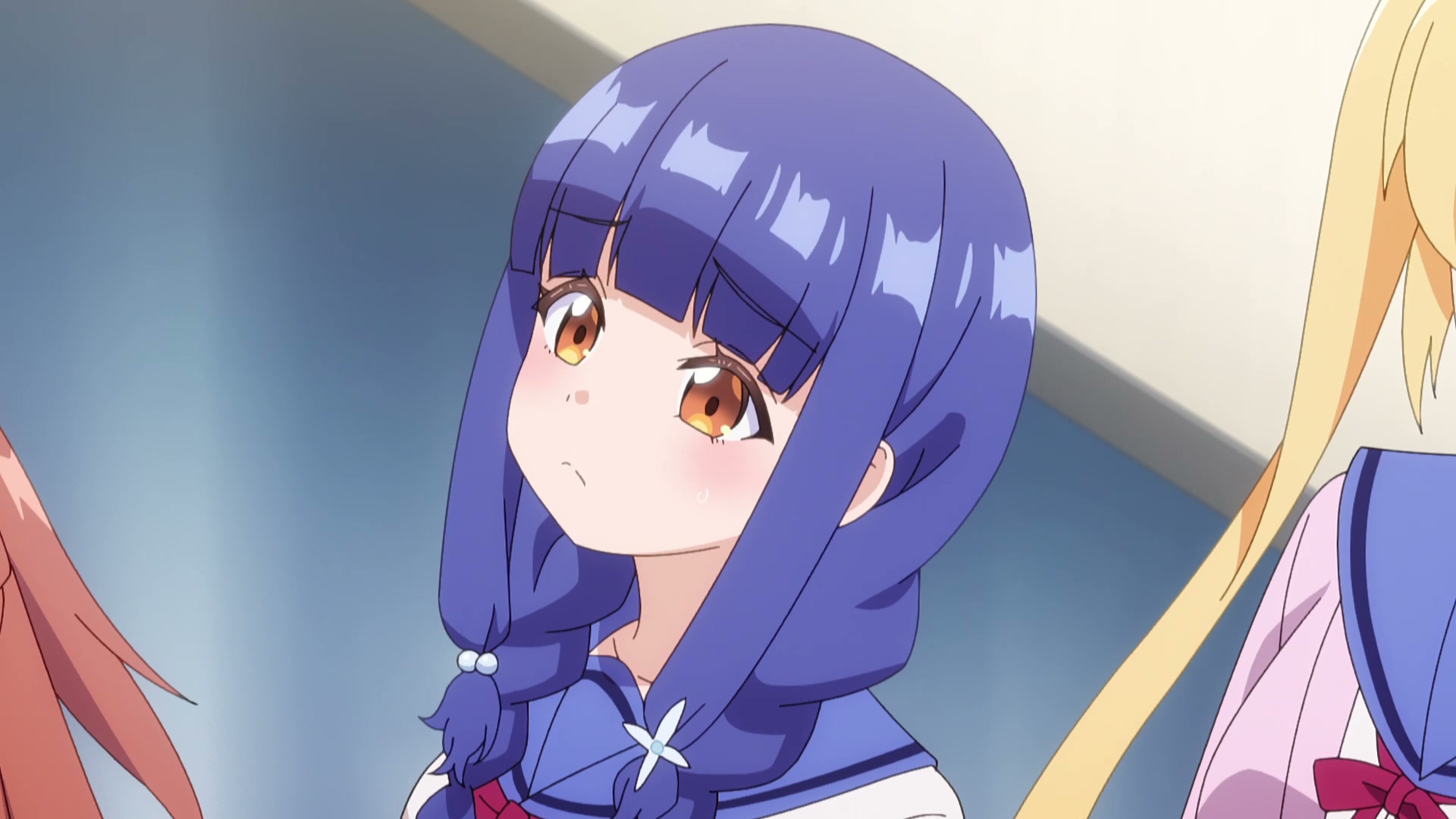
Morita Meiko is the emotional heart of the series, and her characterization is a careful balancing act. She could easily be a passive protagonist, a blank slate for the audience to project onto. Instead, she is defined by a very specific set of traits. She is maternal to a fault, having raised her younger siblings while her parents worked. She is hardworking, rising early to clean the café bathrooms and taking on extra shifts without complaint. She is deeply empathetic, attuned to the emotional states of those around her. And she is consumed by guilt, a low-frequency hum of anxiety that colors every kindness she receives.
Her arc is a slow journey toward self-acceptance. Early episodes show her deflecting praise, panicking when asked to draw, and feeling out of place among her talented friends. The turning point comes in Episode 4, during the Guam trip, when Michika compares her to a motherly cat named Himawari. This reframing, that her nurturing nature is itself a rare and valuable gift, does not immediately solve her problems, but it plants a seed. The final confession in Episode 11 is the harvest. When she tearfully tries to leave, offering to repay everything, and Rie stops her, Meiko finally allows herself to believe that she belongs.
Amamiya Rie is a deceptively complex character. On the surface, she is the classic ojou-sama airhead, an heiress with a broken sense of money and an all-consuming passion for manga, especially BL and doujinshi. She makes impulsive decisions on a massive scale and treats them as perfectly normal. But beneath this is a lonely only child who has filled her life with manga because she had no siblings to play with, and a young woman who genuinely wants to prove herself as a capable successor to her mother. Her patience with Meiko’s supposed “creative slump” reveals a perceptiveness that her bubbly exterior masks. She noticed Meiko was not drawing manga. She simply chose to wait, trusting that Meiko would tell her the truth when she was ready. That patience is a form of love.
Suzuki Marika is a chaos agent with hidden depths. As Mariika Bell Tree, she is a popular streamer known for accidental panty shots, late-night ramen cooking, and bizarre drink combinations. She is lazy, exhibitionistic, and prone to dragging her friends into her schemes. But she is also the heiress to the Suzuki School of Ikebana, and her family disapproves of her streaming career. Her chaotic persona is a form of rebellion, but it is also a genuine expression of self. The Gao arc in Episode 9 forces her to articulate this. When her stalker-turned-rival tries to “purify” her and return her to an old magical-girl persona, Marika refuses. She likes who she is now, mess and all. It is a surprisingly mature moment of self-acceptance, and it lands because the series has spent eight episodes showing us exactly who that person is.
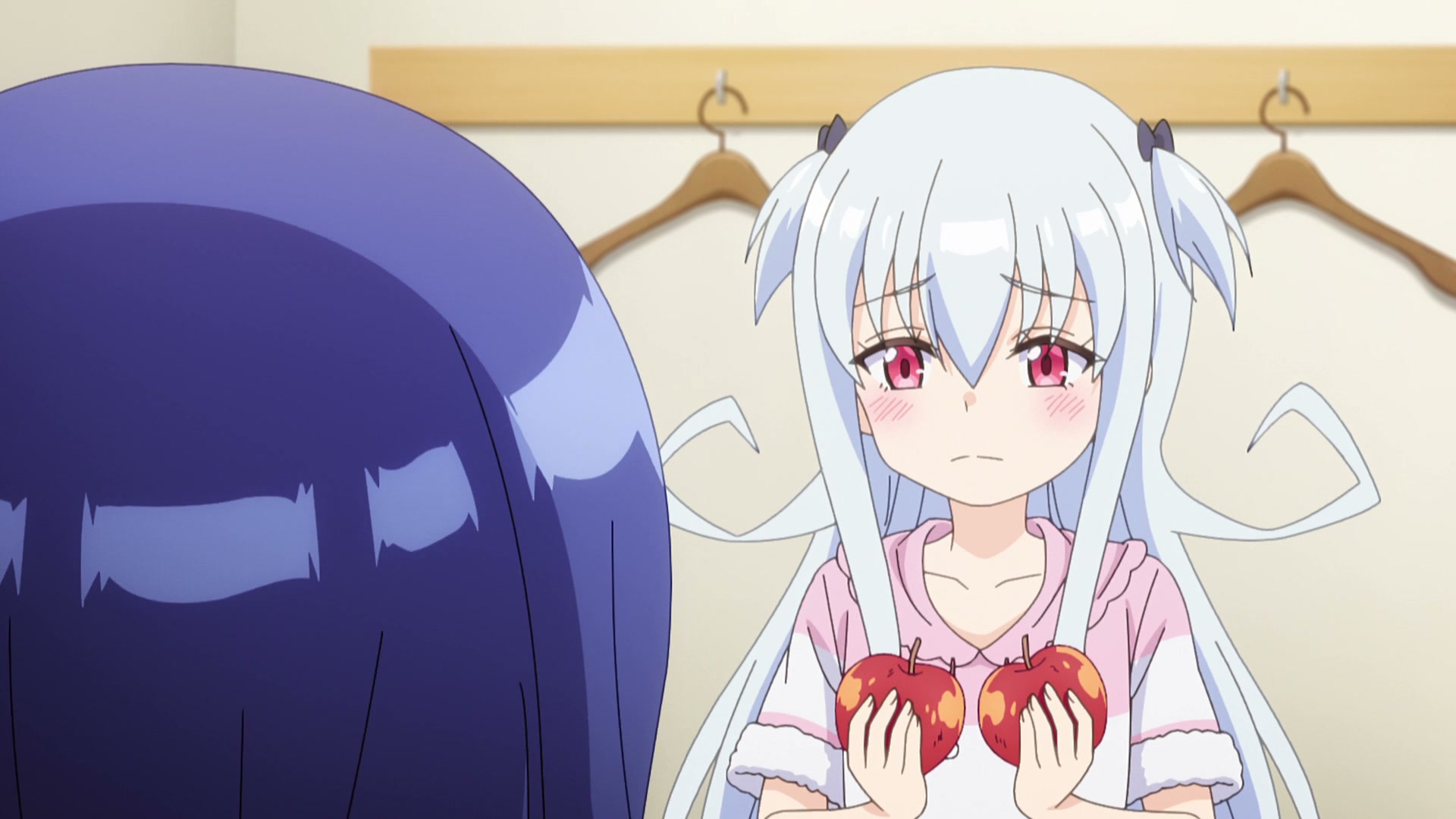
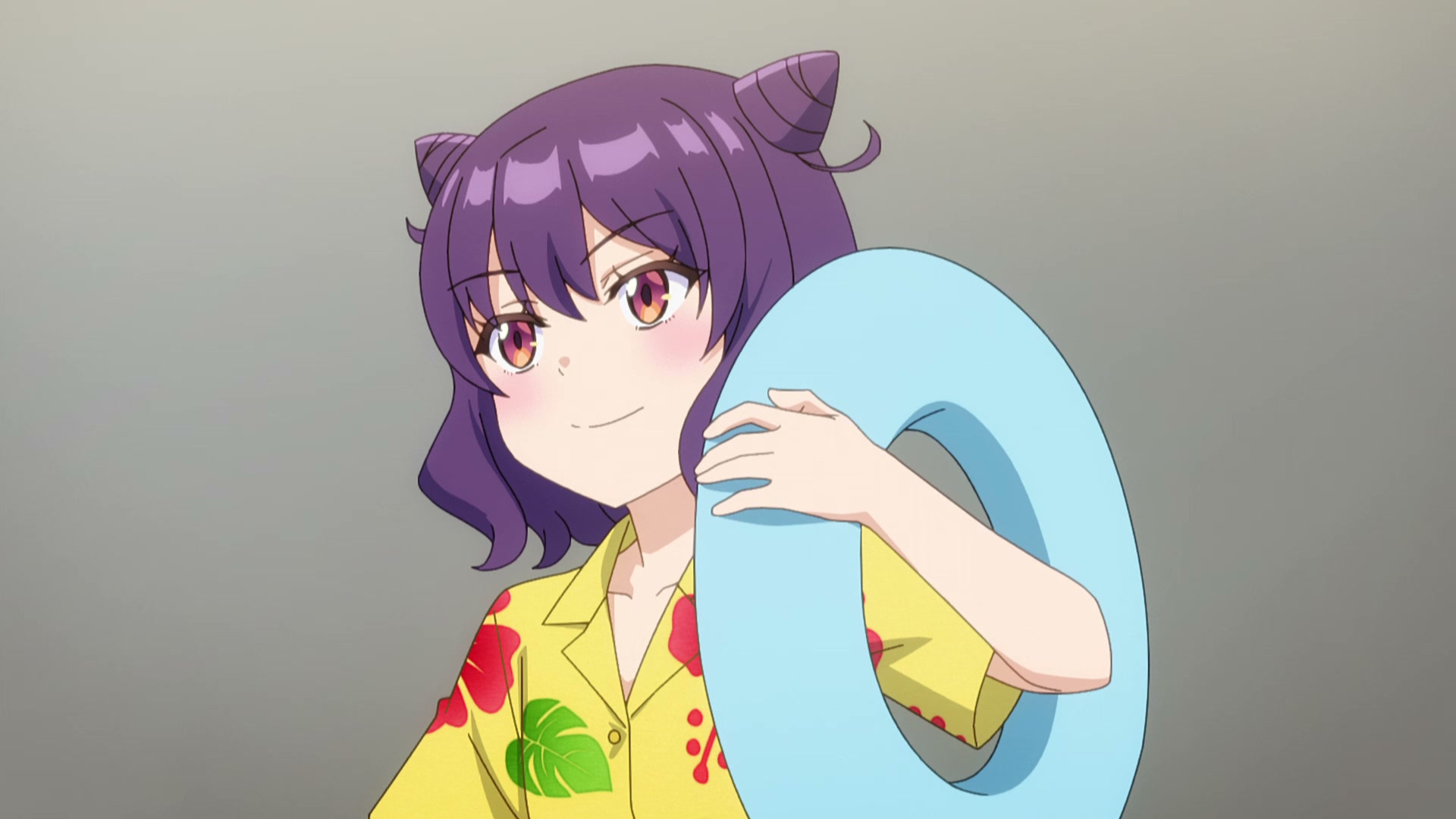
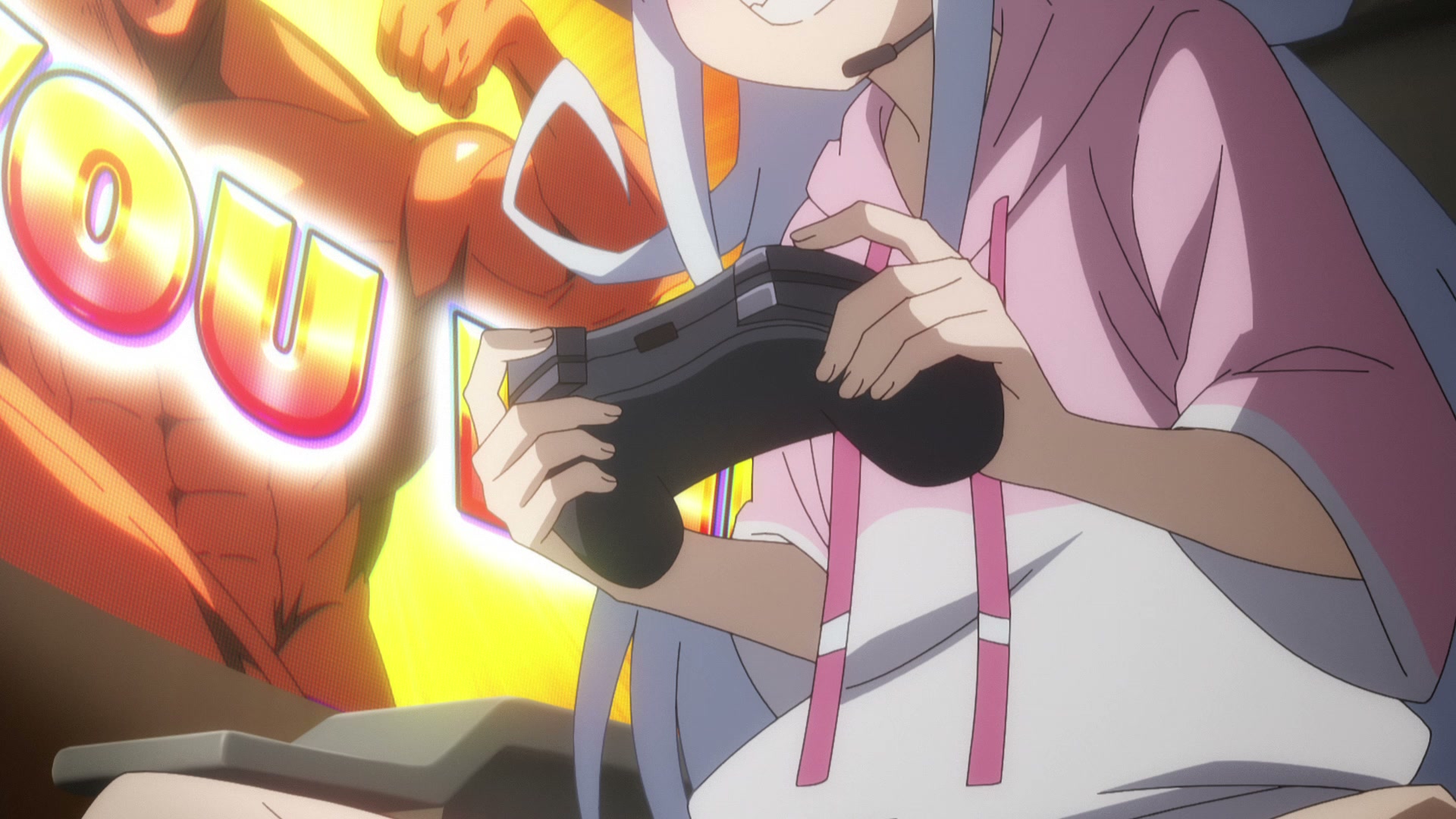
Nakano Neo is a study in contrasts. She is tiny, soft-spoken, and looks much younger than her age, leading everyone to treat her like a child. She is also a ferocious competitive gamer who will trash-talk opponents with phrases like “I’ll crush you, you lowly insects” and who trains her grip strength by crushing apples. This duality is not a contradiction. It is a full identity, and Meiko’s easy acceptance of both sides, “I love both,” she says after witnessing Neo’s gaming persona, is a pivotal moment of validation. Neo’s quiet devotion to Meiko, expressed through actions rather than words, is one of the series’ most consistent emotional threads.
Narumi Michika is the tsundere cat lover whose arc is a slow, reluctant thaw. She arrives as an antagonist, accusing Hedgehog of stealing her cat café’s space, and gradually reveals a deeply caring heart buried under layers of prickliness. Her conversation with Meiko on the Guam beach is a rare moment of unguarded sincerity, and her participation in the Marika rescue demonstrates that her loyalty, once earned, is absolute. She will complain the entire time, but she will show up.
Gouda Majikaru Momorin, who prefers Suzu, is the eccentric observer. Her ability to see the “aura” of value in objects is a literalized superpower that serves the series’ themes. She can tell real antiques from fakes, rare manga from reprints, and even sense emotional states, the “pink aura” of desire around Marika’s camera, the “gentle aura” of Michika’s chosen manga. Her own minor conflict, embarrassment over her kira-kira name, is resolved quickly by the group’s easy acceptance, reinforcing the show’s ethos.
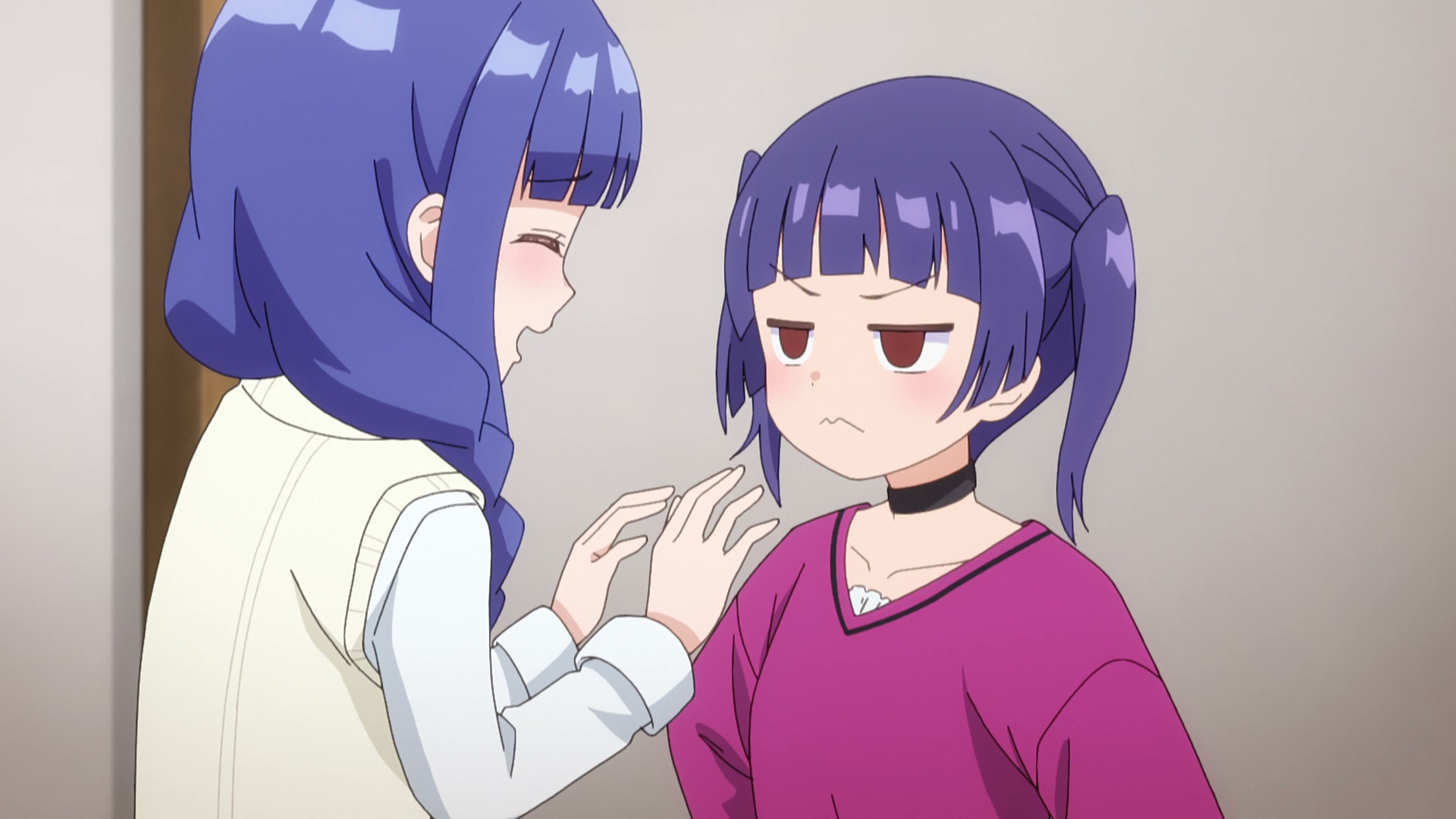
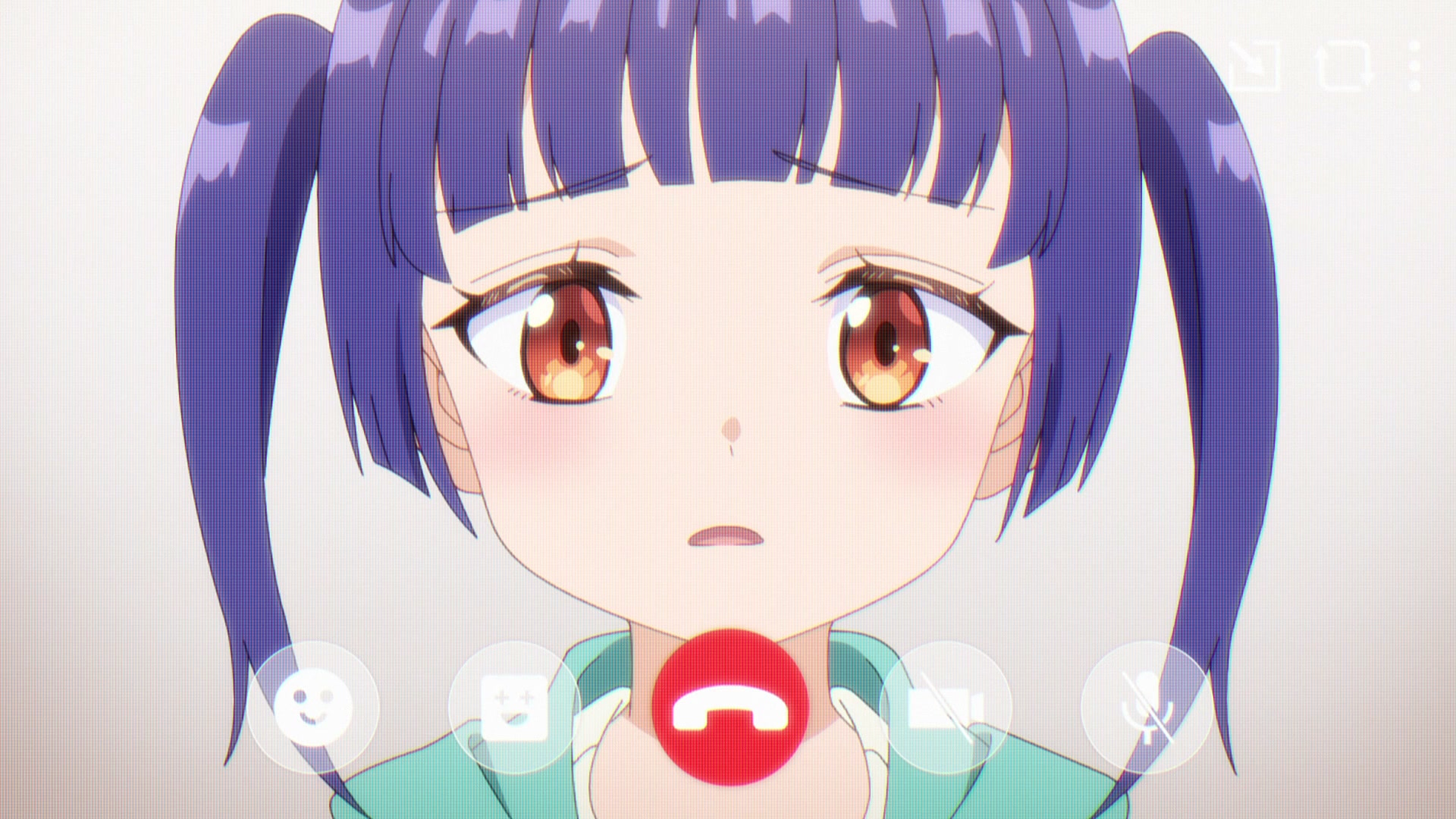
Morita Miori, Meiko’s younger sister, is the hidden linchpin of the entire plot. Her decision to use “Morita Meiko” as a pen name for her secret manga career set the central misunderstanding in motion. She is outwardly brusque and critical of her sister, but her actions reveal deep love and admiration. She manages the household in Meiko’s absence, goes to elaborate lengths to welcome Rie, and tearfully admits at the train station that she will miss her sister. The revelation of her secret in Episode 11 is not a betrayal but a relief, a chance for both sisters to finally be honest.
The supporting cast, Gao the obsessive foreign streamer, Beruna her hyper-competent maid, the younger Morita siblings, the various café regulars, all serve to flesh out the world and provide mirrors for the main characters’ conflicts. Gao’s parasocial obsession with Marika’s old persona is a darker reflection of Rie’s initial fandom. Beruna’s clinical competence contrasts with Meiko’s warm caretaking. The series is generous even to its antagonists, allowing them moments of humanity and paths toward integration.
Visuals and Animation
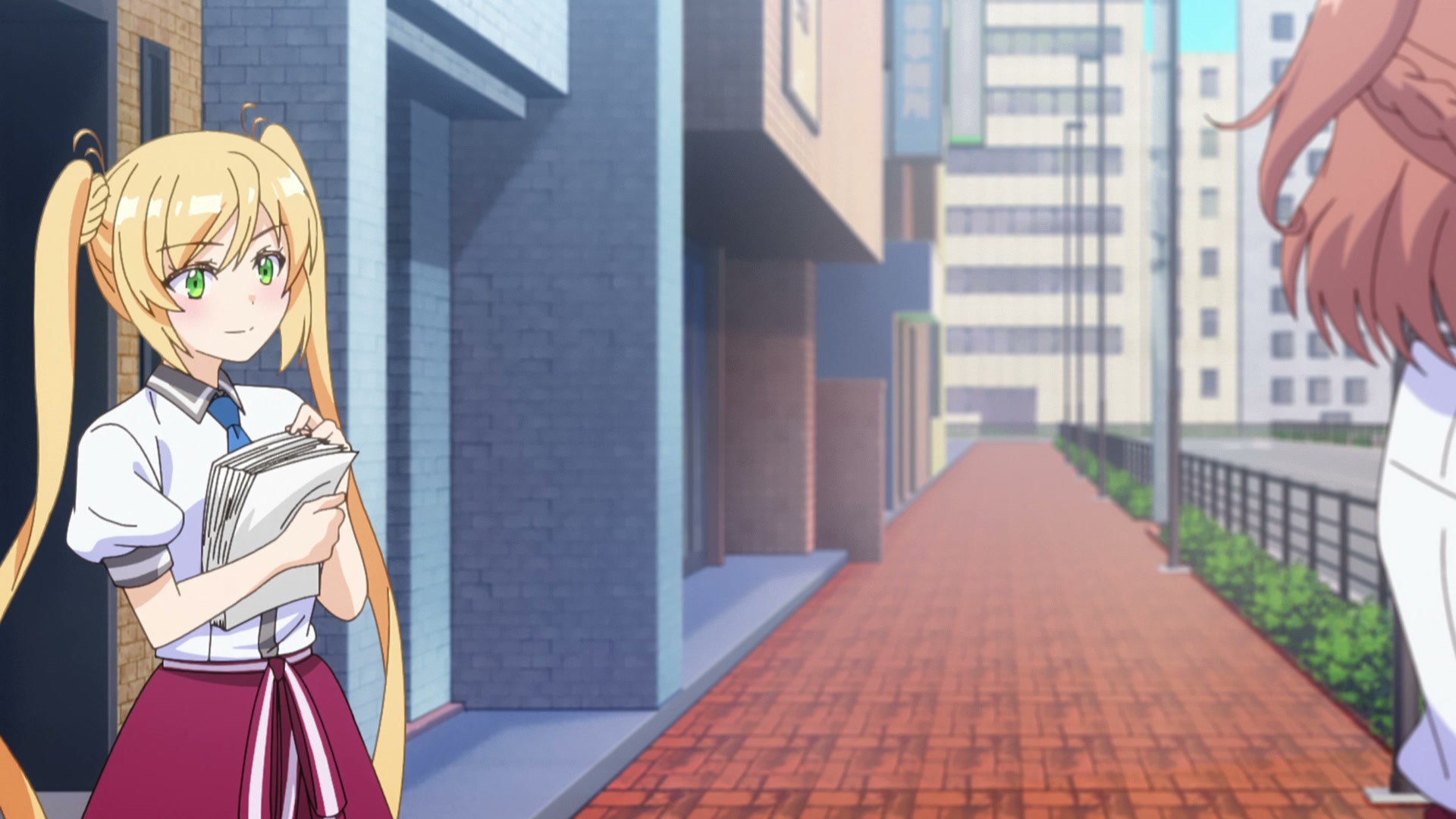
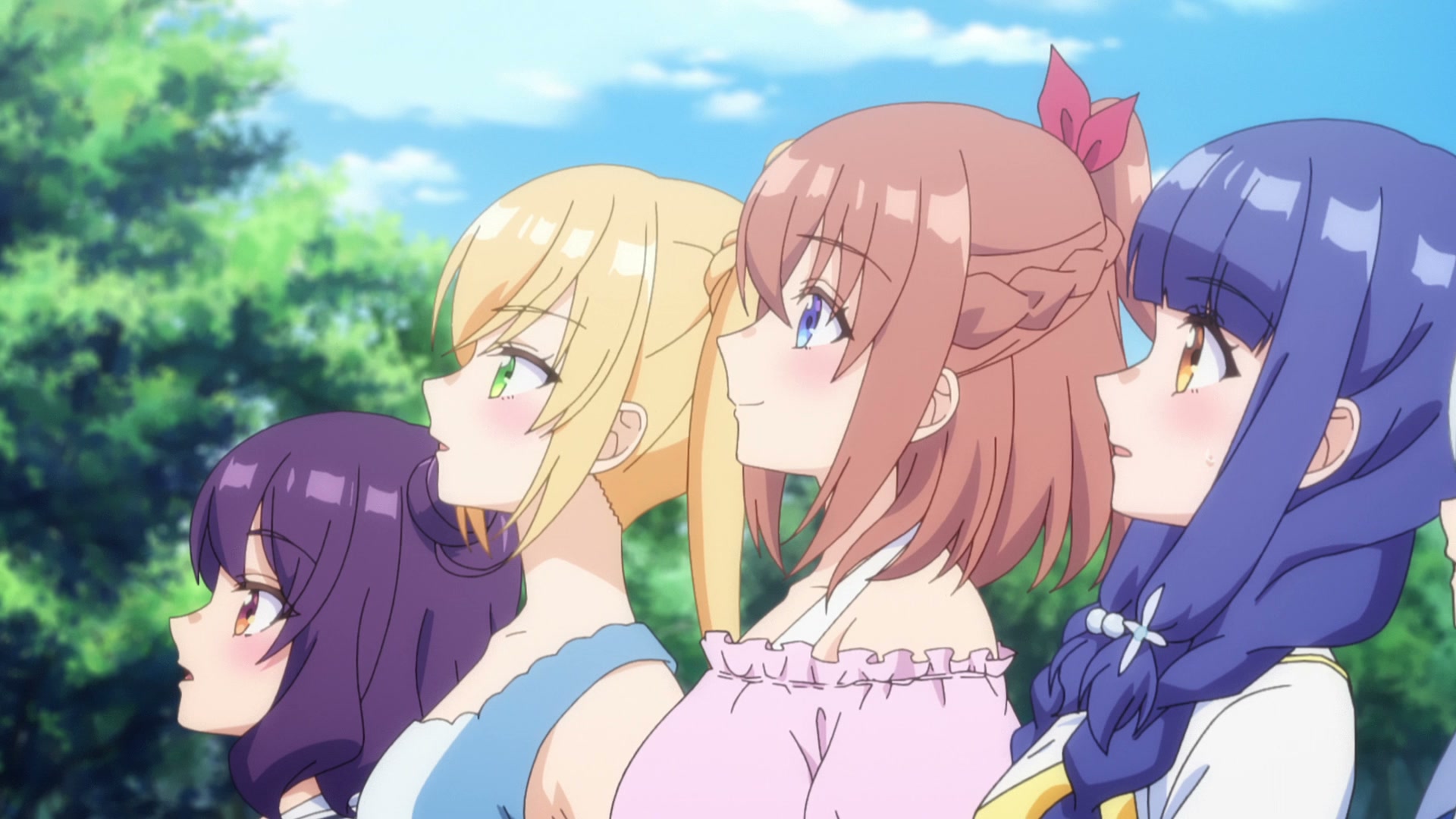
The visual presentation of Ichijouma Mankitsu Gurashi is a polished example of the contemporary moe aesthetic. It does not push boundaries or attempt cinematic experimentation, but it executes its chosen style with consistency and charm. The color palette is bright and saturated, favoring warm tones that create a cozy, inviting atmosphere. Heavy use of bloom filters and golden-hour lighting gives many scenes a dreamy, soft-focus quality that matches the series’ emotional register.
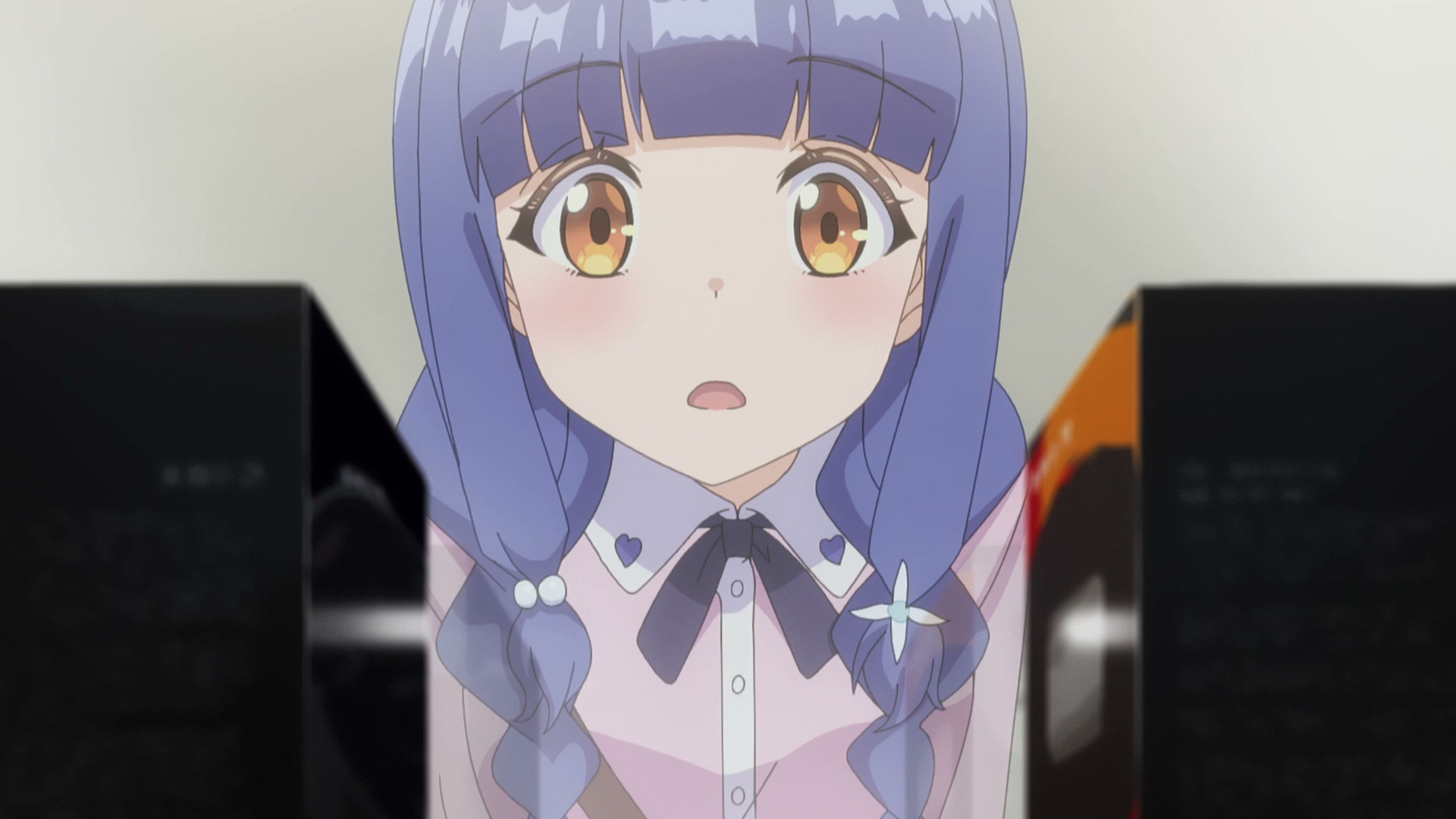
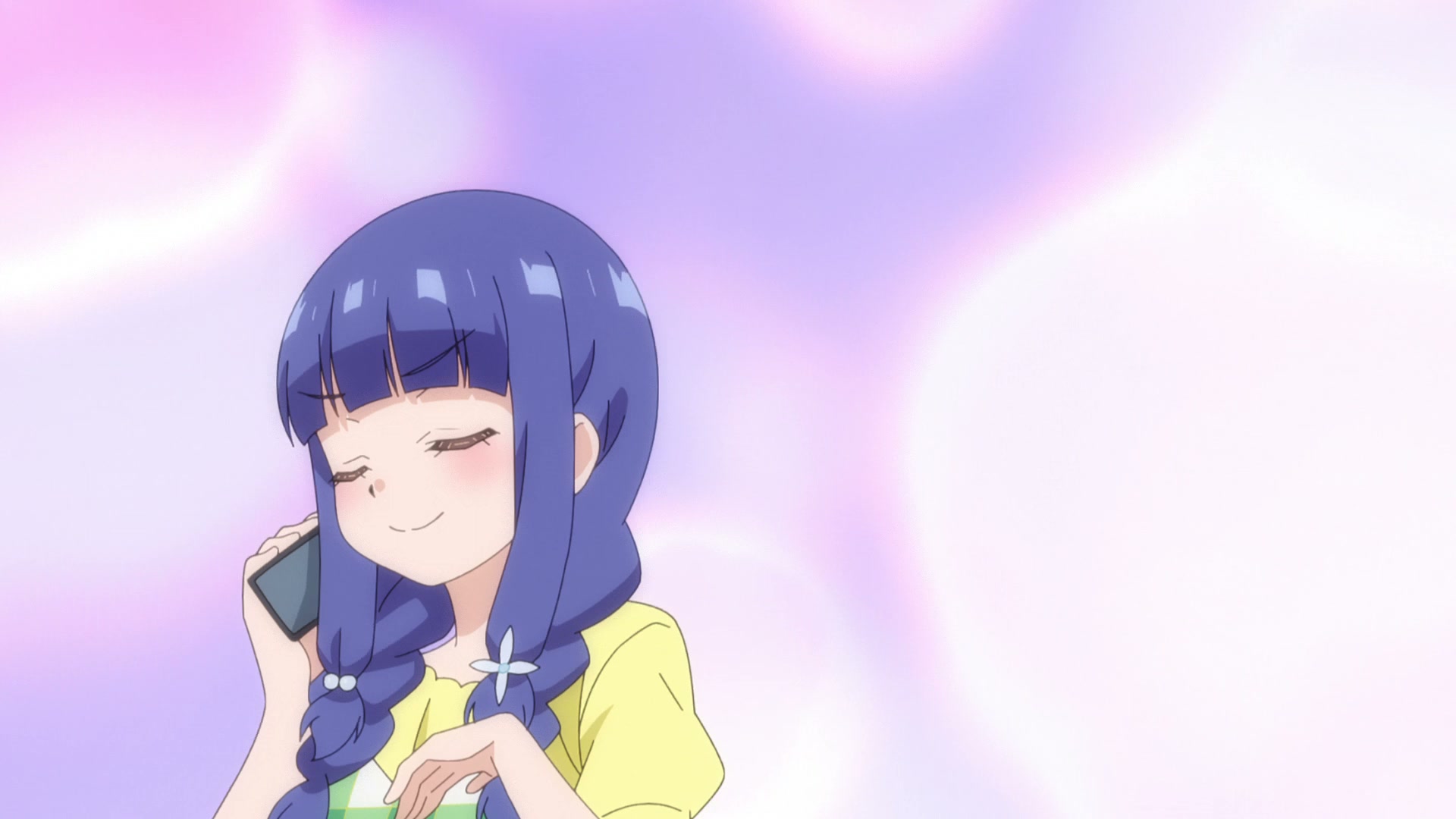
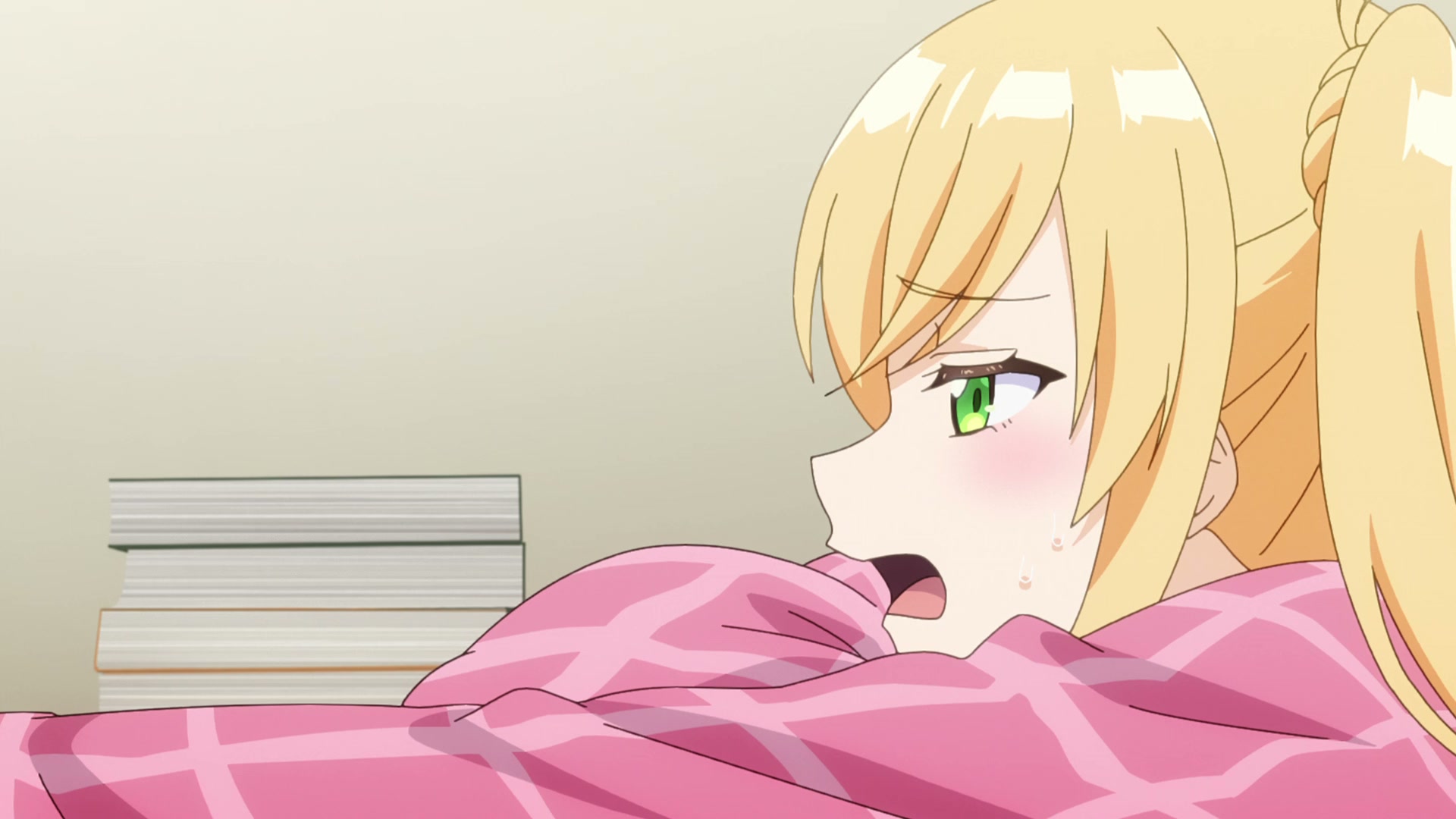
Character designs are the clear priority. The linework is thin and clean, and the faces are rendered with particular attention to the eyes. Irises feature multi-tonal gradients and layered catchlights that draw focus during close-ups and allow for subtle emotional shifts, a softening of the gaze, a sparkle of excitement, a dulling during guilt. This is especially effective for Meiko, whose internal turmoil is often unspoken and must be conveyed through expression alone.
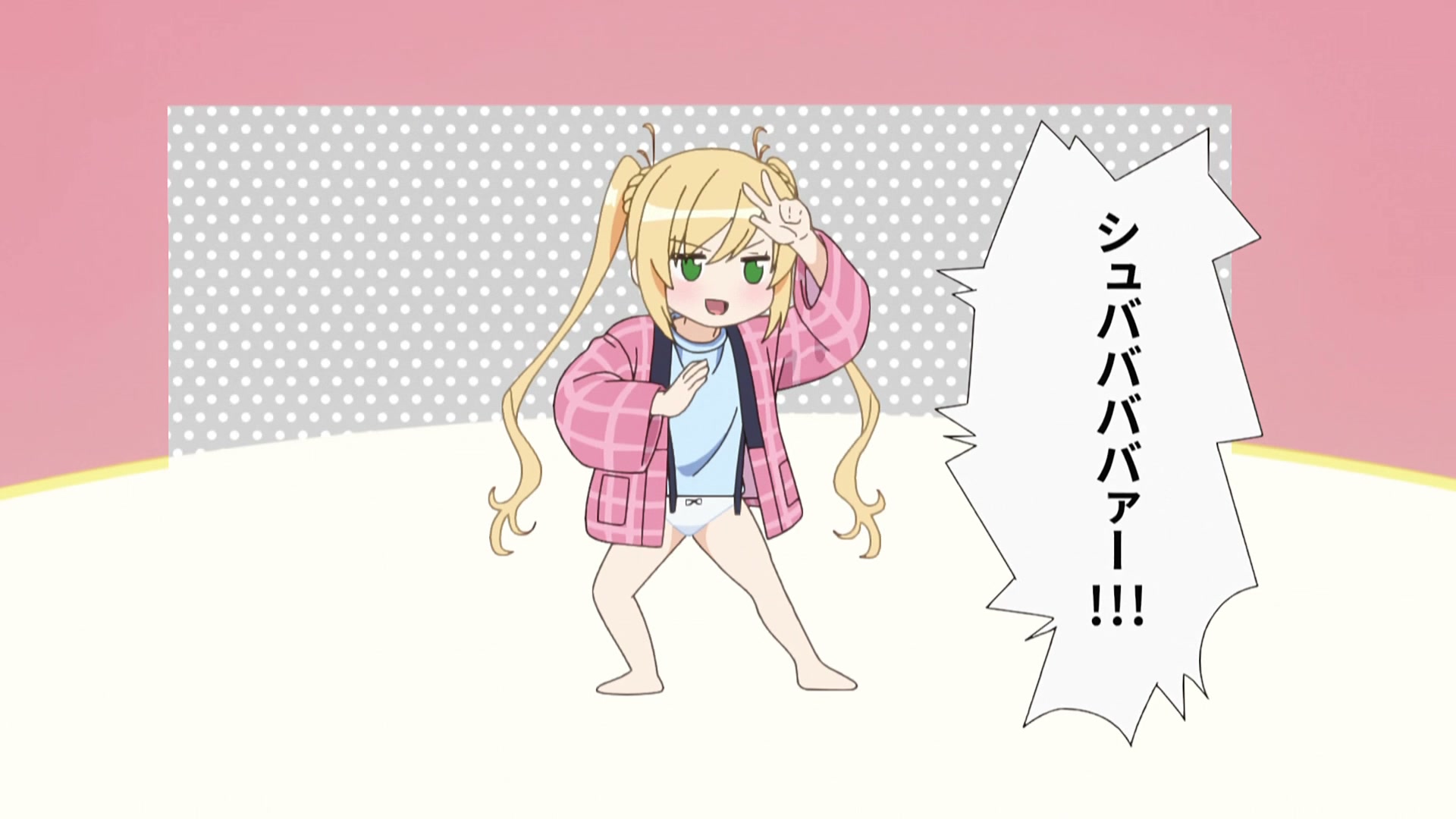
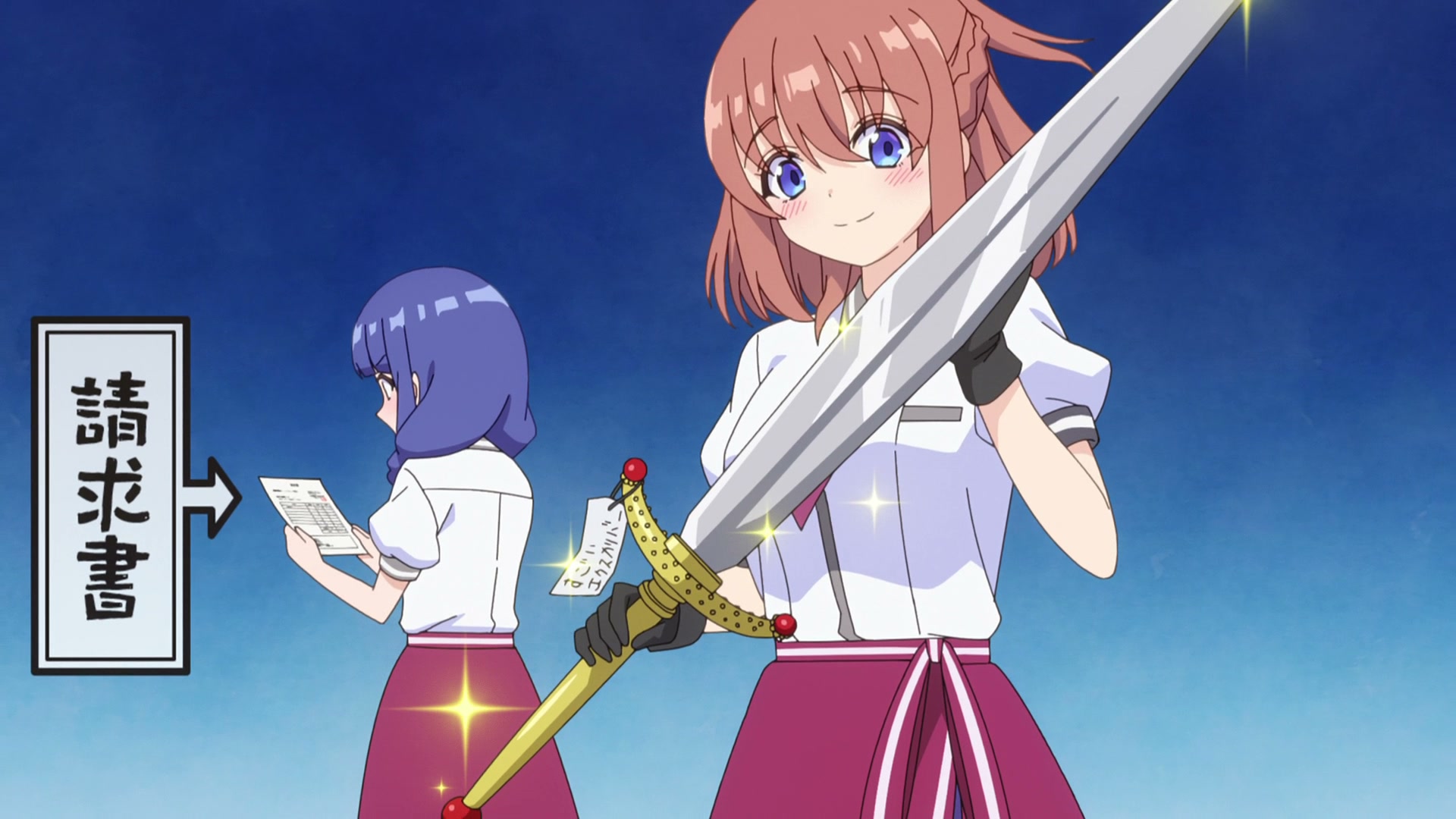
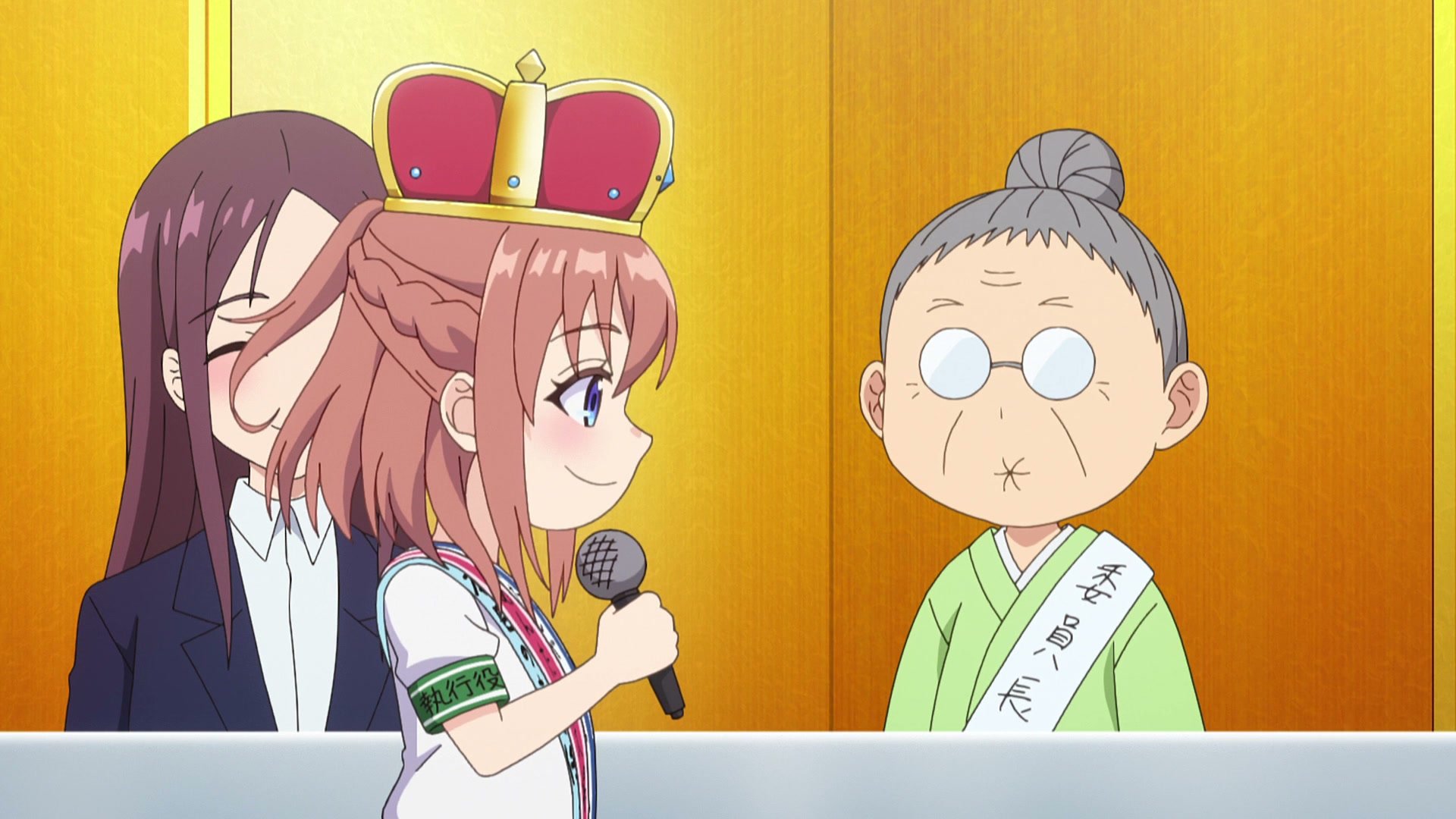
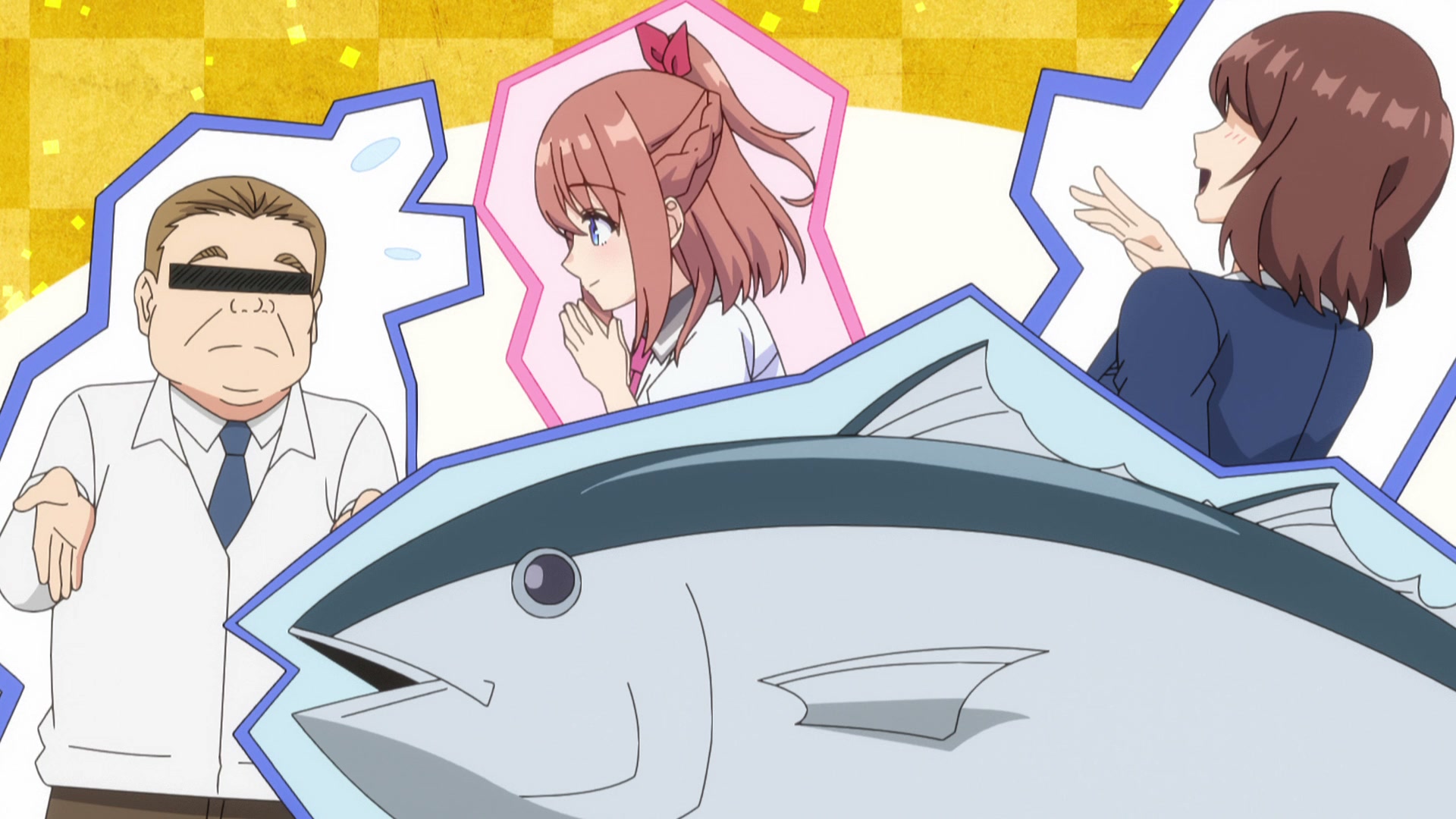
The series demonstrates impressive stylistic versatility. It frequently shifts into chibi, or super-deformed, comedy cuts with thicker lines, simplified features, and abstract backgrounds featuring jagged borders or checkered patterns. These shifts are deployed with good comedic timing and prevent the dialogue-heavy scenes from becoming visually static. The visual shorthand of anime comedy, sweat drops, blush lines, wide-eyed shock, floating emoji-like symbols, is used effectively and feels like a natural part of the show’s language.
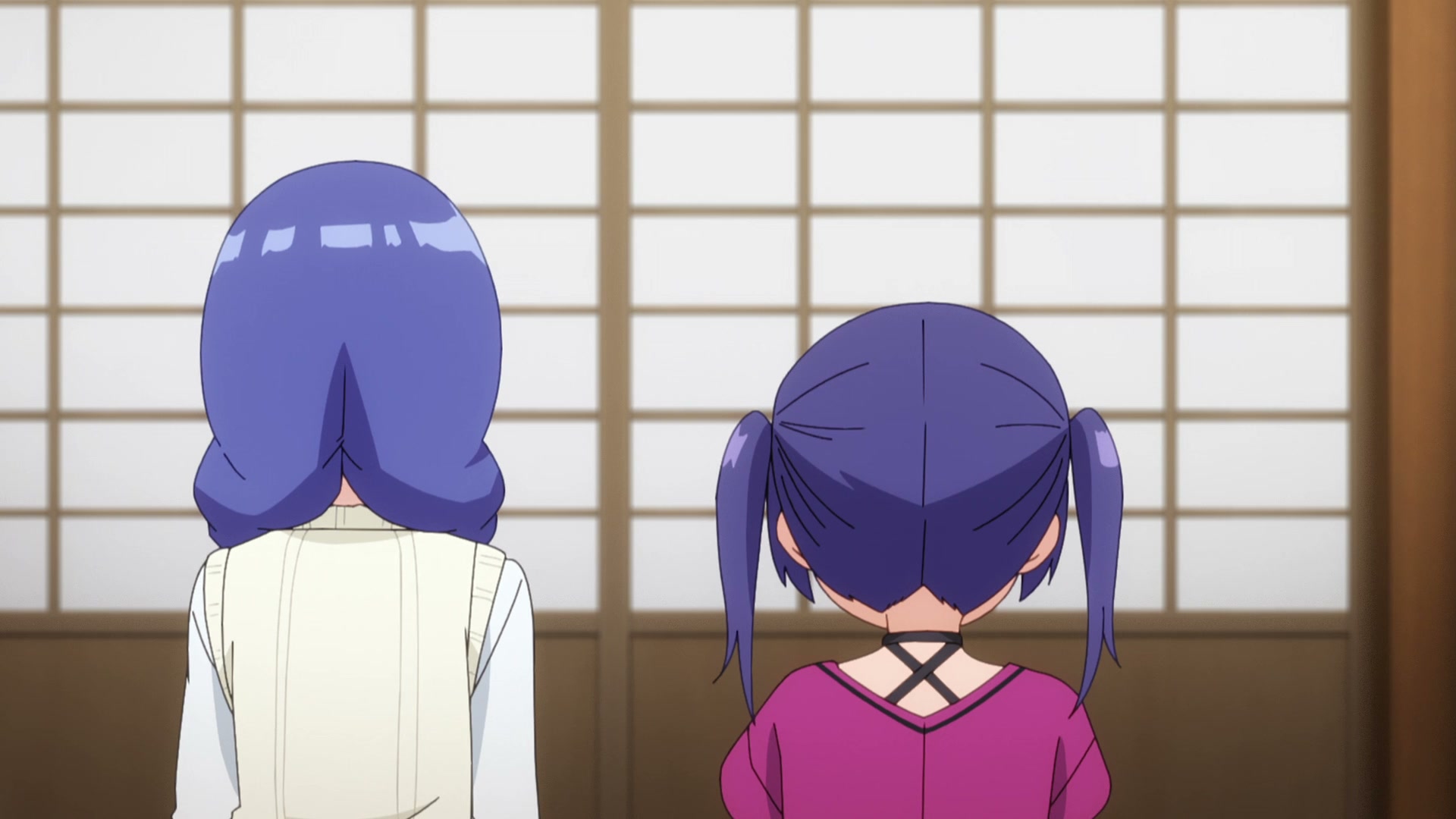
Body language differentiates the cast clearly. Meiko bows deeply and flails in panic. Neo clings and pats. Marika sprawls and drapes herself over furniture. Rie gestures grandly. Michika crosses her arms and looks away. This physical vocabulary makes ensemble scenes readable and lively even when the animation itself is limited.
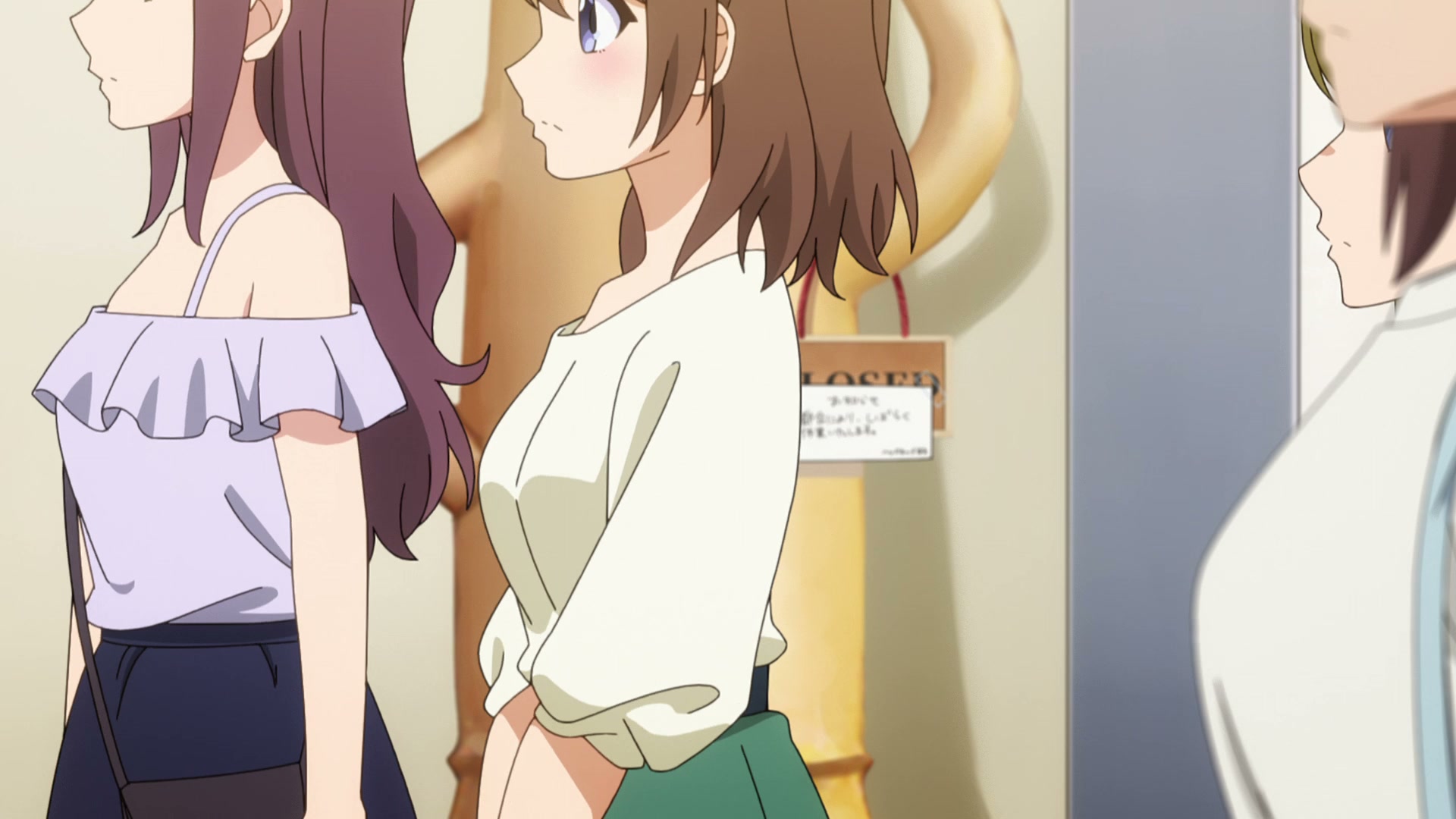
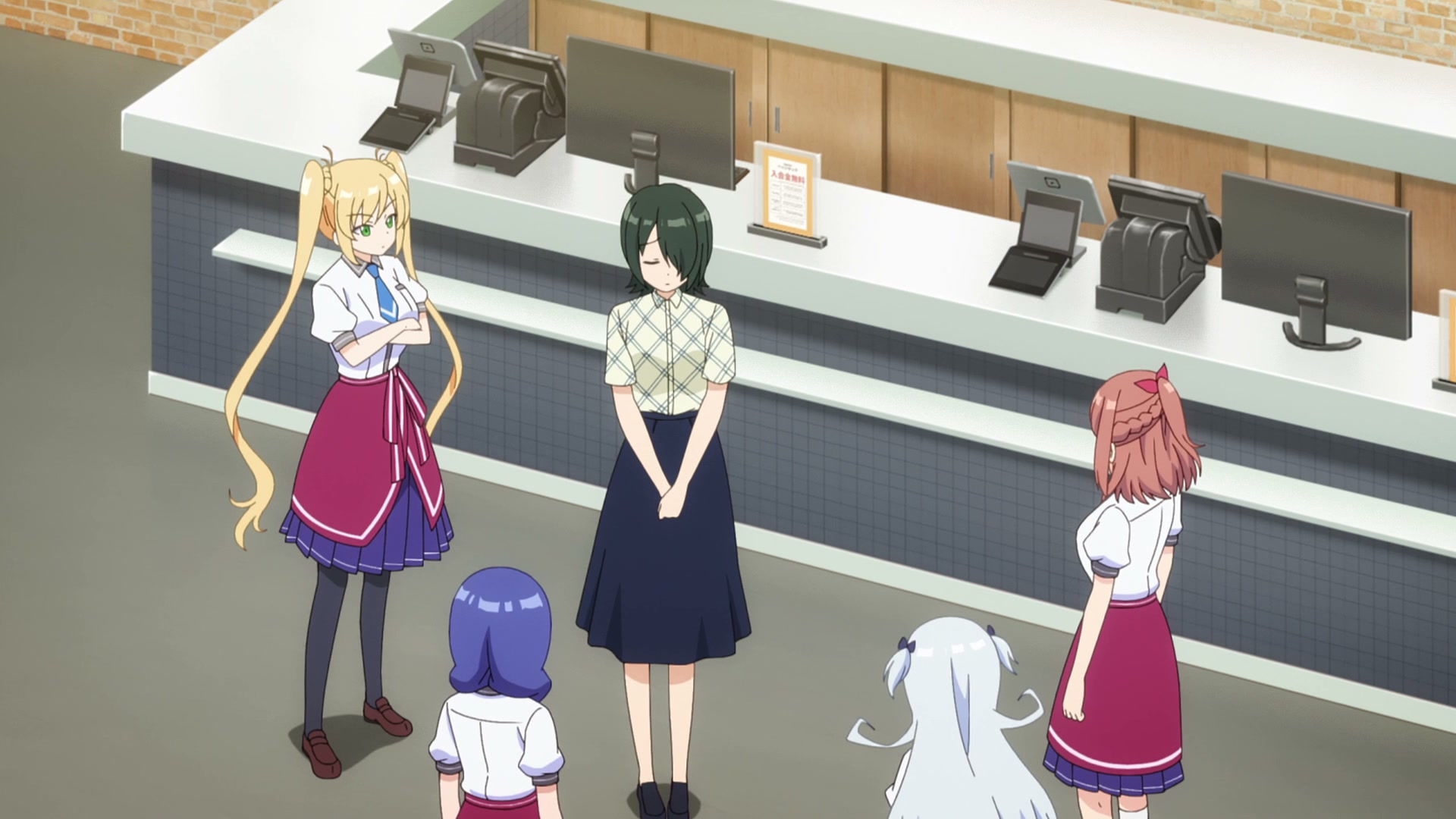
The animation is where the budget constraints are most visible. As a dialogue-driven slice-of-life, many scenes are intentionally static, characters talking in booths, sitting around a kotatsu, standing at the café counter. This fits the cozy, low-key tone and is not a flaw in itself. The issue arises when the stillness feels less like a stylistic choice and more like a limitation. In some medium shots, character movements like turning heads or gesturing can appear stiff, with minimal in-between frames. Lip flaps occasionally drift out of precise sync, though this is common in TV anime.
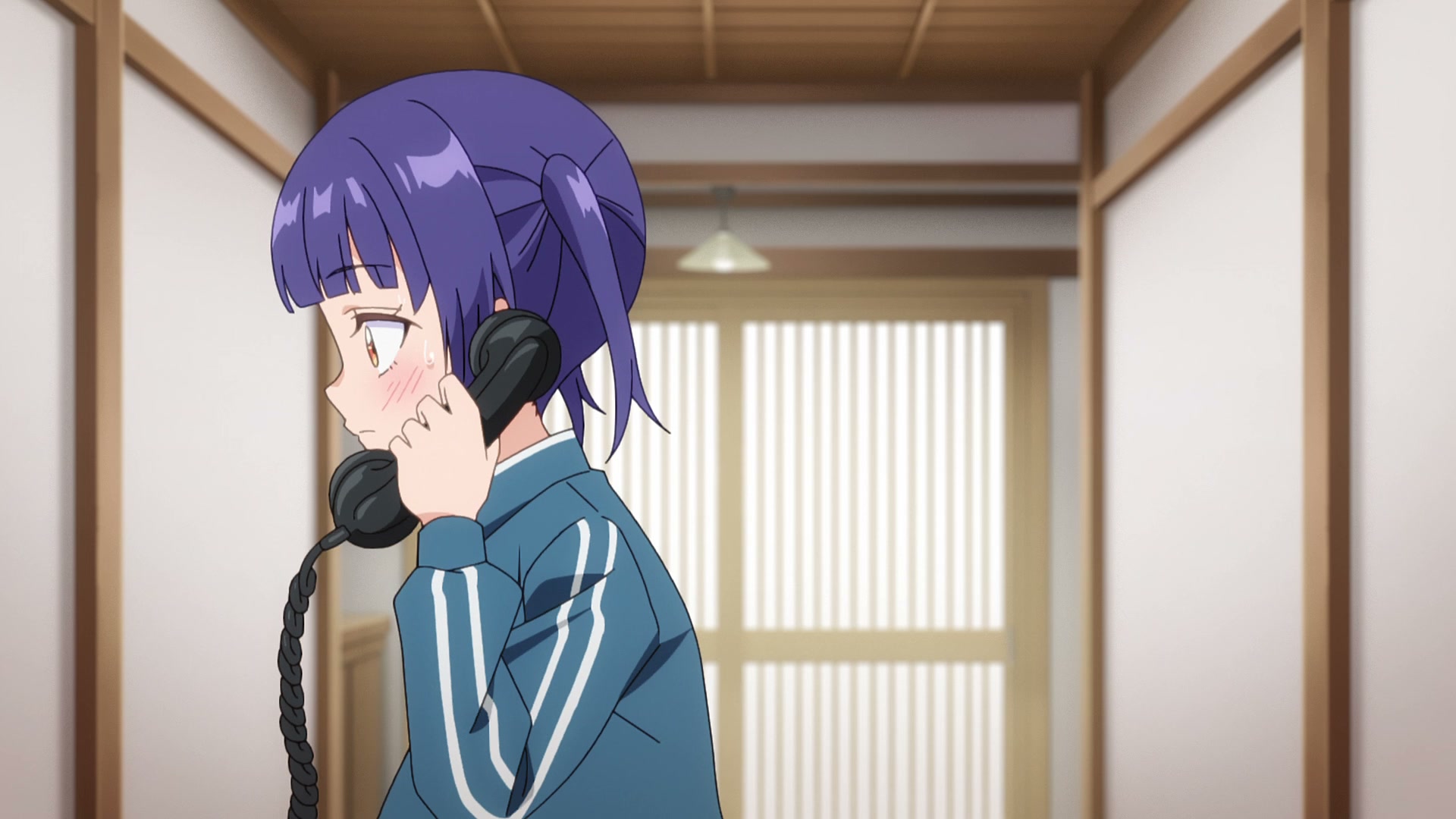
Compositing can feel flat at times. Characters occasionally appear to sit on top of the background rather than being fully integrated into the space, noticeable in hallway scenes or when multiple characters occupy a detailed room without casting appropriate shadows. Action sequences, primarily gaming scenes, are represented through speed lines, screen shake, and flashy UI overlays rather than fluid character animation. This is a budget-conscious choice that works for the comedic tone but leaves action fans wanting.
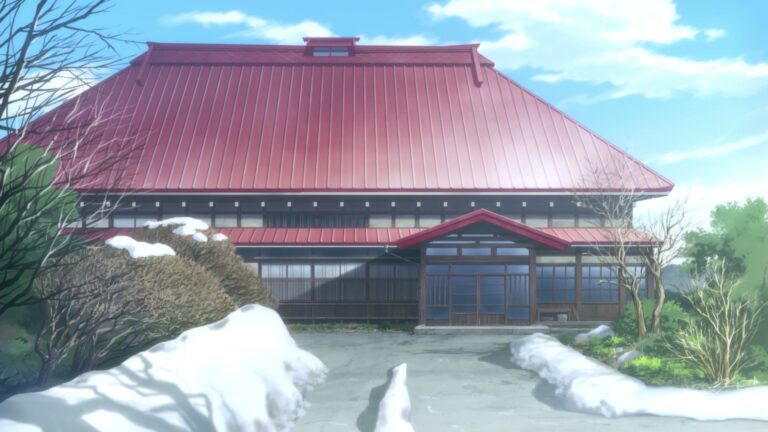
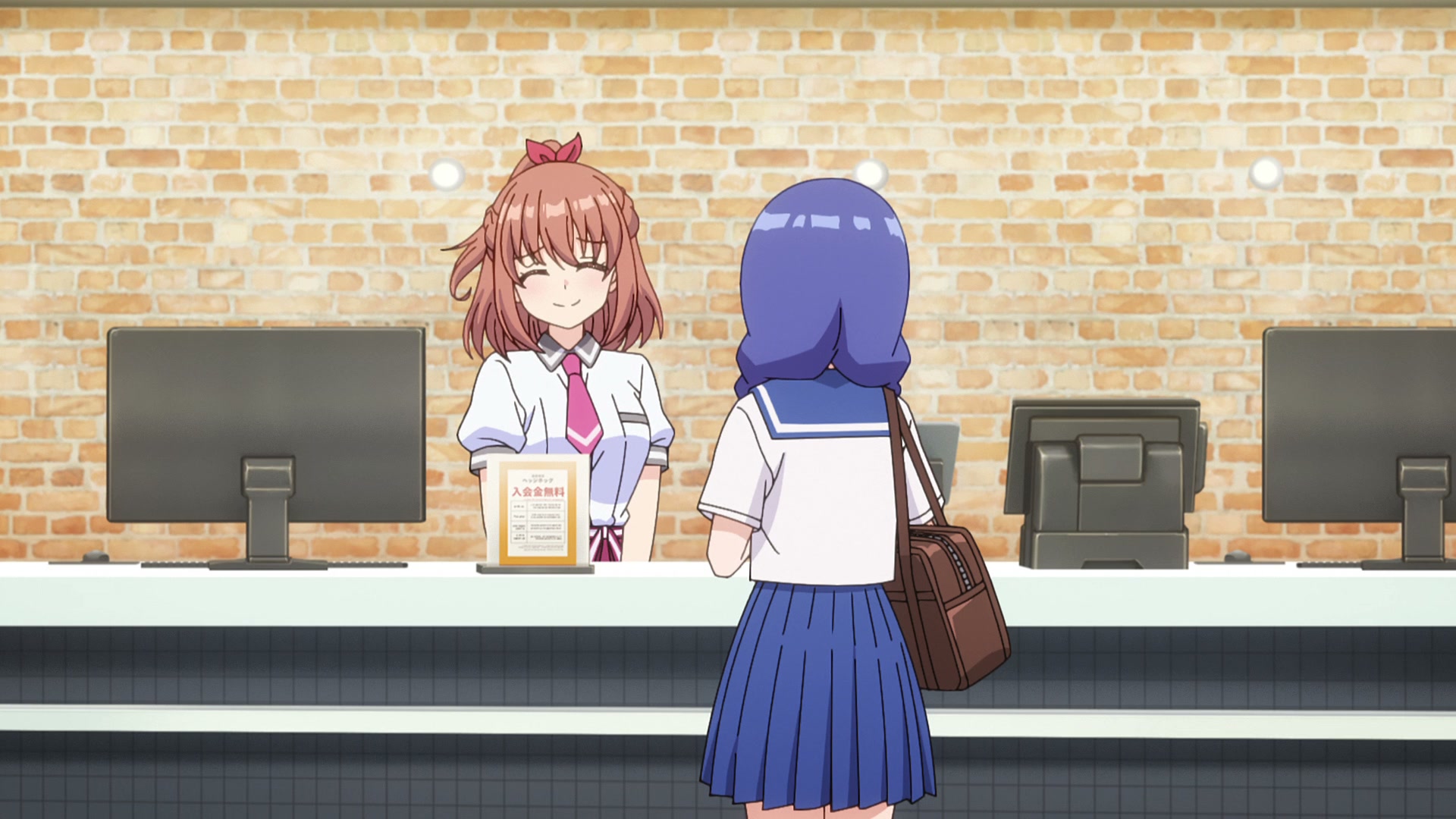
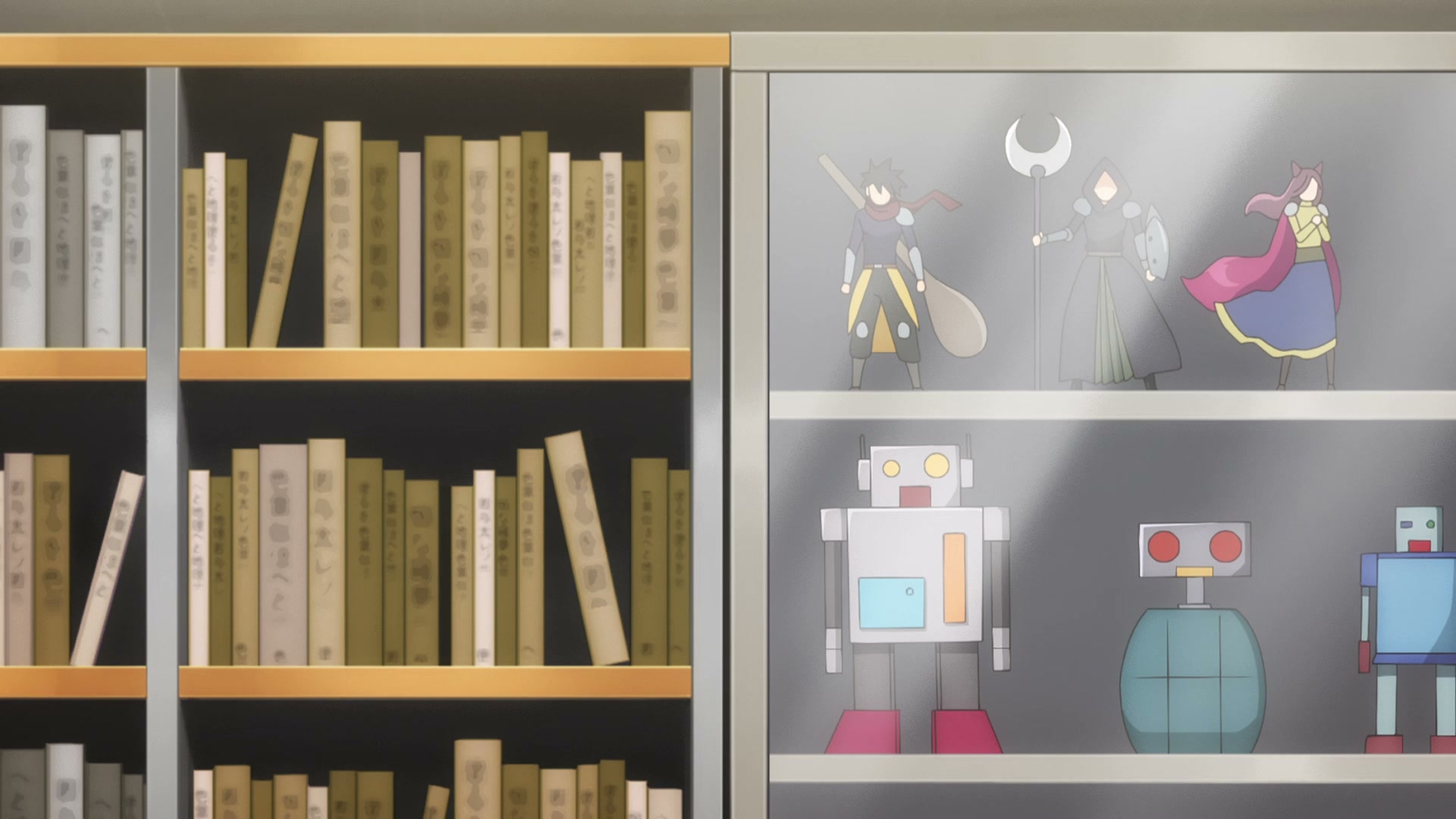
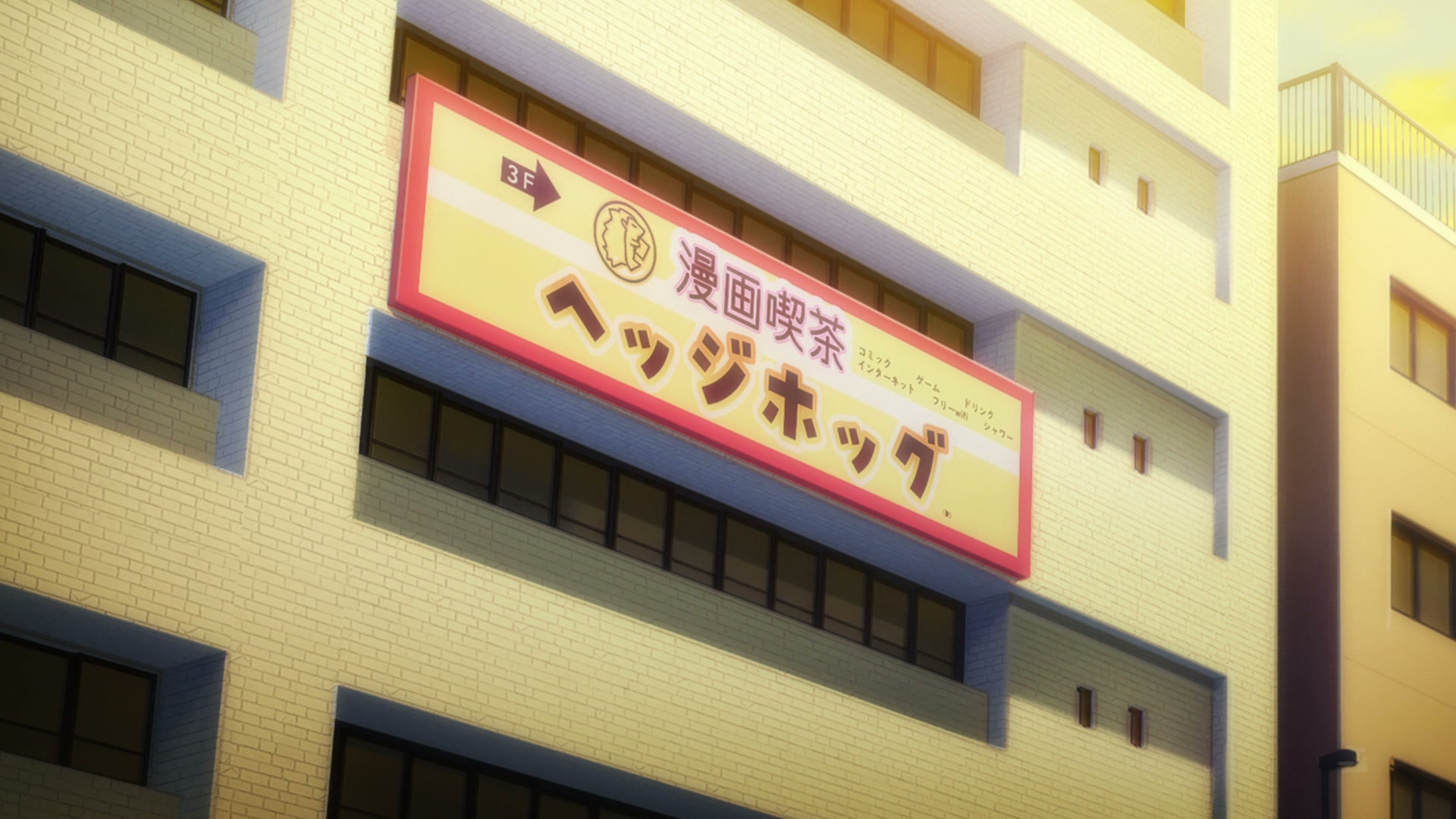
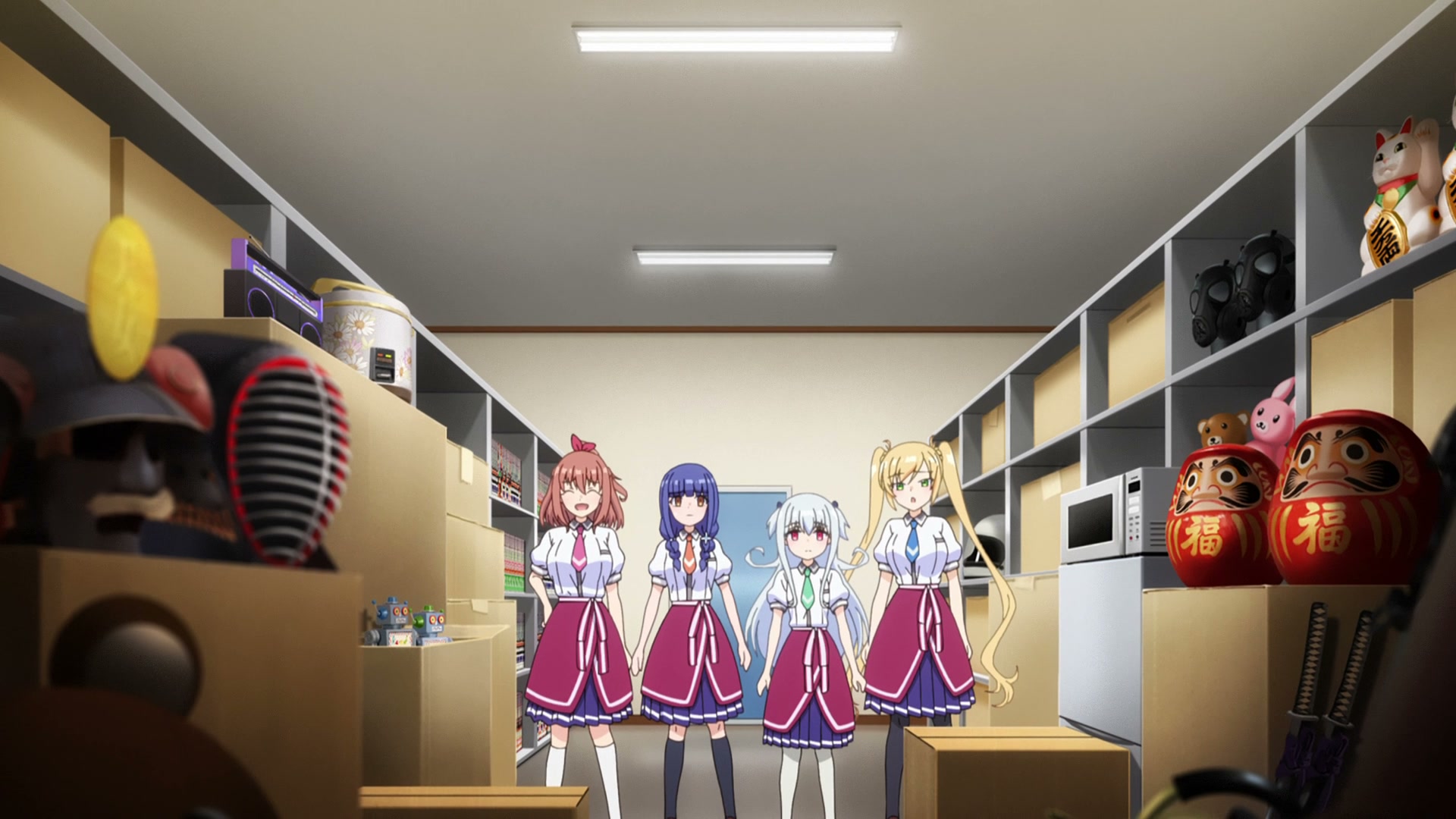
Background art follows a clear hierarchy. Important, recurring locations like the Hedgehog interior, the Morita home, the bathhouse, and the cat café are rendered with care, featuring lived-in clutter, texture work on wood grain and tile, and warm lighting. These spaces feel like real places. School corridors, generic classrooms, and transitional spaces are often simple gradients and clean lines, a practical choice that directs attention to the characters.
The series knows its strengths and allocates resources wisely. The expressive facial animation, comedic timing, and atmospheric lighting do the heavy lifting. The animation is rarely bad. It is simply economical, and the show’s charm makes it easy to forgive.
Sound and Music
The soundtrack of Ichijouma Mankitsu Gurashi serves its purpose with understated competence. The background music leans into light, bouncy arrangements during comedic scenes and softer, piano-driven pieces during emotional beats. It never overpowers the dialogue or calls undue attention to itself, which is exactly what a slice-of-life score should do. The music understands that its job is to support the mood, not to lead it.
The opening theme is an energetic, upbeat number that captures the series’ playful tone. Its visuals introduce the main cast in quick, colorful cuts that establish personalities before a single line of dialogue is spoken. The ending theme is softer, more reflective, providing a gentle comedown after each episode’s events. Both are hummable and fit the show’s identity well.
Voice acting is a particular strength. The seiyuu cast delivers performances that feel lived-in and natural, even when the material veers into exaggerated comedy. Meiko’s voice actress carries the weight of the series on her shoulders, shifting between cheerful warmth, flustered panic, and quiet sadness with seamless control. The moments where Meiko’s voice cracks during her confession in Episode 11 are genuinely affecting. Rie’s actress balances bubbly enthusiasm with surprising tenderness, making the character feel like more than a collection of ojou-sama tropes. Marika’s performance is a whirlwind of energy that somehow never becomes grating, and Neo’s soft-spoken delivery makes her sudden shifts into aggressive gamer mode all the funnier. Michika’s tsundere growl and Suzu’s archaic formality round out a cast that feels distinct and fully inhabited.
Sound design is functional and occasionally clever. The ambient noise of the café, the hum of computers, the rustle of manga pages, the clink of dishes, creates a sense of place. Gaming scenes are accompanied by appropriate bleeps, explosions, and UI sounds that sell the action without requiring visual spectacle. The recurring gag of Neo’s PC maintenance mutterings sounding like sutra chants is a nice audio joke that pays off across multiple episodes.
Overall Verdict
Ichijouma Mankitsu Gurashi is the kind of series that sneaks up on you. It presents itself as a lightweight comedy about cute girls running a manga café, and it is that, consistently funny, warm, and easy to watch. But it is also a genuinely thoughtful exploration of imposter syndrome, a condition that will resonate with anyone who has ever felt like they do not deserve the good things that happen to them. Meiko’s journey from guilt-ridden fraud to accepted friend is paced with patience and resolved with kindness. The series argues, without ever becoming preachy, that you do not need to be a prodigy to deserve a place where you belong.
The ensemble cast is the show’s greatest asset. Every character is distinct, every dynamic is well-drawn, and the relationships evolve in ways that feel organic rather than scripted. Rie and Meiko’s central bond, built on a misunderstanding but proven genuine, is the emotional spine. Marika’s chaotic energy, Neo’s quiet devotion, Michika’s reluctant warmth, and Suzu’s serene perception all contribute to a community that feels real and worth investing in.
Visually, the series is a polished example of its genre. It does not break new ground, but it executes its chosen aesthetic with consistency and charm. The character designs are appealing, the facial expressions are communicative, and the atmospheric lighting creates a cozy mood that matches the storytelling. The animation is economical, with some stiffness in medium shots and limited action sequences, but the show’s strengths lie elsewhere, and it knows where to spend its resources.
The sound design and voice acting are solid across the board, with the seiyuu cast delivering performances that elevate the material. The music is unobtrusive but effective, and the opening and ending themes bookend each episode with appropriate energy and reflection.
This series will appeal most to fans of slice-of-life comedies that balance humor with heart. If you enjoy shows like Gochuumon wa Usagi Desu ka?, Blend S, or Working!!, you will find a similar warmth here. It will also resonate with anyone who has ever felt like an imposter, anyone who has found family in unexpected places, and anyone who understands the specific comfort of a space filled with manga, miso soup, and people who accept you exactly as you are.
There is a moment late in the series, after the truth has been exposed and the tears have been shed, when Meiko is walking back to Hedgehog with her friends after a trip to the bathhouse. She looks at the building and thinks to herself that she has come home. It is a small moment, easily missed, but it is the point of the entire series. Home is not a place you earn. It is a place where you are wanted. Ichijouma Mankitsu Gurashi understands this, and it wants you to understand it too.
Gallery