





Introduction
There is a particular strain of anime comedy that thrives on a single, unshakable premise: what if the world’s most shameless pervert was also the world’s most sincere sweetheart? Mangaka-san to Assistant-san to, often called ManAssi by its fans, plants its flag firmly in that territory and defends it with the ferocity of a man protecting his underwear collection. The show is a twelve-episode short-form gag series about a struggling ecchi manga artist, his long-suffering assistants, and his perpetually exasperated editor. If that sounds like a setup for wall-to-wall crass humor, you are not wrong, but you are also not entirely right. Beneath the flood of panty jokes, breast-measurement panic, and accidental groping-for-reference lies a genuinely warm story about chasing creative dreams, building a found family, and learning that the parts of yourself you find most embarrassing might be your greatest strength.
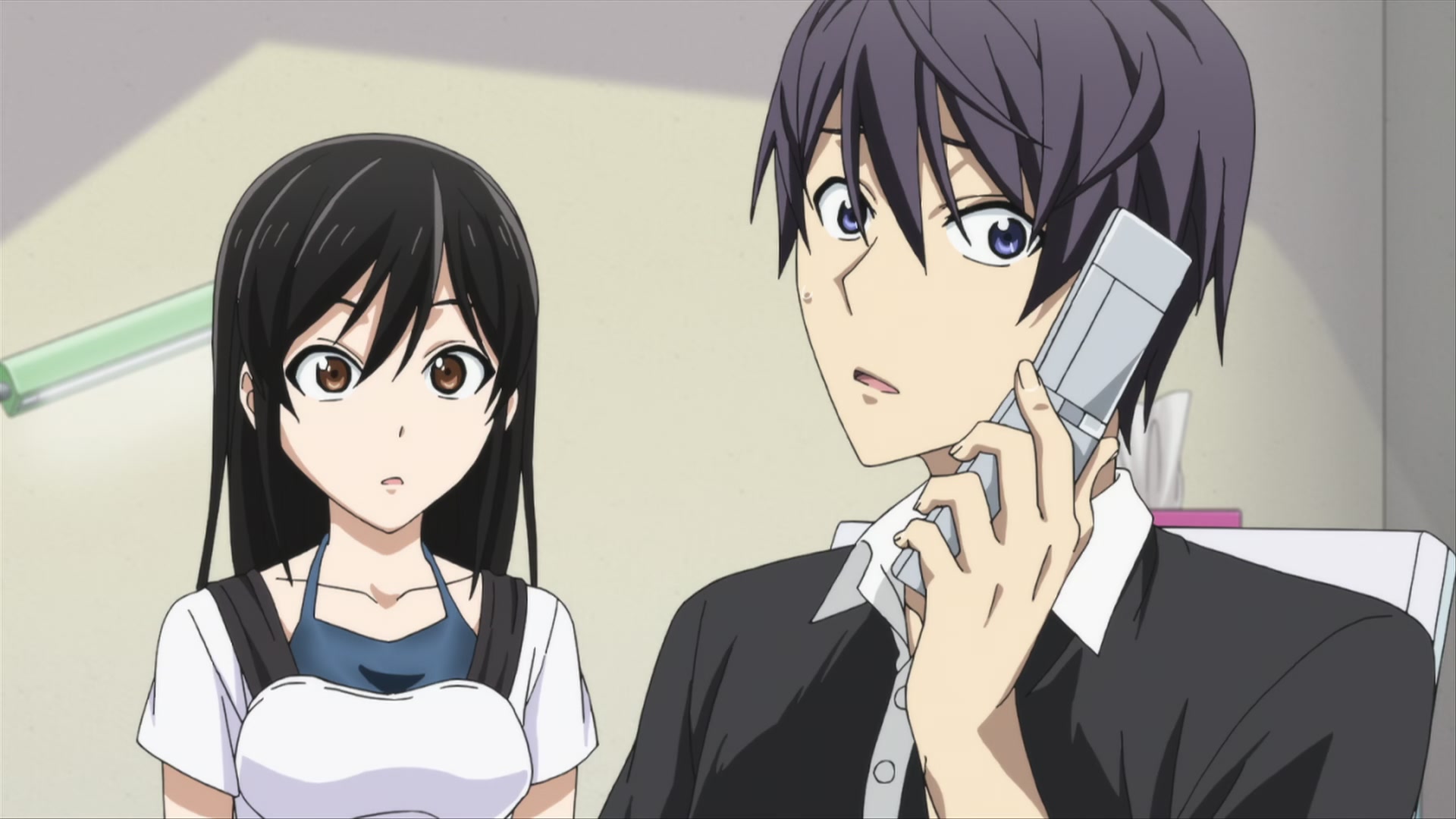
The series follows Yuuki Aito, creator of the love-comedy serial Hajiratte Cafe Latte. Aito is, by any reasonable metric, a disaster. His entire creative process orbits around his fetish for women’s underwear. He buys lingerie “for reference,” begs his assistants to let him grope them “for the manuscript,” and spends ten hours a day playing dating sims under the banner of research. His editor Otosuna Mihari, a childhood friend with a complicated history, spends most of her screen time yelling at him, hitting him, and desperately trying to save his manga from his own self-indulgence. His head assistant Ashisu, a kuudere of epic proportions, responds to his antics with flat dismissals and quiet pity. The supporting cast includes Sena, a tiny super-assistant with a towering temper, and Rinna, an airheaded fangirl who enables Aito’s worst impulses with a smile.
What makes Mangaka-san to Assistant-san to work is not the perversion itself but the complete lack of malice behind it. Aito is a creep, but he is an honest creep. He never lies about his intentions. He never manipulates anyone. When he is called out, he collapses into self-loathing so dramatic it circles back around to being endearing. More importantly, when the people he cares about are in genuine trouble, his perversion takes a back seat to a self-sacrificing kindness that catches everyone off guard. This push-pull between degenerate comedy and heartfelt sincerity defines the show’s rhythm and gives it a shelf life well beyond its initial shock value.
This is a series for people who already speak the language of otaku comedy, who know what a tsundere is and why a full panty shot versus a partial panty shot could inspire a ten-minute philosophical debate. It does not hold your hand or apologize for itself. If you can meet it on its own terms, you will find a surprisingly complete story about artistry, vulnerability, and the quiet terror of watching the people you love grow and change.
Story and Themes
The Engine of Perversion and Creation
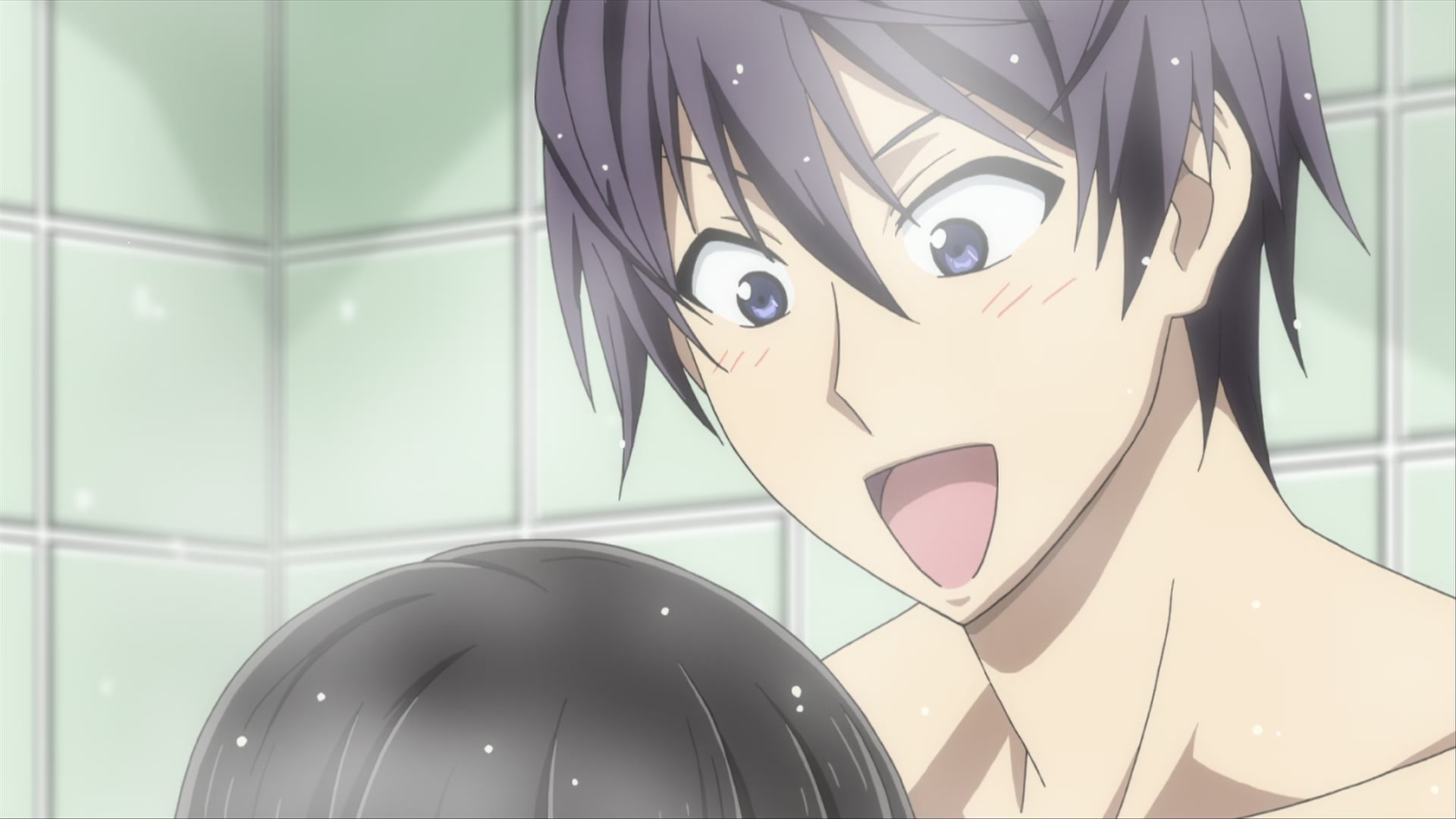
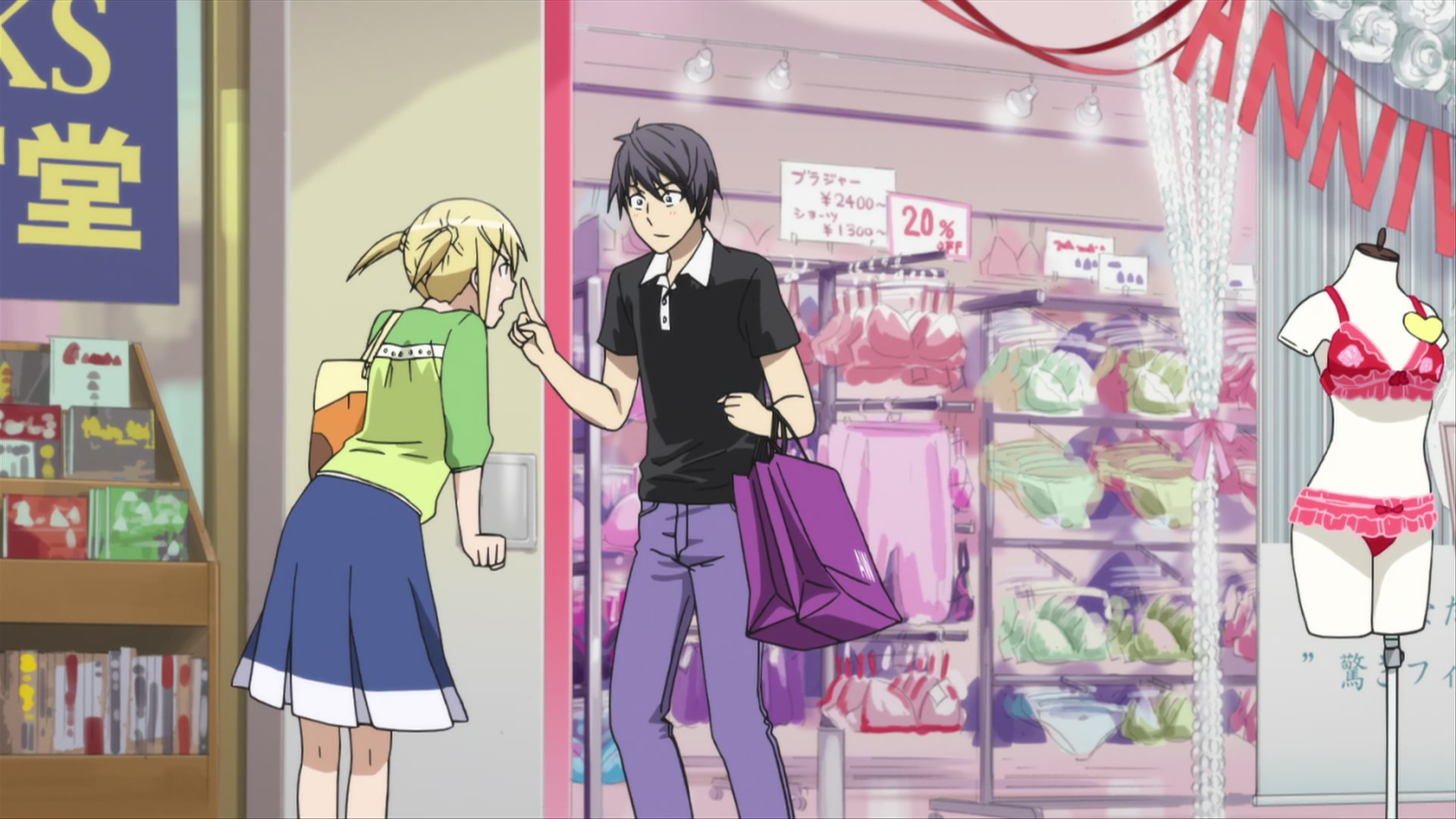
The narrative structure is loose and episodic, built around the rhythm of manga deadlines, assistant visits, and Aito’s latest catastrophic idea. Each episode typically contains two to three short segments that function as comedic sketches. Aito needs to understand how accidental groping feels, so he asks Ashisu to grope herself and then accidentally does it himself. Aito buys too many porn magazines with models that look like his assistants and cannot bring himself to throw them away. Aito spends his entire royalty check on a group hot springs vacation specifically to see everyone in swimsuits and yukata. The plots are simple, the punchlines are telegraphed, and yet the execution is consistently sharp, leaning into the absurdity with a straight face that makes the gags land.
The deeper architecture of the story emerges in the spaces between jokes. The series is fundamentally about the creative process and the strange alchemy that turns personal obsession into art. Aito’s manga is not successful despite his panty fetish. It exists because of it. His love for women’s underwear and his yearning for the romantic scenarios he has only ever experienced in games are the raw fuel for his work. The problem, as his editor Mihari constantly points out, is that he lets the fetish consume the characters rather than serve them. His heroine Moemi-chan becomes a delivery system for panty shots rather than a person whose panties we might actually care about seeing.
This tension comes to a head in the fifth episode, which contains the series’ thematic thesis. Aito’s manga has dropped to dead last in the reader surveys specifically because he overdid the panty shots. While moping in a park, he meets a young girl who delivers a devastatingly accurate critique. She explains that the old Aito would have understood that the charm of Moemi-chan’s panties comes from Moemi-chan herself. By focusing solely on the underwear, he has abandoned the character he claims to love. The girl, of course, turns out to be Minano Matome, the Chief Editor of his magazine. The lesson lands hard. Aito is not being told to stop being a pervert. He is being told to love his characters first and let the perversion follow naturally from that love. It is a surprisingly mature statement for a show that also features a grown man asking to be hit with a paper fan because the light sting feels nice.
Underwear as a Window to the Soul
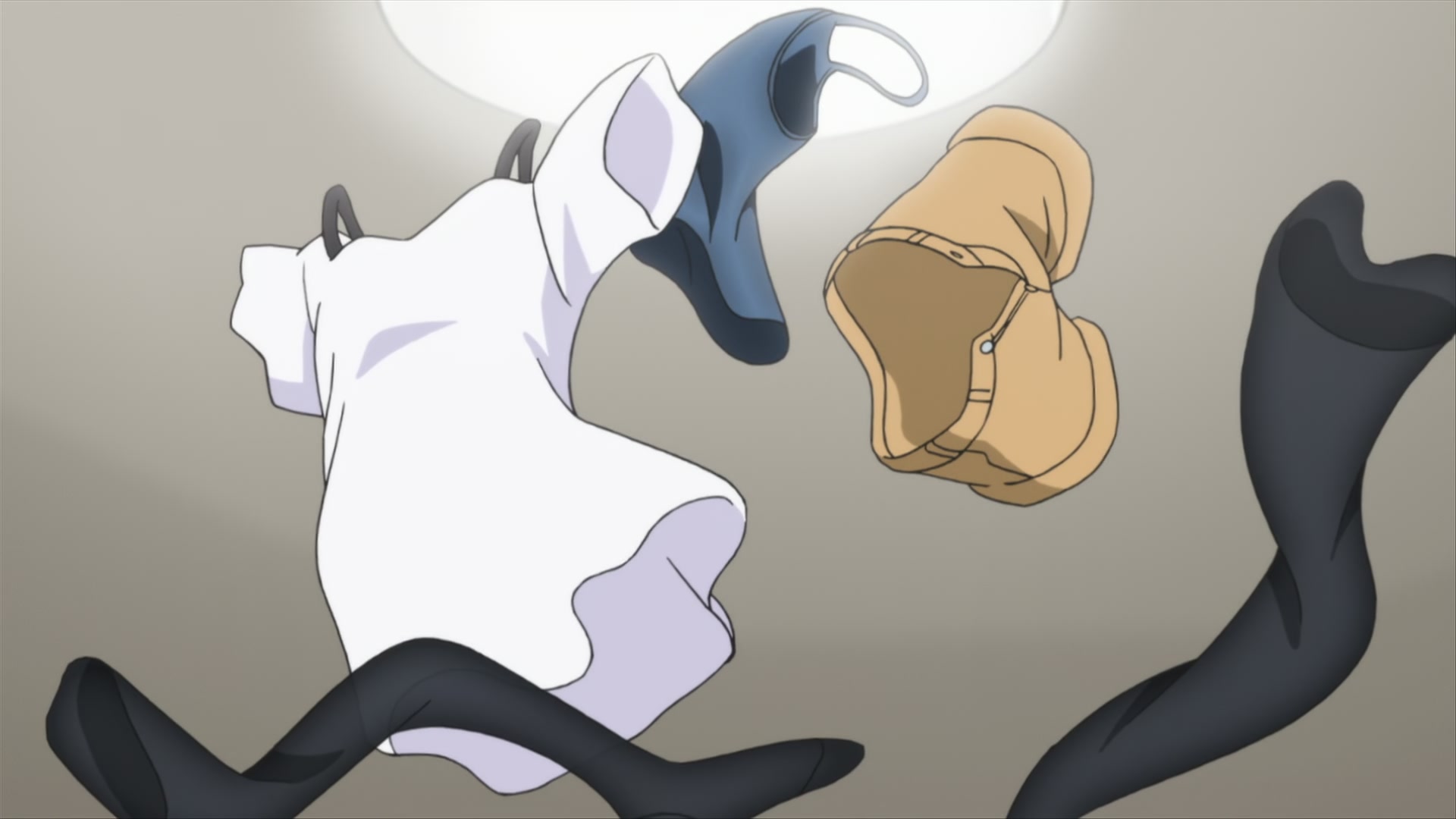
The series builds toward a climactic philosophical discussion in its final episode. Gathered at a summer festival, the entire cast turns on Aito and demands to see his underwear, applying his own logic against him. For eleven episodes, Aito has been lecturing everyone about what their panties say about their hidden nature. Striped panties indicate a two-faced tsundere personality. Frilly panties reflect an open, girlish heart. Erotic underwear reveals a secret pervert hiding beneath a cool exterior. Now the girls want to know what his choice says about him.
Aito’s answer lands somewhere between a punchline and a genuine emotional confession. He wears plain white briefs because they represent a pure heart. The joke is that the biggest pervert in the room sees himself as innocent at his core. The sincerity beneath the joke is that he might actually be right. For all his noise about breasts and panties, Aito’s desires are remarkably chaste. He does not want to sleep with anyone. He wants to be confessed to. He wants to share an umbrella. He wants the chaotic daily life of his studio to continue forever, exactly as it is, with the people he loves close by. The white briefs are a gag, but they are also a statement of intent.
Fear of Change in a World That Refuses to Stand Still
A running thread through the series is Aito’s terror of change. When he discovers that Mihari’s breasts have grown by two millimeters, he treats it as a cosmic betrayal, a sign that the Mihari he knows is being replaced by someone unfamiliar. He is only half joking. His ideal world is one where nothing ever changes, where Ashisu never debuts as a manga artist and leaves him, where Mihari never transfers to another author, where summer never ends and the festivals keep coming.
This fear sits at the heart of his relationship with Ashisu. She has been submitting her own manuscripts to Mihari for over a year, enduring rejection after rejection in silence. When Aito discovers this, he is torn between two impulses: his selfish desire to keep her as his assistant forever, and his genuine wish to see her dream come true. He chooses the latter, pushing her to refine her work even knowing that her success will mean the end of their partnership. The final shot of the series, with Aito admitting on a rooftop that he would be happy if their days together could last forever, is the closest the show comes to melancholy. He knows the world will not freeze in place for him. He chooses to be grateful for what he has anyway.
Cultural Context and Otaku Identity
The series is steeped in the specific cultural language of manga production and otaku fandom. The hierarchy of assistants, the terror of survey rankings, the grueling deadline marathons, the peculiar economics of royalty checks, all of this is presented with the casual fluency of a show that assumes its audience already knows how the manga industry works. When Aito and Mihari debate the artistic merits of full panty shots versus partial panty shots, the show is not just being absurd. It is satirizing a real conversation that happens in ecchi manga circles, where the line between artistic choice and personal fetish is genuinely blurry.
The treatment of otaku passion is notably affectionate rather than mocking. Aito’s love for dating sims, Ashisu’s devotion to obscure mascot characters, Sena’s pride in her professional skills, all of these are presented as genuine passions that deserve respect even when they are the butt of jokes. The series understands its audience because it is part of its audience. It is a show made by people who know what it feels like to stay up all night finishing a manuscript, to watch your survey rankings with dread, to buy reference materials you are slightly embarrassed to own.
Adaptation Notes
I have not read the original manga, so I cannot speak to how faithfully the anime adapts its source material or what may have been cut. What I can say is that the anime functions as a complete, coherent work on its own terms. The episodic structure allows it to function as a greatest-hits compilation, picking standout comedy scenarios and arranging them into a season that builds toward genuine emotional payoffs. If chapters were skipped or rushed, the anime does not feel incomplete as a result. The twelve episodes provide a full arc for Aito and Ashisu, satisfying closure for Mihari’s backstory, and enough screen time for Sena and Rinna to feel like real members of the ensemble rather than window dressing.

Characters
Yuuki Aito: The Pure-Hearted Degenerate
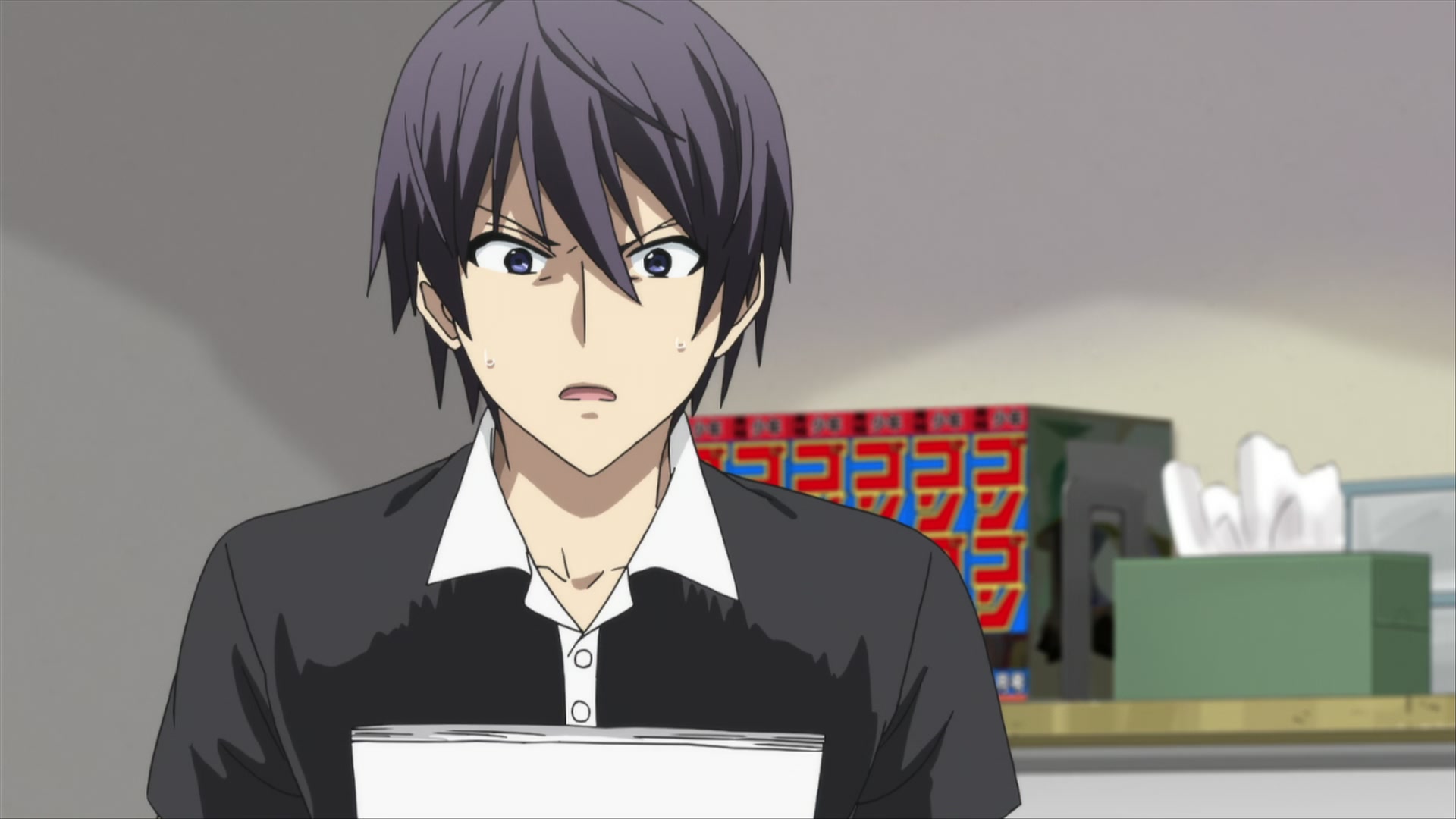
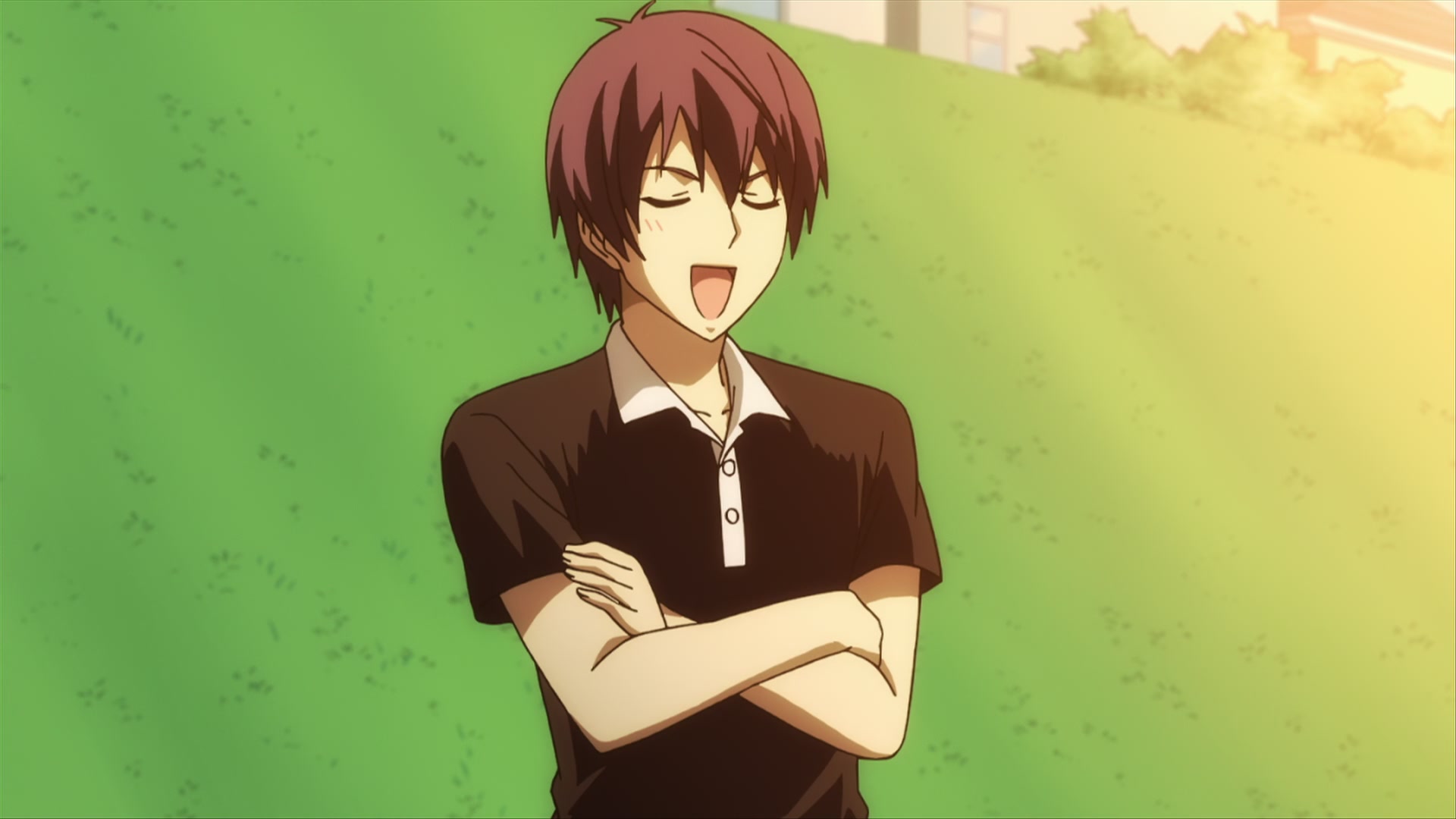
Aito is a paradox that the series never tries to resolve because it loves the contradiction too much. He is, simultaneously, a hopeless pervert who cannot stop thinking about panties and a genuinely kind man who will bankrupt himself to make his friends happy. He blurts out every thought that enters his head without a filter, leading to constant moments of cringe comedy where everyone in the room wishes he would simply stop talking. When a cute new assistant named Fuwa Rinna arrives, his first question, delivered with total sincerity, is whether she would be willing to do “lewd things.” When his editor Mihari cuts her hair short, he tells her she looks more like a tsundere now, a compliment that is also an insult that is also a genre observation she cannot even argue with.
What saves Aito from being insufferable is his complete lack of guile. He never schemes. He never pressures. His requests are always accompanied by a pitiful self-awareness that he is being creepy, which somehow makes them harder to reject outright. He knows he is a pervert. He just does not see why that means he should stop. The world needs panties, and he is the man to draw them.
The key to his character is revealed in the moments when his perversion takes a back seat to something deeper. When Mihari accidentally spills tea all over his finished manuscript in a flashback, he does not get angry. He simply starts redrawing, pushing his already exhausted body past its limits while telling her not to worry. When Sena is trapped in an elevator with him and desperately needs a bathroom, he offers to urinate on himself too so that her humiliation will not be a solitary burden. These acts of self-sacrifice are not calculated gestures. They are instinctive responses from a man who genuinely cannot bear to see the people he cares about suffer alone. The perversion is real, but so is the love.
Ashisu: The Emotional Anchor
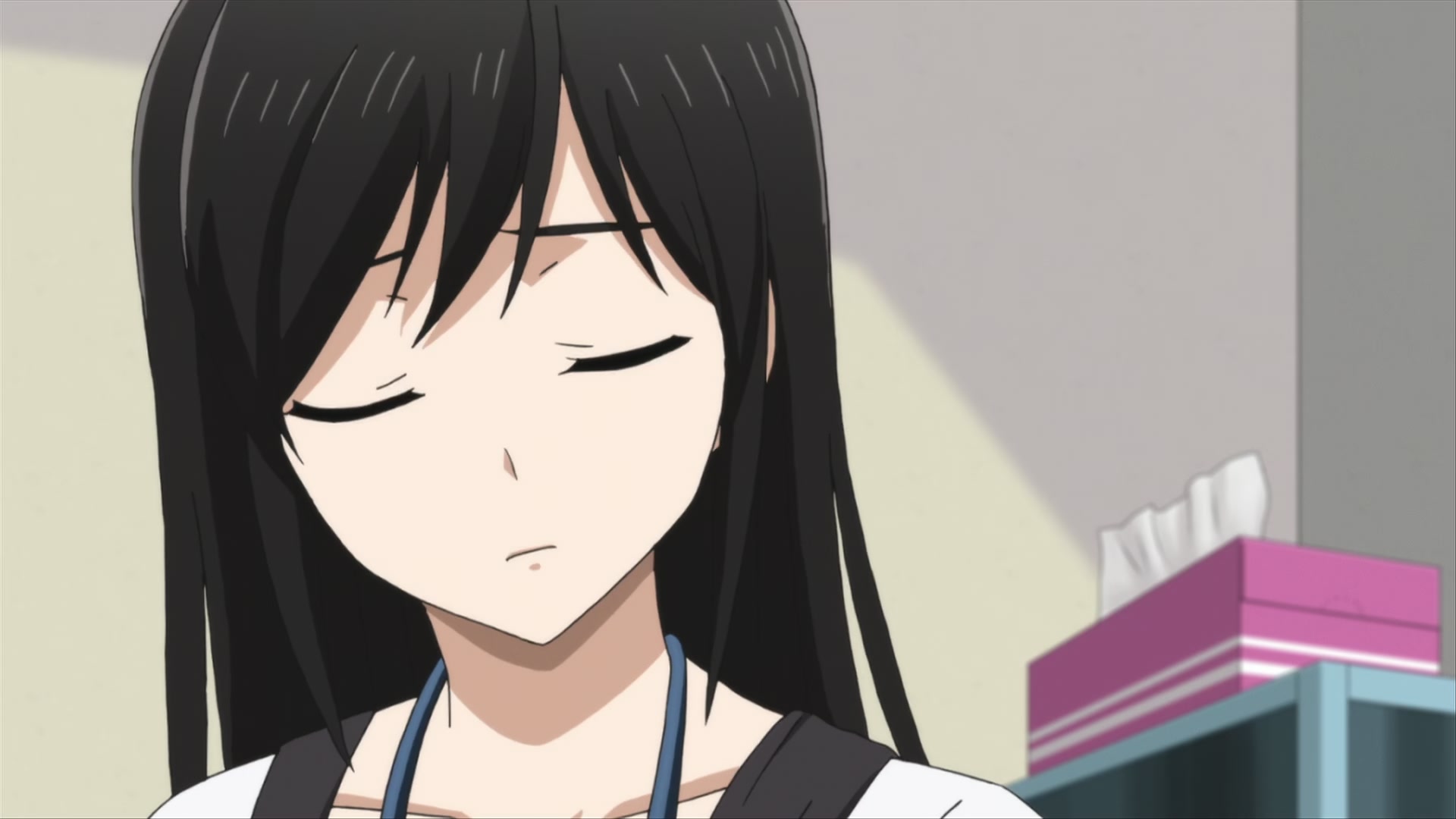
Ashisu, whose given name is never revealed, is the cool, deadpan center around which Aito’s chaos swirls. She responds to his worst ideas with a flat “I don’t care” or a simple “Gross.” She threatens to quit when he goes too far, which is often. She claims she only stays because she pities him “like an abandoned puppy,” a line that is both cruel and, in its own way, affectionate.
Her hidden life as a struggling aspiring manga artist provides the series with its emotional backbone. She has been drawing manga since elementary school, and she has been rejected, over and over, for more than a year. The mountain of rejected manuscripts in her childhood bedroom, revealed by her younger sister Sahono, is a quiet monument to perseverance that she never mentions herself. She is not the kind of person who complains about her failures. She just keeps drawing, month after month, submitting new work to Mihari while simultaneously helping Aito meet his own deadlines.
Her breakthrough comes in the eleventh episode, and it is one of the strangest and most effective scenes in the series. Frustrated by another rejection, she asks Aito what she is missing. He suggests she needs to put more of her true self into her work. What would she actually want to do with him if she could? Ashisu then slips into a sadistic role-play, cruelly teasing him about his perversions, calling him a disgusting creep who spends every day imagining her panties, and promising to show him if he confesses all his degenerate thoughts. It is a shocking shift in tone, and it works because it reveals something genuine. Ashisu is not just tolerating Aito. A part of her enjoys the power she holds over him, and that part of her is exactly what her manga was missing. The story she writes after this, about bullying a worthless boss, wins a Rookie Award.
Otosuna Mihari: The Scar of Professionalism
Mihari is a classic tsundere editor, constantly yelling, hitting, and rejecting Aito’s worst ideas with the force of a woman who has been dealing with him since high school. Her signature phrase is a flat, immediate “Rejected!” delivered with the finality of a judge’s gavel. She is also deeply self-conscious about her AA-cup breasts, an insecurity that Aito constantly tramples by praising “petitties” as a rare charm point.
The flashback in episode nine recontextualizes her entire character. In high school, she was drawn to Aito’s talent and his passionate dream, only to discover that his passion was for panties. Despite this, she developed a crush on him. Years later, working as his editor, she misinterpreted his offhand “I like you” as a romantic confession. This led to a night of escalating embarrassment, culminating in her ruining his finished manuscript with spilled tea and watching him nearly kill himself to redraw it all without a word of blame. The guilt was so crushing that she cut her long hair short as a symbolic penance, vowing to bury her personal feelings and be a perfect, objective editor from that day forward.
This history explains everything about her current behavior. Her anger is a defense mechanism. If she lets herself be soft with him, she fears the old distraction will return. Her promise that they can date in ten years if both are still single is the most tsundere thing imaginable: a genuine admission of buried affection disguised as a flippant hypothetical. She is a woman at war with herself, and her slow, grudging acceptance that she cannot fully suppress her feelings is one of the series’ quietest arcs.
Sena and Rinna: The Tsundere and the Enabler
Sena Kuroi is a tiny super-assistant with a towering temper and a secret shame: she lacks the physical strength to open tight ink jars. Her entire persona is built on overcompensation. She demands to be treated as a cool, untouchable professional, and she responds to any perceived slight with threats of violence. Aito’s ability to treat her vulnerabilities not as flaws but as adorable traits is the chink in her armor. When he carries her home after a sprained ankle, when he comforts her after she fails to bathe his cats, when he offers to share her humiliation in the broken elevator, she comes closer to saying “thank you” than she has ever come with anyone else, then immediately snaps back into tsundere fury to cover it up. She is the character who most resembles Aito in her social maladjustment, and their bond, while volatile, is built on a mutual recognition.
Rinna Fuwa is the opposite of conflict. She is an unconditional enabler, a bubbly fangirl who greets Aito’s perversions with a smiling “You perv” that carries no judgment whatsoever. She cannot draw a single line, but she makes up for it with homemade bunny costumes and late-night cheerleading sessions that power Aito through his all-nighters. She is the emotional lubricant of the group, recoding Aito’s creepiest moments as endearing quirks and creating a baseline of positivity that makes the studio feel safe. She has no character arc because she does not need one. She is already exactly who she wants to be.
Sahono and Minano: Catalysts of Chaos
Sahono Ashisu, the younger sister, is a meddler with a mission. She sees the mountain of rejected manuscripts in her sister’s room and fears Ashisu will end up alone and professionally unfulfilled. Her solution is to aggressively ship Aito and Ashisu, using her complete lack of filter to force emotional truths into the open. Her conversation with Aito about Ashisu’s perseverance is the moment Aito articulates his deepest respect for his head assistant, and her validation of him as a worthy partner solidifies the unspoken bond between the two leads.
Minano Matome, the childlike Chief Editor, is an agent of chaos and wisdom. She gropes Ashisu’s breasts under the pretense of professional evaluation, then casually delivers the feedback that unlocks her creative breakthrough. She appears in a park as a mysterious little girl to deliver the series’ thematic thesis. She exists outside the rules, doing whatever she wants, and yet every intervention she makes is precisely what the recipient needs to hear. She is the closest thing the series has to a trickster god, and her presence elevates the comedy into something unexpectedly thoughtful.

Visuals and Animation
Art Direction and Character Design
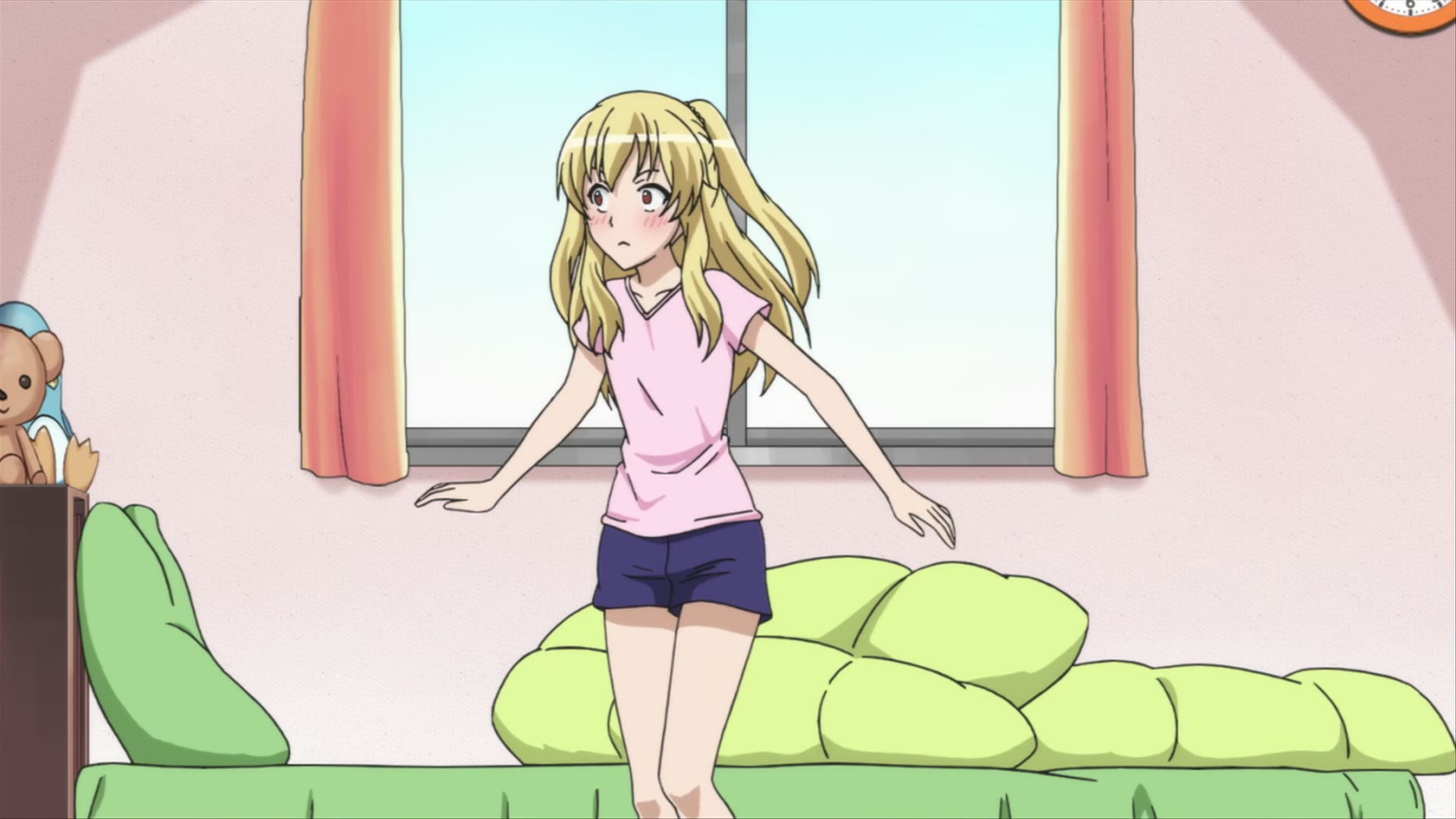
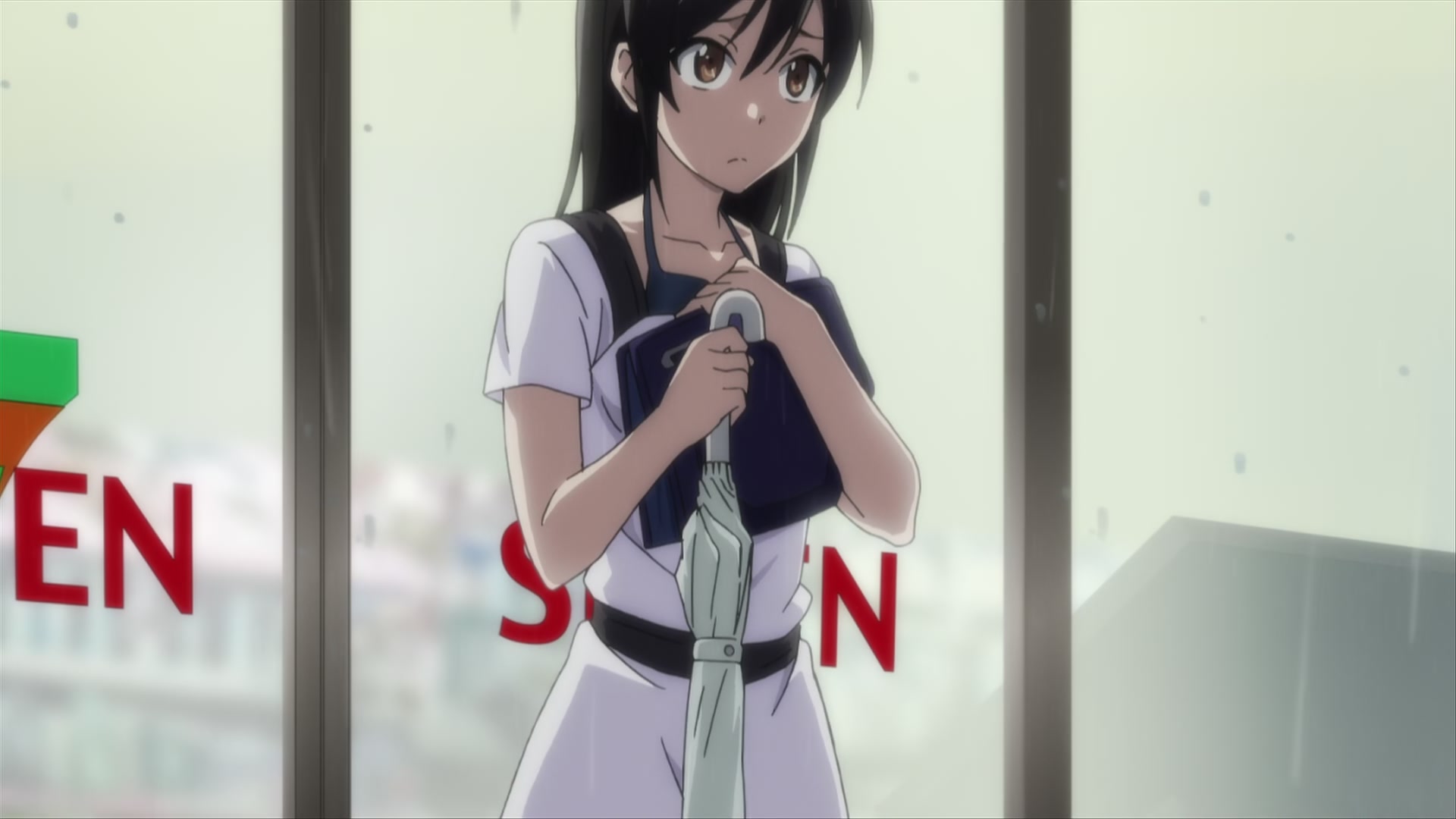
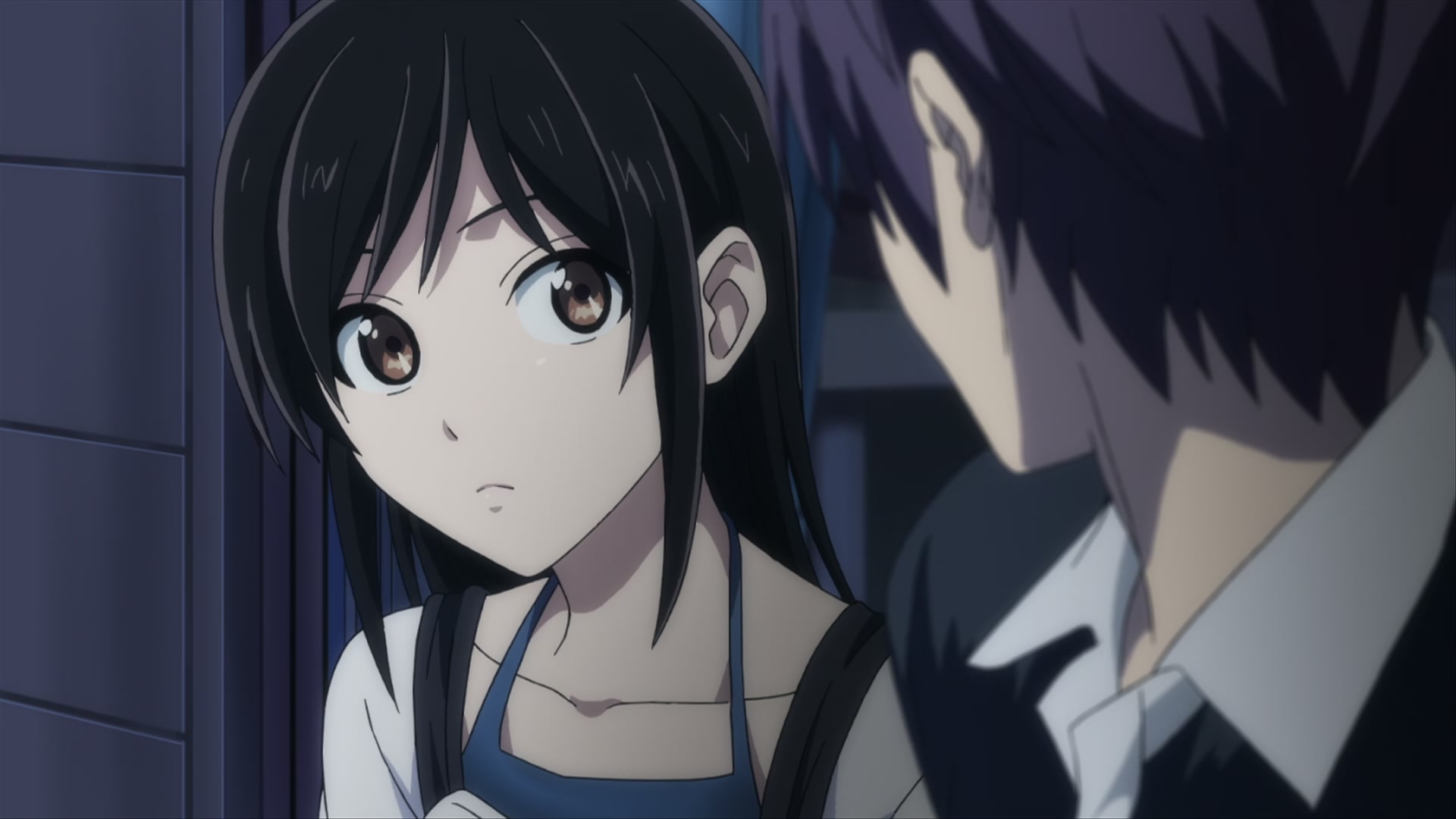
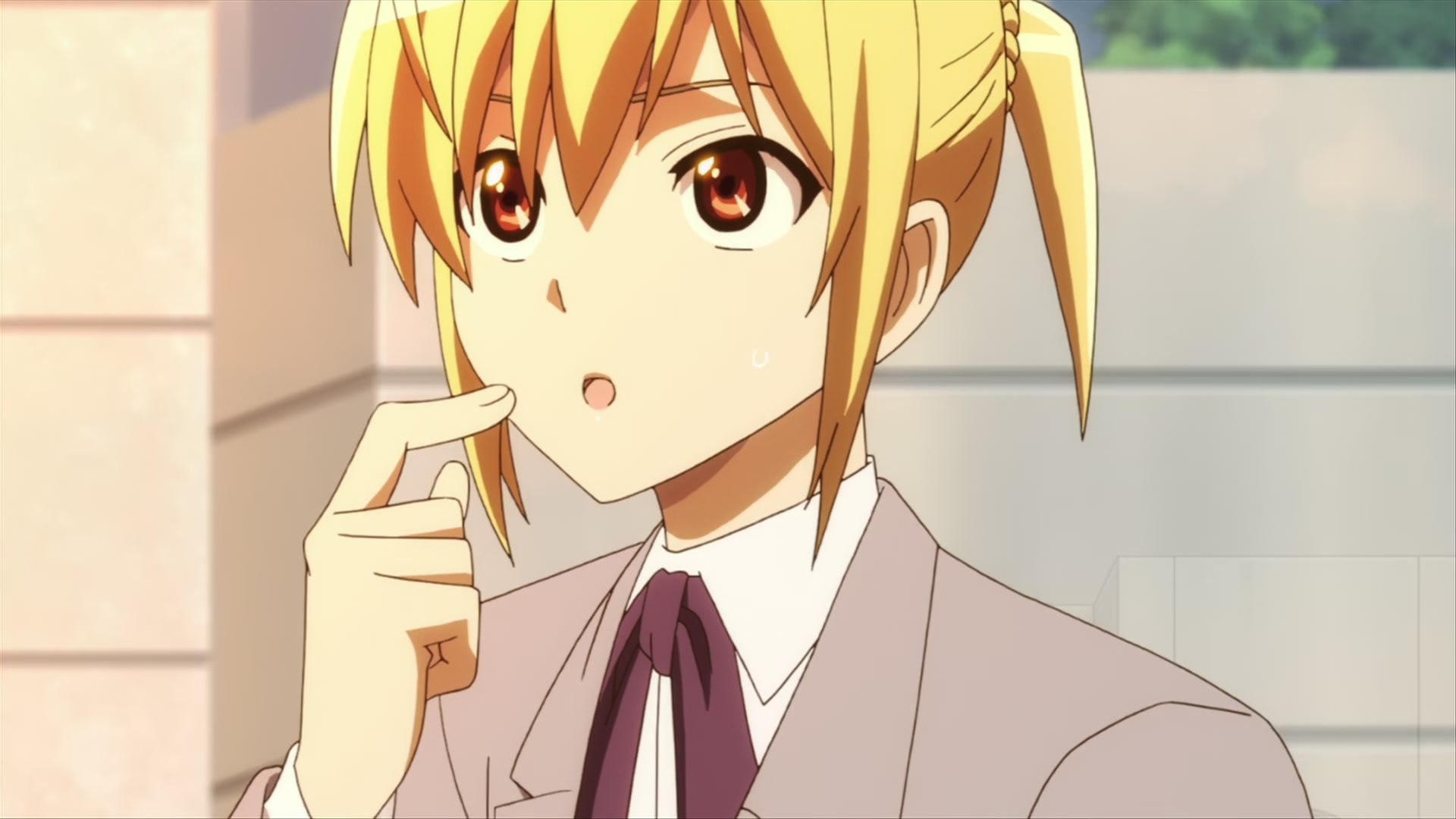
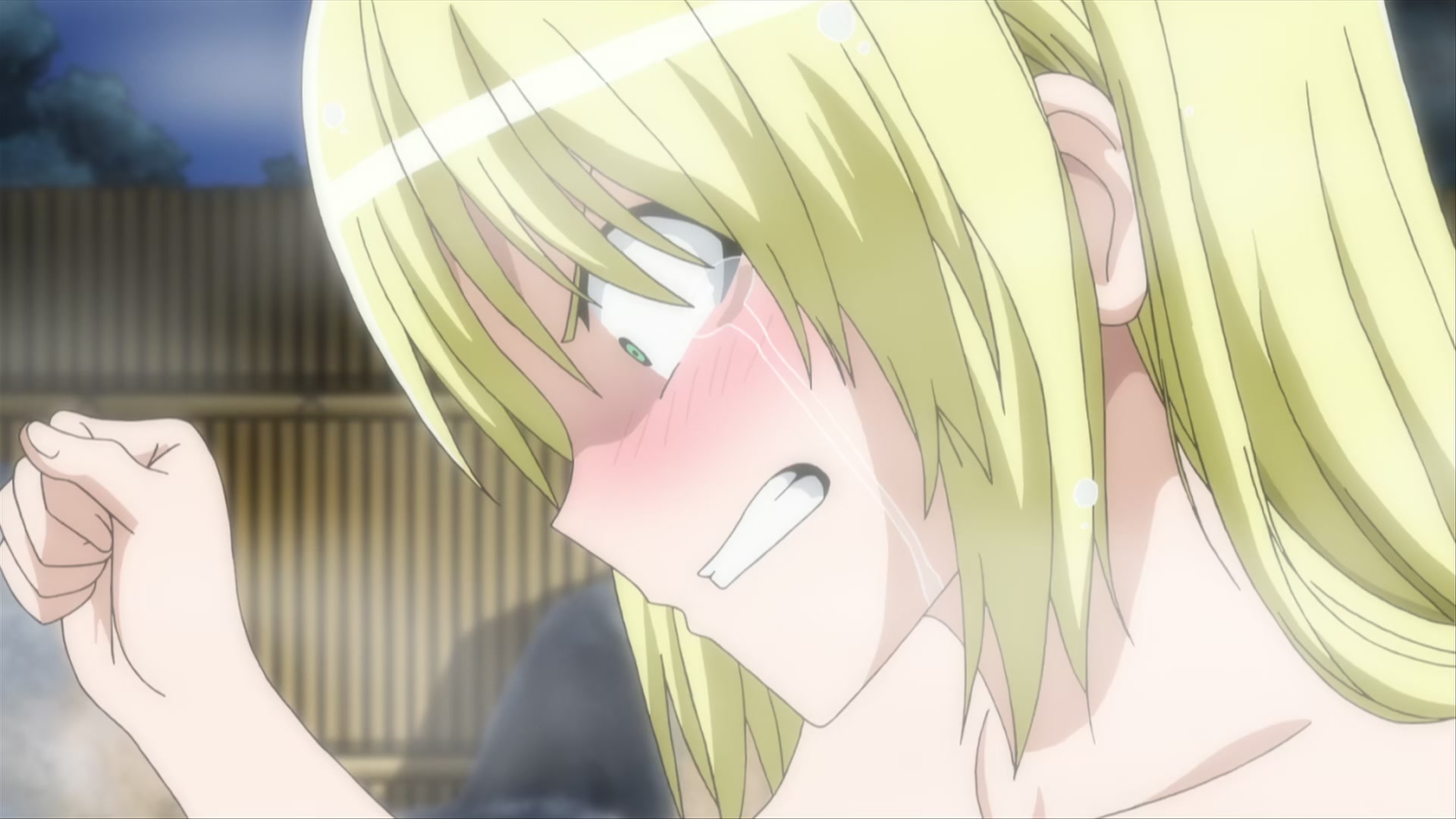
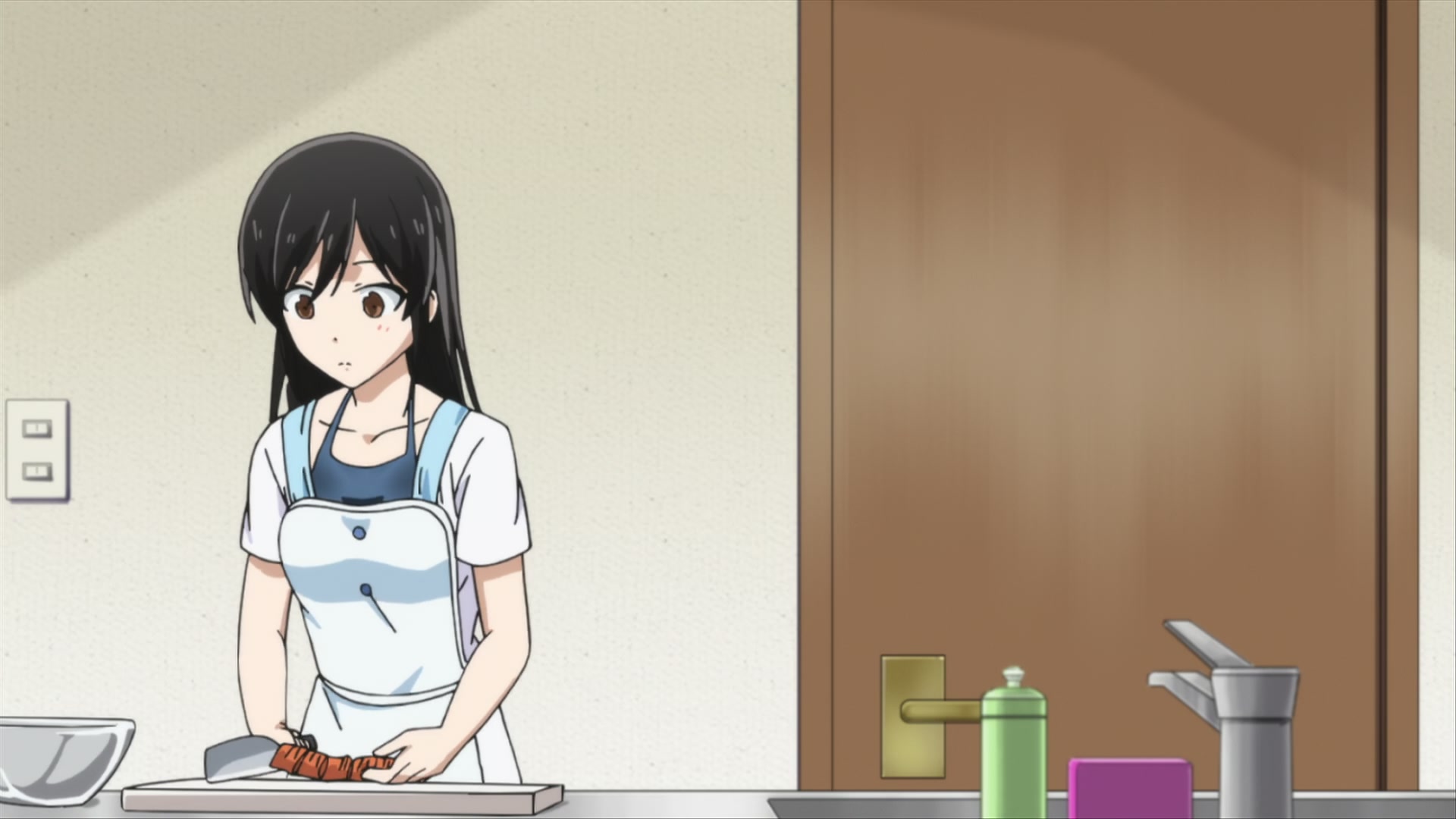
The visual identity of Mangaka-san to Assistant-san to is best described as polished mid-2010s digital anime, clean and functional rather than groundbreaking. The character designs are sleek and angular, with sharp jawlines and geometric hair silhouettes that reflect the era of their production. Linework is thin and consistent, holding up well even during the more exaggerated comedic sequences. The most distinctive technical element is the treatment of the eyes. Irises are rendered with intricate concentric ring patterns, multi-layered gradients, and sharp specular highlights that give the characters a glossy, almost doll-like quality. This is a show that knows its emotional beats live in the eyes, and it budgets its visual resources accordingly.
Hair features a pronounced “plastic shine,” those sharp horizontal highlight bands that were ubiquitous in digital anime of the period. It contributes to the polished look but can occasionally feel artificial, like the characters are made of slightly reflective vinyl. It is a stylistic choice that dates the show to its specific production era, for better or worse.
Emotional Acting and Stylistic Range
The series’ greatest visual strength is its versatility. It moves fluidly between three distinct modes of character performance, often within the same scene, and the transitions are so natural that the shifts rarely feel jarring.
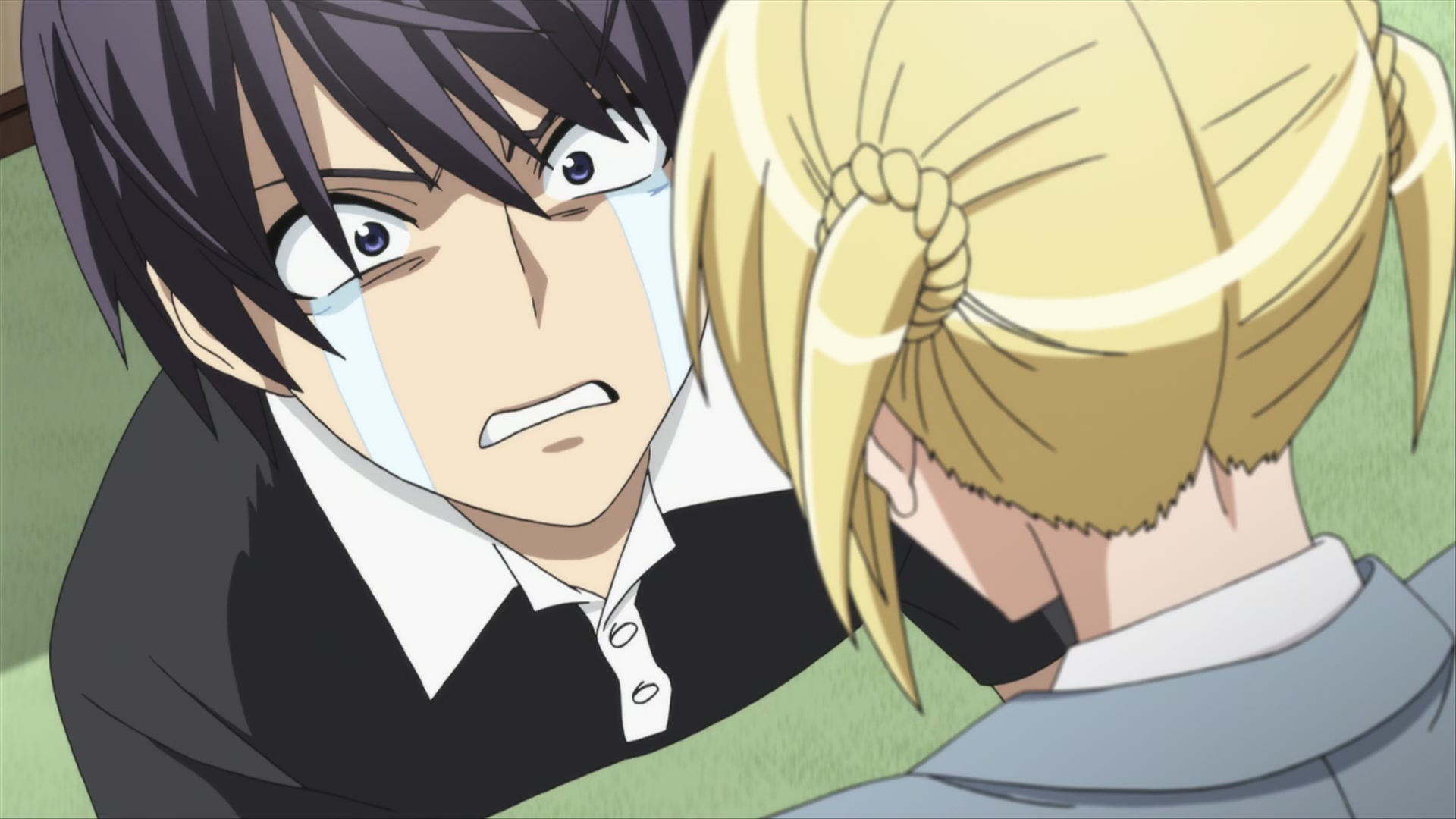
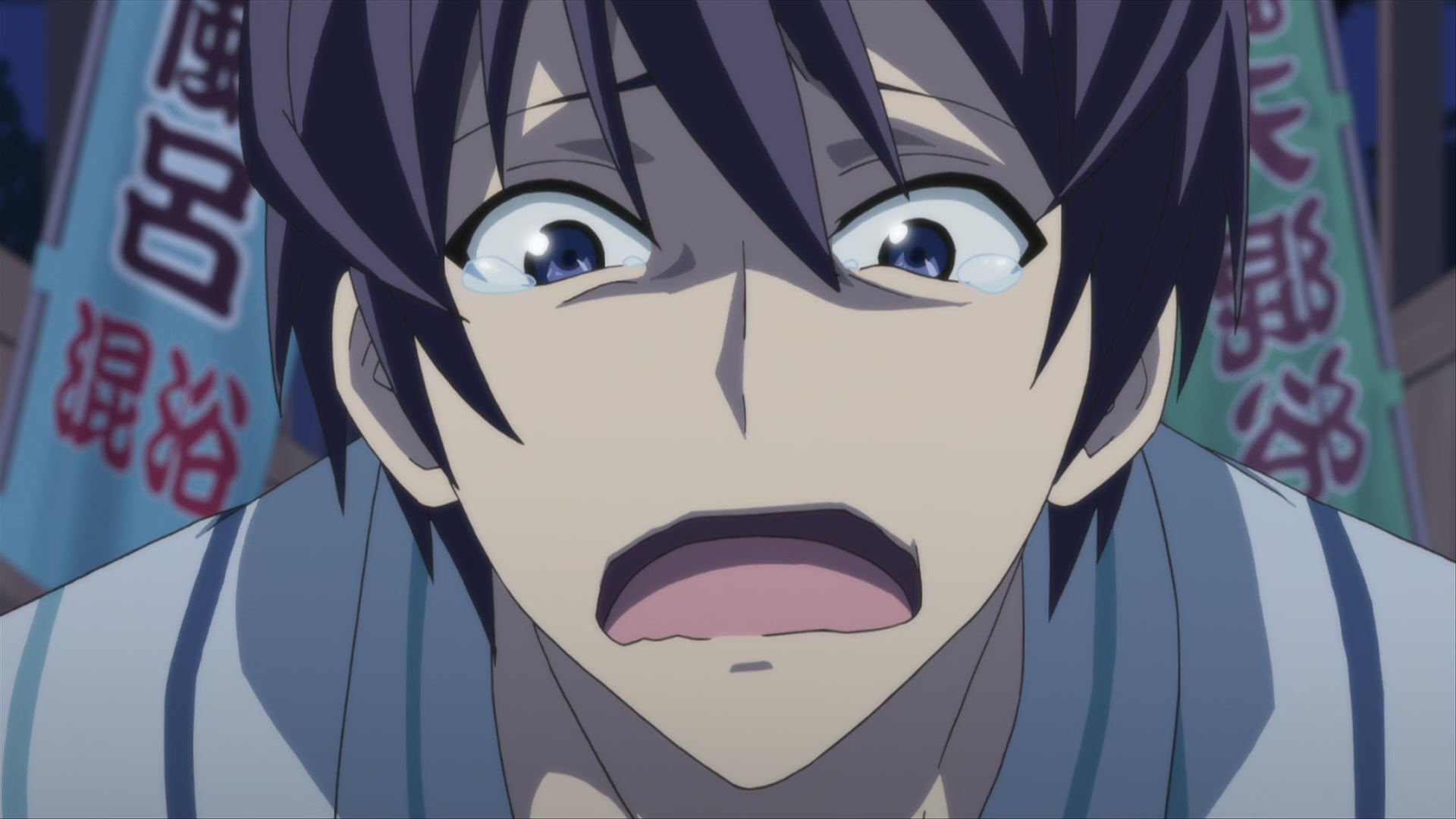
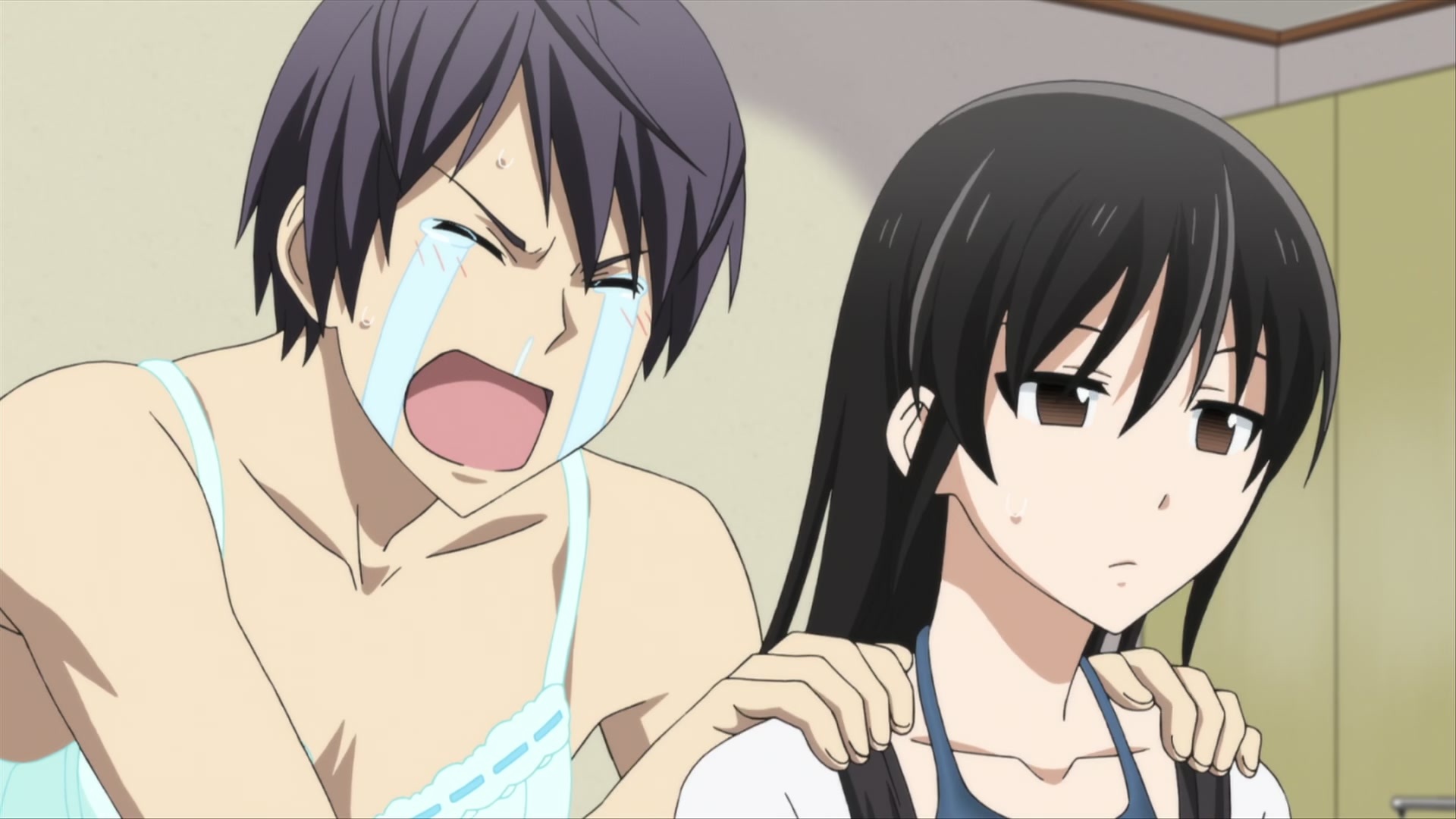
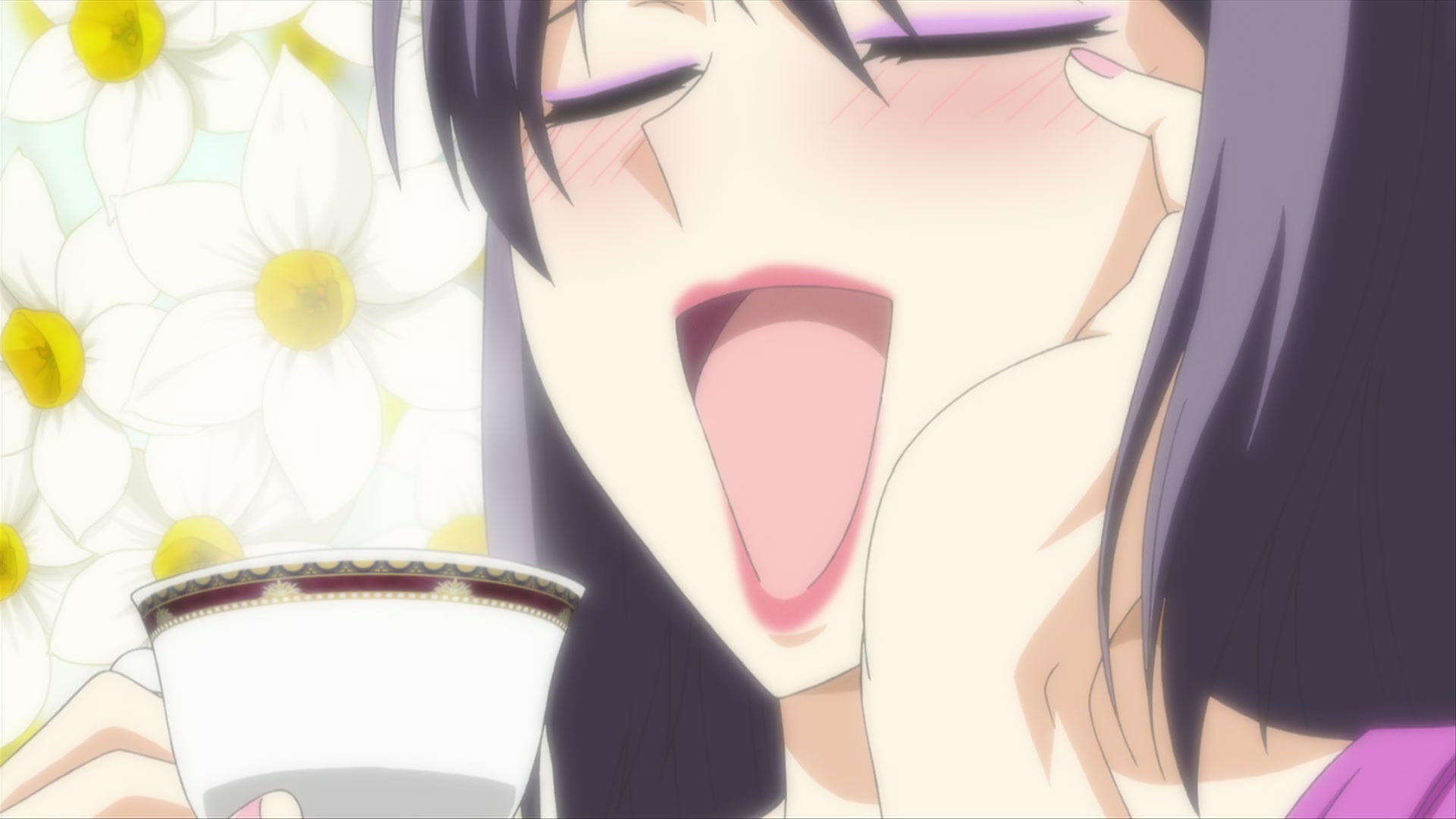
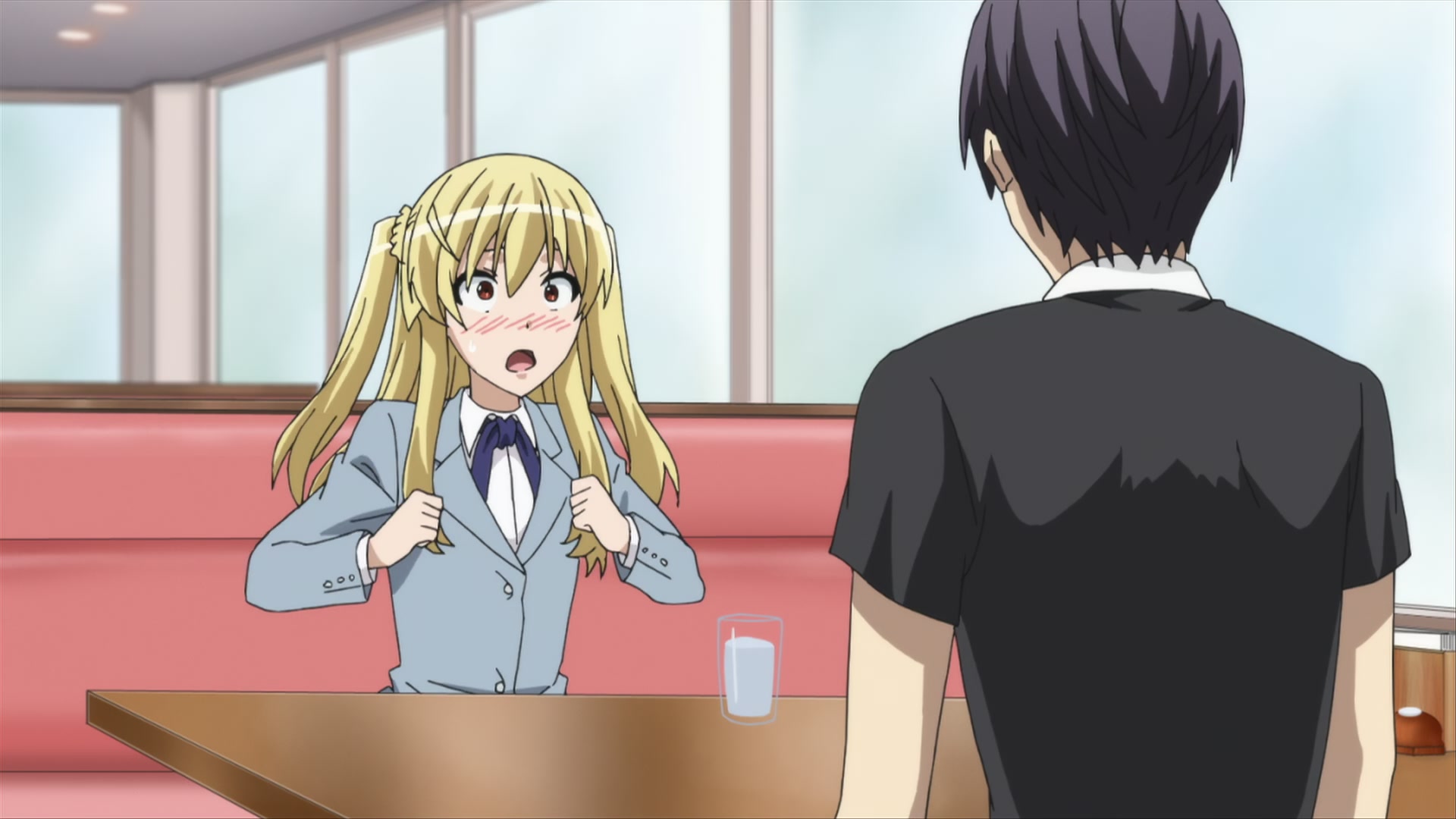
The first mode is comedic hyper-exaggeration. This is the show’s default language, built on familiar anime shorthand. River tears stream down faces during moments of despair. Sweat drops the size of dinner plates appear when characters are exasperated. Blush lines slash diagonally across cheeks during moments of embarrassment. The posing in these sequences is dynamic and theatrical, with characters striking dramatic poses or collapsing into puddles of self-pity. The animation is not fluid in a traditional sense, but the posing and timing are sharp enough to sell the gags.
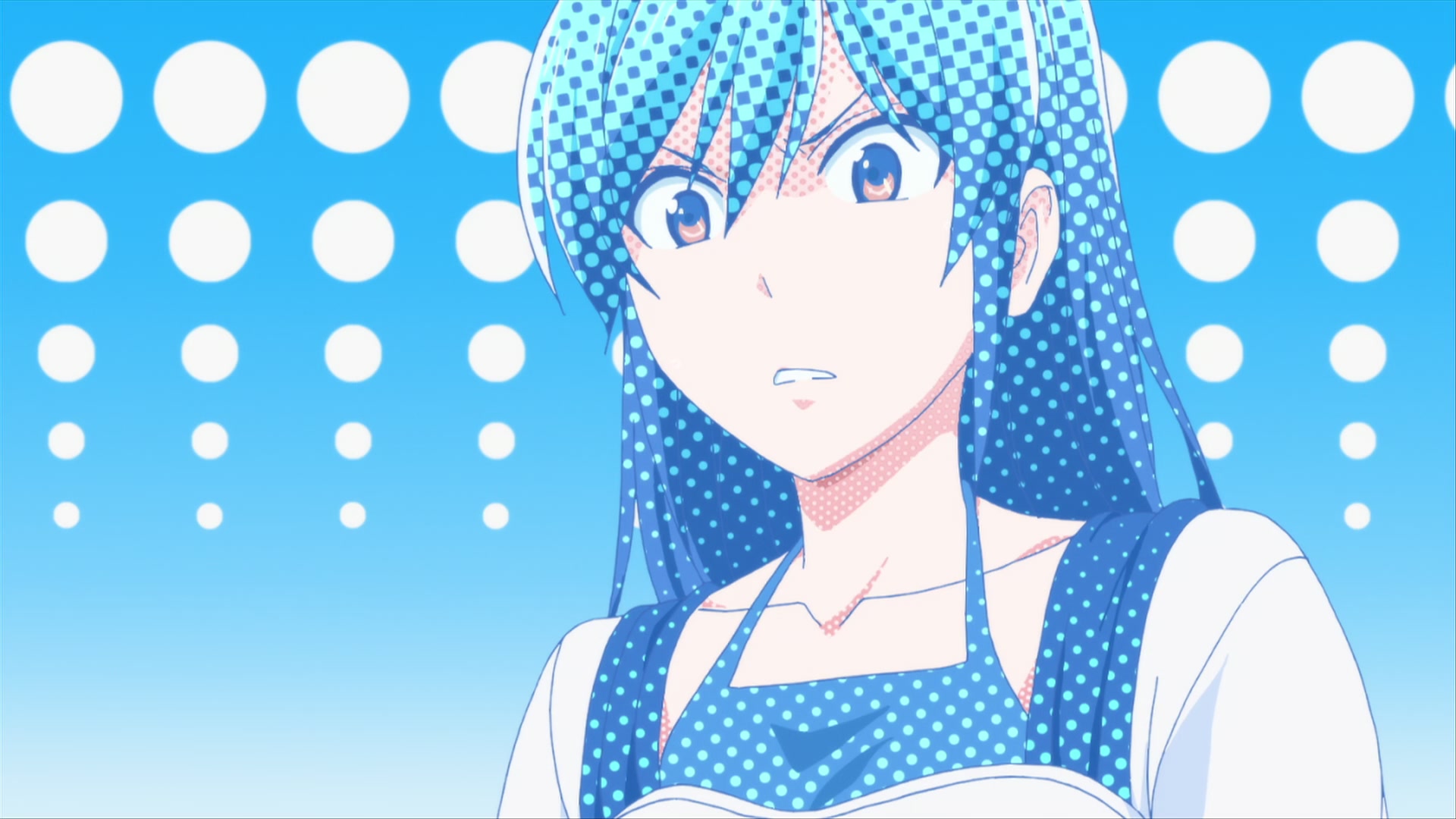
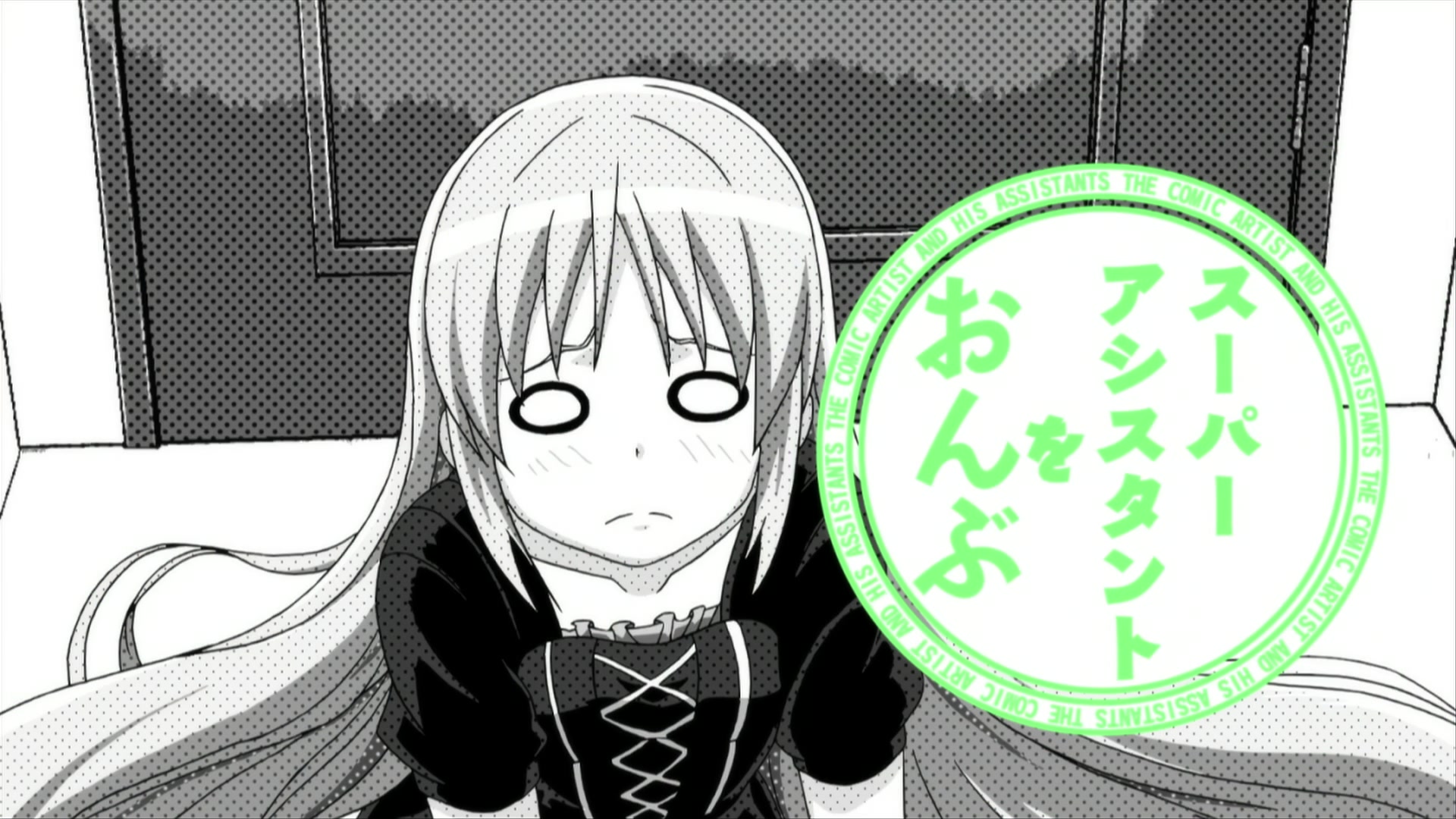
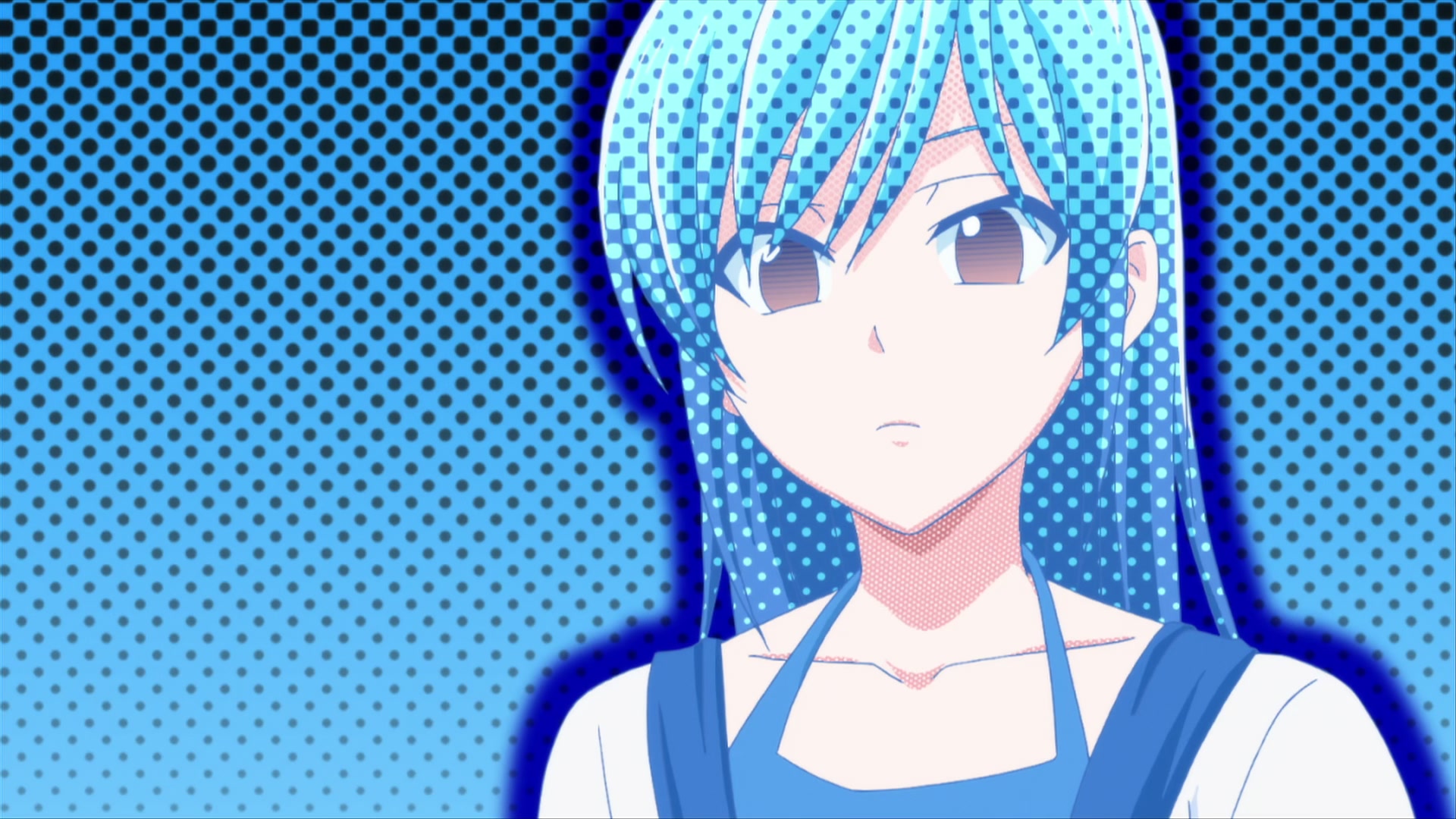
The second mode is genre-mimicry, what I would call “mental scenery.” When a character has a romantic fantasy, the screen floods with soft-focus bokeh, sparkle filters, and the visual language of shoujo romance. When a character is shocked into paralysis, the image might shift to grayscale with manga-style screentone patterns and a blue overlay, as if they have been frozen inside a panel. These shifts are quick, often lasting only a second or two, but they add a layer of visual wit that rewards attentive viewing.
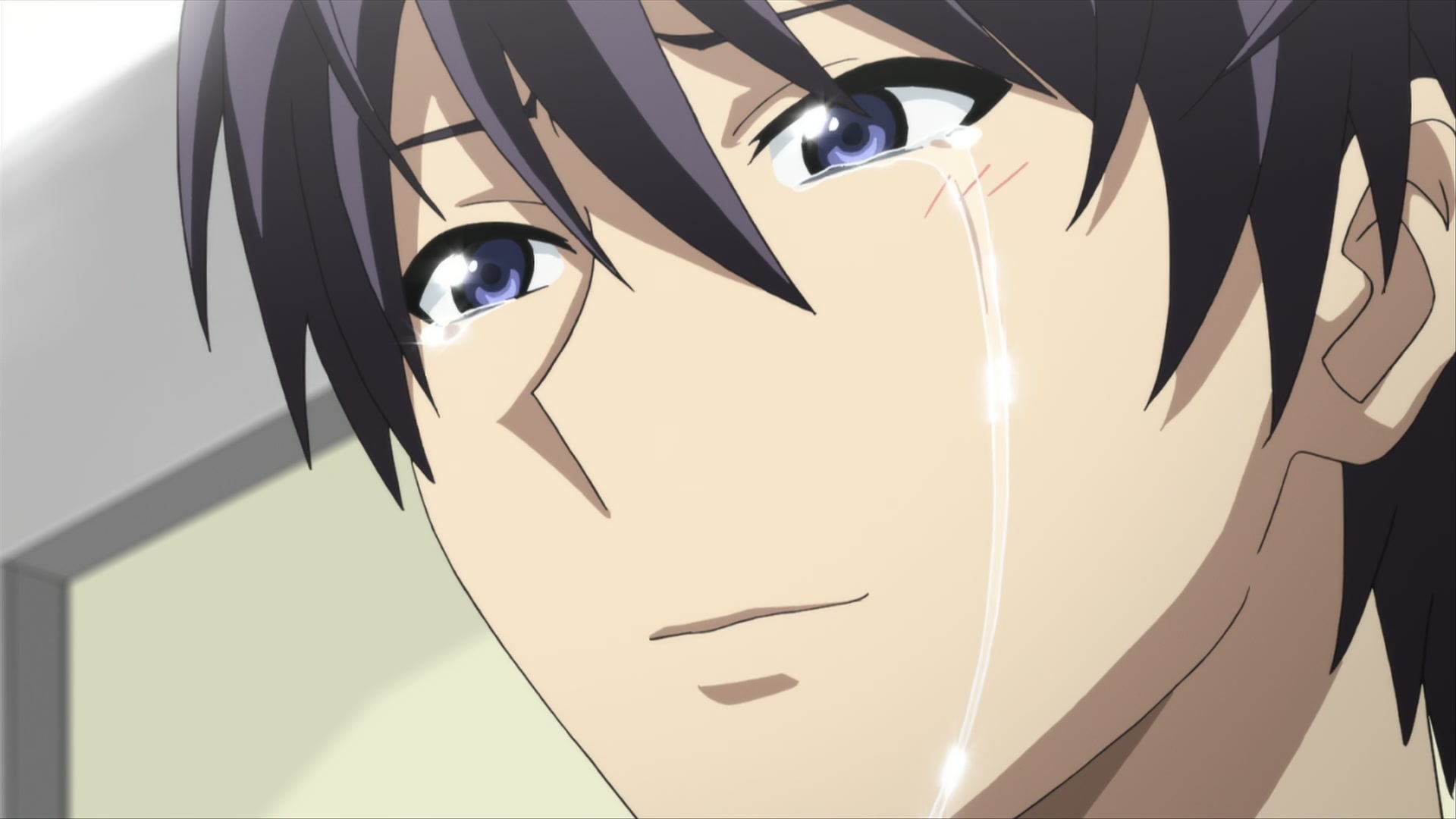
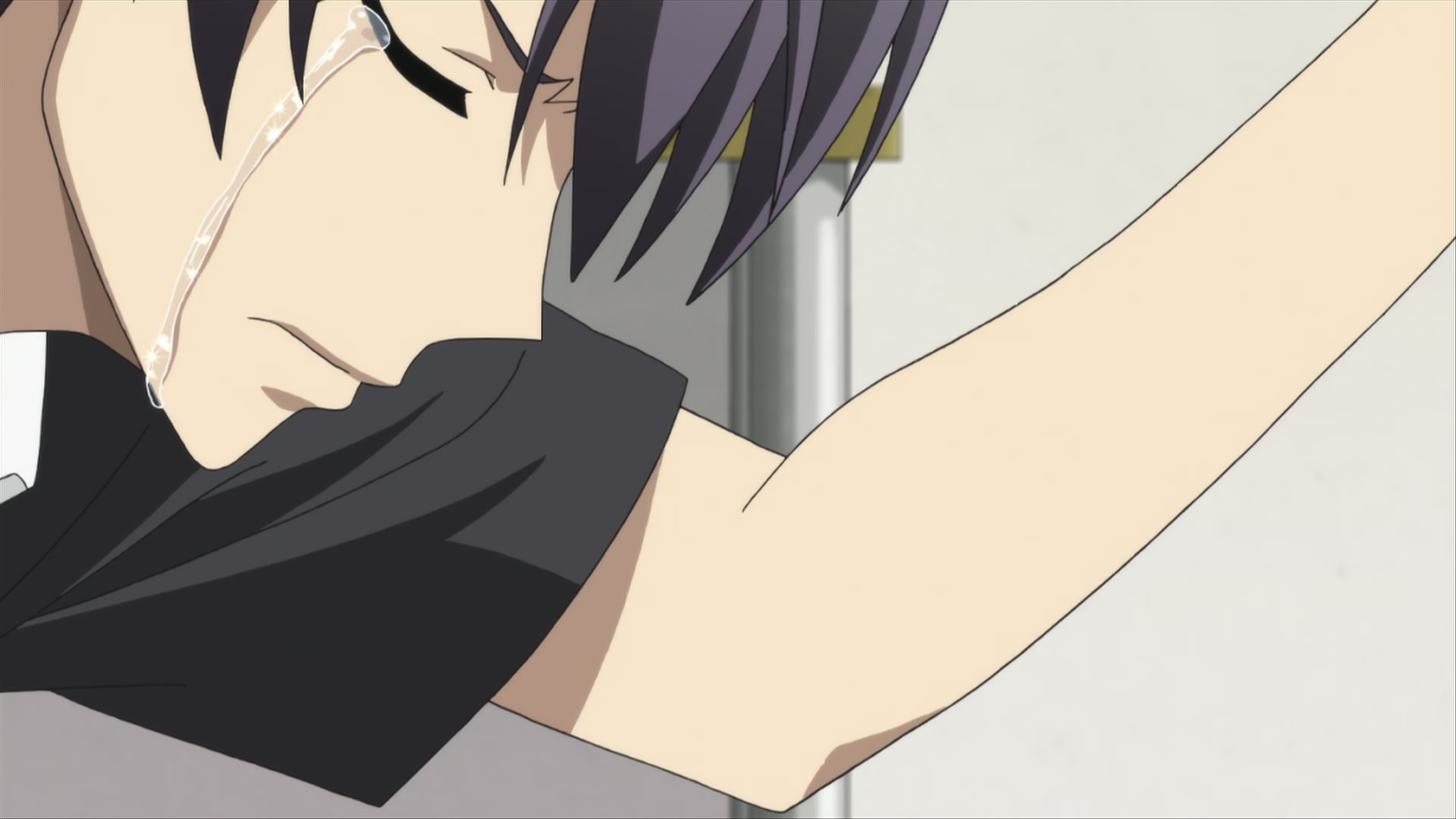
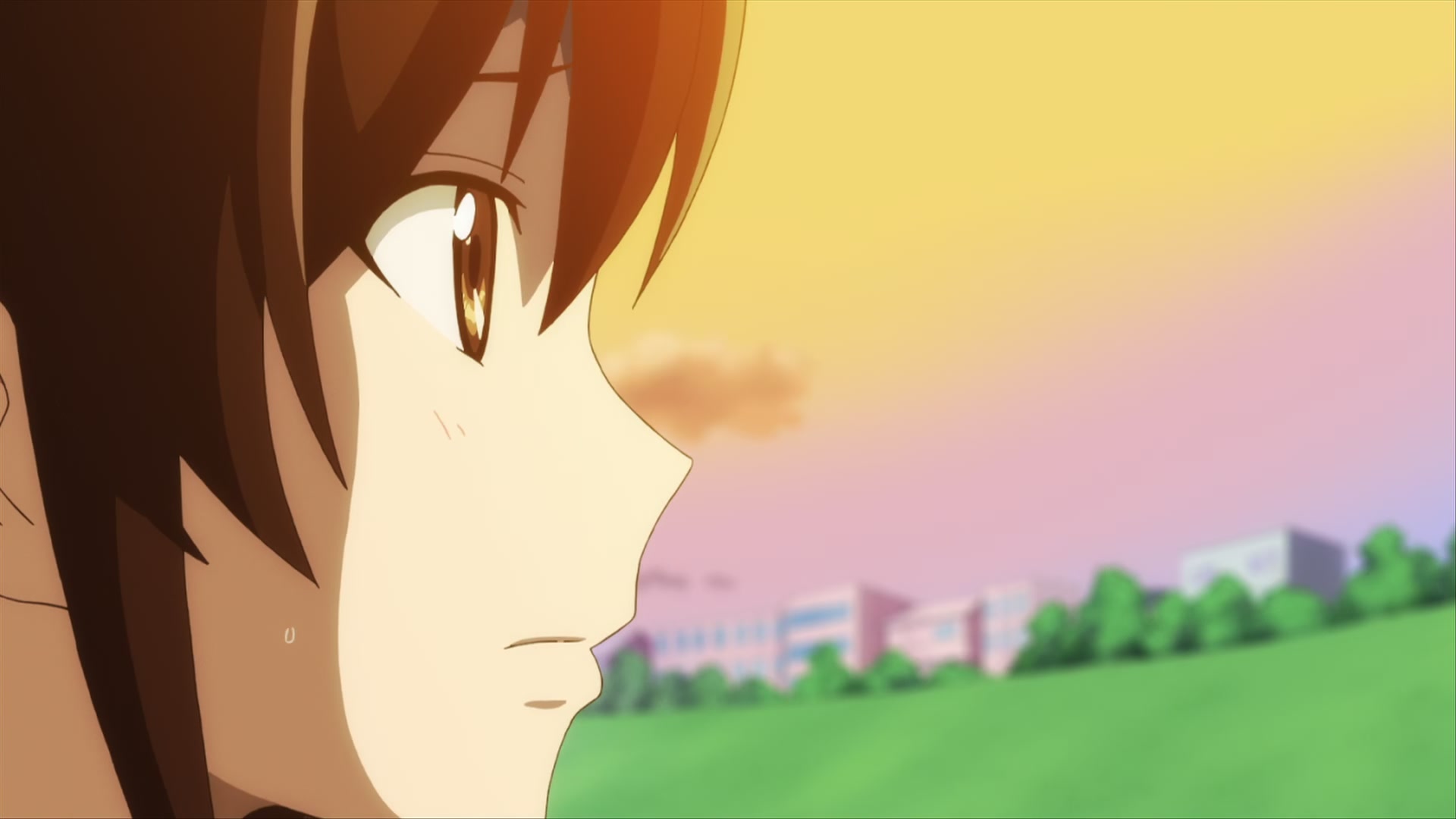
The third mode is sincere melodrama, and this is where the eye rendering pays off. Close-ups during emotional peaks feature highly detailed, shimmering tears with bright specular highlights. The facial acting becomes more restrained, relying on subtle shifts in brow tension and downward gazes rather than broad expressions. These moments are sparse but effective, grounding the absurd comedy in genuine feeling.
Backgrounds and Compositing
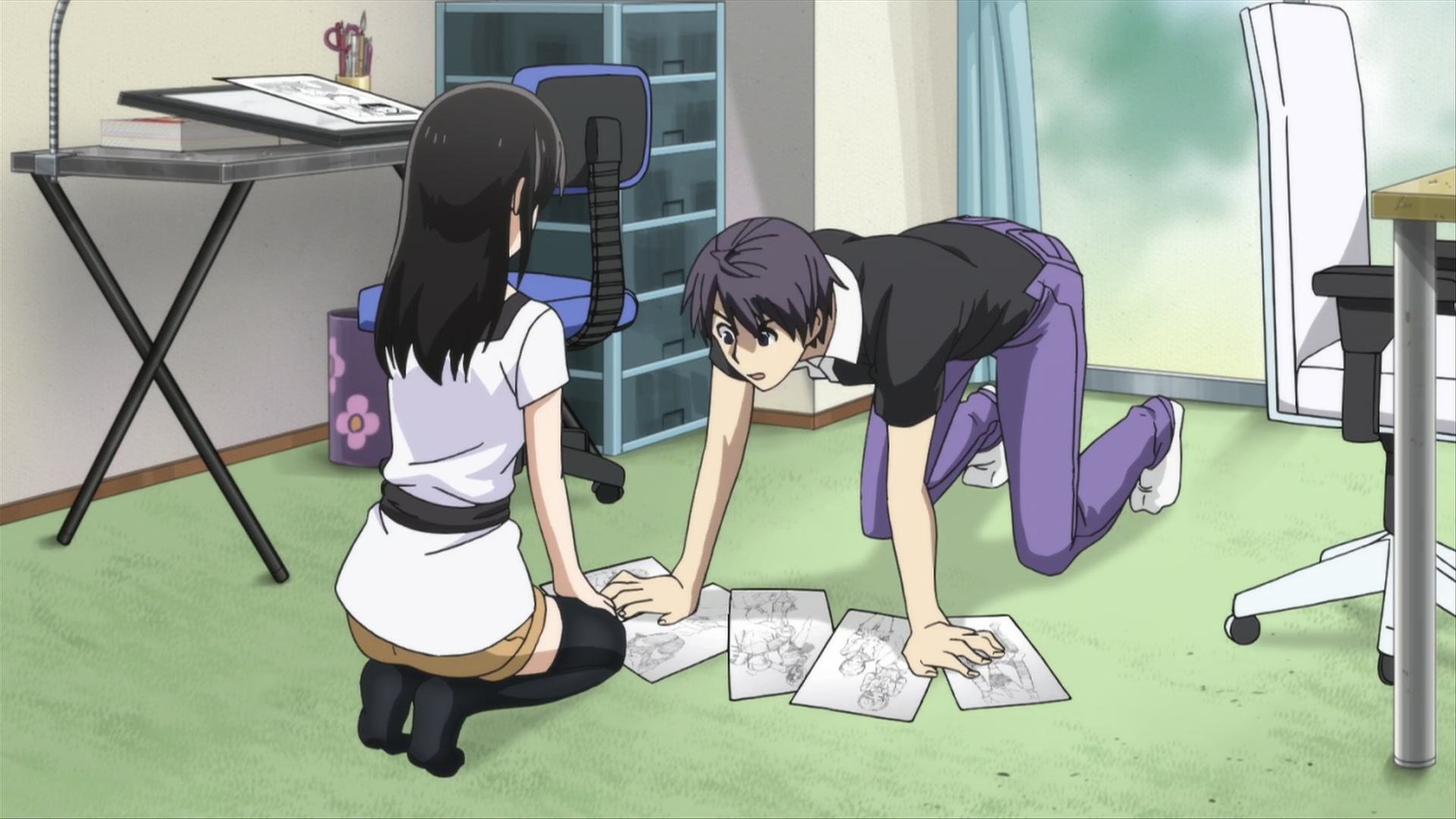
The background art is functional but forgettable. Interiors are clean and readable but lack the lived-in clutter that would make Aito’s workspace feel authentic. This is a studio apartment where a manga artist and his assistants spend most of their lives, but the walls are bare, the desks are tidy, and the chaos of deadlines is suggested more through dialogue than environmental storytelling.
Outdoor environments fare slightly better, with the hot springs episode and the summer festival finale providing some visual variety. However, the compositing can feel flat. Characters occasionally appear to sit on top of backgrounds rather than being integrated into the space. This is most noticeable in standard daytime scenes where contact shadows are missing and environmental lighting does not interact with the characters in a convincing way. The series compensates with heavy digital bloom in dramatic scenes and soft background blur to maintain depth, but the flatness is a persistent reminder of its mid-budget origins.
Animation Quality and Limitations
Much of the series takes place in a single room with characters talking, which naturally limits the need for complex animation. For these dialogue-driven scenes, the limited movement, mouth flaps, minor eye shifts, is entirely appropriate and does not feel like a flaw. The comedy is carried by the timing of cuts and the expressiveness of static poses.
Where the animation shows genuine weakness is in the transitions between poses. Slapstick sequences are energetic but low on frame count, relying on speed lines and exaggerated keyframes rather than fluid in-betweening. This is standard practice for television anime comedy, but it is noticeable if you are looking for it. The physical comedy thrives on clever posing and comedic timing rather than the kind of frame-by-frame craft that elevates a show from competent to exceptional. There are no significant sakuga moments to point to, no sequences where the animation suddenly takes your breath away. The show never looks bad, but it rarely looks special either.

Sound and Music
The soundtrack of Mangaka-san to Assistant-san to is a competent background player that serves the comedy without demanding attention. Light, bouncy tracks underpin the gag sequences, while softer piano or synth melodies support the rare dramatic beats. The music understands its role: it is there to reinforce the mood, not to steal focus. You will not walk away humming the background score, but you will notice when it is doing its job well.
The opening theme is an upbeat, energetic number that sets the comedic tone while featuring the entire main cast in a playful montage. It is the kind of theme that signals to the audience that they are about to watch something light and silly, and it fulfills that promise competently. The ending theme is softer and more reflective, providing a gentle comedown from the chaos of each episode.
The voice acting is where the audio work truly shines, and this is particularly true for the lead performances. Aito’s seiyuu navigates the character’s whiplash emotional range with impressive control. One moment he is delivering a perverted suggestion with complete earnestness, the next he is wailing in despair at his own hopelessness, and then he shifts into quiet, sincere declarations of care for the people around him. Each mode is distinct and committed, and the seamlessness of the transitions is what makes the character work.
Ashisu’s deadpan delivery is a masterclass in understatement. Her flat “I don’t care” and monotone observations are timed with the precision of a comedian who knows that the absence of emotion can be funnier than any outburst. When she does crack, usually in moments of flustered embarrassment or when her sadistic side surfaces, the contrast is electric.
Mihari’s vocal performance is all explosive energy, constant yelling that somehow never becomes grating because it is so clearly rooted in affection. Sena’s tsundere fury is similarly high-energy but pitched at a different frequency, more haughty and imperious where Mihari is harried and exasperated. Rinna’s bubbly cheerfulness rounds out the ensemble with a voice that radiates warmth even when she is saying something completely inappropriate.

Overall Verdict
Mangaka-san to Assistant-san to is not a show that will convert anyone who dislikes ecchi comedy. It is not trying to. It knows exactly what it is, exactly who it is for, and it executes its vision with a sincerity that is difficult to dislike. The series understands that the line between perversion and passion is thinner than most people want to admit, and it argues, through twelve episodes of increasingly warm-hearted chaos, that being honest about your embarrassing desires is a more fulfilling way to live than hiding them.
The comedy is sharp, the characters grow on you faster than you expect, and the secondary storyline about Ashisu’s struggle to debut as a manga artist provides an emotional counterweight that keeps the silliness from feeling weightless. The visuals are polished but unspectacular, the animation is functional rather than inspired, and the music does its job without fanfare. These are limitations, but they do not prevent the series from achieving what it sets out to achieve.
I would recommend this to fans of mid-2010s gag comedies, to anyone who has ever tried to create something while wrestling with their own weird impulses, and to viewers who appreciate a show that loves its characters even when those characters are being insufferable. If the premise sounds exhausting, it probably will be. If it sounds like the kind of honest, unpretentious chaos you have been missing, you will find a lot to enjoy here.
The white briefs really do say it all. Beneath the noise, beneath the panty debates and the breast-measurement panic and the accidental groping incidents, there is a pure-hearted wish to stay close to the people you love. That is not a bad thing to build a comedy around.


Gallery