


Introduction
Most stories about artists focus on the moment of breakthrough. The gallery opening, the debut publication, the performance that changes everything. But for every artist who breaks through, there are years, sometimes decades, of work that nobody sees, work that fails, work that comes close but not close enough. And most stories skip that part because most stories find it boring.
Comic Girls does not skip that part. In fact, it lives there.
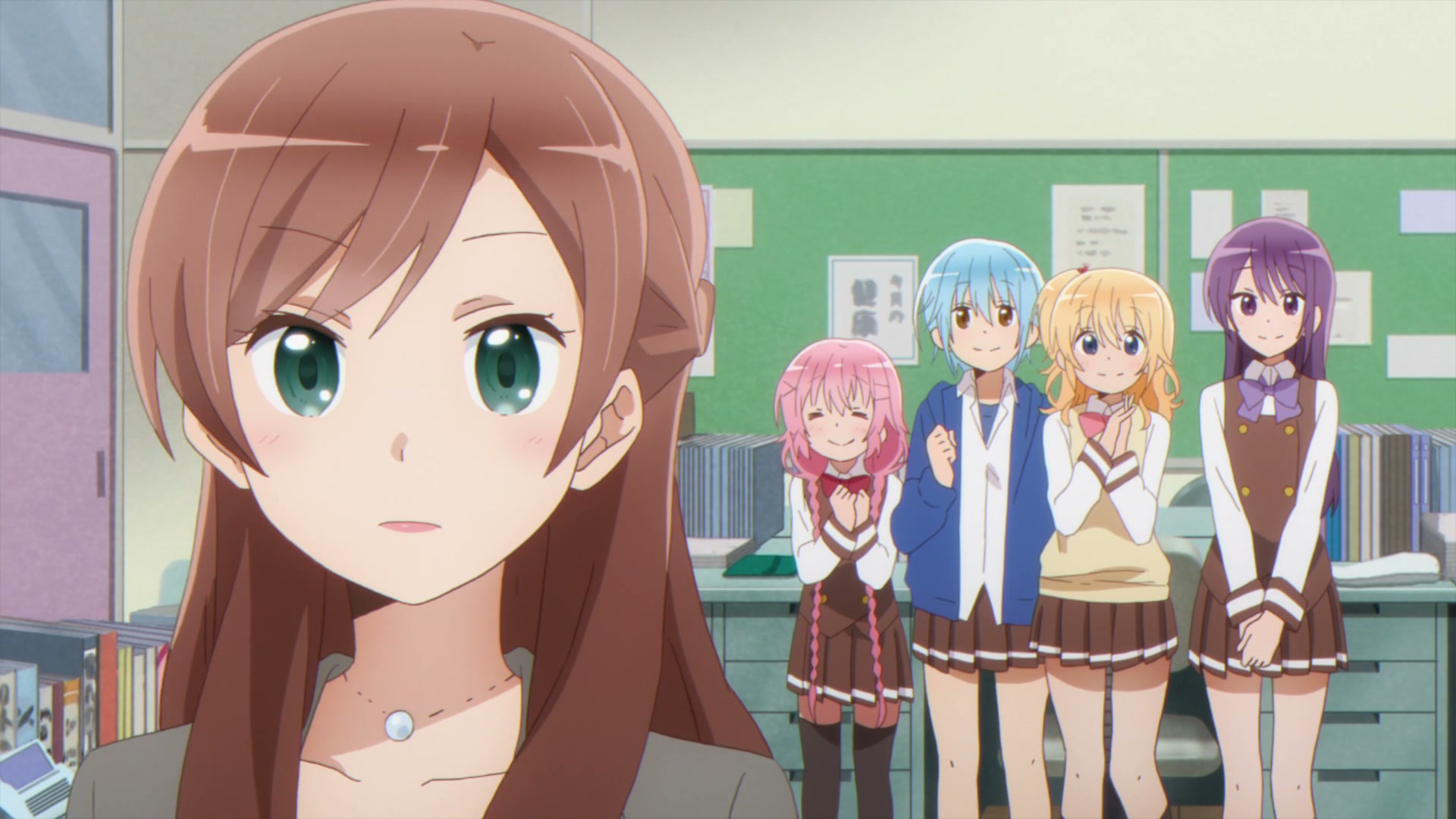
The series follows four high school girls living in a dormitory operated by manga publisher Bunhousha. They are all manga artists, though at very different stages of their careers. Tsubasa Katsuki writes a popular shonen battle series under the pen name Wing V. Ruki Irokawa draws explicit teens’ love manga as the mortifyingly named Big Boobies Heart Himeko. Koyume Koizuka works on shojo romance while never having been in love herself. And then there is Kaoruko Moeta, pen name Kaos, whose 4-panel manga submissions get rejected over and over while her editor begs her to “look at reality a little more.”
That Kaos is the protagonist tells you what kind of story this is. Not a success story. Not exactly. But something rarer: a story about what it costs to keep going when success is not guaranteed and may never come.
If you have ever made anything, ever tried to get better at something while watching peers surpass you, ever woken up at 3 AM convinced you are a fraud and everyone will soon find out, Comic Girls will recognize you. It is warm and funny and pastel-colored, but its understanding of creative insecurity is surgical.
Story and Themes
The Kaospiral and the Structure of Failure
Comic Girls runs twelve episodes and covers roughly a year in the lives of its characters, from Kaos’s arrival at the dorm in spring through to the next year’s reunion in a new building. Its structure is episodic in the slice-of-life tradition, each episode balancing an A-plot (usually Kaos-related) with a B-plot involving one or more of the other girls. The pacing is gentle, punctuated by seasonal events: the beach in summer, exams in fall, Christmas and New Year’s in winter.
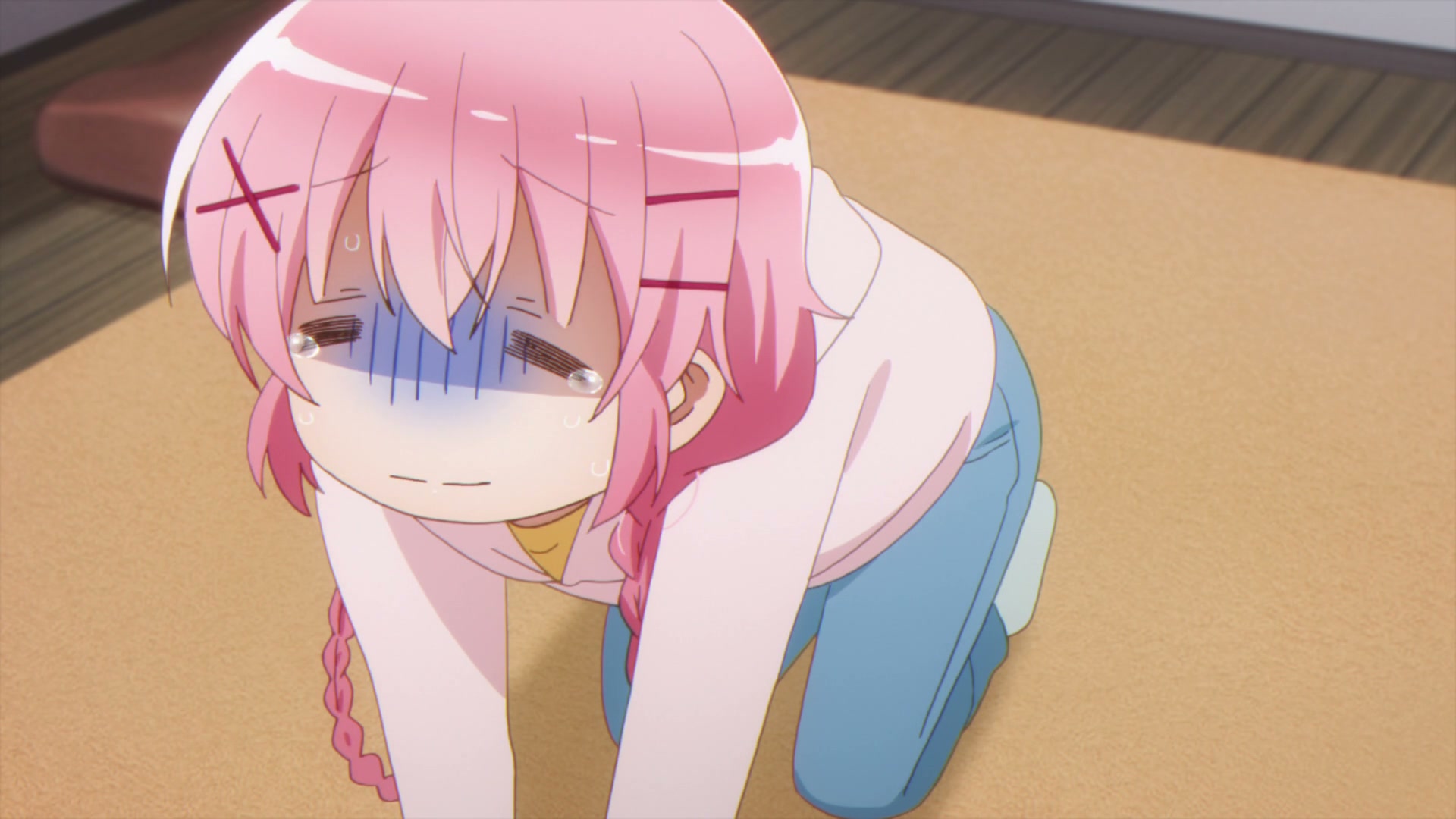
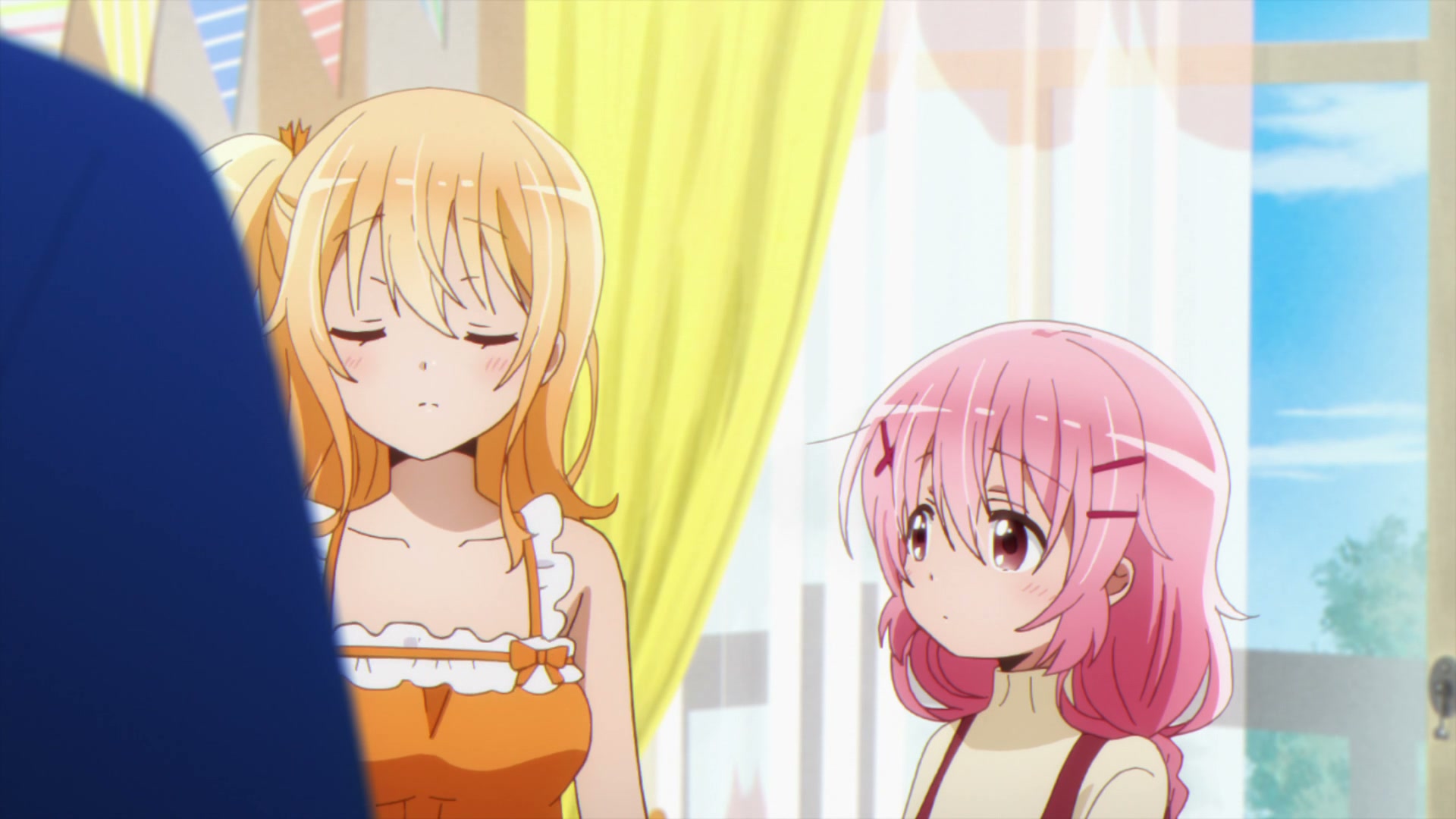
What gives the series its specific rhythm is what the characters themselves name the “Kaospiral.” This is Kaos’s pattern: she receives good news or observes someone else’s success, which reminds her of her own inadequacy, which triggers catastrophic self-assessment, which paralyzes her ability to work, which makes the inadequacy real. Around episode three, the other girls have learned to recognize the spiral, and much of the series concerns their various strategies for interrupting it: Koyume with food and hugs, Ruki with practical reassurance, Tsubasa with battle-manga motivational speeches.
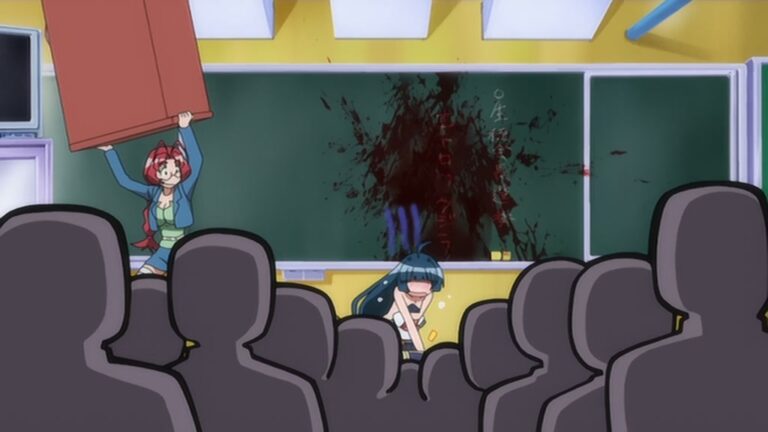
The spiral is played for comedy, and it is funny. Kaos thanking God for whipped cream, Kaos planning to draw a doughnut ten thousand times before eating it, Kaos threatening to shave her head when a scary senpai appears. But the series never treats the underlying anxiety as a joke. When Kaos collapses from overwork after forgetting to eat for days while obsessively revising a storyboard, the Matron calls her mother for cooking advice. The scene is played straight because the situation is serious: Kaos’s relationship with her work has become physically dangerous, and the people around her recognize this.
The breakthrough, when it comes in the final arc, is the series’ most psychologically acute observation. Kaos brings her editor four storyboards at once. The first three are ambitious genre exercises: a romantic comedy, an erotic story, a fantasy battle series. Each tries hard to be what Kaos thinks manga should be, and each fails in specifically revealing ways. The romantic comedy’s male lead, based on Kaos’s father, chops firewood during school breaks and makes dad jokes; Amisawa correctly notes he is not charming. The erotic story’s idea of sexiness is a panty shot, after which the male lead returns to chopping wood; Amisawa correctly notes this is not erotic. The fantasy story is generic in ways Kaos herself recognizes.
The fourth storyboard Kaos draws without ambition, without trying to write to market, “when I couldn’t really think of anything.” It is a slice-of-life piece about high school girls, and it works because it channels, without forcing, the actual happiness Kaos has experienced at the dorm. Amisawa’s verdict is that it is “easy to read because there aren’t any weird backstories or tricks.” Kaos relaxed, and “your uniqueness came out in this comic.”
This is the series’ thesis: trying harder often makes creative work worse. Authenticity emerges when you stop performing. The experiences you think are too mundane to be material, the simple happiness of eating crêpes with friends or being scared by a horror senpai, are exactly what makes your work yours.
The Split Self
Every character in Comic Girls maintains a separation between who they are and who they present as. The series treats these splits with more nuance than simple comedic irony.
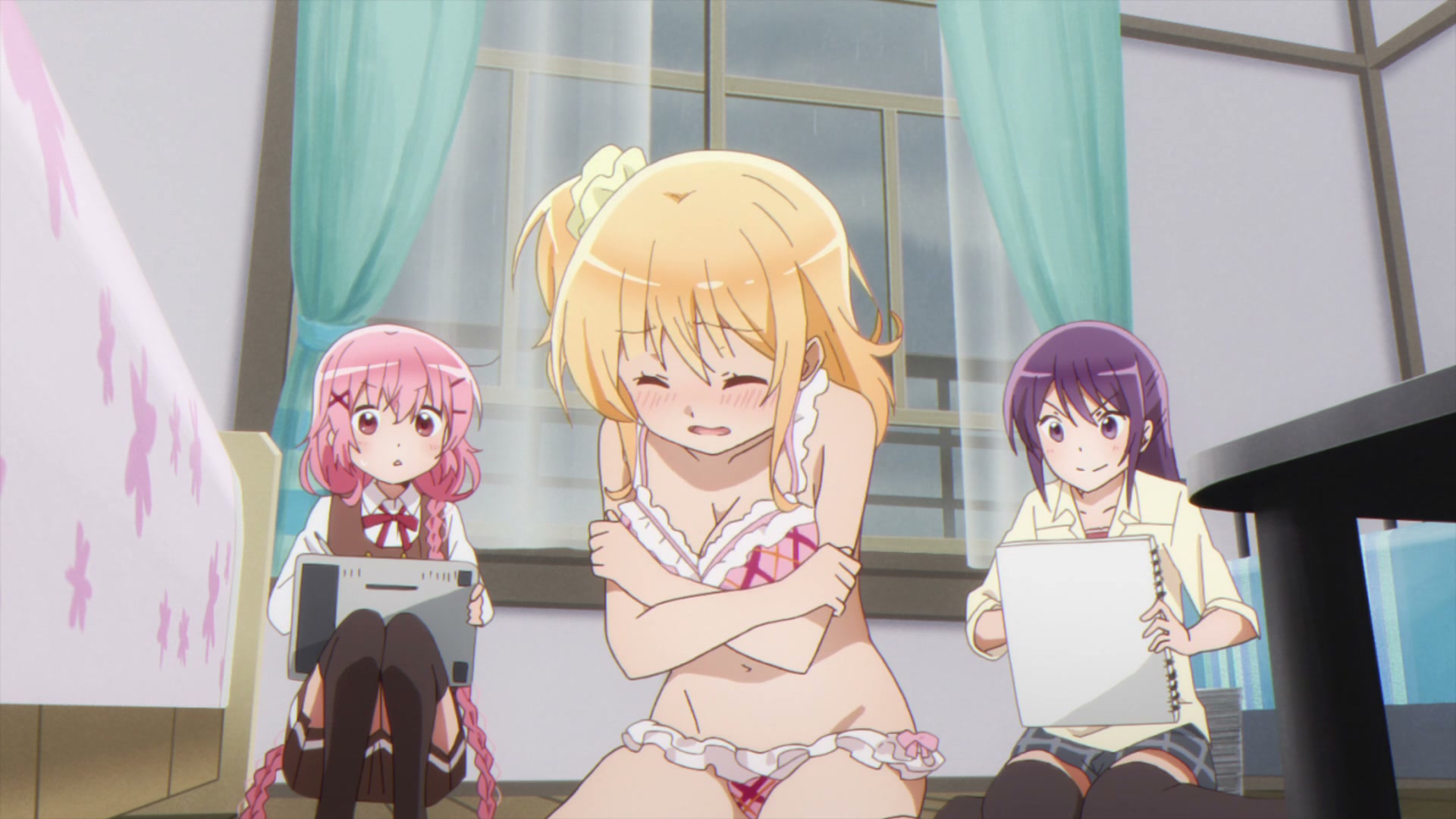
Ruki draws explicit content under a name that mocks her own body. She is small-chested, writing as Big Boobies Himeko. She submitted children’s manga originally; her editor redirected her because she drew appealing curves. She continues because the series sells, and she has developed a readership, and the autograph signing episode shows her discovering genuine meaning in that readership. A married woman calls her “Himeko-oneesama.” Girls ask her for relationship advice. She delivers impromptu wisdom about confidence and self-love that surprises even herself. But she still hates the pen name. She still pads her bras for events. The series refuses the easy resolution where she learns to love her work unreservedly. Some compromises remain compromises.
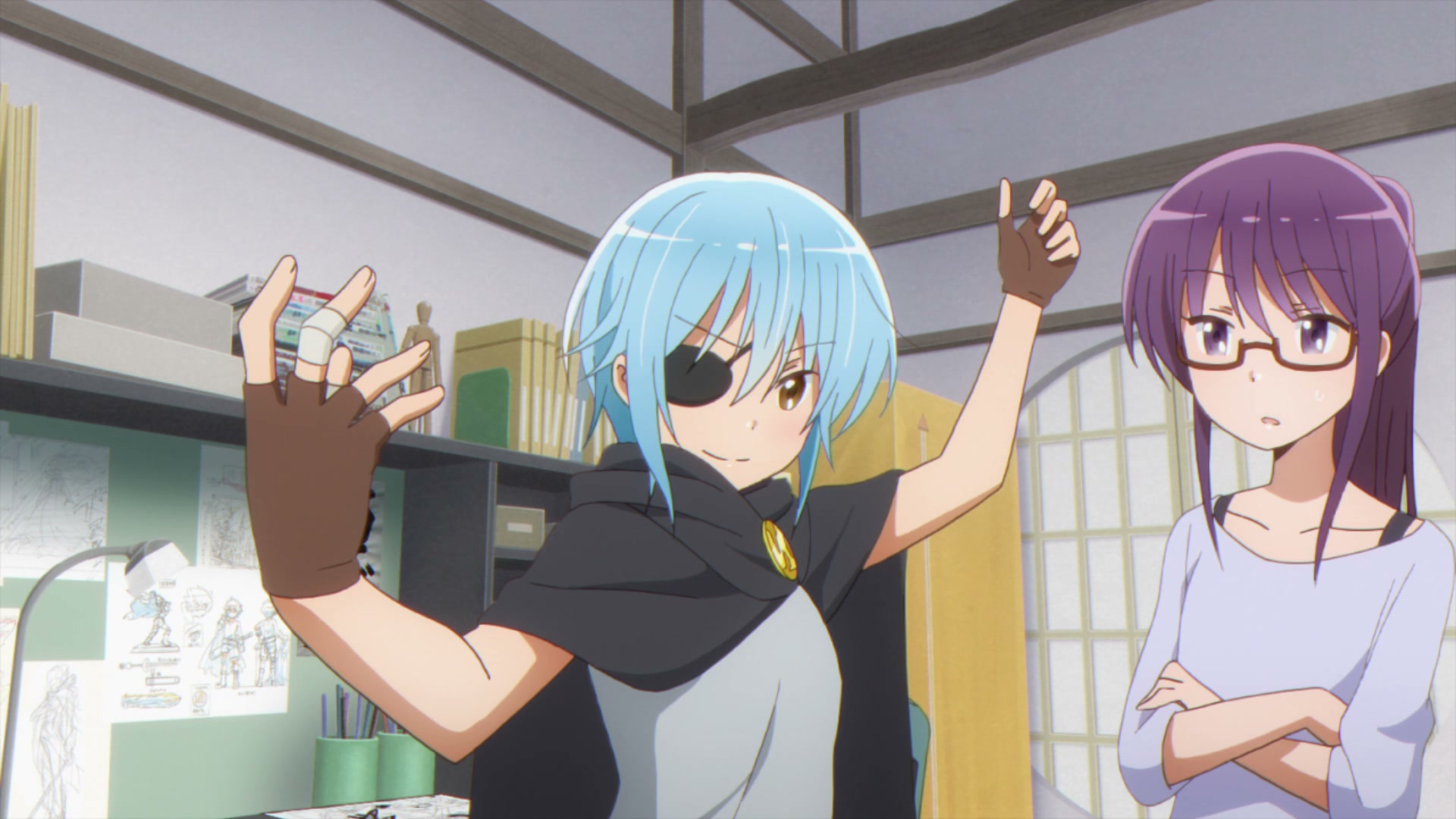
Tsubasa maintains a masculine-coded public identity as Wing V because “being a high-school girl author doesn’t fit with the image of shonen mangas.” She cut her hair short for efficiency. She eliminated everything feminine from her life, including the chick-shaped hair ties she once planned to wear. When Koyume coaxes her into trying on cute clothes during a shopping trip, she is briefly, visibly happy, then embarrassed. The self she suppressed is not gone, just buried. Her family visits, where she transforms within hours into a refined young lady who forgets what a storyboard is, suggest that the suppression is a survival strategy, not a preference. Tsubasa without manga is a polished shell. Tsubasa with manga requires the Wing V persona, the cape and eyepatch, the declarations about dark energy. Both selves are constructed; neither is entirely false.
Nijino-sensei performs strict teacher authority while secretly cosplaying at anime events and obsessing over her student’s manga protagonist’s kneecaps. The Matron, Ririka, was once Rika Sonoda, a critically praised manga artist who quit when reader expectations made drawing “not fun anymore.” She now supports young artists as a dorm mother, staying close to the thing she loves at a distance she can bear.
The series does not condemn these splits. It treats them as adaptive strategies for surviving in systems, the manga industry, school hierarchies, family expectations, that make total self-expression too costly. The dormitory is valuable precisely because it is one of the few spaces where the splits do not need to be maintained quite so rigorously.
Professional and Amateur
The series opens with Kaos receiving the worst possible survey results. The most pointed criticism, the one she internalizes most deeply, is that the author of her manga “should try to look at reality a little more.” She is a high school girl who cannot write convincing high school girls because she never learned to be one. She spent her adolescence drawing manga, not making friends.
The implication is that amateur work is solipsistic, drawn from imagination rather than observation, while professional work engages with actual experience. But the series complicates this. Tsubasa, the most successful artist, achieves her effects through complete immersion in a fantasy persona. Ruki draws explicit content from pure imagination with zero personal experience. Koyume’s improvement comes not from conventional research but from channeling her confused feelings for Tsubasa into her male character designs.
What separates the professionals from the amateurs in this series is not technique or even authenticity. It is method. Tsubasa has her character-mode immersion. Ruki has her reference sessions with Koyume as model. Koyume has her emotional channeling. They have developed reliable processes for producing work, processes that work for them even when the content is personally embarrassing or emotionally complicated. Kaos’s arc is about finding her method, which turns out to be: stop trying so hard, and draw what you actually care about.
The Economics of Manga
The series is gentler about industry realities than something like Bakuman, but it does not ignore them entirely. Ruki was redirected from children’s manga to explicit content because that is where the market placed her. She stays because the series is popular, and she has fans, and she needs the income. The career path survey episode confirms that all the girls recognize manga might not be sustainable. Ruki plans to get a nursery school teacher license as backup. Koyume can inherit her family’s sweets shop. The Matron’s confession that she quit professional manga when commercial pressure killed her enjoyment contextualizes everyone’s anxiety.
The dormitory’s impending demolition adds another layer. This community, this specific network of support, is temporary. The publisher will place the girls in a new building, but the configuration will change. The roasted sweet potato party, where rejected storyboards are burned as fuel, becomes a ritual of letting go. Failure is not hidden, but repurposed. Something has to burn for something else to sustain you.
Characters
Kaoruko Moeta: The Weight of Wanting
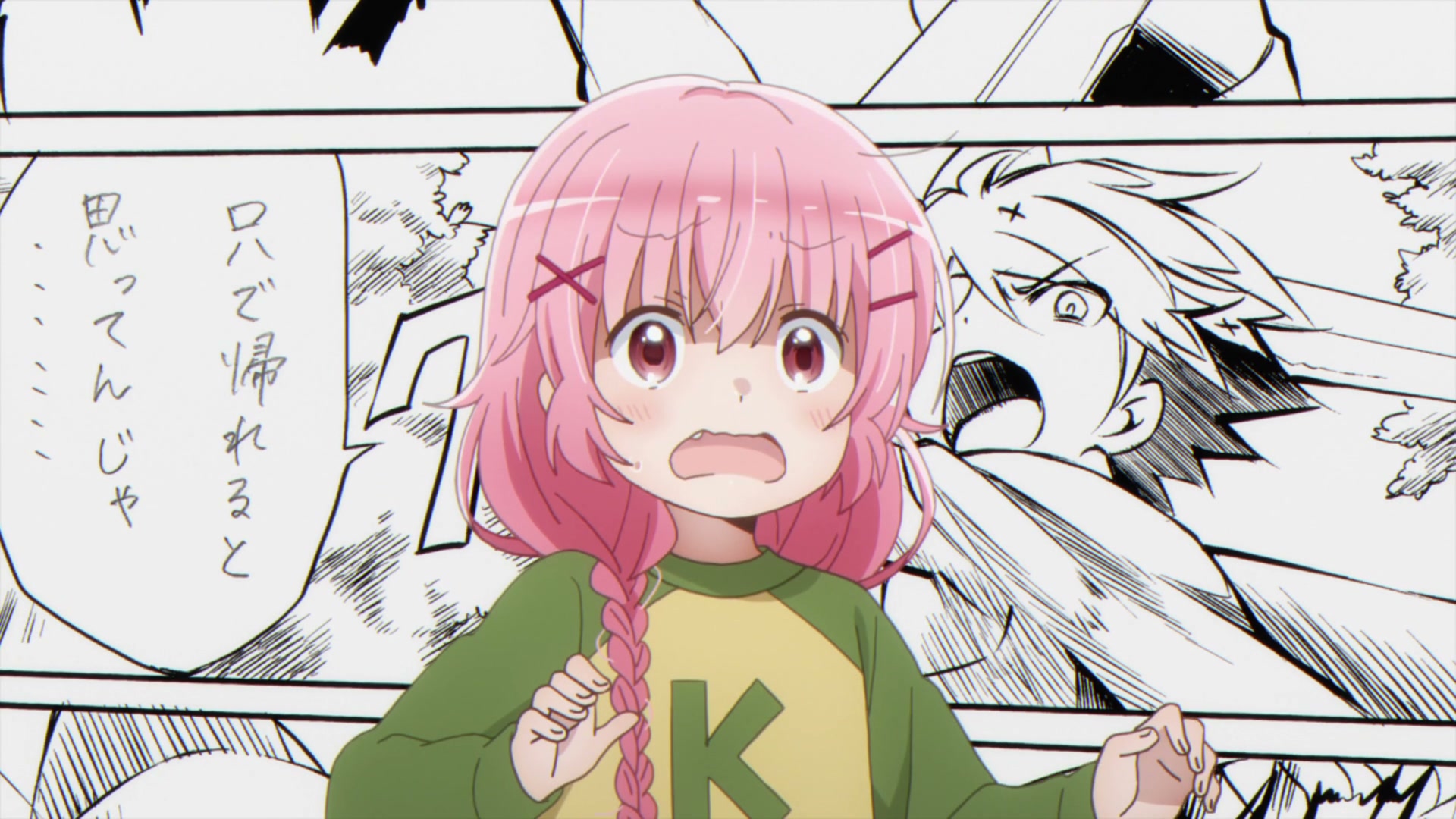
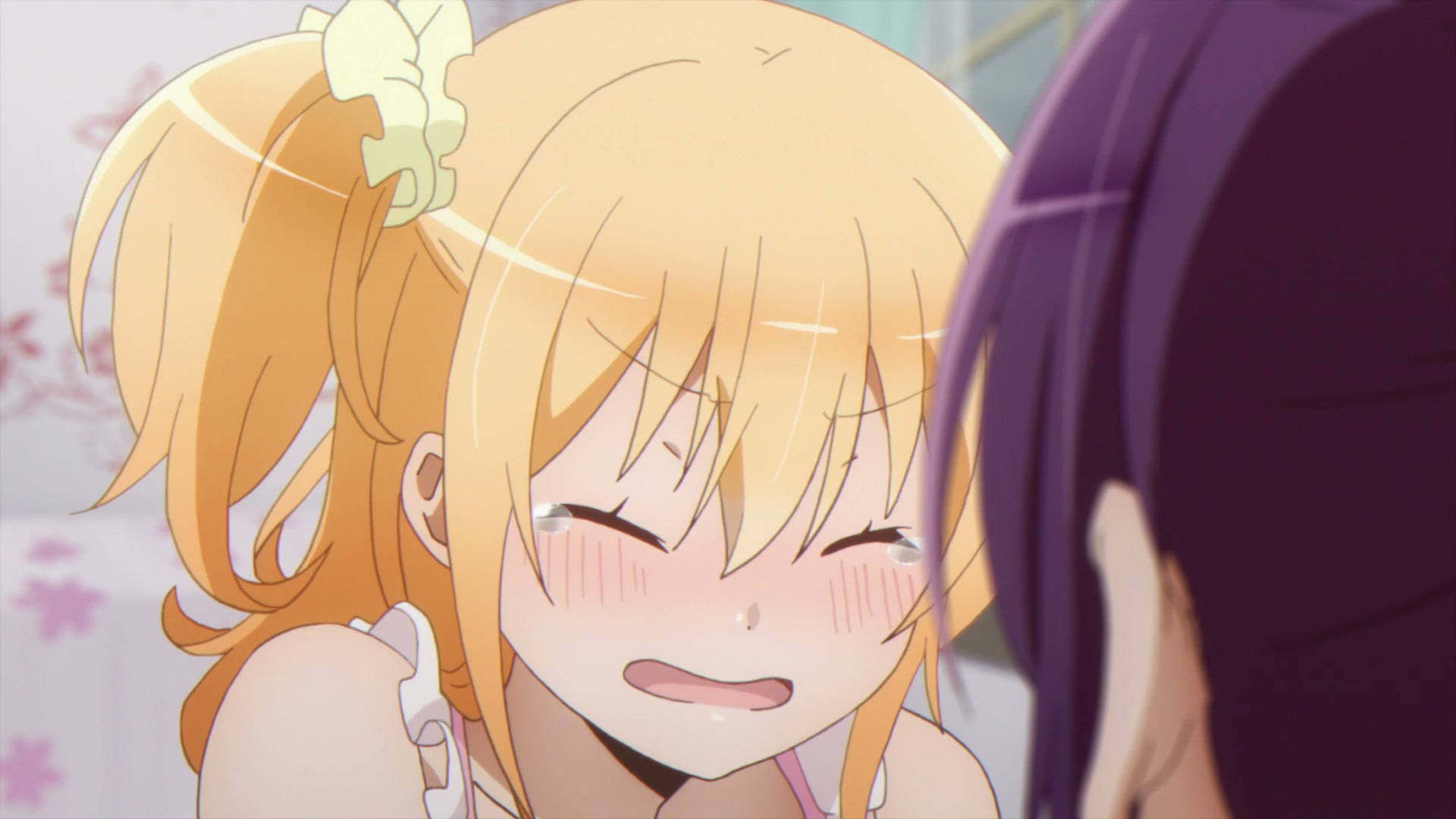
Kaos is a difficult protagonist to love if you do not recognize yourself in her. She is anxious, self-sabotaging, and so convinced of her worthlessness that she apologizes for her own existence. She thanks God for whipped cream. She describes herself as “more useless than a scourer.” When her friends give her a doughnut, she plans to draw it ten thousand times before eating it so she never forgets the kindness.
But the series is clear-eyed about what lies beneath this self-abasement. Kaos wants to be a manga artist more than anything, and she is not good enough yet, and that gap between desire and ability is where she lives. She does not withdraw from the pain. She keeps submitting storyboards. By episode eleven, she brings four at once, having worked through the night in a desperate push for approval. Her editor Amisawa, drunk and crying, describes watching Kaos tremble “like she’s going to die” after each rejection, yet return within days “all chipper” with new material. This is not fragility. This is ferocity wearing a fragile mask.
Her breakthrough has already been described. What matters afterward is that the series does not reward her with serialization. She gets a two-part guest spot. She produces good work, her best yet. And at the series’ end, she is still being rejected, still drawing, still living in the gap. The victory is not arrival. The victory is continuing.
Koyume Koizuka: Feeling Without Knowing
Koyume appears, initially, as Kaos’s opposite. Cheerful, social, instantly making friends at school while Kaos freezes during self-introductions. She volunteers for the dorm immediately, without hesitation. She organizes beach trips because “it’s summer.” She responds to Kaos’s despair with doughnuts and physical affection.
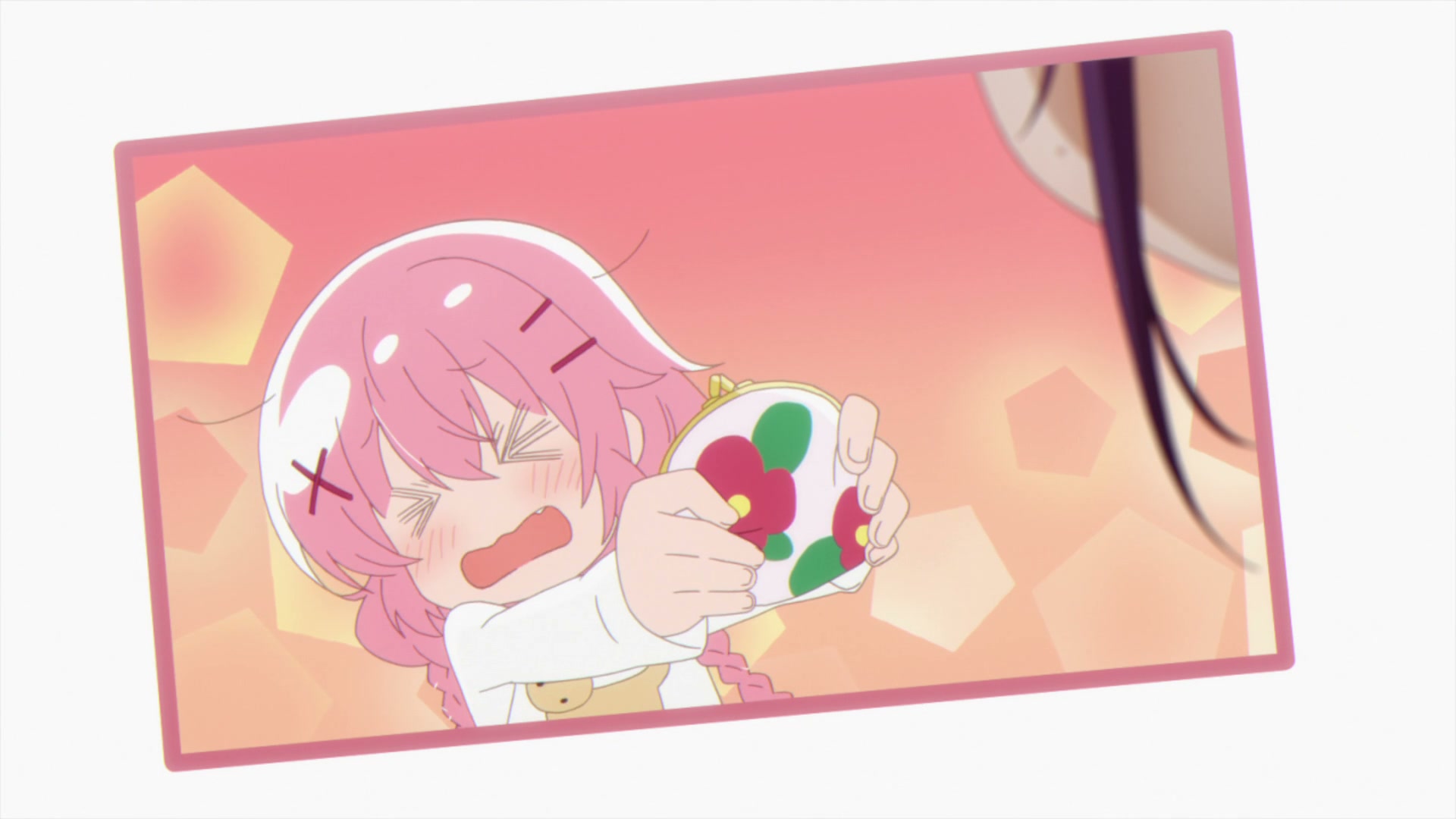
Her own insecurity is specific and professionally limiting. She is a shojo manga artist who has never been in love. Her male characters are unconvincing. Her editor tells her she might manage one-off stories but lacks the experience for serialization. Her solution is to mine her confused feelings for Tsubasa, who is female but “cool and really hot,” who is “like a prince, but can be really innocent and cute.” The male lead in her serialized series becomes recognizably Tsubasa-like, and her editor notices the new “love in the drawings.”
What is notable is that the series never resolves her romantic situation. She does not confess to Tsubasa. Tsubasa does not realize Koyume’s feelings. The Ferris wheel scene, where Koyume nearly speaks and Tsubasa interprets her anxiety as being about manga deadlines, captures the gap between them permanently. Koyume’s arc concludes with professional achievement rather than romantic consummation. The feelings mattered as creative fuel. Their resolution was never the point.
Ruki Irokawa: Shame as Profession
Ruki is the most outwardly mature and internally conflicted of the main cast. She is beautiful, composed, and practical. She coordinates study sessions, plans backup careers, and maintains plausible deniability about her manga at school. She also draws explicit content under a pen name that mocks her body, experiences annual Christmas depression from being single on her birthday, and keeps a plushie she cannot sleep without.
Her autograph signing in episode four is the series’ most direct engagement with the artist-audience relationship. Meeting real fans who love her work, a married woman calling her “Himeko-oneesama,” girls seeking relationship advice, transforms her understanding of what she provides. She delivers genuine life advice. She realizes her “pervy manga” has touched real people. She stops being entirely ashamed.
But she does not stop being embarrassed. The series is honest that some compromises do not resolve cleanly. Ruki will always be somewhat at odds with her work. What changes is her capacity to hold pride and shame simultaneously rather than letting shame dominate.
Tsubasa Katsuki: The Will to Draw
Tsubasa is successfully serialized, physically disciplined, and emotionally stoic. She frames everything through her manga’s vocabulary: deadlines are battles, artistic blocks are enemies, her editor’s suggestions are quests. When comforting Kaos, she does not offer empathy but declares “We made it through this battlefield together, my comrade.”
This persona is both genuine and constructed. Tsubasa experiences intense emotions but filters them through genre conventions she can manage. Her suppressed femininity, she used to be much girlier, planned to wear chick-shaped hair ties, was “cute like a little chick,” was deliberately buried to maintain the ambiguous presentation that lets readers assume Wing V is male. Koyume’s coaxing briefly restores the earlier self, but Tsubasa cannot sustain both identities simultaneously.
Her family situation is the series’ darkest thread. The Katsuki household is wealthy and suffocating. Her parents dote on “Angel-chan” while imposing expectations that conflict with her manga career. The New Year’s visit shows Tsubasa’s personality erasing within hours, replaced by a refined young lady who forgets what a storyboard is. Kaos has to threaten to expose embarrassing photos to snap her back. The threat is comedic, but what it addresses is not. Tsubasa’s creative identity is precarious enough that her family environment can dissolve it.
Suzu Fuura: Loneliness as Performance
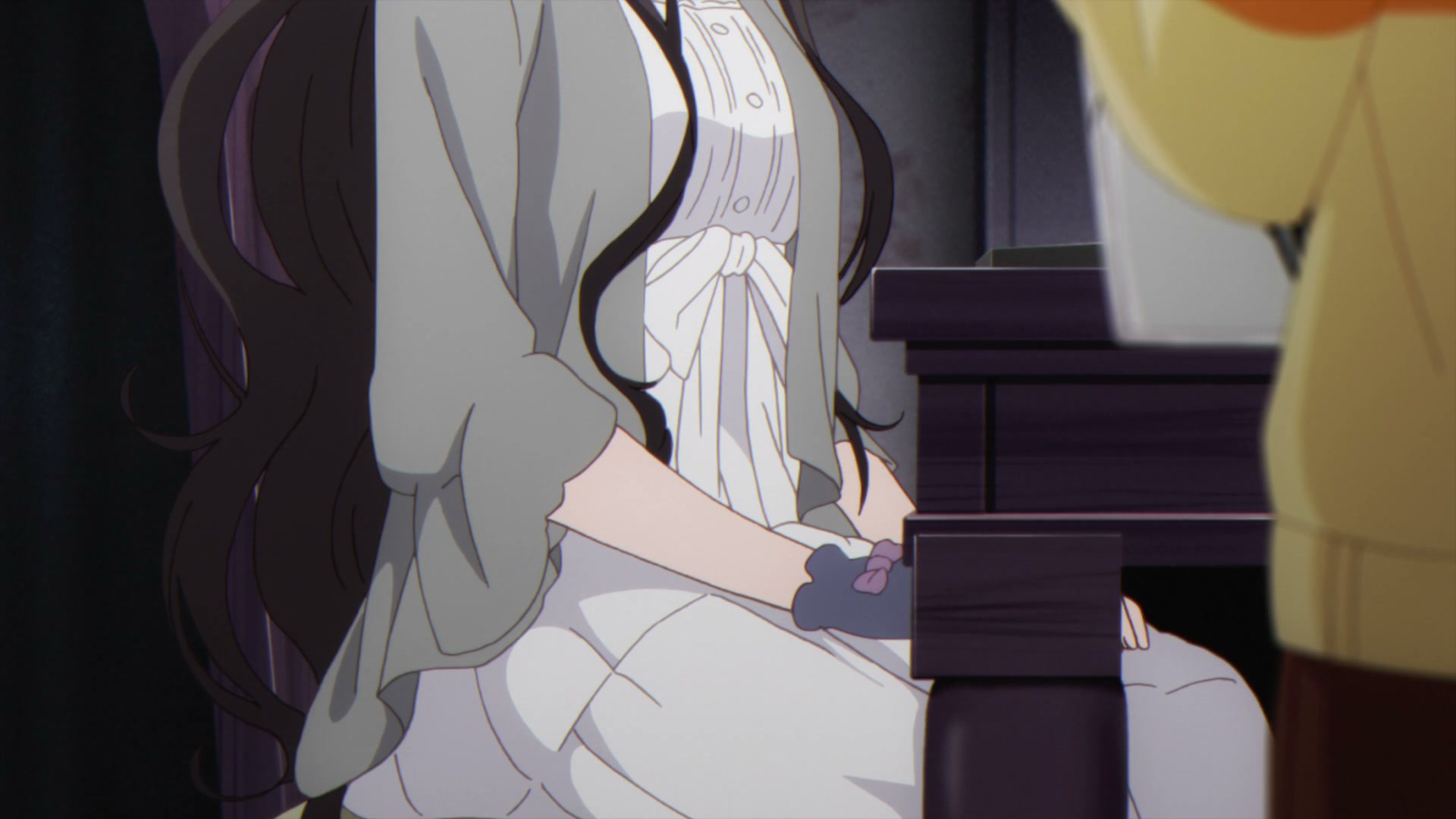
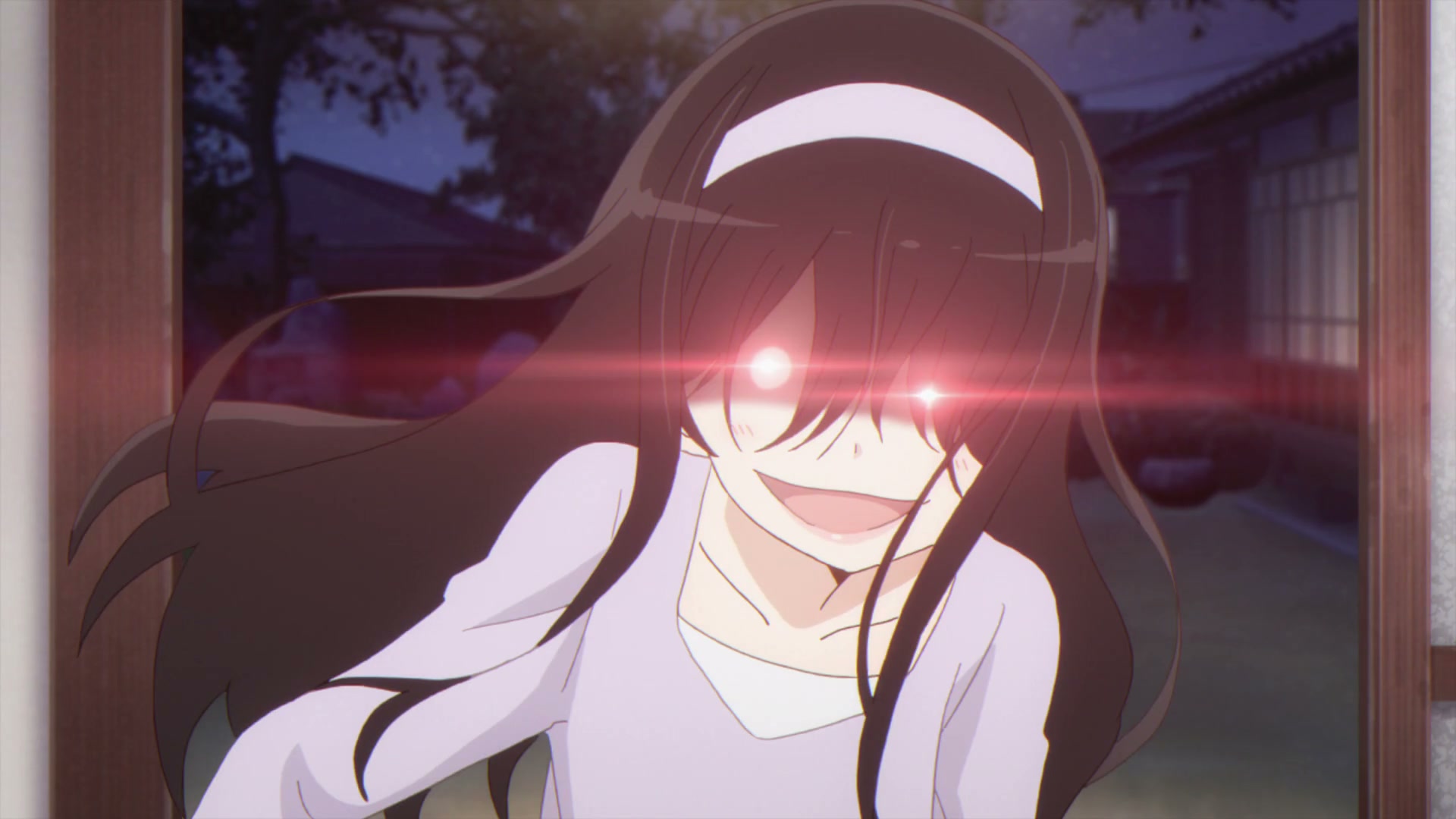
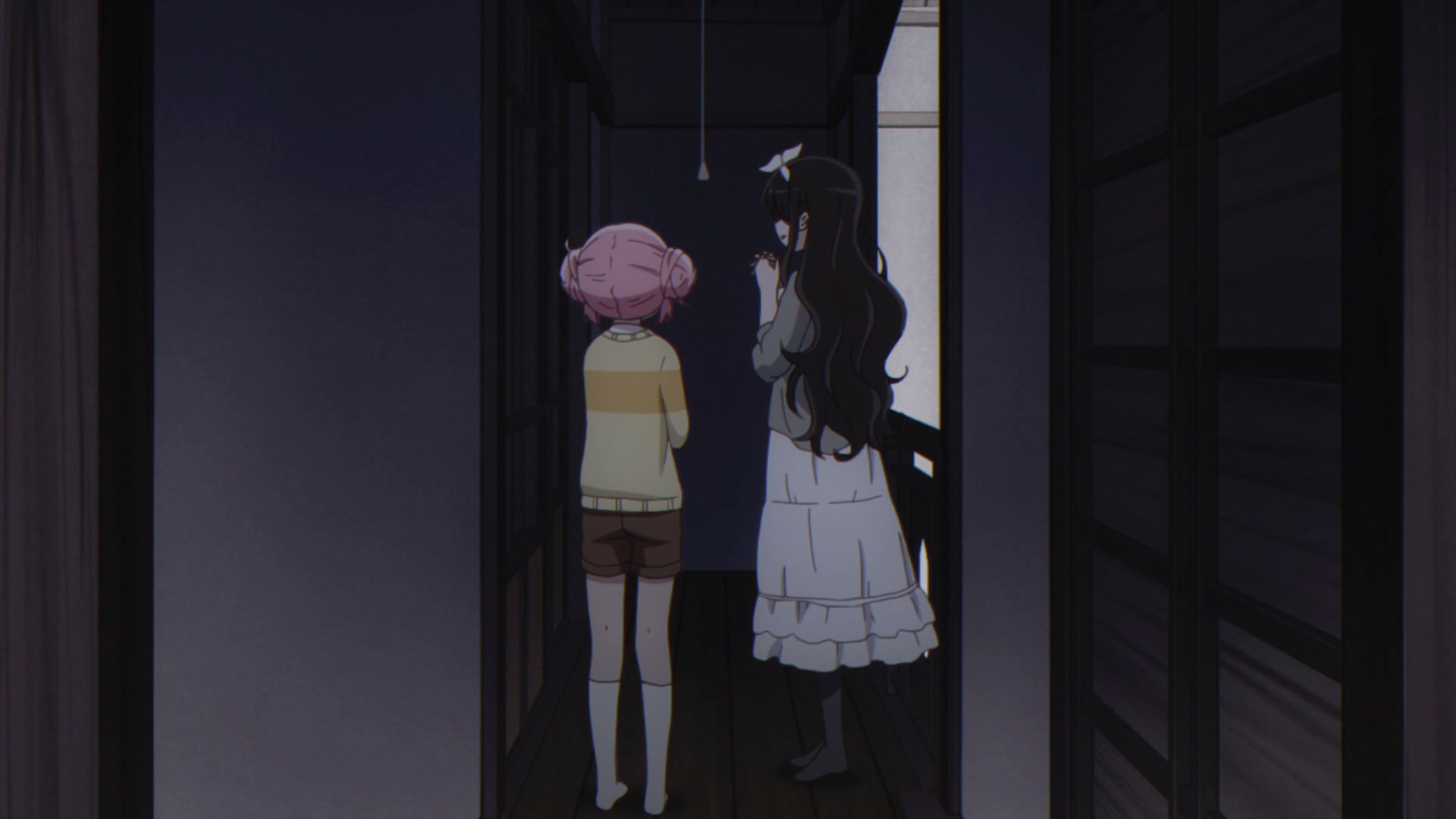
Fuura arrives midway through the series as a horror-comedy presence: long black hair, pale skin, appearing silently behind people. She feeds on Kaos’s screams, which she claims help her draw “such wonderful pictures.” The initial episodes treat her as a running gag.
Then the reveal: her roommate abandoned her without explanation. She has no contact information, no idea if the roommate will ever return. She has been “so alone.” Her scary behavior is a maladaptive attempt at connection from someone who “doesn’t really know how to interact with others very well.”
Kaos recognizes herself in Fuura immediately. When Fuura whispers “I’m so awkward. That’s why you’re all avoiding me,” it cuts through Kaos’s fear because Kaos has felt exactly that her entire life. The moment Kaos opens the door despite her terror, declaring “I understand,” is the series’ most direct statement about the continuity between its comedy and its pathos. Fuura is not secretly evil or secretly tragic. She is just Kaos with longer hair and more unsettling hobbies.
Supporting Cast
Amisawa Mayu, Kaos’s editor, initially seems harsh. She rejects storyboard after storyboard with devastating specificity. But her drunken breakdown reveals deep investment: she is terrified her harshness will drive Kaos to quit, and watching Kaos return again and again fills her with admiration she cannot express professionally. Her own history, she was once a manga artist whose old work “looks like Kaos-chan’s manga,” suggests she sees her younger self in Kaos’s struggles and is determined Kaos not meet the same end.
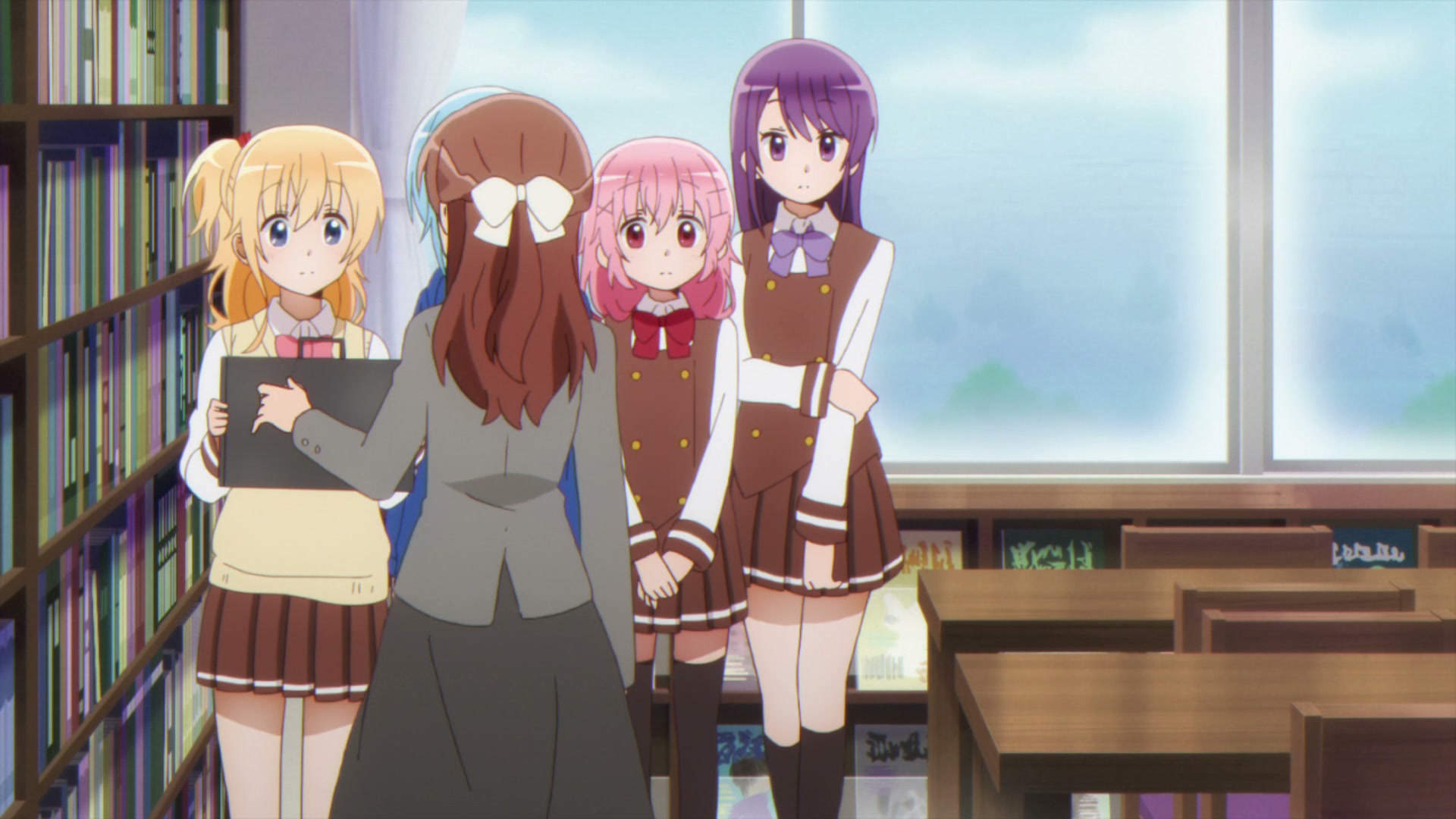
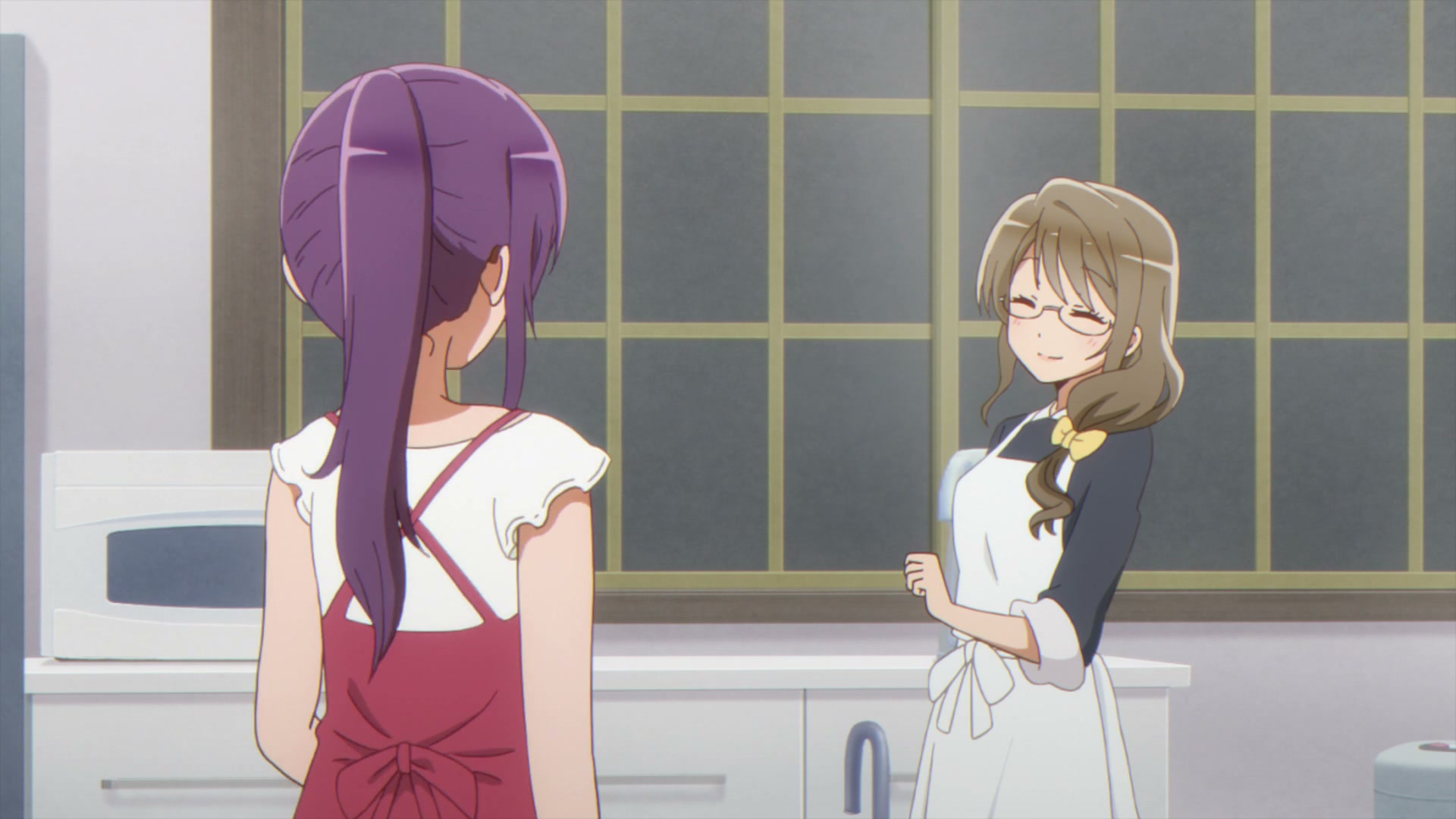
The Matron, Ririka, is the dorm’s quiet center. A former professional who quit when commercial pressure made drawing unfun, she now supports young artists in the way she wished she had been supported. She cooks, tends illnesses, maintains traditions. When Kaos collapses from overwork, she calls Kaos’s mother for cooking advice. When Ruki panics before her autograph signing, she applies makeup and delivers steady reassurance. She is proof that leaving professional creation is not failure, that there are ways to stay involved with the thing you love on terms you can bear.
Character Dynamics
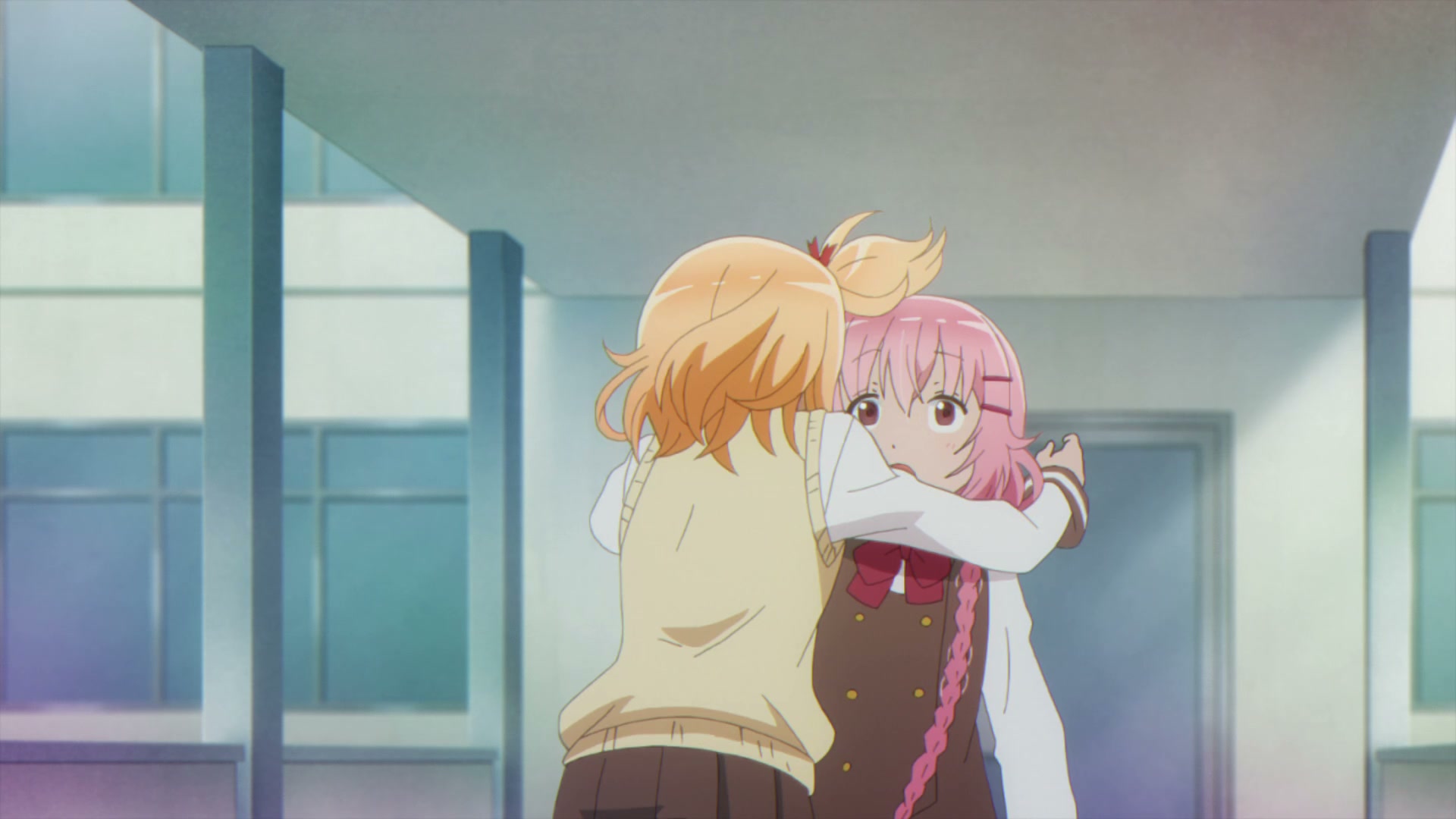
The relationships in Comic Girls develop through accumulated shared experience rather than dramatic confrontations. Kaos and Koyume anchor each other: Koyume pulls Kaos into the world of friendship, Kaos provides an audience of unwavering admiration that affirms Koyume’s identity. Kaos and Ruki share body-image solidarity as the small-chested members of a group that otherwise trends larger. Ruki asks to squeeze Kaos when her tension spikes; Kaos gladly accepts the role, reframing Ruki’s loneliness as chosen solitude.
Koyume and Tsubasa exist in permanent romantic tension that never resolves. Koyume channels her feelings into her manga rather than confessing them. Tsubasa remains oblivious, interpreting every emotional cue as being about work. The gap between them is not a problem to solve but a condition to live with.
Ruki and Tsubasa share the deepest history. Ruki helped convince Tsubasa’s parents to permit dorm life and maintains the fiction of their wholesome activities with photoshopped photographs. Their dynamic is comfortable teasing built on genuine mutual reliance: Tsubasa provides creative intensity, Ruki provides practical management.
The group as a whole functions as an ecosystem where each member’s weakness is compensated by another’s strength. Kaos’s anxiety is absorbed by Koyume’s warmth and Ruki’s pragmatism. Koyume’s weight crisis is addressed by Tsubasa’s exercise discipline and Ruki’s bathing advice. Ruki’s Christmas despair is countered by the group’s surprise party. Tsubasa’s near-erasure by her family is averted by Ruki’s diplomacy and Kaos’s blackmail threat.
Visuals and Animation
The Soft-Focus Digital Aesthetic
Comic Girls is a beautiful series within the parameters of its production tier. It is not a sakuga showcase. It does not need to be. What it achieves is a consistent, emotionally intelligent visual language that serves its themes with unusual precision.
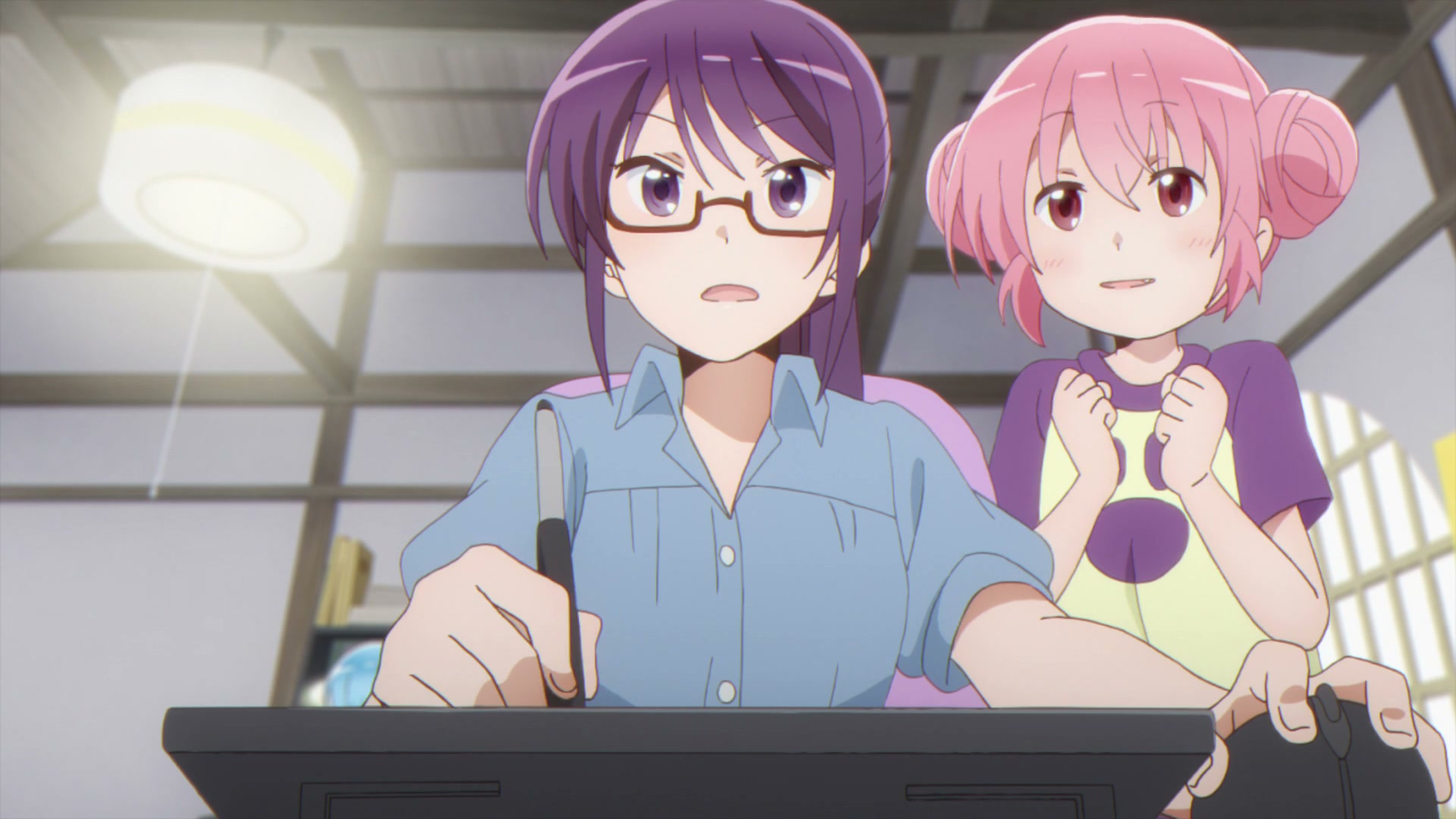
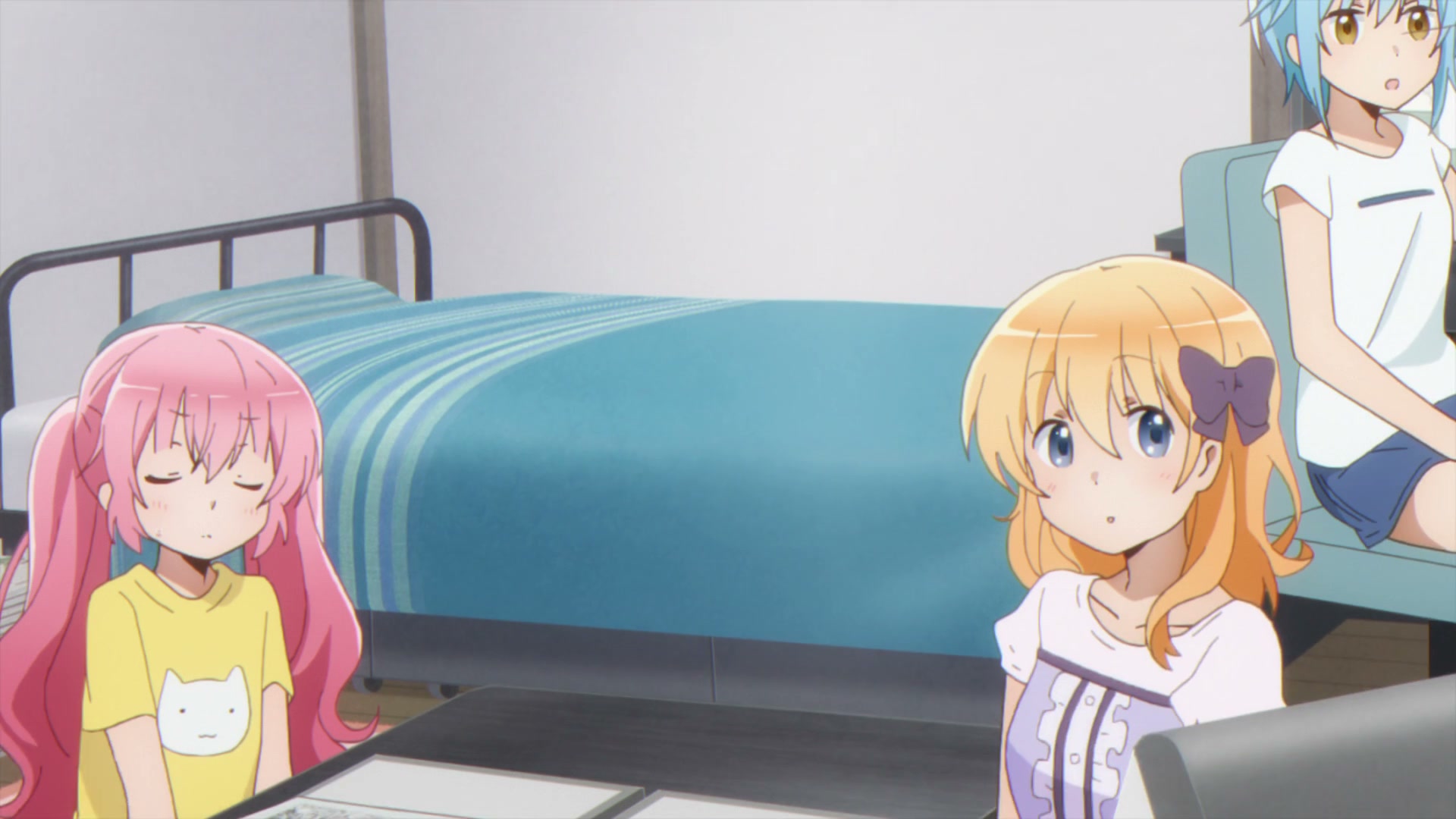
The dominant aesthetic is warm and soft. The palette is built around pinks, lavenders, and soft yellows, with high-key lighting and a pervasive bloom effect that makes the dormitory feel like a safe haven. Light spills through windows, highlights catch in hair, and even mundane interiors glow gently. This is deliberate emotional priming: the dorm is a space where these girls can be vulnerable, and the visual language communicates that safety before any dialogue occurs.
The series demonstrates impressive tonal versatility within this framework. When Kaos spirals, the lighting shifts toward higher contrast. Deep shadows and horizontal lens flares replace the soft glow. The visual environment externalizes her internal state, making her panic visible and physical. These shifts are not jarring, but they are effective.
Character Design and Expressivity
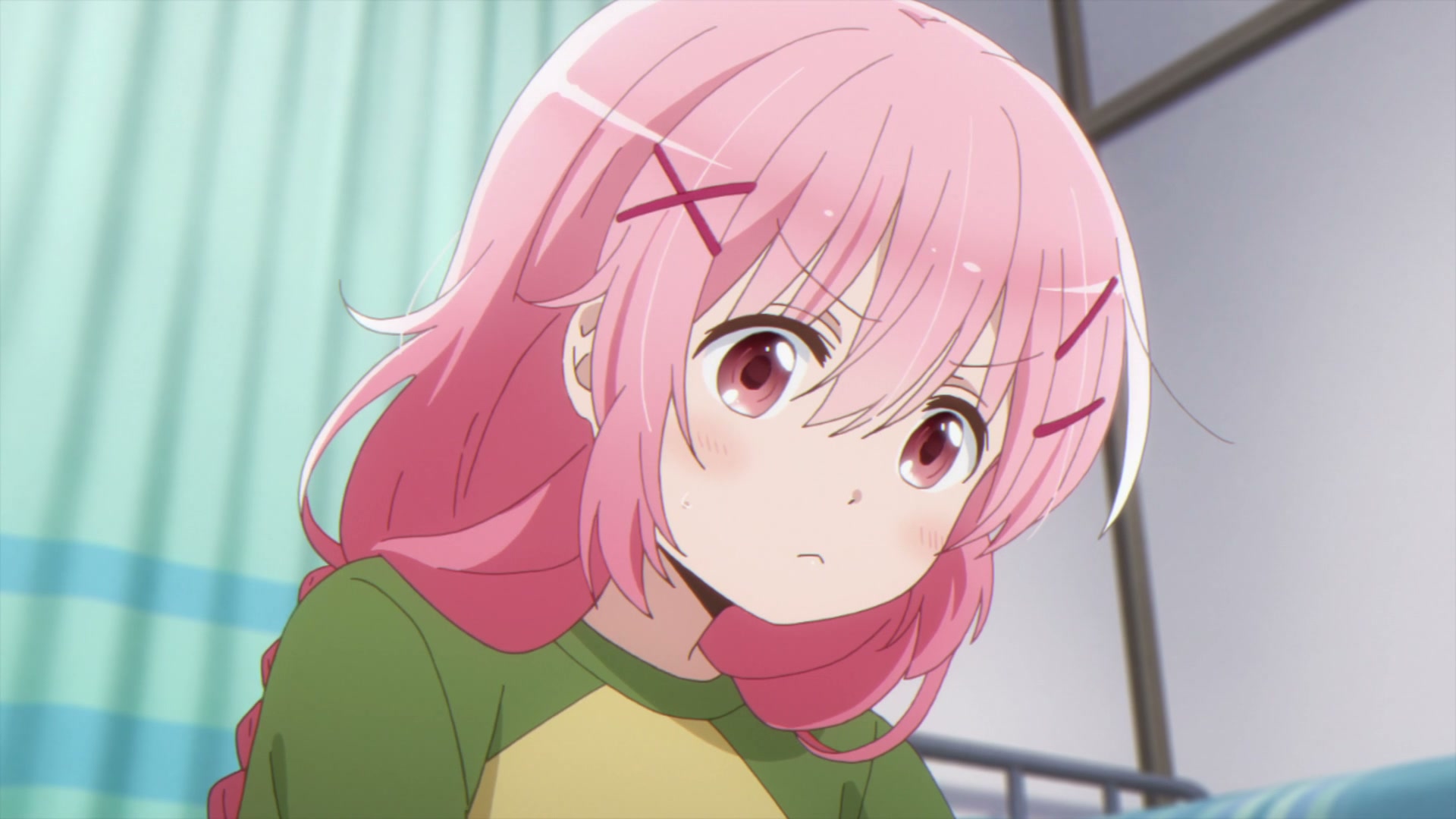
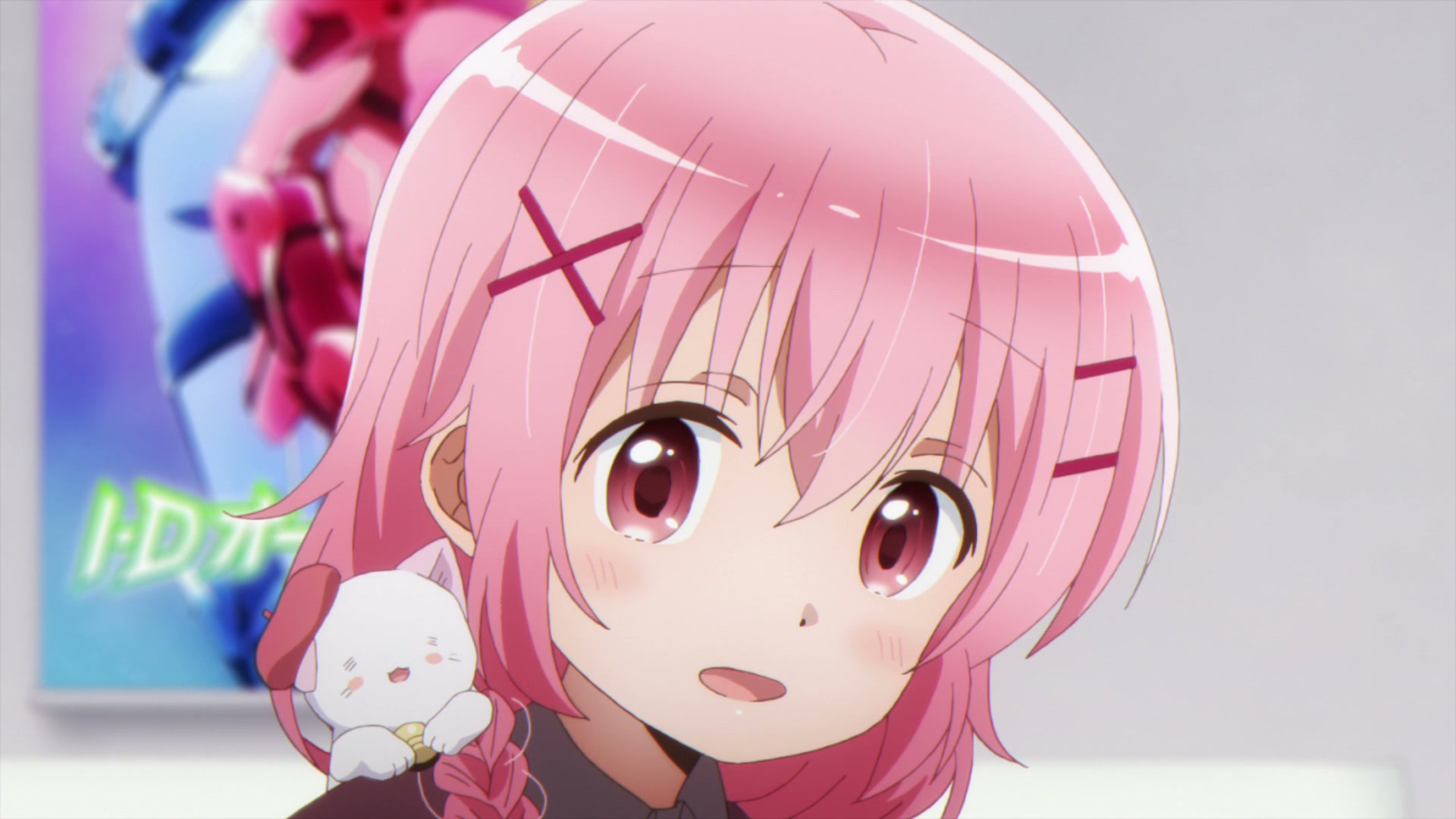
The character designs prioritize moe appeal through clean, thin linework and distinctive silhouettes. Kaos’s twin braids and tiny stature, Koyume’s roundness and hair accessories, Ruki’s height and elegance, Tsubasa’s short hair and athletic build. Even in long shots where faces are not visible, the characters remain identifiable.
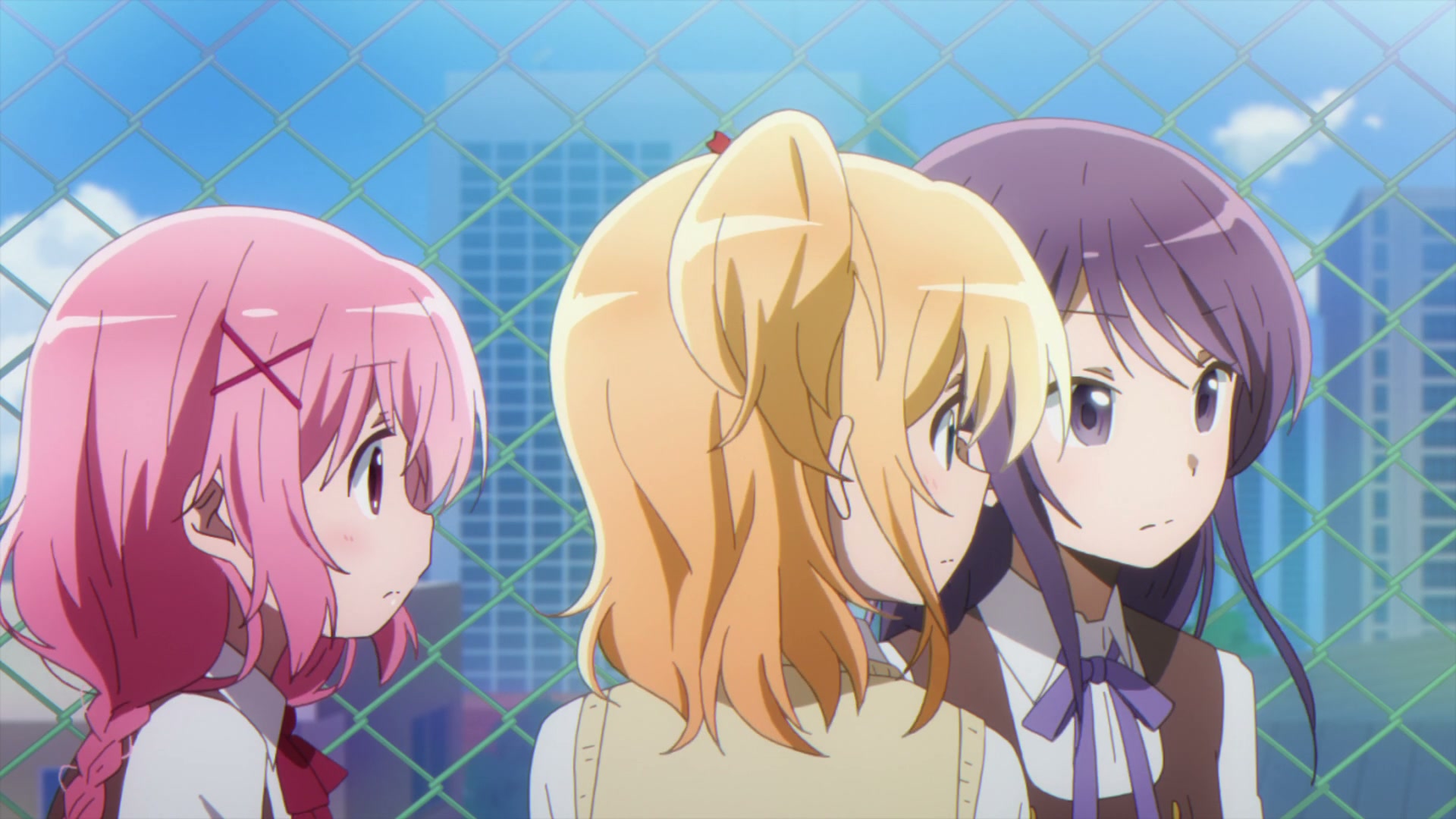
A notable technical detail is the use of colored lines for hair, where the line art uses a darker shade of the hair color rather than pure black. This softens the characters’ integration into the bright environments and prevents the harsh edge that black outlines can create against pastel backgrounds. The technique is increasingly common in digital-era anime but is executed here with particular care.
The eyes are a focal point, as they must be in this subgenre. Multiple layers of highlights and color gradients create a glassy, soulful look. Kaos’s eyes do significant emotional work: wide and trembling when terrified, soft with multiple highlights when awed, narrowed with a single sharp highlight when determined, dark circles when despairing, curved crescents when genuinely happy. The other characters have narrower but equally distinctive ranges.
Three Modes of Character Acting
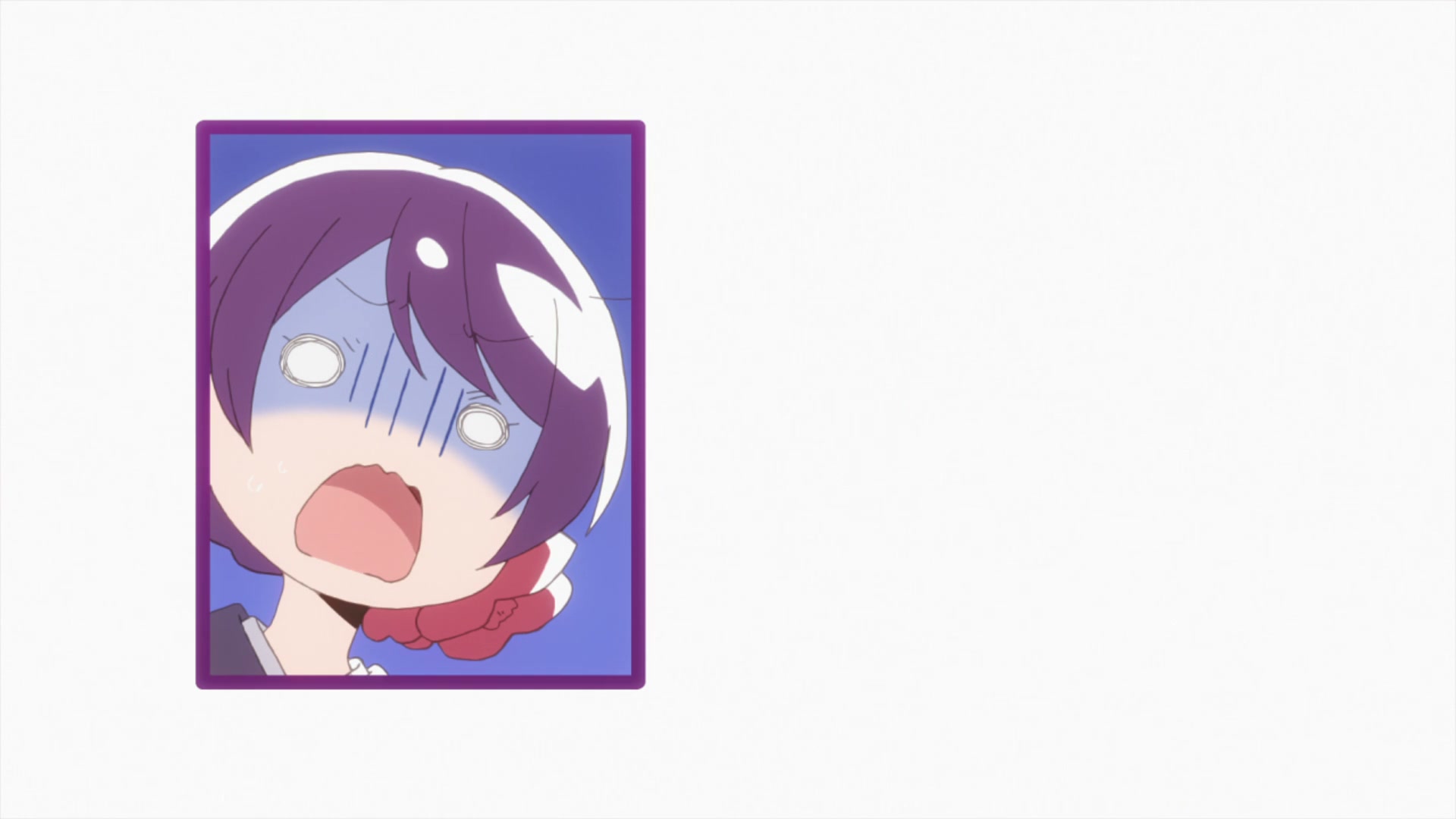
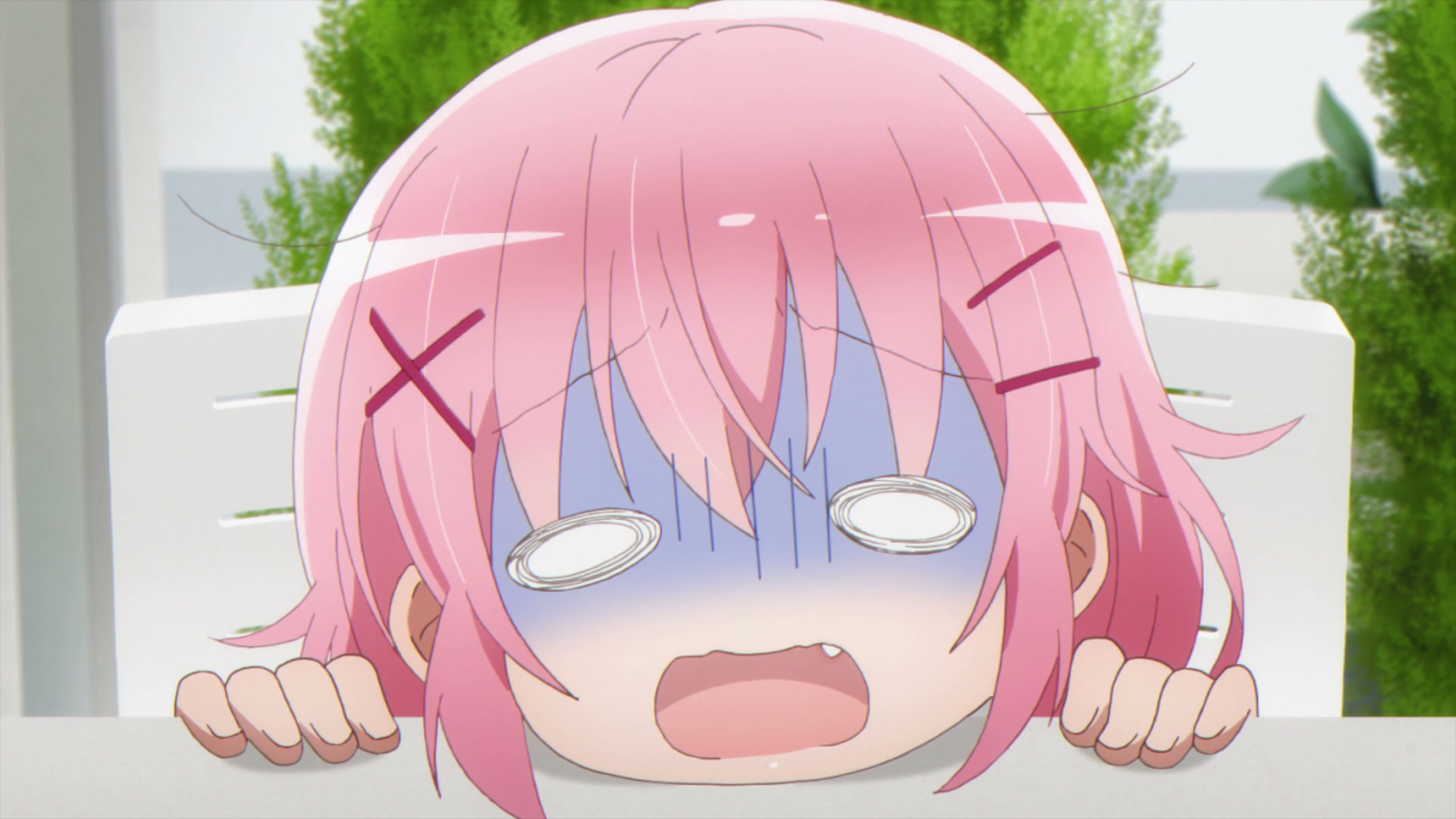
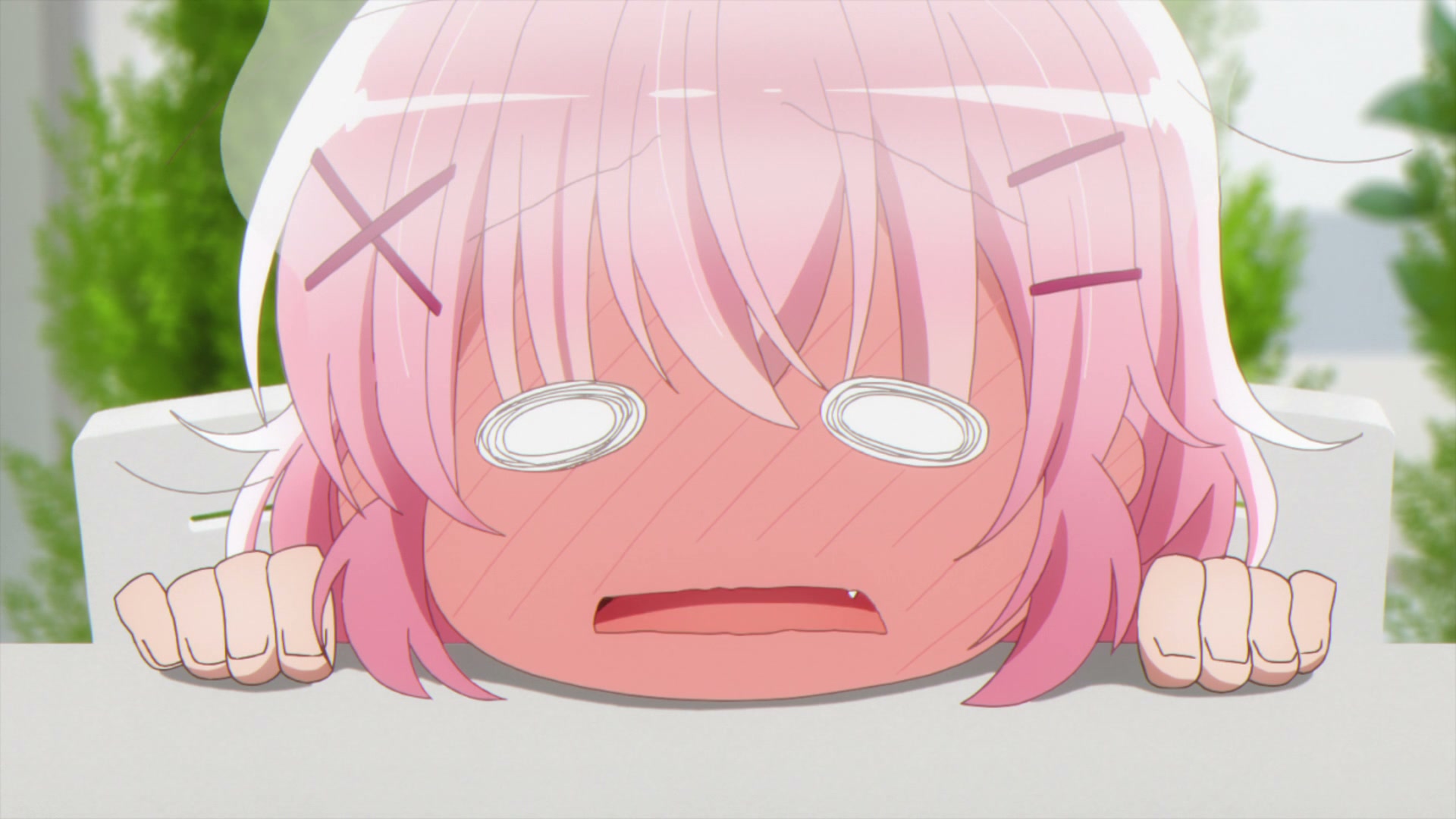
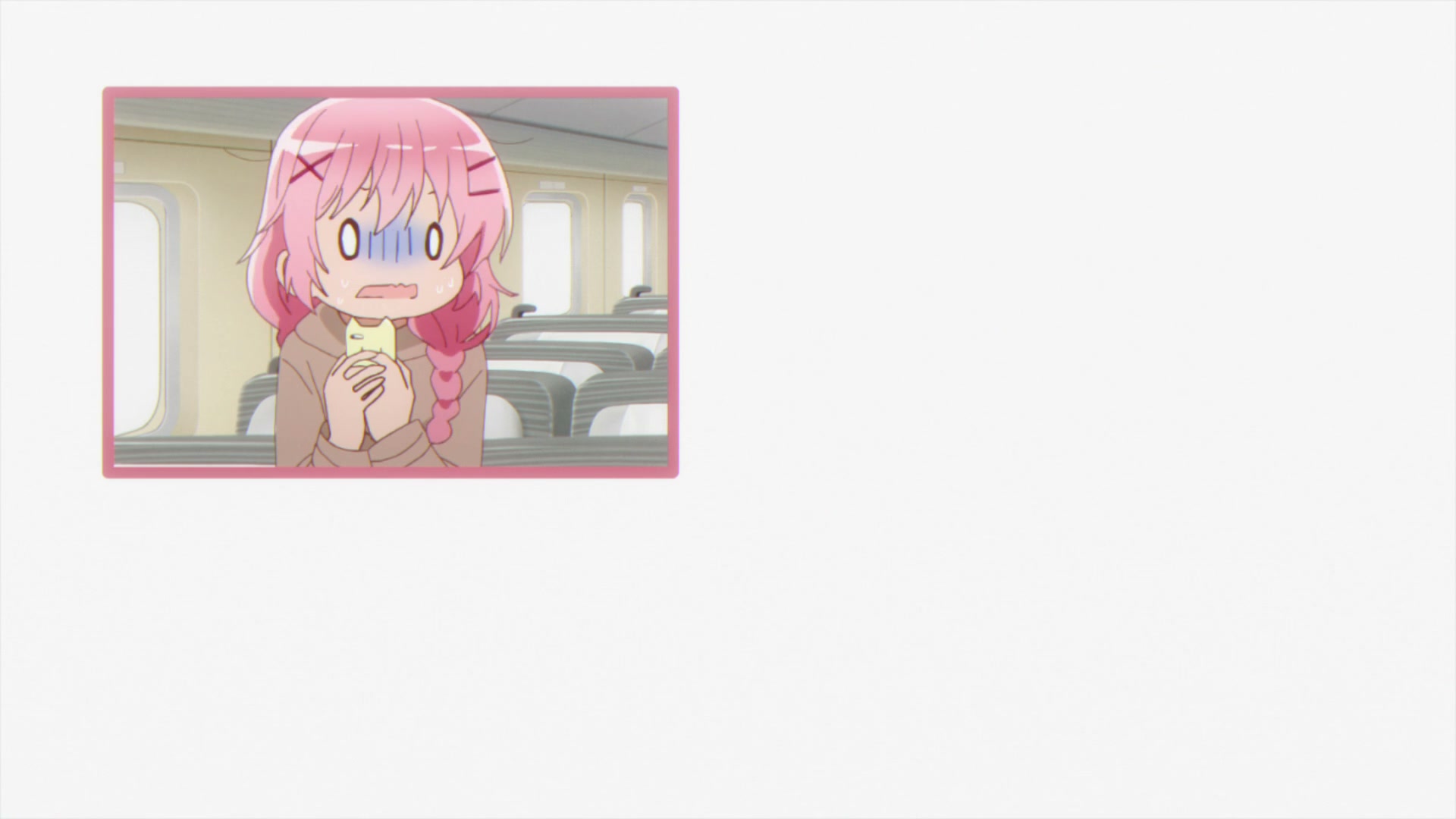
The animation direction shifts fluidly between three acting modes. Naturalistic mode covers quiet dramatic beats: subtle facial movements, reflective posing, the kind of small emotional work that grounds the more exaggerated comedy. Exaggerated comedy mode deploys the vocabulary of anime gag expression: spiral eyes, vertical blue stress lines, deflated body language, the visual shorthand that lets the characters immediately recognize each other’s emotional states.
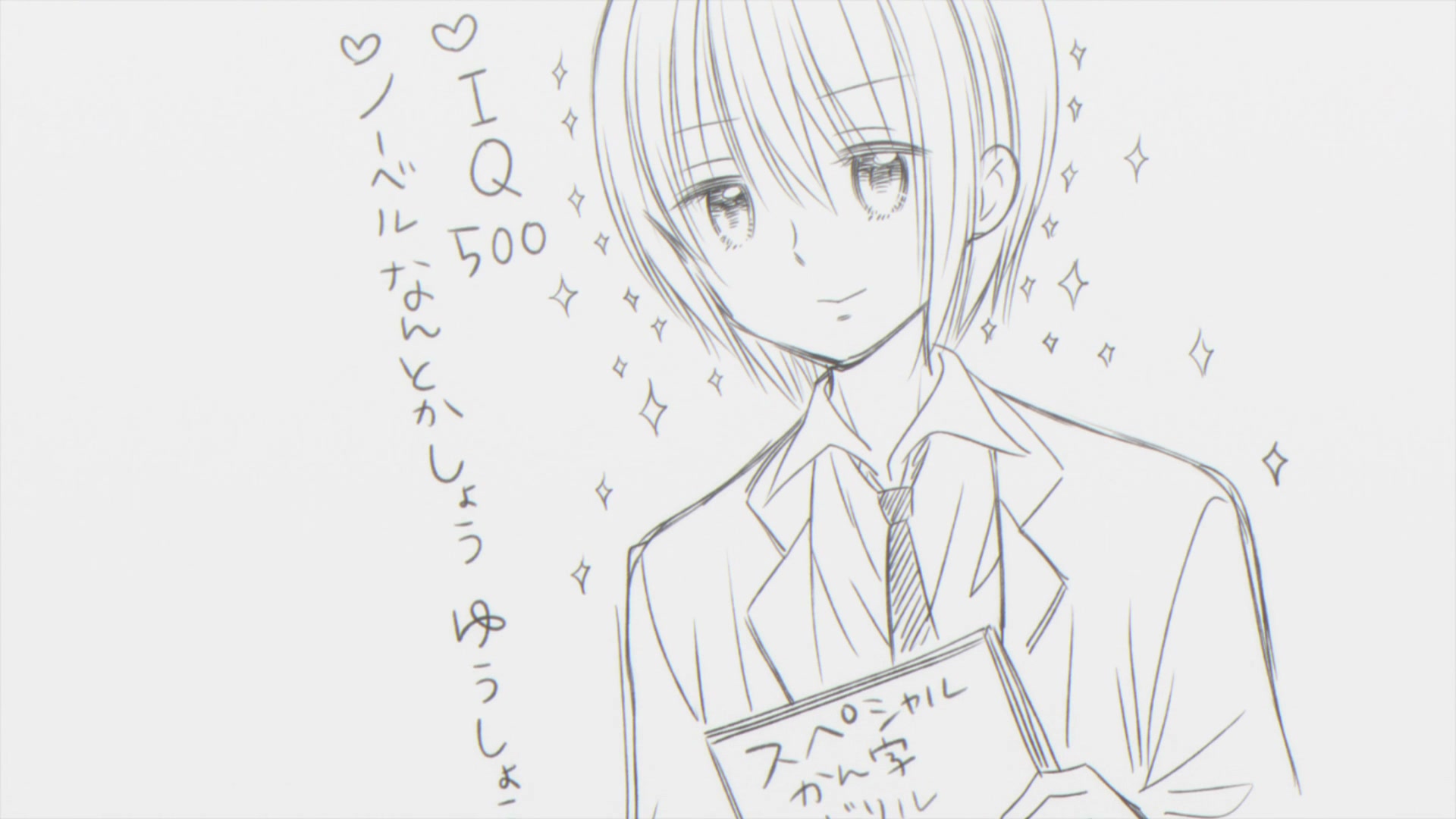
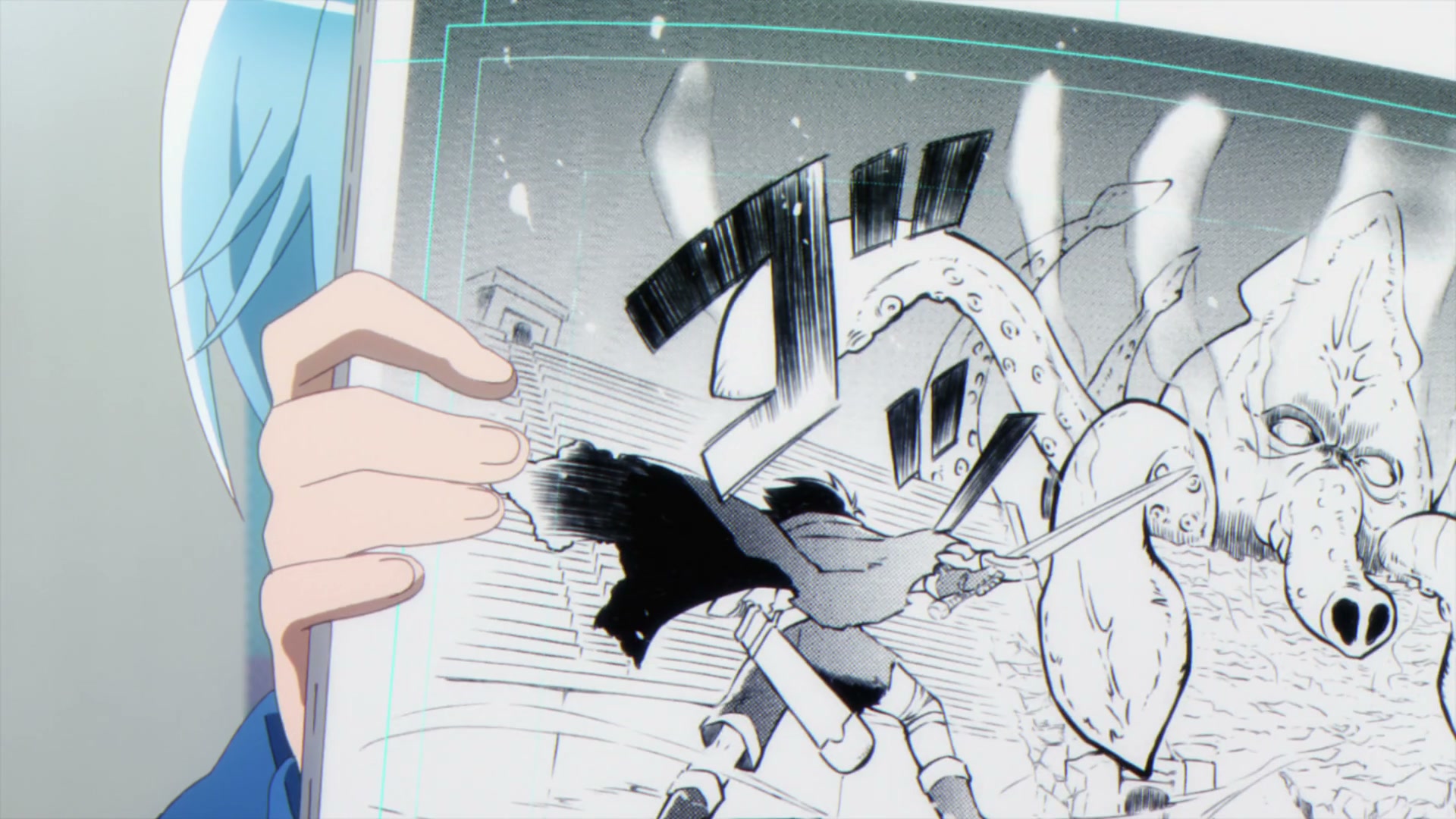
The third mode is the most distinctive: meta-textual stylization. Characters appear against non-diegetic manga panels. Sequences shift into monochrome pencil-sketch style. Kaos imagines herself in manga format. These “art within art” moments are not just stylistic flourish. They show how these characters process experience through the lens of manga creation. The boundary between life and work is permeable for them, and the visual language makes that permeability literal.
Backgrounds: Interior Density, Exterior Impressionism
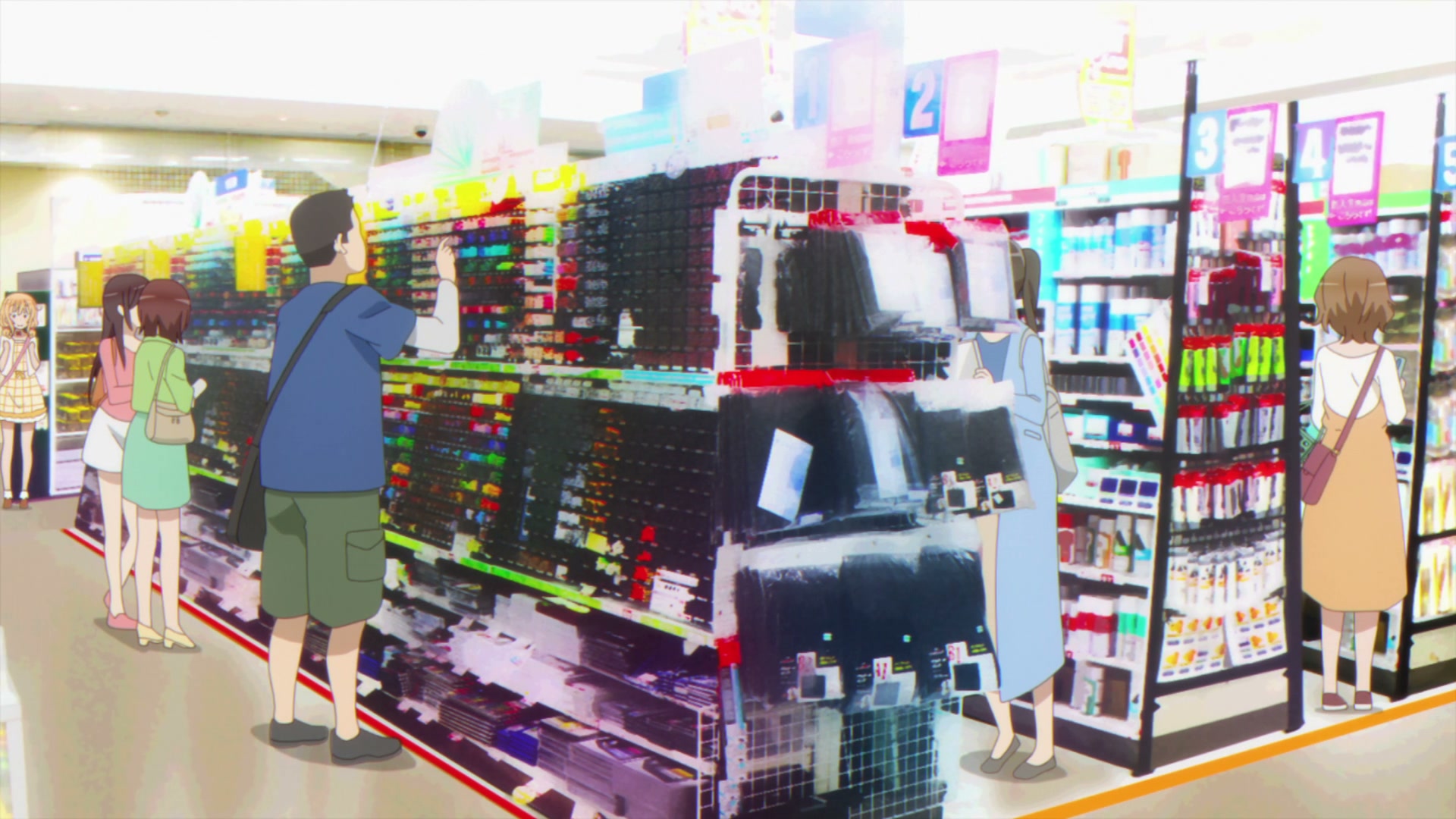
The series draws a functional distinction between its interior and exterior background approaches. Interior spaces (dorm rooms, the art supply store, the Katsuki mansion) are dense and lived-in. You can see individual screentone sheets, specific pen brands, particular manga volumes. The clutter is the characters’ creative process made visible. The art supply store sequence in episode two is a highlight: rows of individually labeled markers, screentone displays, masking tape varieties, each rendered with enough specificity to ground the characters’ excitement in material reality.
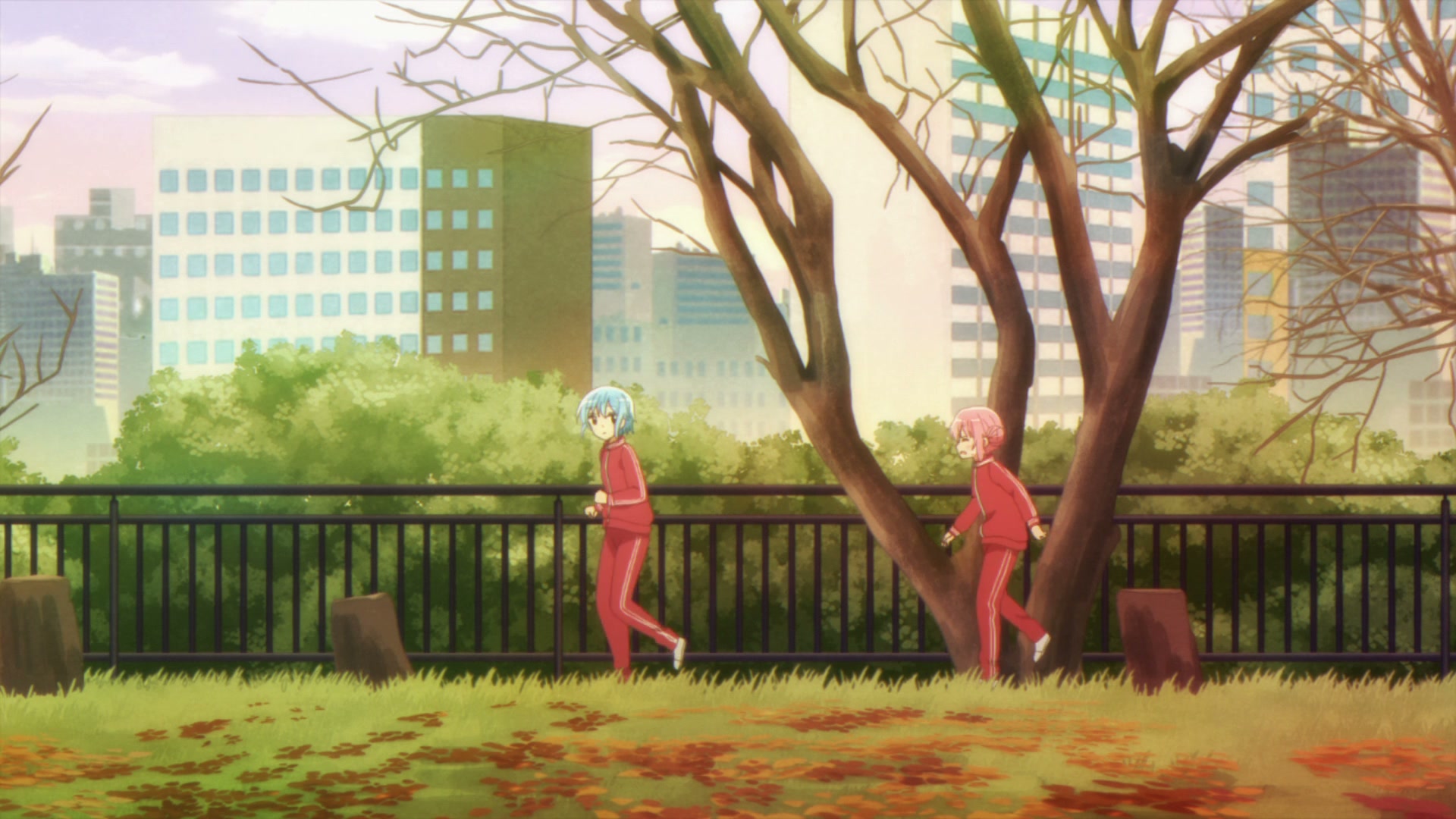
Exterior spaces (the beach, the amusement park, the shrine) are treated more impressionistically, with soft-focus effects and painterly textures. This is not laziness. The distinction is functional. Interiors are where work happens; exteriors are where experience and memory happen. The different visual treatment reinforces this functional distinction.
Composition and Cinematography
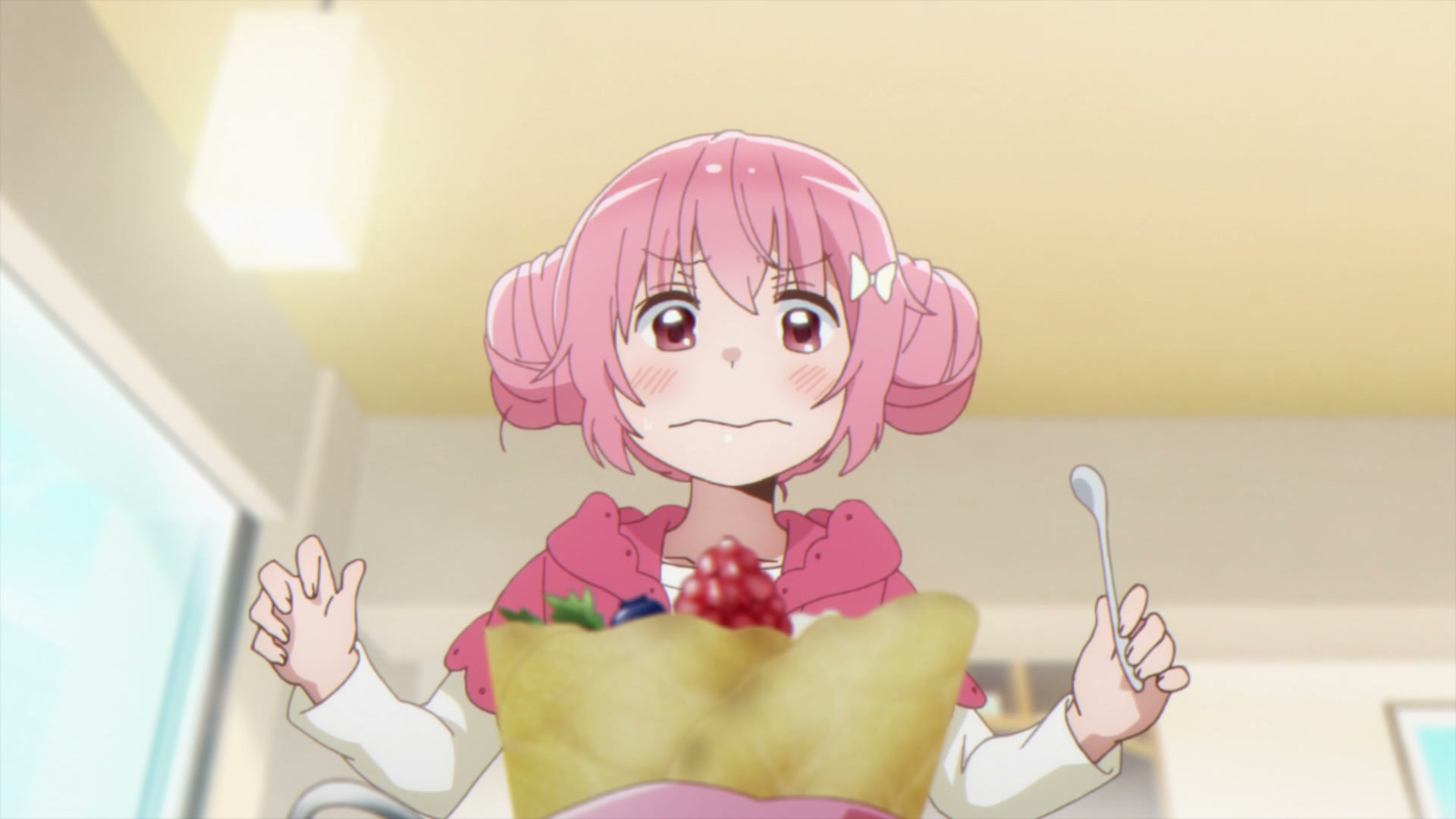
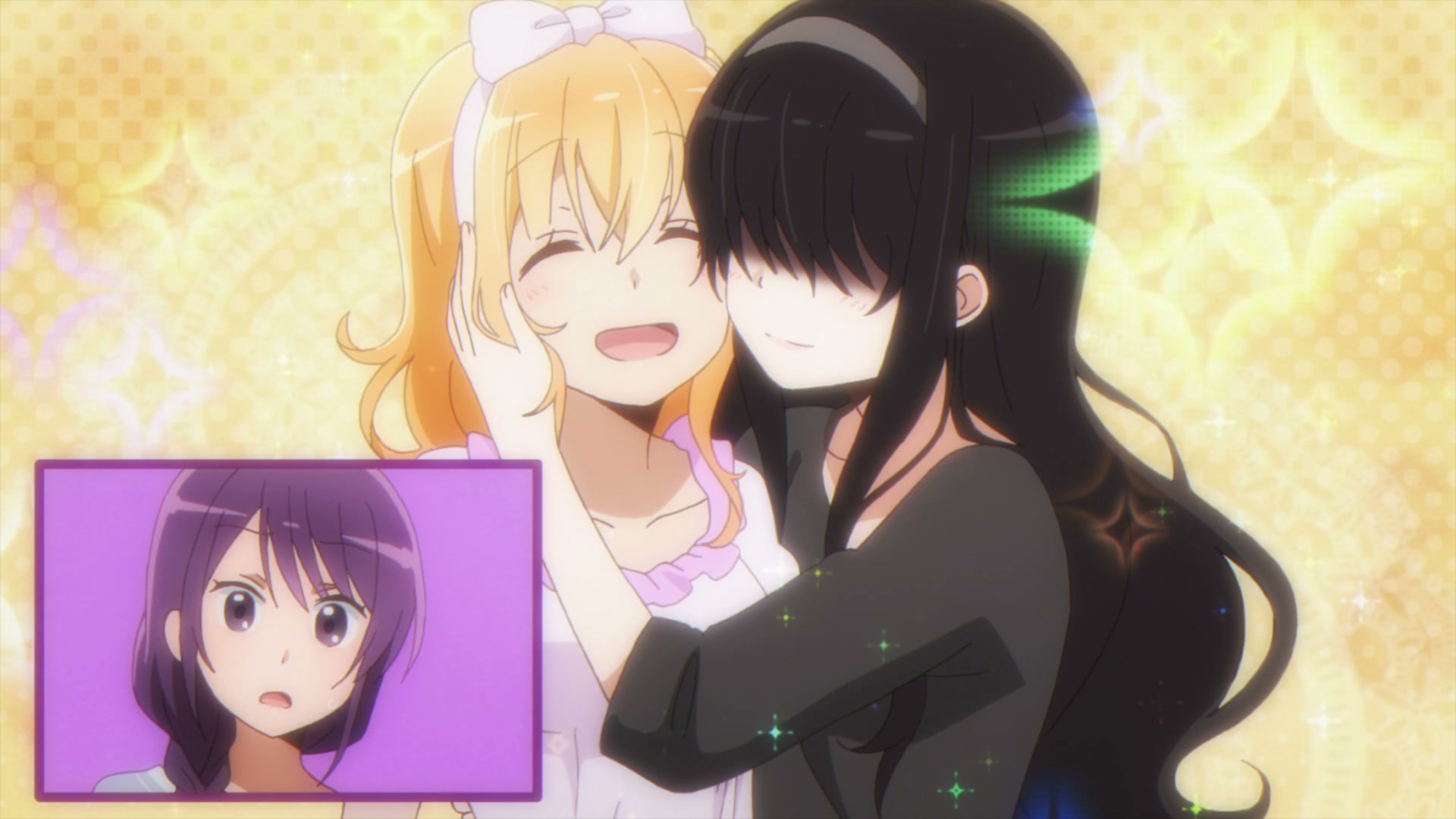
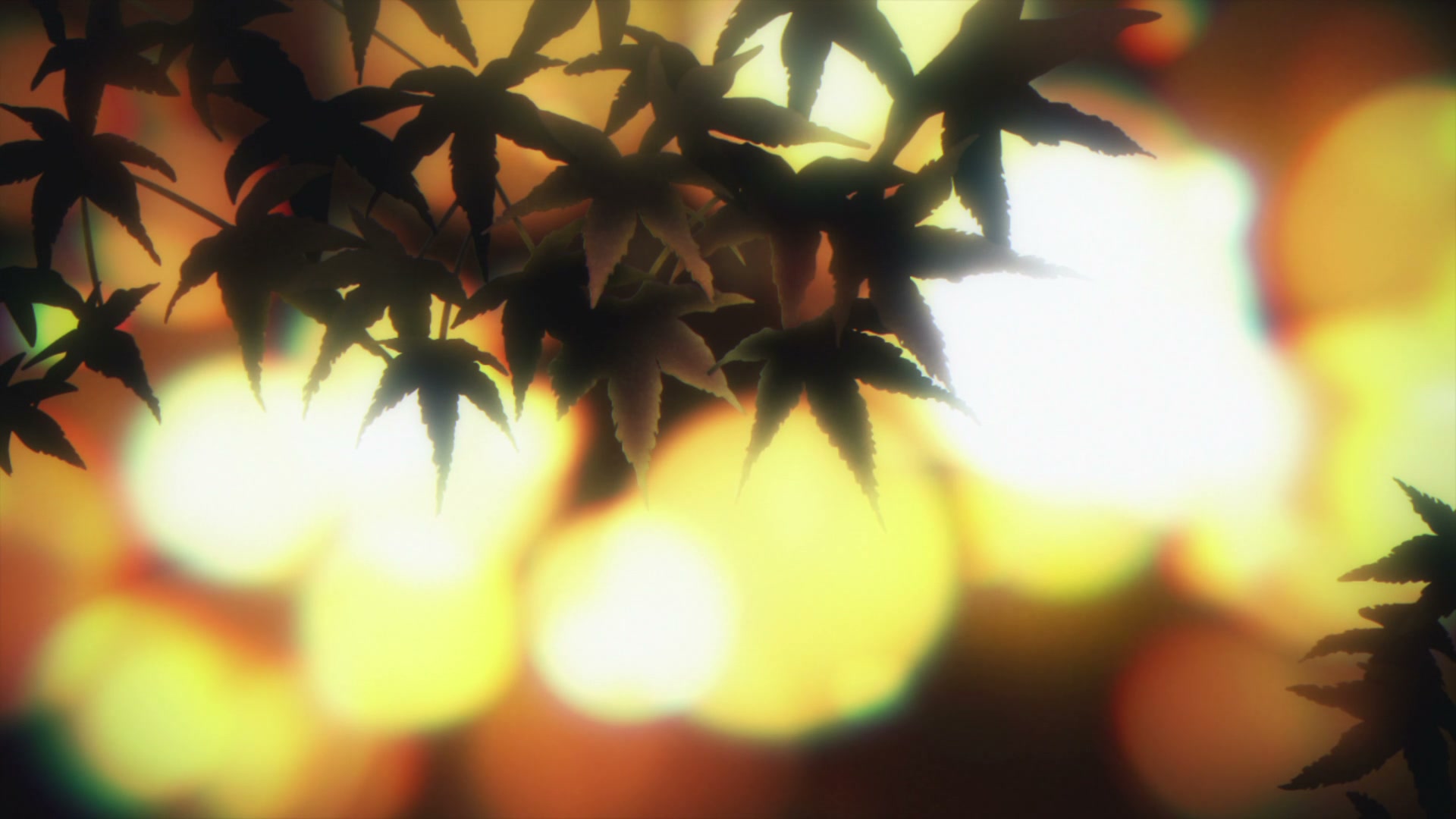
The series demonstrates solid compositional intelligence even when animation is limited. Camera heights and framing are varied to control mood: low-angle perspectives for comedic vulnerability, deep staging with characters in the extreme foreground for intimacy, “picture-in-picture” reaction boxes for dialogue-heavy scenes. Macro “pillow shots” of nature provide traditional anime breathing room between emotional beats.
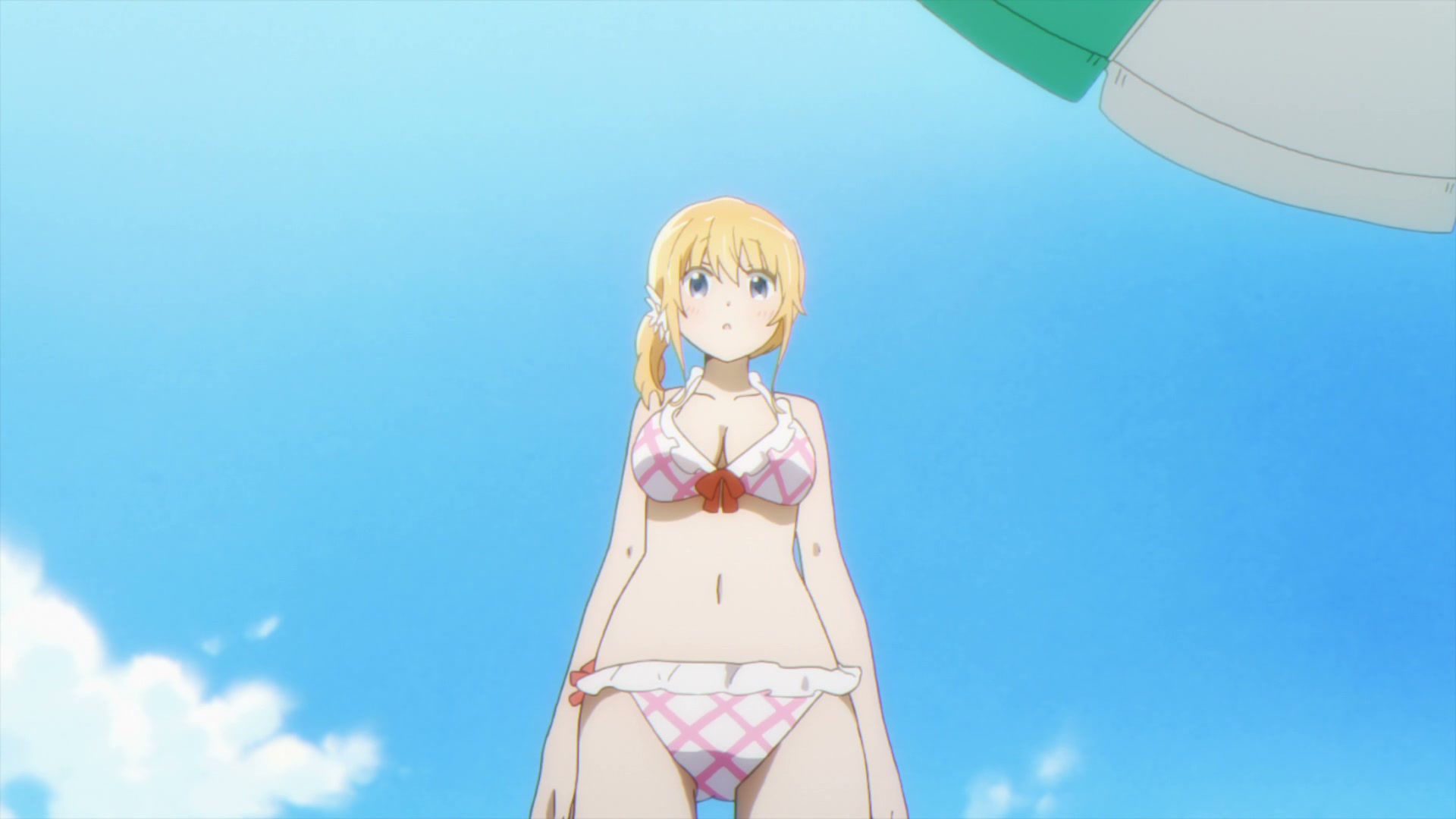
Some static sequences read as budget limitation rather than artistic choice. Long dialogue scenes occasionally default to talking heads with minimal body movement. Crowd scenes at school or the beach sometimes rely on undifferentiated background characters. This is standard for the production tier and does not undermine the series’ strengths. The animation flourishes are deployed strategically: the art supply store, the beach episode, Kaos’s Akihabara solo adventure. The production knows where to spend its resources.
Sound and Music
Opening and Ending Themes
The opening theme, “Memories” by Comic Girls (a unit formed by the main cast’s voice actresses), is a bright, energetic pop track that establishes the series’ warm tone. Its visuals introduce each character and their manga genres through playful transitions between the “real” dorm world and the drawn worlds of their manga pages, reinforcing the series’ central concern with the permeable boundary between life and art.
The ending theme varies across episodes but maintains a softer, more reflective mood appropriate for closing out episodes that often end on notes of quiet perseverance rather than triumph. The music does not demand attention. It supports the emotional register the series is working in, which is gentler than its comedy might suggest.
Voice Acting
The seiyuu cast delivers strong, character-defining work. Akasaki Chinatsu as Kaos navigates an extreme emotional range, from whispered self-loathing to shrieking terror to quiet, genuine happiness, without losing the character’s fundamental vulnerability. The performance makes Kaos’s spirals funny without making her suffering feel cheap.
Takada Yuuki as Koyume provides irrepressible warmth that never becomes cloying. The character could easily be exhausting in less skilled hands; Takada keeps her grounded in genuine affection rather than manic energy. Oonishi Saori as Ruki balances the character’s composed exterior with the flustered embarrassment beneath, finding the specific vocal register that makes Ruki feel like someone performing maturity rather than someone who has achieved it. Honizumi Rina as Tsubasa maintains the stoic deadpan while letting glimpses of suppressed feeling through in moments of genuine connection.
Sound Direction and Audio Atmosphere
The sound design is unobtrusive but effective. Ambient audio supports the dormitory’s cozy atmosphere: the scratch of pens on paper, the rustle of manuscript pages, the quiet hum of late-night work sessions. The contrast between the dorm’s quiet and the chaos of Akihabara or the beach reinforces the dorm as a protected space.
Comedy beats are punctuated with well-timed audio stings. Kaos’s spirals are accompanied by descending musical phrases that externalize her internal collapse. The series knows when silence is more effective than sound, particularly during the quiet moments where Kaos sits alone at her desk, struggling with a blank page.
Overall Verdict
Comic Girls is not a series about genius or overnight success or the triumphant moment of breakthrough. It is a series about the long middle, the years of failure and near-misses, the gap between what you want to make and what you can make right now. It is a series about how creative work feels when you are not sure you are any good at it, and about the specific kind of community that makes continuing possible.
The series is warm and gentle and frequently very funny, but its understanding of creative insecurity is precise in ways that will resonate with anyone who has tried to make something and fallen short. Kaos’s breakthrough does not come from trying harder. It comes from relaxing enough to let her actual experiences flow into the work. The things she thought were too mundane to be material (eating crêpes with friends, being scared by a horror senpai, celebrating a birthday) were exactly what made her manga her own.
The visual production is above average for its subgenre, with a soft-focus aesthetic that serves the emotional register and enough expressive range to shift between naturalism, comedy, and meta-textual stylization without jarring. The character designs are distinctive and consistent. The voice acting is strong across the board, with Akasaki Chinatsu’s Kaos as a particular standout.
The series has limitations. It does not provide a comprehensive portrait of the manga industry and does not try to. Its romantic tension between Koyume and Tsubasa never resolves, which is thematically right but may frustrate viewers expecting a different kind of story. The ensemble balancing means some characters, particularly Fuura, receive less development than their premise promises. Kaos’s slow arc means that viewers seeking a clear success narrative may find the ending anticlimactic. She gets a guest spot, not a serialization. She is still being rejected at the series’ end. This is the point. But it is not the catharsis some audiences want.
For those who recognize themselves in Kaos, the series is something rare: a story that does not judge the fear, does not trivialize the pain, does not promise that persistence guarantees success, but insists, gently and consistently, that persistence is worth it anyway. That the community you find along the way matters more than any single achievement. That the work you do in the long middle, the years of failure and small improvement, is not wasted. It is just not finished yet.
The final image is the four girls together in their new dormitory. Kaos is still being rejected. She is still drawing. The path is still long. Tsubasa says what she said in the first episode: “The further the path, the more worthy it is to strive for.” The series ends not with arrival but with continuation. For the story it is telling, that is the only honest ending possible.
Gallery