

Introduction
There is a specific, almost indescribable feeling unique to certain anime. It is the sensation of a humid summer afternoon stretching into eternity, the drone of cicadas, the blinding white sky, and the quiet ache of knowing something beautiful will inevitably end. Kyoto Animation’s 2005 adaptation of Key’s visual novel Air is one of the purest distillations of this feeling ever committed to screen. It is a series that trades conventional plot mechanics for atmospheric melancholy, that prioritizes emotional truth over narrative tidiness, and that asks its audience to sit with loneliness until that loneliness transforms into something approaching transcendence.
The story follows Kunisaki Yukito, a young wanderer who scrapes by performing a clumsy puppet show while searching for the “girl in the sky,” a winged maiden from a legend passed down through his mother’s lineage. Penniless and hungry, he arrives in a quiet seaside town and meets Kamio Misuzu, a gentle girl with a strange habit of saying “Gao!” when she is about to cry. Misuzu is desperately lonely, afflicted by a mysterious illness that causes her to break down in uncontrollable sobbing whenever she forms a genuine emotional bond with another person. Yukito’s quest and Misuzu’s recurring dreams of flying through the sky become inextricably linked, drawing in other wounded souls from the town before the narrative pivots into a lengthy flashback set in the Heian period, revealing the tragic origin of the curse that binds them all.
For viewers accustomed to breakneck pacing and constant narrative hooks, Air will feel like watching clouds drift. For those willing to surrender to its rhythms, it offers an emotional experience that lingers long after the final credits. This is a series for fans who appreciate the “nakige” tradition, those who find beauty in sadness, and anyone who understands that some stories are meant to be felt rather than analyzed.
Story and Themes
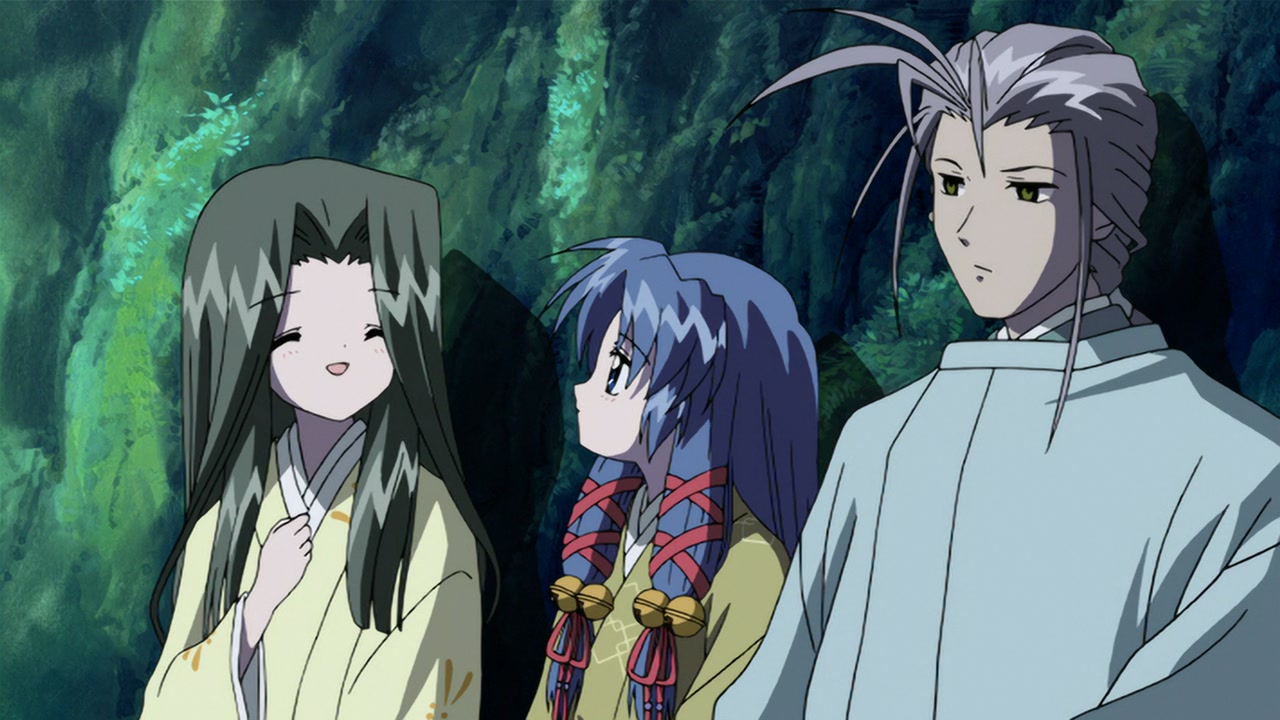
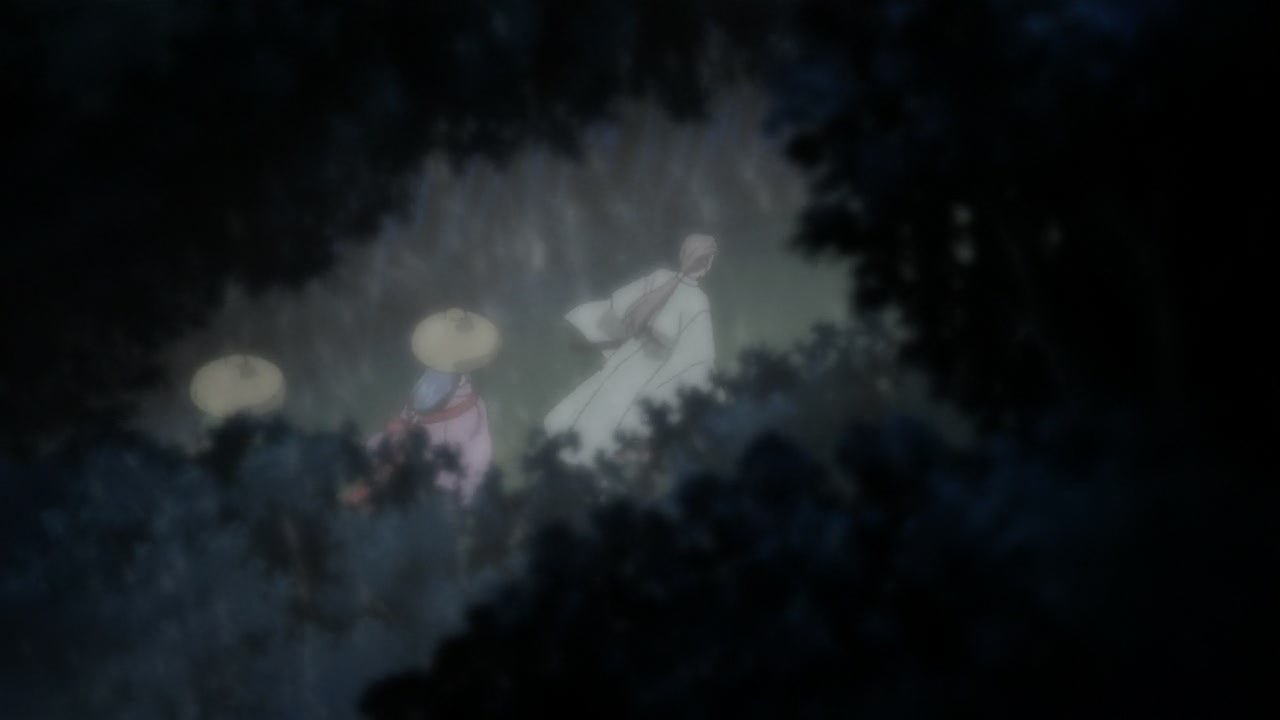
The narrative structure of Air is famously unconventional, and discussing it requires acknowledging the elephant in the room: this is a thirteen-episode adaptation of a visual novel with multiple heroine routes, and the compression shows. The series essentially divides into three movements. The opening episodes introduce the seaside town and its lonely inhabitants, Yukito encounters Kirishima Kano and Tohno Minagi, each with their own supernatural afflictions tied to a mysterious feather. The middle section plunges into a two-episode historical flashback set in the Heian period, following the winged being Kanna and her guardians Ryuuya and Uraha. The final act returns to the present for the devastating conclusion of Misuzu and her guardian Haruko’s story.
This structural imbalance has been a point of contention since the series aired. The Kano and Minagi arcs feel like beautiful but truncated vignettes, each resolved in roughly an episode and a half, while the Misuzu/Haruko climax receives the full weight of the finale. As someone who experienced the anime without knowledge of the source material, I cannot speak to what was cut or rushed from the visual novel. I can only judge what exists on screen, and what exists is a work that, despite its asymmetrical pacing, maintains a cohesive emotional logic. The “side heroine” episodes function as thematic preludes, each exploring a different variation on the series’ core preoccupations: a child’s guilt toward a lost mother (Kano), a daughter’s erasure of her own identity to comfort a parent (Minagi). These stories prime the viewer for Misuzu’s ordeal, they teach us the vocabulary of loss that the finale will speak fluently.
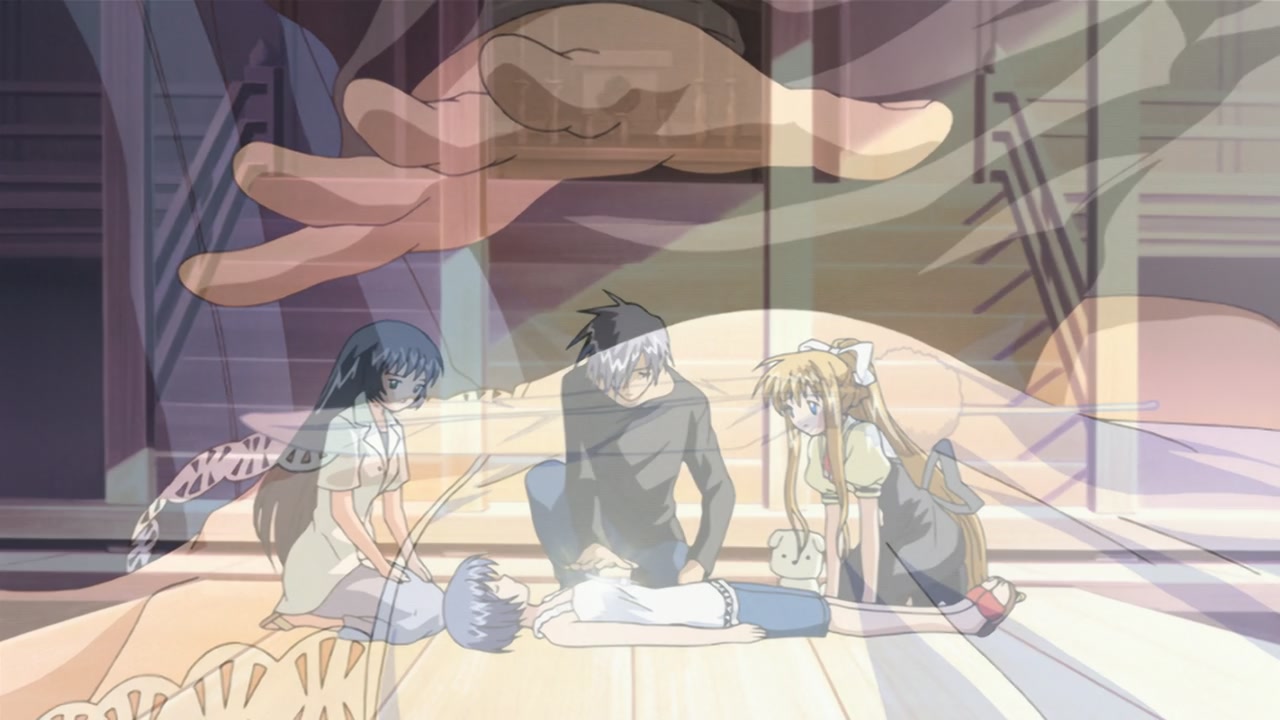
The Kanna flashback, while a jarring genre shift from small-town slice-of-life to historical fantasy-tragedy, is essential rather than indulgent. Without it, Misuzu’s condition is merely a medical mystery. With it, her suffering becomes the culmination of a thousand-year cycle of grief. The winged beings in this universe are not angels but something closer to Shinto kami, beings tied to the land, appeased through ritual, and feared for their power to curse. Kanna’s persecution by the Imperial Court and Buddhist monks mirrors historical tensions in Japan’s religious evolution, where local spirit worship was systematically suppressed in favor of centralized Buddhism. The “subjugation curse” that traps Kanna’s soul in an endless loop of sad dreams is both a supernatural affliction and a potent metaphor for unresolved trauma echoing across generations.
This brings us to the series’ central thematic preoccupation: loneliness as an inherited condition. Misuzu’s illness is not random. It is the manifestation of a curse passed down from Kanna, through centuries, into the body of a girl who wants nothing more than a friend. The tragedy is structural rather than moral. Misuzu is not punished for any sin; she is simply the vessel through which ancient sorrow must finally be processed. The series posits that some pain is so profound it cannot be healed in a single lifetime, it must be carried forward, experienced again and again, until someone, somewhere, finds the strength to transform it. Misuzu’s decision to “do her best” and walk toward her goal, even knowing it means her death, is that transformation. She takes the endless loop of sorrow and closes it with an act of love.
The sky itself functions as the central symbol, but in a specifically Japanese register. This is not the Western Heaven of reward and punishment. It is a liminal space, a repository of memory, beautiful but unreachable. Misuzu’s dreams take her backward through time, toward the source of the curse. The vast summer sky, with its blinding whiteness and oppressive heat, becomes synonymous with the weight of accumulated memory. There is a profound mono no aware sensibility at work here, the bittersweet awareness that beauty and sorrow are inseparable, that the cicada’s cry is poignant precisely because it signals the end of summer.
The beach, which Misuzu can see from her town but has never visited, represents the maternal embrace she has always been denied. Her final journey to the ocean with Haruko, and her last steps across the sand, are the physical realization of her emotional goal. The series understands that for a profoundly isolated person, the simplest acts, touching the sea, being held by a mother, become monumental achievements.
Characters
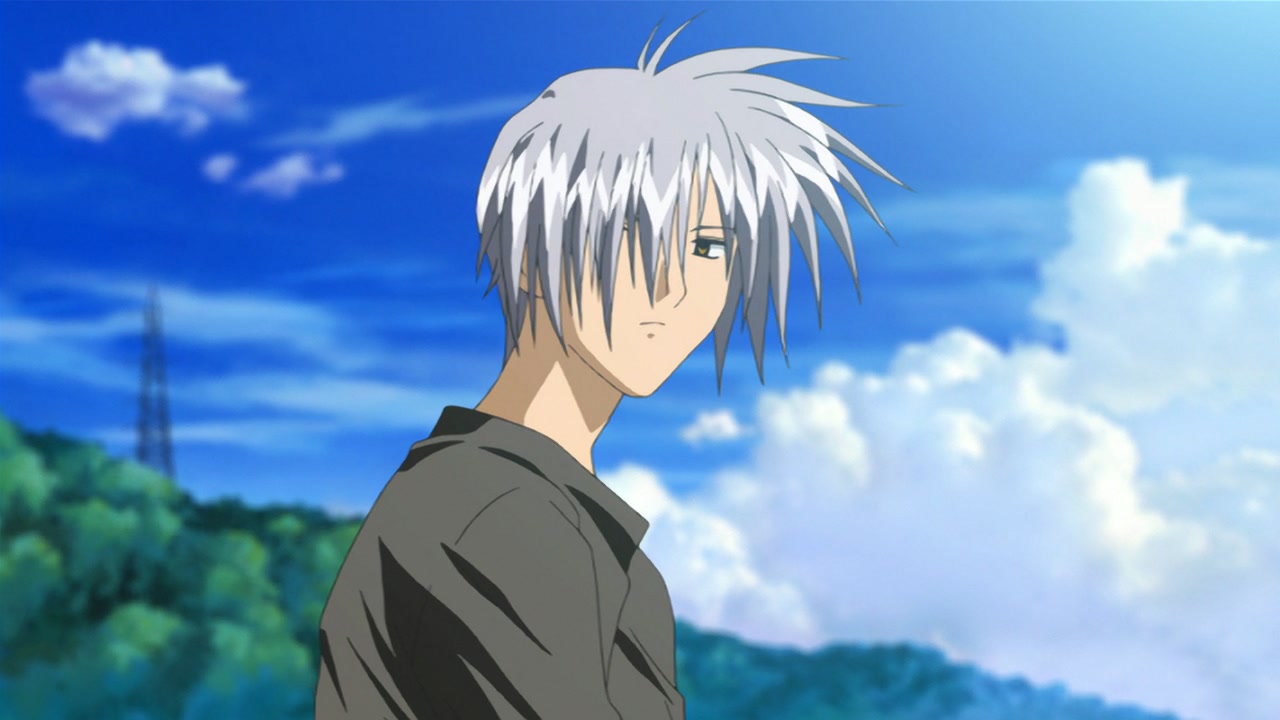
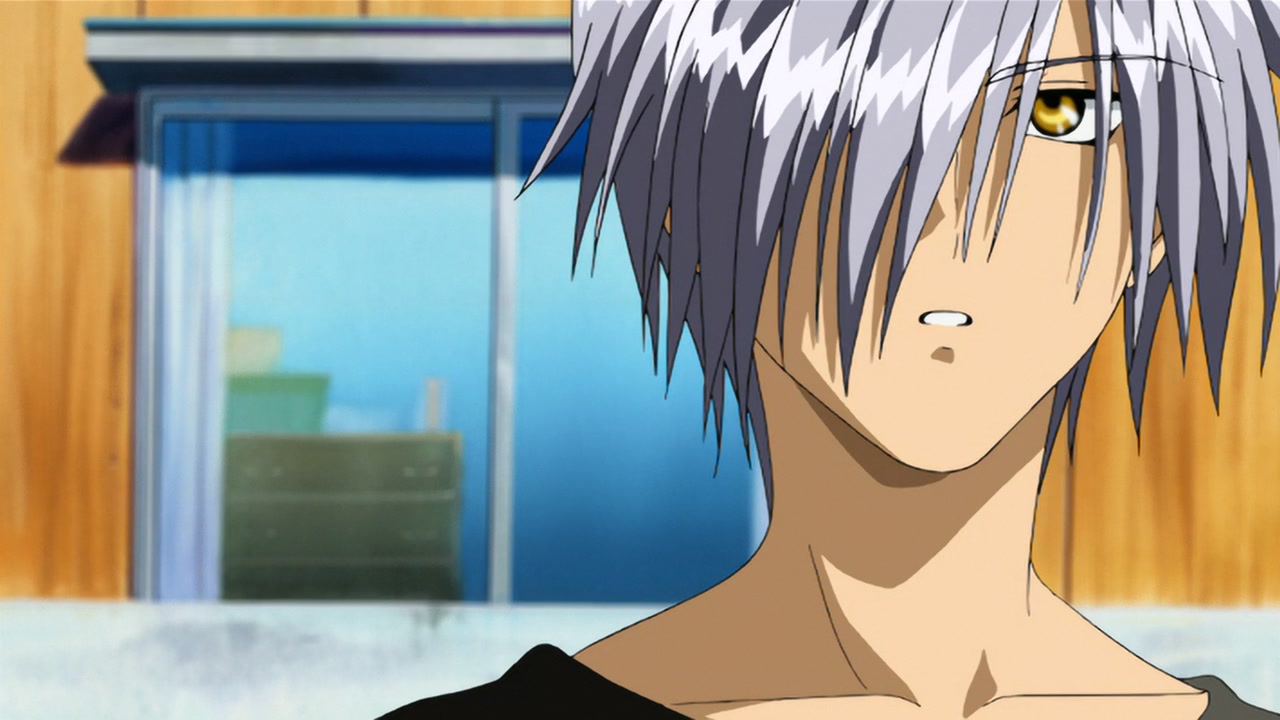
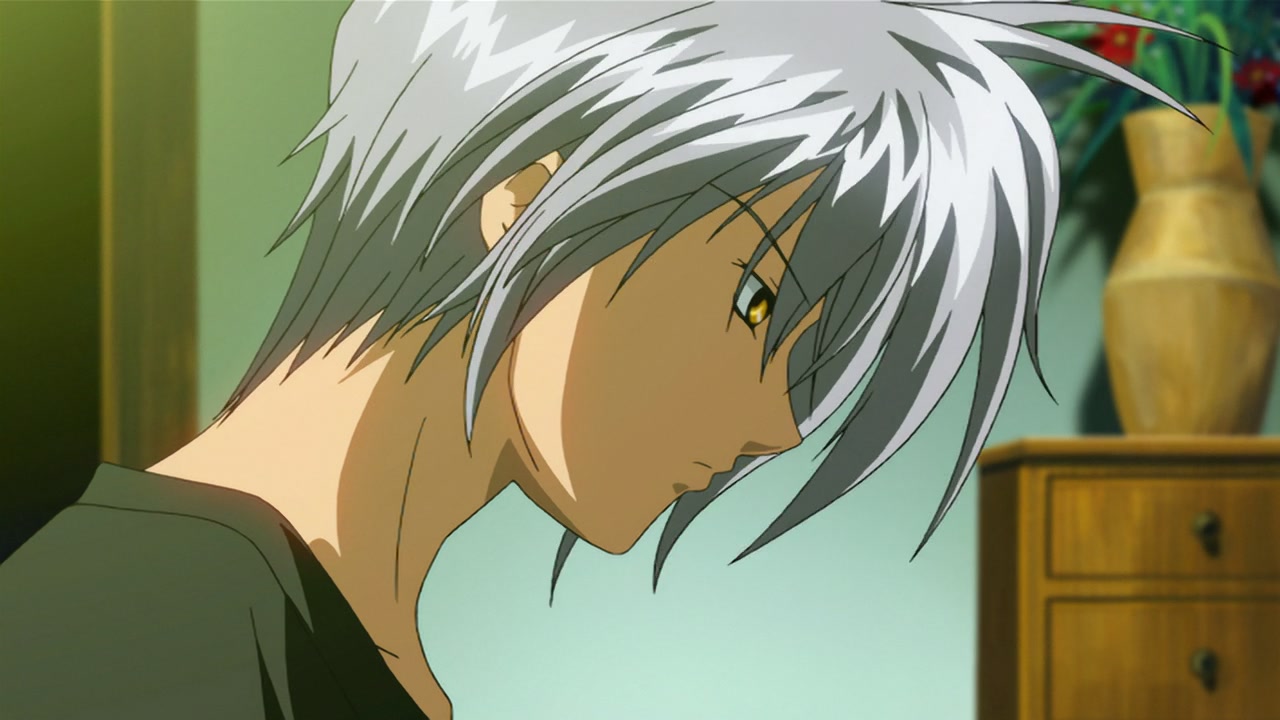
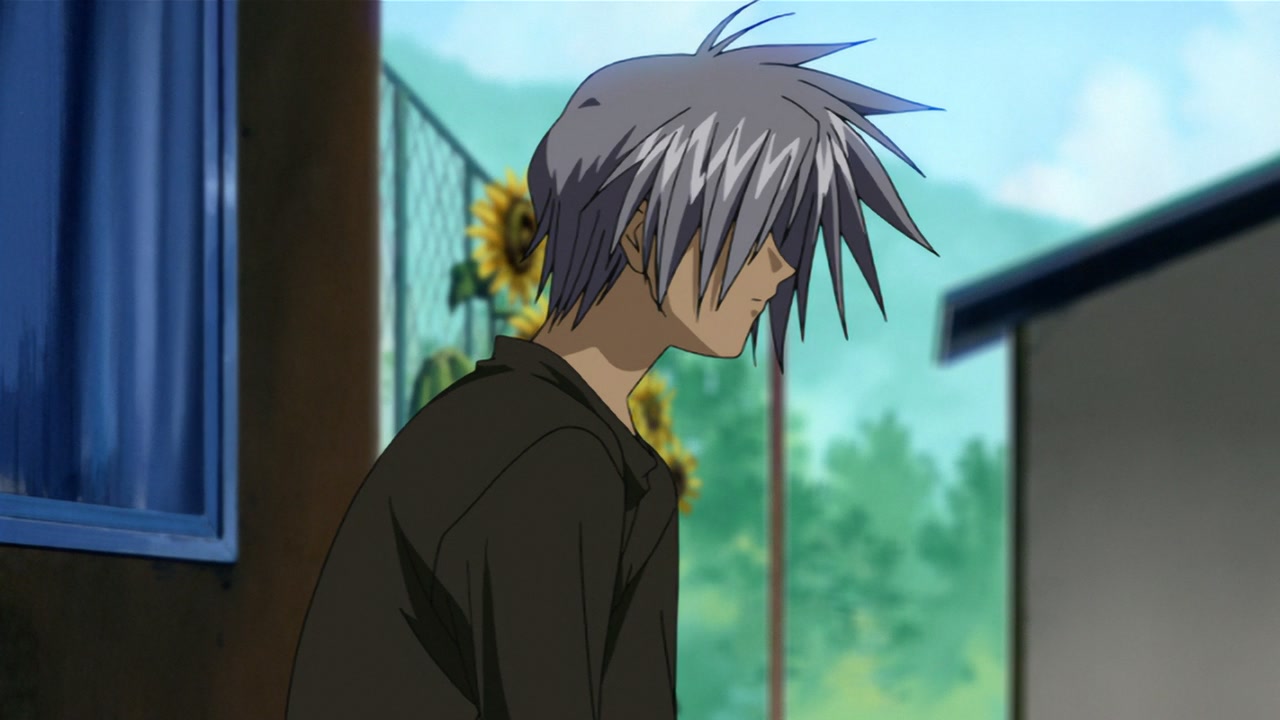
Kunisaki Yukito initially presents as a refreshingly unglamorous protagonist. He is perpetually hungry, sarcastic, and openly annoyed by Misuzu’s clinginess. His puppet show is technically skilled but emotionally hollow, he makes the doll walk, but there is no joy in it. This cynicism masks a lifetime of loneliness; he has chased a family legend across countless towns, never putting down roots, never forming attachments. His character arc is the gradual replacement of abstract duty with personal love. The moment he realizes the “girl in the sky” he has been searching for is not a myth but the real, suffering girl in front of him, everything changes. His ultimate sacrifice, pouring his heart into the ancestral doll and becoming the crow Sora, reads not as tragedy but as completion. He finally makes the puppet move with genuine feeling, and that feeling is love.
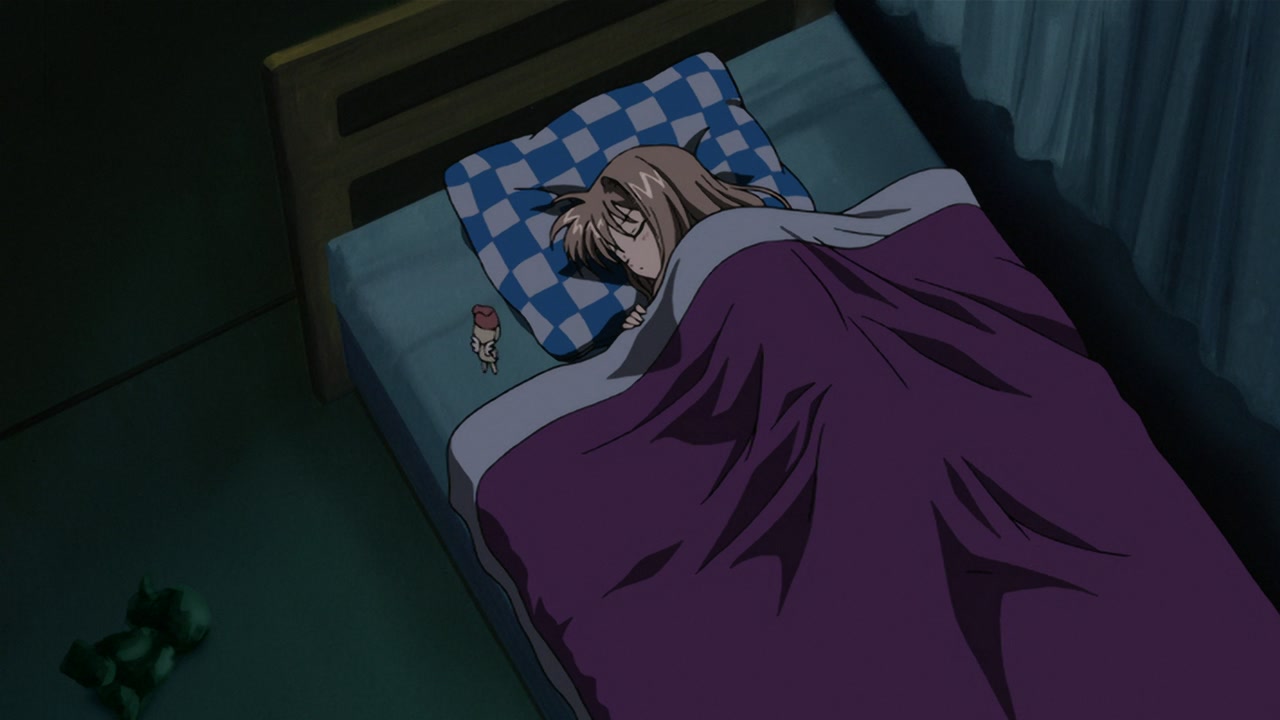
Kamio Misuzu could easily have been an insufferable moe archetype, the clumsy, infantilized girl who exists only to be protected. She is saved from this by the series’ refusal to make her quirks merely decorative. Her “Gao!” is a verbal tic deployed specifically when she is about to cry. Her V-sign and declarations of “Misuzu-chin is a strong girl!” are not random cuteness but desperate self-hypnosis, charms against despair. She knows she is abnormal, she knows her attempts at friendship end in disaster, and she has developed these coping mechanisms in complete isolation. Her decision at the end to walk toward Haruko, with legs that can barely move and a body wracked with pain, is a profound assertion of agency. She chooses her goal. She chooses her ending. The tragedy is not that she dies; it is that she had to die to finally feel loved.
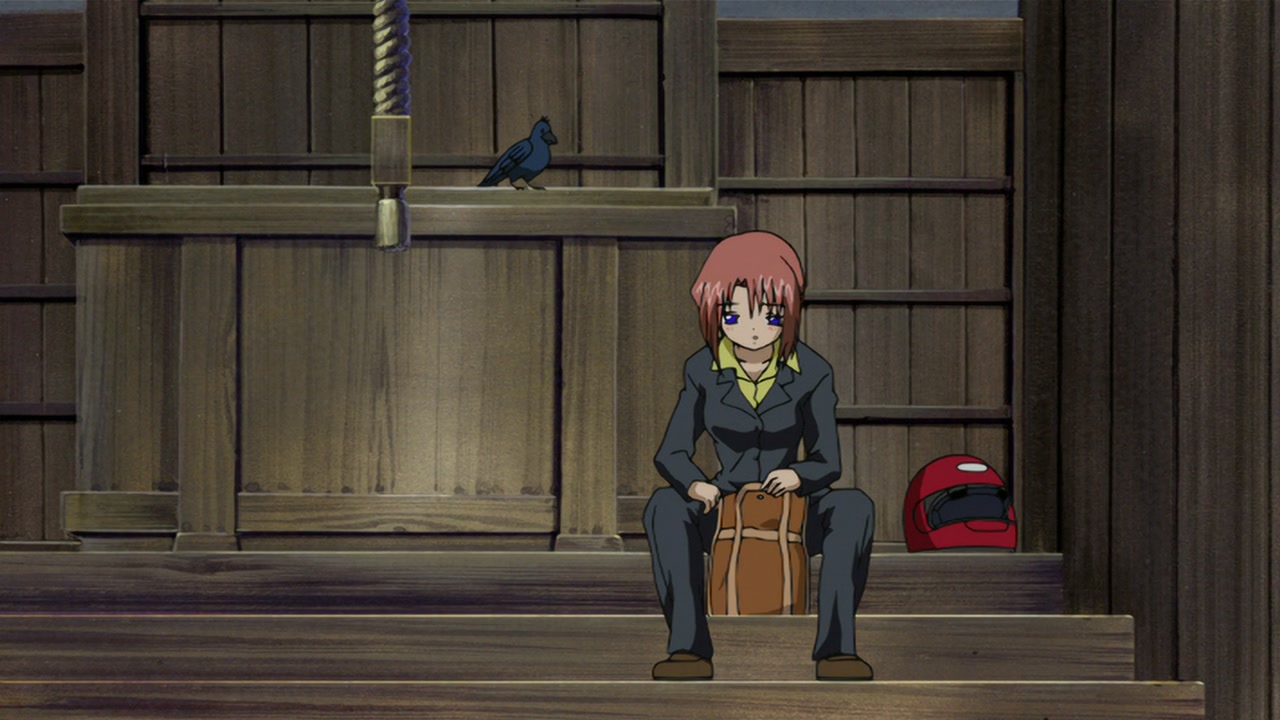
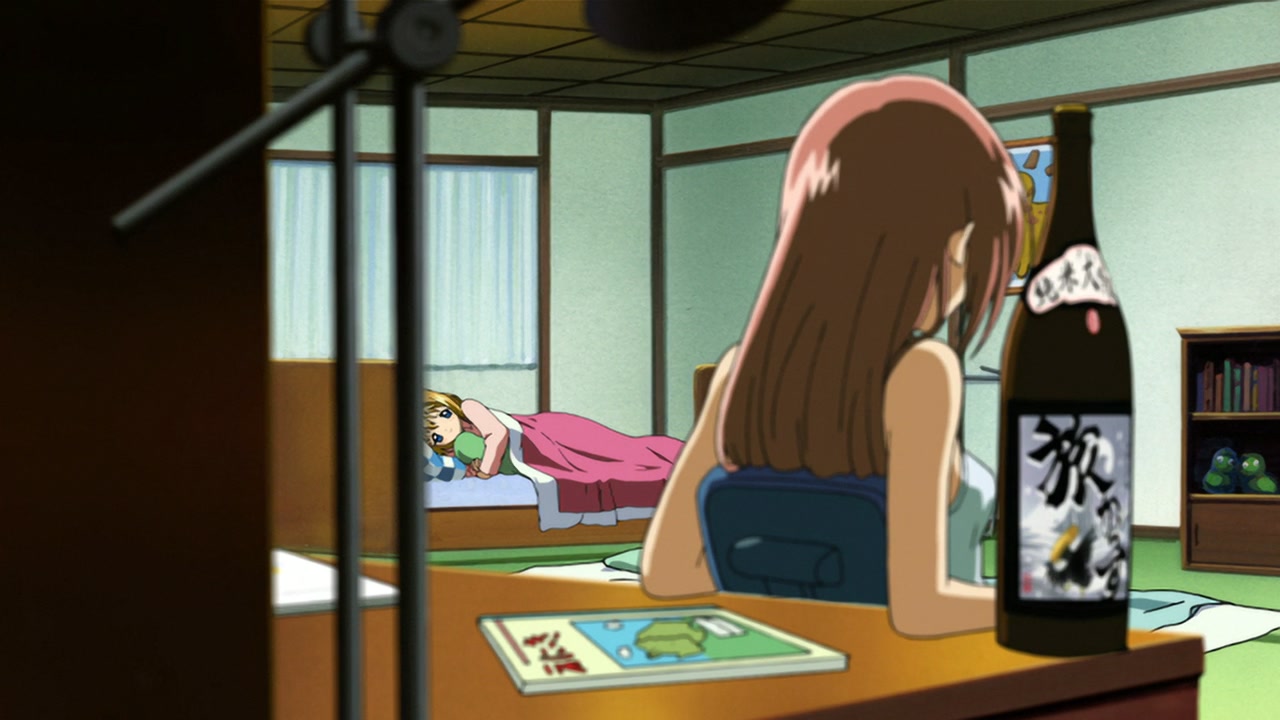
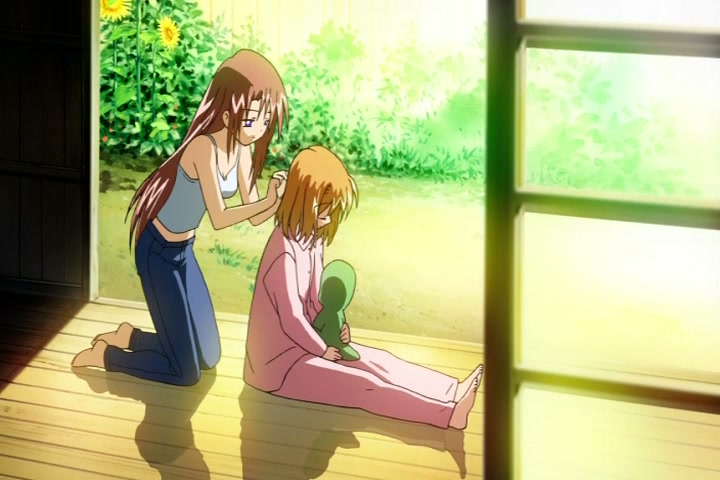
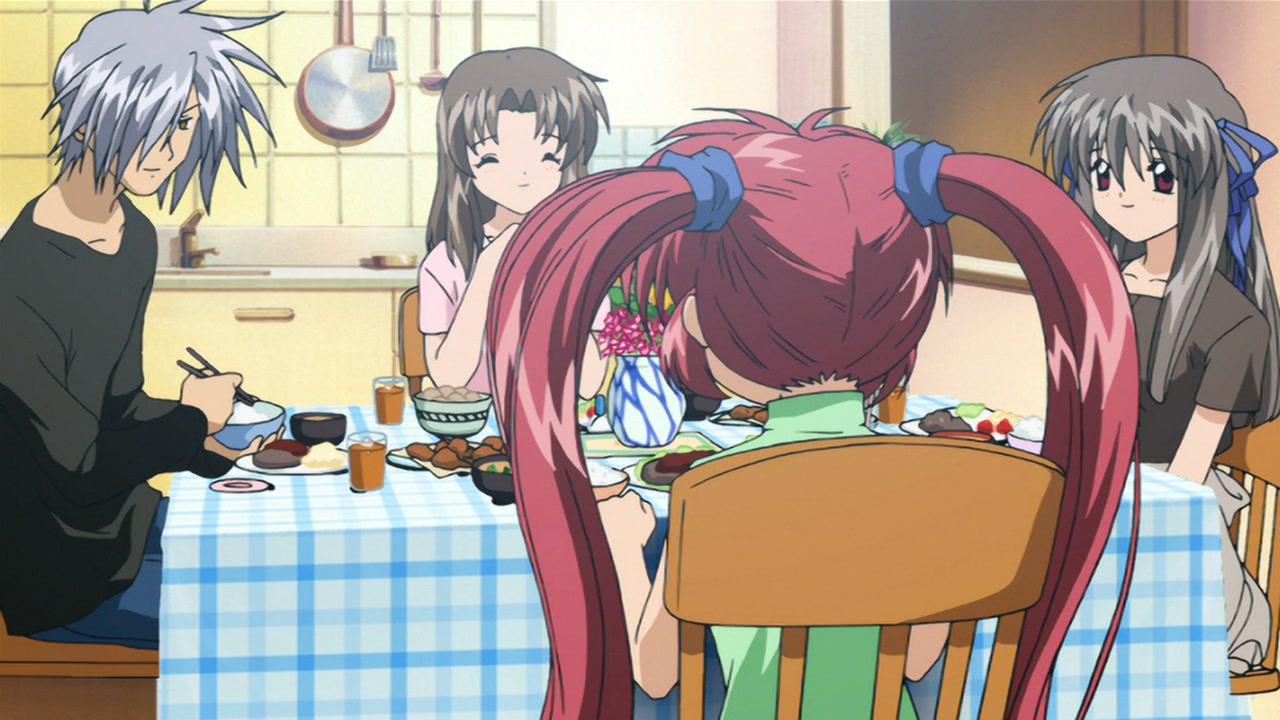
Kamio Haruko is arguably the series’ greatest achievement. She enters as a comic relief character, the hard-drinking, brash aunt who calls Misuzu a freeloader and forgets her birthdays. The revelation that this behavior is a defense mechanism against her own terror of loss recontextualizes every earlier scene. She has kept Misuzu at arm’s length for a decade because she believes the girl’s biological father will eventually reclaim her, and she cannot bear to love a child who will be taken away. Her fight to keep Misuzu, kneeling in front of the Tachibana residence for days, physically wrestling with Keisuke, and finally being called “Mama” on the beach, is the most grounded and emotionally complex arc in the series. Haruko is a failed woman by her own estimation, uneducated, alcoholic, incapable of expressing love except through brusque actions. And yet she becomes, through sheer stubborn devotion, a real mother.
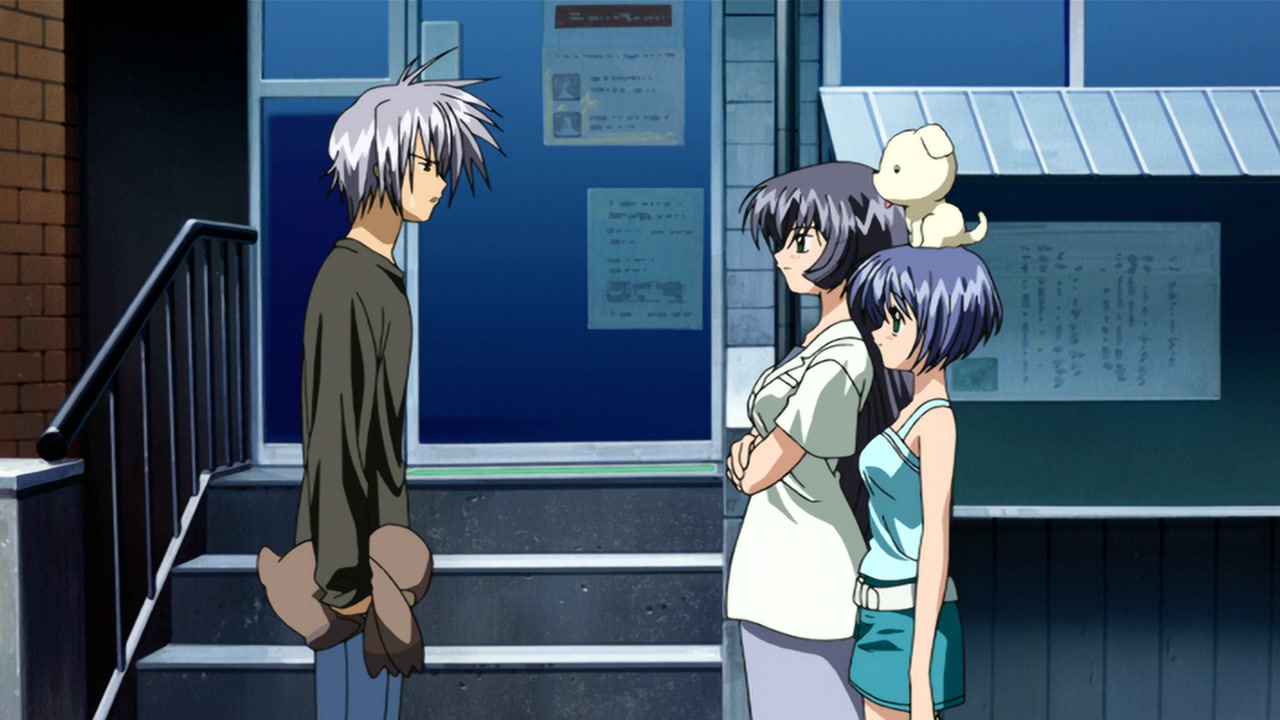
The supporting cast functions as a chorus of variations on the central theme. Kirishima Kano, with her “magic bandanna” and her desire to apologize to her dead mother for being born, represents guilt that has curdled into self-destruction. Her sister Hijiri, who gave up her own life to become Kano’s caretaker, embodies the caregiver’s exhaustion and the desperate hope that love alone can heal. Tohno Minagi and her dream-double Michiru explore the dissolution of identity in the service of comforting a parent. Minagi has spent years pretending to be her deceased younger sister because it makes her mother smile. Her arc is about reclaiming her own name, her own face, her own right to exist as herself. Michiru, the supernatural fragment born from this wish, is the most explicitly metafictional character, she knows she is a dream, and her farewell is the series’ thesis statement: even dreams that end can leave happy memories behind.
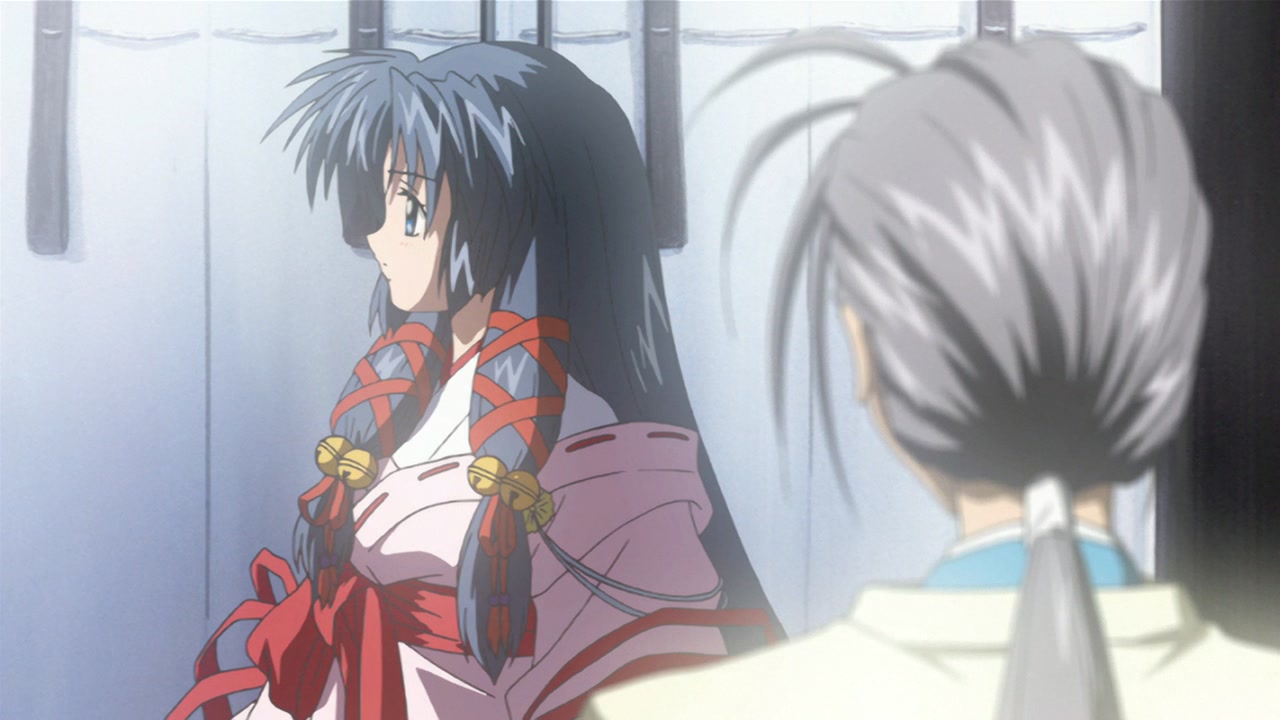
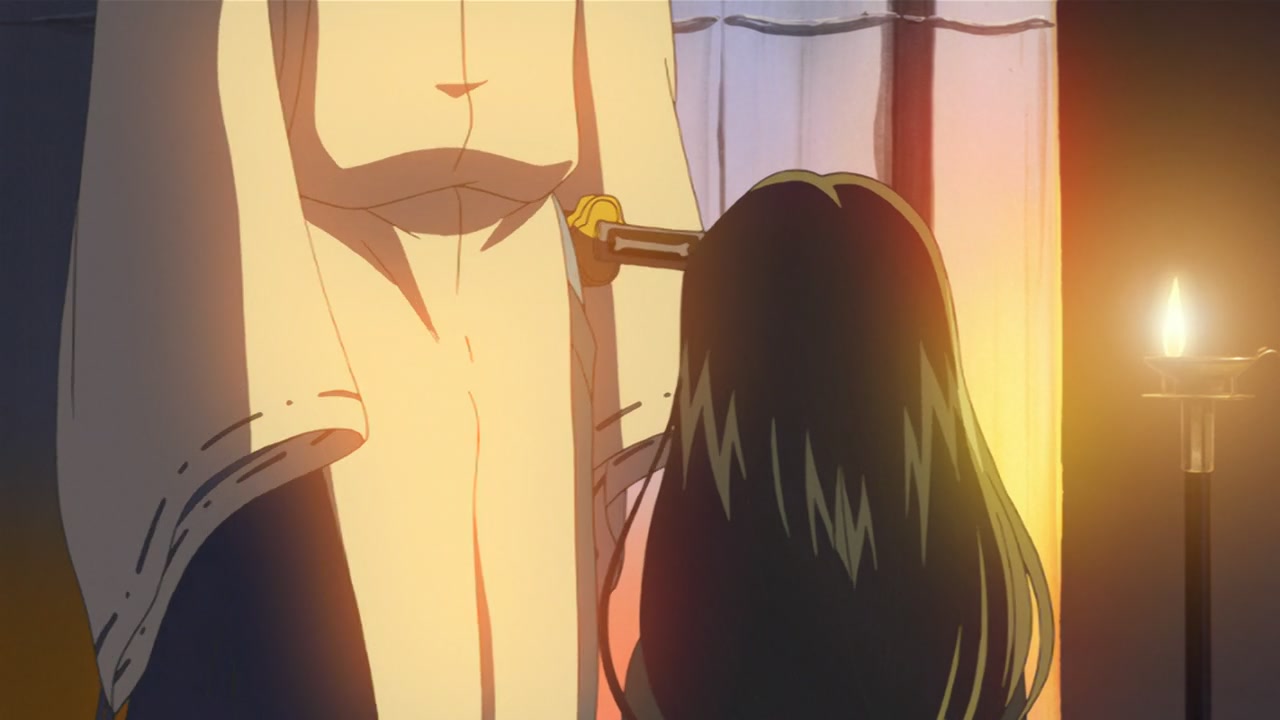
The Heian-era trio of Kanna, Ryuuya, and Uraha establishes the template that all subsequent relationships will echo. Kanna is the original lonely girl, imprisoned and worshipped but never loved. Ryuuya is the irreverent protector who treats her as a person rather than a deity. Uraha is the quiet sustainer, the one who devises the multi-generational plan to eventually free Kanna’s soul. Their improvised family, forged in flight and sustained through metaphor (“we’re like a half-dead family trying to avoid starvation under cold skies”), is destroyed almost as soon as it forms, and the rest of the series is the long, slow work of repairing that rupture.

Visuals and Animation
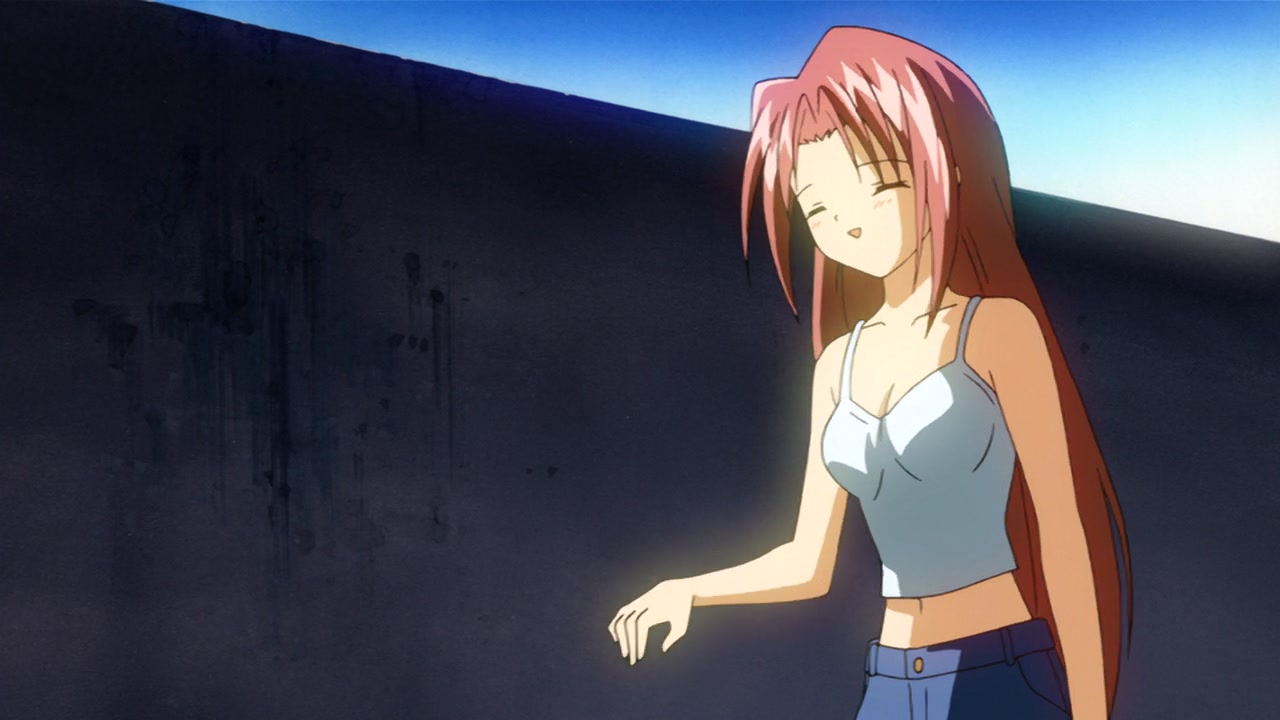
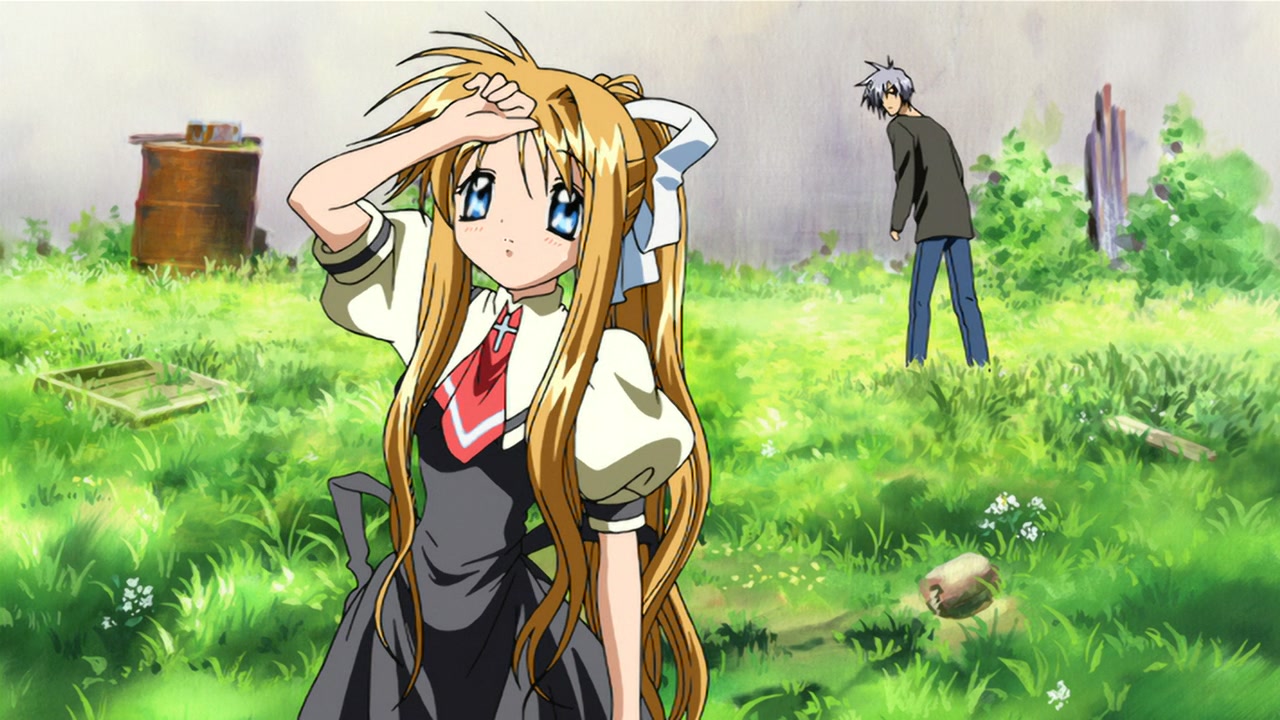
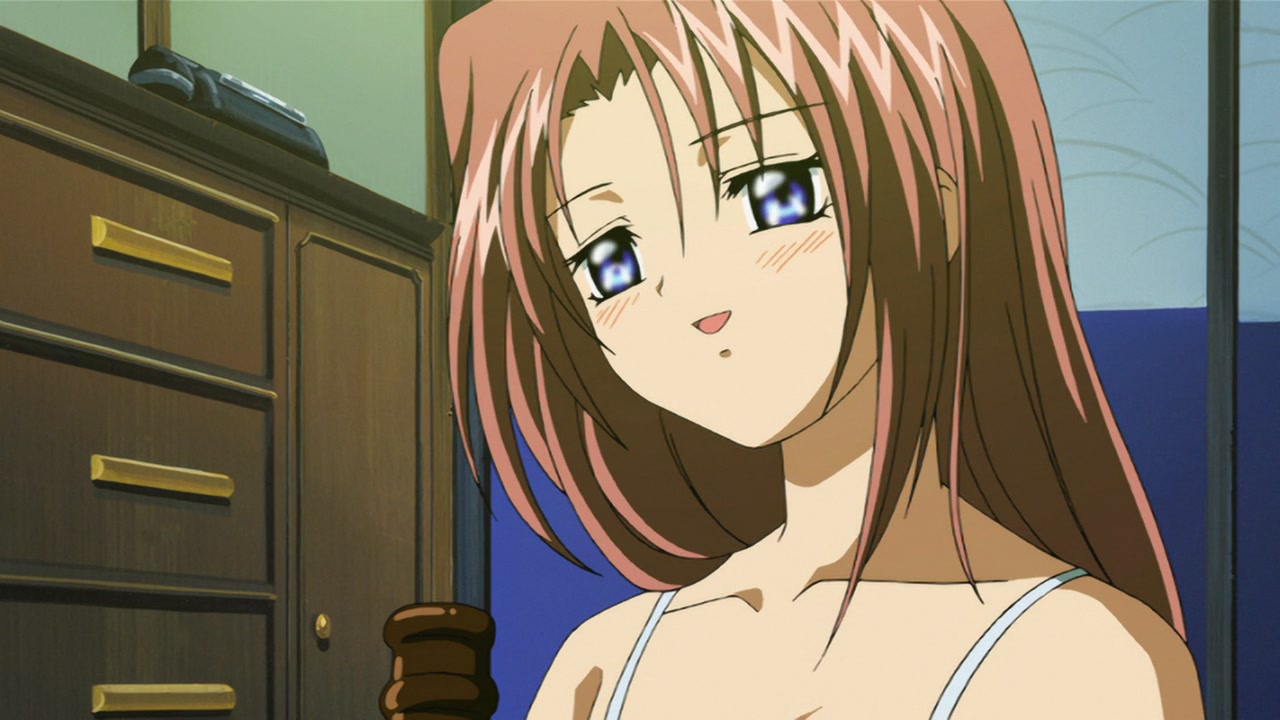
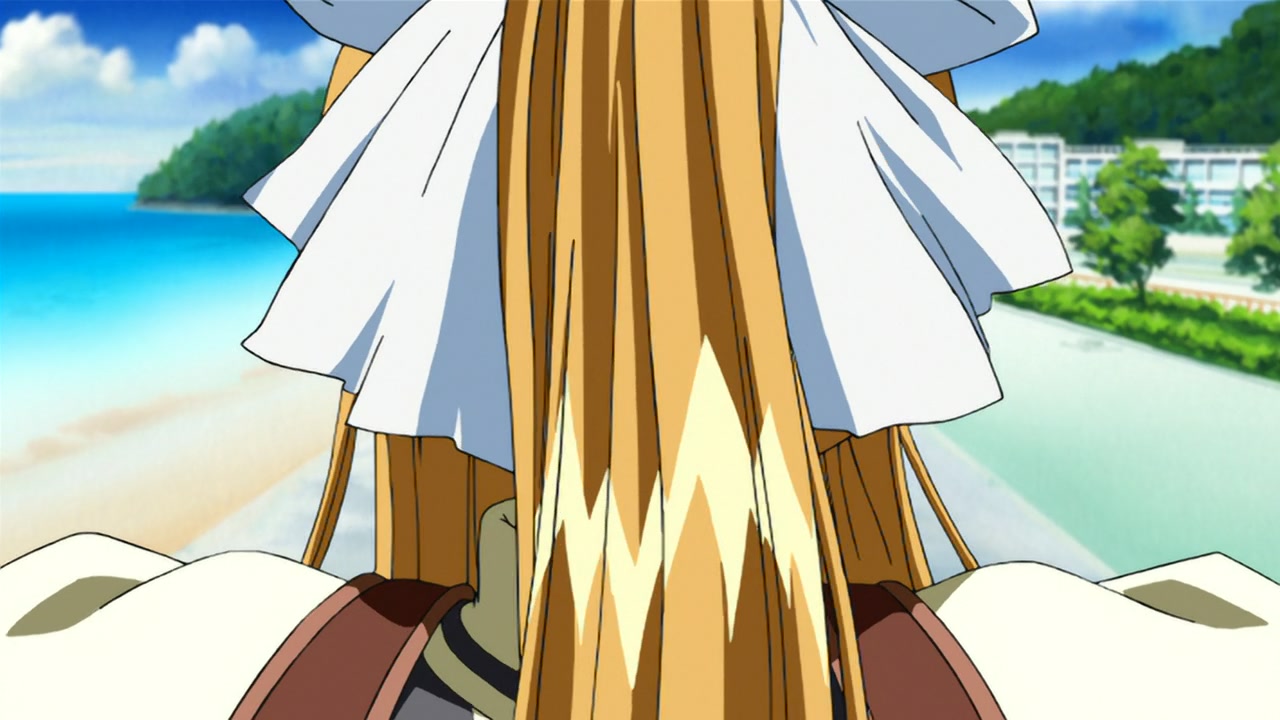
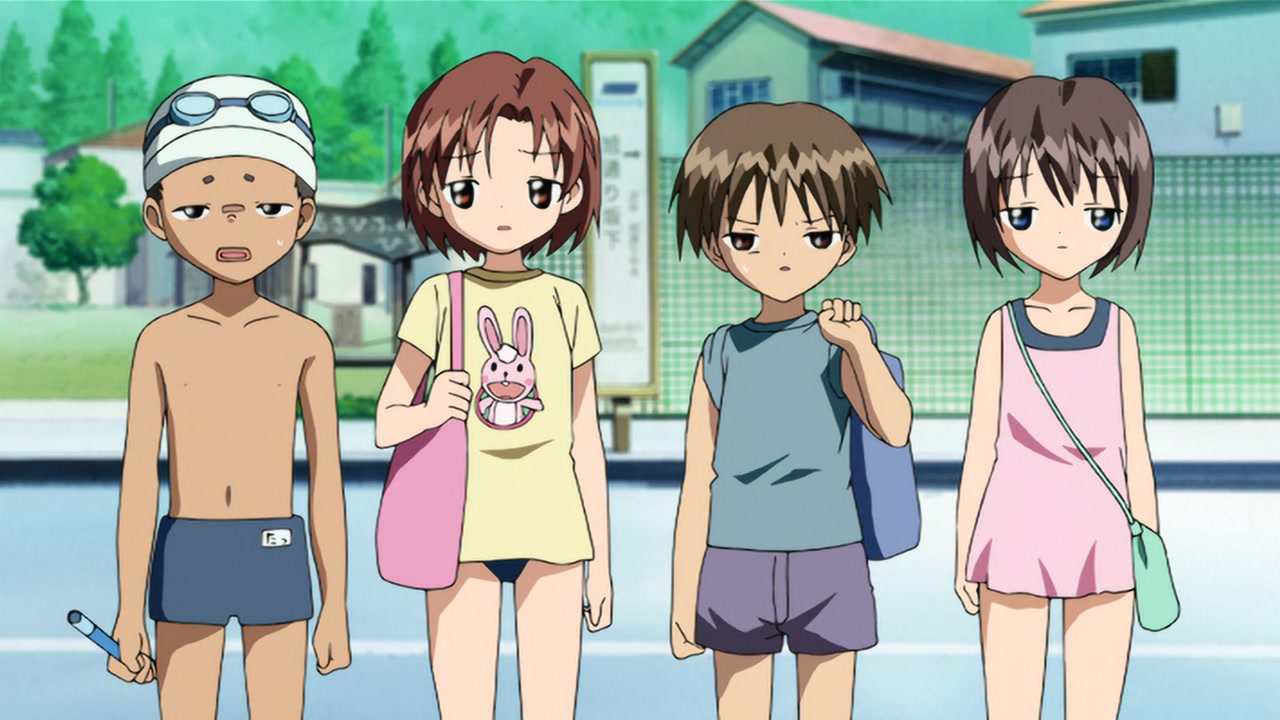
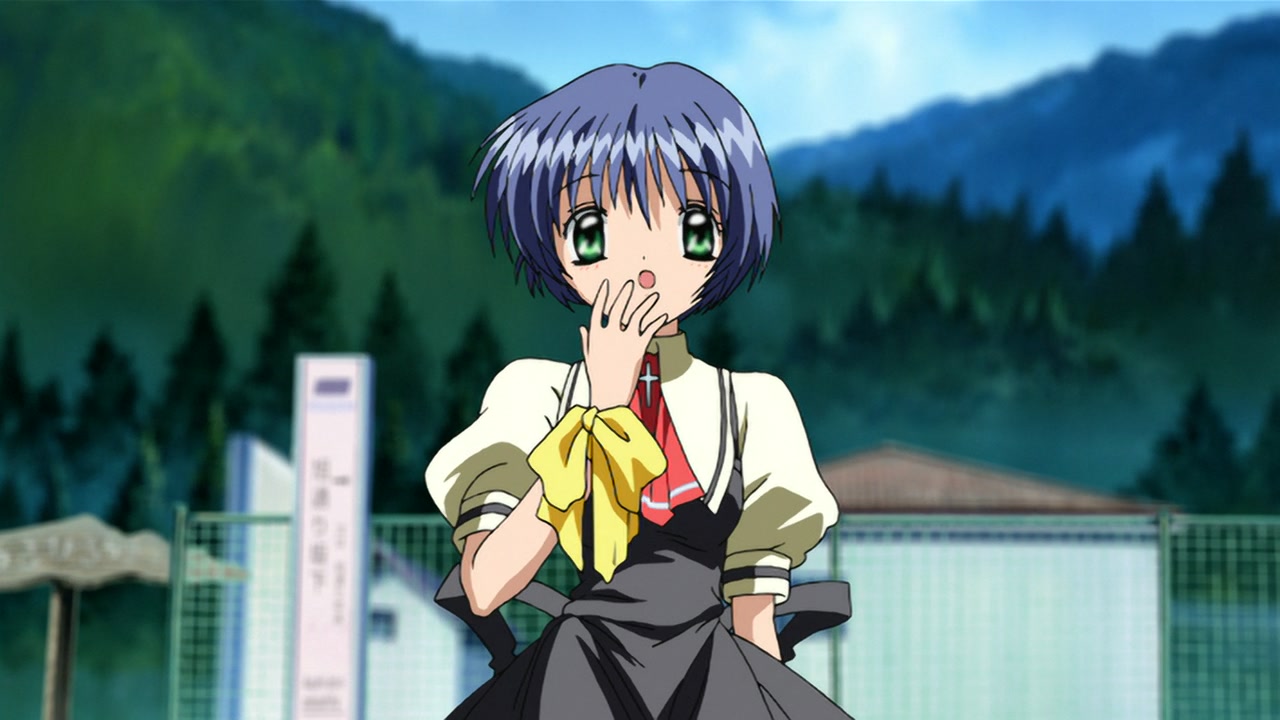
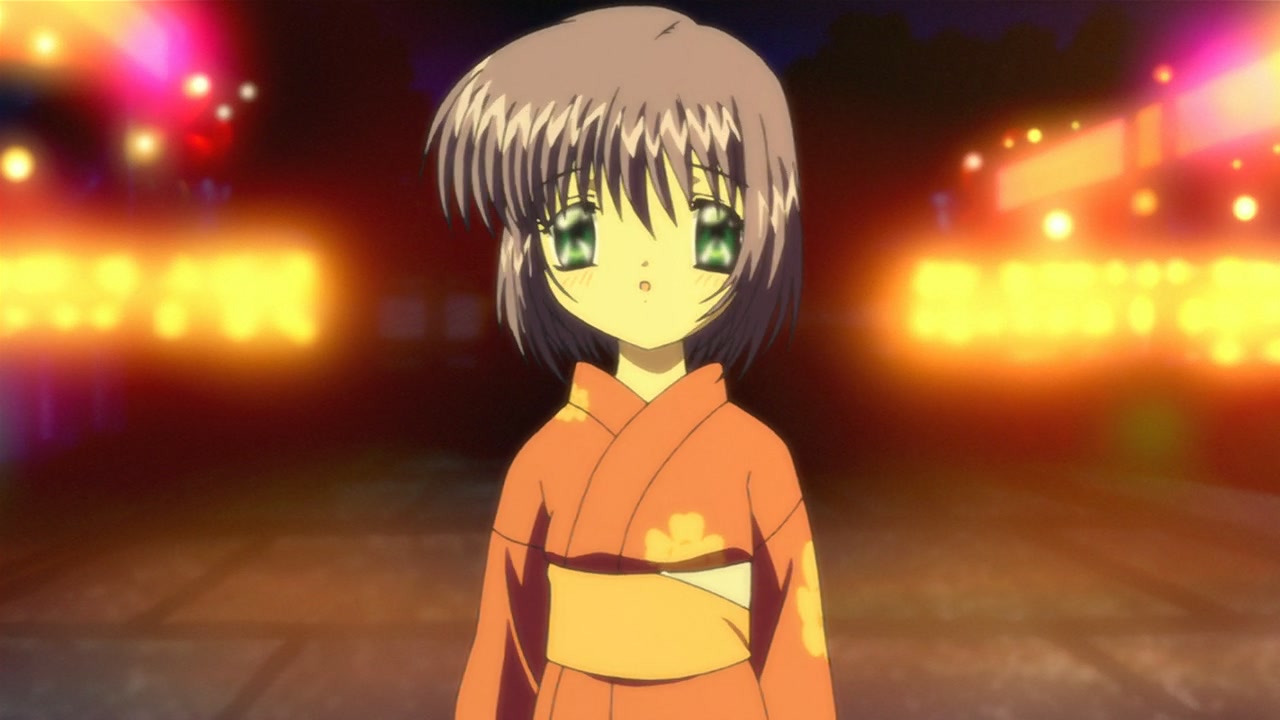
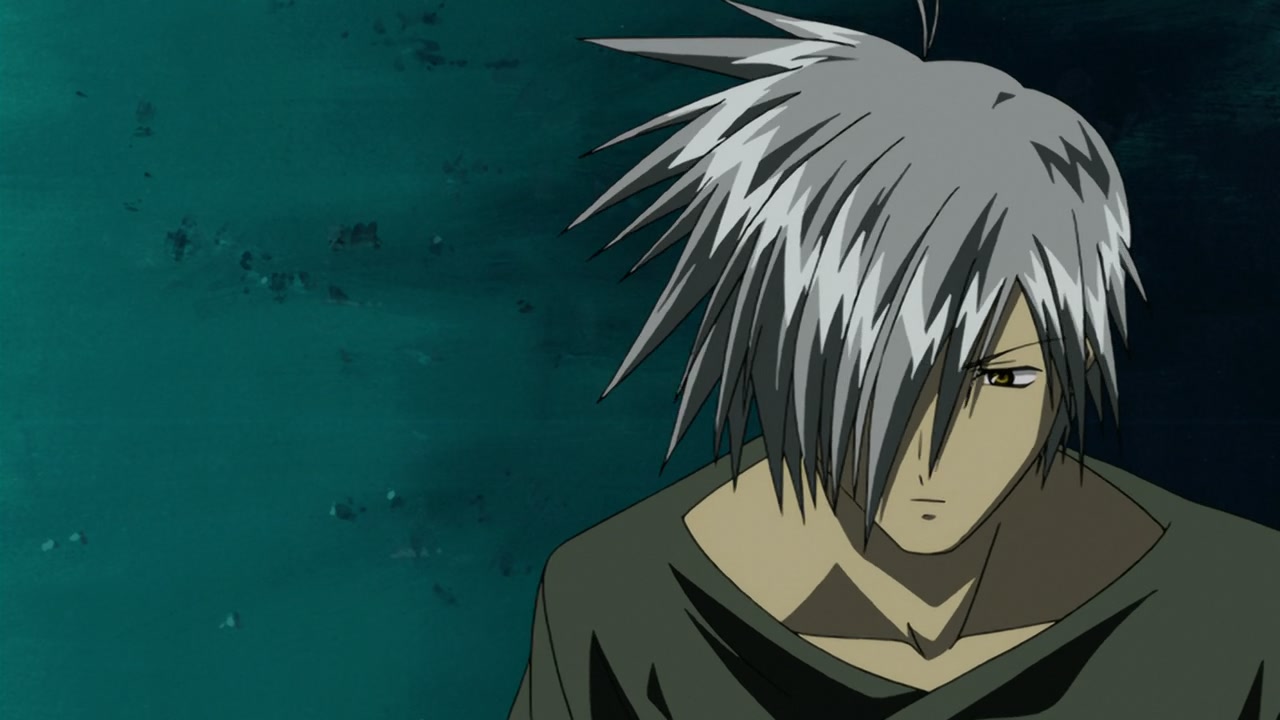
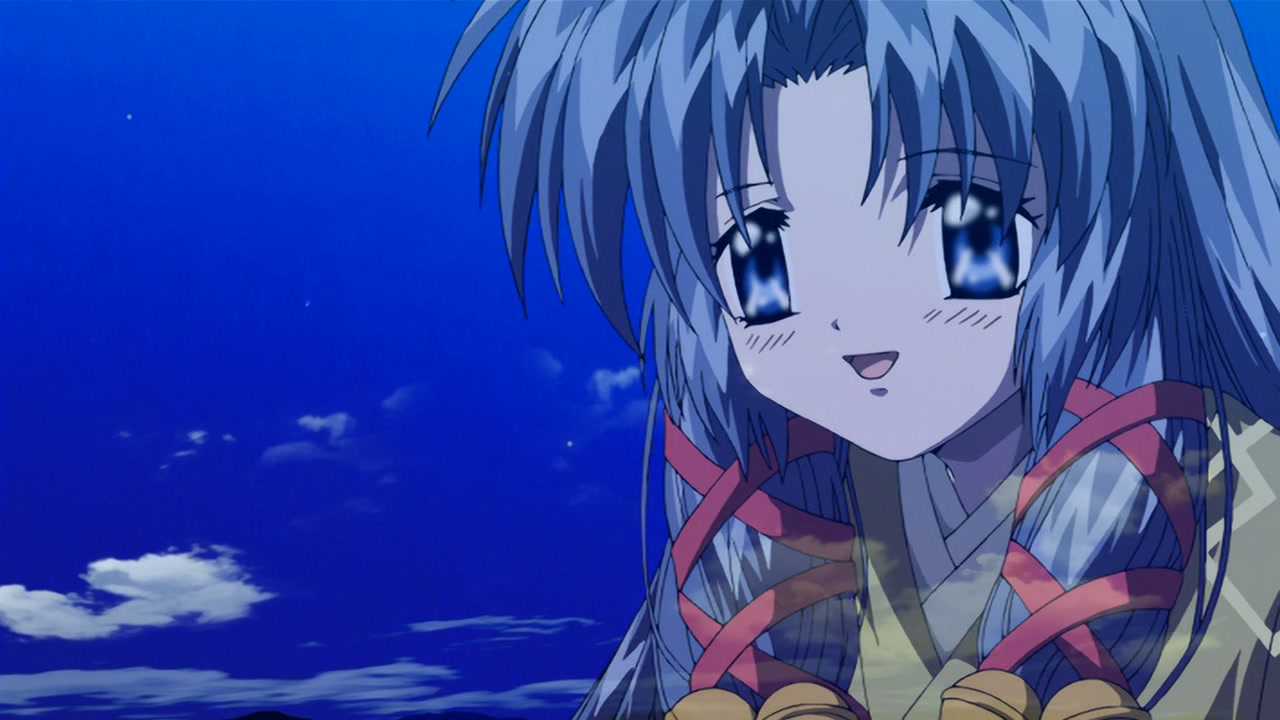
Air was produced in 2005 by Kyoto Animation, a studio still solidifying the house style that would later define modern moe aesthetics in series like Clannad and K-On!. The character designs are unmistakably of their era: enormous, downward-set eyes with complex gradient coloring and prominent specular highlights, minimal nose and mouth detailing, and sharp, needle-like hair clusters with high-contrast shine. This is the Key visual novel aesthetic translated almost directly to animation, and it carries both strengths and weaknesses.
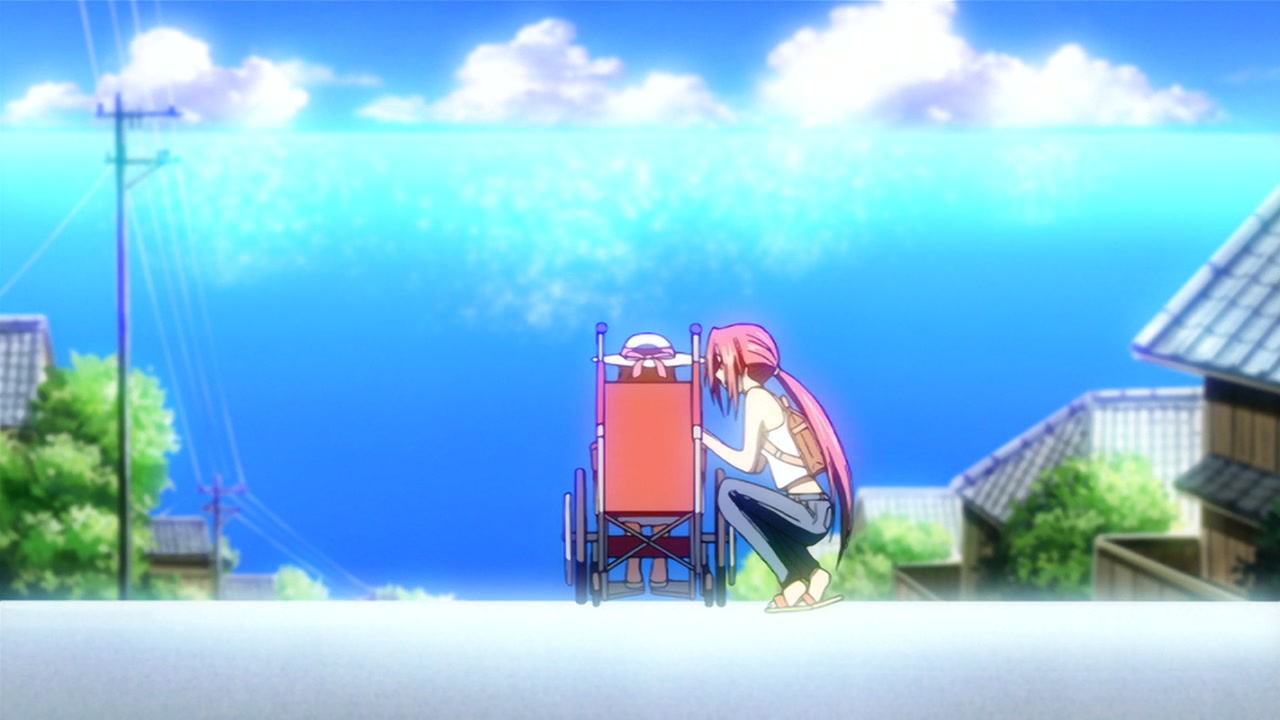
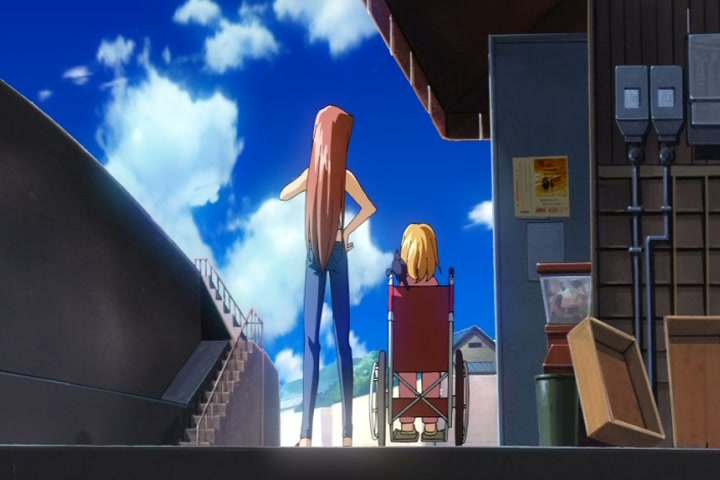
The primary strength is emotional legibility. With faces reduced to eyes and the barest suggestion of other features, every subtle shift in gaze becomes a dramatic event. Misuzu’s trembling smile before she collapses, the way her eyes lose focus when her memory begins to fail, Haruko’s panicked widening of the eyes when she sees Misuzu in a wheelchair, these moments land precisely because the designs concentrate all expressive weight into a single focal point. The “quiet acting” style, where characters communicate through posture and stillness rather than broad gestures, suits the series’ meditative pacing.
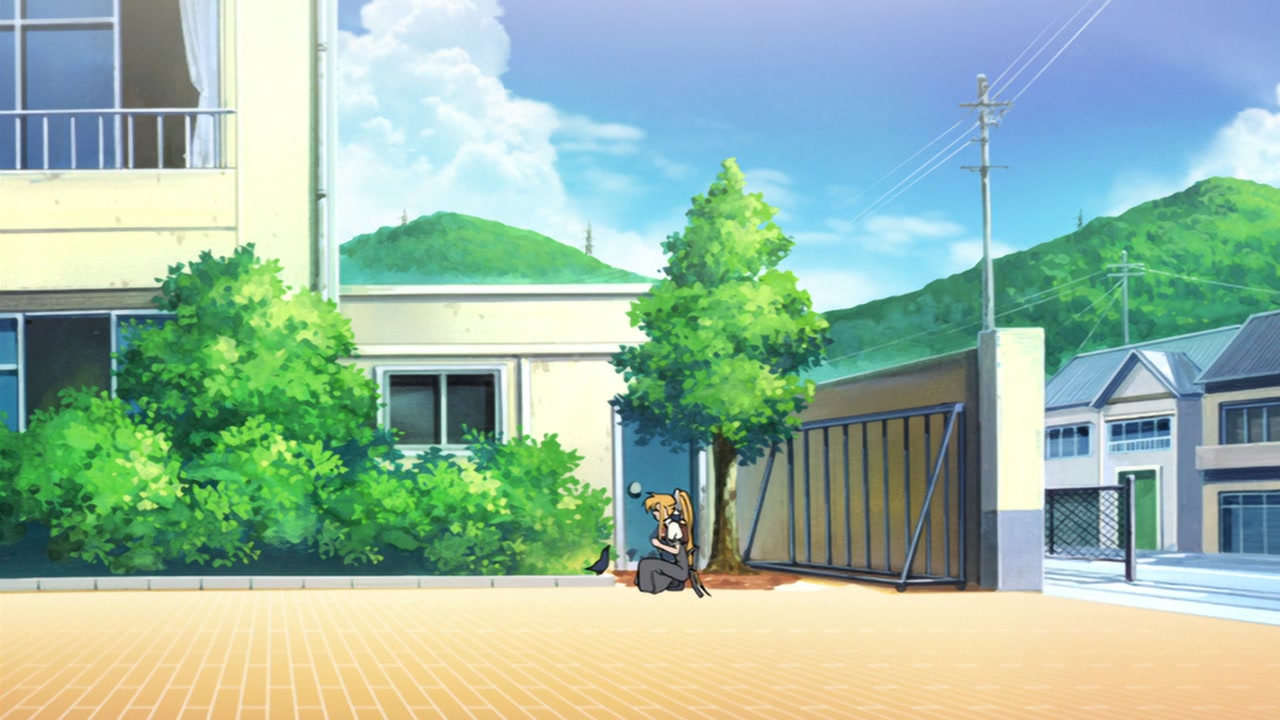
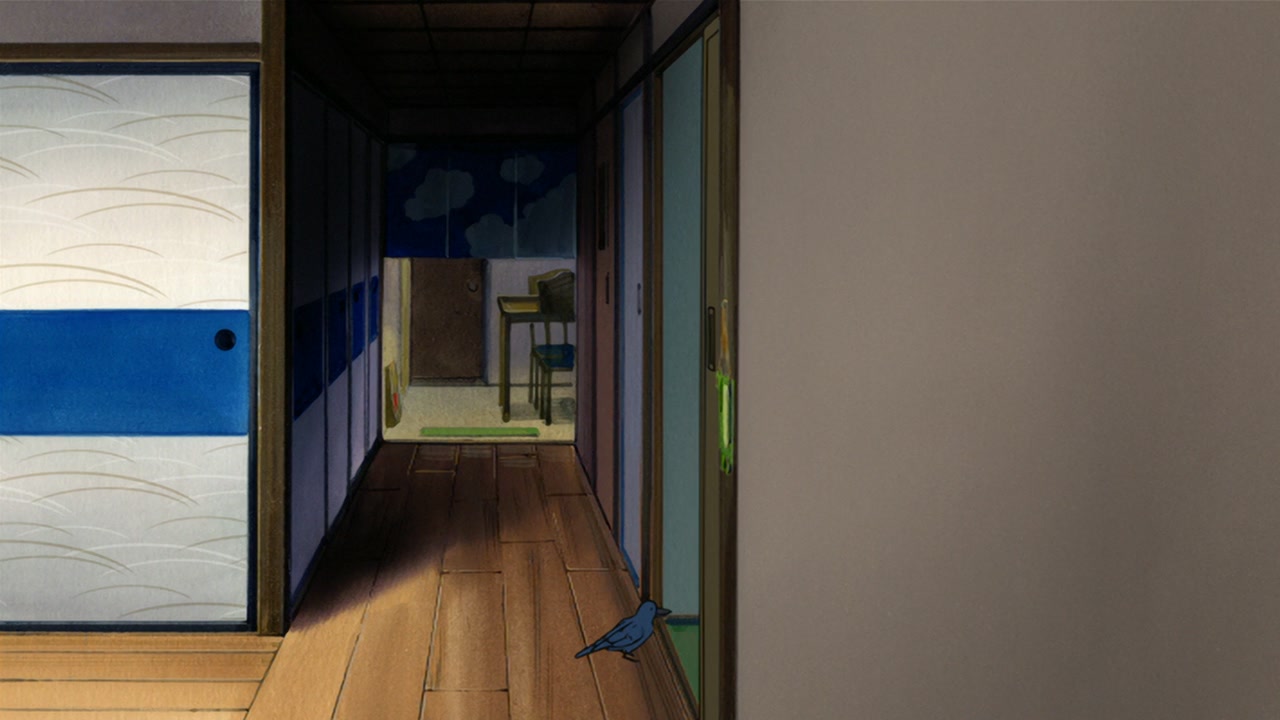
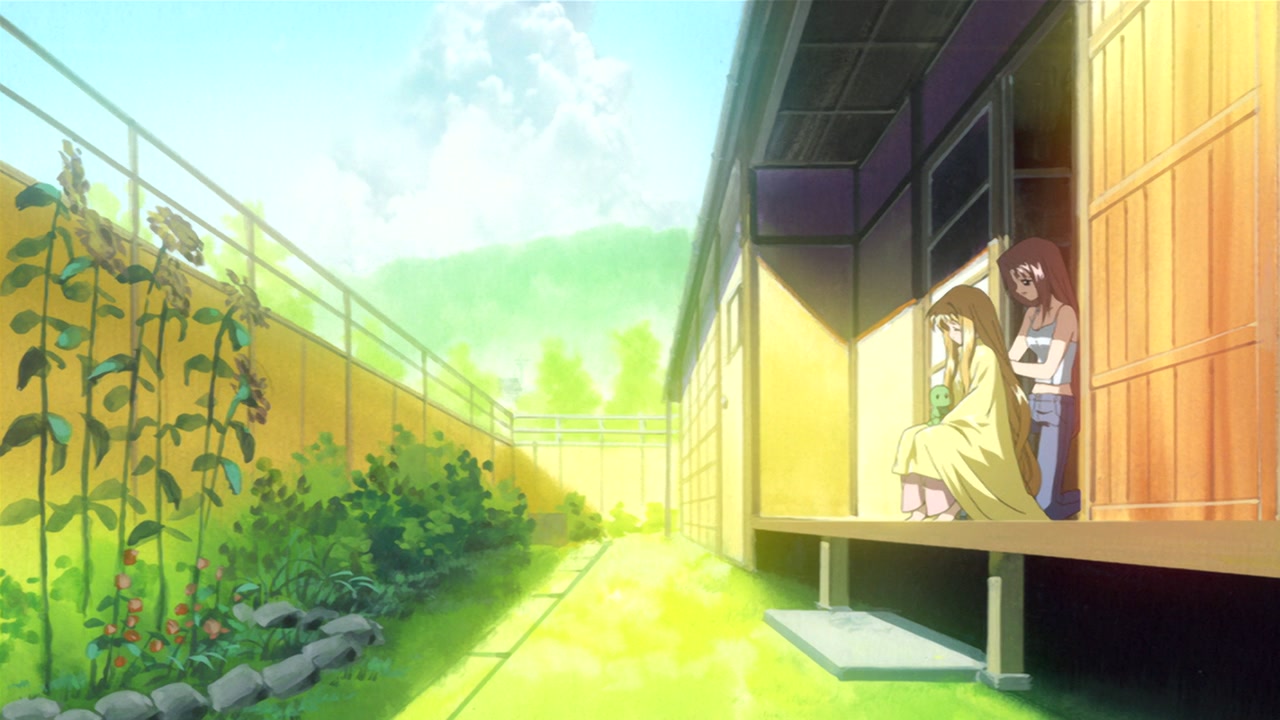
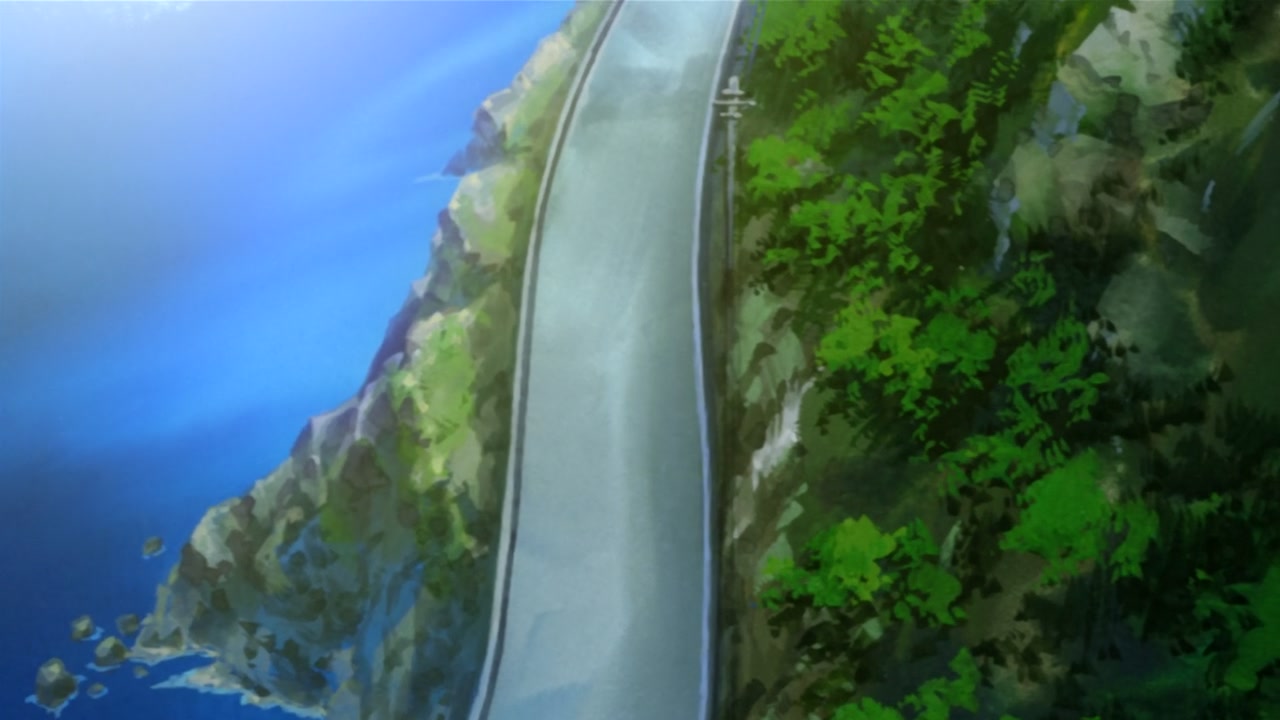
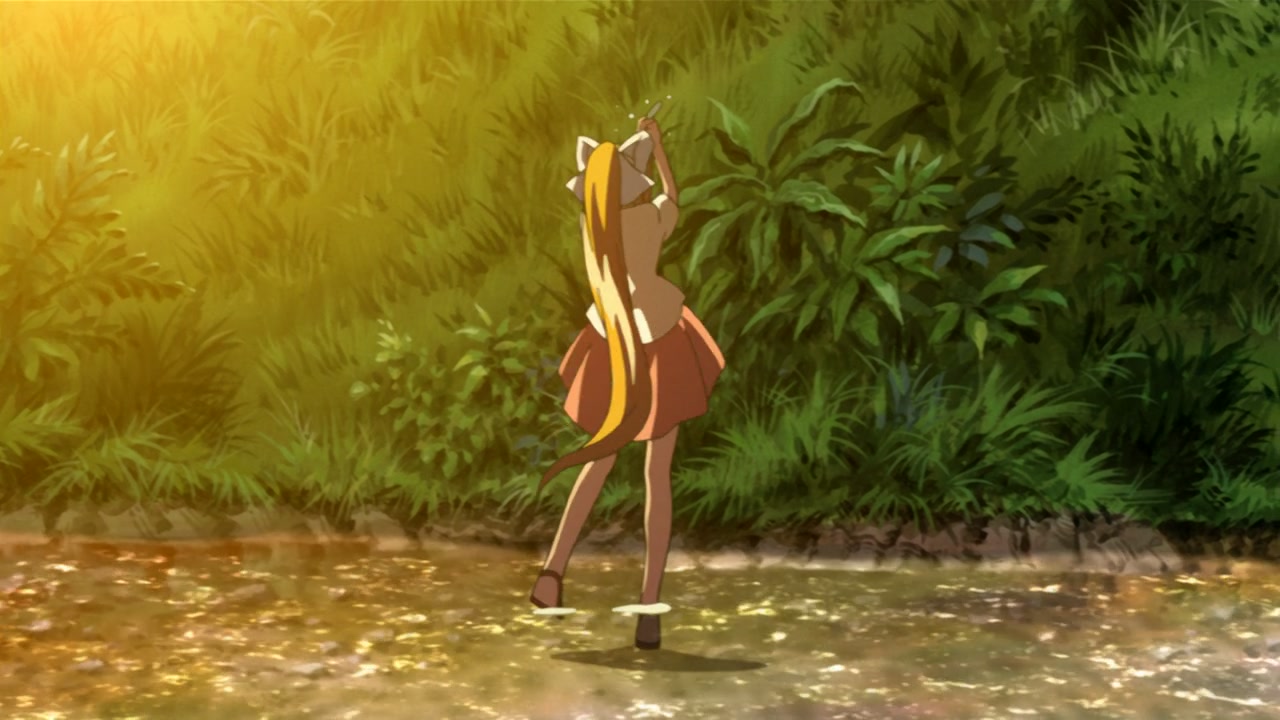
The greatest visual asset, however, is the background art. The environments are rendered in a painterly, almost watercolor style, with visible brushstrokes, soft gradients, and an organic texture that contrasts sharply with the clean digital lines of the characters. The seaside town feels authentically lived-in, a minor rural municipality baking under the summer sun. The abandoned train station where Minagi spends her afternoons, the overgrown shrine where Kano’s feather resides, the endless fields of pampas grass in Kano’s vision, these spaces carry a palpable sense of history and decay. They are places where memories have soaked into the soil.
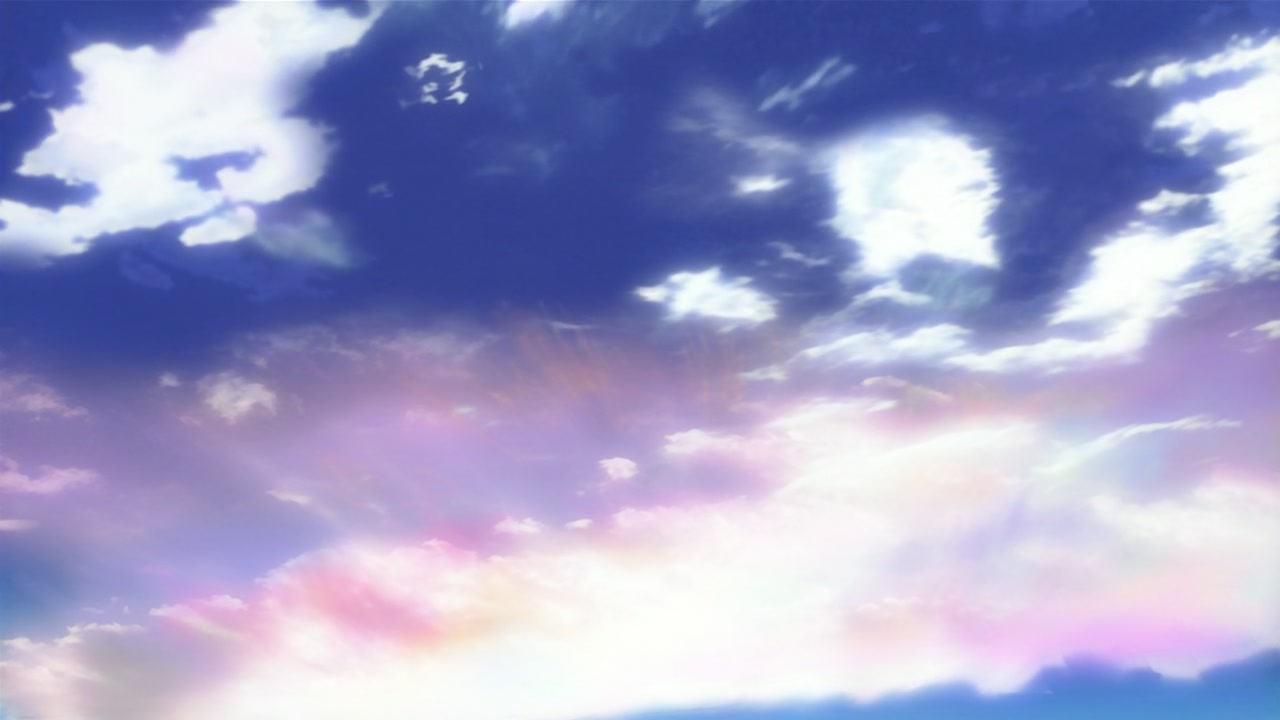
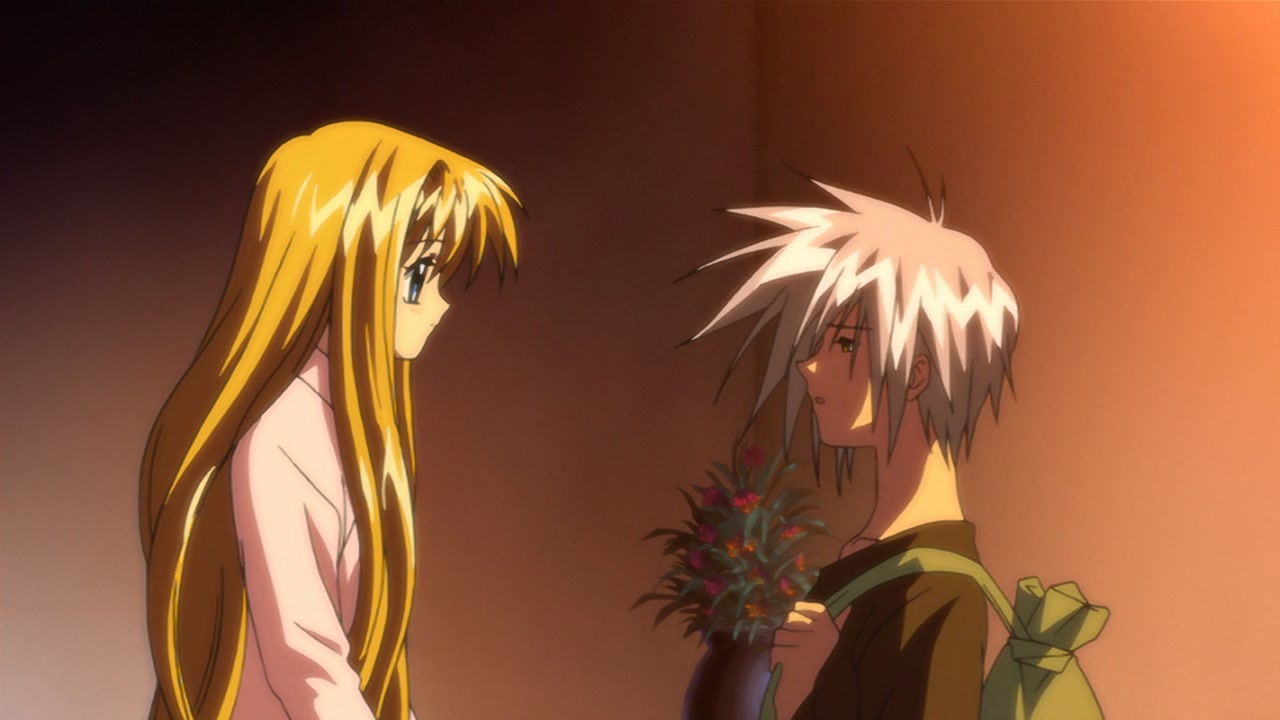
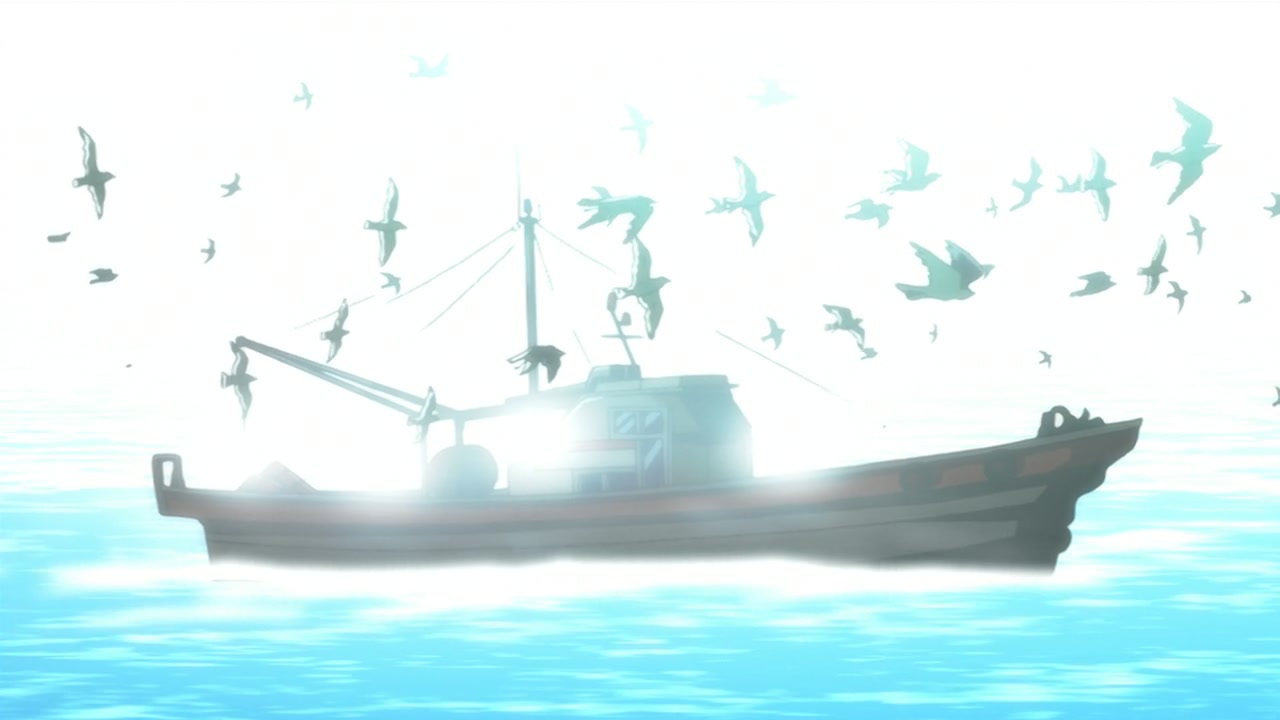
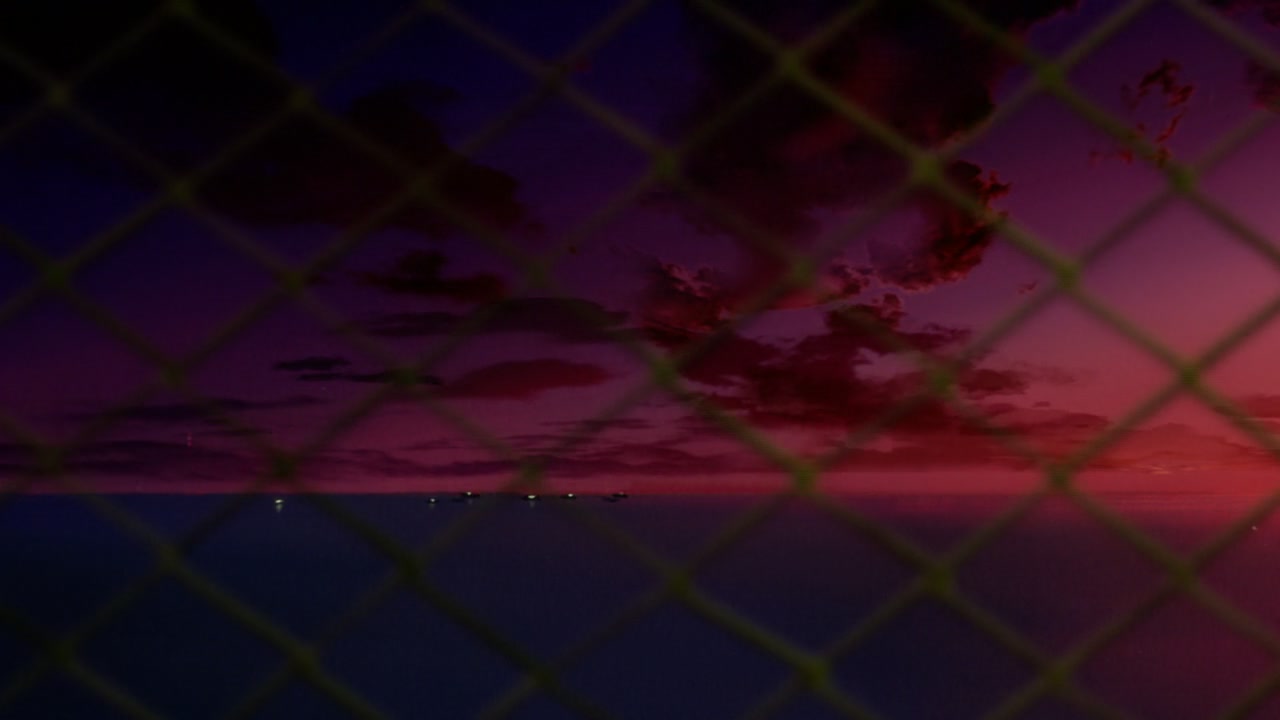
Lighting is used as a primary emotional signifier, often pushed to extremes. Exterior scenes are frequently overexposed, with the sky blooming into a haze of white that nearly swallows the characters. This “digital glow” effect, common in mid-2000s anime, could feel cheap in lesser hands, but here it serves a clear artistic purpose: it evokes the oppressive, blinding heat of a Japanese summer afternoon, the kind of weather where time seems to stop and everything feels slightly unreal. Interior scenes, by contrast, employ deeper shadows and single-source lighting, creating pockets of intimacy and privacy. The Kamio household, with its cluttered rooms and dim corners, feels like a space where secrets have been kept for years.
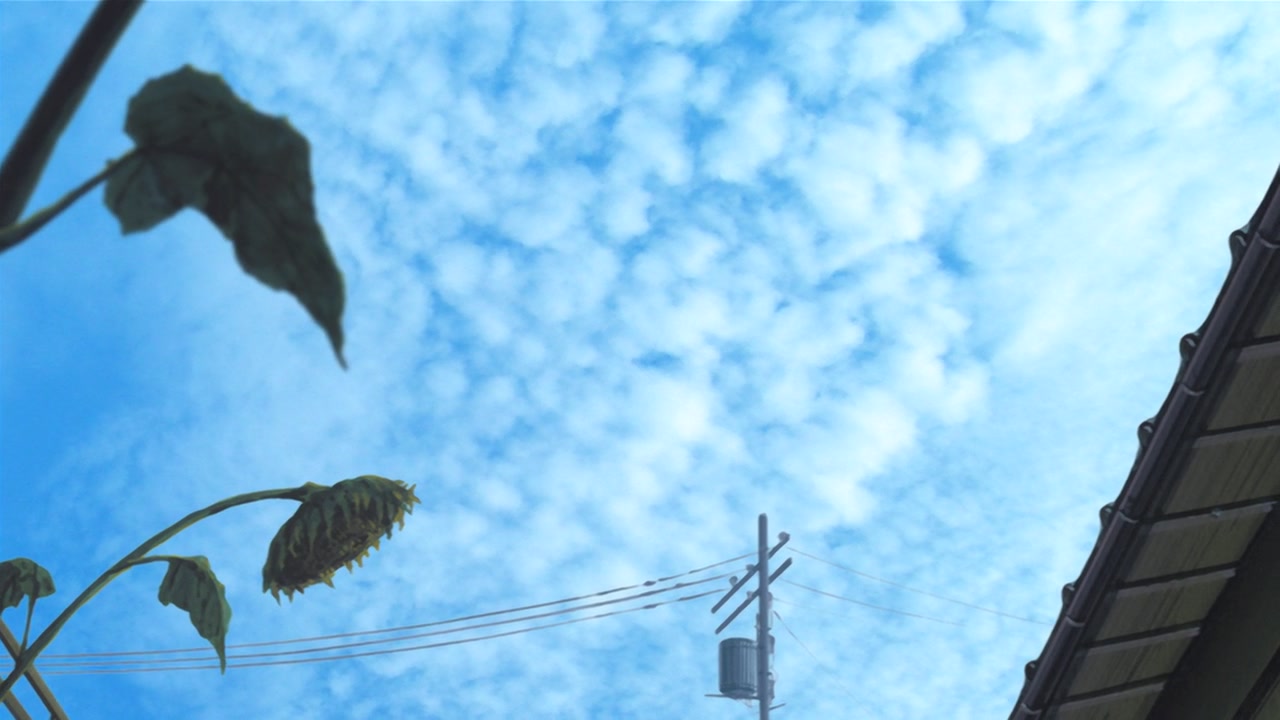
The series is also notably skilled at framing and composition. Characters are frequently placed against vast expanses of sky or sea, emphasizing their smallness and solitude. Foreground elements like blurred grass or architectural details create a sense of voyeuristic distance. The recurring motif of power lines, empty roads, and sunflowers past their peak reinforces the atmosphere of a world caught in the final days of summer, just before everything changes.
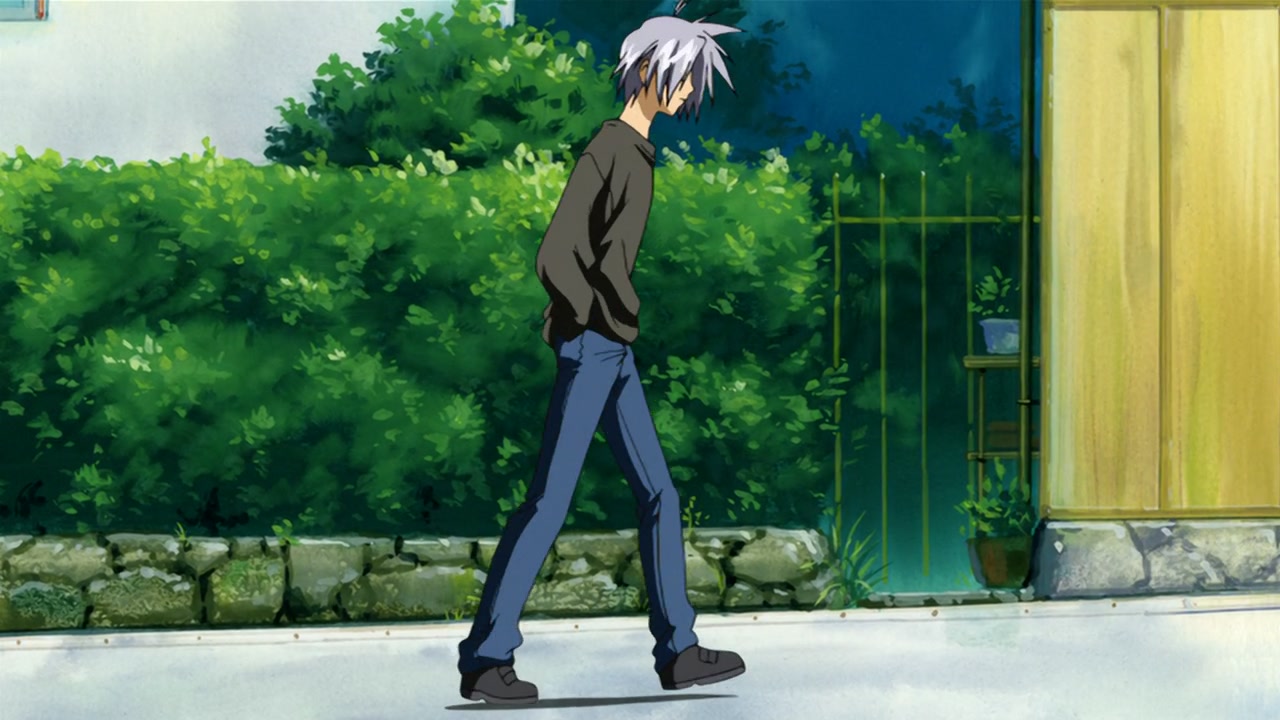
Animation quality is the most significant limitation. This is a television production from 2005 with a modest budget, and it shows. Character movement outside of close-up dialogue scenes is limited. Walking cycles are stiff, action sequences in the Kanna flashback lack fluidity, and the few attempts at physical comedy fall flat because the timing is not snappy enough to sell the gag. There is, however, an important distinction to be made between static composition and weak animation. Many of the series’ most powerful scenes, Misuzu and Yukito sitting on the seawall, Minagi stargazing, Haruko holding Misuzu in the ocean, are deliberately still, composed like paintings rather than animated sequences. The lack of movement is a feature, not a bug; it invites contemplation and allows the viewer to absorb the emotional weight of the moment.
The compositing, the integration of characters into backgrounds, is occasionally problematic in the way common to early digital anime. Characters sometimes appear to float slightly above the painted backdrops, the lighting on their cel-shaded bodies not quite matching the environment. This “sticker-like” quality is most noticeable in wide shots and diminishes significantly in close-ups, where the emotional performances take center stage.
Sound and Music
Any discussion of Air’s audio must begin with its opening theme, “Tori no Uta” by Lia. The song is legendary within the anime community for good reason. Its soaring melody, melancholic synth arrangement, and Lia’s ethereal vocals create an immediate emotional landscape before a single frame of the series has played. The imagery of a girl standing in a field, wings of light spreading behind her, synced to the song’s crescendo, is one of the most iconic opening sequences of the 2000s. “Tori no Uta” does not just introduce the series; it encapsulates its entire emotional thesis in four and a half minutes.
The ending theme, “Farewell Song,” continues the mood of gentle resignation, a lullaby for the end of summer. Insert songs appear at crucial emotional junctures, the most famous being “Aozora” during the final episode’s climactic beach scene. The decision to let music carry sequences with minimal dialogue, or no dialogue at all, is a recurring directorial choice that trusts the audience to sit with their feelings rather than being told what to feel.
The score throughout the series relies heavily on piano and strings, with a preference for simple, repeating motifs that build emotional association over time. The same gentle piano piece that accompanies a peaceful afternoon conversation will return, slightly altered, during a moment of loss, deepening the impact through familiarity. This is economical scoring in the best sense: a small number of themes, carefully deployed, accumulating meaning with each repetition.
Voice acting across the cast is strong, with performances that resist the temptation toward melodrama. Kawakami Tomoko’s Misuzu is particularly note-perfect, capturing the character’s precarious balance between forced cheerfulness and imminent collapse. Her delivery of the “Gao!” habit evolves subtly over the series, from a cute verbal tic to something that sounds increasingly like a cry for help. Okamoto Nobuhiko’s Yukito strikes the right note of weary irritation gradually thawing into tenderness. His performance never overplays the emotional turns, making the moments when his voice does crack with feeling all the more effective.
The standout performance belongs to Hisakawa Aya as Haruko. She navigates the character’s wide emotional range, from loud drunken comedy to quiet devastation, with complete conviction. Her breakdown on the beach when Misuzu calls her “Mama” is raw and unguarded in a way that voice acting rarely achieves. Supporting performances from Yuzuki Ryouka as Minagi and Tamura Yukari as Michiru are similarly well-calibrated, with Michiru’s hyperactive energy providing the series’ few moments of genuine levity before her arc takes its tragic turn.
Sound design is unobtrusive but effective. The constant drone of cicadas establishes the summer atmosphere and, more subtly, creates a baseline of white noise against which silence becomes powerful. When the cicadas stop, something important is happening. The wind, the ocean, the rustle of grass, these ambient sounds ground the supernatural elements in physical reality.
Overall Verdict
Air is not a series for everyone. Viewers who require tight pacing, comprehensive worldbuilding, or clear narrative resolution will find it frustrating. Its compression of multiple visual novel routes into a single cour creates structural asymmetries that cannot be entirely defended on their own terms. The Kano and Minagi arcs feel truncated rather than fully realized, and the Heian-era flashback, while thematically essential, arrives with such suddenness that it can feel like the series has switched genres mid-stream.
But to judge Air solely on these criteria is to miss what makes it special. This is a work that operates primarily on an emotional and atmospheric register. It is less interested in telling a story than in creating a space, a summer, a feeling, and inviting the viewer to inhabit it. The visual design, with its painterly backgrounds and overexposed skies, the patient pacing, the musical minimalism, and the focus on small, quiet moments of connection all serve this atmospheric imperative.
The series’ treatment of loneliness is what elevates it above many of its contemporaries. Misuzu’s isolation is not a plot device to be solved by a romantic confession. It is the central condition of her existence, something she has learned to manage through elaborate self-soothing rituals. Her tragedy is not that she dies but that she spent most of her life believing she was a burden, that her love could only hurt others. The series grants her, in her final days, the knowledge that this is not true, that her mother loves her, that she has been loved all along. This is the “goal” she walks toward on the beach, and reaching it, however briefly, is a victory.
Haruko’s arc deserves recognition as one of the most emotionally honest portrayals of reluctant motherhood in the medium. She is not a perfect parent redeemed by a sudden change of heart. She is a woman who made terrible choices out of fear, who failed a child she loved, and who, when given one final chance, fought with everything she had. Her closing monologue, in which she declares that she has faith now that she was indeed Misuzu’s mother, is hard-won and deeply moving.
Kanna’s story, for all its abrupt placement, provides the mythological weight that transforms Air from a melancholy slice-of-life into something more resonant. The idea that grief can be so profound it echoes across centuries, that love can be so powerful it motivates a multi-generational quest, gives the present-day story a dimension it would otherwise lack. Yukito’s sacrifice to become Sora is the endpoint of a thousand-year chain of devotion, and the sight of a crow delivering a plush chick toy to a grieving mother is somehow both absurd and sublime.
The series’ ending, often criticized for its ambiguity, feels appropriate to the themes established throughout. The final shot of two children walking along the shoreline toward the horizon suggests that cycles continue, that what ends in one form begins again in another. It is not a promise of reunion but an acknowledgment of continuity, of stories passed from parent to child, of memories carried forward like feathers on the wind.
For viewers seeking entry into the Key/Kyoto Animation collaboration era, Air is essential. It established the template that later works would refine: the small-town setting, the supernatural mystery rooted in emotional trauma, the delicate balance between moe aesthetics and genuine pathos. It is a flawed work, compressed and occasionally clumsy, but its flaws are the flaws of ambition rather than laziness. When it reaches for transcendence, it sometimes grasps it.
Those who prefer plot-driven narratives, unambiguous endings, or faster pacing will likely struggle. Those who can surrender to a story that prioritizes feeling over explanation, that believes a summer sky can carry the weight of a thousand years of longing, will find something rare and lasting here.
The summer ends. The cicadas fall silent. The girl reaches her goal. And somehow, through all of it, the memory of those wings remains.
Gallery