





![Anime Creators Can Aim for MIFA, the World’s Largest Trade Fair! Tokyo Metropolitan Government Supports Travel & Exhibition Fees: ‘Step-Up Program’ Seminar Held [Recruiting Participants]](https://animeworld.info/wp-content/uploads/2025/10/805340.jpg)
Anime Creators Can Aim for MIFA, the World’s Largest Trade Fair! Tokyo Metropolitan Government Supports Travel and Exhibition Costs for “Step-Up Program” Seminar [Participants Wanted Now]
The Tokyo Metropolitan Government held the first seminar, titled “Let’s Learn About Anime Film Festivals and Overseas Markets,” as part of its “Animation Overseas Expansion Step-Up Program,” aimed at animation-related companies and individuals in Tokyo.
This program is designed to help creators and businesses aspiring for overseas expansion systematically acquire essential knowledge and pitch (project presentation) techniques for the international business scene, giving them a significant opportunity to exhibit at “MIFA” (Marché international du film d’animation), the world’s largest animation trade fair. The day was filled with insightful information, from market explanations by industry experts to vivid firsthand accounts from participants who challenged the global stage through the program.
![Tokyo Metropolitan Government supports travel and exhibition costs. Seminar for the 'Animation Overseas Expansion Step-Up Program' held, aiming to help anime creators reach MIFA, the world's largest trade fair [Participants wanted now!]](/media/805340.jpg)
![Tokyo Metropolitan Government supports travel and exhibition costs. Seminar for the 'Animation Overseas Expansion Step-Up Program' held, aiming to help anime creators reach MIFA, the world's largest trade fair [Participants wanted now!]](/media/805341.jpg)
![Tokyo Metropolitan Government supports travel and exhibition costs. Seminar for the 'Animation Overseas Expansion Step-Up Program' held, aiming to help anime creators reach MIFA, the world's largest trade fair [Participants wanted now!]](/media/805342.jpg)
![Tokyo Metropolitan Government supports travel and exhibition costs. Seminar for the 'Animation Overseas Expansion Step-Up Program' held, aiming to help anime creators reach MIFA, the world's largest trade fair [Participants wanted now!]](/media/805343.jpg)
![Tokyo Metropolitan Government supports travel and exhibition costs. Seminar for the 'Animation Overseas Expansion Step-Up Program' held, aiming to help anime creators reach MIFA, the world's largest trade fair [Participants wanted now!]](/media/805344.jpg)
![Tokyo Metropolitan Government supports travel and exhibition costs. Seminar for the 'Animation Overseas Expansion Step-Up Program' held, aiming to help anime creators reach MIFA, the world's largest trade fair [Participants wanted now!]](/media/805345.jpg)
![Tokyo Metropolitan Government supports travel and exhibition costs. Seminar for the 'Animation Overseas Expansion Step-Up Program' held, aiming to help anime creators reach MIFA, the world's largest trade fair [Participants wanted now!]](/media/805346.jpg)
![Tokyo Metropolitan Government supports travel and exhibition costs. Seminar for the 'Animation Overseas Expansion Step-Up Program' held, aiming to help anime creators reach MIFA, the world's largest trade fair [Participants wanted now!]](/media/805347.jpg)
Aiming for MIFA, the World’s Largest Trade Fair: Tokyo Metropolitan Government’s Powerful Support System
At the beginning of the seminar, the secretariat and representatives from the Tokyo Metropolitan Government meticulously explained the overall vision of the program. This initiative is structured with a total of four seminars and two workshops. By participating in at least one of these sessions, attendees become eligible to apply for the “Tokyo Anime Pitch Grand Prix” (scheduled for February 13, 2026), which serves as a gateway to overseas expansion.
The allure of this Pitch Grand Prix lies in the concrete opportunities it offers. Not only will the Grand Prize winner receive 1 million yen and Excellent Prize winners 500,000 yen, but they will also be selected as beneficiaries of exhibition support for MIFA, to be held in Annecy, France, in 2026.
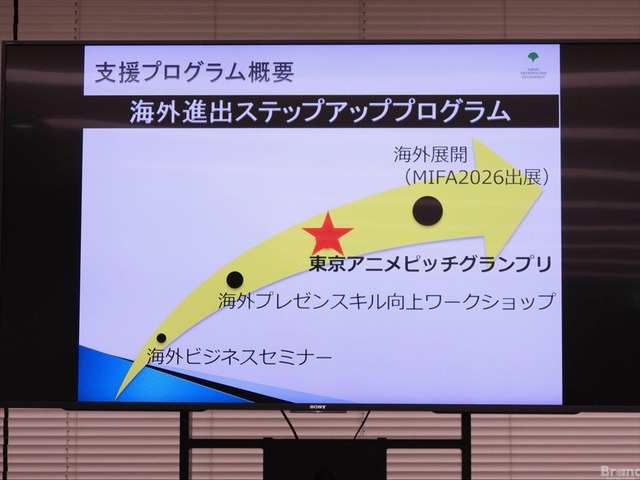
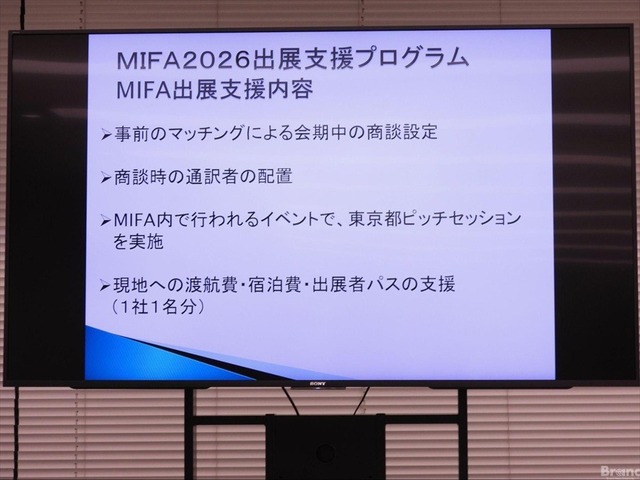
Exhibiting at MIFA usually entails a significant financial burden for individuals and small to medium-sized enterprises (SMEs) acting independently. However, under this program, the Tokyo Metropolitan Government covers the costs of admission passes, travel and accommodation expenses (for one person), and booth exhibition fees.
The support extends beyond financial assistance. In the preparation phase before exhibition, individualized lessons are provided by experts to hone negotiation and pitching skills for overseas buyers. During the MIFA event, the secretariat arranges business matching sessions with multiple pre-appointed international companies and provides interpreters for business meetings. Furthermore, after the exhibition, follow-up seminars and communication support are available to help materialize business discussions, creating an environment where even businesses with limited overseas experience can confidently take on this challenge.
Sudo Naoshi-san Discusses the Current State of Globalizing Anime Business
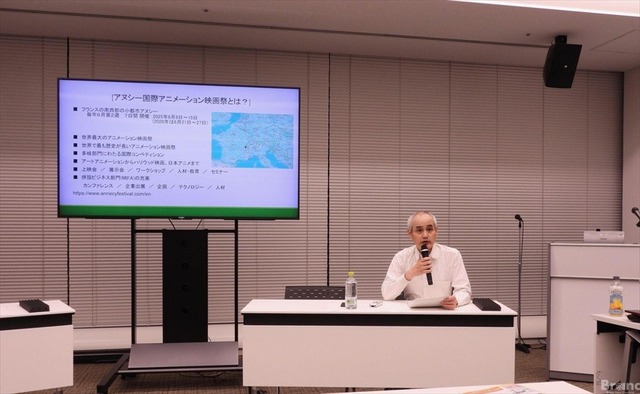
In the first half of the seminar, animation journalist Sudo Naoshi-san took the stage. Under the theme “What are the Annecy International Animation Film Festival and MIFA? Trends in Global Animation in 2025,” he offered a multi-faceted explanation of the rapidly changing market landscape.
Sudo-san began by stating that over the past decade or so, the Annecy International Animation Film Festival has grown to encompass everything from independent works to major Hollywood productions, becoming the dominant animation film festival globally. MIFA, its co-located market, has also become a massive business hub where animation professionals from around the world gather. He noted that in recent years, pavilion exhibitions by countries and government bodies have become more active, alongside individual company booths, with business meetings and pitch sessions unfolding everywhere.
Regarding the Japanese anime market, Sudo-san pointed out its continuous expansion, especially overseas, with international sales now accounting for approximately half of the market. He analyzed that this growth has been driven by global distribution platforms, but in recent years, worldwide hits like `Kimetsu no Yaiba` (also known as *Demon Slayer*) in theaters, along with increased sales of related merchandise and original manga, have further accelerated market expansion.
However, he emphasized that this also implies a situation where “the growth of the Japanese anime business can no longer be discussed without considering the overseas market.” Sudo-san proposed that the current globalization of Japanese anime should be understood not as a single phenomenon, but across three distinct layers: “Market,” “Production Site,” and “Finance.”
-
Globalization of the Market: The reality is that the anime fan population overseas is larger than in Japan.
-
Globalization of the Production Site: An increasing number of talented overseas creators are taking on key positions such as directors and animation directors.
-
Globalization of Finance: Overseas capital is participating in production committees or investing with the premise of acquisition, thereby globalizing the project funding itself.
Sudo-san concluded by stating that with these three aspects of globalization progressing simultaneously and rapidly, the Japanese anime industry has entered an era with a completely different landscape than before.
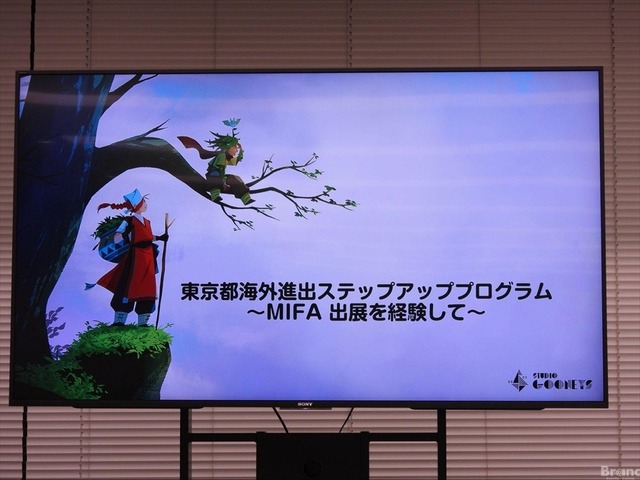
MIFA Participants Share Real Experiences and Challenges
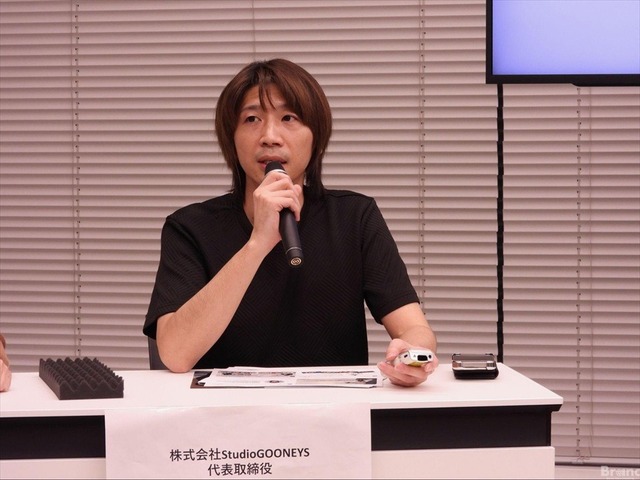
The latter half of the seminar featured a discussion session moderated by Sudo-san, joined by Saitou Mizuki-san, Representative Director of StudioGOONEYS Inc., and Fujimaki Kayou-san from the same company. StudioGOONEYS participated in MIFA for two consecutive years in 2023 and 2024 with support from this program.
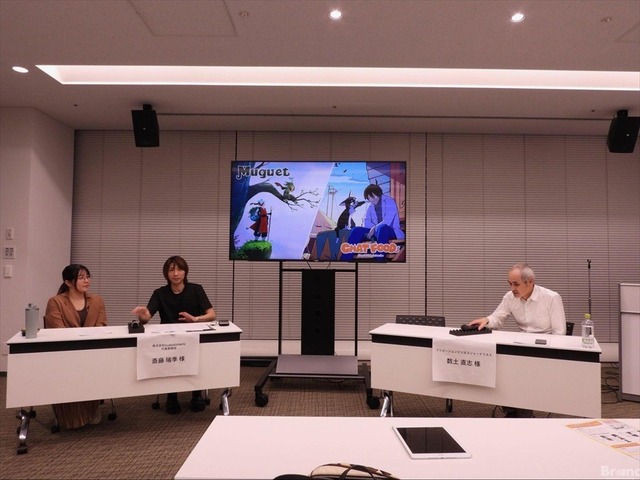
Saitou Mizuki-san explained why their company, specializing in 3DCG production, deliberately aimed for the often-challenging overseas market: “While there’s a significant amount of work in the CG industry, much of it tends to be concentrated in areas like game motion production, and we felt a disconnect from our original goal of ‘creating story-driven visuals.’ We realized that to pursue our creativity more freely, we needed to expand our horizons beyond Japan and look overseas.”
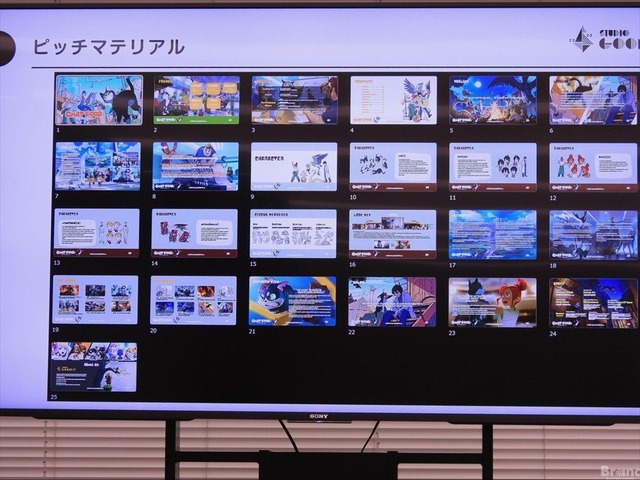
The path to MIFA was not easy. They spent approximately three months creating pitch documents and pitch bibles, working late nights after their regular duties. Fujimaki Kayou-san recalled their efforts, saying, “I wasn’t originally good at English, so I relentlessly practiced until I could perfectly recite the five-minute pitch script.” At the venue, they even stood at their booth wearing costumes of characters from their original work to attract more attention.
Regarding their original theatrical work `Muguet`, local producers provided concrete and often harsh feedback. Besides financial advice like, “It’s a wonderful project, but realizing it would require at least 1.7 billion yen,” there were also comments such as, “The concept is very appealing, but production should be carried out in our country.”
This highlighted the reality that in co-production scenarios, the production part corresponding to the investment often has to be carried out by an overseas studio. It was a moment where they deeply felt the dilemma many overseas challengers face: balancing the desire to secure funding with the wish to produce the work with their own hands.
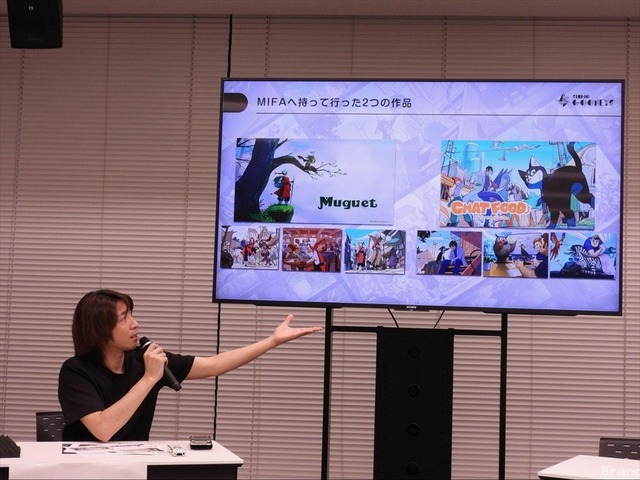
On the other hand, Saitou Mizuki-san emphasized the importance of continuous participation. Negotiations were quite tough, and he was casually asked, “Are you coming back next year?” He explained, “Long-span projects like films are not decided with a single participation. Building persistent relationships is paramount.”
At the end of the session, in response to a question from a participant aiming for overseas expansion about “the secret to successful co-production,” Saitou Mizuki-san shared his experience: “If you can physically show something dynamic, like a teaser video, negotiations become significantly smoother.”
When asked about the secret to winning the Tokyo Anime Pitch Grand Prix, Saitou Mizuki-san replied that the completeness of the project is the most important factor. He stressed that even small ideas were meticulously developed, character backgrounds and stories were considered from various angles, and designs were prepared.
Seminars for this program will continue, with more practical workshops planned from late November. The schedule for upcoming seminars can be found on the official website.
【Animation Overseas Expansion Step-Up Program Overview】
Eligibility:
Small and medium-sized enterprises registered in Tokyo
Sole proprietors who have filed a business opening notification with a Tokyo tax office
Tokyo residents / employees / students (including those whose school headquarters are in Tokyo) who are considering starting a business in Tokyo in the future
Participation Fee: Free
Application Deadline: Until 16:00, two business days prior to each session
【Tokyo Anime Pitch Grand Prix Overview】
Date and Time: Friday, February 13, Reiwa 8 (2026)
Venue: Held at a venue within the 23 wards of Tokyo
Participation Conditions: ① Those who have participated in at least one of the six sessions (4 seminars, 2 workshops)
② Those who meet the application qualifications listed in the application guidelines
Application Document Acceptance Period: Wednesday, December 17, Reiwa 7 (2025) – Friday, December 26, Reiwa 7 (2025)
For details and application, please visit the official website
_