




Story and Themes
The narrative structure of Flying Witch is deliberately episodic, unfolding across a single spring and summer in Aomori. There is no overarching villain, no life-or-death stakes, and no romantic tension to resolve. Instead, the series is anchored by the rhythms of rural life: the Cherry Blossom Festival, mountain herb picking, planting summer vegetables, thinning apple blossoms, preparing for the Nebuta Festival. Each episode is a gentle vignette, and together they form a tapestry that celebrates the passage of time and the slow accumulation of experience.
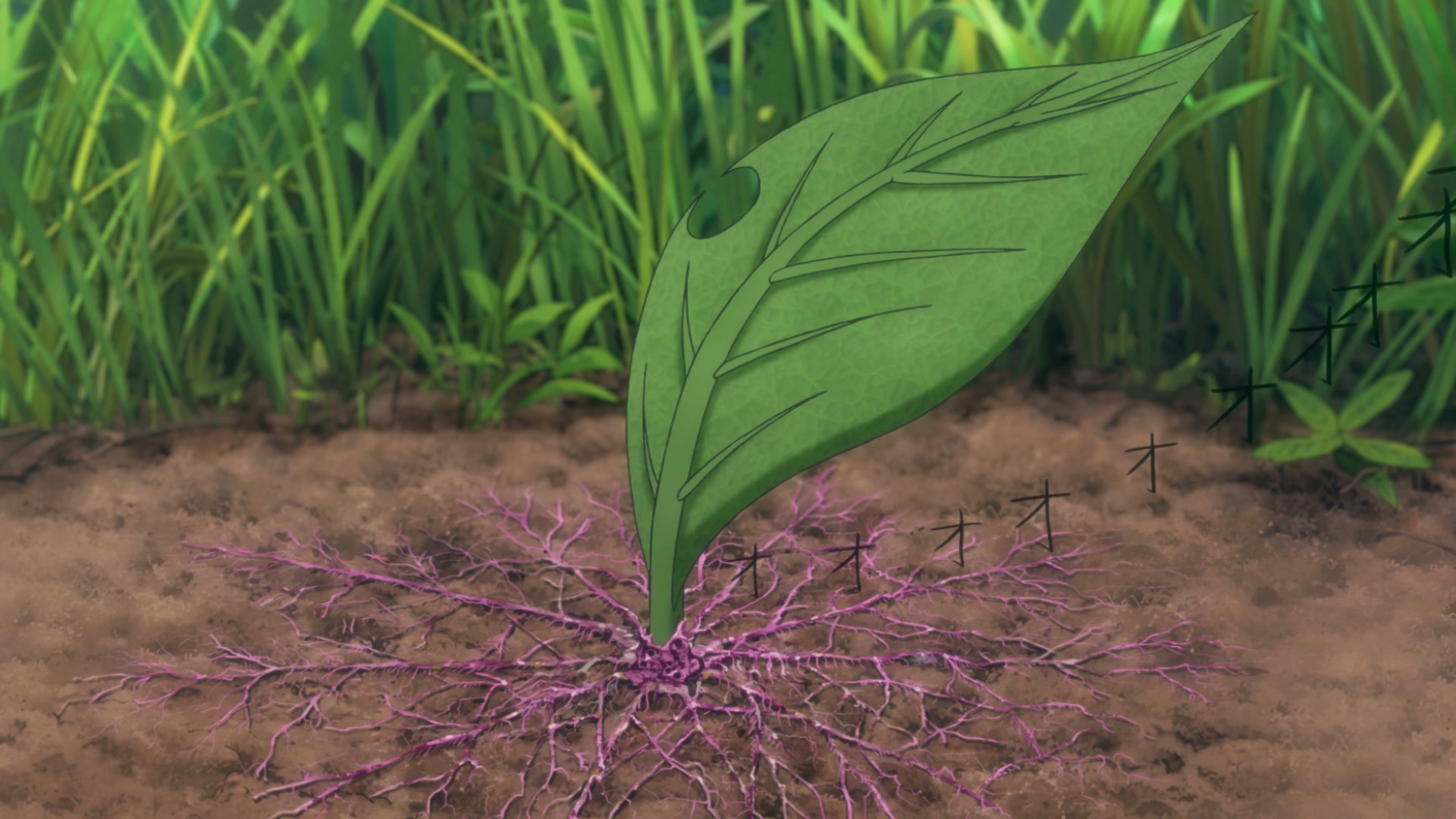
This structure serves its themes perfectly. The first and most pervasive theme is the unity of the mundane and the magical. In most fantasy stories, magic is a disruption—a secret that must be hidden or a power that sets the protagonist apart. Here, it is simply another set of skills, inherited and practiced like farming or sewing. Makoto’s spells require ingredients like black hair, medicinal herbs, and exact ritual circles. Flying on a broom is less about the broom itself and more about learning to levitate your own body; her sister Akane corrects her technique by explaining that the broom merely “clears away gravity.” The supernatural beings who inhabit the area—the Harbinger of Spring, the ghost waitress Hina, the flying whale that carries ancient ruins on its back, the mischievous earthfish that love festivals—are treated not as myths but as neighbors. They drop by for tea, they read fortunes, they accept snacks. There is no barrier between their world and ours; they simply coexist, and the humans who live in Hirosaki have long accepted this.
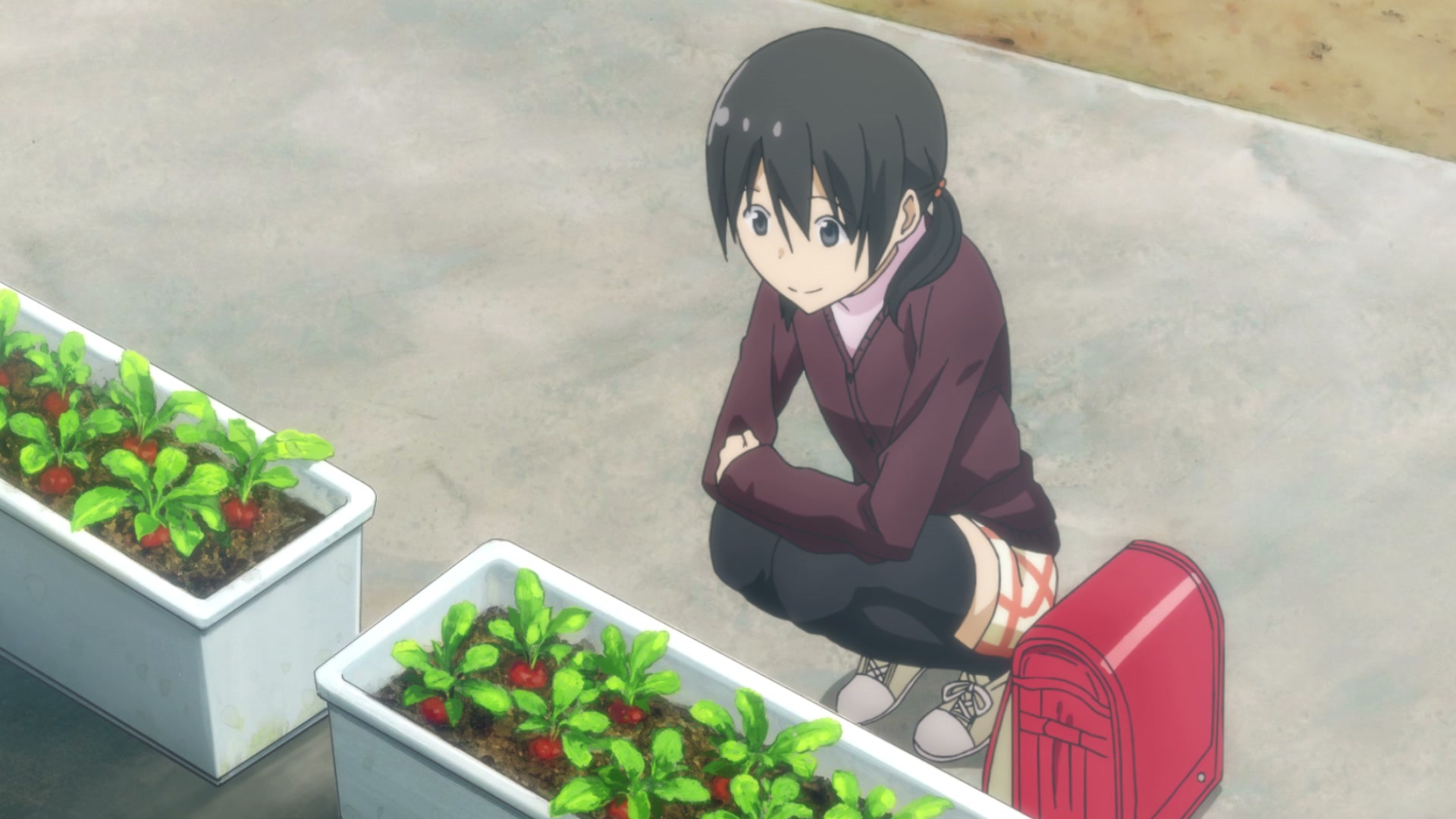
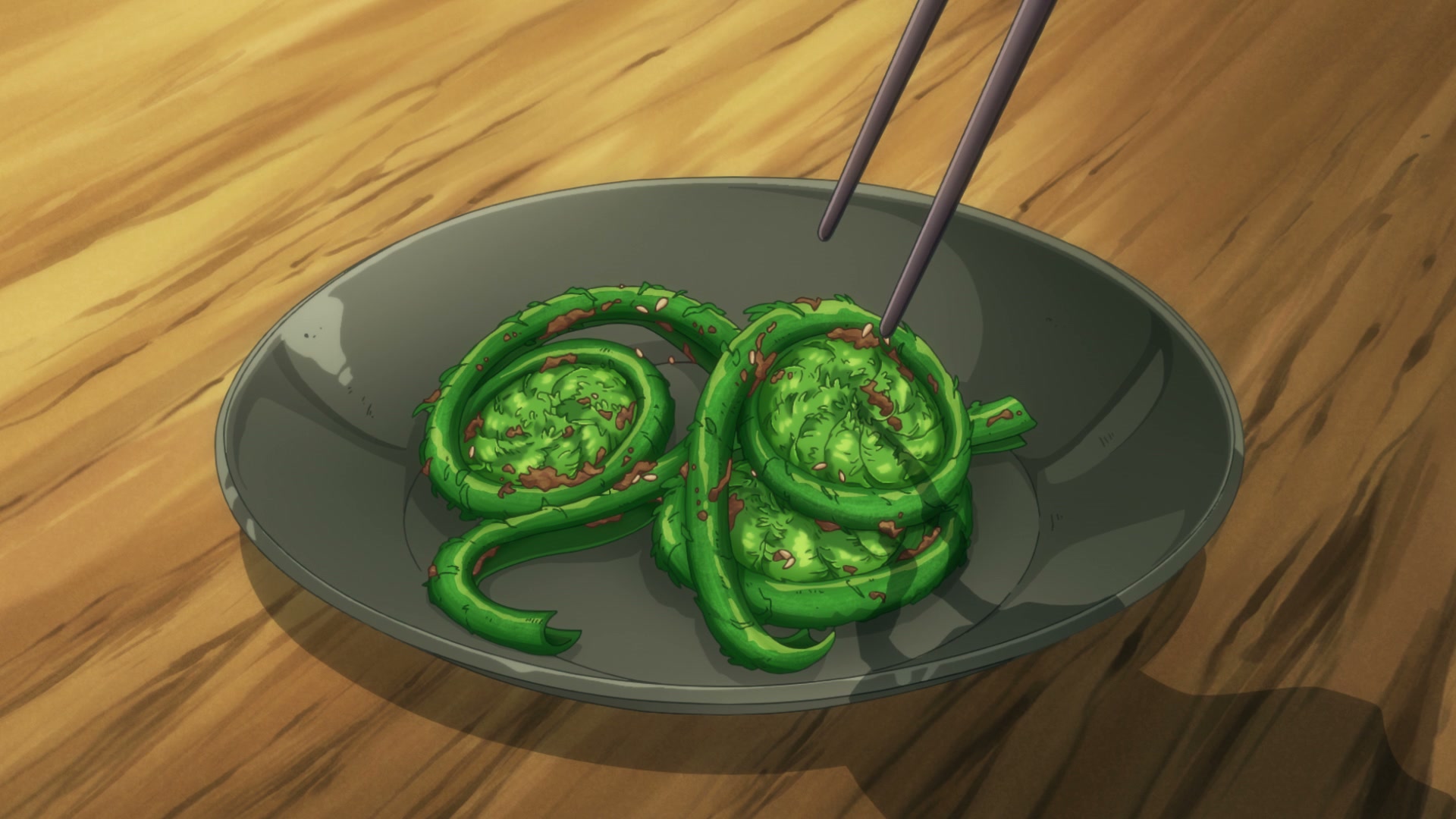
A second, closely related theme is harmony with nature and cyclical time. The episodes are explicitly marked by seasonal activities: picking young butterbur stalks (bakke) in early spring, gathering ostrich ferns and victory onions in the mountains, planting edamame and radishes, participating in the cherry blossom viewing and the Nebuta festival. The series insists that paying attention to the seasons—what grows when, what festivals mark the turning of the year—is itself a form of wisdom, and a form of magic. When Makoto marvels at a pheasant she’s never seen before, or when she carefully tends her vegetable farm, she isn’t just learning practical skills; she’s deepening her connection to the land that sustains her. The show’s pacing reinforces this: time feels slower here, more deliberate, as if the anime itself is following nature’s rhythm rather than the frantic demands of plot.
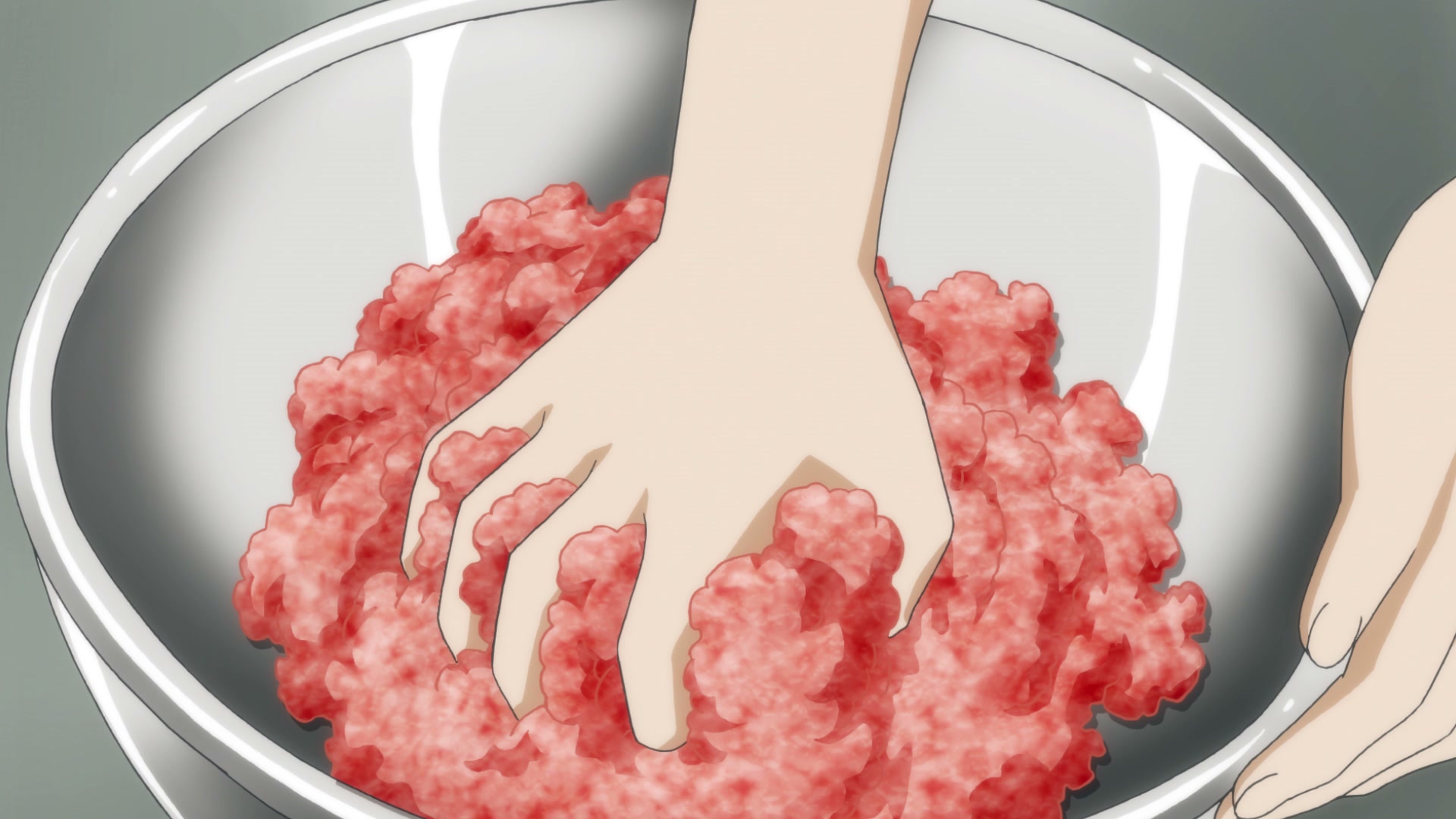
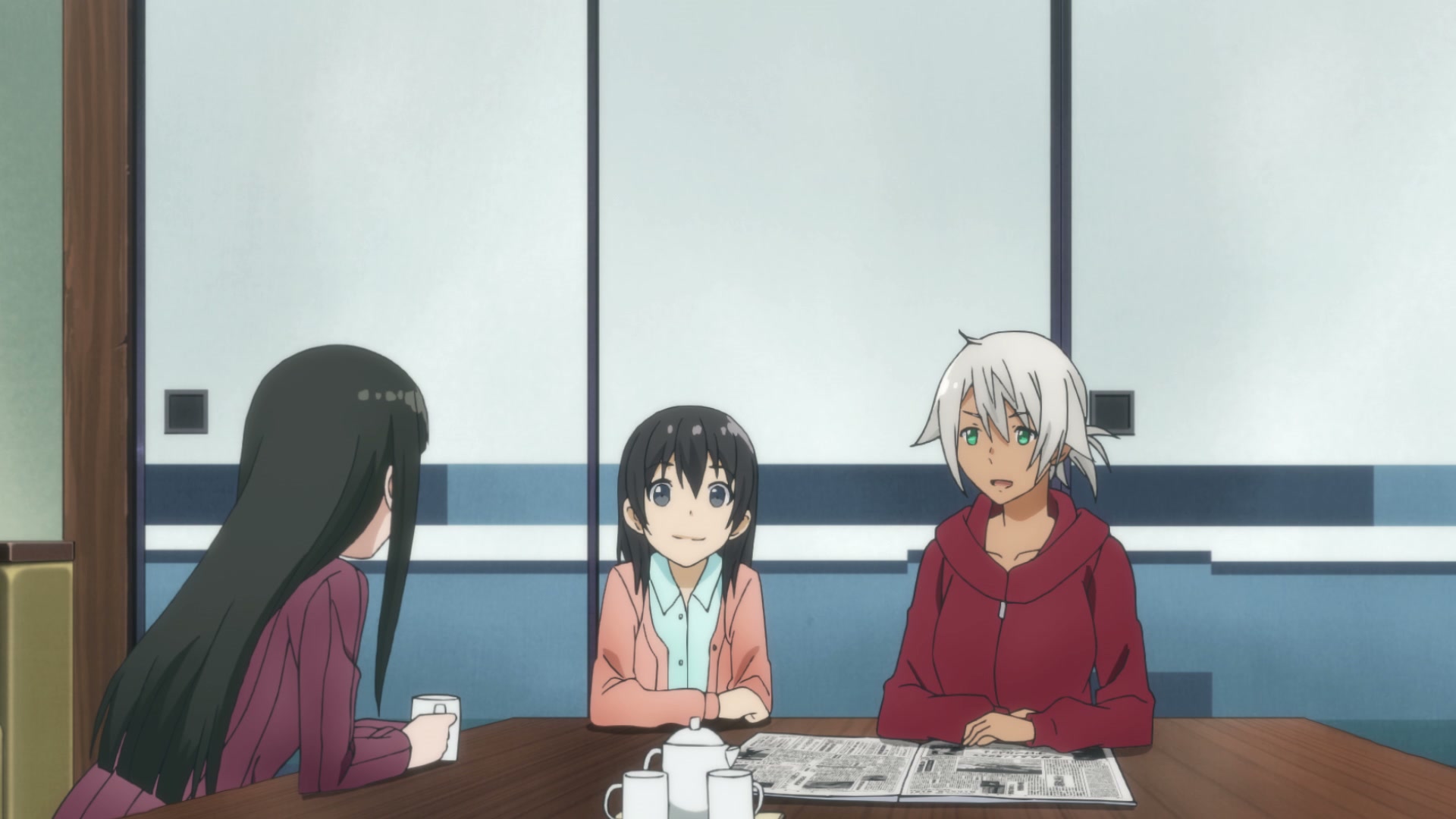
Communal reciprocity is the third pillar of the series. Gifts and exchanges flow constantly. Makoto gives detoxified mandrake medicine to the Harbinger of Spring, who in return gives her small trinkets for Chinatsu. She bakes “Witch’s Pinky” cookies—alarmingly realistic, almond-nailed finger biscuits—as good-luck charms for her friends. She shares her harvest of radishes with Nao, offering diet advice along the way. Even the earthfish, those playful ground-dwelling tricksters, are fed snacks rather than scolded when they try to make off with a mandrake root. The Kuramoto household itself models an almost radical hospitality: relatives, witch acquaintances, and even spirits are welcomed with hotcakes and tea. The witch café run by Anzu’s family has been hosting “people from the other side” for two hundred years, a testament to the idea that community extends beyond the living and the human.
Finally, Flying Witch is a story about self-discovery and independence. Makoto’s infamous lack of directional sense is a running joke, but it’s also a metaphor: she is a young woman still finding her path. Her move to Aomori is part of a witch tradition that requires a fifteen-year-old to leave home and make her own way. At the start, she has barely used magic since arriving, and her sister warns that her powers will atrophy. Over the season, we watch her practice—sometimes with hilariously disastrous results (one miscast crow-summoning spell darkens the sky with birds), more often with quiet success. She learns to fly properly, she brews potions, she sews a new robe for herself and a matching one for Chinatsu. By the final episode, she is preparing to give her first progress report to the witch association, and she realizes she has a wealth of experiences to share. The girl who couldn’t walk home alone now flies with confidence, and the journey feels earned because we’ve witnessed every small step.
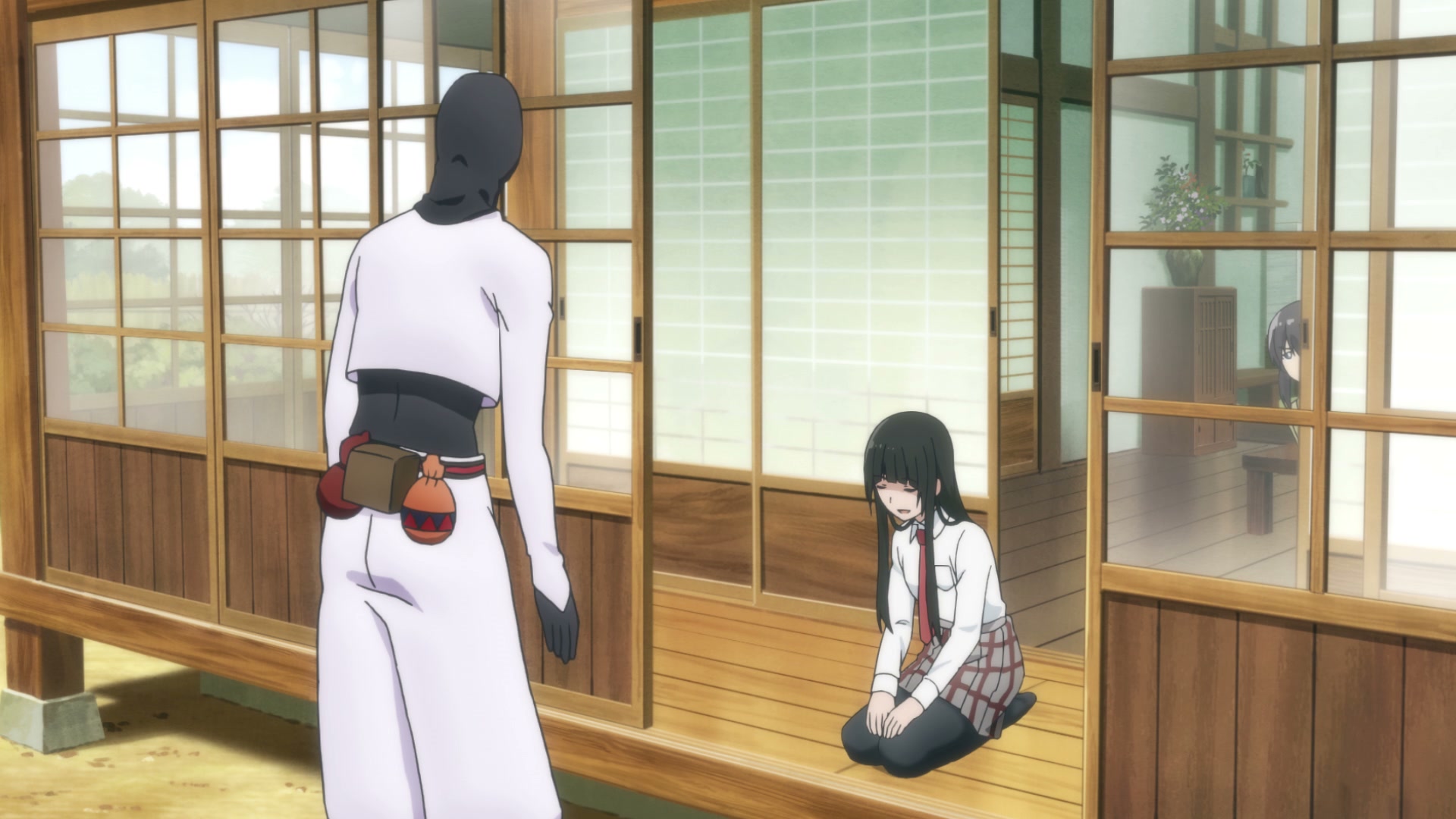
Culturally, Flying Witch is deeply rooted in Japan’s rural Tohoku region. Hirosaki Castle, the Nebuta Festival, apple orchards, traditional farmhouses with engawa verandas and shoji screens—all are rendered with loving detail. The show even weaves in the Tsugaru dialect: Makoto’s uncle delivers instructions in such thick local speech that she can only catch a few words, prompting Kei to translate with a deadpan expression. This is not just a joke; it’s a reminder that Makoto is a transplant, learning not only how to be a witch but how to belong in this particular place. Shinto and folk belief permeate the magical system: the shrine prayer (two bows, two claps, one bow) is used to reveal the hidden witch café, and spirits like the Harbinger of Spring and the Veil of Darkness evoke an animistic worldview where everything—seasons, light, night—has a spirit.
As an adaptation of a still-ongoing manga, Flying Witch covers the early volumes with a relaxed, faithful hand. I cannot speak to what was cut or compressed compared to the source material, but as an anime-only viewer, I can say the series feels whole. Its twelve episodes form a complete emotional arc, from Makoto’s nervous arrival to her quiet readiness to report on her growth. The adaptation prioritizes atmosphere over narrative density, and that choice is precisely what makes it so effective. It trusts the viewer to find satisfaction in the unfolding of a day, the taste of a freshly picked radish, the sight of a whale gliding through the clouds.
Characters
The characters of Flying Witch are not flamboyant archetypes but fully realized individuals whose charm lies in their ordinariness, their kindness, and their subtle interactions.
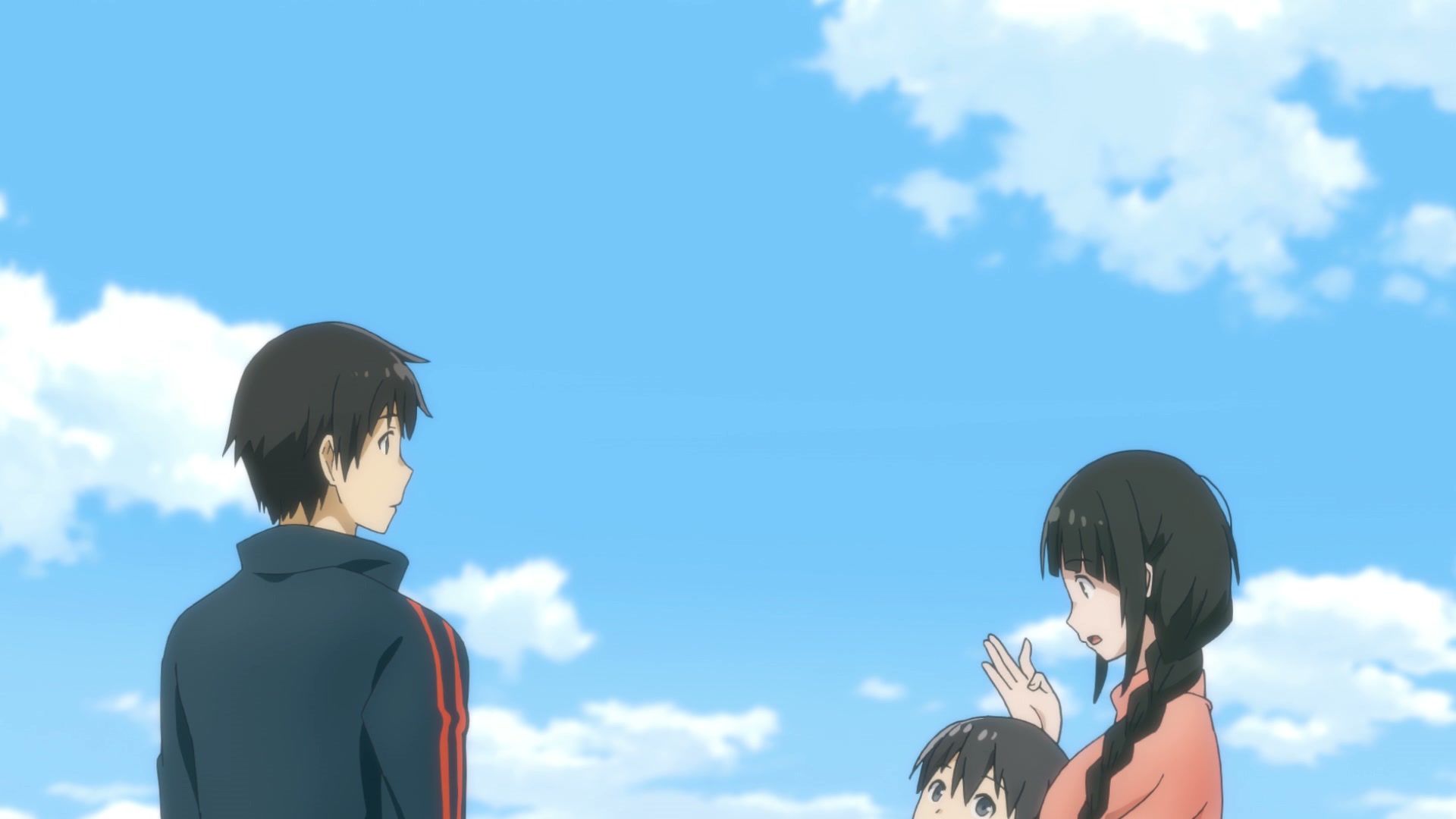
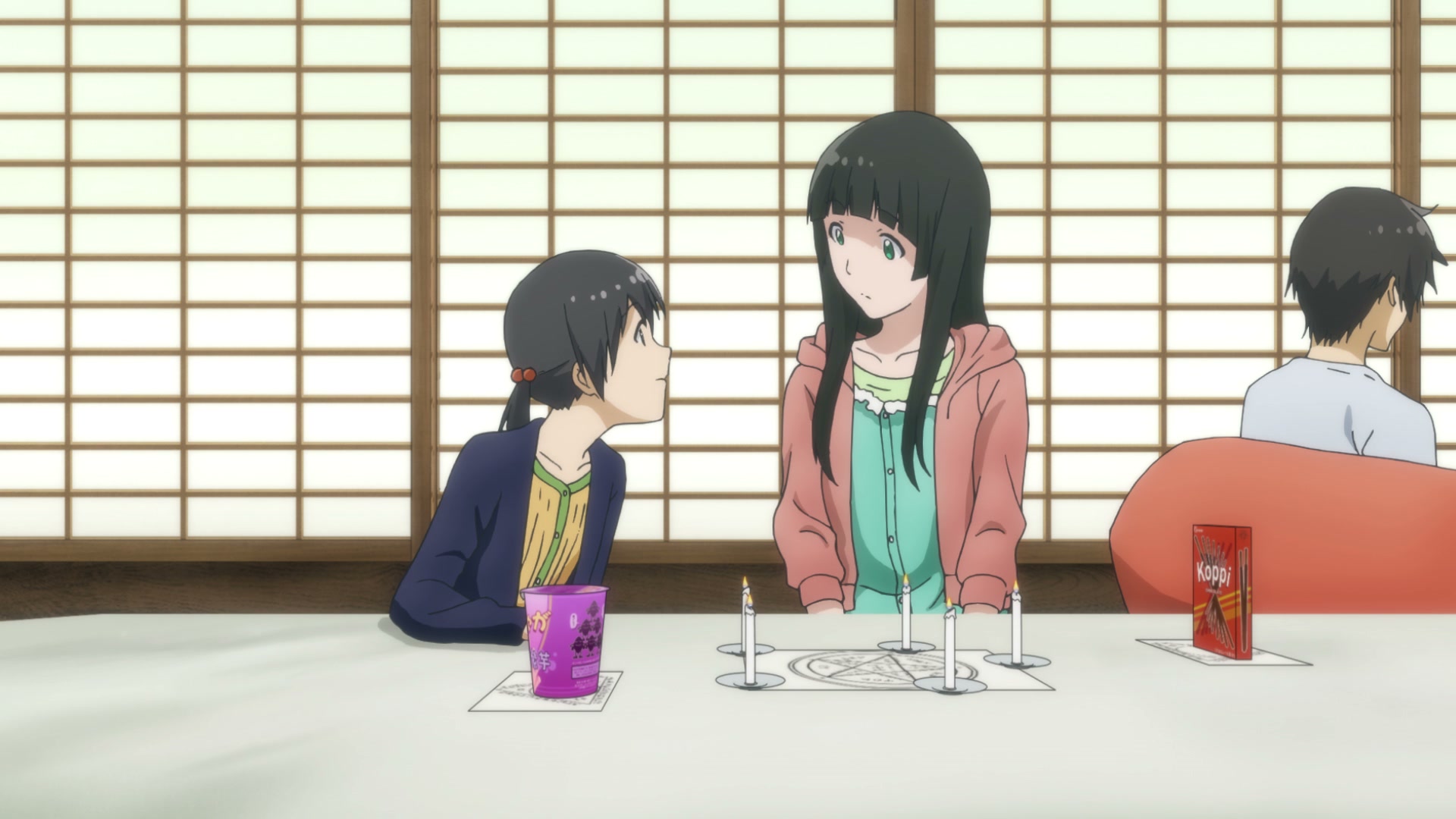
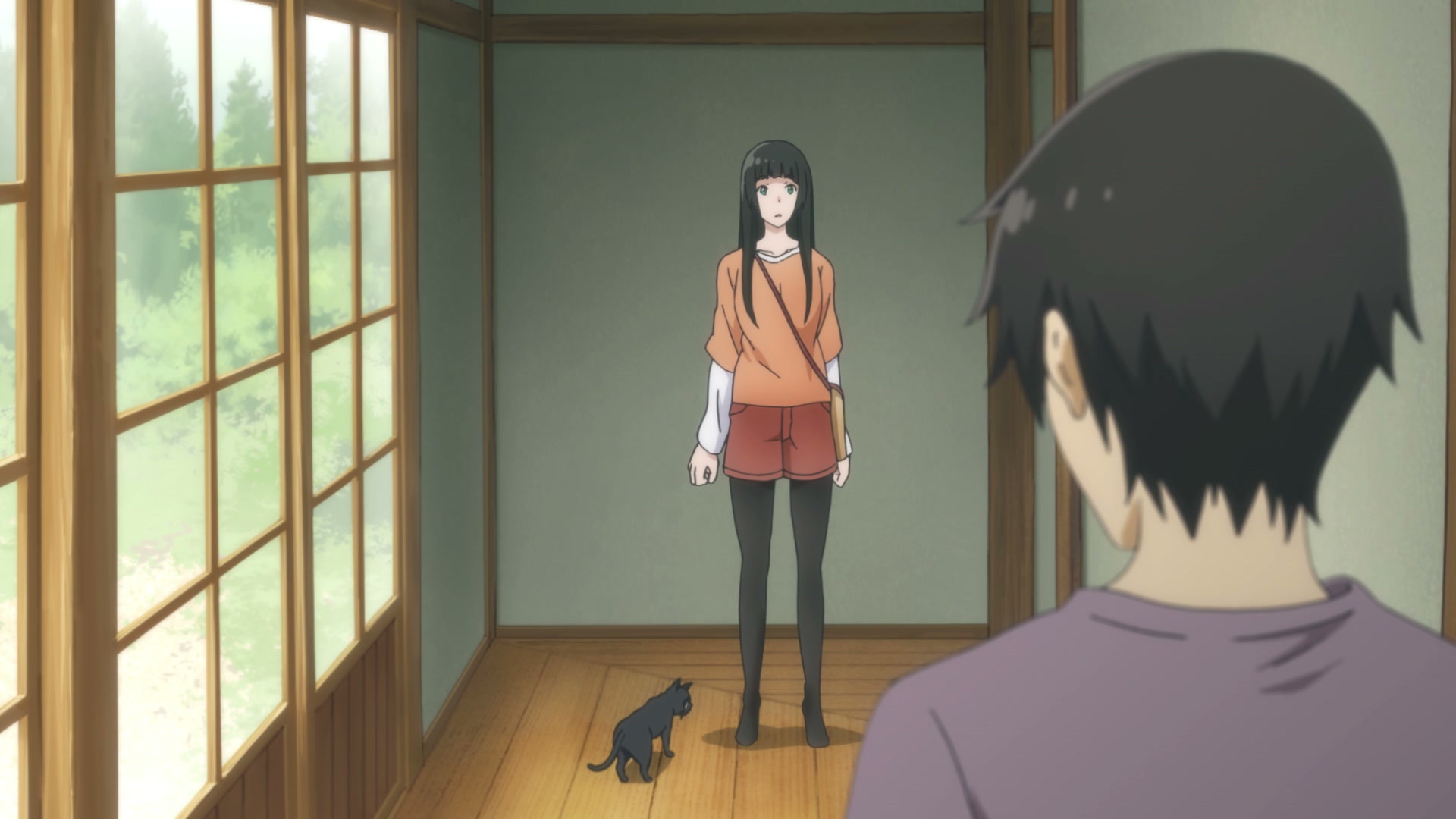
Kowata Makoto is the heart of the series, and she is a rarity in anime protagonists: an utterly sincere, slightly airheaded, deeply good-natured young woman who never needs to shout or cry to hold our attention. She speaks in a measured, old-fashioned way that leads her friend Nao to compare her to a grandmother, yet she has the wide-eyed curiosity of a child. She will chase a pheasant for an hour simply because it’s her first time seeing one; she will peer into a jar of homemade pickles with genuine delight; she will greet a ghost with a friendly question about the Meiji era. Her directional ineptness is legendary—she can get lost on a straight road—but it never feels like a cheap gag. Instead, it reinforces her need for connection: she finds her way when guided by others, and her gradual improvement over the season mirrors her growing competence in all areas of life. Makoto’s greatest power is not any spell but her unwavering empathy. She takes responsibility for her sister’s mistakes, she makes a robe for Chinatsu simply because she wants to, and she approaches every new acquaintance—human, spirit, or animal—with an open heart.
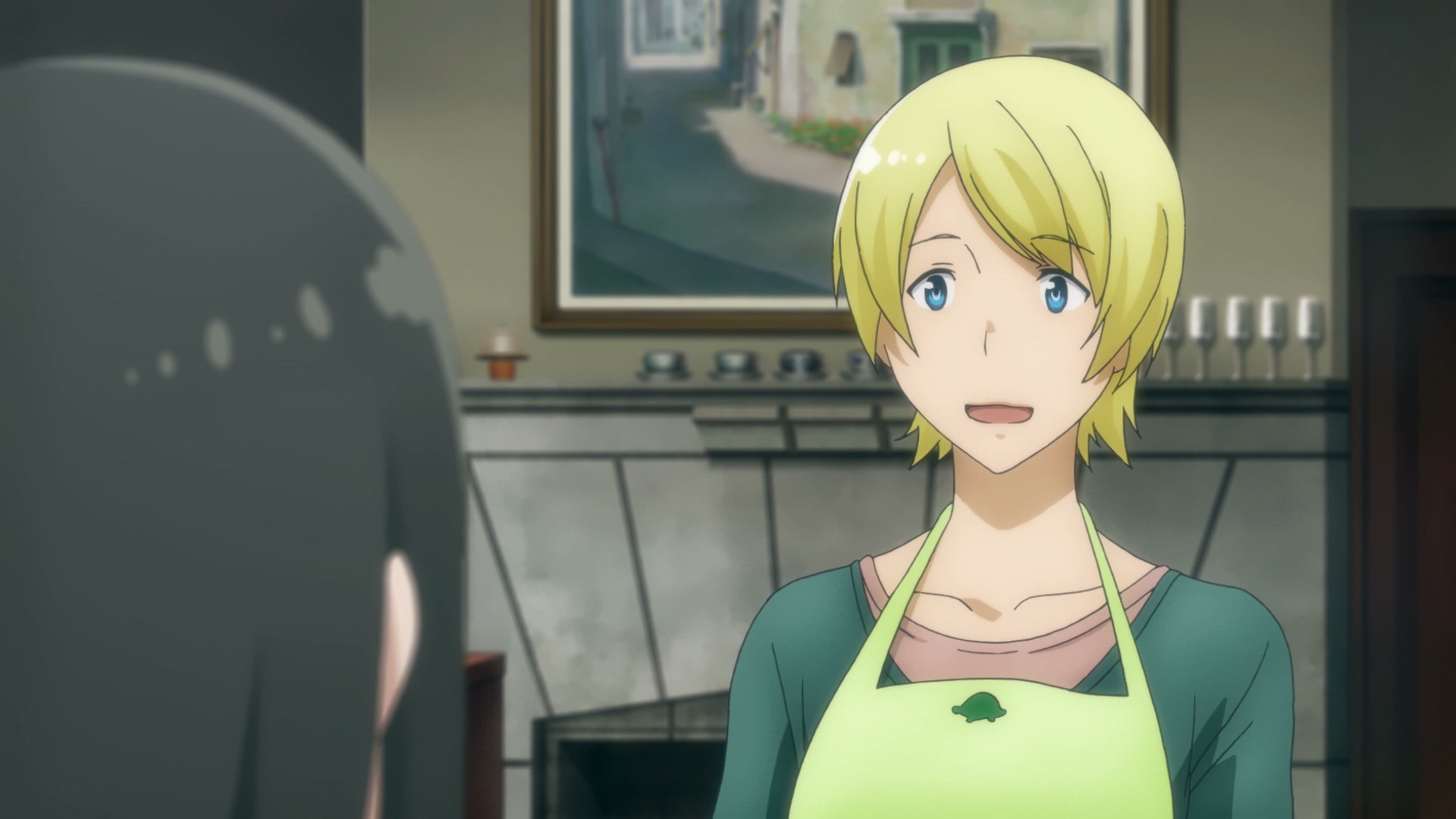
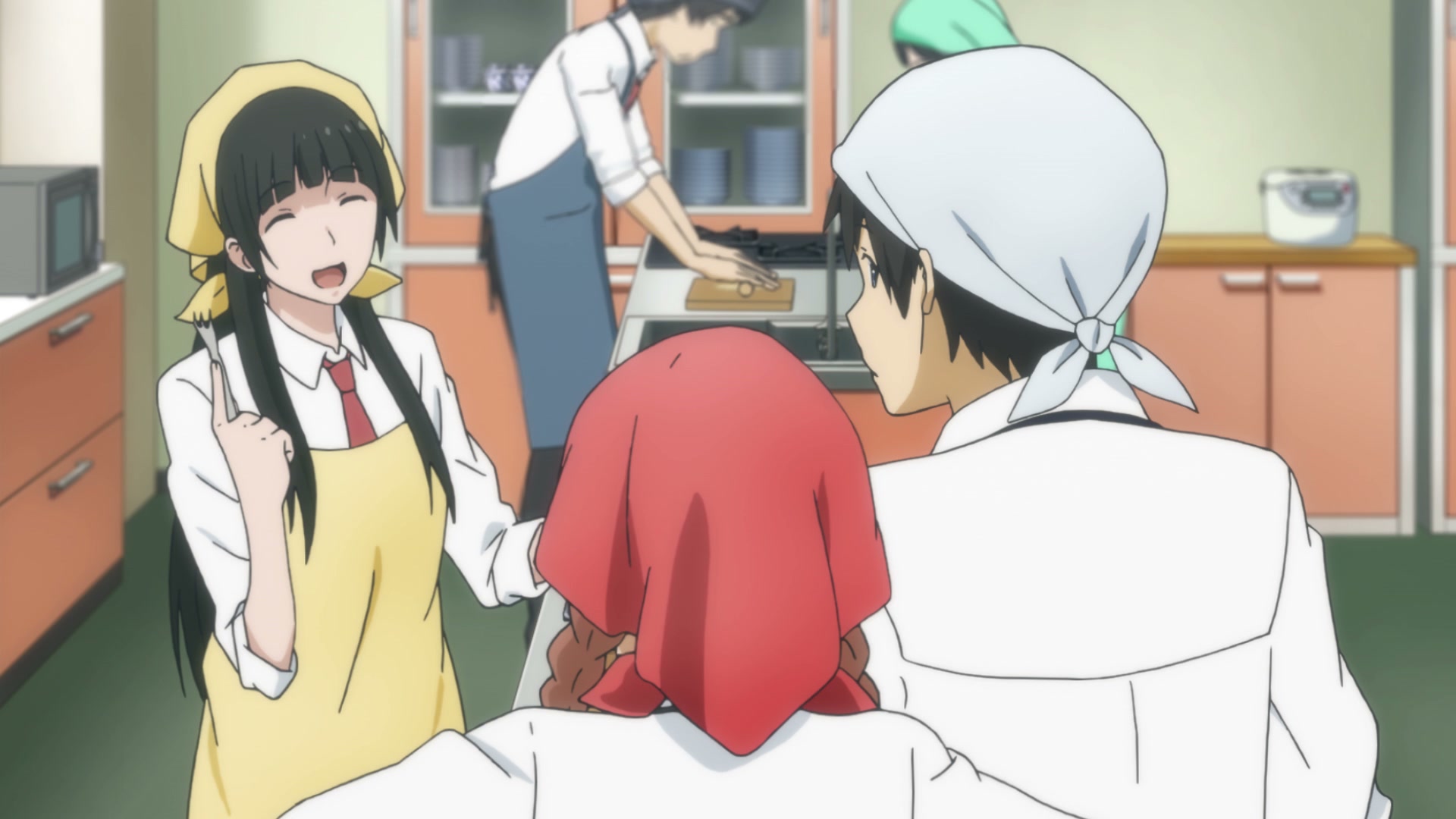
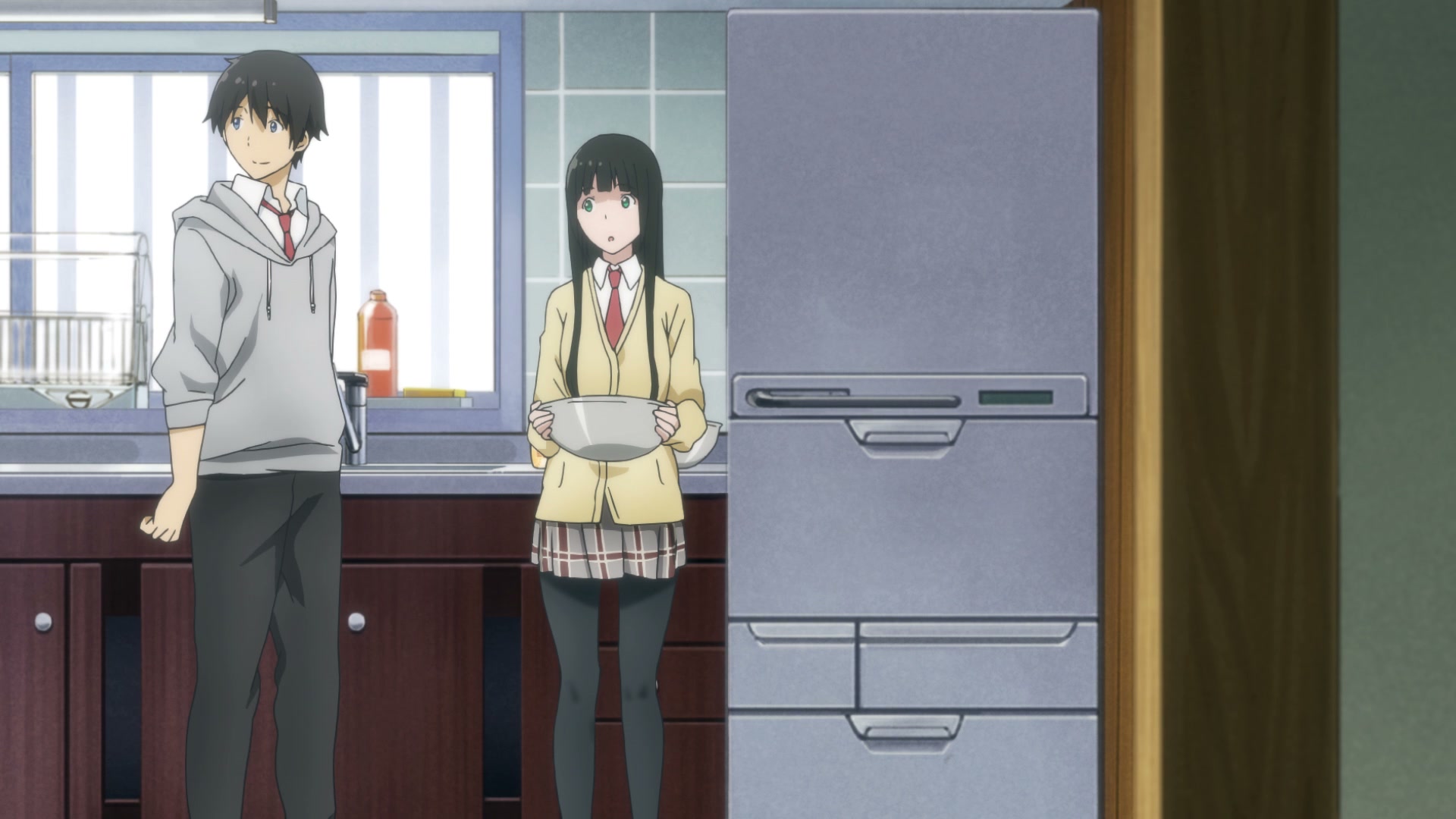
Kuramoto Kei is the straight man, the anchor. A high school boy with a dry sense of humor and an unexpectedly domestic side (he cooks curry with honey, fries perfect bakke tempura, and makes thick hotcakes), Kei has lived around witches long enough that almost nothing fazes him. Yet he retains a normal person’s exasperation at the chaos Makoto and Akane bring. He walks Makoto home, helps her dig the vegetable field, and warns her about bears and dog urine with equal seriousness. His affection for his family is expressed entirely through actions—he never says “I care about you,” but he is always there, making sure his cousin doesn’t wander off the mountain. His one genuine fear, ghosts, is exploited gently by Chinatsu and the narrative, adding a layer of vulnerability to his otherwise steady presence.
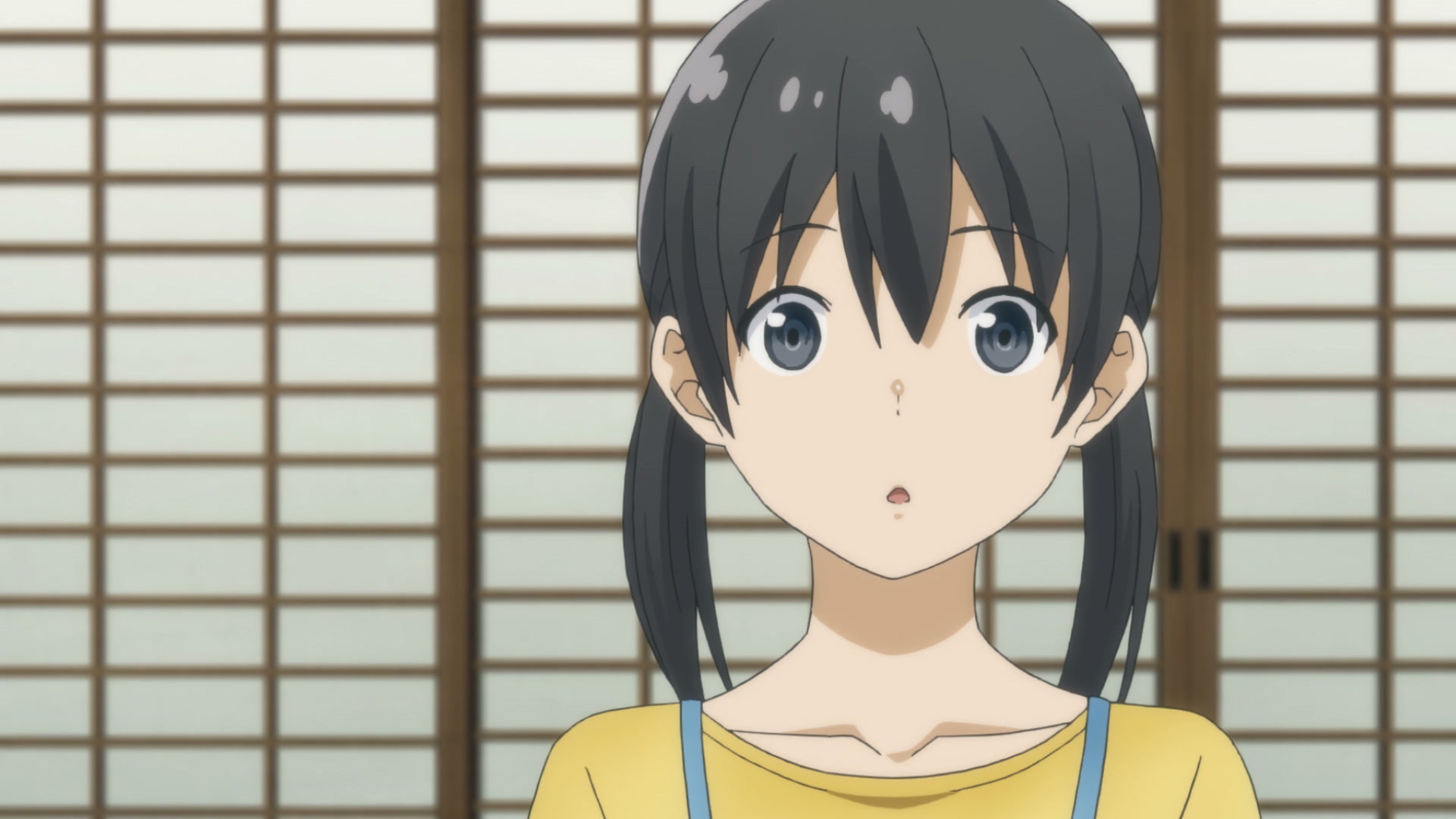
Kuramoto Chinatsu, Kei’s elementary-school-age sister, is the series’ engine of curiosity and its most honest reactor. When she first meets Makoto, she suspects she might be dangerous because she talks to her cat. When she learns the truth, she is instantly enchanted—and within a few episodes, she formally asks to become a witch’s apprentice. Chinatsu’s journey from observer to participant is one of the season’s most satisfying arcs. She asks the questions the audience might be thinking (How old are you, Miss Ghost? What does a fox say? Are you a girl, Mr. Fortune Teller?), and her unguarded enthusiasm—shouting “Awesome! Awesome! Awesome!” after flying on a broom for the first time—keeps the series buoyant. Her final gift, the witch’s robe Makoto sews for her, is a physical acknowledgment that she is no longer just a little sister but part of the magical community.
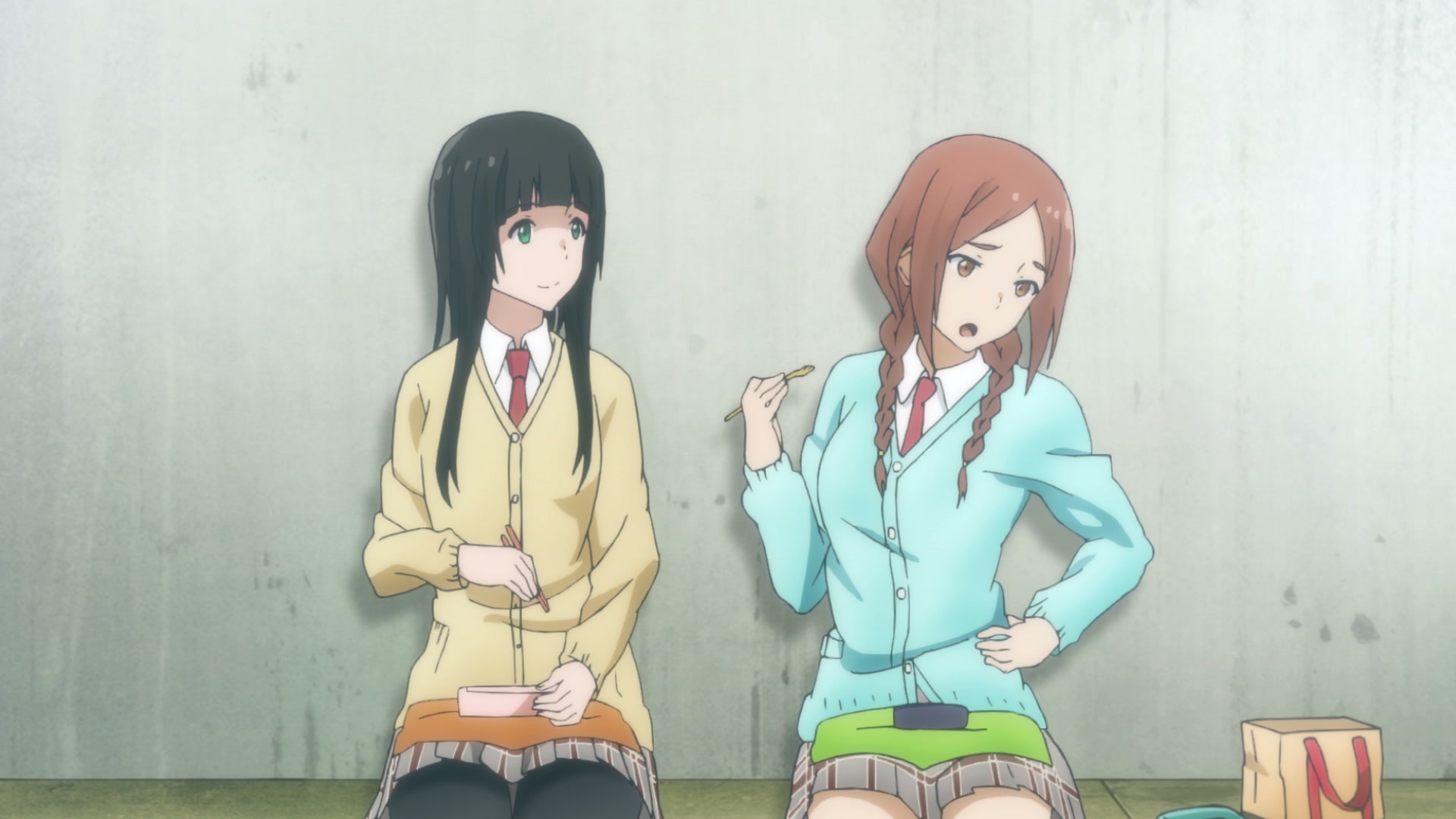
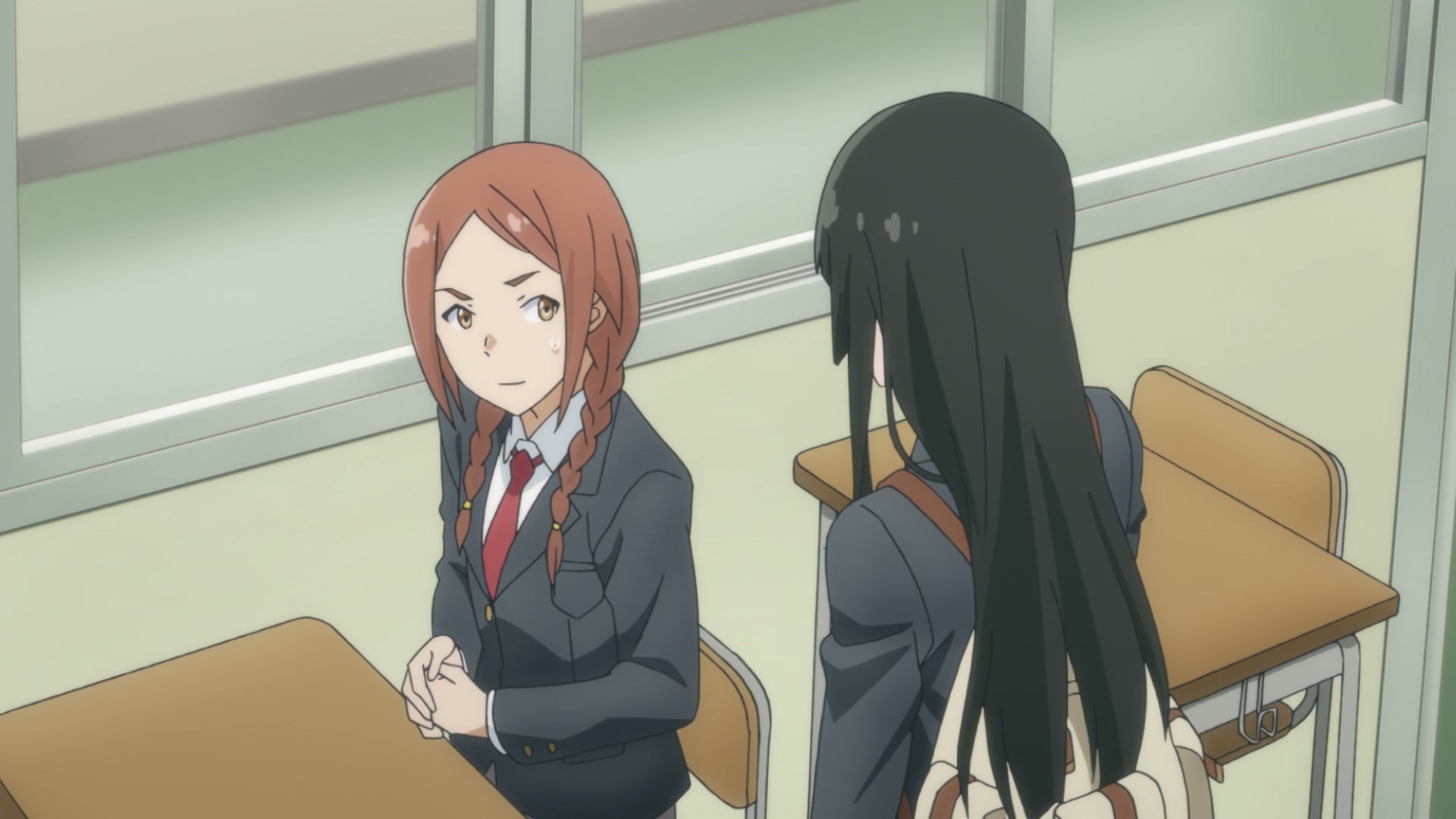
Ishiwatari Nao is the outsider, the everyman. Her introduction to Makoto’s world is traumatic: she watches a girl fly down from the sky on a broom, then is handed a screaming mandrake as a “friendship gift.” Her initial response is a flat “I don’t want it.” For much of the early season, Nao keeps a wary distance, representing the normal world’s discomfort with the uncanny. But Makoto’s persistent kindness—and Nao’s own practical, down-to-earth nature—gradually wears down her resistance. She delivers sake for her family’s liquor store, she goes herb picking (and screams at frogs), she accepts the terrifying finger-shaped cookies, and by the finale, she is the one inviting Makoto to the Nebuta Festival. Nao’s arc is subtle but crucial: she shows that accepting magic doesn’t mean losing your skepticism or your common sense; it just means expanding your definition of normal.
Kowata Akane, Makoto’s older sister, is a walking hurricane. A witch of legendary talent who travels the globe (often via camel, apparently), she sweeps into the Kuramoto house unannounced, upends routines, teaches spells carelessly (leading to the aforementioned crow disaster), and leaves behind a trail of bemusement and mild destruction. She is brilliant, reckless, and thoroughly irresponsible—she turned her friend Inukai into a hamster-dog hybrid through a drunk experiment, and she has racked up a tab at the witch café that she seems in no hurry to pay. Yet beneath the chaos, Akane genuinely loves Makoto and wants her to succeed. Her lesson on broom flight, for instance, is one of the most useful pieces of advice Makoto receives. The two sisters’ dynamic—Makoto as the responsible counterweight, Akane as the chaotic prodigy—creates a warm, exasperated affection that feels true to sibling relationships.
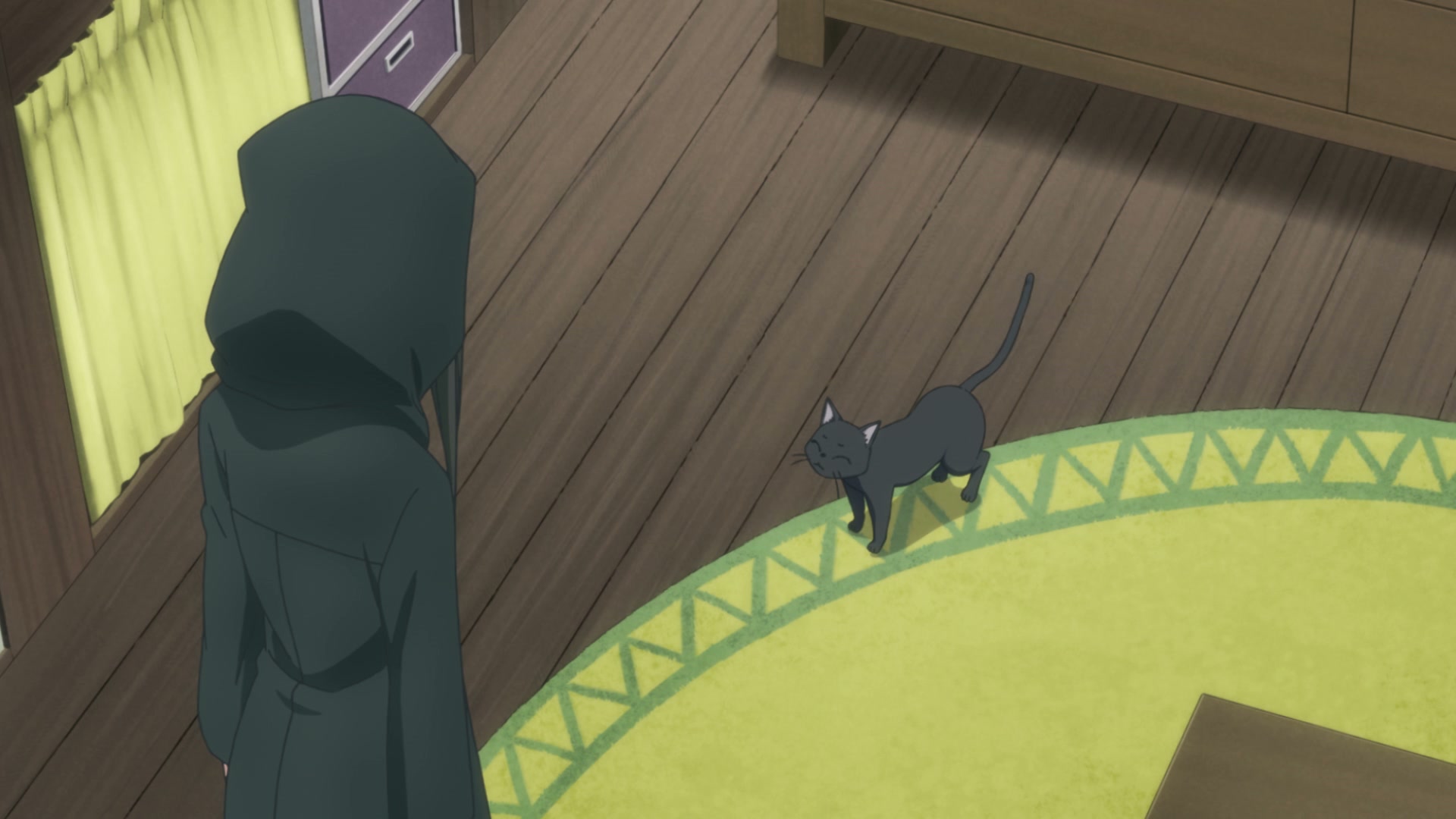
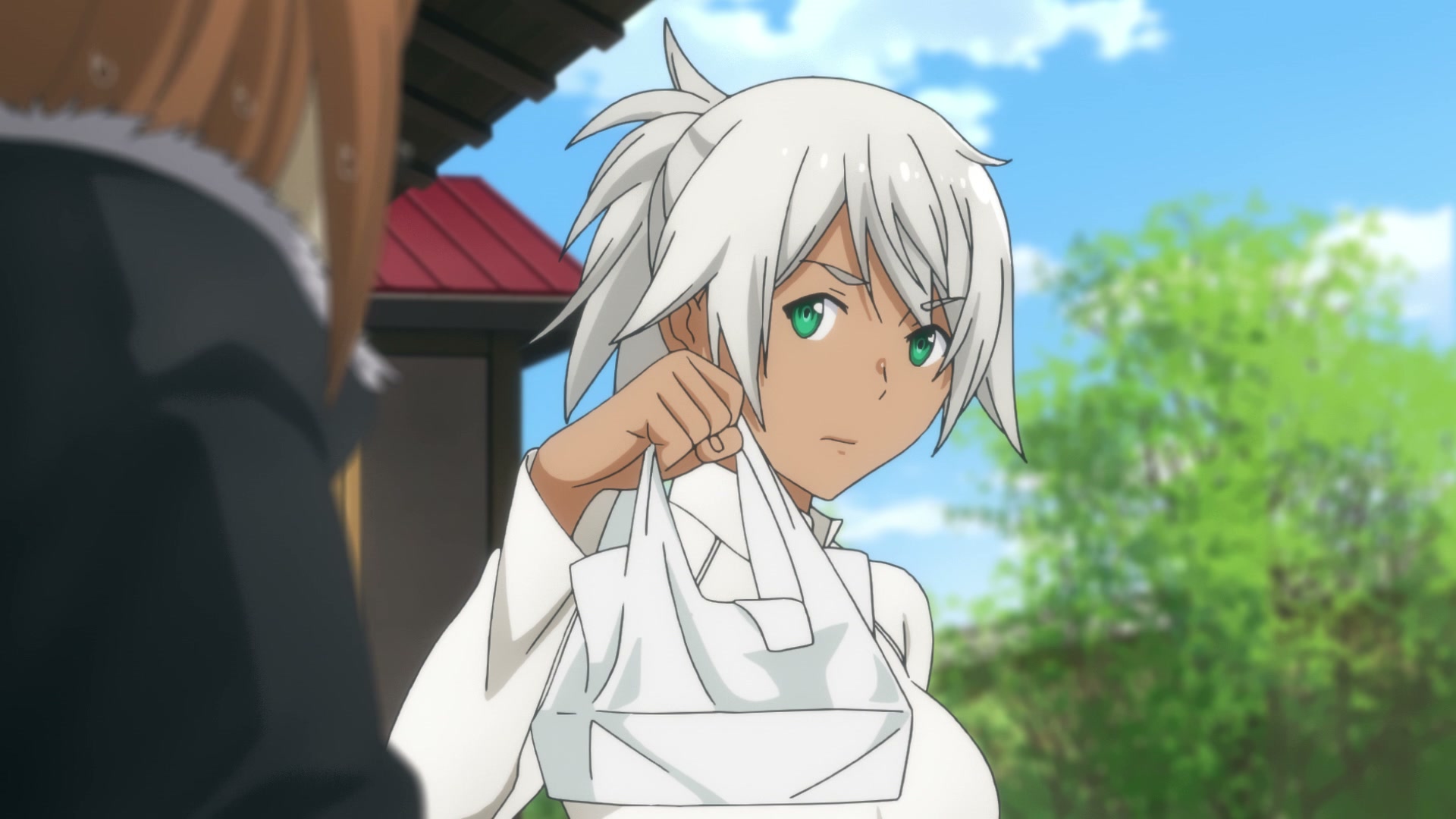
The supporting cast extends the sense of a wider, interconnected community. Inukai, the fortune-teller trapped in her hamster form during the day, embodies the consequences of Akane’s whims but also serves as a mirror to Makoto’s sense of responsibility. Shiina Anzu, the young café witch with a passion for archaeology, becomes a peer who shows Makoto another possible future: a witch who has integrated her craft into a settled, service-oriented life. And Hina, the ghost waitress from the Meiji era who trembles when Makoto accidentally makes her visible, adds a touch of supernatural melancholy that is softened by Chinatsu’s innocent questions and the café’s warm atmosphere. Even the animals—Chito, Makoto’s wise, plump black cat familiar, and Kenny, Akane’s scholarly white cat—have distinct personalities and act as guides, confidants, and occasional troublemakers.
The character writing’s strength lies in its restraint. No one delivers speeches about their feelings; no one undergoes dramatic transformations. Instead, growth is shown through small, concrete actions: Chinatsu putting on her robe, Nao asking for more radishes, Kei accepting that he’s “not normal anymore,” Makoto flying without pain. The relationships deepen through shared meals, shared labor, and the accumulation of tiny, gentle moments. It’s a kind of characterization that feels lived-in and true, and it’s rarer than it should be.
Visuals and Animation
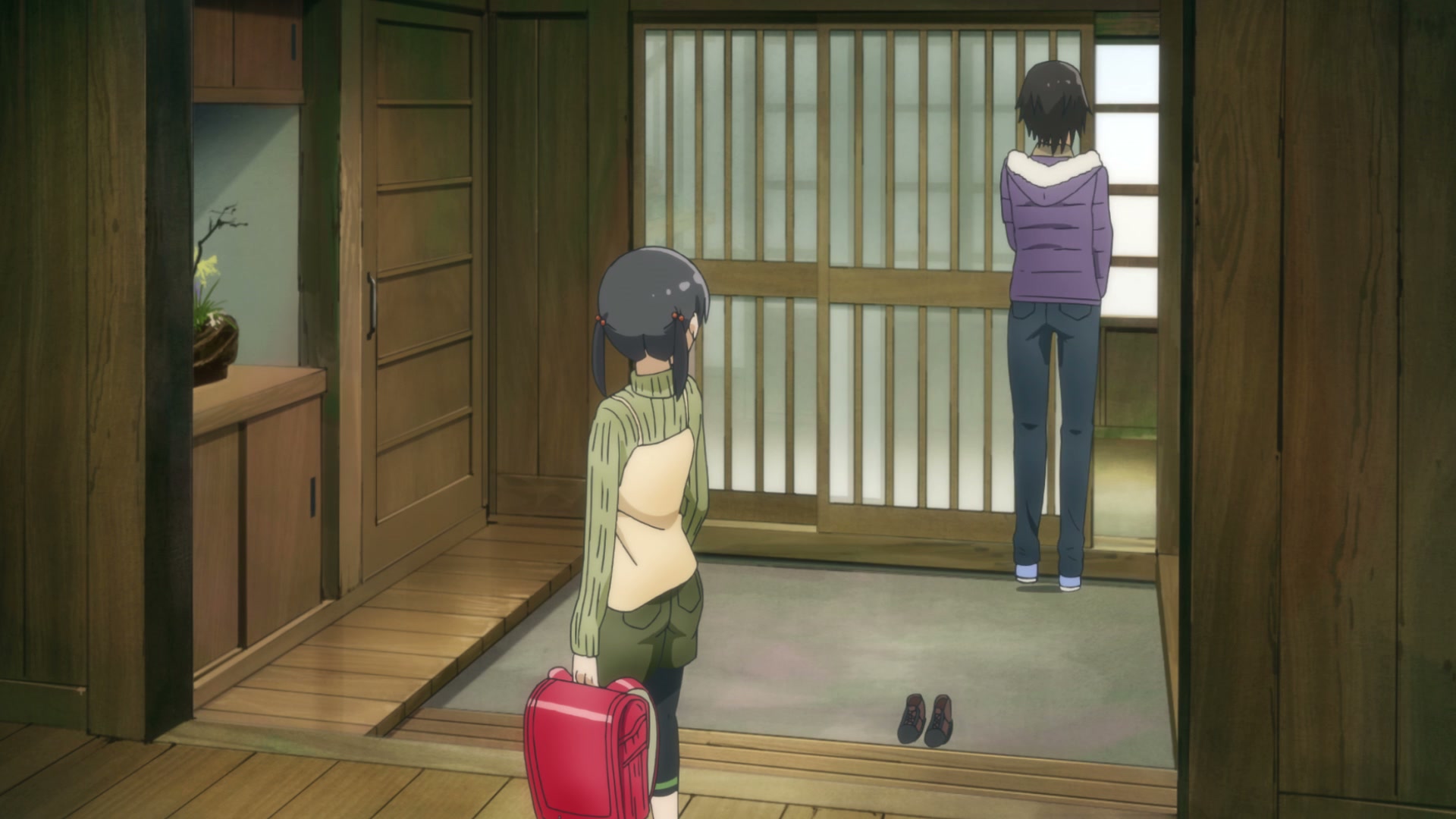
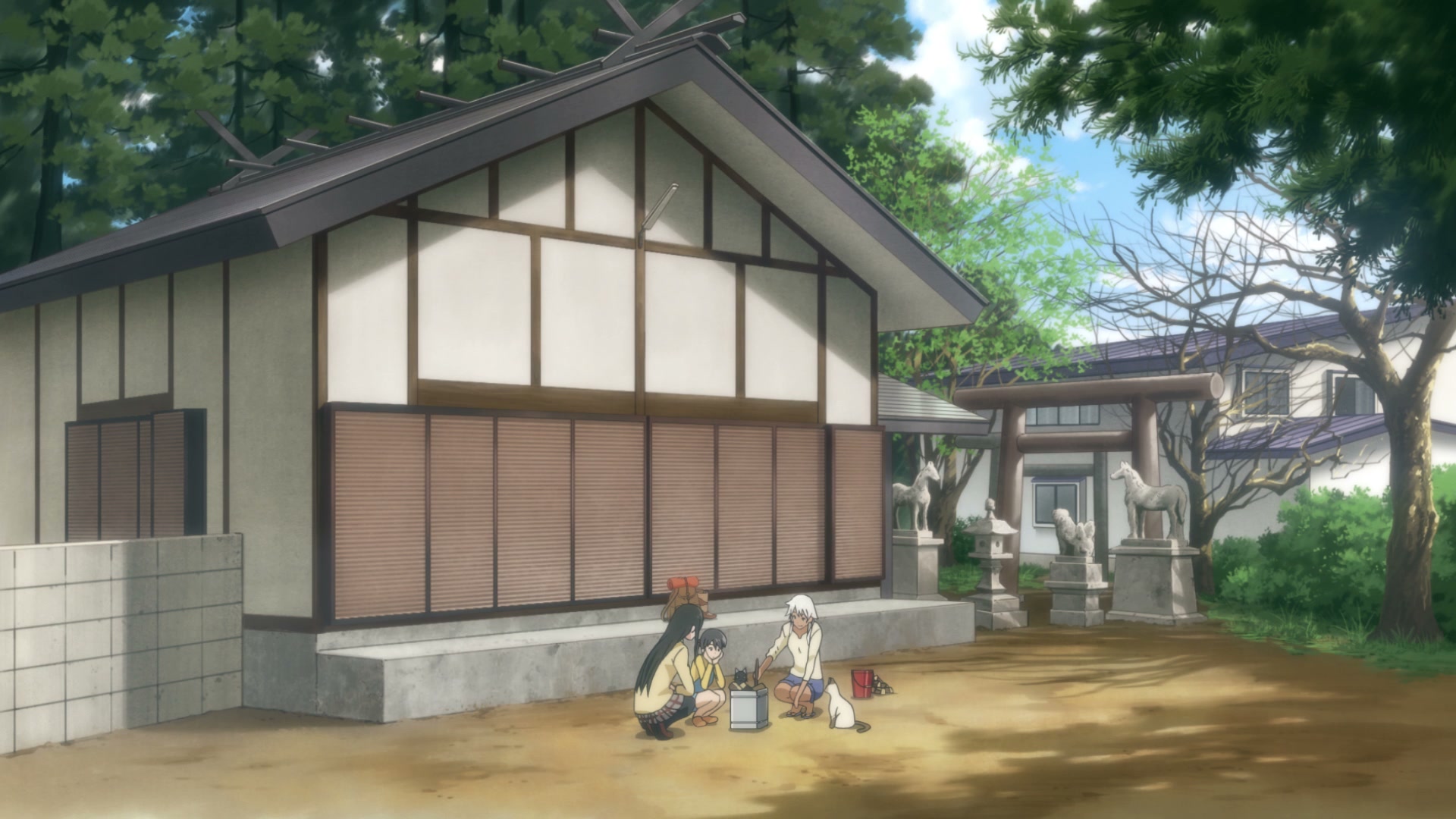
Flying Witch is a visually cohesive work that leans heavily on atmospheric background art and careful, restrained character acting. Its art style is naturalistic and soft, with thin linework, realistic facial proportions, and a color palette dominated by earthy browns, muted pastels, and the deep greens of the Aomori countryside. The series’ visual storytelling is less about kinetic action and more about creating a sense of place and mood.
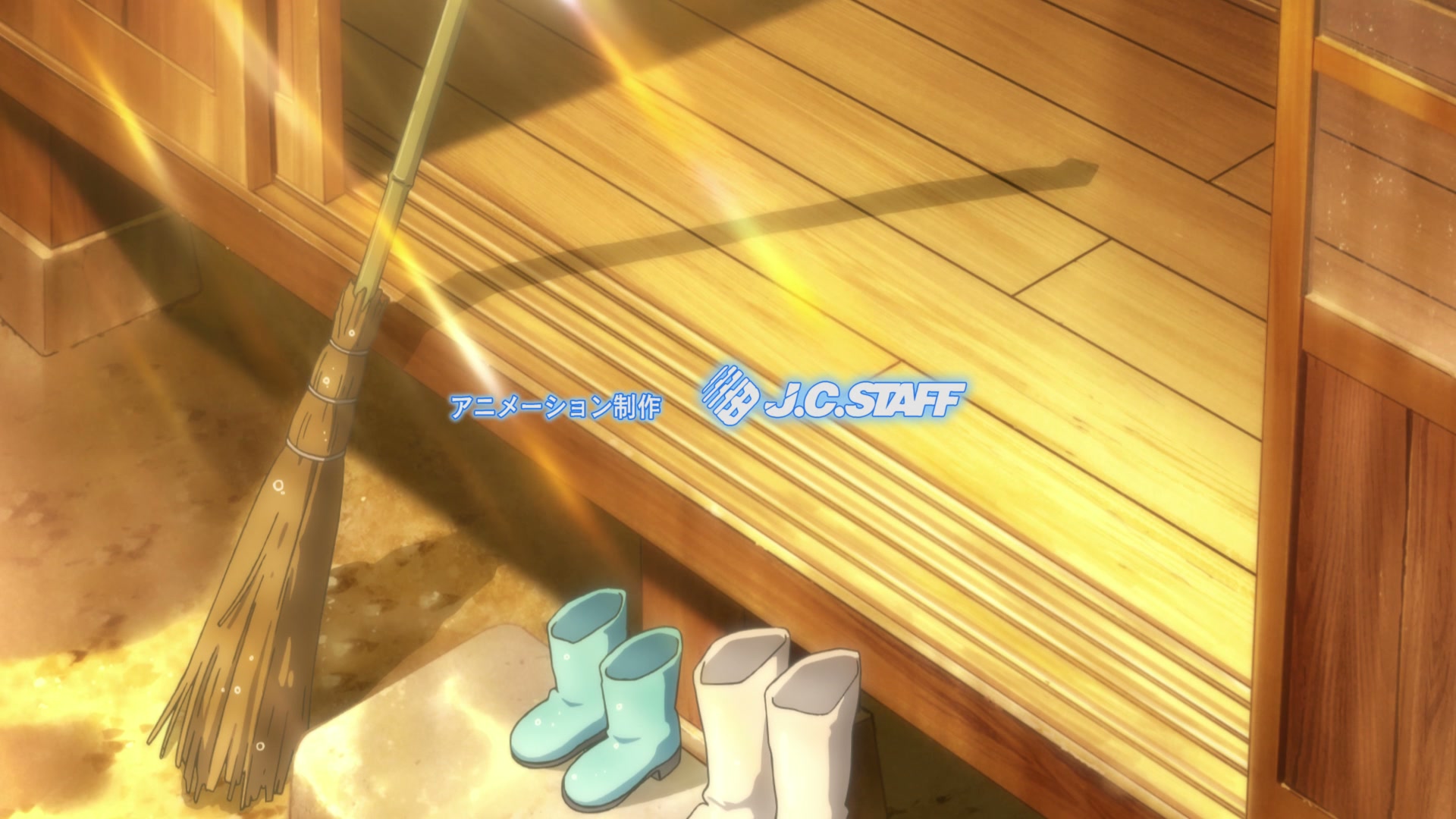
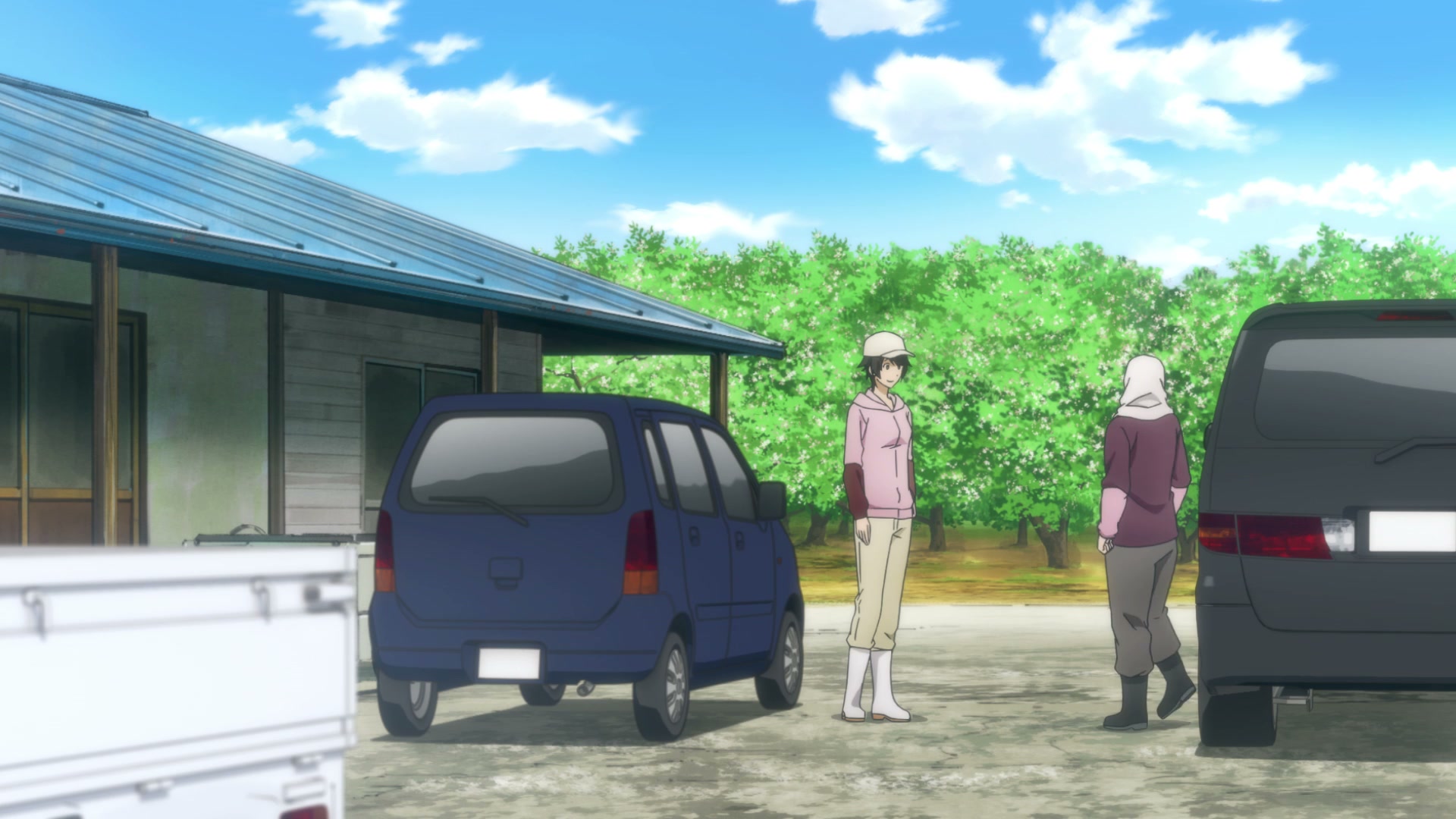
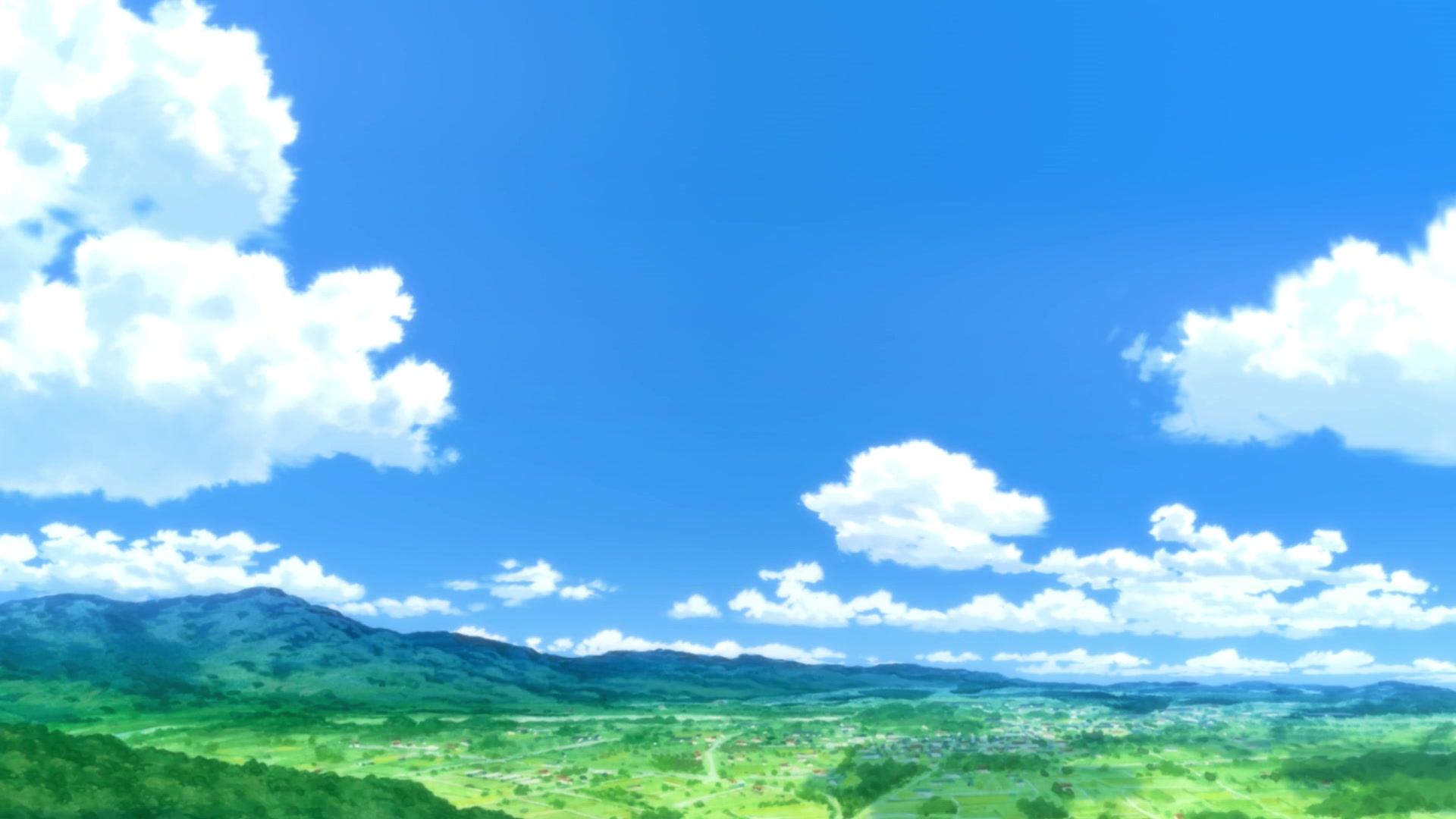
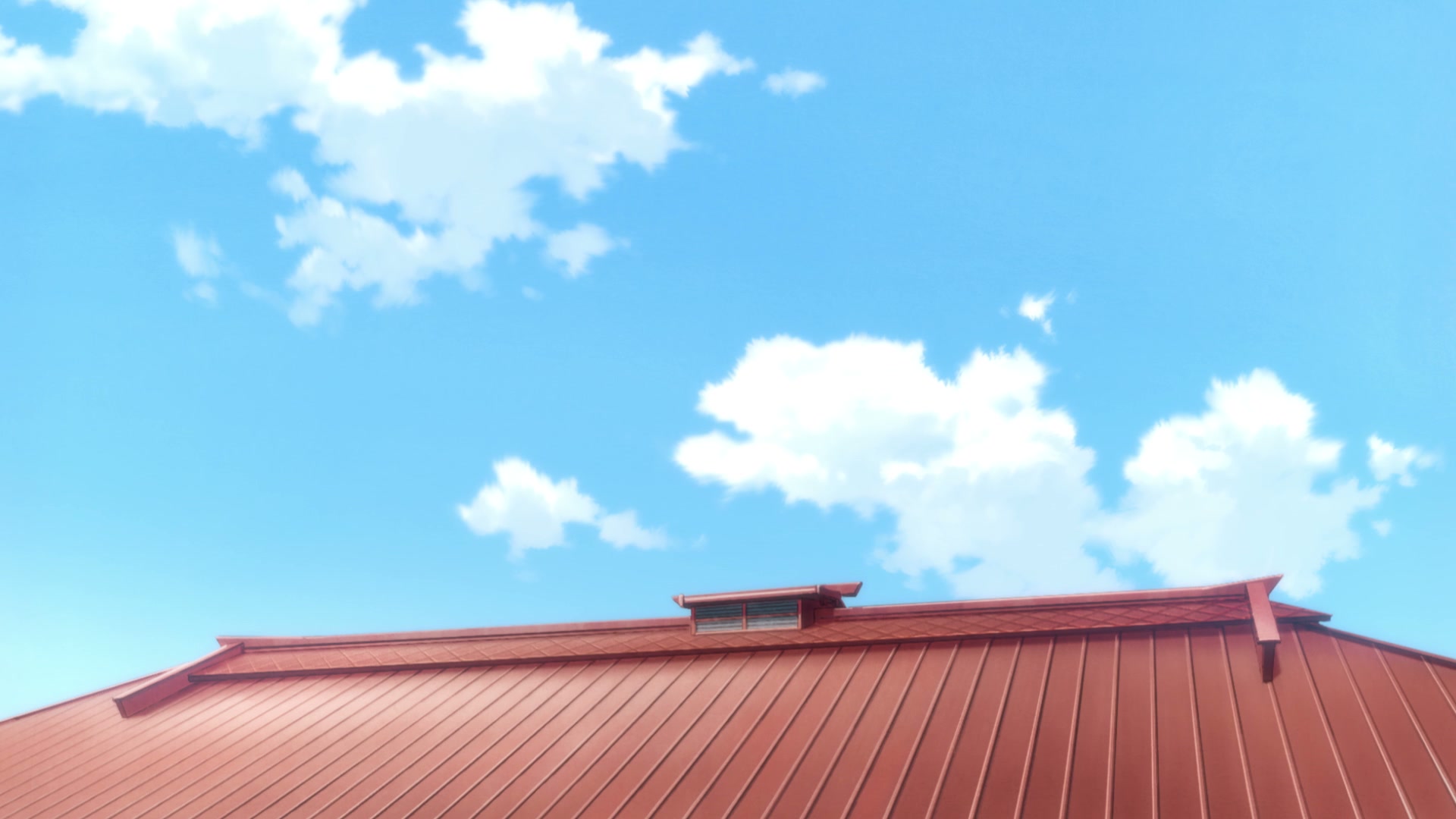
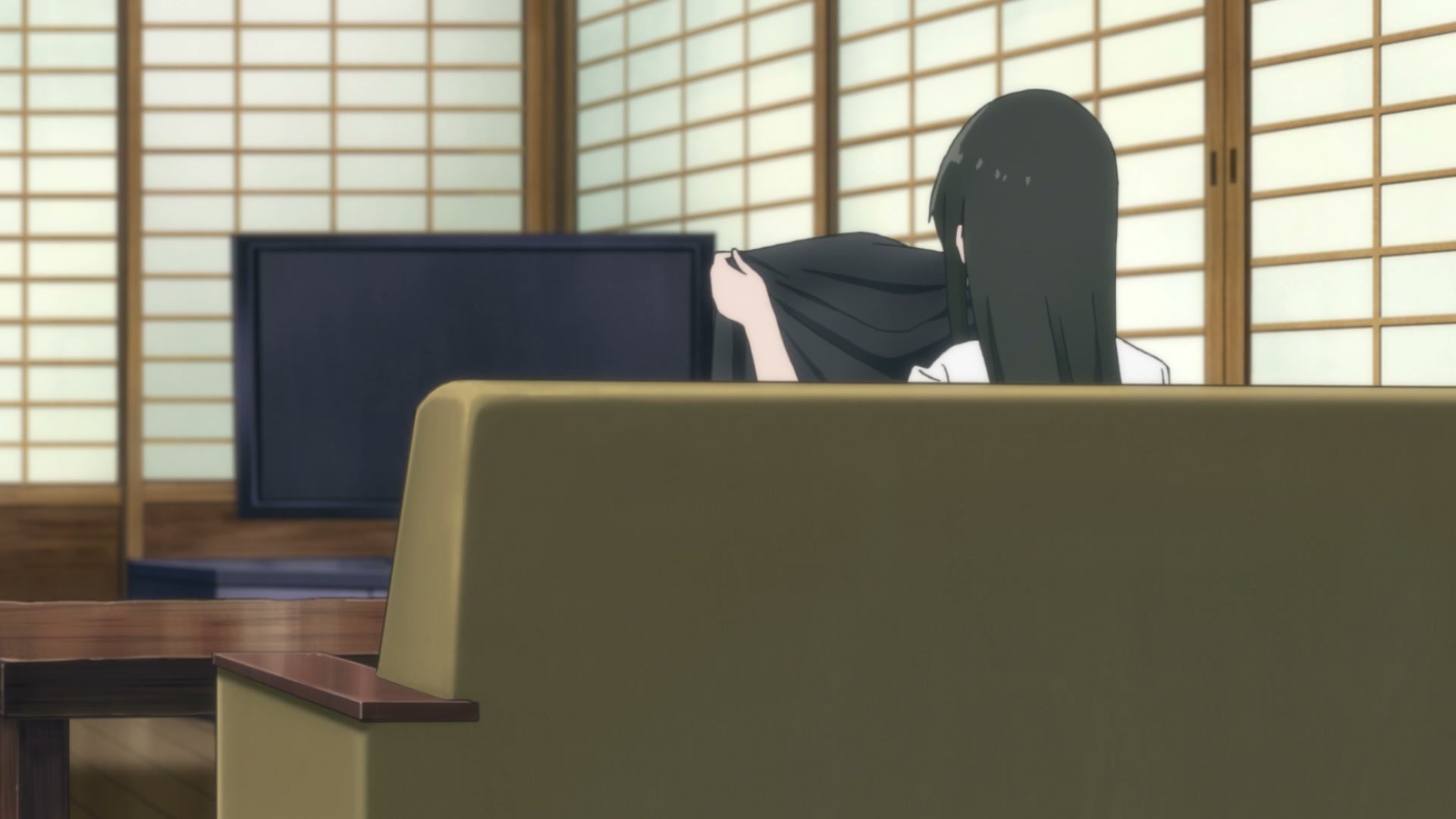
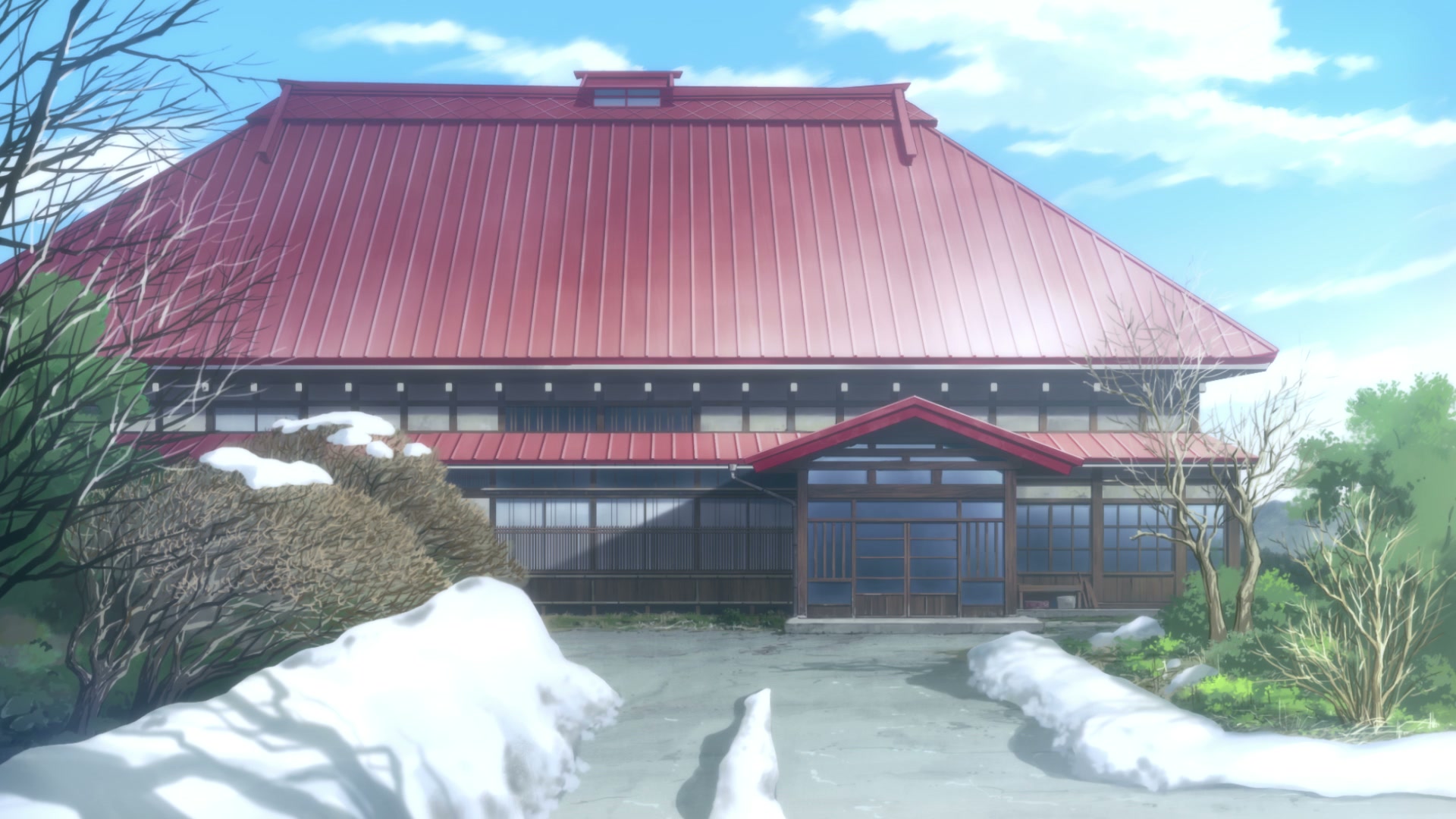
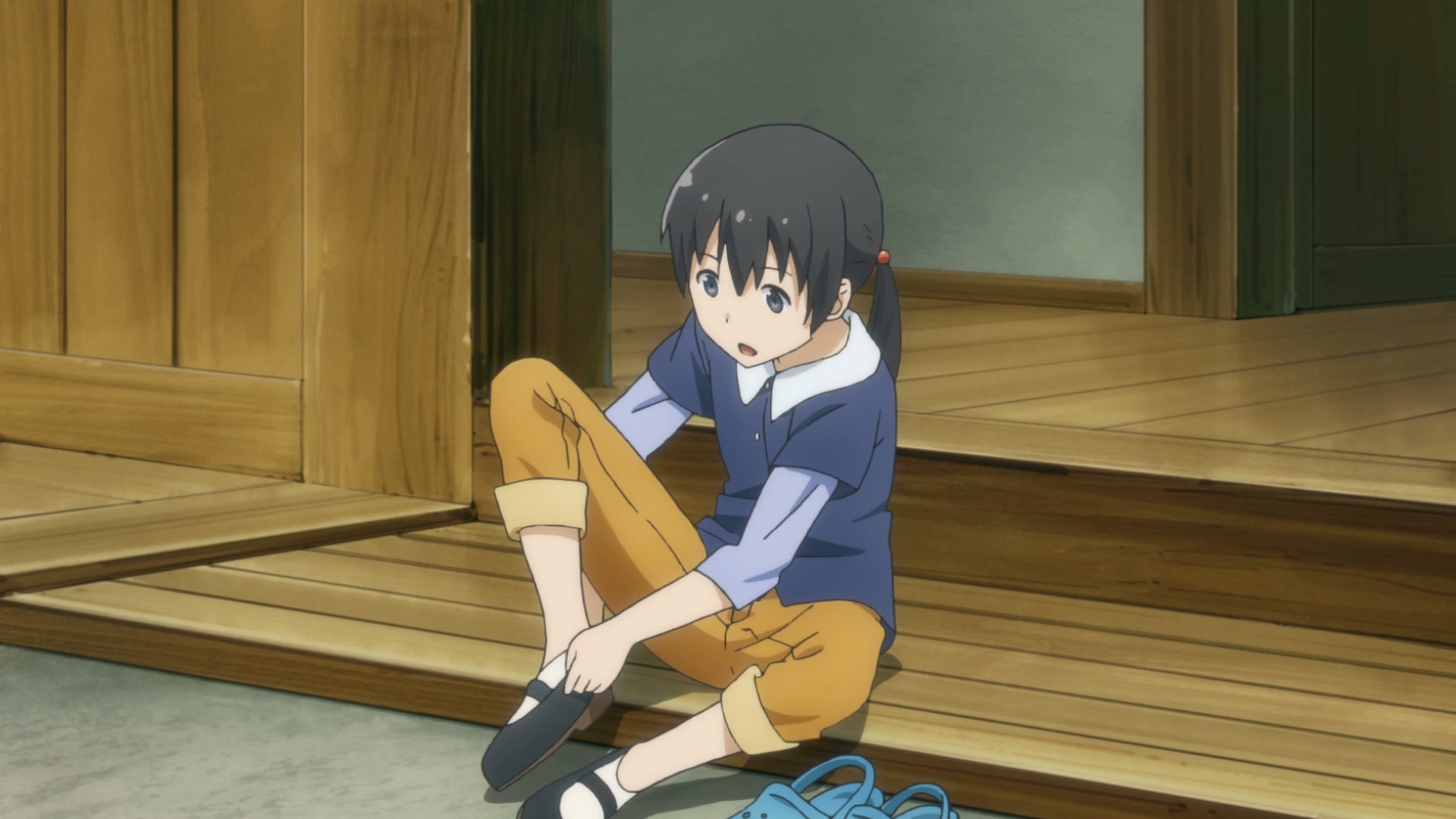
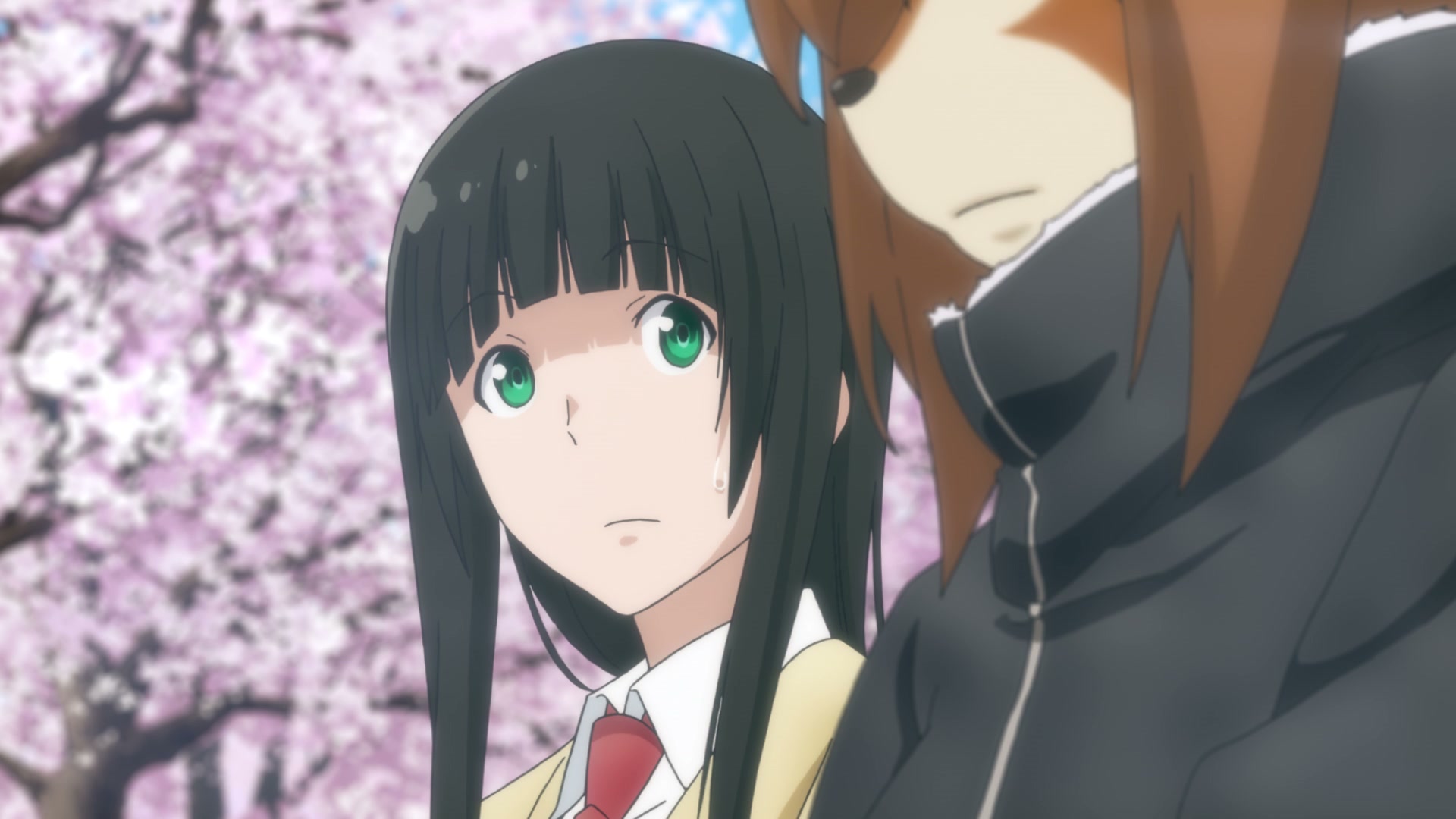
The background art is the production’s most consistent triumph. Exterior scenes are lush and painterly: cherry blossom tunnels, rolling apple orchards, mountain streams, and the dramatic silhouette of Hirosaki Castle are rendered with a watercolor-like wash that makes the viewer want to step into the frame. The traditional Kuramoto farmhouse is a feast of architectural detail—varnished wood grain, sliding shoji doors, straw brooms, rain boots by the entrance—that grounds the supernatural elements in tangible reality. The witch café’s dual appearance is a standout moment: when the group first arrives, it appears as a decrepit, abandoned building; after performing the shrine prayer, the illusion lifts to reveal an elegant, warmly lit interior with polished wood floors and antique furnishings. It’s a perfect visual metaphor for the series’ central idea that magic hides in plain sight.
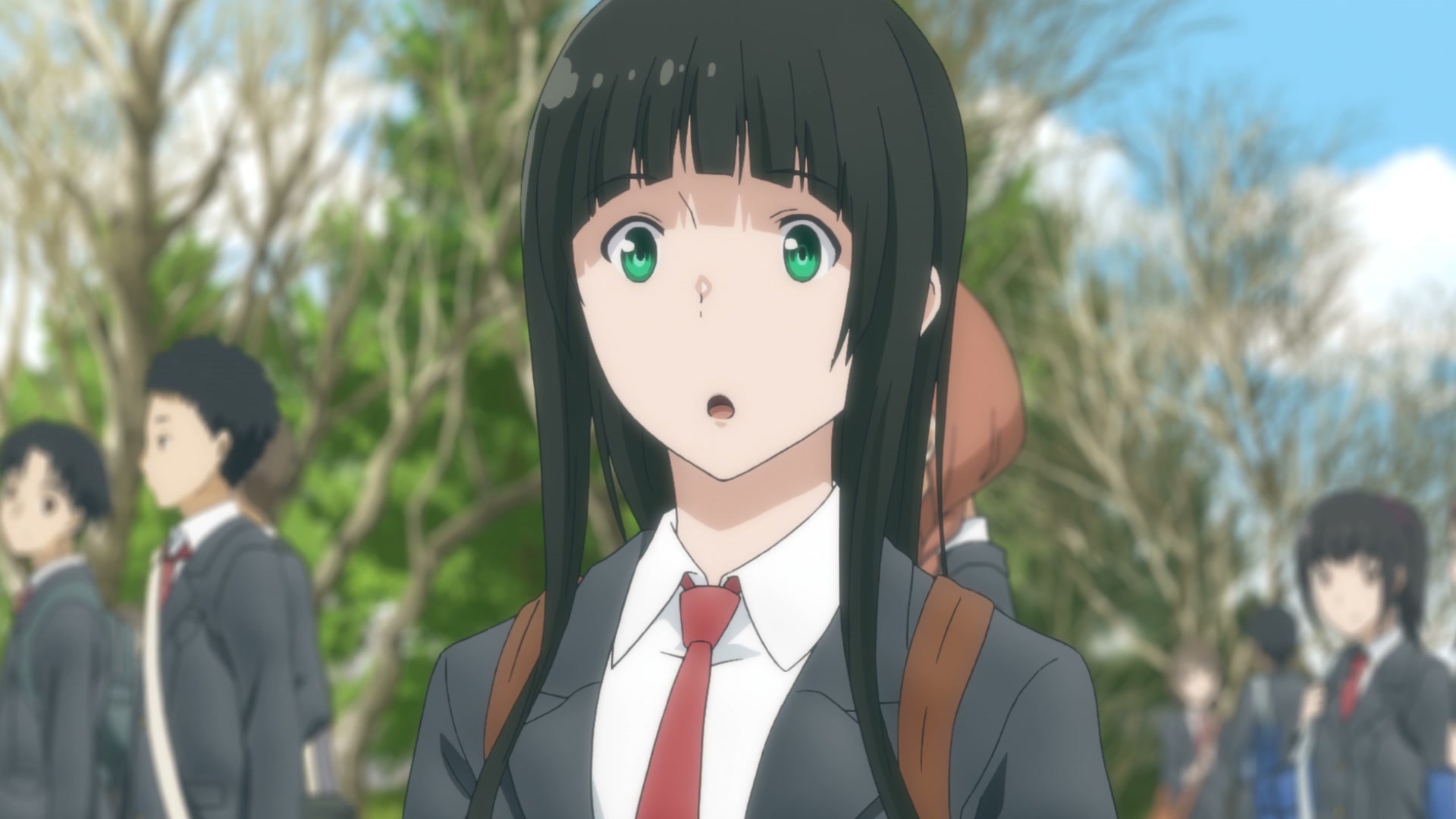
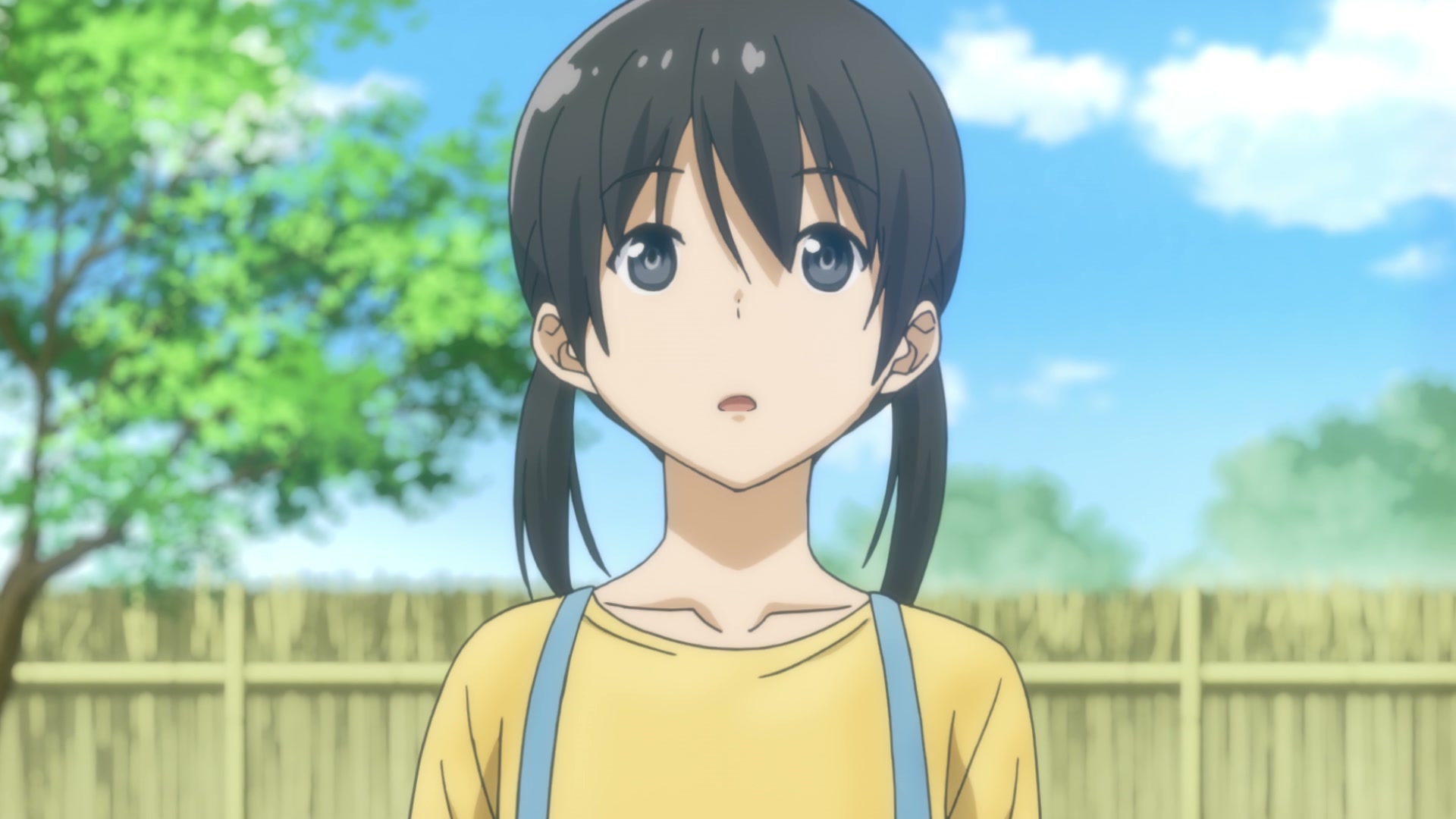
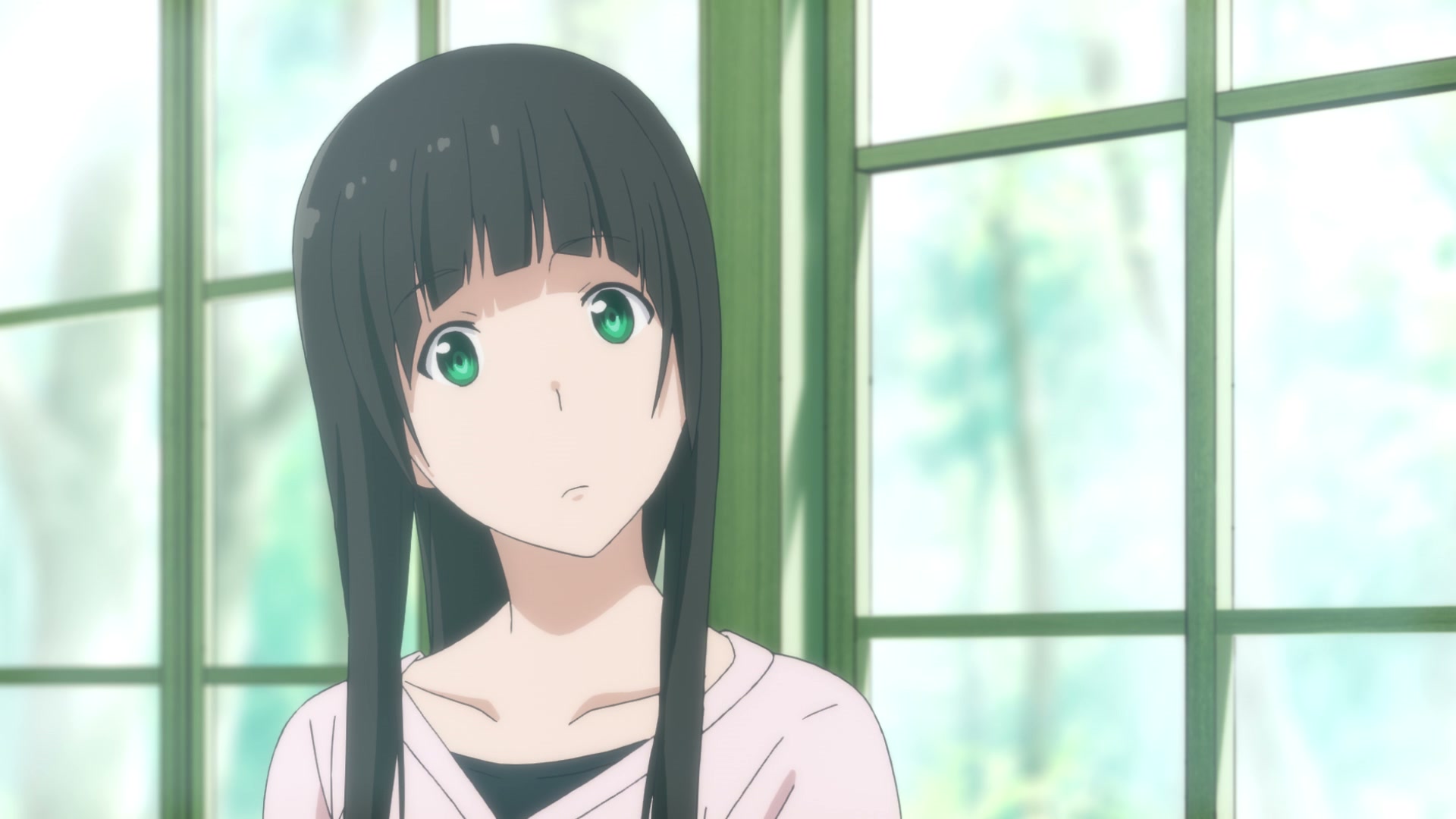
Character designs are deliberately understated. Makoto, with her long black hair and serene expression, is immediately recognizable but never flashy. Kei’s practical short hair and casual cardigan mark him as a normal high schooler. Chinatsu’s bouncier silhouette and wide eyes convey her youthful energy. The supernatural entities, by contrast, are rendered with a stark minimalism—the Harbinger of Spring is a towering, bear-like figure with a featureless face; the Veil of Darkness is a cloaked, shadowy presence. This visual friction between the fully rendered human world and the simplified spirit beings reinforces the idea that both belong to the same reality but are perceived differently.
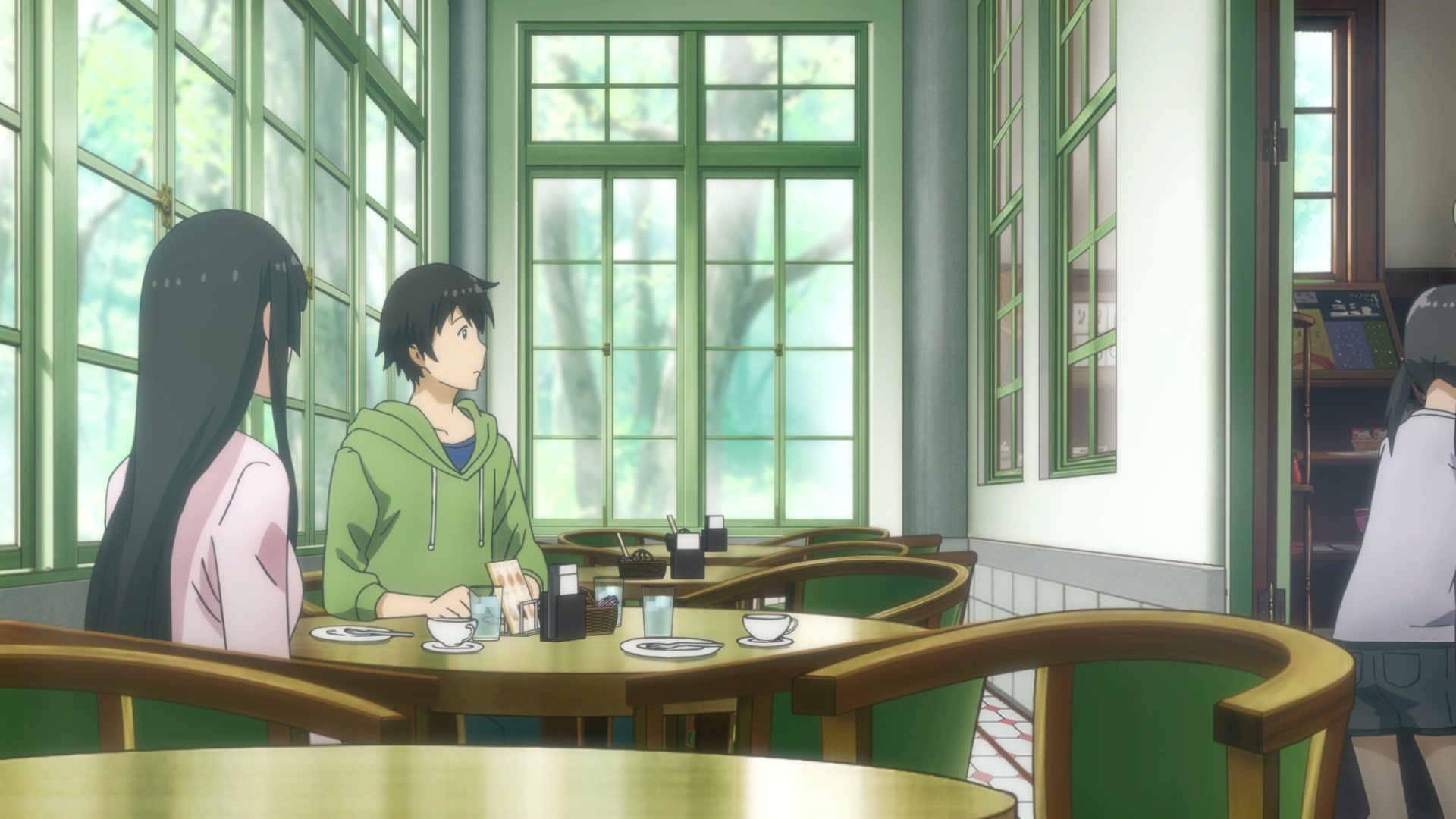
Lighting and color design work in tandem to modulate mood. High-key naturalism dominates, with soft sunbeams streaming through windows, warm afternoon glows, and the cool blue of twilight. The compositing seamlessly integrates cel-shaded characters into multi-layered, painterly backgrounds. Light interacts across both layers cohesively: hair and skin pick up the ambient warmth of a room, and shadows fall softly without obscuring details. Strategic color accents, like a red torii gate or Chinatsu’s yellow hoodie, pop against the otherwise muted palette and guide the eye.
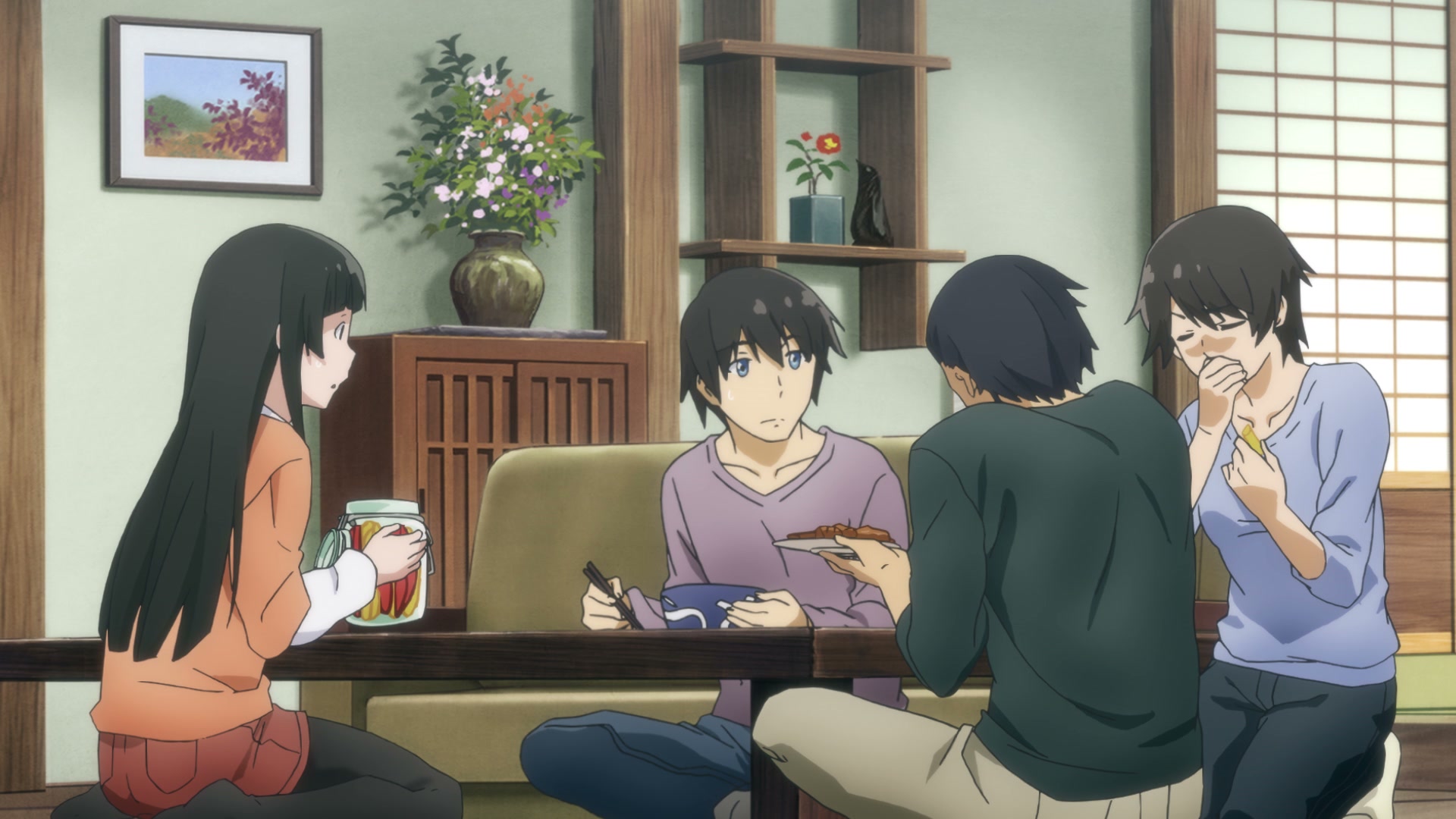
Facial expressions and body language carry the emotional weight of the series. The animation relies heavily on micro-expressions: a slight eyebrow lift, a softening around the eyes, a barely perceptible smile. Makoto’s calm composure is conveyed through relaxed shoulders and a gently tilted head; Nao’s skepticism is telegraphed through narrowed eyes and a slightly recoiling posture; Chinatsu’s awe is written in her open mouth and sparkling eyes. Because the characters don’t shout their feelings, these small cues are essential, and the animators execute them with precision and grace.
This brings us to the inevitable discussion of limited animation. Flying Witch is not a sakuga showcase. Dialogue scenes are often static, relying on close-ups with minimal mouth flaps and camera movement. Flight sequences, while pleasant, lack dynamic motion; Makoto’s broom rides are more about the sensation of gliding than the thrill of speed. Some viewers accustomed to more visually energetic series might find the pacing glacial.
However, it’s important to distinguish between intentional stillness and genuine weakness. The long, quiet shots of cherry blossoms drifting, or of Makoto simply standing in her vegetable field, are part of the iyashikei vocabulary. They are designed to encourage contemplation, to let the audience absorb the atmosphere. They work because the backgrounds are beautiful and the emotional context is resonant. Where the limited animation can feel more like a budget constraint is in certain conversational scenes that stretch on without much variation in composition or body language. A two-minute dialogue with two characters sitting at a table, the camera fixed, can test patience if the voice acting and writing don’t fully carry it. Most of the time, they do, but it’s worth acknowledging.
In the context of the medium, Flying Witch shares an animation philosophy with other slow-life classics like Non Non Biyori and Aria. Its approach is both a practical choice and an artistic statement: this is a series that values quietude, that believes a still frame of a girl reaching for a ripe tomato can be as meaningful as an action sequence. For those attuned to its frequency, the visuals are a consistent, deeply satisfying pleasure; for those seeking more kinetic energy, the show might feel sedate. But that sedateness is, in my view, a feature, not a flaw—carefully crafted to align with the story’s gentle heart.
Sound and Music
The audio landscape of Flying Witch mirrors its visual one: soft, unobtrusive, and deeply atmospheric. The soundtrack, composed by Yoshiaki Dewa, is a collection of light, acoustic pieces—piano, guitar, woodwinds—that drift through scenes like a spring breeze. It never demands attention; instead, it supports the mood, whether it’s the cheerful plucked strings during a shopping trip or the hushed, ambient tones that accompany a twilight conversation. The music understands that silence, too, is a tool, and it isn’t afraid to leave space for the ambient sounds of the countryside: birdsong, wind through trees, the crunch of gravel underfoot.
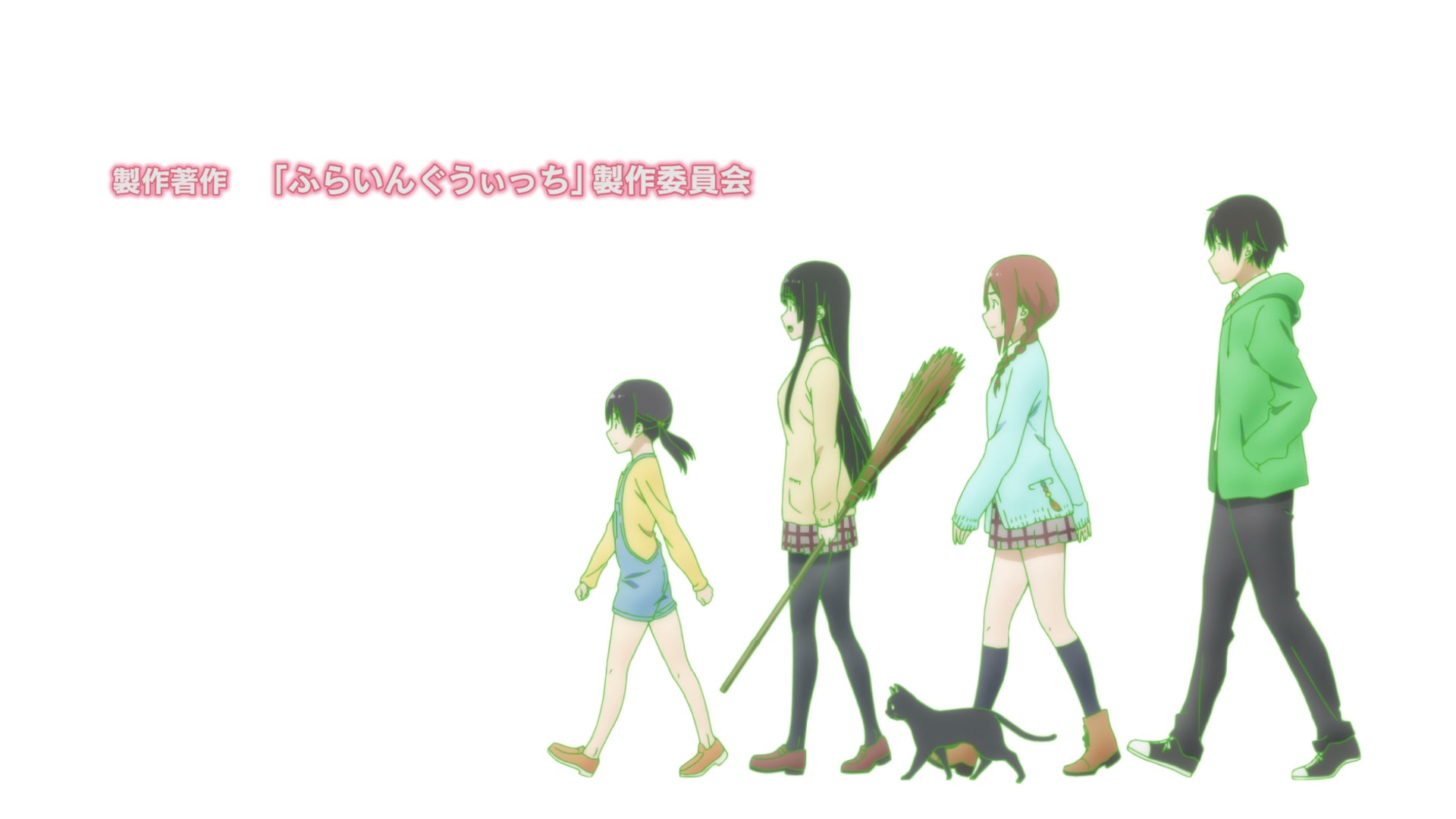
The opening theme, “Sharanran” by miwa, is a perfect tonal match. It’s an upbeat, folksy track with a skipping rhythm and lyrics that celebrate the discovery of everyday magic. The accompanying animation—featuring the cast going about their daily routines against a backdrop of Aomori’s landscapes—immediately signals the series’ intent: this is a story about living, not about escaping. The ending theme, “Nichijou no Mahou” (Everyday Magic), delivered by a gentle chorus of voices, closes each episode with a warm, slightly melancholic note that encourages reflection. Both songs are earworms in the best sense, and they bookend the viewing experience with a sense of cozy finality.
The voice acting deserves special praise for its naturalism. Minami Shinoda as Makoto delivers a performance that is soft-spoken without being weak, carrying the character’s quiet determination and gentle humor in every line. Her occasional breathy exclamations of wonder (“Wow!”) are infectiously genuine. Chinatsu, voiced by Eri Suzuki, is a bundle of energetic curiosity, and her rapid-fire questions never become grating because the performance is so endearingly childlike. Kei, played by Shinsuke Sugawara, embodies the straight man with perfect deadpan delivery, his voice carrying a hint of affectionate exasperation. Nao, voiced by Kana Ueda, moves from wariness to warmth with subtle vocal shifts that mirror her character arc. Even the supernatural characters—the deep, rumbling Harbinger, the quavering ghost Hina—are given distinctive, memorable voices that reinforce their otherworldliness without making them feel alien.
Sound design is meticulous in its attention to environmental detail. The crunch of snow underfoot in the early episodes, the sizzle of tempura frying, the distant caw of crows, the hollow echo of a shrine bell—all these small sonic touches ground the viewer in the physical world. When magic does occur, the sound often remains surprisingly grounded: the mandrake’s deadly scream is muffled when ears are covered, the earthfish’s movements are light and rustling. This restraint prevents the supernatural from ever feeling like special effects and instead integrates it into the acoustic texture of ordinary life.
Overall Verdict
Flying Witch is a series that knows exactly what it wants to be, and it achieves that with quiet perfection. It is an iyashikei anime in the truest sense: a work that heals not through grand catharsis but through the gentle accumulation of small, beautiful moments. It invites you to slow down, to notice the taste of a freshly picked radish, the way sunlight falls on tatami mats, the peculiar charm of a ghost waitress who just wants to serve you cake.
This is not a series for everyone. If you require high-stakes drama, complex plot twists, or constant motion, you will likely find Flying Witch too sedate. Its pacing is deliberately slow; its conflicts are minor and often comedic. But for those who are open to a different kind of storytelling—one that values atmosphere over action, character over plot, and the extraordinary within the ordinary—it is an absolute gem. It’s the kind of anime that feels like a warm blanket on a chilly evening, or a cup of tea after a long walk.
For long-time anime fans, especially those who appreciate rural settings and Japanese cultural texture, Flying Witch offers a deeply satisfying experience. It’s steeped in the rhythms of Tohoku life, from Tsugaru dialects to Nebuta festivals, and it treats its folkloric elements with a sincerity that never feels gimmicky. It’s also remarkably accessible to newcomers; there’s no fanservice, no clichéd tropes, just a gentle story about growing up and finding your place in a community that extends beyond the human.
My final rating would be a heartfelt 9 out of 10. The animation, while occasionally limited, is beautifully composed and emotionally resonant; the writing is deceptively simple yet rich with theme; the characters are unforgettable in their quiet humanity. It loses a point only for those moments—rare but present—where the stillness tips from meditative to merely static.
In a medium often defined by its loudness, Flying Witch whispers. And if you’re willing to lean in and listen, you’ll hear something truly magical: the sound of a world where every day is a little bit enchanted, and where paying attention is the most powerful spell of all. It’s a reminder that you don’t need to travel to another world to find wonder; sometimes you just need to take a walk, get a little lost, and then—with the help of a cat, a cousin, or a ghost—find your way back home.
Gallery