

Introduction
There is a specific kind of pleasure in watching an anime that knows exactly what it is. Goshuushou-sama Ninomiya-kun never pretends to be anything other than what it sets out to be: a late-2000s ecchi harem comedy with a supernatural twist, complete with absurd training sequences, a tsundere ojou-sama, and a shy girl whose chest size becomes a recurring plot point. What makes the series worth discussing, and worth watching for those with a taste for its era, is how it uses that familiar architecture to build something unexpectedly tender underneath.
The premise is straightforward. Ninomiya Shungo lives alone with his older sister Ryouko, a globetrotting mercenary type who occasionally drops in to upend his life. She brings with her the Tsukimura siblings, Mayu and Mikihiko, and announces they will be living together. Mayu is a succubus who cannot control her power. Any man who touches her collapses unconscious. She also suffers from severe androphobia, a fear of men. Shungo, for reasons never fully explained but clearly important, is resistant to her ability. His job, per Ryouko’s orders and under threat of bizarre naked punishments in exotic locations, is to protect Mayu and help her overcome her condition through increasingly ridiculous “training.”
Into this arrangement crashes Houjou Reika, heiress to a global corporation and student council president, who has a decade-old history with Shungo that he cannot remember. She forces her way into the household as a live-in maid, accompanied by her long-suffering attendant Hosaka Shinobu. What follows is twelve episodes of slapstick, fanservice, and a slowly unfolding emotional core about memory, guilt, and a childhood promise that fractured three lives.
For the experienced anime fan who came up through this era, the series feels like comfort food that occasionally surprises you with genuine feeling. It is not a deconstruction of its genre. It does not wink at the audience about the absurdity of its premise. It plays its tropes straight and trusts that the characters will carry the weight. By the end, they do.
Story and Themes
Narrative Structure and the Two-Halves Design
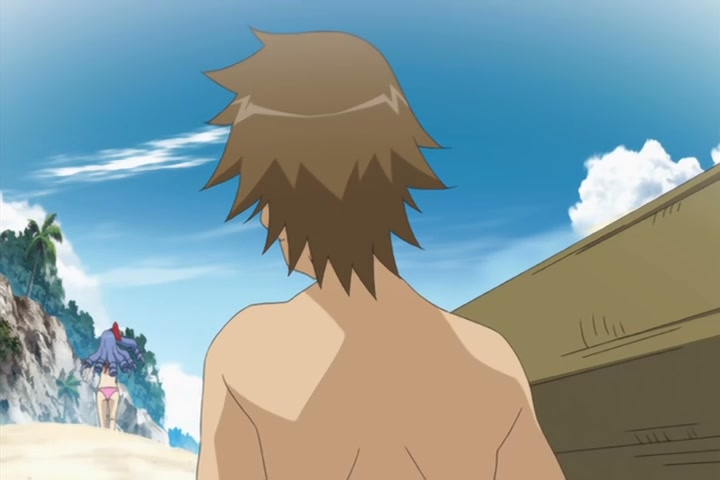
The series splits cleanly into two movements. Episodes 1 through 6 establish the comedic status quo: Mayu’s training, Reika’s intrusion, Ryouko’s schemes, and the rhythms of the household. Each episode introduces a new challenge or complication while layering in small hints that something larger is buried under the surface. The southern island arc that closes this half (Episodes 5 and 6) functions as a turning point. What begins as a beach vacation turns into a staged military invasion orchestrated by Ryouko to test Shungo, but it also introduces the dark Reika, a second personality born from the original Reika’s succubus powers and emotional trauma. This is the moment the series announces its deeper intentions.
Episodes 7 through 12 steadily escalate the emotional stakes. Shungo’s childhood memories begin resurfacing in fragments. The Kyoto field trip forces the trio into proximity with each other and with figures from their shared past. The final three episodes form a continuous climax: the revelation of what happened ten years ago, the dark Reika’s attempt to claim Shungo by erasing Mayu, and the resolution at an abandoned theme park where the childhood promise is finally fulfilled.
The pacing is brisk but not rushed for a twelve-episode run. Early episodes feel somewhat episodic, with training challenges and comedic set pieces that could be rearranged without much damage. This looseness tightens considerably in the back half. By the time the Kyoto arc begins, every scene is pulling toward the climax. The tonal whiplash between slapstick and melodrama is a deliberate feature of the genre, not a bug, and the series manages it with more control than many of its contemporaries.
Memory as Central Architecture
The amnesia plot could easily be a cheap device. Here it is the foundational trauma that shapes all three leads. Shungo lost his memories of the childhood friendship when Mayu’s succubus power accidentally drained his life force. Mayu locked away her own memories out of guilt, retreating into the timid girl the series introduces. Reika’s personality split because she could not bear being forgotten by the boy she loved.
The series treats memory not as a plot convenience but as essential to wholeness. Shungo’s lost memories mean he greets both girls as strangers, unable to understand why Reika is so hostile or why Mayu seems so familiar. Mayu’s suppressed memories keep her trapped in a cycle of apology and self-loathing, unable to forgive herself for a crime she cannot fully recall. Reika’s dark personality is the part of her that remembers everything and has been screaming into the void for ten years. Recovery of the full truth becomes the only path to healing for all three.
Life Force as a Metaphor for Vulnerability
The succubus power to drain life force is more than a supernatural gimmick. It literalizes the emotional risk of intimacy. Mayu cannot touch a man without harming him. Physical closeness, for her, carries genuine danger. Her androphobia is not irrational. It is a learned response to the knowledge that her presence can destroy.
Shungo’s resistance to her power makes him unique, but it does not make him immune. The series establishes early that a kiss could still kill him. The tension between Mayu’s desire for closeness and her terror of causing harm drives much of her character arc. She would rather die than drain Shungo again. When she finally confesses her feelings in the abandoned theme park, her plea is not “love me” but “don’t sacrifice yourself for me.”
The climax resolves this metaphor through Reika. She kisses Shungo not as a romantic claim but as a conduit, transferring his life force safely to Mayu. Love, filtered through trust and shared history, becomes life-giving rather than life-taking. It is a remarkably unified piece of thematic writing, one that ties the supernatural premise directly to the emotional resolution.
The Trio as a Single Unit
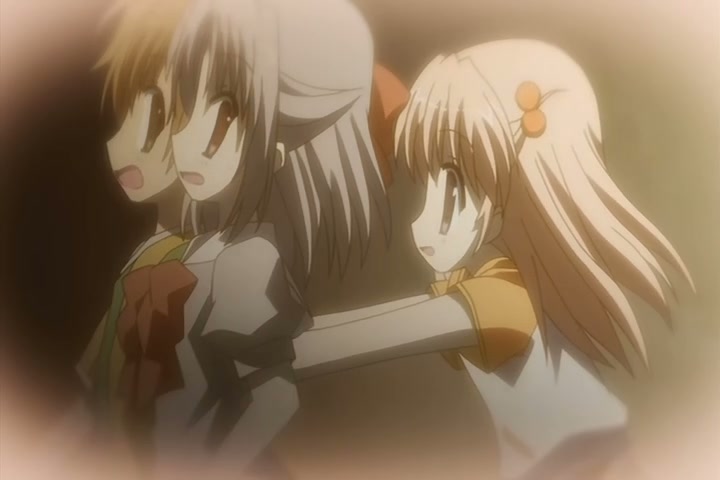
Most harem stories treat the love triangle as a zero-sum competition. One girl wins. The other loses. Goshuushou-sama Ninomiya-kun quietly rejects that framework. The childhood promise was never that Shungo and Reika would be together as a couple. It was that the three of them, Shungo and Reika and Mayu, would visit Never Ever Land together. The trio is the unit. Mayu’s guilt stems not just from romantic jealousy but from believing she betrayed her friendship with Reika. Reika’s dark side wants to erase Mayu, but the true Reika cannot bring herself to hate the girl who was once her closest companion.
The resolution reunites all three, not as a couple plus a defeated rival, but as a reconstituted whole. The final image of the series is the three of them bickering in the morning light while the chaotic household swirls around them. It is a domestic scene, not a romantic climax. The promise was about belonging, and belonging is what they achieve.
Self-Restraint as Comedic and Thematic Thread
The phrase “This is self-restraint too” becomes a running joke among the female cast, used to justify groping, teasing, and various forms of fanservice-adjacent behavior. It is a joke about the show’s own ecchi content, but it also points toward something genuine. Every character in the series is restraining something. Mayu restrains her succubus power, and her own feelings. Reika restrains her vulnerability behind walls of pride. Shungo restrains his exhaustion, his frustration, and eventually his own buried emotions. The comedy of “self-restraint” is the surface. The drama is what happens when the restraint finally breaks.
Cultural Elements and Context
The succubus in this series is not the Western demoness but a softened, moe-inflected variant that appears throughout anime and visual novel culture. She is dangerous but sympathetic, cursed with an allure she did not ask for and cannot control. This reframing of the monstrous feminine as tragic heroine is common in Japanese media and gets a solid, if not groundbreaking, treatment here. Ryouko’s comfort with her succubus nature contrasts sharply with Mayu’s terror. The implication is that self-acceptance, not suppression, is the path to control. Ryouko is fully at home in her skin. Mayu is a prisoner of her own body. The series suggests Mayu can eventually reach a version of Ryouko’s ease, though it wisely leaves that journey incomplete.
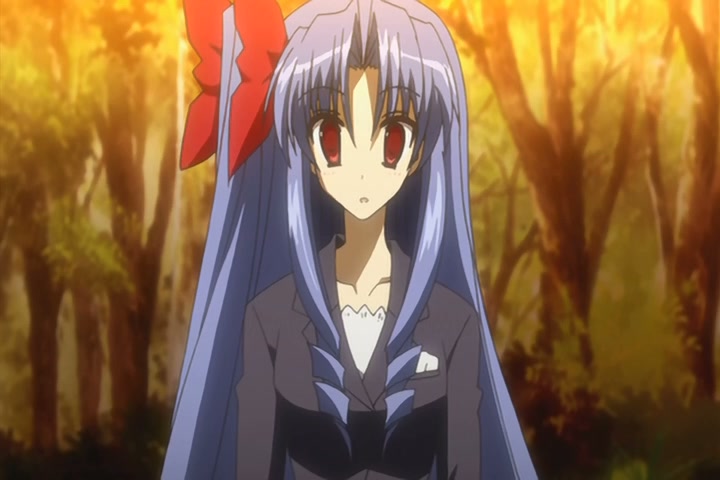
Reika is a textbook ojou-sama archetype: wealthy, brilliant, attended by a loyal servant, with drill-shaped hair curls that are practically a genre requirement. Her pride is both her defining trait and her primary defense mechanism. The split personality twist gives this archetype genuine dimension. The dark Reika is the “shadow” that the perfect heiress cannot acknowledge: needy, possessive, sexually forward, consumed by jealousy. Reika’s journey involves accepting that this shadow is not an invader but a part of herself, one she created to carry pain she could not bear alone. Her development of instant cup ramen in Episode 8 is a culturally resonant detail. Taking a lowly convenience-store food and elevating it through personal effort mirrors her own arc from inherited status to earned identity. She wants to create something by her own ability, something she can offer without relying on the Houjou name.
The Kyoto field trip arc functions as a miniature travelogue: Kinkaku-ji, Togetsu Bridge, local pickles, shaved ice with green tea and milk, traditional costume shops. This is standard for school-trip episodes, but it is handled with enough affection to feel like genuine cultural appreciation rather than mere set-dressing. The Okushiro siblings’ use of Kansai dialect marks their identity as rooted in the old capital, tying their ancient succubus lineage to Kyoto’s history.
The bond between Mayu and Ayakawa Hinako forms over Nerawareta Ace, a parody of the 1970s tennis manga Ace o Nerae!. This is the kind of detail that rewards viewers with broader manga knowledge. It grounds Mayu’s otaku side in a specific, lovingly referenced piece of shoujo history. It also humanizes her. Her passion for decades-old manga makes her more than “the clumsy big-breasted girl.” She has tastes and enthusiasms. She can quote the rival character’s name properly and correct Hinako’s misremembered details. This is a small touch, but it does significant work in making Mayu feel like a person rather than a collection of traits.
Adaptation Considerations
The anime is a twelve-episode adaptation of a light novel series. The standard pattern for such adaptations in this era involves compressing multiple volumes, excising subplots, and reducing interior monologue to visual shorthand. Without detailed knowledge of the source material, I cannot speak to what was cut, compressed, or altered. What I can say is that the anime holds together as a self-contained work. The emotional arc is complete. The climax lands. The characters feel fully realized within the time they are given. The pacing in the back half is accelerated, and one can imagine the Okushiro siblings’ backstory or the dark Reika’s development receiving more room in the novels. But the series does not feel broken or incomplete. It tells the story it sets out to tell.
Characters
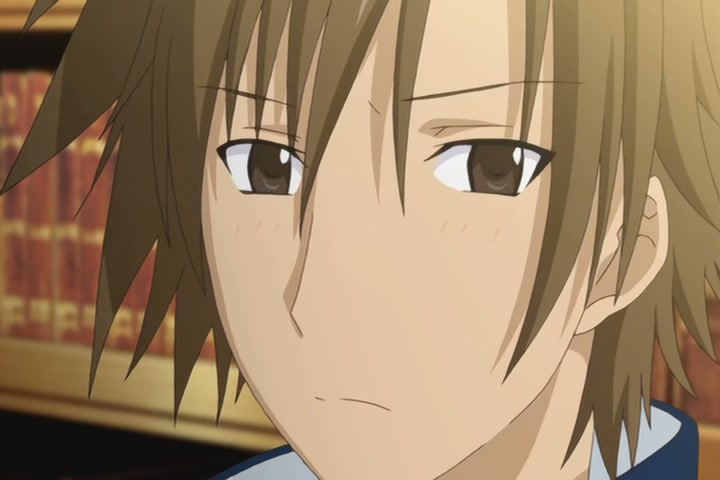
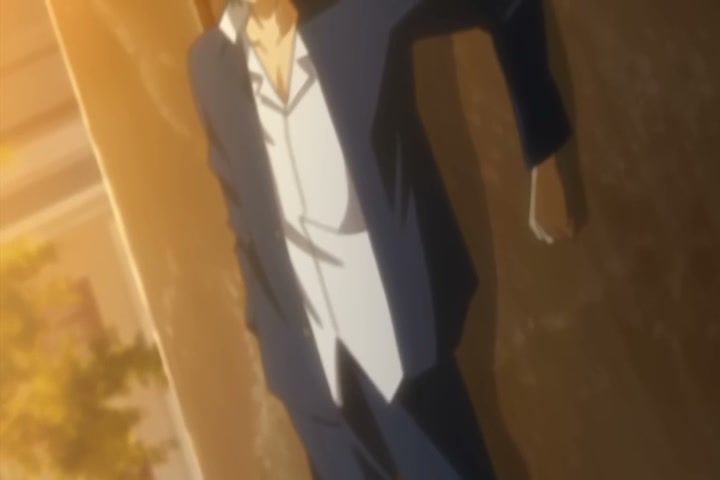
Ninomiya Shungo: The Exhausted Center
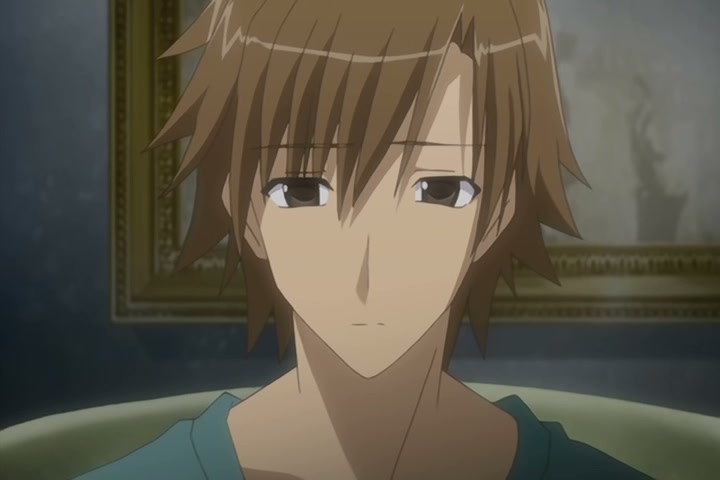
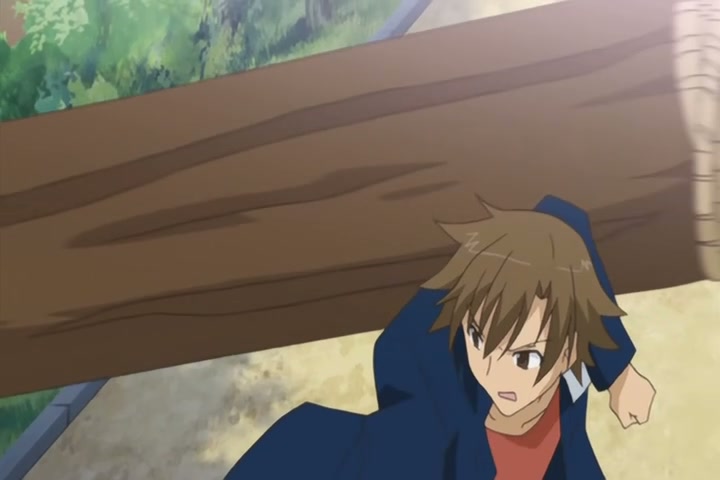
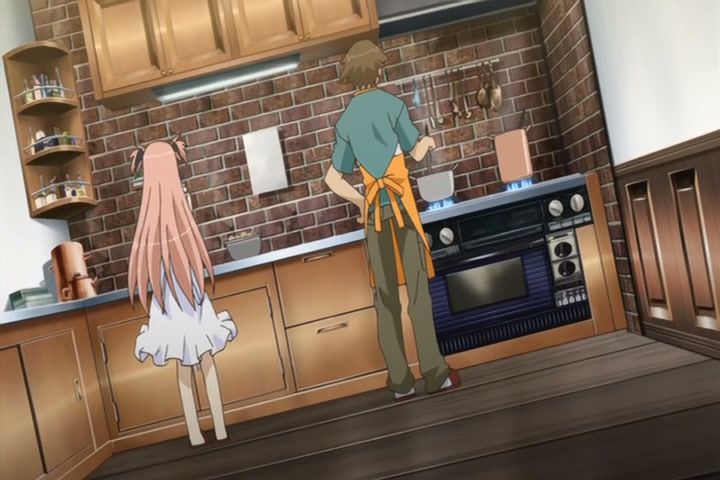
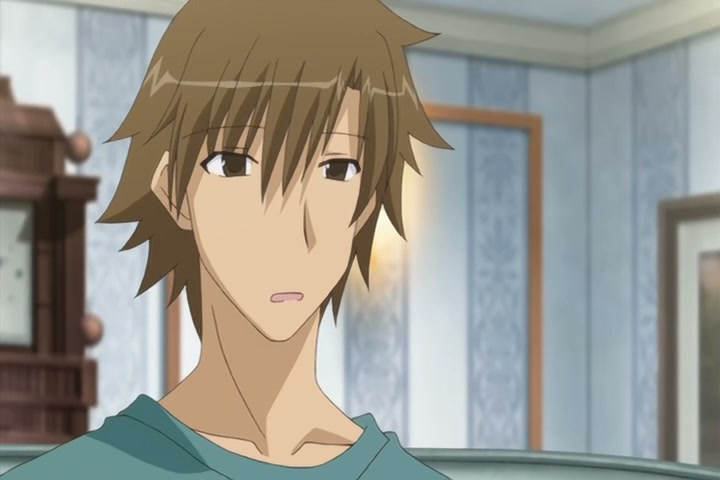
Shungo is the straight man in a world gone mad, and his weariness is the series’ most consistent source of grounding. He cooks. He cleans. He does laundry. He fights off mobs of entranced boys and staged military invasions with equal competence. He is capable in ways that feel earned rather than asserted. His resistance to succubus powers marks him as special, but the series never makes this a point of arrogance. He simply is what he is, and he does what needs to be done.
His defining trait is a quiet, unshakeable protectiveness. When Mayu asks if he is afraid of her, he admits he is “a little scared” and then immediately tells her that her dream of living happily with the one she loves will come true if she does not give up. He does not offer empty reassurance. He offers honesty and commitment. This pattern repeats throughout the series. He throws himself into danger to buy others time to flee. He volunteers his life force to save Mayu even knowing it could kill him or erase his memories again. His decision in the climax, choosing faith in the true Reika over either self-preservation or romantic favoritism, is earned through twelve episodes of demonstrated integrity.
His emotional interior is guarded. He rarely displays overt affection. His care comes through action rather than words. When Mayu asks him how he feels about Reika, he freezes. He does not have the vocabulary for his own heart yet. This is a limitation, but it is also consistent characterization. He is not emotionally articulate. He is emotionally reliable. The difference matters.
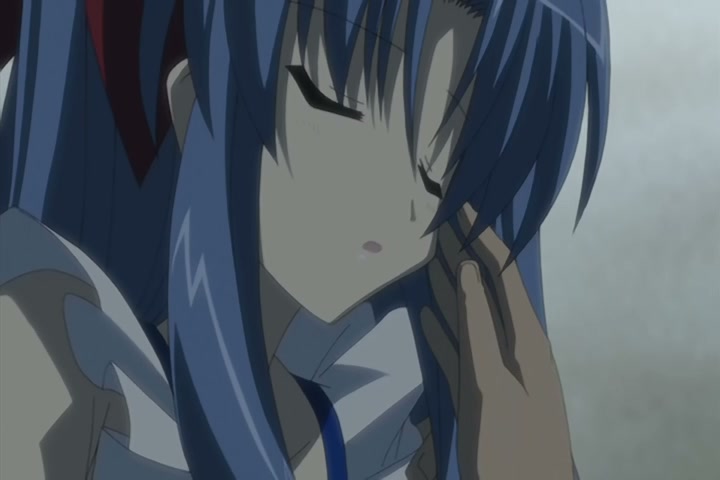
Tsukimura Mayu: The Guilt-Ridden Heart
Mayu is the emotional barometer of the series. When she is flustered and apologetic, the tone is light. When she is quiet and withdrawn, the comedy recedes and something more fragile takes its place. She begins as a collection of sympathetic vulnerabilities: a succubus who cannot control her power, a convent-raised girl terrified of men, a clumsy disaster who floods kitchens and triggers traps. That could be enough for a one-note character. The series gives her more.
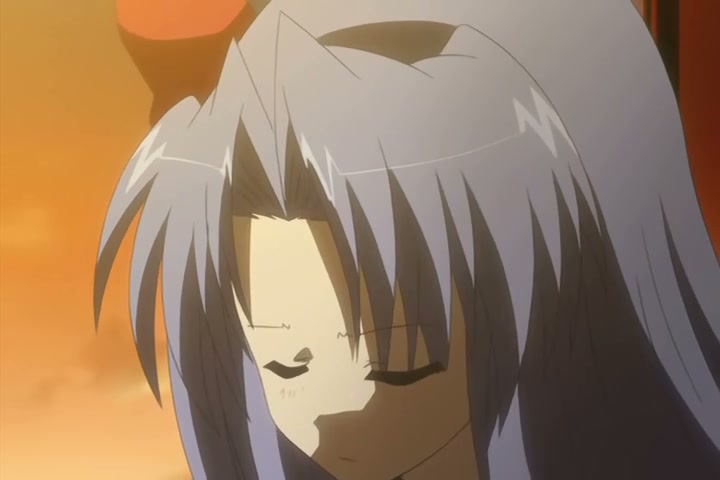
Her androphobia is revealed as a trauma response. As a child, she accidentally drained Shungo’s life force when he kissed her goodbye. The event erased his memory and shattered their trio. Her present-day personality, the timidity and the constant apologizing, is a self-imposed prison built from guilt she could not consciously remember but could not escape. Her arc is one of gradual reclamation. She makes a friend on her own in Hinako. She learns to assert herself, grabbing Shungo’s hand and forcing a group outing during the Kyoto trip. She finally speaks the truth in the abandoned theme park, admitting she hid her succubus nature because she already loved Shungo, and begging him not to sacrifice himself again.
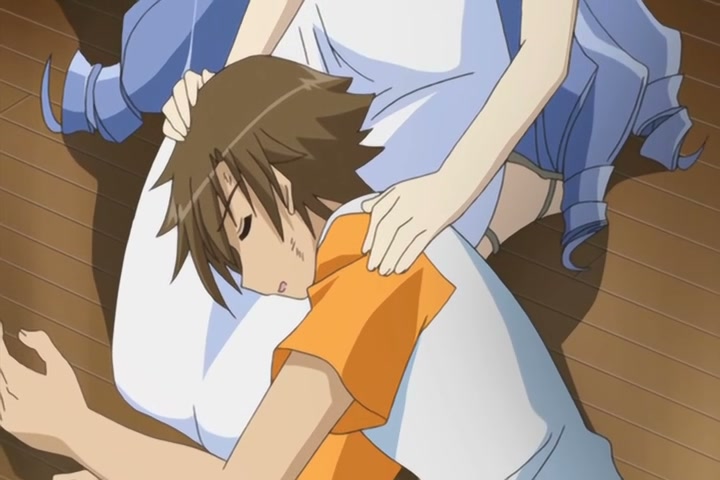
Her physicality, the large breasts that are a constant source of fanservice, is also a source of characterization. She cannot control them any more than she can control her succubus allure. They trigger traps. They draw unwanted attention. Reika calls them “pointless.” The joke runs through the series, but underneath it is a girl whose body constantly betrays her intentions. Her dream, “to live happily with the one man I love till the day I die,” is something she considers silly for a succubus. The series treats it as entirely valid.
Houjou Reika: The Fractured Princess
Reika is the most complicated character in the series and the one who benefits most from the back-half revelations. Without the childhood backstory, she would be a standard tsundere: proud, hostile, secretly vulnerable, prone to flustered denials when feelings surface. With the backstory, she becomes the series’ most damaged figure.
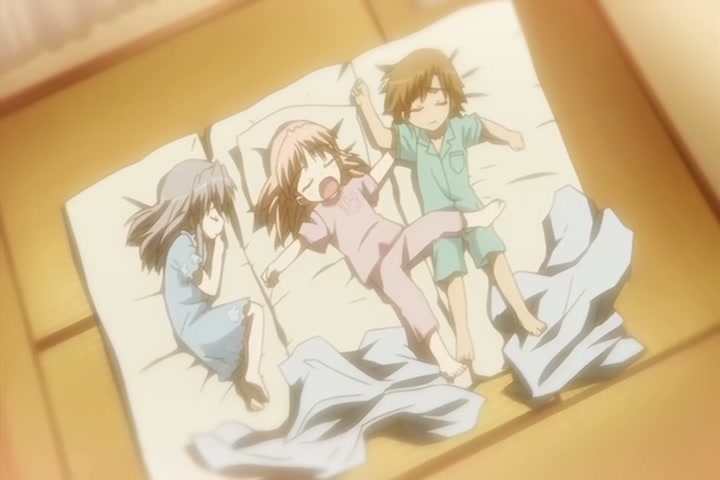
She met Shungo when she was a runaway, a privileged girl who fled her family and found herself alone. He took her in without question, gave her food, protected her from bullies. She fell in love with him entirely, and she made him promise to wait for her. When she finally returned with tickets to Never Ever Land, he did not remember her. Mayu’s succubus episode had erased his memory. The pain of that moment was so severe that Reika’s psyche split. One Reika buried the pain behind walls of pride and achievement, becoming the perfect heiress who needs no one. The other Reika, the dark personality, held all the pain, all the jealousy, all the desperate, possessive love.
Her behavior in the present timeline makes sense through this lens. She is hostile to Mayu not just because Mayu is a romantic rival but because Mayu is the person who, however accidentally, took Shungo away from her. She cannot admit her feelings because admitting them means admitting how deeply she was hurt. Her insistence that she is only living in the household to “maintain morals” is so transparently false that it becomes funny, but the humor is the character’s own defense mechanism.
The integration of her two selves in the finale is the series’ most psychologically sophisticated moment. The original Reika does not defeat or destroy her dark counterpart. She apologizes to her. She thanks her for carrying the pain she could not bear. She takes her back into herself. This is self-compassion dramatized as a literal embrace. The kiss that follows, transferring Shungo’s life force to Mayu, completes a circle that began ten years ago. She saves Mayu’s life. She fulfills the promise. She becomes whole.
Ninomiya Ryouko: The Chaos Goddess
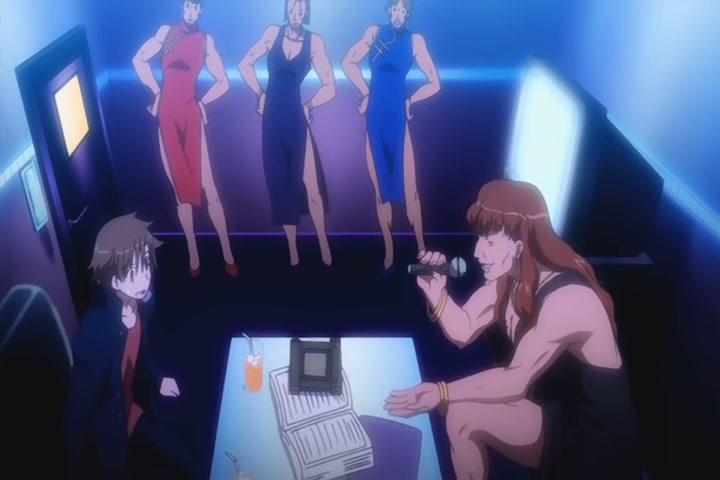
Ryouko is the series’ most “anime” character and the engine of the entire plot. She is a succubus fully in control of her powers, a sadist who delights in tormenting her brother, and a secret architect of nearly every major emotional event. Her threats of punishment (“naked alien politics in an underground temple in the South Pole”) are so absurd they cross into a kind of poetry. Her perversion is equal-opportunity; she gropes Reika, teases Mayu, and records everything for blackmail.
Underneath the chaos, she is fiercely protective. She arranges Mayu’s cohabitation with Shungo to help her overcome her androphobia. She stages an entire fake military invasion on a southern island to test Shungo’s resolve and gather footage. She manipulates the media to brand her own group as terrorists, creating a distraction while Shungo rescues Mayu. Her methods are outrageous, but her goals are consistently benevolent. She is the adult endpoint of Mayu’s potential journey: a succubus at peace with herself, able to use her powers and her considerable intelligence to protect the people she loves.
Supporting Cast
Hosaka Shinobu, Reika’s attendant, is the quiet counterpoint to the household chaos. She is competent, loyal, and possessed of a dry humor that surfaces in asides to Shungo, whom she regards as a kindred spirit. Her defining moment comes in the finale, when the dark Reika orders her to kill Shungo. She obeys up to a point, then cannot deliver the fatal blow. Her loyalty is to Reika’s happiness, not to Reika’s commands. It is a subtle but important distinction.
Ayakawa Hinako provides Mayu with her first genuine female friendship. Their bonding over retro manga is one of the series’ most charming subplots, and Hinako’s teasing encouragement pushes Mayu toward greater assertiveness. She is also the source of the “self-restraint” running gag, a joke that she deploys with reliable comic timing.
The Okushiro siblings, Tasuku and Irori, function as a dark mirror to the main trio. Tasuku’s decade-long grudge against Shungo mirrors Reika’s inability to let go of the past. Irori’s hidden love for her brother echoes Mayu’s buried feelings. Their reconciliation, triggered by Irori’s confession that she has always loved Tasuku, prefigures the main trio’s emotional resolution. It is a small arc, contained largely within the Kyoto episodes, but it reinforces the series’ interest in how pain can be released when someone is brave enough to speak the truth.
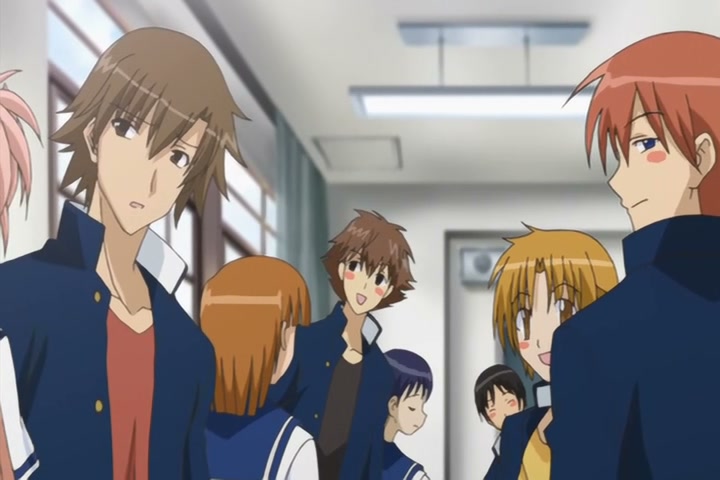
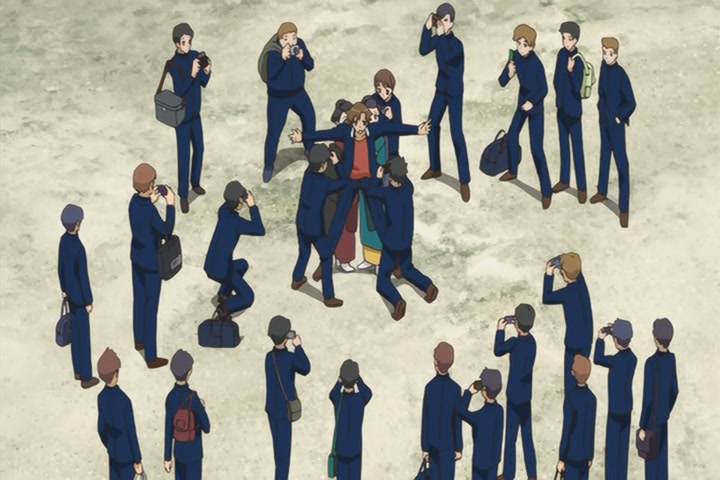
Inoue and Yoshida, Shungo’s male classmates, are the comic relief’s comic relief. Their attempts to infiltrate the girls’ bath and their enthusiasm for the Night Party tradition are played for broad slapstick. But they also fight alongside Shungo when it matters, and they set up the fireworks that greet the reconciled trio at Never Ever Land. They are idiots, but they are loyal idiots.
Visuals and Animation
Art Style and Visual Direction
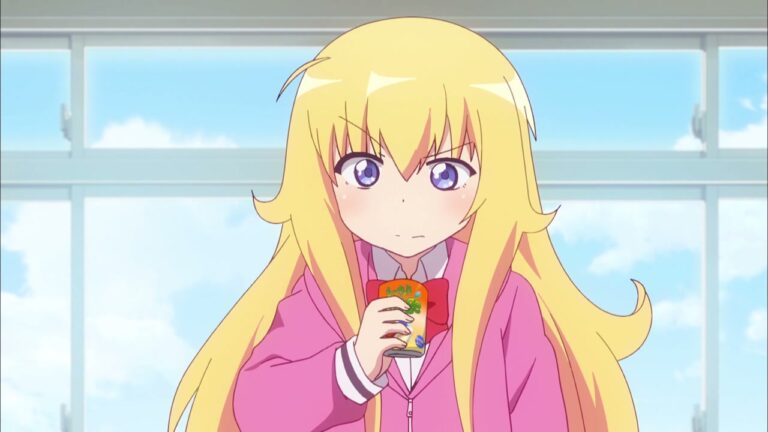
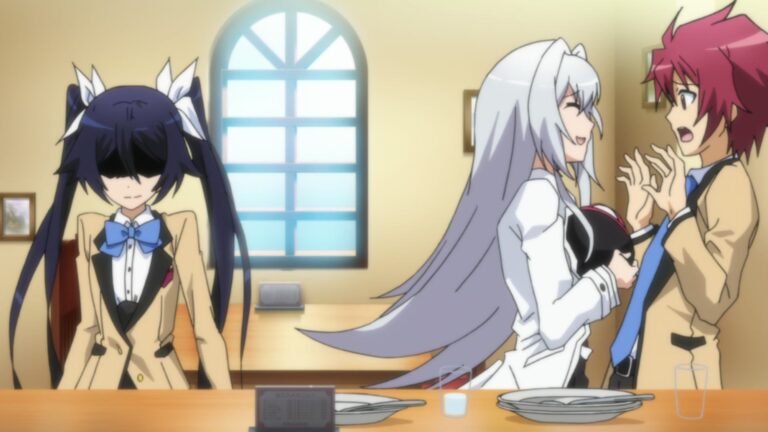
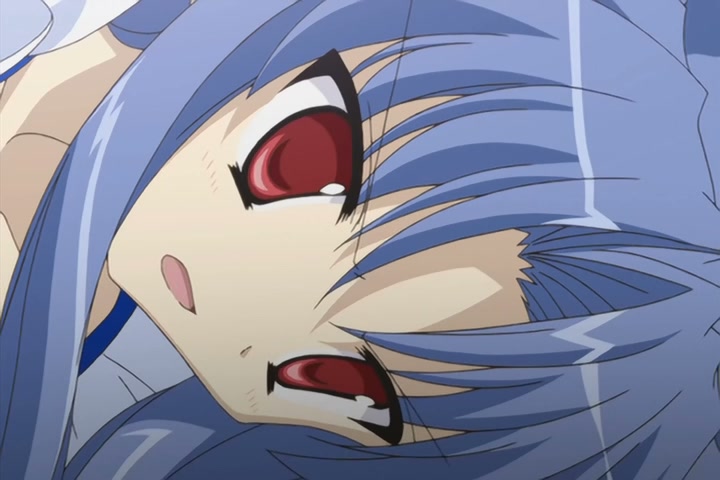
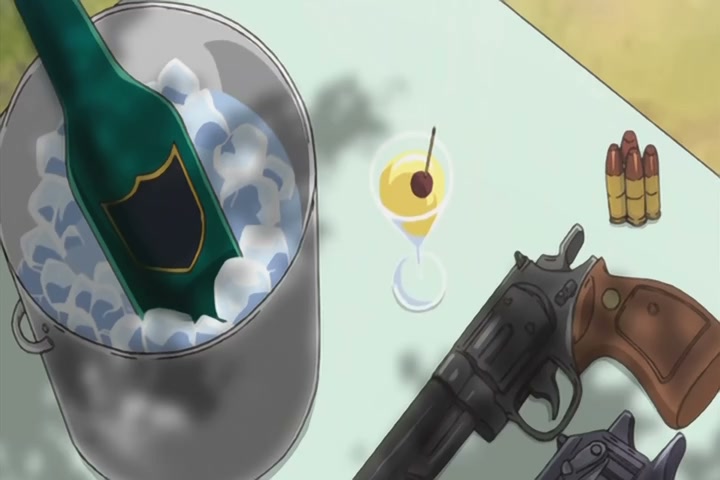
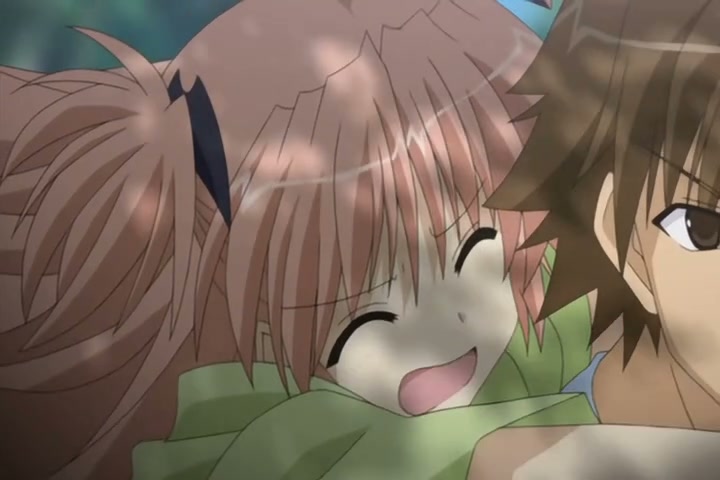
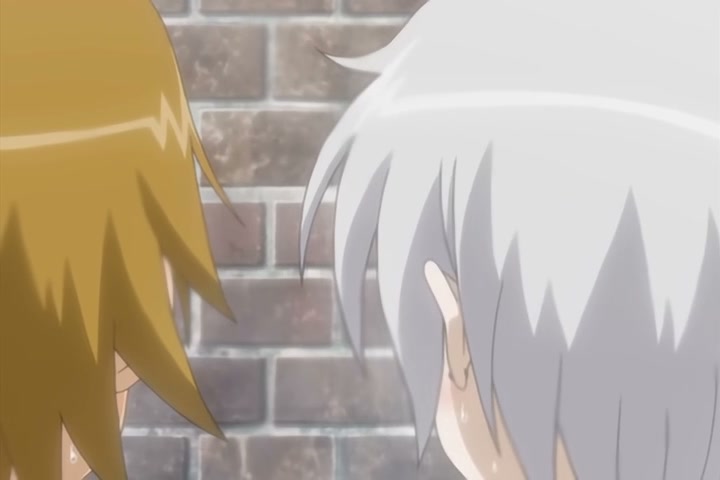
The series is a quintessential example of the late-2000s digital anime aesthetic. Character designs follow the era’s conventions: slender, elongated frames with long necks, delicate linework, and hair rendered with jagged “halo” highlights that catch the light in high-contrast arcs. The eyes are the focal point of the character art, large and expressive, with layered irises and glassy reflections that shift between vulnerability and comedic exaggeration depending on the scene.
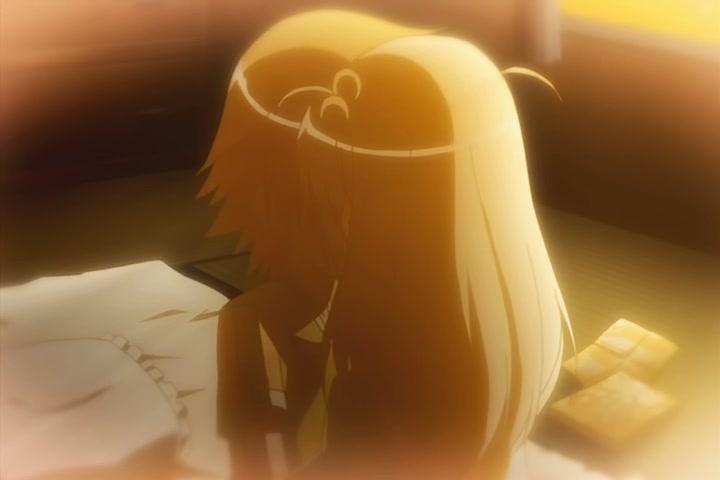
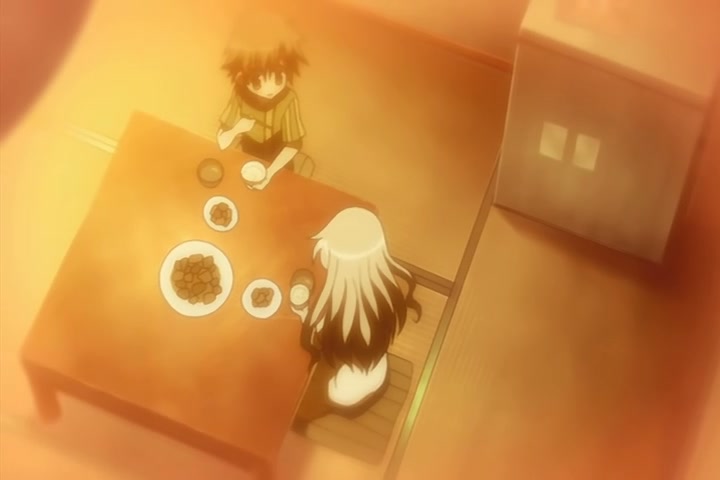
The visual direction relies heavily on digital post-processing. A persistent soft-focus glow, often called bloom, blurs the edges of the frame and gives the image a dreamy, nostalgic quality. This works in the series’ favor, reinforcing the themes of memory and lost time. The world feels slightly hazy, like a recollection. When the lighting shifts to the golden sepia of late afternoon, the effect is genuinely warm.
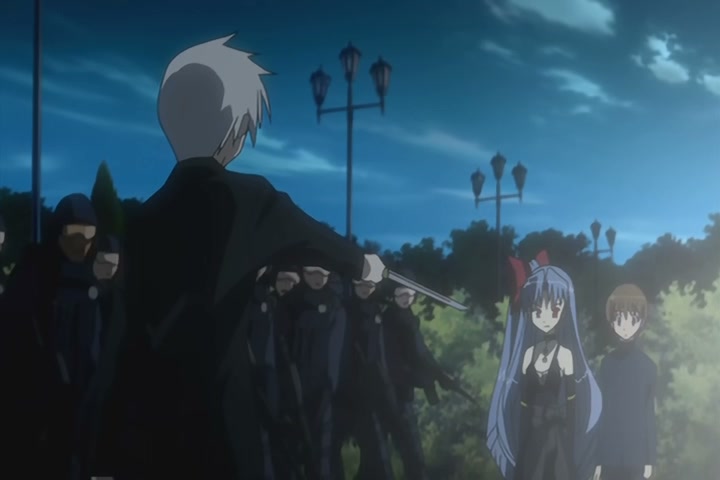
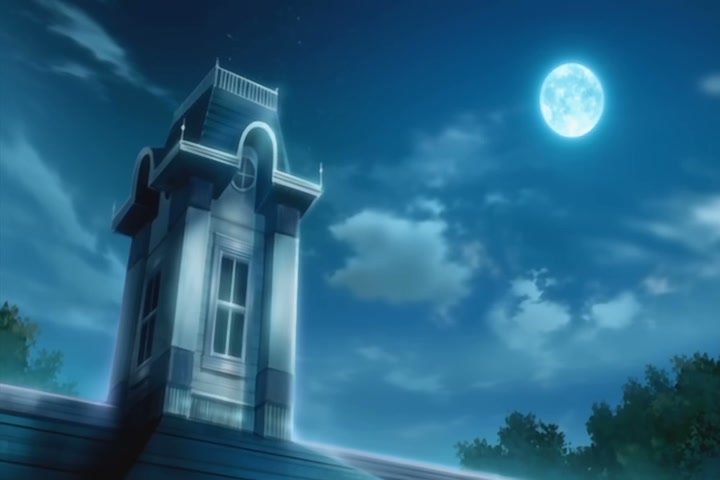
Color is used as a narrative tool. Domestic scenes in the Ninomiya household are bathed in warm oranges and soft browns. Night scenes shift to desaturated blues, with point-source lighting creating long dramatic shadows. The southern island arc uses overexposed palettes to simulate summer heat. The abandoned theme park in the finale is washed in cool grays and muted greens, a visual representation of a dream gone dormant. These choices are consistent and effective.
Character Designs and Their Function
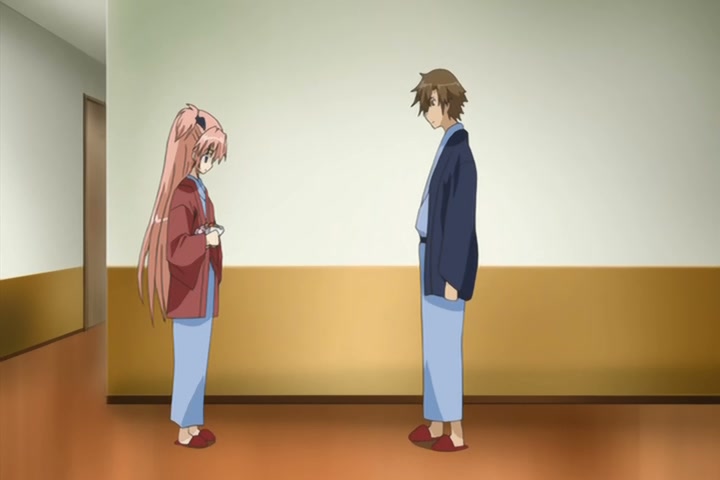
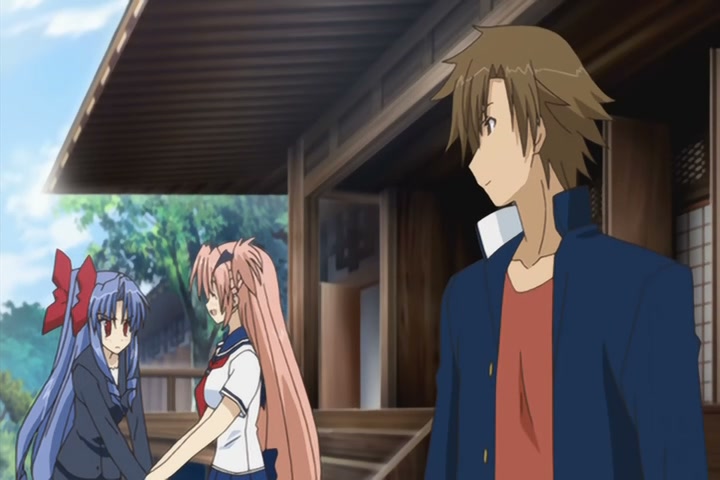
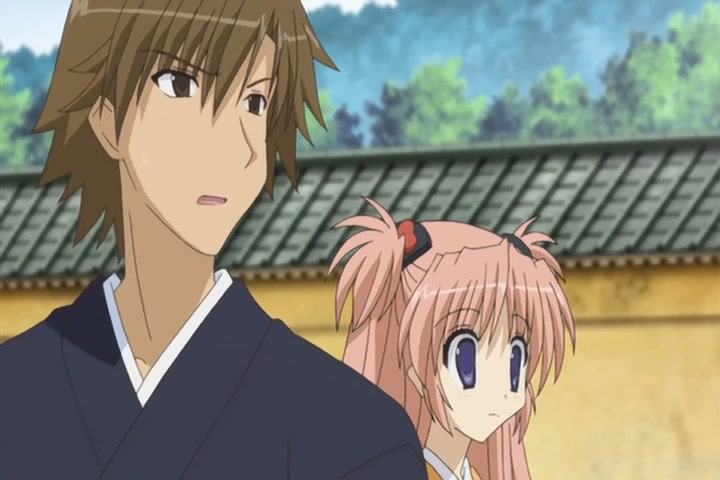
The designs serve the storytelling efficiently. Mayu’s soft curves, pastel palette, and tendency to shrink into herself communicate vulnerability before she speaks a word. Reika’s drill curls, regal purples, and rigid posture mark her as the ojou-sama archetype instantly. Shungo’s tired eyes, practical haircut, and earth-toned clothing anchor him as the straight man. The visual separation between characters is clear enough that even in crowd scenes, identification is immediate.
The fanservice is integrated into the character designs rather than treated as an external addition. Mayu’s large breasts are a constant presence, but they are also a constant problem for her. They trigger traps. They draw comments. They make her a target of Reika’s insecurity. The design choice is not merely prurient. It is part of how the character experiences the world. Reika’s smaller frame is similarly functional. Her rage at Mayu’s “pointless” chest is played for comedy, but it also reflects genuine insecurity about her own physical development. The designs are not subtle. They are legible.
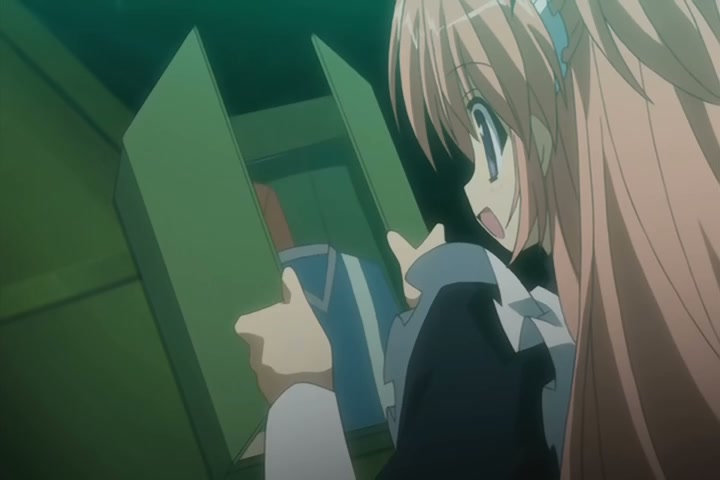
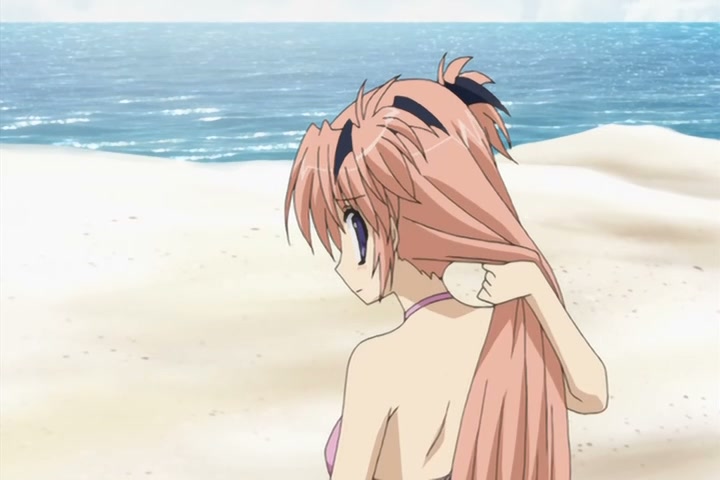
Costume changes serve character beats. The maid outfits that Reika and Hosaka wear in the household are a constant reminder of Reika’s compromised position, the heiress reduced to scrubbing floors while grumbling about dignity. Mayu’s delight in her swimsuit on the southern island is one of her first experiences of normal girlhood. The Kyoto costumes let the trio play at being versions of themselves they might have been, ten years ago, if everything had gone differently.
Background Art and Environmental Design
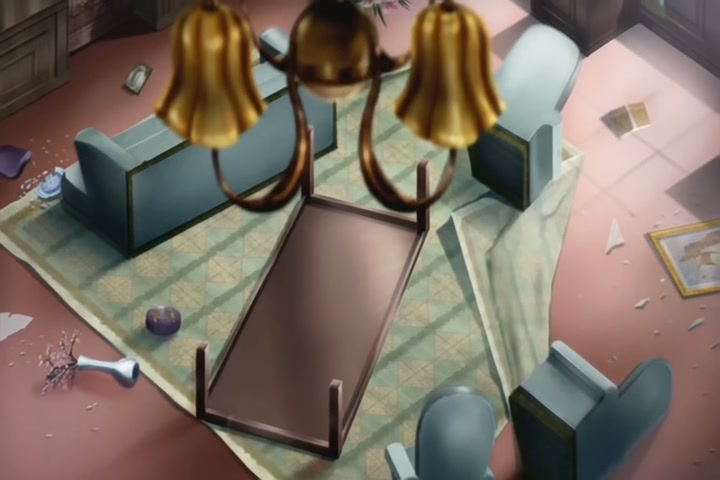
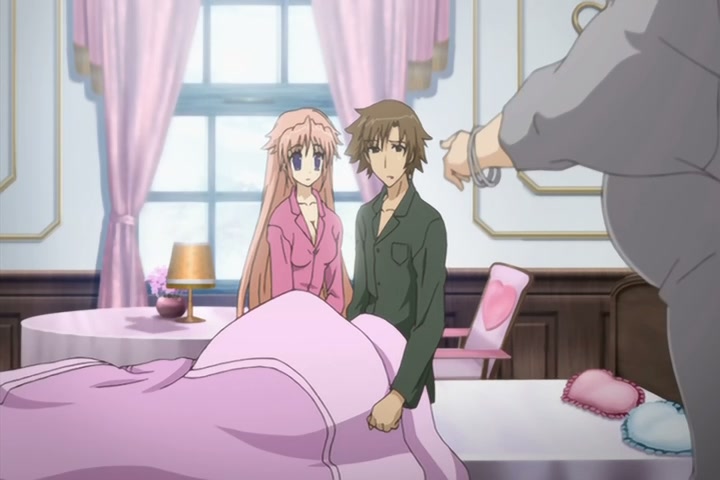
The background art is a quiet strength of the production. Interiors show a level of textural detail that contrasts with the flat-shaded characters: visible wood grains on cabinetry, reflective surfaces on cookware, the clutter of a lived-in kitchen. The Ninomiya household is given spatial personality. The secret passageways, hidden storeroom, and mysterious mechanisms make it feel like a place with history, not just a generic anime house.
Exterior locations lean toward a painterly approach. The southern island’s beach scenes use soft brushwork for foliage and water. The Kyoto streets are rendered with an affection for place, from the sunlit paths of Sagano’s bamboo grove to the wooden shopfronts of the pickles vendor. The abandoned Never Ever Land is the standout: rusted rides, overgrown paths, a castle that was once someone’s dream now crumbling in the dusk. The environment carries the emotional weight of the scene without needing dialogue to explain it.
Animation Quality and Limitations
This is not a high-budget production. The animation is workmanlike, adequate for dialogue scenes and held poses, but limited in action sequences. Fight choreography is functional rather than fluid. Walk cycles are basic. The compositing can feel flat, with characters appearing to float on backgrounds like paper dolls rather than being fully integrated into the space. This is common for the era and the budget level, but it is noticeable in wide shots.
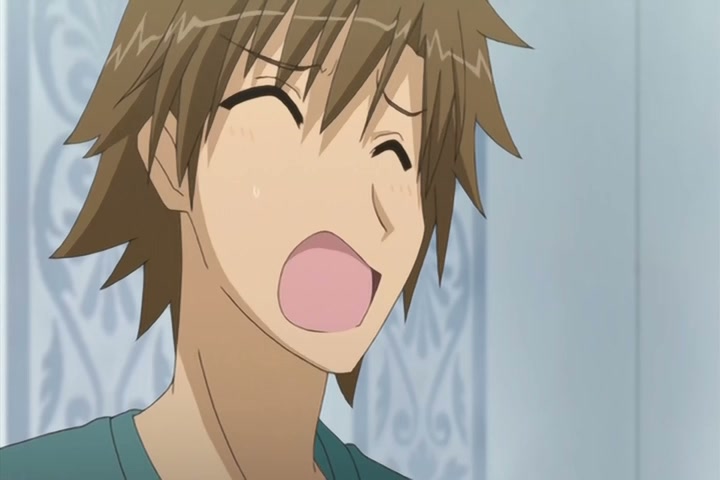
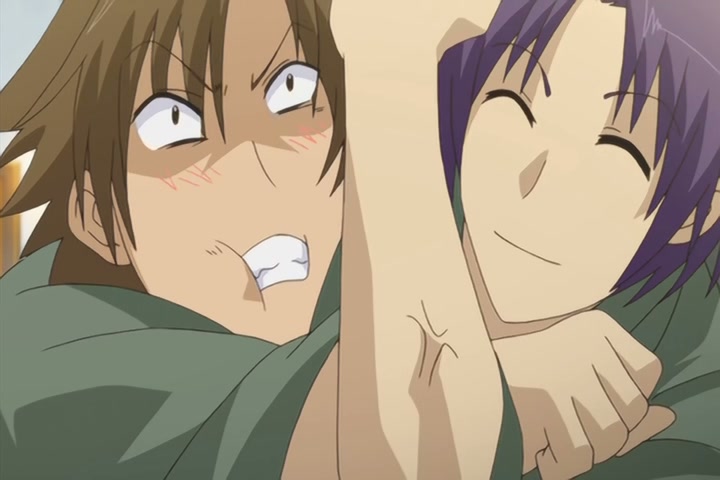
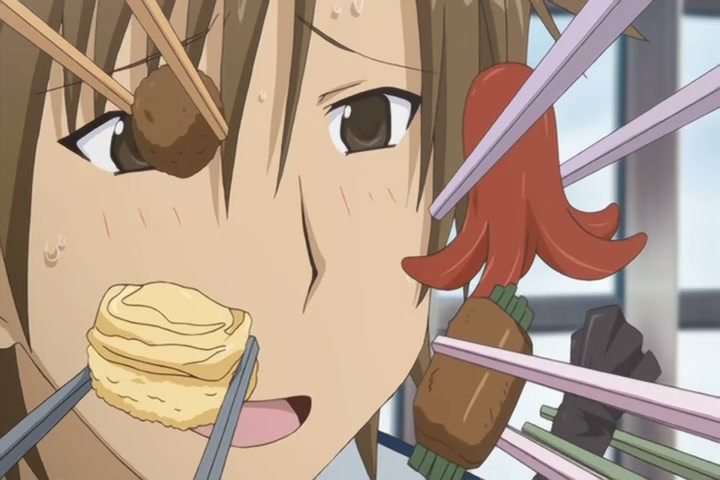
Close-ups receive the most attention. The eyes are carefully drawn in dialogue scenes, and the facial acting is expressive within its range. The series uses a “high-low” spectrum for its acting: broad, exaggerated expressions for comedy (sweat drops, vein pops, mask faces) and restrained, small gestures for drama (a slight droop of the eyelids, a trembling hand, an averted gaze). This contrast is effective. It allows slapstick and sincerity to coexist without one undermining the other.
It is worth distinguishing between genuinely weak animation and intentional stillness. Some of the series’ most effective moments are almost entirely static: a held close-up of Mayu’s downcast eyes as she asks Shungo how he feels about Reika, a wide shot of the trio standing in the abandoned park, the silence between words. These are not budget limitations. They are choices that use stillness to create weight. The genuinely weak moments are when motion is attempted and falls short: stiff action cuts, awkward crowd scenes, the floating compositing mentioned above.
The series knows its limitations and leans into atmospheric stillness rather than attempting fluid action it cannot deliver. This is a smart allocation of limited resources. The money goes where the emotional beats are, and the emotional beats are in the faces.
Sound and Music
The voice acting is a highlight. The cast is composed of veterans of the era, and their performances elevate the material consistently. Mayu’s seiyuu delivers the character’s trembling, apologetic line readings with a fragile quality that makes her occasional moments of assertiveness land with force. Reika’s voice shifts between imperious command and flustered squeaking with comic precision, and the dark Reika’s lower, silkier register is immediately recognizable as something other. Shungo’s deadpan weariness is the anchor. Ryouko’s lilting, playful delivery makes even threats of Antarctic nudity sound almost reasonable.
The opening and ending themes fit the series’ dual nature. The opening is an upbeat, energetic pop track that emphasizes the harem comedy and fanservice elements, setting a tone of playful chaos. The ending theme is softer, more melancholic, leaning into the sentimental undercurrent that the comedy sometimes obscures. The contrast between the two captures the series’ identity: surface-level silliness with emotional depth waiting underneath.
The soundtrack supports the tonal shifts effectively. Light, bouncy tracks accompany the training sequences and domestic comedy. More subdued, piano-driven pieces underscore the dramatic revelations in the back half. The sound design is competent without being remarkable. Environmental audio, footfalls, kitchen sounds, and the ambient noise of locations provide adequate texture.
Overall Verdict
Goshuushou-sama Ninomiya-kun is a series that knows its audience and respects its genre. It does not apologize for its ecchi elements or its trope-heavy storytelling. It understands that these things are part of the appeal, part of the shared language between the show and the viewers who chose to watch it. Within that framework, it builds something that lasts longer than the jokes.
The childhood promise that drives the plot is, in the end, kept. Three people who lost each other find their way back. The final image, the trio bickering in the morning light while Ryouko threatens new punishments and the household swirls with chaos, is earned. The series title, a wry “My condolences, Ninomiya-kun,” is a joke about Shungo’s perpetual suffering. But condolences are offered for a loss. By the end, the loss has been recovered. The promise has been fulfilled.
This series is for fans of its era. For those who enjoy the late-2000s ecchi harem comedy and can appreciate the craftsmanship within that tradition, it offers genuine emotional payoff. For those who bounced off the genre entirely, it is unlikely to change minds. It is not a hidden masterpiece that transcends its category. It is a very good example of what its category can achieve when it cares about its characters.
Watch it for the comedy. Stay for the hearts underneath.
Gallery