





The ninth episode of Class de 2-banme ni Kawaii Onnanoko to Tomodachi ni Natta pulls off something I did not fully expect after last week’s dinner-with-the-father cliffhanger: it gives Maehara Maki the messy, tearful release he has been holding in for over a year, and it does it inside Asanagi Umi’s family home, surrounded by people who barely know him but are weirdly good at making space for him anyway. What starts as standard meet-the-parents awkwardness turns into the show’s most emotionally honest half-hour, and it reframes a lot of Maki’s quiet suffering without ever feeling like therapy-speak.
The Asanagi Household Is a Comedy Goldmine (Until It Isn’t)
The episode opens light. Amami Yuu and Seki Nozomu are still in full “support the couple” mode at school, with Nozomu strong-arming his student-council-president sister Tomoo into letting Maki join the Christmas party as staff. It is a nice little scene that keeps the side cast feeling present without stealing focus, and it also means Maki gets to spend Christmas with Umi after the party, which sets up the emotional timeline for the back half of the episode.
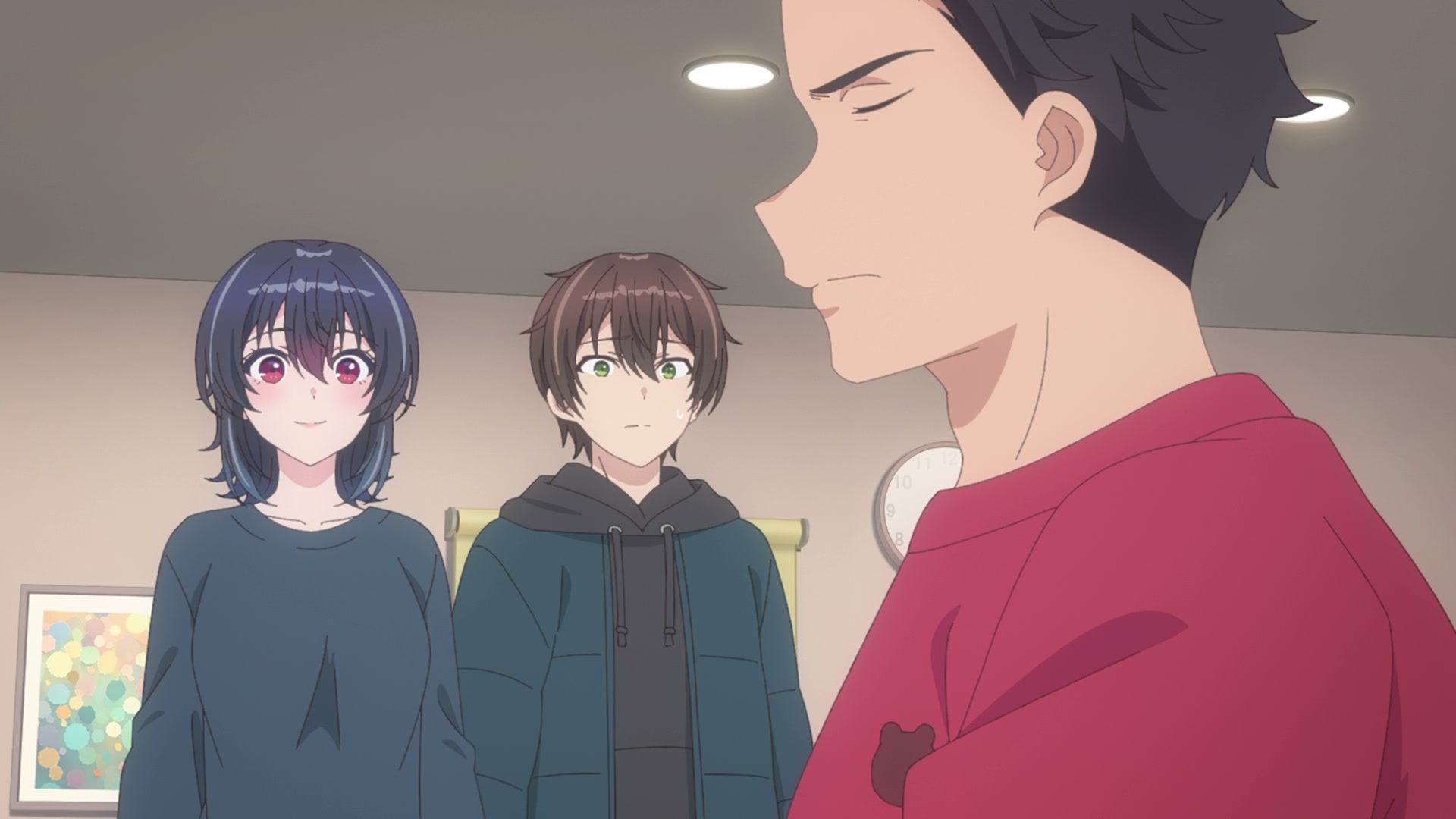
Then we get to the house. Umi’s mother Sora is exactly the kind of playful instigator her earlier phone calls hinted at. She greets Maki with exaggerated warmth, immediately starts needling her husband Daichi about his stiff formal expression, and ropes Umi into a physical comedy bit where they literally stretch the man’s face into a smile. Daichi’s panicked plea to Maki to “tell these two off” is the moment I knew this family works as a unit. They are ridiculous, but the affection underneath the teasing is genuine and lived-in. Riku, the shut-in brother with an unsettling fixation on Yuu (“he started crawling towards her this one time for no reason” — Umi’s deadpan delivery is perfect), rounds out the household as a specific kind of pathetic that feels both funny and a little sad.
This opening stretch is exactly what the show does best: warm domestic comedy with a faint undercurrent of something heavier waiting beneath the surface. The dinner table scene, with Maki sitting among these four people who clearly love each other despite the squabbles, is where that heaviness finally breaks through.
The Dinner Table He Lost
Maki’s flashback is not new information. We have known since early episodes that his parents divorced, that he felt abandoned, and that the family dinners disappeared one chair at a time. What makes the sequence here hit differently is the specific memory he latches onto: hamburg steak, carrot glacé, his father coming home and praising him for agreeing to eat his vegetables. It is a tiny, unremarkable evening, but it represents the before — the time when Maki thought things would stay that way forever.
The episode visualizes the erosion simply. First his father’s seat goes empty. Then his mother grows quieter, and the two of them eat at the same table but separated by an invisible wall. After the divorce, Maki is alone. The show does not over-explain this; it just cuts back to the present, where the Asanagi family’s warmth and chaos have triggered something Maki could not suppress anymore.
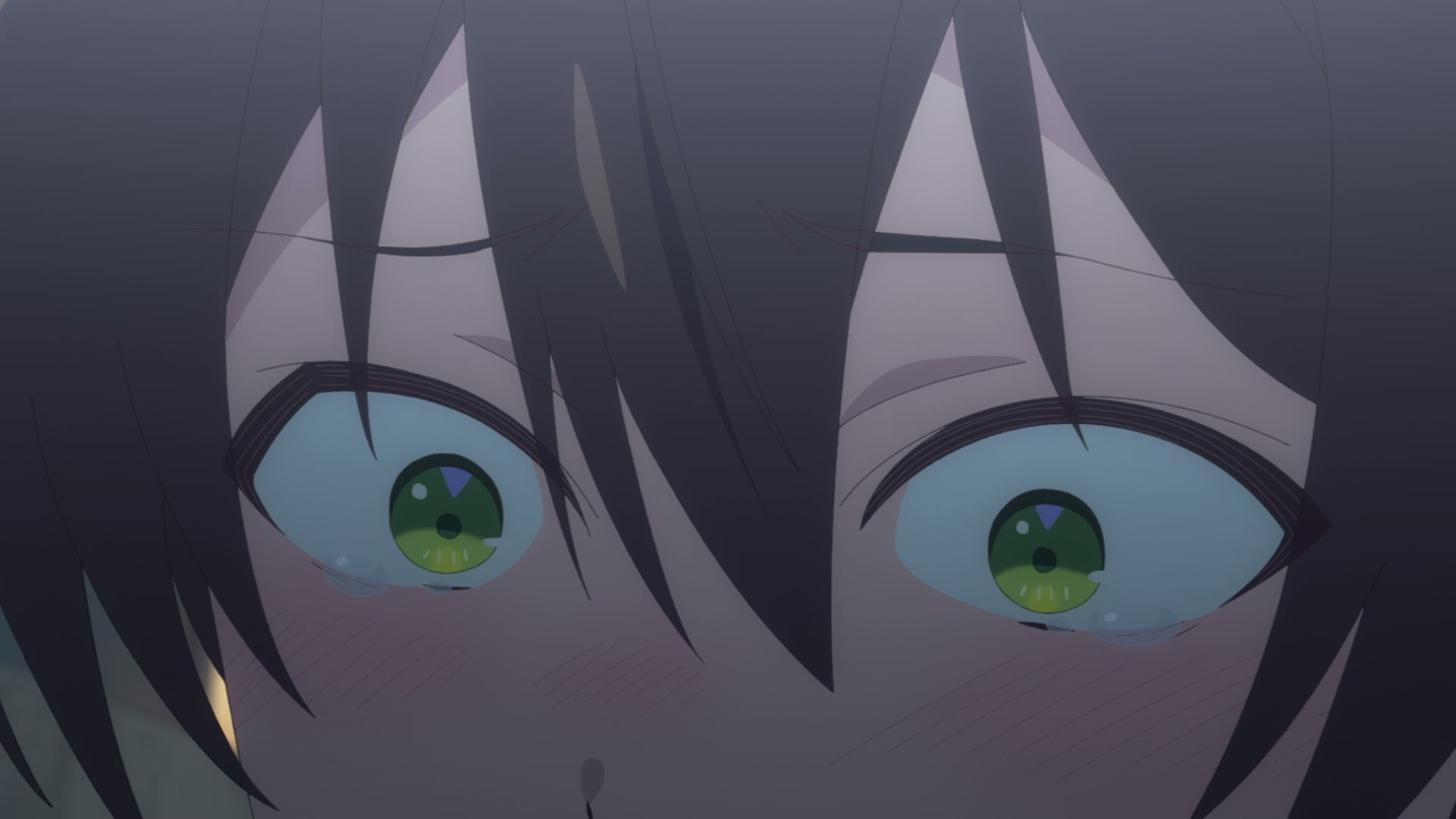
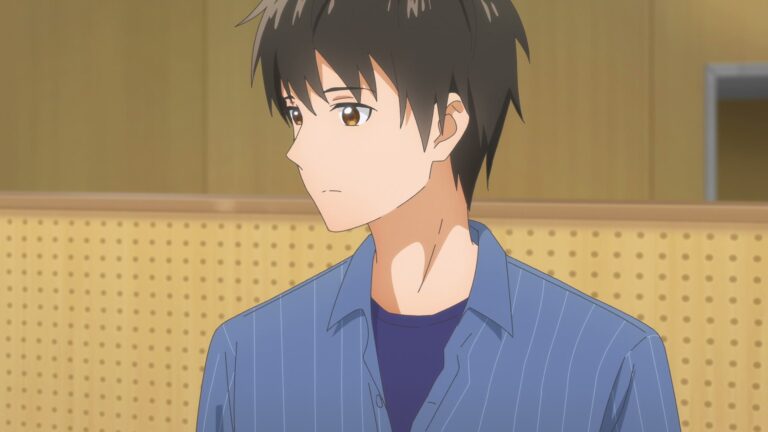
And he cries. At their dinner table. In front of Umi’s parents, her brother, and Umi herself. It is not a dignified, single-tear anime cry. It is ugly and sudden and he is mortified by it, scrambling to excuse himself. The shame he feels is specific and painful: “I’m a high schooler now. I’m not supposed to be such a baby.” This is the version of Maki who has spent the past year acting as his mother’s emotional shield, hiding his own pain so she would not hurt more. Breaking down in front of near-strangers feels like a failure of that self-appointed role.
Umi Gives Him Permission to Be a Mess
Umi’s response is the most important thing she has done in the series so far. She does not hesitate, does not let him run. She chases him outside into the cold, calls him a moron, tells him to shut up, and physically catches him in what she calls “taking you into custody.” It is aggressive and affectionate and exactly what someone like Maki needs: a person who refuses to let him isolate himself.
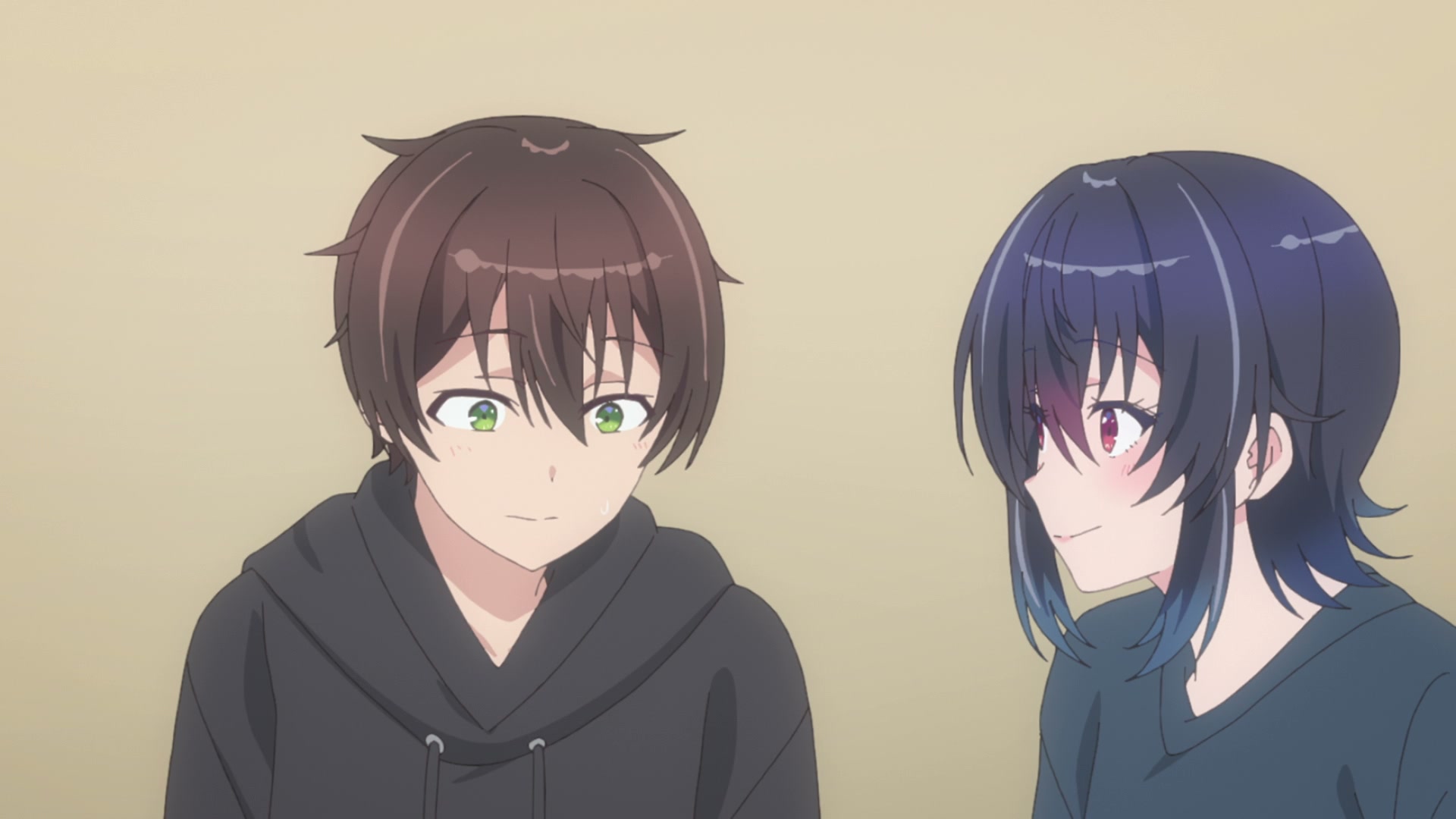
The scene on the bench — or wherever they end up — strips away her usual teasing layer. She holds him, tells him he can be a kid about this, that nobody is around to make fun of him, and that he can “entrust yourself to me.” When he keeps apologizing, she corrects him: “I think you mean ‘thank you.’” It is a small line but it reorients the entire dynamic. She is not doing him a favor or tolerating his weakness. She is asking him to accept care as something he deserves, not something he needs to repay.
Later, back in her room, she lets him fall asleep on her lap. The next morning, she admits she only woke up an hour ago and spent the time watching his sleeping face. Her teasing about whether it was “comfy, warm, and smelled good” lands differently after the night before. It is not embarrassment for the sake of comedy. It is her way of saying “I was happy to do this for you” without making it feel heavy.
The almost-kiss that Sora walks in on the next morning is the inevitable consequence of two teenagers who spent a night wrapped up in each other’s vulnerability. The scene is funny — Sora’s “think about the time and place” lecture, Daichi catching strays about “causing a whole mess like we did” — but it is also a gentle signal that the adults in this house understand what is happening and are not going to freak out. Sora’s own past gives her authority to talk about this without being a hypocrite, and her boundary is practical rather than moralistic.
Daichi Says What Nobody Told Maki Before
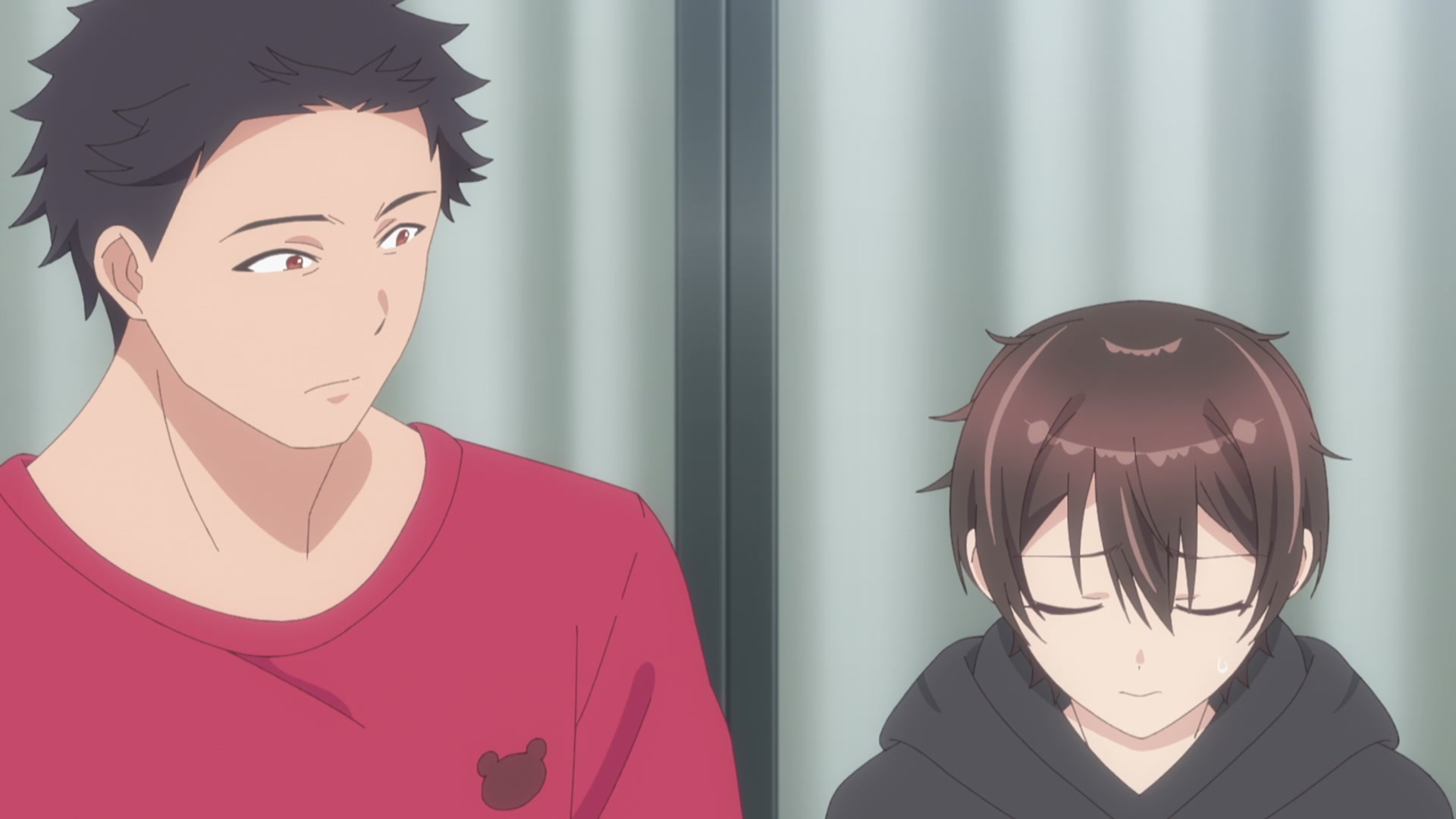
The private conversation between Maki and Umi’s father is short, but it is the quiet heart of the episode. Daichi acknowledges the weight of what Maki has been carrying and then tells him something that cuts directly against Maki’s entire coping strategy: it is okay to cry, complain, and throw a tantrum. Even if it does not change anything. Even if his parents will not get back together. The point is not to fix the situation. The point is to “get that load off your chest if nothing else.”
For a kid who has spent the series bottling up feelings so nobody else would be burdened, this is genuinely transformative permission. Daichi is not Maki’s father. He is not even a particularly close family friend. But he is an adult who has watched Maki break down at his table and responded with compassion rather than discomfort. That matters.
One Last Tantrum Before the Year Ends
The episode title, “One Last Tantrum,” appears at the very end, as Maki makes a decision. He will take Christmas Eve — the one-year anniversary of his parents’ divorce — and draw a line in the sand. He is going to let himself be demanding, even if it is just this once. The phrase “one last tantrum” suggests he sees this as a final indulgence before moving forward, but the episode leaves the specifics open. What exactly he plans to do or say is not revealed yet.
This resolution feels earned. The episode has spent its entire runtime softening Maki up: first with the family warmth he misses, then with the permission Umi gave him to be vulnerable, then with Daichi’s quiet reassurance that honesty has value even when it cannot reverse the past. By the time Maki returns home and finds his mother looking through the photo album, the audience knows he is not going to keep pretending everything is fine.
The final visual of him looking at that old family photo, voiceover repeating Daichi’s words about being honest and doing what you want, leads directly into his resolve. It is a quiet but decisive shift. Maki is finally going to voice the pain he has been carrying alone.
A Small Note on the Supporting Cast
The episode does not forget the rest of the cast even while focusing on Maki and the Asanagi family. Nozomu’s brief scene with his sister Tomoo is efficient and adds a little texture to both characters. Yuu’s reaction at school — “Good for you, Umi” — shows she understands that Maki meeting Umi’s family is a significant step, even from her observer perch. The series continues to let these side relationships breathe without letting them distract from the central emotional arc.
What impressed me most is how naturally the humor and the heartbreak sit next to each other. The Asanagi family’s sketch-comedy antics do not undermine Maki’s breakdown. If anything, the contrast makes the moment more powerful: he is surrounded by exactly the kind of family he lost, and the dissonance is what finally cracks him open.
After last week’s dinner with his father and this week’s night at Umi’s house, the show has given Maki two very different models of what family can look like. His own is fractured and distant. Umi’s is chaotic, embarrassing, and deeply loving. He does not get to trade one for the other. But he does get to carry some of that warmth back home with him, and it is enough to make him want to try one last time to be honest with the people who hurt him.
This was the episode I had been hoping for since Maki first admitted he was afraid of love because he thought it would always end. It does not magically fix that fear. It just lets him cry about it in front of someone who holds on until he stops. That is more real than a tidy resolution, and the episode knows it.
Screenshots
← Episode 8 | All Class de 2-banme ni Kawaii Onnanoko to Tomodachi ni Natta Season 1 posts →

[…] ← Episode 9 | All Class de 2-banme ni Kawaii Onnanoko to Tomodachi ni Natta Season 1 posts → […]